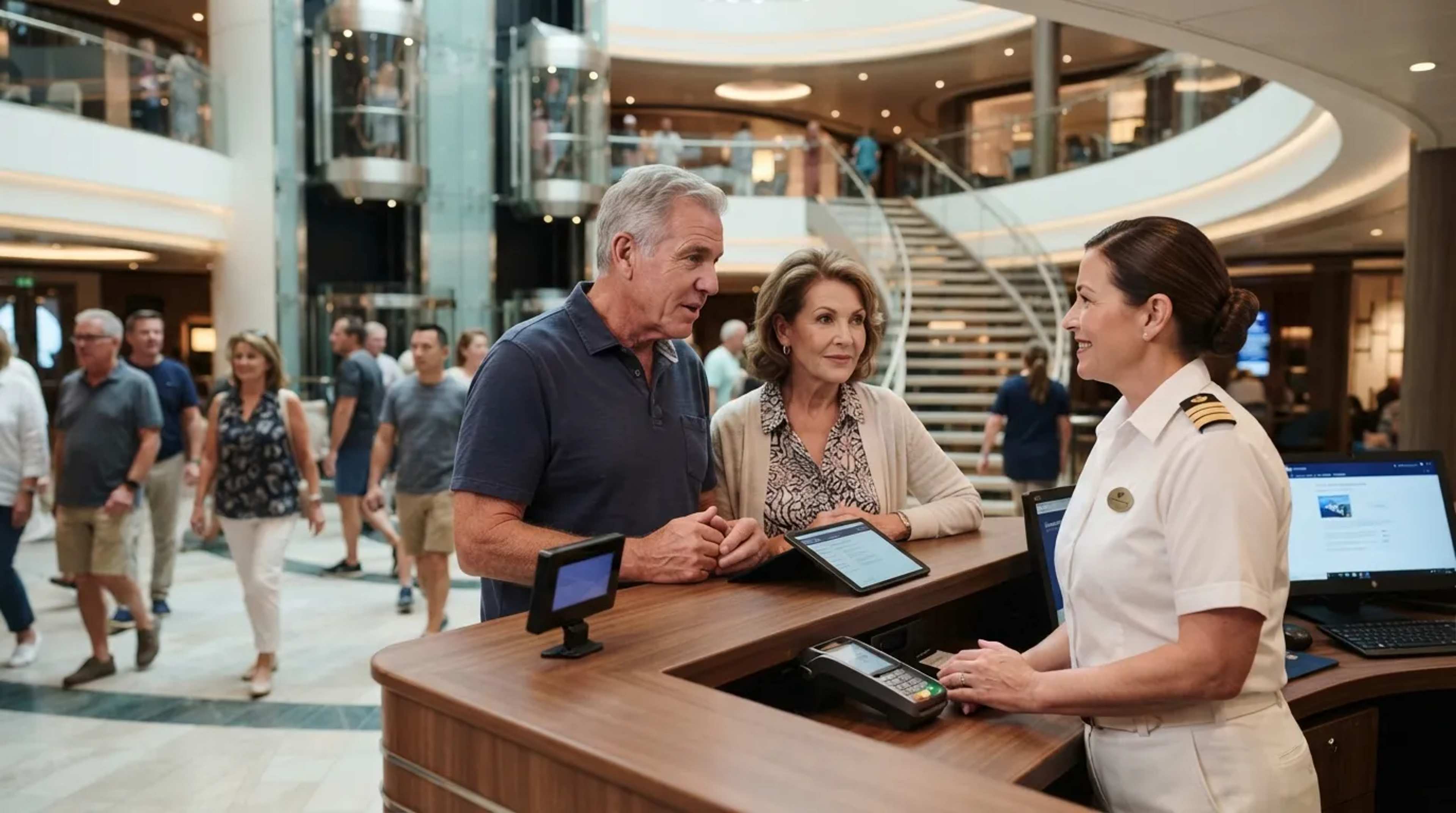
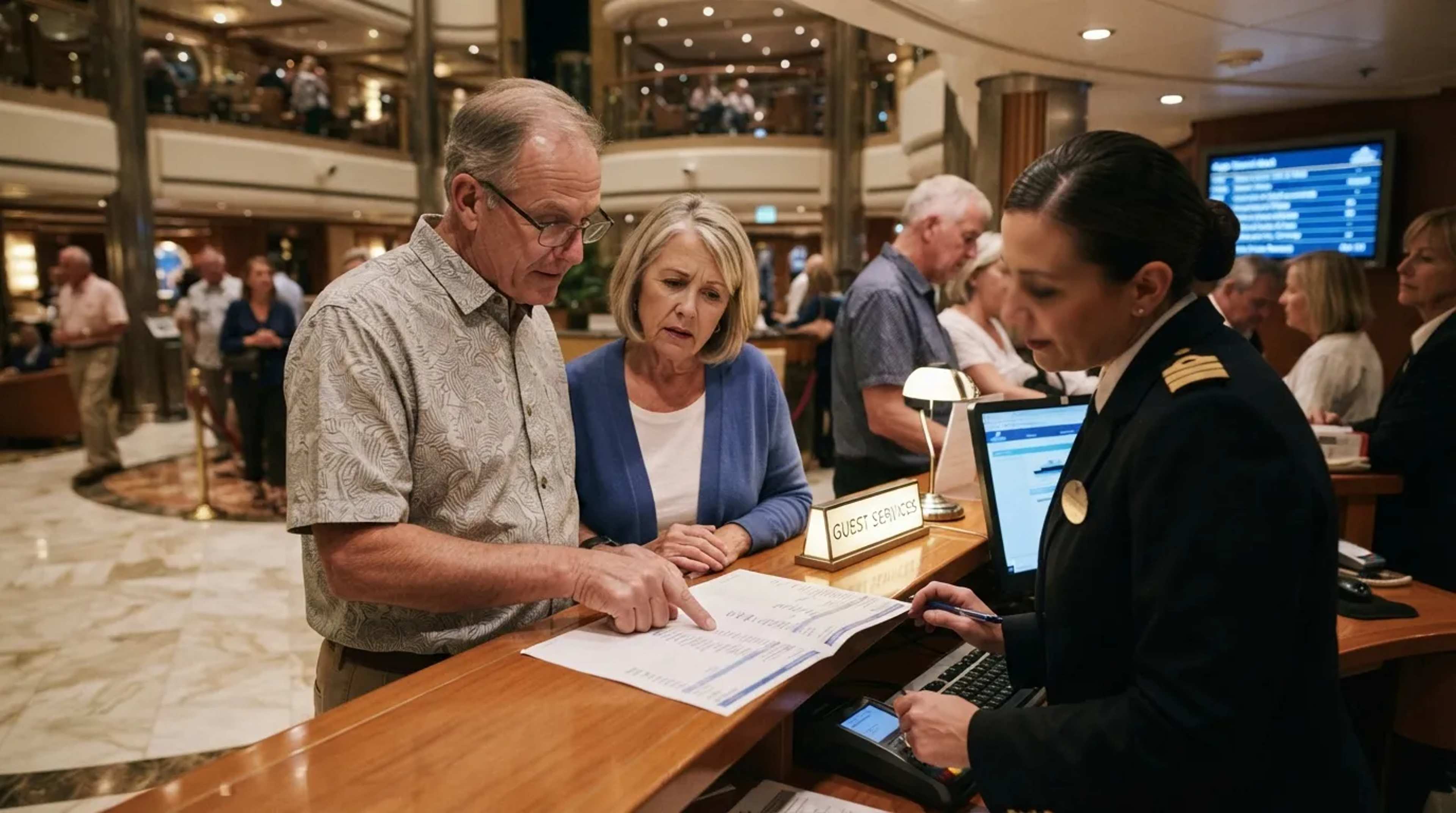
You’ve seen the glossy brochure version of cruise dining. White tablecloths, set menus, and a schedule you’re supposed to follow. What it leaves out is a quiet list of requests that dining room staff say yes to again and again.
For passengers over 65, many of whom are watching sodium, managing allergies, or just want a calmer dinner, these asks can turn a decent cruise into a great one. We’ll count down from #15 to #1, and the last one makes every other request on the list work better.
#15 – Extra Portions of Vegetables or Starch

Cruise ship side dishes can look surprisingly small on the plate. Most guests never realize the fix is one sentence away.
Ask for more vegetables or mashed potatoes and your waiter will usually bring them without fuss. Ask for the second side at the start of the meal, not after the plate arrives, so the galley can plate it properly.
That’s the easy one. The next request is about something you can’t order off a menu: a little peace and quiet.
#14 – A Permanent Table in a Quieter Section of the Dining Room
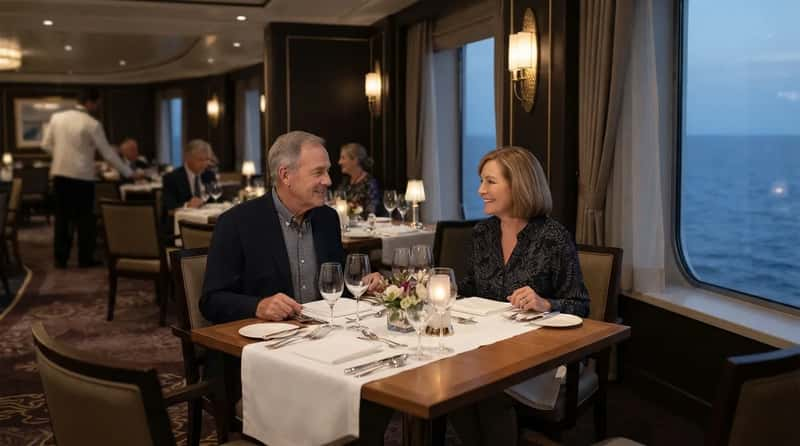
Noise is one of the most underrated complaints in cruise dining rooms. It matters even more if you wear hearing aids or simply prefer conversation over clatter.
Ask whether quieter seating is available, and mention it when you board. Make the request on embarkation day, before your table is locked in, because spots near the kitchen door or the main traffic aisle tend to be the loudest.
A quiet table solves the noise. But what if the problem isn’t the noise, but the empty chair across from you?
#13 – A Shared Table Arranged for Solo Travelers

Dining alone on a sea-day evening can be one of the loneliest moments a solo traveler faces. Dinner is exactly when most solo cruisers feel the most exposed.
A quiet word with the maître d’ or guest services can land you at a shared table instead of a corner two-top. You can usually change your seating after the first night if the original assignment doesn’t suit you.
Some veteran cruisers say a shared table is the only reason they made friends onboard. Others insist a private table is the whole point of a vacation, and both choices are fair game.
Worth Knowing
- Start with the maître d’ or Guest Services, who handle seating.
- Your first-night table isn’t a life sentence. Changes are usually possible after night one.
- A shared table brings built-in conversation and familiar faces.
- A private table brings quiet and control. Neither choice is wrong.
Once you’re seated, the next request changes what actually lands on your plate.
#12 – Sauce or Dressing Served on the Side
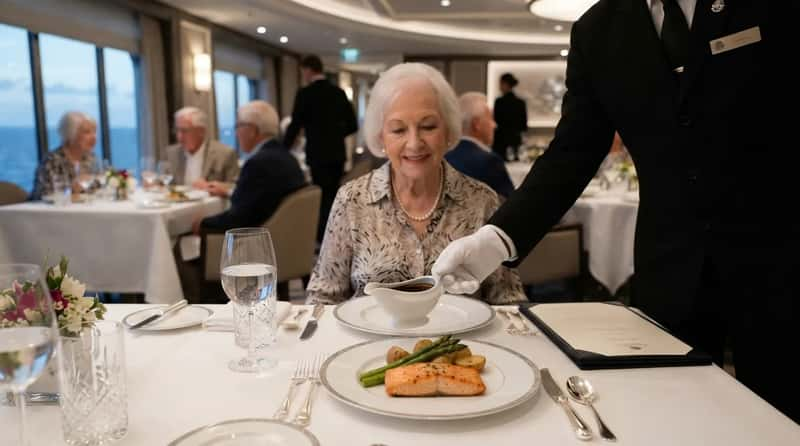
This request is so ordinary that passengers hesitate to make it, assuming it’s too much trouble. It isn’t.
On Crystal Cruises, for example, dishes are available without sauce on request.1 Ask at the start of the meal, not after the dish lands, and say whether you want the sauce on the side or left off entirely.
If you like knowing what’s coming, the next request will feel like a peek behind the curtain.
#11 – Tomorrow’s Menu Brought to Your Table Tonight
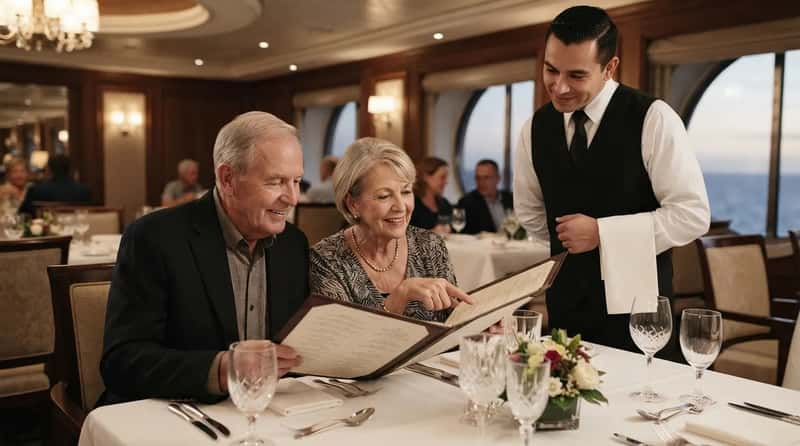
Main dining room menus for the whole week are planned before the ship leaves port. You can ask to see the selections for every evening by visiting the front desk or simply asking your waiter.
Most passengers never find this out. If you’re managing a health condition, it lets you pick which nights are worth the main dining room and which call for a specialty restaurant or the buffet.
If you’re on a low-sodium or medically tailored diet, you may actually need to order a day ahead. That one conversation at dinner means your modified meal is already being prepped for the following evening.
That day-ahead system leads straight to a request that takes thirty seconds and can reshape your whole week of meals.
#10 – Low-Sodium Meals Prepared Separately
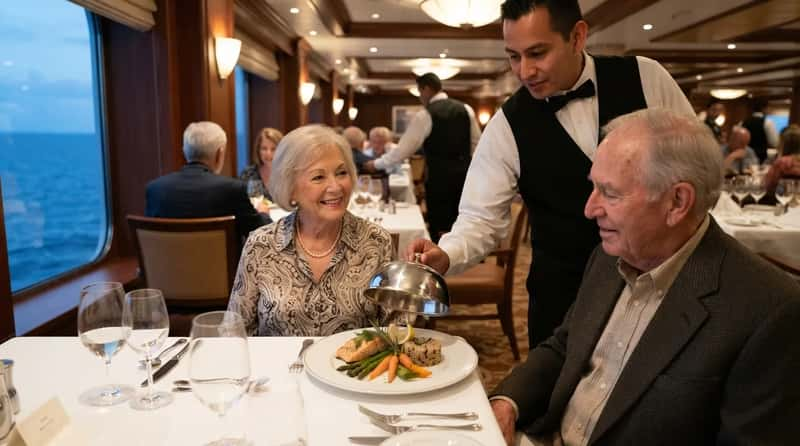
Low-sodium and no-sodium meals are available in the main dining room for lunch or dinner. They have to be ordered one day before the meal.
At dinner, your waiter hands you the next day’s menu. Once you choose, the request goes to the galley staff in charge of special orders. This isn’t the regular dish with the salt shaker put away. It’s a version prepared for your needs.
If you’re managing blood pressure or a heart condition, this is the request worth making before the ship even sails. Rich cruise cooking can hide a lot of salt in places you’d never think to check.
And the same system that protects your heart can handle another common need, too.
#9 – A Gluten-Free Version of the Nightly Entrée
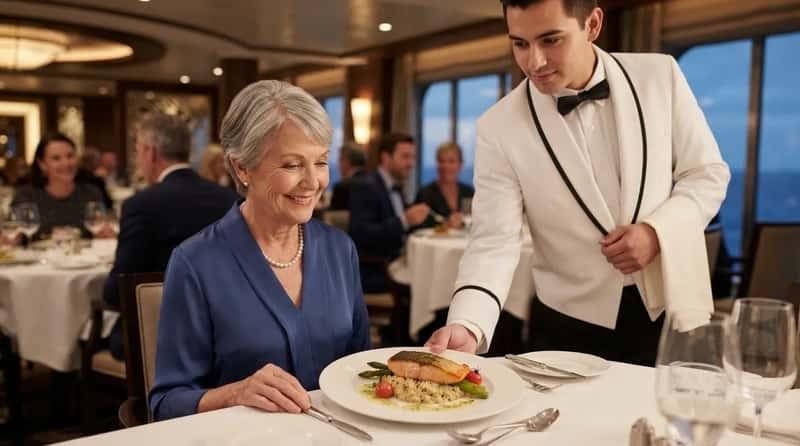
A gluten-free request works the same way as low-sodium: ask for the next day’s menu and place your order the night before. The same advance system powers other special diets on the ship, so you’re not creating extra work for anyone.
Royal Caribbean, for one, can accommodate food allergies, gluten-free, kosher, low-fat, and low-sodium diets.2 Once your request is in the system, you shouldn’t have to explain it from scratch every night.
The buffet usually labels gluten-free items, but the main dining room gives you more precise control.
Quick Compare
- Main dining room: Order the night before, and your meal is prepared with your needs in mind.
- Buffet: Gluten-free items are usually labeled, so it’s fast and flexible, with less precise control.
Next up is a menu that many passengers don’t even know exists.
#8 – The Vegetarian or Vegan Menu That Isn’t on the Table
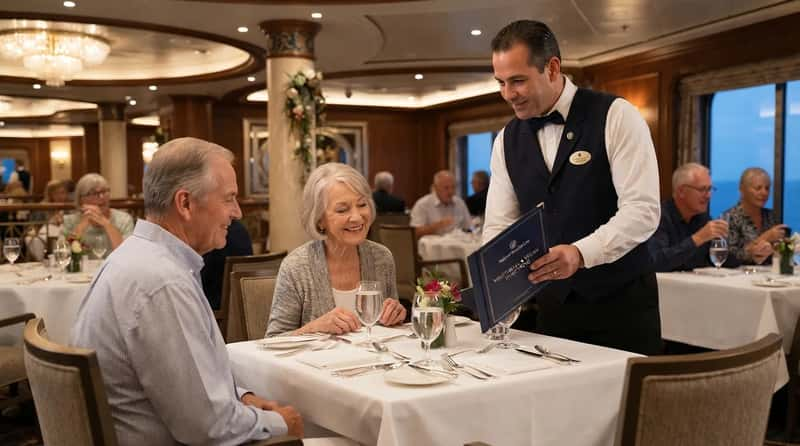
Holland America Line introduced the cruise industry’s first separate vegetarian menu in 2012, and it included several vegan options.3 You usually have to ask your waiter for it, because it won’t show up on its own.
Other major lines have since built out their own options. Ask for the menu on the first night, and ask your waiter to bring it each evening. In a fixed-dining setup, a good waiter will remember.
Now for the course that rarely gets a fair shot: dessert.
#7 – Sugar-Free Desserts Every Night
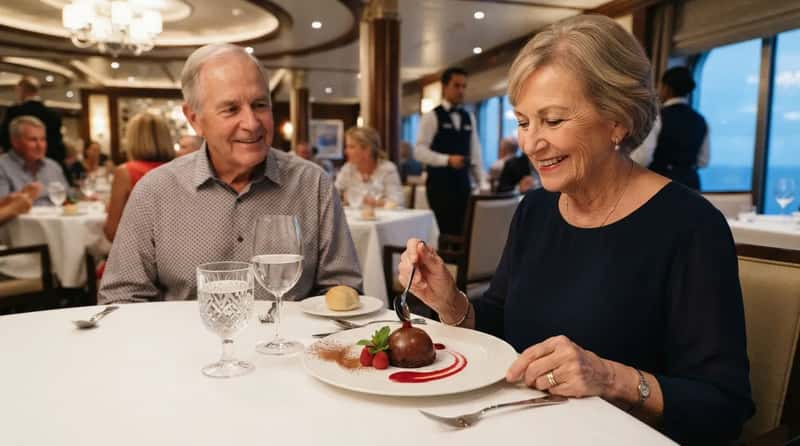
Managing diabetes or watching sugar doesn’t mean sitting quietly while everyone else orders the molten chocolate cake. Many cruise ships offer sugar-free dessert options, and Carnival lists low-sugar among the needs it accommodates.4
Just ask what’s available that evening. “Sugar-free” usually means sugar substitutes, while “no sugar added” can still contain natural fruit sugars. If you’re managing blood sugar, it’s worth asking which one you’re getting.
The galley has clearly adjusted for guests with special needs. The next request shows just how far that goes.
#6 – Allergy Protocols That Go All the Way to the Galley
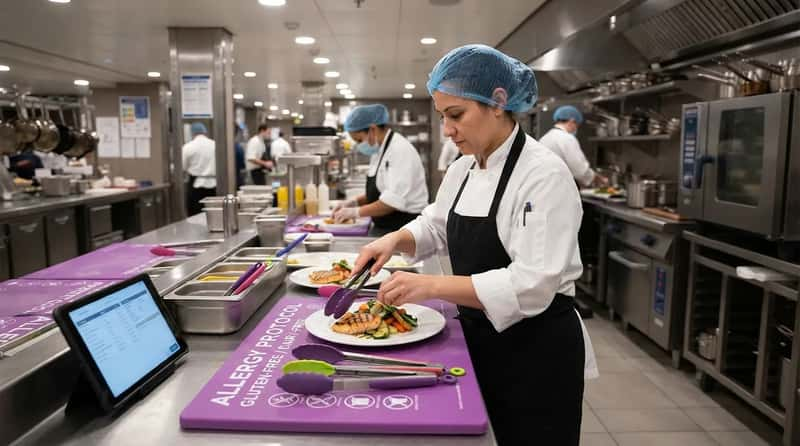
Serious dietary restrictions get more attention than most guests expect. Cruise lines have detailed systems for allergies to nuts, dairy, eggs, shellfish, and gluten.
Severe cases can get meals prepped in a separate galley area with dedicated equipment. Submit your allergy information to the cruise line well before sailing, since many lines ask for 45 days or more, and longer for some international itineraries.5
Even then, reconfirm your restrictions with staff each day, because menus and ingredients rotate.
Safety sorted. Now let’s talk about appetite.
#5 – A Half Portion of an Entrée as an Appetizer
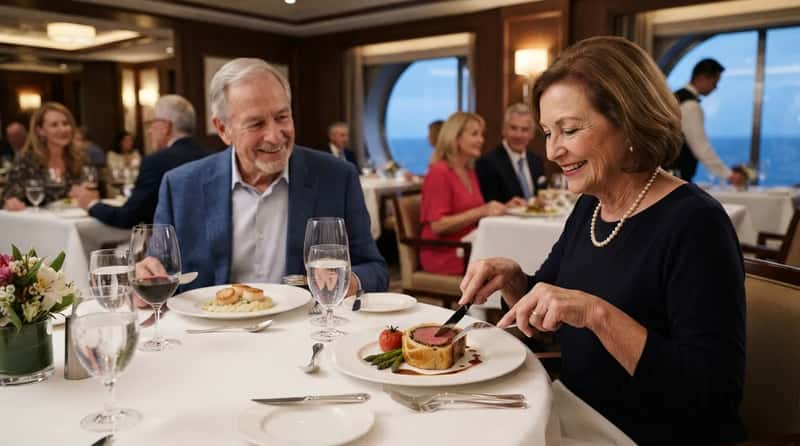
In the main dining room you’re not charged by the plate, so there’s no penalty for splitting an entrée with a travel companion. You can also order two appetizers instead of a main, or try a half portion of an entrée as your first course.
A half-portion appetizer works especially well on nights with a rich featured entrée. You taste the dish, you don’t overdo it, and you still have room for dessert.
Crystal Cruises says main courses can be served as half portions on request.1 On other lines, simply asking often gets the same result.
At a Glance
- Split one entrée with a travel companion.
- Order two appetizers in place of a main.
- Ask for a half-portion entrée as your first course.
- Save room for dessert on rich-entrée nights.
Speaking of dishes worth having more than once, here’s a request that most passengers learn about from a veteran cruiser.
#4 – Your Favorite Dish From an Earlier Night, Repeated
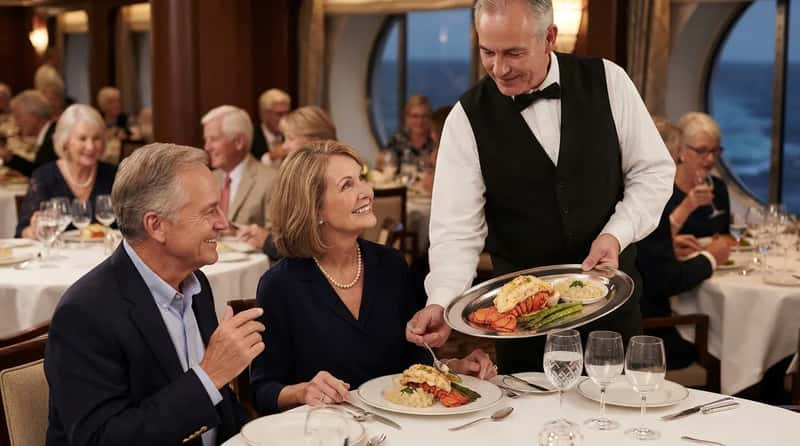
Main dining room menus are planned for the week, and you can preview them by asking at the front desk. That opens a door most passengers never walk through.
If Tuesday’s dish was exceptional, ask whether it can come back on Thursday. Ask your waiter the same evening you enjoy it, while the memory is fresh. Many waiters will do their best to pass it along to the kitchen.
The brochure says you eat what’s on the menu. The dining room is often more flexible than that.
If the main dining room bends this much, what about the restaurants you pay extra for?
#3 – Your Dietary Arrangement Honored in Specialty Restaurants Too
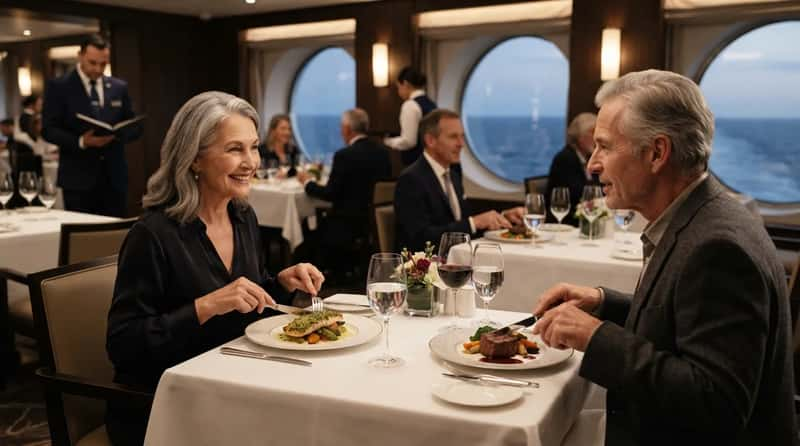
Many passengers assume a low-sodium or gluten-free plan stops at the main dining room door. It doesn’t have to.
Specialty restaurants accommodate special dietary requests too. On Celebrity Cruises, for example, the French fine-dining venue, the Italian steakhouse, and the chef’s table experience all accommodate dietary arrangements.6
Explain your needs to the maître d’ and contact the restaurant the day before your reservation. That advance conversation separates a smooth specialty dinner from a stressful one.
That flexibility matters most for passengers with complex medical diets, which is exactly who the next request is built for.
#2 – A Chef Consultation for Complex Medical Dietary Needs
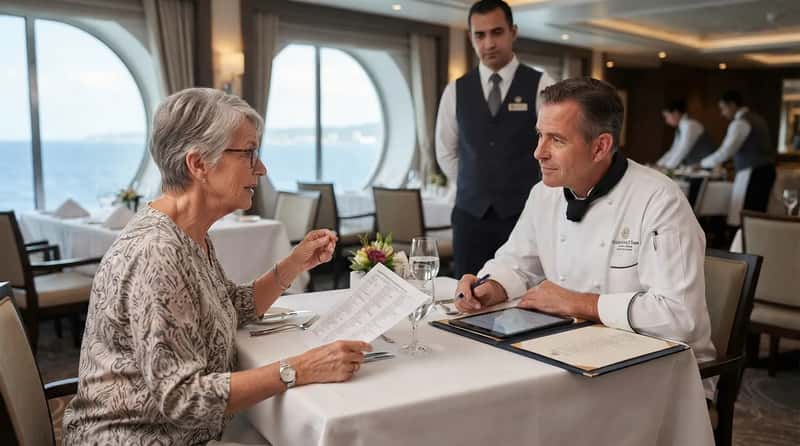
This one takes advance setup through the cruise line’s special dietary or accessibility department, ideally at least 45 days before sailing.5 Done right, someone on the culinary side reviews your restrictions and plans around them for the whole voyage.
Most dining crew receive training on food allergies and special diets. For conditions like kidney disease, Crohn’s, or severe multi-allergen restrictions, this pre-cruise conversation can be what makes the whole trip workable.
Tell the head waiter your needs when you board, and consider carrying a printed summary of your restrictions. Together with the advance paperwork, it closes the gaps.
The chef handles the toughest cases. But the request that quietly powers everything else on this list is still waiting.
#1 – A Fixed Waiter Who Knows Your Preferences Every Night
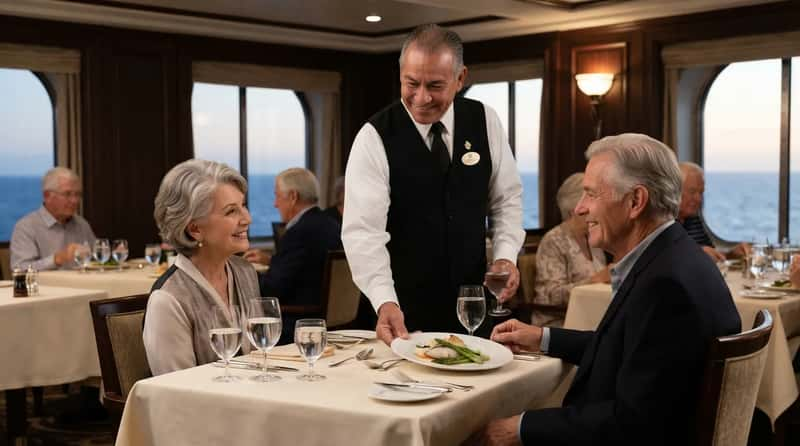
Every other request here works better when the same person is delivering it. When you eat at the same time and place each night, your waiter and assistant waiter learn your dietary needs by the second evening and start watching for them on their own.
That relationship is the engine behind the low-sodium orders, the advance menus, the repeated dish, and the allergy flag. Many cruisers choose flexible dining for its freedom, but for older travelers there’s a strong case for a fixed time, especially an early seating around 5:15 to 6:00 p.m.
An earlier seating often means a calmer, quieter dining room. Request fixed dining and a consistent waiter assignment on embarkation day, before the dining room fills up.
Why It Stands Out
- Your waiter and assistant waiter learn your needs by the second evening.
- The same team backs up your low-sodium orders, advance menus, and allergy flags.
- An early seating, around 5:15 to 6:00 p.m., often means a calmer room.
- You only have to explain your preferences once.
Dining staff notice when passengers make patient, friendly requests and treat the crew like people. They tend to respond in kind.
The cruise dining room isn’t a restaurant in the usual sense. It’s a production system that feeds thousands of people across dozens of dietary needs every night, and it was built to flex.
The passengers who eat best aren’t the ones with the loudest demands. They’re the ones who ask early, ask clearly, and ask once.
- Crystal Waterside Dining: https://www.crystalcruises.com/waterside-restaurant
- Royal Caribbean Dietary Options: https://www.royalcaribbean.com/faq/questions/dining-dietary-restrictions-customer-care
- Holland America Vegetarian Menu: https://www.travelweekly.com/Cruise-Travel/Holland-America-expands-vegetarian-selections
- Carnival Special Dietary Needs: https://www.carnival.com/about-carnival/special-needs/allergies
- Royal Caribbean Special Meals: http://www.royalcaribbean.com.au/customersupport/faq/details.do?pagename=frequently_asked_questions&faqId=322&faqSubjectId=335
- Celebrity Special Meal Requests: https://www.cruisebite.com/blog/can-i-request-special-meals-on-celebrity-cruises