Two people, one bag each, round trip: on a major U.S. airline, that can easily be $160 or more gone before you’ve found your gate. It’s the kind of charge most travellers just swallow.
Here’s what the counter rarely mentions. A surprising number of these fees can shrink or disappear through federal rules, loyalty accounts, medical exemptions, and a few policies that kick in only if someone asks. Some depend on age, and many are simply easy to miss after 60. The one at #1 is the one most people never think to ask about.
#15 – The Senior Fare That Only Shows Up When You Ask

Some U.S. airlines have offered senior fares for passengers 65 and older on select routes, but they rarely announce themselves. Delta’s own fares page has noted that certain discounts aren’t available at delta.com, and its senior fares have to be requested by phone.
American lets you book a ‘Senior (65+)’ passenger type on some routes. The fare applies only to the senior traveller, not everyone on the reservation, so bring a government-issued photo ID showing your birth date.
Abroad, the pattern repeats. Air France has offered a Senior Pass for travellers 65 and older that bundles flexible tickets, discounts, and free checked baggage for an annual fee.1 Terms change, so confirm the current details before you count on it.
Air India runs something similar at home, with senior discounts of up to 25% on domestic fares for Indian passport holders. The common thread is that none of it happens unless you speak first.
#14 – The Southwest Free Bags You Might Still Be Counting On

Many travellers still count on Southwest’s old ‘two bags fly free’ rule. It ended on May 28, 2025, for new bookings.2
Today, a free bag depends on your fare type, your Rapid Rewards status, or certain Southwest credit cards. Show up assuming the old rule and you may meet a fee at the counter.
If you fly Southwest often, price out that card or status against what you spend on bags each year. The next fee isn’t a policy at all. It’s a missing number.
#13 – The Missing Number That Costs You a Free Bag
This one looks like a baggage fee, but it’s often a simple oversight.
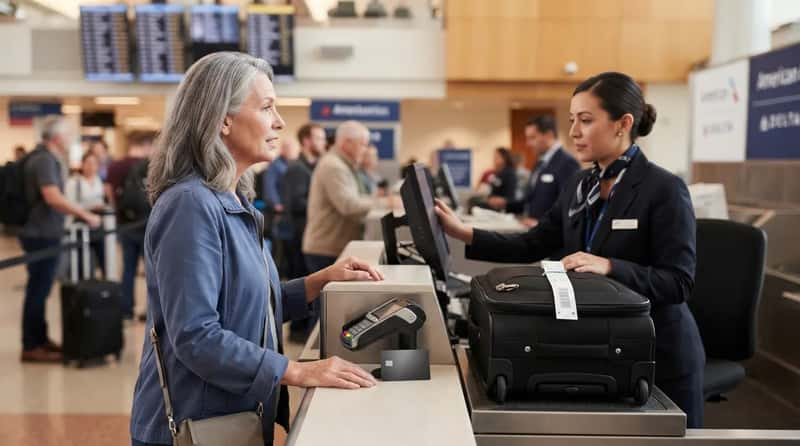
An airline’s own credit card can erase a checked bag fee because the waiver follows the cardholder, not the fare. For most American, Delta, and United co-branded cards, you don’t have to buy the ticket with the card. Your frequent flyer number just needs to be on the reservation.
Add it before you arrive, then ask the agent to confirm it’s attached before the bag tags print. That one question can save $40 or more on the spot.
At a Glance
- The waiver follows the cardholder, not the fare.
- For most American, Delta, and United co-branded cards, the ticket doesn’t have to be bought with the card.
- What’s required: your frequent flyer number on the reservation.
- Best moment to check: before the bag tags print.
#12 – The Companion Perk Hiding Inside Your Airline Card

If you hold an airline card and travel with someone, their bag may already be covered. The catch is that you have to share a reservation.
The American Airlines card waiver covers the first checked bag for you and up to four companions on the same domestic reservation. Add your AAdvantage number before you fly, not at the counter.
Delta’s SkyMiles Gold American Express Business Card offers a free first checked bag for the cardmember and up to eight companions on the same reservation.3
Companions need to be on the same booking to be covered. Confirm that out loud at check-in, before the fee posts.
#11 – The Elite Status You Earned on the Job and Forgot About

Status isn’t tied to age, but retirees who spent decades on business trips may still be holding some. Even entry-level tiers like United Premier Silver and Delta Silver Medallion include at least one free checked bag.
Delta Medallion members from Silver up get the first bag waived for up to eight companions on the same reservation. American’s Gold through Executive Platinum members can check up to three bags free, depending on tier.
The waiver follows the traveller, not the fare, so it usually holds even on a discounted leisure ticket. Check what you still hold before your next trip.
#10 – The Bag Fee You Can Get Back When Your Luggage Shows Up Late
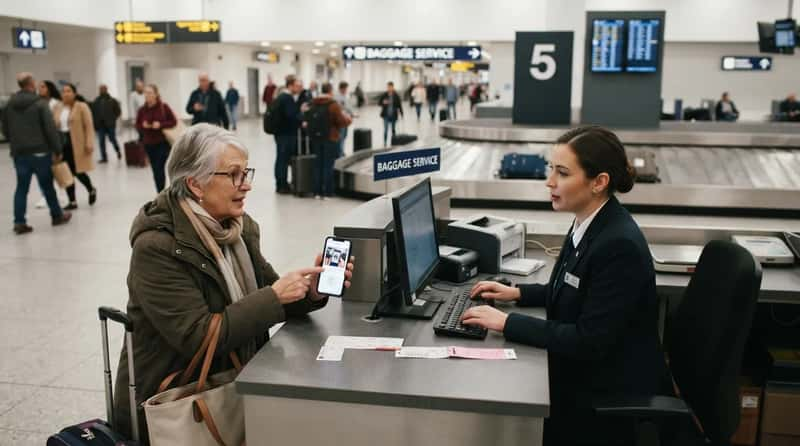
This one doesn’t stop a charge. It gets your money back after the airline fumbles.
Under Department of Transportation rules, airlines must refund your checked bag fee if your bag is significantly delayed. On domestic flights, that means a bag that doesn’t reach you within 12 hours of landing.4
File a report at the baggage desk before you leave the airport. Keep a photo of your bag-fee receipt on your phone, and don’t count on anyone volunteering the refund.
Fast Facts
- Domestic cutoff: a bag that hasn’t reached you within 12 hours of landing.
- What you get back: the checked bag fee you paid.
- Where to start: the baggage desk, before you leave the airport.
- Keep handy: a phone photo of your bag-fee receipt.
#9 – The Alaska Airlines Card Perk That Covers Six Guests
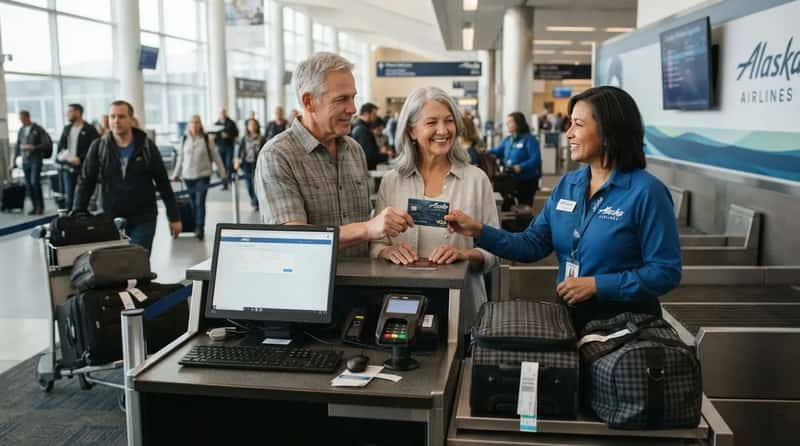
With Alaska, age alone isn’t what unlocks the bag perk. The card is.
Cardholders of Alaska’s co-branded Visa Signature card get the first checked bag free for themselves and up to six guests on the same reservation. If you’re travelling with grandkids or friends, that math adds up fast.
Before you fly, confirm the benefit is attached to your booking. If it isn’t showing at the counter, ask the agent to check.
#8 – The Free Bag Already Baked Into Your Long-Haul Ticket
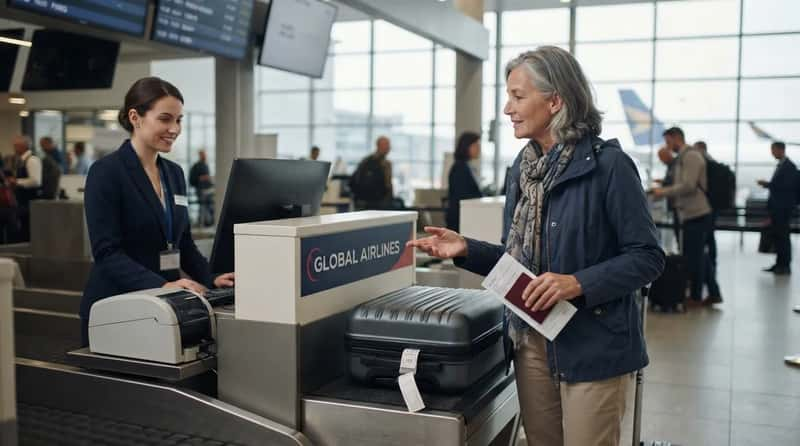
Some airlines include a checked bag on long-haul international flights by default. Domestic economy usually charges for bags, but a ticket to Europe or Asia may not.
This is a fare rule, not a senior benefit. Plenty of travellers still pay bag fees they were never owed because they assumed the domestic rules applied everywhere.
Before you reach check-in, find the baggage allowance line on your booking confirmation. If it says a bag is included and the agent scans a fee, ask them to recheck the fare rules. This matters most on tickets bought through third-party sites, where the allowance doesn’t always display clearly.
#7 – The CPAP That Shouldn’t Cost You a Bag Fee

Many older travellers fly with CPAP machines and portable oxygen concentrators, and some pay for them like ordinary luggage. Under the Air Carrier Access Act, those devices don’t count against your carry-on limit.5 6
At the counter, keep it simple: “This is a medical device, and it doesn’t count toward my carry-on limit under the Air Carrier Access Act.” Name the device and cite the law. That combination usually ends the conversation.
If an agent still pushes back, stay calm and polite. There’s a person you can ask for, and you’ll meet them at #3.
#6 – The Wheelchair or Scooter That Always Flies Free
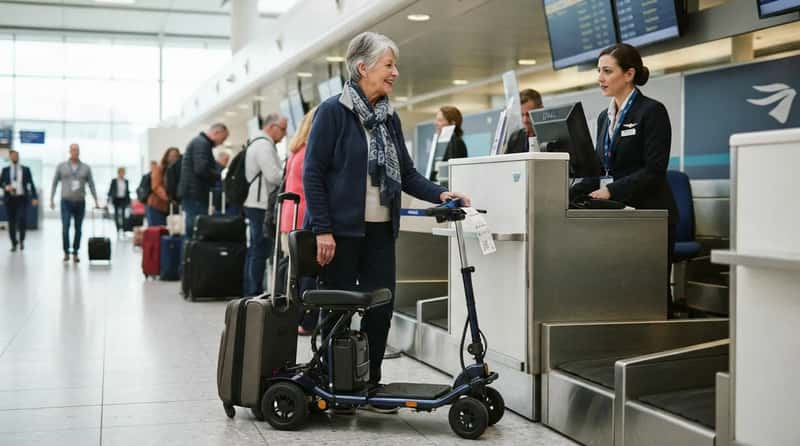
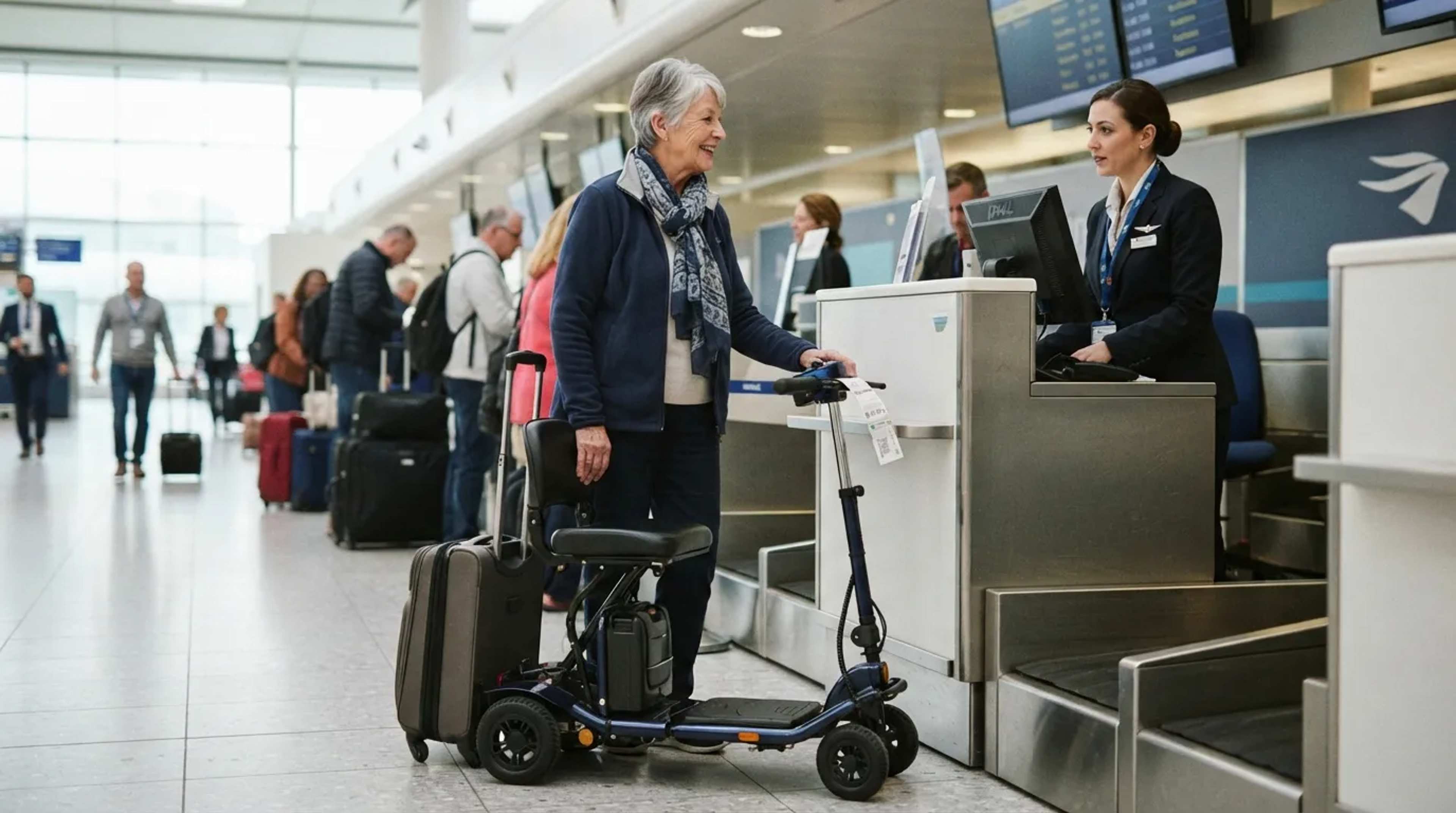
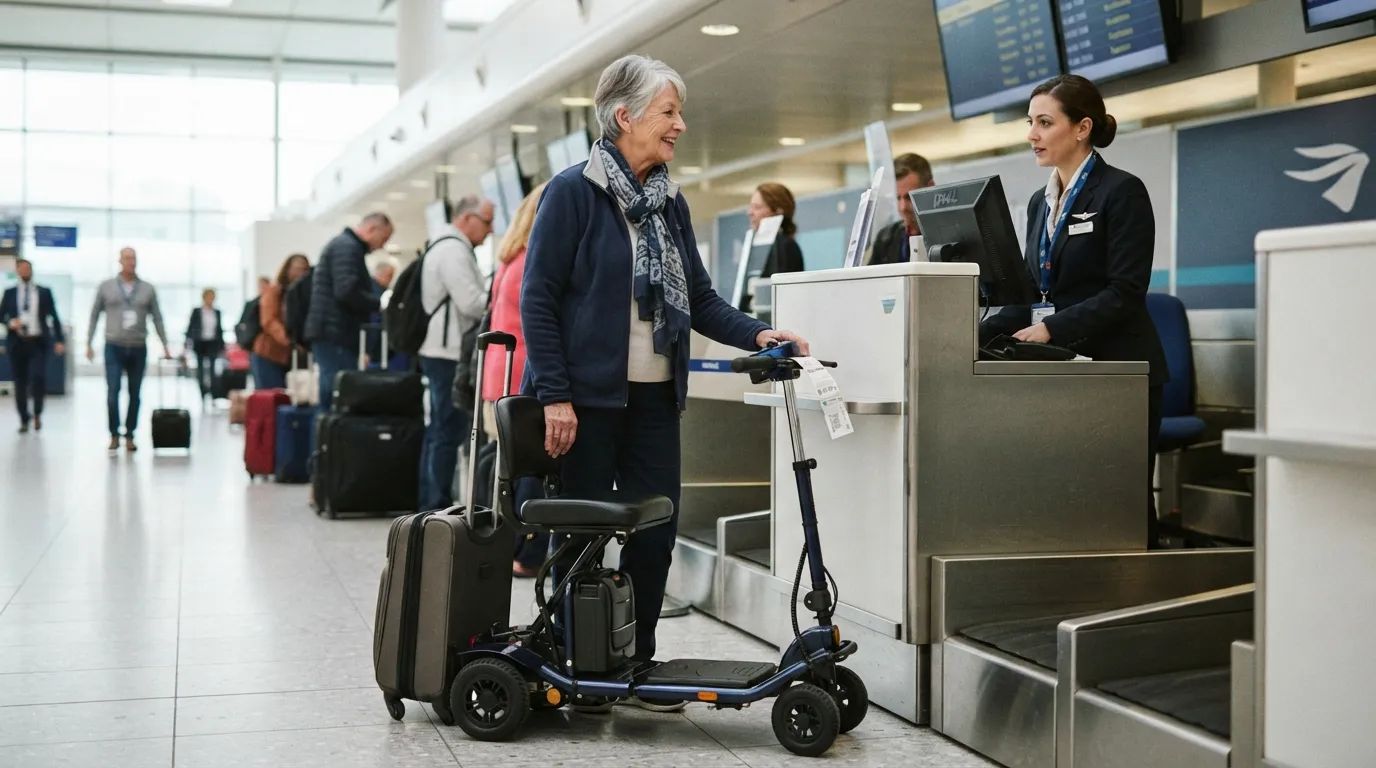
For many travellers, the biggest savings come from mobility devices. Wheelchairs, scooters, and other assistive devices travel without a checked baggage fee under the Air Carrier Access Act, with no age ceiling and no income test.
Airlines must return a checked assistive device as close as possible to the aircraft door. Those devices also get priority in the baggage compartment.6
The fee is zero regardless of airline, fare class, or loyalty status. Only the next one asks you to make a judgment call.
Worth Knowing
- Checked bag fee for wheelchairs, scooters, and assistive devices: $0.
- No age limit and no income test.
- Your device comes back as close as possible to the aircraft door.
- It gets priority placement in the baggage compartment.
#5 – The Extra Bag a Polite, Specific Ask Can Sometimes Clear

This one sits close to the medical exemptions, but it runs on goodwill, not federal law. That makes it worth handling carefully.
If carrying a bag onboard would create a real mobility or safety problem, an agent may choose to waive the fee for checking it. There’s no rule behind it, so don’t frame it as a demand.
If the first agent says no, you can calmly ask for a supervisor. The CPAP and mobility aid rules are binding, but this one depends on the person, the airline, and how busy the desk is.
#4 – The Military Bag Waiver You Might Be Leaving on the Table
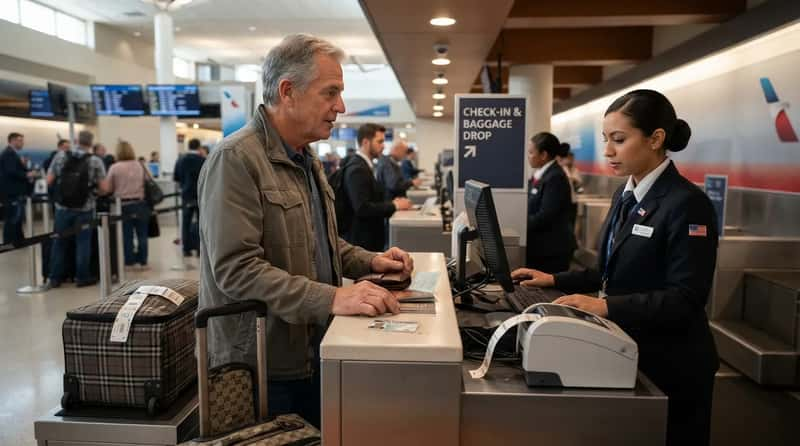
Several major U.S. airlines, including American, Delta, and Alaska, offer baggage fee waivers to military members. The details vary by airline and by whether you’re active duty, retired, or a veteran.
Many travellers over 60 are veterans, and some pay fees they may not owe. Check your airline’s military page, then add your status to your loyalty profile before the trip, not at the counter after the charge posts.
If you qualify and also travel with medical equipment, the two work independently. One doesn’t cancel the other.
#3 – The Airline Official Who Can Overrule the Gate Agent
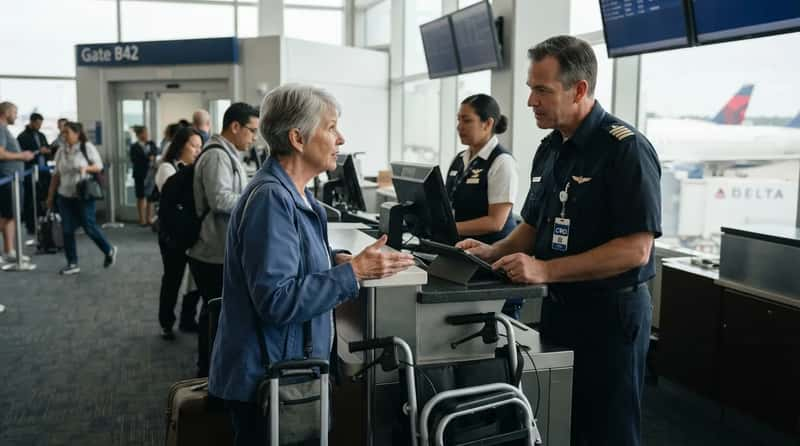
When a fee that should have been waived gets charged anyway, most travellers argue until everyone is frustrated or walk away and pay. There’s a third option.
Ask for a Complaints Resolution Official, or CRO. Airlines operating U.S. flights must make one available during operating hours, either in person or by phone.
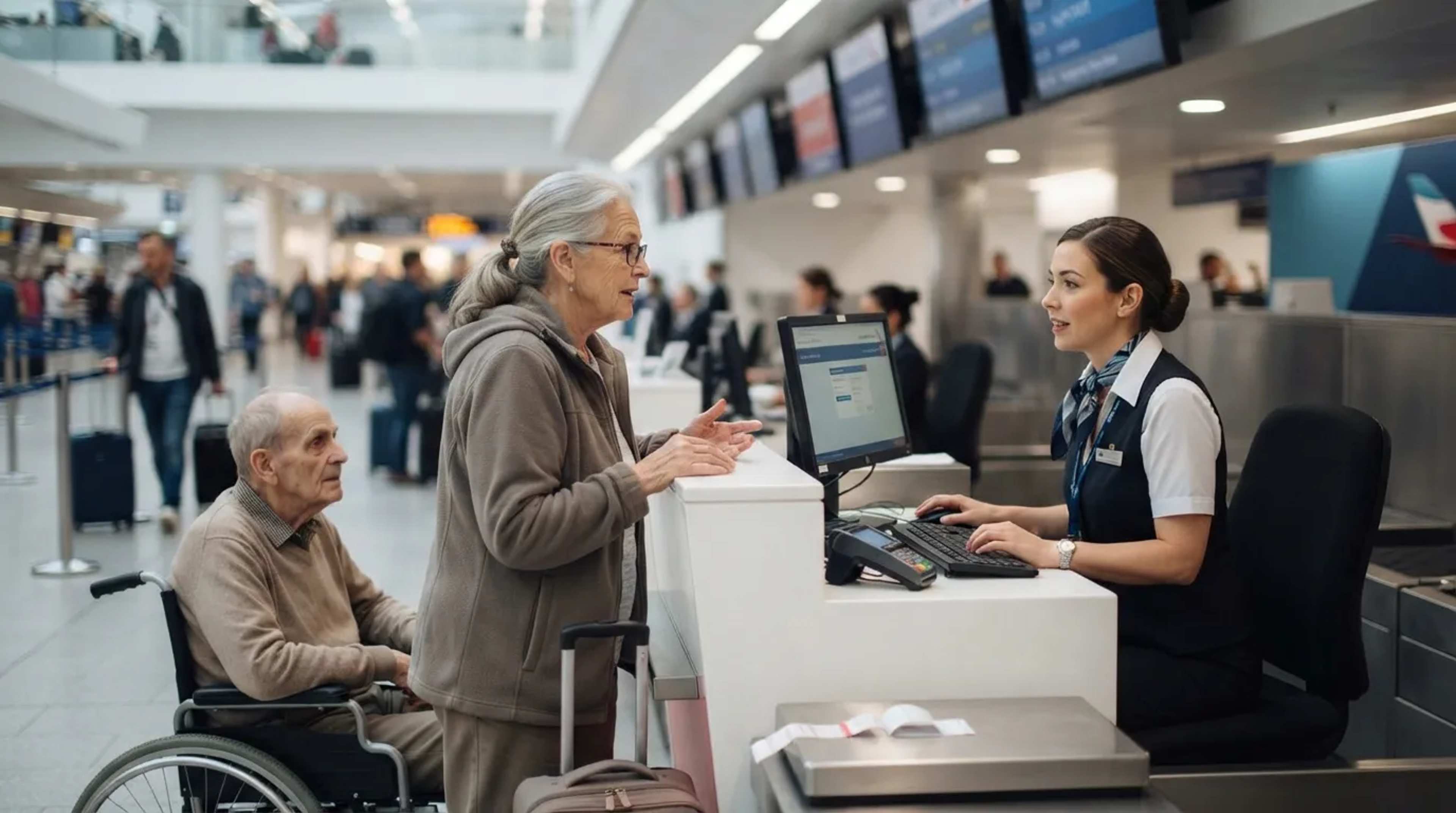
For disability-related problems, like a denied mobility aid or medical device, the CRO has the authority to overrule the agent in front of you. It’s the move to make if #7 or #6 goes wrong at the counter.
Quick Compare
- Federal rule: CPAP and oxygen devices (#7) and mobility aids (#6). Binding, and a CRO can enforce it.
- Account-based: cards, status, and military waivers. Set them up before you arrive.
- Goodwill: the extra-bag ask at #5. It depends on the agent, so be specific and polite.
#2 – The Card Credit That Covers Whatever Your Airline Card Missed
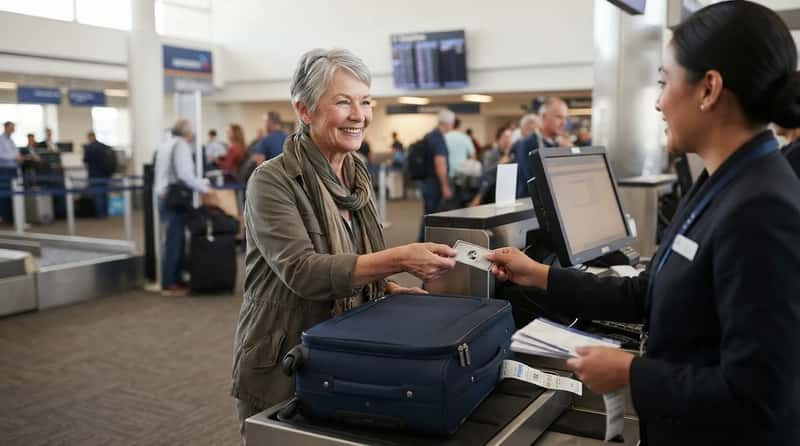
If you don’t stick to one airline, a co-branded card may not pay off. A general travel card with an airline incidental credit can be a better fit for travellers who mix carriers.
The American Express Platinum Card offers up to $200 a year in airline incidental credits for one airline you choose, which can reimburse bag fees. The Business Platinum Card from American Express offers a similar credit. Both carry high annual fees, so they make sense only if you’d hold the card anyway.
At the counter, you pay the fee as usual, and the credit posts to your statement afterward. Make sure your selected airline is set correctly before the trip, because the credit won’t cover the wrong carrier.
#1 – The Medical Device Rule That Beats Even the $100 Gate Fee
The priciest surprise at the airport often isn’t the checked bag. On some budget carriers, a carry-on caught at the gate can approach $100.
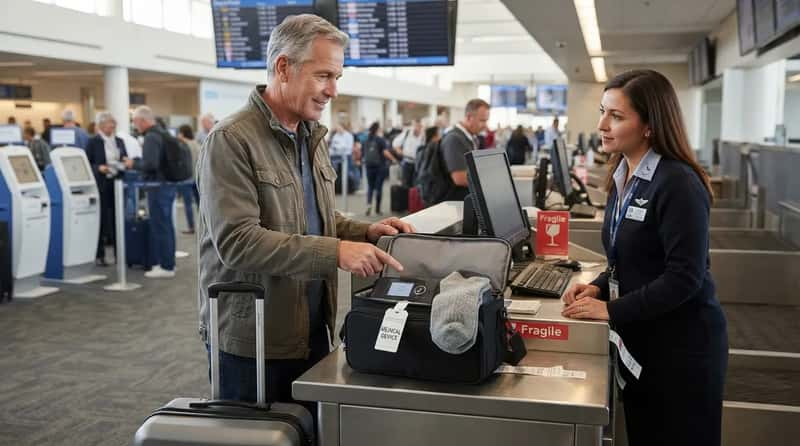
That’s where the medical device rule pays off. A CPAP, oxygen concentrator, or similar device doesn’t count toward your carry-on limit, so it shouldn’t trigger an extra fee.5
Keep the device in its own case, apart from your regular bag, and say so plainly at check-in. Pack socks in with it, and an agent may reasonably treat the whole case as ordinary luggage.
Add a mobility aid, which flies free, and one traveller can move an entire medical setup without paying a single bag fee. For someone who flies often, that can add up to more than any senior fare.
It’s also the rule the fewest travellers over 60 think to ask about.
Across all fifteen, the pattern is the same: the check-in desk can do things the booking website won’t. Senior fares, medical rules, military waivers, loyalty fixes, and companion perks all take a human conversation.
Bring your government-issued ID, know which category fits your trip, and name it plainly. Most of these fees don’t vanish because an airline is generous. They vanish because the right person asked the right thing at the right moment.
What’s the one fee you paid at an airport that you later found out you never owed?
- Air France Senior Pass: https://wwws.airfrance.fr/en/information/offres/cartes-de-reduction/carte-senior
- CNBC Southwest Bag Policy: https://www.cnbc.com/2025/03/15/goodbye-free-bags-southwest-airlines.html
- Amex Delta Gold Business: https://www.americanexpress.com/en-us/business/credit-cards/delta-skymiles-gold/
- DOT Automatic Refund Rule: https://www.transportation.gov/briefing-room/what-airline-passengers-need-know-about-dots-automatic-refund-rule
- DOT Disabilities Bill of Rights: https://www.transportation.gov/airconsumer/disabilitybillofrights
- DOT Air Carrier Access Act: https://www.transportation.gov/airconsumer/passengers-disabilities