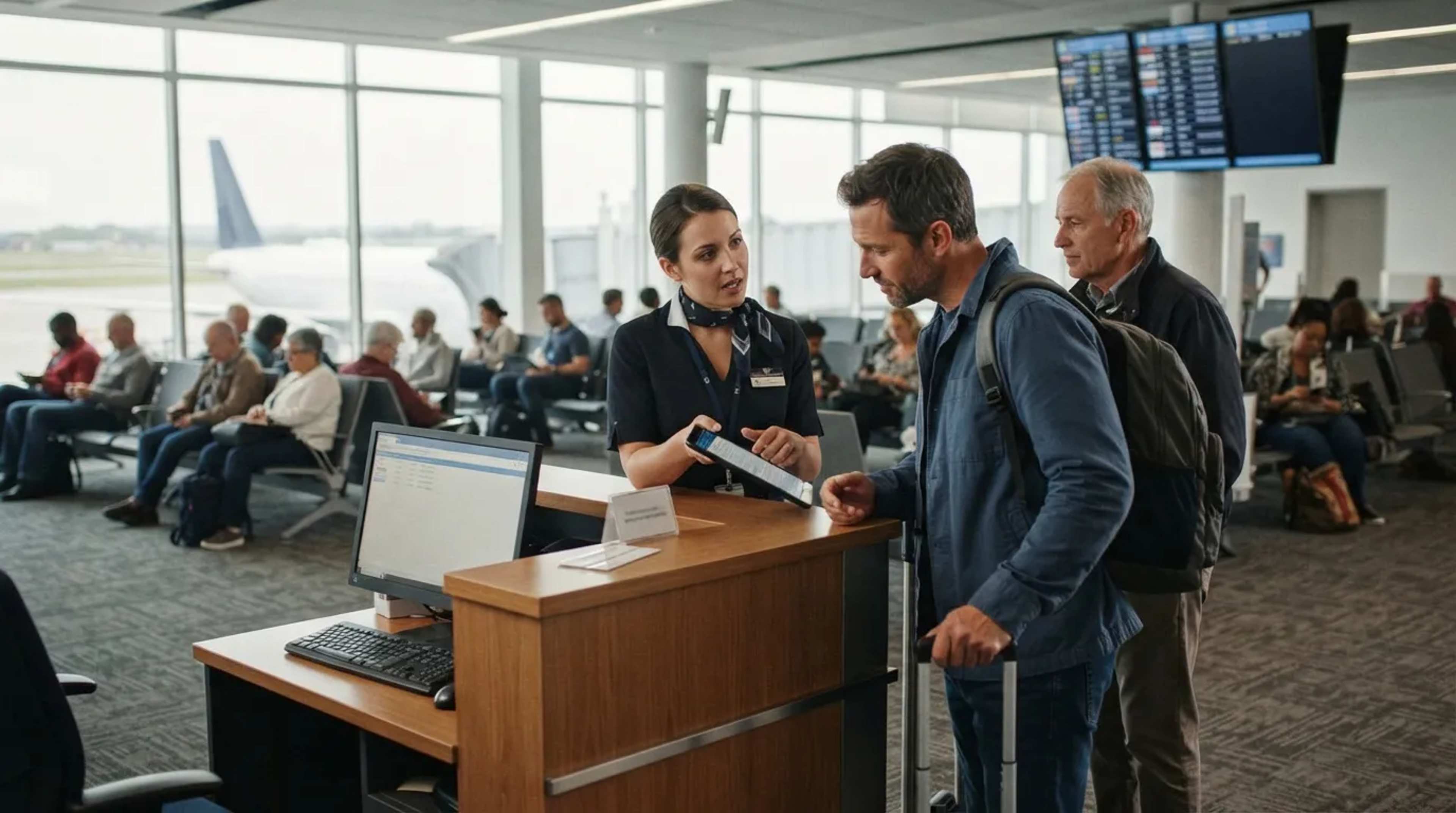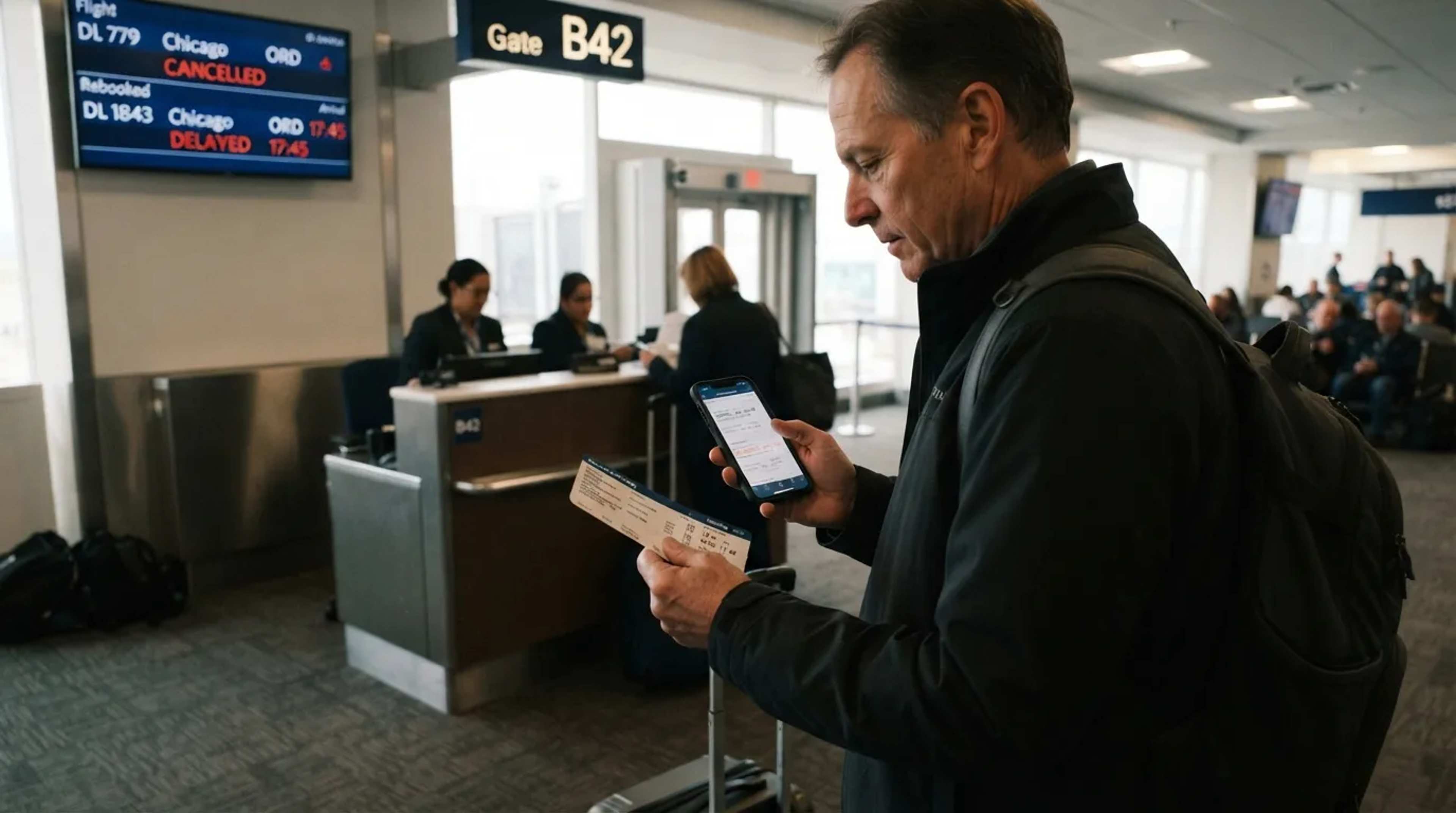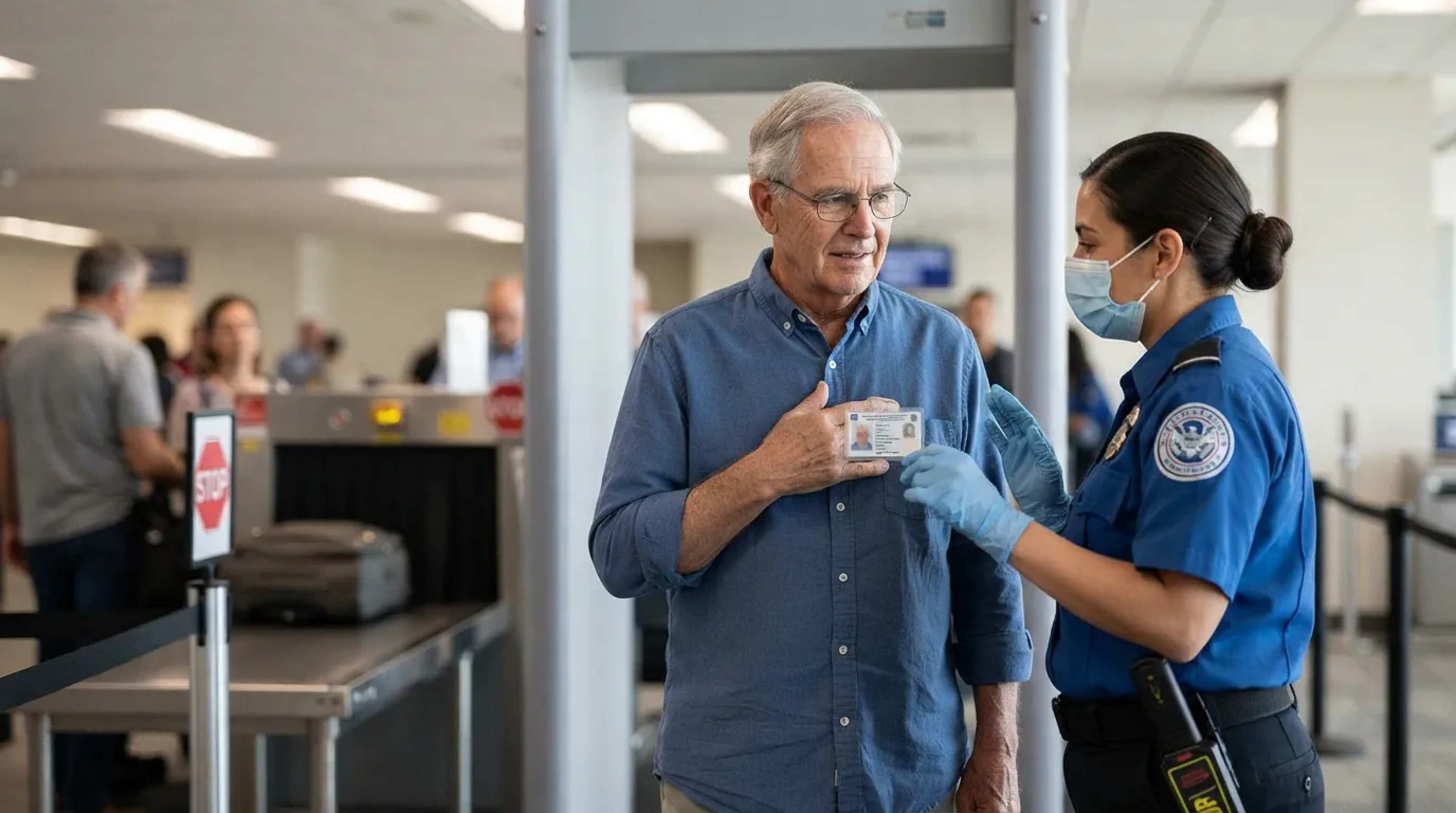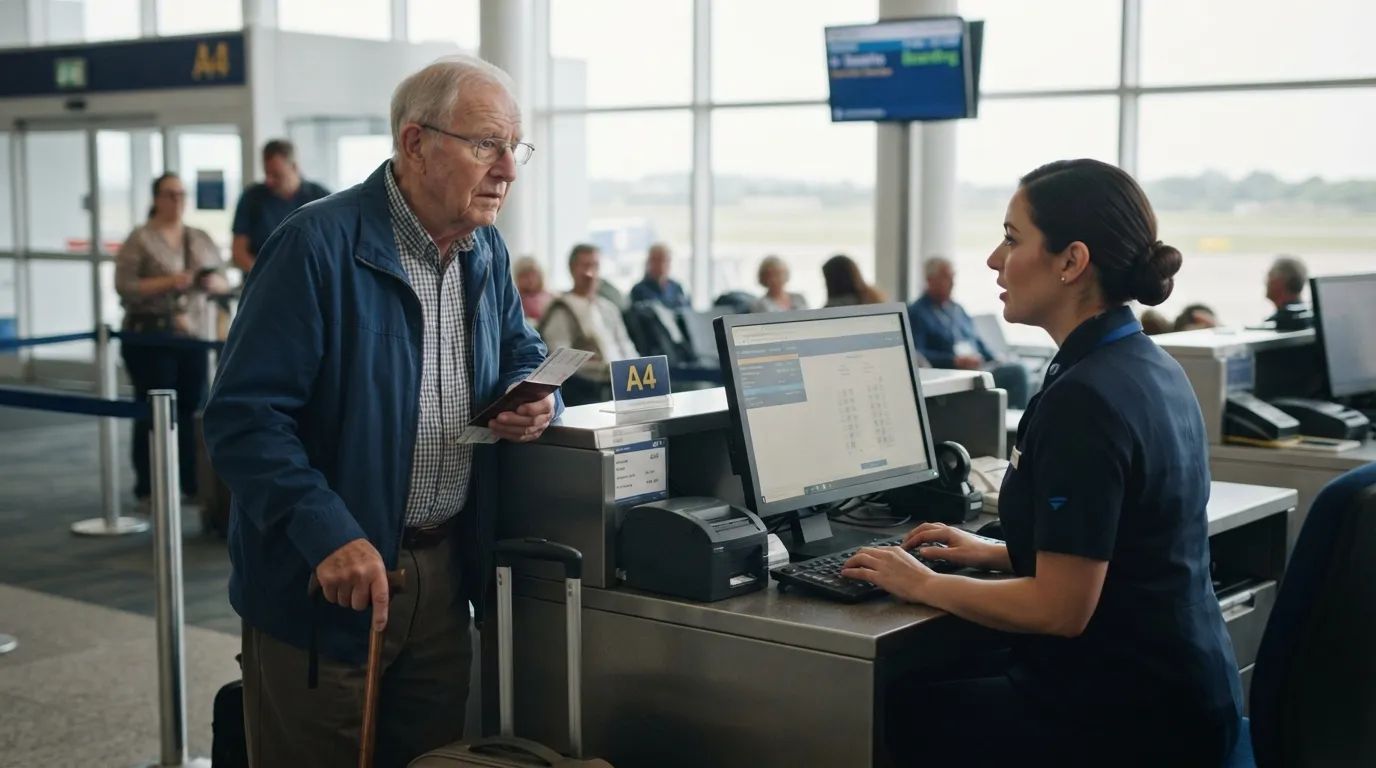
The airport doesn’t sort older travelers by gray hair. It sorts them by a handful of ordinary things: a birthday, a request that has to be spoken aloud, a pill bottle, a document.
Most of these cost nothing to handle, but one has nothing to do with age or health and can still keep you off the flight. It sits in your wallet, and we’ll get there, starting with the age line most people get wrong.
#13 – The 75 Cutoff on TSA’s Own Page
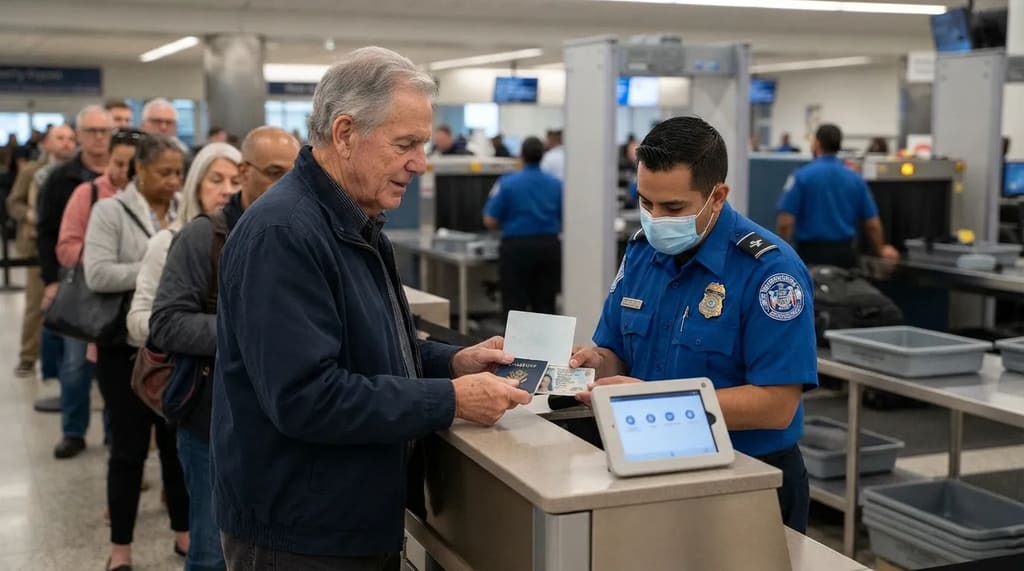
TSA’s own page sets its line at 75, not 70 and not 65. Passengers 75 and older can receive some form of expedited screening, and everyone younger goes through standard screening.1
If you are 70, 72 or 74, that page does not describe your screening yet. Some online advice says the break starts at 65, which goes further than TSA’s wording does.
TSA also says “some form of” expedited screening, not a fixed lane. Even at 75, keep your usual time cushion.
At a Glance
- 75 and older: some form of expedited screening
- Under 75: standard screening
- The wording is “some form of,” not a guaranteed lane
- The 65 figure you may see online goes beyond TSA’s wording
The cutoff is printed on your license, yet when TSA tested the program, officers applied it by eye.
#12 – An Age Judged by Eye at the Checkpoint
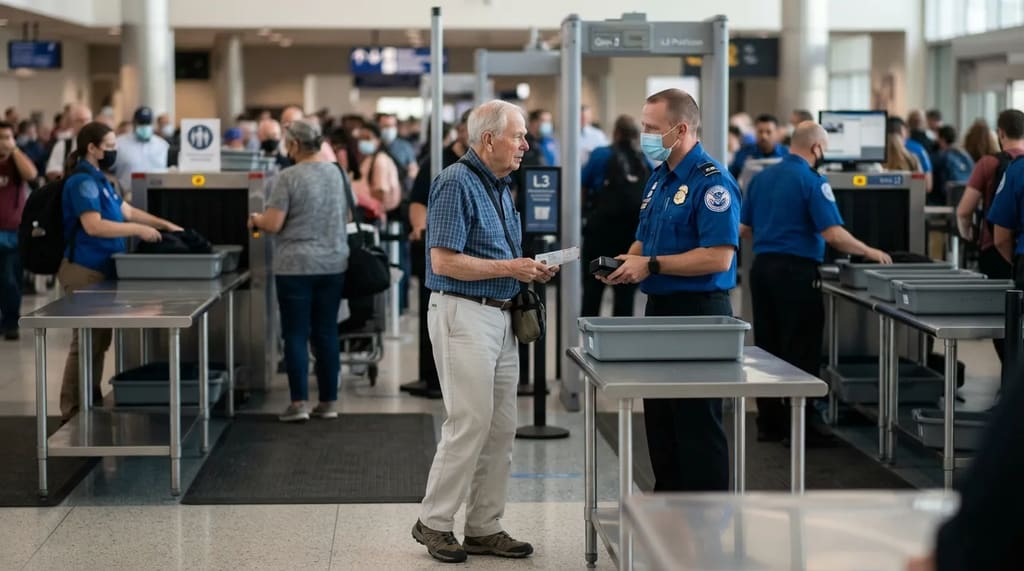
When TSA tested modified screening for passengers 75 and older, officers made a visual assessment of age, the same way they judge whether a passenger is under 12. At the test sites, appearance rather than a birth date decided who got the lighter treatment.
If you are 75 or older and look younger than you are, a quick glance may send you to the standard line. Saying your age politely costs you nothing.
What the 75 break covers is narrower than its reputation, and the shoes are the first example.
#11 – Light Jacket Off, Shoes On
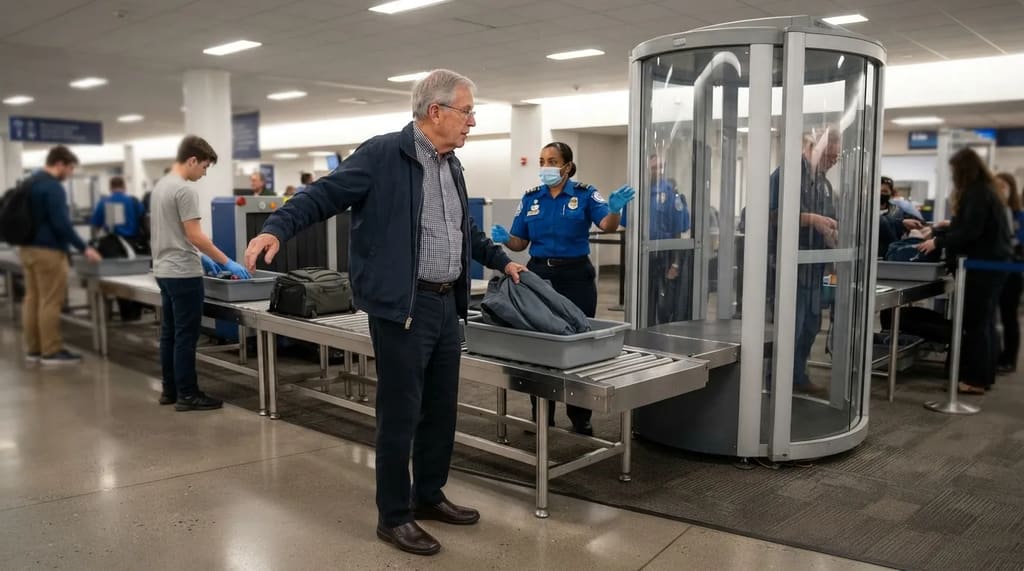
At 75 and older, TSA says you may leave your shoes on, but light jackets still come off for Advanced Imaging Technology screening. Advice that says older travelers can keep a jacket on goes further than TSA’s page does.
The shoe half of that break has lost most of its value, because TSA ended its shoe-removal requirement for travelers of every age in July 2025. Treat the shoe exemption as retired and slip the jacket off while you wait.
If an alarm goes off, you may be required to remove your shoes for further screening or undergo a pat-down. That is true at any age.
#10 – Standing Through the Scanner When You Can’t
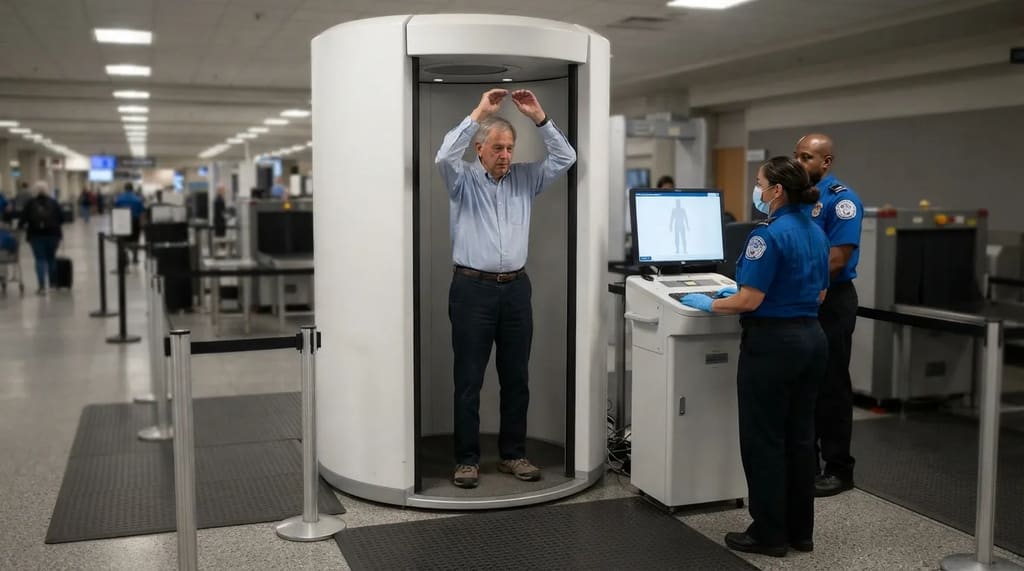
The body scanner asks you to stand still with your arms raised, and for some travelers that is the hardest part. TSA says passengers 75 and older who cannot stand for screening will be screened through other security methods.1
If an alarm leads to a pat-down, you can ask to be seated.
Under 75 you don’t get the age-based break, but a medical condition that prevents standing can still change how you are screened. So a 72-year-old who cannot stand still has a path, just a different one.
Anything that changes how you are screened can be put in writing ahead of time, and TSA offers a card for exactly that.
#9 – The TSA Notification Card for Health Conditions
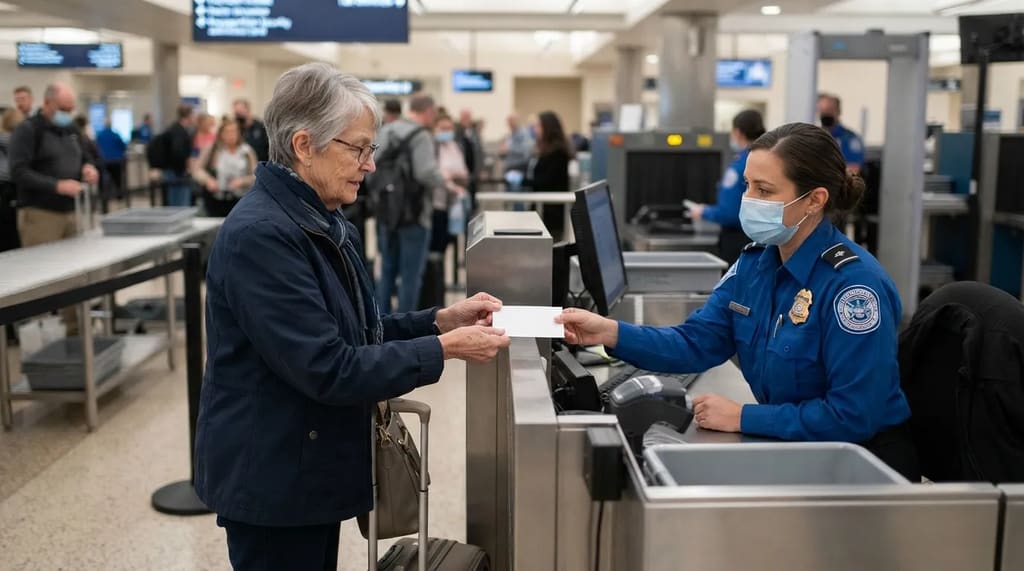
Travelers with disabilities and medical conditions can get a TSA Notification Card that lists conditions, disabilities or medical devices that may affect screening. You hand it to the officer2, so you are not explaining a device out loud in a crowded line.
If you can state your situation plainly in two sentences, the card is optional. If stress makes you lose your place, it earns its spot in your wallet.
Keep your doctor’s name and number within reach in case someone needs to verify your pills, gels and liquids.
A card speaks only when you hand it over, whereas a companion can do the talking and the lifting too.
#8 – A Travel Companion Beside You at Screening
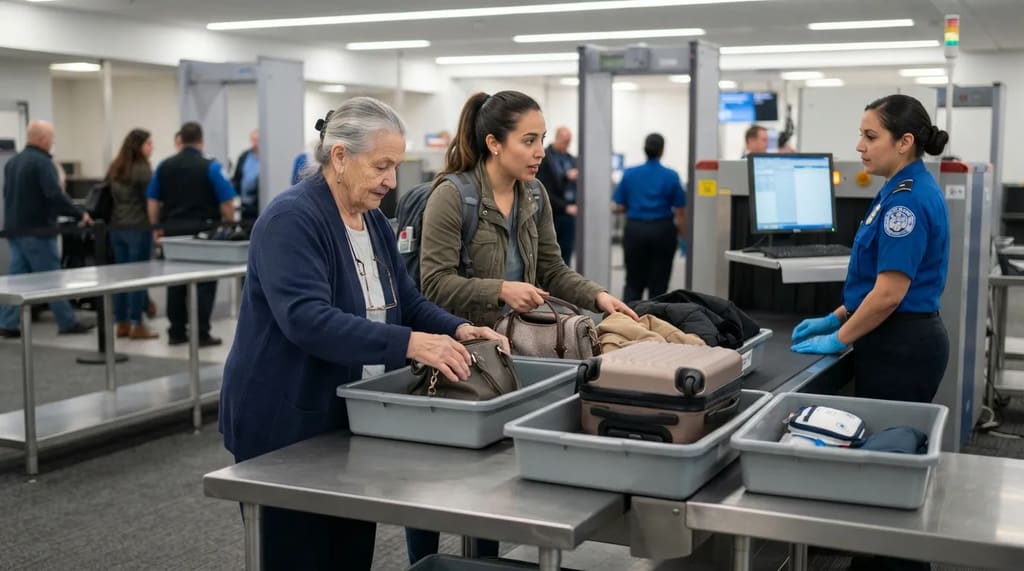
Someone traveling with you can help you screen your items and provide mobility assistance. They can also tell officers about conditions that may affect screening, such as respiratory equipment, medical devices or medications.
That is a real division of labor at the moment you are juggling bins, a boarding pass and an ID. Decide at home who carries what and who speaks first.
Quick Compare
- Notification card: speaks quietly for you, but only once you hand it over
- Companion: carries bins, offers mobility help and explains devices or medications out loud
It is a small plan, and it keeps you from improvising during the busiest few minutes of the trip.
#7 – Pills, Bottles and Labels in the Carry-On
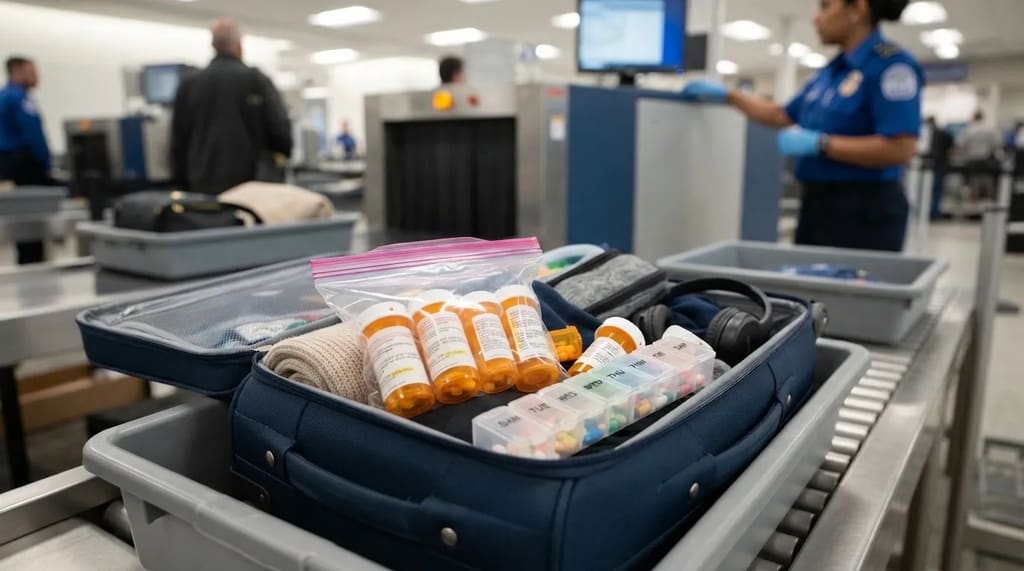
TSA says medication in pill or other solid form is allowed in unlimited amounts as long as it is screened. Because every item must be screened, TSA recommends that medication be clearly labeled.3
Keep it in the carry-on. A bag that vanishes for two days is a far bigger problem than a pill organizer at the scanner.
Pills are the simple case, while liquids and gels follow a separate rule with a step you have to do yourself.
#6 – Liquid Medicine Over 3.4 Ounces
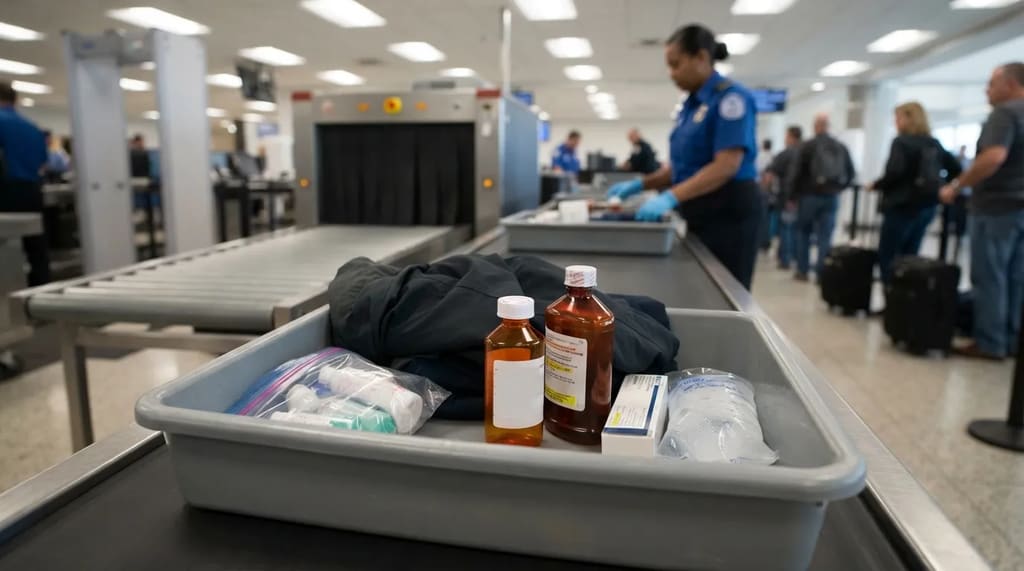
You may bring medically necessary liquids, medications and creams over 3.4 ounces in your carry-on, but you take them out of the bag so they are screened separately. Tell the officer at the start of screening, and they do not have to fit in your quart-size bag.3
The amount should be reasonable for the length of your trip. A large bottle of over-the-counter syrup is more open to argument, so pack that one small.
Officers may test medically necessary liquids separately, and an unresolved concern can keep an item from passing. That is one more reason to have the doctor’s number handy.
#5 – The Seat Request With a Deadline
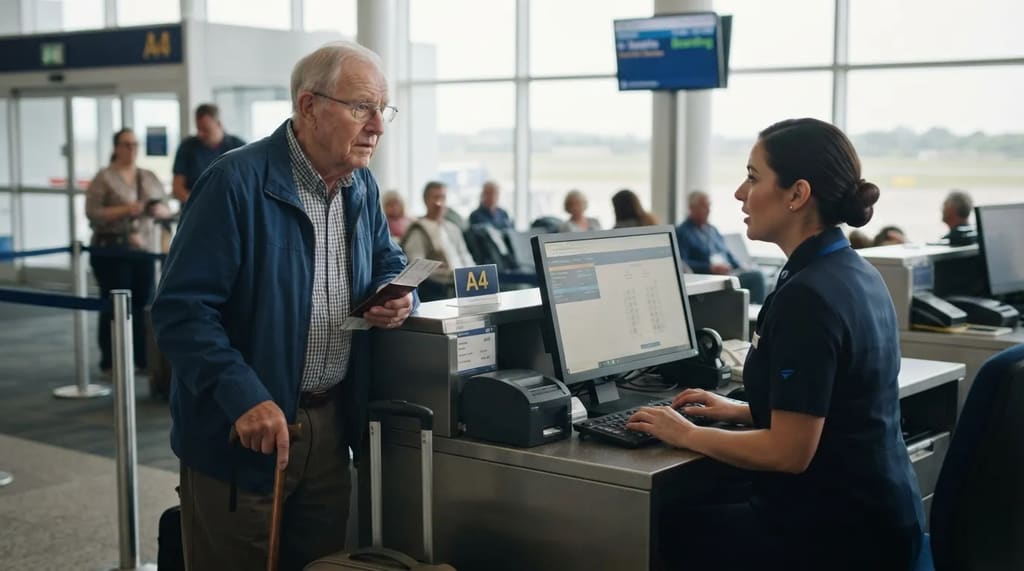
The Department of Transportation says that, depending on your airline’s seating method, you may have to request a seating accommodation more than 24 hours in advance or check in one hour before the standard check-in time. The gate is the wrong place to discover you needed an aisle or extra legroom.
Contact the airline when you book to learn how it handles seating accommodations. That takes five minutes, while fixing it at the desk with a full flight behind you takes a lot more.
A seat assignment settles where you sit and says nothing about how you get from the gate to it.
#4 – Wheelchair Waits and the 30-Minute Limit
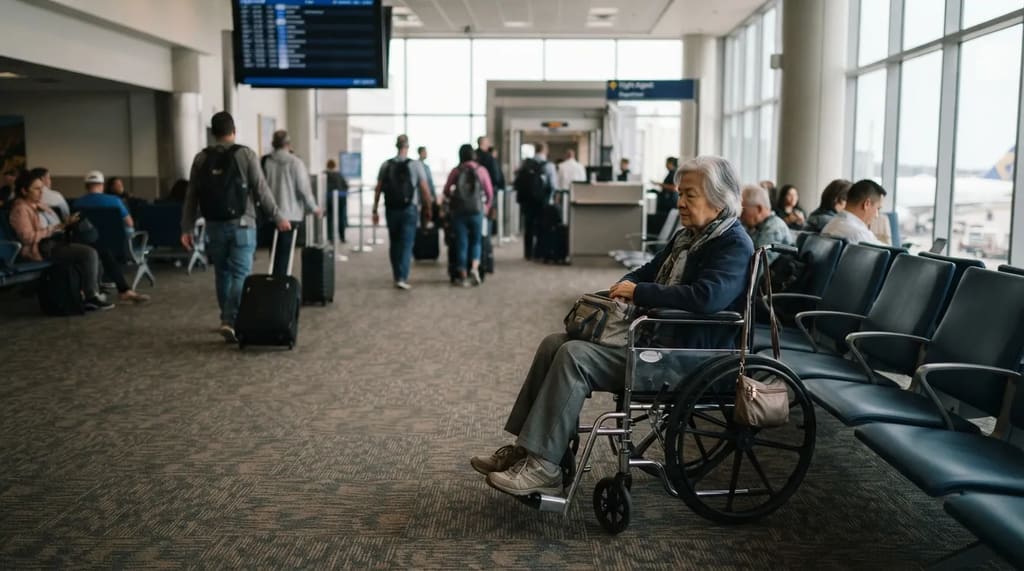
DOT’s Airline Passengers with Disabilities Bill of Rights says passengers with disabilities must get prompt and timely boarding and deplaning assistance, upon request, from properly trained airline personnel. The words that matter are “upon request,” because the help follows the asking.4
Federal rules also say carriers shall not leave a passenger who is not independently mobile unattended in a ground wheelchair or boarding chair for more than 30 minutes. If a long concourse is the hardest part of your day, a wheelchair ride is cheaper than a missed connection, and that limit gives you something to point to if you are left waiting.
Fast Facts
- Boarding and deplaning help comes “upon request”
- The help must come from properly trained airline personnel
- Maximum unattended time in a ground wheelchair or boarding chair: 30 minutes
- The limit applies to passengers who are not independently mobile
#3 – Preboarding Is Written Around Need, Not Age
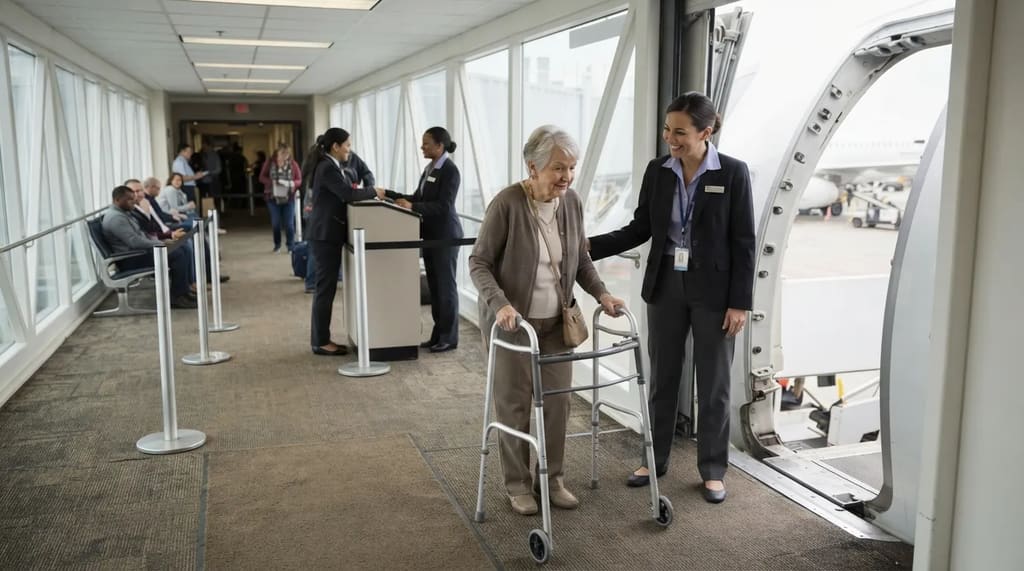
Federal rule 14 CFR 382.93 says a carrier must offer preboarding to passengers with a disability who self-identify at the gate as needing additional time or assistance to board, stow equipment or be seated. The rule is built around disability and around you saying so, so turning 70 does not trigger it by itself.5
Your own pace is the test. If stairs, a long jet bridge or a walker slow you down, tell the agent before boarding starts, because being hurried down the aisle with a line behind you is the real cost.
Boarding is the end of the line, and getting to the checkpoint depends on an ID that, for a growing number of travelers, now lives on a phone.
#2 – The Driver’s License That Lives on a Phone
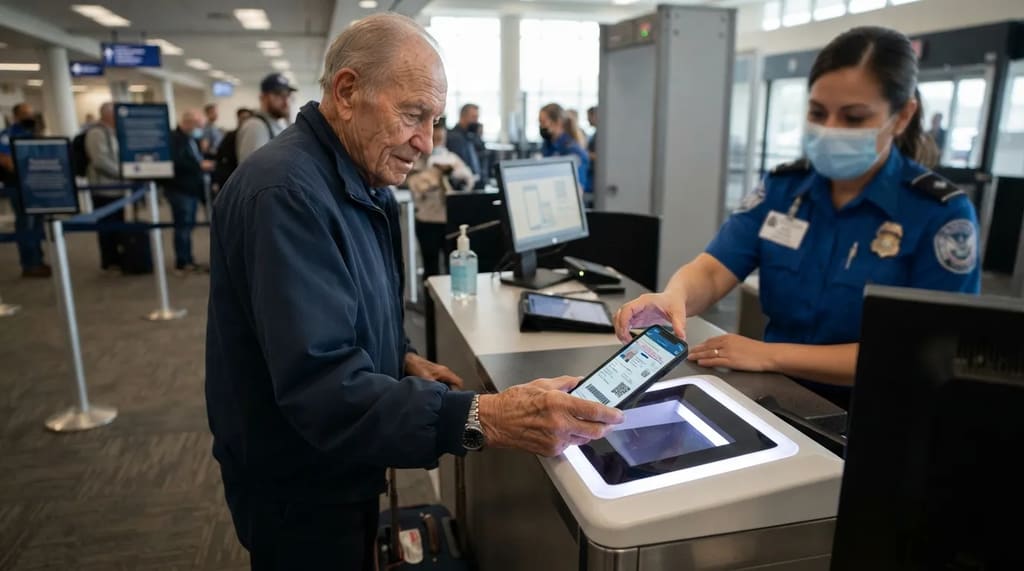
TSA accepts digital IDs through Apple Wallet, Google Wallet and Samsung Wallet at more than 250 airports. That is a big number, but it still leaves airports that do not take them.6
A phone ID also depends on a charged battery and a screen you can unlock with a line behind you. Carry the plastic card too, because a dead phone at the checkpoint leaves you with nothing to show.
The phone is only one way to carry an ID, and whether the ID itself passes is a separate matter, with a fee attached.
#1 – The License That Fails the REAL ID Check
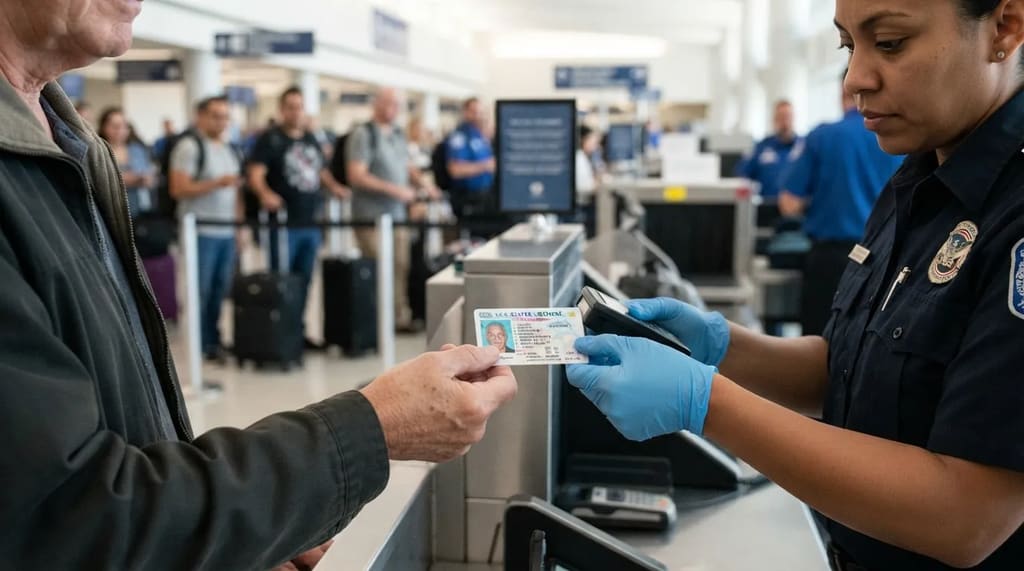
TSA began enforcing the REAL ID requirement on May 7, 2025. Since February 1, 2026, travelers 18 and older without an acceptable travel document must pay $45 to use TSA ConfirmID, an alternative identity verification system.7
Paying does not settle it. TSA officials said the fee does not guarantee verification, and travelers whose identities cannot be verified may be turned away.
The fee is also non-refundable, and verification lasts 10 days, so longer trips mean paying again.7 8 If you hold any of the documents below, bring it and skip the fee.
Worth Knowing
- A valid passport
- A passport card
- A Global Entry card
- A military ID
- A permanent resident card
If you hold none of those, check with your state licensing office whether your license meets the federal standard before you book. Everything above, from preboarding to the wheelchair, assumes you clear the checkpoint, and this is the only item where you can pay and still not fly.
The airport cannot see a slow walk, a medicine schedule or an out-of-date license. It can only respond to what you say and what you hand over.
So this list is less about what staff notice and more about what you put in front of them. Use the week before a flight for the phone calls and paperwork, and save the day itself for walking to the gate.
The free requests, such as a seat, a wheelchair or extra boarding time, cost more the later you make them. What is the one thing you now arrange before leaving home, and what happened the first time you skipped it?
- Air Travel for Seniors: http://travelsafely.org/seniors.html
- TSA Disabilities and Medical Conditions: https://www.tsa.gov/travel/tsa-cares/disabilities-and-medical-conditions
- TSA Medication Travel Requirements: https://www.tsa.gov/travel/frequently-asked-questions/i-am-traveling-medication-are-there-any-requirements-i-should-be
- DOT Accessible Air Travel: https://www.transportation.gov/AccessibleAirTravel
- eCFR 14 CFR 382.93: https://www.ecfr.gov/current/title-14/chapter-II/subchapter-D/part-382/subpart-G/section-382.93
- TSA Digital ID Page: https://www.tsa.gov/digital-id
- CNBC REAL ID Fee: https://www.cnbc.com/2026/01/31/real-id-fee-tsa.html
- TSA ConfirmID Rollout: https://www.tsa.gov/news/press/releases/2026/02/05/tsa-successfully-rolls-out-tsa-confirmid-0