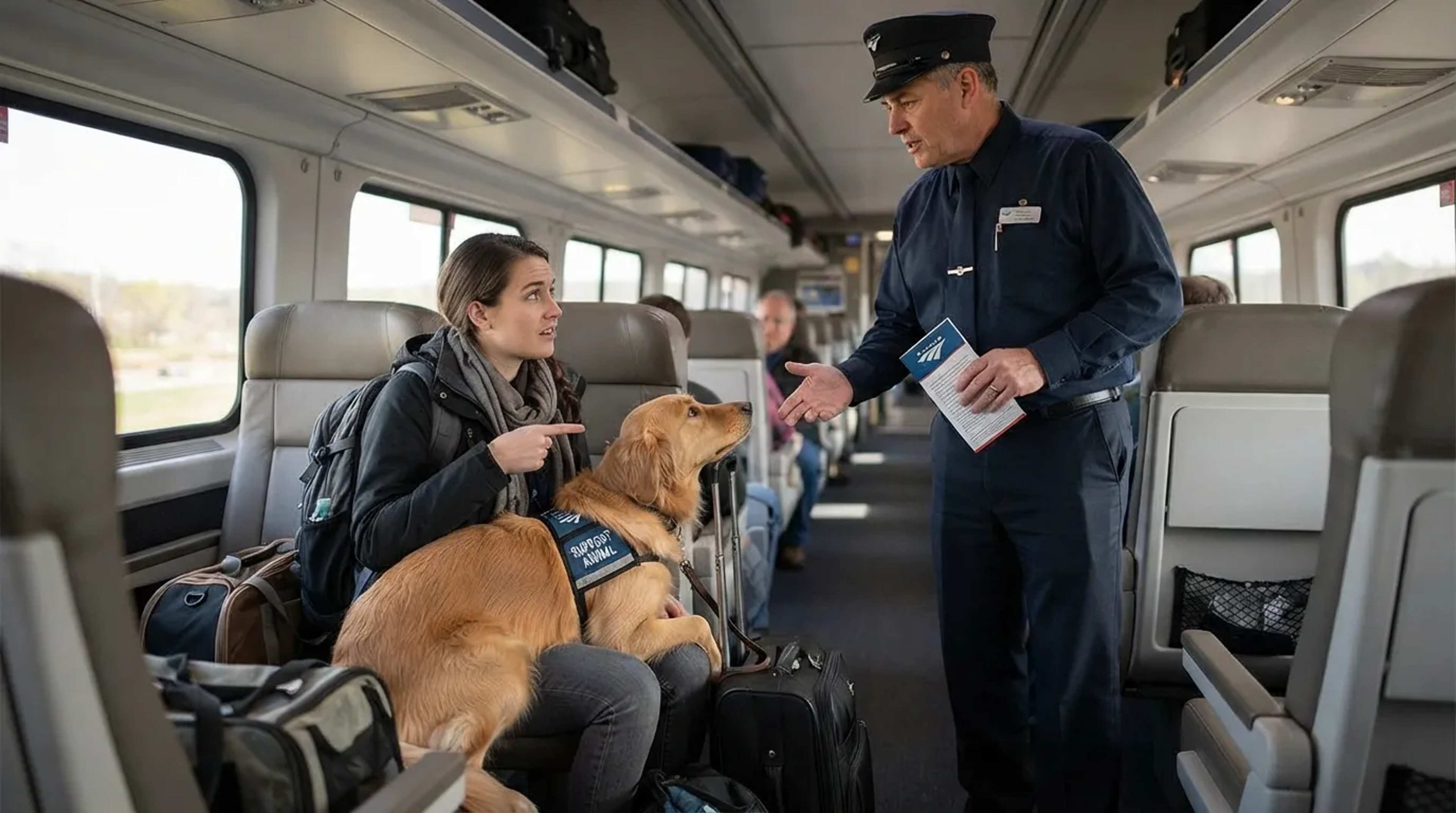
Nobody walks down the aisle handing out discounts. That is the catch behind this list: nearly every perk here goes to the passenger who checks the right box or speaks up first.
Some of these come from the conductor and car attendant, and others from the booking screen and the station. One of them cuts a fare in half, but only on one route and only with a card many readers already carry. First, the small one most people still miss.
#15 – The Senior Traveler Type You Choose Yourself
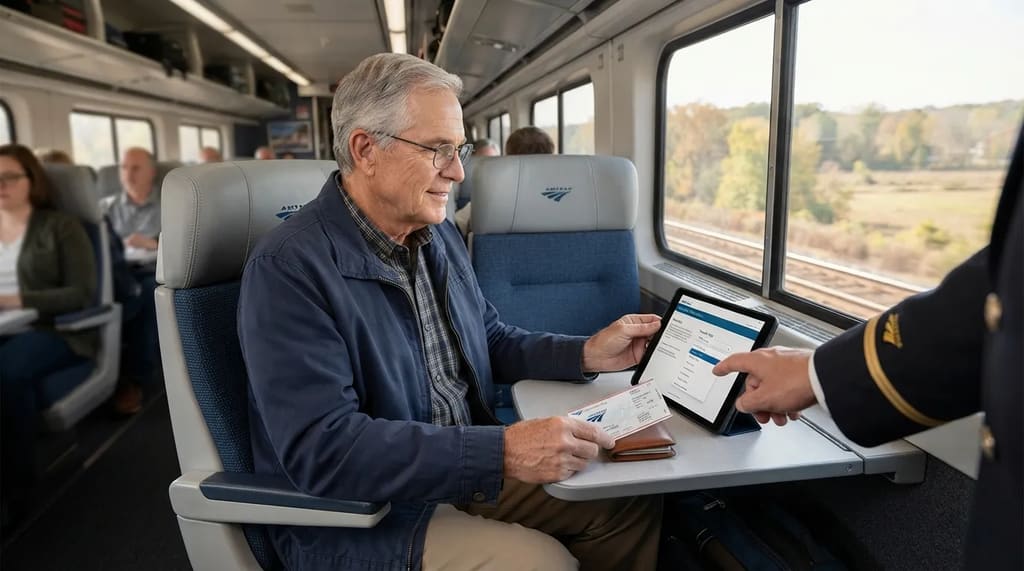
Amtrak gives travelers 65 and over 10% off most rail fares on most trains. The catch is the booking form, where leaving the traveler type on “Adult” takes nothing off.
You must be 65 or older on the date of travel. On a $200 ticket that is $20 back, and double on a round trip.
The age line is 65 on most routes. On one kind of trip, it drops five years.
#14 – A Cross-Border Rate That Starts at Sixty
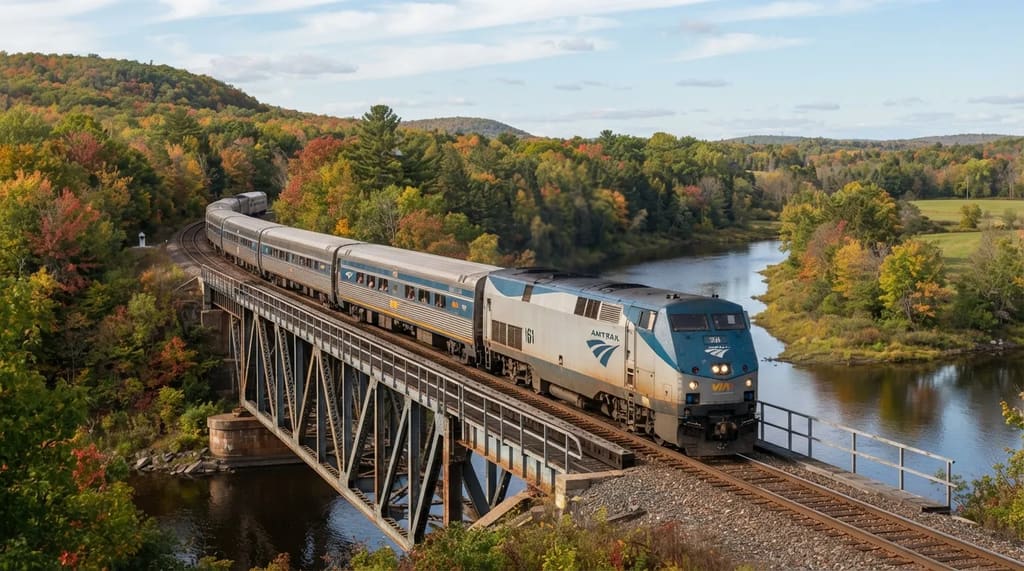
On cross-border services run jointly by Amtrak and VIA Rail Canada, the 10% senior discount applies at age 60 and over.1 2 The Maple Leaf is one example.
The percentage matches the domestic fare. The prize is the lower age, so a 62-year-old gets the discount on a Canada trip but not on a domestic one.
Quick Compare
- Most Amtrak trains: 10% off at age 65 and over
- Joint Amtrak and VIA Rail Canada trains: 10% off at age 60 and over
- The gap: five years of eligibility, same percentage
If you are in that 60-to-64 range, confirm your itinerary is on the joint service before you count on it.
Even the best senior fare stops short of one big part of the ticket, and sleeping rooms show it best.
#13 – Where the Senior Discount Stops at the Roomette
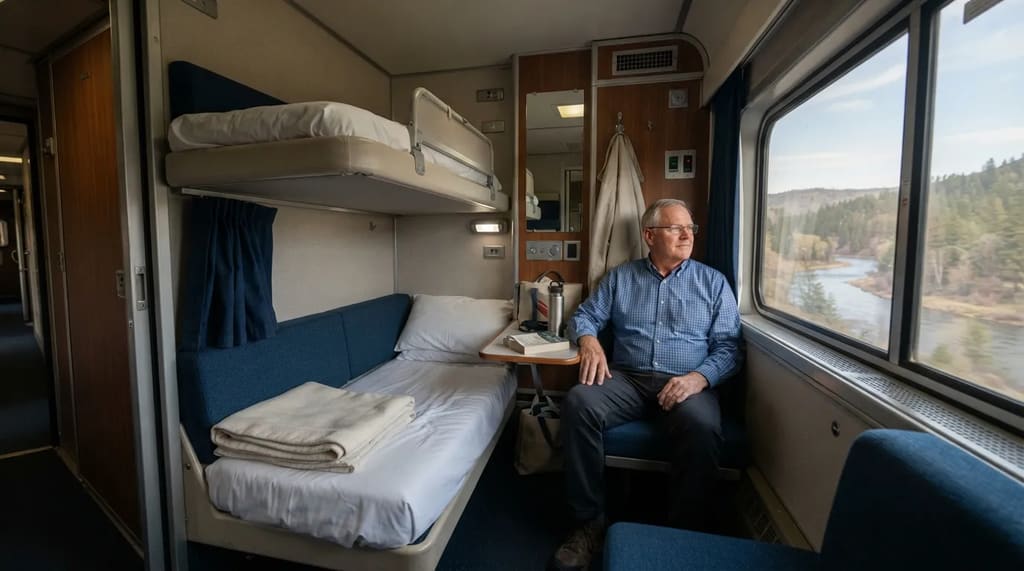
The 10% applies to the base rail fare only, not to roomette or bedroom upgrades.1 The same goes for business class upgrades.
On an overnight trip, the room is a big chunk of what you pay. That makes the 10 percent a much smaller slice of your total than it would be in coach.
My view is that the senior fare should not decide whether a room is worth it. If you want a bed, book the room.
#12 – When a Sale Fare Beats the Senior Fare
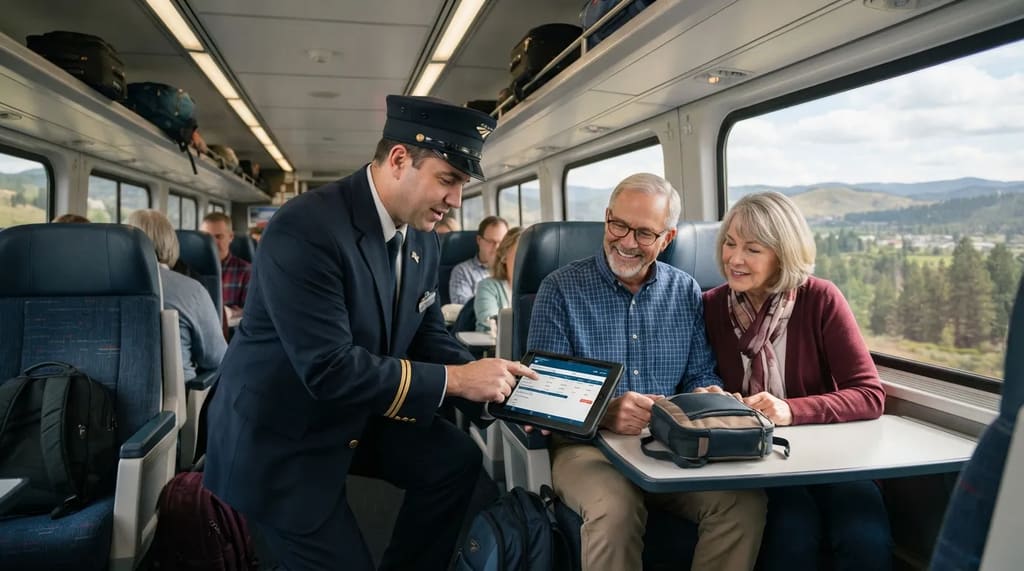
The senior fare cannot be stacked with a separate promo code or companion discount. If a sale fare is cheaper than 10% off the regular fare, take the sale fare.2
The math is simple: any sale fare more than 10 percent below the regular price beats the senior price. I would treat the senior fare as the fallback for dates you cannot move.
#11 – The Photo ID Behind the Discount
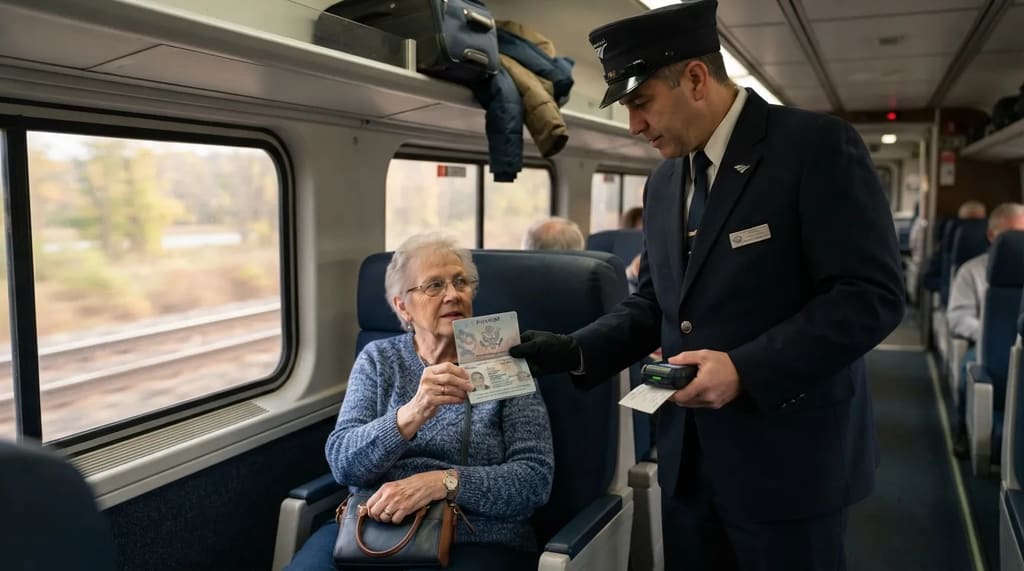
Amtrak may ask for proof of age when you buy or once you are onboard. A government-issued photo ID, such as a passport or driver’s license, covers it.
Keep it in your pocket or purse, not in a suitcase on the rack. That way you can show it when the conductor asks, without getting up.
If two of you are claiming the senior fare, each of you needs your own. For this discount, a birthday and an ID are the whole paperwork.
The AARP card in your wallet is not part of that paperwork at all.
#10 – The AARP Card and the Amtrak Fare

The senior discount rests on your age, not on a membership. Card or no card, it is the same fare.
Sources on AARP-specific rail promotions have been inconsistent, so confirm any current partnership with Amtrak or AARP before assuming it stacks. I would not pay for a membership with Amtrak in mind, since at 65 you get the same 10 percent without it.
Once the ticket is settled, the next help waits at the station, from people in red caps.
#9 – Free Red Cap Baggage Help at Major Stations

At many major stations, uniformed Red Caps handle your bags for free. Amtrak says the service costs nothing for any rider, though tipping is welcome.3
Amtrak’s accessibility information lists these stations: Baltimore, Boston South Station, Chicago, Los Angeles, New Haven, New York, Newark, Philadelphia, Portland (Oregon), Seattle, Washington and Wilmington. Bags handled by Red Caps are protected by a claim check, and Amtrak recommends accepting help only from uniformed Red Cap agents.4 5
But the job covers a lot more than suitcases.
#8 – What Red Caps Do Besides Carry Bags
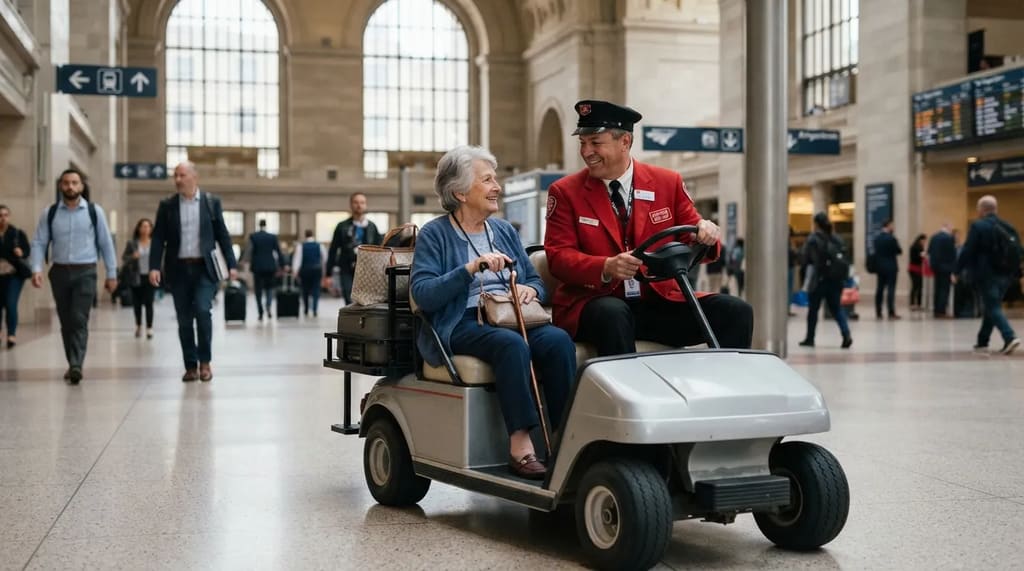
Amtrak says Red Caps help passengers with disabilities, senior citizens and large groups find their way through the station. They also operate motorized vehicles, wheelchair lifts and ramps, and can take you to trains, lounge areas and waiting rooms.
Look for them at the front of the station or in the Red Cap area of the main concourse.3 They cannot assist passengers in the garage, and the level of help can vary by station.
If a long concourse is the hardest part of your trip, this is the help to use. You do not have to think of yourself as someone who needs it.
At the arrival end, the person to tell is on the train.
#7 – The Conductor’s Heads-Up About Your Arrival
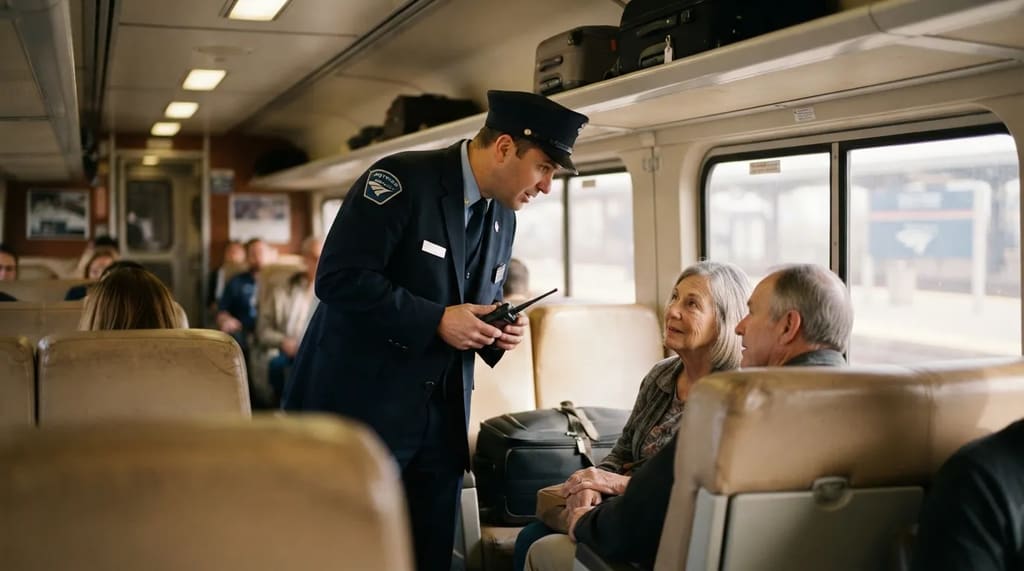
If you will need Red Cap help when you arrive, tell the conductor while you are onboard. That gets the request in before you reach the platform, not after.
This is one of the few items here that appears on no fare screen. You get it only by asking the crew.
At a Glance
- Who to tell: the conductor, while you are onboard
- When: early, before your stop is announced
- What to mention: bags, stairs and long platforms
And the conductor’s usefulness does not stop at arrivals.
#6 – Questions a Conductor Can Answer About Your Car

Amtrak says the car attendant and conductor can tell you whether your car has an accessible lounge or dining car. They can also tell you how long it is between station stops, and help you transfer cars at the appropriate stops.
That matters because onboard wheelchair access is mostly limited to the boarding area and your seat or private room. If walking the length of a train is hard, the answer to “can I get to the dining car?” shapes your whole day. Ask at the start, not when you are already hungry.
None of that helps if the seat you booked was not the accessible one.
#5 – Accessible Seats You Choose at Booking
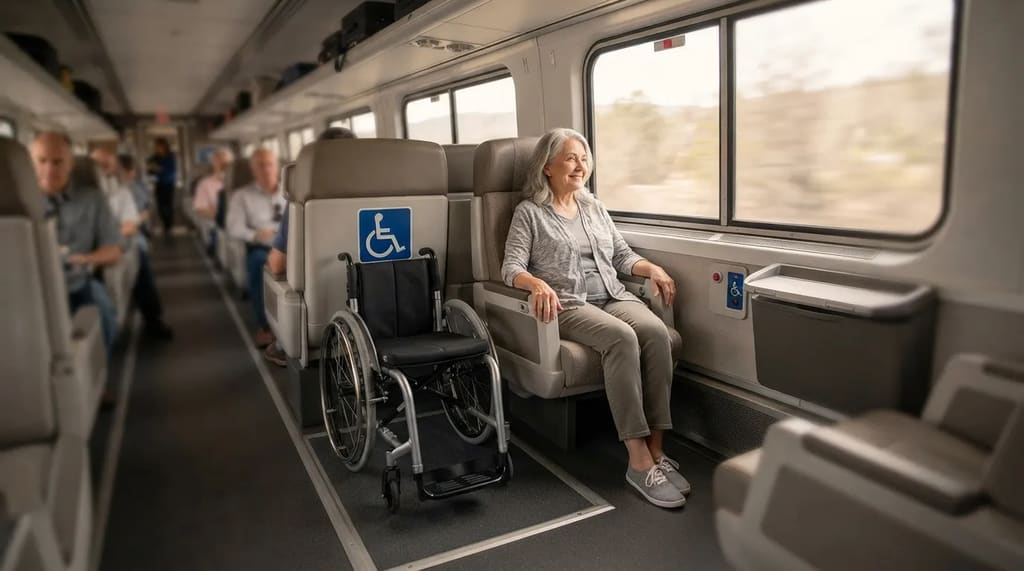
Accessible seating and accessible restrooms are available in at least one coach car on all trains. Most lounge and café cars also have accessible seating.4
You can select wheelchair spaces and accessible seating, and request boarding assistance, when booking on the website or app. Most coach cars hold one or two wheelchair spaces, and Amtrak Vacations says these seats and rooms are first-come, first-served, so reserve early.
If you use a wheeled mobility device, Amtrak lists limits when occupied, so check the current numbers for your train. The figures below are the ones given:
- No wider than 27.5 inches
- No longer than 48 inches
- At least 2 inches of ground clearance
Even a perfect seat needs a smooth start at the platform, and that takes a little extra time.
#4 – Why to Arrive Thirty Minutes Early for Boarding Help
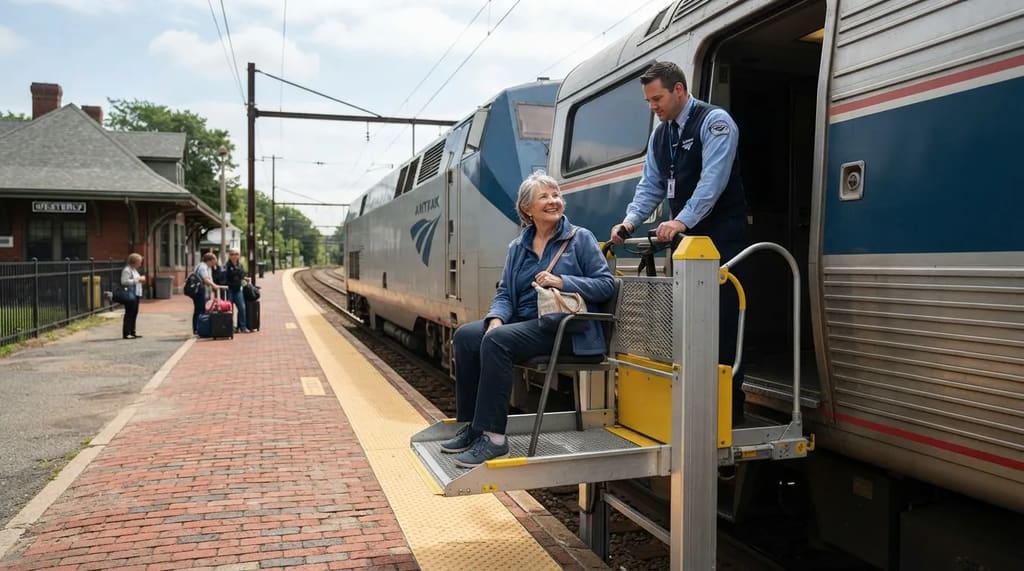
When you need assistance, arrive 30 to 45 minutes before departure. That gives station staff time to set up boarding equipment.
Many Amtrak stations offer level boarding, but others use portable lifts or staff help. Westerly, Connecticut, has no high-level platforms, so passengers board with a portable lift.
Boarding help costs nothing, but the next perk wants proof.
#3 – The Disability Fare That Needs Paperwork
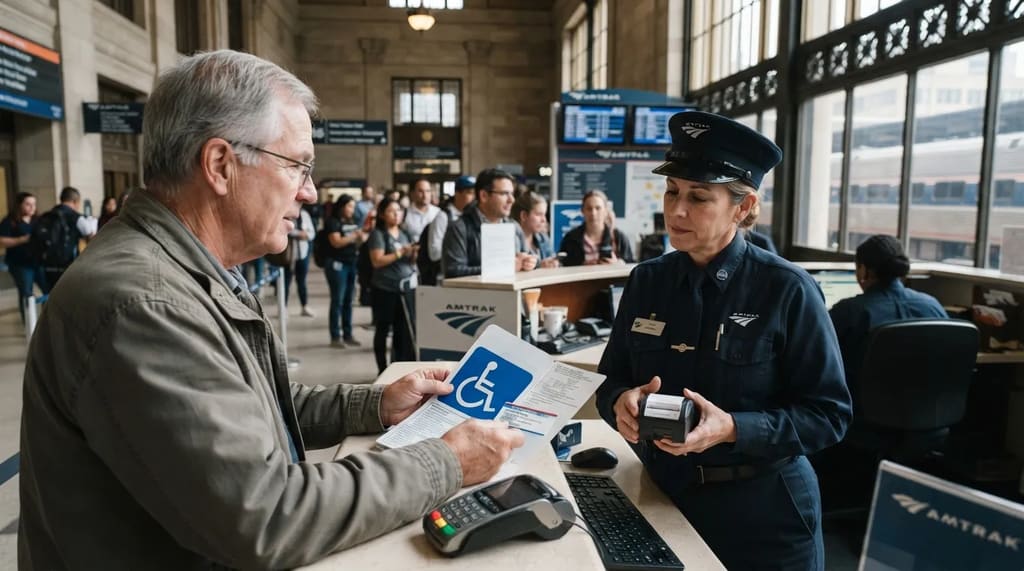
Amtrak offers a 10% rail fare discount to adults with a disability. A companion who can provide the necessary assistance gets the same 10%.6
You must show written documentation at the ticket counter and again when boarding. Accepted items include:
Related Stories From Travelbinger



- A transit system ID card for persons with a disability
- A letter from a physician
- A Medicare card, if you are under 65
- A state disabled parking placard
The discount may not combine with other discount programs, so run the same comparison you did with the sale fare.6
On an overnight trip, the fare is the smaller question. The bigger one is the room.
#2 – The Accessible Bedroom on the Entry Level
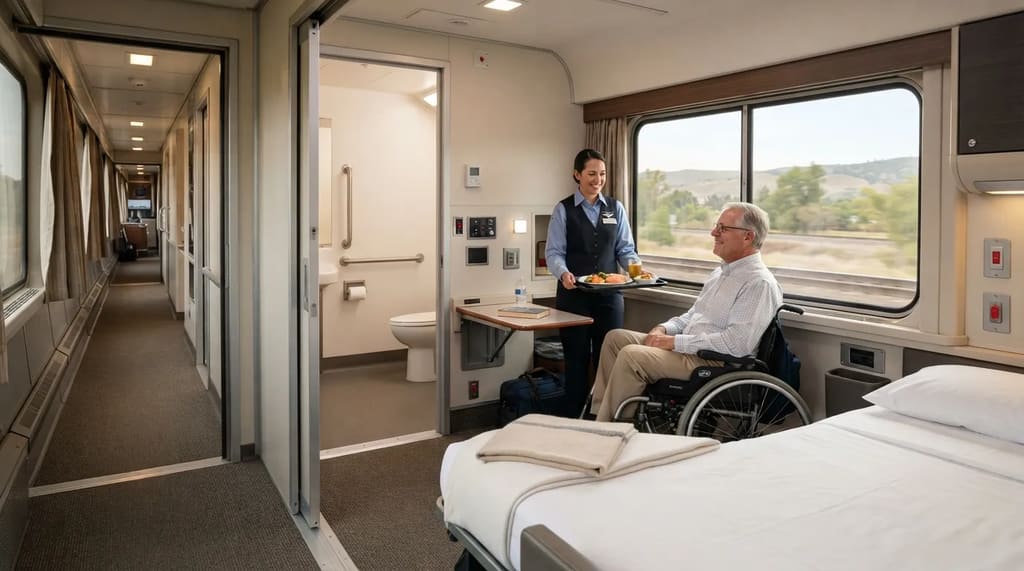
For First Class customers traveling with a disability, Accessible Bedrooms sit on the entry level of the train and have ample space for a wheelchair. There is one in each Sleeping car, which is why booking early matters.
The room is built around more than floor space. Here is what comes with it:
Why It Stands Out
- A private restroom with sink and toilet
- A dedicated First Class attendant
- Priority boarding
- Complimentary meals, including room service
- Complimentary lounge access at major stations
The room charge is a separate line from the fare, so the senior discount from earlier does not reduce it.
The biggest saving in this piece is not on any long-distance train.
#1 – Half Price on the Downeaster With a Medicare Card
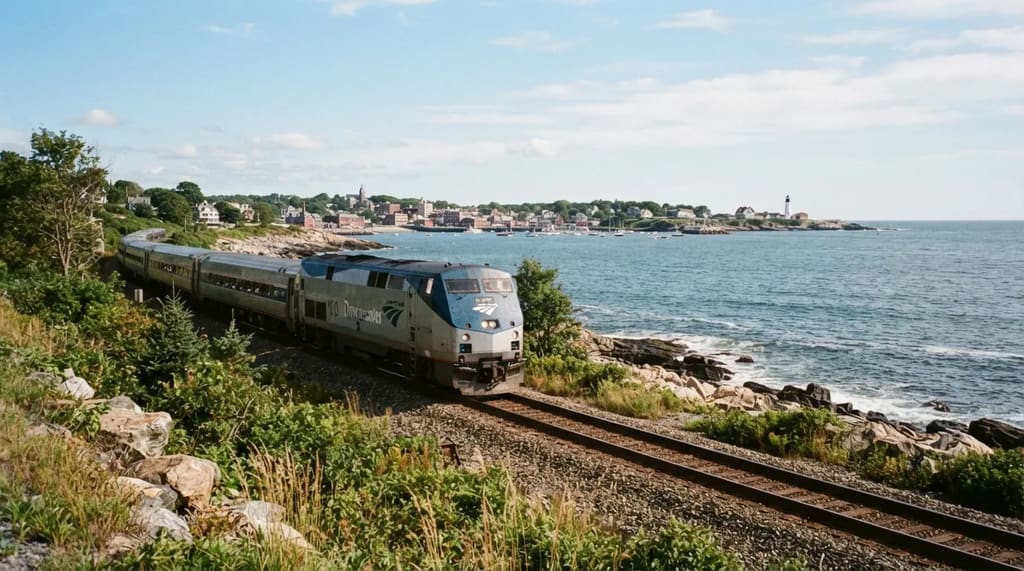
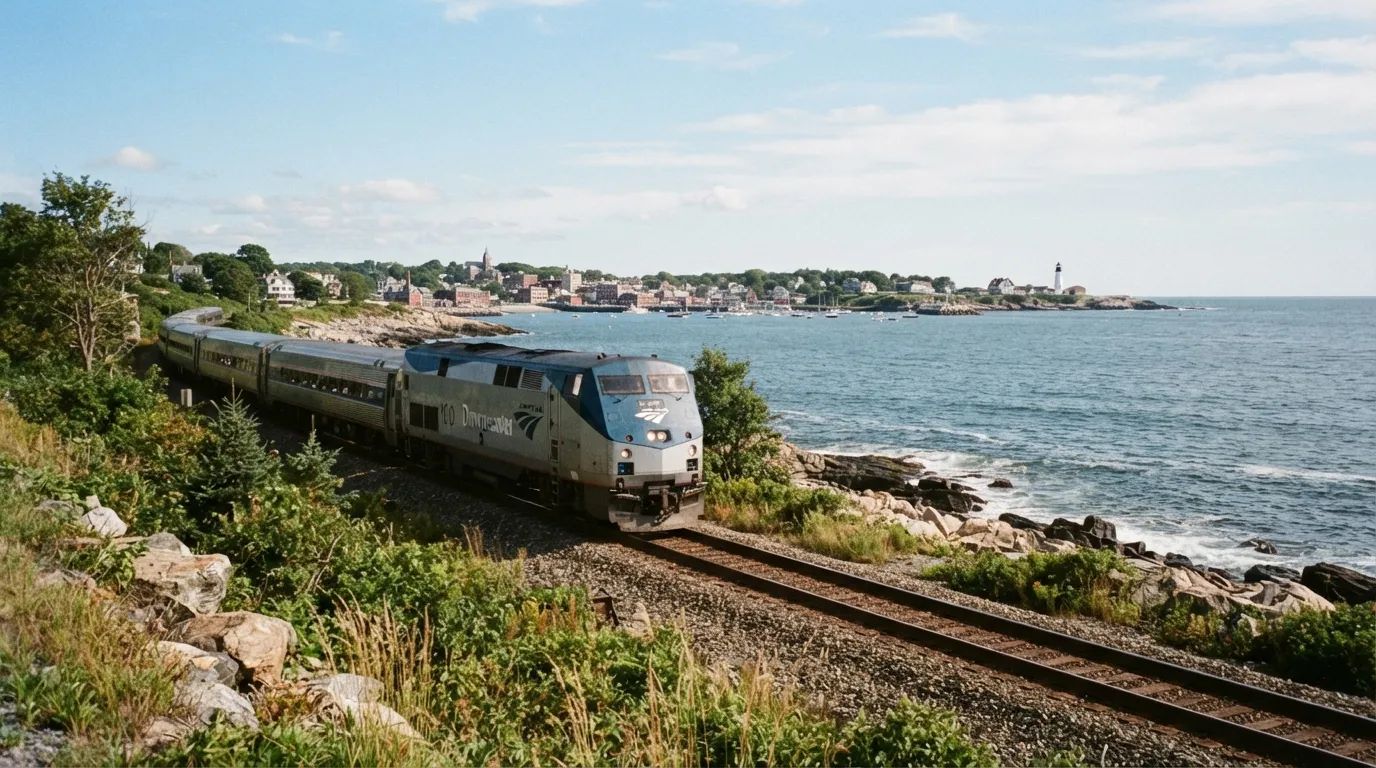
Passengers with a disability and Medicare card holders are entitled to 50% off the regular one-way coach fare on most Downeaster trains. The Downeaster runs between Boston and Portland, Maine.
That is five times the senior fare’s 10 percent, and the same Medicare card can serve as documentation on the disability fare.
You need a valid photo ID and your Medicare card at purchase and while traveling, and the discount is not valid in business class. The Downeaster’s own discount page has also asked that tickets be bought three days in advance, so check the current terms before you buy.
Put all fifteen side by side and one pattern shows up. Each of them depends on a move made early: you select the traveler type, ask the station, tell the crew, or bring the card.
So treat every trip like a short checklist. Before you buy, ask what applies to you, and before you board, tell someone what you will need at the other end.
Which station do you leave from most often, and does it have a Red Cap or only a ticket window?
- Senior Discount Guide: https://retirehub.org/senior-discounts/amtrak/
- Amtrak Senior Discount Rules: https://scenicrailwaytours.com/north-america/amtrak-senior-discount/
- Red Cap Service Overview: https://www.thetravel.com/red-cap-service-amtrak-will-change-the-way-you-travel-forever/
- Amtrak Vacations Accessibility: https://www.amtrakvacations.com/trip-planning/accessibility
- Amtrak Baggage Services: https://www.amtrak.com/baggage-services
- Amtrak Disability Discounts: https://www.amtrak.com/passengers-with-disabilities-discounts