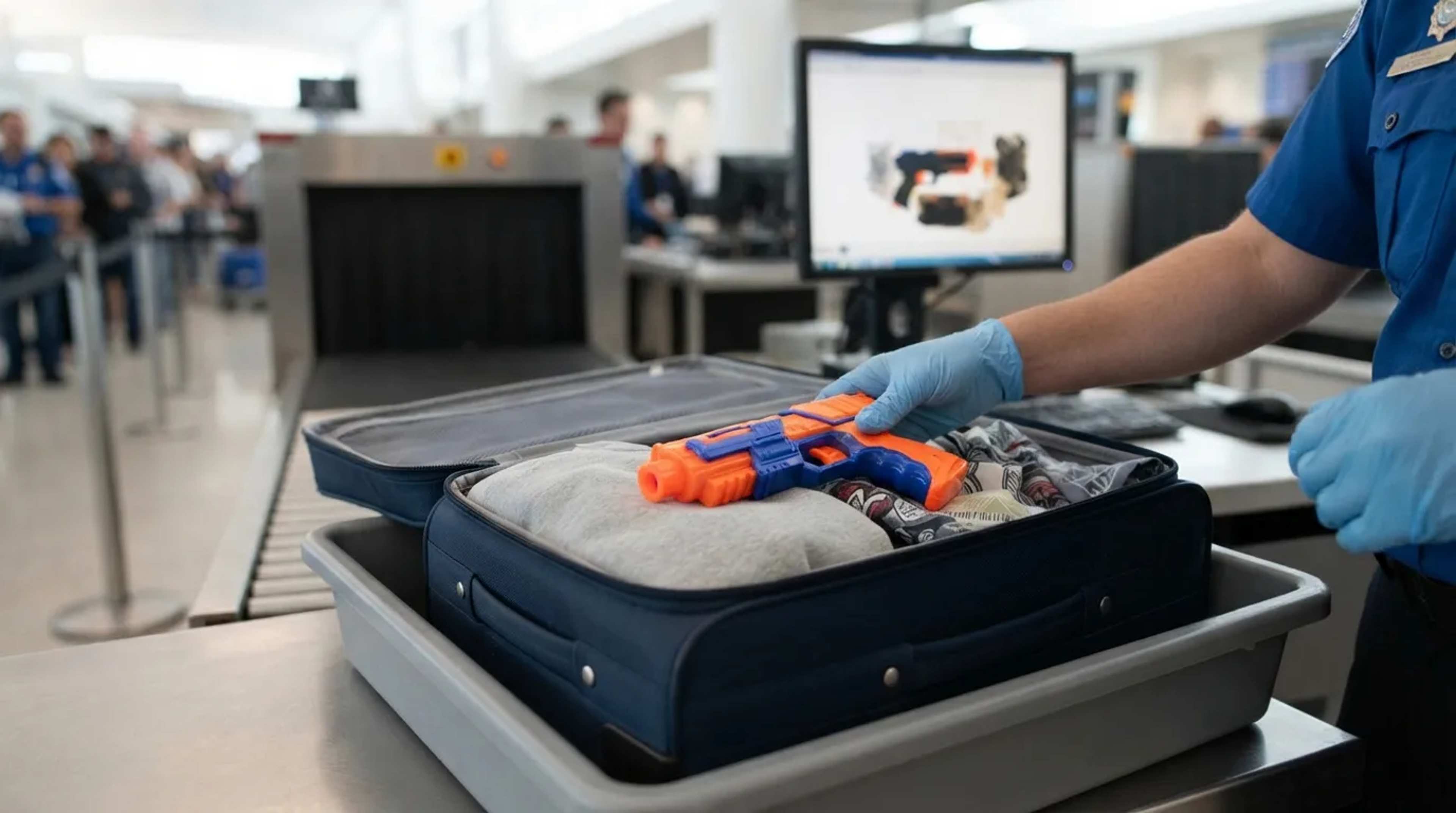
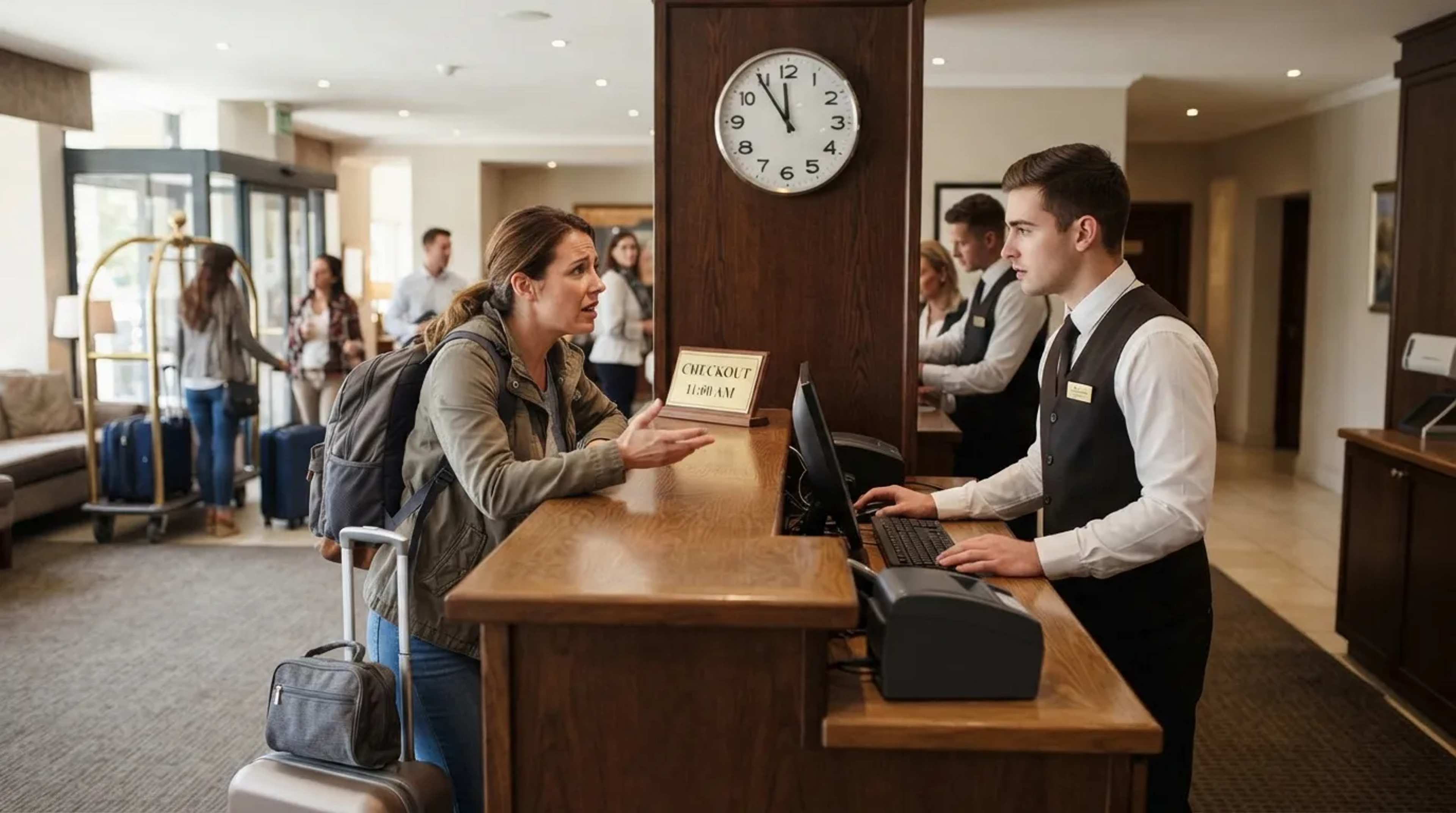
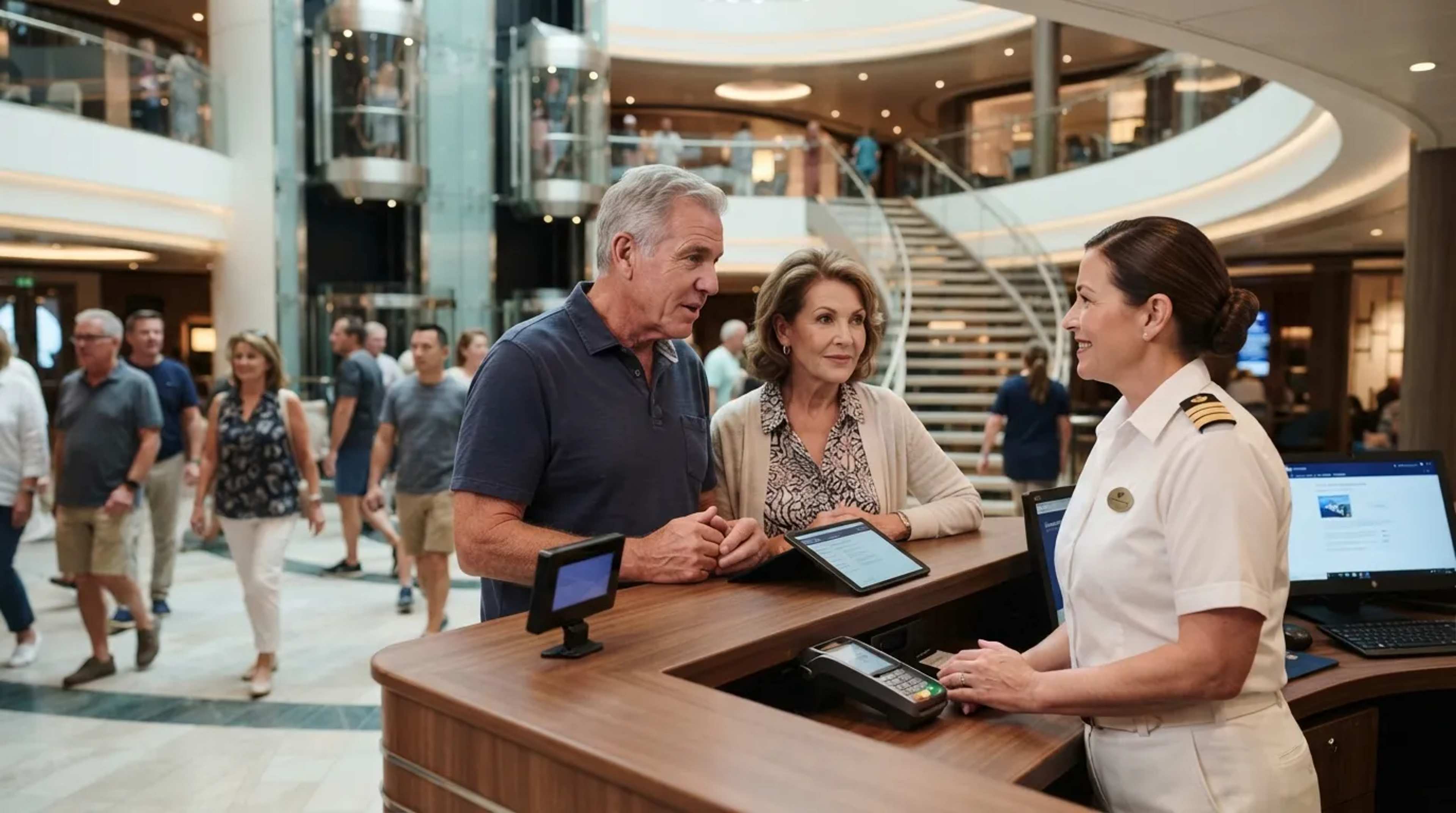
Amtrak gives you a surprisingly generous bag allowance: one personal item and two carry-ons of up to 50 pounds each. That generosity tempts people to stretch every other rule too.
The 25 ideas below run from mildly rude to seriously dangerous. The cheapest one to try carries the biggest consequence on the list, and we start with the mildest: a phone call in a car where people are trying to rest.
#25 – Taking Calls in the Quiet Car
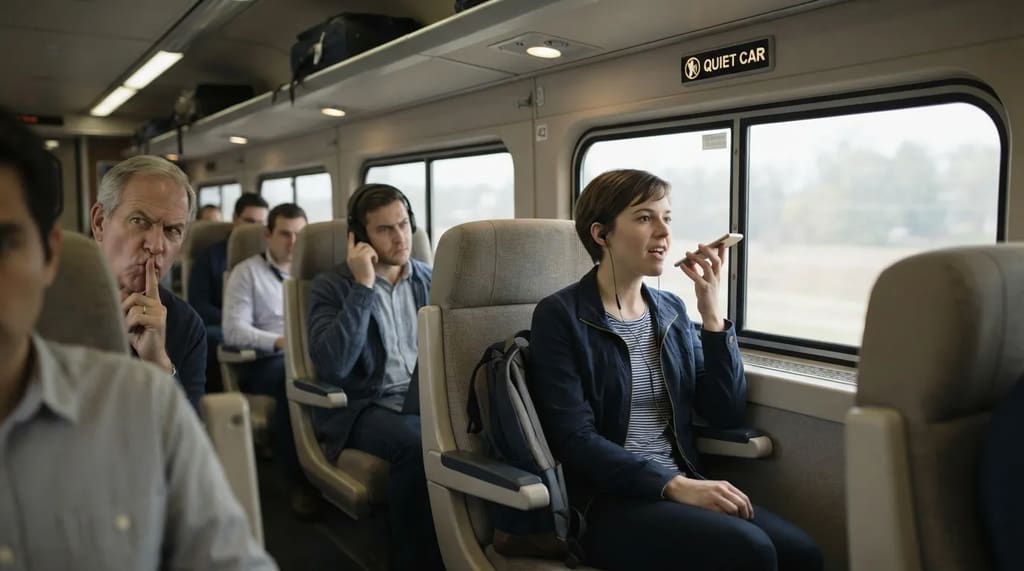
A quiet car means low voices and no phone calls. A speakerphone or video chat irritates the whole car at once.
Finish the call on the platform, or save it for a car without the quiet label. Leaky headphones count too, since music carries in a hushed car as easily as speech.
Noise is not the only way to take up shared space. The seat beside you is the other one.
#24 – Parking Your Bags on the Seat Beside You
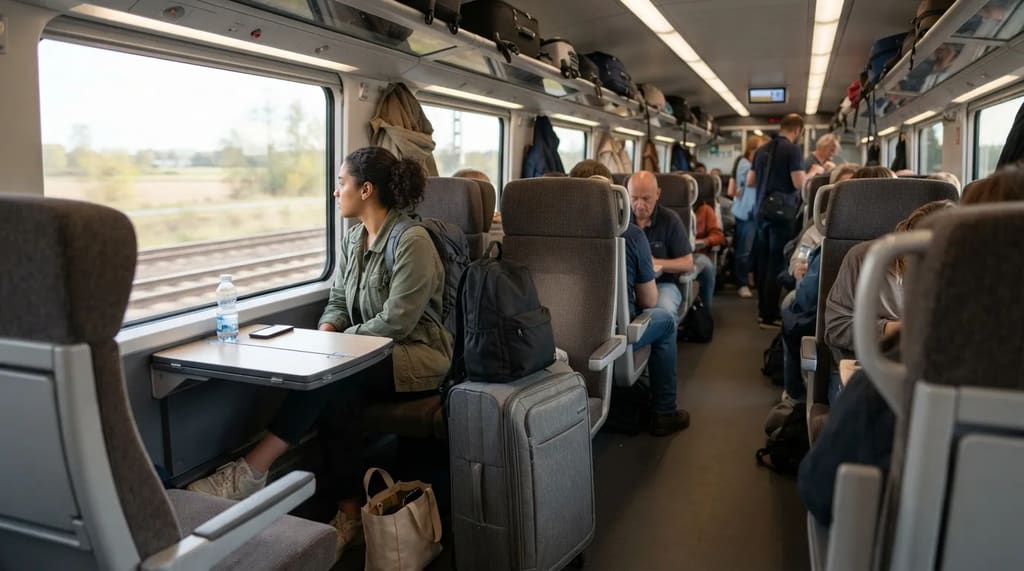
Your free allowance already gives every bag a home. The personal item (up to 25 pounds and 14 x 11 x 7 inches) goes at your feet, and the carry-ons go overhead.1
A bag on the next seat is a bet that the train won’t fill up at a later station. When it does, a passenger who paid for that seat will ask you to move it.1
#23 – A Strong-Smelling Meal at Your Seat
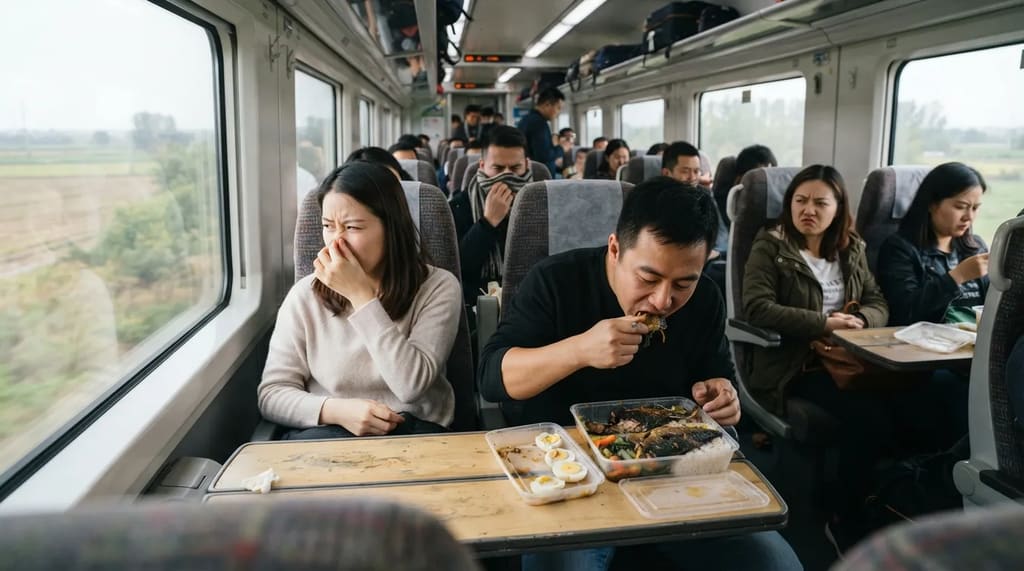
You can bring your own food aboard, but you can eat it only in your ticketed seat or private sleeper room.2 That turns your seat into a dining room, and the air in coach is shared with everyone around you.
Fish, hard-boiled eggs and reheated takeout linger in a closed car for a long time. A sandwich, fruit, or cheese and crackers travels well and offends no one.
Food from home also has a boundary, and it runs straight through the dining car.
#22 – Eating Your Own Food in the Dining Car
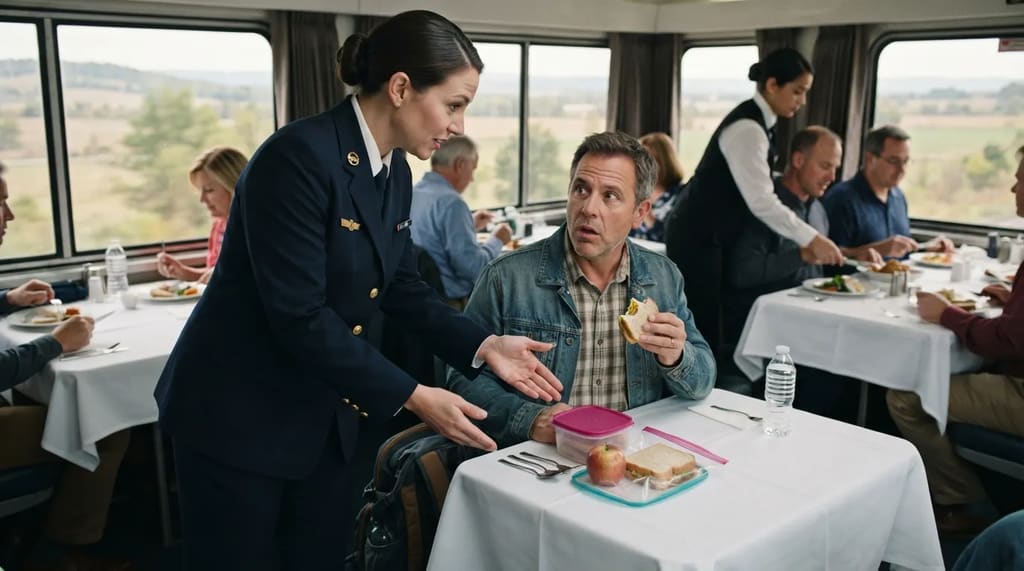
The rule works in both directions. Your own food stays at your seat or in your room, while food bought in the dining and lounge cars has to be eaten in those cars.
Carrying a packed lunch to a dining-car table and hoping for the best won’t work. If you want the table and the scenery on a long trip, buy the meal there and pack snacks for your seat.
Weight draws its own line, and it applies to what you carry aboard as much as to what you check.
#21 – A Carry-On You Cannot Lift Overhead
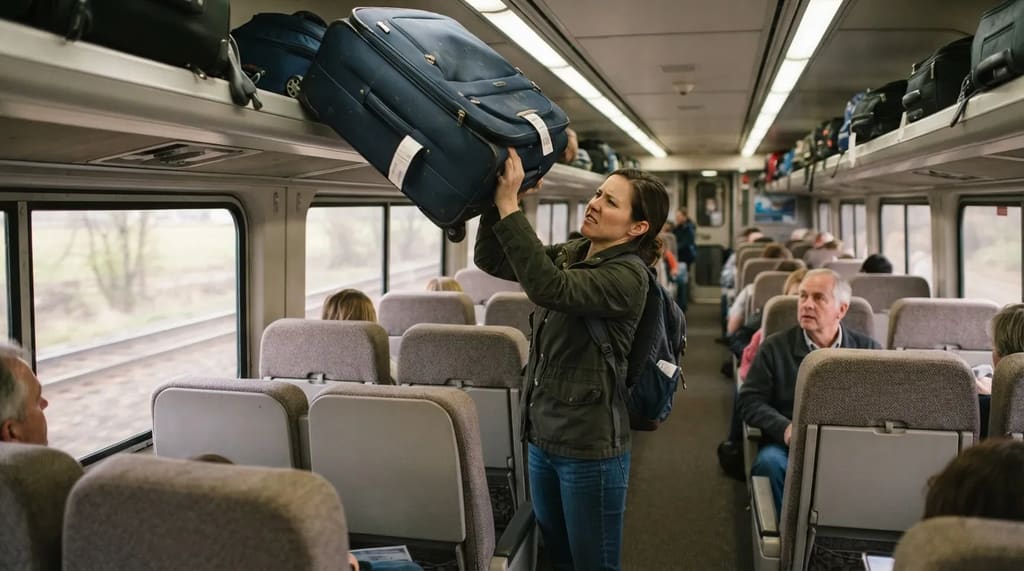
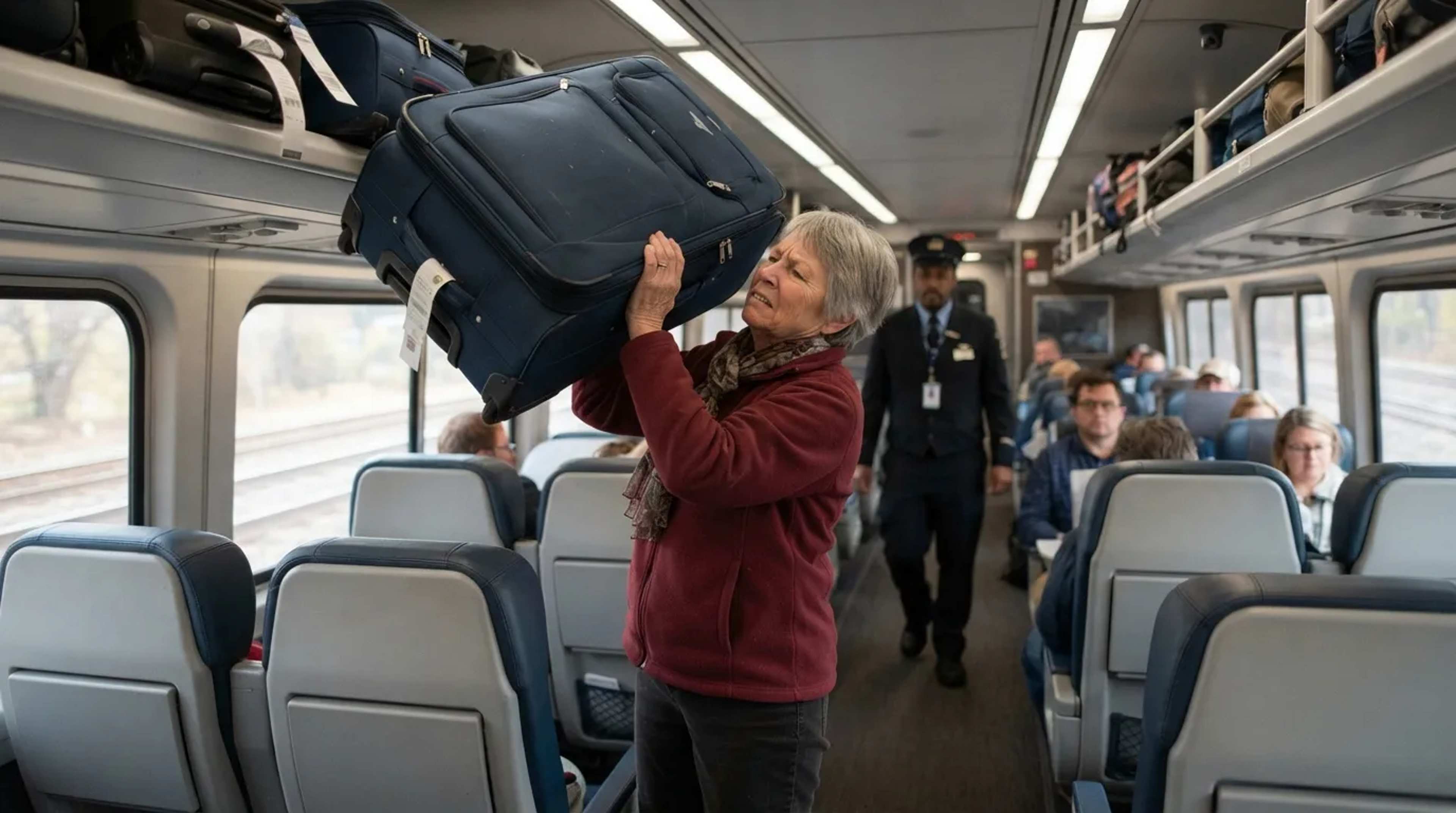
Each carry-on may weigh up to 50 pounds, and you must be able to lift it overhead without help.3 A bag that needs a second person to heave it onto the rack fails the practical test long before it fails a scale.
Bags over 50 pounds also face a $20 overweight fee. Before you leave home, split the load among your two carry-ons and your personal item, and leave the heaviest things, like books and bottled drinks, for a checked bag if your train offers one.
Even well-packed bags run into a count limit, and that one carries its own fee.
#20 – Boarding With More Bags Than Your Allowance
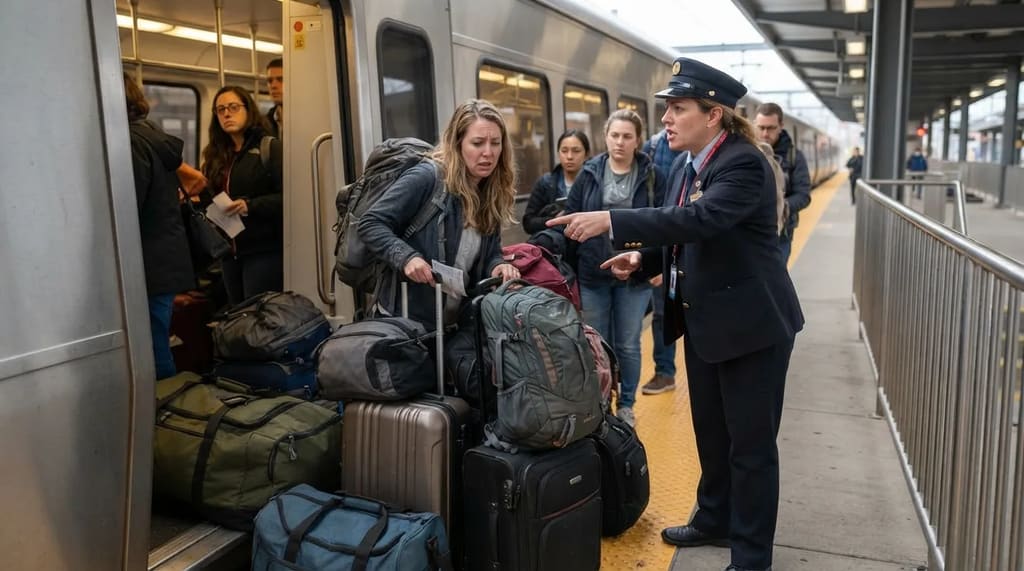
The allowance is one personal item and two carry-ons. A $20 fee applies to each bag over the limit, up to two excess bags per passenger.4
The fee is small, but if a third bag is unavoidable, check it instead. Checked baggage is free, two bags per person, at staffed stations that offer the service.
At a Glance
- Personal item: 1 bag, up to 25 pounds, 14 x 11 x 7 inches
- Carry-ons: 2 bags, up to 50 pounds each, 28 x 22 x 14 inches
- Extra bags: $20 each, up to two per passenger
- Checked bags: two free per person, where the service is offered
#19 – Assuming Every Train Takes Checked Bags
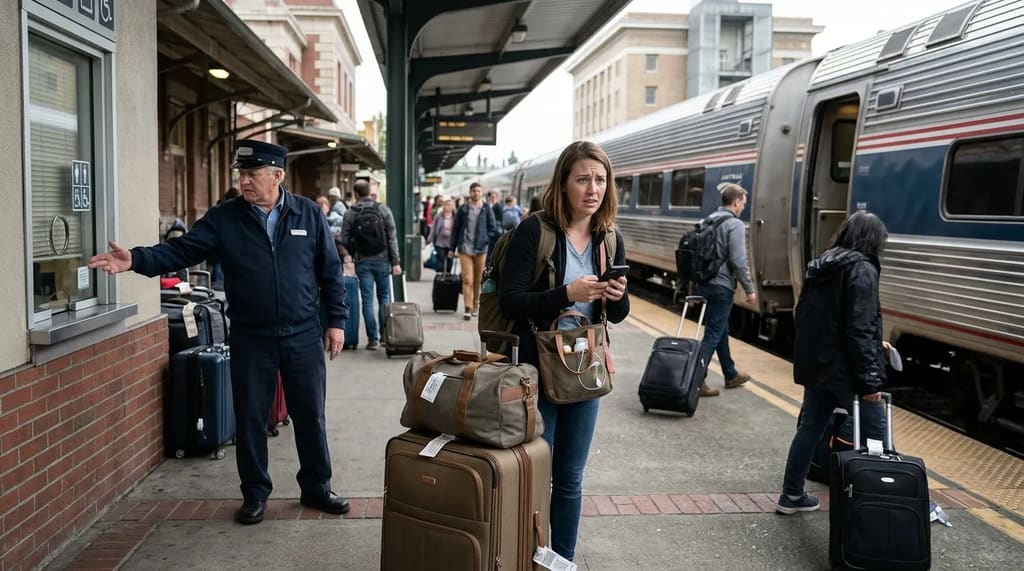
Checked baggage depends on the route. It works only when your train and both your origin and destination stations handle it, so a short regional trip may not offer it at all.
Perishable food and drinks are not allowed in checked bags. If you are unsure, plan on carry-ons only and treat a checked bag as a bonus.
Even a bag that suits most trains can fail on one West Coast route, where the size rule changes.
#18 – Using the Standard Carry-On Size on the Pacific Surfliner
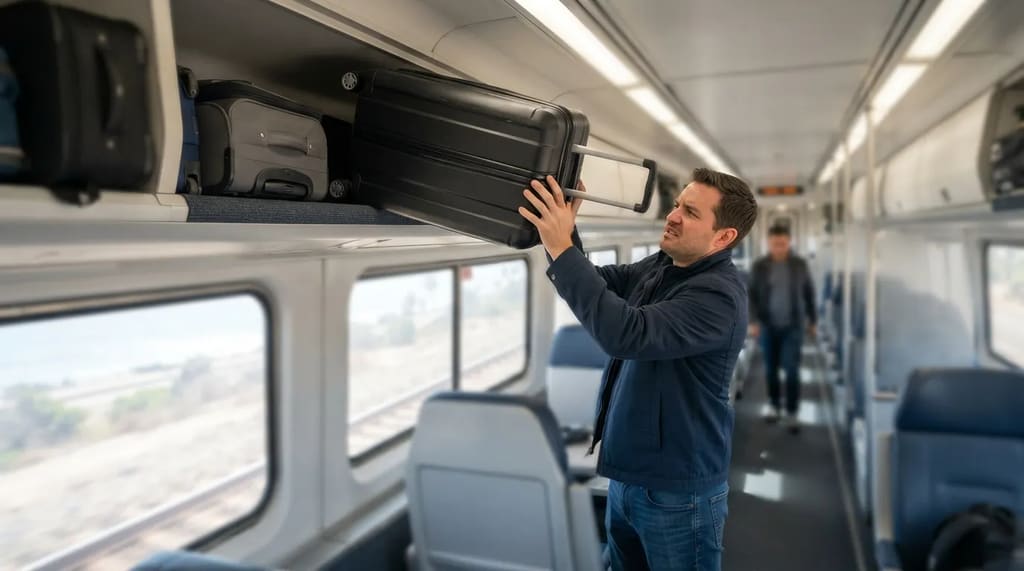
The usual carry-on limit is 28 x 22 x 14 inches. On the Pacific Surfliner, bags must be slightly smaller: up to 28 x 22 x 11 inches each.1
Three inches of depth is enough to matter for a stiff, fully packed hard-sided suitcase. On that route, a soft-sided bag gives you more room to work with.
#17 – Sipping From Your Own Flask in Coach
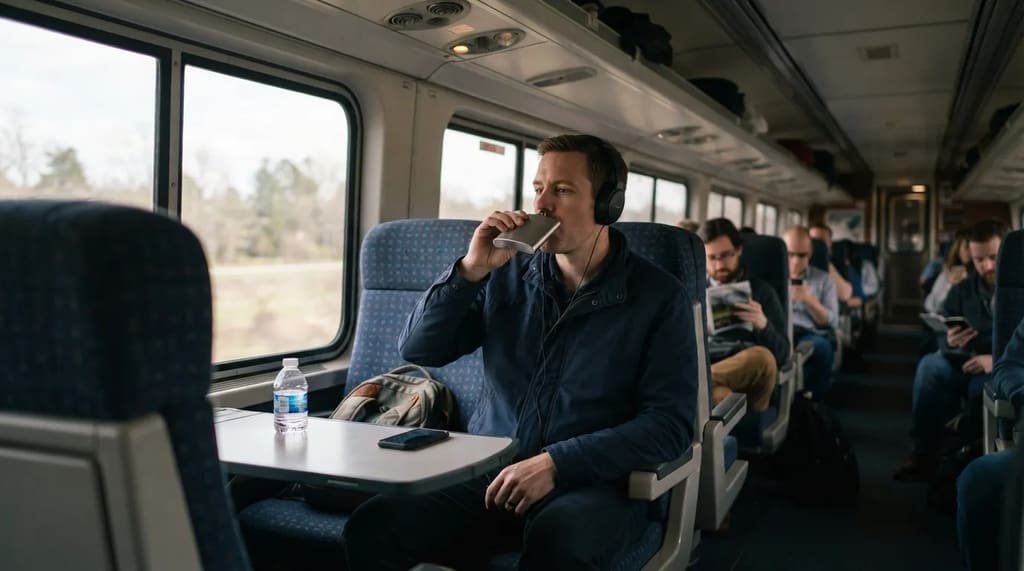
You can bring your own alcohol aboard, but you can’t drink it everywhere. Passengers in Coach or Business Class may not drink their own in public areas, and that includes at the seat.
Airlines follow the same logic, since FAA rules prohibit drinking alcohol on a plane unless a flight attendant serves it. If you want a drink in coach, buy one in the café car.
Even the passenger who may bring a bottle aboard is limited in where the cork comes out.
#16 – Opening Your Bottle in the Lounge Car
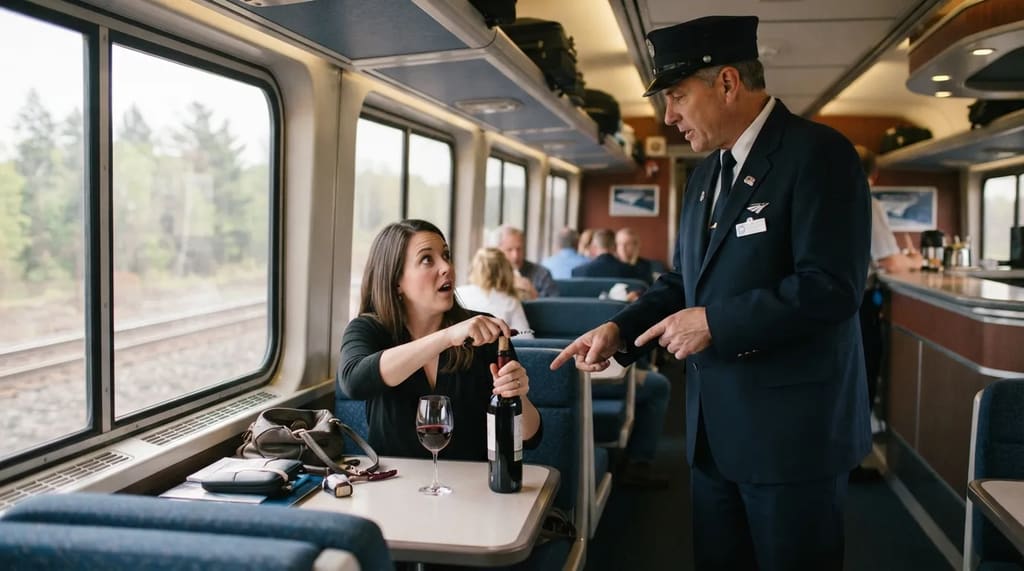
Only passengers with a valid sleeper ticket can drink their own alcohol, and only inside that sleeper room. Public areas like the café and dining cars are off limits.2
So a bottle that is fine in your bedroom is not fine in the lounge car down the hall. Same bottle, different rule attached to the room.
Quick Compare
- Coach or Business seat: your own bottle stays packed away
- Sleeper room with a valid ticket: your bottle is allowed, inside the room only
- Café, dining and lounge cars: buy a drink there instead
Smoking draws a firmer line still, and a private room does not move it.
#15 – Lighting Up or Vaping in the Restroom
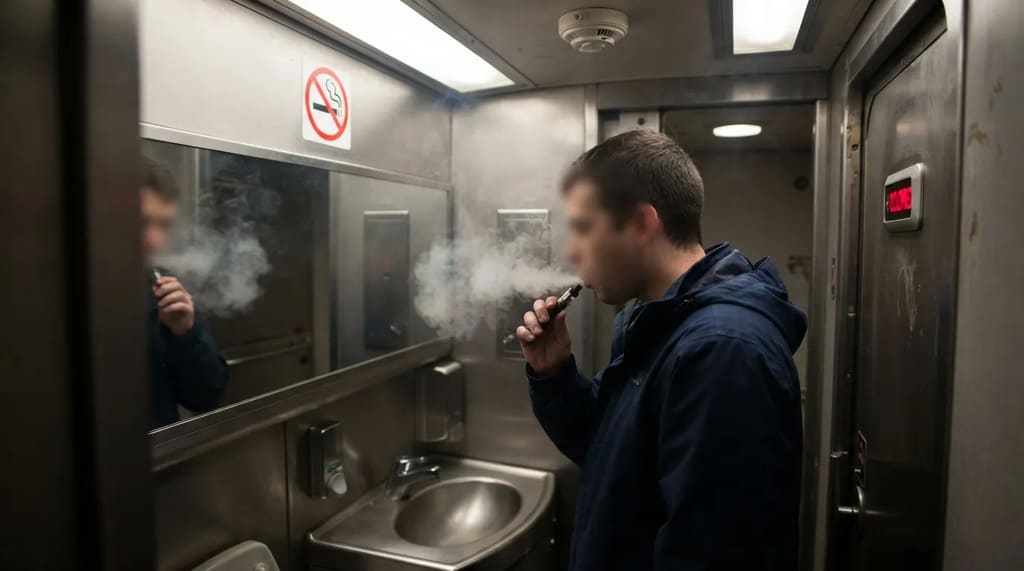
Amtrak does not allow smoking aboard its trains, and that includes e-cigarettes. A train car is a sealed space, so smoke and vapor drift through the same air everyone else is breathing.
If you smoke and face a long ride, ask a pharmacist or doctor about patches or gum for the trip. A long-distance schedule can’t bend around a craving, so the plan has to.
#14 – Stepping Off at Every Station Stop for Fresh Air
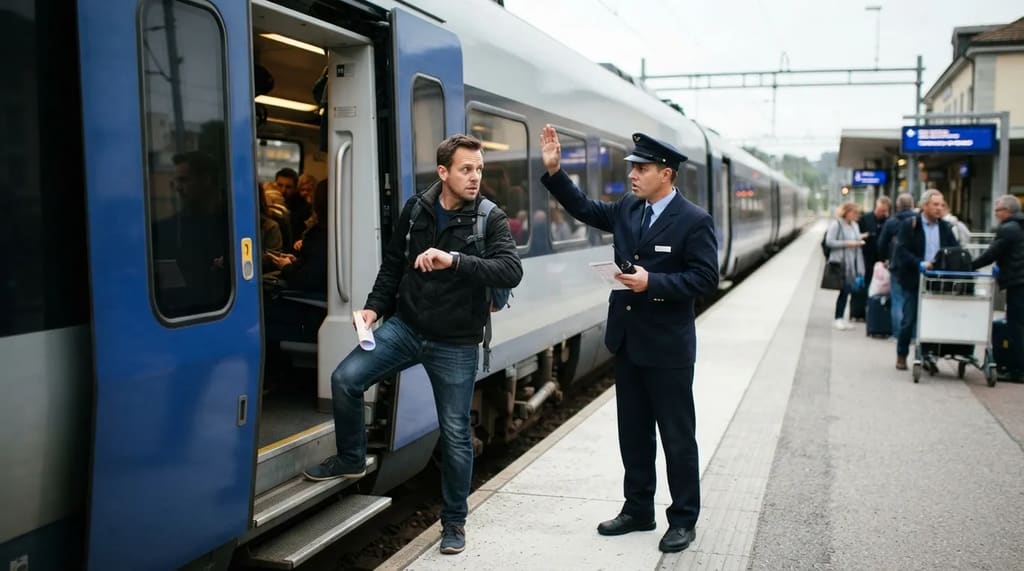
On long routes, some stops are long enough to stretch your legs, and many are brief. The train leaves on its schedule, and a passenger who wanders from the door can be left behind.
Listen for the crew’s announcement about how long a stop lasts, and stay within a few steps of your car. If you are unsure, stay on board.
Staying on board has its own hazard: moving through a car that sways.
#13 – Carrying Hot Coffee Down a Swaying Aisle
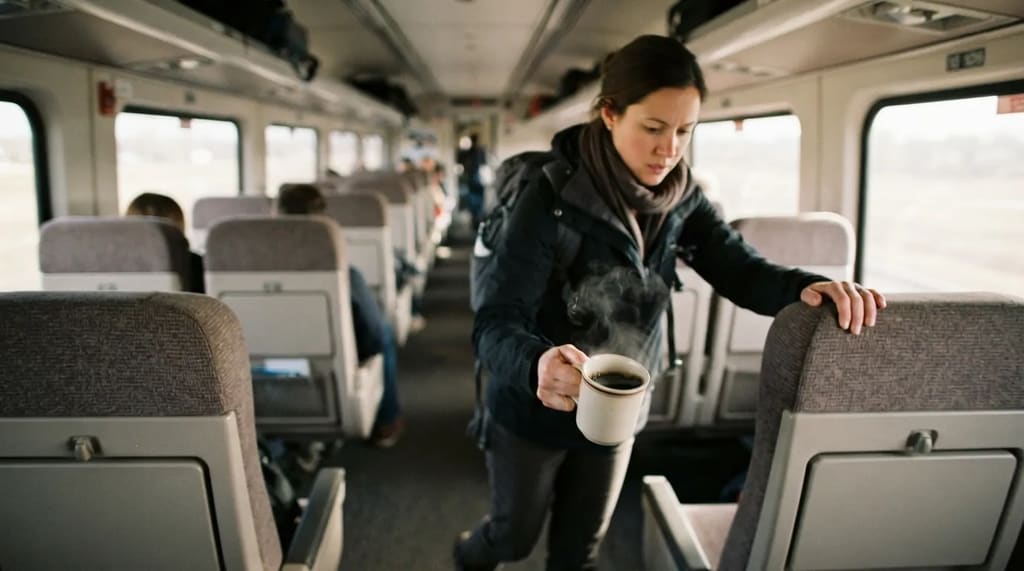
Trains lurch at switches and sway on curves, even smooth ones. A lidless coffee in one hand and a seatback grip in the other is a bad trade when the car shifts.
Carry one thing at a time, keep a hand free, and make two trips if you must. The coffee will still be there.
#12 – Booking a Tight Connection Between Two Trains
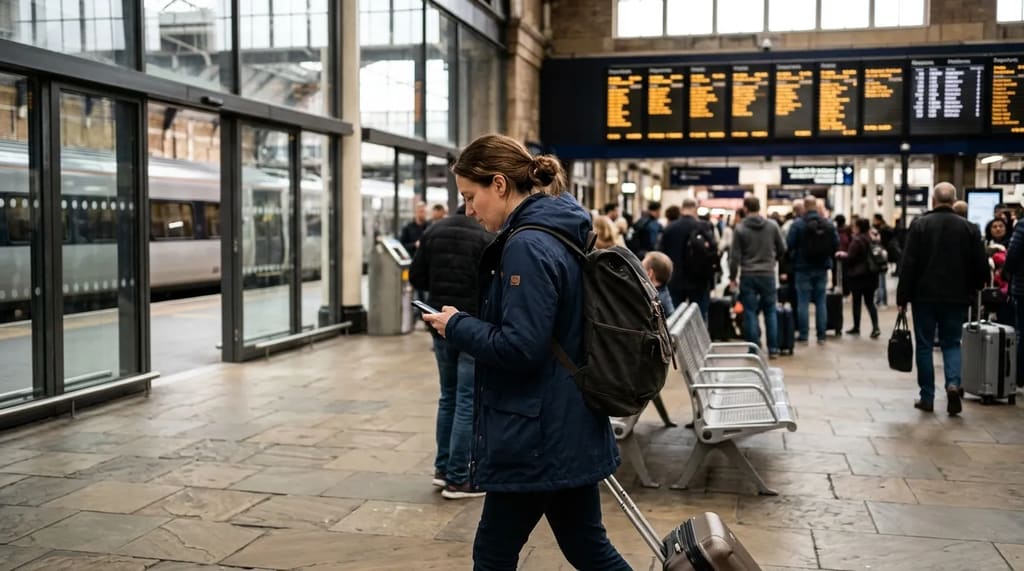
Outside the busiest corridors, Amtrak trains often run on tracks owned by freight railroads, so a long route can fall behind and miss its connection. A 30-minute transfer on a long-distance trip leaves little room for that.
Leave a buffer of several hours, or plan an overnight stay. If both legs are on one reservation, ask Amtrak before you book what happens if the first train runs late.
Connections matter even more with a pet, because the time limit counts the whole itinerary.
#11 – Planning a Pet Trip That Runs Past Seven Hours
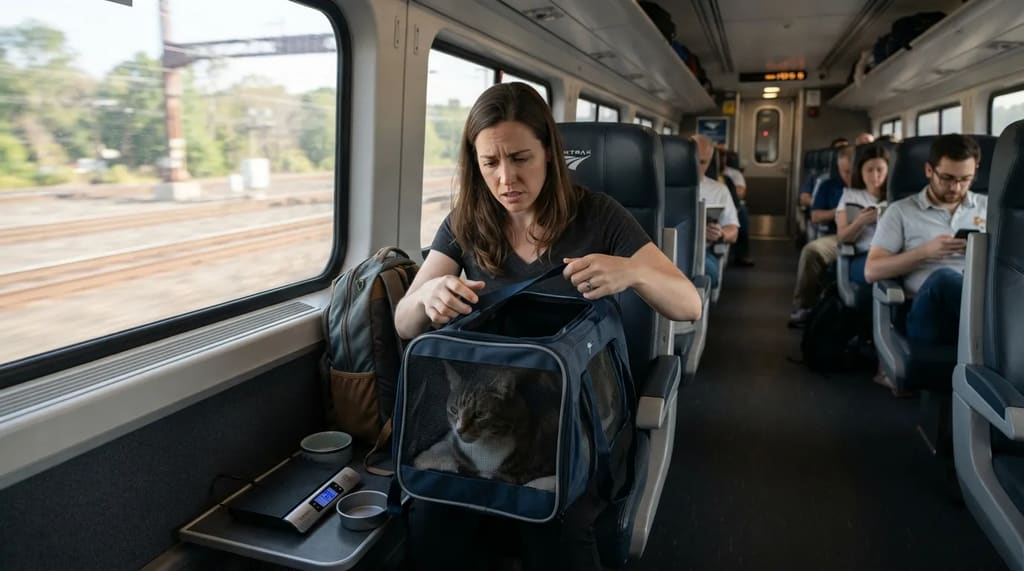
Amtrak welcomes cats and dogs up to 20 pounds on most trips up to 7 hours long. On multi-segment trips, that limit includes transfer time between trains.5
So a short ride with a long layover can disqualify a pet that fits every other rule. Pets are also not allowed on the Auto Train and several other services.
Fast Facts
- Who qualifies: cats and dogs only
- Weight cap: 20 pounds, pet and carrier combined
- Time cap: most trips up to 7 hours, with transfer time counted
- Fee: charged for each travel segment
The weight limit ends more pet plans than the clock does, and it is measured in a sneaky way.
#10 – Showing Up With a Dog Over Twenty Pounds
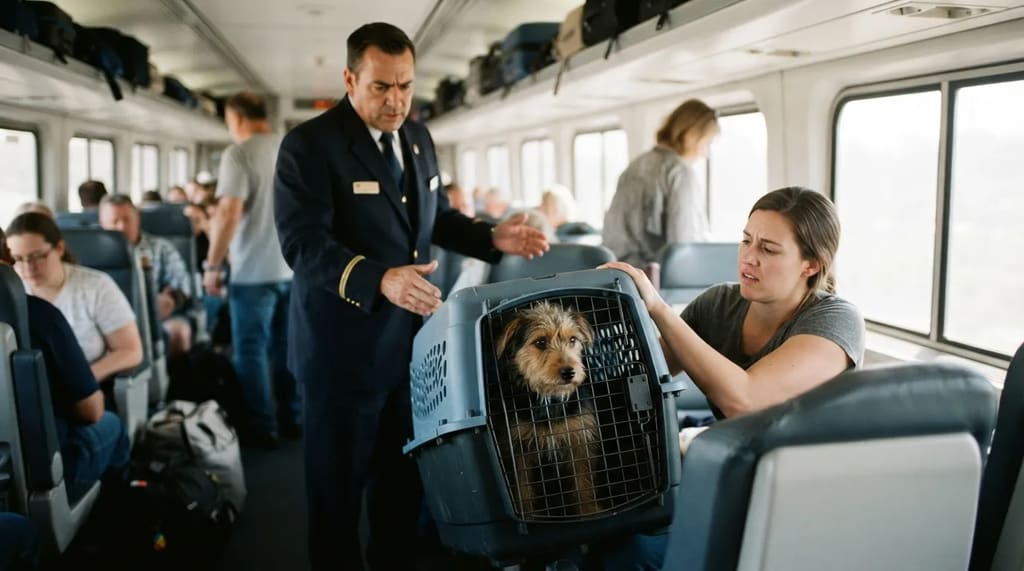
The limit is 20 pounds for pet and carrier combined. The carrier alone can weigh 3 to 5 pounds, so a dog that seems small can still be over the line.5
A 16-pound dog in a sturdy hard-sided carrier can easily tip past 20. Weigh the two together at home on a bathroom scale before you book.
A friendly label does not change the weight rule, which brings up a common misunderstanding about support animals.
#9 – Expecting an Emotional Support Animal to Ride Free
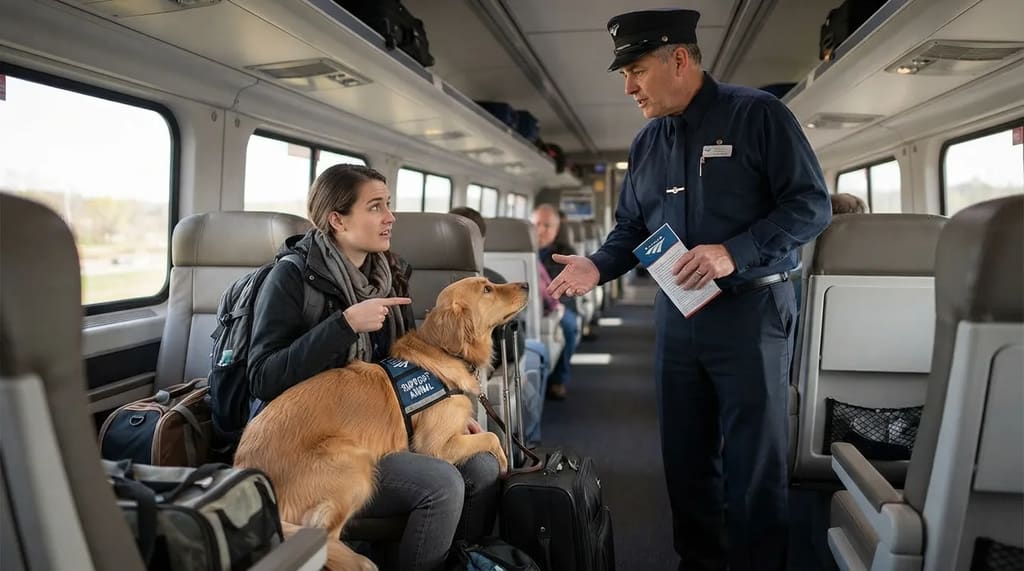
Amtrak treats a trained service dog differently from a pet. Service dogs can board without charge and are not subject to the 20-pound limit.
Emotional support animals are not service animals under Amtrak’s policy, so they follow the same weight, fee and carrier rules as other pets.5 Ask Amtrak directly about your situation before you book.
#8 – Changing the Date on a Pet Reservation
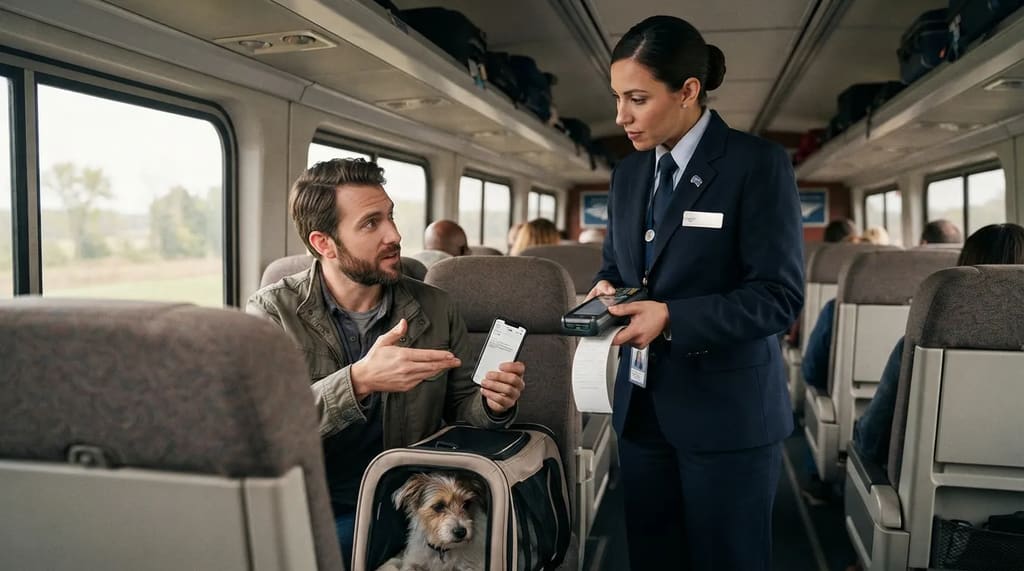
A pet reservation is tied to one day. It is valid only for the date on your ticket, which makes it less flexible than a standard unreserved ticket.
The fee is also charged for each travel segment, so a trip with a connection means paying it more than once. If your plans are likely to move, book the pet on the day you are surest of.
At least a pet comes with a reservation system, which is more than can be said for the emergency equipment in each car.
#7 – Testing the Emergency Equipment Out of Curiosity
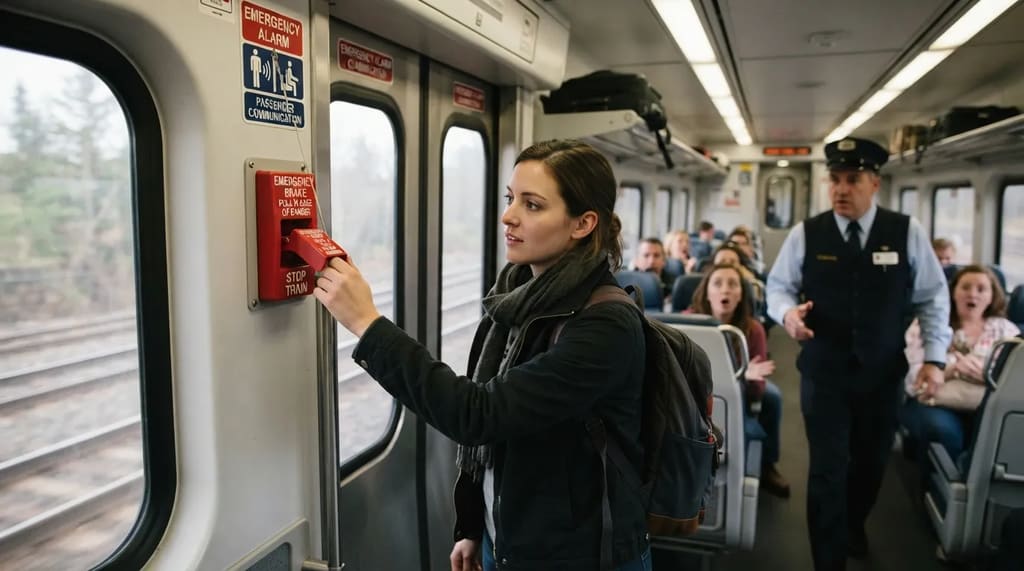
Emergency exits, alarms and brake handles are for real emergencies. Using them to see what happens can stop a train, strand every passenger aboard, and bring legal trouble for whoever touched them.
The useful kind of curiosity is noticing where the marked exits are when you board. If you want to know how something works, ask the crew.
Equipment is one hazard. The platform edge is another, because the train reaches farther than it looks.
#6 – Standing at the Edge of the Platform
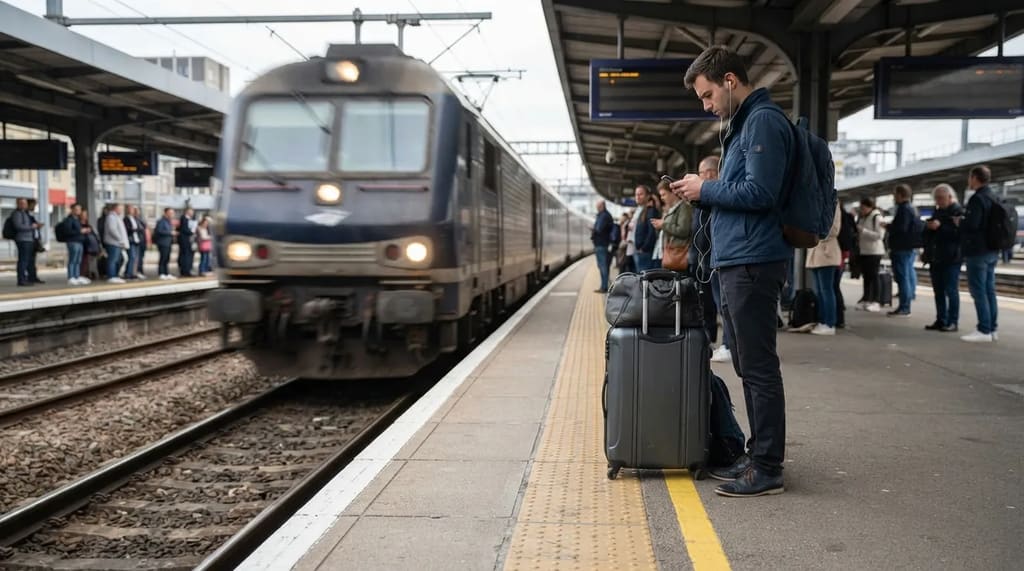
A train can extend three feet or more beyond the steel rail, so the safe distance is wider than the track itself. An approaching train is also closer and faster than it feels.
Wait behind the painted line, and step toward the door only once the train has fully stopped. With luggage in hand, that matters even more, since you can’t step back quickly.
Distraction makes the platform worse, and headphones are the usual cause.
#5 – Wearing Headphones Near the Tracks
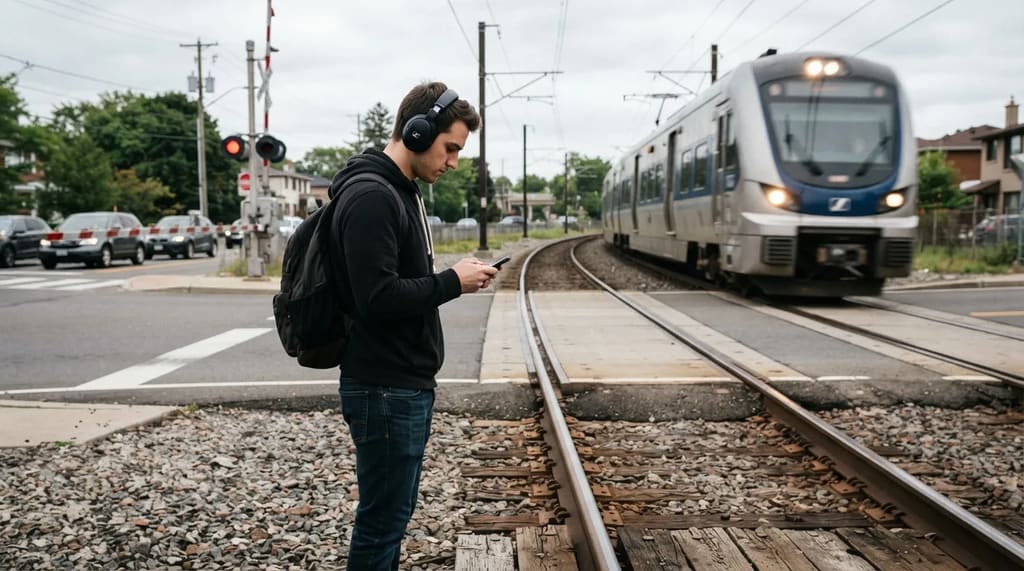
Today’s trains are quieter than ever, with no telltale clackety-clack. Operation Lifesaver advises against texting, headphones or any distraction that keeps you from hearing an approaching train.
Take both earbuds out near any crossing or platform, not just one. A train around a bend is a train only your ears can warn you about.
Alertness matters just as much for drivers at a crossing, where the temptation is to beat the train.
#4 – Racing a Train to the Crossing
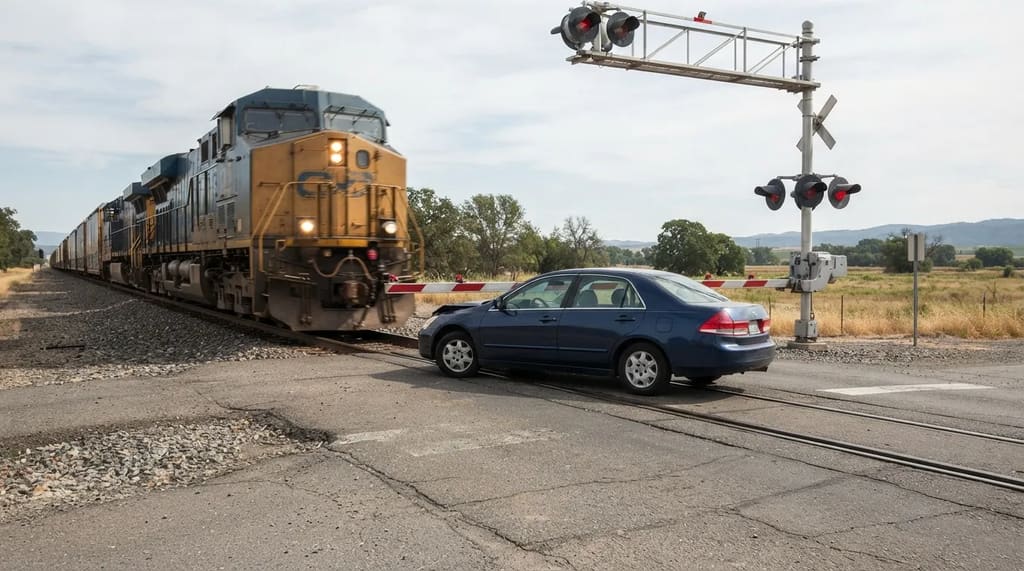
A train traveling at 55 mph can need a mile or more to stop, and it cannot swerve. The average locomotive weighs about 400,000 pounds.
Related Stories From Travelbinger
Operation Lifesaver says more than 95 percent of rail-related deaths in the U.S. involve crossings or trespassing. Waiting a few minutes is the cheapest option on this whole list.
The gates exist to settle that decision for you, yet going around them is its own offense.
#3 – Driving Around the Lowered Gates
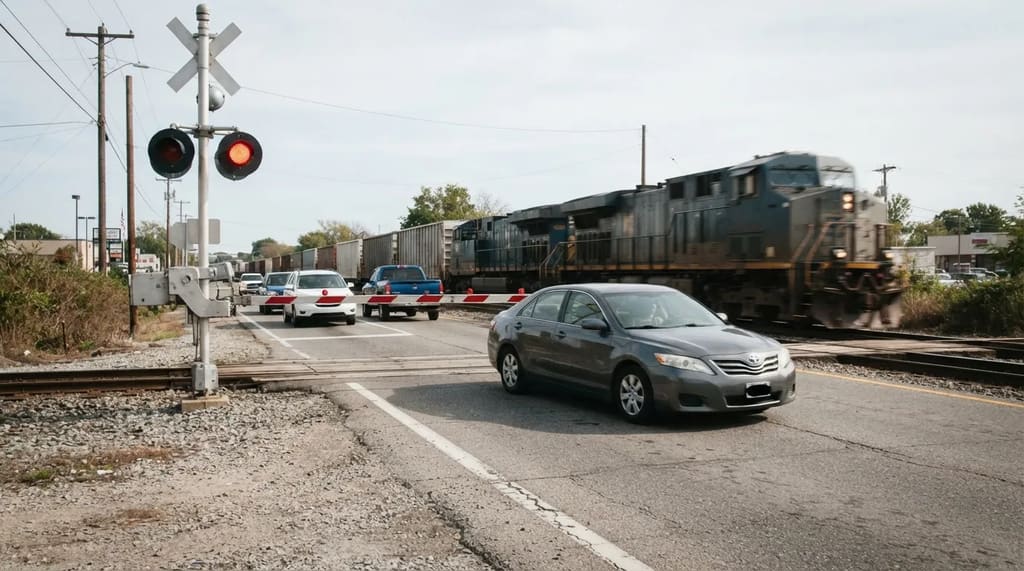
It is against the law to drive around lowered gates. If they are down, find a different crossing.
A stalled car is the other danger. If your vehicle gets hung up on the tracks, get out and move away from the crossing.
A crossing is the only place the law lets you be on the tracks at all, and a bridge is definitely not one of them.
#2 – Walking Out on a Railroad Bridge or Trestle
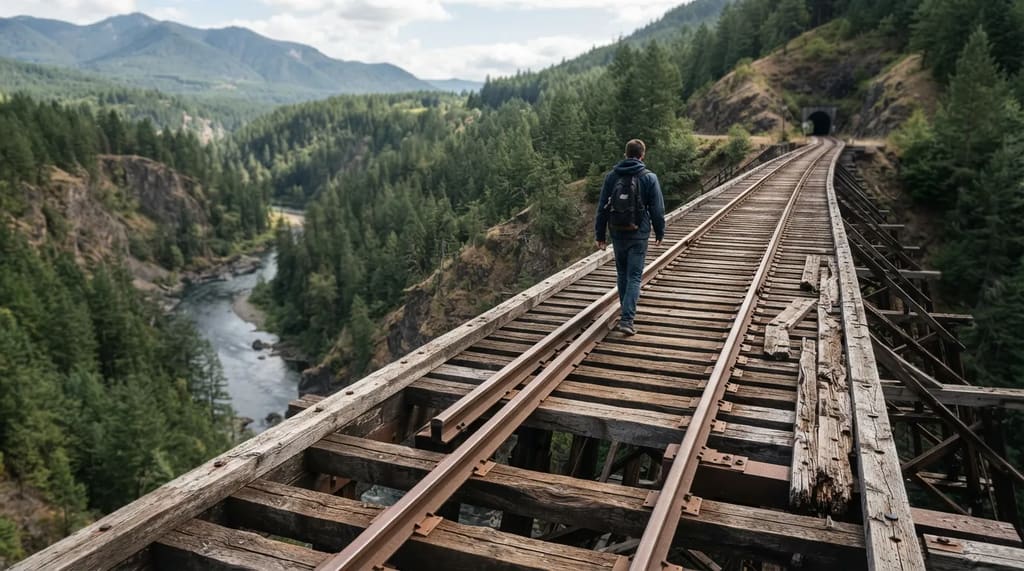
Stay off railroad bridges, trestles and tunnels, because there is room only for the train. On a trestle there is nowhere to step aside, and that is the whole problem.
Railroad tracks, trestles, yards and equipment are private property, and trespassers can be arrested and fined. No view or photograph is worth it.
Worth Knowing
- Bridges, trestles and tunnels leave no space to step aside
- Tracks, yards and equipment are private property
- Trespassers can be arrested and fined
A bridge at least looks dangerous. A flat, straight stretch of track looks like a path.
#1 – Treating the Tracks as a Shortcut
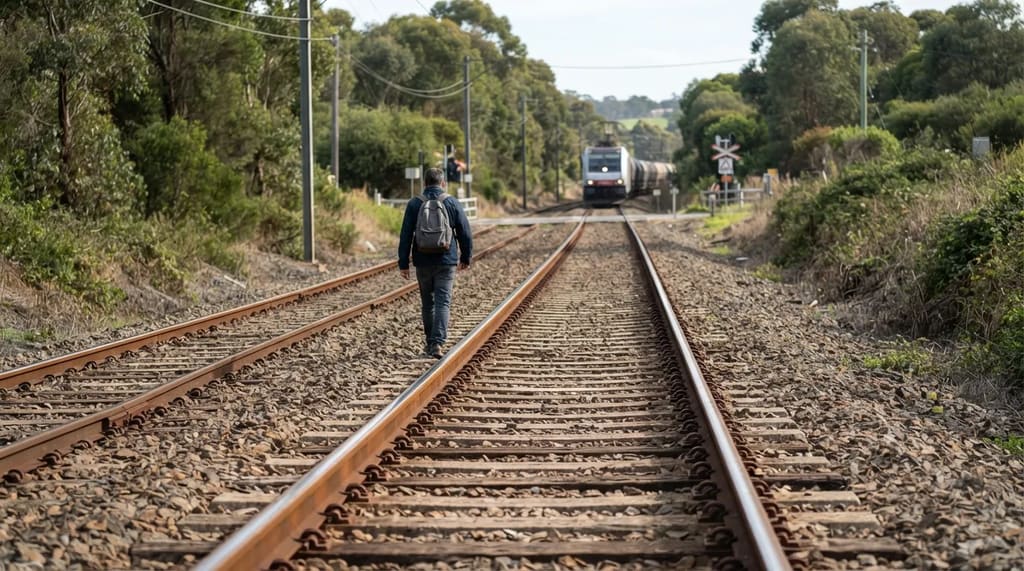
The idea that costs nothing to try is stepping onto the rails to save a few minutes or get a better view. Each year, track trespassing results in more than 1,000 incidents, including more than 500 deaths and roughly 500 injuries.6
That is not a side issue on the rail system. Since 1997, more people have died in trespassing incidents than in vehicle-train collisions.
A shortcut only works if you can hear the train, and trains can come from either direction at any time. Walking on tracks or rail property is illegal, and you can be charged with trespassing, a misdemeanor.
A train cannot stop quickly, swerve, or wait while you decide. Nearly every rule on this list, from bag weights to crossing gates, is built around that fact.
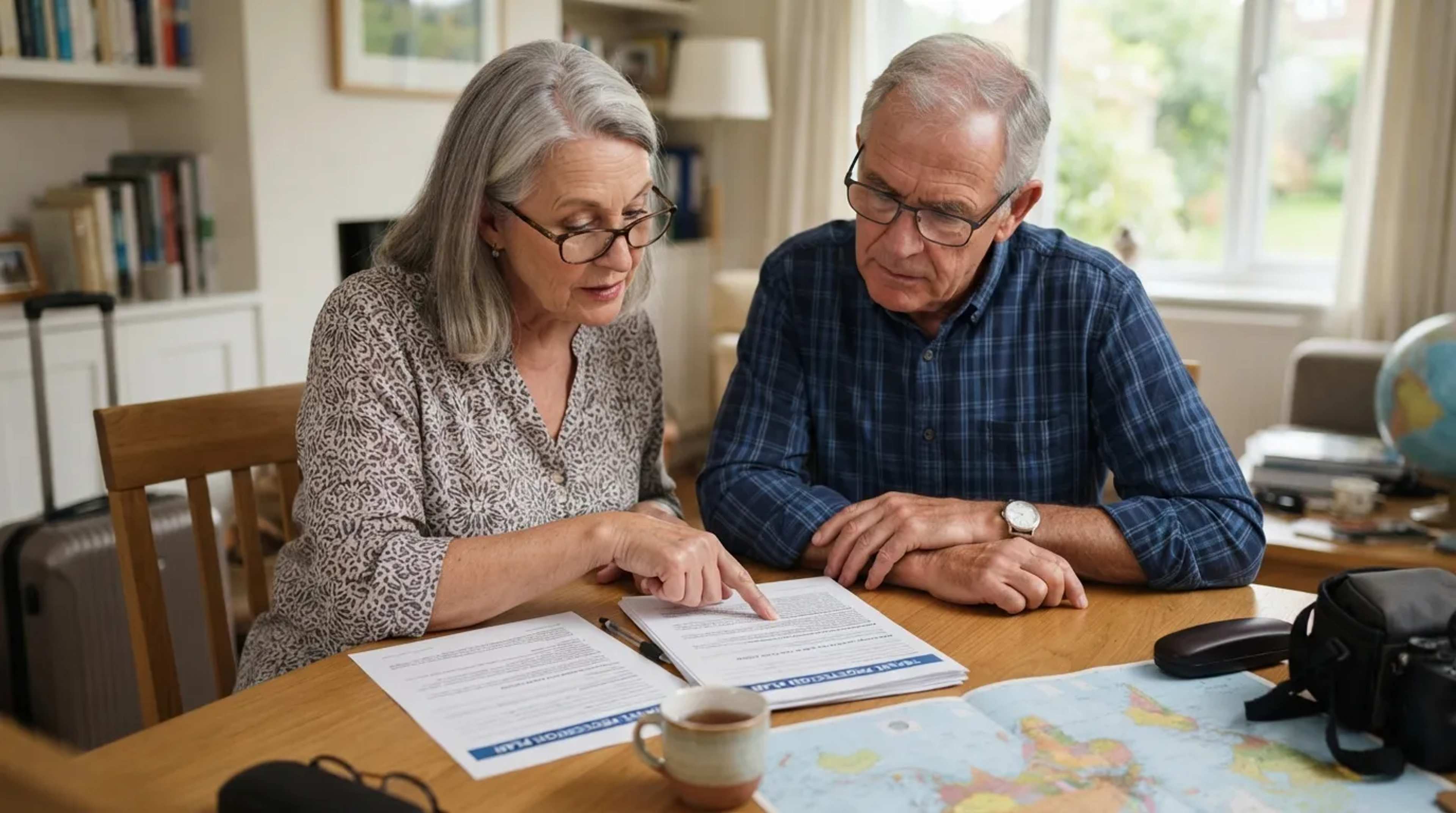
So check the limits for your route, your seat and your pet while you are still at the kitchen table. A $20 fee is a lesson you can afford.
Which train rule surprised you most on a trip you have taken, and how did you handle it?
#26 – The Bonus Tip Nobody Shares: Build a Two-Minute Rule Check
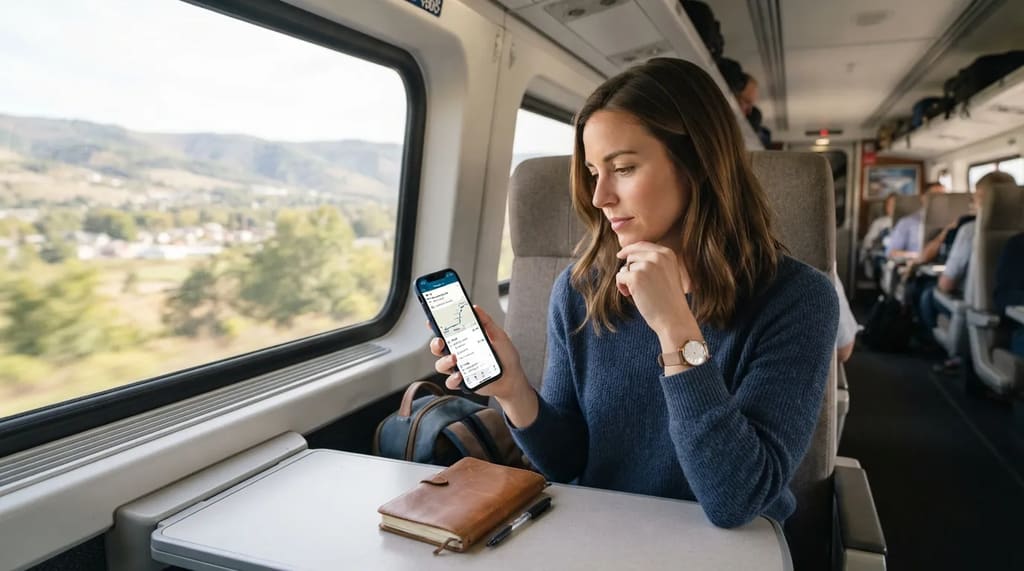
Most of the trouble on this list comes from one thing: people assume the rules from their last trip apply to this one. Rules change by route, by train and by ticket type, so a quick check beats memory every time.
Here is the habit that heads off nearly every problem above:
- Two days before: Open your reservation in the Amtrak app and find your train number. Look up that exact train’s page for its route, stops and any route-specific rules.
- The night before: Check the train’s status and turn on delay notifications. Note when the next train on your route leaves, so you already have a backup plan if a connection looks shaky.
- Before you pack: Weigh each bag at home, and if you have a pet, weigh the pet and carrier together. Make sure your eTicket is saved on your phone in case coverage drops at the station.
- At boarding: Ask the conductor or car attendant two questions: which stops are long enough to step off, and where the nearest food car is. Crews answer this all day, and it takes ten seconds.
If anything is unclear, such as a pet, a sleeper-room bottle or a baggage question, call Amtrak at 1-800-USA-RAIL before travel day, not at the station. Save the number in your phone now.
Five minutes of checking at home is the cheapest upgrade in train travel.
- Amtrak Vacations Baggage Allowance: https://www.amtrakvacations.com/trip-planning/at-the-station
- NerdWallet Amtrak Food and Alcohol: https://www.nerdwallet.com/travel/learn/amtrak-food-alcohol
- Amtrak Cascades Baggage Information: https://amtrakcascades.com/riders-guide/baggage/
- Amtrak Baggage Policies: https://media.amtrak.com/wp-content/uploads/2016/07/Baggage-Policy-Fact-Sheet_2_17_23.pdf
- Amtrak Pets Policy: https://www.amtrak.com/pets
- Operation Lifesaver Trespass Statistics: https://oli.org/track-statistics/trespassing-casualties-state