
Quartzsite, Arizona, has only a few thousand year-round residents, and every January its open desert turns into one of the biggest pop-up cities in the Southwest. That is why it belongs on a list of January towns, and why this list is more than a sunshine ranking. Winter in Arizona is not one climate. Some towns give you 70-degree afternoons, some add frosty mornings, and some come with a traffic jam attached.
Pick the wrong one and you get cold nights you didn’t pack for, a grocery store with a line out the door, or a rent bill you didn’t see coming. The gap between the quietest town here and the busiest is far bigger than any thermometer reading, and the full numbers wait at #1. The first stop is a town that built its whole identity around a fountain.
14. Fountain Hills: The Fountain That Once Beat Every Other in the World
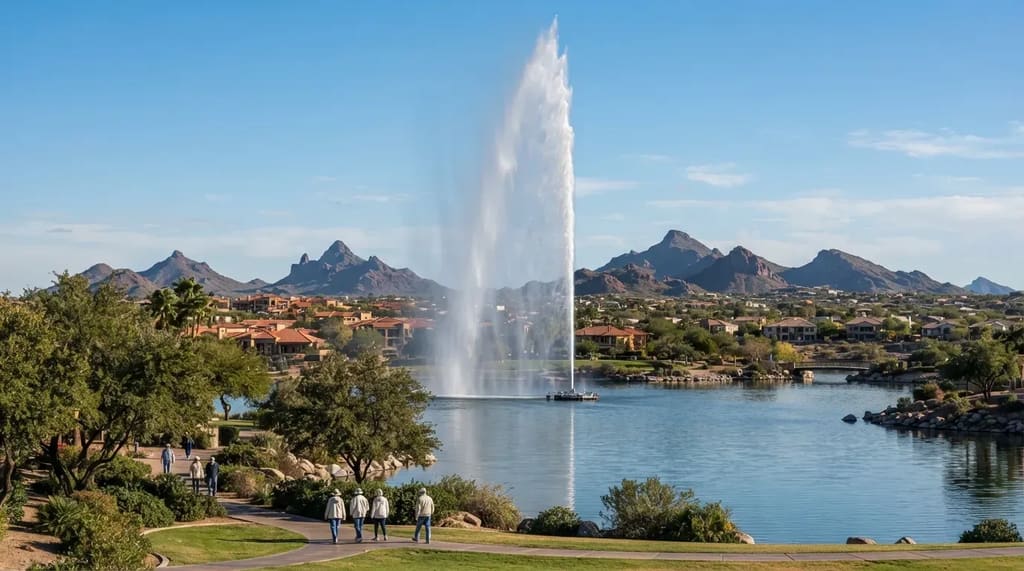
The fountain in Fountain Hills switched on in 1970, and it was billed as the tallest in the world.1 That tells you a lot about the town: planned, scenic, and proud of one giant visual. It sits at the edge of the Phoenix area, where January afternoons usually reach the 60s and mornings call for a light jacket. The fountain runs on a posted schedule, so check the times before you drive over.
For a winter stay, the appeal is mountain views and a walkable town center, with the Valley’s hospitals and airport a drive away. It is a comfortable pick if you want scenery more than a crowd. Fountain Hills sells views, but the Valley’s bigger winter business is affordable housing, and most of that sits in the big city next door.
13. Mesa: A Big City That Quietly Runs Like a Winter Resort
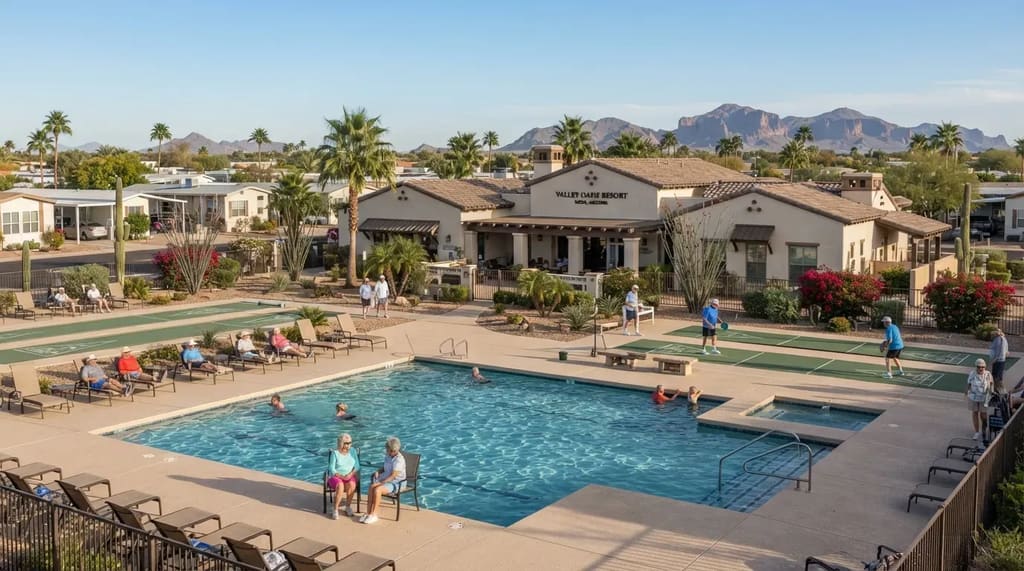
Mesa is one of the largest cities in Arizona, yet it behaves like a resort town every winter. Mesa, Yuma and Tucson have all built part of their winter economies around snowbird visitors, with healthcare and recreation aimed at active seniors. That is rare for a city this size, and it means services keep pace when the seasonal crowd arrives.
The housing is the practical payoff. Manufactured-home communities in Mesa and Yuma offer affordable winter rentals, and short-term vacation rentals give people room to test different Arizona cities. If January in Arizona is still an experiment for you, a one-month rental in one of those communities is a smarter first test than buying a house.
Worth Knowing
- Mesa, Yuma and Tucson all lean on snowbird visitors for part of their winter economies.
- Manufactured-home communities in Mesa and Yuma are a common route to affordable winter rentals.
- Short-term vacation rentals let you sample more than one Arizona city.
- A one-month trial costs far less than a mistake on a house.
Mesa shows what a winter economy looks like inside a big city, and the same pattern appears in smaller form along the Colorado River at the state’s western edge.
12. Bullhead City: Where the Casinos Sit Across the River and the Clocks Don’t Match
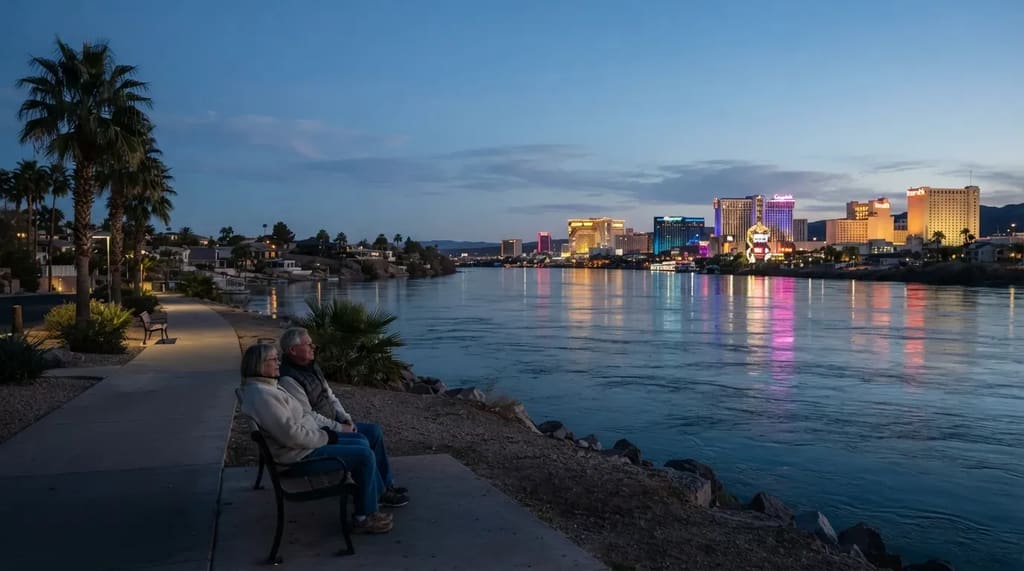
Bullhead City lies on the Colorado River in Arizona’s northwest corner, with the casinos of Laughlin, Nevada, directly across the water. The river is the town’s main scenery, and winter is a comfortable time to sit beside it. You get the glow of casino row on one bank and a quiet riverfront on the other.
The border adds a small oddity in January. Arizona stays on Mountain Standard Time all year, while Nevada sets its clocks to Pacific time, so in winter the casino side of the river is an hour behind. Cross for dinner and you get an hour back. It sounds minor, but it will catch you out if you book a show or a shuttle by the clock.
11. Wickenburg: The Old West Town That Runs on Dude Ranch Season
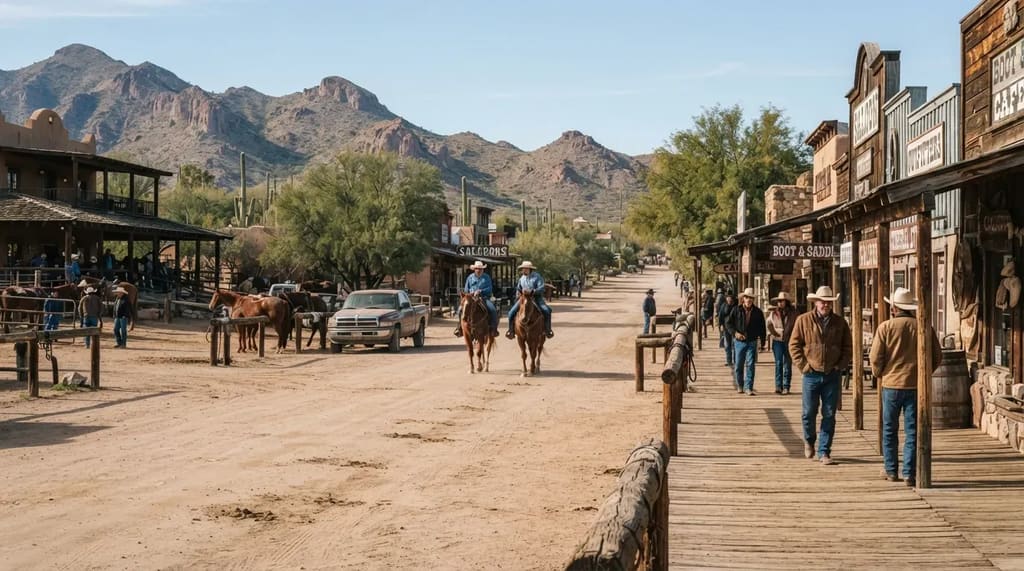
Wickenburg is a small Old West town about an hour northwest of Phoenix, long known as a dude ranch capital. Guest ranches here built their season around the cooler months, because summer afternoons are too hot for long trail rides. In January the horses, the dust and the cowboy hats all make sense.
That history is the reason to choose it. Wickenburg suits a January stay if you want a western main street and desert trails instead of a gated golf-course community. Think boots on a wooden sidewalk, not a clubhouse calendar. Its western story is about cattle and ranches, while a town east of Phoenix runs on the legend of a lost gold mine.
10. Apache Junction: Living at the Foot of the Lost Dutchman Legend
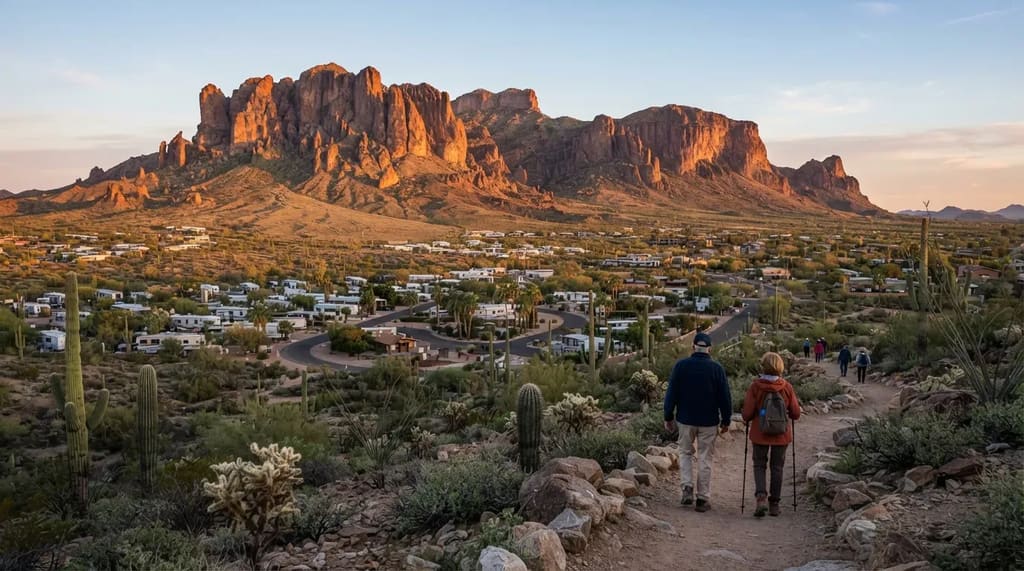
Apache Junction sits at the foot of the Superstition Mountains, the range tied to the Lost Dutchman gold legend. Every winter, hikers head into the trails of Lost Dutchman State Park hoping to walk the country the story came from. Whether or not anyone finds gold, the cliffs glowing at sunset are payoff enough.
The mountains give the town a look that Mesa’s flat grid can’t match. Winter residents here tend to stay in RV and manufactured-home communities, and the setting is the draw more than anything the town itself has built.
9. Lake Havasu City: The Town That Bought a Bridge From London
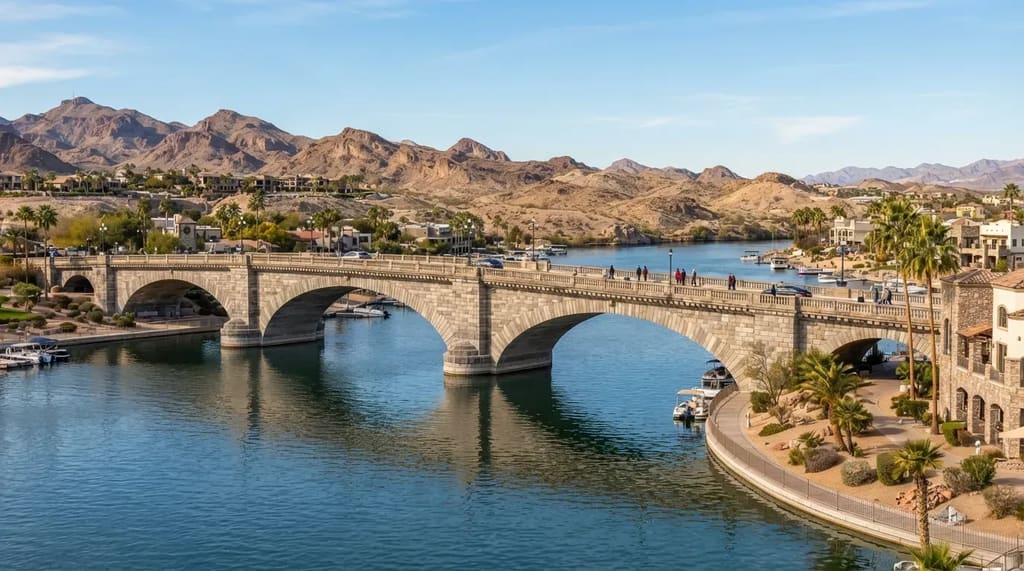
Lake Havasu City is home to the London Bridge, which was bought from London in the 1960s, taken apart, and rebuilt on the Arizona shore in 1971.2 A town started by a developer with that kind of idea was never going to be shy about its landmarks. Seeing a famous English bridge stand over a desert channel is the kind of sight people photograph twice.
The crowd that fills the lake in summer thins out in winter, which is the point of coming in January. You can walk the bridge and the channel without the heat, and the lake becomes a backdrop instead of the main event. That is a better reason to pick Havasu than the water, since the water is at its best months later.
Fast Facts
- The bridge was bought from London in the 1960s.
- It was rebuilt on the Arizona shore in 1971.
- The original bridge opened over the Thames in 1831.
- January means walking the bridge without the summer lake crowd.
The bridge is the town’s one unmistakable attraction, and Tucson, farther south, has a longer list and a January event built around rocks.
8. Tucson: The City That Turns Into a Giant Rock Show
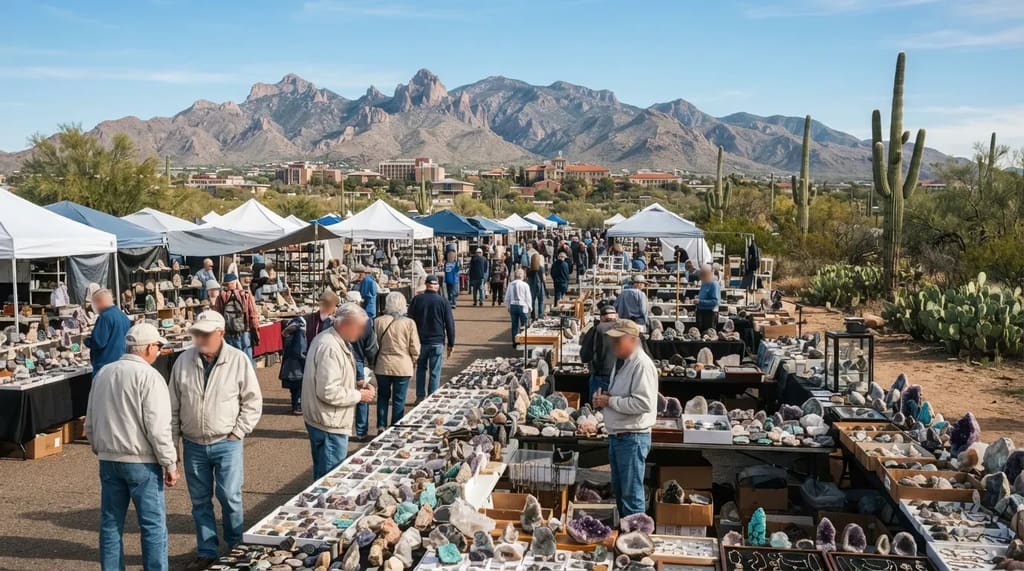
Tucson is a city of more than half a million, set among desert mountains at an elevation of about 2,400 feet, with January highs in the 60s. That height keeps it a bit cooler than the low desert, and the University of Arizona gives it lectures and concerts that smaller winter towns lack.
Its big seasonal draw is the gem and mineral showcase, which spreads across the city from late January into February. Check dates and hotel prices before you commit, because the show fills rooms.
Tucson has the gem show and the cactus forest, while the quieter art-town choice sits about an hour south.
7. Tubac: A Spanish Fort That Became an Artists’ Village
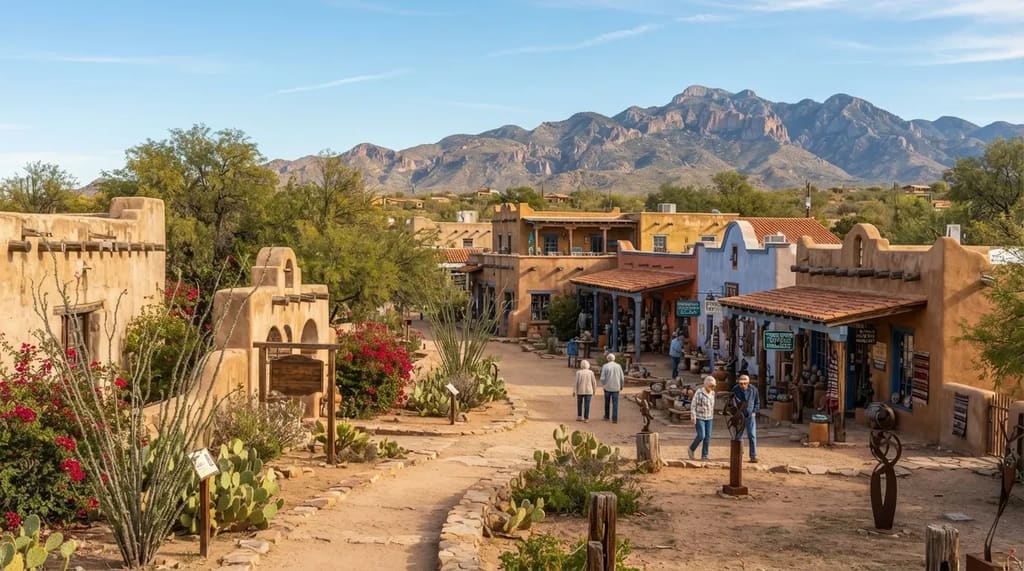
Tubac began as a Spanish presidio in 1752 and has since become an artists’ village. The 2020 census counted 1,581 people, so it is small enough to cover on foot, with pottery studios and sculpture gardens tucked along the village core. It feels like a place where the afternoon disappears on purpose.
The practical side is manageable too. Arizona does not tax Social Security benefits, and the nearest hospital, Santa Cruz Valley Regional, is about 15 miles north in Green Valley. That distance is worth weighing against the charm if you have regular medical appointments.
That hospital is in Green Valley, a community built around retirees from the start.
6. Green Valley: Built for Retirees, With One Weather Catch
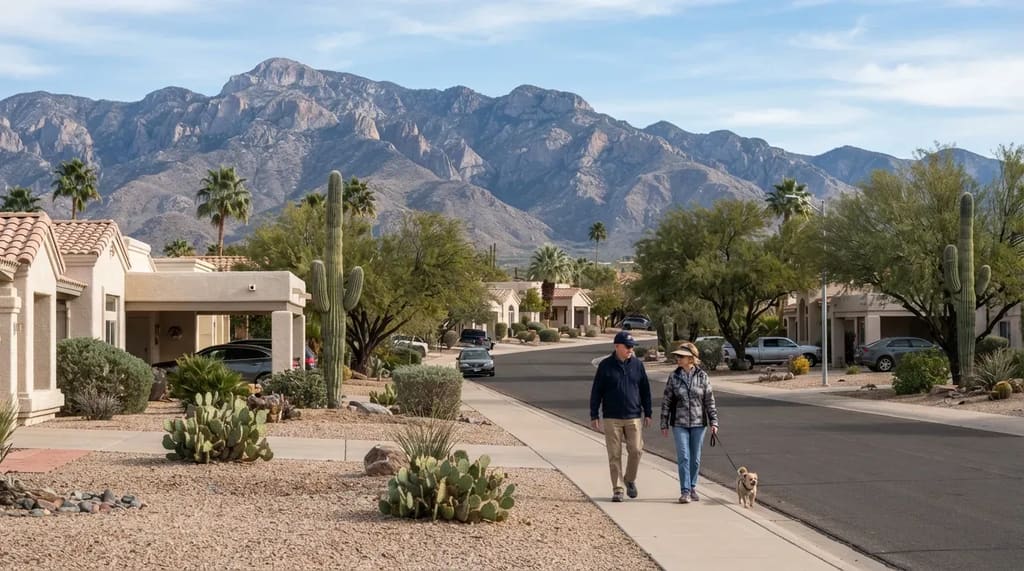
Green Valley was developed specifically with active retirees in mind, and it shows. It is an unincorporated community made up of 59 homeowner associations, and 80% of residents are 65 or older. The 2020 census counted 22,616 people, and real estate sites say the winter population climbs to as many as 30,000.
The weather needs a straight answer, though. Frost occurs about 37 nights per winter on average, and daytime highs stay under 50°F on about nine days. That is milder than most of the country but not the same as Yuma. If warm nights matter to you, Green Valley’s elevation is the trade you make for its hiking and birding.
Frost is the price of sitting higher than the low desert, and the warmest winter numbers in the state belong to a town in the far southwestern corner.
5. Yuma: The Sunniest City on Earth, With a Lettuce Habit
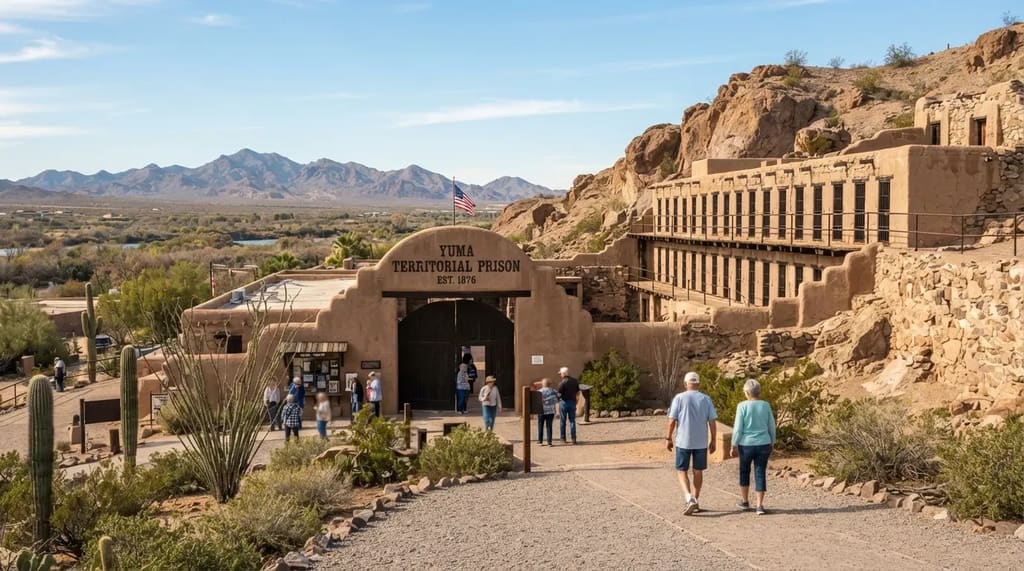
Yuma’s average January high is around 70°F, and it calls itself the sunniest city on earth. Visit Yuma, the local tourism bureau, said in January 2026 that around 60,000 to 70,000 snowbirds arrive each winter.3 A city-cited estimate in 2024 ran as high as 90,000, so the true figure depends on who is counting. Locals say traffic picks up and grocery lines get longer.3
Beyond the weather, Yuma offers lower seasonal rental costs than Palm Springs or Phoenix.4 The area is also known for growing most of the country’s winter leafy greens, and for the Yuma Territorial Prison Park and Museum. If warm afternoons are your first priority, Yuma is the strongest pick on this list. It beats Green Valley on frost, and its crowds are easier to plan around than Quartzsite’s.
4. Youngtown: The Tiny Town Where the Retirement Community Was Born
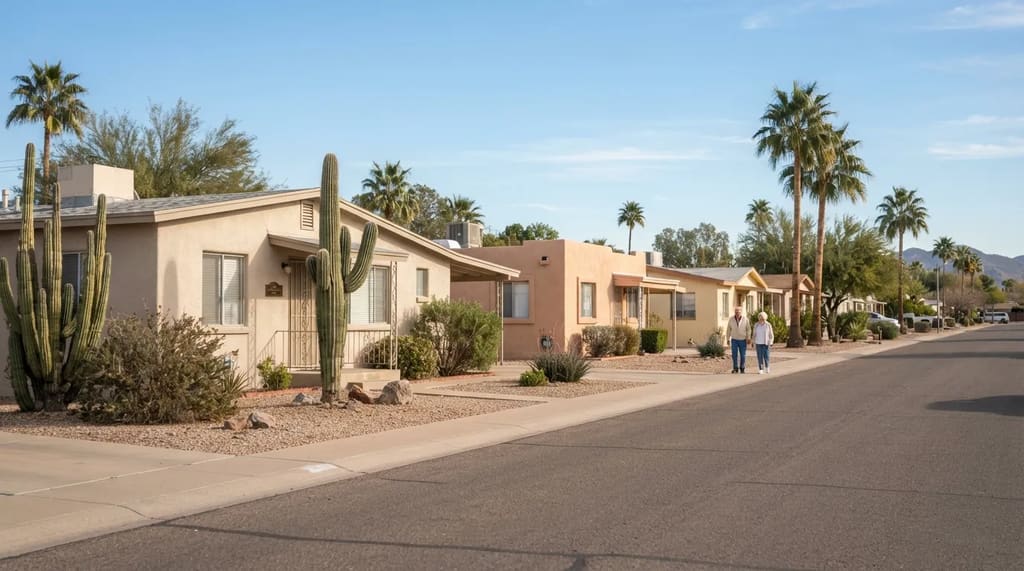
In 1954, the first age-restricted development opened in Youngtown, in the Phoenix area.5 It is small and modest, and it is the reason the rest of this list exists in its current form. The formula of homes reserved for older residents began here before anyone built a golf course around it.
That community inspired its famous neighbor, Sun City, founded in 1960. Youngtown is a place to visit for the history, not for a month of scheduled activities. If you are curious about how American retirement living got started, a morning here costs very little and makes the larger communities easier to understand.
Quick Compare
- Youngtown, 1954: the first age-restricted development, small and modest.
- Sun City, 1960: opened January 1 and drew an estimated 100,000 visitors.
- Sun City West, late 1970s: the sequel, with golf, clubs and recreation centers.
3. Sun City West: The Sequel That Copied a Winning Formula
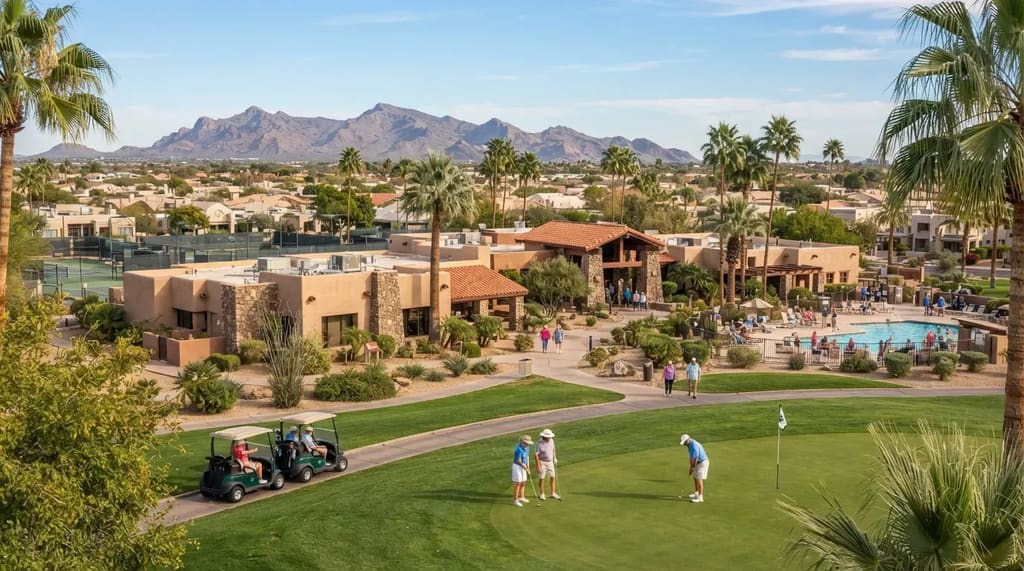
Sun City West was built in the late 1970s as the follow-up to the original Sun City. Both Sun Cities are retirement communities popular with snowbirds. That means January stays here come with an established calendar of golf, clubs and recreation centers.
The original Sun City was laid out with golf courses along the outer streets and was unusual for having no schools. The sequel followed that formula. If you plan to rent here, ask how the age rules apply to guests, because homeowners associations enforce the age restriction and visiting rules vary by community. Sun City West was the sequel, and the original opened on January 1, 1960.
Related Stories From Travelbinger

2. Sun City: The Opening Weekend That Caused Arizona’s Biggest Traffic Jam
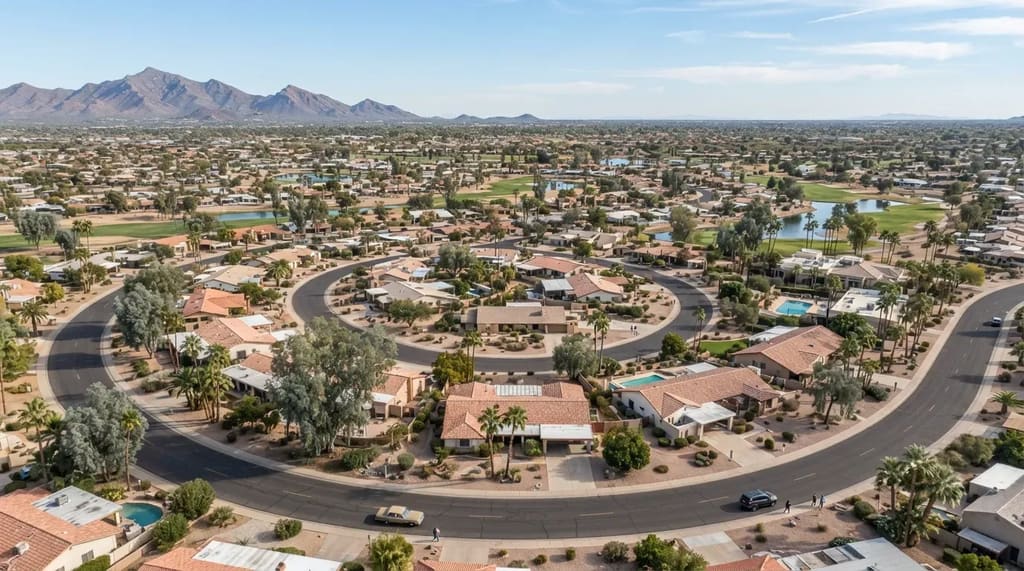
Del Webb’s company opened five model houses on January 1, 1960, unsure how people would respond.6 Ten thousand visitors would have been a good turnout. An estimated 100,000 showed up, creating what is often called the largest traffic jam in Arizona history.6
The layout was distinctive: curving streets in concentric circles, easy to spot from the air. The idea spread across the Sun Belt, and active adult communities are now common throughout it.6 If you want to see where this style of retirement took off, this is the original, though everything here is an existing home, since the company finished building it decades ago.
Sun City’s crowd was a one-weekend event, while a far larger January gathering happens every year on open desert, on the other side of the state.
1. Quartzsite: The Desert Town That Swells Past a Million
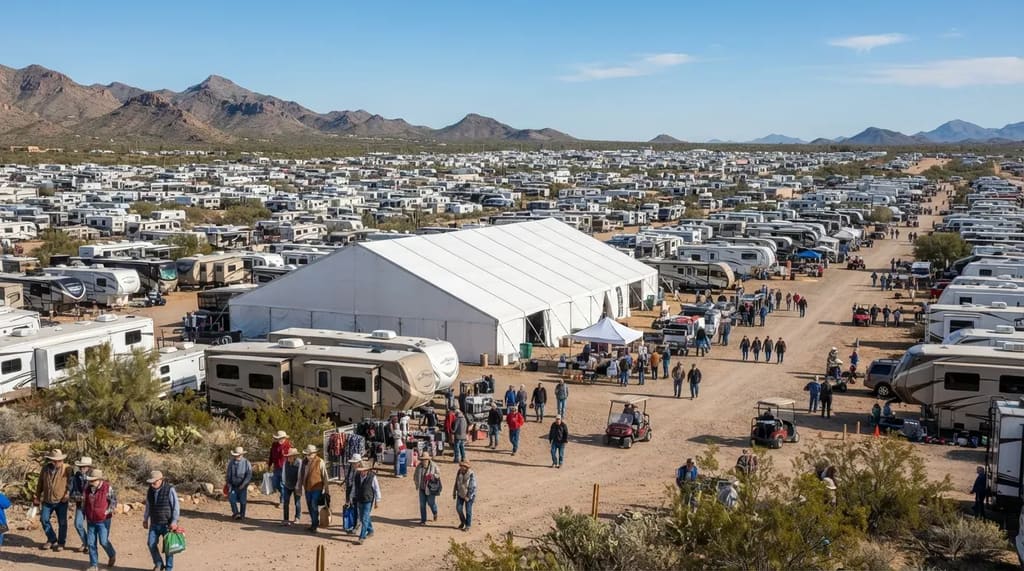
Quartzsite has only a few thousand year-round residents, and during show week the population swells to well over 50,000.7 Other estimates reach much further: some put the figure at over 1 million visitors across the full January gathering window. The estimates differ because the crowd spreads across open desert instead of through a ticket gate. RVs here far outnumber houses.
The main event is the Quartzsite Sports, Vacation & RV Show, known as the Big Tent, which runs for about nine days in mid-January. Admission and parking are free, and dogs are welcome, so check the dates each year.7 Rock hunters have their own draw in the QIA Pow Wow Rock, Gem & Mineral Show, hosted by the Quartzsite Improvement Association, with hundreds of vendors.8 It is a smaller cousin of Tucson’s showcase, and unlike Sun City’s one-weekend jam, it comes back every year.
Here is the number that ties this list together. The temperature gap between these towns is a few degrees. The crowd gap runs from a village of about 1,600 people to a desert that can hold a million visitors.
Since afternoons in most of them are pleasant, the crowd is the bigger factor in how the month feels. It is also the one thing you can’t fix after you’ve signed a rental.
Before you book, decide how much company you want at the grocery store, on the golf course and in the evening. Then choose the town whose crowd matches.
If you could spend one January in any of these places, which would it be, and what would you do on your first morning?
- ABC15 Fountain Hills Story: https://www.abc15.com/entertainment/events/fountain-hills-the-story-behind-arizonas-iconic-fountain
- Lake Havasu London Bridge: https://www.lakehavasulondonbridge.com/
- KYMA Yuma Winter Visitors: https://kyma.com/news/2026/01/29/second-wave-of-winter-visitors-come-into-town/
- Yuma-Arizona.com Snowbird Guide: https://yuma-arizona.com/
- Age 55 or Better Study: https://doi.org/10.1177/0096144211418435
- WTTW Sun City History: https://www.wttw.com/ten/towns/more/sun-city
- Quartzsite RV Show Overview: https://campingcarshow.com/shows/quartzsite-rv-show/
- RVTravel Quartzsite January Events: https://www.rvtravel.com/quartzsite-packs-january-with-rv-shows-and-events/