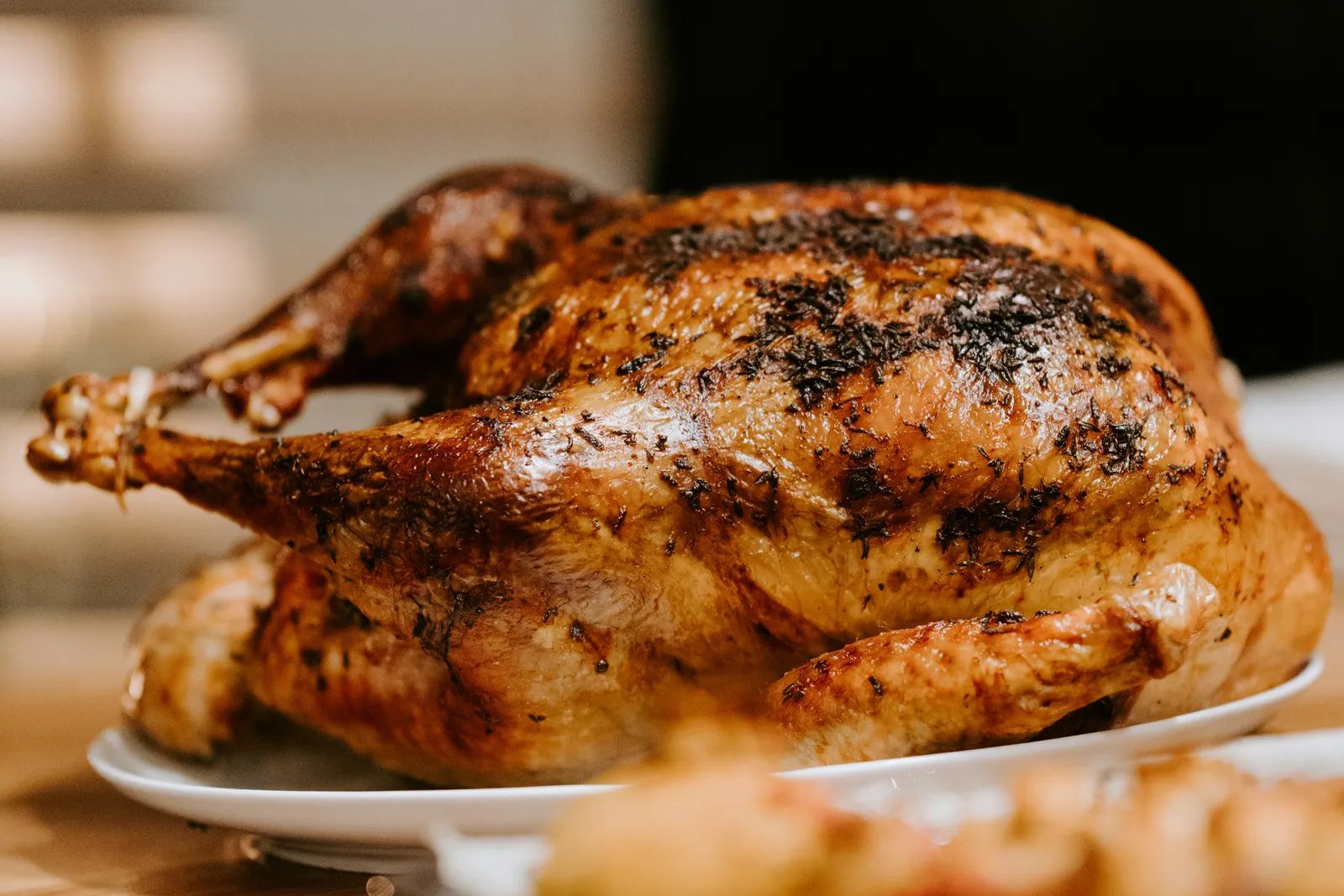
Dinner is set for a specific hour, but the turkey rarely keeps to the schedule. Guests are on their way, side dishes are crowding the counters, and the oven is the one thing that decides when everyone sits down. Thanksgiving falls on November 26 this year, so many home cooks are now working out their timing. The USDA’s roasting guidance offers a clear starting point, and it is built on one rule that matters more than the clock ([1]).
Matching the Clock to the Bird’s Weight
At 325°F, the USDA’s timetable for an unstuffed whole turkey begins with 2¾ to 3 hours for birds weighing 8 to 12 pounds. The rows climb from there. The guide lists the following ranges for unstuffed birds:
- 8 to 12 pounds: 2¾ to 3 hours
- 12 to 14 pounds: 3 to 3¾ hours
- 14 to 18 pounds: 3¾ to 4¼ hours
- 18 to 20 pounds: 4¼ to 4½ hours
- 20 to 24 pounds: 4½ to 5 hours
Because the rows are ranges, a single minutes-per-pound figure can mislead. Working through the table, the original reporting estimates the span at roughly 12½ to 19 minutes per pound for birds from 12 to 20 pounds, and it notes that larger birds need fewer minutes per pound. That arithmetic is not a USDA rule, so the table itself should guide the timing.
Planning backward is where the numbers become practical. For a 16-pound unstuffed bird, the USDA range is 3¾ to 4¼ hours. Allowing for the resting period and a cushion for a bird that runs slow, the cook would begin about four and a half to five hours before carving. A bird that goes into the oven at mid-morning can come out in time for an afternoon meal, but only if the cook keeps an eye on the thermometer.
Stuffing Adds Time and a Second Safety Check
Stuffing changes the math. The USDA’s stuffed figures run longer than its unstuffed ones at every weight. A stuffed 8 to 12 pound bird takes 3 to 3½ hours, and a 20 to 24 pound bird takes 4¾ to 5¼ hours.
The agency also advises against stuffing the bird for the sake of safety. USDA recommends cooking stuffing in a separate casserole dish, which allows more even cooking. Cooks who stuff the bird anyway must make sure the center of the stuffing reaches 165°F. That reading is easy to overlook when the breast already looks done, and it is the one that can be missed most often.
The Thermometer Is the Real Finish Line
USDA sets the minimum safe internal temperature for a whole turkey at 165°F. The reading should be taken in the innermost part of the thigh and wing and in the thickest part of the breast. Checking only one spot can leave the rest of the bird undercooked, so once the thigh reaches the target, the wing and breast should be checked as well.
Pop-up indicators do not settle the question. USDA recommends confirming the result with a food thermometer even when a pop-up timer has triggered. Tasting the meat is not a substitute for a reading, either.
Oven setting: USDA says no lower than 325°F. Illinois Extension calls overnight roasting at 190 to 200°F dangerous because the bird spends too long in a range where bacteria can grow.
Frozen birds: USDA says they can be cooked from frozen, but the process takes at least 50 percent longer than for a fully thawed turkey.
Frozen turkeys are a common source of holiday confusion. A bird that was never thawed needs far more time, so a cook who plans around a thawed schedule can end up with a late dinner. Thawing ahead of time is usually the simpler route.
Resting, Leftovers and the Two-Hour Rule
USDA suggests letting the turkey stand for 20 minutes before carving. The rest allows the juices to settle and makes the meat easier to cut. The pause does not replace the temperature check, and the 165°F reading still applies before the bird leaves the oven.
After dinner, the food safety clock keeps running. USDA says turkey, stuffing and gravy should not sit out longer than 2 hours, or 1 hour when the temperature is above 90°F. Refrigerated leftovers should be eaten within 3 to 4 days, and frozen leftovers keep their best quality for 2 to 6 months.
For many households, the longest part of Thanksgiving is the wait for the oven to finish its work. The USDA’s timetable gives a reliable plan, but the thermometer has the final word. Cooks who start early, check the thickest parts of the bird and keep the oven at 325°F or higher can carve with more confidence when the guests finally sit down.