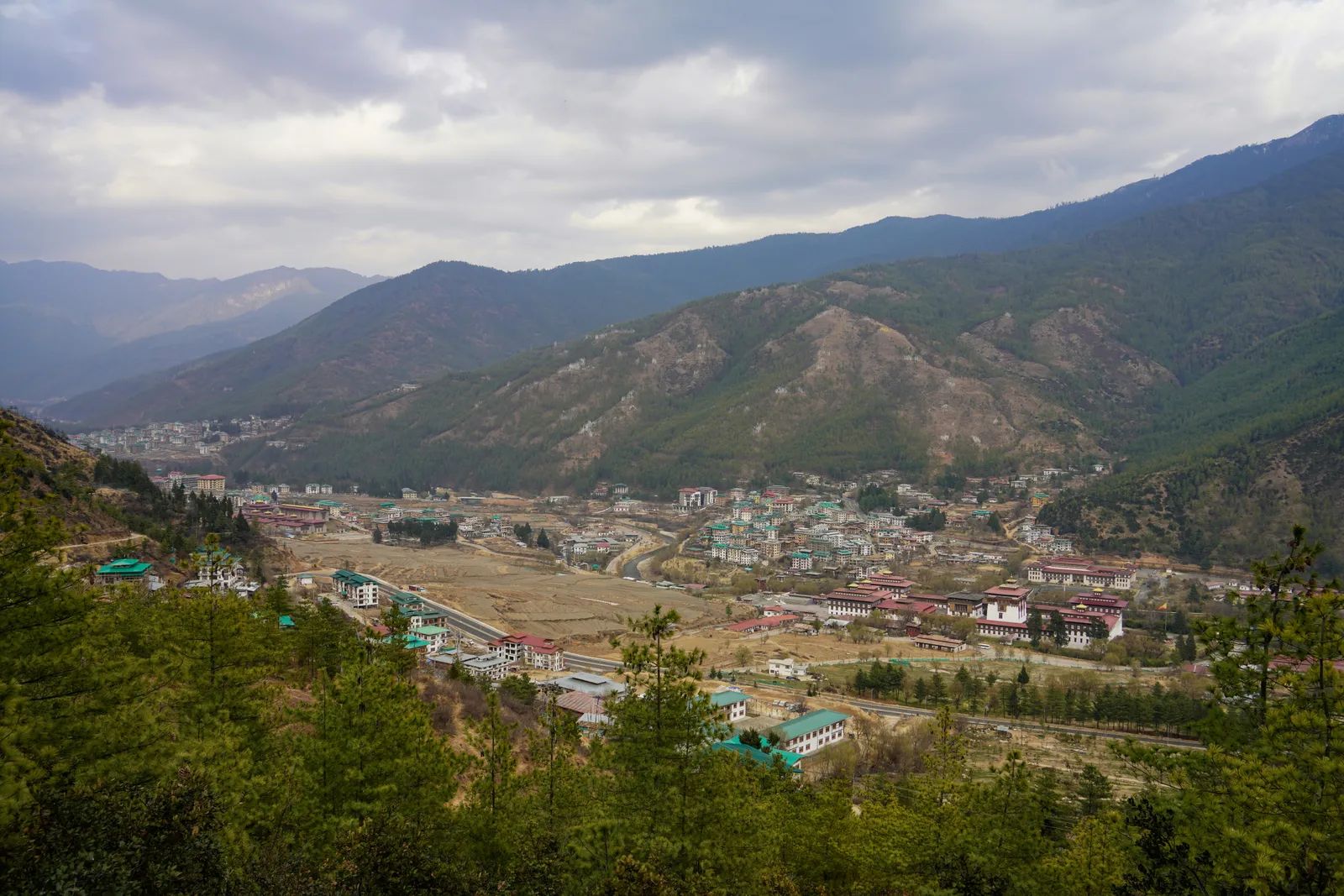
Few countries can say that most of their land is still covered by trees. Bhutan can, and it has now been recognized for it on a global stage. The Himalayan kingdom is one of the 2026 winners of the Earthshot Prize, a award that carries 1 million pounds, or about $1.3 million, to expand its national landscape restoration work. The honor reflects a rare combination of constitutional commitment and forests that still cover nearly 70% of the country ([1]).
A constitutional floor, comfortably exceeded
Bhutan’s forest cover is not an accident of geography. The country’s constitution requires at least 60% forest cover, and the actual figure sits well above that threshold. The prize was awarded in the “Protect and Restore Nature” category, recognizing the decision to write nature protection into the nation’s founding document.
Officials connected to the prize have also described Bhutan as the world’s first carbon-negative nation. Princess Chimi Yangzom Wangchuck, daughter of the fourth king, framed the commitment in a video released by the Earthshot Prize. “Protecting nature is part of our national responsibility,” she said, adding that it “is not just a promise; it is the law.”
Why the forests matter far beyond the border
The forests of this small country of about 800,000 people do much of their work downstream. They protect Himalayan freshwater systems that supply roughly 1.6 billion people across South Asia. Prize organizers cited data estimating that these ecosystem services are worth around $14.5 billion each year.
That scale changes how the award reads. A country with a modest population and a small economic footprint is protecting water for a region several times its size. The recognition therefore rests not only on what Bhutan has kept intact at home, but also on what its watersheds deliver to neighboring nations.
What the prize money is meant to accomplish
The funding is designed to speed up “Restore Bhutan,” a national initiative launched in 2025. The program aims to restore 50,000 hectares, or nearly 124,000 acres, of degraded forests, farmland and urban landscapes by 2030. The targets go beyond land alone, and the Earthshot Prize’s emailed press release set out the goals in measurable terms.
| Restore Bhutan target | Goal by 2030 | Approximate equivalent |
|---|---|---|
| Land restored | 50,000 hectares | Nearly 124,000 acres |
| Carbon dioxide sequestered | 1.96 million metric tons | Not specified in source |
| Water secured | 133 billion liters | 35 billion gallons |
The carbon and water figures show how the restoration plan extends beyond scenic value. Each target connects directly to climate and freshwater security, which is why the program has drawn attention from conservation observers.
Related Stories From Travelbinger

A quiet example for travelers and policymakers
For visitors who picture Bhutan as a remote destination of valleys and monasteries, the prize adds a new layer to the story. The country’s landscapes are the product of decisions made in law and sustained over time, not only of isolation. Prince William of the U.K. also praised the work, saying that change “is already happening,” though the broader context of his remarks was not fully available in the source material.
The Earthshot recognition is unlikely to be the last word on Bhutan’s forests. Its next test will be whether the 2030 targets are met on the ground. For now, a country of 800,000 people has shown that a legal promise, kept consistently, can become a global example.