Jaguars and ocelots are often linked with Central and South America, but both appear on the National Wildlife Federation’s list of wild cats native to the United States. The organization’s blog post, ([1]), counts six species in total. Four of them are familiar North American animals, while the other two are tropical cats that reach the southern edge of the country.
Six Species Across the Country
The U.S. list includes a mix of cats with very different habits and home ranges. Some are common across large areas, while others survive in only a few places. Here is how the six species break down:
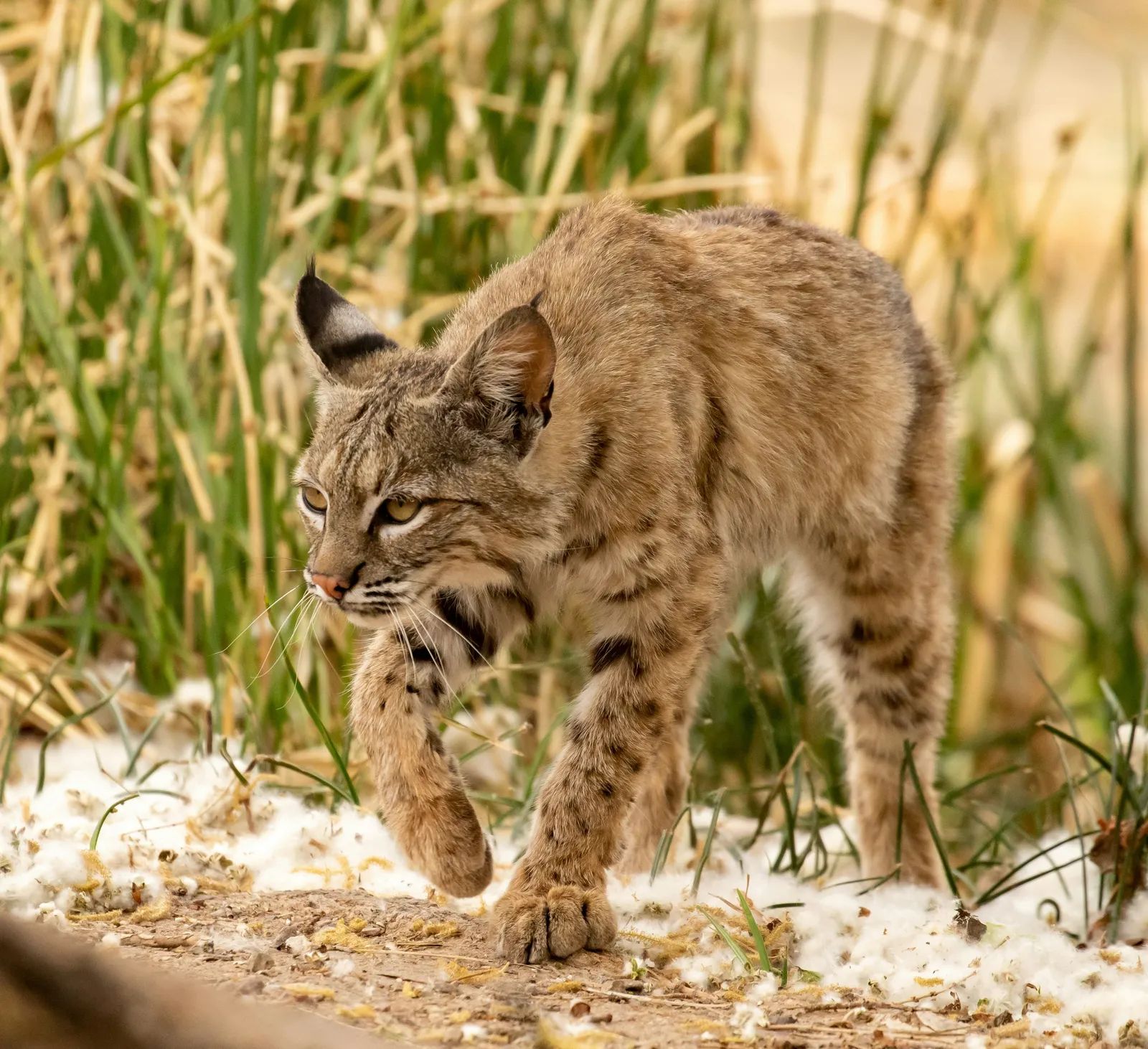
- Bobcat: The smallest of the group in most cases, named for its short tail, which measures roughly 4 to 7 inches. Bobcats live in 47 of the contiguous states plus Alaska, and rabbits and hares make up much of their diet.
- Canada lynx: Mostly found in the boreal forests of Canada, though it also ranges into Alaska and several northern and western states. It is listed as threatened under the Endangered Species Act, and snowshoe hares are its main food.
- Mountain lion: Also called a cougar, puma or panther depending on the region. It lives mainly in the western U.S. and is the wildcat most likely to cross paths with people, although sightings remain extremely rare.
- Jaguar: The largest wild cat in the U.S. and the Americas. It is listed as endangered and ranges through Arizona and Texas into Mexico and South America.
- Ocelot: Found in south Texas and occasionally in Arizona, though it is far more abundant in Mexico and across Central and South America. It is also listed as endangered.
- Jaguarundi: A slender cat once found in southern Texas and Arizona. It is considered most likely extinct in the U.S., but the Endangered Species Act still offers it protection.
Although six may sound like a generous total, the post notes that South America, Africa and Asia host far more native wild cat species. The American list is modest by global standards, but its variety is notable for a single country.
Rare Visitors From the South
The jaguar draws the most attention. Most jaguars have tan to golden-orange fur with black rosettes and white bellies, but some are entirely black. The NWF describes this as a melanistic trait, and such cats are often called black panthers. Adult males can weigh between 150 and 200 pounds, and they hunt prey including capybaras and peccaries.
The ocelot carries an interesting name. The NWF says it derives from the Aztec word tlalocelot, which translates roughly to “field tiger.” Its diet is far less specific than the jaguar’s, ranging from mice and opossums to snakes and deer. The University of Arizona’s Wild Cat Center focuses much of its work on jaguars and ocelots, and it tracks a jaguar named Cinco, first detected in the U.S. in 2025.
These cats are not wandering through national parks in large numbers. Their presence in the U.S. is limited to narrow zones near the border, so visitors should treat them as the rare exception rather than a reason to plan a trip.
A Lost Cat and a Struggling Population
Not every U.S. wildcat has survived. The Eastern cougar, a subspecies of the mountain lion that once ranged across the eastern U.S. and Canada, is now considered extinct. Hunting and the decline of its white-tailed deer prey contributed to its disappearance. The U.S. Fish and Wildlife Service officially declared it extinct, noting that the last known individuals were killed in the 1930s.
The Florida panther, a regional population of mountain lions, remains in a far more precarious position. It is listed as endangered under the Endangered Species Act and survives mainly in Southwest Florida. The NWF’s partner, the Florida Wildlife Federation, is working to protect remaining habitat and expand the panther’s range across the Southeast.
Roads, Corridors and a Famous Cougar
Habitat loss, vehicle strikes and illegal hunting rank among the main threats to wild cats, according to the NWF. Wildlife crossings are one response. The #SaveLACougars campaign, launched in 2014 by the NWF and the Santa Monica Mountains Fund, is building a wildlife crossing over the 101 Freeway in Agoura Hills, California. The structure is scheduled to open in December 2026, and it is designed for mountain lions as well as mule deer, bobcats, coyotes, gray foxes and black bears.
Related Stories From Travelbinger



The project draws much of its inspiration from P-22, a mountain lion known as the “Hollywood Cat” for living in Griffith Park. P-22 crossed two major Los Angeles freeways to reach the park, an achievement that made him widely known. In December 2022, the California Department of Fish and Wildlife euthanized him after severe injuries, most likely from a vehicle strike.
Six species, a few of them distant from the familiar image of an American wildcat, show how varied the country’s wildlife really is. Whether these cats hold on will depend on the corridors, protections and habitat that keep them moving between the places they still call home.