Most people picture the cruise health scare as a bad buffet night or a sunburn. The advice written for passengers over 60 points somewhere less obvious, and the same sixteen points keep coming back. Around half of the passengers who visit a ship’s medical center are older than 65, so this is the crowd the whole system is built around.
Some of these points take ten minutes at your kitchen table. The cheapest one is a single phone call to your insurer, and it is tied to the biggest number in this piece, a bill that never appears on any cruise fare. We’ll get there, but first, a look at who is actually sitting in that waiting room.
#16 – Half the Waiting Room Is Over 65
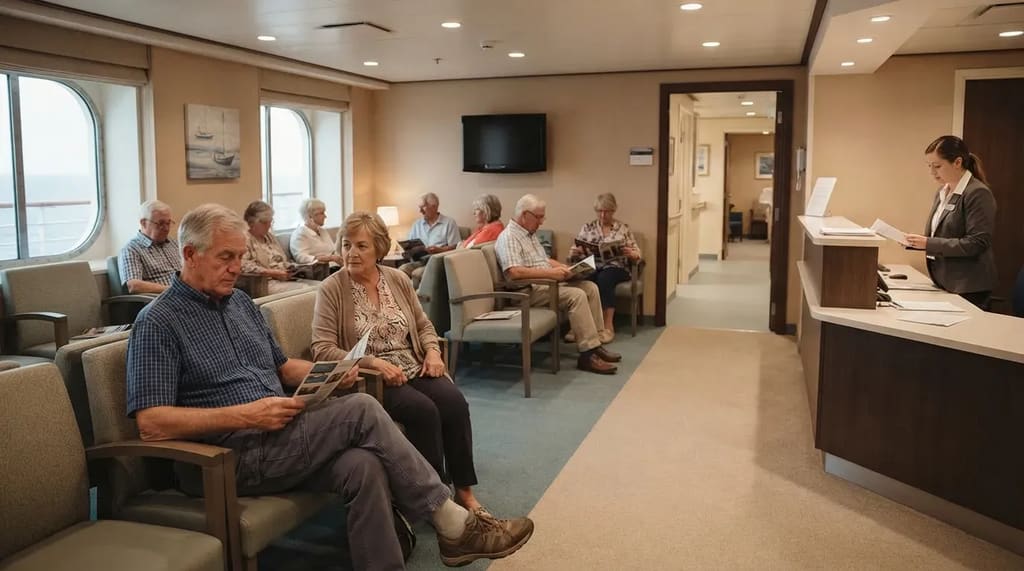
Roughly half of the passengers who visit a ship’s medical center are over 65, according to the CDC.1 That makes age-related trouble routine business for the medical team, so you are not bringing them anything unusual. What changes at sea is the distance to the nearest hospital, and most of this list comes back to that distance.
Deaths aboard are rare, running from 0.6 to 9.8 per million passenger-nights, and most come from cardiovascular events. That is a good reason to give your own heart history more thought than the dessert menu. Some lines go further than a conversation and ask for a signed letter.
#15 – The Doctor’s Letter Some Lines Ask For

Most cruise lines don’t require a physician’s letter today, but they do have health questionnaires to fill out shortly before the cruise sails. If you are 70 or older, or have a serious chronic condition, Travelers United recommends checking directly with the cruise line about whether it wants a letter certifying you are fit to sail.2
Ask before you book, so you know your doctor will sign that letter before a deposit is down.2 Even where no letter is required, take the specific itinerary to your own doctor. A week of sea days, long walks and hot ports raises different questions than a week at home.
That appointment is also the easiest place to ask for one particular piece of paper.
#14 – A Baseline ECG Copy in Your Carry-On
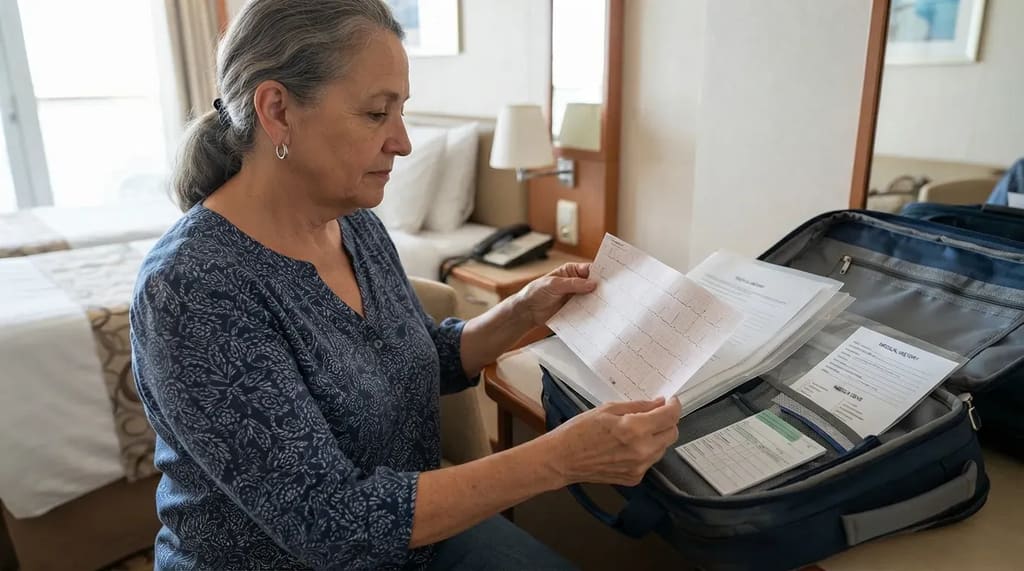
If you have a history of heart disease, a copy of a baseline ECG from your doctor can help with onboard or overseas care. A ship’s doctor facing chest pain in a stranger has nothing to compare it with. A tracing from your own cardiologist shows what normal looks like for your heart.
The same folder can carry the rest of your health paperwork. The ECG is worth the trouble mainly if your heart has a history. If it doesn’t, the medication list matters more and the tracing can wait.
Worth Knowing
- A baseline ECG from your own cardiologist, if you have heart disease
- Your medical history on a page or two
- Allergies and immunizations, listed plainly
- Current medications, so a stranger can read them in seconds
Heart tracings are for the ship’s doctor. The machines that help you sleep or breathe are a separate matter.
#13 – CPAP, Oxygen and Wheelchairs Need Advance Notice
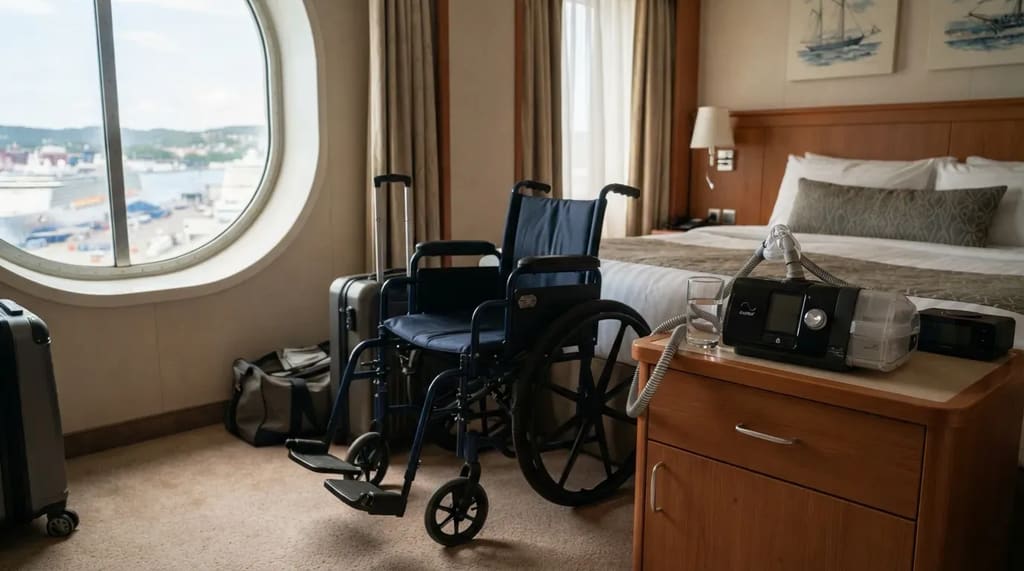
Your doctor can arrange special requirements such as wheelchairs, CPAP machines and oxygen supplies with the cruise company’s medical unit before you leave home. Equipment rules differ from line to line and ship to ship, so a written confirmation is worth more than a verbal yes at the pier.
Treatments that run on a schedule need the same early notice. Some ship medical centers can provide renal dialysis, but facilities vary by ship and itinerary. That makes dialysis a question for the cruise line before you pay a deposit, not something to raise on embarkation day. The same call can cover assistance with boarding and disembarking if walking the gangway is a worry.
#12 – The Pharmacy Markup Behind the Ship’s Counter

The ship’s medical center does stock common medications, but it sells them at a significant markup. Your own supply from home costs less, so pack it in your carry-on, in the original bottles, with a few extra days’ worth in case the ship is delayed. A suitcase can be sent to the wrong city. Your pills should never be inside it.
Keep a written list of every medication with generic names, doses and your prescriber’s contact information. The brand on your bottle may not match what a ship’s pharmacy or a port clinic stocks, but the generic name travels. If a drug needs refrigeration or special handling, confirm the cruise line’s arrangements before departure.
A full pill case still leaves out the medicine most often needed at sea, the kind for seasickness.
#11 – Seasickness Pills That Can Cloud an Older Mind

Seasickness is a common complaint, affecting up to a quarter of passengers, so the odds are decent that you will want a remedy. Travelers are advised to ask a pharmacist about anti-sickness medication before they go. That advice matters more after 60 than before.
Older adults can react differently to some of these drugs, with side effects like drowsiness or confusion. Try a medicine at home first, and skip the pill a cabin neighbor offers you at the rail. For severe cases the ship can give IV fluids and anti-nausea injections, which is a comfort and also a charge.
Vomiting also drains the body of water, and on a ship that water is easy to lose.
#10 – Dehydration on a Sea Day by the Pool

Dehydration is a frequent problem among cruise passengers, especially older ones who are more prone to fluid imbalances. Sea air, sun and alcohol each pull water out of you, and a ship offers all three from breakfast onward. A second cocktail at lunch is a cheaper thing to give up than an afternoon in the medical center.
Your medicines may play a part too. Ask your pharmacist whether any of them raise sun sensitivity or dehydration risk, which is a one-minute question to settle before sailing. Then plan shade and water breaks before the first port day, because a hot shore excursion is a poor place to find out.
#9 – Introducing Yourself to the Ship’s Doctor

If you have an existing health problem, introduce yourself to the ship’s doctor or nurse and tell them your medical history and medications. Also locate the ship’s medical facilities and learn the emergency evacuation procedures as soon as you arrive on board.
It can feel like fussing on embarkation day, when you would rather find your cabin and your first drink. It is also where the ECG copy and the medication list from earlier do their work, because they put your file in front of the medical team before any emergency. A few minutes now saves guesswork later.
At a Glance
- Find the medical center before you unpack
- Introduce yourself to the doctor or nurse
- Share your history and medication list
- Learn the emergency evacuation procedures
Knowing where the infirmary is matters most on the days when the ship is not at a dock at all.
#8 – Tender Boats That Strand Tired Knees
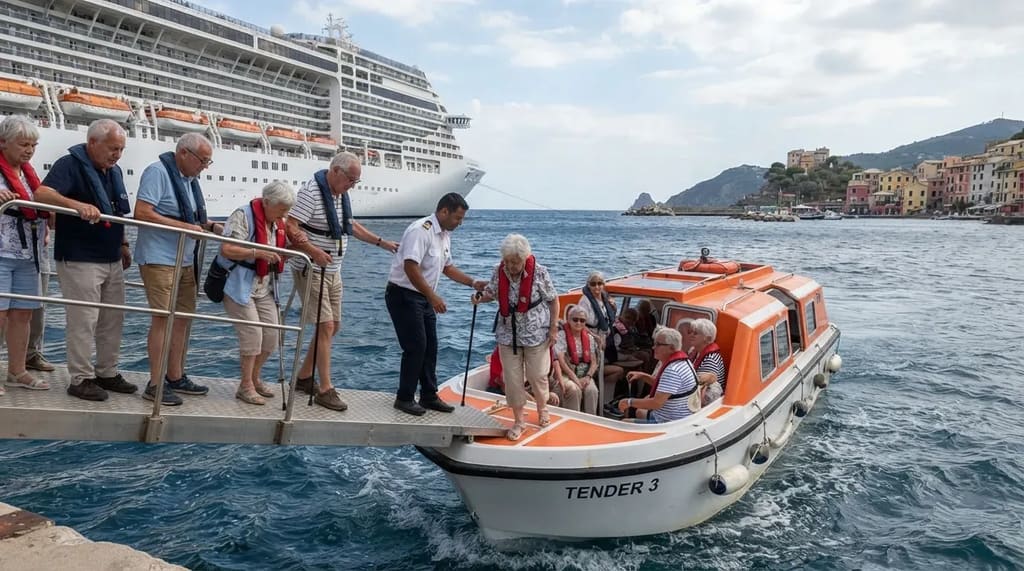
At some stops the ship anchors offshore, and small boats called tenders carry passengers to land. Ports that require a tender can be a problem for passengers with mobility limits, at any age. The step down into a bobbing boat is harder than any gangway.
On some ships, tender rules can limit certain mobility devices, so ask before you book instead of after. A tender port is also a health matter. If you can’t board the boat, you can’t reach a clinic or a pharmacy ashore, which makes the itinerary part of your medical planning.
Tenders test the knees. The ship’s own stairs and wet decks test balance just as often.
#7 – Handrails on a Ship That Never Stops Moving

Heart attacks, strokes, falls and food poisoning all happen on ships. A deck that rolls even slightly changes how you balance, and pool decks, stairways and cabin thresholds all demand more of your legs than a hallway at home. Use handrails and grab bars when you move around the ship.
Treat the rail as ordinary equipment, not a concession. Ship medical teams can handle minor fractures, but a broken hip is a hospital-ashore problem, and a long way from home. If stamina is the question, remember that cruise lines offer wheelchair-accessible cabins and boarding assistance.
#6 – Flu and Pneumonia Shots Before Boarding

Older travelers are at increased risk for severe COVID-19 and for flu complications, including pneumonia. Travel guidance highly recommends flu shots and, for anyone 65 or older, pneumococcal vaccination. The CDC’s cruise guidance also encourages you to review vaccinations and medical needs before departure.3
Fast Facts
- Flu shots are highly recommended for older travelers
- Pneumococcal vaccination is advised for anyone 65 or older
- Older adults face higher risk from severe COVID-19 and flu complications
- Shots need a couple of weeks to build protection
A cruise puts large numbers of passengers together in dining rooms, theaters and elevators. For that reason, vaccines belong near the top of the pre-sailing list, ahead of most of the gadgets in your online shopping cart. Your doctor or pharmacist can tell you which ones you are due for, and shots need a couple of weeks to build protection, so don’t leave them to the week of departure.
#5 – The Stomach Bug Numbers From 2024 and 2026
The CDC reported 16 outbreaks of stomach illness on cruise ships in 2024, affecting 1,894 passengers and 245 crew members.4 That was more than in any year since 2012, against an average of 12 outbreaks a year from 2006 to 2019. Norovirus caused 14 of the 2024 outbreaks and E. coli the other two.4
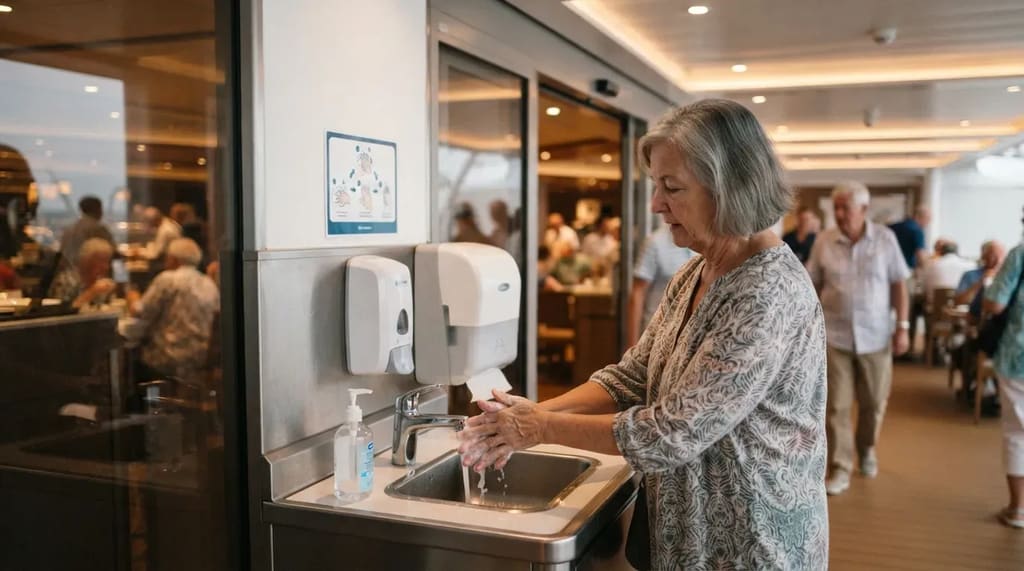
The CDC’s 2026 list repeats the mix, with norovirus aboard three Princess ships and E. coli on Regent’s Seven Seas Mariner. Alcohol sanitizer is overrated against norovirus, and the CDC’s standard advice is soap and water, scrubbed for about 20 seconds before you eat. Sanitizer is fine between sinks, but it should not be your plan.
Whatever the bug turns out to be, the first hours after symptoms start are when the ship most needs to hear from you.
#4 – Why a Queasy Stomach Gets Reported Fast

Passengers should report any symptoms, especially diarrhea and vomiting, promptly to the ship’s medical team and crew.1 Waiting to see whether a queasy stomach passes is the wrong call on a ship. When an outbreak happens, affected and exposed passengers are asked to quarantine in their rooms until it is under control.
Leftover antibiotics from your medicine cabinet are no substitute for a visit. A travel-medicine service in Australia notes that self-treating for two to three days before presenting can increase the risk of a large outbreak on board. Reporting costs you a day or two in your cabin, which is a real loss on a vacation, but it is cheaper than being the reason a whole corridor falls ill.
Even a brief infirmary visit lands on the cabin account, and that is where the surprise begins.
#3 – The Medical Bill That Lands on Your Cabin Account

Cruise lines charge for medical services, and the bill is added to your onboard account, the same one the bar and the spa use.5 A basic consultation commonly runs from about $100 to $300, depending on the line and the hour. After-hours appointments cost more, and a doctor’s visit to your cabin can cost more still. Tests, medications and fluids are billed on top.
Related Stories From Travelbinger



The medical center will provide an itemized receipt and a medical summary, but it generally cannot bill your insurance plan directly, so you pay first and claim later.5 A more serious episode that needs sustained care over several days can cost considerably more. Next to that, the pharmacy markup from earlier is small change.
Those charges assume the ship can handle the problem, which is not true of every condition.
#2 – What the Infirmary Cannot Do at Sea

A ship’s medical center is built for urgent assessment and stabilization, not the depth of a land hospital. It cannot offer advanced scans such as MRI, or treatment by a specialist cardiologist or neurologist. Surgery beyond basic procedures and extended intensive care are also outside its reach.
Industry data indicates that about 95% of acute illnesses or injuries reported on cruise ships are treated or managed onboard, which is reassuring for the everyday cases. The remaining few are the ones that count. The medical team orders an evacuation when a situation exceeds the ship’s capabilities, such as a need for ICU-level care. If you have a medical condition, contact the cruise line before you book and ask what that specific ship can and cannot do.
Once the ship decides a patient must leave, the question becomes who pays for the way off.
#1 – The Evacuation Bill Medicare Won’t Touch at Sea
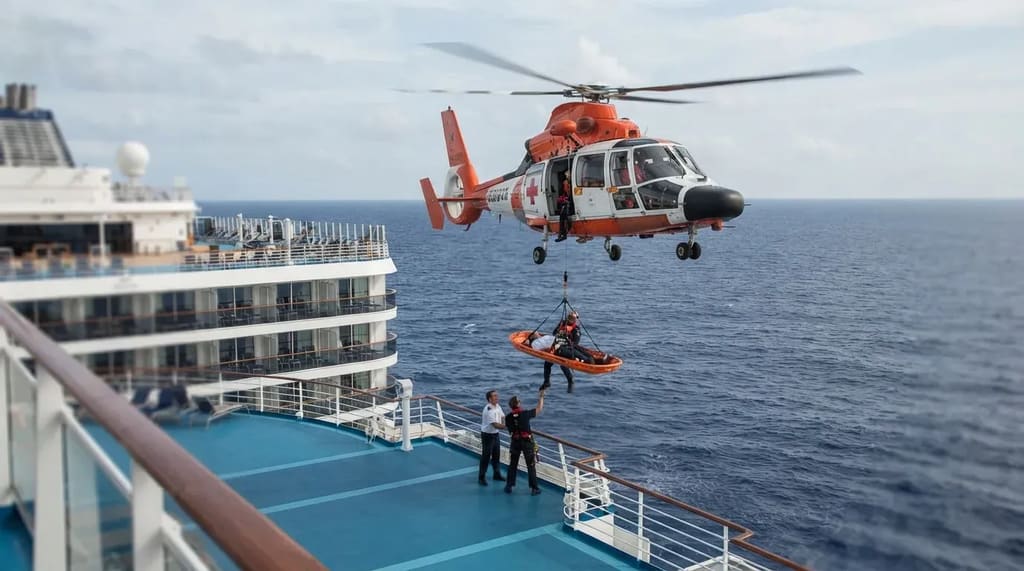
Medicare Part B can cover medically necessary care on a cruise ship, but generally not when the ship is more than six hours from a U.S. port.5 Original Medicare does not cover evacuation transport or medical care outside the United States in most cases. Some Medicare Advantage plans may cover emergency care abroad, though evacuation is usually not covered.
The price of that gap is large. Insurers put a medical evacuation from a cruise ship at between $50,000 and $250,000, depending on distance, location and equipment. Some Medigap plans include a foreign emergency benefit, but only up to $50,000 lifetime, which can run out before an offshore airlift is paid for.6
Quick Compare
- Original Medicare: Part B can cover care within six hours of a U.S. port, but generally not evacuation or care abroad
- Medicare Advantage: May cover emergency care abroad, but evacuation is usually excluded
- Medigap: Some plans offer a foreign emergency benefit, capped at $50,000 lifetime
- The evacuation bill: $50,000 to $250,000, depending on distance, location and equipment
So the phone call comes first. Ask your plan, and get the answer in writing, what it pays once the ship leaves U.S. waters. If the answer is little or nothing, travel insurance with evacuation coverage fills the hole. One guide suggests at least $100,000 of evacuation coverage, with $250,000 to $500,000 better, and cautions that some cruise-line protection plans carry lower limits than standalone policies.
Read the pre-existing condition clause too, since some policies exclude those conditions unless a waiver is purchased. Check the exact terms with your insurer or a licensed agent before you pay.
The cruise fare is only part of the cost of the trip. The rest is the distance between your cabin and a hospital, and who pays when you have to cross it. Most of the items here are paperwork, a few calls and a handful of habits, and they cost far less than a single day in the infirmary.
Think of that preparation as part of the fare, not an extra for when there is money left over. It is also what lets the sea days feel like a vacation. The best-planned trips are the ones where the doctor’s number never gets used.
- CDC Yellow Book Cruise Travel: https://wwwnc.cdc.gov/travel/yellowbook/2024/air-land-sea/cruise-ship-travel
- Travelers United Cruise Health Tips: https://www.travelersunited.org/my-top-6-health-tips-for-cruisers/
- CDC Older Adults Healthy Travel: https://wwwnc.cdc.gov/travel/page/senior-citizens
- The Hill CDC Outbreak Report: https://thehill.com/policy/5061889-cruise-ship-stomach-illnesses-12-year-high-cdc/
- Cruise Medical Costs Guide: https://covertrip.com/guide/cruise-travel-insurance
- Tower Hill Evacuation Insurance: https://www.towerhilltravelinsurance.com/articles/cruise-ship-medical-evacuation-insurance