On many ships, self-assist passengers walk off at about 7:00 to 7:30 a.m., while assisted groups are typically called between 8 and 10 or later. That gap can mean a relaxed breakfast at home or a sprint through a terminal with a flight to catch.
Most of what separates the two groups is decided the night before, in small moves that take minutes. Some are almost silly, and one has a deadline that passes before you ever step off the ship.
The 17 steps below climb in stakes as you read. Let’s start with a ten-second step that costs nothing.
#17 – Photograph Your Luggage Tags Before They Go Out
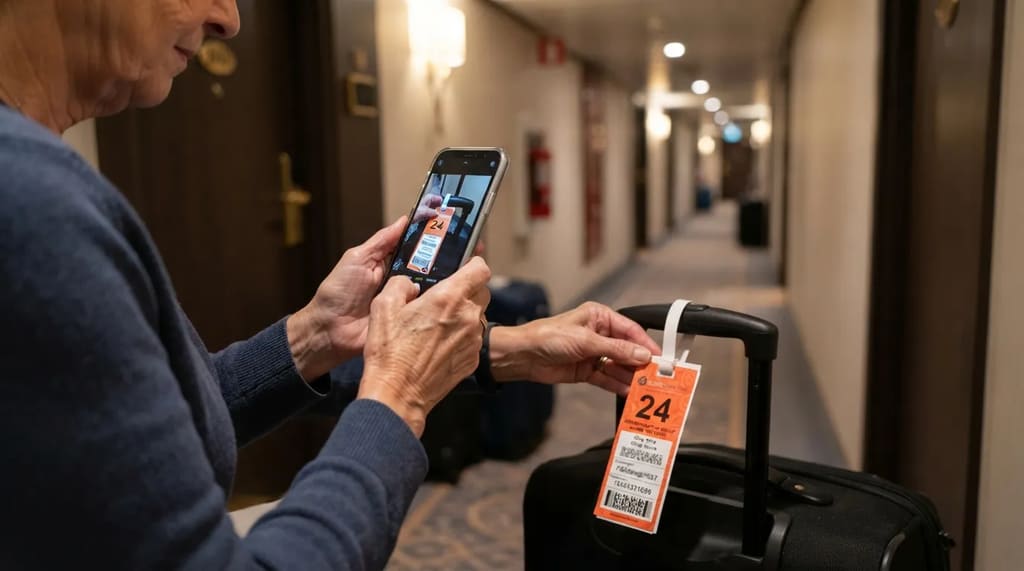
The color-coded tags that arrive the day before run the whole exit. Staff deliver color- and number-coded tags to your cabin, along with an approximate disembarkation time.1
Those tags matter twice: once for your departure timing, and again for finding your suitcase at the pier.1 Paper tags tear, slip off and sometimes get swapped in a crowded hallway.
The bags have to be outside your door late in the evening, with the deadline typically between 10 p.m. and midnight. So photograph every tag on every bag before you leave them.
That photo covers you if a tag falls off during collection, because you can still give terminal staff the color and number. While you’re at it, pull off any old airline or earlier-cruise tags, since leftovers can cause confusion.2
Once the bags are in the hallway, whatever you leave in the cabin becomes its own problem. And the room has one spot that’s easy to forget.
#16 – The Safe and Drawers You’ll Forget
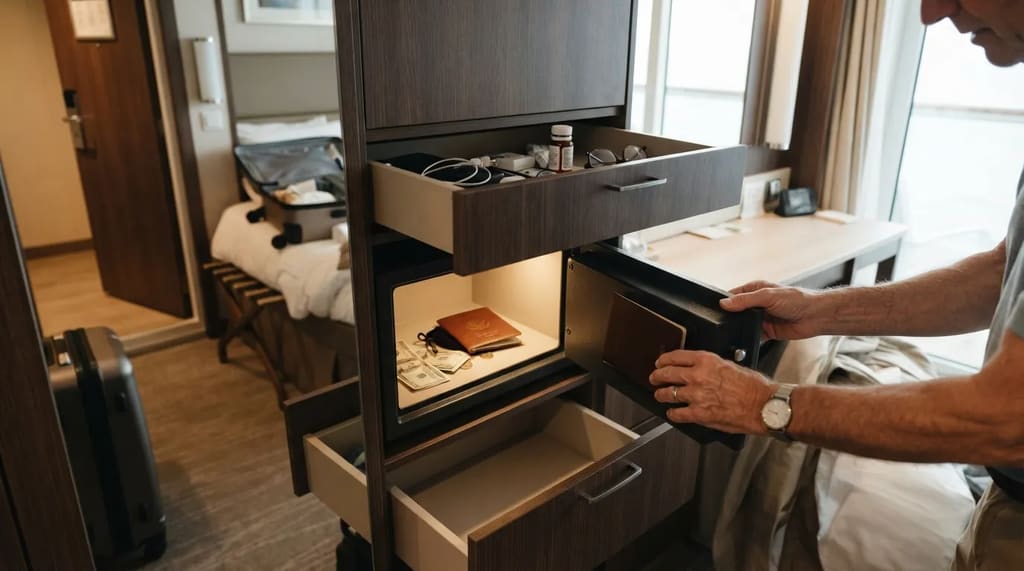
Retrieving forgotten items after disembarkation can be challenging, and the ship is already turning its attention to the next group of guests. That makes the last walk through the cabin worth more attention than it usually gets.
The safe is the classic trouble spot, because you set it up on the first night and stopped thinking about it. Open it last and take out passports, medications, spare cash and jewelry.
Check the safe, every drawer and the bathroom shelf before leaving. Then look under the bed, behind the cabin door and on the balcony.
Chargers plugged in behind the nightstand and reading glasses left on a side table are easy to miss. A slow phone video sweep of the empty room takes ten seconds and catches what your eyes skip.
Check the pockets of jackets and the back of the closet shelves too. Small things hide exactly where you stopped looking on day two.
Worth Knowing
- The safe holds passports, medications, spare cash and jewelry.
- Drawers and the bathroom shelf come next.
- Under the bed and behind the cabin door are common hiding spots.
- Don’t skip the balcony, closet shelves and jacket pockets.
- Chargers often stay plugged in behind the nightstand.
The ship’s restaurants don’t keep their usual hours that morning, which matters if you’re hungry before your group is called.
#15 – Why Last-Day Breakfast Hours Differ
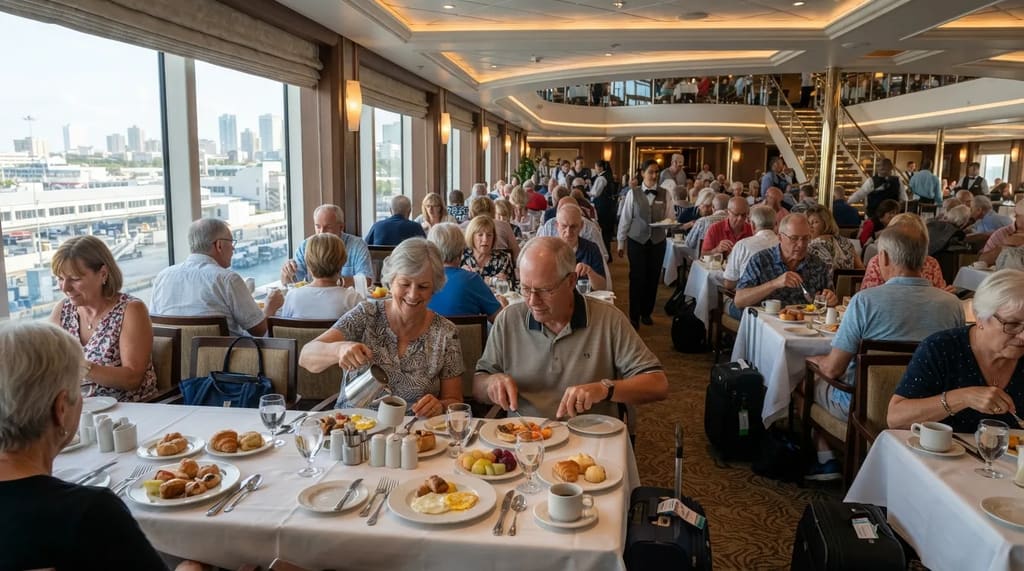
Eating is the one part of the morning you control, and the ship changes the rules on you. Breakfast venues will likely serve meals on a different schedule on the last day, so check the open hours before you go.
The dining room that opened early all week may open later, close sooner or be packed with passengers waiting on their own group calls. If your color is called early, your window may be short.
Look up the last-day breakfast hours the night before. Eat first, then head to your lounge.
Pick up a pastry or a piece of fruit only if the ship’s rules allow it, since fresh produce can raise questions at customs. A real sit-down meal onboard beats hunting for food with a suitcase in tow.
Knowing when you can eat is useful, but knowing when you can leave is better. That answer is already waiting in your cabin.
#14 – Your Assigned Time Is Already in the Cabin
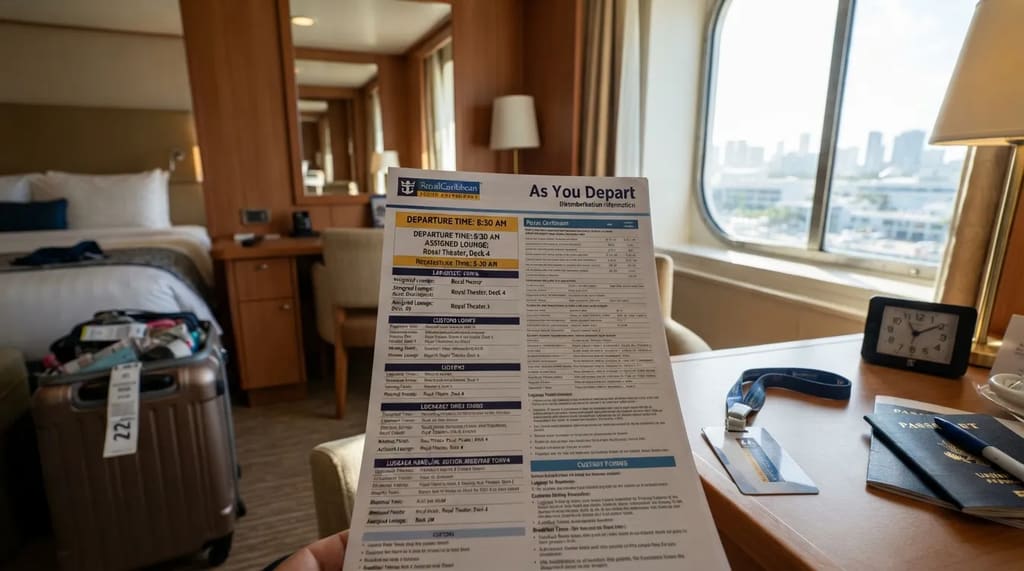
Your departure time was decided before you packed. The cruise line usually assigns it based on flight times, stateroom category, loyalty status and sometimes luggage tags.3
On Royal Caribbean’s ships, the “As You Depart” guide delivered to your room lists your specific departure time and assigned waiting lounge. That guide is worth reading closely the evening before.
Have a quick word with your travel partners too. Time in port and customs can vary widely, so Holland America advises making sure your group is on the same page.4
If the time looks too late for your flight, one cruise guide advises asking for an early departure when you pick up your luggage tags.2 Confirm your assigned time and waiting lounge the night before.
If your group isn’t called until well after 9, there’s a good case for setting no alarm at all.
#13 – Sleeping In Beats Standing in the Atrium
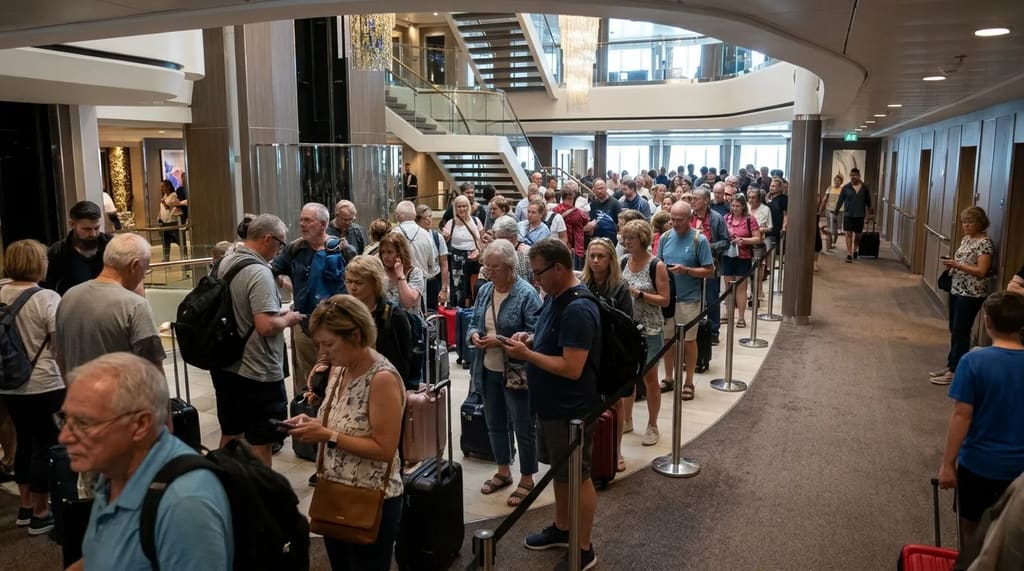
Getting to the atrium early doesn’t move you up the line. Groups leave in the order the ship assigns, and once your group is called you can typically be off the ship within about 15 minutes.
The Points Guy goes so far as to suggest grabbing an extra hour or two of sleep, unless you still need to check your bill that morning. I’d go further.
Hovering by the exit before your color is called buys you nothing. It costs you a seat and some energy you’ll want in the terminal.
Wait for your group’s call, then plan on about 15 minutes to be off.
Sleeping in only works if everything you need is already in the bag you carry off.
#12 – What Belongs in Your Carry-On
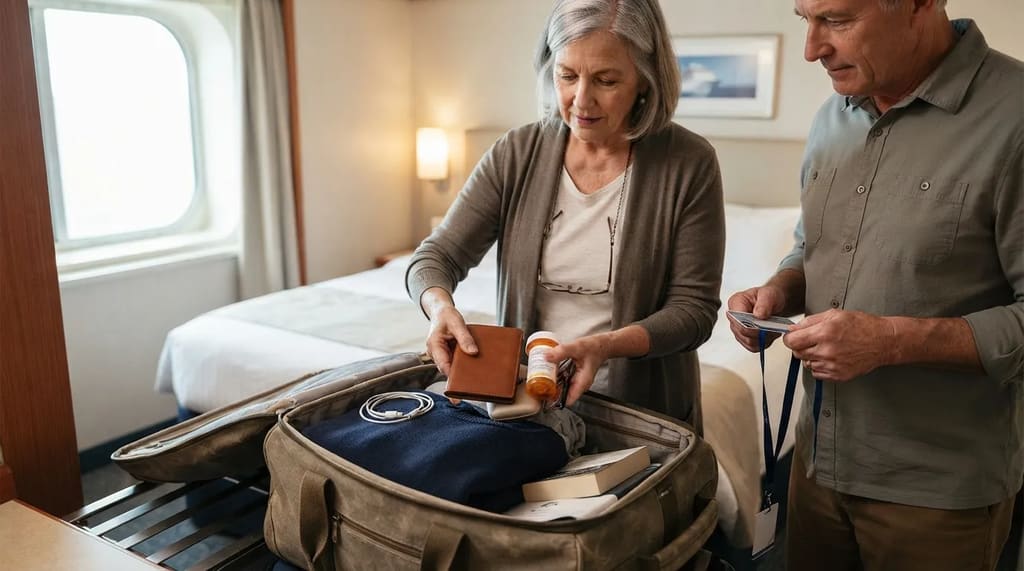
Whatever goes out in the hallway by midnight stays out of reach until you find it at the pier. Holland America’s advice is to pack your passport, travel documents, medications, valuables and a change of clothes in your carry-on.4
Medications top that list. Never put prescriptions in checked luggage.5
A delayed flight or a long customs line means pills have to be on your person, not in a suitcase on a conveyor somewhere. Medications, passport and valuables stay in the bag you carry.
Add reading glasses, a phone charger and a list of your prescriptions with doses, so you aren’t relying on memory in a crowded terminal.5 Keep it light enough to carry through a long terminal walk.
At a Glance
- Passport and travel documents
- Prescriptions, plus a written list with doses
- Valuables and a change of clothes
- Reading glasses and a phone charger
Your carry-on gets you through the first hour. Your suitcase is a separate search, in a hall that holds thousands of bags.
#11 – Finding Your Suitcase Among Thousands
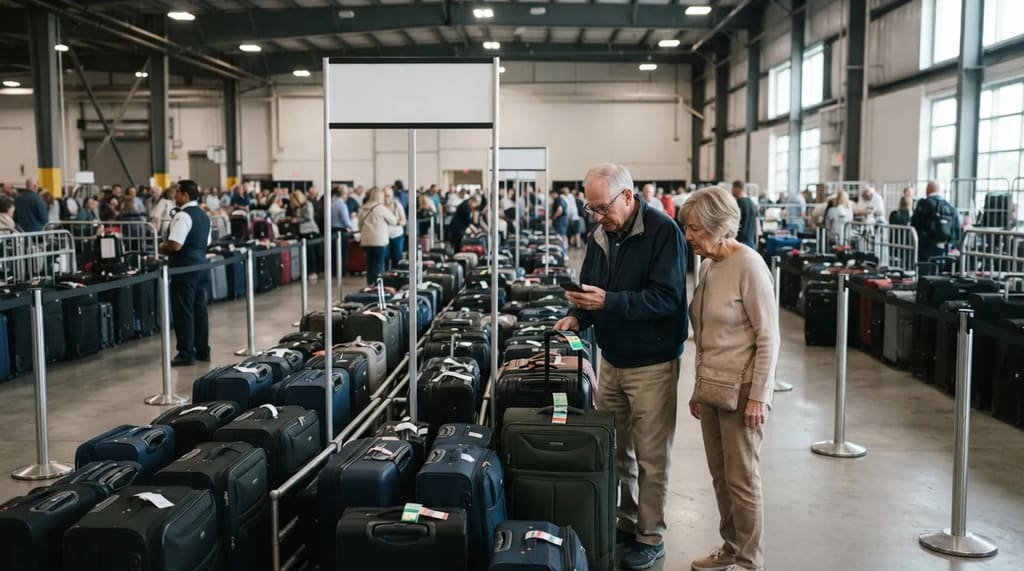
Cruise terminal luggage halls are built for volume, not for browsing. Thousands of bags sit in sections marked by the color and number tags you attached the previous night.
On at least one line, luggage is grouped by tag numbers, and only called groups can collect. So walk to the section that matches your tag and look only there.
Go straight to the section matching your tag’s color and number. If a tag has gone missing, the photo you took back at #17 gives you the color and number to show a staff member.
Porters are often on hand, so ask one for help with a heavy bag. A little patience here beats wrestling a suitcase off a pile yourself.
Before you wheel those bags anywhere, though, one purchase may still be sitting in the ship’s storage.
#10 – The Duty-Free Bottles the Ship Is Holding
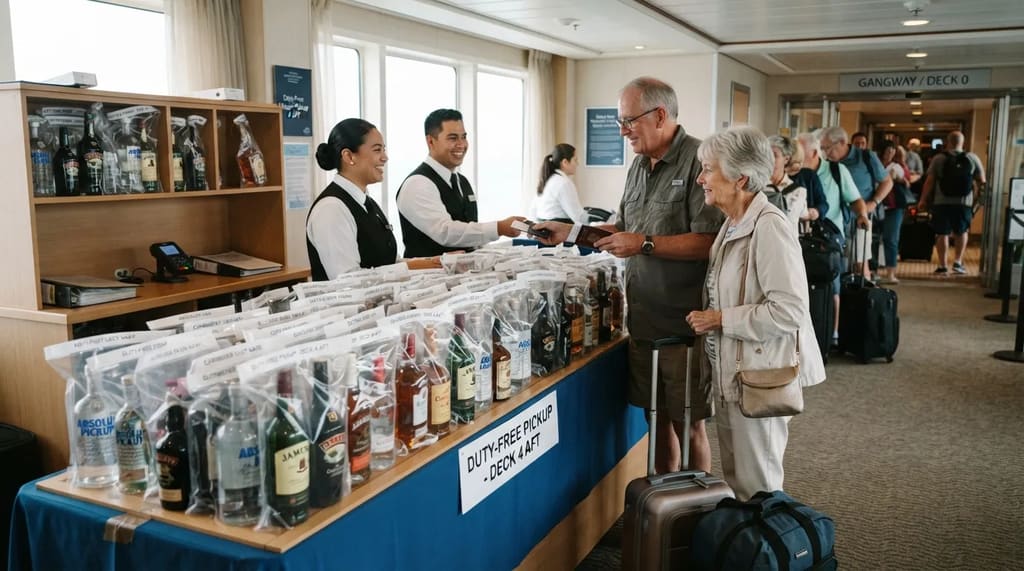
If you bought liquor onboard or in port, the ship probably kept it. Duty-free booze is held by your cruise line until the last night, and you must pick it up at the time and place the ship tells you before you disembark.
That makes it a task with a window, not a bottle you can fetch on the way out. Collect held bottles at the time and place the ship announces.
If you’re unsure of the exact pickup time, ask Guest Services the night before. Skip the window and you may be arguing for your bottles at a desk while your group is being called.
Once you have them, think about how they travel. Anything over 3.4 ounces can’t go through airport security in a carry-on, so plan to wrap each bottle in clothing inside a bag that will be checked for your flight.
Bottles are one thing to declare. The paperwork that goes with them is another.
#9 – The Customs Form, Filled In Before You Leave
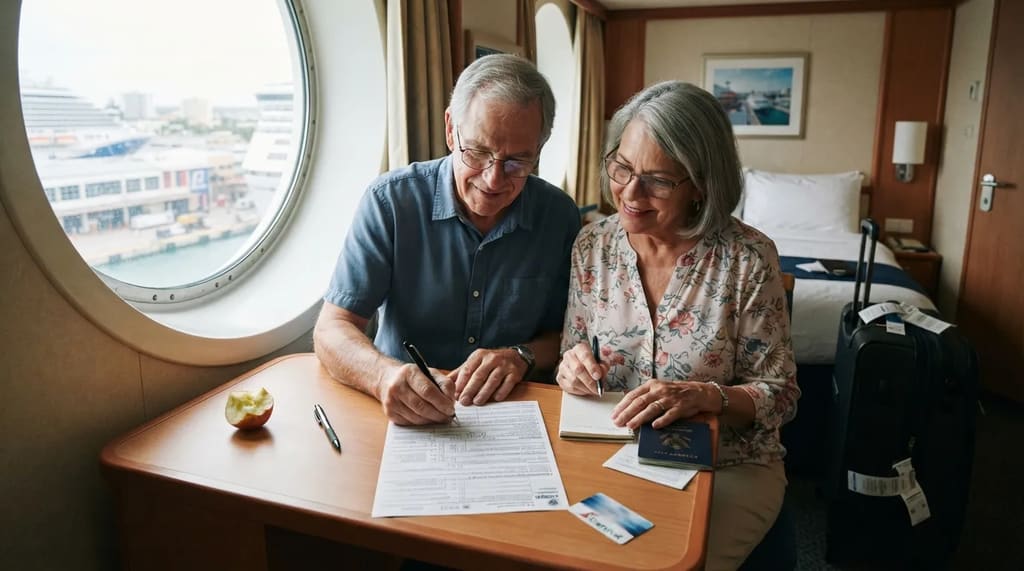
Paper forms pile up at the end of a cruise, and this one has a rule attached. If you receive a customs form, fill it out, one per family, before you disembark.
The form asks about purchases and also about agricultural products. CBP Declaration Form 6059B covers both.
So that apple from the breakfast buffet or the souvenir produce from a port stop belongs in your answer, not your pocket. Fill out one customs form per family before you leave your cabin.
Doing it in the cabin means you’re writing with a pen and a flat surface, not balancing the form on a suitcase in a terminal line.
The paper form is the slow way, and at many ports your phone can do the same job.
#8 – The Free App That Can Replace the Paper Form
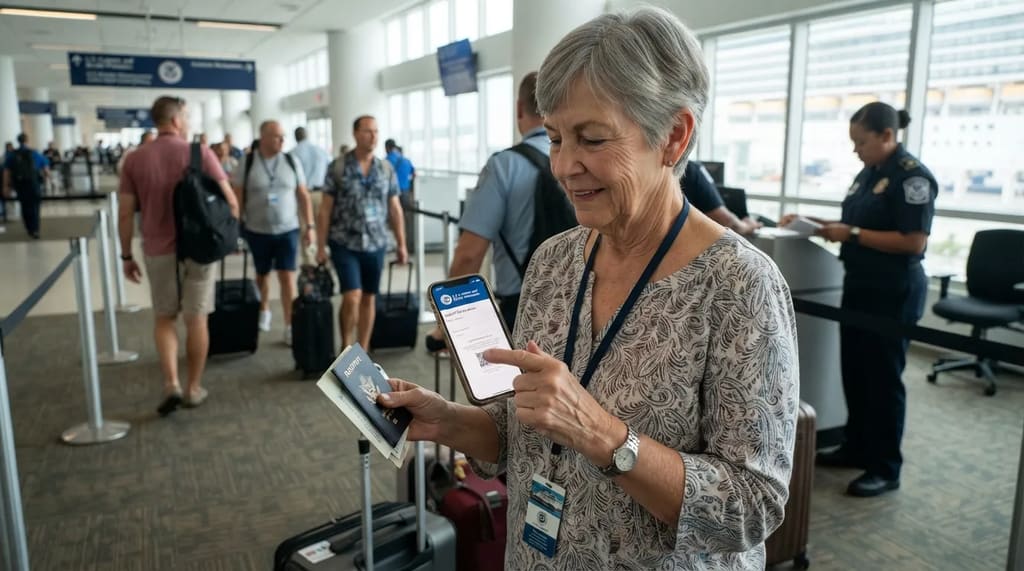
U.S. Customs and Border Protection runs a free app that handles more than most travelers realize. Mobile Passport Control lets you submit passport information and your customs declaration digitally before you speak with an officer.
Unlike Global Entry, it needs no paid membership or pre-approval. It isn’t paperless, though: you still show your physical passport and briefly talk to an officer.6
It’s available only at participating ports, among them PortMiami, Port Everglades, Port Canaveral and San Juan.7 Mobile Passport Control is free and needs no pre-approval.
Quick Compare
- Paper form: filled out in your cabin, one per family.
- Mobile Passport Control: free, no pre-approval, participating ports only.
- Global Entry: $120 for a five-year membership.
Here’s a verdict you can argue with. If you cruise once a year, try the free app before you pay for Global Entry, since Global Entry costs $120 for a five-year membership.8
Set up your profile at home, not in a crowded terminal. Another choice, made days before, decides whether you get to the pier by 7:30 at all.
#7 – Self-Assist Walk-Off Is Overrated for Many Cruisers
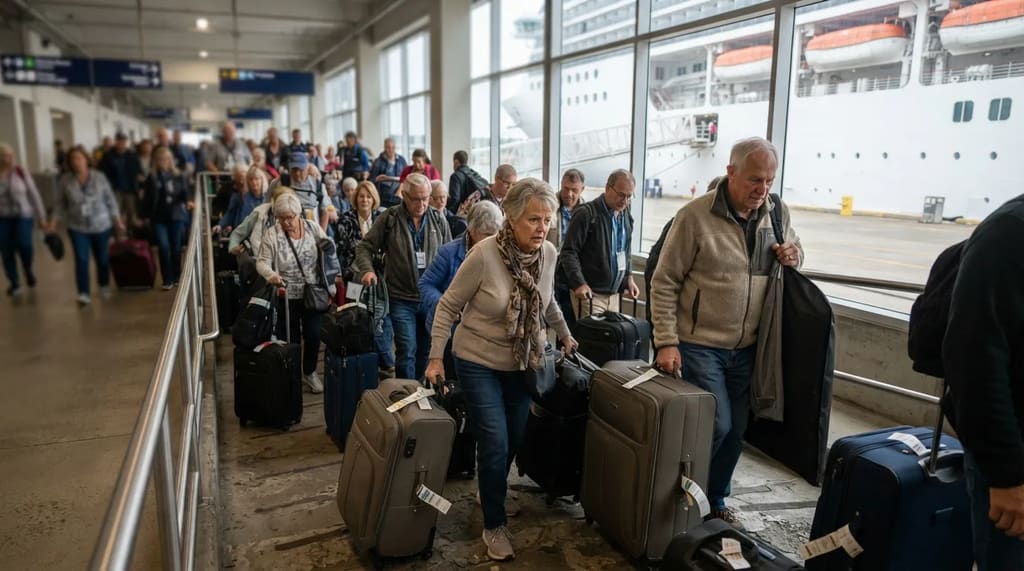
Self-assist is the most talked-about trick on this list, and it comes with a price. You carry your own luggage and can leave as soon as local authorities clear the ship.
It makes sense when you have an early connection and can handle your own luggage. That second condition is the catch.
Self-disembarkation works best on smaller ships and short itineraries with manageable bags.3 With several heavy suitcases, it becomes impractical unless you have capable adults helping.
My verdict: unless your flight is early, skip it. Trading an hour of waiting for hauling bags through a packed terminal is a poor bargain, and the hallway drop-off is there for a reason.
Self-assist works only with an early flight and bags you can carry.
Carrying bags is one kind of effort. Some passengers need help moving themselves, and that request has its own cutoff.
#6 – Wheelchair Help Has Its Own Deadline
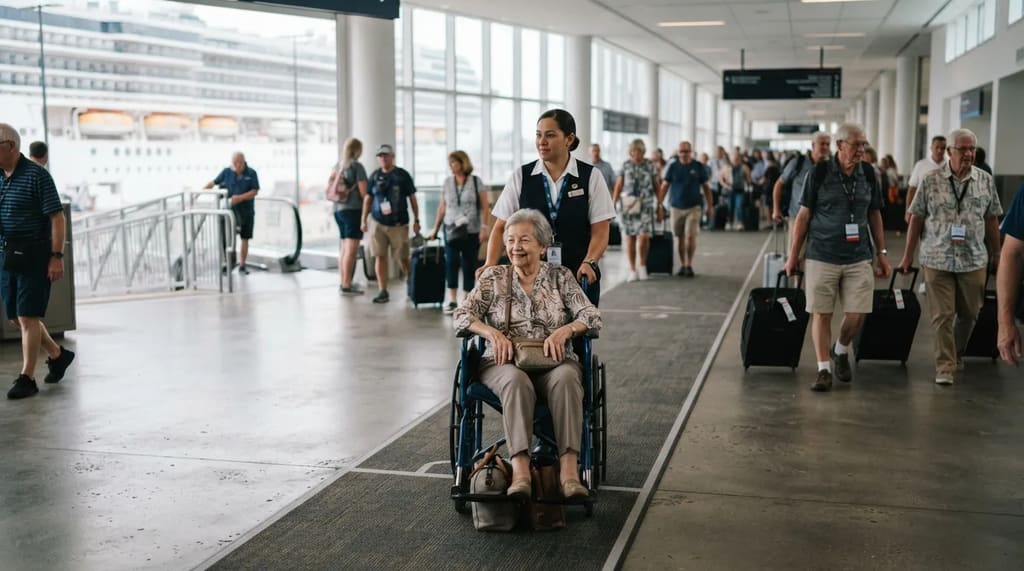
Terminals are long, floors are hard and the gangway can be steep. That’s why cruise lines offer wheelchair assistance at the end of the trip.
MSC asks you to request it at guest relations any time during the sailing, but no later than the evening before you disembark. Help isn’t unlimited, either.
Carnival says wheelchair assistance is only available during embarkation and debarkation at the home port. If you used it to board, don’t assume it’s booked for leaving; ask for it by name, and ask early.
Request disembarkation help at Guest Services by the evening before. You don’t need a permanent wheelchair to qualify, since anyone whose stamina fades on a long terminal walk can ask.
Help getting off the ship ends at the pier. The account that lets you leave begins at the front desk.
#5 – Settle the Cash Account Before You Walk Off
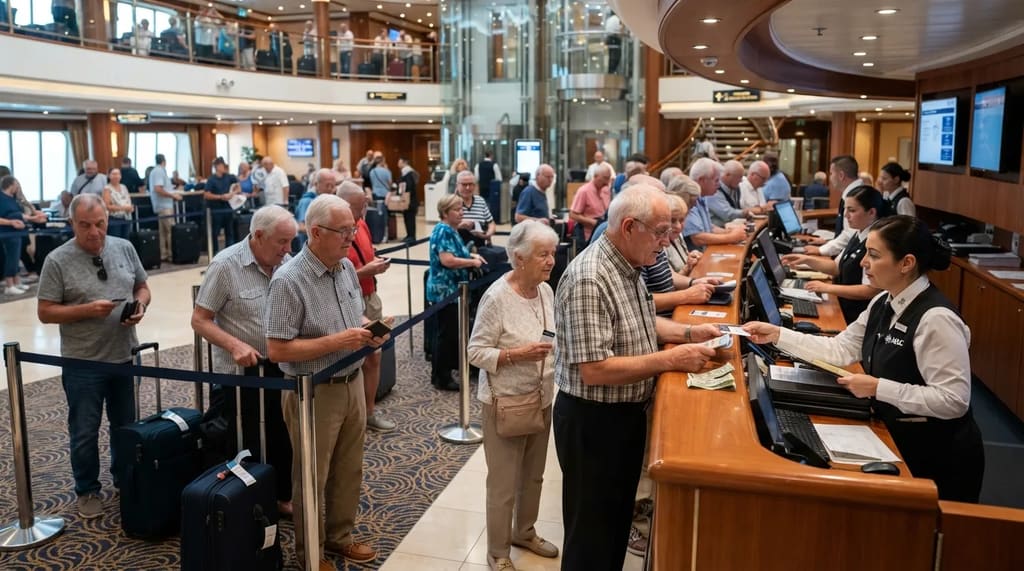
Some travelers prefer to pay in cash, and that choice comes with a hard stop. On MSC’s ships, passengers with cash accounts must settle their balances at Guest Services, and disembarkation isn’t permitted until they do.
That turns a bill you could have handled the evening before into a morning wait. If you pay in cash, you can’t leave until the balance is settled.
The lines at Guest Services are longest right when your group is being called. Think of that morning line as a toll you can skip by paying the tab the night before.
If you pay by card, verify that the one on file is the one you want charged. Keep your cruise card too, since Royal Caribbean has you head to the gangway with your SeaPass card.
A card on file beats cash, but the wrong kind of card can tie up money in your checking account for days after you’ve gone home.
#4 – Debit Cards and the Holds That Linger

A debit card seems simple, and it works until the cruise ends. Your ship’s account may place holds on your balance, and they don’t vanish when the bill is settled.
When you check out, the real charge posts, but the holds don’t drop on cue. So you can be home, unpacked and short of money in your own account.
Related Stories From Travelbinger



The cruise line can’t release those holds. Only your bank can, and banks take their time.
My advice is to put the onboard account on a credit card if you have one. If you must use debit, call your bank before you sail so you know what to expect.
Holds are a nuisance. The charge that adds up fastest is built into the cruise itself, and it appears on your bill whether or not you ordered it.
#3 – Daily Gratuities Are Added Whether You Notice or Not
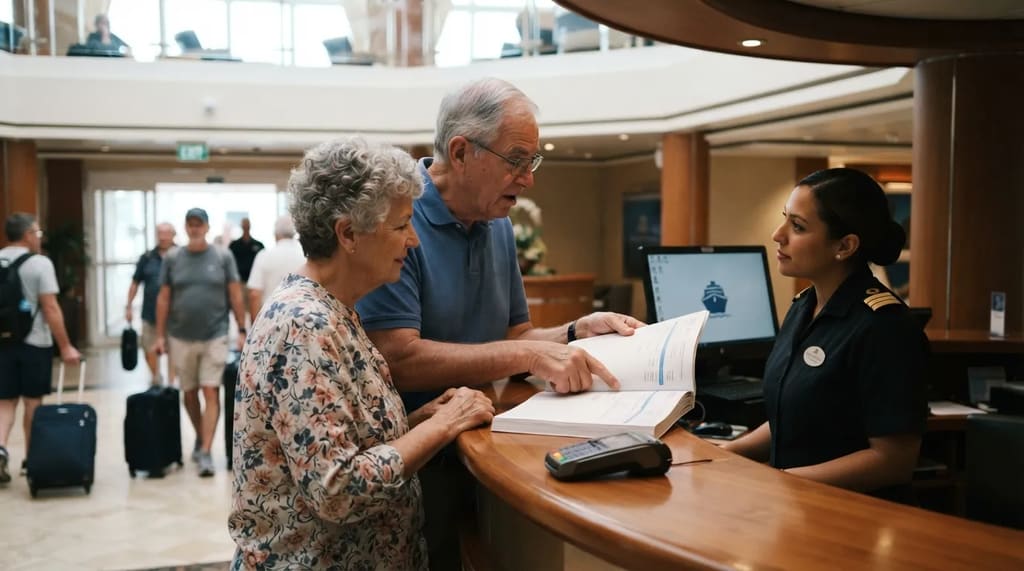
On many mainstream lines, a daily amount is automatically added to your onboard account unless gratuities were prepaid or included in the fare. Across major lines, the amounts run from about $15 to $20 per person per day.
That’s small on any single night and large across a week. Many lines require changes to daily gratuities to be handled while you’re still onboard.
If you prepaid, check that the charge wasn’t also applied onboard. If both appear, ask Guest Services to reconcile the account before disembarkation.
Confirm or change your gratuities before the final morning. Prepaid tips and percentage-based service charges can follow different rules, so name the exact charge you’re asking about.
Tips are the charge you can see coming. The next item costs far more when it goes wrong, and it’s printed on your airline confirmation, not your ship bill.
#2 – The Flight You Booked Before You Knew Your Time

The airline sells you a seat, but the ship controls when you reach it. The Points Guy points out that customs clearance and ship processing can delay disembarkation, so booking afternoon flights is recommended.1
There’s a reason cruise lines recommend not booking flights home before noon. The risk comes from how the morning is built.
Assigned groups, bags to retrieve, customs and the walk through the terminal all stack up, and none of it moves faster because your plane leaves at 9. Don’t book a flight home that leaves before noon.
Fast Facts
- Bags go in the hallway typically between 10 p.m. and midnight.
- Self-assist passengers often walk off around 7:00 to 7:30 a.m.
- Assisted groups are typically called between 8 and 10 or later.
- Once your group is called, expect about 15 minutes to be off the ship.
- Cruise lines recommend nothing leaving before noon.
A cheap early fare is rarely cheap if you miss it, because a changed ticket can cost more than the savings. If you’re locked into an early flight, the options back at #7 and #14, self-assist or a request for an early group, become far more important.
Even a well-timed flight can’t rescue the last item, because the clock on it stops when you step off the ship.
#1 – The Final Bill You Can Only Fix While Aboard
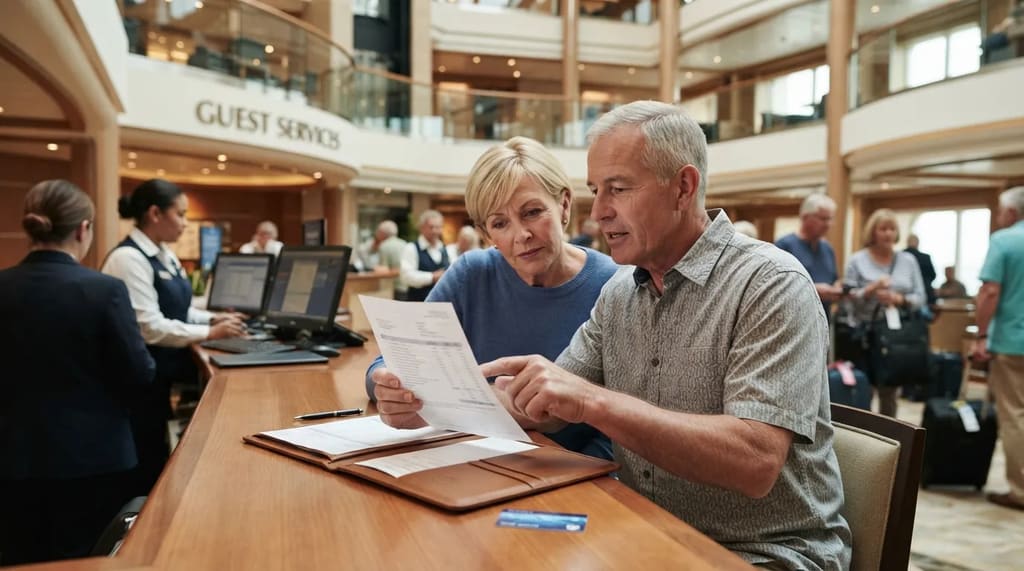
Mistakes on a cruise account are common enough to look for on purpose. Typical errors include duplicate charges, drinks billed from another cabin, spa charges that don’t match the agreed price and automatic gratuities at the wrong rate.
One Points Guy writer, sailing on Norwegian, found charges for dining that should have been included with her suite only on the final evening. Onboard, a fix is simple, and a wrong charge often gets sorted at Guest Services in minutes.
After you leave, it’s nearly impossible to get cruise line land staff to fix onboard billing mistakes. So read the statement that slides under your door, ideally while the desk lines are short.
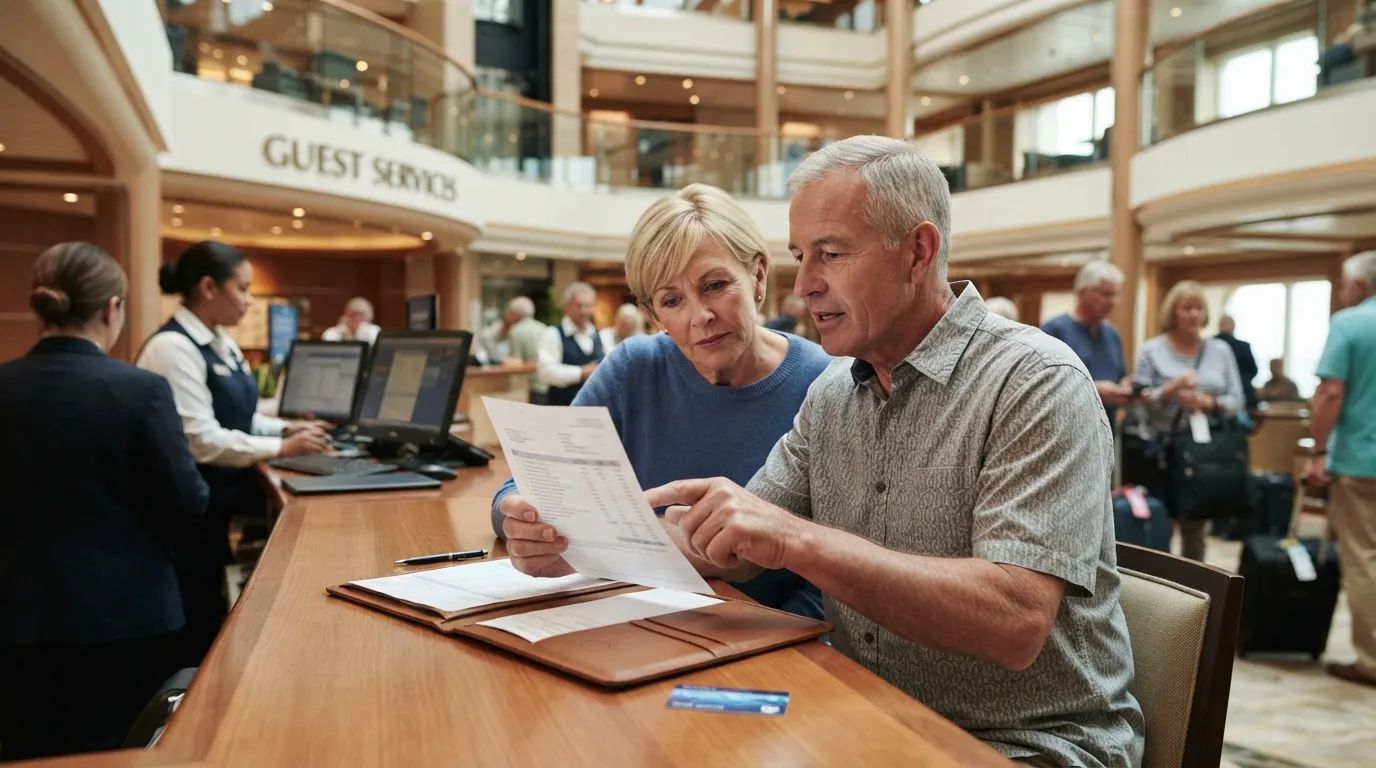
Review your itemized bill the evening before and photograph the final copy. Name the exact line and date, then ask for an updated printout showing the correction.
Check the gratuities from #3 and the card from #5 at the same time. This is the task on this list where skipping it costs the most, and the window closes the moment the ship is behind you.
Treat the Last Night as the Real Disembarkation Day

Look back over the list and notice how little of it happens in the morning. The tags, the bill, the gratuities, the wheelchair request and the self-assist choice all have deadlines that fall the evening before.
That’s the shift worth making. Stop thinking of the last morning as the work and start treating it as the payoff for one focused hour the night before.
The travelers who stroll off with coffee in hand aren’t luckier. They just did their homework while everyone else was at the late show.
Block that hour on your calendar as you would a dinner reservation, and the morning takes care of itself. Think back to your most recent cruise: what time was your group called, and did you wake up early for it?
- Points Guy Disembarkation Mistakes: https://thepointsguy.com/cruise/cruise-ship-disembarkation-day-mistakes
- Cruise Disembarkation Step-by-Step: https://www.cruiseshiptracking.com/blog/cruise-disembarkation-process
- Cruise Critic Disembarkation Guide: https://www.cruisecritic.com/articles/what-to-expect-on-a-cruise-how-to-disembark-the-ship
- Holland America Disembarkation Tips: https://www.hollandamerica.com/blog/cruise-planning/6-tips-for-a-flawless-cruise-disembarkation/
- Holland America Know Before You Go: https://www.hollandamerica.com/en/us/plan-a-cruise/get-ready-for-your-cruise/faq/know-before-you-go
- NerdWallet Mobile Passport Control: https://www.nerdwallet.com/travel/learn/everything-you-need-to-know-about-the-mobile-passport-control-app
- Afar Mobile Passport Guide: https://www.afar.com/magazine/what-travelers-need-to-know-about-the-mobile-passport-app
- CBP Global Entry: https://www.cbp.gov/travel/trusted-traveler-programs/global-entry