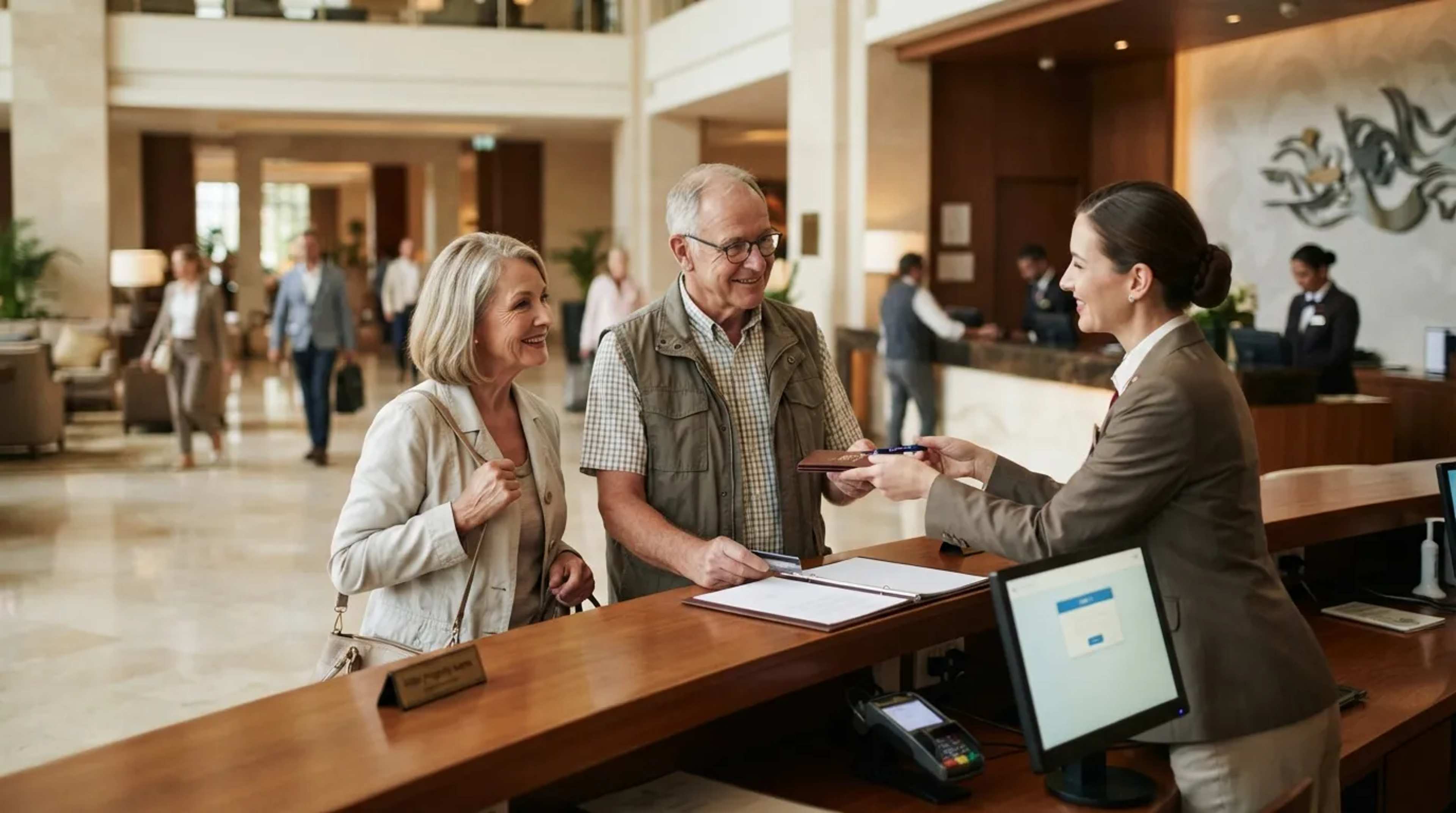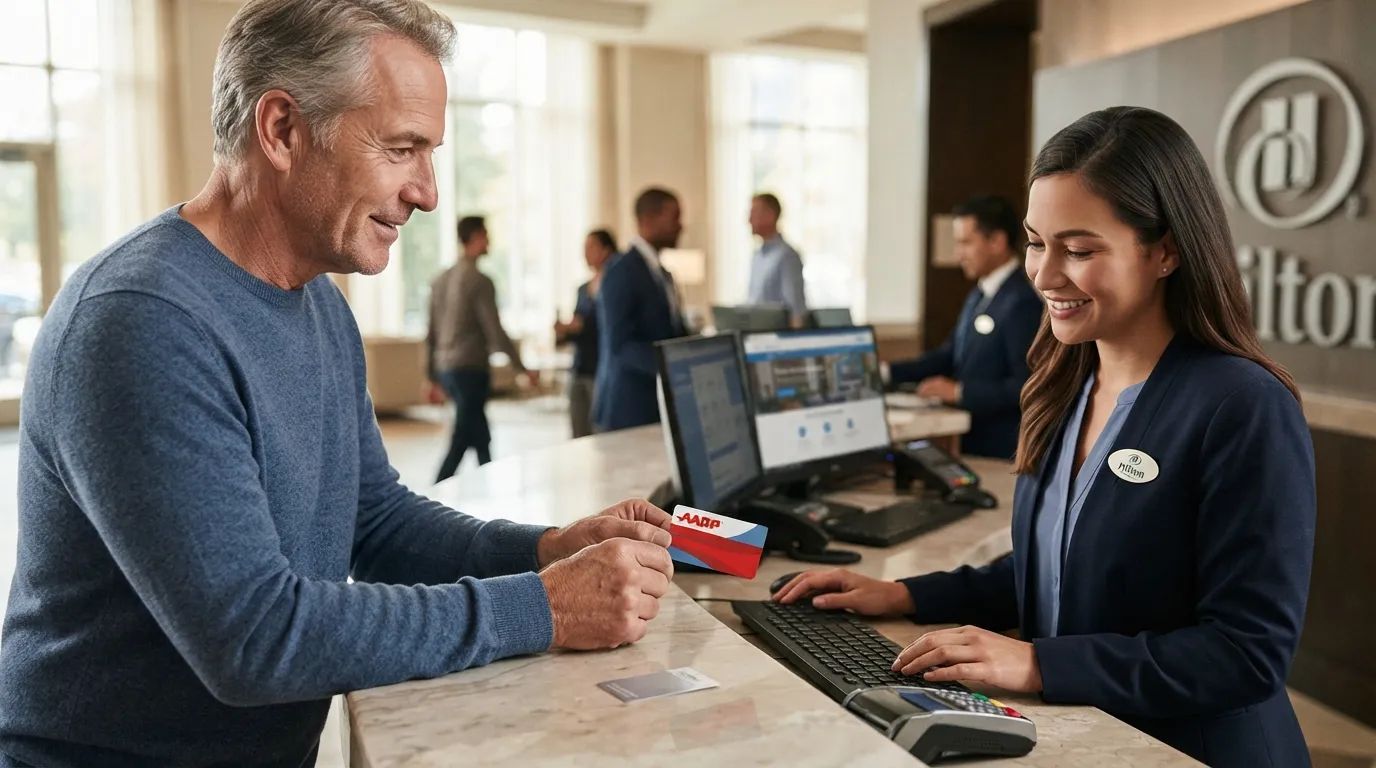
At 3 p.m., the hotel front desk starts handing out rooms, and the person behind the counter holds more small power than most guests realize. For a guest over 65, that can mean the difference between a room beside the ice machine and a quiet one down the hall, or between a fee that stays on the bill and one that quietly disappears.
Twenty-two of the courtesies below are favors a desk may or may not grant. One rests on a federal rule instead, and it works nothing like the others.
That one comes last. The first needs no paperwork, only a moment of eye contact.
#23 – Eye Contact and a Thank-You at the Counter
Terra Sampson, a front office manager at The Alexander hotel in Indianapolis, told Yahoo Travel that there is no magic phrase that earns an upgrade. Her advice was to be kind to the person in front of you, since “being nice is often the key to a much better stay.”1
Think about what an agent sees in a shift: demands, distracted guests and rushed check-ins. A guest who makes eye contact, speaks respectfully and says thank you stands out against all of that.
The courtesy costs nothing and takes a few seconds, which is why it leads the list. It guarantees nothing, because no tip on this subject promises an upgrade.
What it does is make the clerk want to help you. Every later item on the list gets easier once that has happened.
Hotel staff are not limited to the clerk, and the person at the curb with the luggage cart is part of the same impression.
#22 – A Hello for the Valet and Bell Staff
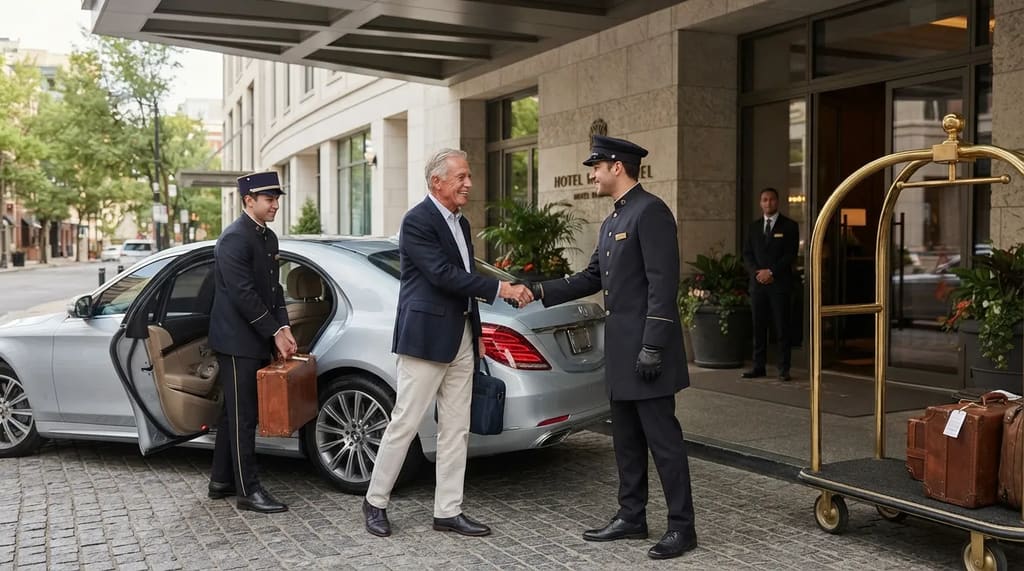
Hotel departments often pass notes about guests to one another during a shift. Valet, bell staff and front desk are connected, so a guest who treats the valet poorly may find the desk already knows before reaching the lobby.
The reverse follows from the same fact. A pleasant first minute at the door can carry inside with you before you say a word to the clerk.
The practical version is small. Say good afternoon to the person who opens the door, and thank the one who loads the cart.
This matters a little more after a long drive or flight. If your legs are tired, you may want the cart, directions to the elevator or a hand with a heavy door later, and those requests go better when the first exchange was friendly.
#21 – One Specific Compliment for the Agent
Small, specific praise changes the tone of a check-in. Complimenting how smoothly the desk runs, or thanking the agent for patience during a busy shift, moves the conversation from transactional to personal in seconds.
Specific works better than general because it shows you noticed something real. “Great service” could be said to anyone, while thanks for patience with a long line could only be said to this person on this afternoon.
Keep it genuine. Hotel staff see through manufactured tactics, such as inventing a complaint to win a perk, and a compliment used as a lever sounds much the same.
One sentence is enough, and it is best said before you ask for anything.
#20 – Asking Instead of Expecting
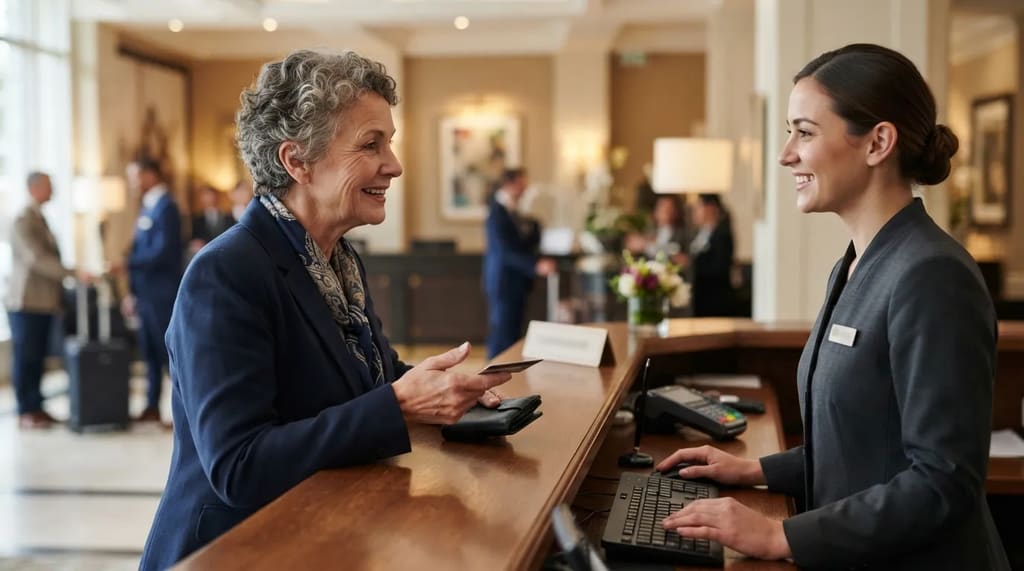
Fox News once collected tips from front desk staff, and one complaint was that upgrade requests often arrive as though the guest were entitled to one. The advice that followed was to ask politely.2
The same piece suggested starting by asking whether the hotel is sold out. That tells you whether a better room could exist at all, and it keeps the question friendly instead of pointed.2
Another line in that article cautions against flattering the staff and recommends being nice, which is a different thing. A clerk can tell a warm guest from a guest working an angle.
I would drop the idea that an upgrade is something you can talk your way into with enough charm. The desk works from rooms that exist and rules the hotel sets, and some hotels upgrade only when required, or only certain guests.
Even a courteous request depends on which rooms are ready, and that depends on the hour you reach the counter.
#19 – Mid-Afternoon Instead of the Opening Rush
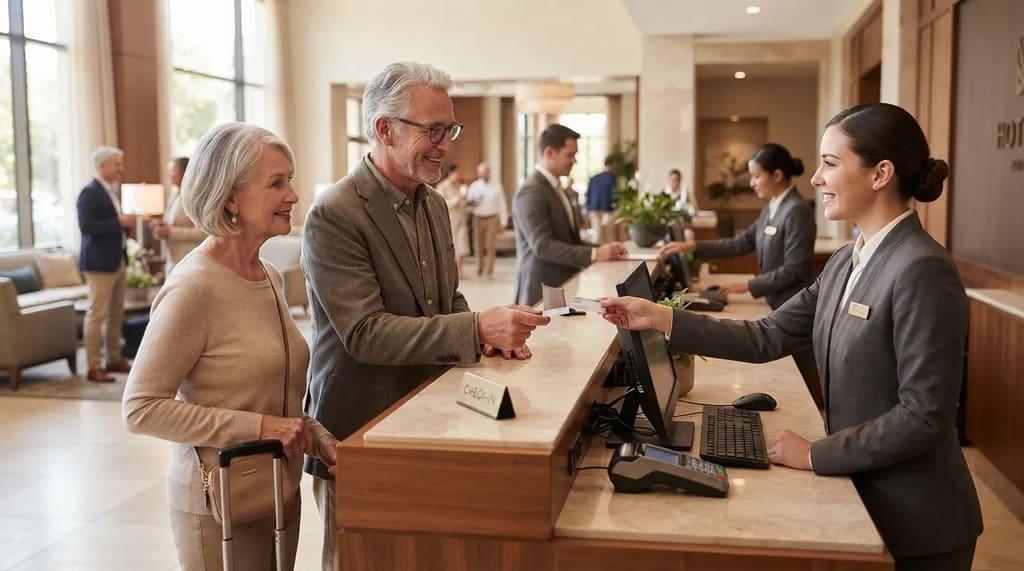
The advice on timing does not agree. Guests who reach the desk in mid-afternoon often catch the point when enough rooms are ready and staff can see the remaining arrivals, while very early and very late arrivals both reduce options.
One source says to arrive an hour or two after the official check-in time, which gives staff room to look at your reservation. Another puts the better odds after 4 p.m., when the hotel knows its real availability, and a third suggests arriving just before three.
If you have been traveling all day, I would not hold out until four to chase a better room. A room that is ready and a little plain beats a nicer one that is not, especially after a long drive.
If you arrive at midday, do not ask for early check-in and an upgrade at once, since the desk is busy then handling checkouts and early arrivals.3
Room assignments are often settled hours ahead, so the desk can only plan around an arrival time it has been told.
#18 – Telling the Desk When You’ll Arrive
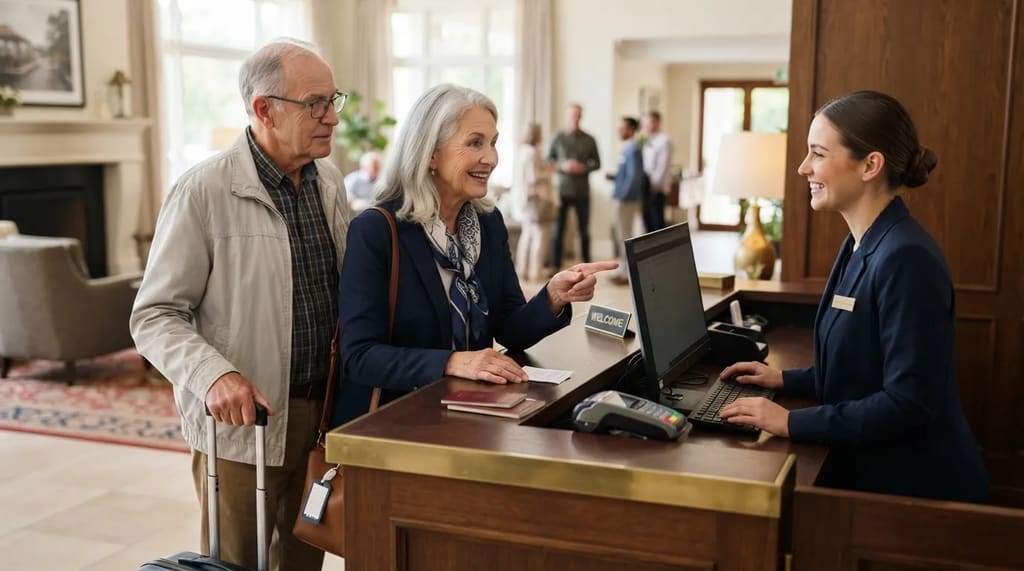
Phone the front desk the morning you travel and say when you expect to arrive, and the desk can flag your reservation for the first clean room. You can also give the time at booking, so they can flag a room before the housekeeping schedule is set.
The answer depends on the hotel’s load that night. An empty Tuesday in February gets a yes far more often than a sold-out holiday weekend.
For you, the call is also a courtesy. It tells the clerk to expect a tired guest at a particular hour, so no one is scrambling when you walk in.
If you would rather not phone, an email does the same job.
If the room is still being cleaned when you get there, the bags become the immediate problem.
#17 – Bags Held Behind the Desk While You Wait
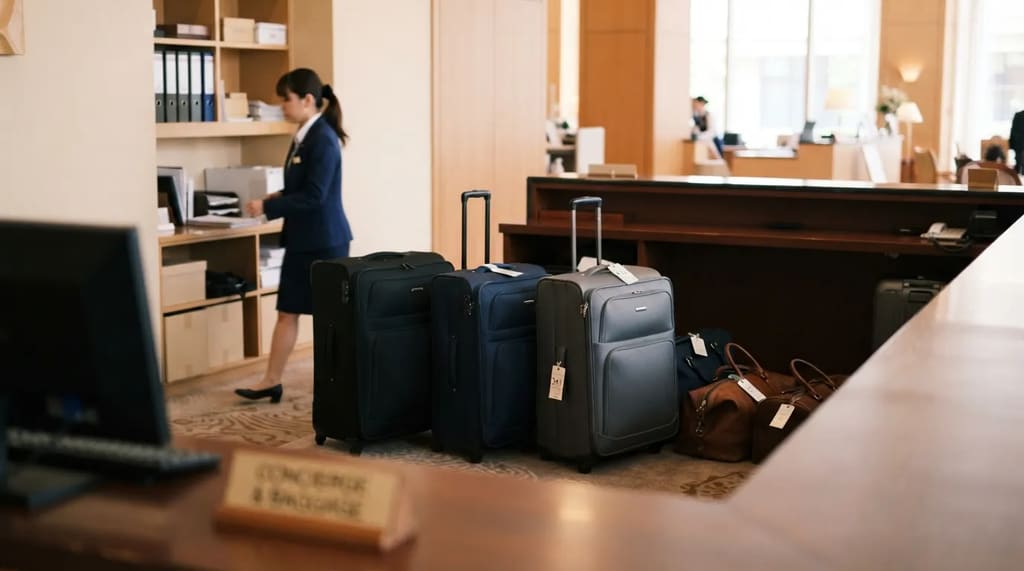
If the room is not ready, ask the desk to hold your bags. Most hotels will store them while you head out to explore.
Early check-in is a separate request. It is classed as optional rather than mandatory, so a fee for it is usually avoidable, and the first step is to ask the desk politely to waive it.
I would treat early check-in as a bonus, not a plan. On a full night the hotel has nowhere to put you, and pressing past a firm no gains nothing.
Ask about the bag fee before you hand anything over. Fees to hold baggage show up on lists of surprise hotel charges, so ask first.
At a Glance
- Bags: Most hotels will store them while you explore.
- Bag fee: Ask before you hand anything over.
- Early check-in: It is optional, so ask politely to waive any fee.
- Full night: Expect a firm no, because no room is free.
#16 – Joining the Loyalty Program, Even for One Stay
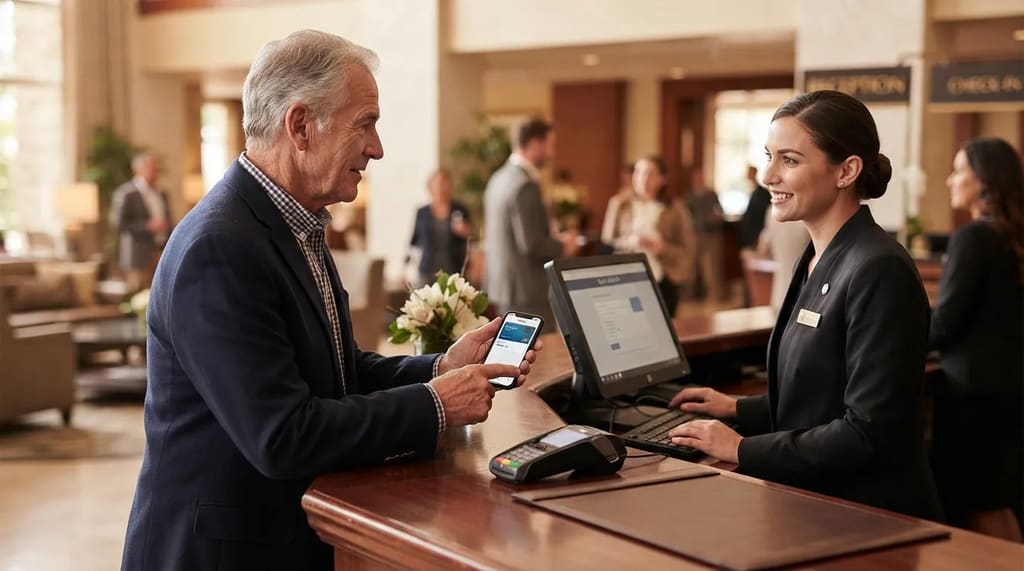
Hotel front desks are trained, and often given incentives, to give upgrades to loyalty members first, and you need only be enrolled, not hold elite status.4 That puts you ahead of a guest with no account at all.
Enrollment in the big chains’ programs is free, so I would sign up from your phone before booking, even if you stay once a year. It takes a few minutes and costs nothing.
Mention your number at check-in. It signals that you are a returning guest, not a one-time visitor, though there is a difference between being loyal and announcing it as if you were owed something.
Status does not guarantee upgrades, but it moves you up the priority list when inventory opens.
Status helps with upgrades, but it will not choose your words at the counter for you.
#15 – The Wording “Any Complimentary Upgrades Tonight?”
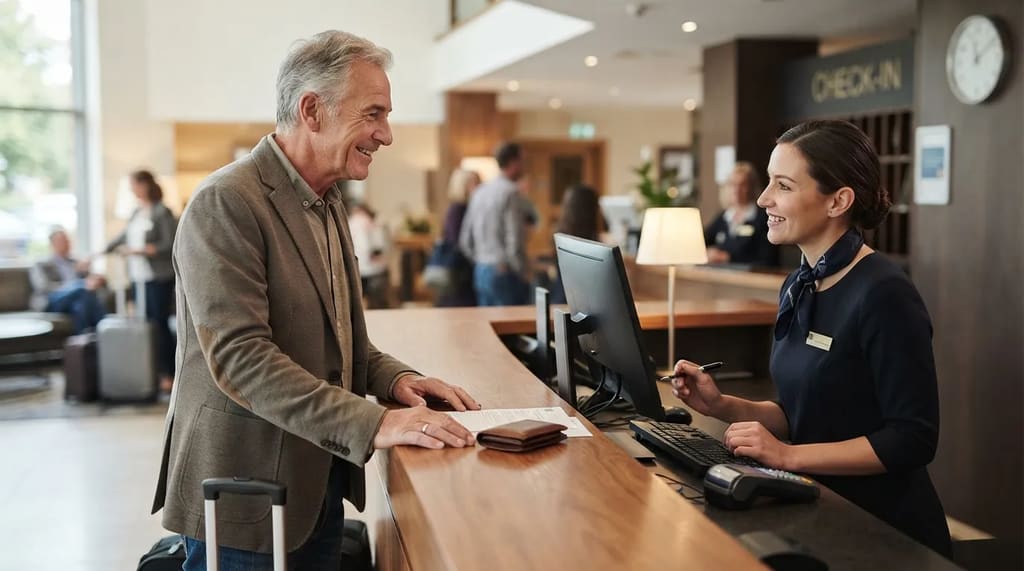
Asking whether any complimentary upgrades are available for tonight keeps the request open and low pressure. It also lets the agent say no without awkwardness.
The hotel’s side matters too. The room has to exist, and some hotels have internal policies about when and for whom they upgrade.
If better rooms are sitting empty, the desk would rather fill them than leave them vacant. That is the only real logic behind an upgrade, and it explains why the question works on some nights and not others.
I would put no weight on any supposed secret phrase. The wording that works is the kind that is polite, specific and easy to answer in one sentence.
Wording can open the door, though a stated reason gives the clerk something to work with, and the best reason is a true one.
#14 – Mentioning a Real Occasion
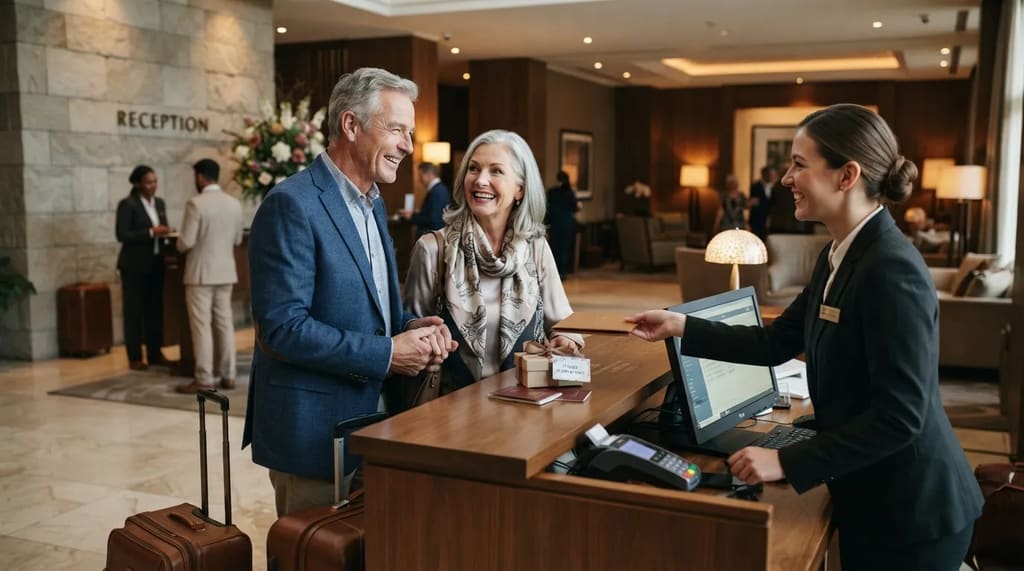
Staff quoted by Yahoo Travel suggest saying you are there for a special occasion and wondering whether any upgrades are available. A reason gives the clerk a way to say yes that feels good to both of you.
Mention the occasion in the reservation notes when booking, repeat it politely at check-in, and keep it genuine, because staff can tell when it is not. An anniversary, a grandchild’s graduation or a first trip after retirement all count.
Putting it in the booking notes helps for a practical reason. Room assignments are often finalized hours before check-in, so a note the desk has already read carries more weight than a remark at the counter.
Once the clerk knows why this stay matters, the next ask can get specific: a certain floor, a certain view.
#13 – A Higher Floor or a View, Not “An Upgrade”
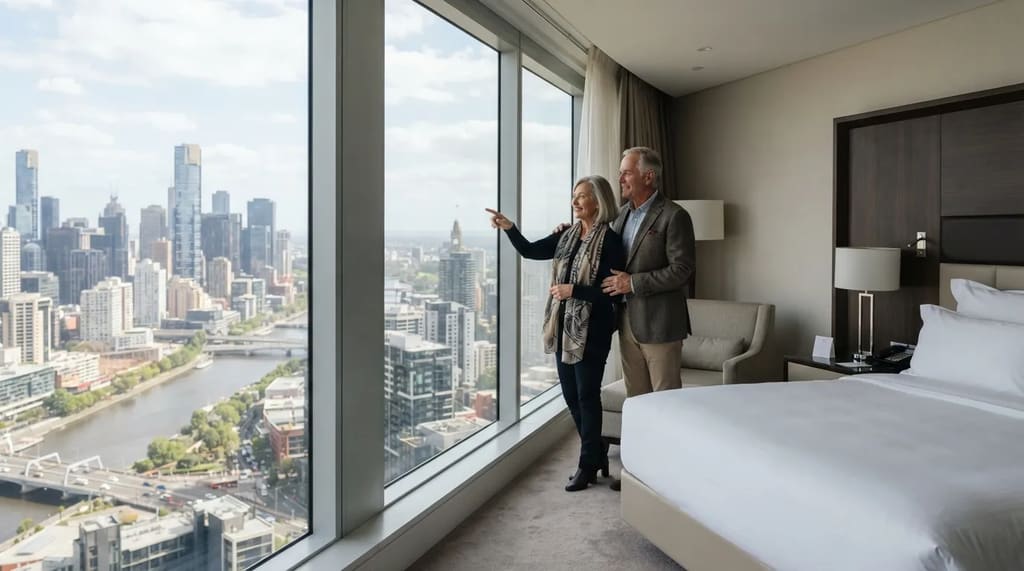
Front desk staff can often swap rooms when you ask for a higher floor or a specific view, though this generally does not work at properties where views are already a premium feature.4 The request is concrete, so the clerk can check it in a few seconds.
Smaller favors count too. A better view, a late checkout or a breakfast credit can make a stay more comfortable, and none of them requires the hotel to give up a suite.
For quiet, a front desk manager quoted by Fox News said to always ask for a higher floor.2
A higher floor answers street noise, though it does nothing about an ice machine or an elevator down the hall.
#12 – A Room Away From the Elevator and Ice Machine
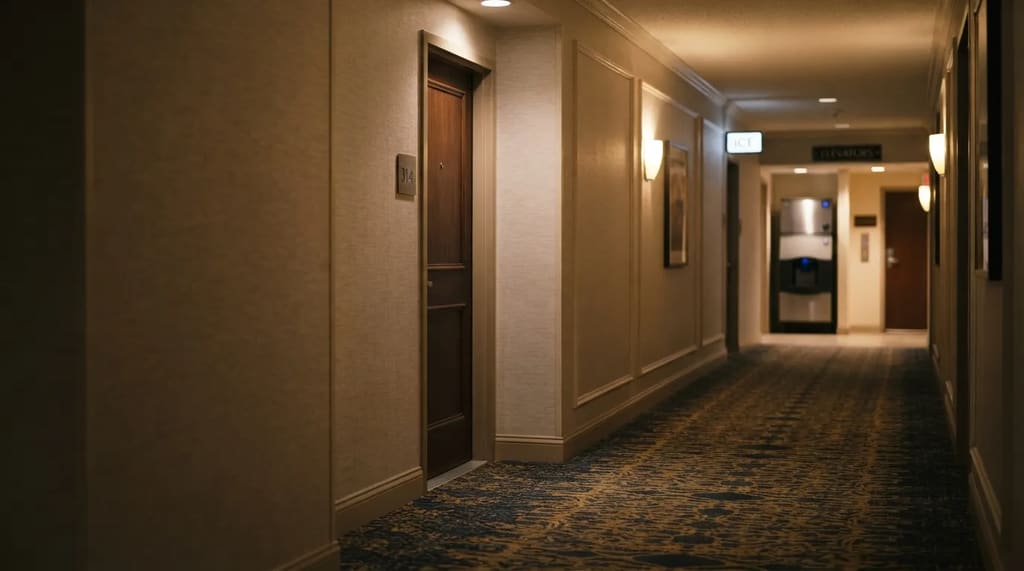
Noise complaints are among the most predictable hotel problems, and front desk staff usually know which rooms cause them. That knowledge is yours for the asking.
Many older travelers sleep lighter or need real rest after a long day. Asking “Is there a quieter room, away from the elevator or ice machine?” gives the clerk something specific to check.
Timing helps. Ask at booking and again at check-in, so the request is on file before the hotel fills up.
Another simple question is which floors tend to be calmest, which lets the agent steer you away from known trouble spots.
Distance matters as much as quiet, since the calmest corner of a hall can also be the longest walk from the elevator.
#11 – A Short Walk to the Elevator
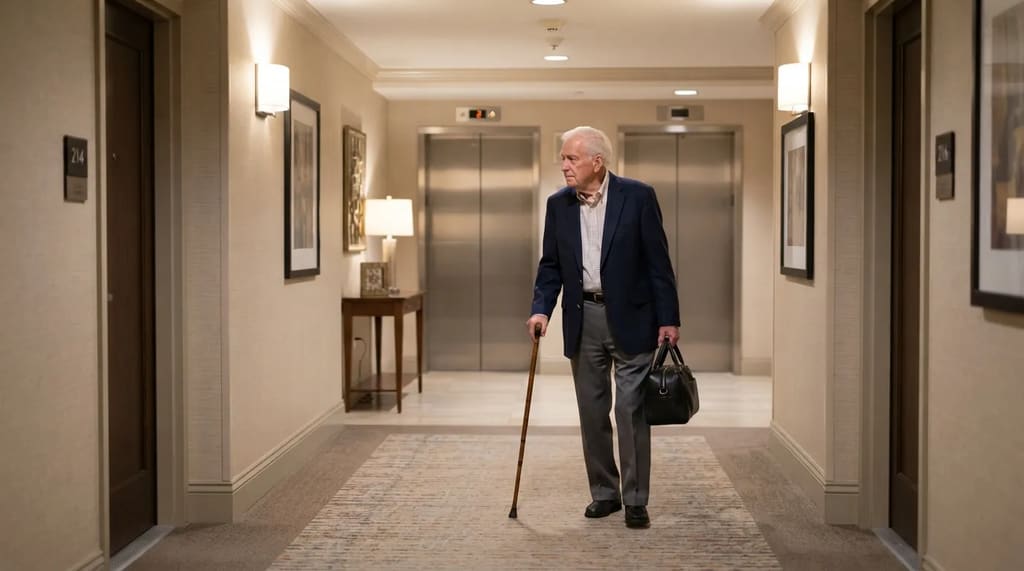
Room location is one of the easier things a front desk can adjust. You can simply ask for a room near the elevator at check-in, and in many cases the request can be granted.
A low floor and a short walk to the elevator are easy for a desk to check. When you book by phone, the front desk can tell you how far a room is from the elevator and whether the shower has a seat.
The trade is noise against distance, and it is a real one. If a bad knee or a cane makes the walk the bigger problem, say so plainly and let the desk weigh it against the quiet.
Quick Compare
- Near the elevator: shortest walk, but more hallway traffic.
- Away from the elevator and ice machine: quieter, but a longer walk with luggage.
- Higher floor: less street noise, but more time in the elevator.
Reaching the door is only part of it, because some hotels now expect guests to open it with a phone.
#10 – A Plastic Key Card, Asked for by Name
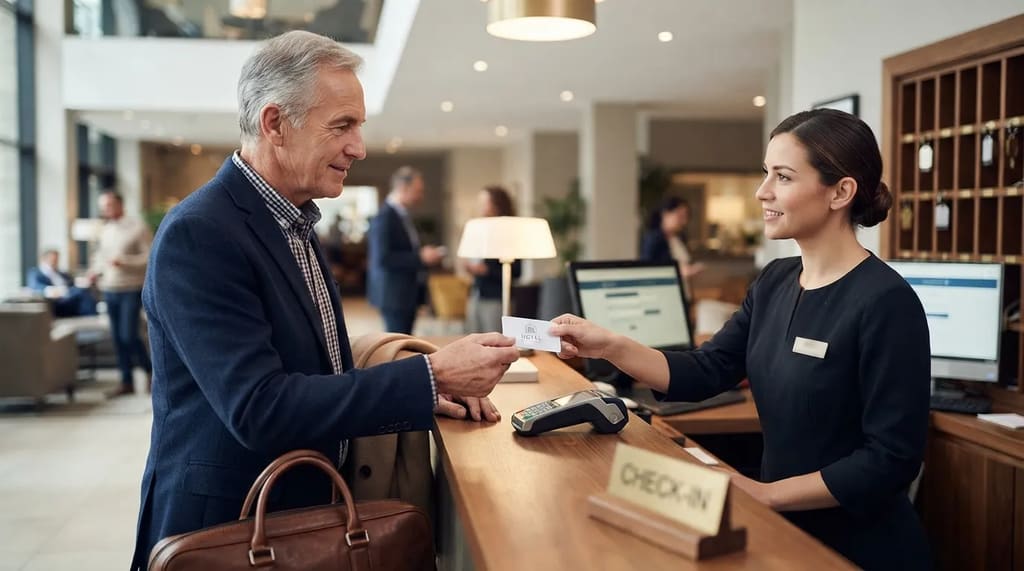
Ask for a physical room key at check-in if you prefer one. Many hotels can still provide a card, and asking up front saves a trip back down later.
The same list of guest habits that hotel staff appreciate includes asking for tech help without apology or anger. A clerk who shows you how a phone key or in-room device works at the counter loses a minute, while you lose far more by working it out upstairs.
Needing help with the technology says nothing about you. Hotels change their systems often, and the desk would rather show you once than field three calls.
It also helps to ask where the elevator is and how the door unlocks. Those two answers save a wrong turn with luggage in hand.
#9 – Your Room Number Written Down, Not Spoken Aloud
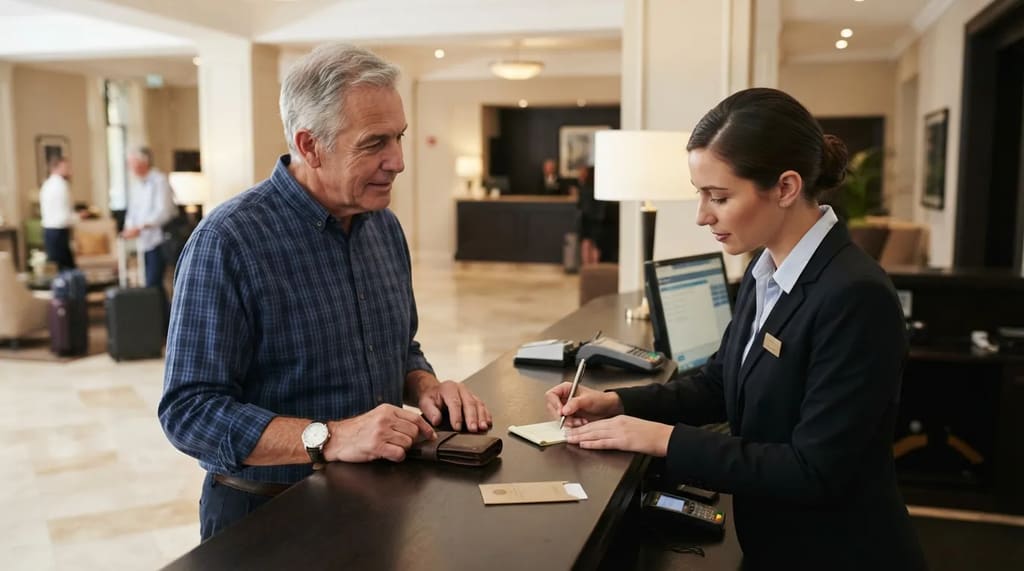
If the employee announces your room number where others can hear, politely ask for a different room or have it written down. Many travelers ask for the number in writing from the start.
The reasoning is simple. A hotel lobby is a public space, and there is no need to volunteer personal information at check-in.
It is a small request, and clerks hear it often. A friendly “would you mind writing that down for me” costs nothing and carries no accusation.
Writing the number down also gives you a place to keep the other number you will want, the one for the desk itself.
#8 – A Slip With Your Room and Desk Numbers
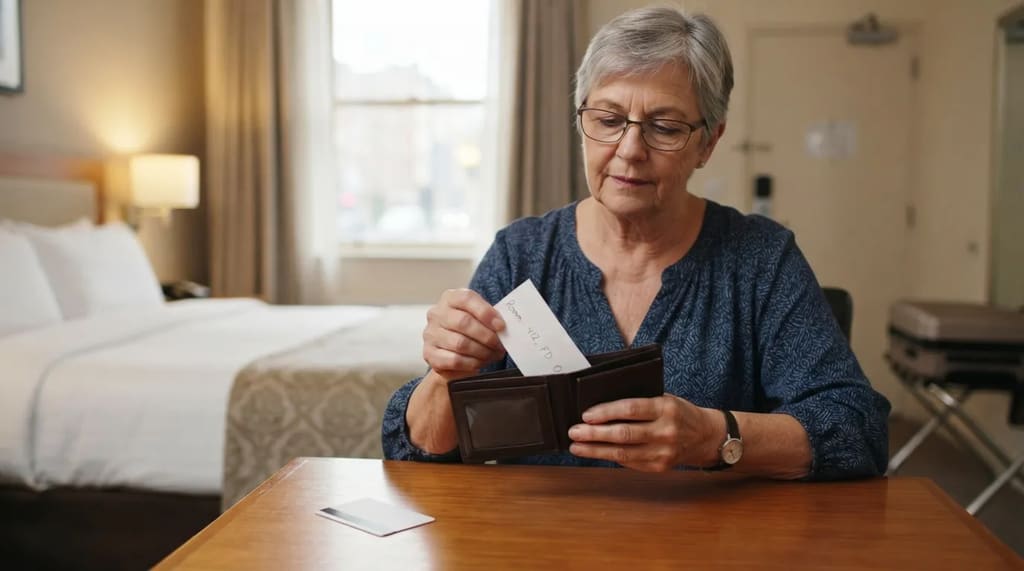
Carry a slip with your room number and the front desk number, and keep it in your wallet, not in the key sleeve. If the sleeve is lost, whoever finds it would otherwise have both your key and your room.
At check-in, ask how to call the front desk from your room and whether it is staffed around the clock. A hotel with an overnight desk is a different place to be in an emergency than one with a phone that rings through.
Call the front desk before opening the door to anyone you did not expect. A real maintenance or housekeeping worker can wait a minute while you verify.
If the desk cannot verify the visit, ask hotel security to investigate.
Check the window and balcony locks when you arrive. Tell the front desk if any are not working.
Worth Knowing
- Keep the slip: room number and desk number go in your wallet, not the key sleeve.
- Ask at check-in: how to dial the desk from your room, and whether it is staffed around the clock.
- Verify visitors: call the desk before opening the door to anyone unexpected.
- Test the locks: check windows and balcony doors on arrival.
#7 – Photo ID Ready for the Senior Rate
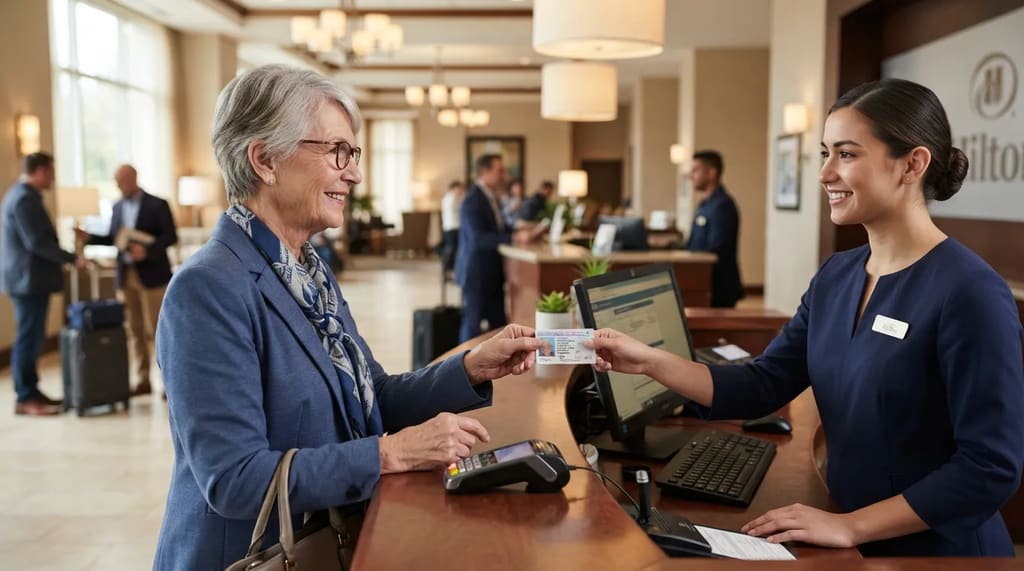
Senior rates are real, but they are neither standard nor automatic. Hilton’s is up to 6% off the best available rate, for a maximum of two rooms, with proof of eligibility required at check-in.
Hilton cut it from 7% in July 2025.5 At Marriott, the senior rate depends on rate availability and is confirmed by showing a valid ID at check-in.
Hyatt’s varies by location, so call ahead to ask what is available. On a $200 night, 6% comes to $12.
That is not nothing on a week’s stay, but a Marriott senior rate can lose to other prices on the same night, so compare before you commit.
You need not have reached those ages, since a membership card can open a rate on its own.
#6 – Mentioning AARP Before the Age Qualifies
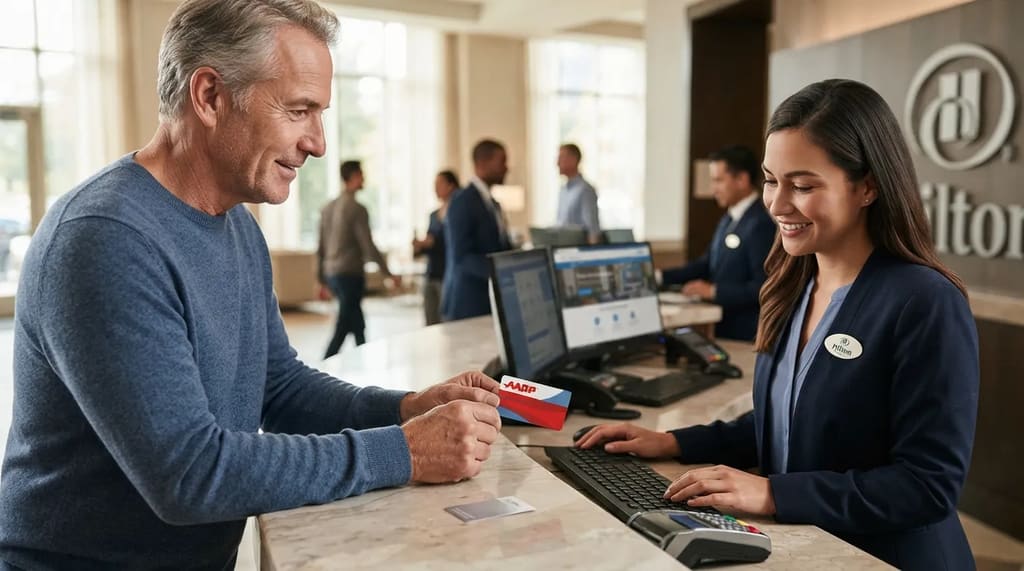
If you have not met the required age but are an AARP member, say so when booking. You may still get the discount, or sometimes a rate better than the senior discount.5
At Hilton the gap can be real. AARP members can get up to 10% off standard room rates, against up to 6% for the senior rate.
Choice Hotels offer up to 10% to guests 60 or older or to AARP members. That means a guest in their early sixties may have two routes to a similar price.
One guide says the hotel will apply whichever discount is largest, not both, so ask the desk to price each rate and tell you which is lower.
Savings on the room rate leave other charges untouched, beginning with the hold placed on your card.
#5 – The Hold Placed on Your Card
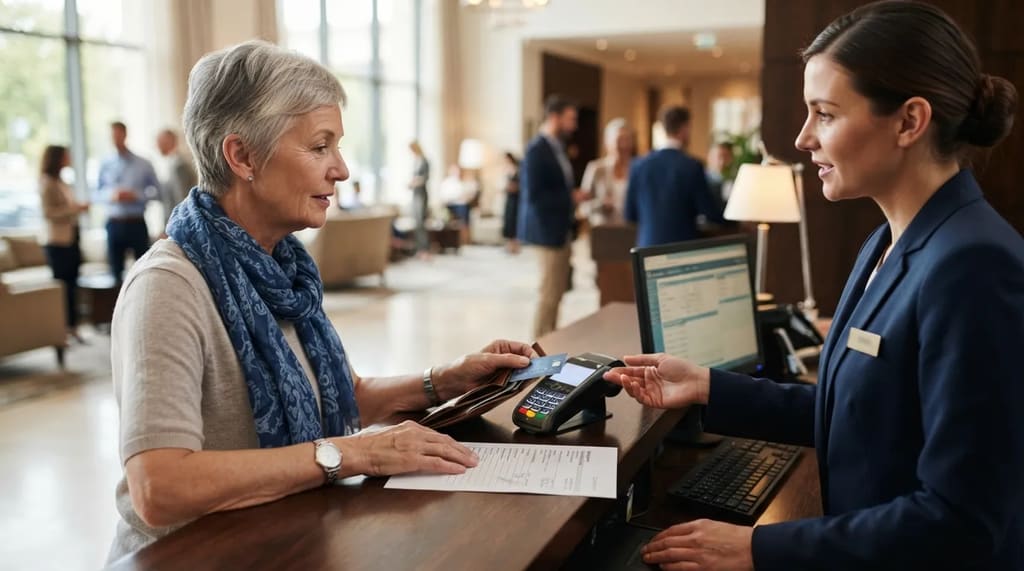
At check-in, ask what the hold amount is, when it releases and whether it can be reduced. Experienced travelers make the same point: ask how much is being placed on the card as a hold.
A hold is not a charge, but it can tie up money you may need on the trip. On a debit card, it can reduce the cash in your checking account until the hotel releases it.6
If you travel with both a credit card and a debit card, I would use the credit card for the room. The hold stays a line on a statement instead of money missing from your account.
Related Stories From Travelbinger


Ask for the release timing in plain terms, such as how many days it takes after checkout.
The hold is temporary, while the nightly charges are not, and some of those can be questioned.
#4 – Asking What the Nightly Fee Covers
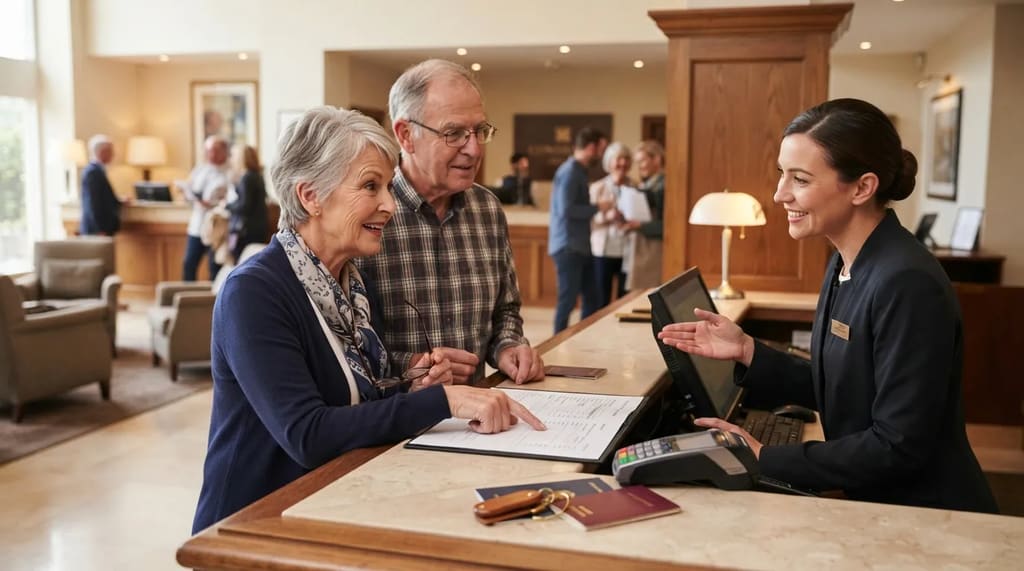
At check-in, ask what the fee covers and whether parking is charged separately. Then check the bill against your booking total.
The hotel still decides, and a mandatory fee is a policy, not a mistake. If one first appeared at the desk, ask the hotel to show where it was disclosed during booking.
Refusing a properly disclosed fee may affect the hotel’s willingness to complete check-in. The better moment to push back is before you book.
At the desk, a no leaves you holding the bill. Before booking, a no just sends you to another hotel.
Parking is a softer target, since a front desk clerk can sometimes waive parking charges to keep a guest satisfied.
Optional charges work differently from mandatory ones, as with a checkout later than the posted hour.
#3 – Late Checkout, Asked for the Night Before
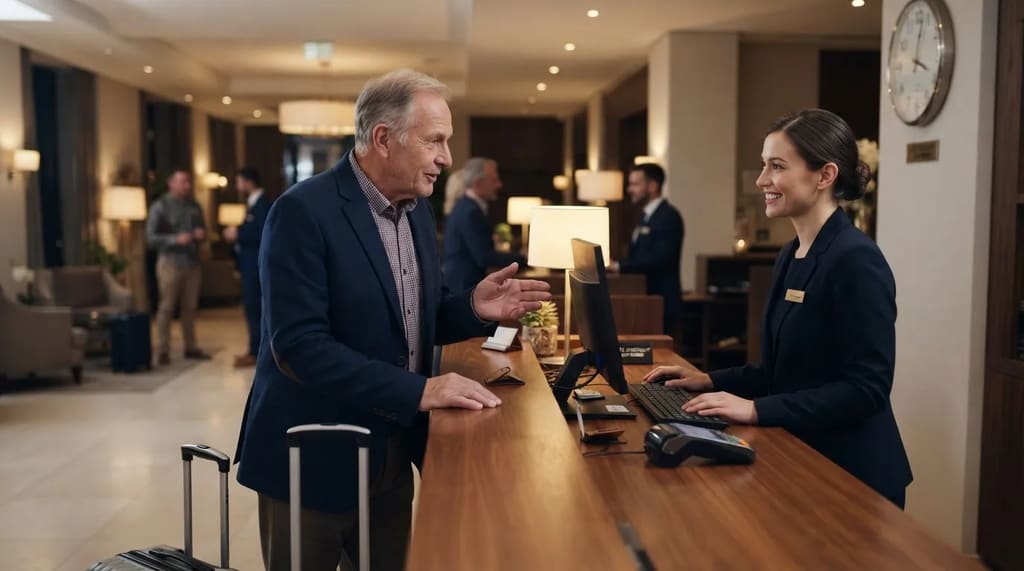
Ask the night before, not the morning of. Agents say they will often say yes when the hotel is not full.
A courteous ask beats showing up at noon and expecting it. Raise it at check-in, not on departure morning, when housekeeping schedules are already set.
Check the rate before you pay. Ask the desk to confirm the rate code and whether late checkout is included.
If the answer is no, ask about bag storage before you leave. That keeps the afternoon free, which matters on a day with a late flight or a long drive home.
#2 – A Call to the Hotel’s Own Number

Call the hotel’s local number one to three days before arrival, and ask for the front office manager or the manager on duty. Skip the toll-free reservation line, since that agent usually cannot see what is in the storeroom.
Call mid-morning, when the desk is generally calmer than during the afternoon rush. The front desk can see room inventory and often has more flexibility than a booking app.
Ask the hotel to record your needs. Have them note your needs in the reservation system, then call again a week before to confirm the requests were recorded.
If the hotel cannot meet a request, ask what it can offer instead. Keep the confirmation email handy, because the person at check-in may not be the person you spoke with.
Calling ahead works for anything a desk is free to grant, but one kind of request is held to a legal standard.
#1 – A Guaranteed Accessible Room
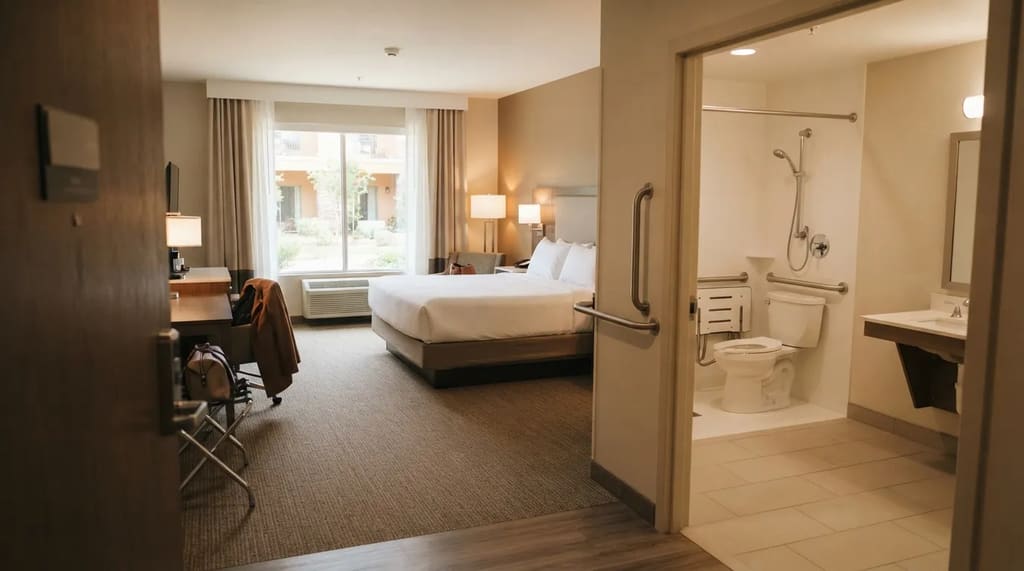
Here is the one item on this list that is not a favor, and it is the one with legal force. Federal rules under the Americans with Disabilities Act (28 CFR 36.302(e)) require that the specific accessible guest room reserved is held for the guest who reserved it.7
This is not a courtesy and not a policy a hotel can change. It differs from every ordinary booking, because hotels guarantee a room type for everyone else, but federal law makes them guarantee your specific accessible room.
The rule also requires hotels to describe accessible features in enough detail for you to judge whether the room meets your needs. Rooms must be held back until all other rooms of that type are rented, and a reserved room blocked and removed from all reservation systems.7
If a hotel cannot honor the booking, ask whether it will move you, at its own cost, to a comparable nearby property that can meet your needs. Reassigning you at check-in based on availability is not allowed.8
Limits apply: the hold and guarantee rules do not cover units the operator does not own or substantially control, such as many condo-hotel units. If you book through a third-party site, it is up to the hotel to confirm or guarantee the reservation, so I would phone the hotel to confirm.
This applies to guests who need accessible features, whatever their age. If you do, tell the hotel what you need when you book, ask for the confirmation in writing, and check the details with the hotel or the Justice Department’s ADA information if anything is unclear.
What the Desk Can Do Once It Knows You’re Coming
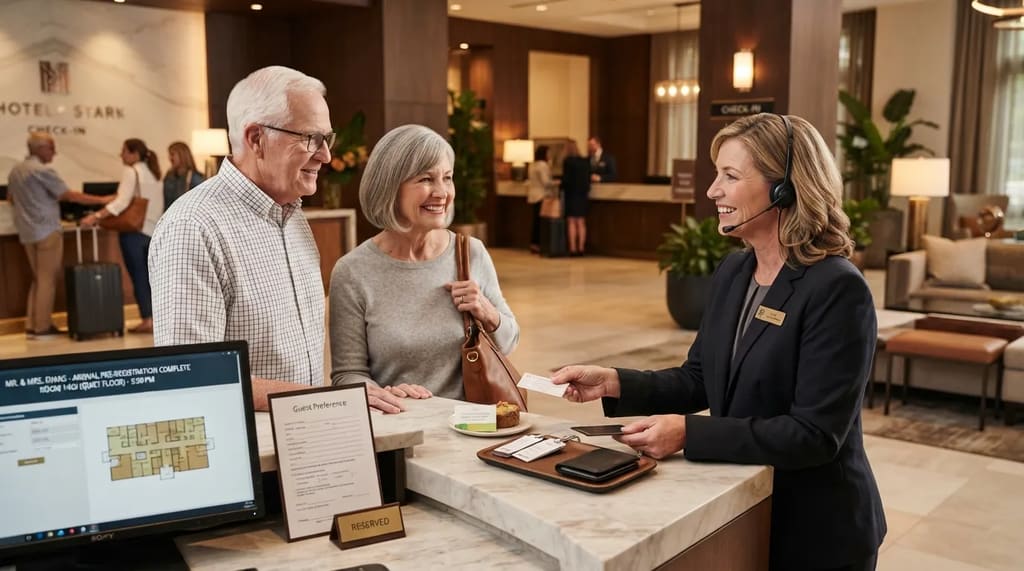
The 23 courtesies on this list share one feature: each gets easier when the desk hears about it early. A request at the counter has to fit around a line of people and a room grid already set, while a request made days ahead has time to be planned.
So treat check-in as the last step of a conversation that started when you booked. A short call, a note in the reservation and a polite hello do most of the work.
None of this guarantees a better room. It does mean the person behind the counter knows who you are, what you need and why it matters.
What is one request you have made at a hotel desk that worked, and how far ahead of arrival did you make it?
- Yahoo Travel Upgrade Phrase: https://travel.yahoo.com/hotels/articles/no-1-phrase-free-room-101500321.html
- Fox News Front Desk Manager: https://www.foxnews.com/travel/confessions-of-a-hotel-front-desk-manager
- Yahoo Travel Polite Upgrade Asks: https://travel.yahoo.com/advice/travel-tips/articles/front-desk-staff-explain-5-132243904.html
- Yahoo Hotel Managers Upgrade Secrets: https://travel.yahoo.com/hotels/articles/hotel-managers-reveal-7-secrets-195912456.html
- Clark Hotel Senior Discounts: https://clark.com/travel/hotels-senior-discounts/
- Hotel Payment Methods Guide: https://www.stayntouch.com/articles/hotel-guest-payment-options
- 28 CFR 36.302 Reservations: https://www.law.cornell.edu/cfr/text/28/36.302
- Wheelchair Travel ADA Reservations: https://wheelchairtravel.org/hotels-ada-room-reservations/