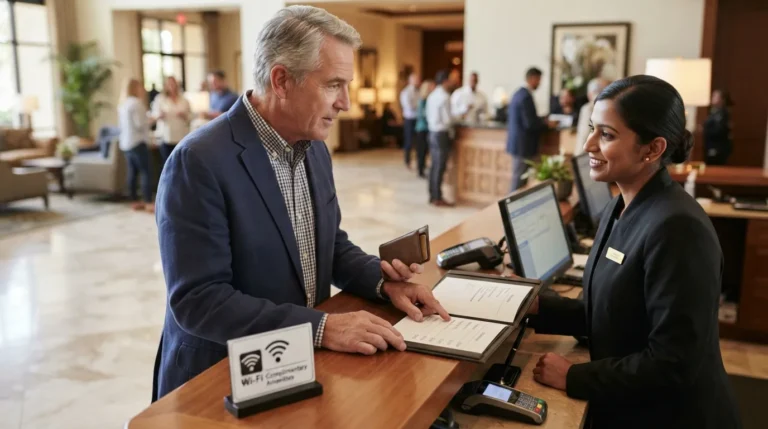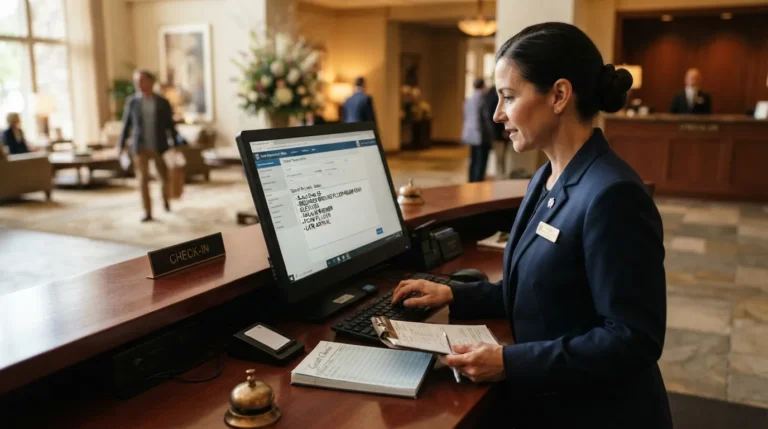


Mandatory hotel fees add an average of $27 a night, according to the consumer group Checkbook, and that’s before anyone mentions parking, Wi-Fi or a late checkout. Over a five-night stay, that’s $135 for lines you never chose.
Some of those lines come off the bill when you ask politely, and some never will, so knowing which is which is worth real money. Stay for #1, because it’s the one step, taken before you reach the lobby, that decides how many of the other thirteen requests have a chance.
#14 – The Three-Dollar Safe You Never Opened

Some hotels have billed about $3 for an in-room safe, even when the guest never touched it. It’s a tiny line, but it shows how many charges attach to the room itself rather than to anything you did.
Your remedy works for a safe and for any item nobody told you about: ask for any charge not disclosed in writing to be removed. Do it before checkout if you can, because staff can still investigate and correct the bill while you’re in the building.
Read your folio the evening before you leave, not at the desk with a line forming behind you. A clerk with a free minute can fix things that a clerk in a rush will wave off.
A safe you never touched is easy to spot on a bill. The next charge can be triggered by nothing more than a walk to the pool.
#13 – The Gym Door and the Extra Pool Towel

Before you use the gym or grab an extra towel at the pool, ask whether a fee applies. It takes ten seconds, and it’s far cheaper than finding out at checkout.
Ask the clerk at check-in rather than a pool attendant, because the clerk can see what’s already on your bill. That matters since resort and amenity fees often cover the pool, the gym and Wi-Fi.
If the answer is yes, follow up with a second question: isn’t that already included in the fee I’m paying? Unlike the safe, these are the very amenities a resort fee is supposed to cover, and a double charge is easy for a clerk to correct on the spot.
Towels are a one-time annoyance. The next charge is billed per night and sounds like a kindness to the staff.
#12 – The Housekeeping Fee Added Before You Tip
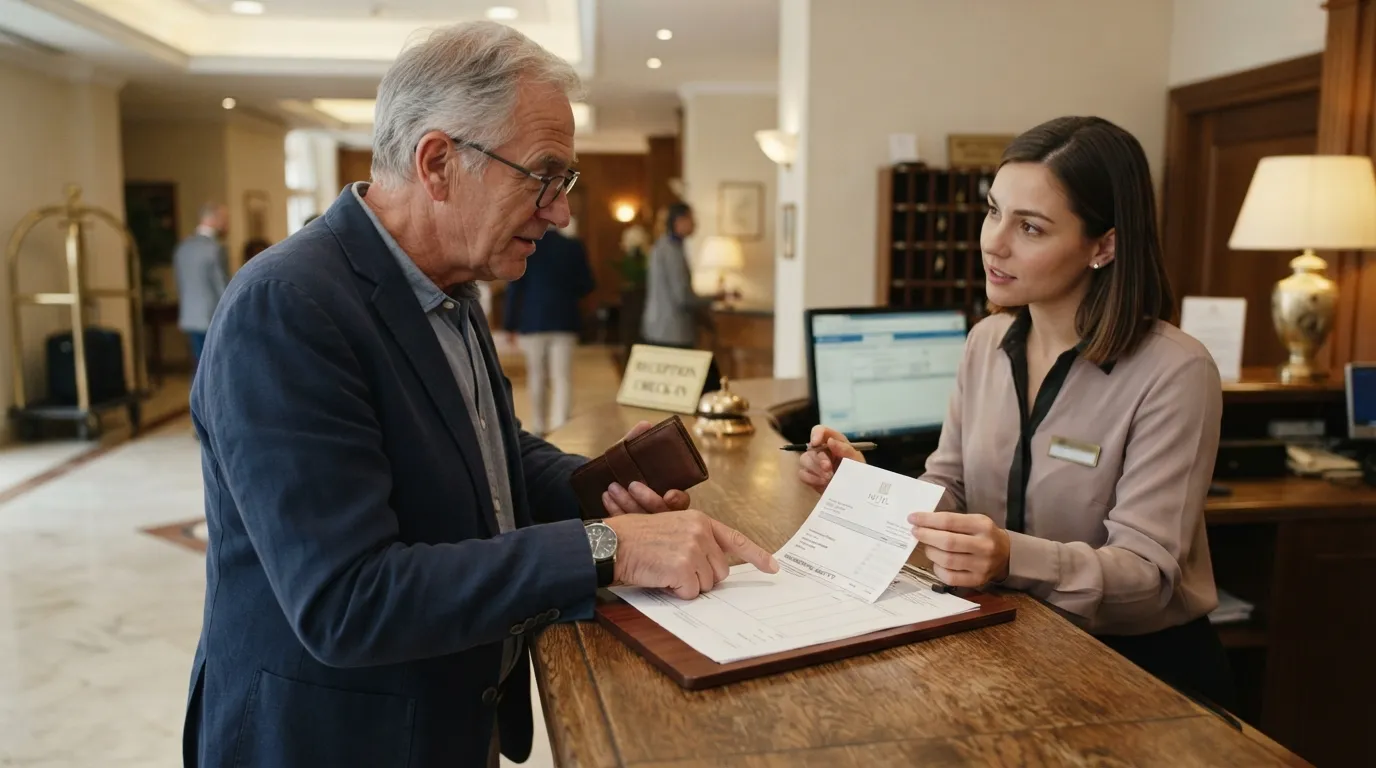
If the hotel already bills a housekeeping gratuity, the cash you leave on the pillow is a second tip. Check for the fee before you tip; if it’s there, you can skip the extra tip or ask for the fee to be removed so you can tip as you choose.
My vote is to have the fee taken off and tip by hand. That way you decide who gets what and how much, and you aren’t guessing where an automatic charge ends up.
Look for a housekeeping gratuity on your rate breakdown before you leave any cash. Either approach is fair, but paying both is not.
Quick Compare
- Keep the fee, skip the cash: simple, but you don’t control who receives the money.
- Remove the fee, tip by hand: more effort at the desk, with full control over the amount.
- Pay the fee and tip too: the one combination to avoid.
Tipping is at least a choice you control. A ride from the airport is one you may assume is free, and some hotels have started billing for it.
#11 – An Airport Shuttle That Isn’t Free

A hotel shuttle sounds like a courtesy, but some hotels are starting to charge for this usually complimentary service. Don’t assume, and call the front desk before you climb aboard.
Ask whether the shuttle is free before you board. If there’s a fee, compare it with a taxi fare, and ask whether the return trip is billed separately.
This matters most if you’re traveling with luggage or have trouble with long walks, because a shuttle is often the easiest option and you’ll be tempted to pay without checking. A quick call turns a surprise into a choice.
A shuttle is a one-time ride. The next charge shows up every night, runs $10 to $20 at many hotels, and you may already be paying for it.
#10 – The Wi-Fi Charge You May Pay Twice

A lot of hotels charge $10 to $20 a night for Wi-Fi. Over a week, that’s $70 to $140 for something the hotel down the road may give away.
Ask at check-in whether Wi-Fi is bundled into a fee you’re already paying, because that changes the math. If Wi-Fi is listed as a standard amenity and also sits inside the resort fee, you can call it double billing.
Ask whether Wi-Fi is already inside a fee you’re paying. It’s the cleanest request on this list, since you’re pointing to the hotel’s own paperwork.
At some resorts, a different nightly line pays for the lawns outside your window, whether or not you ever step on them.
#9 – The Groundskeeping Surcharge on Resort Lawns

If your resort has acres of lawns, gardens or golf courses, you could be billed a groundskeeping surcharge. You’ll pay even if you never use any of those services.
That makes it a cousin of the resort fee. Destination fees, amenity access fees and facility charges all describe a mandatory add-on that pushes the price above what was advertised.
Ask what a surcharge covers, and whether it’s truly mandatory, before you book. Consumers should still watch for optional fees that get labeled mandatory.
At a Glance
- Where it hides: resorts with lawns, gardens or golf courses.
- Other names: destination fee, amenity access fee, facility charge.
- Who pays: every guest, used or not.
- Best time to ask: before you book, while you can still walk away.
A question asked while you can still walk away carries more weight than one asked at checkout. The charges that follow are optional by design, which changes how hard you can push.
#8 – The Early Check-In Fee at the Desk

Many hotels now charge $25 to $75 for early check-in, a service that used to be complimentary when rooms were available. If you’re told a fee applies, ask whether any rooms happen to be ready.
Because the charge is optional, you can politely ask the front desk to waive it, and your loyalty status or availability may help. Ask whether a room is ready before you agree to pay for early access.
If nothing is ready, ask to leave your bags with the desk. Bag storage is another polite ask worth making.
The mirror image arrives on your last morning, and the hotel’s own calendar decides whether it costs you anything.
#7 – Late Checkout on a Half-Empty Night

Complimentary late checkout is common during low-occupancy periods, and front desk staff often have discretion to waive the fee. So the season matters more than charm: a slow midweek stay is a better bet than a sold-out holiday weekend.
Ask at check-in rather than at the last minute, so the desk can plan around you. Ask for late checkout when you arrive, not on your last morning.
Status helps, but you may not need much. Even mid-tier loyalty status often comes with late checkout, and joining a chain’s free entry-level program before your stay can nudge a clerk toward a courtesy extension.
Late checkout is a favor measured in hours. The next bill is measured in dollars per night, and in a big city it climbs fast.
#6 – The City Parking Bill and the Garage Down the Block

Hotel parking at urban properties can run $30 to $60 a night. Before you pay, check for a public garage within a block or two; parking apps often show overnight rates at half the hotel’s price.
If a confirmed half-price garage exists, take it. A confirmed saving beats a maybe from the desk.
Still, ask the desk first, because a sympathetic front desk clerk is usually empowered to waive parking charges. A guest staying several nights can often get parking folded into the room rate, and arriving by taxi or train makes an open-and-shut case.
Ask the front desk to waive or fold in parking before paying it.
A clerk can waive parking. A senior rate works differently, and it comes with a catch that affects every fee above.
#5 – A Senior Rate That Leaves Fees Untouched
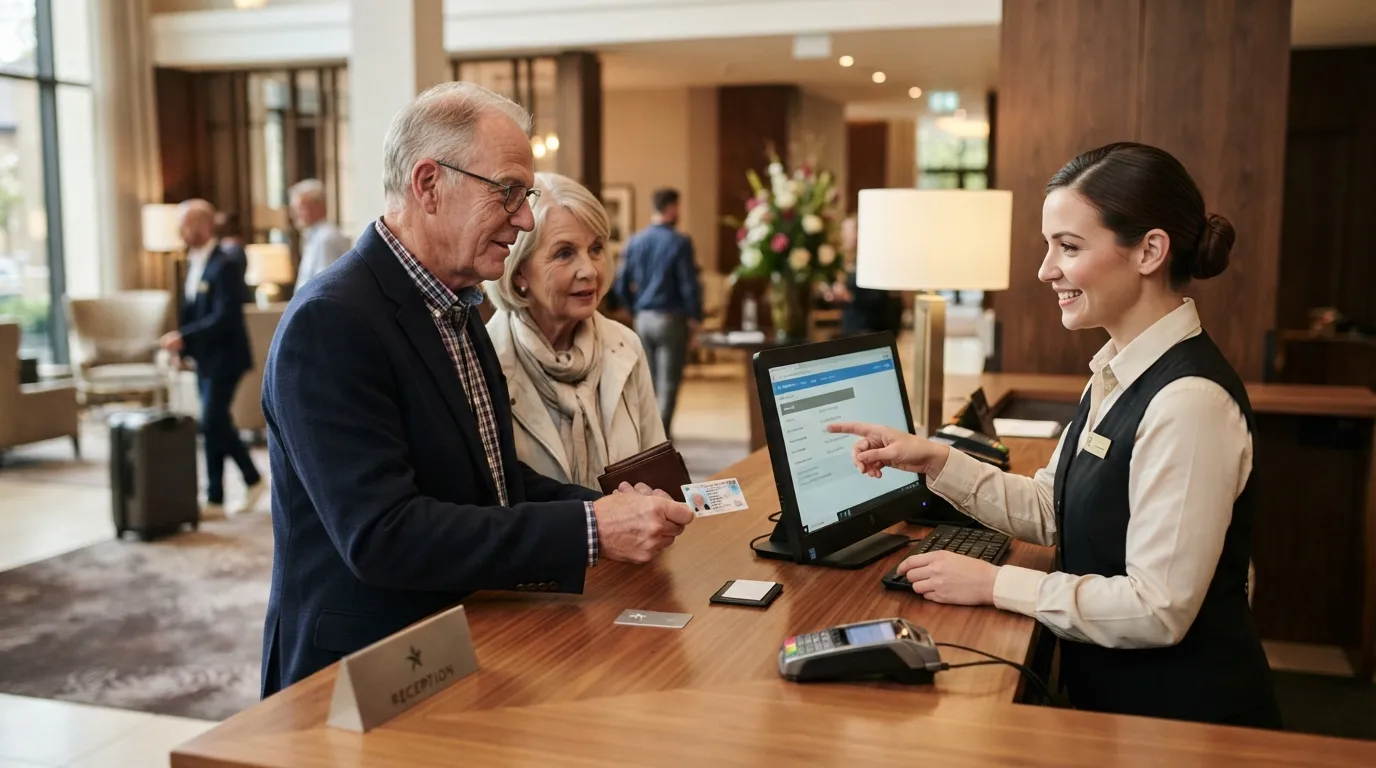
Senior pricing is real, but it applies to the room, not to the extras. AARP hotel discounts run 5 to 10 percent and apply to the room rate only, not to meals or fees.
Rules differ by chain. Wyndham’s own senior page offers savings to guests 60 and older on the standard rate at participating locations, with valid ID at check-in,1 and Marriott’s senior rate starts at 62 and doesn’t require AARP.1 2
Quick Compare
- Wyndham: age 60 and up, valid ID at check-in, participating locations.1
- Marriott: age 62 and up, no AARP membership needed.1
- AARP rates: 5 to 10 percent off the room only, never fees or meals.
Hilton’s published minimum age varies between sources, so confirm it on hilton.com before you book.
A senior rate cuts the room price only; fees are a separate ask. On a $200 room, 10 percent is $20 a night, which is less than that $27 average in mandatory fees, so I’d rank a fee waiver above a rate cut every time.
#4 – Full Amenity Fee for a Closed Pool
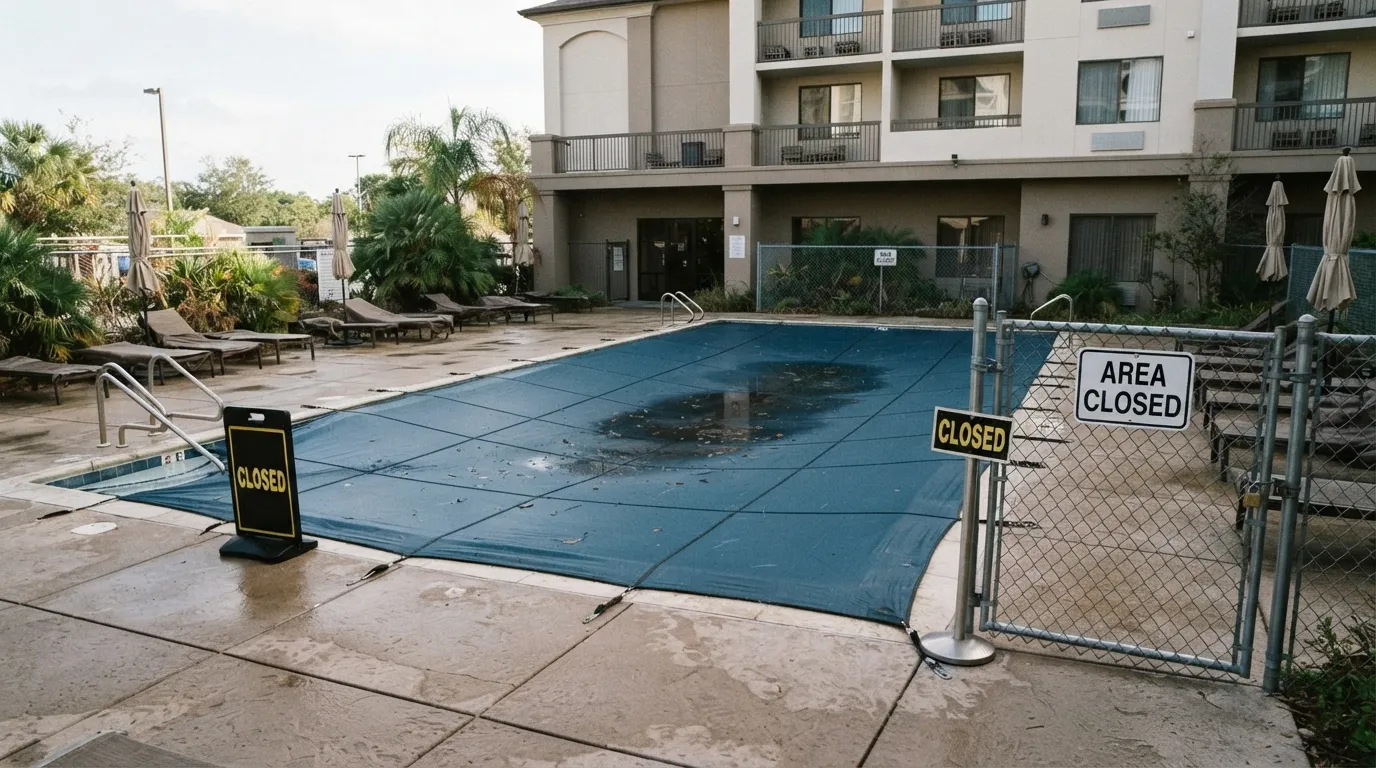
If the pool was closed, the Wi-Fi was slow or the fitness center was under renovation, you have grounds to request a full or partial credit. That’s the payoff for the gym-and-towel question you asked earlier.
The fee supposedly covers Wi-Fi, pool access and the gym, so if you used none of them, say so at checkout and ask for it to be removed. Some hotels will waive fees if you say at check-in that you won’t use what they cover.
Name the amenity that was closed or unused, then ask for a credit.
If the clerk says no, the question becomes who is allowed to say yes.
#3 – The Manager Who Can Change the Bill
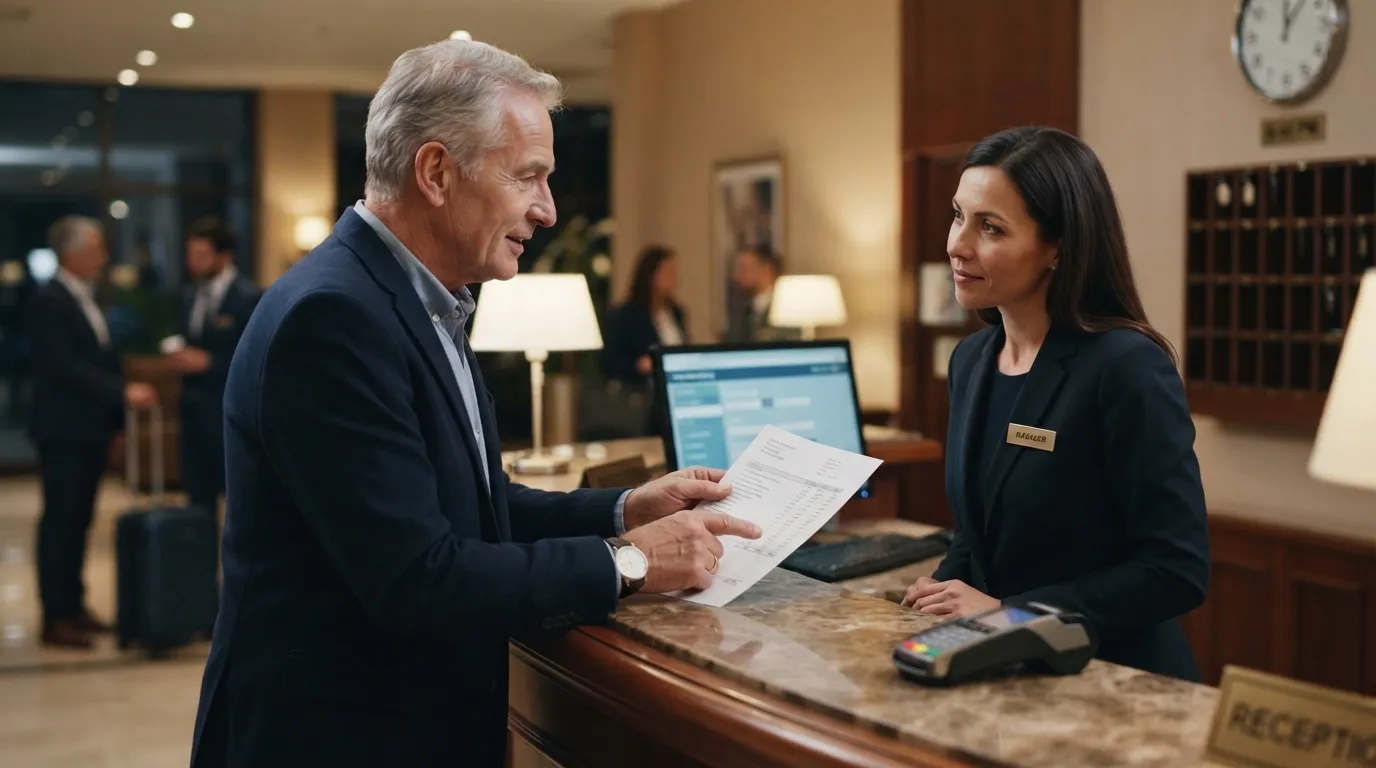
The person in front of you may not have the power to touch the fee. Resort fees and parking charges are frequently decided above the front desk level, so politely asking for a manager isn’t rude.
If your parking or Wi-Fi request got a no earlier, this is the step that follows. One hotel manager wrote that some properties waive charges and some won’t, and that staff are more likely to help if you’re nice.
If the clerk can’t change it, politely ask for the manager. Keep your tone even, because a manager has a reason to bend and none to reward a scene.
Related Stories From Weather Fox


Managers can adjust many things. One fee is built into the price itself, and whether it comes off depends mostly on how you booked.
#2 – The Resort Fee and How You Booked
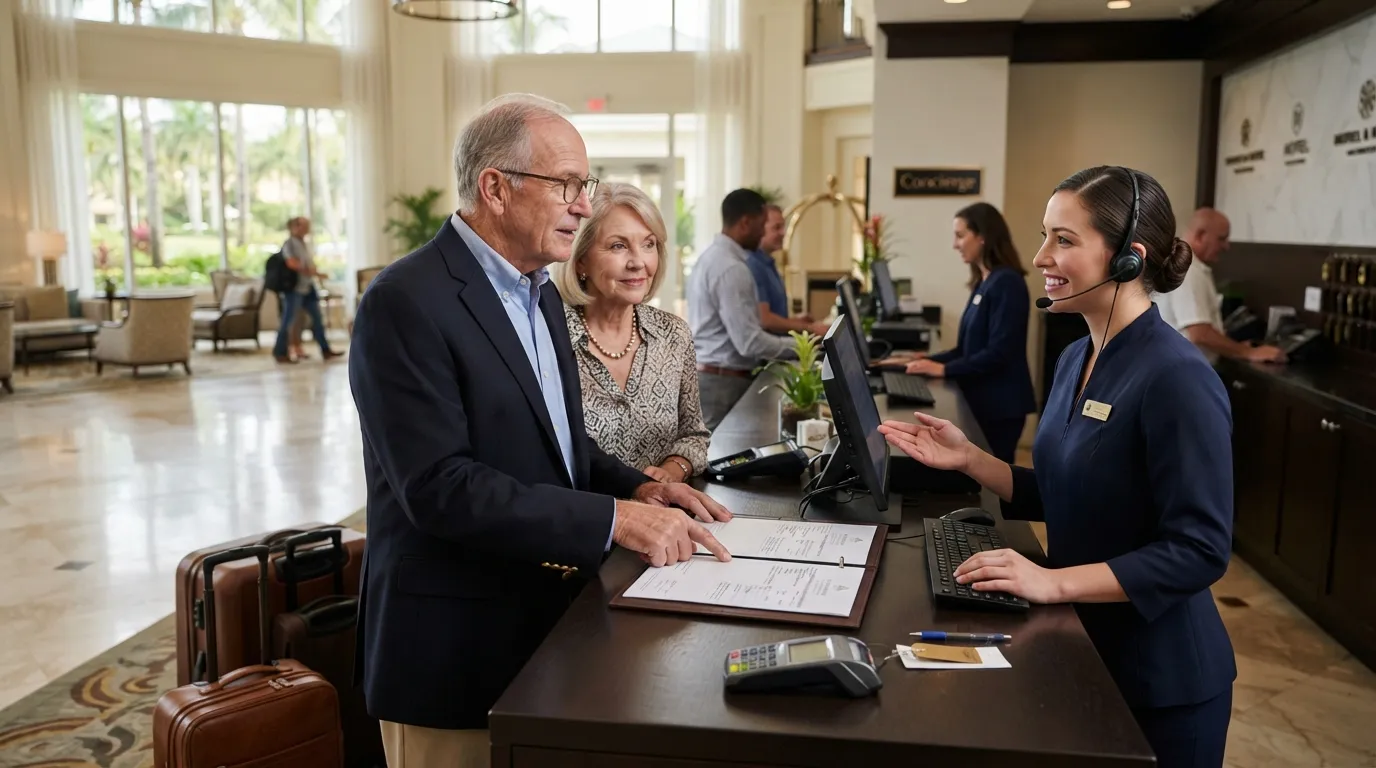
Since May 12, 2025, the FTC’s fee rule has required hotel booking sites to show all mandatory fees in the advertised price.3 It doesn’t prohibit any fees or cap what a company can charge.3 4
So the fee is easier to see than to remove, and the hotel may decline when the fee is mandatory and was disclosed before booking. At the desk, I’d give a resort fee one polite try and then stop, because your leverage is mostly spent once you’ve booked.
A resort fee is easiest to avoid by how you book, not at the desk. Hilton and World of Hyatt point stays don’t include resort fees, and Hyatt Globalist members get them waived on all stays.5 6
A hotel can only adjust what it controls, so a third-party booking is harder to change than a direct one.
Every lever above works best before you reach the lobby. The final item turns that into a single request that can cover Wi-Fi, parking and the resort fee at once.
#1 – One Request Before You Ever Arrive

Properties will fold Wi-Fi, parking and resort fees into a flat nightly rate if you ask. Calling ahead about packages can also include waivers for things like Wi-Fi and parking.
That’s the rule that reorders everything else: optional charges like late checkout or Wi-Fi can often be waived with a polite request, while mandatory ones like a resort fee or extra-person charge are better settled around when you book. Contact the front desk by phone or email a few days before arrival.
Ask whether the senior rate applies to your stay and whether the resort fee can be reduced or removed. Email leaves a record, which matters after the verbal-yes problem from the early check-in section.
- Does a senior rate apply to my dates, and what ID do you need?
- Which nightly fees will apply, and can any be waived or folded into the rate?
- Can you note the answer on my reservation?
The hotel can still say no to a disclosed mandatory fee. Finding out costs you one email, and it can save $27 a night.
Stop treating the front desk as the place where your bill gets settled. By the time you’re standing there, most of the price is fixed, and the desk is mainly where you confirm what you were promised.
The better habit is to ask early, in writing, about the specific lines, and to use the desk to check the result. A polite email a few days out gets more done than a long conversation at midnight with a tired clerk.
Which charge on your last hotel bill would you most like to have asked about beforehand, and what did it cost you?
Bonus: The After-Checkout Move That Fixes What the Desk Didn’t

Most guests give up when the desk says no or when a promised waiver still shows up on the card statement. The real second chance starts after you leave, and it works best if you set it up before you go.
- Before you leave: ask for the final folio by email, even if it shows a zero balance. Compare every line to what you were promised.
- Within a few days: send one short, polite email to the hotel’s general manager or guest relations. Include your confirmation number, the exact line and amount, and what was agreed (for example, the date and name of the clerk who said the fee would be waived).
- Ask for one thing only: a specific credit back to the original card, with a reply in writing.
- If it’s still unresolved: pay with a credit card, not a debit card, so you can dispute it. Under the federal Fair Credit Billing Act, you generally must notify your card issuer in writing within 60 days of the statement that shows the error.
A dispute fits best when you were charged something not disclosed, not as agreed, or not honored after a written promise. It’s a weaker tool for a disclosed mandatory fee you simply dislike. Keep your emails, since the paper trail is what makes this work.
- Hotel Senior Discounts by Chain: https://seniorsite.org/resource/19-best-hotel-discounts-for-seniors-from-budget-to-luxury
- ConsumerAffairs Senior Hotel Discounts: https://www.consumeraffairs.com/news/you-may-qualify-for-a-senior-hotel-discount-at-55-here-are-the-hotels-to-ask-091526.html
- KOMO Federal Hotel Fee Rule: https://komonews.com/news/local/new-federal-rule-bans-hidden-hotel-and-ticket-junk-fees-ticketmaster-show-concert-music-performance-hilton-marriott-choice-room-booking-vacation-stay-trip-travel-airpoert-plane-money-economy
- PIRG Junk Fees Rule: https://pirg.org/edfund/articles/junk-fees-finally-new-protections-against-surprise-charges-for-event-tickets-hotels/
- Upgraded Points Resort Fees: https://upgradedpoints.com/travel/hotels/hotel-resort-fees/
- One Mile at a Time Globalist: https://onemileatatime.com/guides/hyatt-globalist-status/