
Royal Caribbean’s prohibited-items page once allowed non-surge power strips, until the line changed course in September 2024.1 The habit that worked on your last sailing can now get your charger setup pulled at the pier.
That’s the sneaky thing about a cabin: small, dated assumptions hide in it, and the first hour on board is the cheapest time to catch them. These sixteen habits run from two-minute checks to rules with real consequences. Stay for the final item, because it applies to a passenger on a fortieth sailing exactly as it does on a first.
#16 – Test the Thermostat, Shower and TV Right Away
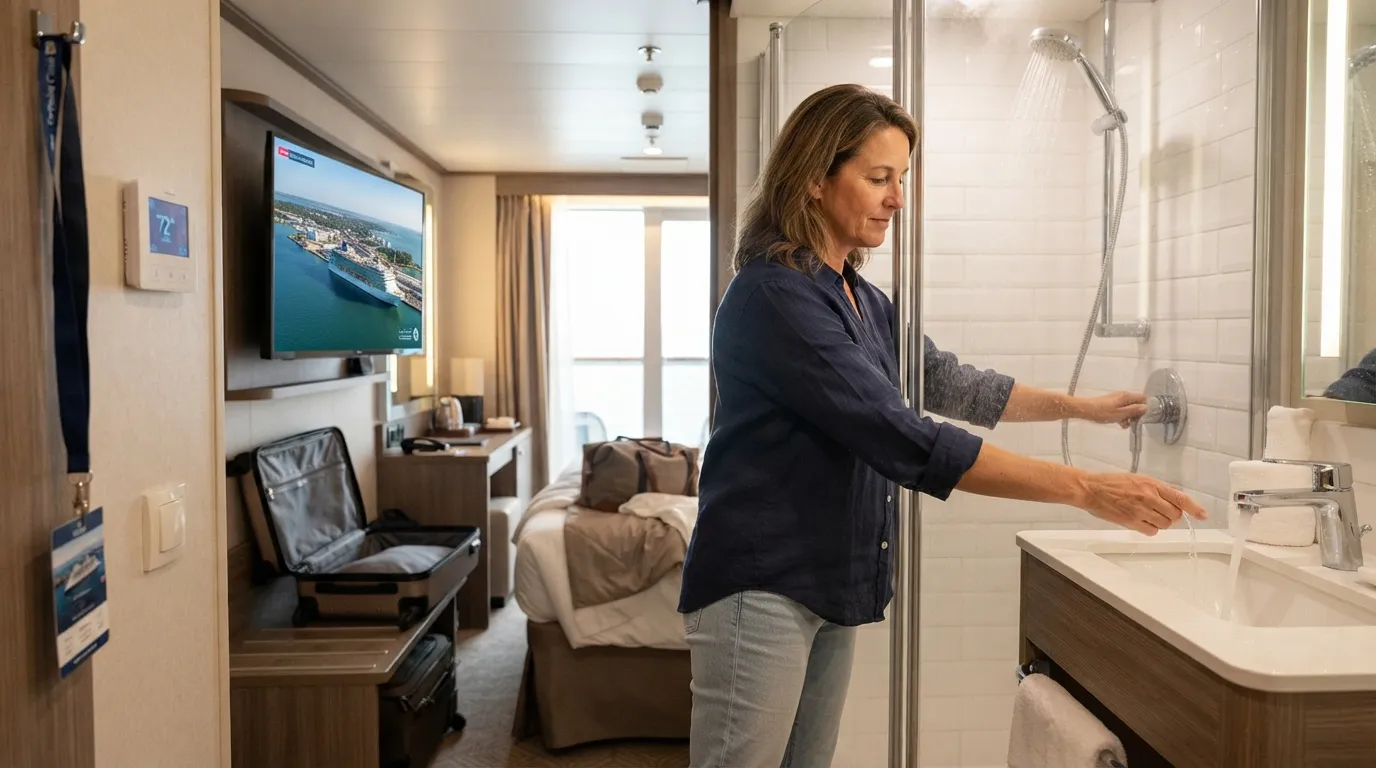
Two minutes with the controls on day one beats a lukewarm shower on night two.
Set the thermostat where you want it, then check the toilet and sink, confirm there’s hot water, and see whether the television works. Cruise Critic’s version of the list is thermostat, toilet, sink, hot water, TV and lights.
It also adds a look for bed bugs and warns against assuming the cabin matches your needs the moment you walk in. Anything you flag on the first afternoon leaves the crew the whole week to fix it.
Working isn’t the same as clean, and a handful of surfaces in that room get touched more than anything else.
#15 – Wipe Six Surfaces, Not the Whole Room
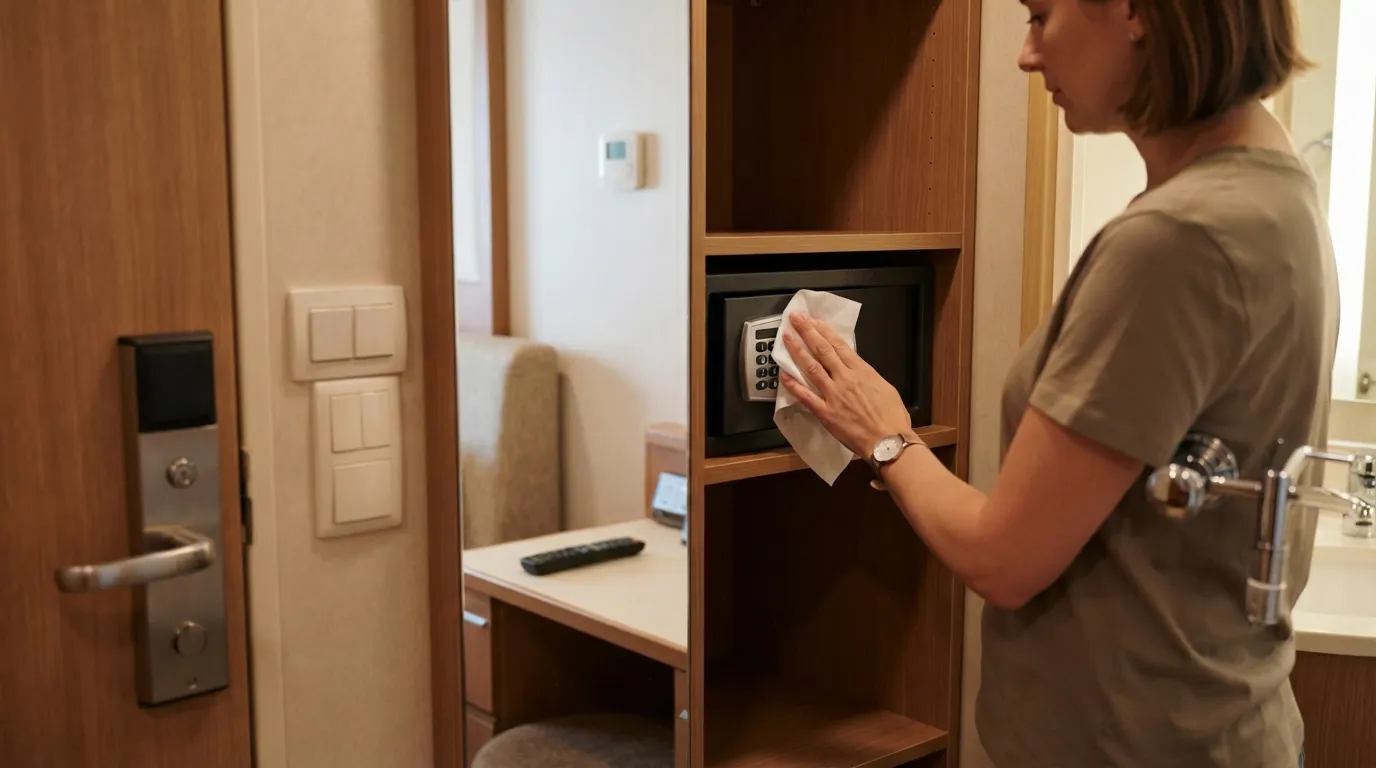
You don’t need to scrub the cabin, and you don’t need to doubt your steward.
Cruise Critic’s list of spots worth a few minutes is the doorknob, remote, light switches, faucets, thermostat and safe keypad.2 The same guide stresses that this isn’t a criticism of the cleaning, just a cheap extra precaution.
At a Glance
- Doorknob and light switches: touched by everyone, every day
- Remote and thermostat: handled constantly, rarely wiped
- Faucets: quick to hit while you test the hot water
- Safe keypad: wipe it before you set your code
My verdict: those six spots are enough, and wiping every inch of the room is wasted effort. If you want to go further, rewash the bar glasses if your cabin has them.2
Keep a small pack of wipes in your carry-on. Your luggage may not reach the cabin right away, so don’t count on finding them in a suitcase.
Put the wipes away before you start unpacking, because there’s one thing worth doing while the room still looks like a showroom.
#14 – Take Photos Before the Room Fills Up
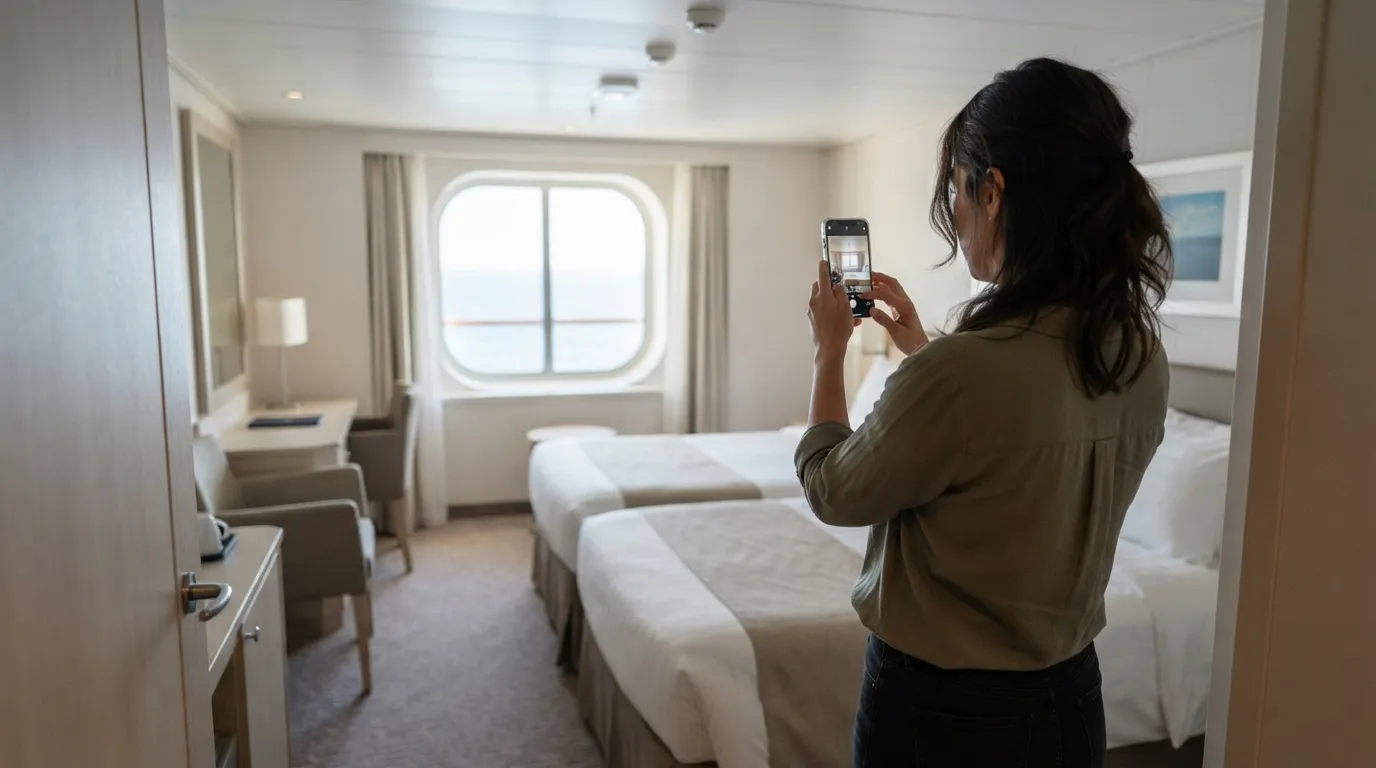
The cabin never looks this tidy again once the daily schedules, towel animals and your laundry arrive. Cruise Critic suggests snapping it in pristine condition before that happens.3
Take a few wide shots of the cabin and bathroom before you open a suitcase. They make a nice keepsake, and they also give you a dated record of how the room looked when you arrived.
If you spot a stain, a scuff or a broken fixture, photograph it and tell your steward the same day. The picture shows what you reported and when.
The best moment for those photos is also the last moment the room has any space in it, because the suitcases are about to come open.
#13 – Unpack Fully and Park the Suitcases Under the Bed
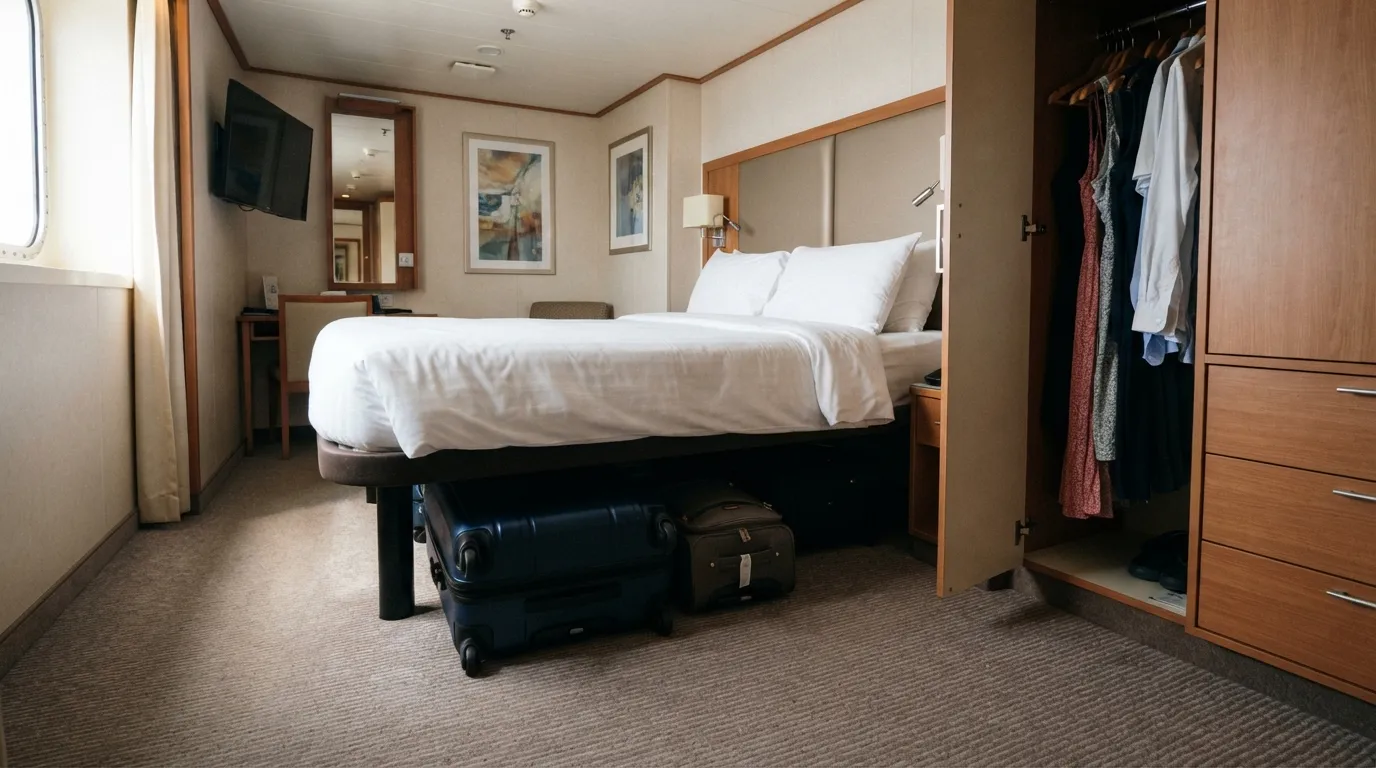
A half-open suitcase on a cabin floor makes a small room smaller. Unless you’ve booked a large suite, space is at a premium.2
Royal Caribbean’s blog advises putting everything away to reduce clutter, then stashing the empty bags out of sight. Empty suitcases go under the bed once the drawers and closet are full.
Hang your dressier clothes first so creases have time to fall out before evening. Bags don’t always arrive on your schedule, so pack a change of clothes in your carry-on for swimming while you wait.
Some of what comes out of that suitcase shouldn’t stay in a drawer at all.
#12 – Lock Up Passport, Cash, Cards, Jewelry and Tech
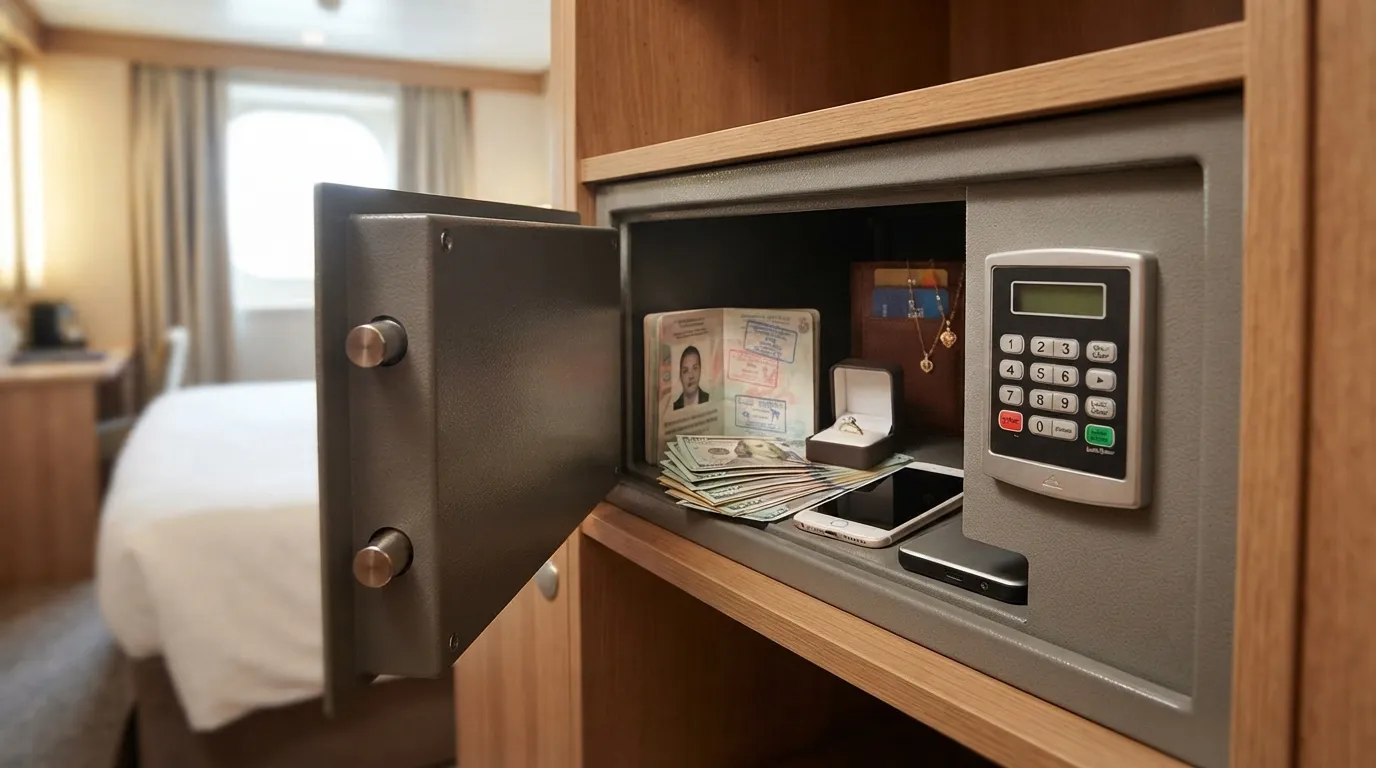
Cabin drawers don’t lock, but the safe does. While you unpack, put your passport, cash, credit cards, expensive jewelry and tech inside it.2
The keypad is one of the six surfaces you just wiped, so do it in that order: clean first, then set your code. Test the code with the safe door open, so you never lock your own passport away by mistake.
Anything you’d hate to replace goes in the safe, and it stays there whenever you leave the cabin. A quick glance inside before you go tells you in seconds if something is missing.
The safe covers the valuables, but the cabin door covers everything else, and it needs attention every time you leave.
#11 – Lock the Door and Guard the Key Card
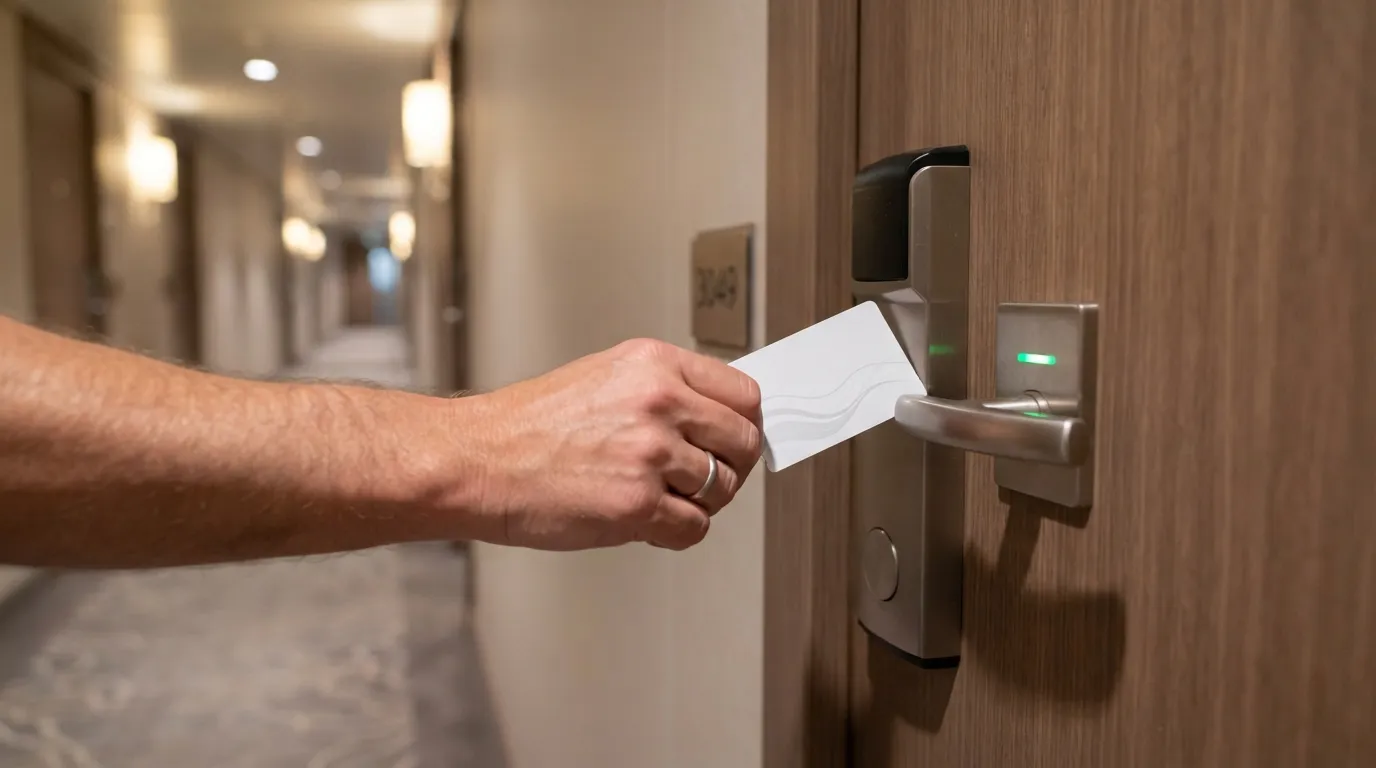
Your cruise card opens the door, and on board it also pays for your drinks. It works as your credit card on the ship, so you’ll want it in hand from the start.
Once you’ve set your luggage down, lock the cabin door. Treat the key card like a credit card, with one pocket or lanyard it always returns to.
It also gets you back through the gangway in port, so losing it is a nuisance even before any charges. If it goes missing, tell guest services promptly so it can be replaced.
Inside, two pieces of paper in the room are worth reading before you head out again.
#10 – Read the Daily Planner and the Dining Card
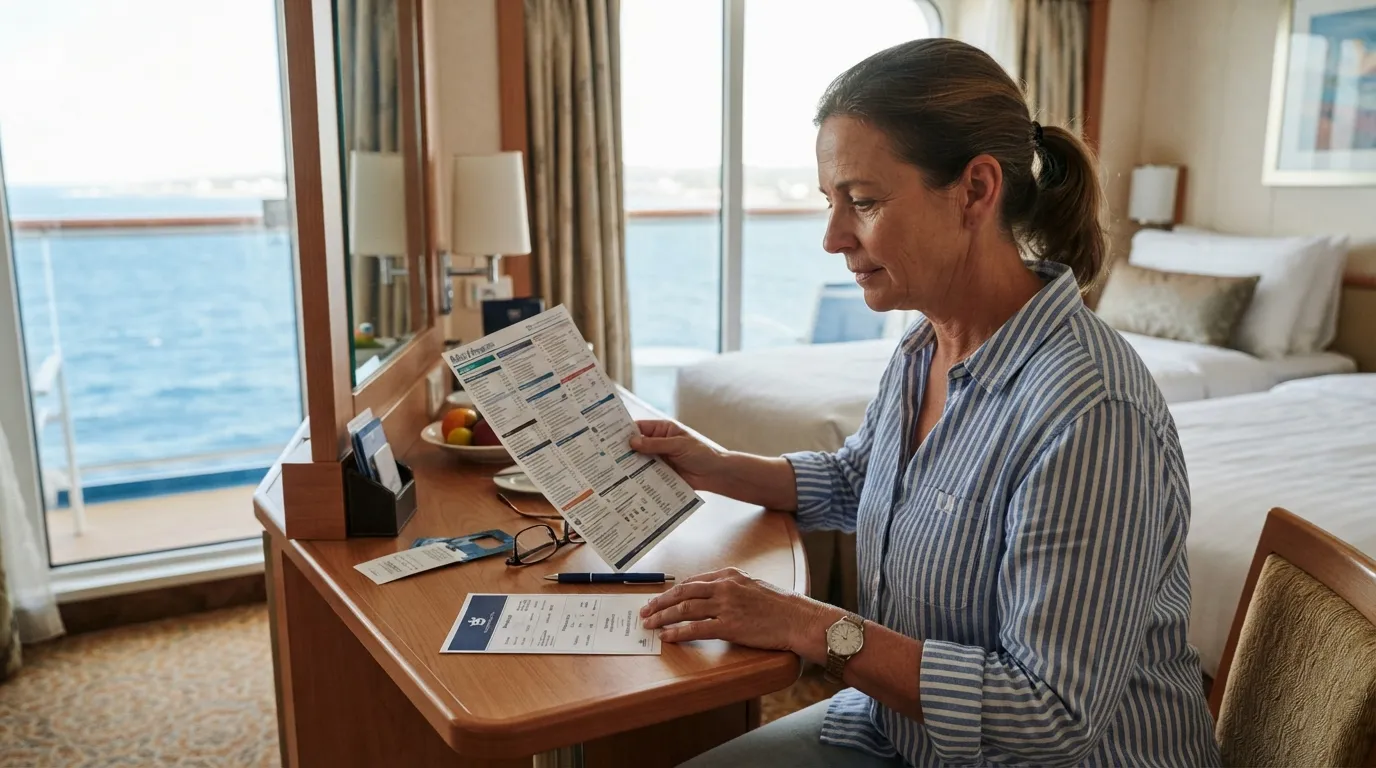
Spa slots, specialty tables and popular excursions fill quickly. Cruise Critic’s advice is to book early, because popular spa, dining and excursion times go first.
The daily itinerary left in your cabin lets you plot out the evening. If your ship uses set dining times, the card with your seating details should be in the cabin.
Make sure the seating time suits you and that your whole party is at the same table. A mix-up is far easier to fix on the first night than on the fourth.
Paper plans work in port, but the moment the ship pulls away your phone starts behaving differently.
#9 – Switch the Phone to Airplane Mode and Install the App
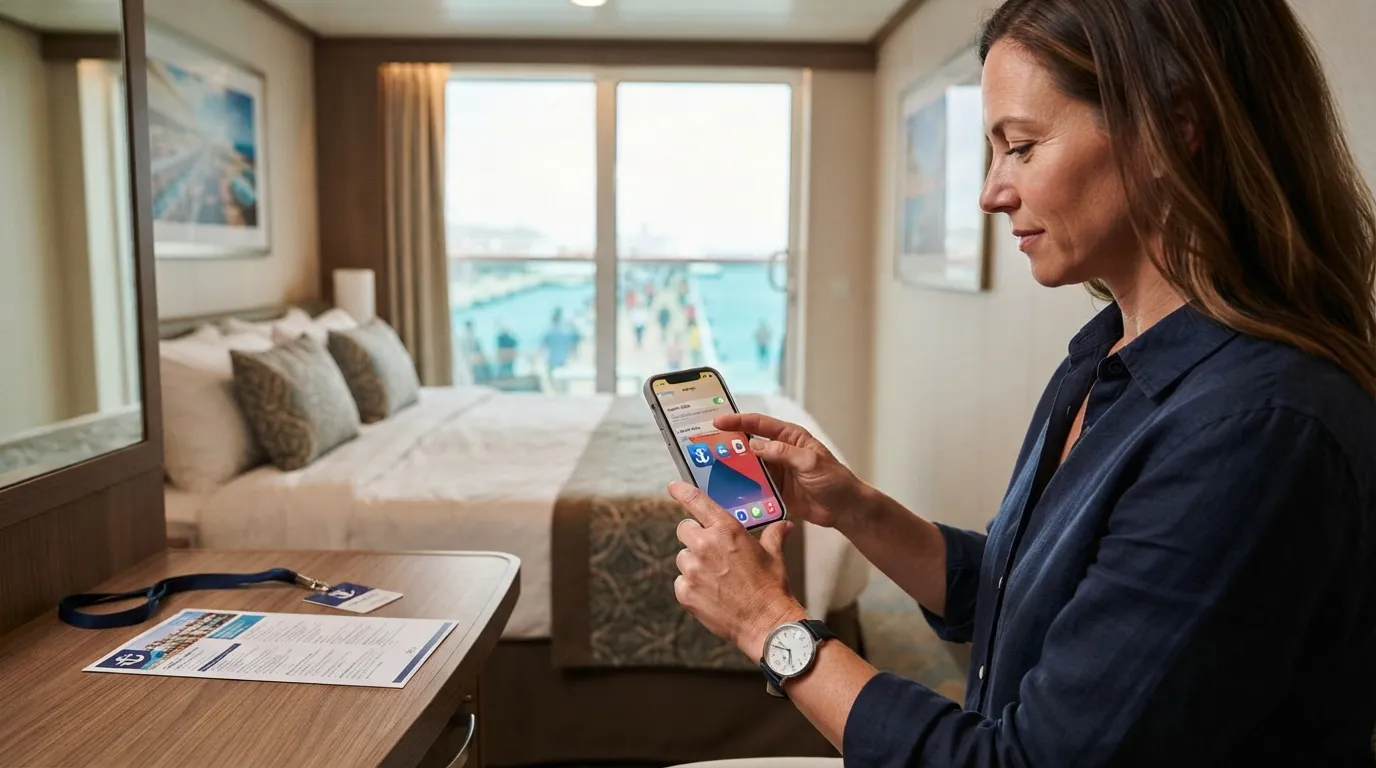
Your phone has a deadline, and it’s the moment the ship sails. Cruise Critic’s first-day list says to set the phone to airplane mode before departure.
Airplane mode goes on before the ship sails. Out at sea, a phone hunting for a signal may latch onto the ship’s costly cellular service, though you can still use the ship’s Wi-Fi once you’ve bought a plan.
Quick Compare
- Airplane mode on: no hunting for a signal, and ship Wi-Fi still works once you’ve bought a plan
- Airplane mode off at sea: your phone may grab the ship’s costly cellular service
Download the cruise line‘s app on day one. An older checklist also suggests setting your watch to ship time, which helps you read the all-aboard call correctly in port.
With the phone sorted, the person who can fix most of what’s in this cabin is probably already in the hallway.
#8 – Learn Your Steward’s Name First
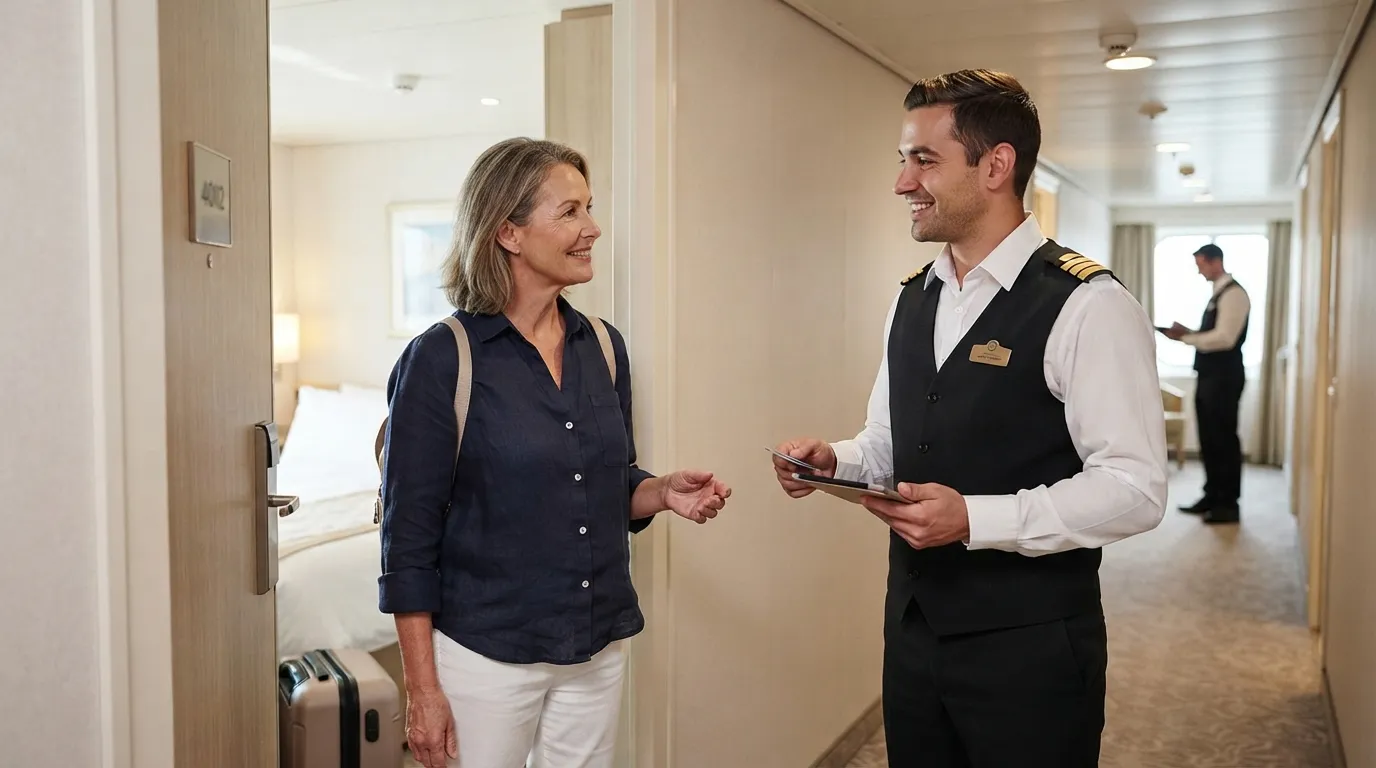
Unlike a hotel housekeeper, a cruise steward is someone you’re likely to meet and perhaps get to know. Learn your steward’s name on the first day.
They usually knock and introduce themselves, but you can approach them in the hallway if you see them first. Embarkation day is among their busiest, since they’ve just turned over the cabins, so expect the visit in the afternoon or early evening.
Most of what follows is a request only your steward can fill. That’s why the name comes first.
The first request to make decides how you sleep, and the default setup may not be the one you wanted.
#7 – Settle the Bed Setup Before Bedtime

You can request a bed layout online before you sail, and the steward can still change it after you’re aboard. That includes a queen or two singles.
Tell your steward queen or twin on day one. Cabin crews handle this request all the time, and the first day is the easiest moment to make it.
If you’re sailing with kids, the bed arrangement matters even more, especially in cabins with bunks.
Beds are the big request, while the small ones, like hangers or a mattress topper, take a sentence each.
#6 – Ask for Hangers, Towels and a Daily Ice Bucket
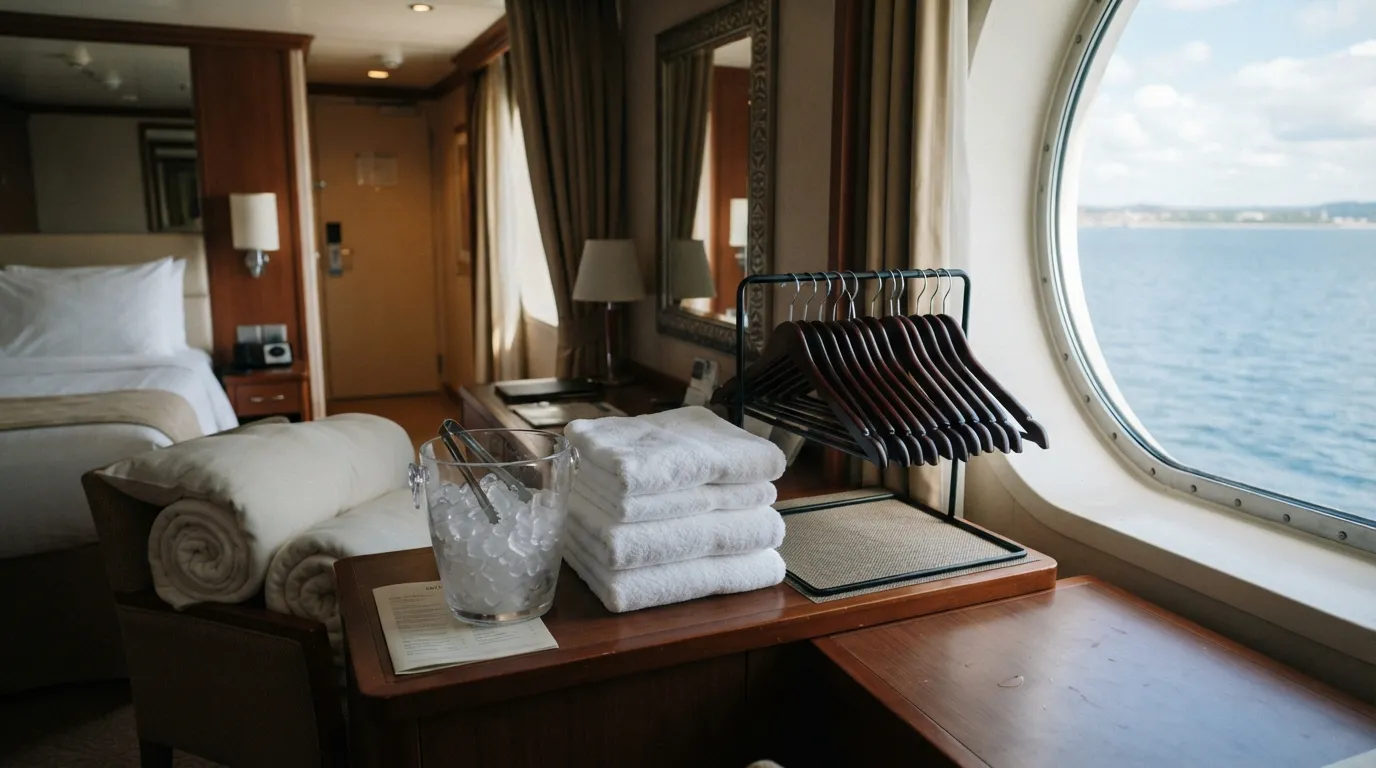
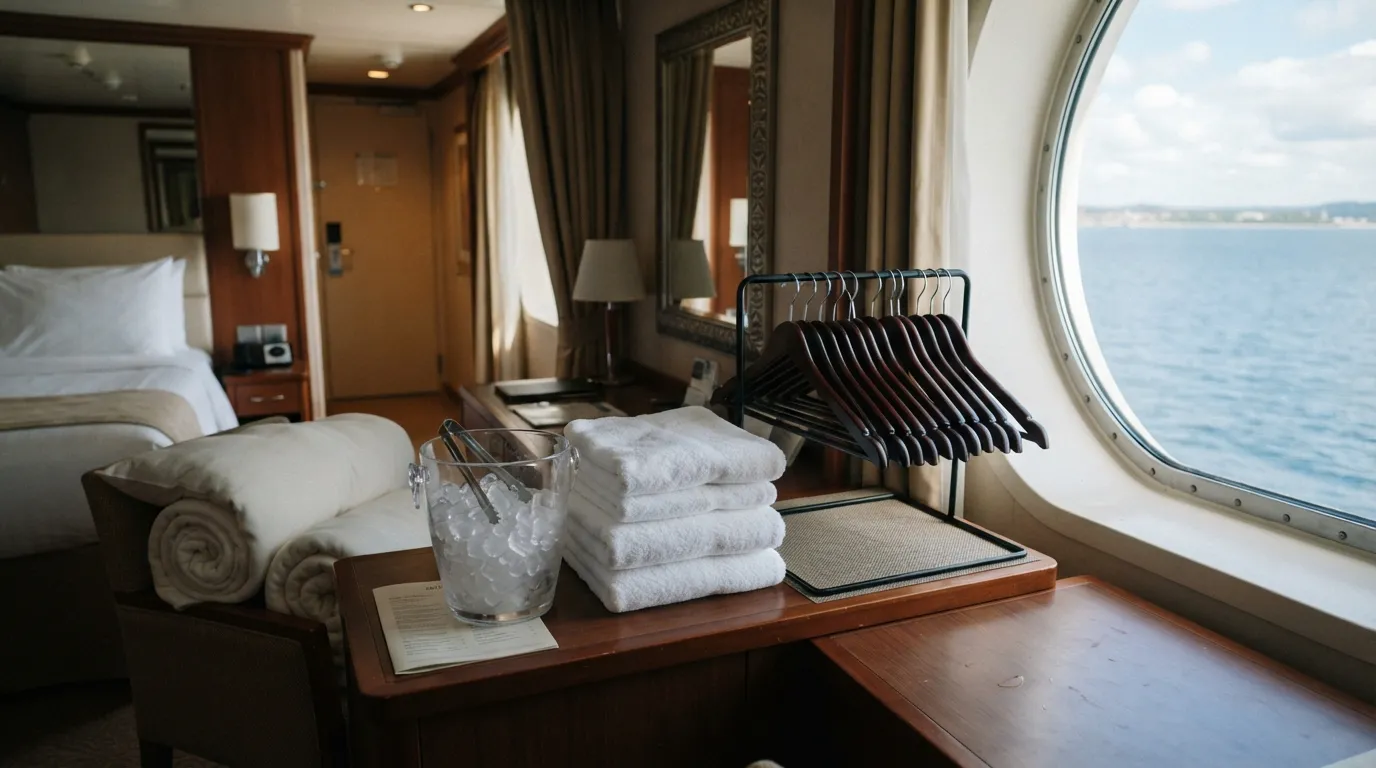
Extra hangers, extra towels, a mattress topper or a daily ice-bucket refill are ordinary day-one asks. Blankets and pillows belong on the same list.
Make all your requests in one conversation. Bundling them beats calling your steward back every 20 minutes with something new.
Your steward looks after many cabins, so a single clear list is a kindness as well as a time-saver.
There’s one more question for that first chat, and it depends on a schedule that has been shrinking on some lines.
#5 – Ask Which Hours the Cabin Gets Serviced
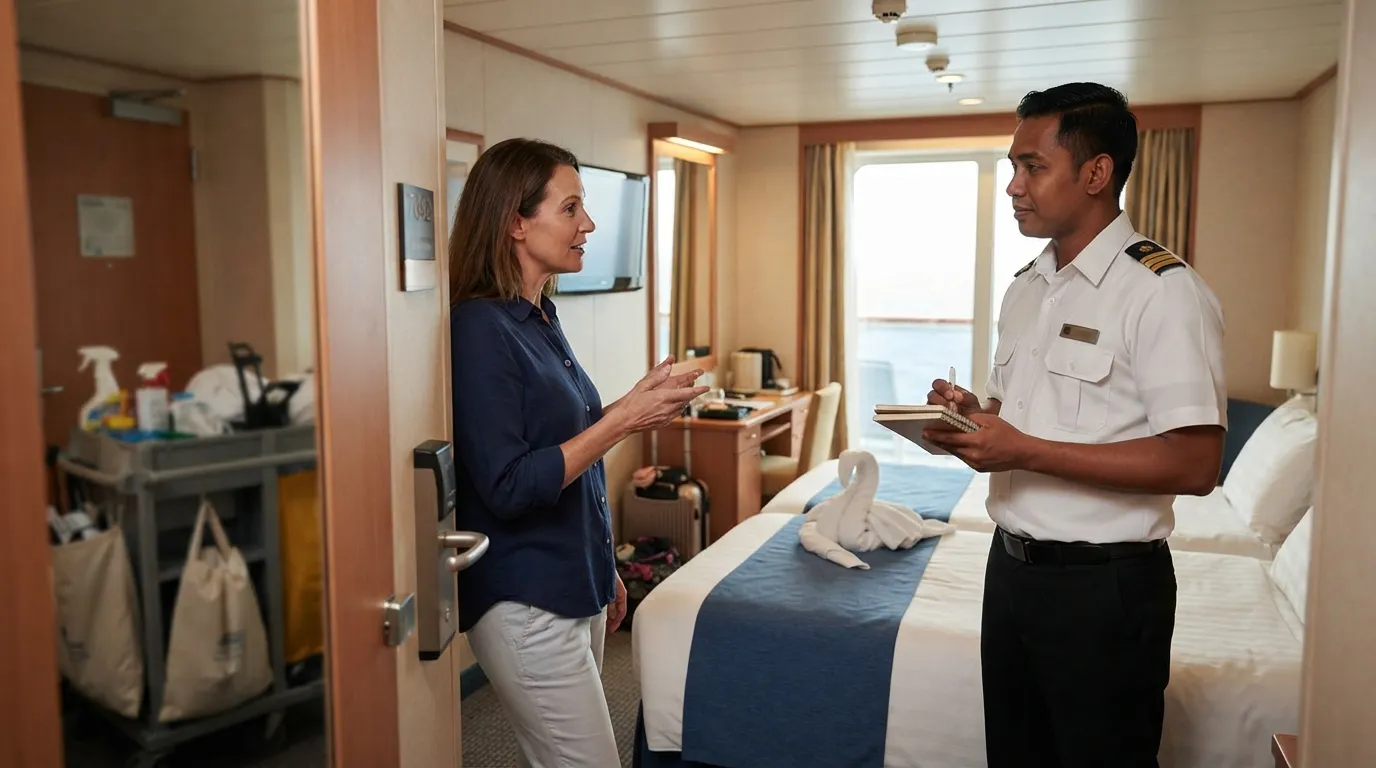
Housekeeping hours belong to the ship, not to your habits. Several major lines, including Royal Caribbean, Norwegian and Carnival, have cut back to once-a-day room cleaning.4
Ask your steward what time the cabin gets cleaned. If you’d like cleaning by a certain time, or turndown earlier or later than the default, say so on day one.
Worth Knowing
- Once-a-day service means one visit covers the bed, the towels and the ice
- Cleaning time and turndown time can both be shifted if you ask
- Afternoon nappers should say so before the first visit
On a once-a-day line, that single visit has to cover the towels, the bed and the ice you asked for in the last section. If you nap in the afternoon, now is the time to say so.
When the service is good, the question of thanking your steward comes up early.
#4 – Decide Whether a Day-One Tip Is Worth It
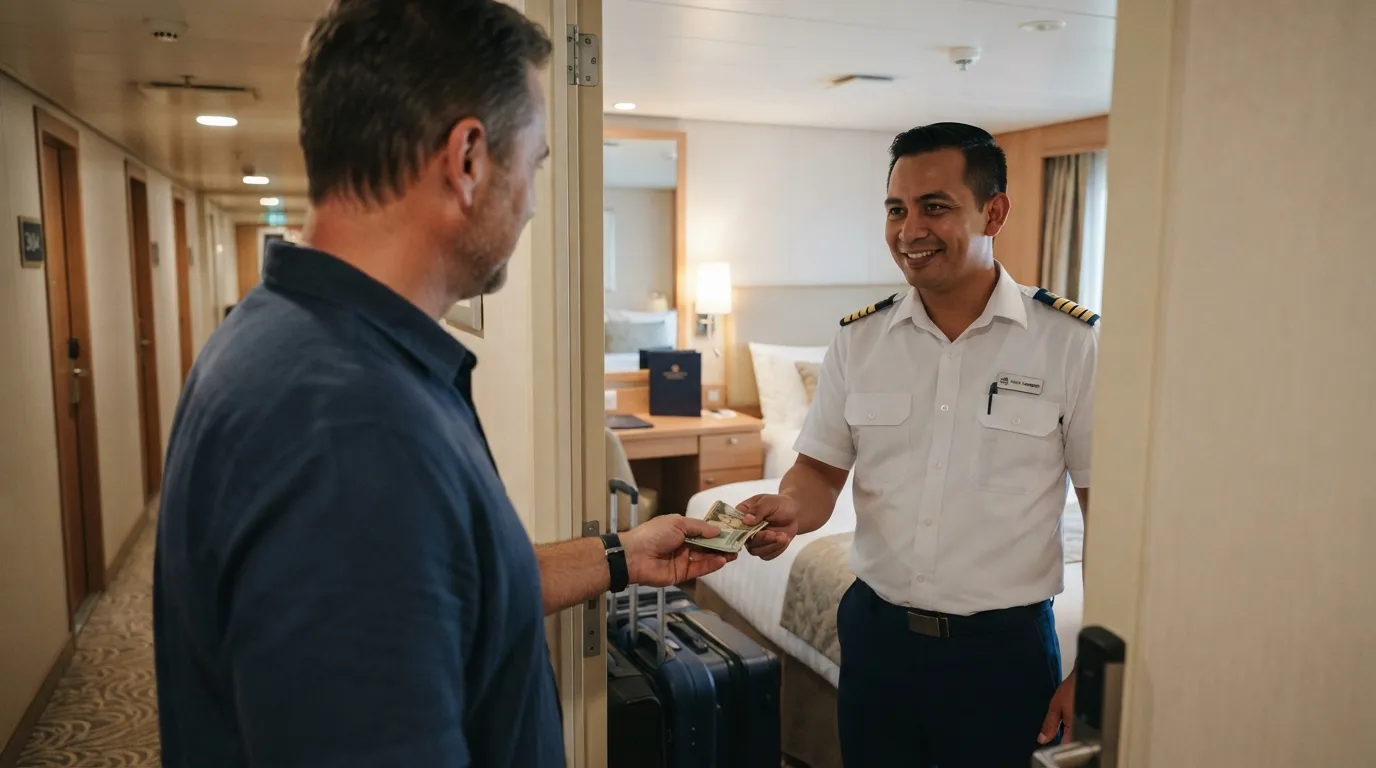
One first-day habit is giving the steward $10 to $20. The cruise community is split, and some say it makes no difference.
A day-one tip is optional. My verdict is to give it only if it feels natural, because a name, a short list and good manners do more than cash handed over in a doorway.
Check how your line handles gratuities before you decide, since many add a daily charge. If you do tip early, treat it as a thank-you rather than a purchase of better service.
Tip or no tip, a steward can only fix what gets reported, such as a cabin that won’t cool.
#3 – Report Problems That First Evening
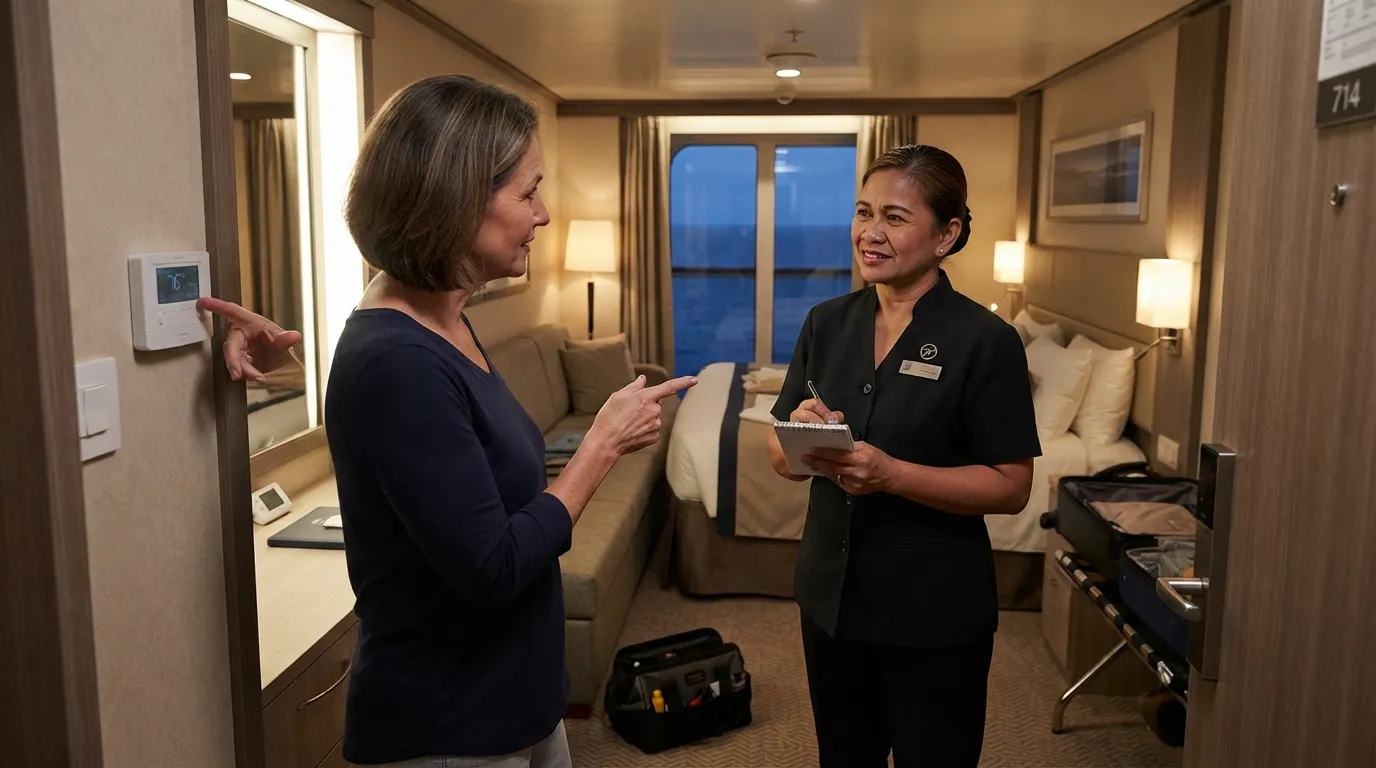
A cabin that won’t cool properly is the kind of problem to report right away. Report anything broken to your steward that first evening.
This is the payoff for the checks you ran back at the start. Cruise Critic says to speak to your steward early if the room isn’t up to snuff, and bulbs and small repairs go to your steward first.3
Related Stories From Weather Fox



Waiting to see whether a problem fixes itself costs you sleep, and sleep is the one thing a cruise shouldn’t cost.
Small fixes come easily, but the stricter cabin rule decides what you can plug in at all, and one line changed it in 2024.
#2 – Count the Outlets Before You Plug In Anything
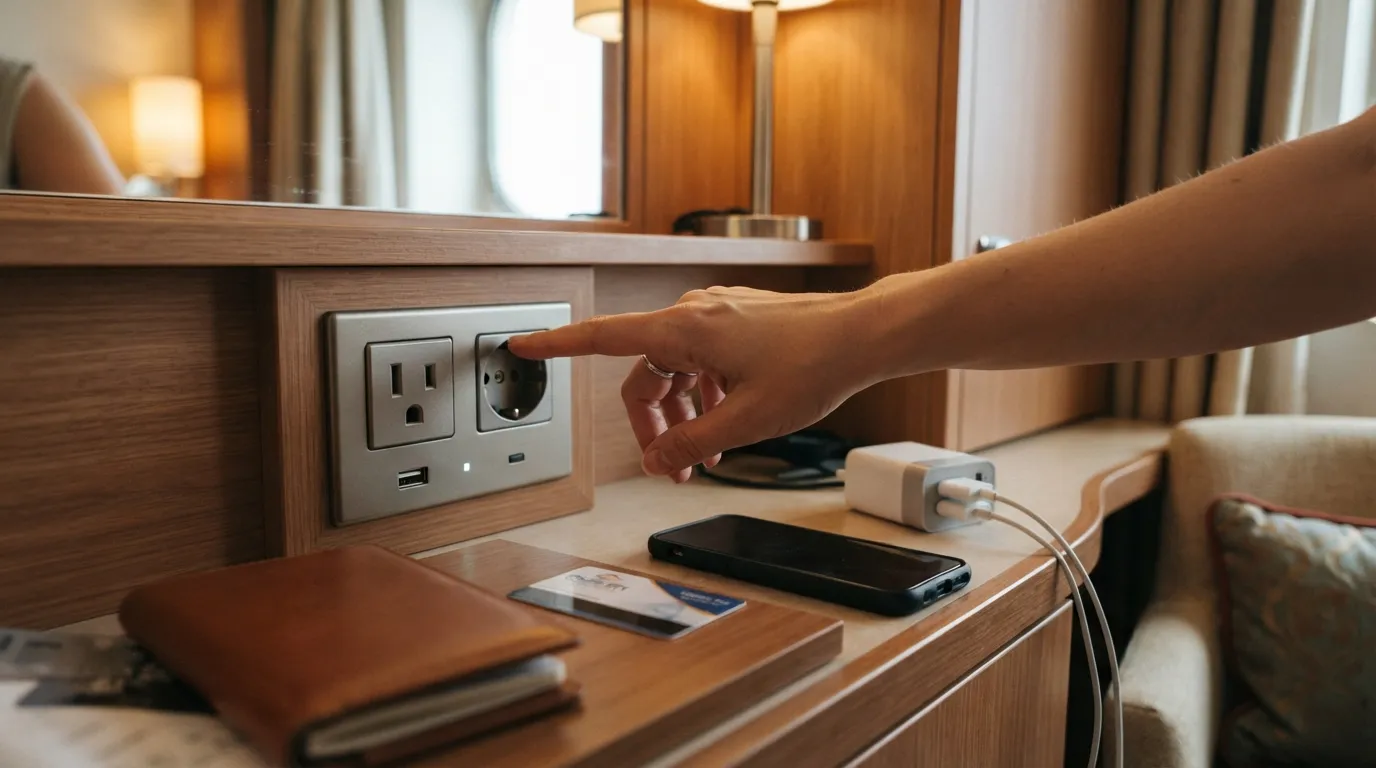
Cabins often come with only one or two usable outlets. Every major line bans surge protectors in the cabin, and security holds any it finds until the end of the cruise.
Royal Caribbean bans all power strips, multi-plug adapters and extension cords. That policy began in 2024 and later grew to include multi-plug outlets.5
Carnival’s help center, by contrast, allows strips without surge protectors. My verdict: leave the strip from your home office at home.
The final item is a requirement rather than a preference, and it applies on a fortieth sailing exactly as on a first.
#1 – Find Your Muster Station and Finish the Drill

Everyone, even children, must attend the muster drill, even if they’ve sailed on the same ship or cruise line before. The muster drill is required of every passenger, repeat cruisers included.6
It’s an international SOLAS requirement enforced by the Coast Guard and other port authorities.7 That makes it the one item here with law behind it.
Everything above is comfort or convenience. This is the ship’s safety system.
Royal Caribbean describes three parts. The first two can be done in the app or on your stateroom TV before you go to your assigned muster station at the set time.
Most lines hold the station gathering 30 to 60 minutes before departure. Find your station using the cabin-door map, your cruise card, the app or your steward.2
Fast Facts
- Who: every passenger, children included, even on a repeat sailing
- Why: an international SOLAS requirement
- When: most lines gather at the station 30 to 60 minutes before departure
- Where: check the cabin-door map, your cruise card, the app or ask your steward
If a medical condition affects your ability to take part, tell the crew so they can arrange it. Crew run a roll call at the station, and a passenger who refuses even a make-up drill may be made to leave at the next port.
Do the cabin-TV portion while you’re still in the room you’ve just set up.
A ship’s rules change even when your routine doesn’t. Power policies get rewritten, housekeeping gets trimmed, and the cabin you booked is only one version of what it can be.
The first hour is the cheapest time to match the room, and your assumptions, to the ship as it stands today. A fix then costs a sentence, a wipe or a phone call, while the same fix on night three costs sleep or a morning in line.
Treat the cabin as a handover you take part in rather than a key you’re handed. Has a cruise line’s rule change ever caught you out between one sailing and the next?
- Plughopper Cruise Power Strips: https://plughopper.com/guides/cruise-ship-power-strips
- Cruise Critic Cabin Checklist: https://www.cruisecritic.com/articles/10-things-to-do-as-soon-as-you-get-to-your-cruise-cabin?recId=16063a9190850b8ef6904ffdf2a41c8c
- Cruise Critic First Day Tips: https://www.cruisecritic.com/articles/22-dos-and-donts-for-your-first-day-onboard-a-cruise-ship
- The Points Guy Cabin Steward: https://thepointsguy.com/guide/what-is-cruise-cabin-steward
- Royal Caribbean Blog Multi-Plug Ban: https://www.royalcaribbeanblog.com/2024/09/19/royal-caribbean-bans-multi-plug-outlets
- US News Muster Drills: https://travel.usnews.com/features/muster-station-and-drills-everything-to-know
- Royal Caribbean Muster Drill FAQ: https://www.royalcaribbean.com/faq/questions/muster-drill-onboard-safety