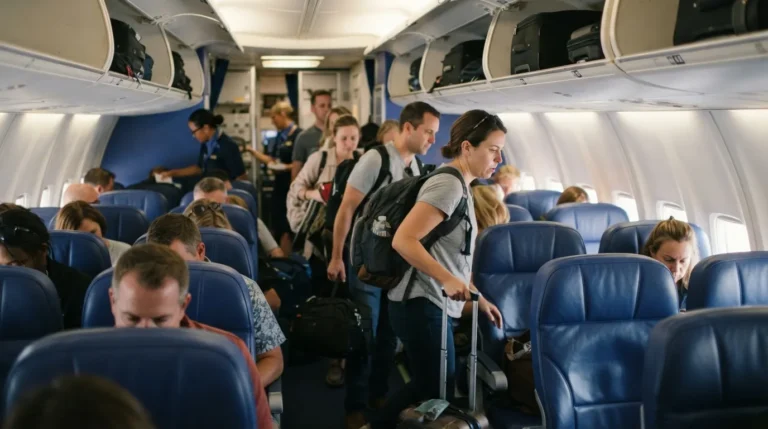

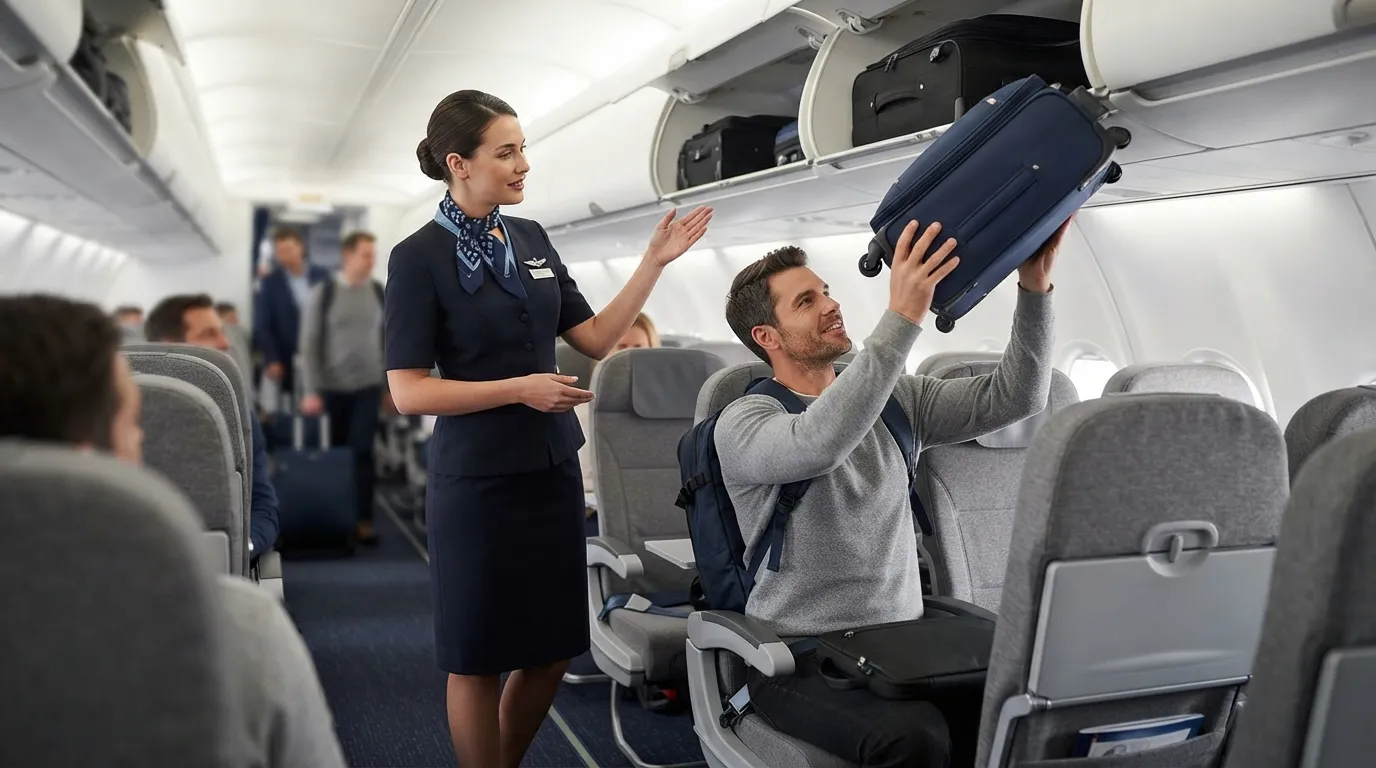
To passengers, boarding is a blur of bags and seat numbers. To the crew at the door, it is a stream of tiny first impressions, and flight attendants say they notice who makes it easier.
None of the 26 courtesies below costs a dime, and most take only seconds. One of them, saved for last, has actual federal regulation behind it, and it may not be the one you’d guess. The first starts with the paper in your hand.
#26 – Your Boarding Pass Ready at the Door
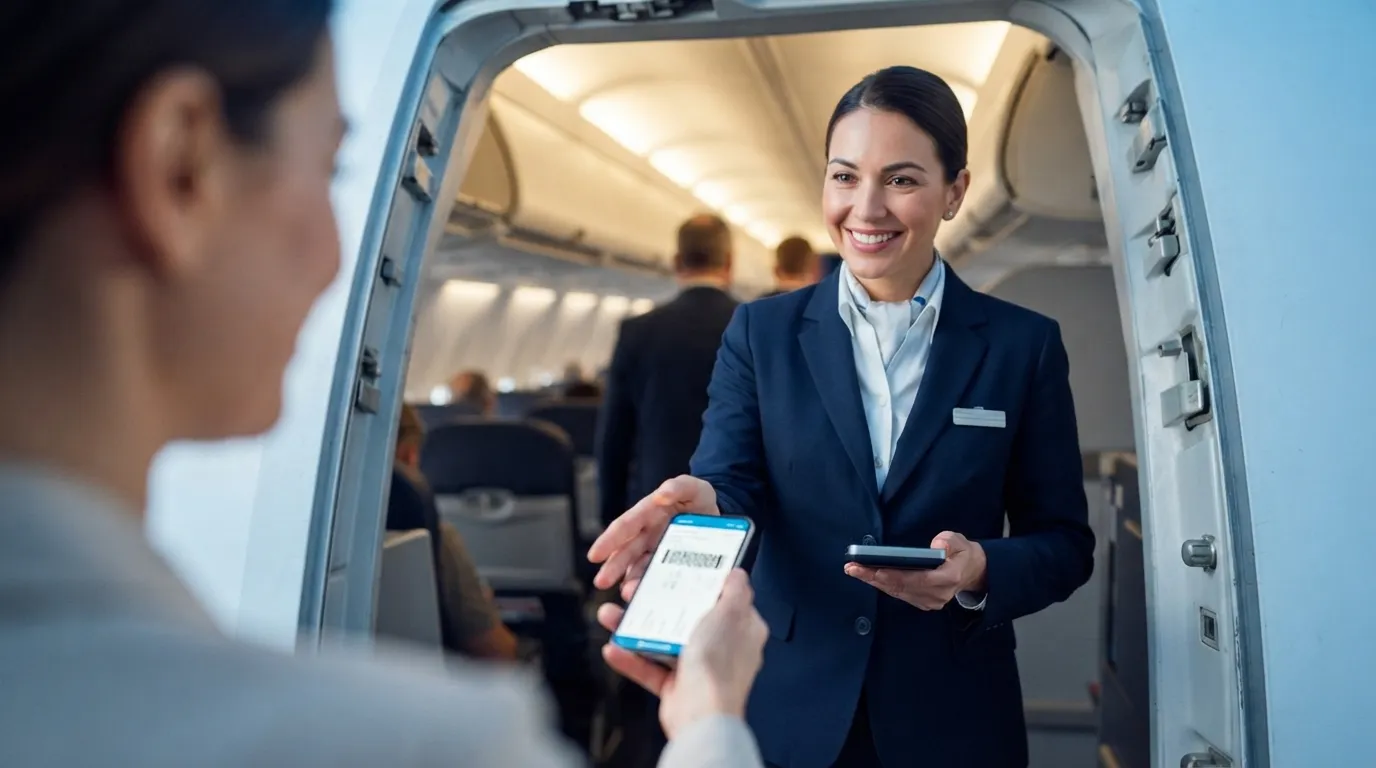
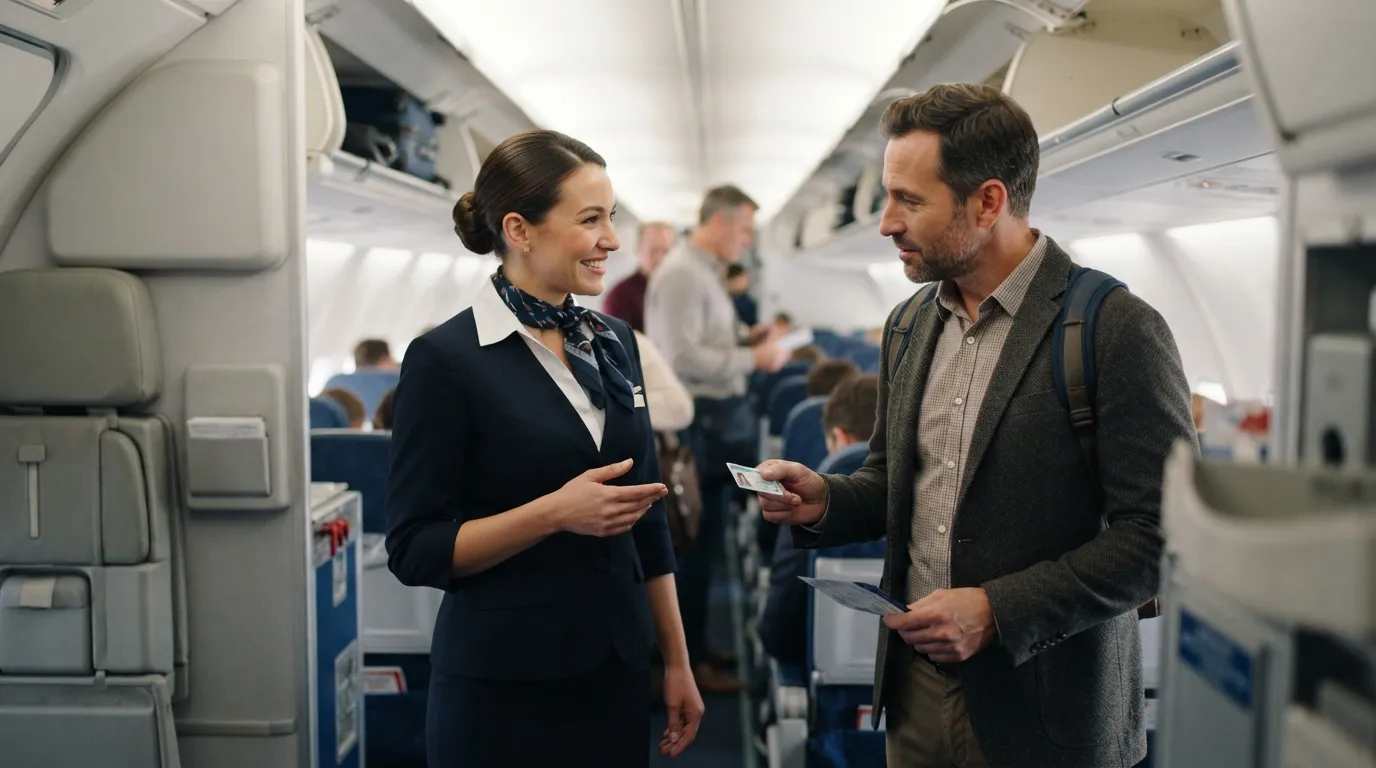
Flight attendants check that you are on the correct flight and guide you to your seat.1 Having your ticket ready helps them do it quickly.
Yahoo Travel’s roundup of flight-attendant advice lists having your documents ready alongside saying hello and waiting your turn to deplane.
The pass gets you through the door, though it doesn’t tell you how far down the aisle your seat is.
#25 – Knowing Your Row Before You Step Aboard
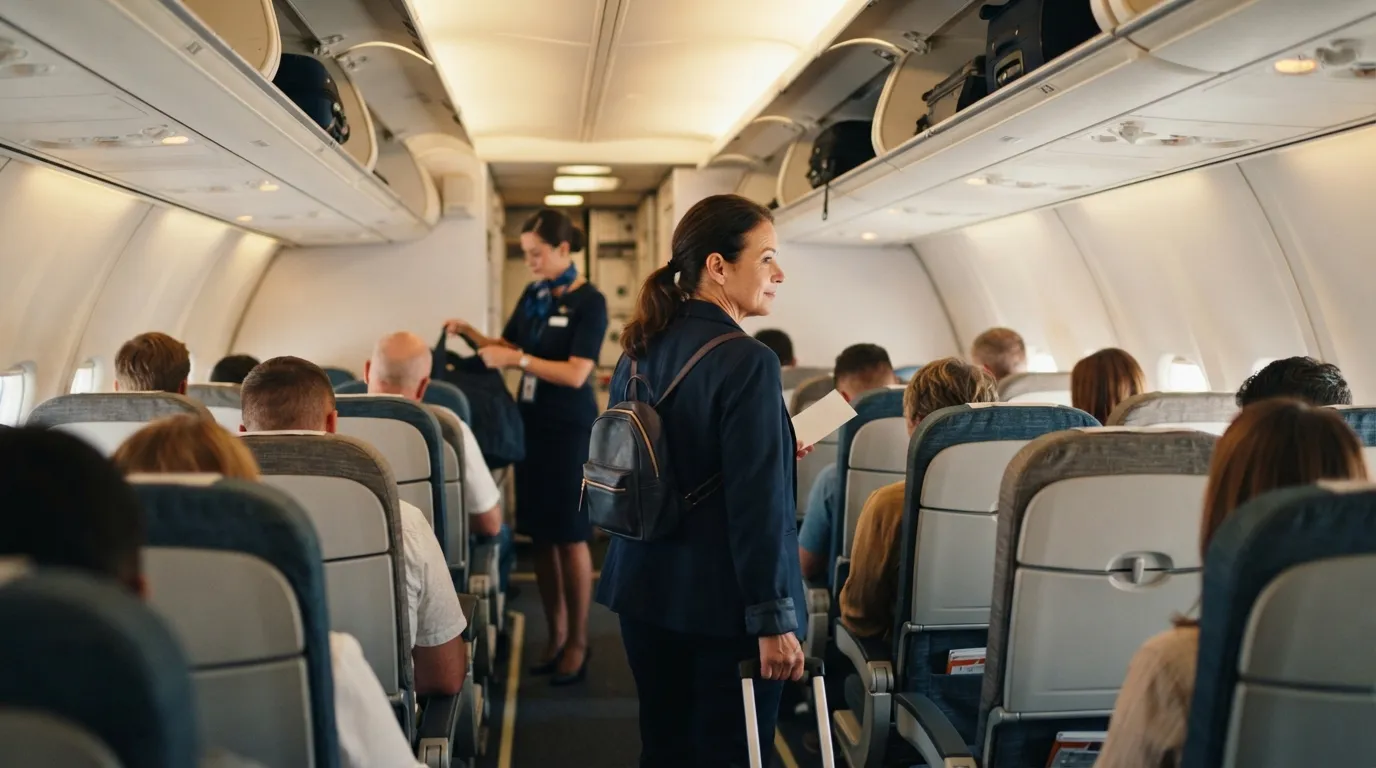
Boarding is busy, so one flight attendant recommends knowing roughly where you are seated before you board. The row number is printed on your pass, and checking it at the gate costs nothing.
Anyone who stops mid-aisle to hunt for a seat holds up every passenger behind. The crew then has to clear the jam before the cabin can fill.
#24 – Headphones, Book and Medicine Pulled Out First
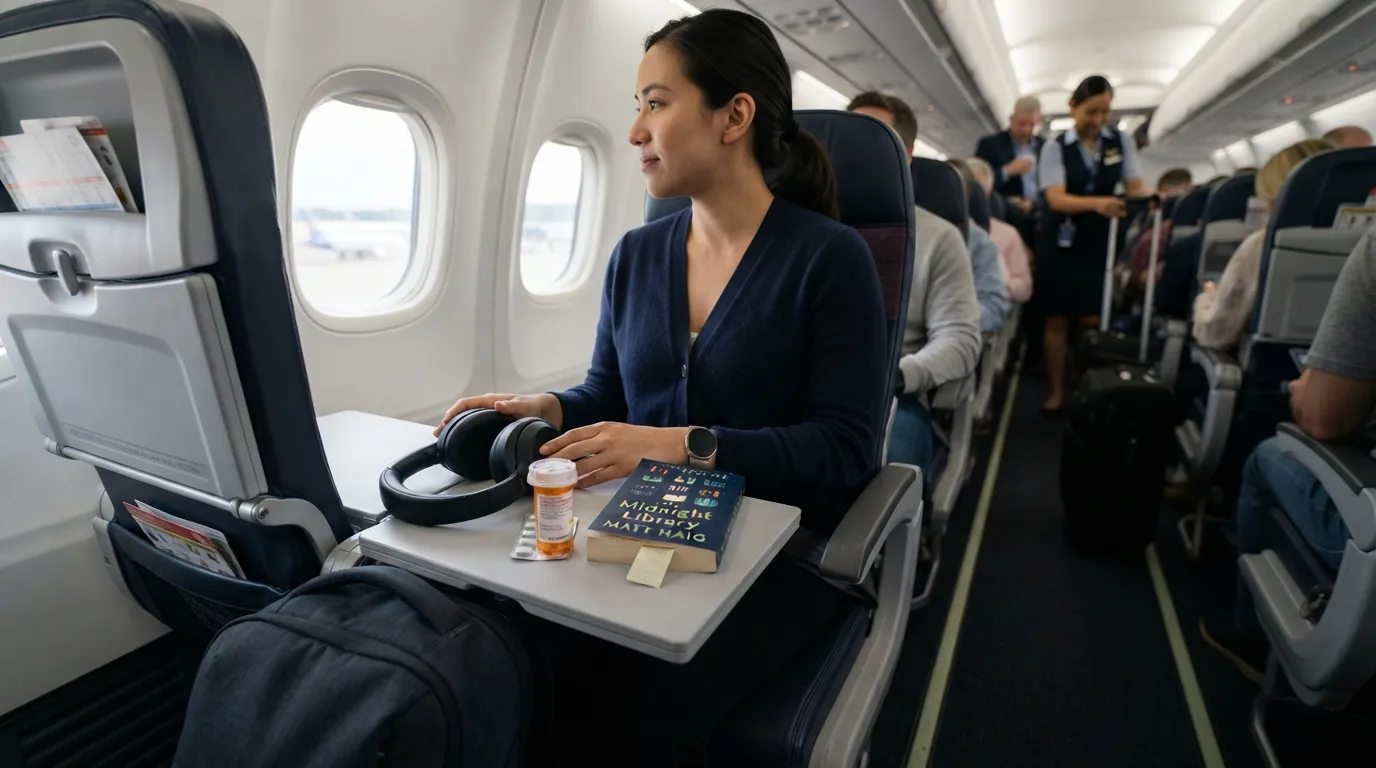
Former flight attendant Saskia Jackson advises taking out headphones, a book or medication before boarding so that everyone behind you can keep moving. The Washington Post’s flying rules make a similar point: be ready with a personal item instead of holding up boarding while you dig through your bags.2
The reason is practical. Anything you need in flight should already be in the bag that goes under the seat.
A well-packed bag still leaves one errand that no bag can handle for you.
#23 – The Restroom Visit Before You Board
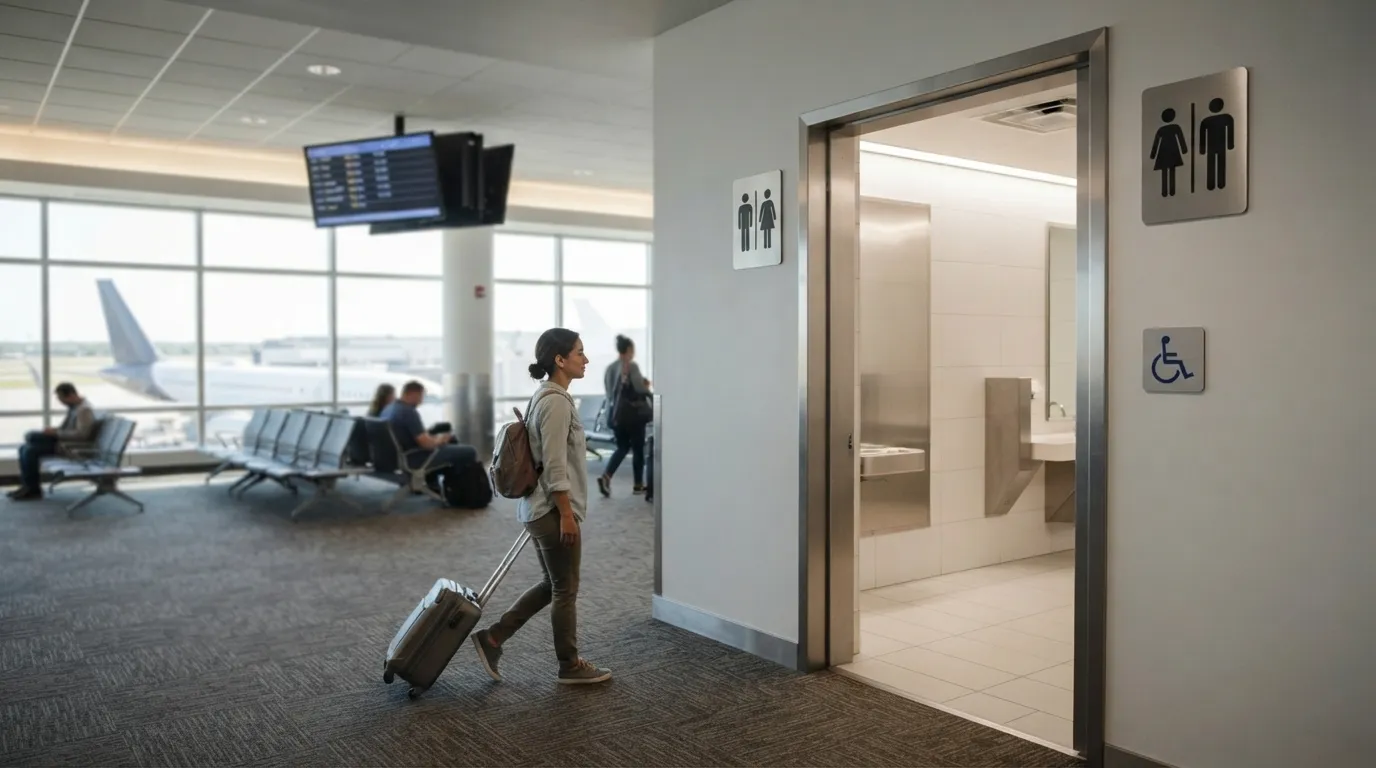
A Fox News guide to being kind to your flight attendant suggests using the bathroom before boarding or after takeoff.
Worth Knowing
- Best windows for a restroom trip: before boarding, or after takeoff.
- Once service begins, stay seated.
- Keep out of the aisles while the carts are out.
- Stay out of them while the plane is boarding, too.
The airport restroom is wider, empty and has no cart in the way. That makes the gate the easiest place to settle this.
#22 – Saying Hello Back
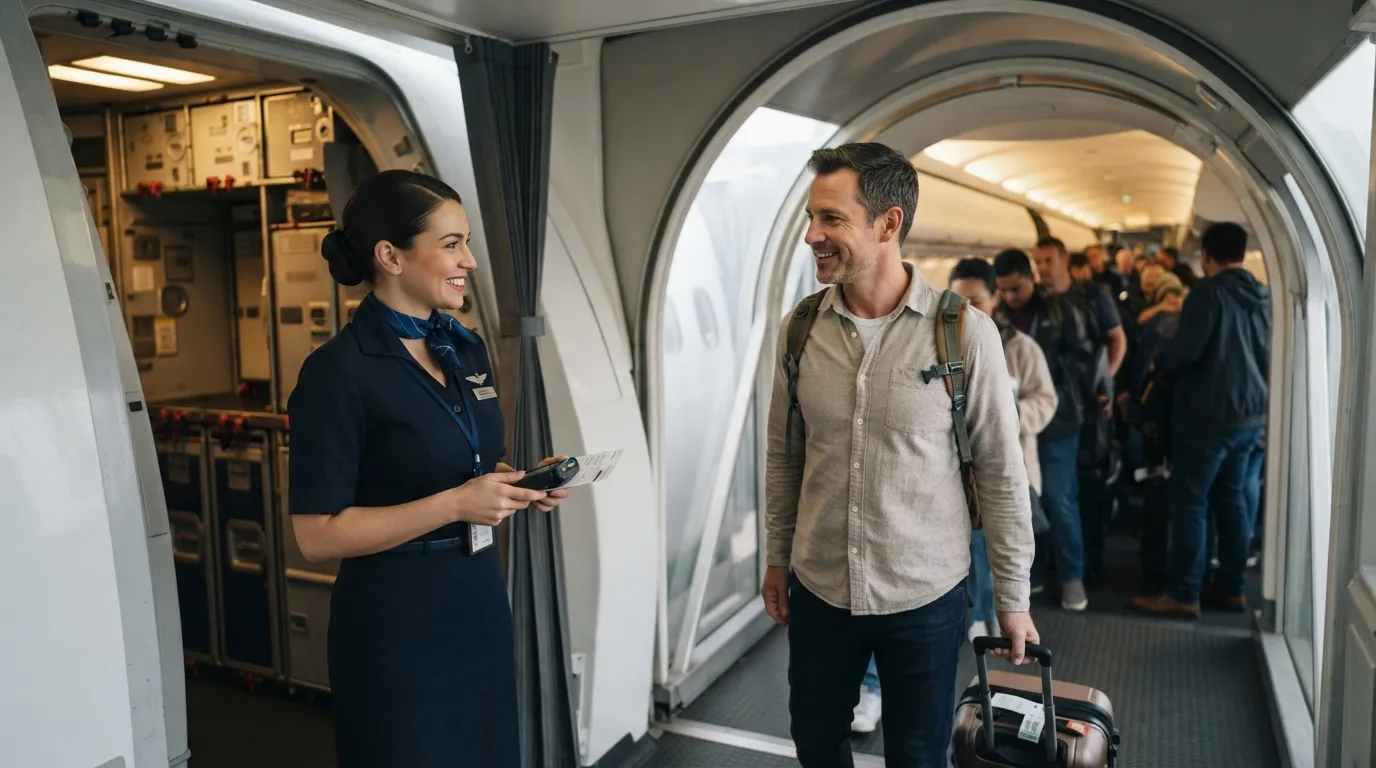
If a flight attendant greets you at the jet bridge, say hi back.3 The Fox piece asks you to imagine greeting 20 people in a row and being met with silence.
Simple Flying reports that passengers who greet the crew are often mentally categorized as cooperative and approachable from the start.4 That is flight attendants’ own account rather than a measured result, but it matches the way a greeting works at the door.
A greeting only works if you can hear it, and earbuds are the usual obstacle.
#21 – Earbuds Out While the Crew Talks to You
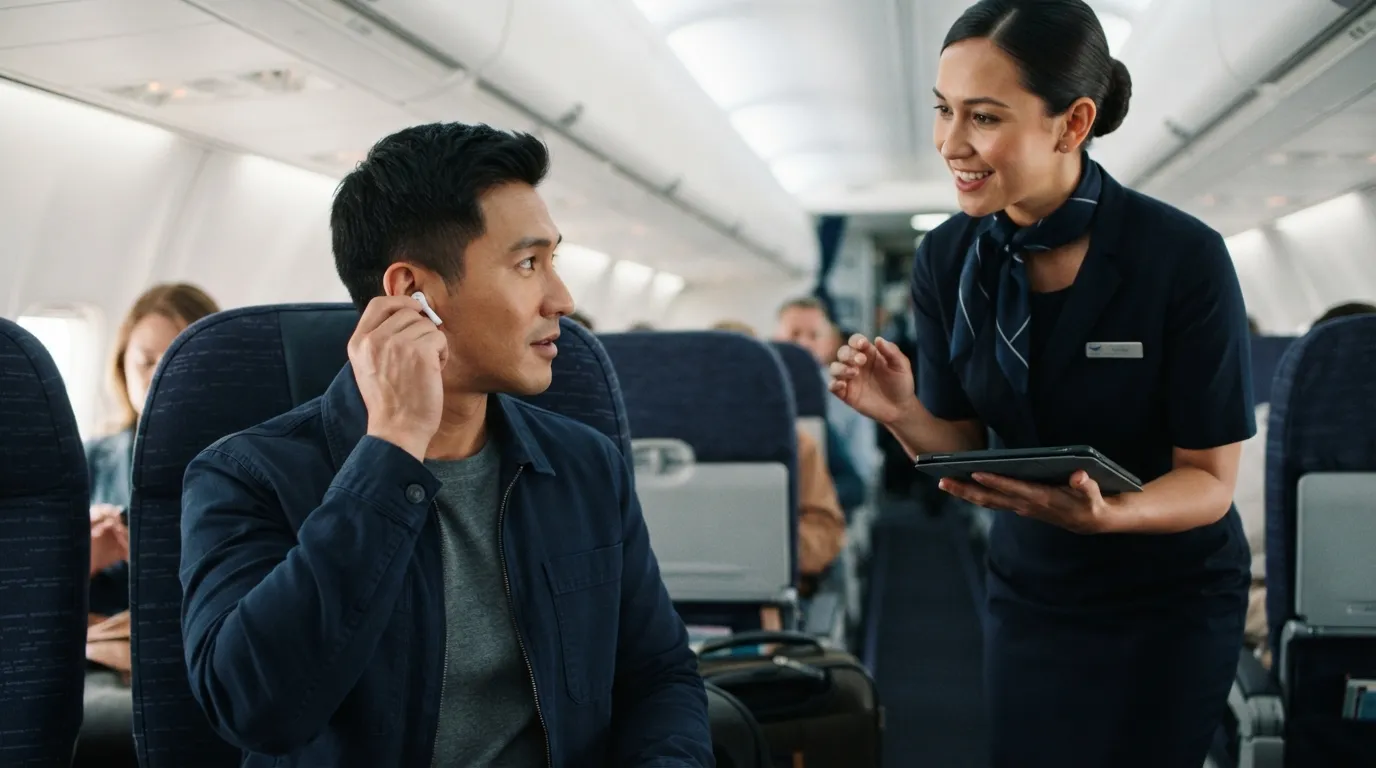
The Washington Post’s etiquette rules ask you to take your headphones off when flight attendants are talking to you.2 Simple Flying also lists removing headphones when crew approach among the habits flight attendants appreciate.4
Pulling an earbud out takes a second. It tells the crew member that you heard them and that you are ready for whatever comes next.
Once the earbuds are out, the words that follow are even shorter than a greeting.
#20 – Please and Thank You
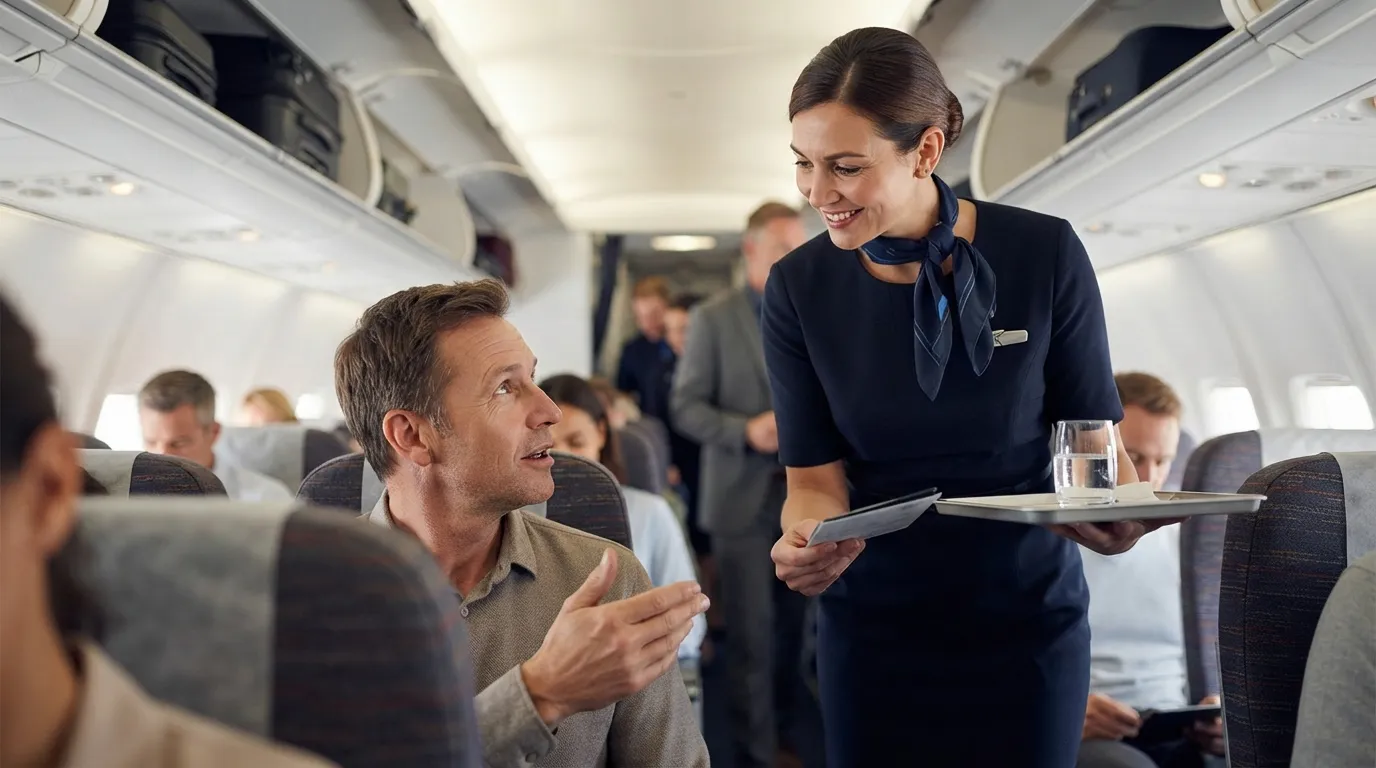
The Fox News guide says to use please and thank you when you ask for something and when you receive it. The words are basic, and they carry weight because of the workload behind them.
A flight attendant will get back to you as soon as they can, but each one is looking after a whole cabin, so that can take a while. A civil request is easier to answer when the crew member is already stretched.
#19 – A Pen in Your Personal Item
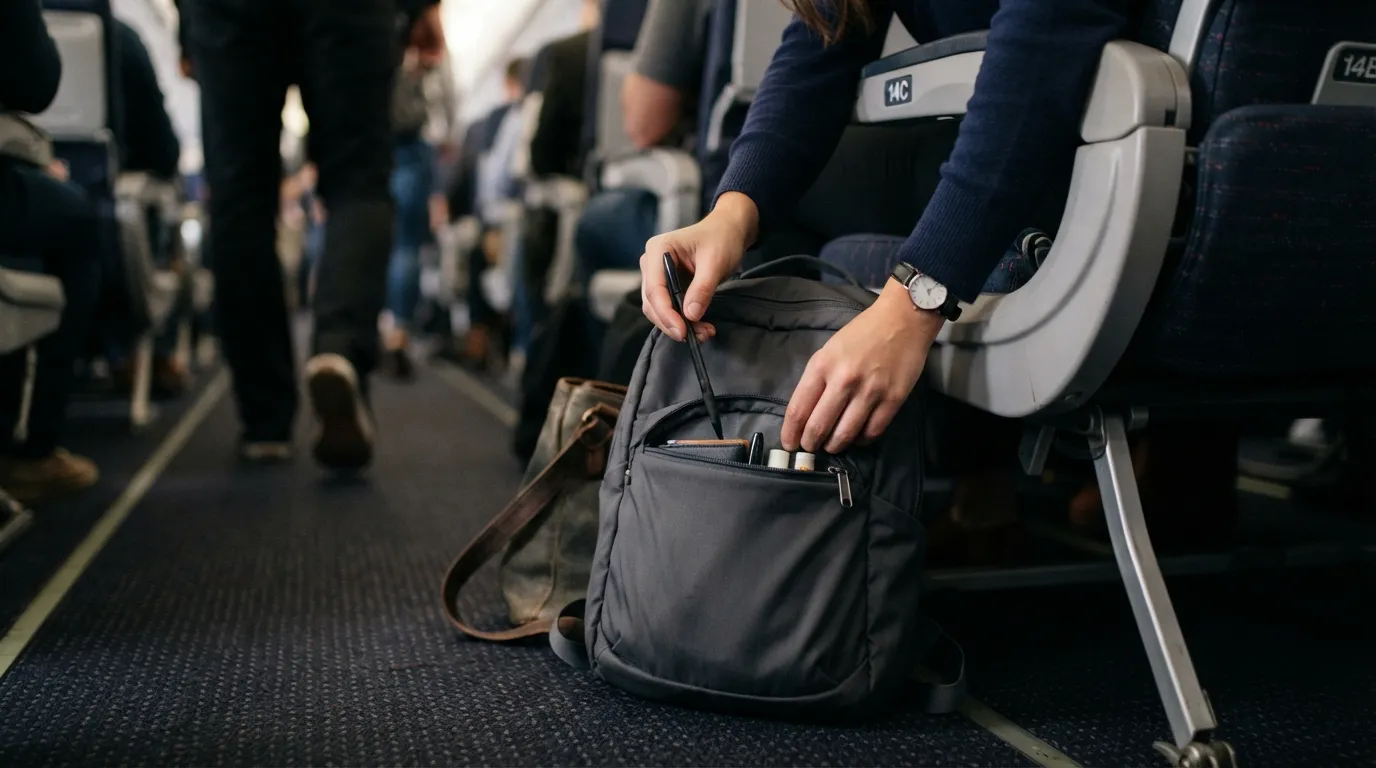
Flight attendants are constantly asked for pens, whether for immigration and customs forms or for the crossword. If you are flying internationally, a pen of your own saves you a request and saves the crew a trip.3
It is the cheapest item on this list. Put one in the bag that goes under your seat.
Gifts for the crew cost a little more.
#18 – A Small Treat or a Handwritten Note
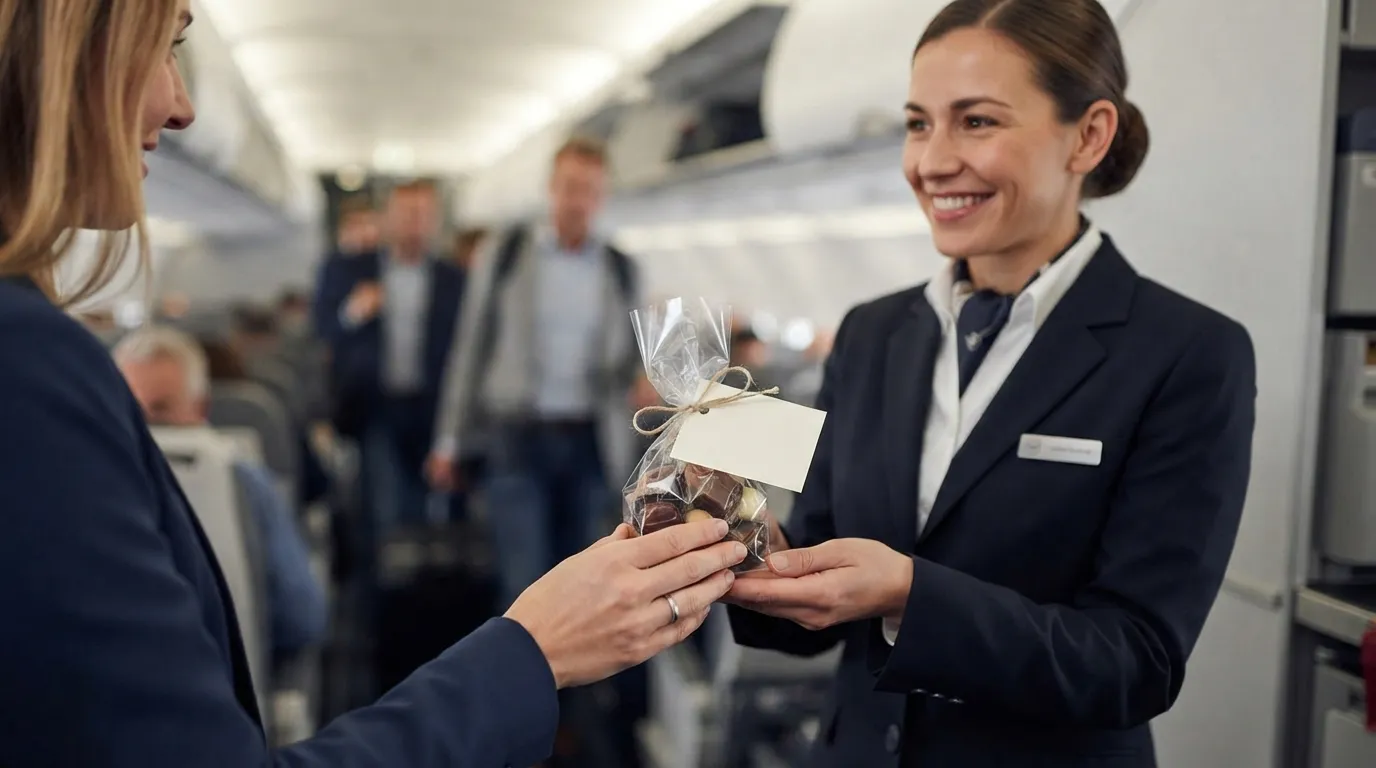
Flight attendants frequently describe a small token such as candy, a handwritten note or a simple treat as memorable.4 The Fox guide agrees that a tasty treat for the crew is perfectly permissible.3
If you want to try it, the note is the safest bet. It takes no shopping, it can’t melt or spill in a bag, and it works even when you have no time to buy anything.
A gift only reaches the crew if you aren’t stuck in the aisle staring at your phone when you hand it over.
#17 – Your Phone Put Away While You Walk
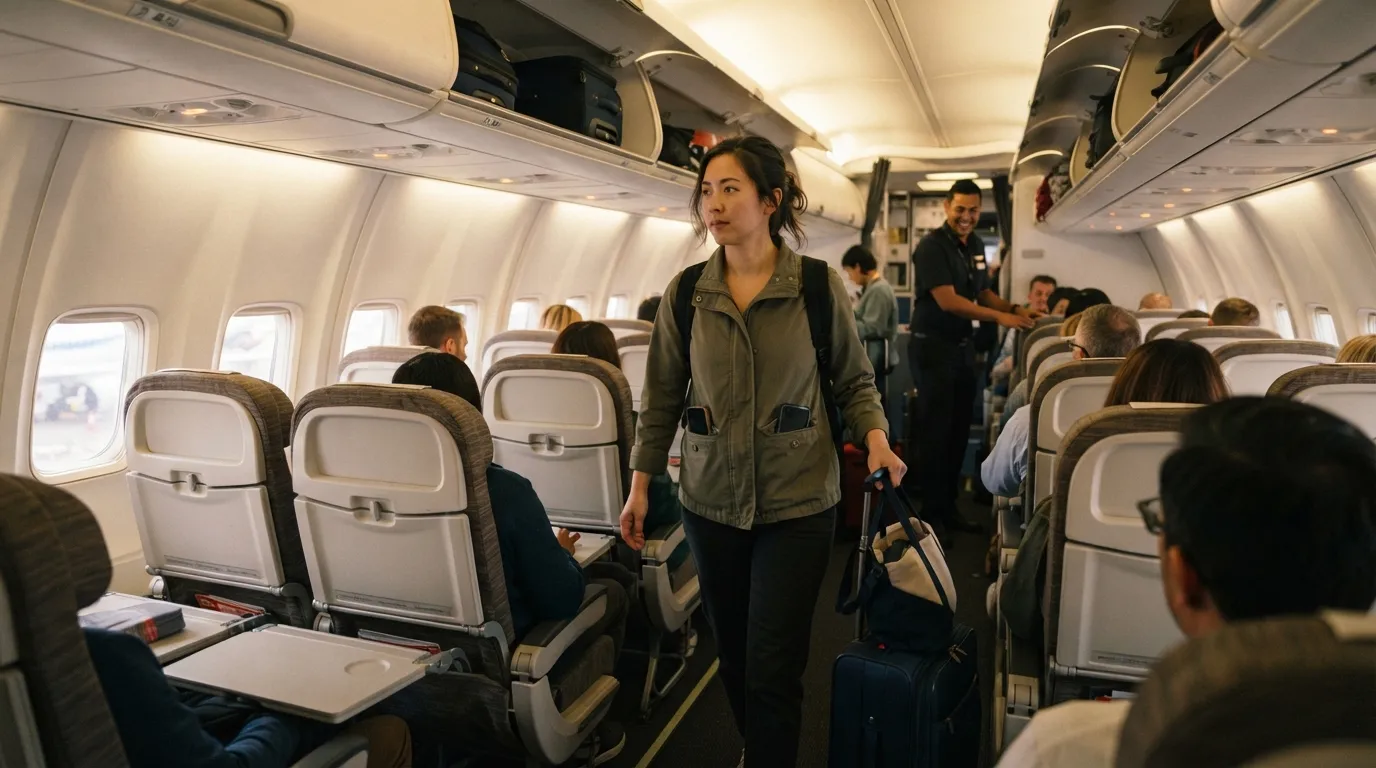
Juggling a carry-on, a tote and a phone can distract you and delay boarding when you aren’t ready to stow your bag and slide into your row. If a call or a screen will slow you down, put it away until you reach your spot.
A quiet phone call is fine, as long as it doesn’t slow you down.
With eyes up, you may spot a travel companion halfway down the plane, and that brings its own temptation.
#16 – Not Calling Down the Aisle to Your Companion
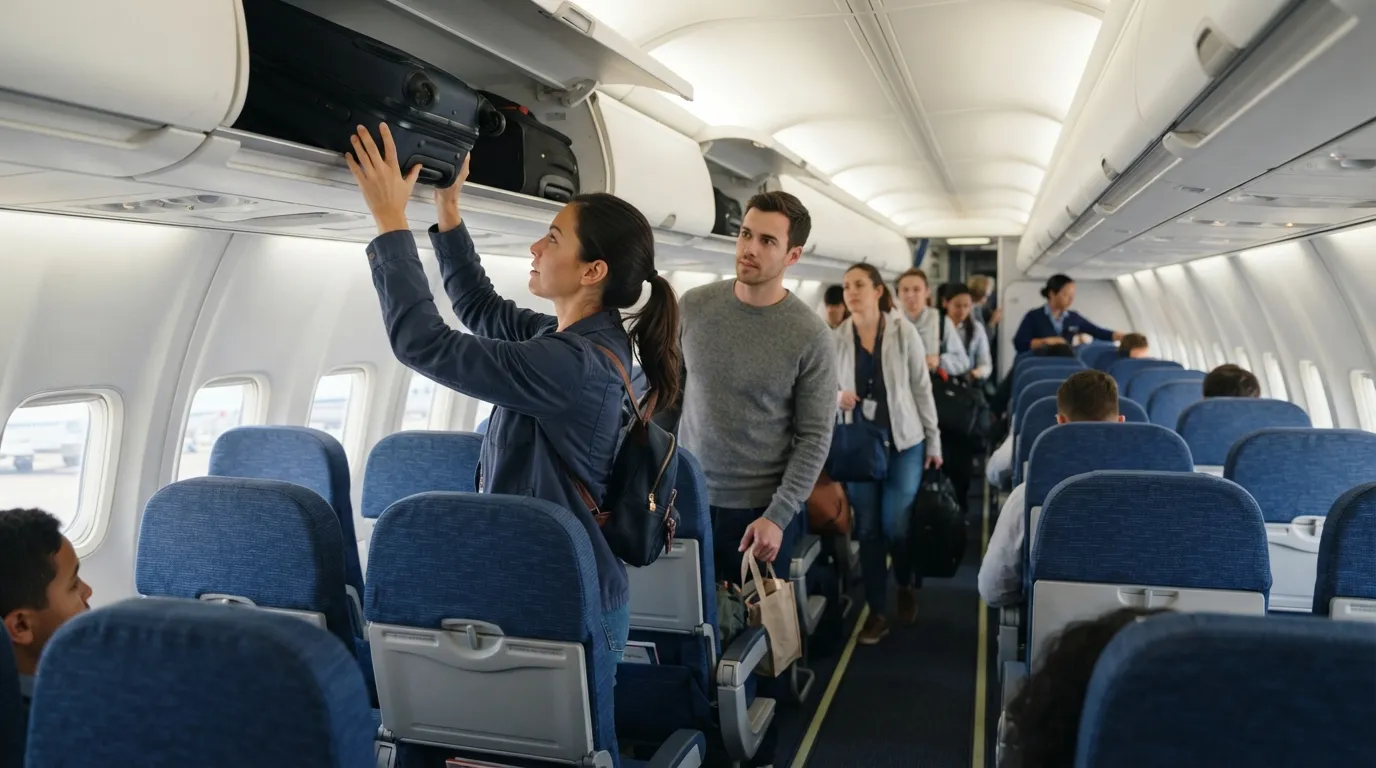
Etiquette guidance quoted by HuffPost says not to shout toward the back or front of the plane to get the attention of a friend or relative. The aisle is narrow, and a conversation held there stops everyone behind it.
The same piece says to stow your bag efficiently, sit, and not block the aisle longer than necessary. You can talk to your companion once you are both in your seats.
#15 – Waiting While Someone Loads Their Bag
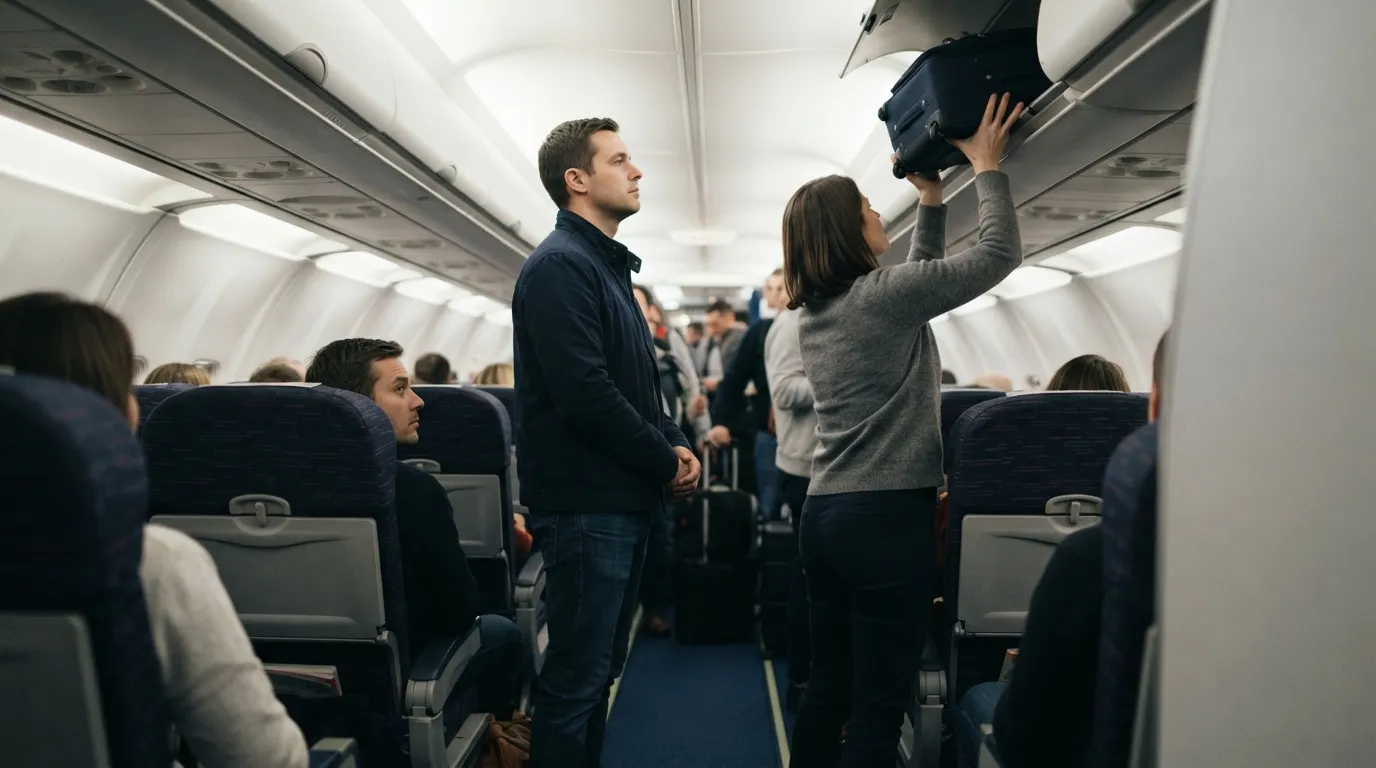
Etiquette advice in the HuffPost piece says not to pass someone who is putting a bag in the overhead bin, because the aisles are very tight and a short wait is enough. Squeezing by can bump the person or leave them with a half-loaded bag.
The wait costs you a few seconds. A collision in the aisle can cost a lot more.
And the person loading the bag can speed things up too.
#14 – Step In, Stow the Bag, Sit Down
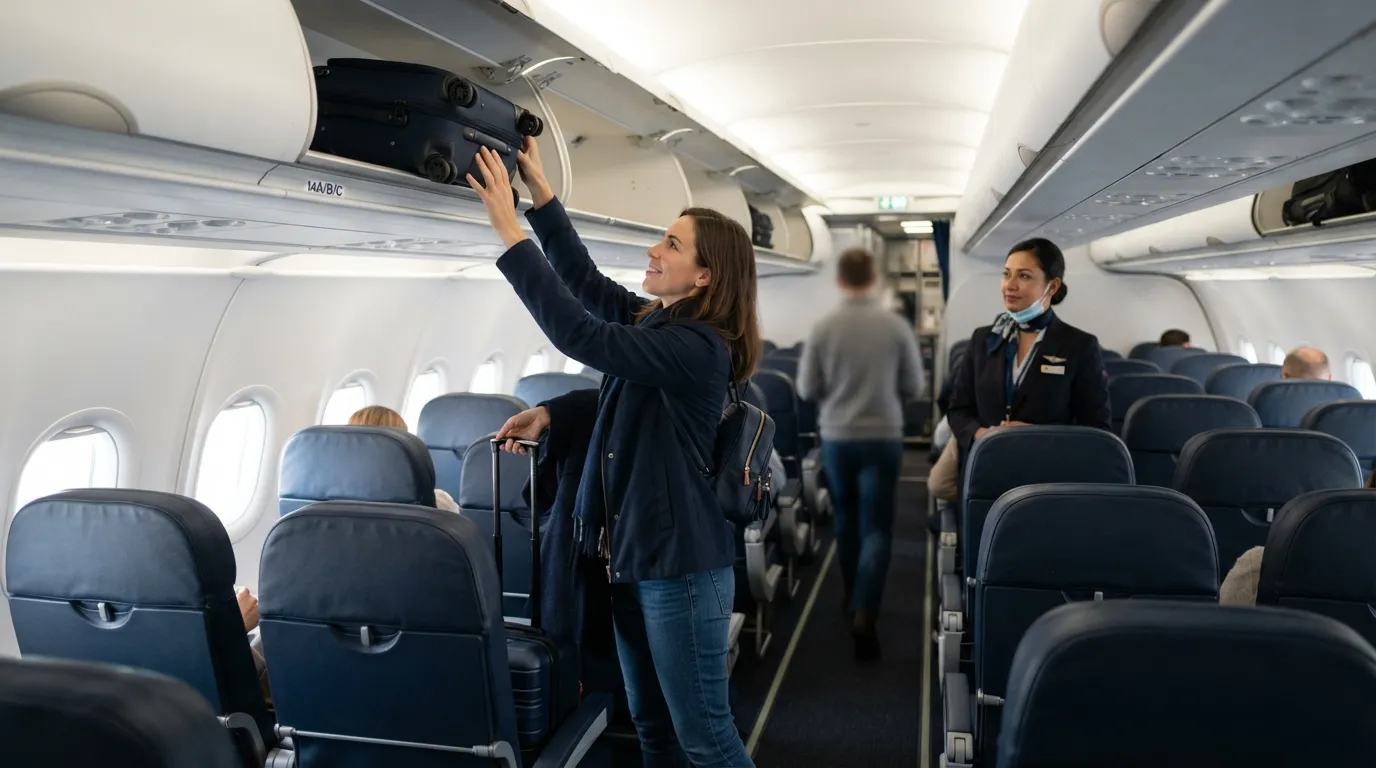
Don’t clog the aisle while you load your bag: step in, stow it quickly and sit down. Etiquette author Diane Gottsman adds that you should be ready to store your carry-on and step out of the aisle at your seat.
The crew’s own deadline explains why this matters. They cannot close the doors on schedule while bags are still being moved.
Stepping in and sitting is simple until someone is already in the seat your pass says is yours.
#13 – A Calm Apology and Your Pass in Hand
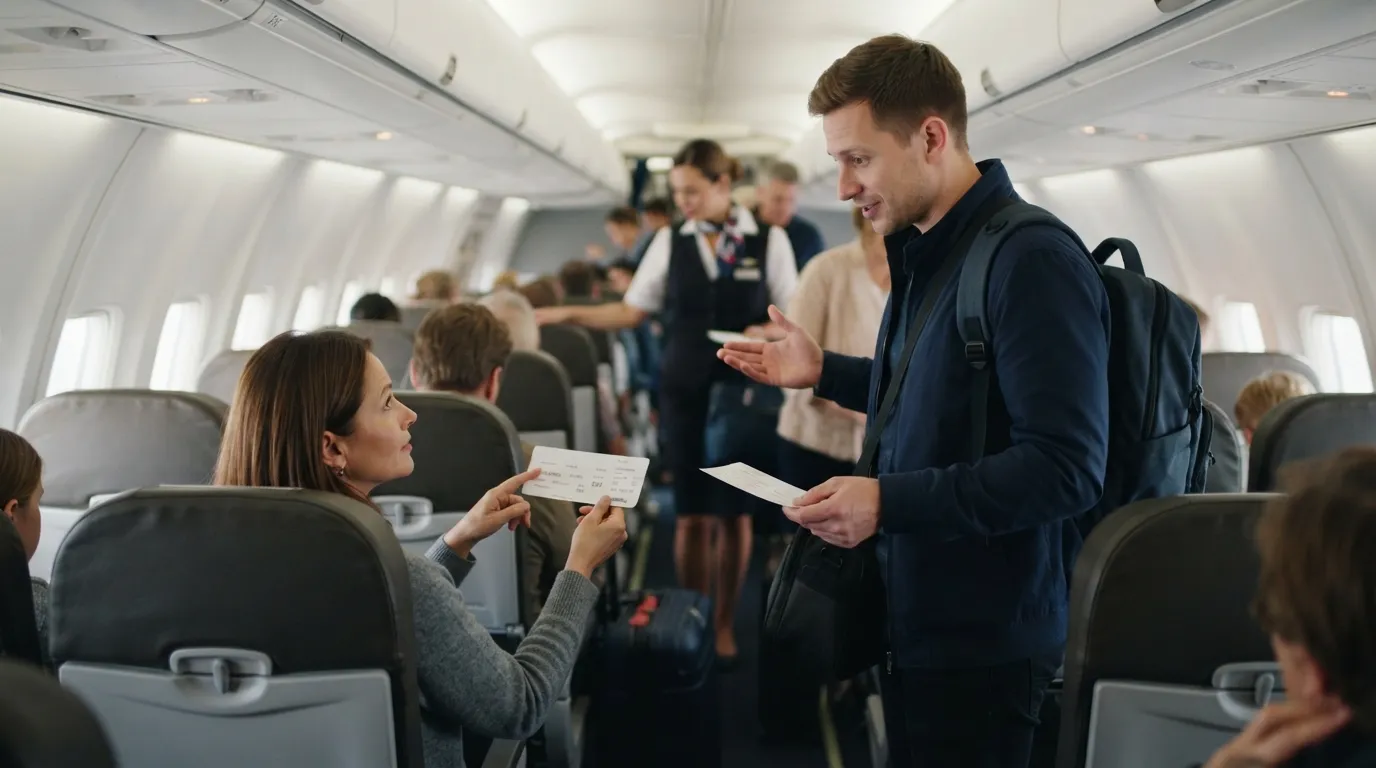
If you accidentally sit in someone else’s seat, apologize and have your boarding pass ready to confirm whose seat it is. The pass from the start of this list does a second job here.
Arguments about seats slow the line just as much as a clogged aisle. A quick look at both passes usually settles it.
#12 – Holding Off on Unpacking Until Others Are Past
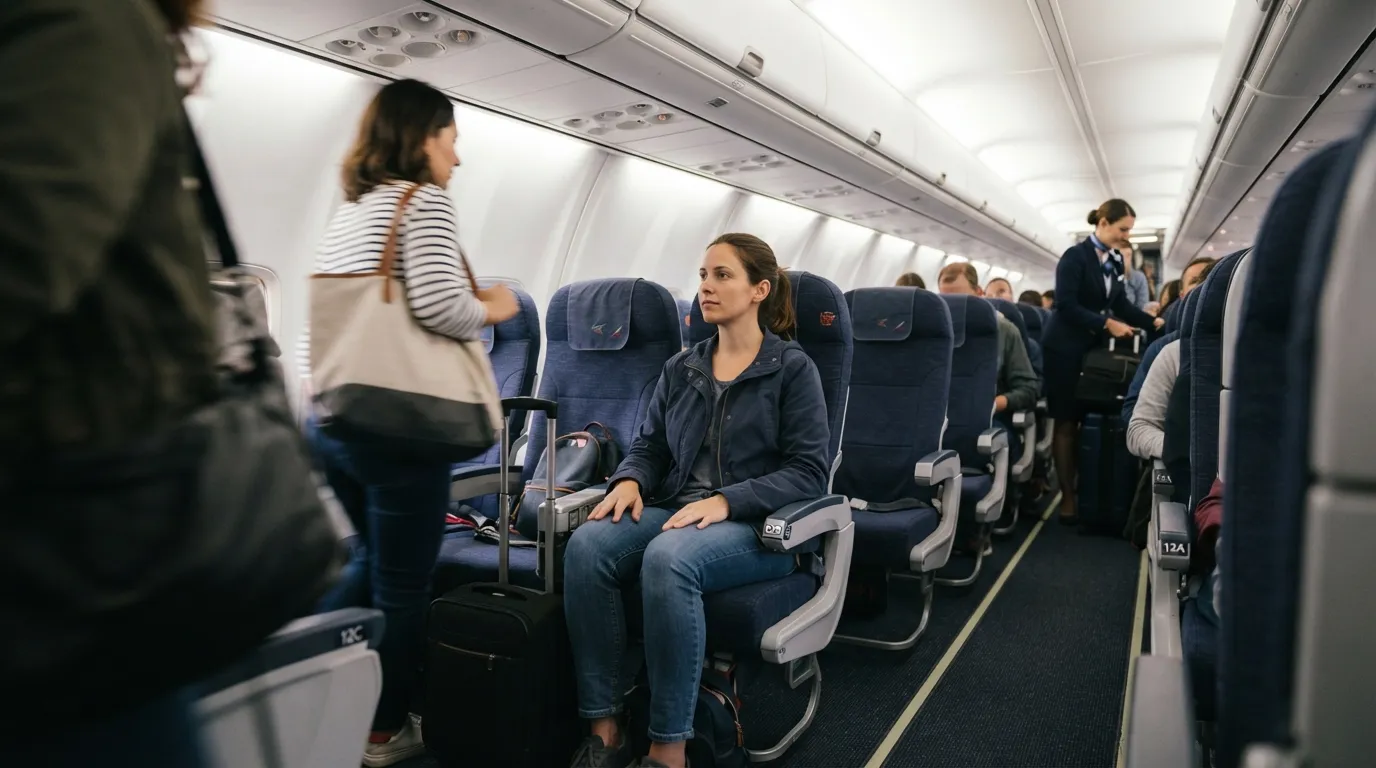
If you have the aisle or window seat, Lonely Planet suggests not getting all your things out during boarding until the people who need to get past you have boarded. A neighbor with a middle seat can’t reach it while your bag sits open on the cushion.
The seat setup can wait ten minutes. Everything you need is already in the bag under the seat.
Once the row is clear, the next question is where the bigger bag goes and which way it faces.
#11 – Wheels First, Not Sideways
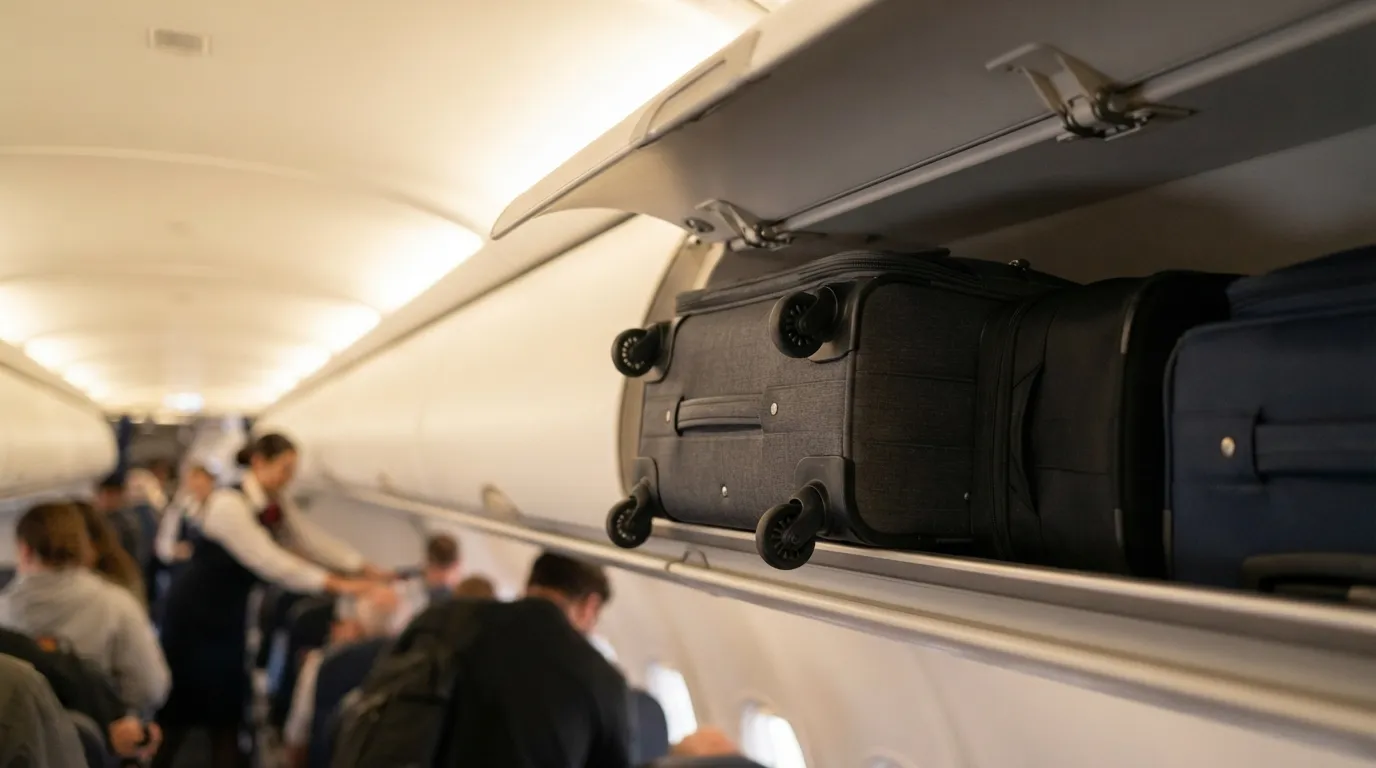
One flight attendant advises stowing your baggage with the wheels facing forward or backward, not side to side. That spares the crew from restowing bags, frees the aisle sooner and speeds boarding.
Quick Compare
- Wheels forward or back: the standard advice, and it saves the crew a restow.
- Sideways: only where the bin is built for it, so look first.
- Crew says turn it: turn it, no debate.
Some overhead compartments do allow bags to go in sideways, so look at the bin before you load. If the crew tells you to turn the bag, do it.
Even a perfectly turned bag uses space that others may need, particularly when you have brought two.
#10 – The Smaller Bag Under the Seat in Front
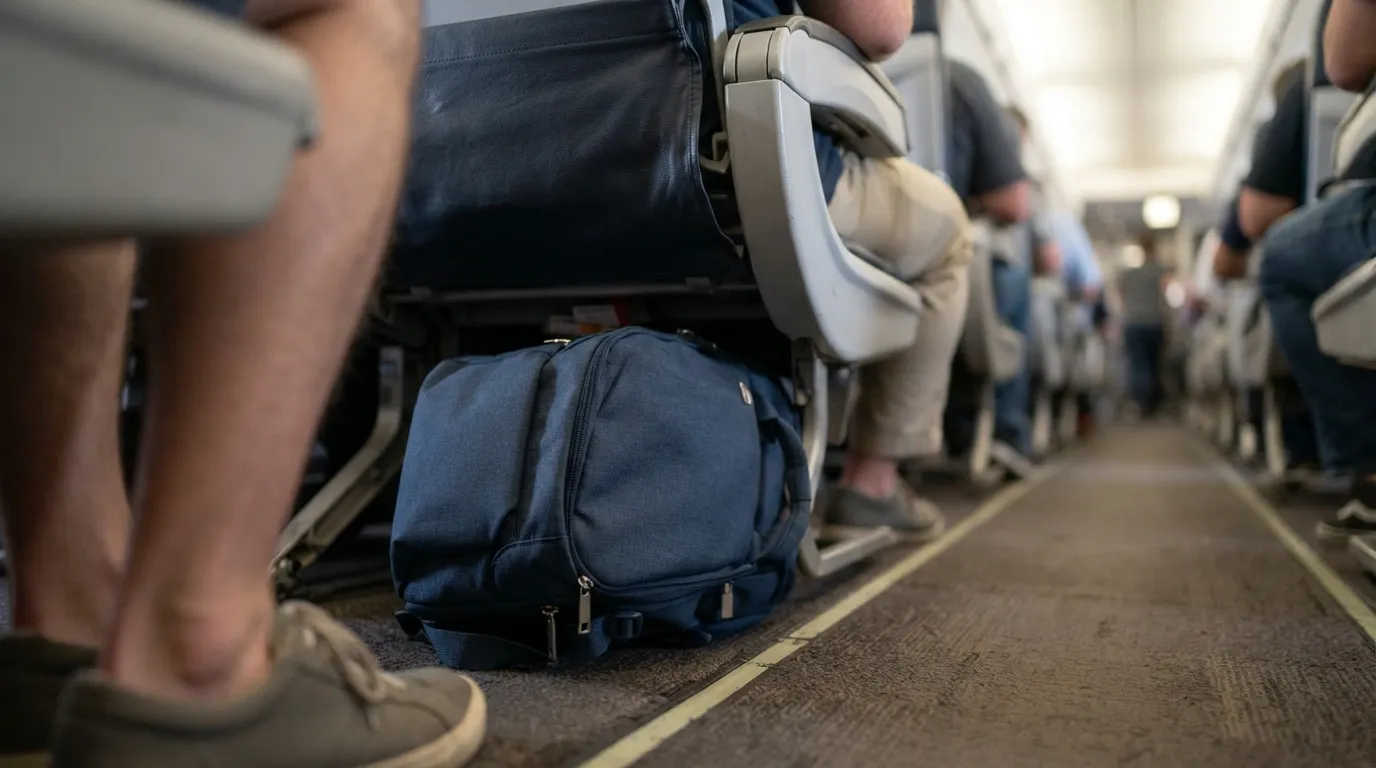
The usual etiquette rule is to put your personal items under the seat in front of you and reserve the overhead bin for your large carry-on. A purse or slim backpack tucked under the seat leaves room overhead for others’ larger bags.
Putting both bags overhead is the habit that eats bin space fastest on a full flight. The traveler who boards later pays for it.
Under-seat space is shared, and so is the bin above your row.
#9 – Not Claiming the Bin Above Your Seat
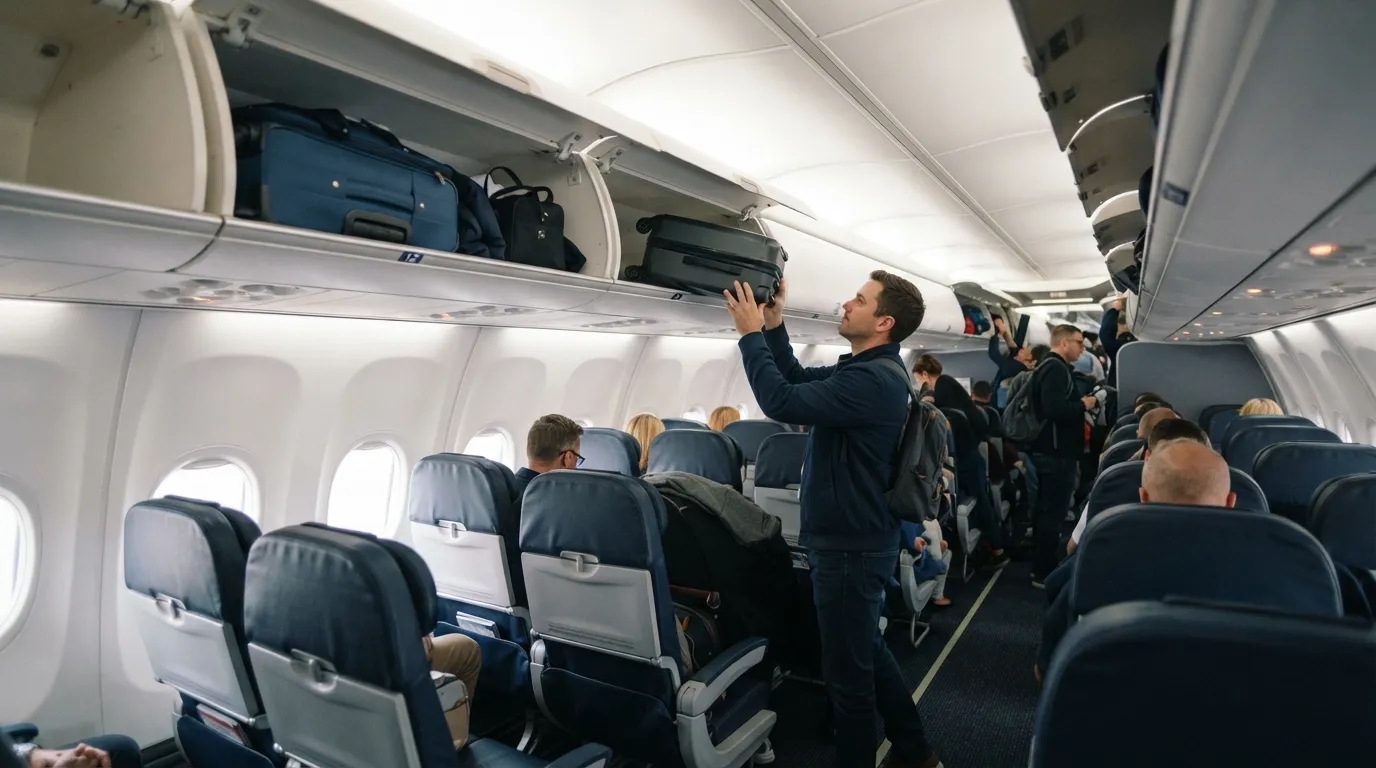
One Mile at a Time points out that you have no special right to the bin directly above you, since crew bags or emergency equipment may take up space there. NBC News, in a column by flight attendant James Wysong, makes the same point and adds that you shouldn’t insist the bin above you is yours.5
Keep the bag near your row if you can. The unwritten rule is to stow it in the general vicinity of your seat.
A coat is the same problem in a smaller package.
#8 – Holding Your Coat Instead of Stuffing the Bin
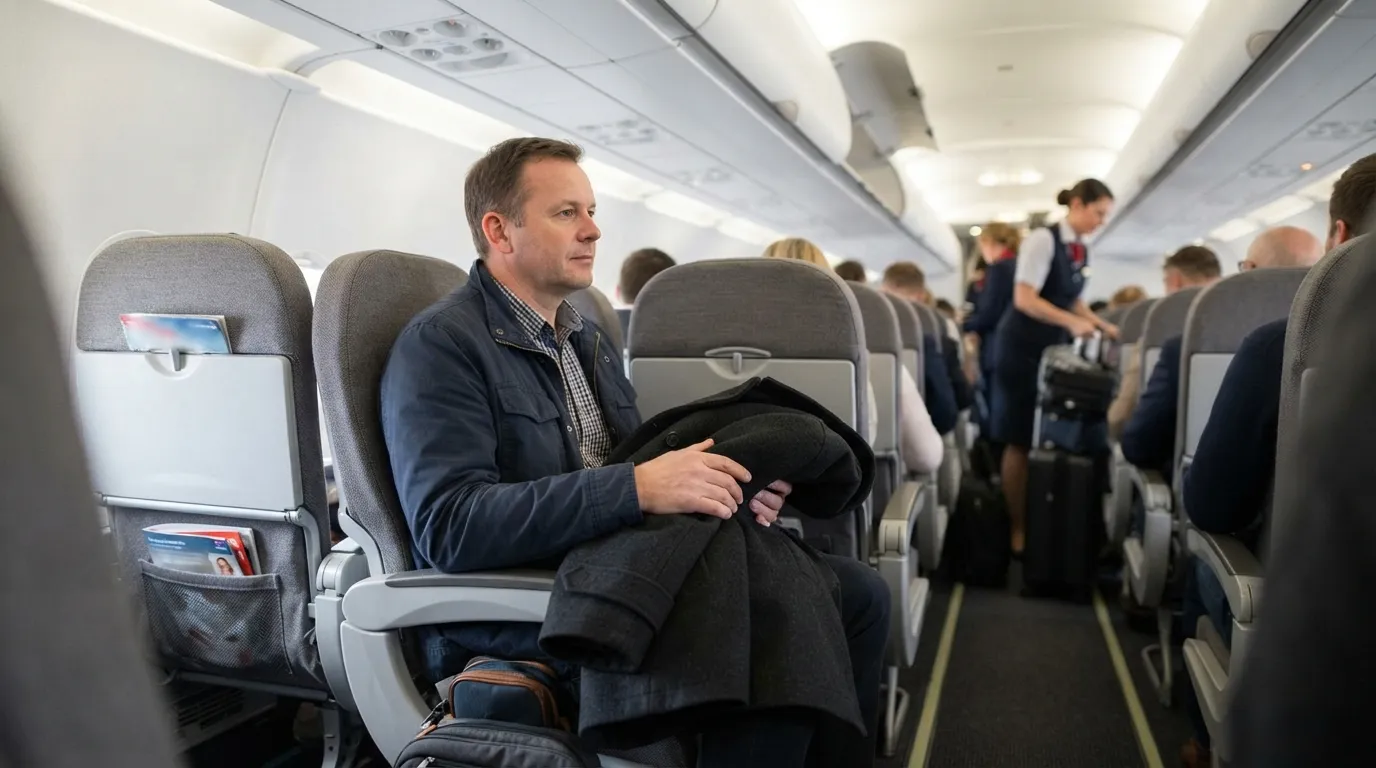
A single coat doesn’t take up much room in an overhead bin, but a full plane of passengers all stowing coats fills the bins quickly. The suggestion is to hold your coat or stow it under your seat.
Coats and sweaters are expected to fit under the seat in front of you, unless you’re in the bulkhead.
The under-seat advice stops working in a row where there is no seat in front of you.
#7 – Boarding With Your Group in a Bulkhead or Exit Row
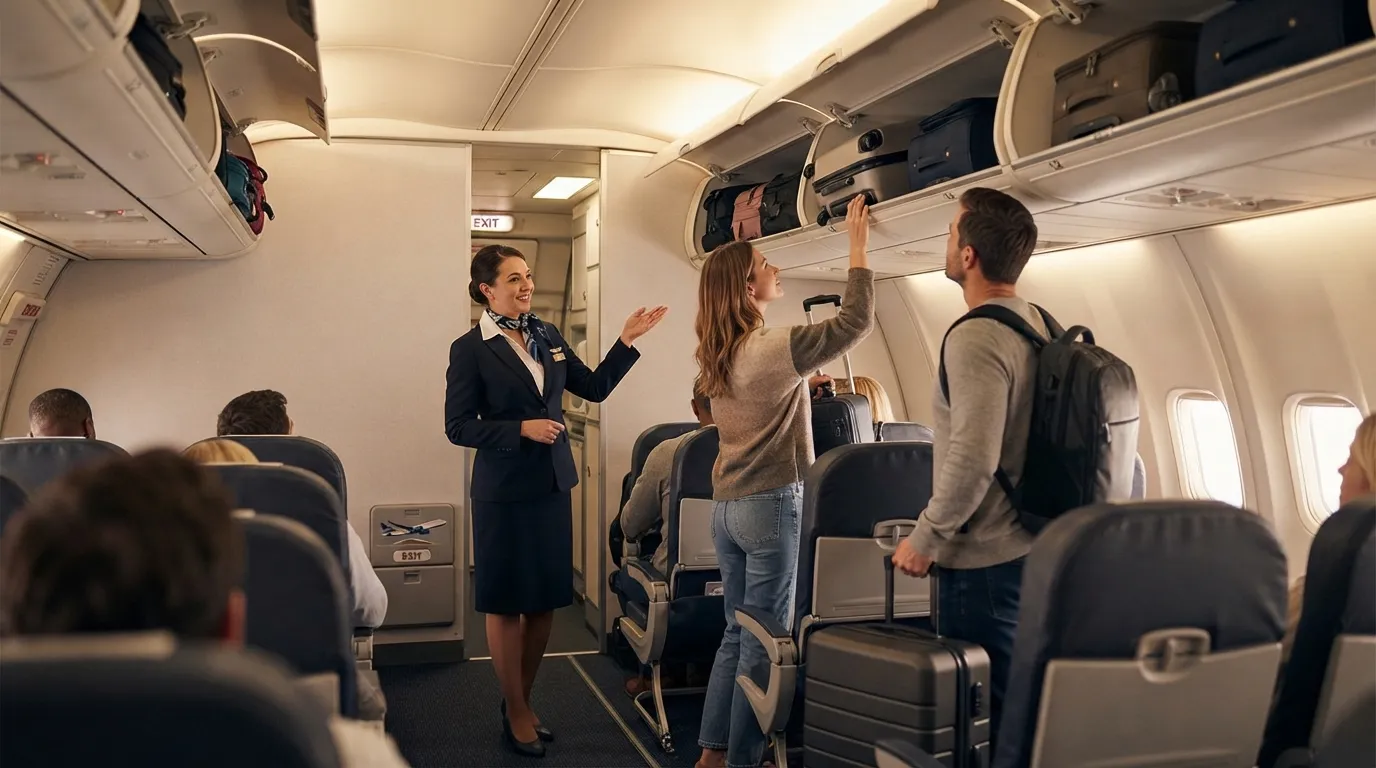
A travel blogger who agrees with the under-seat rule notes the exception: in a bulkhead, and on some airlines the emergency row, passengers aren’t allowed to store bags under their seat. Booking.com’s guide likewise says smaller bags go under the seat as long as you are not in an emergency exit row.
If you sit in one of those rows, everything goes overhead. So board with your group rather than late, or the bins near you may already be full.
When no bin is within reach, someone at the front of the cabin can help.
#6 – Asking the Crew When the Bins Are Full
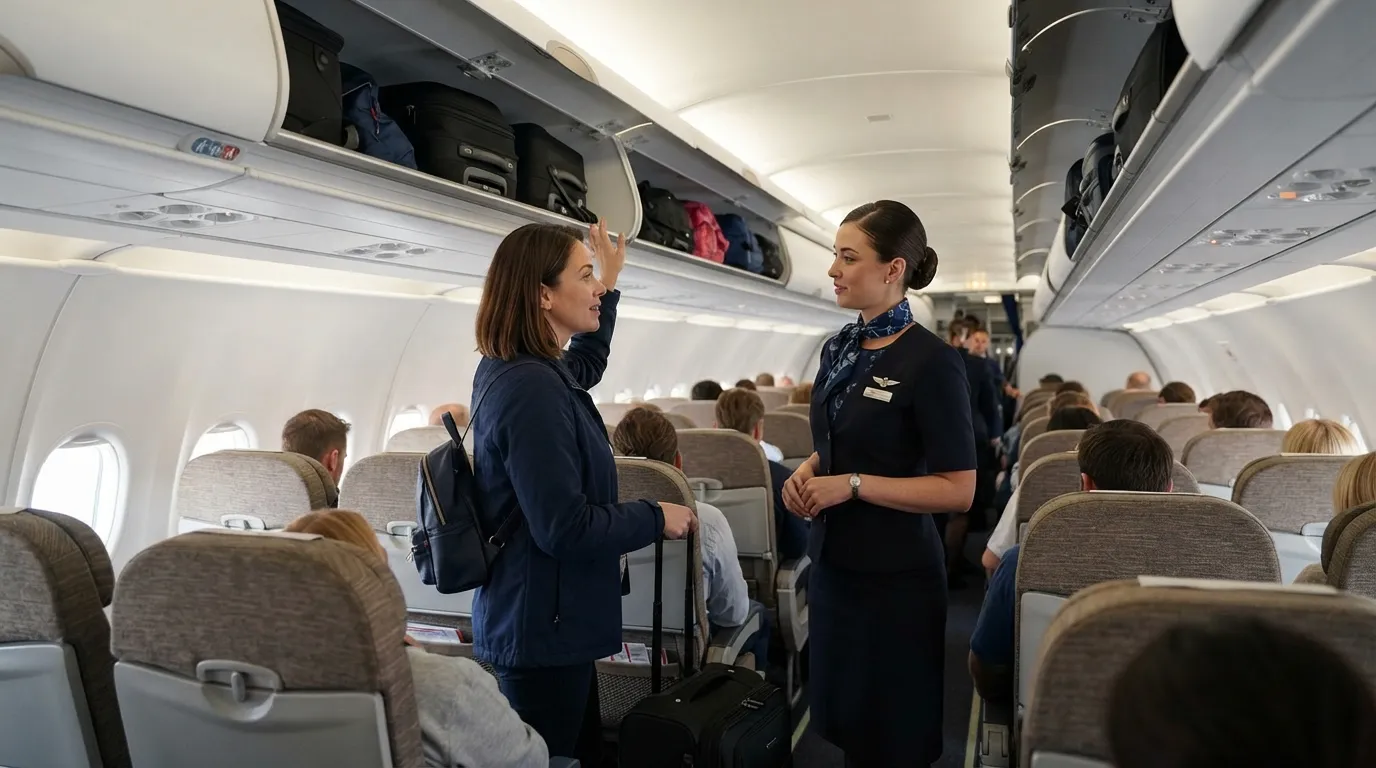
If the overhead bins are full, ask the crew for help finding space. That beats shoving a bag where it doesn’t fit.
At a Glance
- Bins full: ask the crew where your bag can go.
- Bag won’t fit: check it instead of forcing it in.
- Flight is empty: wait for the crew to say personal items can go overhead.
- Heavy bag: don’t expect a flight attendant to lift it.
Overhead compartments are sized for standard carry-ons, so if a bag struggles to fit, check it instead of forcing it in. If the flight is empty, the crew may announce that you can put personal items overhead, but don’t do so without permission.
Asking for space is reasonable; expecting a flight attendant to lift the bag is another matter.
#5 – A Bag You Can Lift Yourself
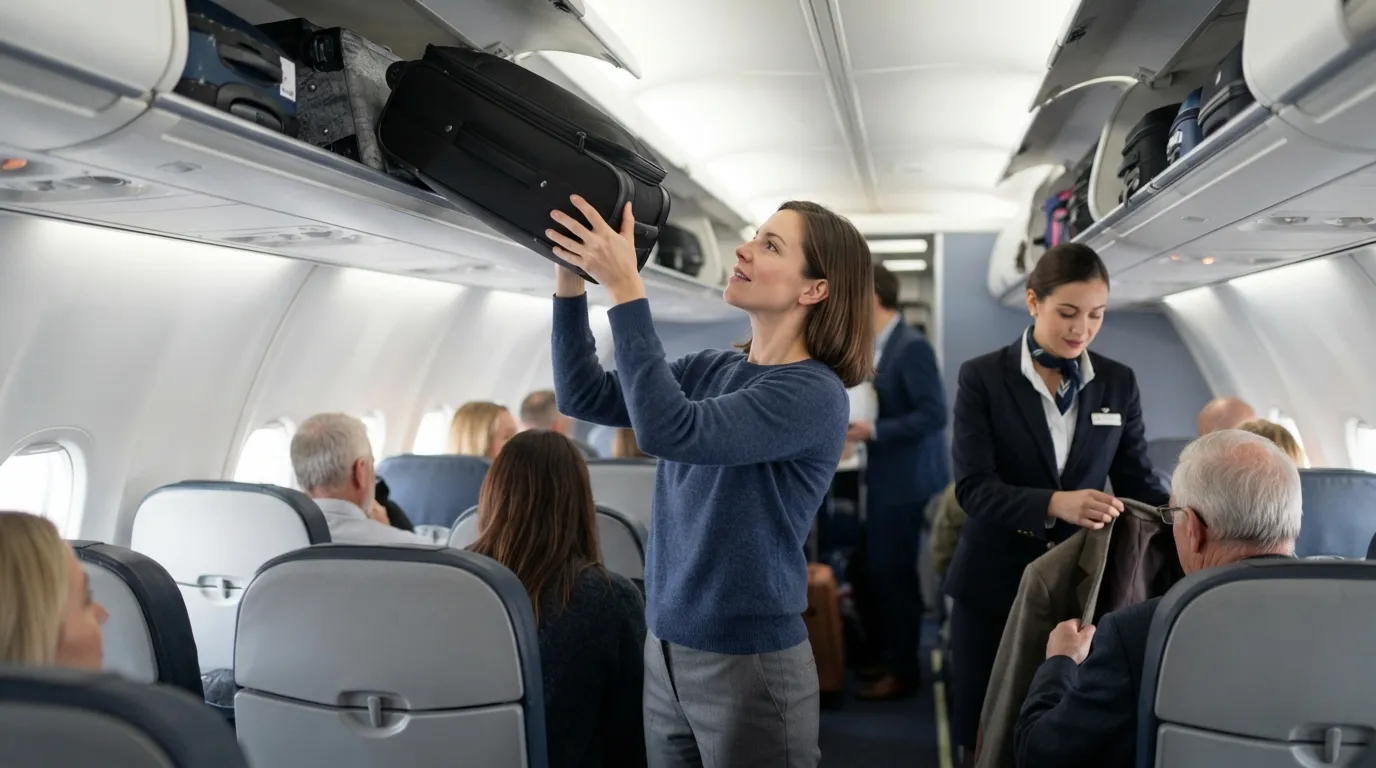
Contrary to common assumptions, flight attendants are not required to lift heavy bags into overhead bins. That puts the weight of your bag on you, not on the crew.
If you can’t raise it over your head on your own, consider checking it. Lonely Planet also suggests asking whether checking a bag would be easier and better etiquette, and the fee is a small price compared with a stuck bag and a line of waiting passengers.
Some help goes the other way, and it takes only a sentence.
Related Stories From Weather Fox
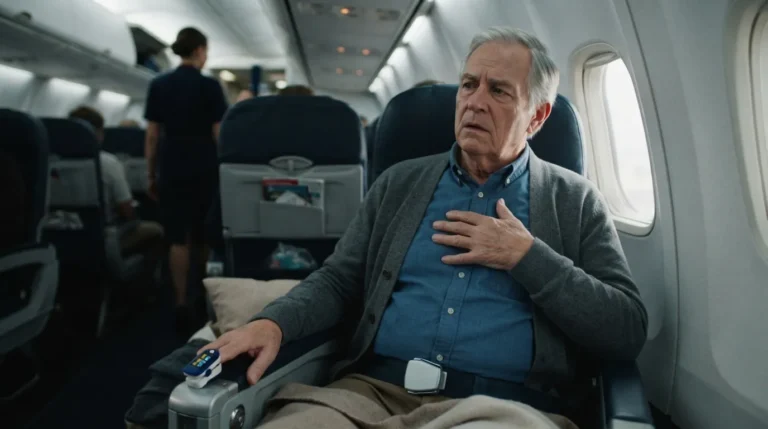
#4 – Telling the Crew You’re a Doctor
Flight attendant Kat Kamalani says that when a passenger mentions being a doctor, and where they are sitting, the crew appreciates it in case of an emergency. Doctors are often named on the passenger information list, so crew may already note where they sit.
Speaking up is optional, and you are not obligated to do it. If you have medical or emergency training and don’t mind being the person they look to, one sentence at the door gives them a head start.
Once the door closes, the courtesies turn into instructions, and the first of them concerns your seat.
#3 – Seat Back, Tray Table and Window Blind on Request
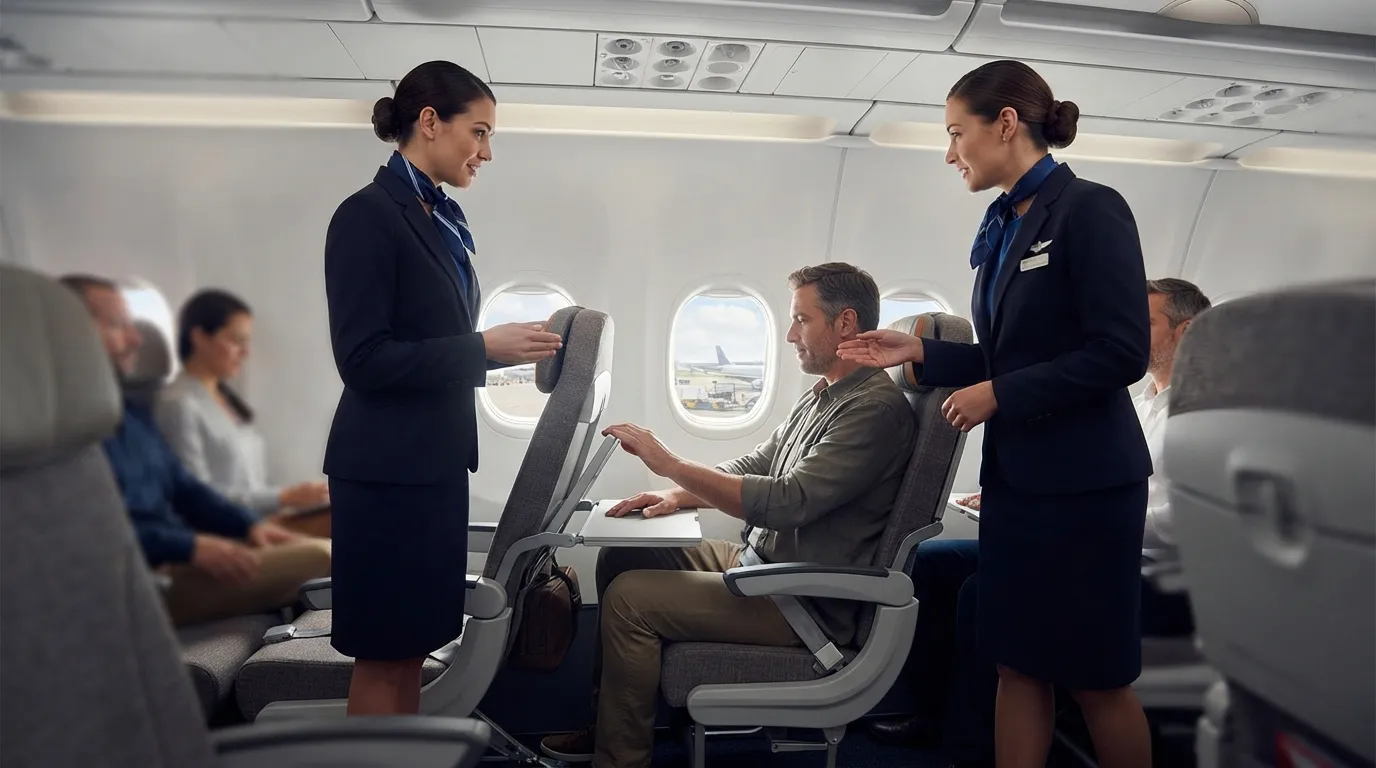
Crew may ask you to stow loose items, put your seat back upright, secure your tray table and open the window blinds. Some passengers think the crew is being difficult.
The requests have a source. An FAA advisory circular says that for takeoff and landing, carry-on baggage and tray tables must be stowed and seat backs must be upright.6
The crew is applying a procedure, not a preference. And the next step is the briefing, where the crew’s attention is all on you.
#2 – Listening to the Safety Briefing
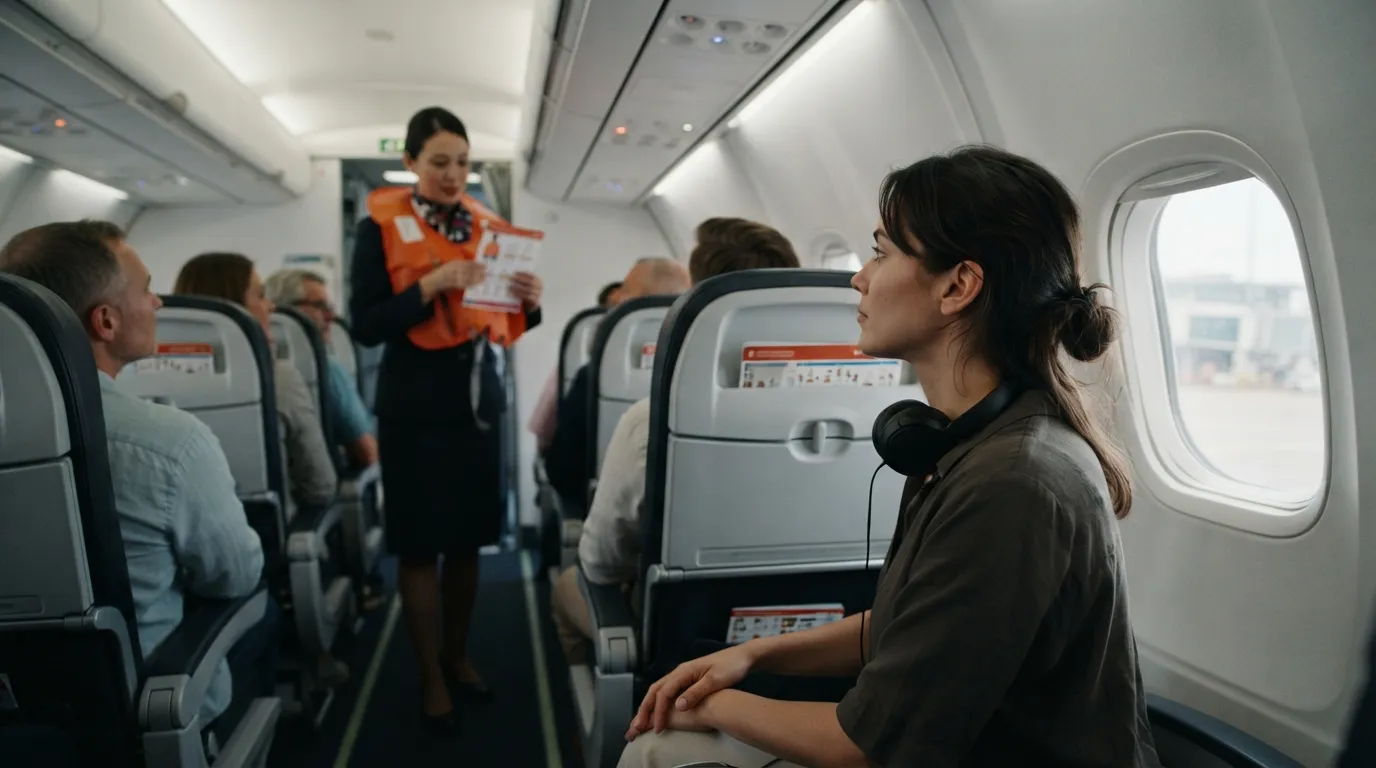
The Washington Post puts it plainly: a flight attendant’s job is to keep you safe, not to serve you drinks, so listen to the briefing and take your headphones off.2 You have already done the headphone part earlier on this list.
The FAA advisory circular says that before takeoff the operator must make sure all passengers are briefed orally. That briefing must tell you that you are required to follow safety instructions, including signs, placards and crew members’ instructions.
The briefing tells you to follow crew instructions. It doesn’t mention that one of those instructions is written into federal regulation.
#1 – Following a Stowage Instruction Without an Argument
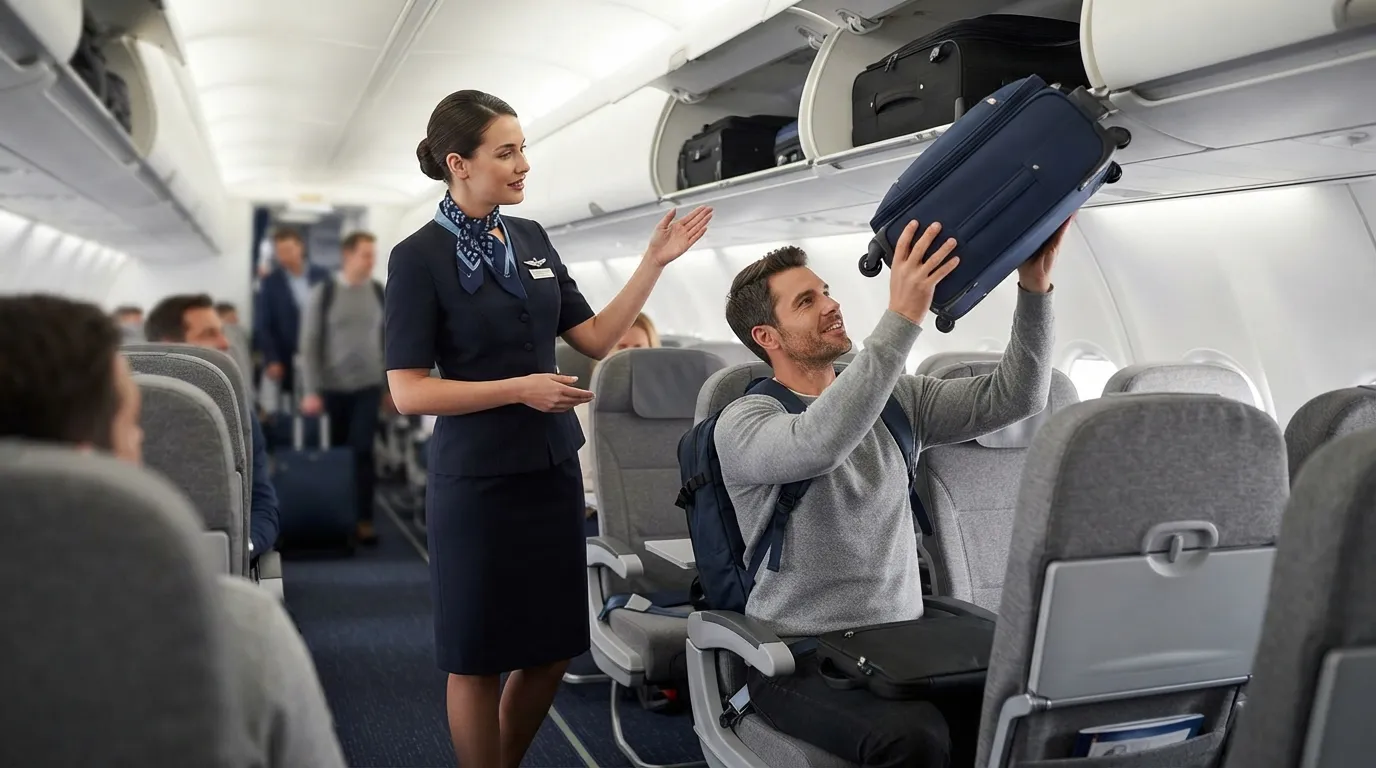
The most ordinary courtesy on this list is the one with a federal rule aimed straight at passengers. Each passenger must comply with crew instructions regarding the carry-on baggage rule’s stowage requirements.7
The regulation, 14 CFR 121.589, exists to keep carry-on items from slowing an emergency evacuation and to prevent injury by making sure items are properly restrained. When the FAA strengthened the rule, passengers became subject to civil penalties for failing to follow crew instructions on stowing carry-on baggage.
Nobody should expect it to come to that, which is the point of treating it as a courtesy. The earlier items on this list are the habits that keep you from ever hearing the instruction twice.
The crew can also direct you during the flight to move a bag into approved stowage if it poses a hazard, such as in turbulence.
Most of these courtesies share one purpose: they give the crew time and attention for the safety work. Boarding is less a social moment than a handoff, and your part in it is small.
Pick two habits, perhaps the pass and the earbuds, and make them automatic. The rest tend to follow when you aren’t scrambling.
What small thing do you do at the door of a plane that you picked up from a flight attendant or from watching a fellow traveler?
Bonus: The Gate-Side Move Crews Quietly Appreciate
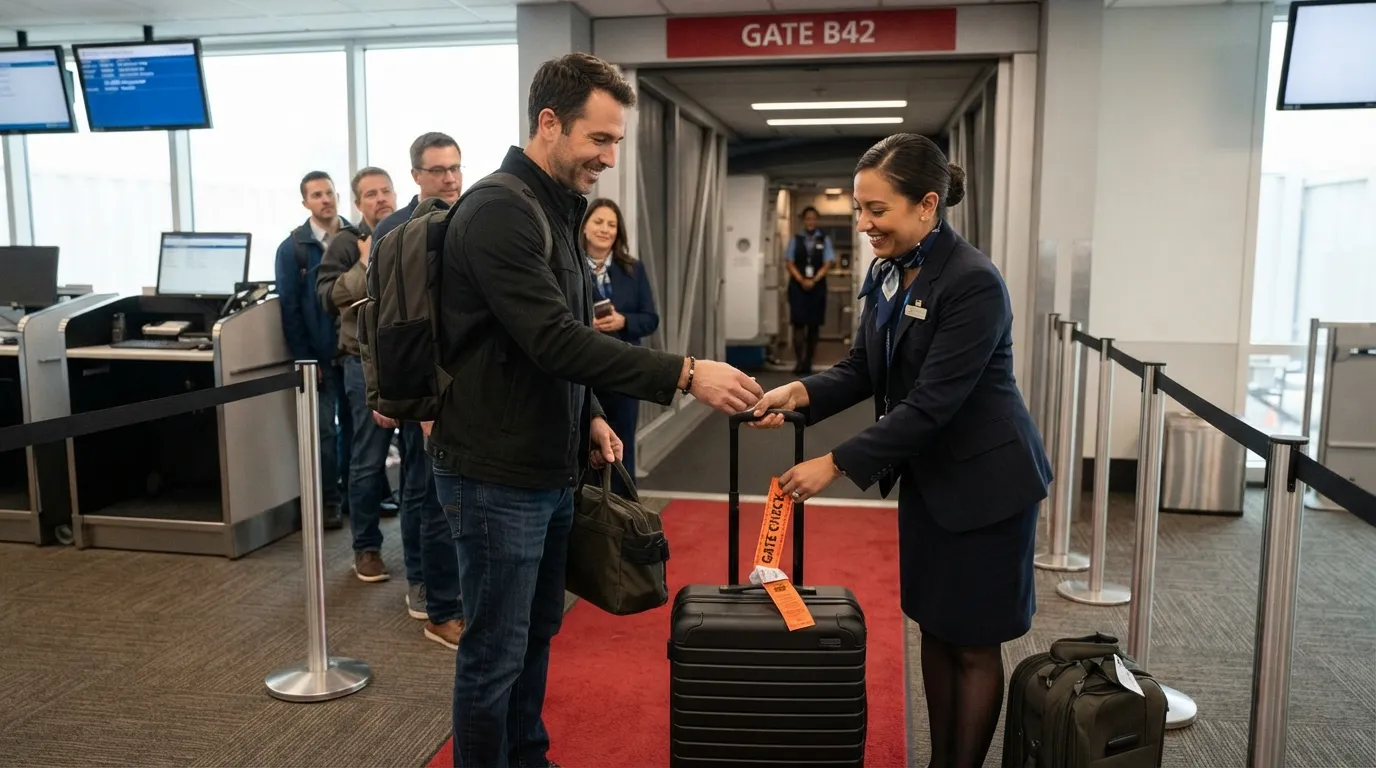
If you are in a late boarding group and the gate agent warns that overhead space is running out, volunteer to gate-check your carry-on before you reach the aircraft door. On most major U.S. airlines this is typically free when bins fill, but confirm that with the agent.
Doing it at the gate means no one has to stop the line, hunt for bin space or restow bags. The crew gets a clear aisle, and you walk onto the plane with only a small bag.
- Before you hand the bag over: take out medication, your wallet, passport, laptop, chargers and any fragile items. Put them in your personal item.
- Power banks and spare lithium batteries: FAA rules require these to travel in the cabin, never in checked or gate-checked bags, so move them to your under-seat bag.
- Ask where it comes back: on many smaller aircraft, gate-checked bags are returned at the jet bridge on arrival. On larger planes they may go to baggage claim, so ask the agent which applies to your flight.
Do this before the cabin door and not after you are stuck in the aisle with a bag that has nowhere to go.
- Simple Flying Crew Notice: https://simpleflying.com/flight-attendant-notice-passengers-immediately/
- Washington Post Rules of Flying: https://www.washingtonpost.com/travel/interactive/2023/flying-airport-etiquette/
- Fox News Be Nice to Crew: https://www.foxnews.com/travel/why-its-important-to-be-nice-to-your-flight-attendant
- Simple Flying Passengers Crew Love: https://simpleflying.com/fa-obsessed-passengers-6-things/
- NBC News Airplane Etiquette: https://www.nbcnews.com/news/amp/wbna23354814
- FAA Advisory Circular 121-24E: https://www.faa.gov/documentLibrary/media/Advisory_Circular/AC_121-24E.pdf
- eCFR 14 CFR 121.589: https://www.ecfr.gov/current/title-14/chapter-I/subchapter-G/part-121/subpart-T/section-121.589