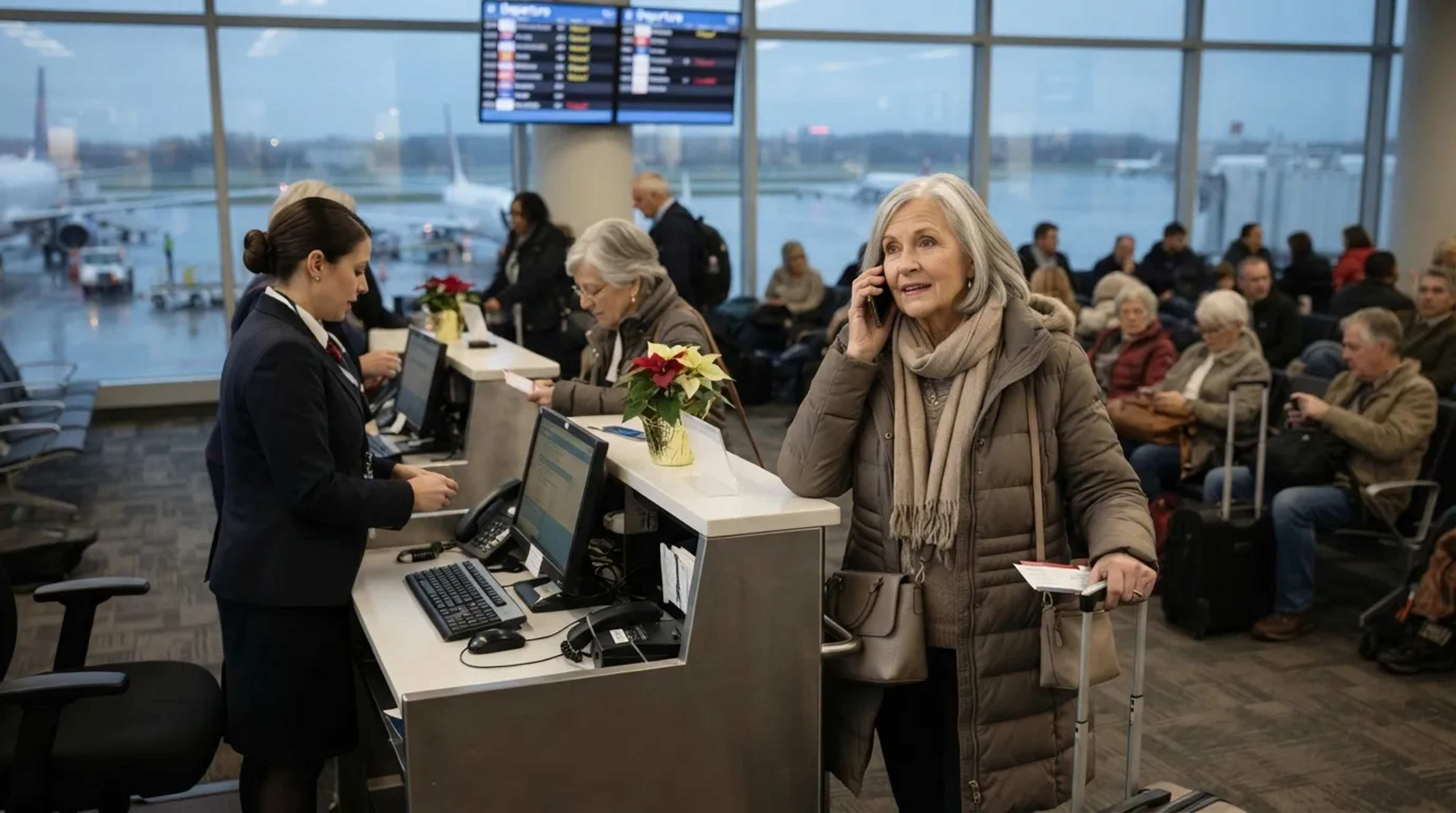
Boarding feels like a race, and the passengers who sprint for the door think the prize is a bin. Gate agents see it differently: ignoring your group number can cost you a step aside from the line, a bag tagged at the door, or a seat given away if you drift off at the wrong moment.
These 25 habits run from small annoyances to missed flights, and in the fall of 2024 American Airlines began testing technology that sounds an alert when someone scans ahead of their group.1 The boarding order most North American airlines use also turns up in research as one of the slower ones, and the last item comes back to it.
The first habit starts in the waiting area, well before anyone calls a group.
#25 – A Spot Held at the Gate Too Early
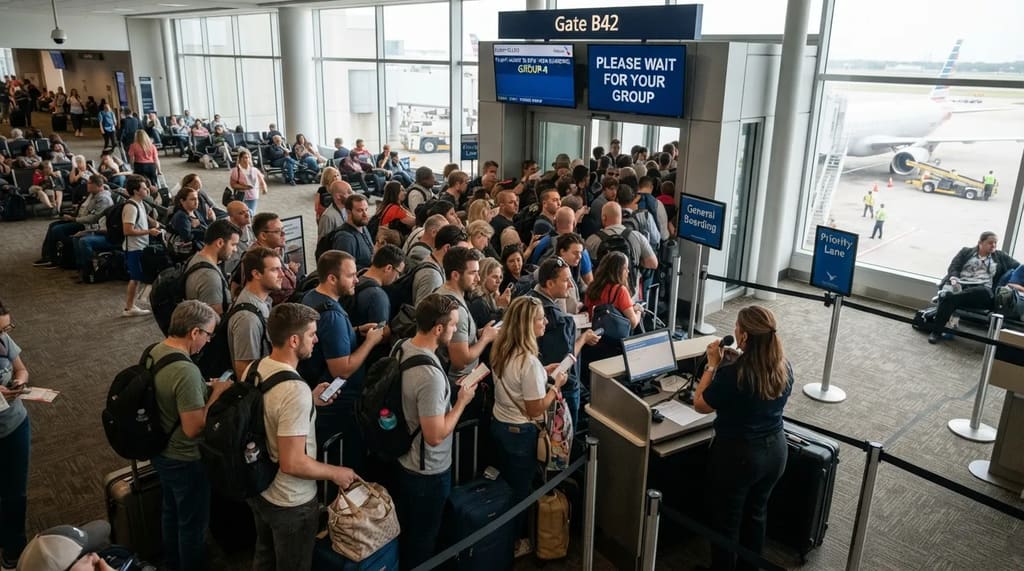
“Gate lice” is the nickname for passengers who crowd the gate before their group is called, hoping to board early and secure overhead bin space. NPR notes the term was popularized as early as 2010, shortly after airlines started charging to check a suitcase.
Some travelers go a step further and scan their pass before their group is up.
#24 – Scanning Early and Hoping the Beep Stays Quiet
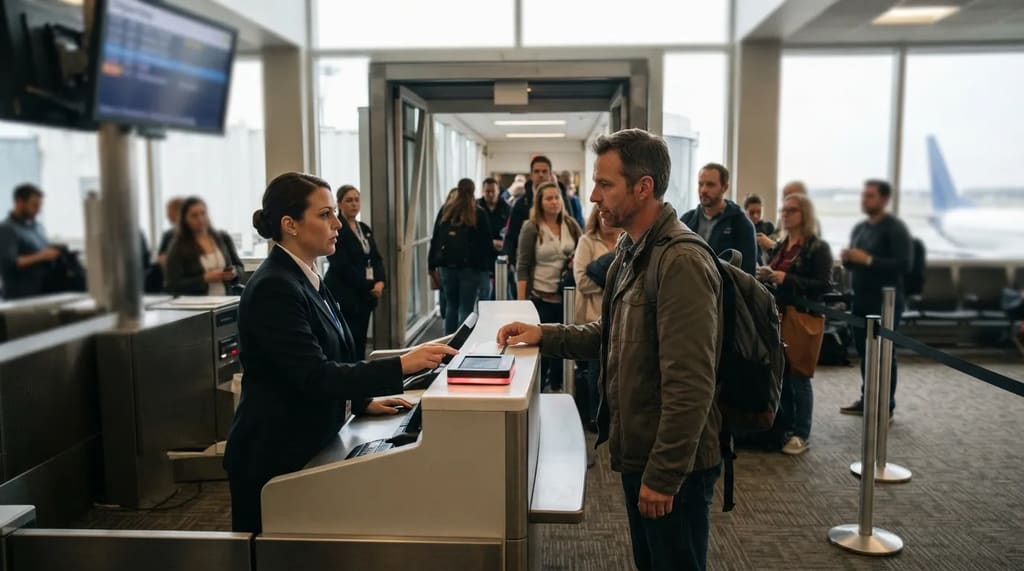
Gate agents are busy and don’t always look at the boarding group when a pass is scanned, which is the gap early scanners count on.2 American tested a fix at Albuquerque and Tucson, enforcing boarding groups in a trial at those two airports.1
Agents then ask the passenger to step aside until their group is called.3 The gamble costs you your place in line instead of winning one.
Crowding at the door also creates a second problem for passengers who are allowed to board first.
#23 – A Crowd Across the Preboarding Path
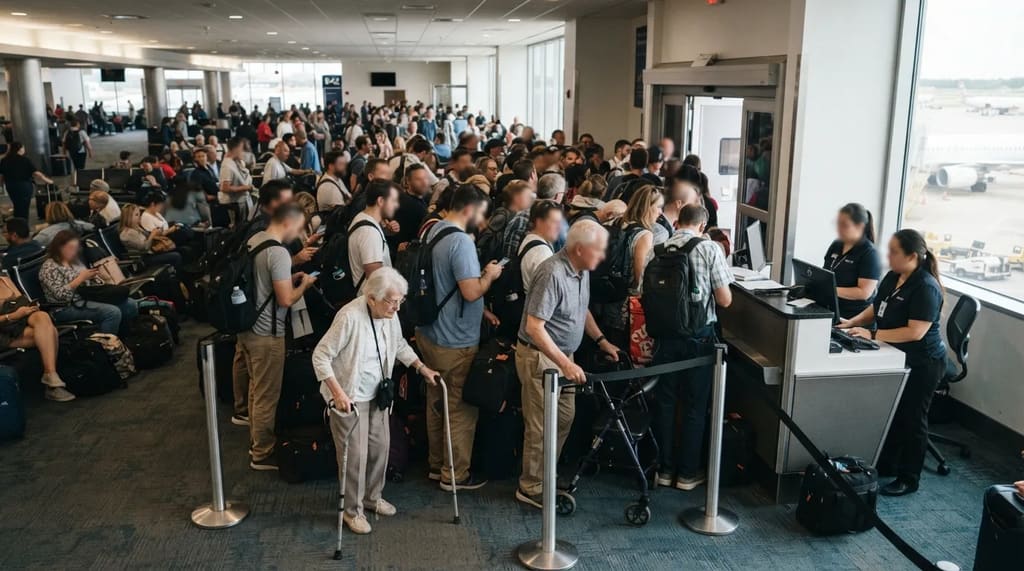
Preboarding exists for travelers who need extra time. A flight attendant quoted by Reader’s Digest said a crowded boarding area makes it hard for passengers with legitimate preboarding needs to reach the door.
If someone in your party needs extra time, tell the agent at the desk before boarding starts, not at the door.
Lanes can be clear and still confuse anyone who can’t tell which group is being called.
#22 – Unclear Announcements and the Rush They Cause
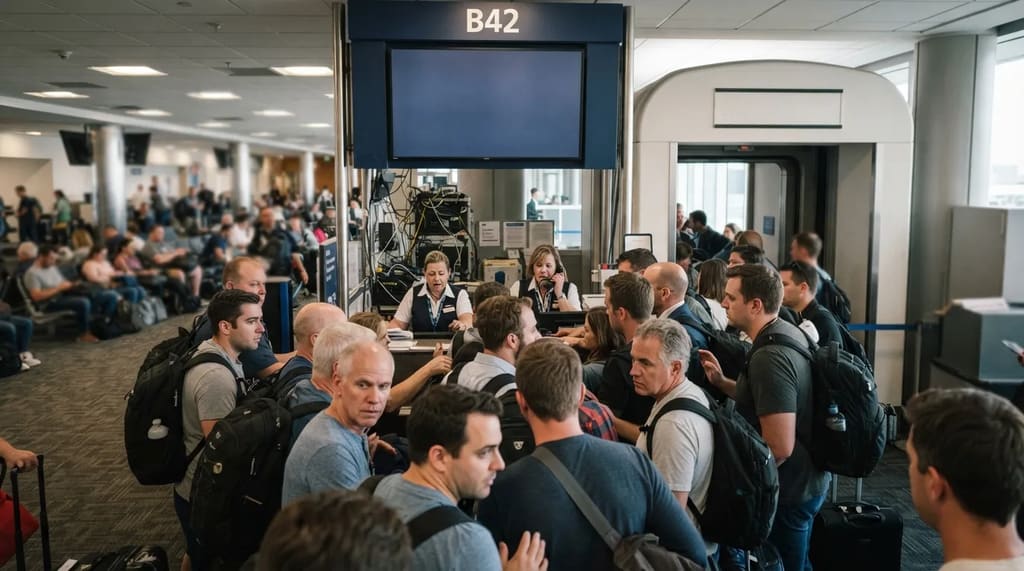
Crowding is sometimes a reaction to a gate that is hard to follow. Fox News Digital reported one traveler’s complaint that the sign showing which zones could board faced another gate, so reading it meant stepping into the line.
That is a fair grievance, and joining the scrum doesn’t fix it. United has tried to head off crowding by keeping passengers informed in real time, so check your airline’s app, or ask an agent before boarding opens.
#21 – Zone Numbers That Change From Airline to Airline
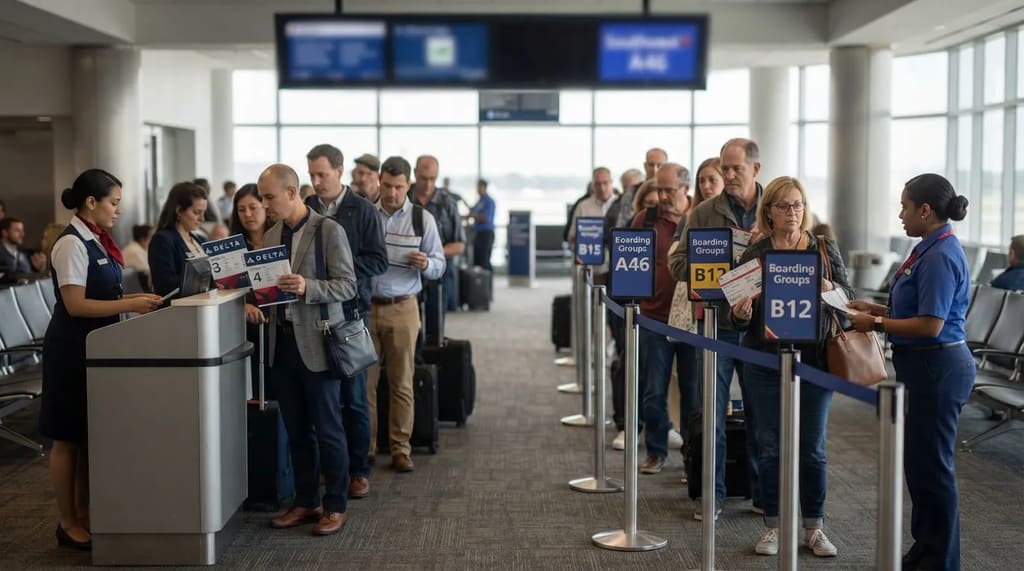
Delta moved its passengers to numbered zones to bring more clarity to boarding. Southwest’s eight boarding groups are based on seat location, fare type, tier status and credit card benefits.
So a Group 4 pass means different things on different carriers. Boarding hierarchies can include a half-dozen or more zones, which is plenty of room for confusion.4
Southwest offers the clearest case of a rewritten system, because it changed everything in 2026.
#20 – Southwest’s Seat Race, Now Retired
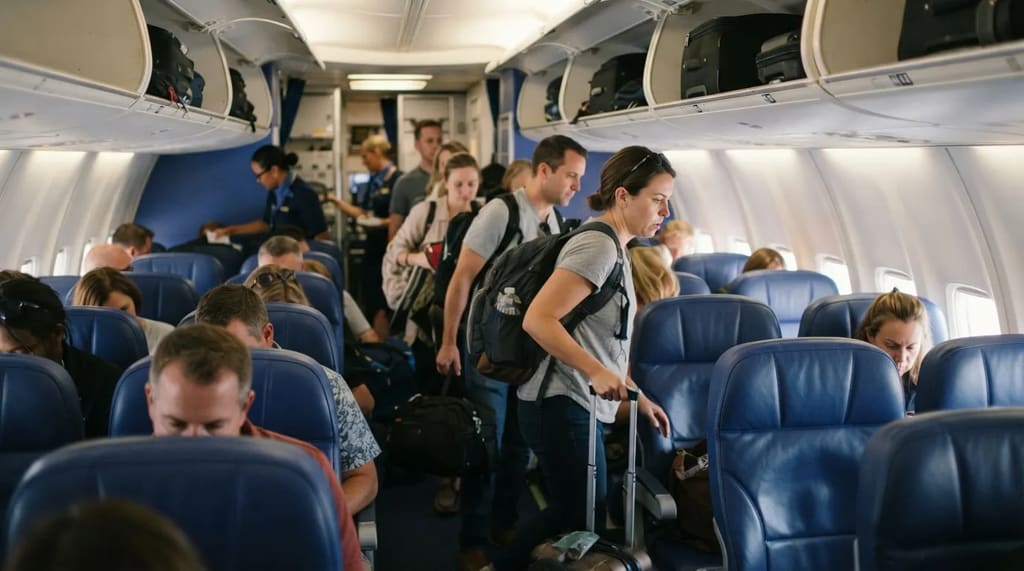
On January 27, 2026, Southwest ended its 54-year open-seating policy and began assigning seats across its network.5 Under the old system, passengers received a boarding position and chose an available seat after stepping aboard.
That is why people hurried into line. With a seat already assigned, rushing the door no longer wins you a better one.
Families felt that change most, because the old arrangement carved out a slot just for them.
#19 – A Family Boarding Window That Went Away
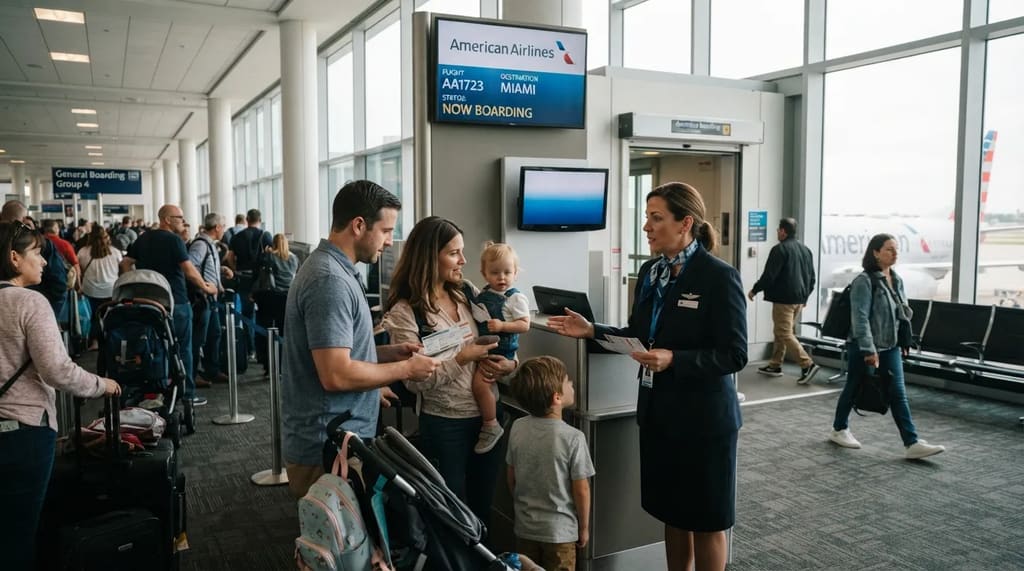
The old family boarding window between Southwest’s A and B groups no longer exists. Everyone on the same reservation of nine or fewer is now assigned to the same boarding group.5
At American, families with a child under 2 can request an earlier group at the gate, and families with older children can ask, though the agent decides. If your children are past toddler age, plan to board with your group and give yourselves time to stow bags.
Quick Compare
- Southwest: one reservation of nine or fewer shares a single boarding group.
- American, child under 2: you can request an earlier group at the gate.
- American, older kids: you can ask, but the agent decides.
#18 – One Early Group Stretched Over Two Reservations
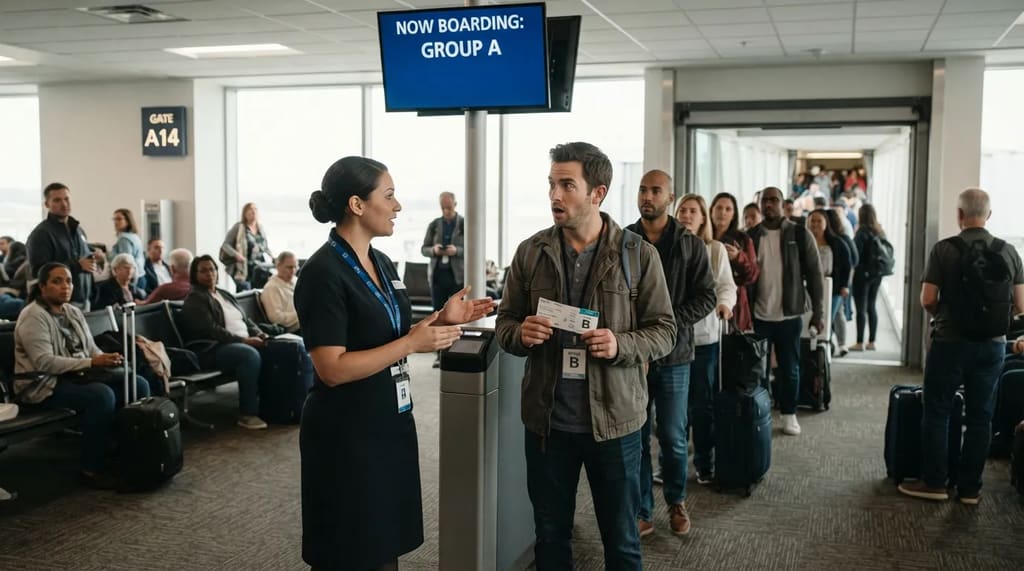
The shared-group rule covers people on one confirmation number. For Southwest Companion Pass holders and their companions, the group comes from seat location or the cardmember or tier benefit, whichever is higher.
A friend’s early group won’t pull you forward if you booked separately. Joining that line anyway invites the same step aside described earlier for early scanners, since agents ask passengers to wait until their group is called.
#17 – A Seat Change Request as Boarding Begins
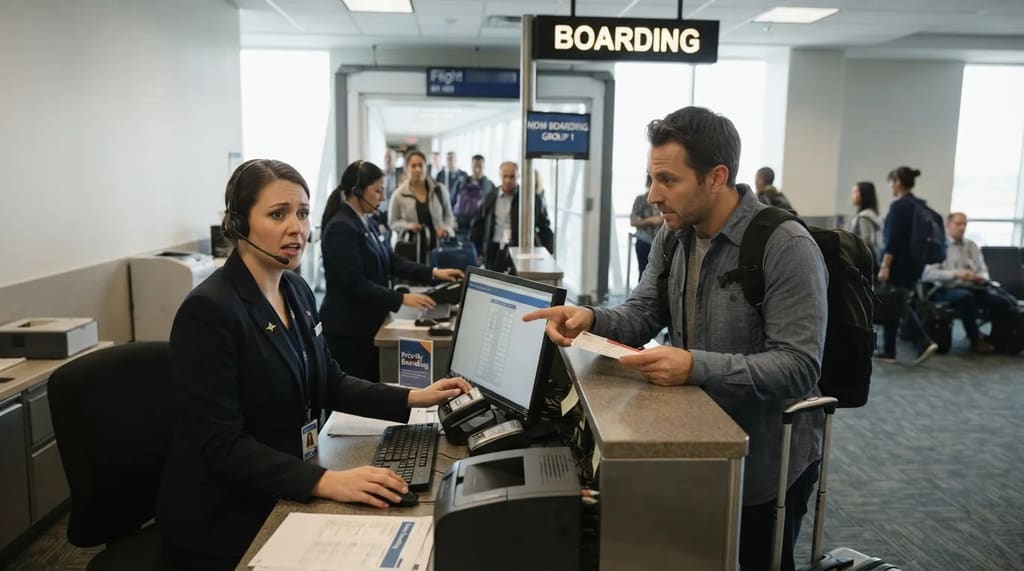
HuffPost’s piece on what gate agents avoid doing when they fly includes approaching the agent for last-minute seat changes during boarding.6 By the time boarding starts, agents are managing multiple priorities at once.
Ask earlier, at check-in, on the app, or at the desk well before the line forms. That is when the agent can look at the seat map without a queue watching.
Timing matters even before the first group, in the minutes after the agent reaches the counter.
#16 – Questions for the Agent in the First Minutes
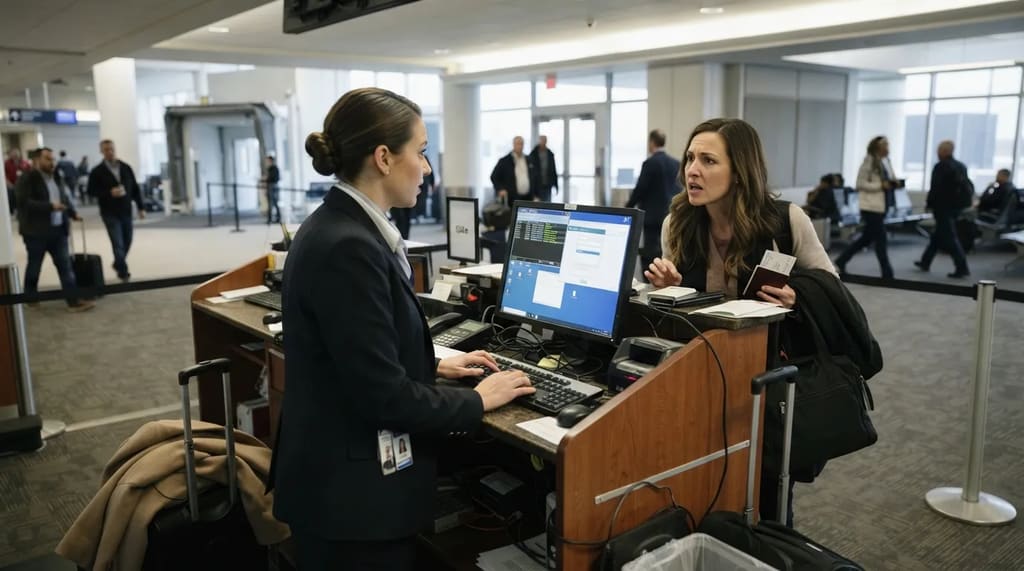
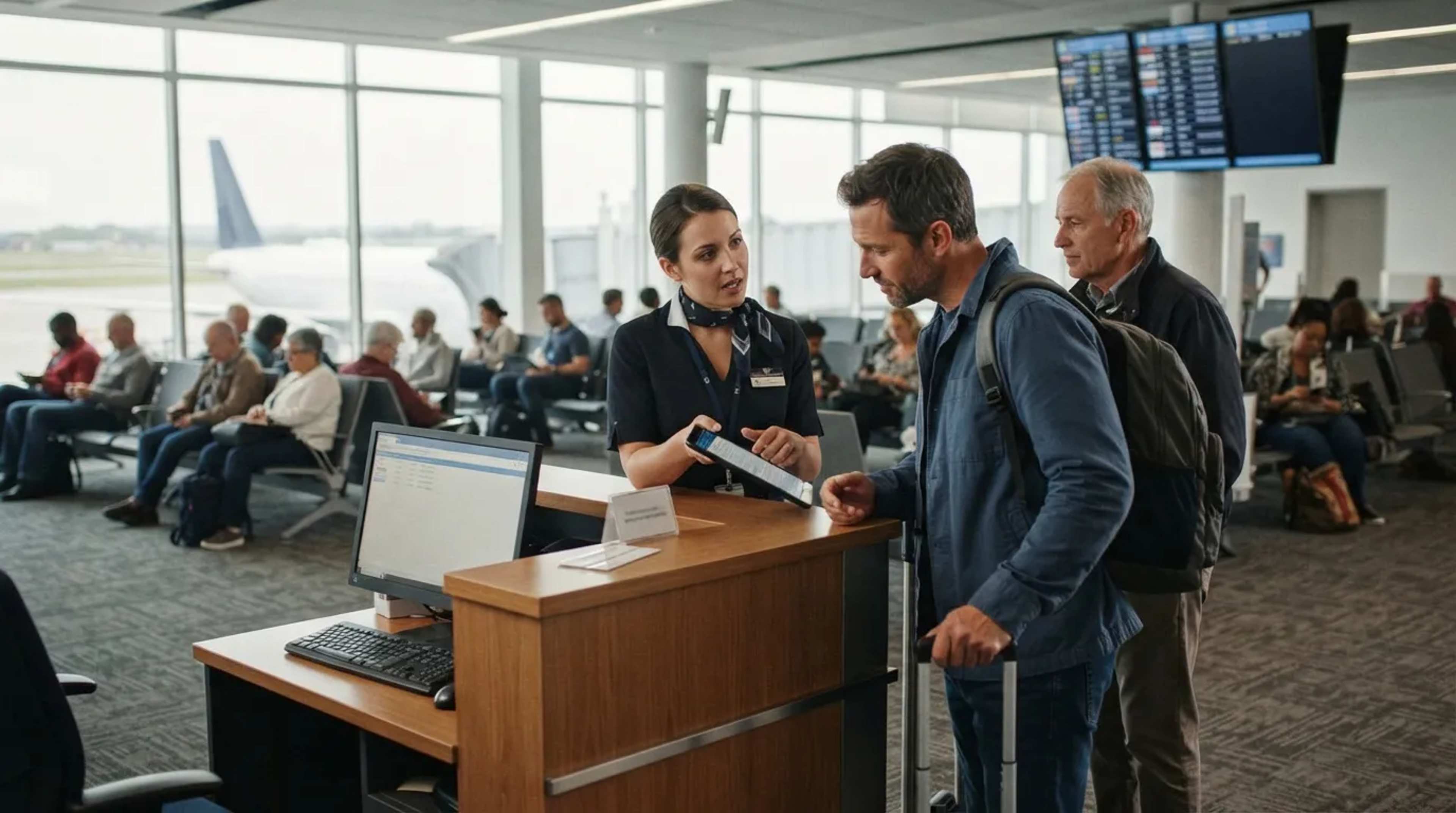
The moment an agent reaches the counter, they are opening the flight, checking seats and handling standby passengers, a former American gate agent told HuffPost. Rushing up then with questions or seat requests can slow setup tasks that matter.
Anything that isn’t urgent is better handled earlier at the airline counter or in the app. I would save the gate podium for problems that cannot wait.
A seat that looks empty belongs in the same category, since an agent may be saving it for a standby passenger.
#15 – An Empty Seat You Moved To Without Asking
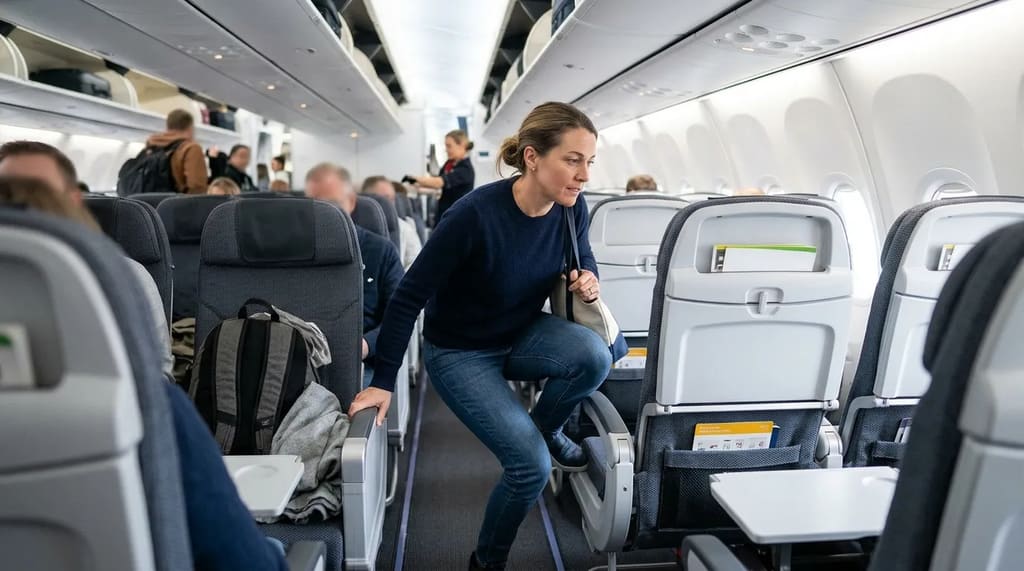
HuffPost’s gate-agent piece notes that moving seats without informing the crew can cause delays, particularly when agents are placing standby passengers in empty seats. The seat beside you may already be assigned to someone coming off the list.
If you want more room, ask a flight attendant before you sit. They can tell you whether the seat is open.
Paperwork is the easier delay to remove, since it needs only a minute of preparation.
#14 – ID and Pass Still Buried in a Bag
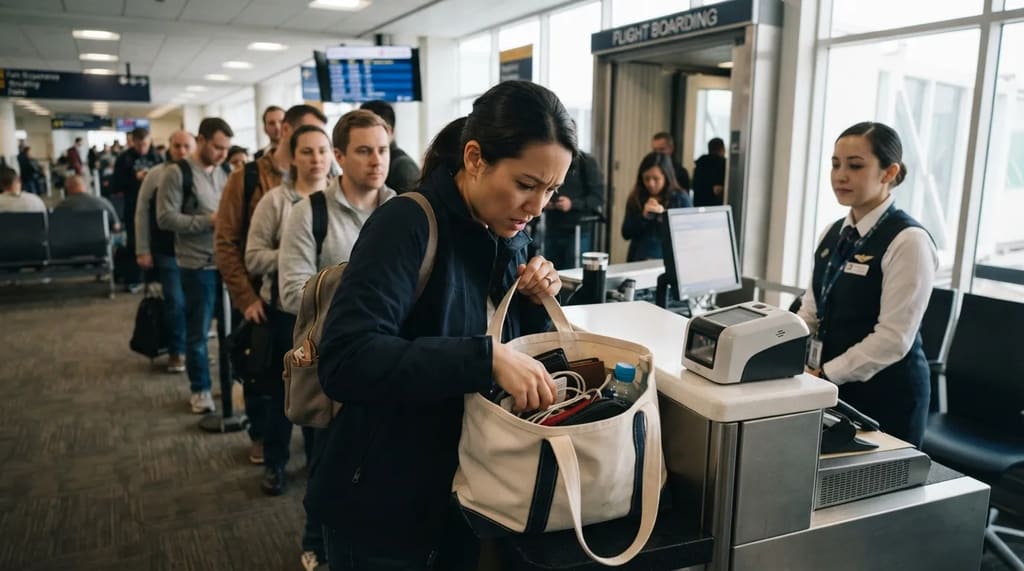
HuffPost’s gate agents are clear that asking for documents to be ready isn’t about impatience. A scanner line stalls when each passenger starts searching at the front.
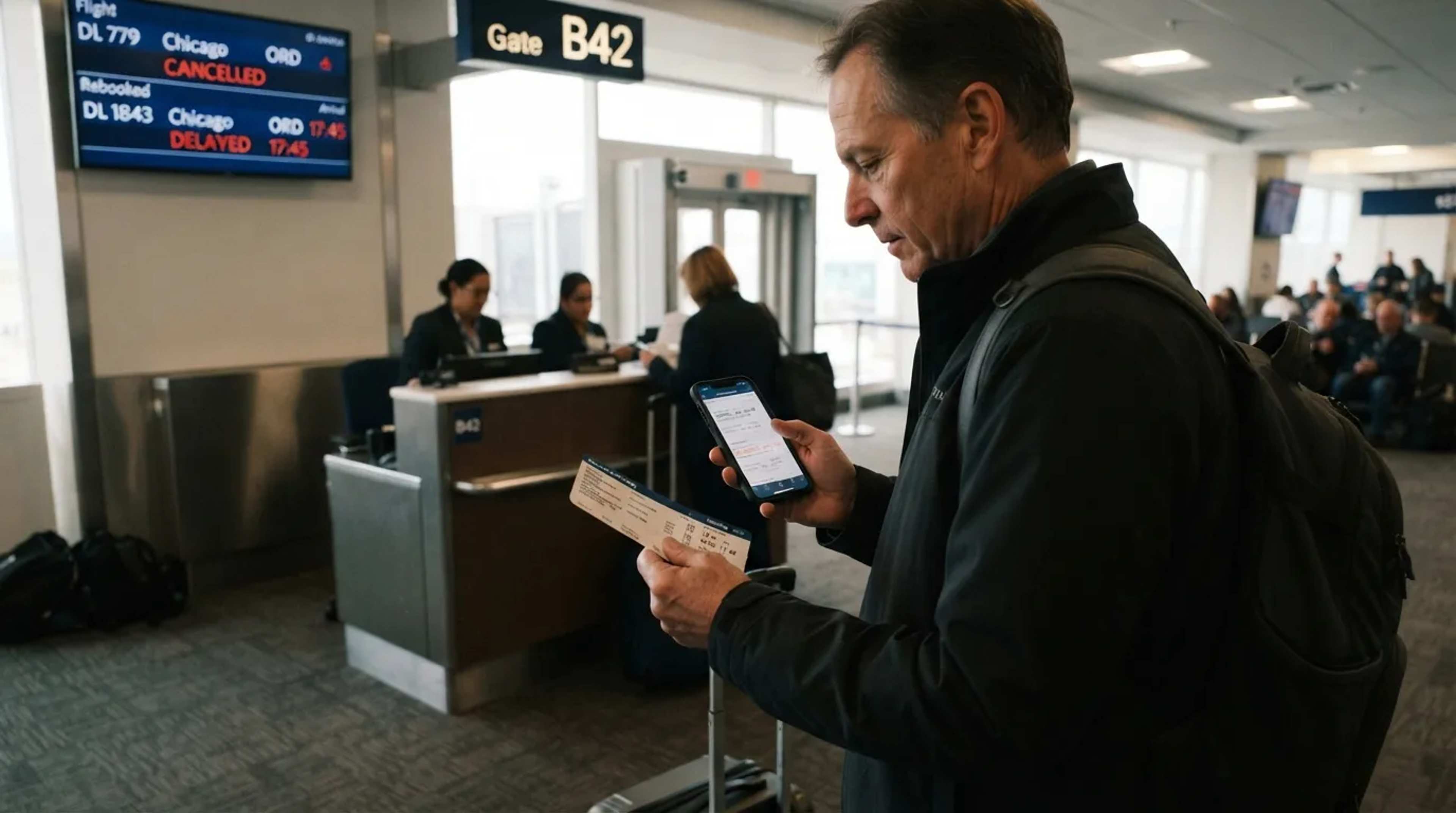
Have your pass open and your photo ID in hand before you reach the front. A coat pocket works better than the bottom of a tote.
At a Glance
- Boarding pass open on your screen before the line moves.
- Photo ID in a pocket, not the bottom of a bag.
- Both ready before you reach the scanner, not at it.
#13 – A Phone Near Empty and a Single Boarding Pass
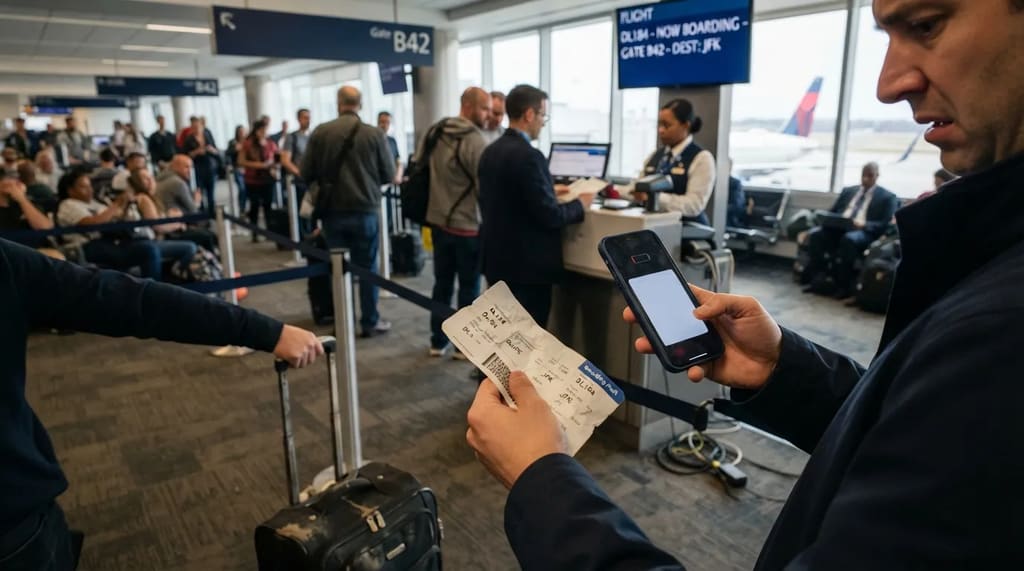
A digital pass lives on a device that can die, freeze or lose signal at the wrong moment, so the battery is part of your travel documents. Charge the phone before you head to the gate, and save the pass where it opens without a connection.
On any day when the phone or the signal is a worry, I would carry a paper copy. It is the cheapest insurance in this list.
Your other hand holds the next problem, the carry-on.
#12 – A Rolling Bag Packed to Dodge Checked Fees
NPR reported that crowding and line-jumping soared as people sought to avoid fees for checking bags and boarding early.4 The scramble at the gate is, for many travelers, a response to a price.
That logic holds only while the bins have room, because if overhead bins fill early, carry-ons get gate checked. If your group is a late one, a bag that cannot be gate-checked comfortably may cost you more in time and nerves than the fee did.
When the bin is full, the argument at the door tends to begin.
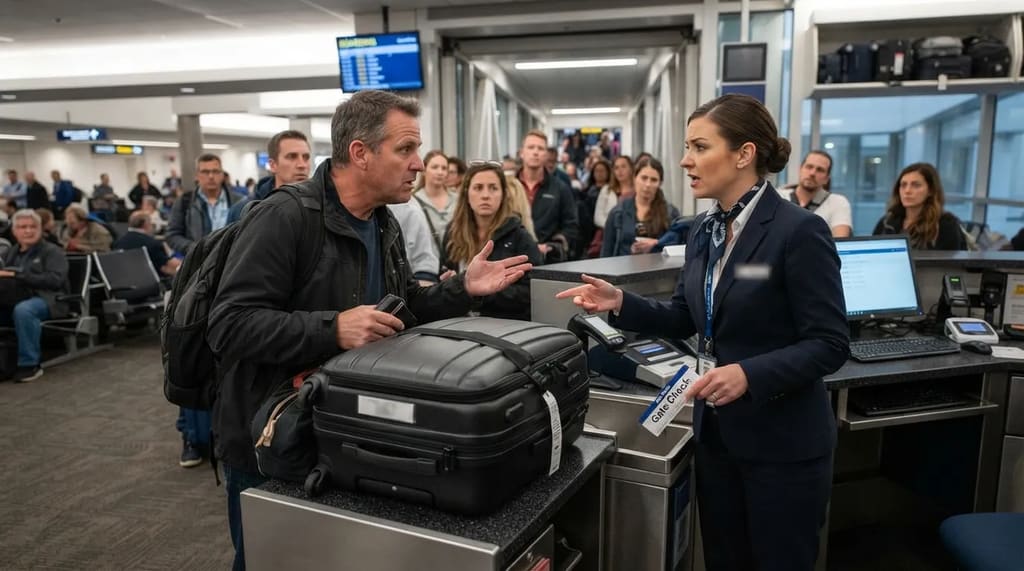
#11 – Overhead Bin Standoffs at the Door
HuffPost’s list of things gate agents never do when they fly includes arguing about overhead bin space. A former agent in that piece put it plainly: once the space is gone, holding up boarding over it only delays everyone.
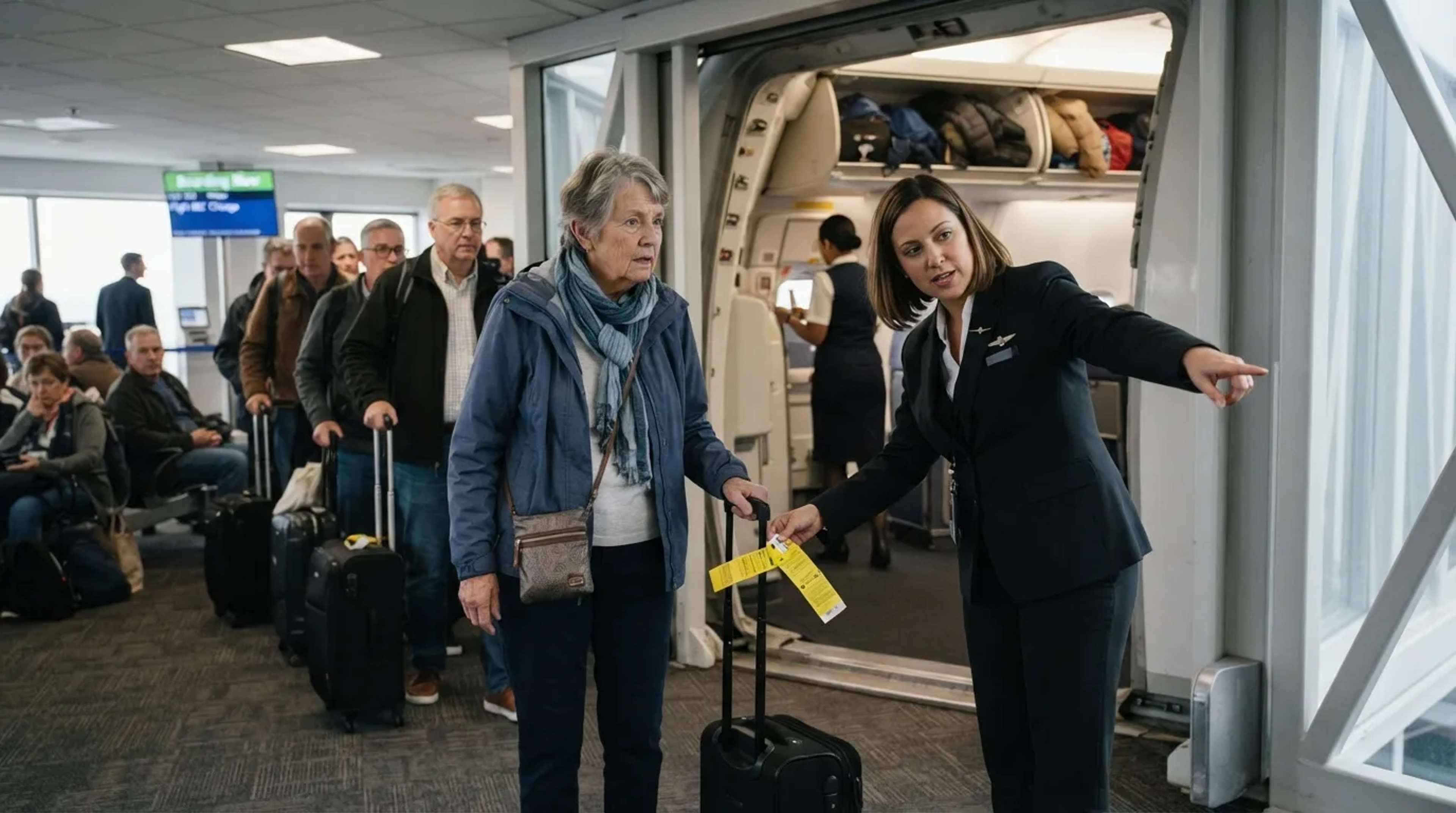
Accept the gate-check tag and ask where you’ll collect the bag. The standoff doesn’t create room, and your bag ends up checked anyway.
Even in the lucky case where the bag fits, how you load it can stall a row.
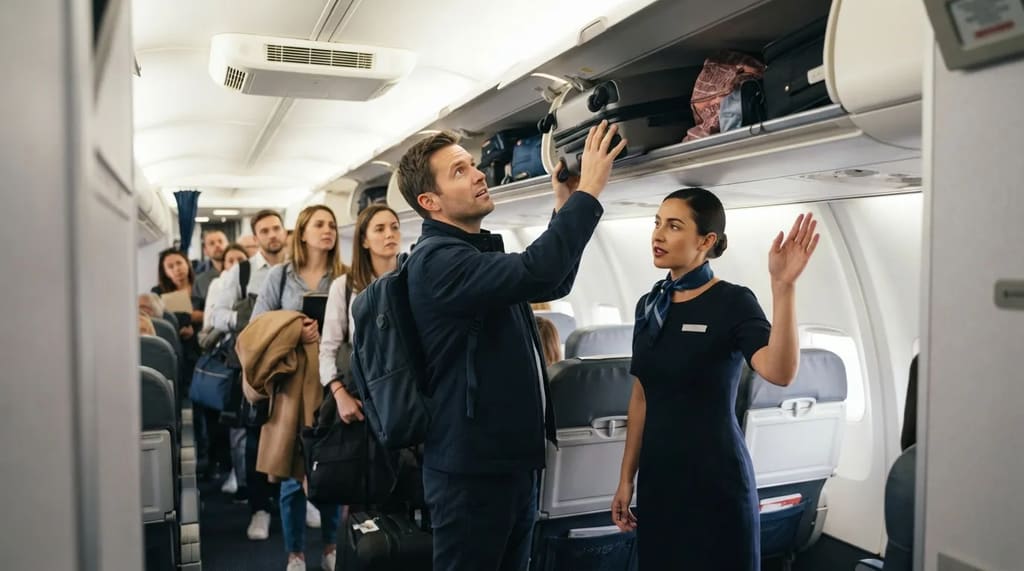
#10 – A Mid-Aisle Stop to Rearrange Your Bag
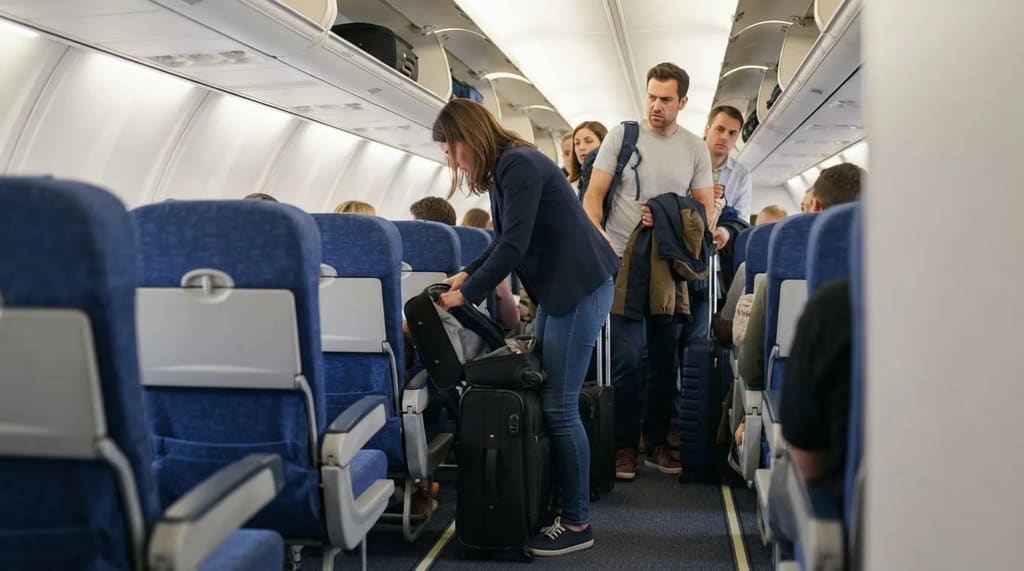
In the boarding experiments, stowing carry-on bags in the aisle was the biggest bottleneck. In a single-aisle cabin, one stopped passenger means everyone behind them waits.
Do your sorting in the gate area. Pull out the book, the jacket and the medicines, so at your row you only lift and slide.
Where the bag goes is a separate misunderstanding, since an assigned seat does not come with a claim on the bin.
#9 – Bin Space Above Your Assigned Seat
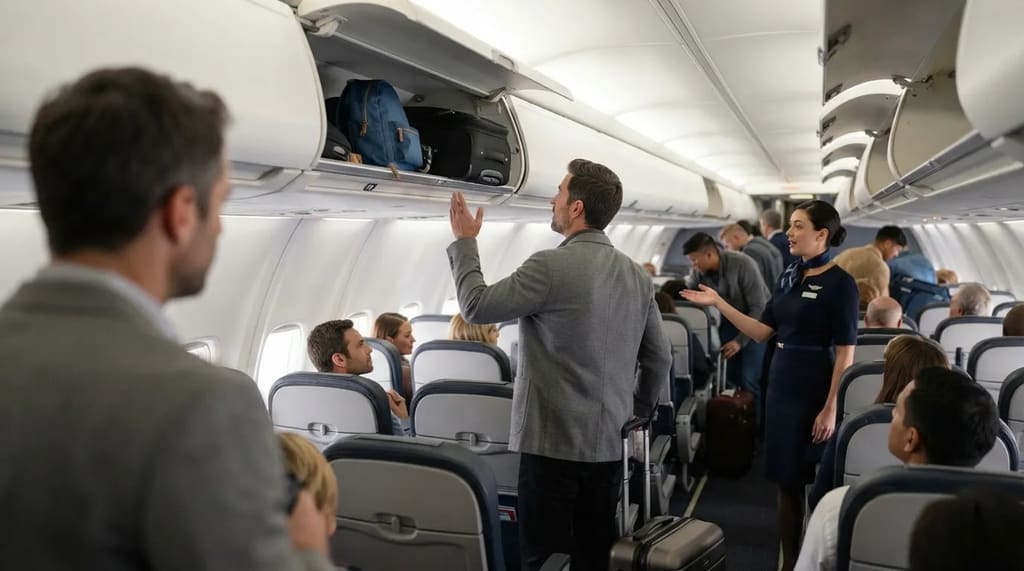
An assigned seat gives you a place to sit, not a reserved bin. The bin above your row may be full when you arrive, and the nearest open one may be several rows away.
When Southwest moved to assigned seating, the old habit of picking a seat after looking at the bins went away. Use whatever open bin is closest, and ask a flight attendant for help if you need it.
Plenty of travelers pay to board early for exactly that reason, and whether it is worth it depends on the bag.
#8 – Priority Boarding Bought Only for Bin Space
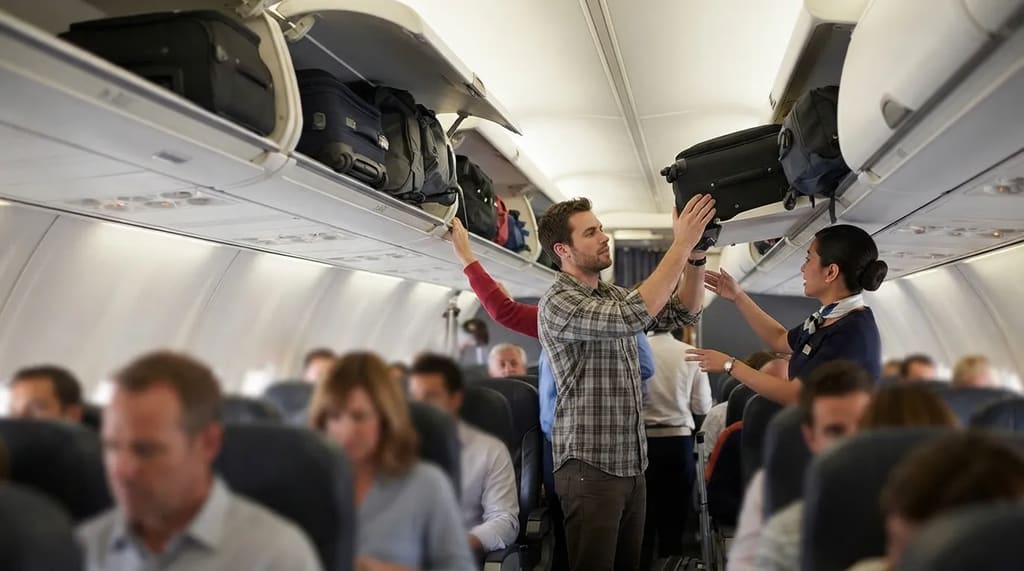
At Southwest, Priority Boarding can be bought starting 24 hours before departure to board among the first, regardless of fare type or seat selection. My view is that it only makes sense if you carry a bag that must go in the bin and your group would otherwise be late.
If you check a bag or carry only a small item under the seat, it buys you a lane and nothing you need. Your seat is waiting either way.
Worth Knowing
- Southwest sells Priority Boarding starting 24 hours before departure.
- It works regardless of fare type or seat selection.
- Best fit: a bin-bound bag plus a late group.
- Poor fit: a checked bag or a small under-seat item.
Once you’re in line, the next mistake happens in a space with no room to spare.
#7 – Stopping on the Jet Bridge to Check Your Phone
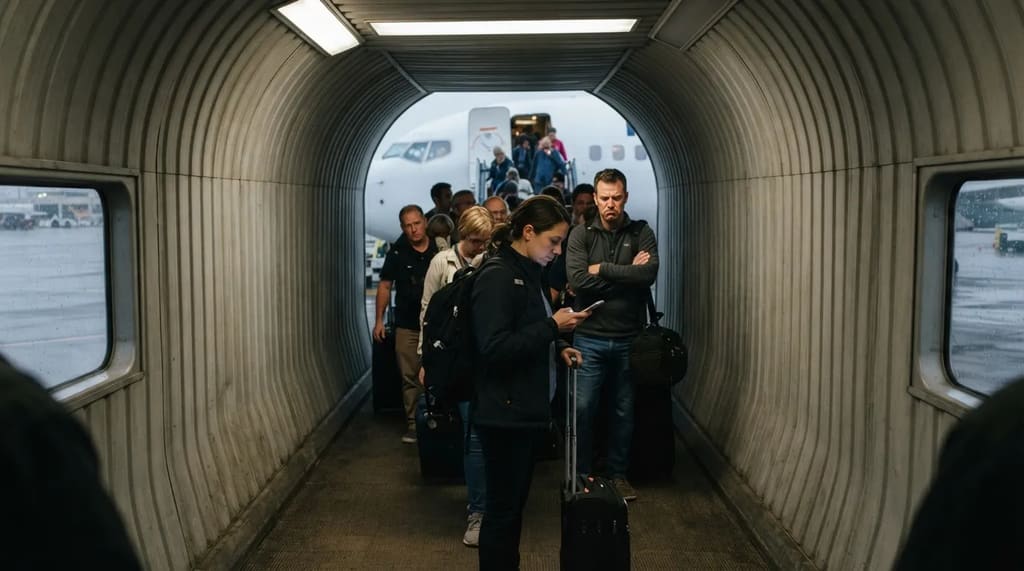
The jet bridge is a one-lane road with a plane at the end. Stop to answer a text or snap a photo and everyone behind you stops too.
If you truly need a moment, take it at the gate, not in the tunnel. Anything that can wait until you’re in your seat probably should.
A stalled bridge is annoying, but a held seat starts real arguments.
#6 – Saving a Seat for a Friend Who Boards Later
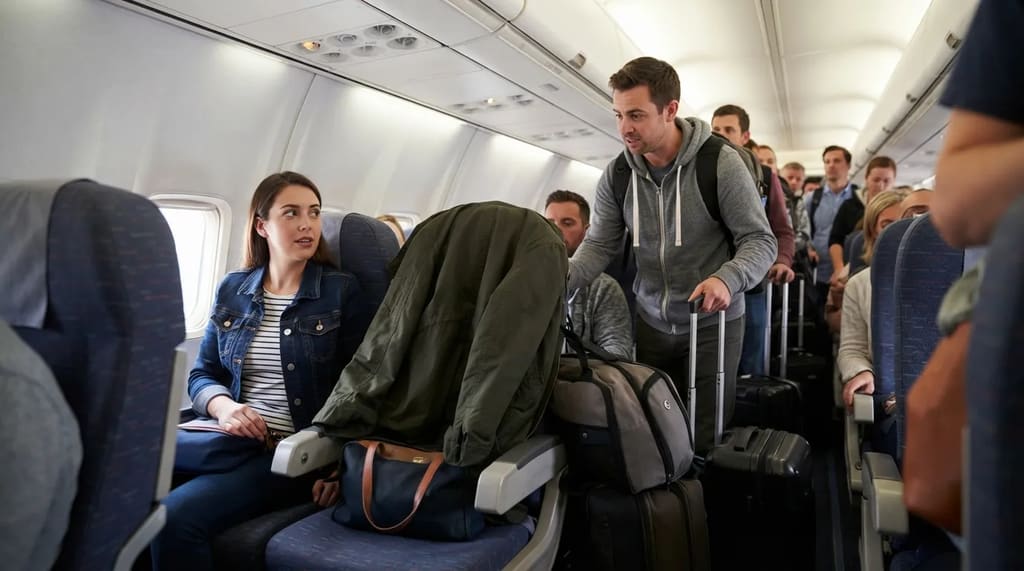
With assigned seats, each seat belongs to the person holding that ticket. Draping a jacket over the one beside you doesn’t change that.
If you want to sit together, sort it out at check-in or with an agent before boarding. Negotiating in the aisle only stalls the line behind you.
Even a seat that is truly yours can’t rescue a bag that doesn’t belong on board.
#5 – An Oversized Bag and a Hopeful Smile
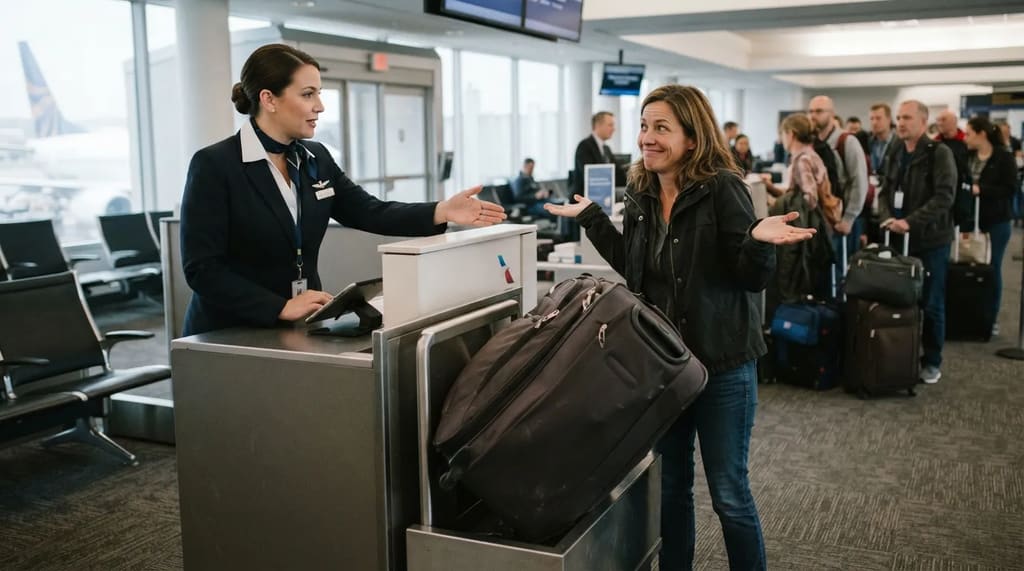
Airlines can require bags that exceed their carry-on limits to be checked, and the gate is where that gets enforced. Depending on the airline and your fare, you may pay a fee on the spot.
Related Stories From Travelbinger
Look up your airline’s carry-on size limits before you pack. A tape measure at home beats a bag that won’t fit at the gate.
The same scrutiny lands on a smaller bag with big ambitions.
#4 – A Personal Item That Is Really a Second Carry-On
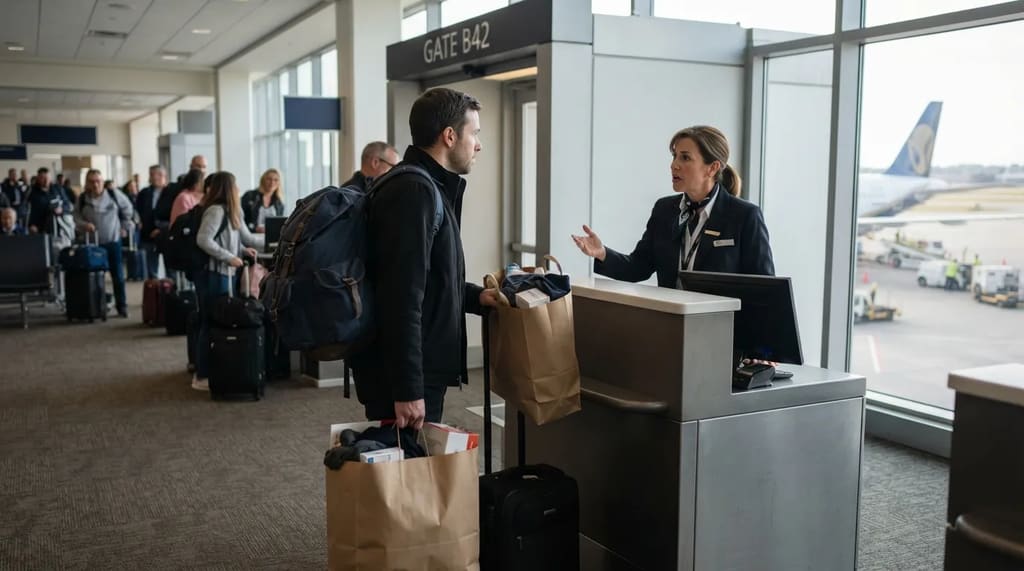
A personal item is meant to fit under the seat in front of you. A stuffed backpack, a rolling bag and a shopping bag are a different story.
Some budget carriers charge for a full-size carry-on, which makes agents watch personal items closely. Tuck the shopping bag inside the backpack before you reach the door.
Packing smart still won’t help if you’re not at the gate when it counts.
#3 – Cutting It Close With One Last Coffee
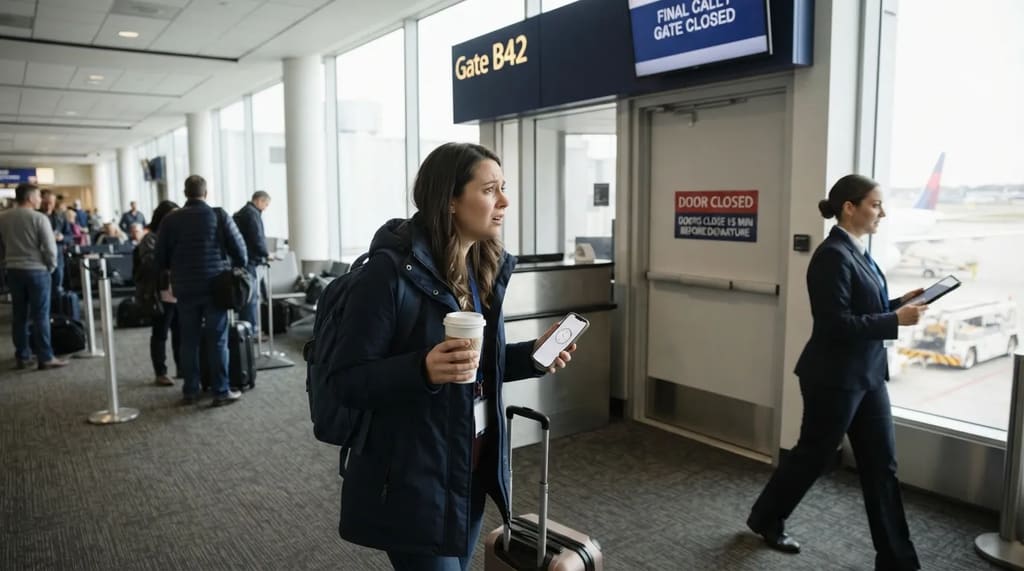
Many airlines close the boarding door about 10 to 15 minutes before departure. Being somewhere in the terminal isn’t the same as being at the gate.
Check the boarding time in the app, and set a phone alarm for that, not for departure. The coffee line never counts as an excuse once the door is shut.
Fast Facts
- Boarding doors often close 10 to 15 minutes before departure.
- Your alarm belongs on the boarding time, not the takeoff time.
- Being in the terminal doesn’t count as being at the gate.
Missing the door is bad, but ignoring your own name being called is worse.
#2 – Ignoring the Final Call
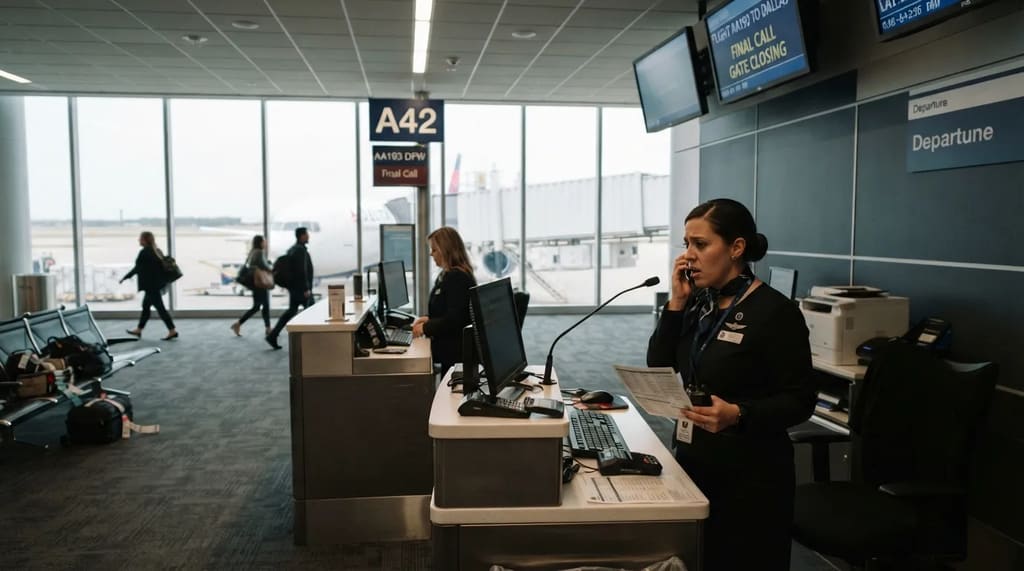
Near the end of boarding, agents start calling the names of passengers who haven’t shown up. As the standby list mentioned earlier suggests, an empty seat rarely stays empty for long.
If you checked a bag, it may have to come off the plane too, which can delay everyone else. Stay within earshot of the gate and listen for your name.
Which brings us to the idea almost every passenger carries without noticing it.
#1 – Believing Back-to-Front Boarding Is the Fast Way In
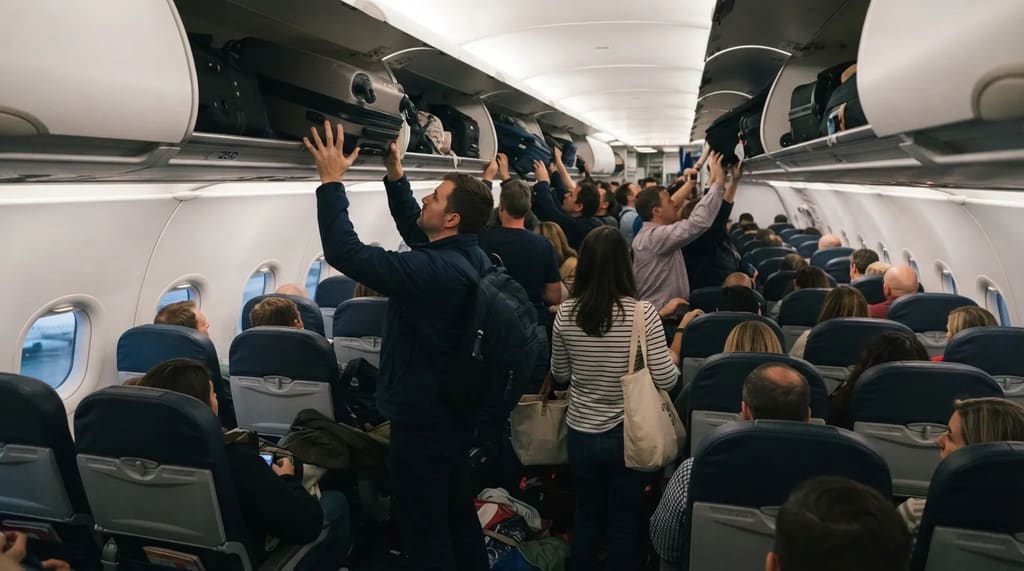
Filling the rear first sounds sensible, since nobody has to climb over anyone. Modeling by physicist Jason Steffen found that boarding back to front is among the slowest ways to do it.7
The reason is the aisle: a whole zone of strangers stows bags in the same few rows at the same time. That is why some carriers, United among them, have tried window-middle-aisle boarding instead.
So the race to the line wins you very little, while a tidy bag and a ready pass save everyone real minutes. The fastest boarding trick on this list is also the dullest: show up ready and let the line do its job.
#26 – The Bonus Tip Nobody Shares
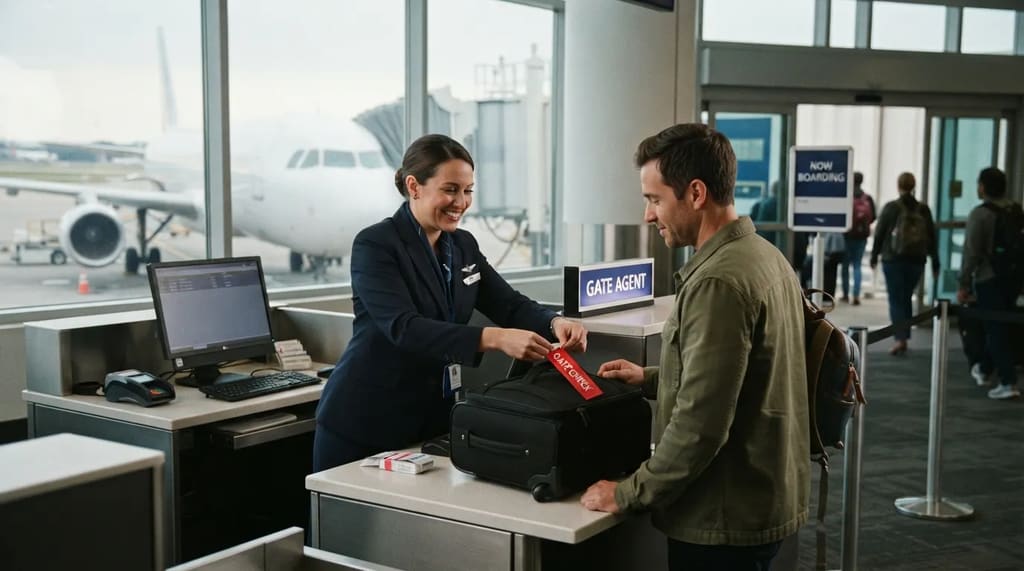
If you’re in a late group, volunteer your bag for gate check before the bins fill. Walk to the desk while boarding is still early and ask the agent to tag your carry-on.
You skip the scramble for bin space, and you stay out of the aisle standoff described in #11. Agents tend to appreciate it because it removes a problem before it starts.
- Step 1: Before you hand the bag over, move medicines, glasses, chargers, your wallet and any electronics with lithium batteries into your personal item.
- Step 2: Ask the agent two things: “Will this be returned to me at the aircraft door or at baggage claim?” and “Is there a fee on this flight?”
- Step 3: Keep the claim tag and snap a photo of it with your phone.
Answers vary by airline and aircraft. On many larger jets the bag comes back at the jet bridge, while on some smaller planes it goes to baggage claim, so ask rather than assume.
- AP American Boarding Test: https://weartv.com/news/offbeat/american-airlines-tests-boarding-technology-that-audibly-shames-line-cutters-cut-the-line-albuquerque-international-sunport-airport-new-mexico-tucson-international-airport-arizona-ronald-reagan-washington-national-airport-crystal-city-virginia
- NPR Gate Lice Syndication: https://wysu.org/npr-national-news/2024-10-24/gate-lice-begone-airline-seeks-to-enforce-order-in-boarding-process
- Upgraded Points American Boarding: https://upgradedpoints.com/news/american-airlines-enforce-boarding-groups/
- NPR Gate Lice Report: https://www.npr.org/2024/10/24/nx-s1-5163184/gate-lice-american-airlines-boarding-passengers
- Southwest Assigned Seating: https://www.southwest.com/customer-enhancements/assigned-seating/
- HuffPost Gate Agents Never Do: https://www.huffpost.com/entry/gate-agents-never-do-passengers_l_69e05321e4b0223b458562de
- Steffen Boarding Simulation Study: https://phys.org/news/2008-02-board-plane.html