Handwashing basins stand at the entrance to the buffet on most cruise ships, and they are the easiest thing on board to treat like decoration. Mealtime mistakes at sea usually cost you a good table or a few dollars, but a few of them cost you days of a trip you have already paid for.
This countdown runs from quiet budget leaks and booking slips to the habits that can sideline a passenger 65 or older. The cheapest fix on the list takes about 20 seconds and no money, and it is saved for last.
First up is the main dining room, which is included in the fare on mainstream lines.
#15 – Paying Extra for a Dinner You Already Bought
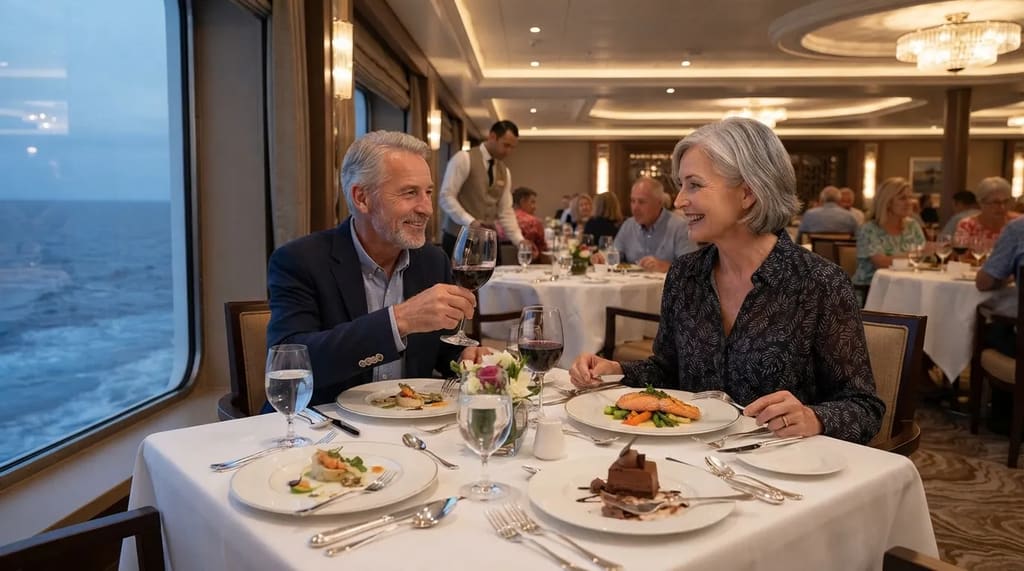
On mainstream lines such as Royal Caribbean and Holland America, dining in the main restaurants is included in your fare, while a specialty restaurant costs extra. That means a passenger who books a paid restaurant on several evenings has already paid for the dining room on those same nights.
The included dinners are multi-course meals, so they deserve a real try before you spend more. Order a starter, a main and a dessert, and you may find the extra charge was solving a problem you never had.
The Points Guy, a travel publication, suggests treating traditional dining as your main option and adding a single specialty reservation, such as a 7:30 table, on one night. That is a sensible ratio.
One paid dinner for an occasion you care about is easy to justify. A string of them mostly duplicates what you have already bought.
The meal is covered by the fare, though the hour you eat it is a choice most lines ask you to make at booking.
#14 – Picking a Dining Plan Without Weighing the Trade-Offs
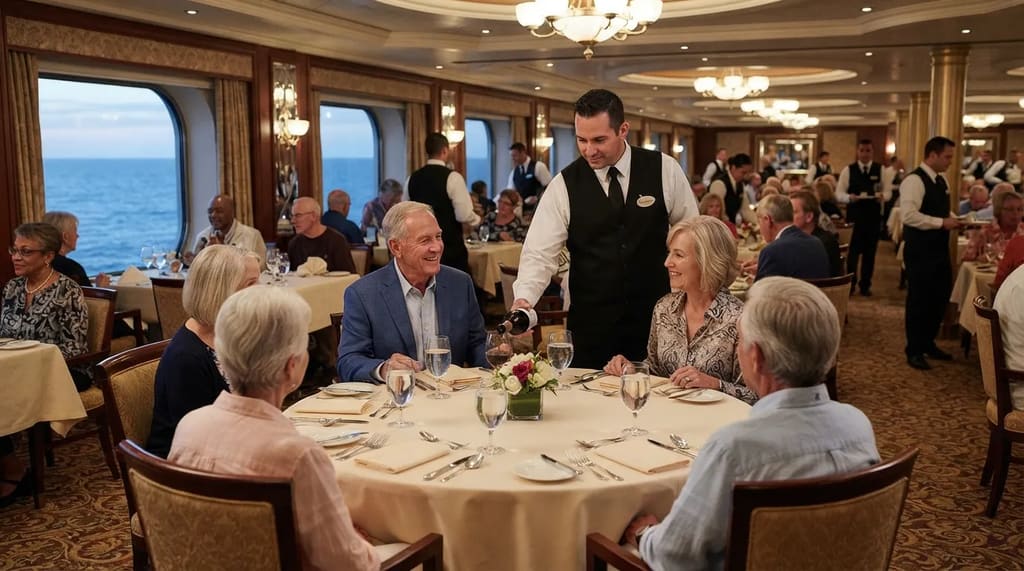
Traditional dining gives you a fixed time, usually early (5:00 to 6:00 pm) or late (7:15 to 8:15 pm), and a dedicated table for the whole cruise. Anytime dining lets you eat whenever you like between service hours, but you will see different servers each night.
Which one suits you depends on how you like to eat. If you keep a steady supper hour, or would rather not stand in a line, traditional is the easier fit, and it needs no reservations.
The trade is company: you might be seated with strangers at a larger table, which pleases some travelers and wears on others. The reward is the same waiter all cruise, and that waiter can become your advocate for special requests and menu recommendations.
Quick Compare
- Traditional: fixed early or late seating, the same table and the same waiter all week.
- Anytime: eat when you like, with different servers and some waiting in line.
- Best for separate cabins: traditional, since one assigned table keeps a group together.
Lines that offer both programs generally ask you to opt into flexible dining when you book, and usually seat the two groups in different dining rooms or different areas of a large one.1 So the decision belongs to the booking call, not to the first evening aboard.1
Flexibility has a cost of its own, because flexible dining always involves lines, even when you make reservations.2
#13 – Walking Into Anytime Dining Without a Reservation
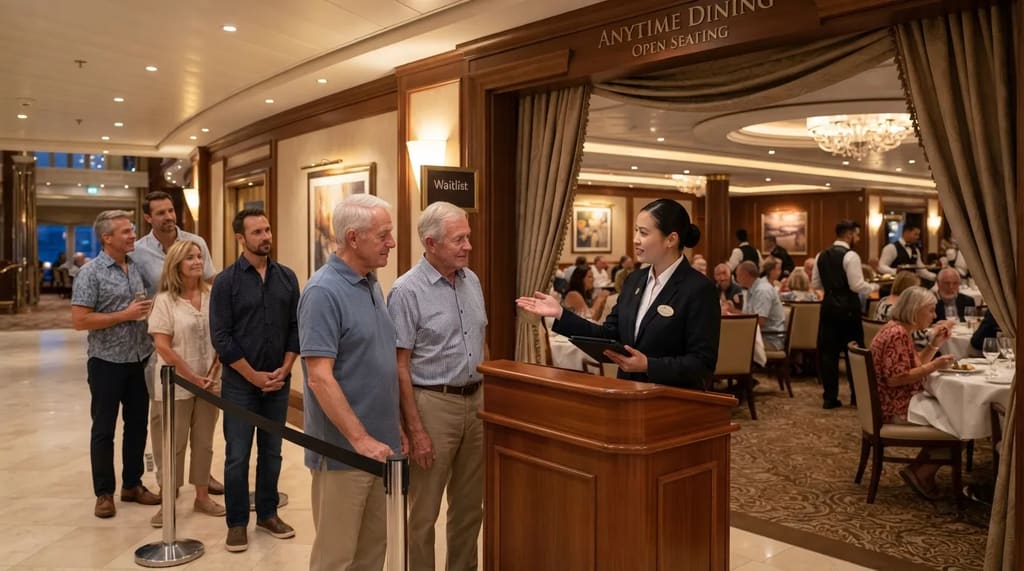
On most lines, passengers who opt into flexible dining can make main dining room reservations for each night of the cruise before sailing. Those with reservations may be offered a priority line, sometimes even a separate section of the dining room.
So a reservation moves you up the queue but does not remove it. A passenger who skips it joins the back.
If you did not book ahead, arrive right when the dining room opens, because the waits are shortest then. Some ships are easier than others, since certain dining rooms are spacious enough to seat walk-ups with little or no wait.
Travel party size changes the math. Traditional dining is the easiest option if your group is spread across several cabins, because one assigned table keeps everyone together.
If you are sailing with friends or family in separate cabins, that alone may settle the choice. And whichever way you go, the next reservation window is even less forgiving.
#12 – Leaving Specialty Restaurant Bookings Until You’re Already at Sea
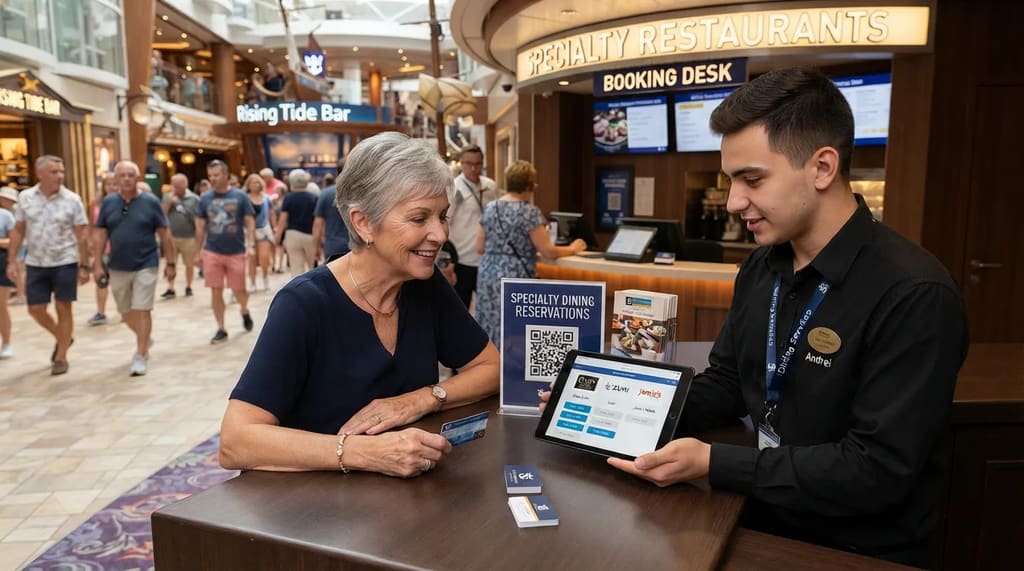
Most cruise lines expect reservations for sit-down specialty restaurants. Royal Caribbean’s dining guide advises booking the most popular ones early, especially for sea days and formal nights.
If you could not book before sailing, the usual advice is to book right after boarding. The first night is also a good choice, since specialty restaurants tend to be less crowded then.
Price is the other reason to plan, since specialty restaurants usually charge either à la carte prices or a cover charge. A bundle of several dinners is usually cheaper per meal than buying each one separately.
Booking before the cruise often beats onboard pricing, but a bundle only pays off if you would really go that many times. If you have one anniversary dinner in mind, book one table and leave it there.
That specialty bill also arrives with a service charge, because Royal Caribbean adds gratuities automatically to specialty dining purchases.3 4
#11 – Tipping Twice for Service Already Charged
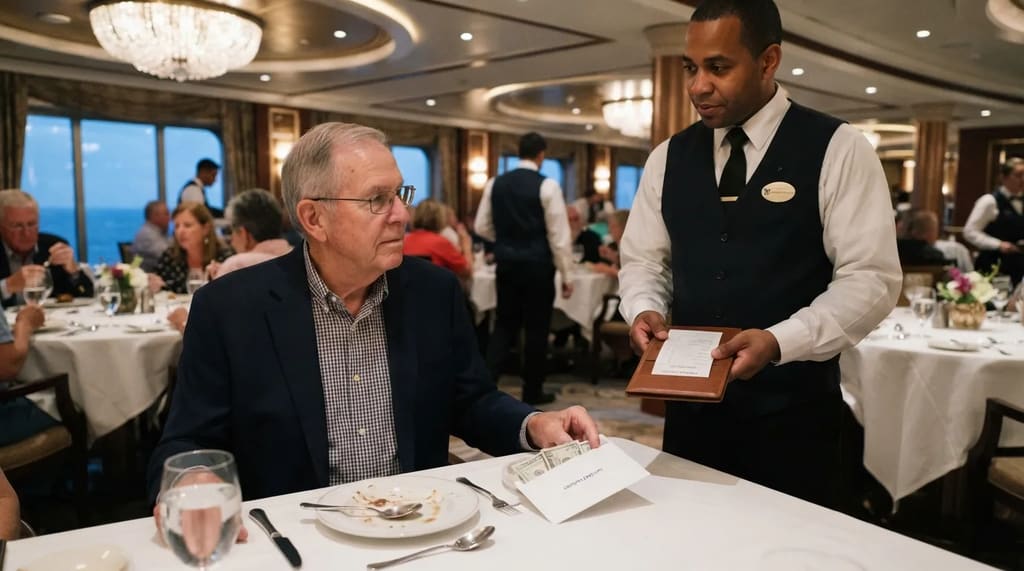
Royal Caribbean’s guide says that gratuities for traditional dining are generally included through the cruise fare or prepaid service charges.3 Those are Royal Caribbean’s rules, and your own line may handle gratuities differently.
So before you put cash in an envelope, look at what your onboard account already shows. Then read your line’s policy.
An extra tip is still welcome. On Royal Caribbean, leaving more for exceptional service is always appreciated, and that makes it a gift, not an obligation.
If the same waiter has remembered your low-salt request every night, the extra is easy to justify. If the service was merely adequate, the charge you have already paid is enough.
Tips are one place the bill surprises people, but the drinks menu is where it really adds up.
#10 – Ordering Wine by the Glass Without Doing the Math
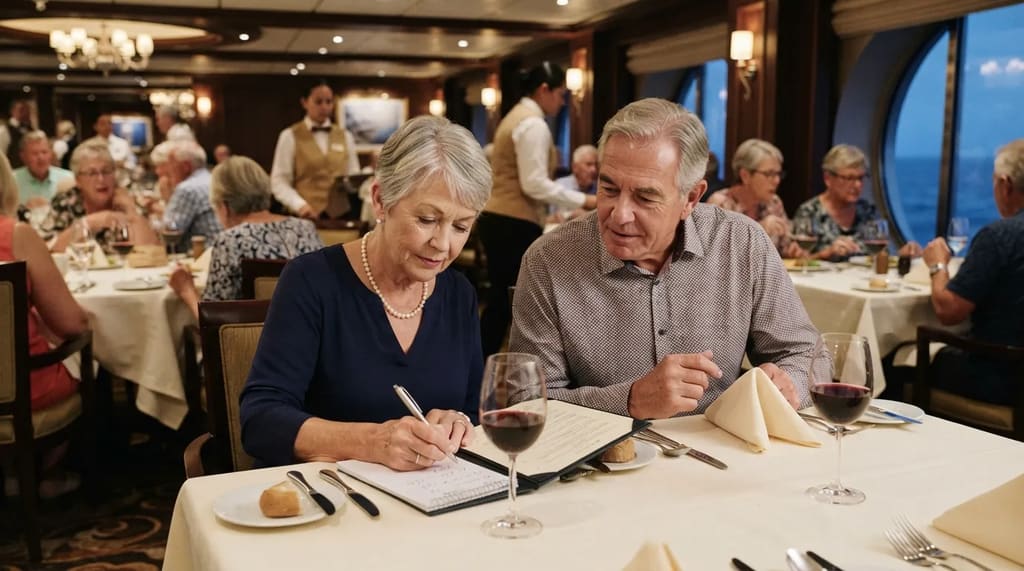
One cruise guide advises that if you plan to order wine with dinner, a beverage package may save money. Prices and terms differ from line to line, but the logic is the same everywhere.
A package is a fixed daily price. It pays off only when the drinks you would otherwise buy at menu prices add up to more than that figure.
A single glass at dinner rarely clears that bar, while a glass at lunch, a cocktail before dinner and wine with the meal might. If your evenings are one glass, skip the package, because the savings come from not buying it.
Whatever goes in the glass, a special diet on the plate is arranged through a different channel, which is telling your travel agent or the cruise line during booking.
#9 – Mentioning Your Diet for the First Time at the Table
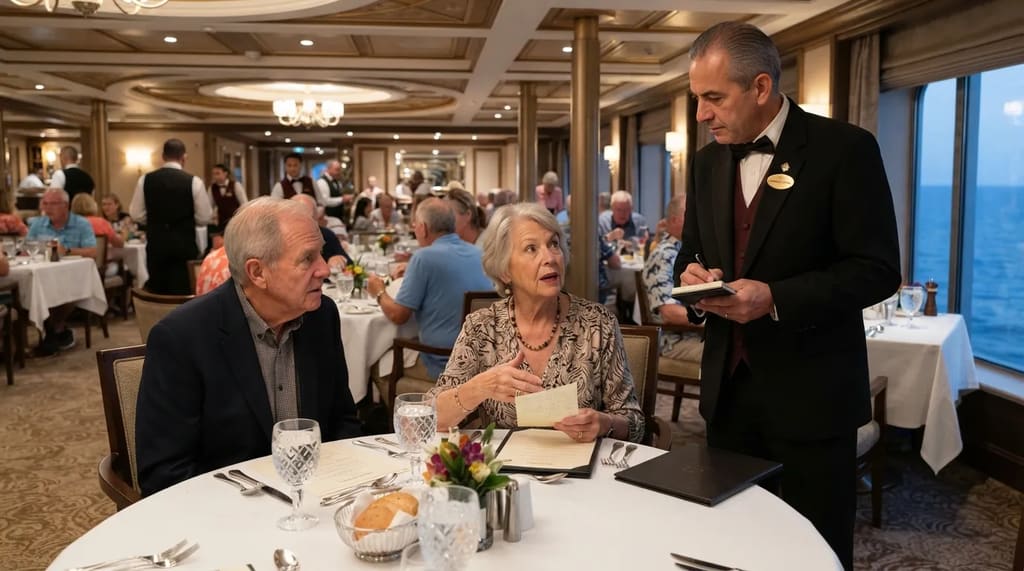
Cruise kitchens can plan around low-sodium, gluten-free, diabetic-friendly and allergy needs, but they plan best when they know early. Most lines ask you to report a special diet at booking or by a deadline before sailing.
Bring it up for the first time on night one, and you are asking a galley that feeds thousands to improvise. Tell the line ahead, and the request has often reached the dining room before you have.
Check your own line’s deadline, because it varies, and ask for the request to be confirmed. Then, on the first evening, introduce yourself to the maître d’ or your head waiter.
That short hello matters most for anyone managing blood sugar, sodium or a serious allergy. A wrong dish is more than a disappointing dinner when your doctor has set the rules.
A confirmed menu protects you in the dining room, but the buffet plays by very different rules.
#8 – Fighting a Buffet Tray Alone at the Lunch Rush
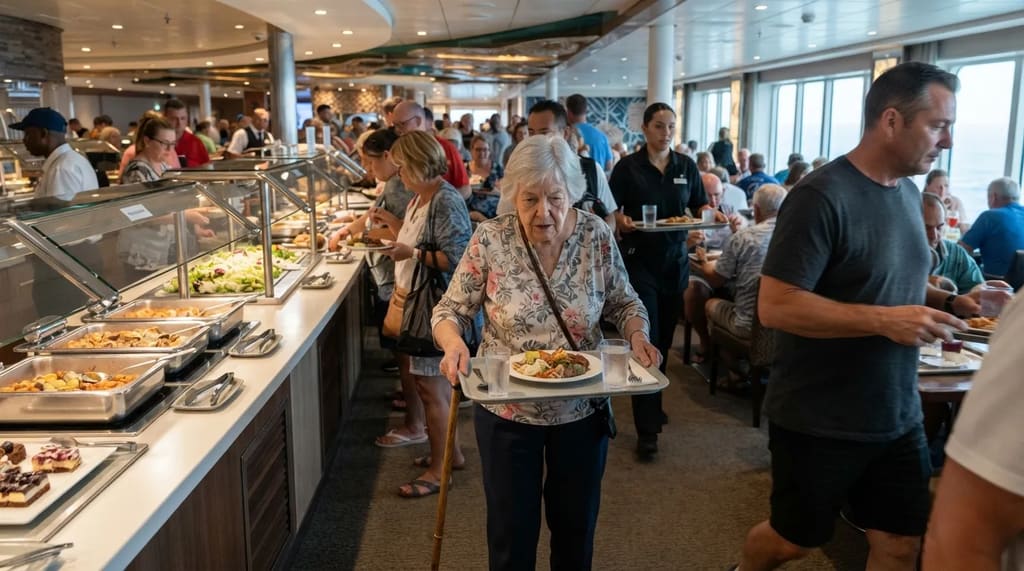
The buffet is the one place on the ship where nobody brings the food to you. You balance a plate, a drink and sometimes a cane or walker through a crowd that is in a hurry.
Crowds swell around the usual mealtimes, and a sea day at 12:30 is a perfect recipe for a collision. Going a little early or a little late buys you space and slower foot traffic.
Ask a crew member to carry your tray to the table. Ship staff are generally glad to help, and asking costs nothing.
Worth Knowing
- Peak crowds gather around the usual mealtimes, especially on sea days.
- Crew members will generally carry a tray for you if you ask.
- A full glass is the easiest thing to spill on a moving ship.
- Two small trips beat one heroic one.
There is no prize for doing it alone, and a slip on a wet floor in a packed buffet is not worth the pride. Getting the food to the table is half the battle, and getting the right table is the other half.
#7 – Never Asking for a Table That Fits Your Body
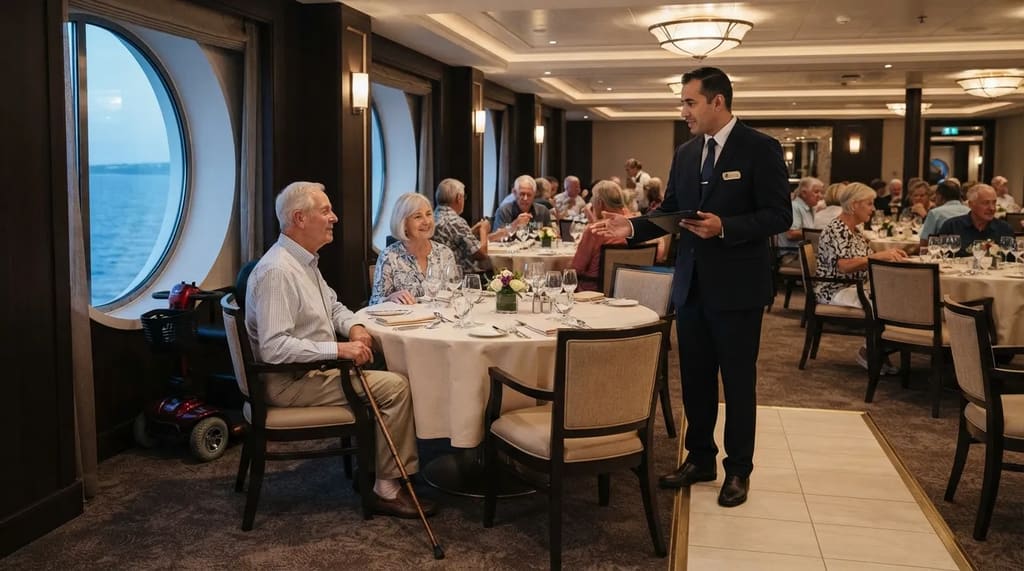
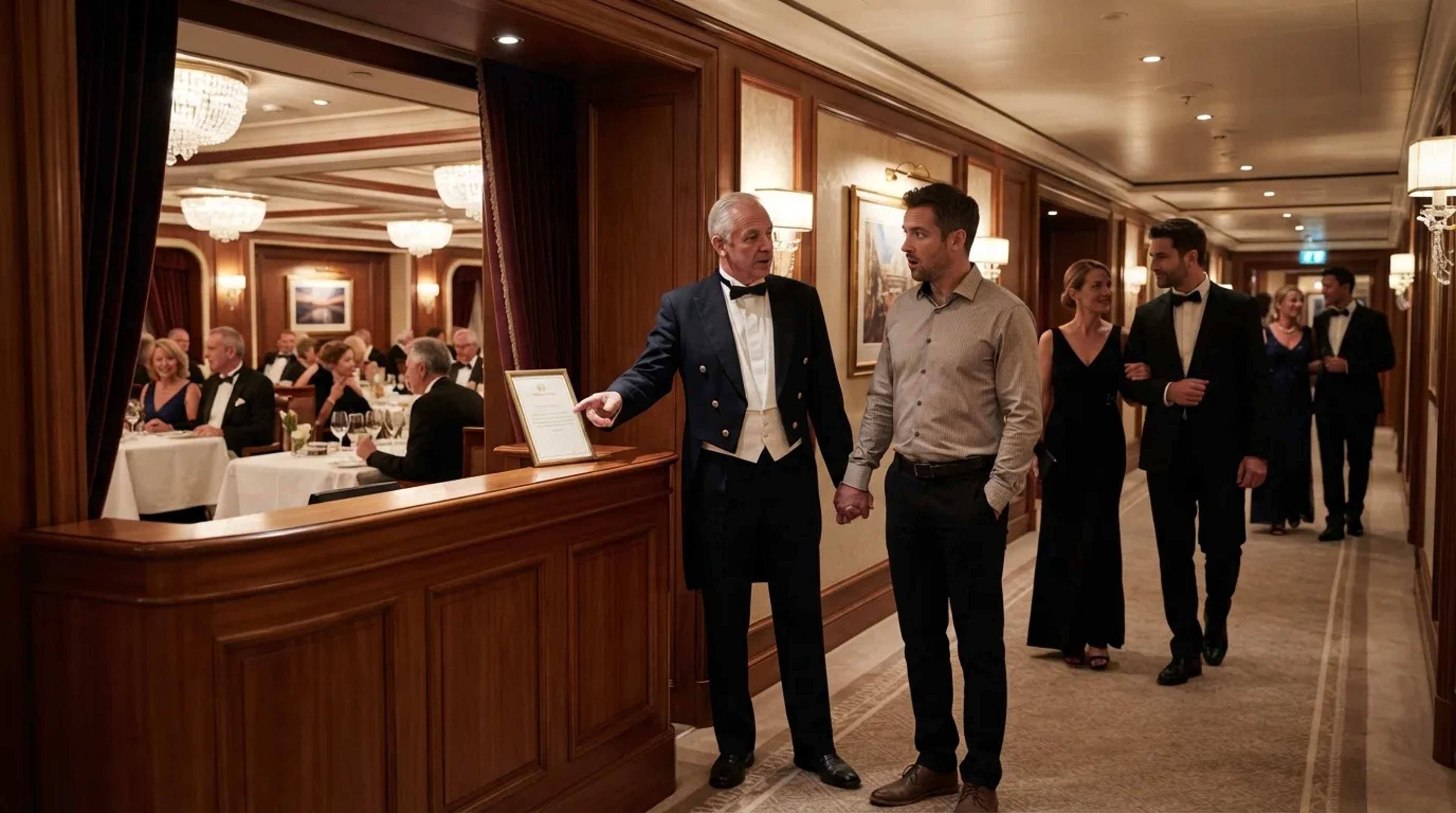
Dining rooms are built for crowds, and the table you get by default is not always the one that suits you. A seat in the middle of a packed room or near the kitchen doors can make a long dinner feel longer.
If you use a walker, a cane or a scooter, tell the maître d’ before the first dinner. Ask for a table with room to maneuver and a short, level route from the door.
Cruise lines generally ask guests with mobility needs to report them in advance so the ship can prepare. Check your line’s accessibility page before you sail.
Hearing matters too. A quieter corner can turn a strained dinner into an easy conversation.
Many travelers never ask, then put up with the wrong table all week. A polite request on night one gives the staff the most time to say yes, and once you are comfortably seated, the next mistake happens with the menu in your hands.
#6 – Ordering One Dish Per Course
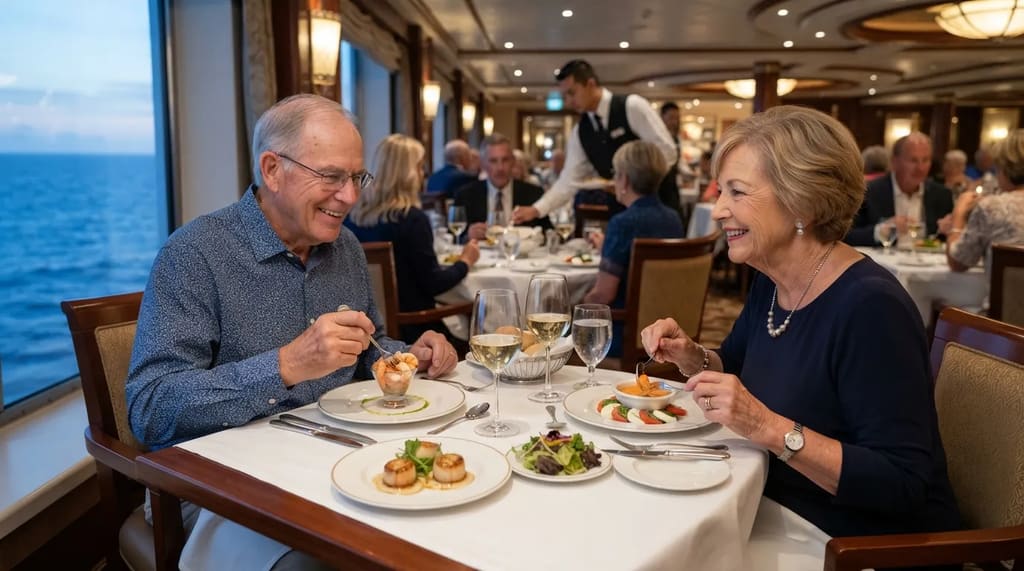
Main dining room menus list appetizers, entrées and desserts, and many passengers assume that means one of each. On many mainstream lines you can order a second appetizer or two desserts at no extra charge, though dishes marked with a surcharge still cost extra.
That matters for older travelers who prefer lighter meals. Two starters and a small salad can make a better dinner than a heavy entrée.
It matters for curiosity too. If you cannot decide between two dishes, ask your waiter whether you can try both.
The same waiter relationship from earlier pays off here. A server who knows you like small portions and little salt will steer you without being asked.
A menu is a suggestion, not a rulebook. But you can only order from the venues you know are open, and that depends on a piece of paper many passengers never read.
#5 – Never Reading the Daily Schedule
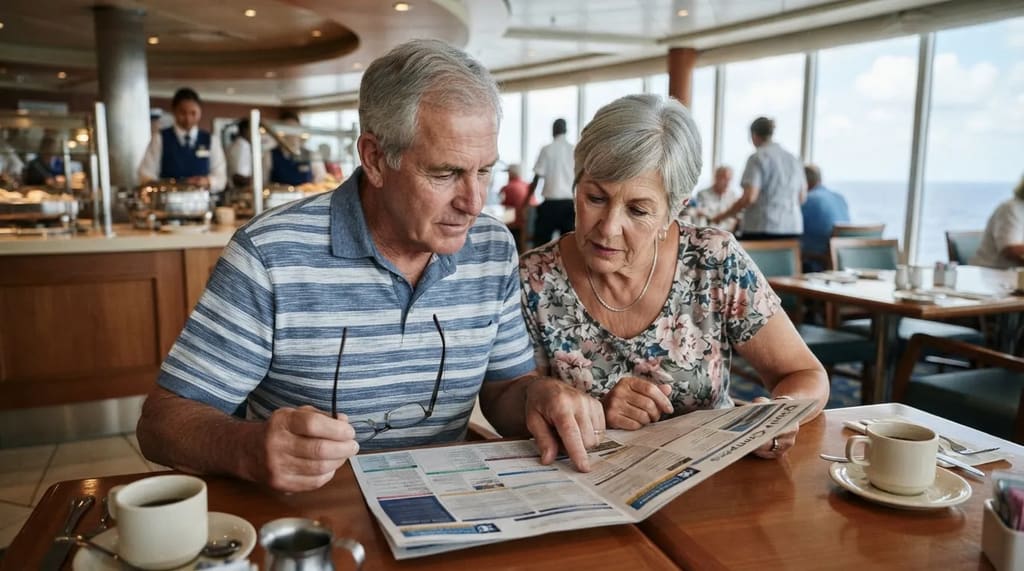
Every day the ship delivers a program to your cabin or your phone, such as Royal Caribbean’s Cruise Compass. It lists the hours for dining rooms, buffets, cafés and specialty restaurants, and those hours shift between port days and sea days.
Skip it, and you can arrive at a venue that has just closed. You can also miss the lunch you were looking forward to, or the one night a special menu was on offer.
On lines that have them, dress notes and theme nights appear there too, so formal night never arrives as a surprise. That alone saves a frantic trip back to the cabin.
Take two minutes with the schedule over coffee the evening before. Circle the meals you care about and the hours you cannot miss.
A ship runs on a tight timetable, and reading it is the cheapest way to avoid missing a meal. While you have it open, notice what it does not list: the water you should be drinking.
#4 – Paying for Bottled Water, or Barely Drinking Any
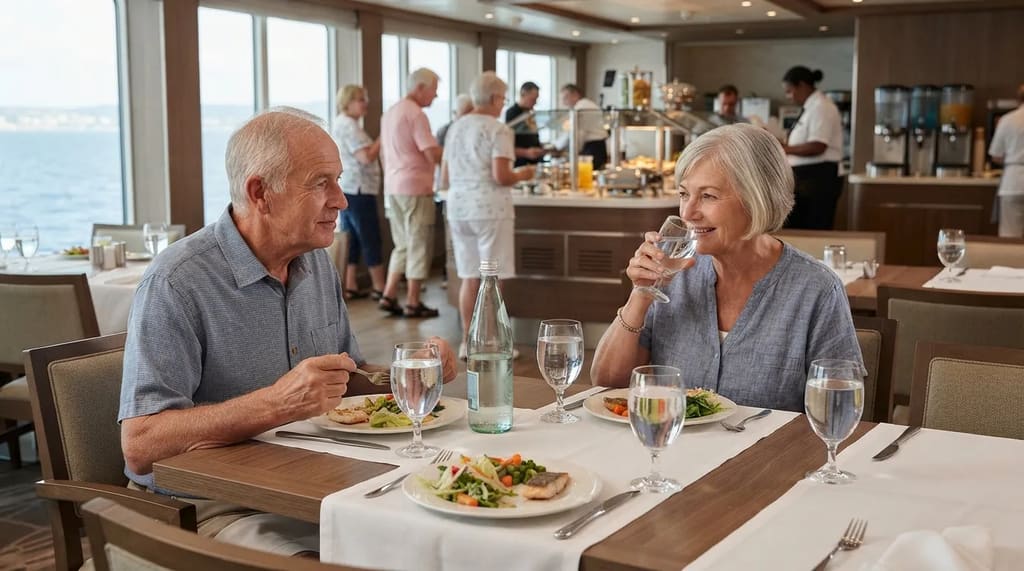
The most expensive glass of water on a ship is the one you buy by the bottle. Water, coffee and tea are generally free at the buffet and in the dining room.
The bigger problem is not the price. Health agencies note that older adults may feel thirst less sharply, so the body can need fluids before it says so.5
A day of sun on deck, salty food and a cocktail can all pull in the same direction. A ship makes it easy to forget that glass of water entirely.
Make a glass of water the first thing on the table at every meal. If your line allows it, fill a reusable bottle at a water station each morning.
Related Stories From Travelbinger


That habit costs nothing, and it is easier than treating a headache or a dizzy spell on day three. Water works best on a schedule, and so do pills, which is where the ship’s dining clock can quietly cause trouble.
#3 – Letting Ship Time Rewrite Your Medication Routine
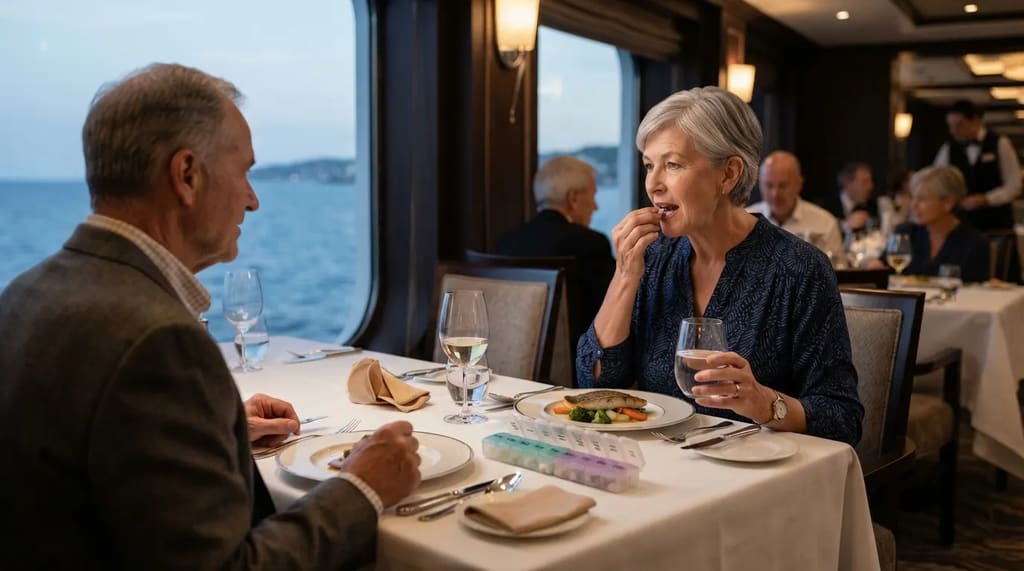
At home, your meals and your pills probably move together. On a ship, a late seating or a long excursion day can push dinner far from where your routine expects it.
If any of your medications need to be taken with food, a late dinner or a skipped lunch can throw off the whole day. Ask your doctor or pharmacist before you sail how to handle it, especially if time zones will change.
Once aboard, choose the dining plan that fits your routine. Early traditional dining, for example, runs around 5:00 to 6:00 pm.
At a Glance
- Ask your doctor or pharmacist how to time food-linked medicines before you sail.
- Early traditional seating is around 5:00 to 6:00 pm, and late seating is around 7:15 to 8:15 pm.
- Keep a small snack in your bag on shore days.
- Pack your medicines in your carry-on, not your checked suitcase.
Keep a small snack in your bag on shore days. Carry your medicines in your carry-on too, because a delayed suitcase could separate you from them.
This is one of the few mistakes on the list where the cost is your health, not your wallet. The fix is a short conversation before you pack, and the buffet is where the stakes climb next.
#2 – Treating the Buffet Like a Home Kitchen
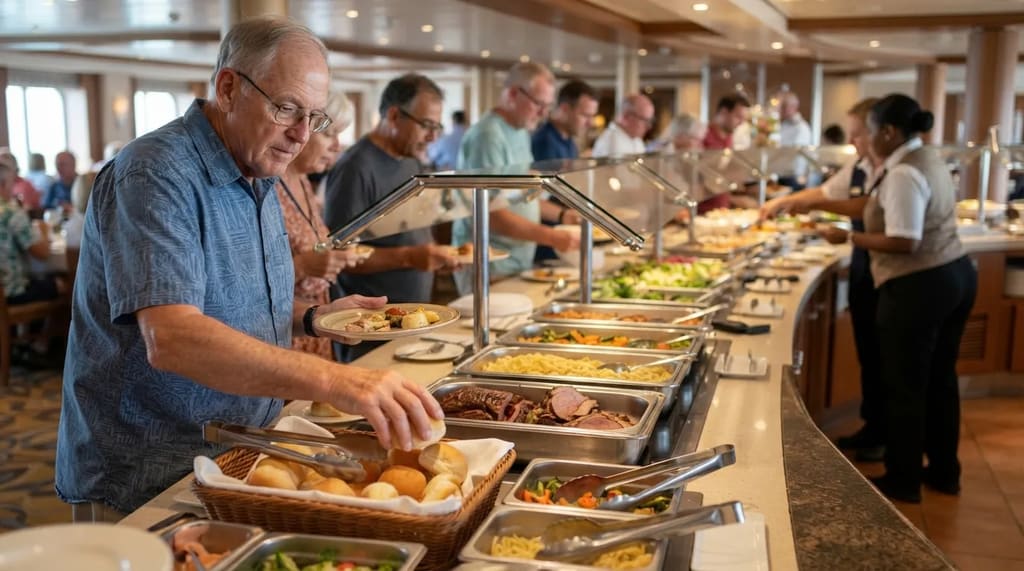
Buffet habits that feel harmless at home are the ones that spread germs in a crowd. Picking up a roll with your fingers, going back with a used plate and tasting from a serving spoon are the usual culprits.
Serving utensils pass through a long line of hands over a single meal. Many ships now have crew members serve the food, but where it is self-service, touch only the spoon you need.6
Take a fresh plate for every trip, and never put something back once it has touched your plate. If you change your mind, leave the food on your plate rather than returning it to the tray.
Pay attention to temperature too. If a hot dish is lukewarm or a cold dish is not cold, pick something else.
All of this is a way of protecting your hands, and your hands are where the biggest mistake of all begins. None of it matters if that mistake already happened at the door.
#1 – Walking Past the Handwashing Basins
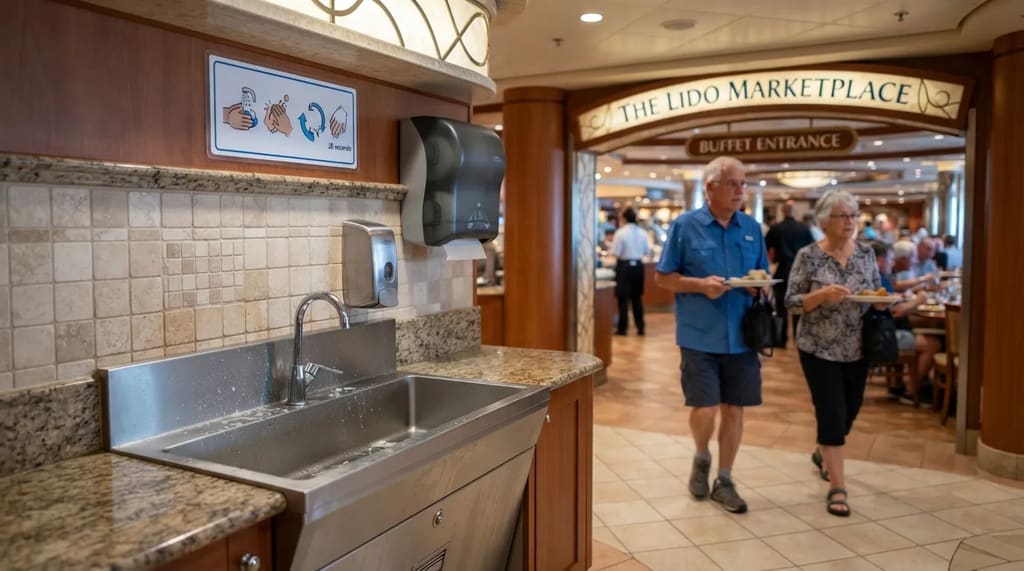
Which brings us back to the basins at the buffet door. The most important meal habit on the whole ship is also the cheapest: wash your hands with soap and water for about 20 seconds before you eat.
Hand sanitizer is not fully effective against norovirus, and the CDC says it should not replace soap and water.6 That is why those basins are there.
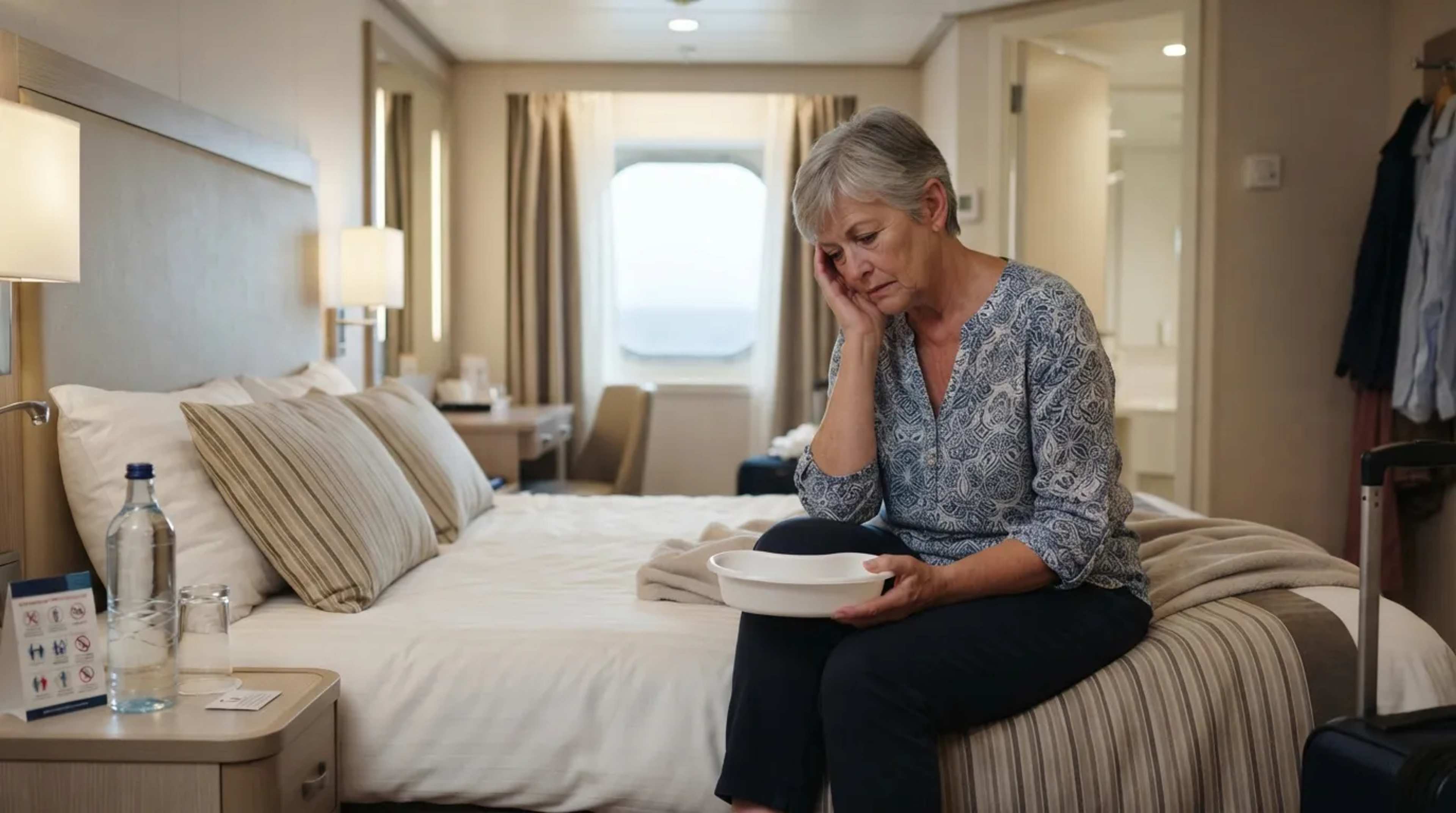
Norovirus is a stomach bug that causes vomiting and diarrhea, and it is the usual culprit in outbreaks reported on cruise ships. It spreads easily in close quarters, and older adults are among the people for whom it can be most dangerous.
Fast Facts
- Soap and water for about 20 seconds is the standard, and sanitizer is no substitute.
- The CDC’s Vessel Sanitation Program scores ships out of 100, and 86 or higher is passing.7
- The CDC’s public outbreak list begins when 3% or more of passengers or crew report stomach illness.
- The illness usually lasts one to three days.
- An inspection score is a snapshot, and it cannot rule out an outbreak on a later sailing.
Wet, lather, scrub, rinse and dry, and do it before every meal and after the restroom. Do it again after touching railings, elevator buttons and door handles.
The line at the basin can feel slower than a squirt in the palm. But 20 seconds and no money is a small price compared with a day or two stuck in the cabin on a trip you already paid for.
Most of the mistakes on this list cost a few dollars or a worse evening. The one at the top can cost the trip itself.
The ship will feed you well whether you get any of this right. What changes is whether you spend the week at the table or in the cabin.
- Points Guy Traditional Dining: https://thepointsguy.com/cruise/my-time-dining-vs-traditional-dining/
- Cruise Critic Dining Comparison: https://www.cruisecritic.com/articles/flexible-versus-traditional-cruise-dining
- Royal Caribbean Dining Guide: https://www.royalcaribbean.com/guides/specialty-dining-vs-main-dining-room
- Royal Caribbean Gratuity FAQ: https://www.royalcaribbean.com/faq/questions/specialty-dining-package-gratuity
- Hydration Strategies in Older Adults: https://pmc.ncbi.nlm.nih.gov/articles/PMC12300510/
- WFTV Cruise Sanitation Report: https://www.wftv.com/news/9investigates/cdc-inspection-shows-sanitation-problems-cruise-ships-food-safety-violations-failing-scores/LLQ65ICVNBDFLGWPIP6DZRXPJU/
- Fox News CDC Sanitation Scores: https://www.foxnews.com/travel/cruise-ships-worst-cdc-sanitation-scores-revealed-see-which-vessels-failed-inspection