
Before a conductor ever scans your ticket, they’ve already read you. Where you stand on the platform, how you haul your bags and whether your phone is on vibrate all show before you sit down. Amtrak’s own rules cover most of it, and slipping up costs something small but real: a slow line, a lost seat, a $20 excess bag fee.
These 21 courtesies run from two-second habits to one you have to start days ahead. Some are so tiny you’d never guess anyone noticed. The last is the one that changes the whole trip for anyone who needs a hand getting aboard, and its deadline is easy to miss. Start with the ticket.
#21 – A Ticket Barcode Already Open on Your Phone
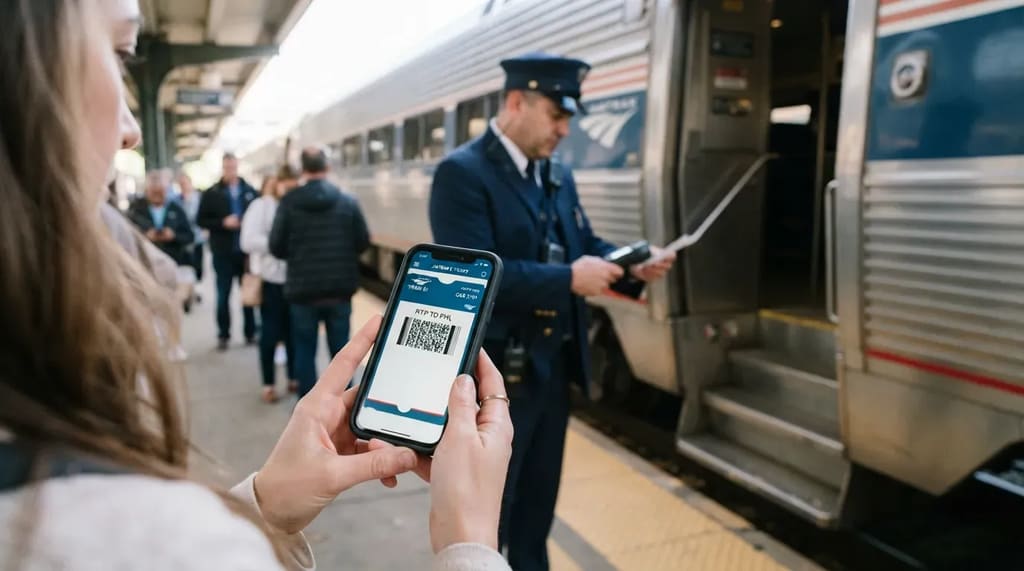
Amtrak has offered electronic tickets on all of its train routes since June 2012, so the barcode on your phone is the first thing you’ll be asked for. Open it before you reach the front of the line, not while you’re standing at the steps with a bag in each hand.
A station stop is short, and a line of riders is waiting behind you. If the ticket scans in a second, the conductor has a minute left over for the passenger who needs a hand. Have the barcode open before you reach the door. Charge your phone before you leave home, and keep a printed copy as a backup.
The next habit starts a few feet earlier, on the platform itself, where one painted stripe decides who stays safe.
#20 – Staying Behind the Yellow Line on the Platform
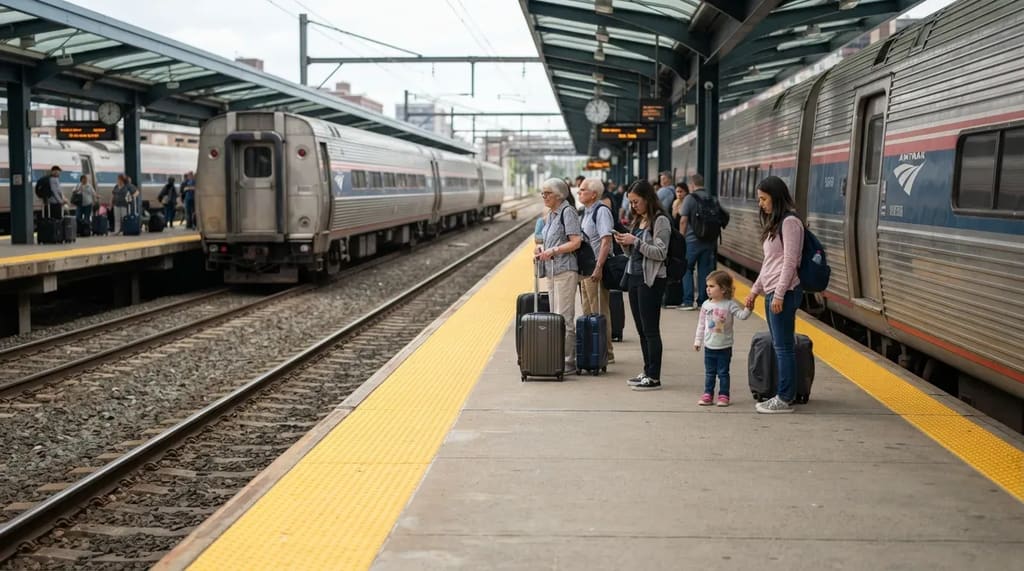
The stripe at the platform edge does more work than any sign in the station. Amtrak tells riders to stay well behind the yellow safety surface and never try to board or exit a moving train.1 That holds even when the train is late and you’re itching to be first on.
If you’re traveling with a grandchild, Amtrak also advises helping children when boarding and leaving the train, so keep a hand on the child nearest the edge. In an emergency on the platform, Amtrak personnel will instruct you where to go, and you should never try to cross the tracks. Never board or exit a moving train.
Once the doors open, the rule that matters most has nothing to do with getting yourself on.
#19 – Letting Passengers Step Off Before You Step On
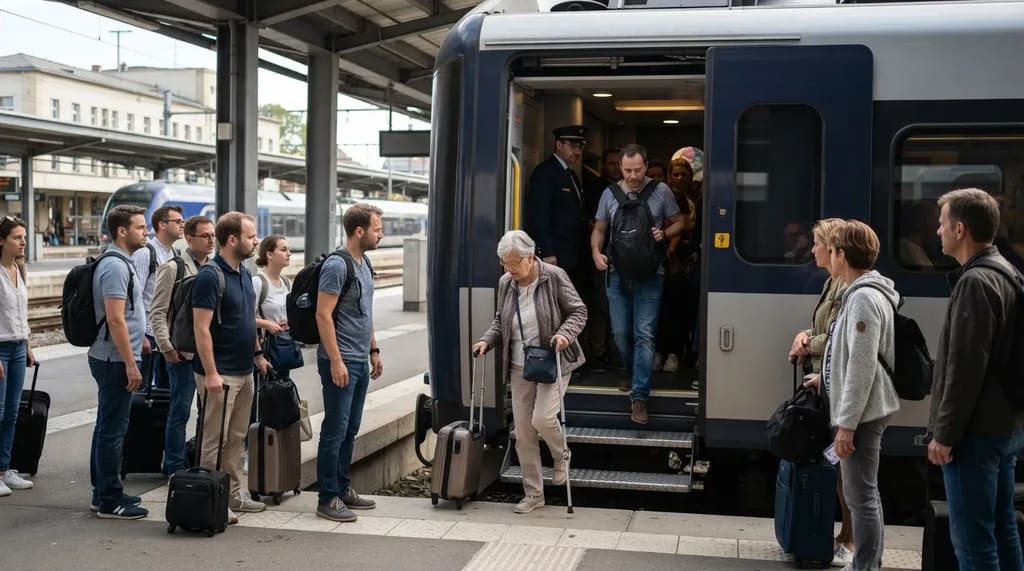
A train doorway fits one person at a time, and it’s used in both directions. A Business Insider etiquette roundup says passengers should allow those exiting the train to do so first before getting in themselves. On a busy platform, that means holding your spot a few steps back until the exit stream thins.
Someone stepping down with a suitcase can’t see their footing if you’re already crowding the step. A traveler with a cane or a bad knee needs that extra second most of all. Let everyone step off before you step on.
Some riders are meant to go ahead of the rest, and it helps to know who before you step out of line.
#18 – Waiting Your Turn When Priority Boarding Is Called
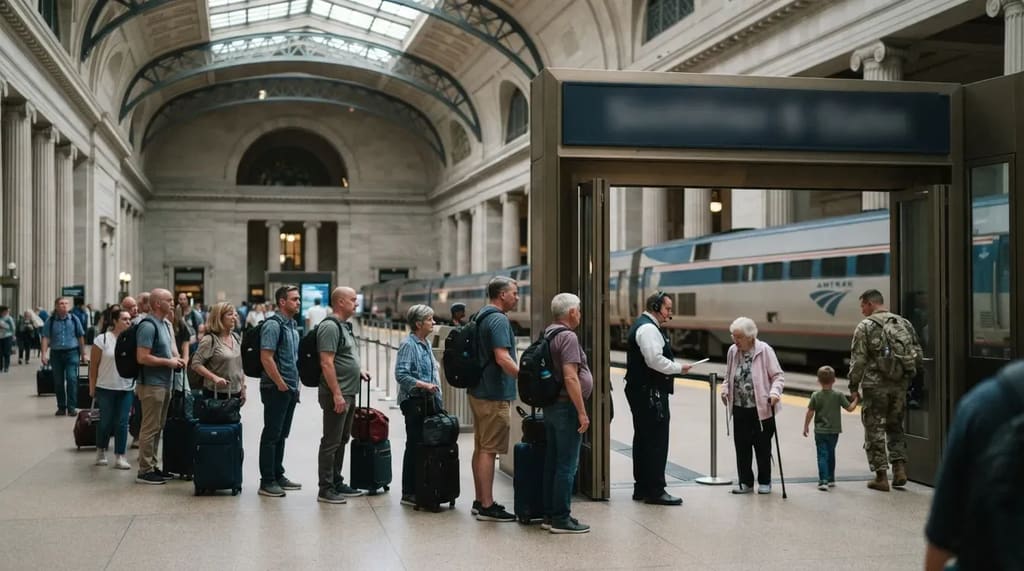
Coach passengers board last, and that’s by design. At a busy station like Chicago Union Station, boarding agents let seniors, active military, families with small children and Business Class or bedroom ticket holders on before the rest of the coach passengers. Boarding generally runs from riders who need assistance, to Business Class and sleeper passengers, then coach.
If you’re in coach, listen for the announcement and follow the line of passengers back from the gate to find your place. If you’re unsure whether it’s your train, ask the people in line. Coach boards after assistance, Business Class and sleeper passengers.
At a Glance
- First on: riders who need assistance
- Second: Business Class and sleeper passengers
- Last: coach passengers
- At busy hubs: seniors, active military and families with small children may also go ahead of coach
Once you’re through the door, the next hazard is under your feet, and Amtrak names it specifically.
#17 – Gripping a Handhold Between Cars
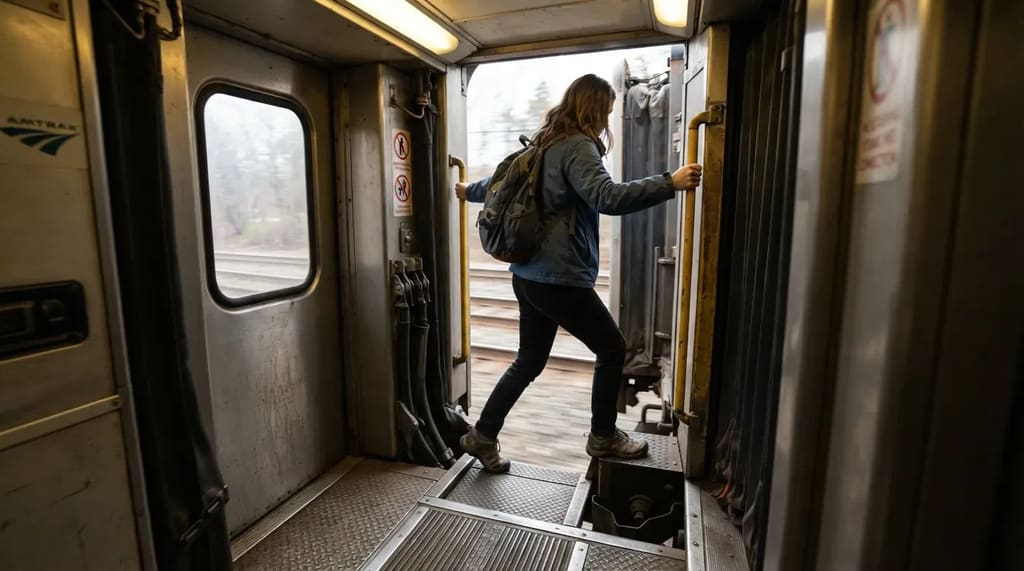
The slipperiest spot on a train is the space between cars. Amtrak warns that vestibules can be slippery when you’re walking from car to car with the train in motion. Its advice is to hold the handholds, luggage racks or seatbacks when you enter, exit, or move through the train.
Moving through a swaying car one hand at a time also keeps you from lurching into a crew member or a seated passenger. Take the same care on the steps, since Amtrak says to watch your step when boarding and leaving the train. Use a handhold, rack or seatback whenever the train is moving.
Your bags need the same attention as your feet, and one small tag on the handle can bring them back to you.
#16 – A Bag Tag With Your Name and Address
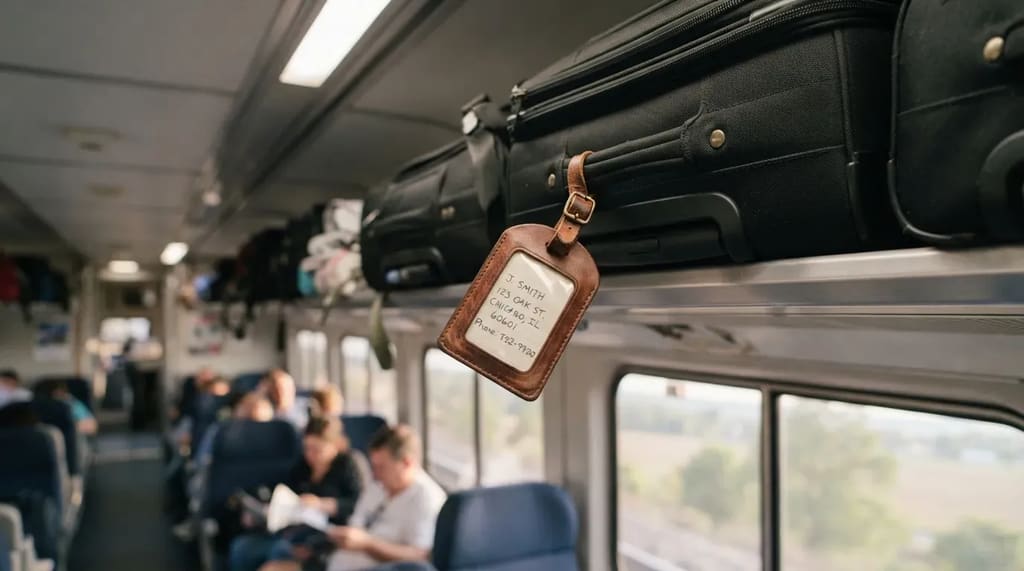
Amtrak asks for one thing on the outside of every bag. It tells passengers to put a tag with your name and address on the outside of all your bags. It costs a few cents and takes half a minute at the kitchen table.
Bags are meant to stay with you, since Amtrak says carry-on and personal items must be kept with you. Even so, luggage sits in racks above the aisle, where black roller bags look a lot alike. A name on the handle settles a mix-up in seconds. Put your name and address on the outside of every bag.
A tag helps once a bag goes astray. Fitting the size rules keeps a bag from being turned away at the door in the first place.
#15 – A Carry-On That Passes the Station Sizer
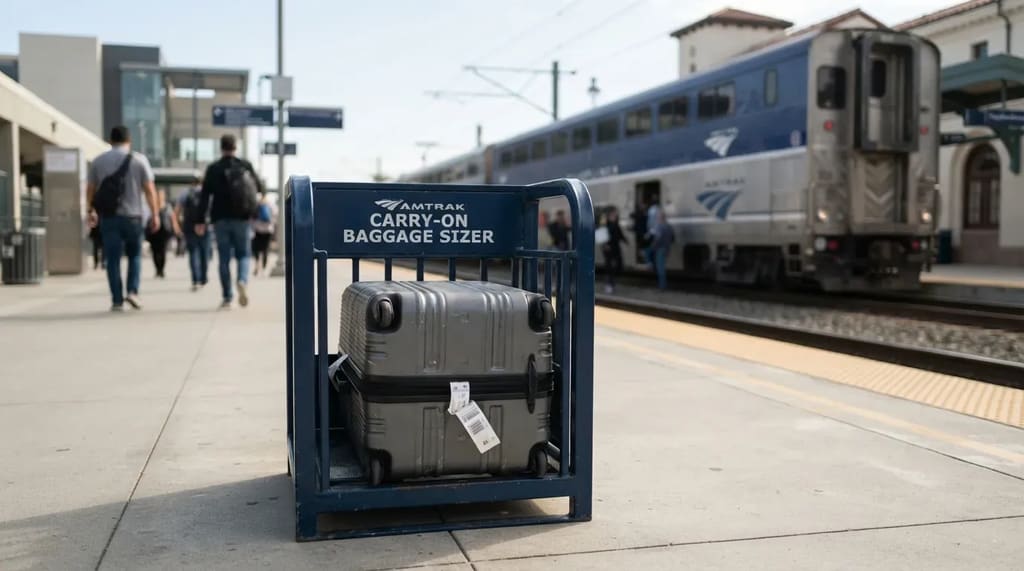
Amtrak’s baggage limits are generous. Each passenger gets two carry-on items of up to 50 pounds and 28 x 22 x 14 inches each,2 plus a smaller personal item that has to fit under the seat. Be aware that bags must fit in the sizer at the station.
On the Pacific Surfliner, the depth drops to 11 inches. A bag over the weight limit doesn’t get waved through; it must be repacked under 50 pounds, and boxes are sold at staffed stations to help. Repack at home and the problem never reaches the platform. Two carry-ons, 50 pounds and 28 x 22 x 14 inches each.
Fitting the size rule is one test. Getting the bag onto the rack is another, and you’ll have to do it yourself.
#14 – Keeping Bags Off the Empty Seat
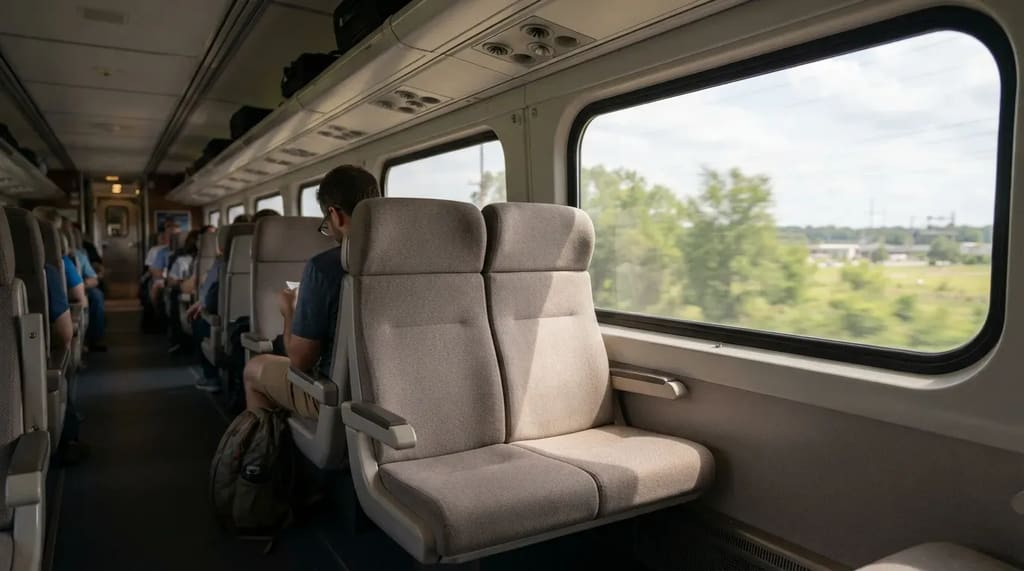
A bag on the seat beside you takes a place a paying rider could use. Amtrak says not to store items in empty seats, aisles, vestibules or other areas where they may cause annoyance to other passengers or present a safety hazard. The Quiet Car has an explicit version: one seat per person, and no adjacent seat space for belongings.
The bag-on-the-seat trick is never worth it. On a crowded train, the passenger who asks you to move it holds the stronger hand, because an empty seat may belong to someone boarding at a later stop. Business Insider’s etiquette roundup also lists placing bags on seats among things to avoid. Use one seat per person, and keep your belongings off the next one.
#13 – Lifting Your Own Carry-On Overhead
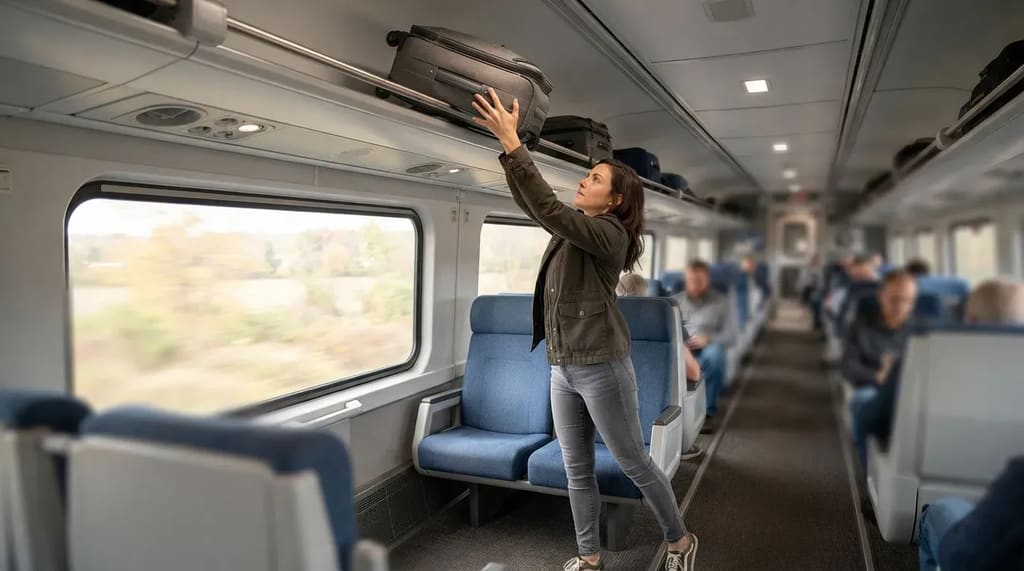
The rule on the racks is short: you do the lifting. Amtrak says passengers must be able to safely lift carry-on items over their heads onto the luggage shelf.2 That’s where the 50-pound limit from the sizer and your own shoulder can disagree, because a legal bag can still be too heavy for you.
If lifting is a problem, split the load into smaller bags. Where checked baggage is offered, you can check two bags through to your final destination free of charge. If you need help at the station, use only authorized Amtrak Red Cap service. You must be able to lift it overhead yourself.
Some items should never go up on that rack at all, and you’ll want them within reach.
#12 – An Under-Seat Bag for Medications and Documents
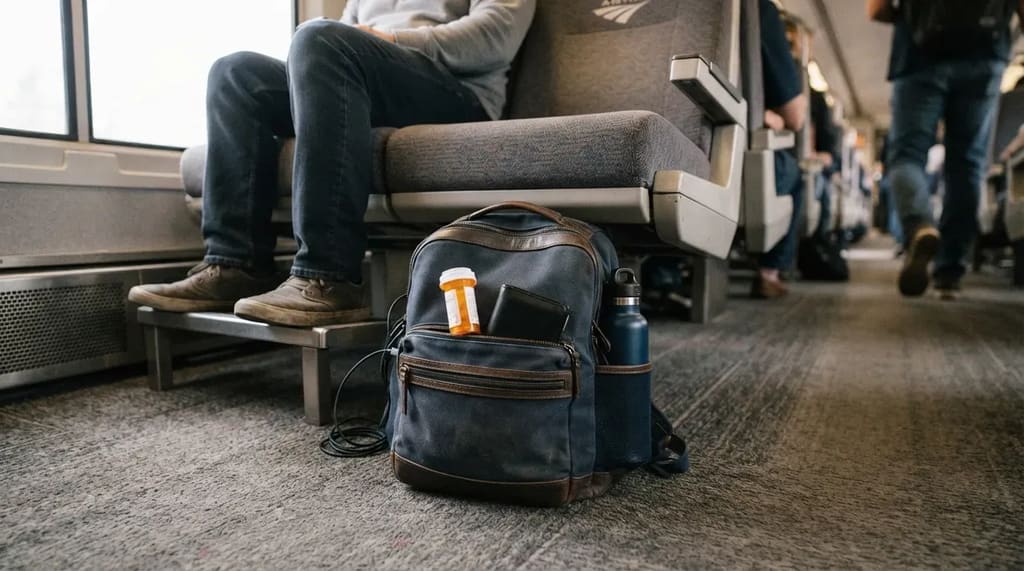
Think of the overhead rack as a place you can’t reach until your stop. Amtrak says personal items such as a small bag or backpack must fit under the seat, which makes that bag the right home for your wallet, documents, medication, water and charger. A pill bottle in the rack means standing, reaching and blocking the aisle just to take a dose.
Every trip to the rack interrupts the passenger across the aisle and anyone walking the car. Put the ticket and your ID there too, since you’ll need both soon. Keep wallet, medication and charger in the under-seat bag.
Where you sit with that bag matters too, and on some trains the conductor has already decided it for you.
#11 – Sitting Where the Conductor Sends You
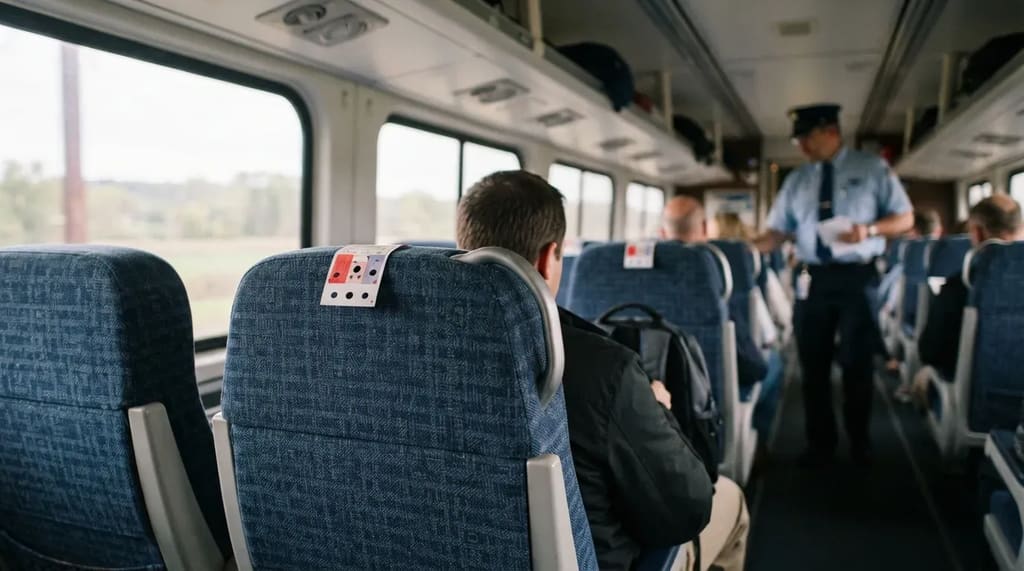
On some trains, the seat you pick has been picked for you. Conductors often load cars with passengers getting off at the same destination, which makes the stops easier for everyone. In the U.S., a conductor may also place a seat check over your seat showing your destination.
That’s why a polite “where would you like me?” beats a seat of your own choosing. Leave the seat check where it was put. Seat checks are changed frequently, so riders can’t keep and reuse them, which means yours is part of the crew’s system. Leave the seat check where the conductor put it.
Worth Knowing
- Conductors often group riders by destination to speed up each stop.
- A seat check over your seat can show where you’re headed.
- Seat checks are changed frequently, so they can’t be kept or reused.
- If you’re unsure a seat is open, the conductor can help check.
Even with a seat assigned, the empty one across the aisle can look better, and sliding over has a catch.
#10 – Not Switching Seats Without Updating Your Reservation
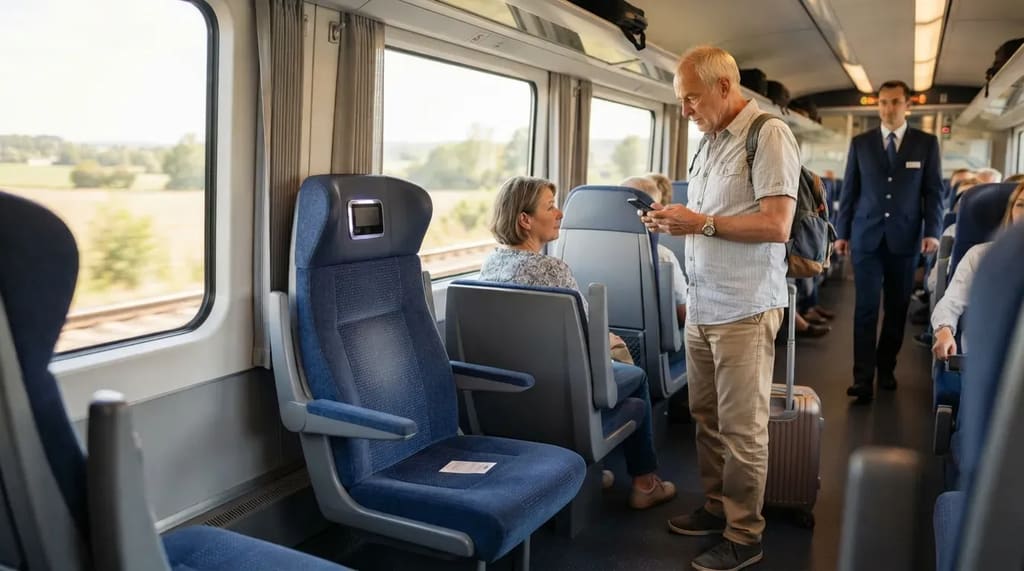
An empty seat isn’t always an open seat. It may be booked by someone boarding at a later stop. The advice in one rider guide is to change your seat in the app before you move, and the conductor can help check whether a seat is open between your origin and destination.
Staying put is the better bet. Extra legroom for forty minutes isn’t worth a standoff with a ticketed rider at the next station, and you’re the one who has to gather the bags and move again. Ask first and you’re the passenger who solved a problem, not the one who created it. Check that the seat is free for your whole ride before moving.
When the conductor does reach your row, another small item comes out: the proof for a discount you may have earned.
#9 – Proof of Age Ready for the Senior Fare
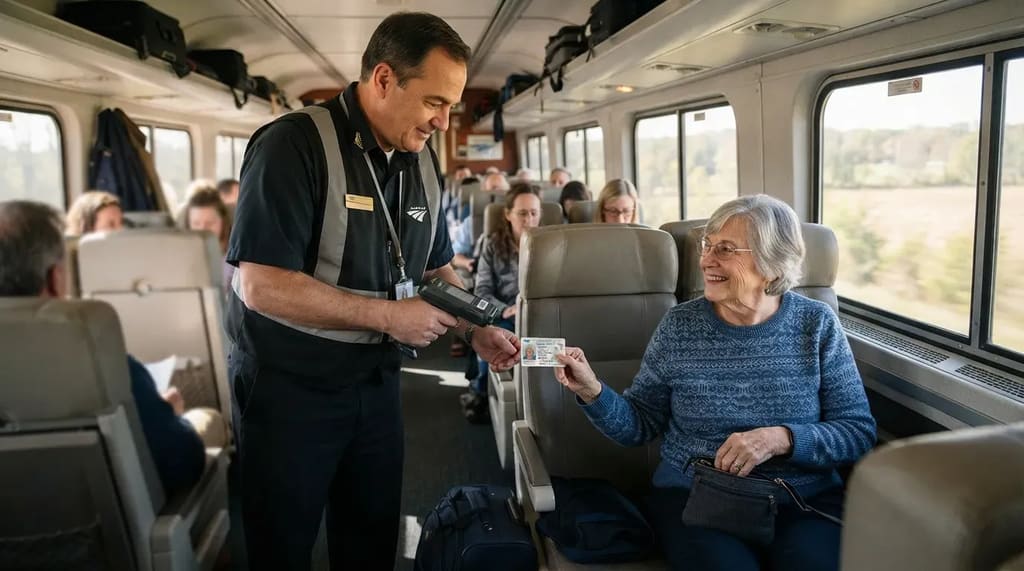
Amtrak gives travelers 65 and over 10% off most rail fares on most trains.3 If you booked that fare, Amtrak may ask for proof of age when you buy or once you’re onboard. Keep a photo ID where you can reach it without getting up.
That ties straight back to the under-seat bag from #12. If your ID is in the carry-on you just lifted onto the rack, you’re standing up in a moving car, in front of a conductor who has a full train to work. Keep it in a pocket instead. Seniors 65 and over get 10% off most fares.
The small device in your pocket has rules of its own, and Amtrak has put them in writing.
#8 – Phone on Vibrate and Your Voice Kept Low
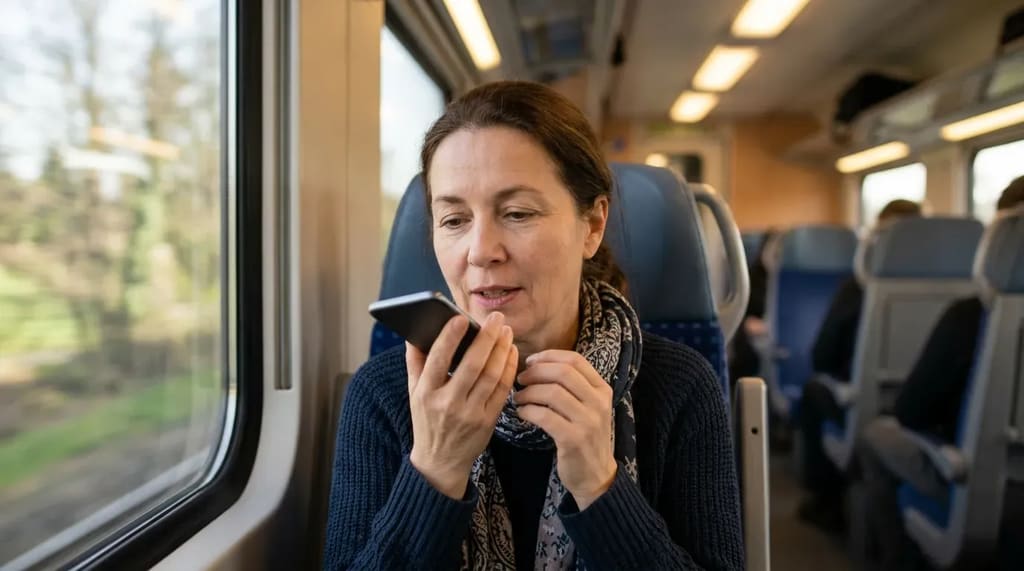
Amtrak says cell phones work along most portions of its routes, which is exactly why calls get taken on trains. Outside the Quiet Car, a call isn’t banned. The courtesy is in how you handle it: Amtrak asks riders to speak as quietly as possible and strongly recommends the silent or vibrate alert.
Business Insider’s etiquette roundup also lists talking on speakerphone among things to avoid. And remember that cell phones typically do not work well in long tunnels. Raising your voice won’t fix a bad connection; it will only tell the whole car about your dentist appointment. Set your phone to vibrate and keep your voice low.
#7 – Headphones Low Enough That Nobody Else Hears
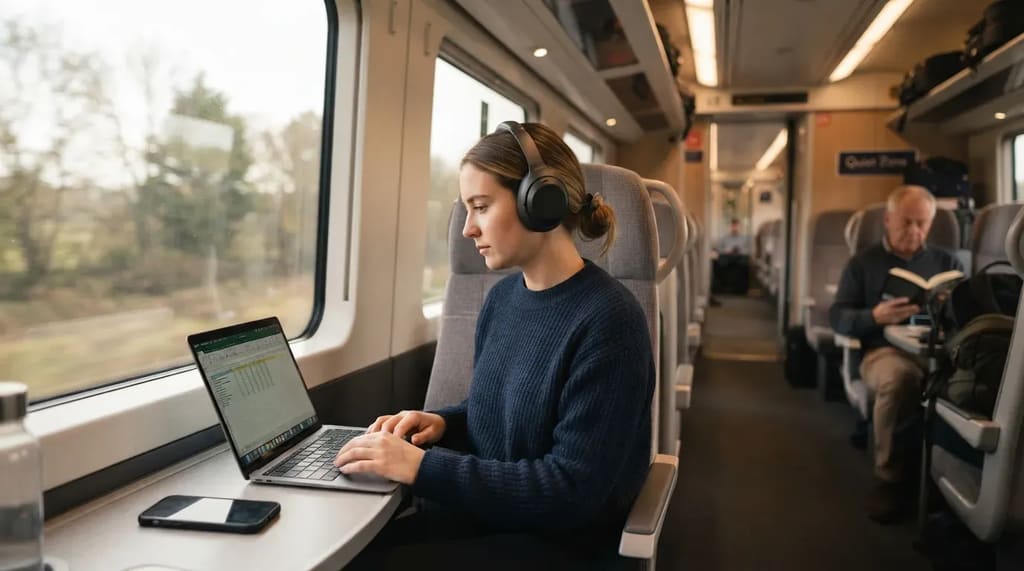
In the Quiet Car, the volume rule is written plainly. Portable electronic devices must be used with headphones, kept low enough that other passengers can’t hear the audio.4 Elsewhere on the train it’s a courtesy, and the etiquette coach William Hanson warns in a Trainline guide that headphones can leak sound when turned up too loud.
A good test is simple: if the person beside you could name your song, turn it down. The same goes for video calls and games on a tablet. Keep headphone volume low enough that no neighbor can hear it.
One car on many trains takes that rule further, and the conductor can tell you which one it is.
#6 – Asking the Conductor Where the Quiet Car Is
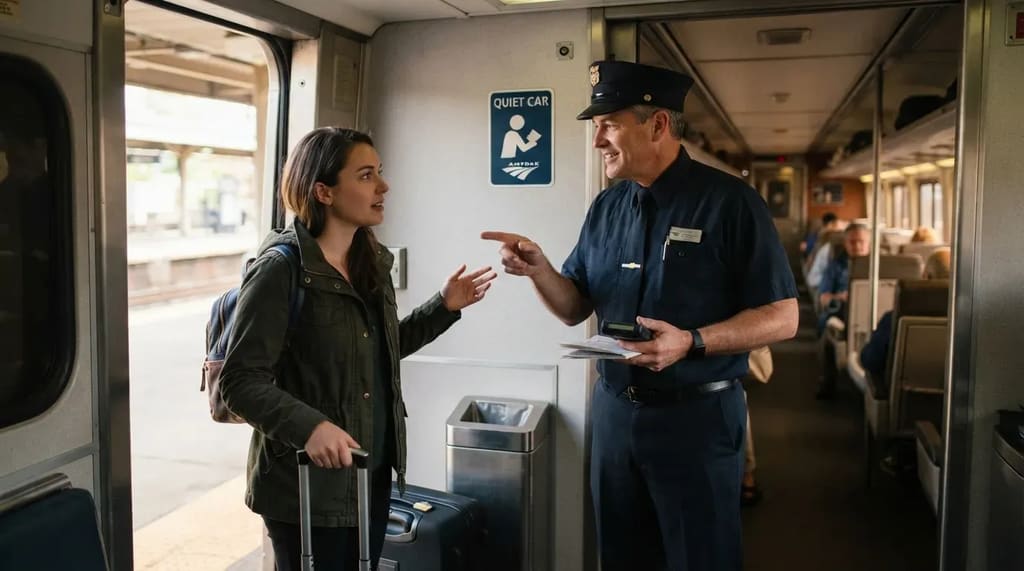
Amtrak introduced the quiet car concept to the transportation industry in 2001, after a pilot program in 2000. You’ll find the symbol on Acela, Northeast Regional, Keystone Service, Hiawatha, Blue Water, and select Wolverine, Capitol Corridor and Empire Corridor trains. If you’re unsure, check with the conductor.4
The rules are short. Conversation is limited and subdued, and phone calls aren’t allowed. There’s no additional charge to sit in the Quiet Car, so it’s a free upgrade for anyone willing to follow the rules. Phone calls aren’t allowed in the Quiet Car.
Sometimes the only open seat on a crowded train is in that car, and the rules come with it.
#5 – Taking the Quiet Car Seat When It’s the Only One Left
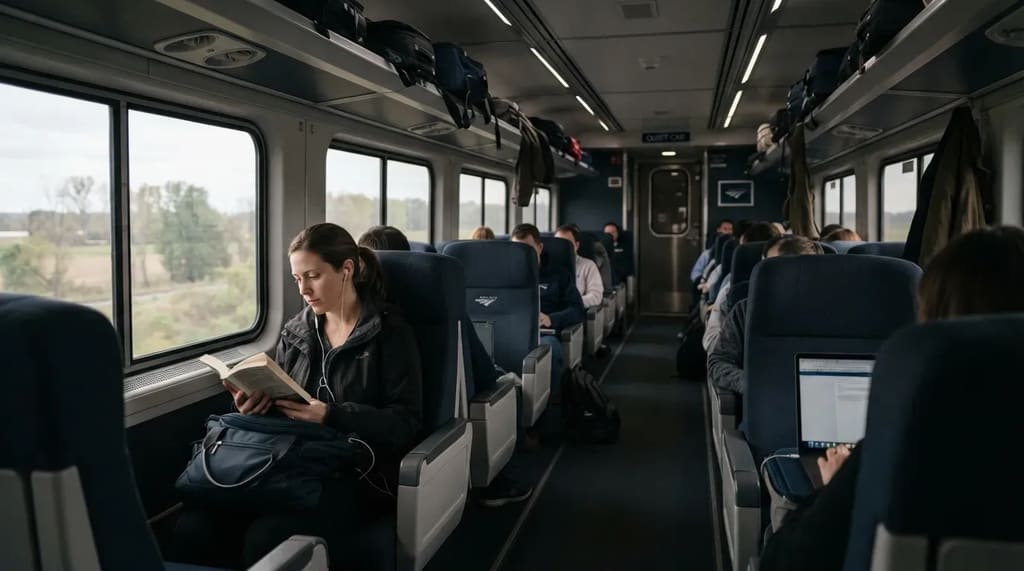
A full train can put a talker in the Quiet Car by accident. Amtrak says passengers who board and find seats only in the Quiet Car must follow the Quiet Car guidelines.4 That means the slide before this one applies to you: no calls and a low voice.
Take the seat. A seat with library rules beats standing in the vestibule, and a few hours of low voices is a small price.
If a call can’t wait, Amtrak’s guidance is that the passenger must move to another car. A conductor who sees you walk out with your phone in hand knows you’ve read the sign. If you must take a call, move to another car.
Related Stories From Travelbinger

Quick Compare
- Quiet Car: no phone calls, subdued conversation, headphones kept low enough that no one hears them
- Rest of the train: calls allowed, but speak as quietly as possible and use vibrate
- Cost: no extra charge to sit in the Quiet Car
- Seating: first-come, first-served on every route except Acela
#4 – Staying in Your Seat Until Your Car Is Released
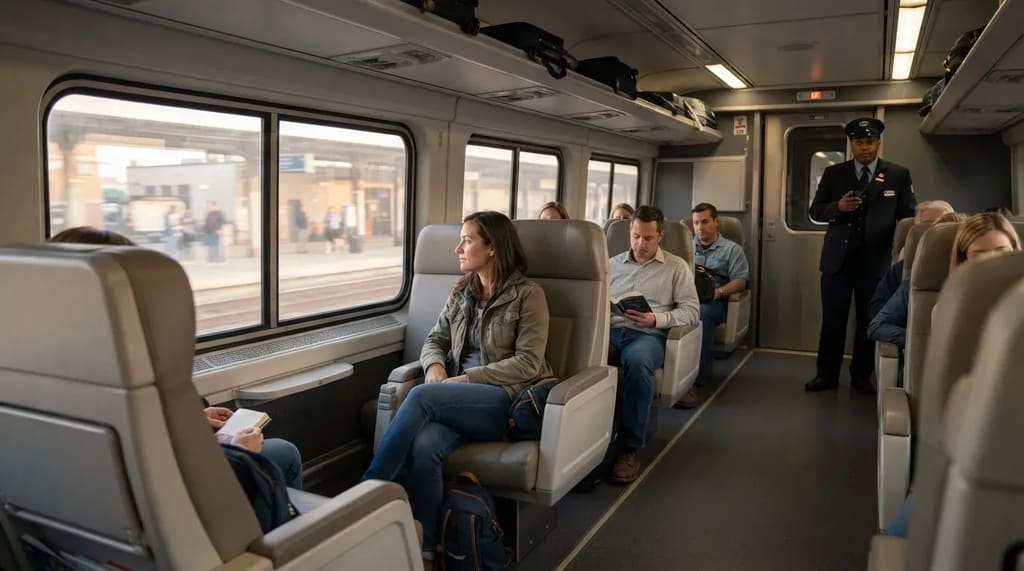
Right before a stop, a few passengers always stand up and crowd the vestibule. But conductors release passengers car by car, and remaining seated until instructed helps ensure safety. Standing at the door early doesn’t get you off sooner. It only puts you in the way.
That crowding is overrated, and it’s riskier than it looks. You’re standing in the same space Amtrak warns is slippery, with luggage, while the train is still slowing. If you need extra time getting off, keep your seat and let the crowd clear. Wait for the release, then leave car by car.
If a crowd isn’t something you can wait out, or you need a hand at the other end, there’s a better move, and it starts with a word to the crew.
#3 – Telling the Conductor Before Your Stop That You’ll Need a Red Cap
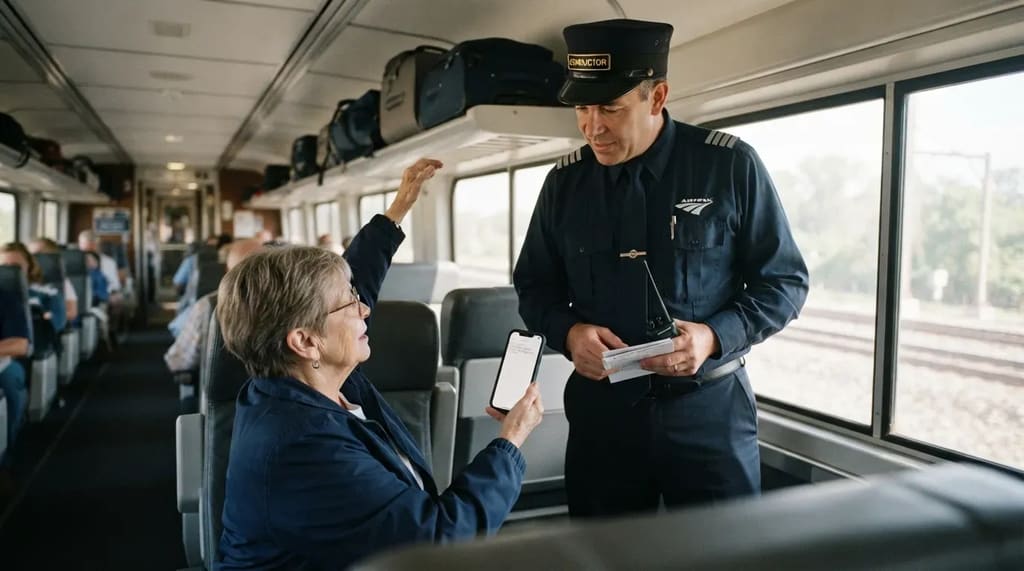
A Red Cap can’t help someone nobody knew was coming. If you’ll need help on arrival, tell the conductor while you’re onboard, early, before your stop is announced. Mention the specifics, such as bags, stairs and long platforms.
Amtrak says Red Caps help passengers with disabilities, senior citizens and large groups find their way through the station. Stick to authorized Amtrak Red Cap service only. The earlier the conductor hears, the more time there is to pass the word along. Tell the conductor early, before your stop is announced.
Help at your stop depends on help at your start, and station crews need time to set up before the train rolls in.
#2 – Arriving 30 to 45 Minutes Early for Boarding Help
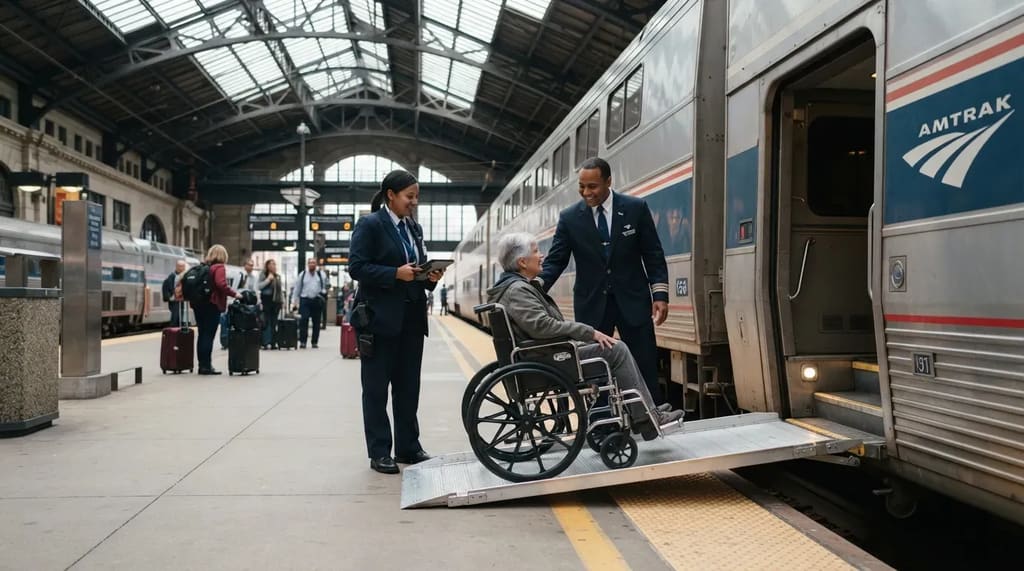
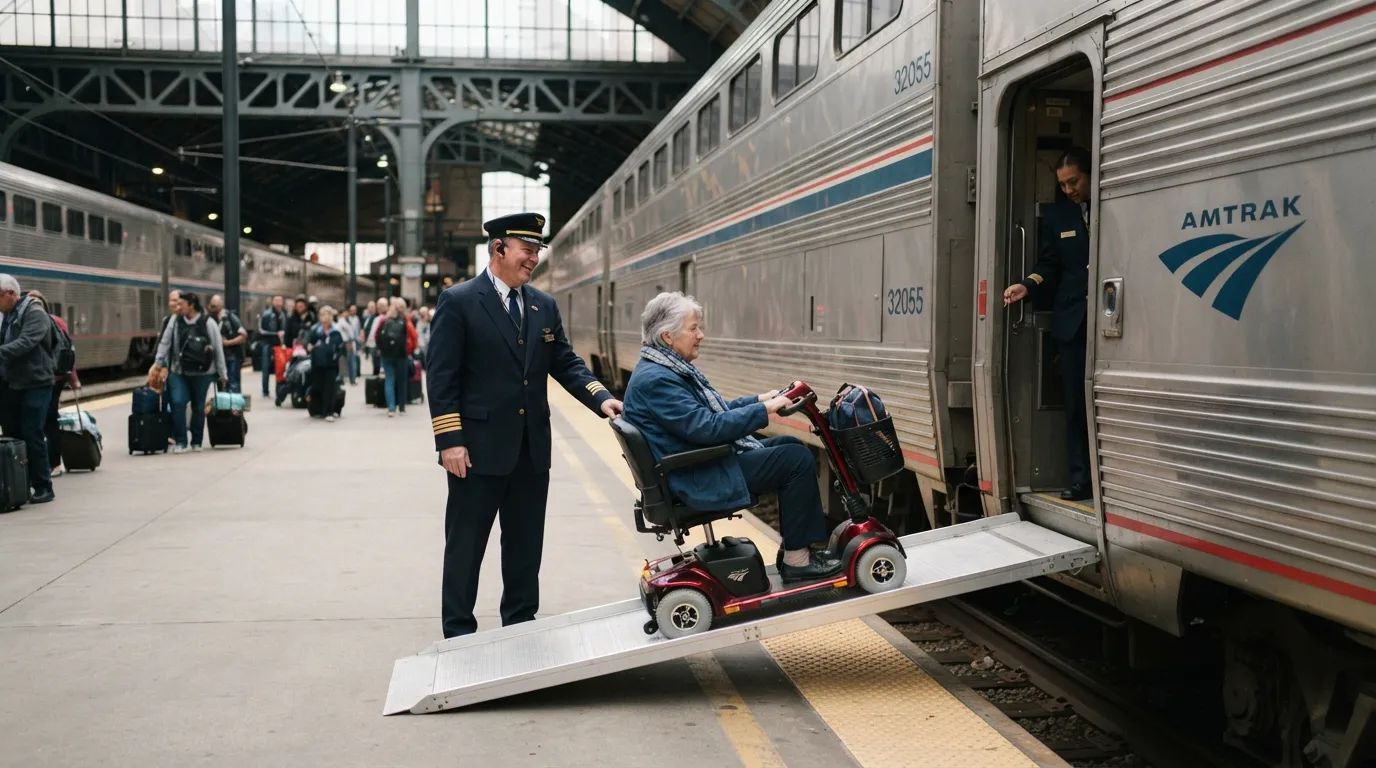
Boarding help starts before the train does. Amtrak’s own advice is to check in early to arrange for pre-boarding if you need extra time or assistance. Station guides suggest arriving 30 to 45 minutes before departure, so staff can prepare boarding equipment.
That equipment varies by station. Many Amtrak stations offer level boarding, but others use portable lifts or staff help. For riders who need a lift, Amtrak pre-boards passengers with mobility impairments who have requested wheelchair lift assistance at originating stations, which only works if the crew knows you’re there. Arrive 30 to 45 minutes before departure if you need help.
The best preparation happens days before you leave the house, and Amtrak puts a clock on it.
#1 – Asking for Help at Least 72 Hours Ahead
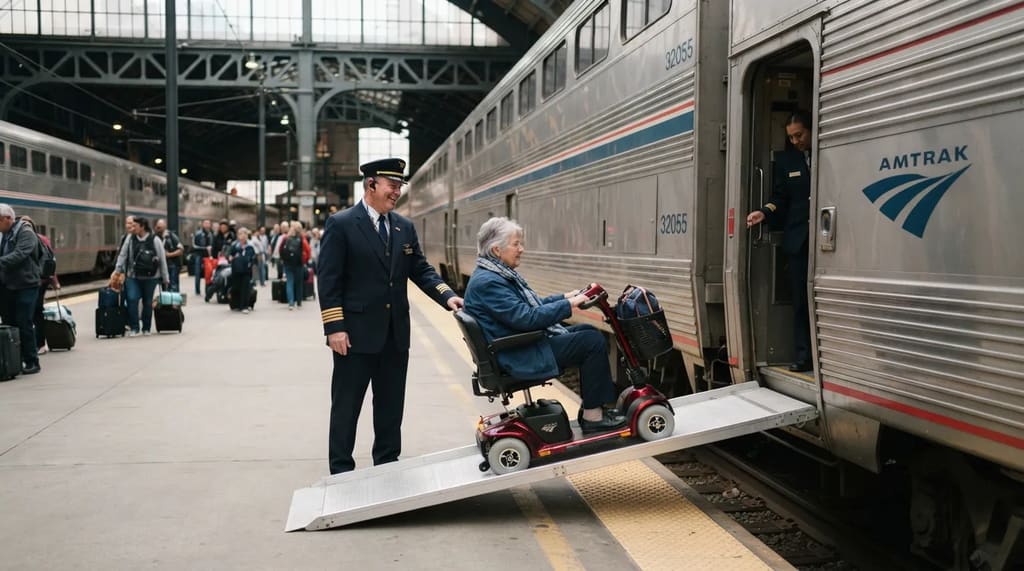
The courtesy that does the most for you is the one with a deadline. Amtrak says passengers should make accessible-travel requests as far in advance as possible, but no later than 72 hours before departure, and describe clearly what’s needed.5 Amtrak says it will respond within 72 hours.
You have options for asking. You can request services online, through the Amtrak app, at a station ticket counter, or by phone or TTY. For the in-the-moment version, customers can make an “on-the-spot” request to any Amtrak employee at any time.5 In 2026, Amtrak has been testing QR codes at Chicago and Los Angeles stations that let passengers request help to their train.
One limit is worth knowing before you go. Amtrak train crews are not required or permitted to provide personal care assistance, such as feeding, dressing, medicating or toileting. If you need that kind of help, travel with a companion.
Ask ahead, arrive early, as in #2, and tell the conductor again before your stop, as in #3, and the whole trip changes. Request help at least 72 hours before departure.
Most of these courtesies cost nothing, and they all work the same way: they move the effort to the front of the trip. A crew that knows what you need before the doors open can plan for it, and the rest of the line moves along behind you.
Which small habit at the train door have you watched fellow riders pick up, or skip, that made the biggest difference to everyone around them?
- Amtrak Personal Safety: https://www.amtrak.com/personal-safety
- Amtrak Vacations Baggage Allowance: https://www.amtrakvacations.com/trip-planning/at-the-station
- Amtrak Senior Discount: https://www.amtrak.com/seniors-discount
- Amtrak Quiet Car: https://www.amtrak.com/quiet-car
- Amtrak Accessible Travel Requests: https://www.amtrak.com/accessible-travel-request