
There is a stretch of California coast where the highway turns inland and leaves the shoreline to the one thing that can still reach it: a train. South of San Luis Obispo, passengers glide past empty beaches and clifftops that most drivers will never see. That is the kind of ride this list of 12 is built around.
Not every pick is a famous Amtrak name. Some are run by volunteers, one is named for a smell, and one climbs through redwoods behind a steam engine built for hauling logs. The best view on each ride often depends on which side of the car you sit on and what time the train leaves. The roadless coast waits at #1, but first we start in the Santa Cruz Mountains.
#12 – Roaring Camp’s Logging Steam Engine Climbs Redwood Hills
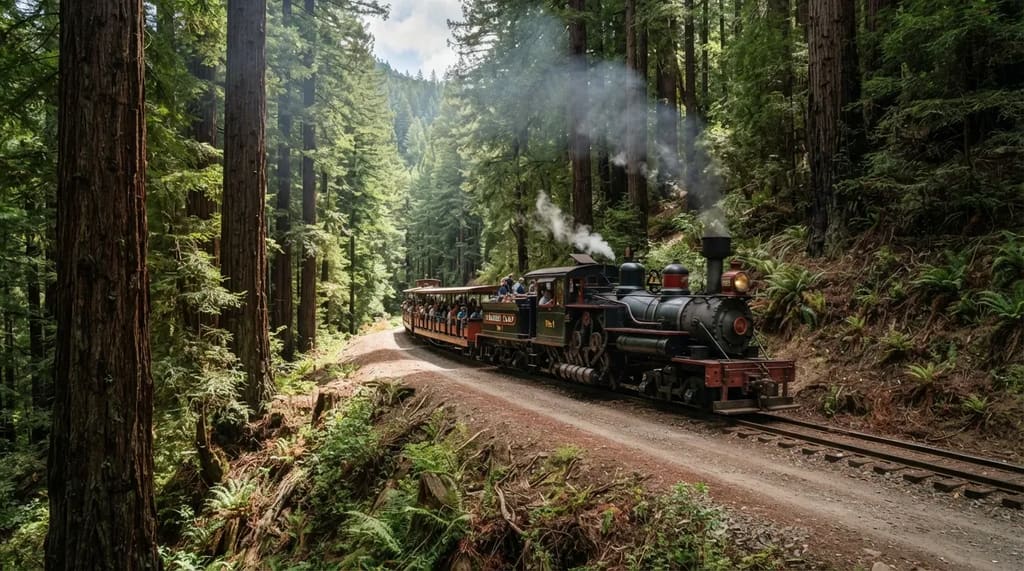
Roaring Camp & Big Trees, in the Santa Cruz Mountains town of Felton, runs steam trains through redwood forest behind locomotives of a type called the Shay. Shays were built to haul timber up steep, twisting track. That design is why a railroad can climb a forested hillside at all, and the Redwood Forest Steam Train does exactly that on its way toward Bear Mountain.1
The trees are the draw. Trunks crowd the right-of-way, and light drops through the canopy in thin shafts.
A second route, the Beach Train, runs from Felton down to the Santa Cruz Beach Boardwalk, so one railroad covers both redwoods and the Pacific. Both trains follow seasonal schedules, so check the calendar before you build a day around either one. This is a slow ride suited to families and rail fans, and it is best judged as a morning out rather than a long scenic haul.
Redwood steam is a hillside experience, while the vineyards California is famous for sit largely on the flat valley floor, where a different railroad runs straight through them.
#11 – The Napa Valley Train That Rolls Past Vineyards
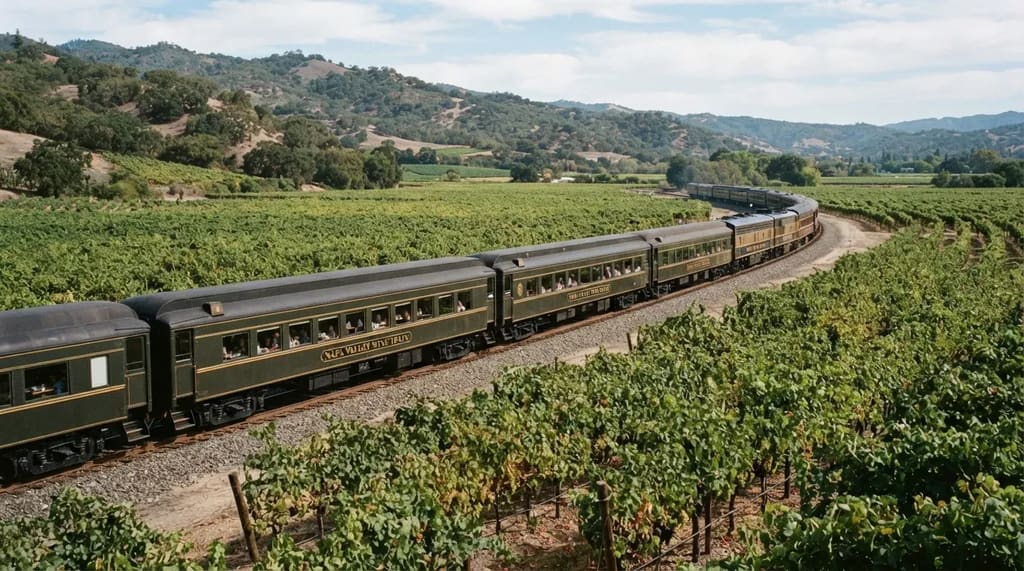
The Napa Valley Wine Train leaves from the town of Napa and rolls up the valley on a former freight line. The round trip to St. Helena and back covers roughly 36 miles and takes about three hours, with vineyards close on both sides of the track.
You ride in restored vintage rail cars, and the train moves slowly enough that the rows of vines have time to register before they slide past.
The ticket is priced as a dining event, not as transportation, and that shapes who should book it. If you want the scenery alone, this is an expensive way to get it, because the same valley can be seen from a car for the cost of gas. It makes sense for an anniversary or a birthday, when the meal and the slow pace are the point of the day.
Worth Knowing
- The route runs from Napa to St. Helena and back, about 36 miles.
- Expect roughly three hours on board.
- The track is a former freight line, now lined with vineyards.
- Best for a celebration, not a budget scenery fix.
#10 – Niles Canyon’s Creekside Line Between Sunol and Fremont
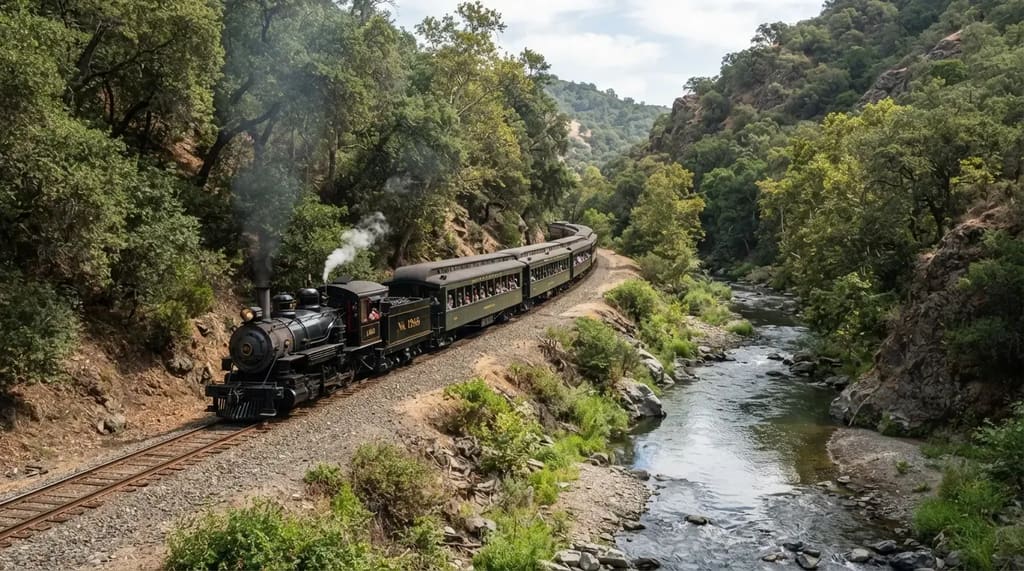
Niles Canyon Railway runs between Sunol and the Niles district of Fremont, following Alameda Creek through a wooded canyon. The surprise is how close it all sits to the busy East Bay, yet the track feels tucked away from it. The rail line through the canyon is often described as part of the route that tied the first transcontinental railroad to the Bay Area in the 1860s.
The railroad is run by volunteers through the Pacific Locomotive Association, and trains operate on a limited calendar, mostly on weekends. A trip takes a little planning, and the engine on a given day may be diesel or steam depending on the schedule. The reward is a short, unhurried ride with old rolling stock, a creek alongside, and almost no crowd.
Volunteer crews keep that line running on a handful of days, while a state park in the Gold Country keeps an entire historic rail yard on display.
#9 – Railtown 1897, the Gold Country Rail Yard Hollywood Kept Using
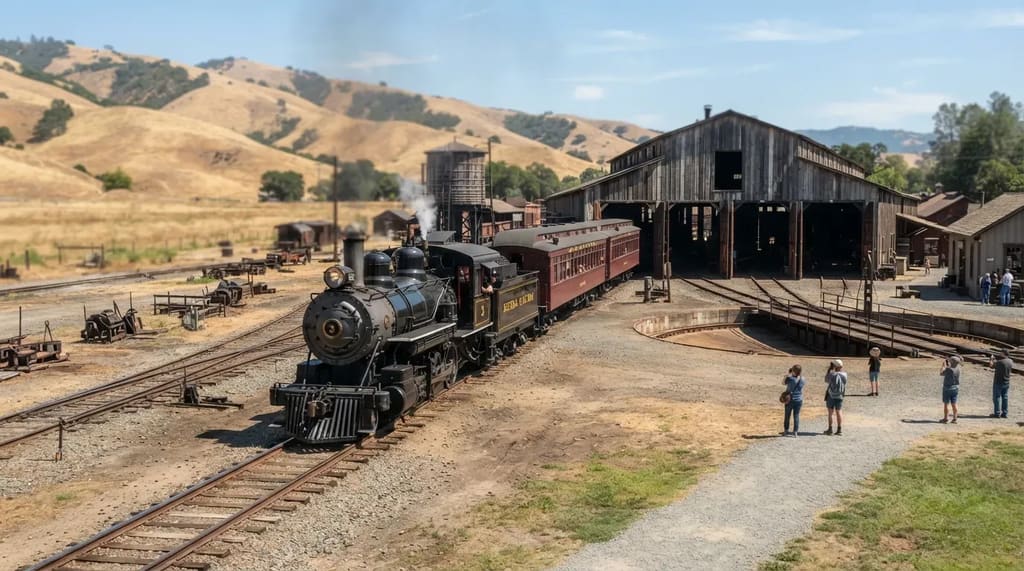
Railtown 1897 State Historic Park, in Jamestown in the Sierra foothills, preserves the shops and roundhouse of the old Sierra Railroad. California State Parks runs it, and the collection includes steam locomotives and vintage passenger cars from the days when this line served mining and lumber country. Excursion trains run on select dates, so check the schedule before you drive out.2
The railroad became a favorite of movie and television crews because its track and equipment look the part for Westerns and period dramas. If you have watched an old Western, there is a fair chance you have already seen this railroad on screen. The foothill scenery is dry golden hills rather than dramatic mountains, so go for the engines and the history, and treat the countryside as a bonus.
At a Glance
- Location: Jamestown, in the Sierra foothills.
- Run by California State Parks as a historic park.
- On display: steam locomotives, vintage passenger cars, shops and a roundhouse.
- Excursion trains run only on select dates.
- Go for the engines and the film history, not for peaks.
#8 – Old Sacramento’s Short Riverfront Excursion Train
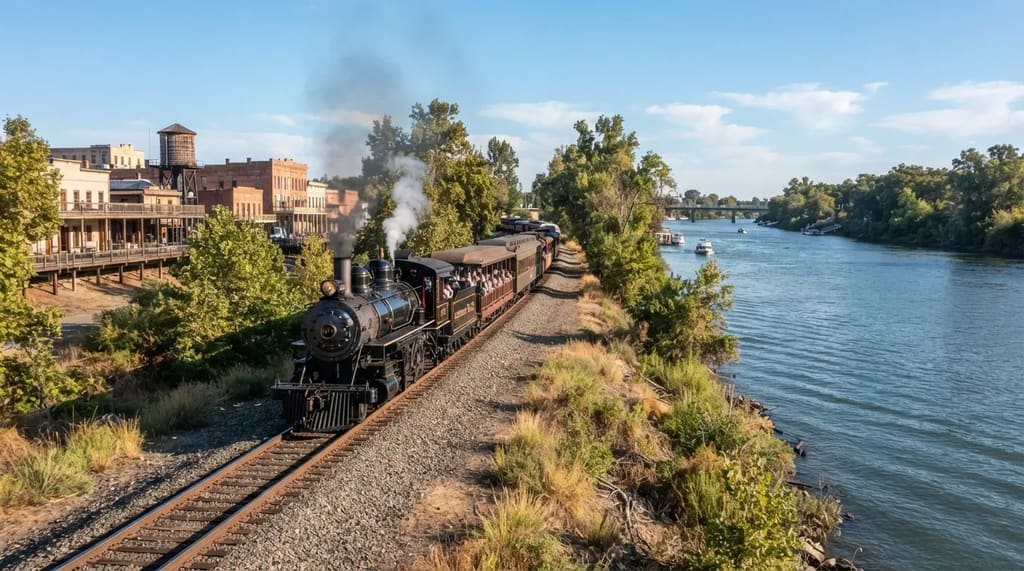
In Old Sacramento, the California State Railroad Museum operates excursion trains along the Sacramento River. The rides are short, a few miles out and back, and they generally run on weekends during the warmer months. Steam or diesel power depends on the day, so the schedule decides which you get.
Treat this as an add-on to the museum, not as a trip of its own. Sacramento makes the pairing easy, because both the California Zephyr and the Coast Starlight stop in the state capital. If you are already passing through on Amtrak, an hour on the riverfront is worth it. Driving a long way just for these few miles is harder to justify.
Those few miles end at a turnaround, while the trains leaving Sacramento’s Amtrak station head all the way to the Bay.
#7 – The Capitol Corridor’s Bay Shoreline From a Commuter Seat
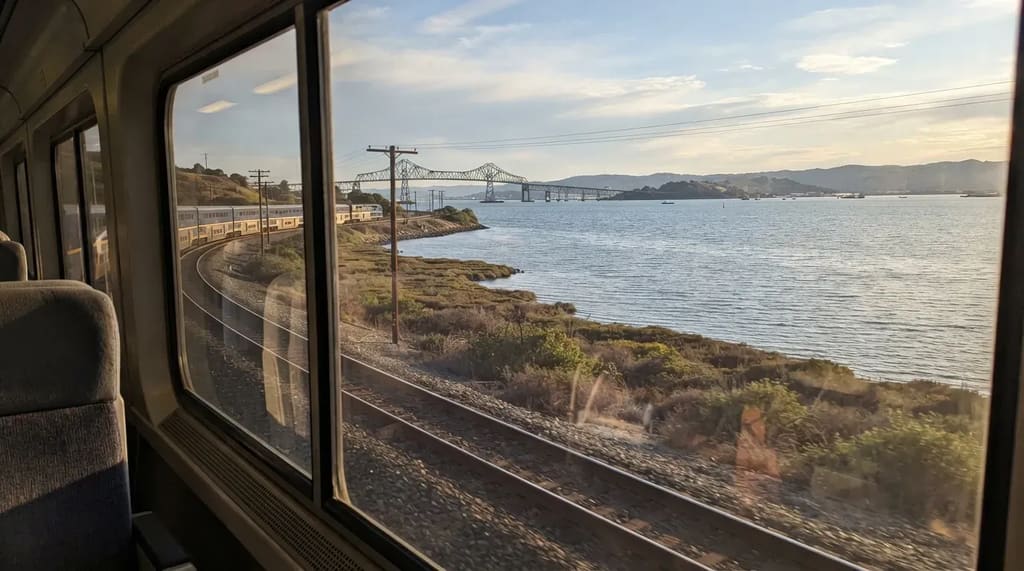
The Capitol Corridor is a working daily train between Sacramento and the Bay Area, not a tourist excursion. Part of its route follows the same bay-side tracks that Amtrak’s California Zephyr uses before it climbs toward the mountains. Passengers on that stretch get views of San Pablo Bay and the Carquinez Strait, which means water and marsh in a corner of California that rarely makes a postcard.
If you live near Sacramento or the Bay Area, this may be the easiest scenic ride on the list. There is no special event to book, no tour group, and no weekend-only calendar to work around. You buy a regular train ticket and ride a corridor service that runs several times a day.
The scenery comes in pieces, with open water between stretches of ordinary track, so it suits a relaxed trip better than a photo expedition.
Quick Compare
- Capitol Corridor: a regular ticket, several departures a day, no special calendar.
- Volunteer and museum excursions (Niles Canyon, Old Sacramento): limited dates, mostly weekends, engine type varies.
- Trade-off: the corridor is easier to ride, while the excursions feel more like an outing.
#6 – The Skunk Train’s Estuary Run to Glen Blair Junction
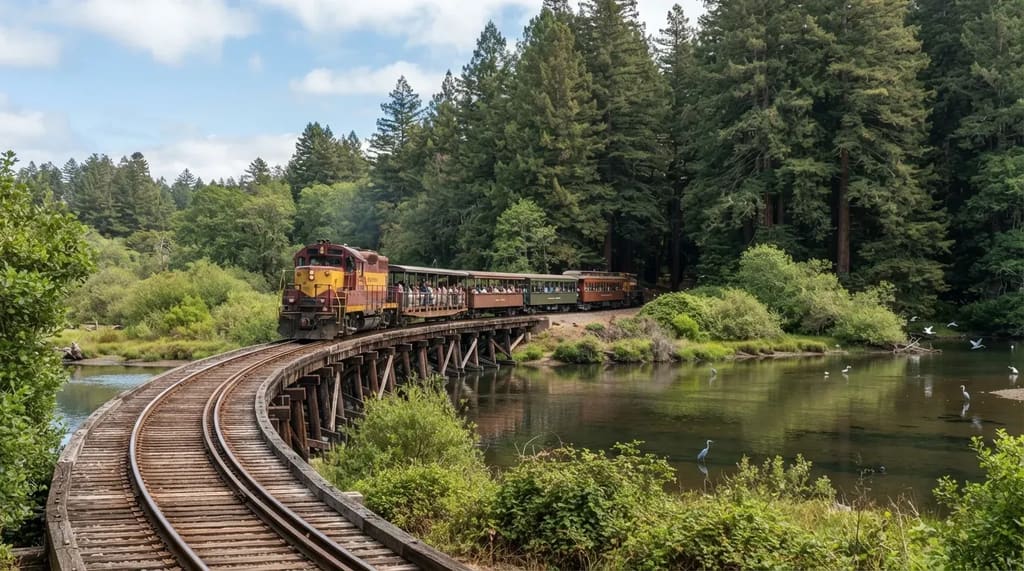
In Fort Bragg, the Pudding Creek Express is a 7-mile round trip along the estuary to Glen Blair Junction in the redwoods. It travels over some of the first tracks laid by the California Western Railroad in 1885.3 The estuary is home to blue herons, ospreys and egrets, so bring binoculars if you own a pair.
The nickname is usually traced to the early gas-powered rail cars, whose smell reached town before the train did.
The full 40-mile run between Fort Bragg and Willits is not available, because a long-closed tunnel interrupts the route, so the shorter out-and-back trips are how you ride today. The railroad’s standard ticket covers a 50-minute train ride and a 45-minute stop at Glen Blair Junction, with a loop hike and free entry to the Model Railroad Museum.3 For an easy hour or two with kids or grandparents, this is the gentlest ride in the whole article.
Pudding Creek stays low along the water, while the line’s high point sits at the opposite end, in Willits.
#5 – Wolf Tree Turn Climbs to 1,740 Feet From Willits
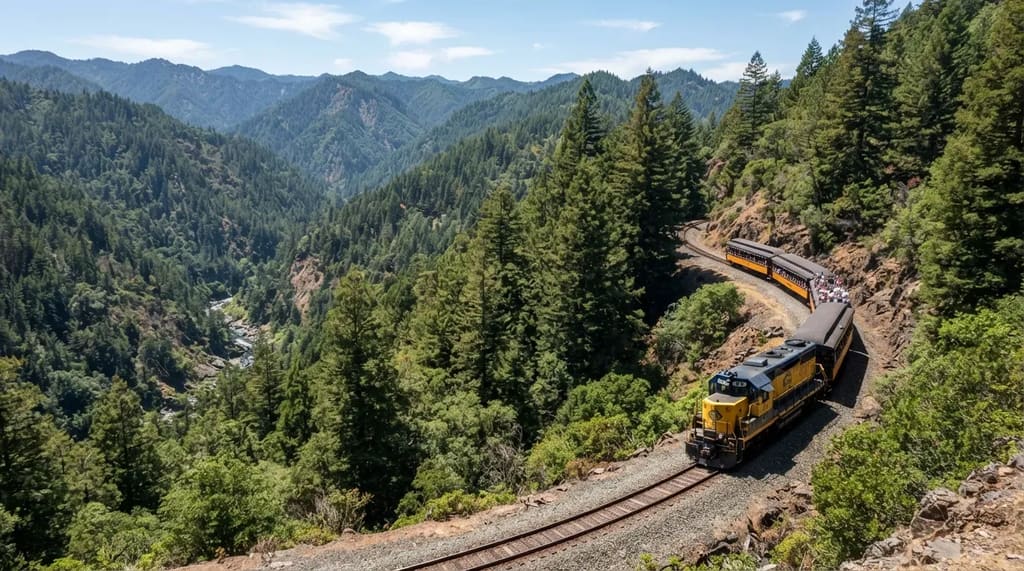
The Willits end of the Skunk Train offers the mountain version of the line. The Wolf Tree Turn travels over the summit at 1,740 feet, through Tunnel #2, and down into the Noyo River Canyon. Because the tunnel closure keeps the two halves of the route apart, the train goes up, turns around, and returns the same way.
The Willits ride is the one with the more dramatic canyon views. The depot dates to 1915 and is listed on the National Register of Historic Places, so the starting point is worth a look before you board.
My pick depends on your day. If you want mountains and a deep canyon, Wolf Tree Turn is the better ride, and if you want an easy hour with a short hike, the Fort Bragg trip is simpler. Riding both on a single Mendocino County weekend is a fair way to compare them.
Wolf Tree Turn is a long drive from any big city, whereas Southern California has a coastal train that runs all day and starts where millions of people already live.
#4 – Pacific Surfliner Seats That Flip After Los Angeles
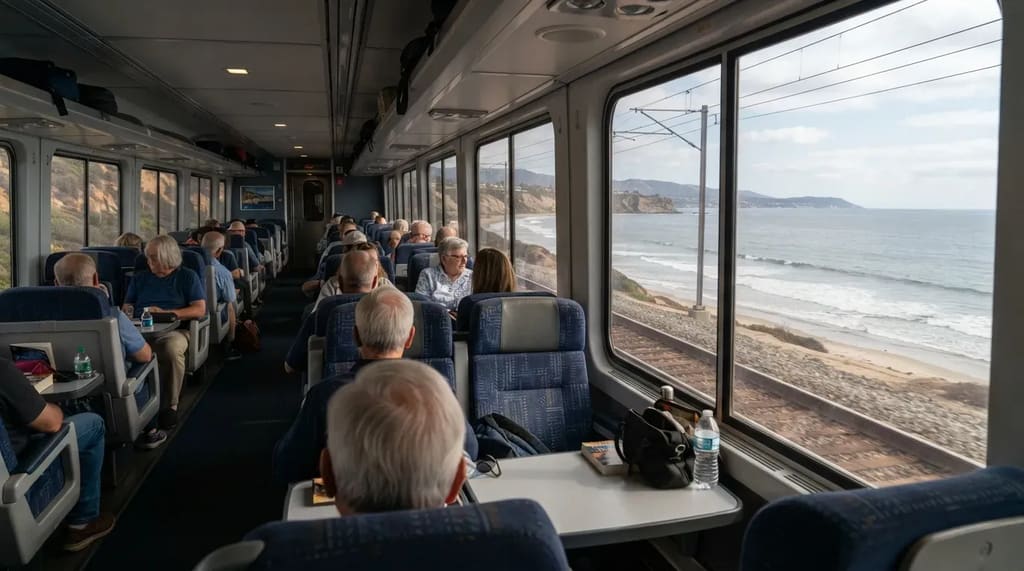
The Pacific Surfliner covers about 350 miles between San Diego and San Luis Obispo, but the best water views come in two pieces. The Surfliner’s own site names San Diego to San Clemente in the south, and Ventura to Grover Beach in the north.4 In some places the tracks sit less than 100 feet from the ocean.5
For a day trip, thirteen daily round trips run between Los Angeles and San Diego,5 and a one-way coach fare between them has been listed around $35.
The seat advice sounds simple: sit on the ocean side. The catch comes at Los Angeles, where the train reverses direction after leaving the station, so the ocean side swaps from one side of the car to the other.4 Morning fog is common in May and June, which can blur the first hours of a ride. Early summer afternoons tend to be your best chance at a clear horizon.
Surfliner service ends at San Luis Obispo, while the Coast Starlight keeps going north for hundreds of miles, all the way to the volcano that dominates Siskiyou County.
#3 – The Coast Starlight’s Shasta Stretch Near Dunsmuir
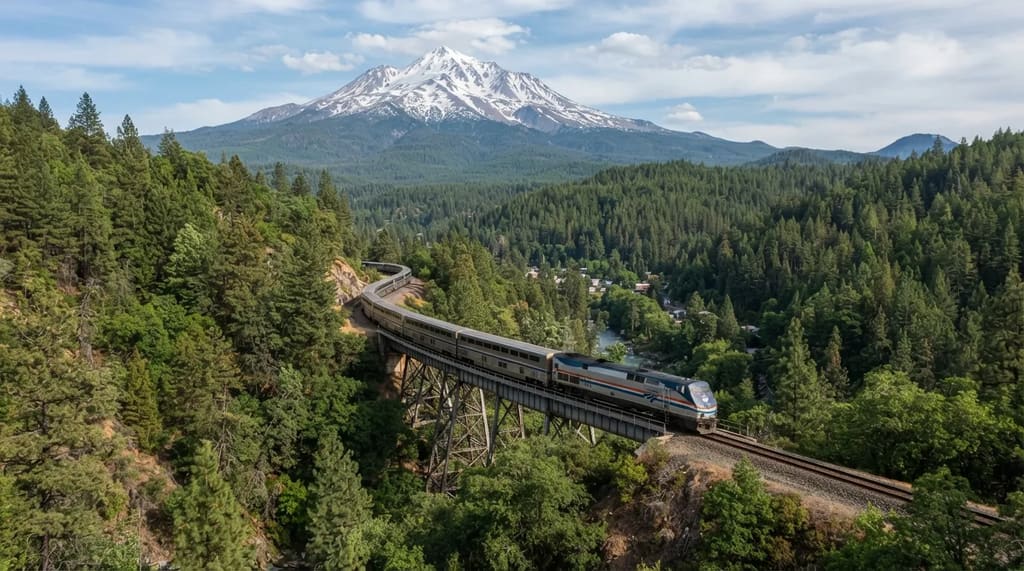
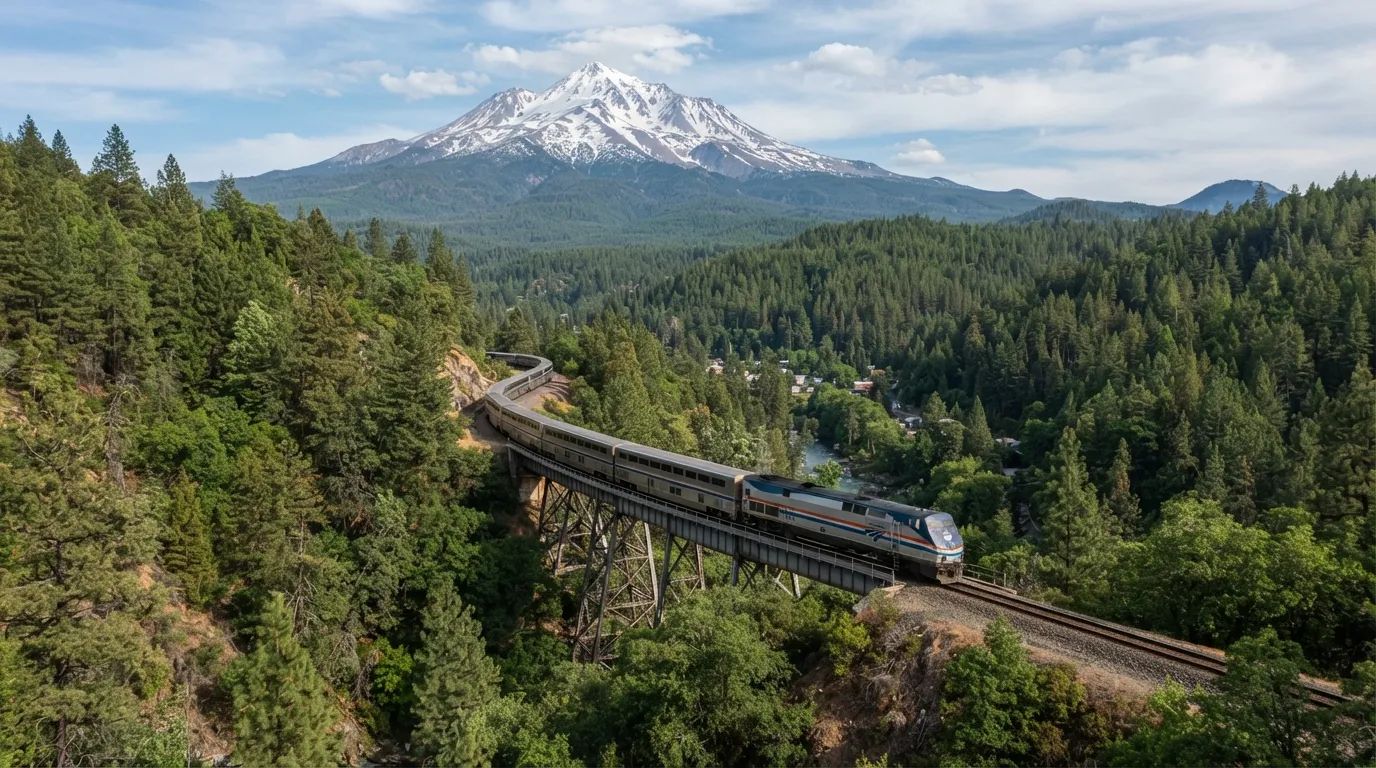
The Coast Starlight runs from Los Angeles to Seattle, about 1,377 miles in 34 to 35 hours, and Dunsmuir is its last stop in California. Mount Shasta is the marquee peak of the northern mountains. The Dunsmuir-to-Eugene section also gets named by travelers as one of the route’s two most scenic segments, with forest, lakes and mountain views replacing the coast.6
The middle of the trip is a different story. California’s Central Valley is the stretch most riders nap through.
If scenery is the only reason you are riding, a shorter ticket for just the Shasta country makes more sense than paying for 35 hours. Amtrak sells segments, so you do not have to ride the whole route. The timetable matters, because some of the mountain scenery is passed after dark depending on direction.
Related Stories From Travelbinger
Shasta’s views depend on the clock, but a different long-distance train does its mountain work in the Sierra, crossing a pass that has had a grim reputation since 1846.
#2 – California Zephyr Over Donner Pass and Past the Lake
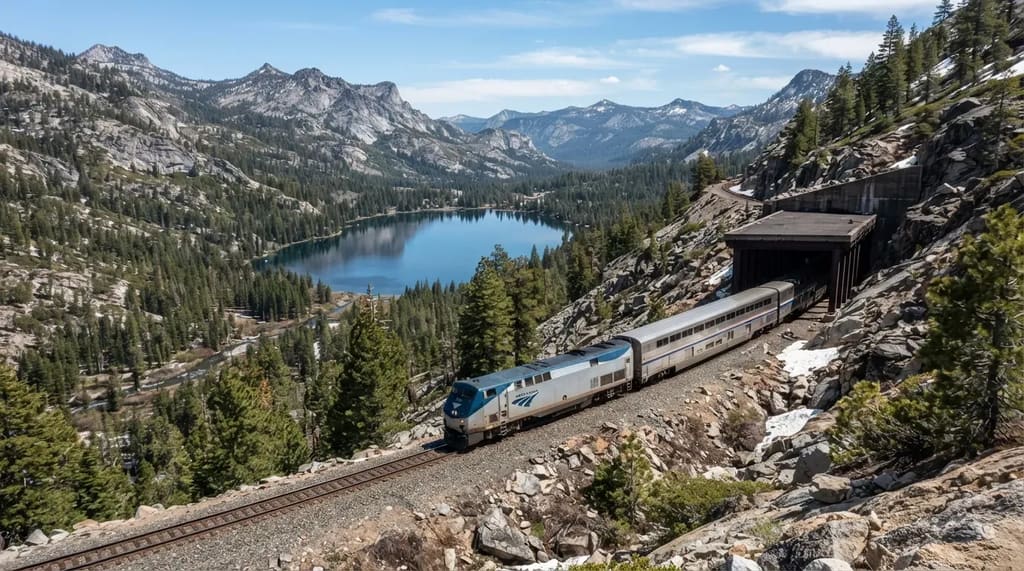
The California Zephyr runs about 2,438 miles in 51 to 52 hours from Chicago to the Bay Area, and its California highlight is the Sierra crossing. That stretch brings views of the Truckee River, Donner Lake and San Pablo Bay.7 The train passes through Donner Pass, where the Donner Party was stranded in the winter of 1846 and 1847.
One caution from a rider’s account is that sheds built to protect the track from Sierra snowstorms will occasionally block the window.
Fast Facts
- The full Zephyr run is about 2,438 miles and 51 to 52 hours.
- California highlights: the Truckee River, Donner Lake and San Pablo Bay.
- For the lake, sit on the left side heading west from Reno.
- The Sightseer Lounge car is the spot when the grade gets steep.
For Donner Lake, sit on the left side when traveling west from Reno, and use the Sightseer Lounge car when the grade gets steep. You do not need the whole Chicago run to see it, because a Reno-to-Sacramento segment covers the pass in a single day. I would book that segment and skip the full ticket unless the multi-day trip itself appeals to you.
The Zephyr’s water views are bays and a mountain lake, and the open Pacific belongs to a stretch of track much further south.
#1 – The Coast Starlight’s Roadless Shore South of San Luis Obispo
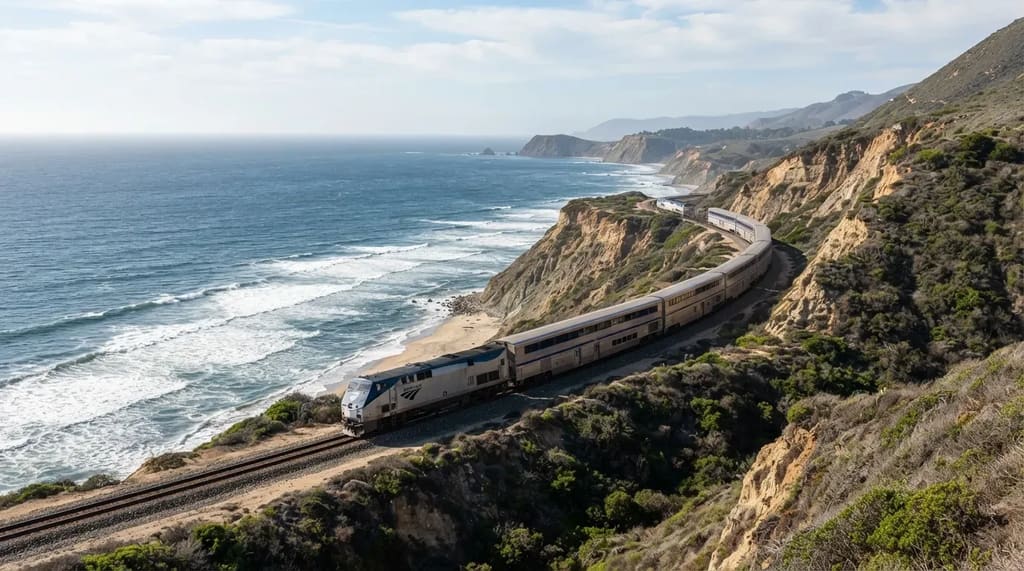
Between San Luis Obispo and Santa Barbara, the tracks run along a shelf of rock above the Pacific. They hug the clifftops through Pismo Beach and Oceano before rounding Point Arguello. South of San Luis Obispo, the train runs through Vandenberg’s closed coastline, with miles of empty beaches and cliffs and no road access.6
That is the shoreline from the opening, and it explains why this ride sits at the top of the list: the best view in California is the one the highway cannot reach.
You do not need the full 35-hour trip for it. A shorter trip between San Luis Obispo and Santa Barbara captures the defining scenery without a full day onboard. Daylight matters here, so check the timetable for the segment you want. Pacific Surfliner trains also serve this line, which gives you more than one departure option to choose from.
Looking across these twelve rides, the scenery keeps turning up where roads do not go: a roadless shore, a creek canyon, a pass over the Sierra. A short ticket for the right stretch often beats a long ticket for the whole route, and a seat on the correct side beats a lot of luck.
Next time you plan a trip, look at the rail line on the map before you look at the highway. Which stretch of California have you only ever seen from a car window, and would you trade the steering wheel for a train seat to see it again?
- Roaring Camp Railroads Profile: https://www.trains.com/trn/railroads/tourist/roaring-camp-railroads-profile/
- Railtown Locomotive Collection: https://www.parks.ca.gov/?page_id=24429
- Pudding Creek Express: https://www.skunktrain.com/trains/pudding-creek-express/
- Pacific Surfliner FAQs: https://www.pacificsurfliner.com/faqs/
- Pacific Surfliner Overview: https://en.wikipedia.org/wiki/Pacific_Surfliner
- Amtrak Coast Starlight: https://www.amtrak.com/coast-starlight-train
- California Zephyr Guide: https://www.american-rails.com/cz26guide.html