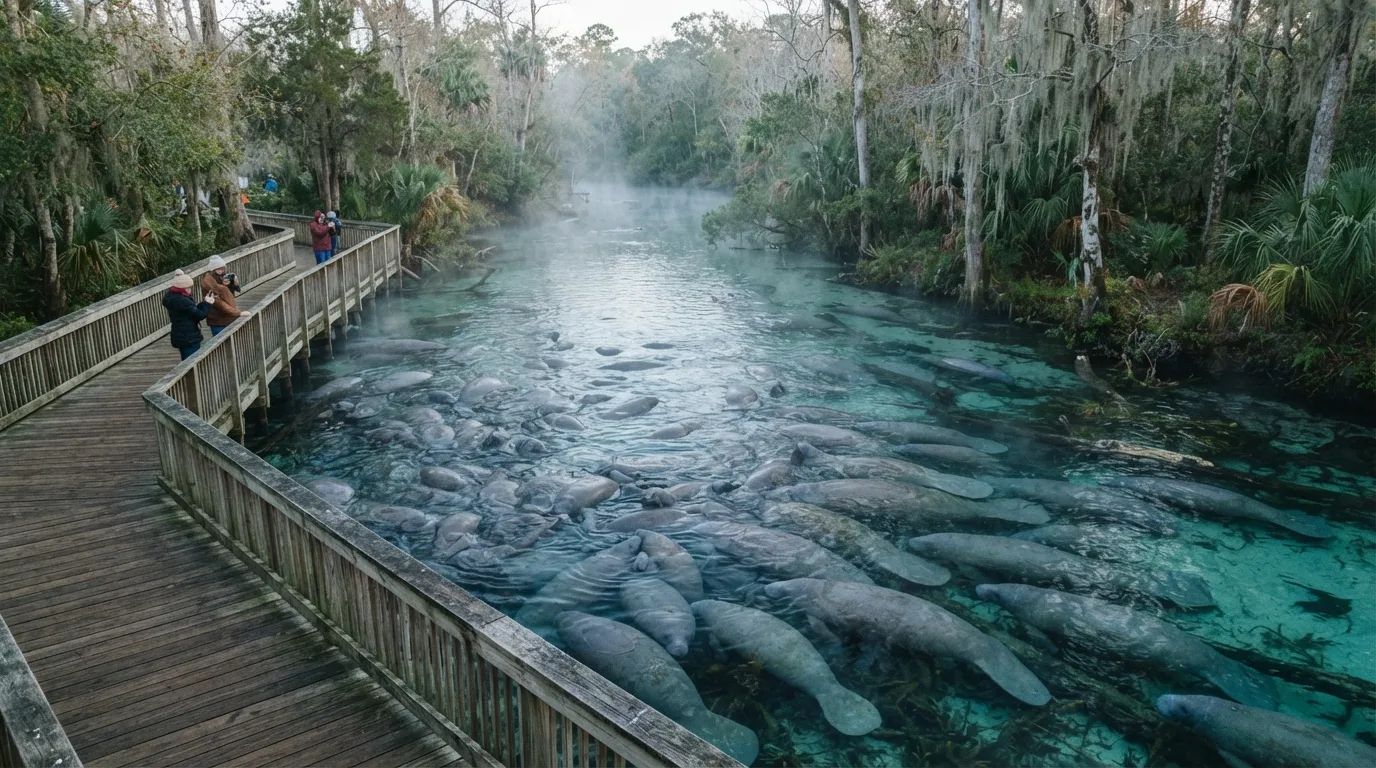
Florida sells winter as crowded sand and theme-park lines. But on the coldest mornings, hundreds of wild manatees pack into one small spring near Orlando, because its water holds a steady 72 degrees all year. These 15 getaways sit well off the snowbird highway, and each one gives you a real reason to visit in the cool months.
Some are a short drive from places you already know. One is 70 miles of open water beyond Key West. The countdown saves it for last, because it takes the most planning and the most money, and it makes the other 14 look easy.
#15 – A Lighthouse Town With No Ocean in Sight
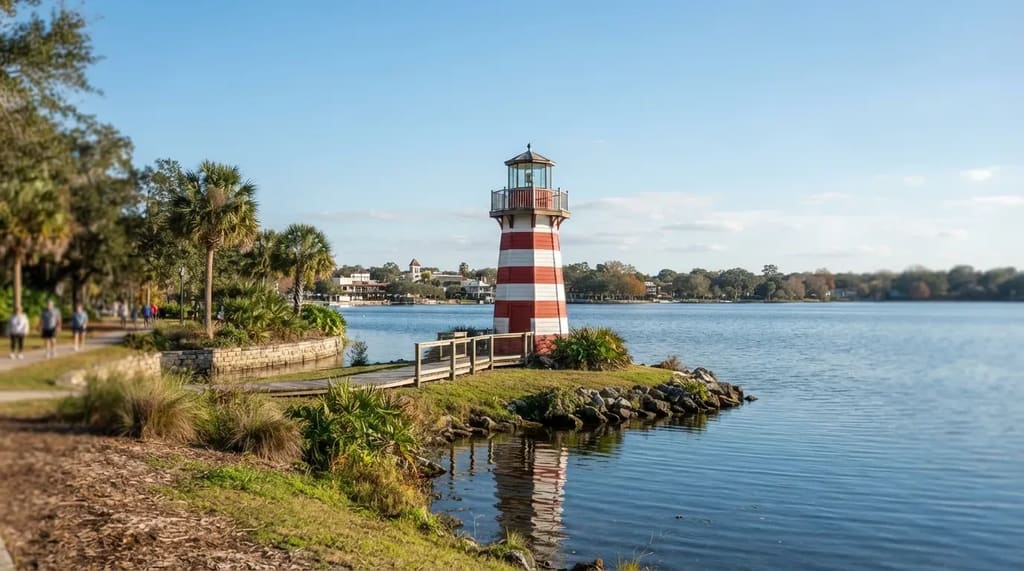
Mount Dora sits on a lake roughly 30 miles northwest of Orlando, and it feels more like a New England village than a theme-park neighbor. Downtown is a walkable grid of antique shops, cafes and brick storefronts. The lake has its own small lighthouse, and there’s no ocean anywhere near it.
Winter is when the town works best. Cooler afternoons make browsing on foot comfortable, and many of the arts and craft festivals that fill the streets are held in the cooler months. Check the town’s event calendar before you go, because festival weekends bring crowds and closed streets.
At a Glance
- Distance: roughly 30 miles northwest of Orlando
- Best for: a relaxed half day or a full weekend on foot
- Vibe: small-town brick storefronts, lakeside strolls, antique hunting
- Watch for: festival weekends, when streets close and parking fills early
Park once and do the whole downtown on foot. The antiques you’ll find top out at a couple of centuries, and the next stop hands out souvenirs that are far older than that.
#14 – The Beach Where Shark Teeth Wash Up Free
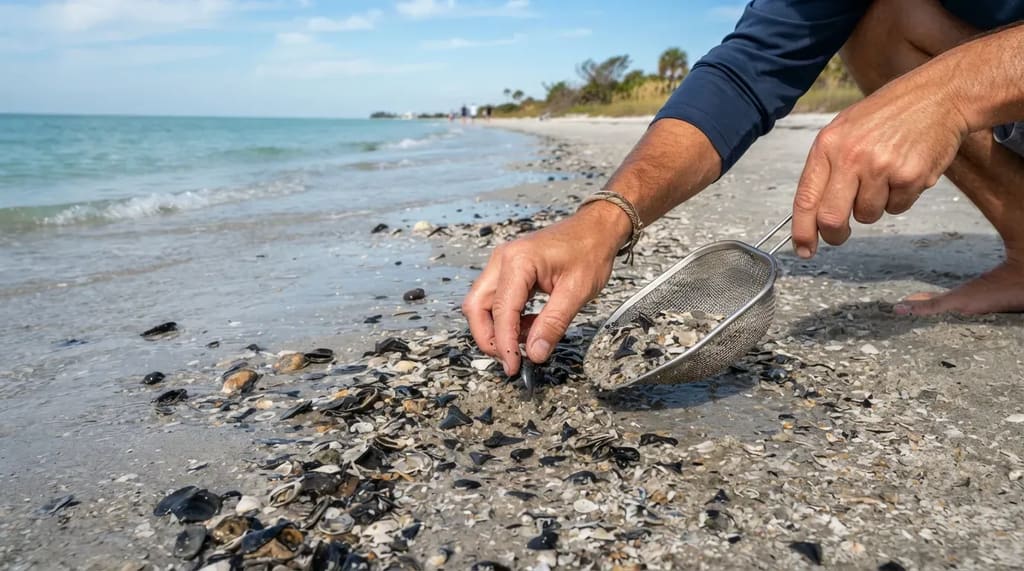
Venice, on the Gulf coast south of Sarasota, calls itself the shark tooth capital of the world, and Caspersen Beach is where visitors go to prove it. The teeth are fossils, usually black or gray, buried long enough to mineralize. Finding one feels like winning a prize you didn’t pay for.
Walk slowly along the wet line of shells where the last high tide ended, and keep your eyes low. A small mesh scoop helps, but you can skip the heavy digging gear, since the tide line does the sorting for you.
Search the shell line left by high tide. Winter beach days here are mild and uncrowded, so you can look for an hour without anyone crossing your spot. Venice rewards you for looking down, and the next stop rewards you for looking up, from one of the higher points on the Florida peninsula.
#13 – A Magazine Editor’s 205-Foot Singing Tower
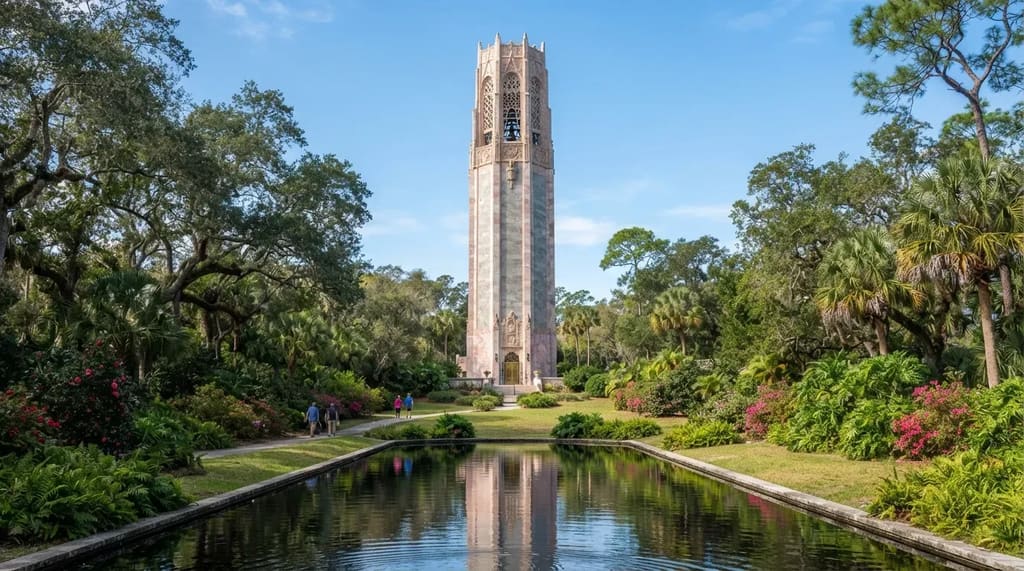
Bok Tower Gardens in Lake Wales was created by Edward Bok, a Dutch-born magazine editor, and the 205-foot tower he put up in the 1920s holds a carillon of 60 bells. It’s faced in pink and gray marble and rises from a hilltop that locals call Iron Mountain. At about 295 feet above sea level, that hill is among the highest ground on the peninsula.1
The payoff is sound. A live carillon recital drifting over the gardens is a very different thing from a recording. Time your visit to a live carillon recital.
Worth Knowing
- The tower was dedicated in 1929 by President Calvin Coolidge.1
- The landscape was designed by Frederick Law Olmsted Jr., son of the Central Park designer.
- The tower’s exterior blends pink Georgia marble with Florida coquina stone.
- Bok won a Pulitzer Prize for his autobiography, which means the man behind the bells was a writer first.
Check the recital schedule when you buy tickets, then walk the gardens first so you’re settled on a bench when the bells begin. Bok built his winter retreat to share with the public, while the next stop was the private winter hideout of two men whose names ended up on lightbulbs and cars.
#12 – Edison and Ford’s Winter Hideout on the River
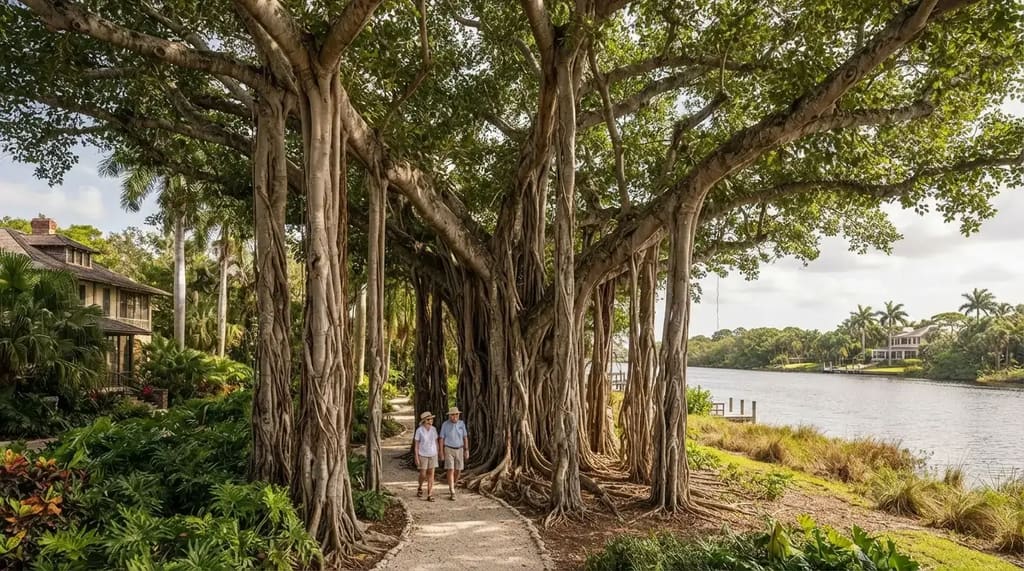
Thomas Edison first came to Fort Myers in 1885 and built a winter home on the Caloosahatchee River. Henry Ford bought the house next door in 1916, so two of the era’s biggest names spent their winters as neighbors. Both homes now operate as the Edison and Ford Winter Estates.
The surprise is the lab. Edison spent years searching for a domestic source of rubber from plants, working with Ford and tire maker Harvey Firestone, who gave Edison a banyan tree in the 1920s. That tree now covers more than an acre.2
Walk under the banyan before you tour the homes. It’s the quickest way to grasp how long these men were willing to wait on an experiment. Edison came here to work on the future, while the next stop lets you watch the future leave the ground.
#11 – Rocket Country With a Wildlife Refuge Attached
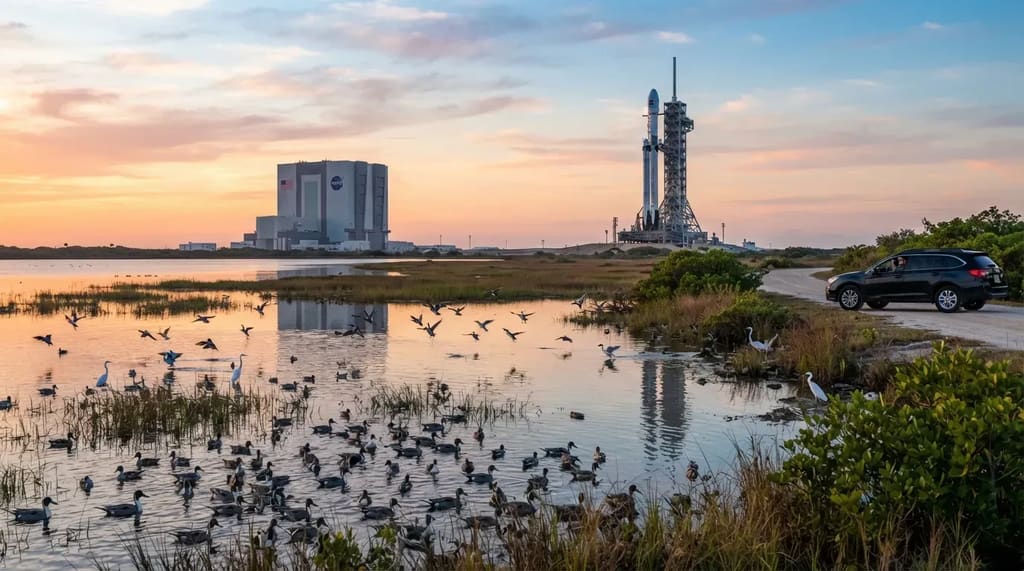
Merritt Island National Wildlife Refuge exists largely because NASA needed open land around its launch pads, and that safety buffer left a huge stretch of the Space Coast wild. In winter, migrating waterfowl crowd its shallow ponds. The self-guided Black Point Wildlife Drive, about seven miles long, lets you watch from your car.
Titusville, just across the river, is where watchers gather on shoreline parks when a rocket is scheduled. Launch dates slip often, so build the trip around the refuge and treat a liftoff as a bonus.
Plan for the birds first and the rockets second. That way a scrubbed launch still leaves you with a good day. The refuge stays wild by accident of rocket safety, while the next beach stays quiet because you have to cross water to reach it.
#10 – The Ferry-Only Beach Once Ranked Best in America
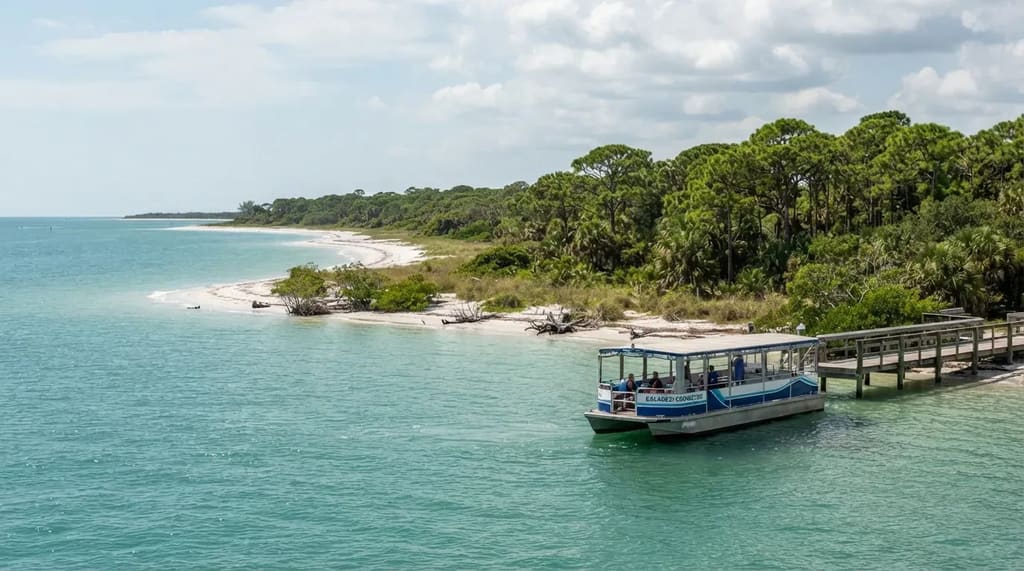
Caladesi Island State Park, near Dunedin, was named the best beach in the United States in 2008 by the coastal scientist known as Dr. Beach. A hurricane in 1921 split the old island in two and created Honeymoon Island next door. Today most visitors catch the ferry at Honeymoon Island, and the ride takes about 20 minutes.3
The ferry was out of service for ten months after Hurricanes Helene and Milton, and it returned on July 3, 2025.3 Boats run hourly from 10 AM, and every half hour from mid-February through Labor Day.4 Adult tickets were $20 in 2025, so confirm the current price.
Quick Compare
- Honeymoon Island: reached by a causeway, so you can drive right up and park.
- Caladesi Island: no bridge, so you arrive by ferry, kayak or private boat.
- The trade-off: Honeymoon is easier to reach, while Caladesi’s effort is what keeps it quiet.
Pack light, because beach carts aren’t allowed on the ferry. Strollers and wheelchairs are still permitted. The next stop swaps sand for grassland, and its residents are a lot bigger than anything you’ll meet on a beach.
#9 – Wild Bison and Thousands of Cranes Near Gainesville
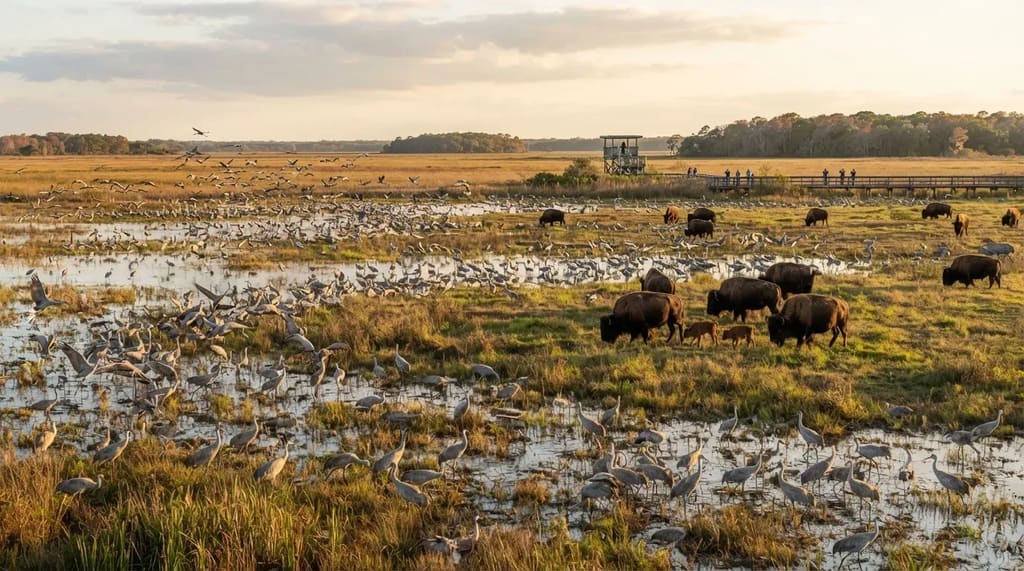
Paynes Prairie Preserve State Park is a vast basin, more than 20,000 acres, just south of Gainesville. Wild bison and horses roam it, and alligators line the water along the La Chua Trail boardwalk. In winter, sandhill cranes arrive in the thousands, and their rattling calls carry across the open grass.
Cranes are most active when they move between roosting and feeding areas, so come near sunrise or late afternoon for the best crane activity. Bring binoculars, and keep a respectful distance from the alligators and bison, which are wild animals and not exhibits.
The prairie shows what a big piece of inland Florida looked like before development. The next town is where a doctor trying to cool fever patients invented something your freezer still does.
#8 – The Panhandle Town That Gave Us Ice
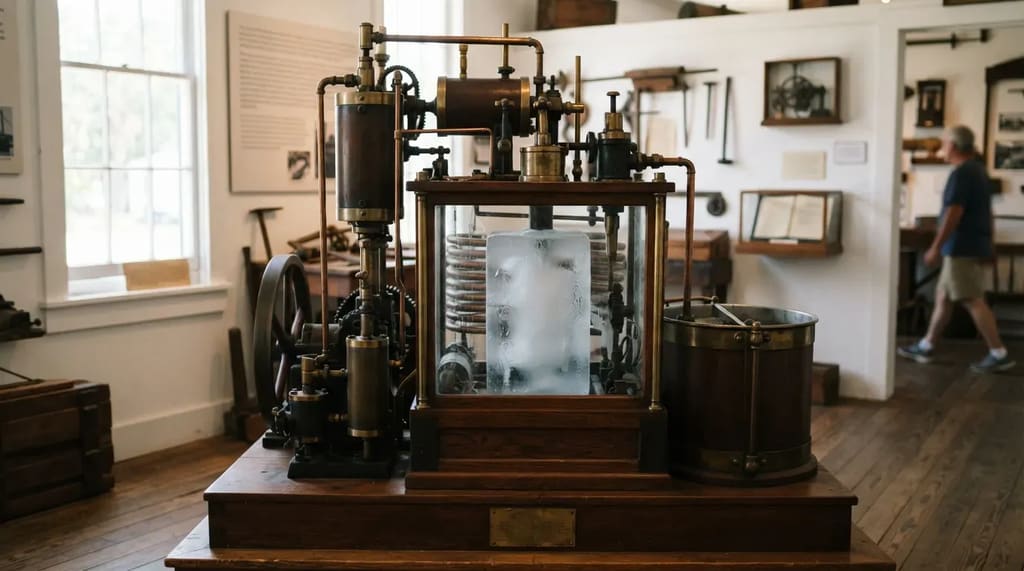
Apalachicola, on Florida’s Forgotten Coast, was a busy cotton port, and its historic downtown still has the old brick warehouses. It’s also the town of Dr. John Gorrie, a physician who patented a machine for making ice in 1851. Gorrie’s 1851 ice machine patent is the reason to visit his museum. The small state museum in his name tells the story.
The bay is famous for oysters, but its oyster beds have struggled since the early 2010s, so ask where the oysters on your plate were harvested. Nearby St. George Island has a long, quiet state park beach that’s pleasant in cooler months.
Gorrie was chasing cold. The next stop, near Tallahassee, holds a steady temperature close to 70 degrees all year and once hosted a movie monster.
#7 – A Spring Where a Movie Monster Swam
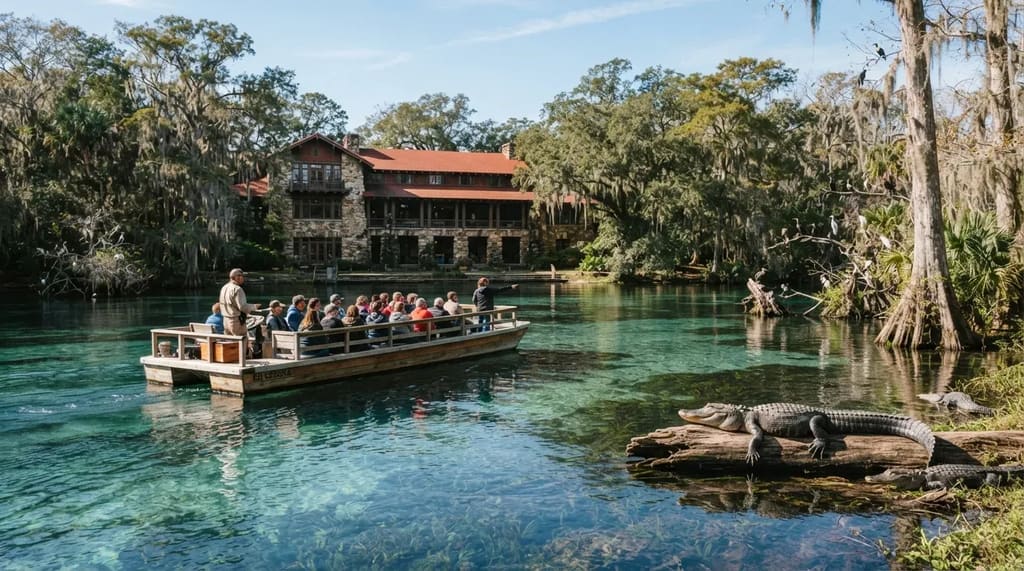
Wakulla Springs State Park is often described as one of the largest and deepest freshwater springs in the world. The 1954 film Creature from the Black Lagoon shot its underwater scenes here. The park’s lodge dates to 1937 and keeps the feel of an older Florida.
The water stays near 70 degrees, which is too cool for swimming on a winter morning. That makes it a better season for the river boat tour, when alligators bask on logs and winter birds fill the cypress. Book the river boat tour on a sunny winter day.
Sun makes the animals easy to spot, and cold, cloudy mornings send many of them into hiding. The spring’s mystery lies underwater, while a park west of Tallahassee lets you step into a cave in dry shoes.
#6 – Florida’s Dry Caves, Right in the Panhandle
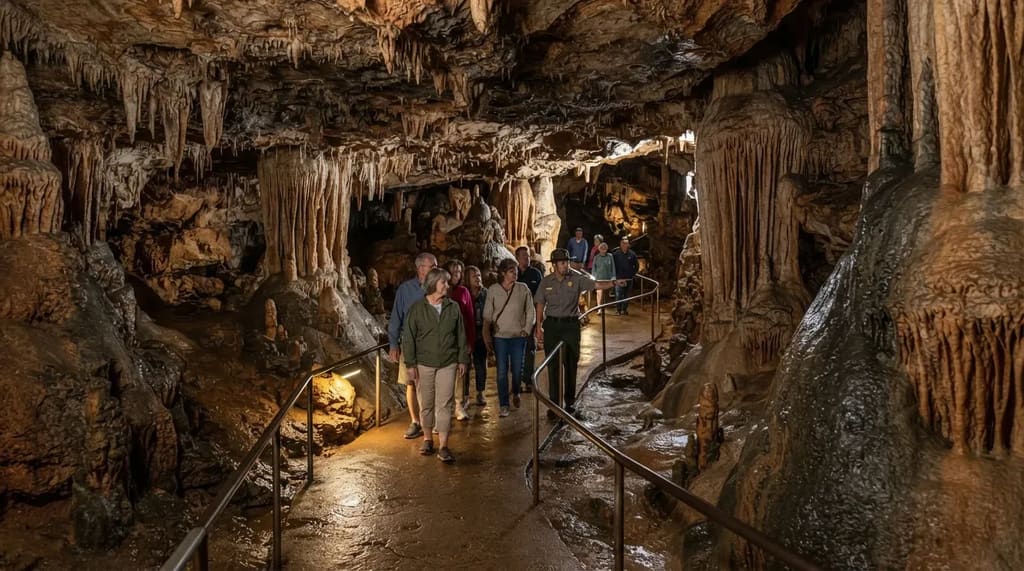
Florida Caverns State Park, near Marianna, is one of the few places in the state where you can tour dry caves. Most of Florida’s limestone caves are flooded, so walking through chambers of stalactites and flowstone is rare. Civilian Conservation Corps crews developed the cave tour in the 1930s.
Tours are ranger-guided, so you can’t wander in on your own. Check the tour schedule before you drive to Marianna. The ceilings are low in places, so the tour suits anyone comfortable with some ducking and stairs.
The caves are underground, but the next stop is at sea level: a clam-farming island still rebuilding after one of the worst storms in its history.
#5 – The Clam Island Still Rebuilding After Helene
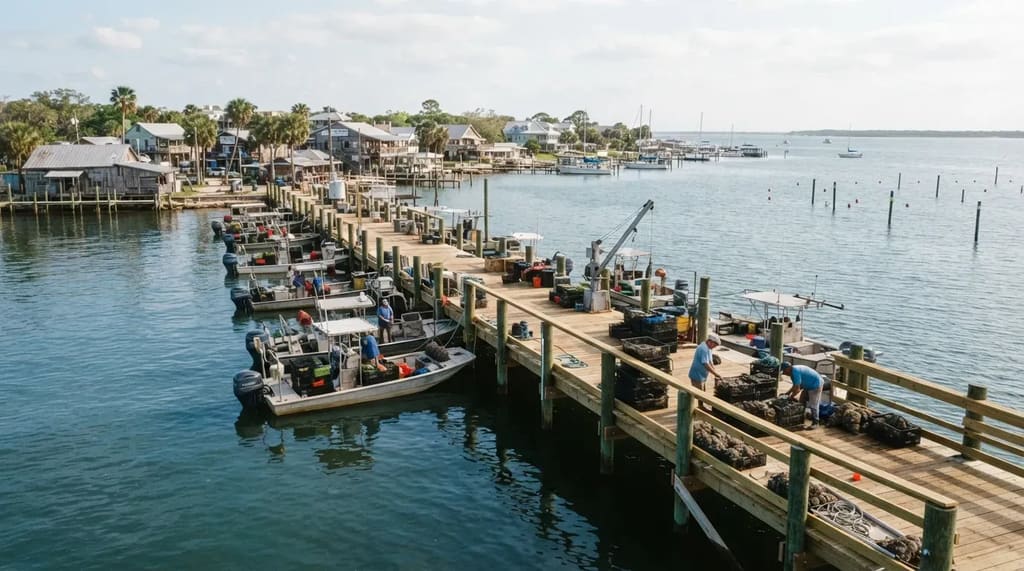
Cedar Key sits on the Gulf coast in the Big Bend. Helene made landfall near Perry on September 26, 2024, as a Category 4 storm, and it brought a record storm surge of 9 to 12 feet to the island.5 The island is known for farm-raised clams, and clam leases still operate in the waters around it.
Go anyway, because the return of tourists is a critical part of the island’s economy. Many hotels, restaurants and shops reopened by early to mid 2025, and the historic dock reopened on August 30, 2025. But as of spring 2026, the town was still working to add places for visitors to stay.
Check which rooms and restaurants have reopened before you drive. The next stop has a different kind of history, a railroad bridge from the Keys’ early days that you can walk up for the view.
#4 – Key Deer and a Railroad Bridge You Can Climb
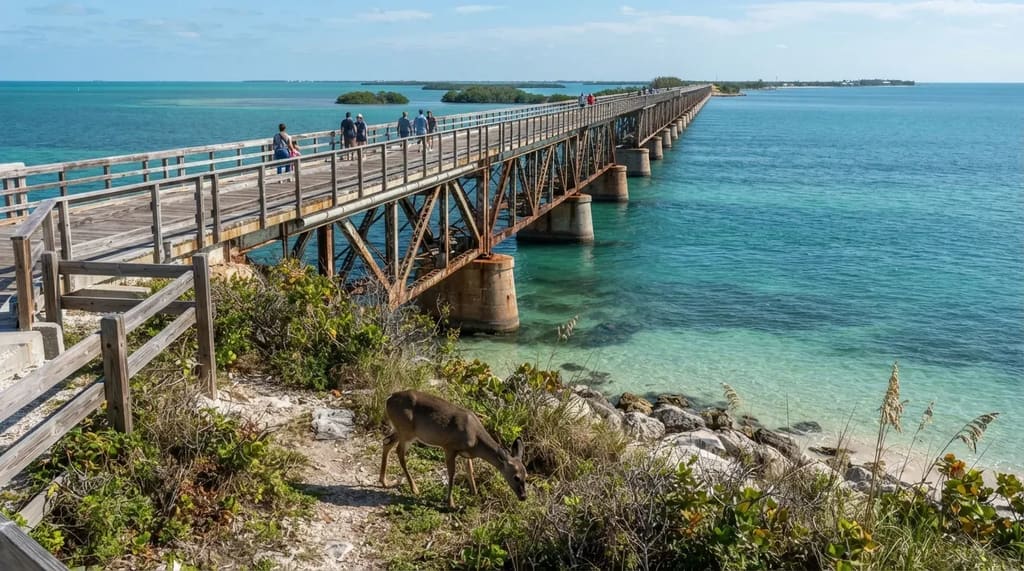
Bahia Honda State Park, in the lower Florida Keys, has wide, sandy beaches that are rare in a chain of rocky islands. Henry Flagler’s railroad once crossed here, and a section of the old bridge now serves as an overlook. The view over the green and turquoise water is the reason to climb it.
On nearby Big Pine Key, you may spot Key deer, a small, endangered subspecies found only in the lower Keys. Drive slowly on Big Pine Key at dawn and dusk. That’s when the deer are most active near the road, and slower speeds protect them.
Bahia Honda gives you winter water you can wade into. The next stop does the opposite, closing its water to people so the visitors with flippers can have it.
#3 – The Spring Where Manatees Crowd In on Cold Mornings
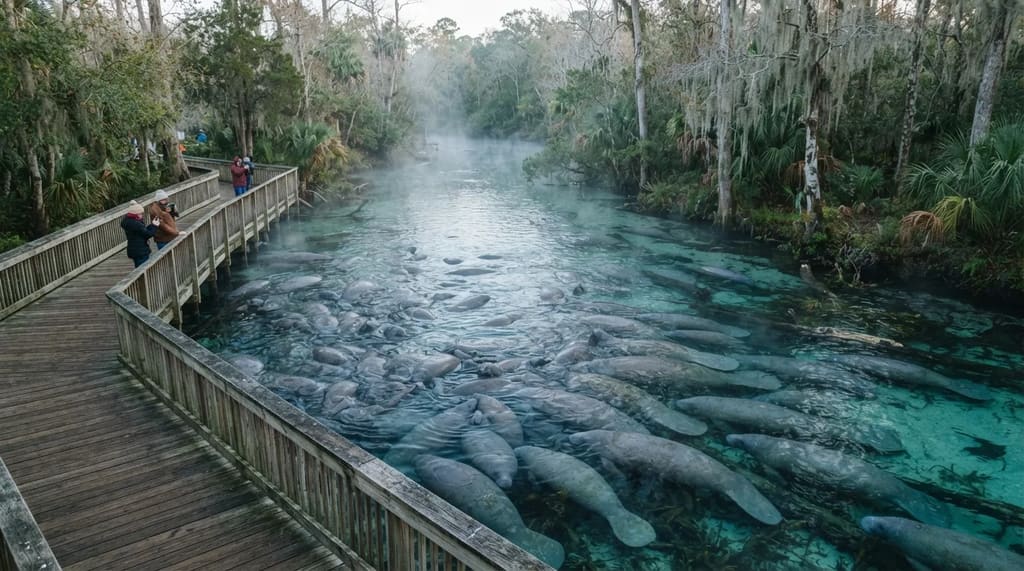
Blue Spring State Park, in Orange City, opens its winter manatee season each year in mid-November. When it opened on November 15, staff counted 35 manatees.6 Manatees are vulnerable to cold stress when water temperatures fall below 68 degrees, so the 72-degree spring pulls them in as the river cools.
Related Stories From Travelbinger
That makes the coldest morning the best time to go. During a prolonged cold front in early February 2026, with overnight lows of 23 degrees, staff counted 859 manatees in a single day.7 The colder the morning, the more manatees you’ll see.
The spring run is closed to swimming during manatee season, so you’ll watch from the boardwalk.6 Admission is $6 per vehicle, and day-use reservations are required. The next stop reverses the weather rule, because in the Everglades winter is the dry season.
#2 – Everglades City, Where Winter Means Dry Season and Stone Crab
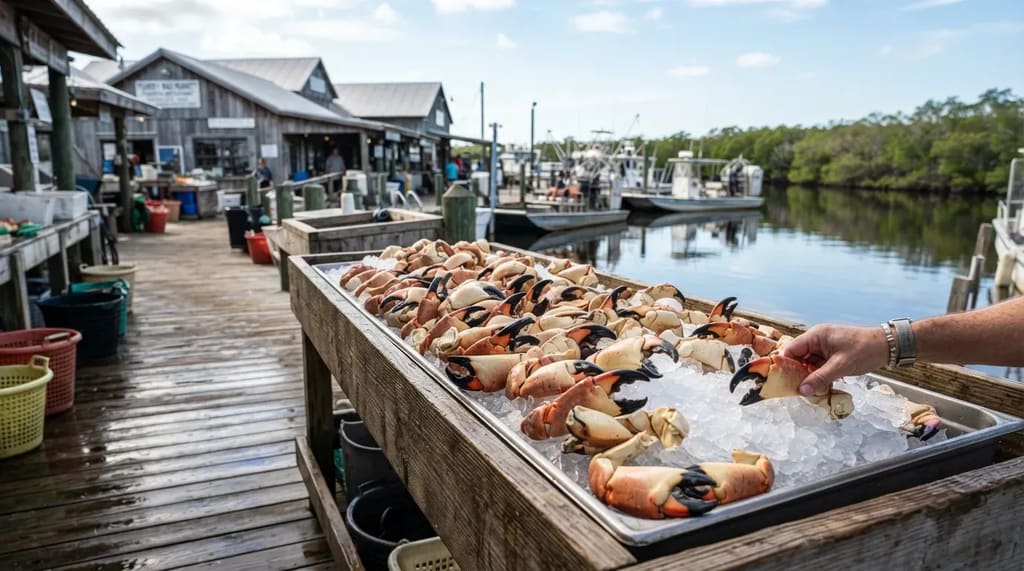
Everglades City, south of Naples, is the western gateway to Everglades National Park and the Ten Thousand Islands. Winter is the dry season there, so animals gather around the water that remains. That’s the same logic that draws cranes to Paynes Prairie, and it makes wildlife easier to find, with fewer mosquitoes too.
The town is also known for stone crab, and the season runs October 15 through May 1, which covers the whole winter. Book a boat tour into the Ten Thousand Islands, then order claws for dinner at a waterfront restaurant.
Why It Stands Out
- The Everglades dry season runs roughly December through April, which lines up with peak winter travel.
- Shrinking pools pull alligators and wading birds into easy viewing range.
- Boat tours here wind through mangrove islands that most Florida visitors never see.
- The waterfront restaurants serve stone crab at the source, not at a tourist-strip markup.
Everglades City is about as far as you can go in Florida by car and still feel you’ve arrived somewhere. The last stop is farther still, reachable only by water or air, and it costs far more than a $6 manatee boardwalk.
#1 – The Fort 70 Miles Past the Last Road
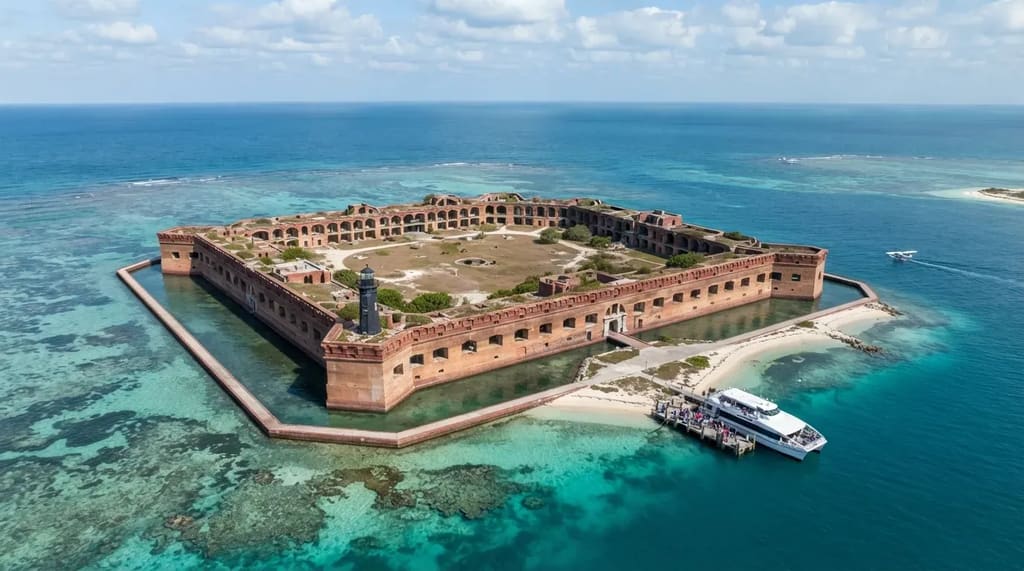
Dry Tortugas National Park is 70 miles off Key West, and you can reach it only by boat or seaplane. The centerpiece is Fort Jefferson, built from roughly 16 million bricks on Garden Key, where Dr. Samuel Mudd was held after the Lincoln assassination. The water around it is clear enough that the ferry ticket bundles in meals and snorkel gear.
The costs are real. The ferry fare was $250 for an adult in 2026, while another guide lists $260 including the park fee, versus $542 for a half-day seaplane trip.8 A day trip means about five hours on the ferry and four hours on the island.
The ferry is the better buy, because the extra $282 for the seaplane mostly saves time.8 Winter cold fronts can make a crossing bumpy, so pack a seasickness remedy. Reservations open about six months ahead, and high-demand dates sell out. The park is also cashless, so bring a card.
Set that against Blue Spring’s $6 vehicle fee, and the Dry Tortugas looks like a splurge. It’s also the place that shows what this whole list has in common: the best winter experiences in Florida are the ones that take a bit of planning.
Florida sells winter on warm sand, and the sand is real. But the spots above show what the postcards skip. Cold weather is when the state’s wild and historic side turns up, from manatees packing into 72-degree water to cranes settling over an open prairie.
So the next time you plan a winter trip, ask what the season brings to a place before you ask how warm it will be.
- Bok Tower Gardens Overview: https://en.wikipedia.org/wiki/Bok_Tower_Gardens
- Florida Memory Edison Banyan: https://floridamemory.com/items/show/92761
- WFLA Caladesi Ferry Returns: https://www.wfla.com/news/pinellas-county/caladesi-island-ferry-welcomes-back-passengers-10-months-after-hurricanes/
- Caladesi Ferry Schedule Guide: https://www.thetripverdict.com/caladesi-island-state-park-dunedin-fl
- Inside Climate News Cedar Key: https://insideclimatenews.org/news/05012025/cedar-key-florida-three-hurricanes-in-13-months/
- WFTV Manatee Season Opening: https://www.wftv.com/news/local/manatee-season-begins-blue-spring-state-park/3Z3GPM4HUBDC5NNGN6XAOCAB6I/
- Save the Manatee Sightings Update: https://savethemanatee.org/manatee-sightings-update-april-2026/
- Dry Tortugas Transport Costs: https://www.earthtrekkers.com/how-to-get-to-dry-tortugas-national-park/