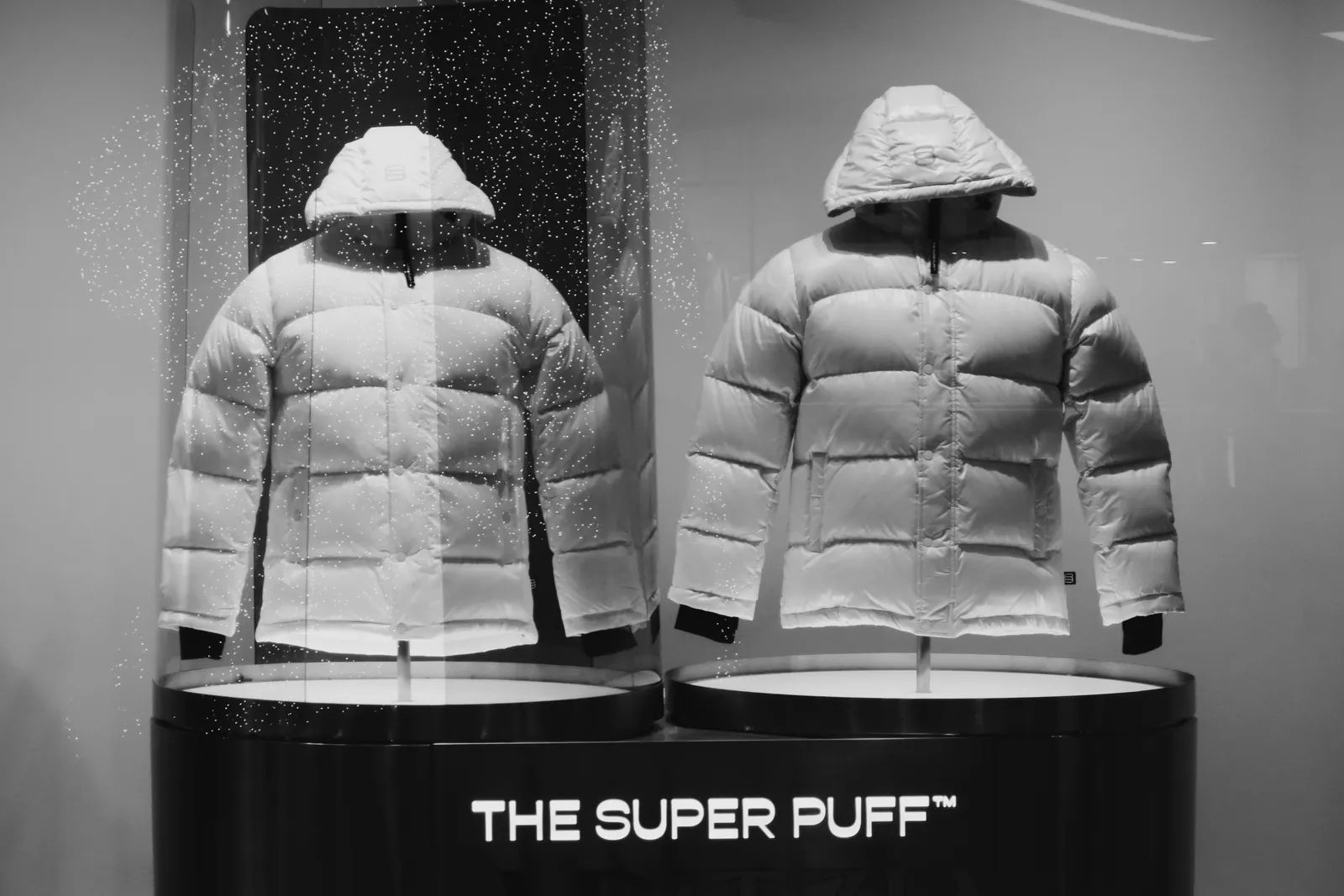
Holiday trips, ski weekends and winter visits to northern cities are pulling many travelers into serious cold, and the puffer jacket is often the first item packed. Its bulk makes it look like the obvious answer to freezing mornings. Yet a coat that feels substantial in a store can lose much of its value once wet snow, wind or long hours outdoors enter the picture. Insulation type, fill weight, shell fabric and fit determine how the jacket performs, and each one deserves a closer look before the suitcase is zipped ([1]).
Moisture Matters More Than Most Packing Lists Suggest
Down and synthetic fill behave very differently when conditions turn damp. Down delivers a lot of warmth for its weight and compresses small enough for a carry-on, which appeals to anyone trying to limit luggage. Its insulating ability falls, however, once moisture soaks into the fill. Synthetic insulation takes up more room for a similar level of warmth, but it keeps working after exposure to damp air and dries more quickly.
That tradeoff shapes the choice. A traveler heading to a dry, bitterly cold destination may find down the lighter and more practical option. Someone expecting slush, freezing rain or long stretches outside in wet snow may be better served by synthetic fill, even if the jacket packs less neatly.
Fill Power Is Not the Whole Story
Down is often rated by fill power, which describes how many cubic inches one ounce of down occupies. A higher figure signals loftier down, yet it does not guarantee a warmer coat. The amount of fill, the way the jacket is constructed and the outer fabric all influence how much heat the garment holds. Fill power also does not apply to synthetic insulation, so comparing the two by that number can be misleading.
Fill weight and temperature guidance usually tell a shopper more. Manufacturers that publish those details give a clearer sense of whether a jacket is built for brief outings or for extended time in severe cold. A lightly insulated layer can work well under a shell for a quick walk between hotel and restaurant, but it will feel thin during a long day on an open slope.
The Shell Decides How Long the Warmth Stays In
Wind is one of the fastest ways to lose heat. A tightly woven, wind-resistant shell limits the air moving through the insulation, and closures at the front, cuffs and hem help block drafts. Water resistance is a separate matter. A jacket can shed light snow or a brief shower and still soak through during sustained wet weather.
Travelers who expect real moisture should look for sealed seams and a waterproof membrane, not just a treated surface. The shell should also suit the activity. A smooth urban finish fits a city itinerary well, while a tougher fabric holds up better against backpacks, railings or gear. Very light shells can feel appealing in a bag, but they often demand more careful handling.
What matters now: Before buying or packing a puffer, confirm the insulation type, fill weight or temperature rating, water resistance, and fit with a base layer underneath.
Fit and Layering Room Affect Real-World Warmth
A puffer needs enough room for a base layer and a sweater or fleece without squeezing the insulation. Tight fabric across the chest, shoulders or arms can create cold spots and limit movement. Oversized jackets bring a different problem, because loose gaps at the neck and hem let warm air escape.
Trying the jacket on with the clothes you plan to wear is the simplest test. Raise your arms to confirm the sleeves still reach your wrists. If the hood is attached, check that it turns with your head without narrowing your view. A two-way zipper can also make it easier to sit comfortably on a train, a bus or a ski lift.
Related Stories From Travelbinger



Packing, Care and Storage
A compressible jacket suits travelers who need to carry an extra layer, but compression has limits. Pressing the fill flat for long periods reduces its ability to trap air, which means less warmth once the coat is unpacked. Down generally requires a suitable cleaner and thorough drying to prevent clumping, while synthetic insulation often has simpler washing needs. Every jacket should still be cleaned according to its care label.
Storage between trips matters too. A cool, dry closet with enough space lets the insulation recover its loft. Travelers who plan to rely on the same coat each winter may find that a little care at home preserves the warmth they paid for.
For cold-weather trips, the jacket that looks the warmest is not always the one that performs best. Matching the insulation to the likely moisture, checking the shell and leaving room for layers will do more for comfort than bulk alone. A few minutes of comparison before departure can prevent a long, chilly day in a city or on the mountain.