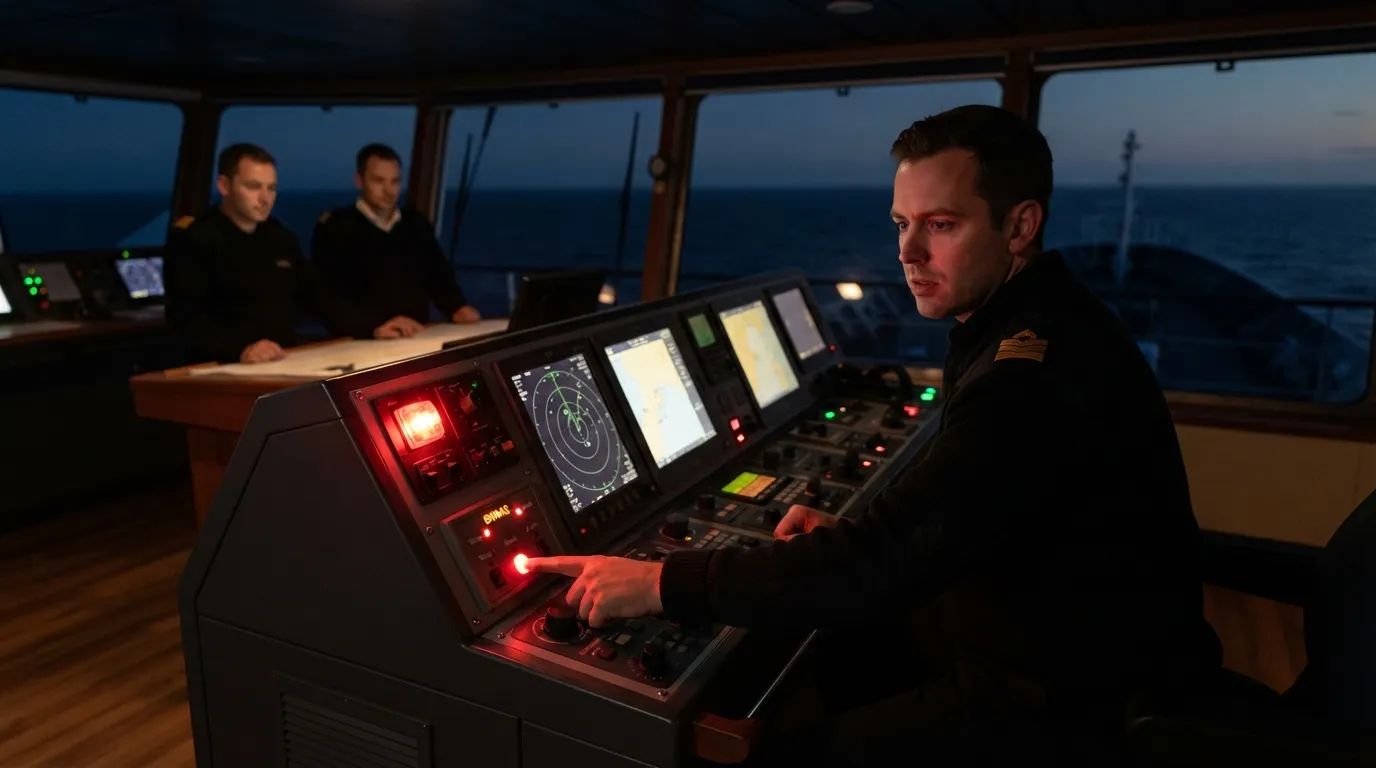
Most passengers picture the bridge at 3 a.m. as a dark, quiet room where one tired officer stares at the sea while the ship steers itself. The reality is a regulated routine of alarms, logs, rounds and rest-hour rules that runs from midnight to sunrise.
Almost none of it reaches the guest decks, and some of it exists because the biggest risk on a night watch isn’t the sea. Here are 15 overnight operations, counted down to the one that matters most, and one of them involves a device that quizzes officers every few minutes.
#15 – The Night Bridge Is a Working Control Room, Not a Sleepy Cockpit
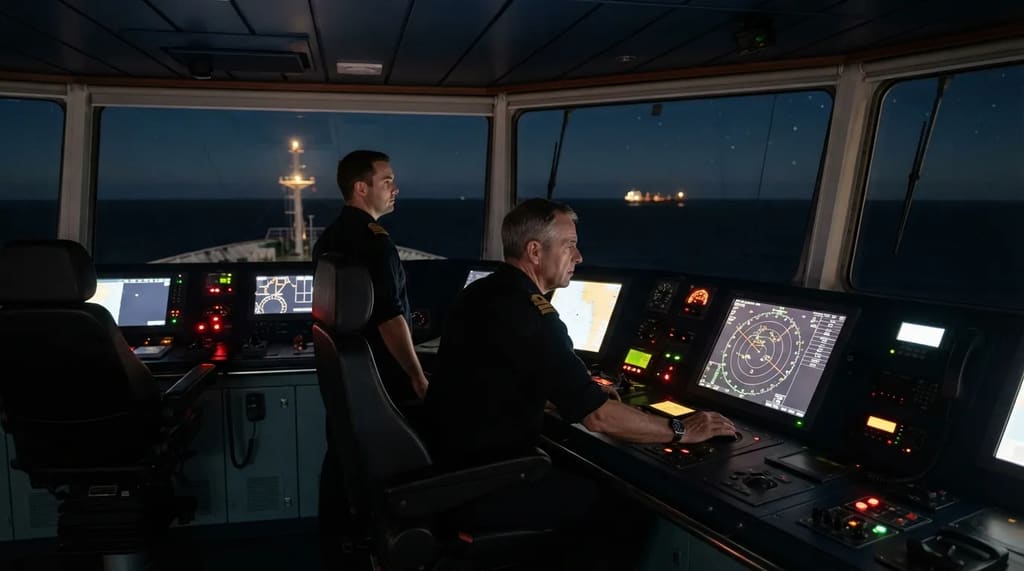
Forget the dark, silent room from the movies. Radar and AIS run all night, tracking other vessels, the ship’s position and the planned route.
Officers constantly compare what the screens say with what they can see through the windows. Neither source gets trusted on its own.
At sea, the officer on watch has three basic jobs: navigate the ship, avoid traffic safely and respond to emergencies. That sounds simple until you remember it happens in the dark, with thousands of guests asleep below.
One roundup of night-watch practice says officers are trained to treat a calm, quiet night as a risk rather than a comfort. A silent bridge isn’t a relaxed one, it’s a warning sign.
But the rule behind #14 explains why nobody on that bridge can ever really stand down.
#14 – A Lookout Never Stops, Even When the Autopilot Is On
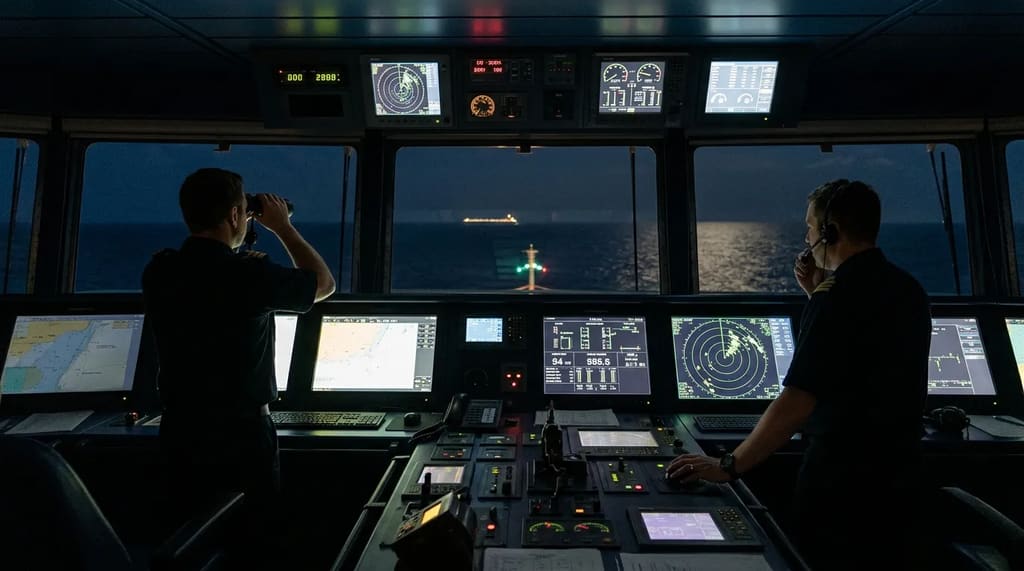
Autopilot does not mean nobody is watching. The rules call for constant lookout procedures, even when autopilot systems are engaged.
Bridge officers rotate watch shifts through the night to maintain alertness. Their job covers steering, weather, traffic and hazards, all at once.
Turns out the autopilot handles exactly one task, which is holding a course. Everything else on the list still belongs to a human being.
Bridge teams monitor meteorological data, satellite updates and radar continuously. Many passengers assume a modern ship practically sails itself, but the rules point the other way.
Keeping those eyes sharp starts with something passengers would never guess, and #13 begins with a famous ship.
#13 – The Bridge Is Kept Dim on Purpose
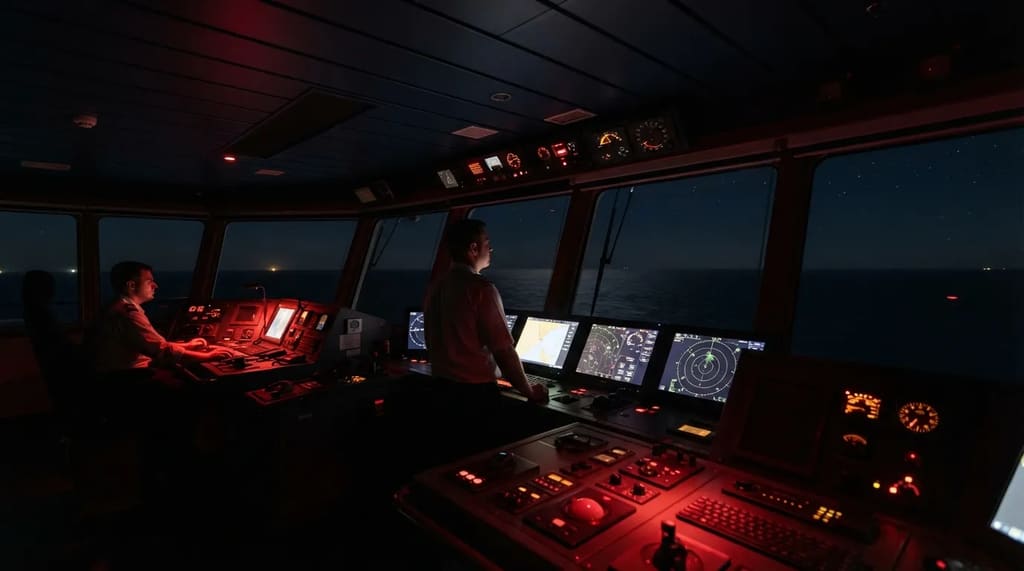
Low light on the bridge is a safety tool, not a mood choice. Most people assume brighter is safer, but at night on a bridge the opposite is closer to the truth.
According to testimony from the night Titanic struck the iceberg, an officer on the bridge wanted a glowing forward hatch closed so everything ahead stayed dark.1 The goal was to protect the night vision of the lookouts and officers.
The principle hasn’t changed in more than a century. It applies just as much to a modern bridge crowded with glowing screens.
One stray glow was enough to cause concern. A dim bridge at night is deliberate, and now you know why.
Yet the most closely guarded protection against a tired officer is a device you can’t see, and it’s waiting at #12.
#12 – A “Dead Man” Alarm Quizzes the Officer All Night
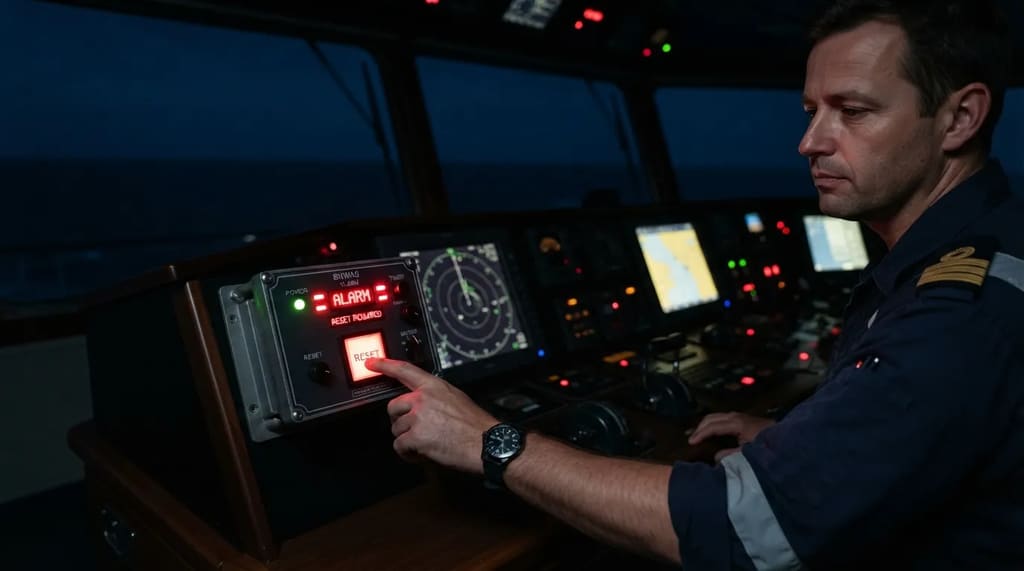
Somewhere on the bridge, a timer is quietly asking the officer whether they’re still there. It is called the Bridge Navigational Watch Alarm System, or BNWAS.
It’s designed to sound if the watch officer falls asleep, is incapacitated or is away too long. Its stated purpose is to detect operator disability that could lead to marine accidents.2
Fast Facts
- The system stays dormant for 3 to 12 minutes once it is running.3
- It then flashes a visual indication, and a first audible alarm sounds 15 seconds later if nobody resets it.
- When the autopilot is engaged, the officer must signal their presence in response to the flashing light.4
- The officer has to respond every single time.
Even at the longest setting, that’s at least five check-ins every hour.
Call it an insult to trained professionals or call it cheap insurance. The system doesn’t care either way.
And if the officer ignores that first alarm, things get a lot louder, as #11 reveals.
#11 – If the First Alarm Is Ignored, the Rest of the Team Gets Called
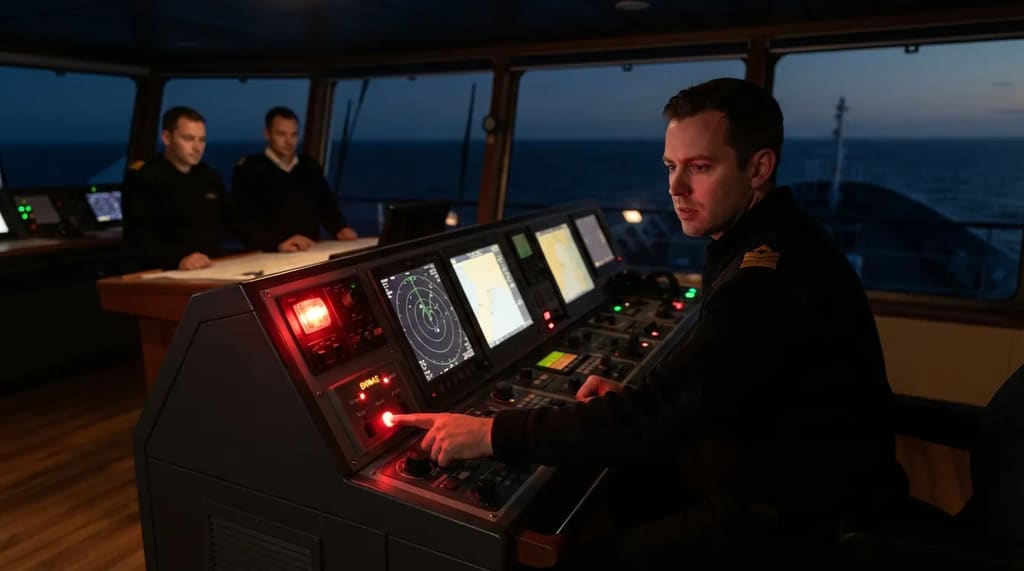
The alarm doesn’t stop at a beep. If the first alert goes unanswered, the system escalates to other officers, and one of them must go to the bridge and cancel it.
One manufacturer’s specifications show the second stage following 15 seconds after the first, with a third stage coming 90 to 180 seconds later, or omitted. Exact timings depend on the equipment.
IMO performance standards say the equipment must be tamper-proof, so no crew member can interfere with it. Only the ship’s master is supposed to control its operating mode and timer settings.
The design also works in the other direction, giving a struggling officer a way to call for help.4
- An emergency call function can let bridge personnel trigger a stage two or three alarm to call for help.
- The first audible tone is meant to alert the officer, not startle them.
Still, even the best alarm is no match for an exhausted human being, which is the story behind #10.
#10 – The Rest-Hour Rule That Governs Every Night Watch
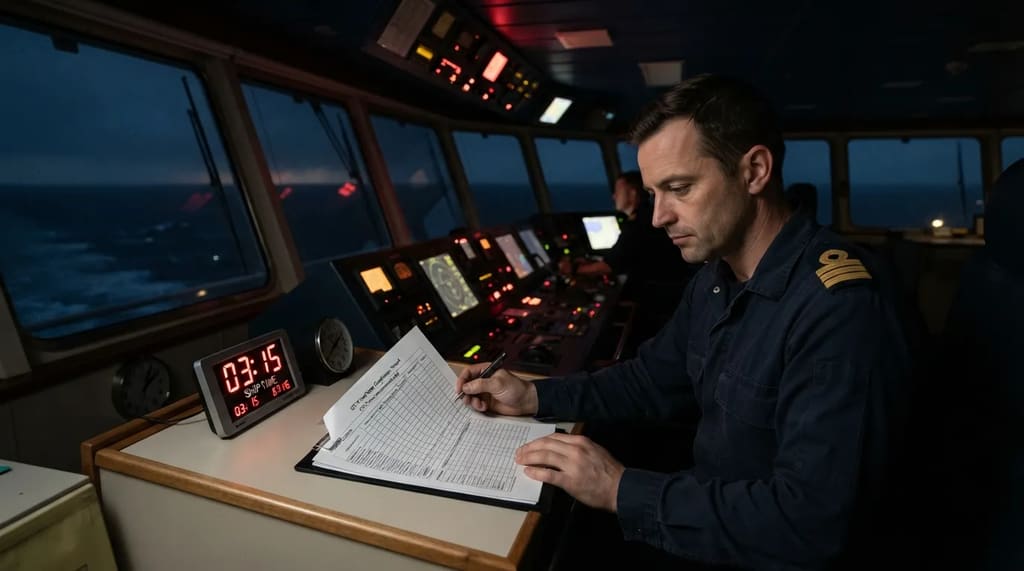
Behind every night watch sits a number, and the number is ten. Under STCW, watchkeepers need at least 10 hours of rest in any 24-hour period and 77 hours in any seven days.5
At a Glance
- Minimum rest: 10 hours in any 24-hour period.
- Weekly minimum: 77 hours in any seven-day period.
- Rest can be split into no more than two periods, and one must last at least six hours.5
- Consecutive rest periods shouldn’t be separated by more than 14 hours.5
The 24-hour window is rolling, so it doesn’t reset at midnight.6 That matters on a ship where the working day rarely matches the clock on the wall.
These limits cover the people steering the ship while you sleep. On paper, they are firm.
Rules on paper are one thing, and #9 shows how they actually get checked.
#9 – Every Overnight Watch Gets Written Down
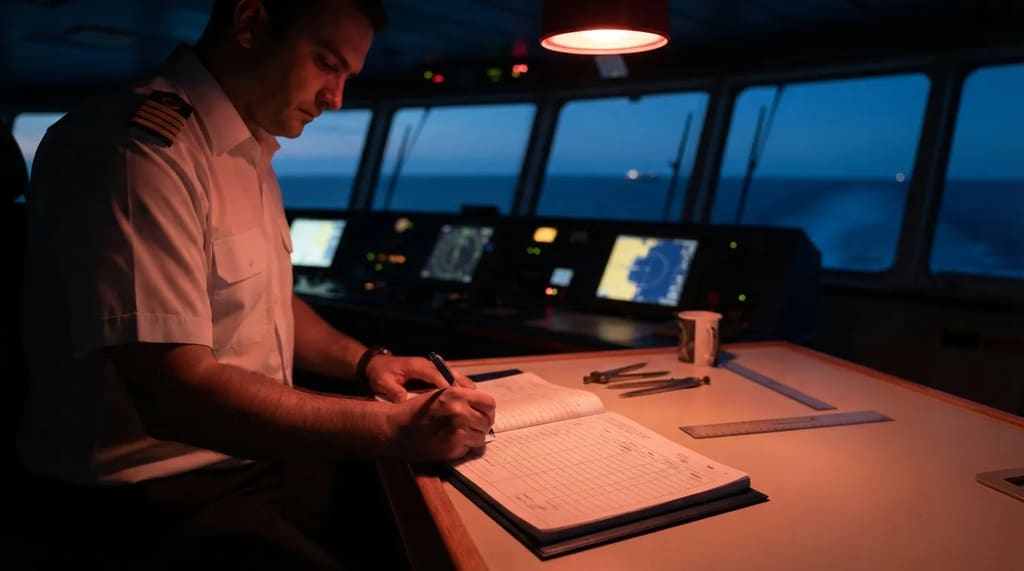
Rest gets tracked shift by shift, on paper. Officers log their duty periods carefully, especially during overnight bridge watches and engine room supervision.
One compliance guide lists daily signed records stored for three years. The same rest thresholds apply at sea, in port or at anchor.6
Being in port doesn’t pause the rest-hour clock. A seafarer who is called out during scheduled rest hours must be granted compensatory rest.
Many passengers assume port days are easy days for the crew. The rest-hour rules say otherwise.
So who ends up holding the watch during the hardest hours? #8 may surprise you.
#8 – The Hardest Hours Are Meant to Go to the Most Experienced
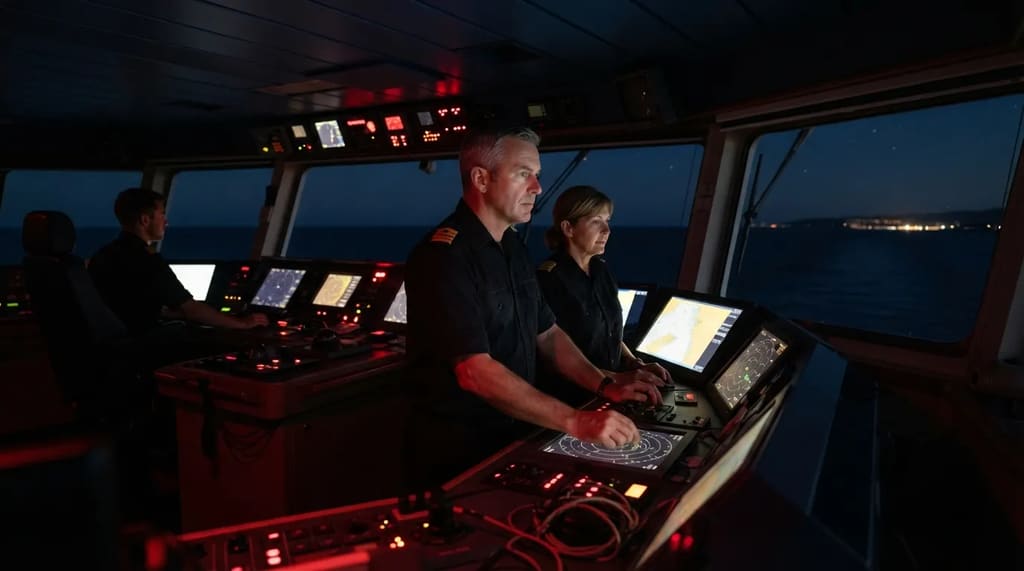
The graveyard shift isn’t handed to the rookies. Best practice, as deck officers describe it, calls for the most experienced officers to work these hours.
Officers who have stood this watch for years call it a test of discipline against biology. The opponent isn’t the sea so much as sleepiness.
The bridge team gets reinforced the moment waters get tighter. That means the number of people watching rises with the risk, not with the clock.
Weather in open water can also shift quickly after sunset. Many passengers imagine one lonely officer, but the better picture is a team that scales up when it has to.
Some of the decisions that team makes at night, though, do reach you by breakfast, starting with #7.
#7 – The Bridge Decides Which Decks Are Too Dangerous to Open
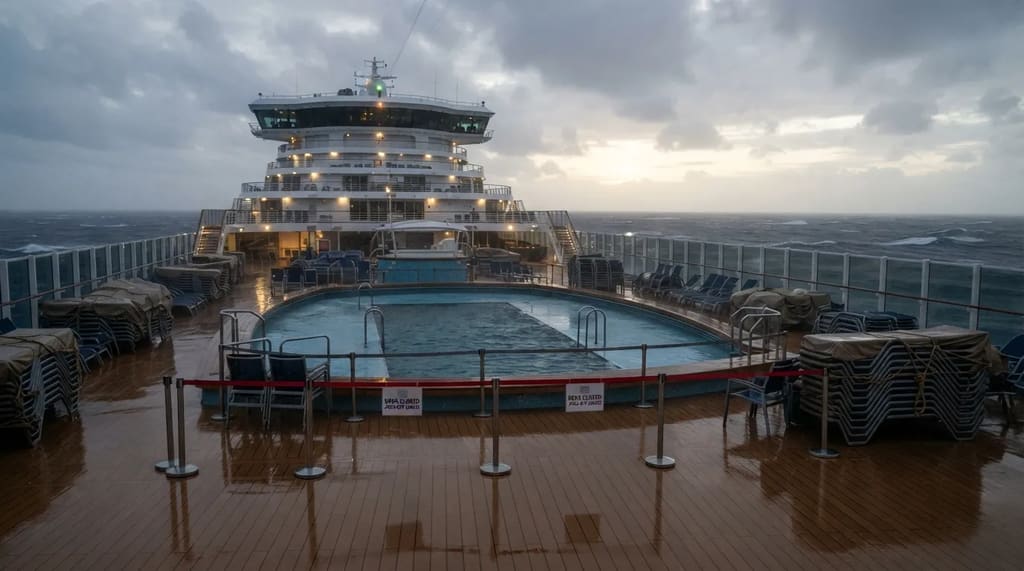
That closed pool deck at dawn isn’t a staffing problem. The bridge watches wind speed and ship motion to judge when open decks become unsafe.
Bridge teams monitor meteorological data, satellite updates and radar continuously. Most of what they decide overnight leaves no trace on the guest decks.
Passengers often blame a shut deck on cost-cutting. The call actually belongs to the bridge, and it rests on wind and sea conditions.
It’s one of the few overnight decisions guests notice, and usually with irritation. The people who made it were watching gauges while you slept.
But another overnight change happens even more quietly, and #6 involves the clock on your wall.
#6 – Your Ship May Quietly Change the Clock While You Sleep
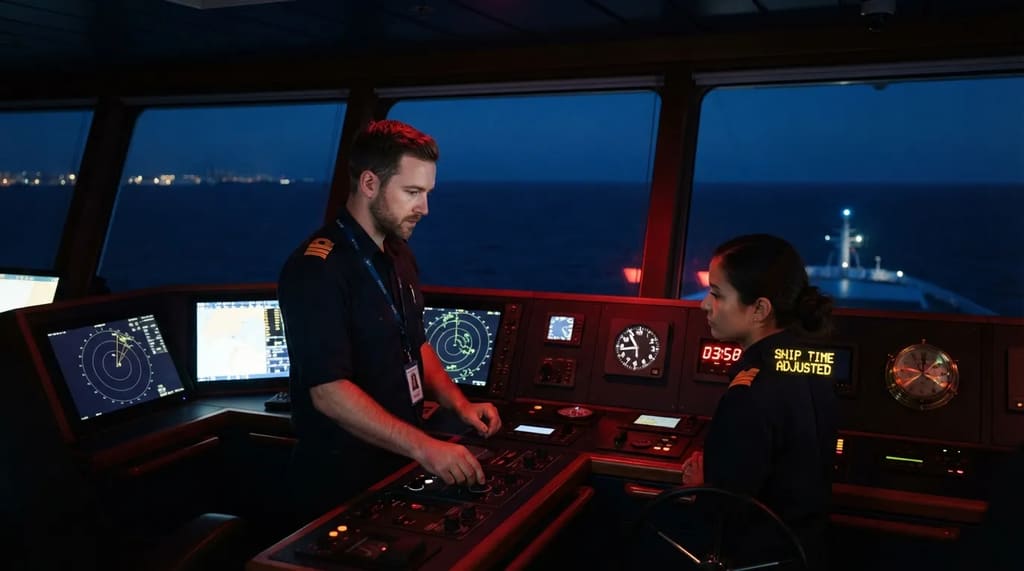
Time itself gets adjusted while you sleep. On many itineraries, the ship’s clocks change overnight.
Bridge officers update navigation plans, and deck teams prepare mooring equipment. A time change isn’t cosmetic.
It touches when the ship arrives, when excursions leave and when the crew gets to rest. The ship’s time can move without a single guest noticing.
That is by design, since the aim is a morning that feels normal to you. The work that makes it feel normal started hours before.
And when a ship is due in early, that work turns into a full sprint, as #5 shows.
#5 – An Early Arrival Turns the Night Into a Sprint
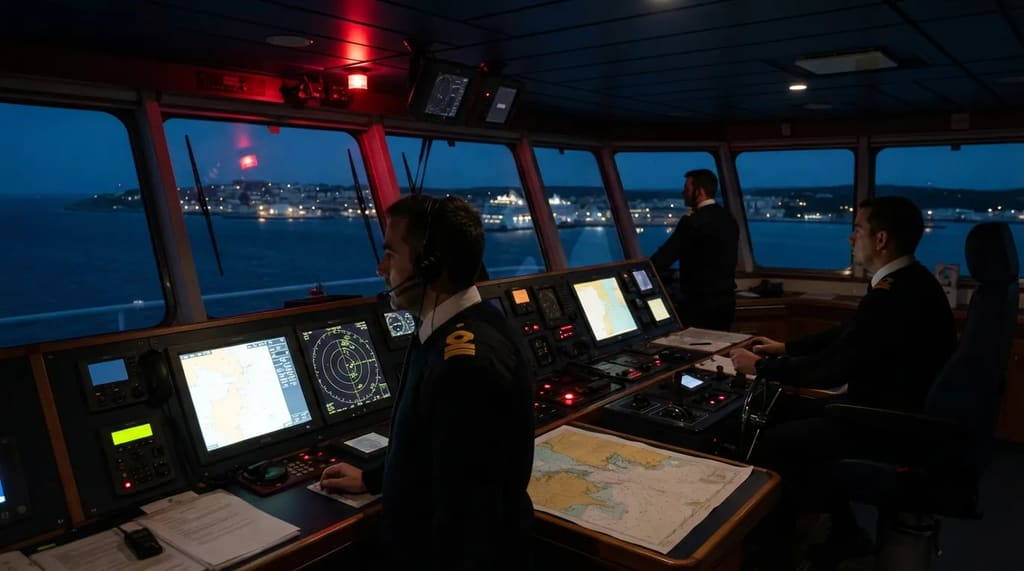
Arrival in port starts hours before you see land. When a ship is due in early, work ramps up overnight.
The bridge prepares for arrival, and deck crews get ready for lines and the gangway. That’s a lot of coordination for people who are still on a normal watch.
The overnight front-desk team also prepares disembarkation paperwork the night before. Many passengers sleep right through the busiest part of the night.
The ship you wake up on has already done a night’s worth of work. Nobody announces it.
Meanwhile, someone else is walking the ship, and #4 takes them places you’ll never go.
#4 – Hourly Rounds Reach Places No Guest Will Ever See
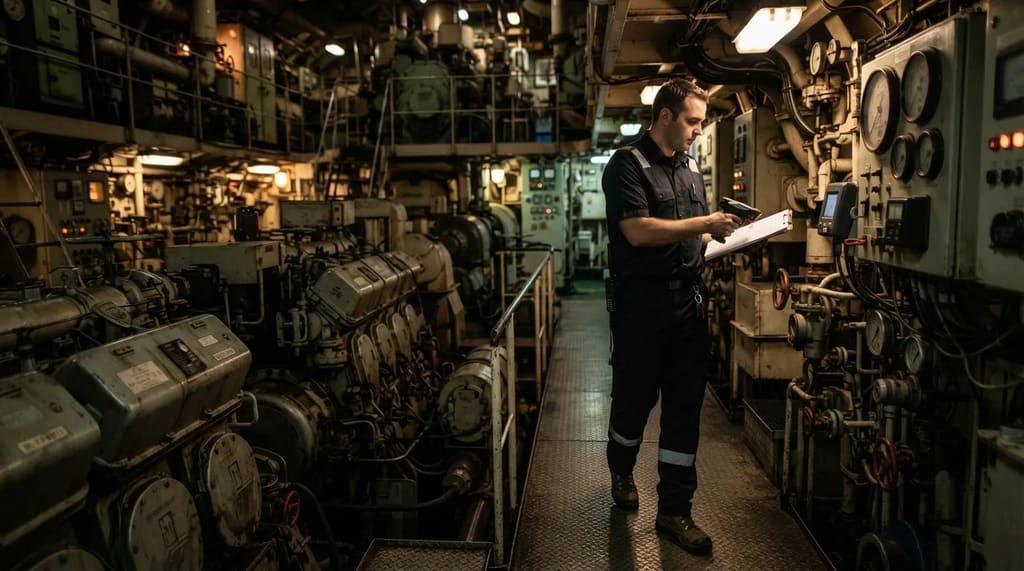
Someone is walking the ship every hour. One night-watch job listing describes hourly safety rounds of designated checkpoints, with readings recorded in logbooks.
Guards also carry out frequent inspections of crew quarters. The officer of the watch conducts night rounds too, and confirms that safety precautions are being followed.
Worth Knowing
- Checkpoints include engine rooms, freezers and fridges.
- Rounds cover public, crew and off-limit areas of the ship.
- Guards on safety rounds work under the supervision of the watchkeeping officer.
- Readings from the rounds are recorded in logbooks.
Job descriptions say a guard on rounds may be the first person to reach an incident or fire. Exact procedures vary by cruise line and ship, and some guests find the idea of roving guards intrusive.
But rounds are only half of security, and #3 starts at the front door.
#3 – Someone Guards the Door All Night
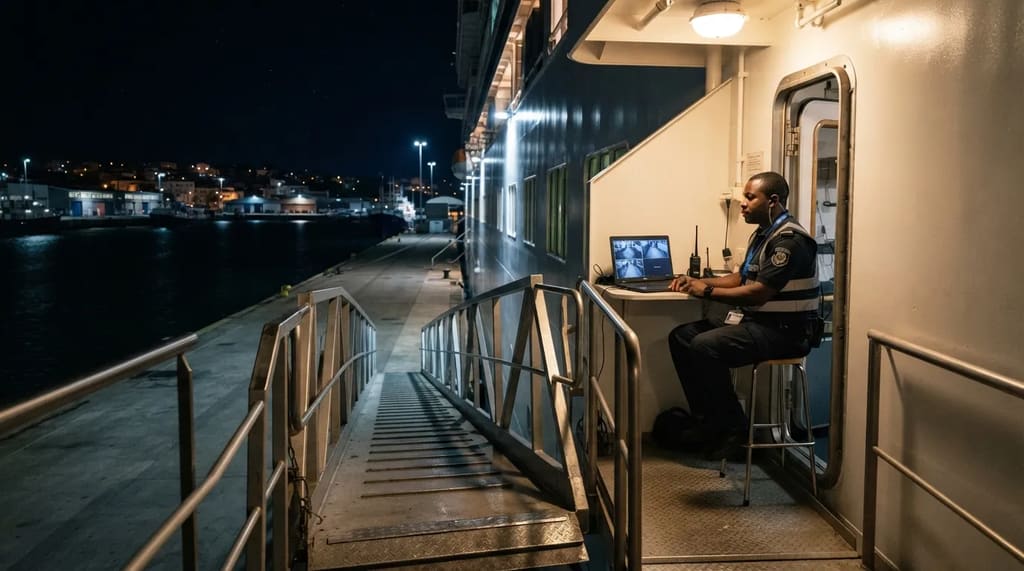
In port, the gangway never really closes. The security guard works at the gangway while the ship is in port, and at the tender docking stations, ashore and aboard, while it’s at anchor.
Some ships also post a night watch person who locks entrance doors when the ship sits stationary overnight and makes sure no visitors come aboard. That person is the gatekeeper until morning.
One industry roundup says security teams actively watch live camera feeds rather than relying only on recorded footage. The same source says access to certain technical zones is strictly controlled after midnight.
The crew who greet you at the gangway at noon may be the ones controlling who gets aboard at midnight. Entry control doesn’t have a night off.
All of that watching ends up on paper, and #2 is the document nobody posts.
#2 – The Night Report Nobody Ever Posts
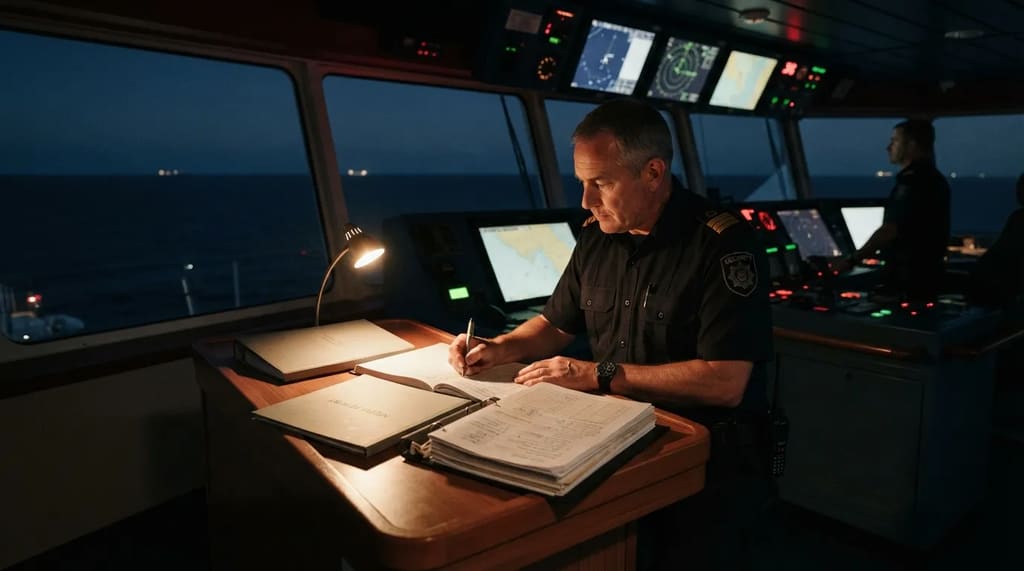
Every night produces a written record that passengers will never read. Guards prepare a nightly activity log, and the Security Officer compiles the Night Report.
The Security Officer produces the report from that log for presentation to ship’s management. It isn’t marketing material, and cruise lines rarely publicize it.
Night watch staff must report all unusual matters to the captain and the hotel manager. Meanwhile, the officer on duty writes in the ship’s official log throughout every watch.
So two documents grow all night, one from the bridge and one from security. By sunrise, the ship’s leaders know things the guests never will.
Whether that privacy is sensible or a transparency gap is a fair argument. Either way, it’s the system working as designed.
Which brings us to the reason all of this exists, and #1 is the one that matters most.
#1 – When Something Goes Wrong, a Chain of People Moves Before You Wake Up
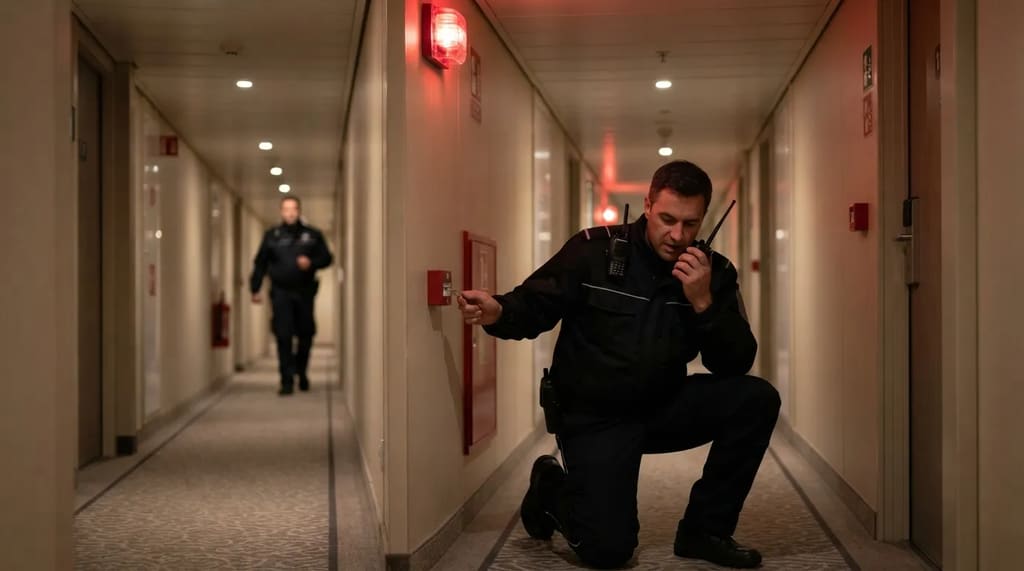
The most important job on the night watch is staying ready for the worst. If a fire alarm sounds, the security guard responds immediately to the location of the alarm.
That guard may be the first person on the scene, and must assess the situation and act until help arrives. Guards are trained in fire prevention and basic firefighting to cover that gap until the dedicated fire team arrives.
A guard acting as a response guard works under the supervision of the watchkeeping officer. The Chief Officer Safety or Security Officer, the deputy and the security supervisor are on call to provide assistance.
- Crew walk fire and safety rounds through the day and night.
- Every night’s events end up in a written log.
Most passengers never see any of it. Nobody should have to.
Which brings us to what all of this adds up to.
The Bottom Line
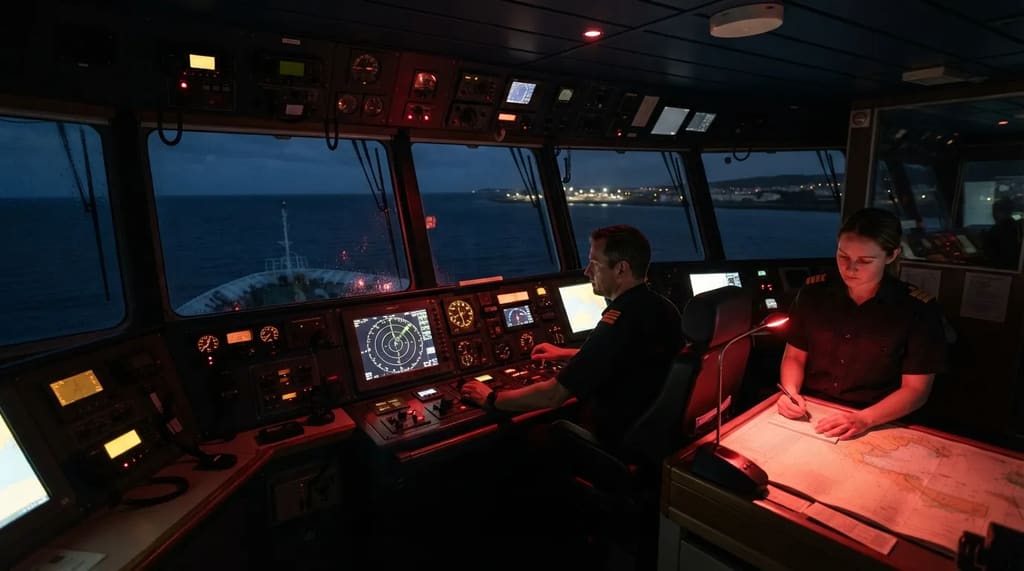
The night bridge is a working control room with alarms that escalate, rest-hour rules counted in hours, logs written through every watch and rounds that reach engine rooms and freezers. The biggest surprise is how much of the system guards against one weak point, which is a tired human being.
Passengers sleep through clock changes, early arrivals, closed decks and nightly reports, and that is by design. Which of these night routines surprised you most?
So the next time you wake to a calm sea and a ship already tied up at the pier, remember the shift that got you there. The quietest hours on board are the busiest ones for the people who never appear in the brochure.
- Titanic Hemming Inquiry Testimony: https://www.titanicinquiry.org/BOTInq/BOTInq15Hemming01.php
- Federal Register BNWAS Standards: https://www.federalregister.gov/documents/2013/01/14/2013-00512/carriage-standards-for-bridge-navigational-watch-alarm-systems-bnwas-aboard-us-flagged-vessels
- IMO BNWAS Performance Standards: http://www.rise.odessa.ua/texts/MSC128_75e.php3
- IMO Resolution MSC.128(75): https://media.liscr.com/marketing/liscr/media/liscr/online%20library/maritime/msc.128(75).pdf
- STCW Rest Hour Excerpts: https://weh.maritime.edu/stcw/2018/content/principles.html
- Crew Rest Hours Compliance Guide: https://navatom.com/blog/crew-work-rest-hours-compliance-guide