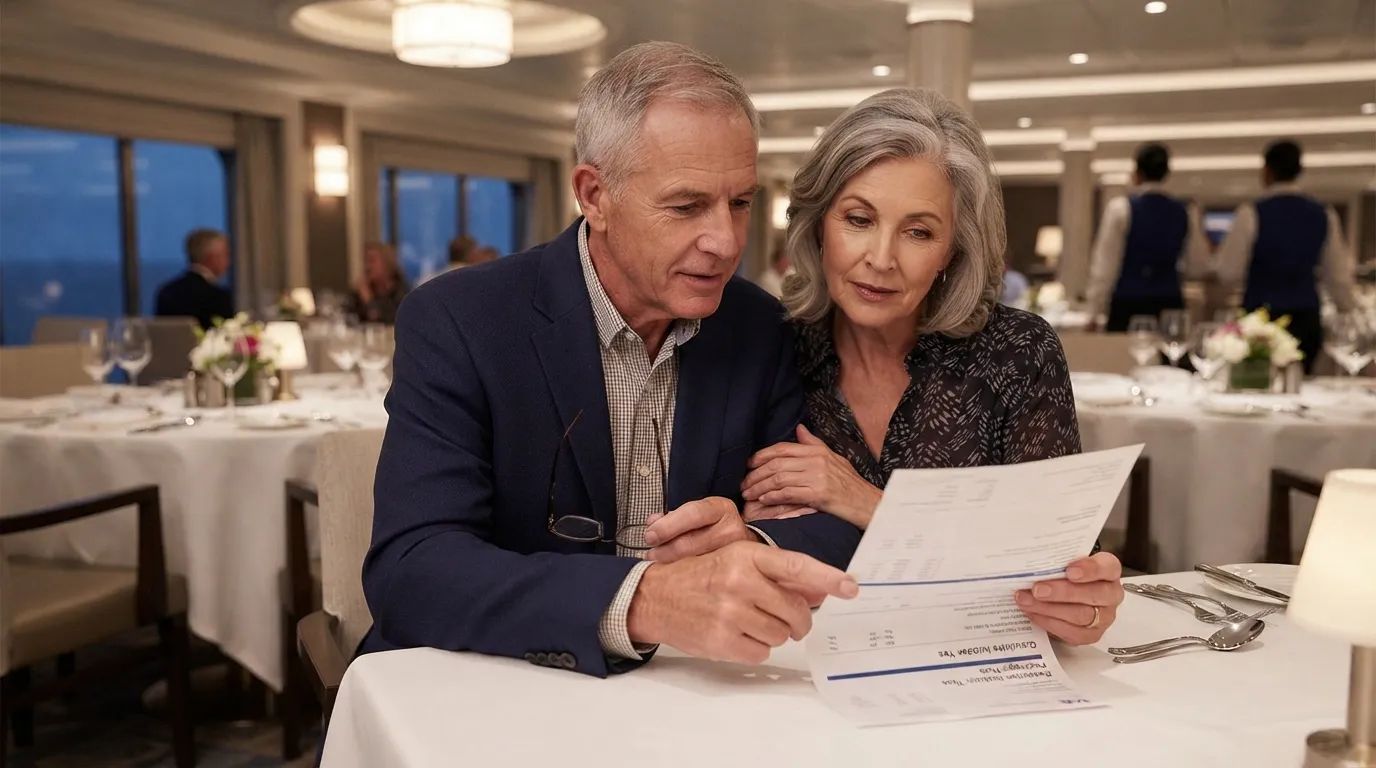
You’ve paid for the cruise, so dinner should be the easy part. Then Royal Caribbean adds $18.50 per person, per day for crew service, which comes to $259 on a seven-night cruise for two.1
That charge posts every day whether you eat in the main dining room or never go. It’s one of several costs and rules at dinner that show up with little warning, and the fifteen below run from dress and seating to buffet hygiene, drink charges and food allergies.
They’re in rising order of what’s at stake. Stay for the last one, because it’s a two-minute conversation that costs nothing and shapes how safe and smooth every later dinner will be. First, the clothes.
#15 – Tank Tops, Shorts and Swimwear Stay Out
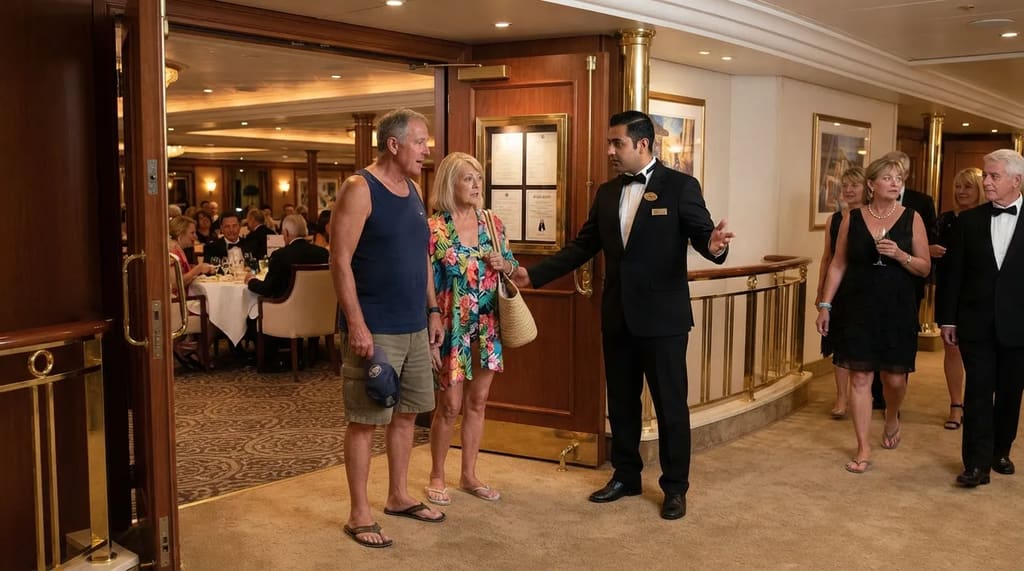
Four items can get a guest turned away at dinner on many lines: tank tops, swimwear, flip-flops and shorts. It’s a short list, and it catches people who think the whole ship is one big pool deck.
Royal Caribbean’s main dining room turns away guests in tank tops, swimwear and flip-flops on any evening, and shorts are generally not permitted there at night. The same list shows up across the industry.
Baseball caps and pool hats are typically asked to come off at dinner, while dress hats are usually fine. Buffets and casual eateries hold looser standards than the main dining room or specialty restaurants.
So the fix on any evening is simple. Change before you head down, or eat upstairs in what you’re wearing.
Past that short list the dress code loosens, and one major line has dropped its dressy night altogether.
#14 – Formal Night Is Optional on Every Major Line
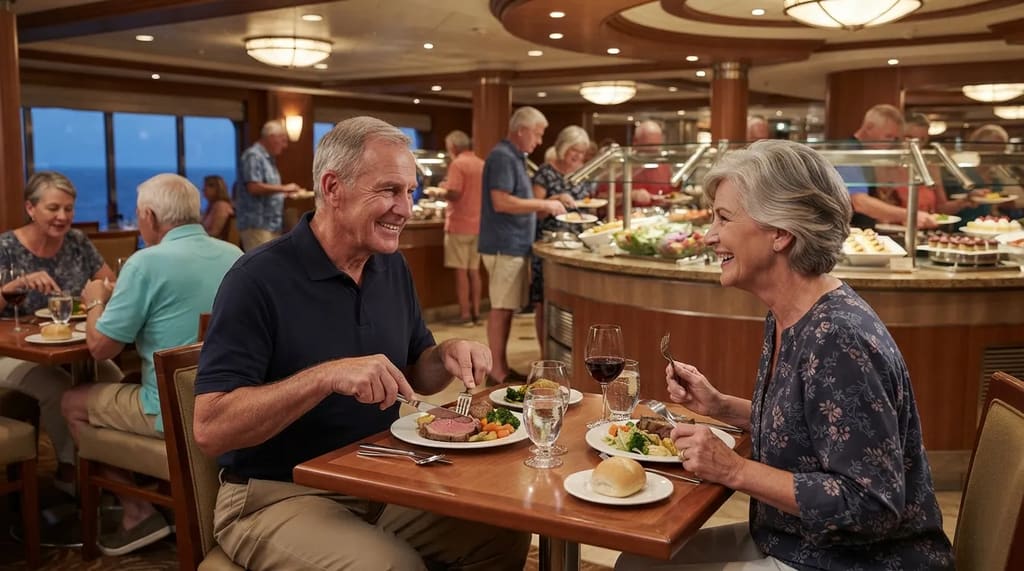
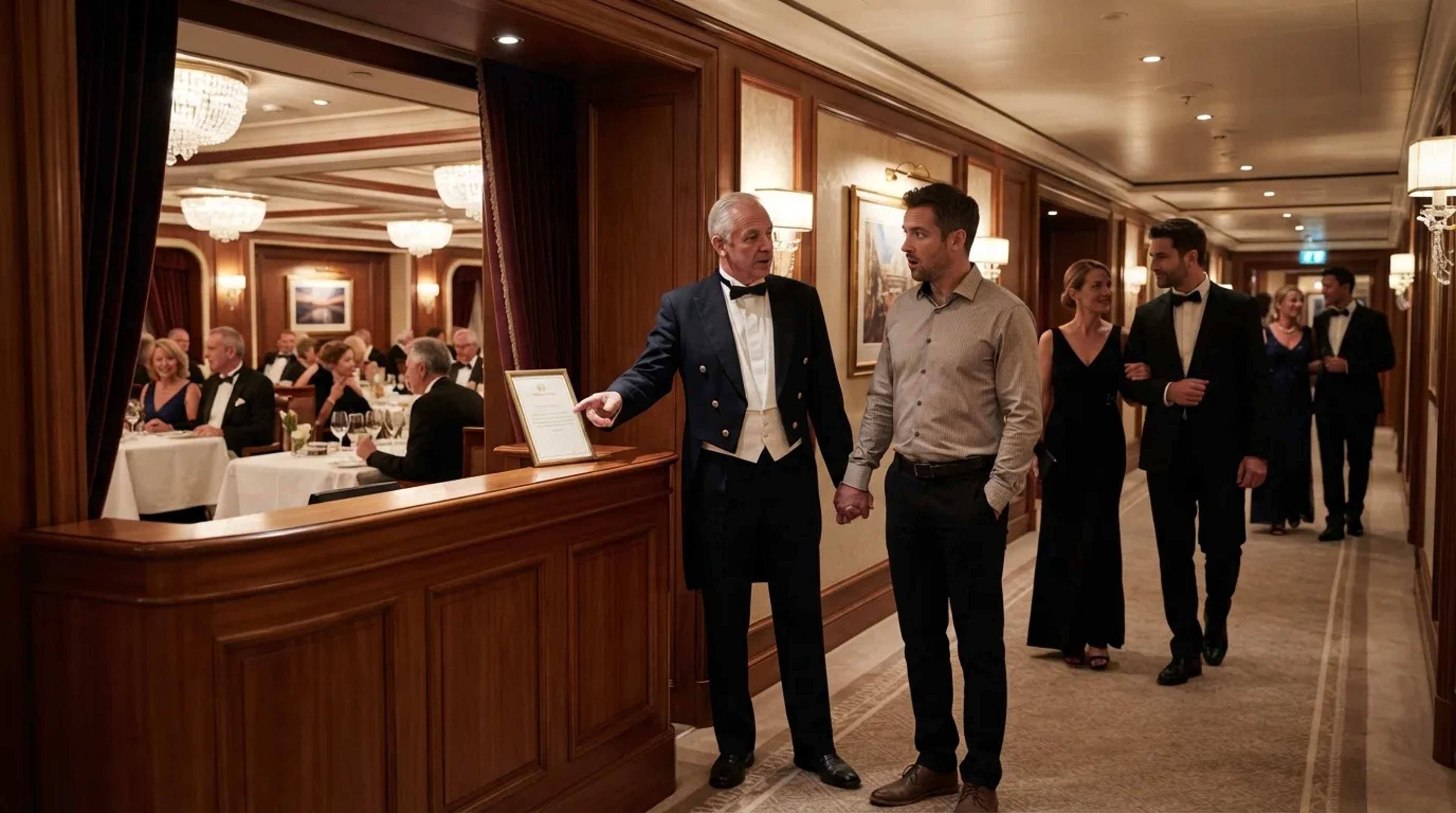
If you skip formal night, you won’t be turned away from the ship. You’ll only be turned away from the main dining room that evening.
The buffet, the pizza window and room service keep operating, so you can eat in whatever you like. Nobody is going to strand you without dinner.
The lines differ in how much they care. Norwegian has no formal nights at all, and Carnival now calls them Elegant Night, which it enforces loosely.
Princess is the stricter case, because guests who arrive underdressed are sometimes redirected to the buffet or casual venues. Buying a new outfit just for formal night is wasted money on most lines, and for men dark dress trousers with a white dress shirt will do.
Quick Compare
- Norwegian: no formal nights at all
- Carnival: Elegant Night, enforced loosely
- Princess: underdressed guests are sometimes redirected to the buffet or casual venues
Check your own line’s rule before you pack, and that settles the question.
Everyday dinners raise a smaller question that trips up packers: whether the jeans you already own will pass.
#13 – Dark Jeans Pass on Casual Nights, Not Always on Formal Ones
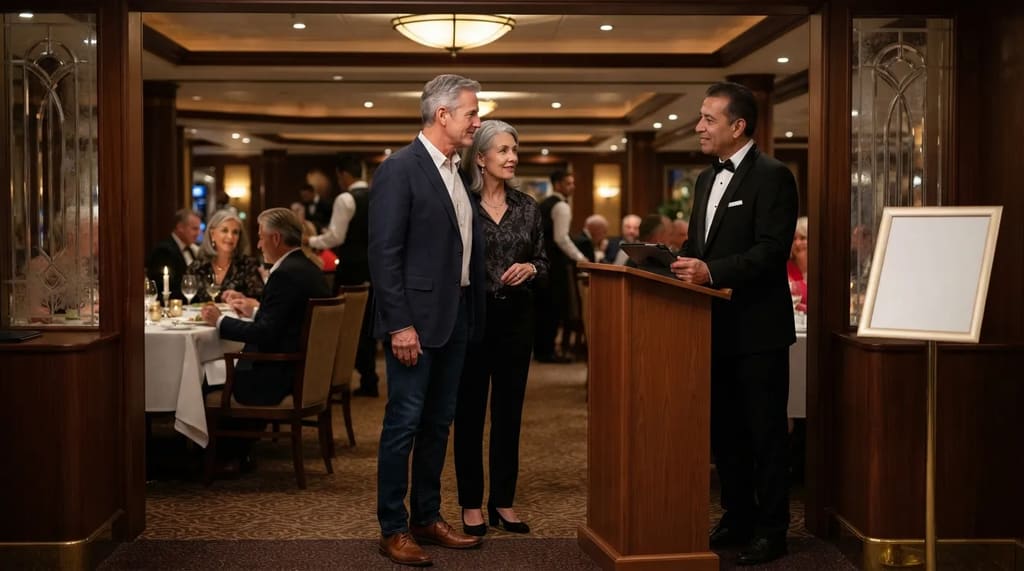
Jeans aren’t banned from the dining room. In good condition, clean and without rips, they’re accepted on casual nights across Royal Caribbean, Carnival, Norwegian, MSC, Celebrity, Disney and Princess.
Dark, clean jeans without rips pass on casual nights. That’s the rule most guests never hear until they’re standing at the host stand.
Formal night changes the answer. Dress pants, chinos, a skirt or a dress are safer choices when the evening is designated formal.
The code is set night by night, so the same pair that worked on Tuesday can draw a look on Thursday. Pack one pair of dark jeans for the casual dinners and spend the saved suitcase space on the formal-night outfit, so you aren’t gambling on the one evening when the rules tighten.
#12 – Fixed Seating Means Arriving on Time
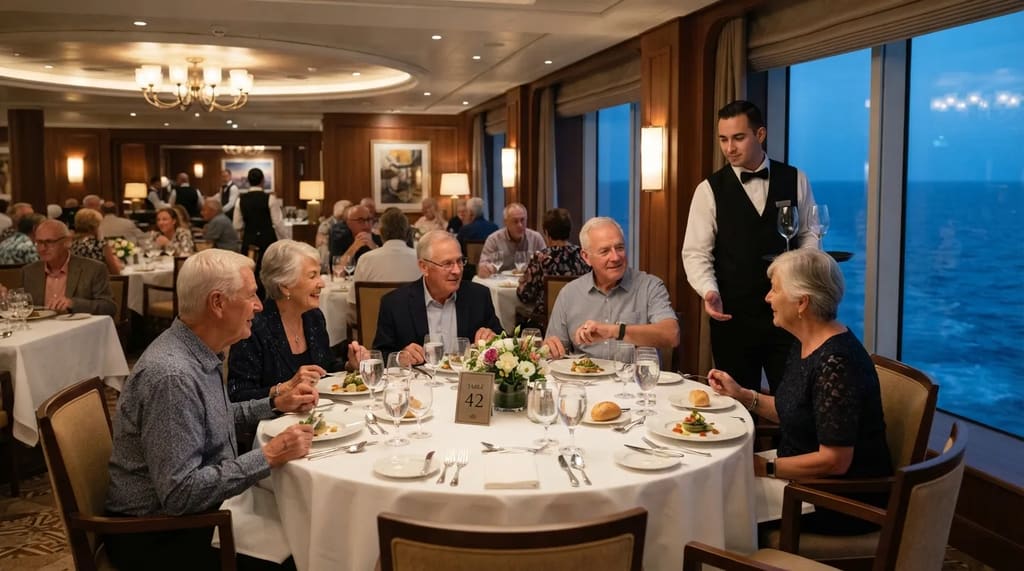
Your table is set for a specific hour, and the servers have built the evening around it. Cruise lines often run a first and second seating in the dining room.
Courses move together at a table, so a late arrival either holds everyone up or eats a step behind the others. With traditional dining, be at your table at your assigned seating time.
If you run late or like to linger over dessert, choose flexible dining when you book. Norwegian, for one, lets you dine where and when you want.
A fixed time usually brings a fixed table, and that table may not be the size you’d choose.
#11 – Ask for a Table That Fits Your Party
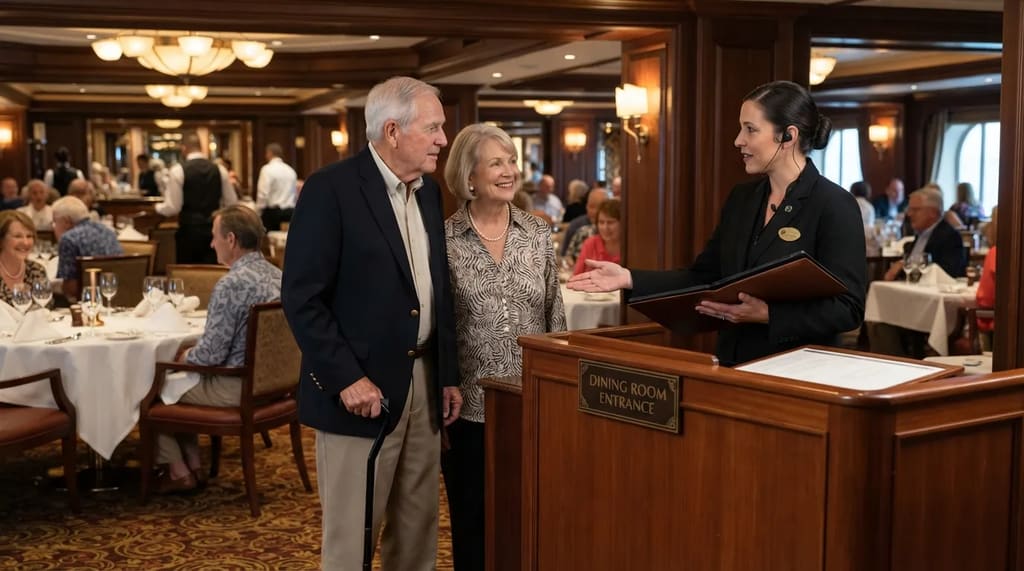
Walk into a traditional dining room and you may find a table for eight with strangers. Some travelers love that, and others dread it all week.
You don’t have to accept whatever you’re handed. Say what you want at the main dining room host stand on the first evening, whether that’s a table for two, a table for four, or a larger one for company.
Ask for your preferred table size before the first dinner is served. That first evening is the natural moment.
If you use a cane or walker, ask about aisle room and a spot close to the entrance. Tables are laid out before you arrive, so the earlier you mention it, the easier it is to arrange.
Dining supervisors are available for exactly these requests. Once you’re seated, you can get ahead of the menu too, because on some lines the staff will help you decide tomorrow’s dinner tonight.
#10 – Pre-Order Tomorrow’s Dinner at Tonight’s Table
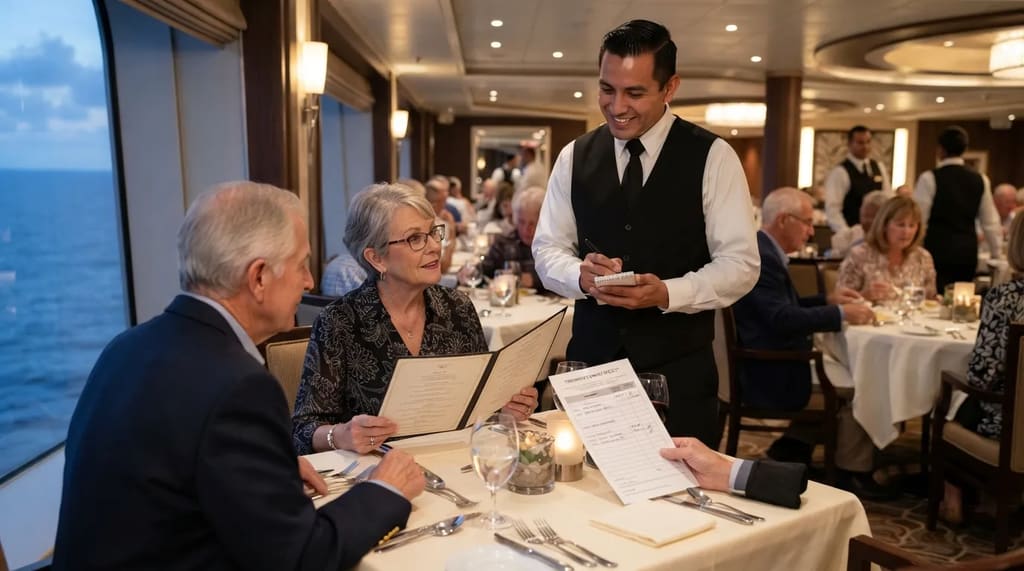
Carnival’s food and beverage team will help plan your daily meals in the dining room and can help pre-order meals for the following day. Practice varies by line, so ask your server whether tomorrow’s dinner can be ordered tonight.
The benefit is time. A request placed a day ahead gives the kitchen room to prepare, instead of improvising at the last minute.
That matters most if you follow a diet. Gluten-free, lactose-free, low-salt, low-cholesterol, vegetarian and vegan diets are all among the needs cruise lines are asked to handle.
It also helps if you read a menu slowly or like to decide without a server waiting at your elbow. The ordering costs nothing, which raises a fair question about what the dining room will actually charge you for.
#9 – Main Dining Room Dinners Come With Your Fare
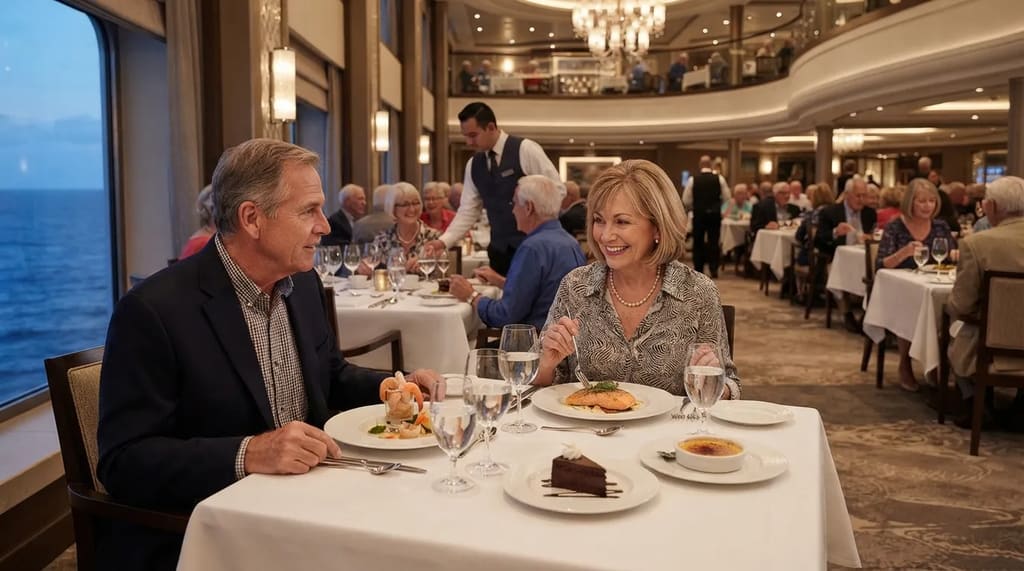
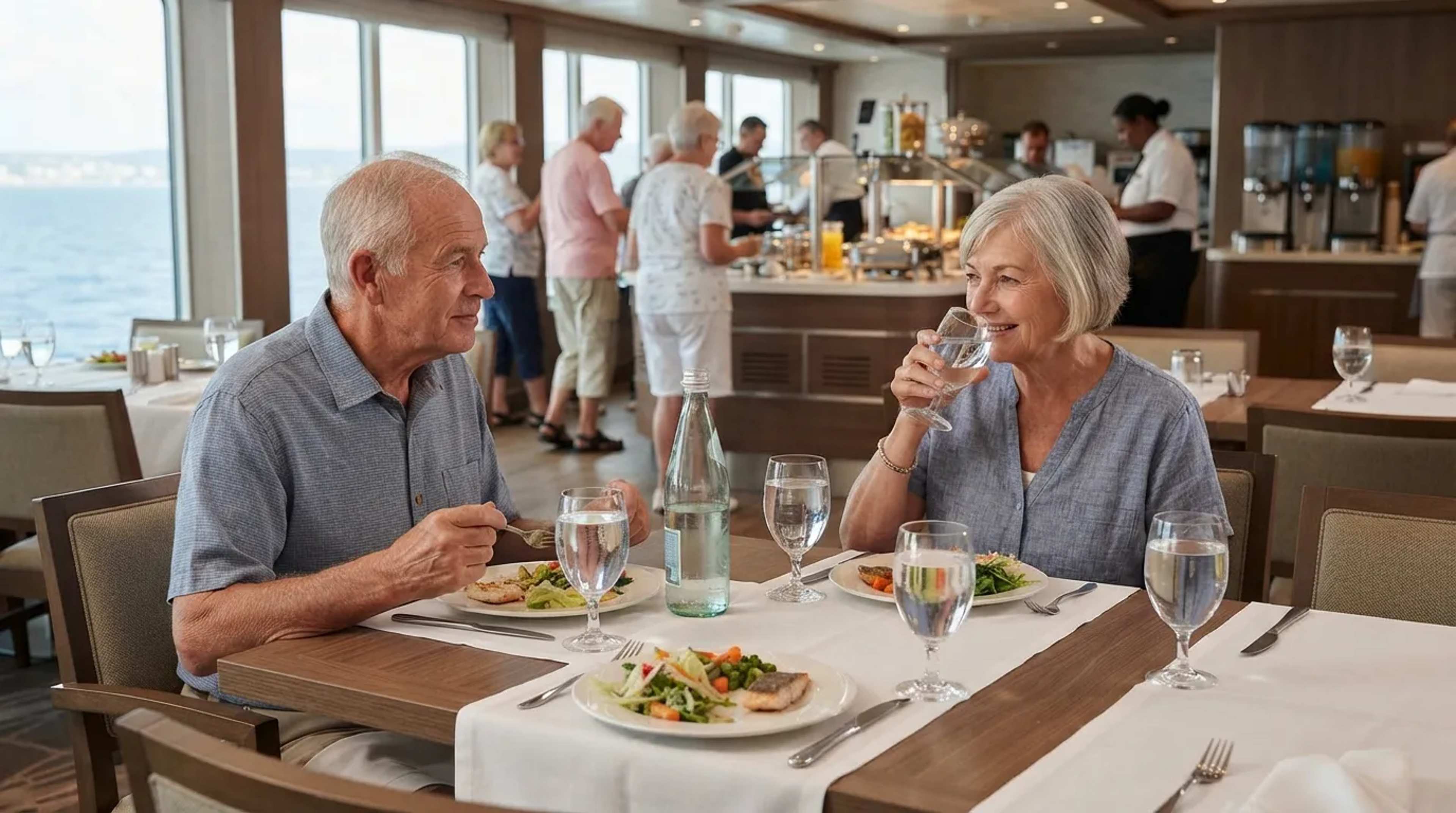
On mainstream lines, dinner in the main dining room is already paid for. That makes it the best-value meal on the ship.
Main dining room meals are included in your cruise fare. Because the food is covered, an extra appetizer or a second dessert generally doesn’t add a charge.
If you’re unsure on your line, ask your server before ordering. Specialty restaurants are different, since they usually carry their own fee.
Worth Knowing
- Main dining room: included in your cruise fare on mainstream lines
- Buffet: covered by the fare too
- Specialty restaurants: usually carry their own fee
- Crew service charge: billed separately, as the next rules show
Try the main dining room before paying for a specialty restaurant, and give it the first two nights. If the food and service are good, you’ve saved the surcharge, and if they aren’t, you’ll know exactly what you’re paying to avoid.
The fare covers the buffet too, though that room has its own rules, and most of them involve a pair of tongs.
#8 – Buffet Serving Spoons Are the Weak Point
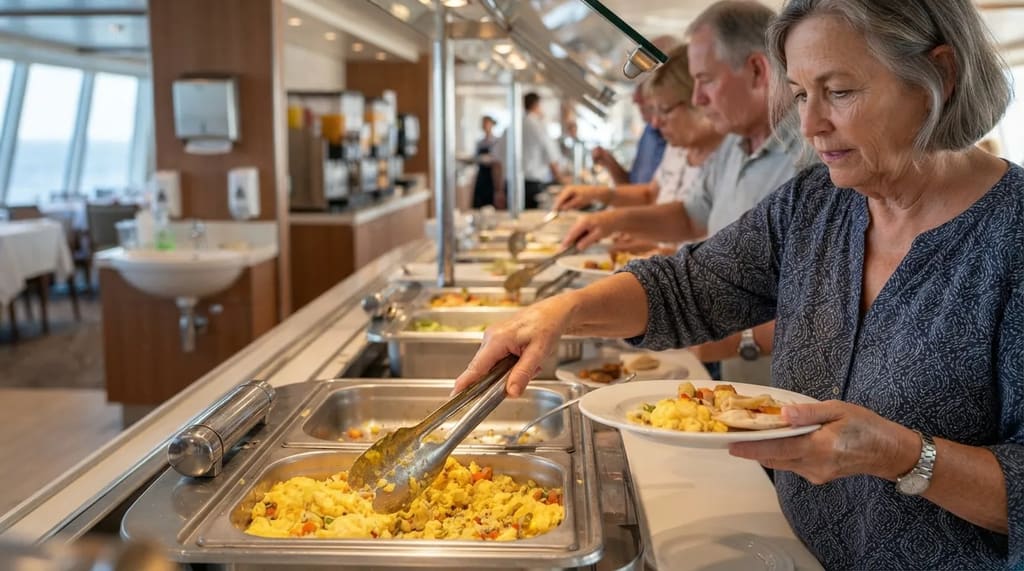
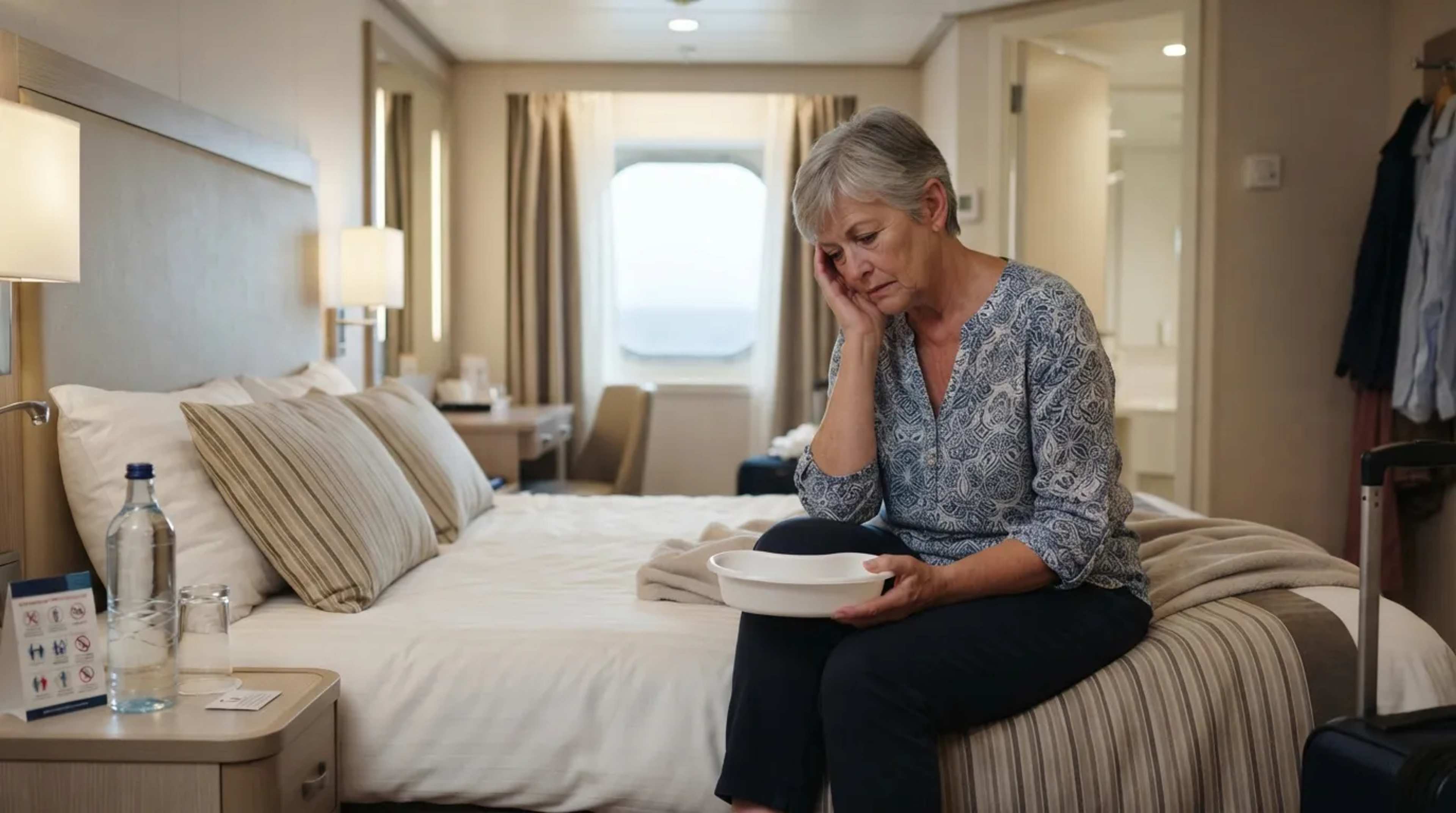
Buffet-style dining is harder on hygiene because passengers repeatedly touch the same serving utensils. A line of guests, one pair of tongs and a lukewarm tray add up to many chances for germs to pass from hand to hand.
The practical answer is to wash up after the utensils and before you eat. That’s why you’ll find handwashing basins at the entrance to the buffet and anywhere else food is self-service.
Wash with soap and water after the serving utensils and before you eat. That includes any hand foods like bread, fruit and pastries.
If illness spreads on board, the ship will probably halt self-service and have crew serve food portions directly. In the main dining room a server brings your plate, so the shared-utensil problem mostly disappears.
The sink isn’t the only defense at the buffet, and the bottle in your pocket may not be what you think.
#7 – Hand Sanitizer Doesn’t Replace the Sink
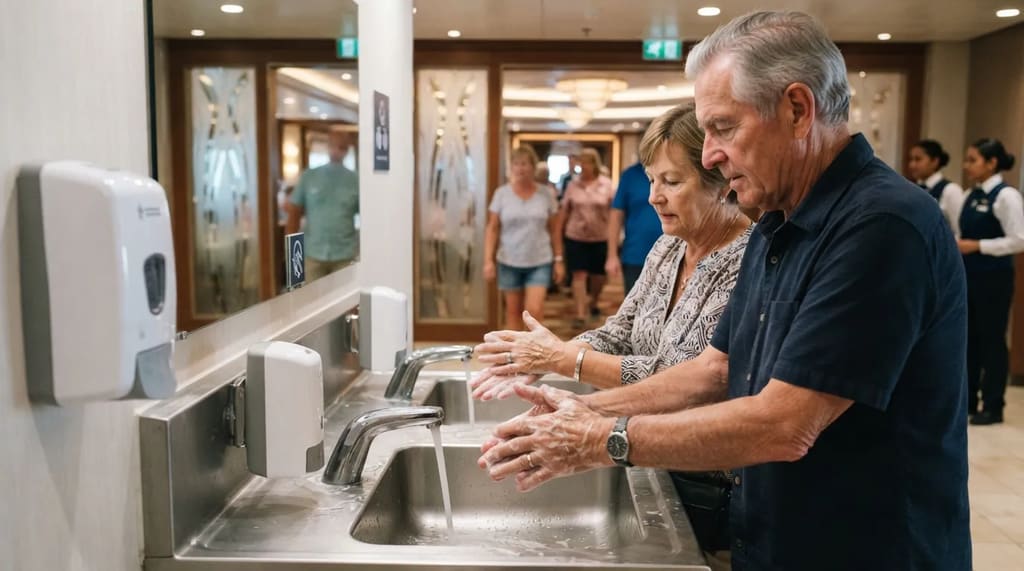
The Centers for Disease Control and Prevention says hand sanitizer does not work well against norovirus and is not a substitute for handwashing with soap and water.2 That surprises travelers who’ve leaned on the little bottle since 2020.
The CDC says alcohol-based sanitizers can be used in addition to handwashing. They’re a backup, not the plan.
There’s a second problem at the buffet. Sanitizer may not work well on visibly dirty or greasy hands, and a quick pump after a meal can leave food residue behind.
Carrying sanitizer as your main defense is overrated, so scrub with soap and water for at least 20 seconds before eating. That includes the backs of your hands, between your fingers and under your nails.
#6 – Look Up Your Ship’s CDC Inspection Score
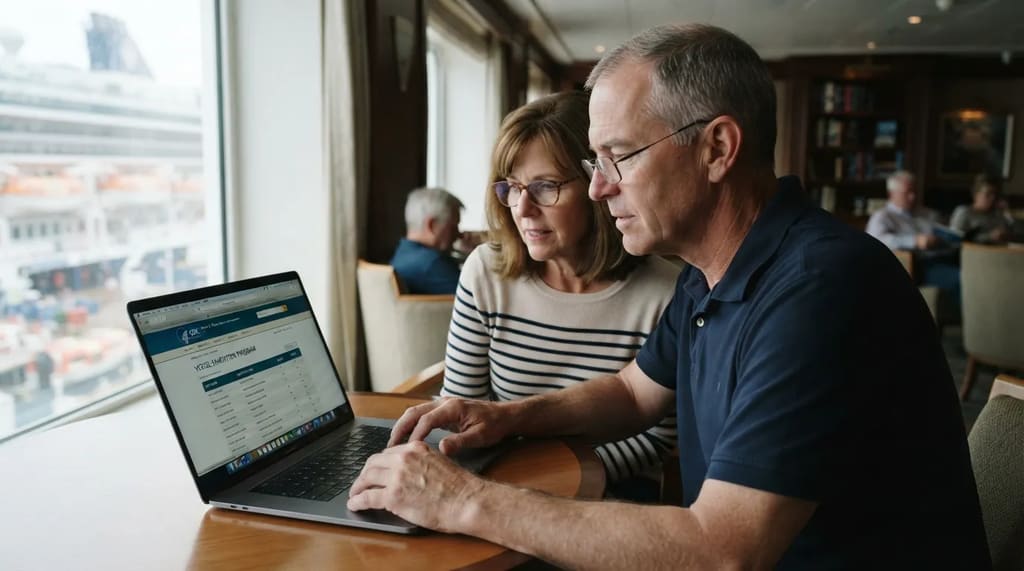
Cruise ships do fail CDC sanitation inspections, and a ship needs 86 out of 100 to pass.3 4 You can find out how yours scored before you pay a deposit.
The CDC makes inspection scores and detailed reports publicly available, so travelers can see recent violations and what inspectors found.3 The inspections are unannounced, which means the score is a snapshot of an ordinary day, not a cleaned-up one.4
Search the CDC’s Vessel Sanitation Program for your ship before you book. It takes a few minutes.
This ties directly to the buffet basins in #8. A ship with a clean record still expects you to wash, but a ship with recent violations deserves a second look at the dining plan.
Once the ship passes inspection, the next thing to examine is the bill that arrives with the wine list.
#5 – Wine at Dinner Comes With an Automatic 18 to 20 Percent Charge
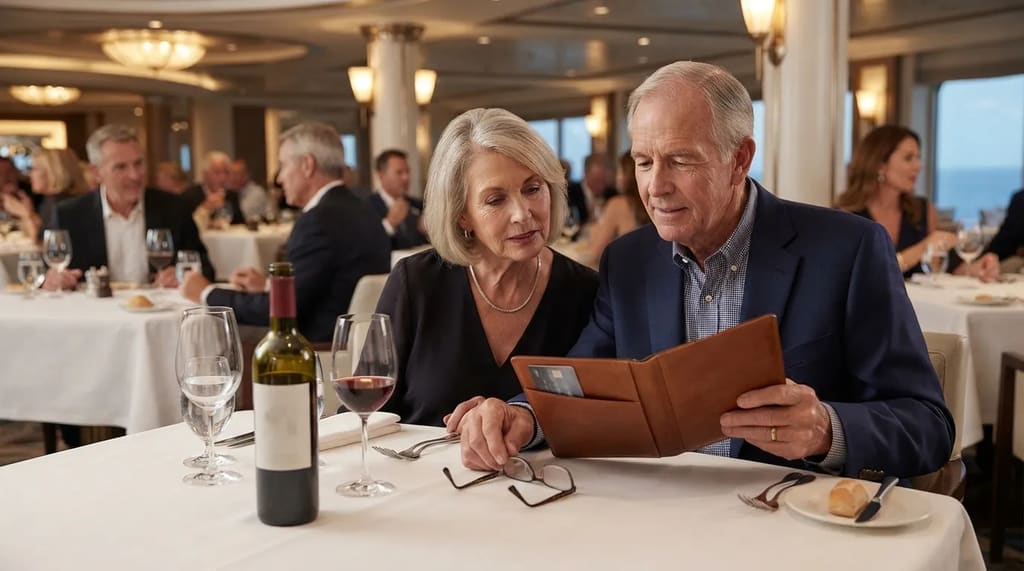
A $50 bottle of wine at dinner quietly becomes $60 on a line that adds 20 percent to beverages. At 18 percent, it’s $59.
Most major lines add an automatic gratuity in that range to bar and wine orders, and Celebrity and Norwegian are among those using 20 percent. The charge is added automatically, so it’s part of the price you agreed to when you ordered.
It isn’t limited to the bar. Celebrity also adds a 20 percent gratuity to spa, salon and minibar purchases.1
Because the amount is already built in, a second cash tip on top of the same drink pays the same person twice. Expect close to 20 percent on every drink at dinner on several lines.
Lines differ, so read the fine print on the drink menu before you order the second bottle. That surcharge is small beside the flat daily charge, which multiplies by every person and every night.
#4 – Daily Gratuities Run $17 to $21 Per Person
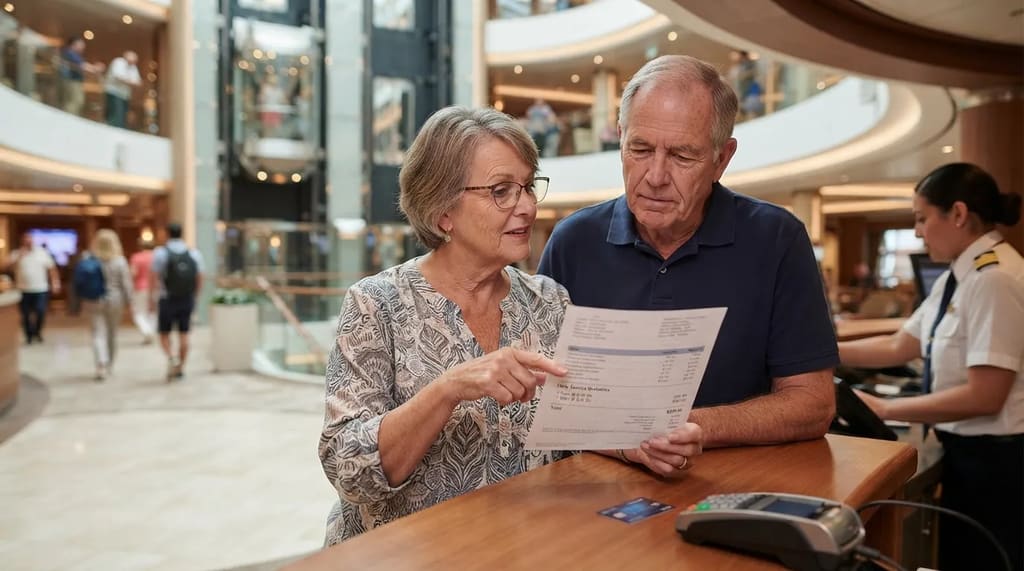
On a seven-night cruise for two, daily gratuities come to roughly $238 on Carnival and $259 on Royal Caribbean at current published rates. Here’s the math.
Royal Caribbean charges $18.50 per guest, per day for most cabins and $21 for suites. Carnival’s published rate is $17 a day for stateroom guests and $19 for suites.1 5
Multiply by two people and seven nights, which is fourteen person-nights. Several lines have raised their rates recently, so confirm the current figure for yours.
Fast Facts
- Royal Caribbean: $18.50 per guest per day, $21 in suites
- Carnival: $17 per guest per day, $19 in suites
- Seven nights for two: 14 person-nights
- Standard-cabin totals: about $259 on Royal Caribbean, $238 on Carnival
The money is shared. Royal Caribbean says gratuities go to dining, bar and culinary staff, stateroom attendants and other hotel services teams.1
Most major lines let you adjust or remove the daily charge at guest services before the morning of disembarkation. I’d leave it in place unless service truly failed, and if it did, go to the desk and say exactly what happened.
Before you accept either figure, check whether your fare already covers it.
#3 – Check Whether Your Fare Already Pays the Tips
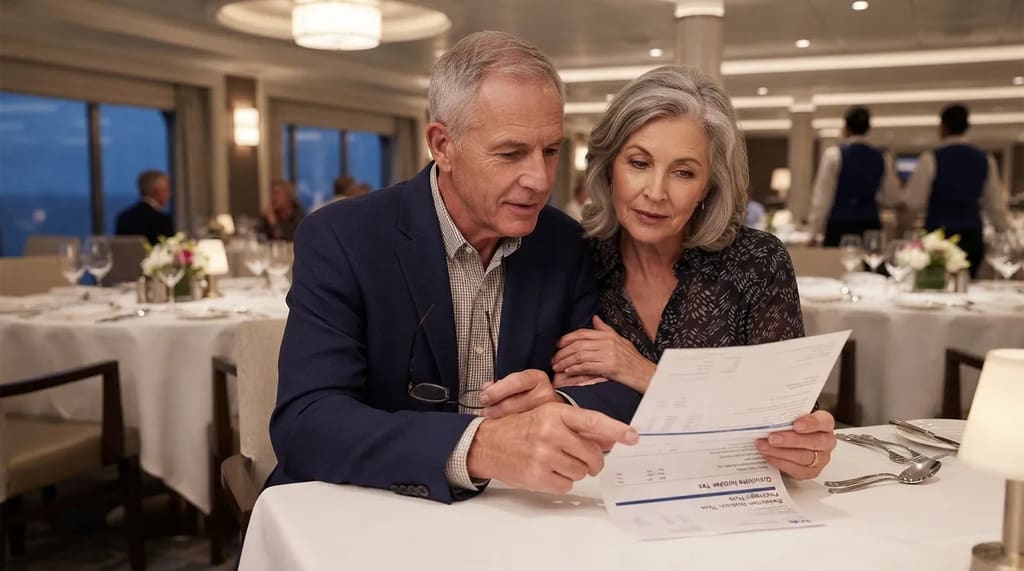
Some bundled packages fold gratuities into the price, including Celebrity’s Always Included, Princess Plus and Holland America’s Have It All. If you booked one of those, the daily charge in #4 may not apply to you at all.
Gratuities are rarely included in the advertised fare on mainstream lines, which is why the bundles matter. They’re also easy to overlook on a booking summary. Promotion names change, so confirm yours.
Related Stories From Travelbinger


The risk is paying twice, once in the bundle and once as a daily charge, or tipping in cash for service already covered. Look for the words “gratuities included” on your booking confirmation before you sail.
Ask guest services on night one if it isn’t clear. What no bundle covers is the plate in front of you if it holds something you can’t eat, and that takes paperwork with a deadline.
#2 – Allergy and Diet Requests Have Deadlines
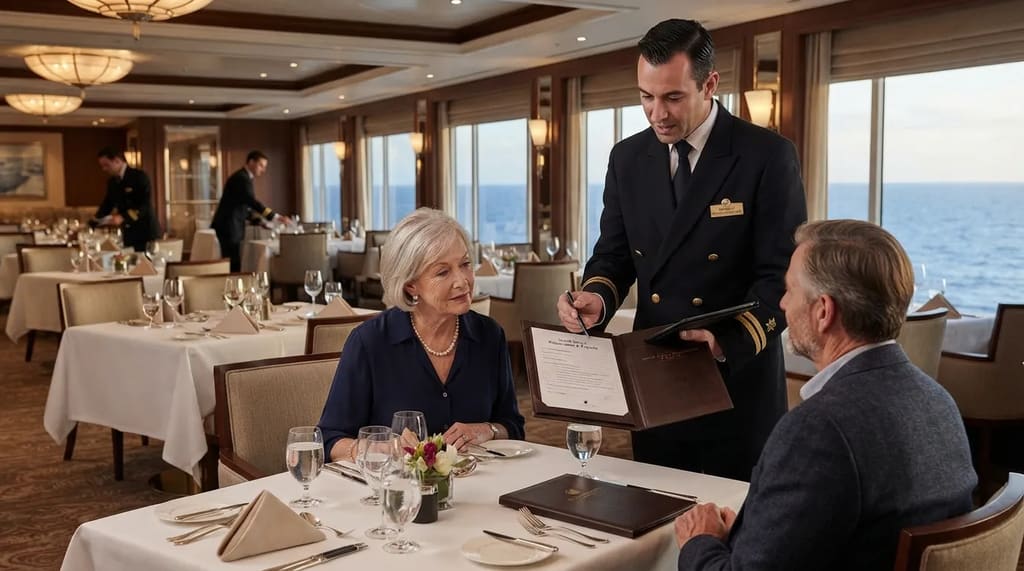
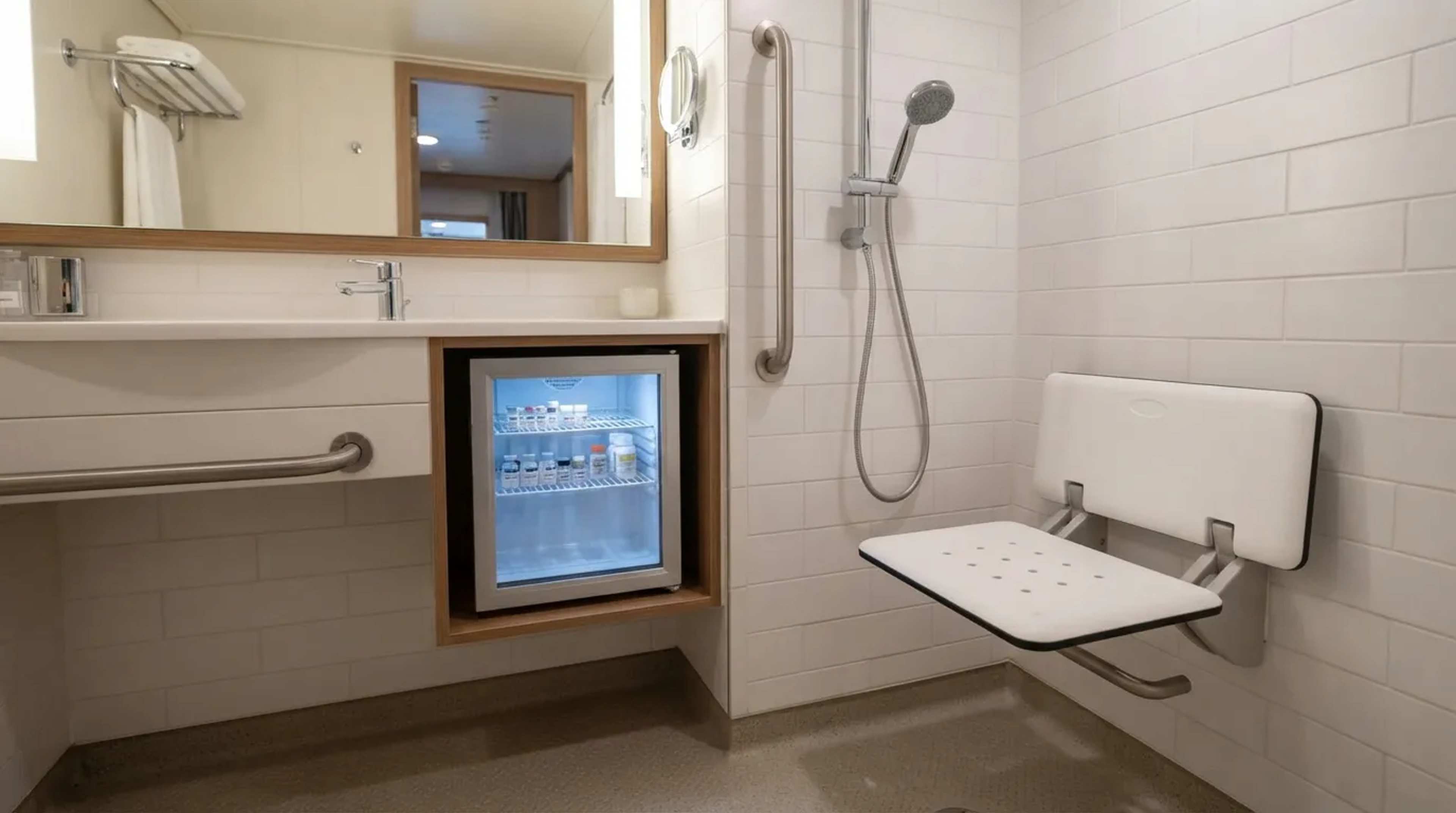
Published deadlines for special diets run from about a month to three months before sailing, depending on the line and the region. Holland America asks for a Special Requirements Information form 90 days prior.6
Travelers United says cruise lines require at least 45 days’ notice, and 90 days for European or South American cruises. Your line’s own page has the final word.
At a Glance
- Holland America: Special Requirements Information form 90 days before sailing
- Travelers United: at least 45 days’ notice, and 90 days for European or South American cruises
- Typical published range: about one to three months ahead
- Safest habit: tell the line the day you book
The reliable habit is to skip the deadline entirely. The ships have the ingredients and the systems, but they need advance notice, so tell the cruise line the day you book, not the month before.
That covers more than allergies. Low-salt, low-cholesterol, vegetarian, halal and kosher diets are all on the list of needs to report.
If you eat a certain way by doctor’s orders, this is the form that protects you.
A request filed months ahead still needs confirming in person, and that happens at the first dinner.
#1 – The First-Night Talk With the Maître d’
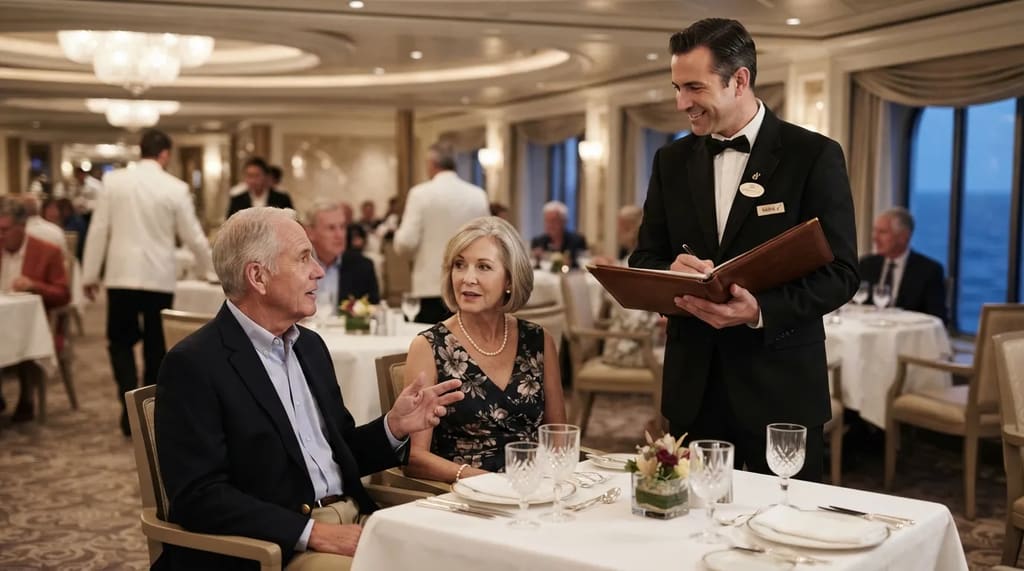
Everything above rests on one conversation, and it costs nothing. At your first dinner, find the maître d’ and tell him or her what you need, even if you filed a form months ago.
Say your dietary needs out loud at the first dinner. A form can get lost, but a face and a name stick.
Carnival’s allergy page makes the same request, asking guests to inform the maître d’ directly as well as the dining team. It also says dietary requirements can only be accommodated in the main dining room, with the chef.
Holland America says the form reaches managers in advance, but it still advises speaking to the restaurant manager at dinner on the first night and reminding your server at each meal.6
That matters because lines run differently. On an open-seating line like Norwegian you won’t likely have the same dining staff every night, so the manager is your constant.
It also explains why the buffet in #8 deserves caution if you have allergies. Celebrity tells guests with food allergies to avoid self-service venues and speak to restaurant staff before eating.
Let the Dining Room Know You Before the Soup Arrives
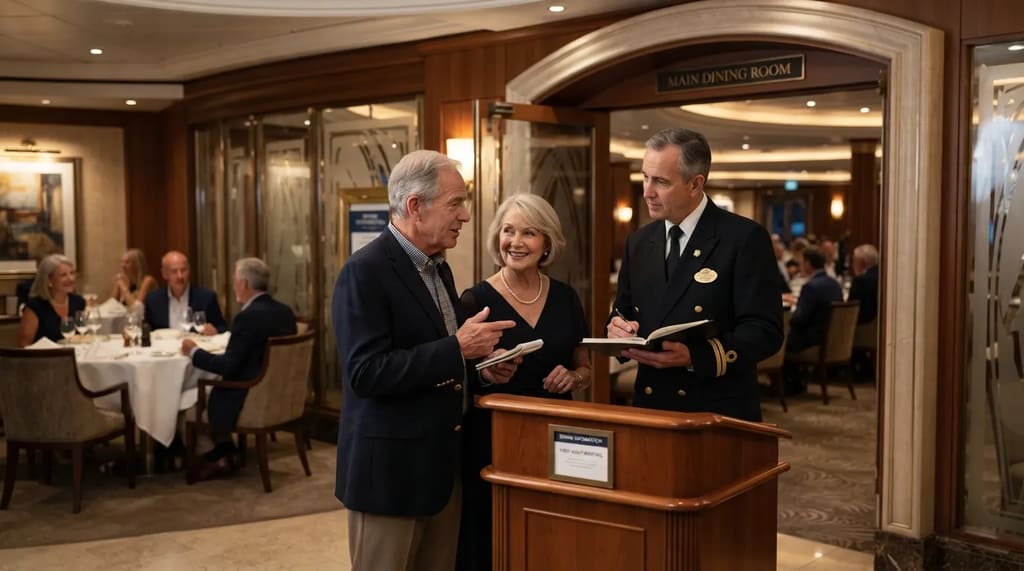
The fifteen rules share one idea. A cruise dining room runs on information, and the guest who supplies it gets served.
The dress code, the seating time, the table size and the deadline for a diet request are all details that staff can’t guess. Walk in with them ready.
So treat the first evening as a briefing, not just a meal. Say your seating time, table preference, diet and questions about charges out loud to someone who can act on them.
A two-minute talk at the host stand does more for the next week than any amount of hoping the system will notice. Have you ever had to ask a ship’s dining room to change a meal for health reasons, and how did the staff handle it?
- Royal Caribbean Gratuity Policy: https://www.royalcaribbean.com/faq/questions/onboard-service-gratuity-expense
- Norovirus Sanitizer Guidance: https://finchannel.com/caribbean-princess-outbreak-sickens-148-as-cause-remains-unidentified/142482/americas/america/2026/11/
- CDC Inspection Scores Report: https://www.yahoo.com/news/us/articles/cdc-inspection-shows-sanitation-problems-231053063.html
- Fox10 CDC Sanitation Scores: https://www.fox10phoenix.com/news/cruise-ships-worst-cdc-sanitation-scores-revealed-see-which-vessels-failed-inspection
- Cruise Critic Carnival Gratuities: https://www.cruisecritic.com/news/carnival-increases-gratuities-drink-package-rates
- Holland America Know Before You Go: https://www.hollandamerica.com/en/us/plan-a-cruise/get-ready-for-your-cruise/faq/know-before-you-go