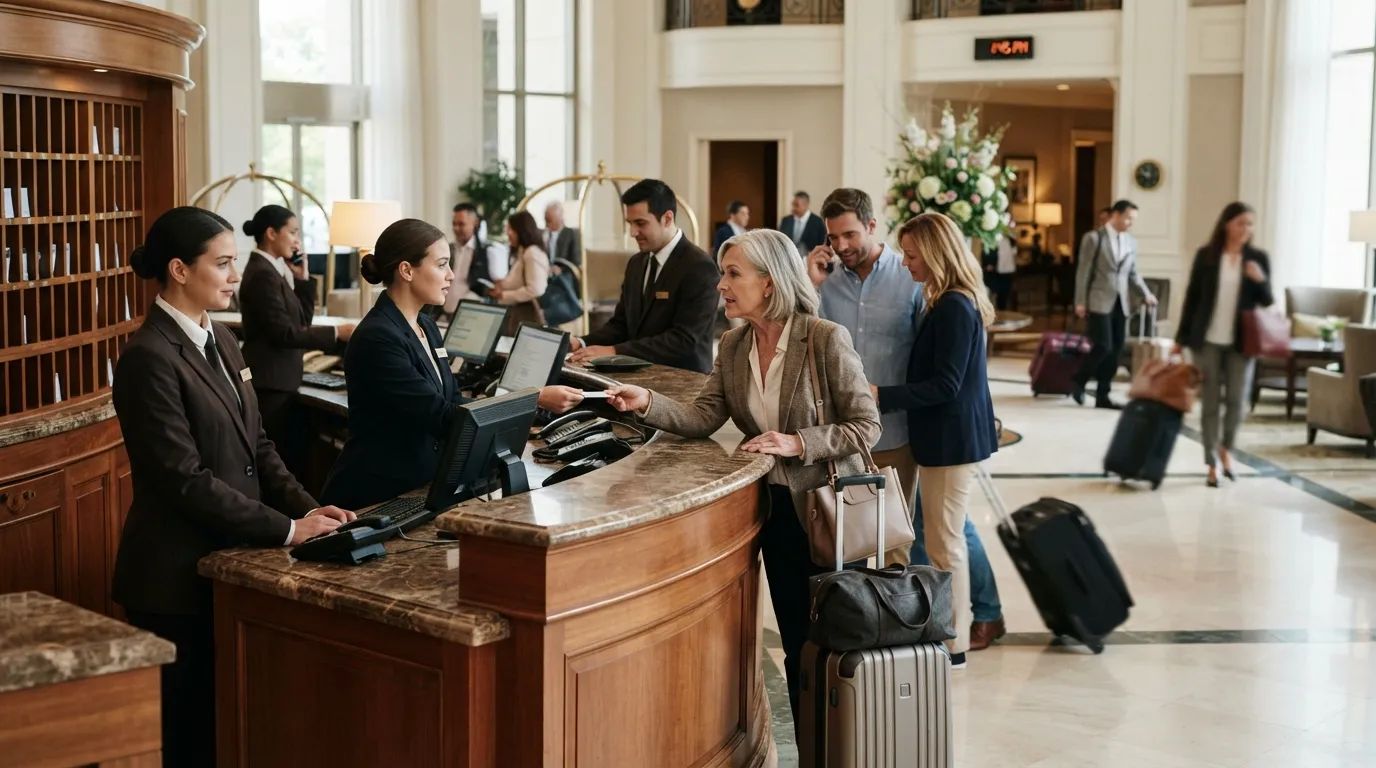
You know the scene. It’s 10 a.m., you’re worn out from the road, and the agent says your room won’t be ready until mid-afternoon.
Or you finally get a key, and the room sits right beside the ice machine. Front desk staff and managers quoted in travel reporting say many of the best fixes for both problems cost nothing and take about thirty seconds to ask.
Here’s the honest twist. None of these perks is limited to guests over 65, and no hard data shows older travelers miss them more than anyone else.
But plenty of travelers of every age never ask, and a few of these fifteen will change how you walk up to a front desk. The one that matters most is saved for last.
#15 – The Corridor Request Desks Can Grant on the Spot
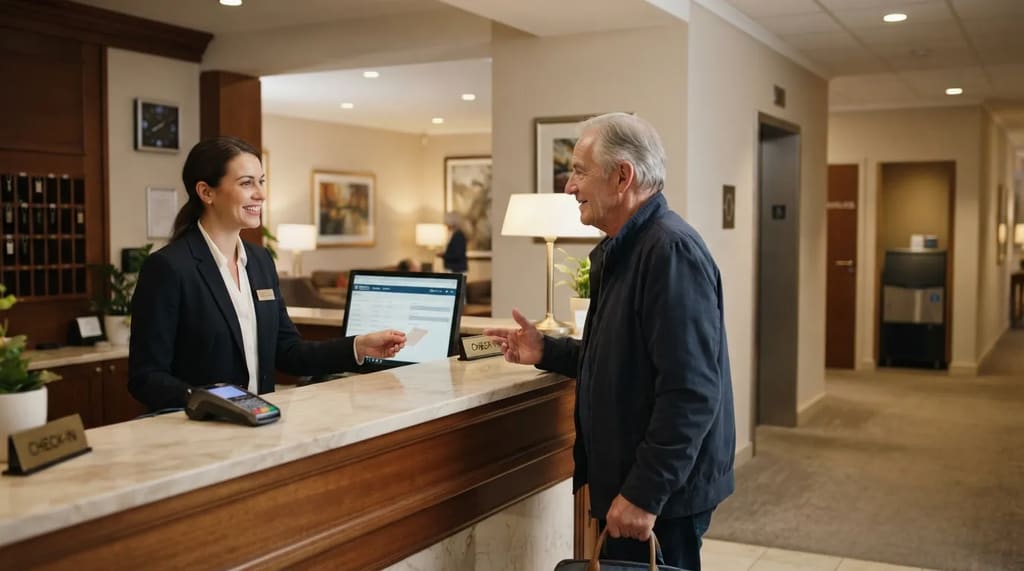
Quiet rooms are often decided by one detail: where your door sits. Front desk staff usually know exactly which rooms generate noise complaints.1
It’s worth asking for a room away from elevators, ice machines, and housekeeping closets. Agents can typically honor this right away, since room assignments aren’t locked in until you check in.
Be specific. Front desk guidance quoted by Ask a Concierge says specific, actionable requests work best.
A vague “something peaceful, please” gives the agent nothing to act on. “Nothing near the elevator or the ice machine” gives them a map.
But that’s nothing compared to the next request, which most guests never think to make at all. It’s #14…
#14 – A Higher Floor With More Light
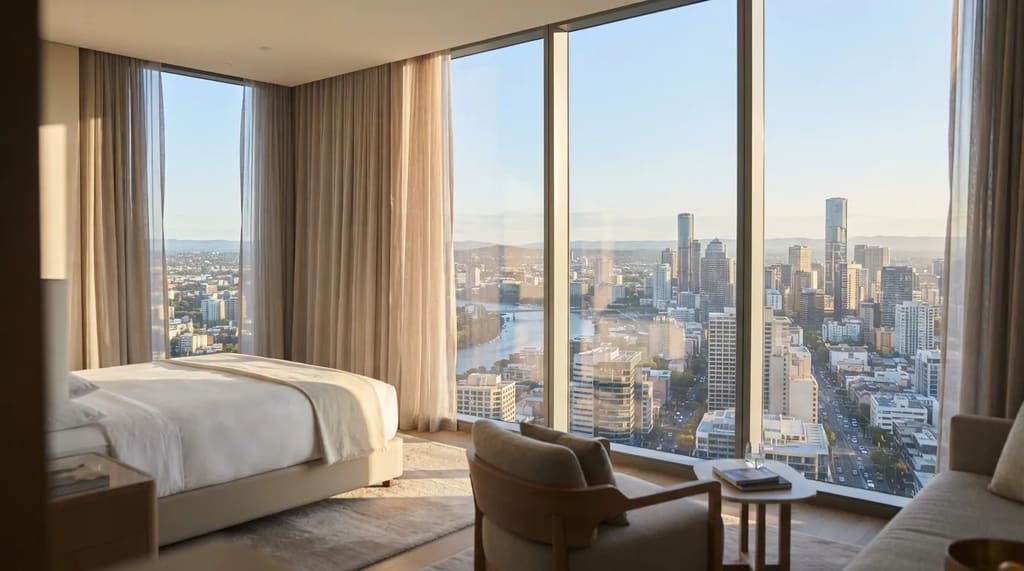
A quiet room isn’t only about sound. It’s also about what greets you when you open the curtains.
The same front desk guidance points to requests like a higher floor with more light. Many guests also assume a higher floor sits farther from street-level activity, though that depends on the building.
There’s a catch the desk will admit to. If the hotel is full, the corner room is probably already taken.
Staff also point out that some hotels upgrade only when required, or only certain guests. A polite “yes, if available” is the right expectation, not a promise.
Still, a room with morning light can change how a whole trip feels. It costs nothing to ask.
So when is the right moment to ask for a room like this? The answer is hiding in #13…
#13 – Asking Twice: Once at Booking, Once at the Desk
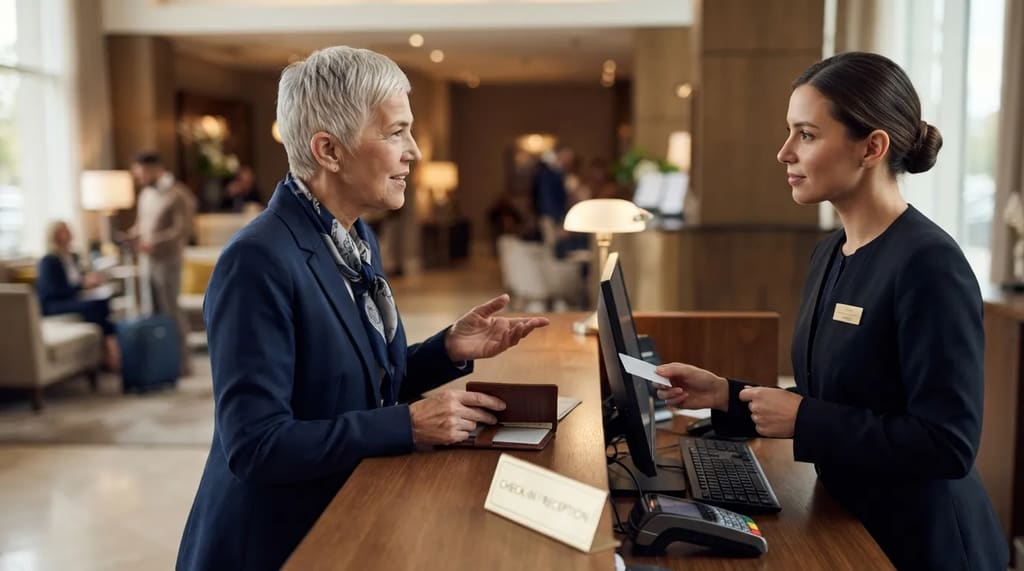
One request is easy to lose. Two requests tend to stick.
One guide advises asking at booking and again at check-in, so the request is on file before the hotel fills up. Another says to request early check-in as far in advance as possible.2
Why does the hotel care about timing? Standard check-in times exist mainly to give housekeeping time to prepare rooms.1
A request made early gives the desk time to plan around it. A request made at the counter gives them a scramble.
But where exactly do you make that first request? The booking page has a spot most people skip, and it’s #12…
#12 – The Special Request Box Almost Nobody Fills In
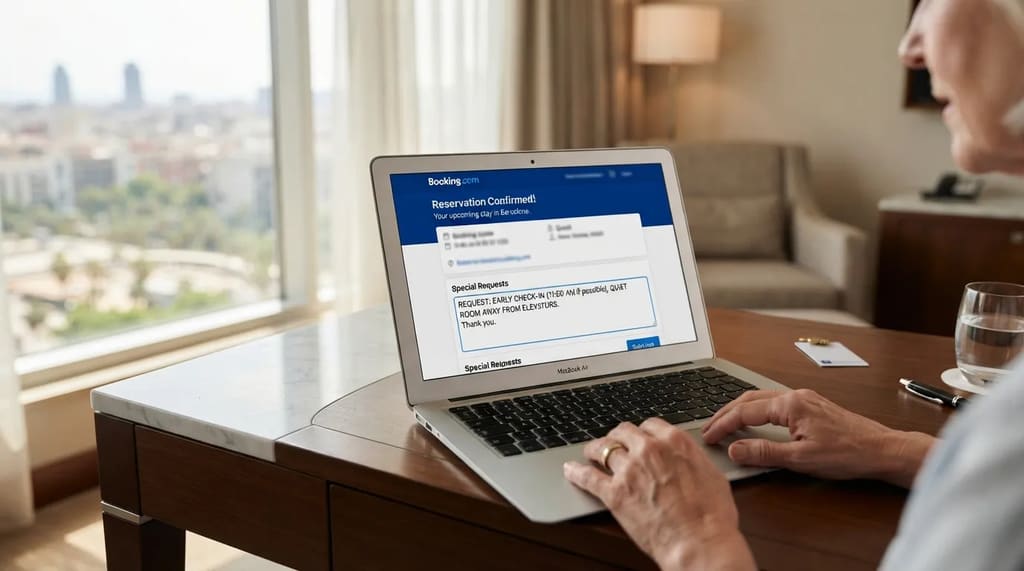
The easiest perk of all is sitting in plain sight. It’s the free-text box on your reservation.
Some booking platforms, like Marriott, let you request early check-in explicitly or enter it as a special request.2 On Booking.com, you can specify your arrival time and request early check-in, or message the property after you’ve booked.
You can usually request early check-in when booking, in the hotel app, or at the front desk. Pick whichever route you’re comfortable with.
A phone call to the hotel works too. Sometimes hearing a real voice makes a request stick better than a typed line.
At a Glance
- Marriott: request early check-in explicitly or enter it as a special request.
- Booking.com: state your arrival time, ask for early check-in, or message the property after booking.
- Hotel app or front desk: both can take the request.
- Phone call: a real voice can make the request stick.
Still, plenty of arrivals happen before any room is ready. What the desk does next can save your whole first day, and it’s #11…
#11 – The Bag Drop That Rescues a Dead Morning
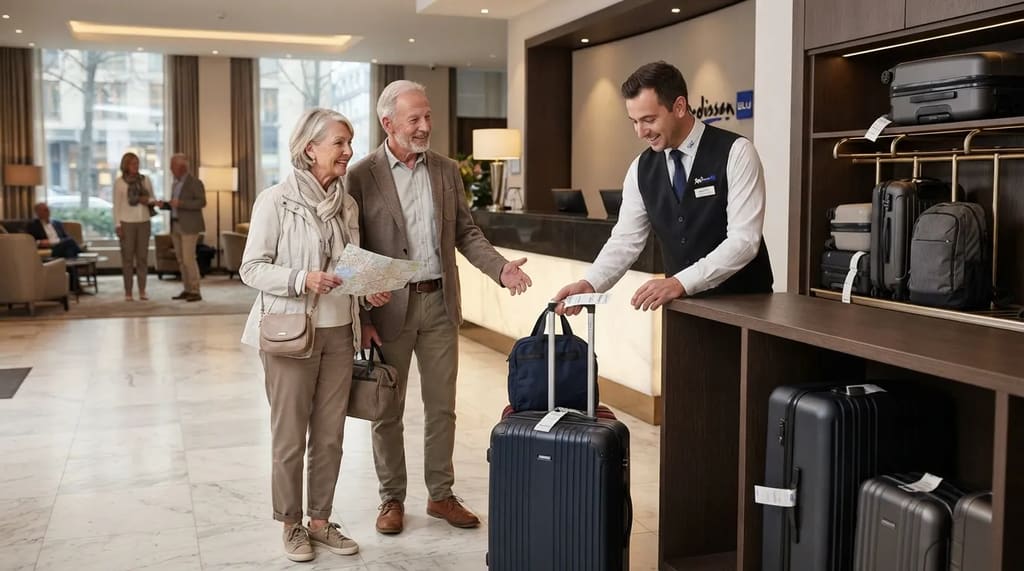
Arrive too early and you hit a wall. The room isn’t ready, and you’re standing in the lobby with your luggage.
Hotel managers have a simple answer. If there’s no room ready, Radisson Blu manager Dan Ludin suggests getting a head start on exploring while the hotel stores your luggage.3
It helps to know the official time won’t move. Your official check-in time remains, but hotels will do their best to accommodate your request.
That small shift in mindset matters. You’re not stuck waiting, you’re free to go.
But if you want more than a ready room, there’s a timing window most guests get completely wrong, and it’s #10…
#10 – The Mid-to-Late Afternoon Window
Most people ask for upgrades at the worst possible moment. They ask the second they walk in.
One report says the best time to request an upgrade is mid-to-late afternoon, when housekeeping has turned over more rooms and the front desk still has flexibility.1 4 Upgrade requests are also most successful when made before arrival and during less busy moments at the desk.
The day of the week matters too. Upgrades are more likely on non-peak days.5
So a quiet Tuesday afternoon beats a packed Friday rush. The desk has more rooms to play with and more time to think.
Now for the mistake that quietly kills both requests, and it’s #9…
#9 – Why Asking for Early Check-In and an Upgrade Together Backfires
Most guests think asking for everything at once is smart bargaining. Front desk veterans say it’s the opposite.
One former front desk employee warns against asking for both together, since the desk is busy in the early afternoon with checkouts and early arrivals. That’s the moment you’re least likely to get special treatment.5
There’s also a built-in trade-off. Checking in very early often means getting whatever room is ready, which might be a less desirable one.
So choose your priority. If a quiet, better room matters more than an early one, arrive later and ask then.
Quick Compare
- Arriving early: the desk is juggling checkouts and other early arrivals, and you may get whatever room is ready.
- Arriving mid-to-late afternoon: more rooms have been turned over, and the desk has more flexibility.
- Asking for both at once: the lowest odds of special treatment.
But what about guests who badly want an early room and are willing to pay for it? The debate over that is #8…
#8 – The Early Check-In Fee: Smart Move or Needless Cost?
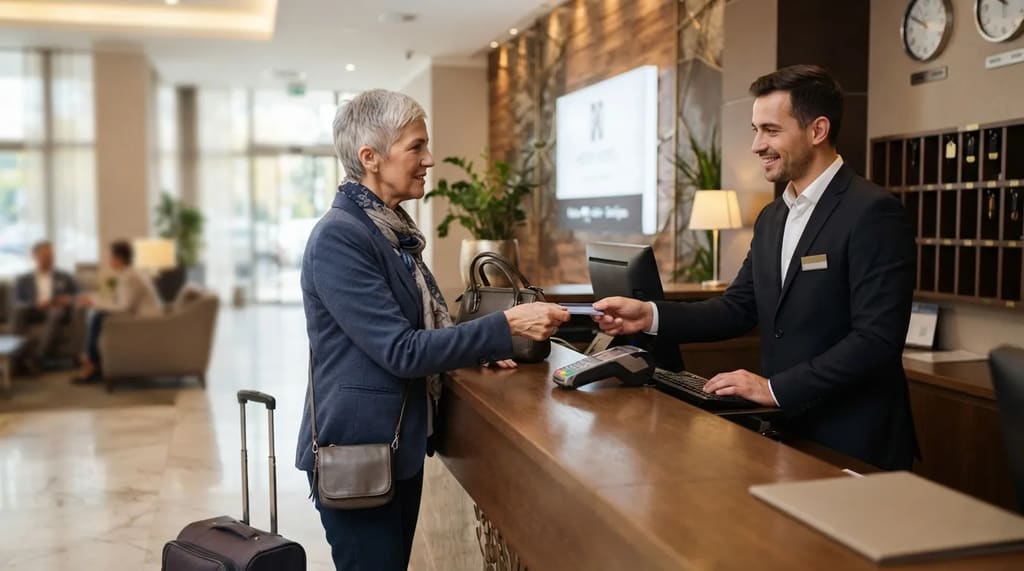
Some travelers swear by paying for early access. Others say you should never pay a cent.
One hotel sales director says many hotels offer guaranteed early check-in for a small fee. Another guide says early check-in is optional, so ask politely to waive any fee.
Both can be right. Policies vary by property, so the only way to know is to ask what your hotel does.
The trick is to ask about the fee before you assume it exists. Sometimes the answer is a surprising “no charge.”
But what if the room still isn’t ready, and the desk offers you something worse? That’s where #7 comes in…
#7 – Telling the Desk You’re Happy to Wait
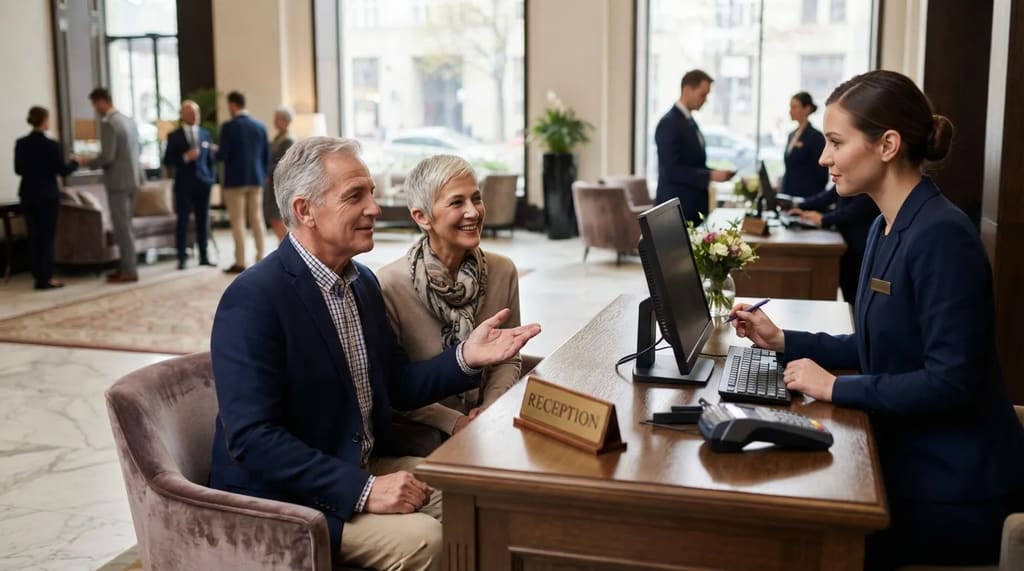
Early arrivals sometimes get a bad trade. The desk offers whatever is ready, not what you booked.
If the room type you booked isn’t available, staff may offer a downgraded room sitting vacant for early check-in. You’re allowed to say no.
Here’s the better line. If no better room is available when you arrive early, tell the desk you’re willing to wait until one opens, even much later in the day.
That sentence changes the conversation. You become a guest who’s easy to help, not one who needs rescuing.
The next trick works on the same principle, and it needs no money at all. It’s #6…
#6 – Naming Your Status, Even a Small One
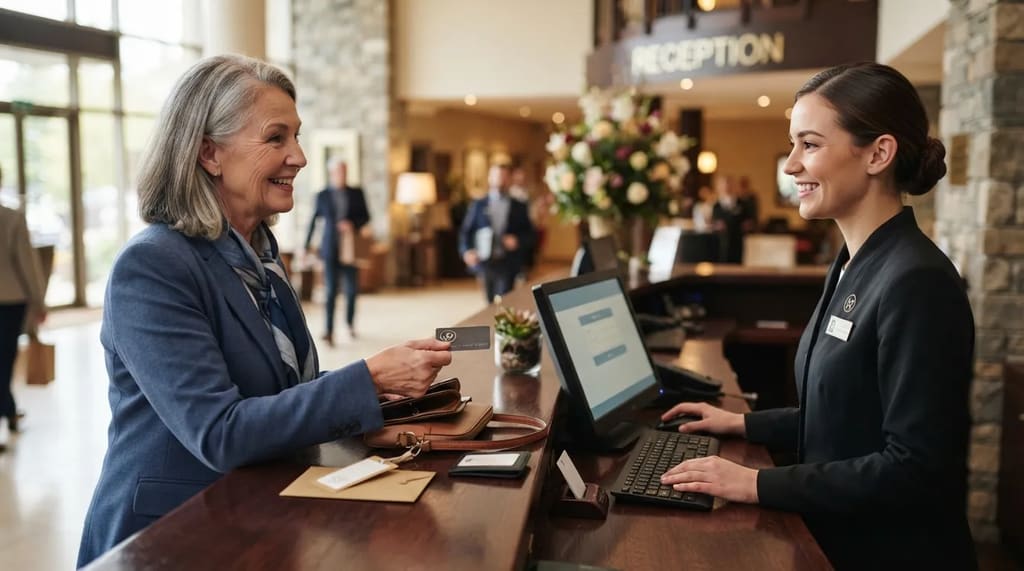
Many guests forget they hold perks already. The desk can’t reward what it doesn’t know about.
Loyalty program members should always mention their status at check-in, as this can improve upgrade chances.1 Travel site Kayak says to note any hotel or credit card status that offers upgrades as a perk.
Mention the occasion as well. It also helps to say if you’re celebrating something.
An anniversary or milestone birthday gives the agent a human reason to go the extra step. It’s a small detail with a surprisingly warm effect.
But the biggest money-saver on this list has nothing to do with upgrades, and most people overlook it. It’s #5…
#5 – The Senior Rate the Website May Not Show
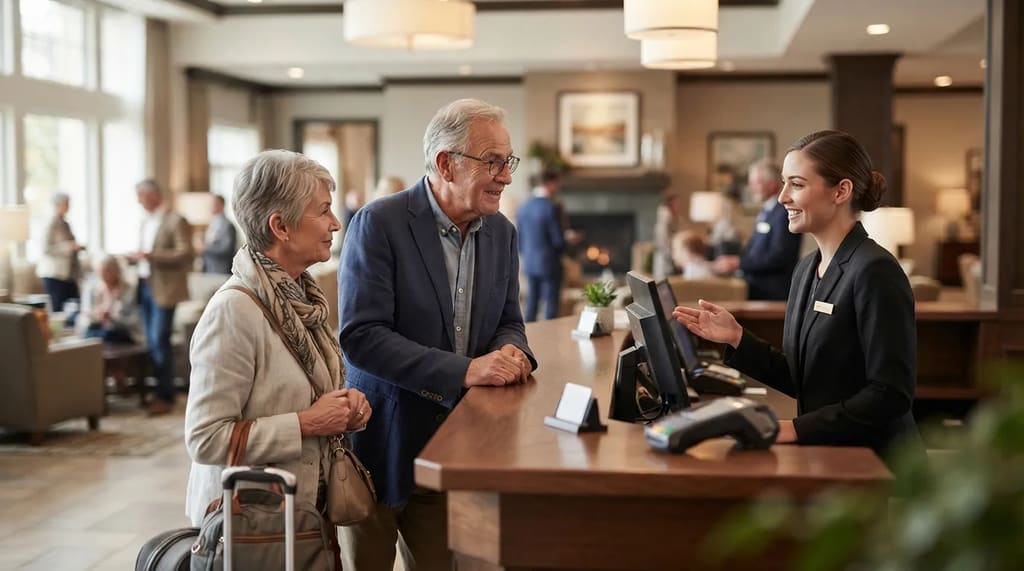
Many older travelers pay full price without knowing a cheaper rate exists. The hotel won’t always volunteer it.
Online booking sites often don’t show senior rates, and the front desk can sometimes offer a better rate than the chain’s website. Senior discounts typically run 10 to 20 percent, with the age requirement ranging from 50 to 65 depending on the chain.
Ages vary, and sources disagree. One guide puts Hilton’s senior rate at age 62, while another says it kicks in at 65.
That’s why a quick call or a question at booking beats guessing. The right answer depends on the brand and the property.
So ask before you pay. But there’s a second discount card most people forget to compare, and it’s #4…
#4 – The AARP Rate vs. the Senior Rate
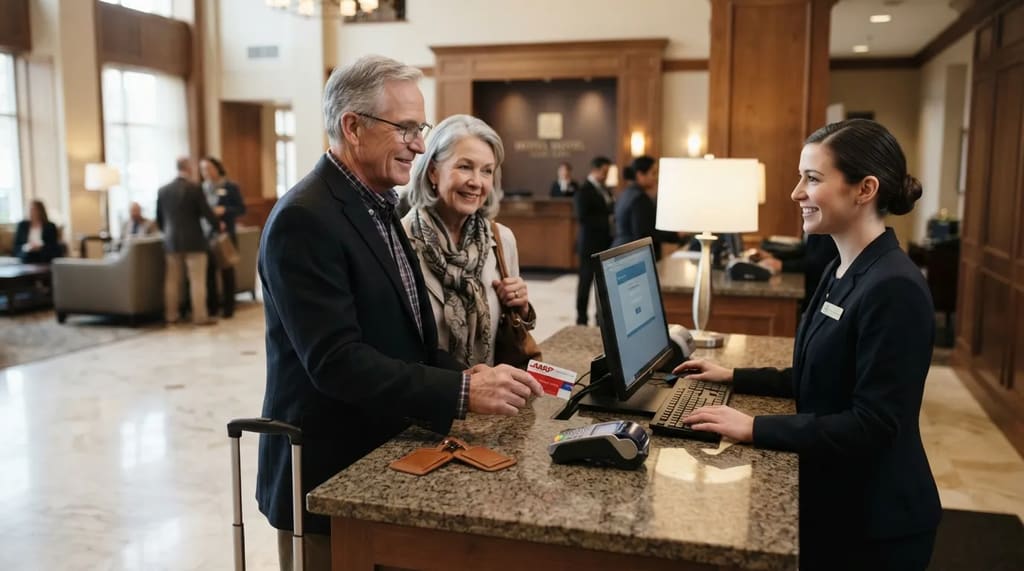
Here’s a debate that splits travelers. Is a membership worth it just for hotels?
The price is low. One senior-discount site puts AARP membership at $12 per year.
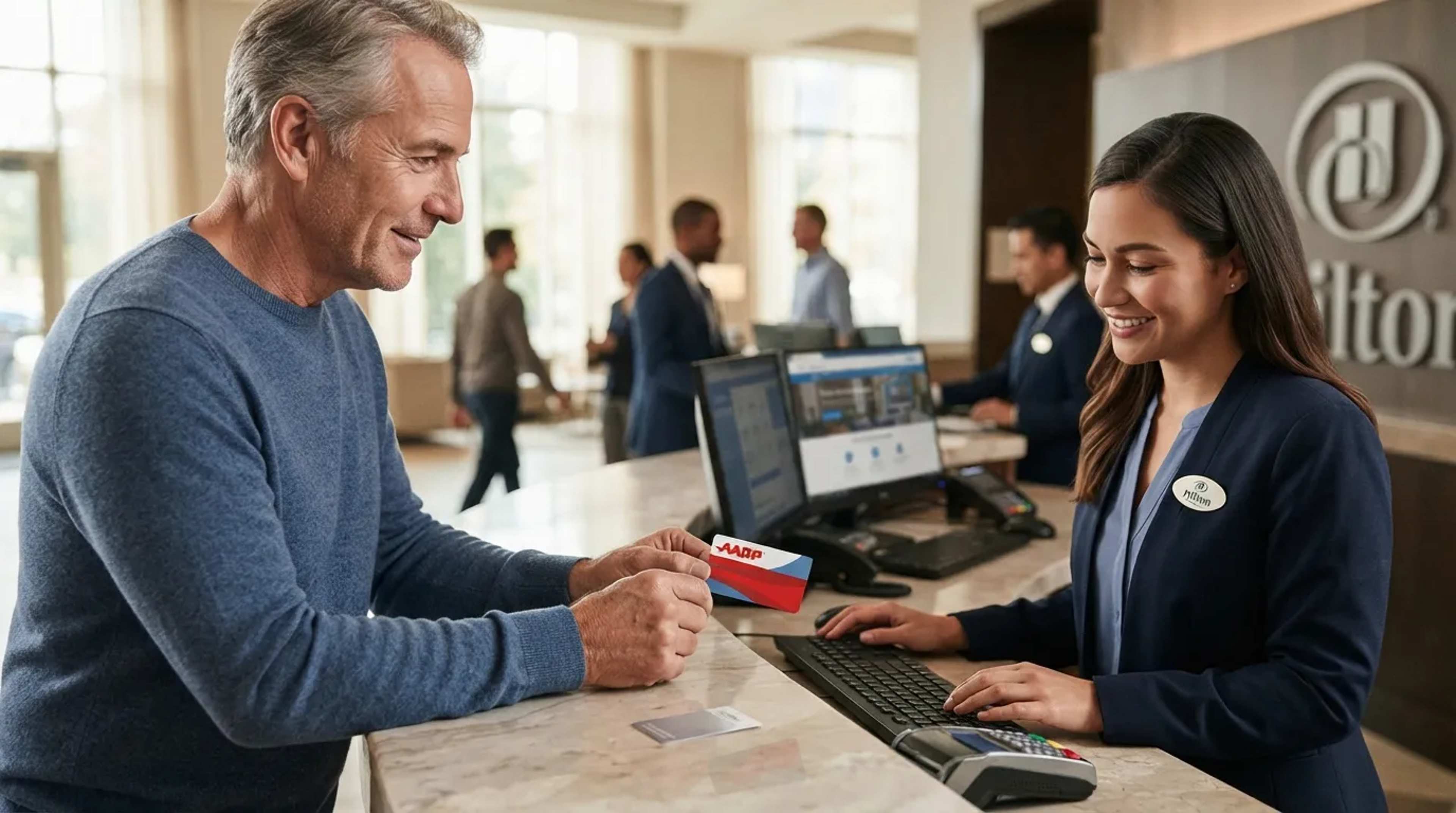
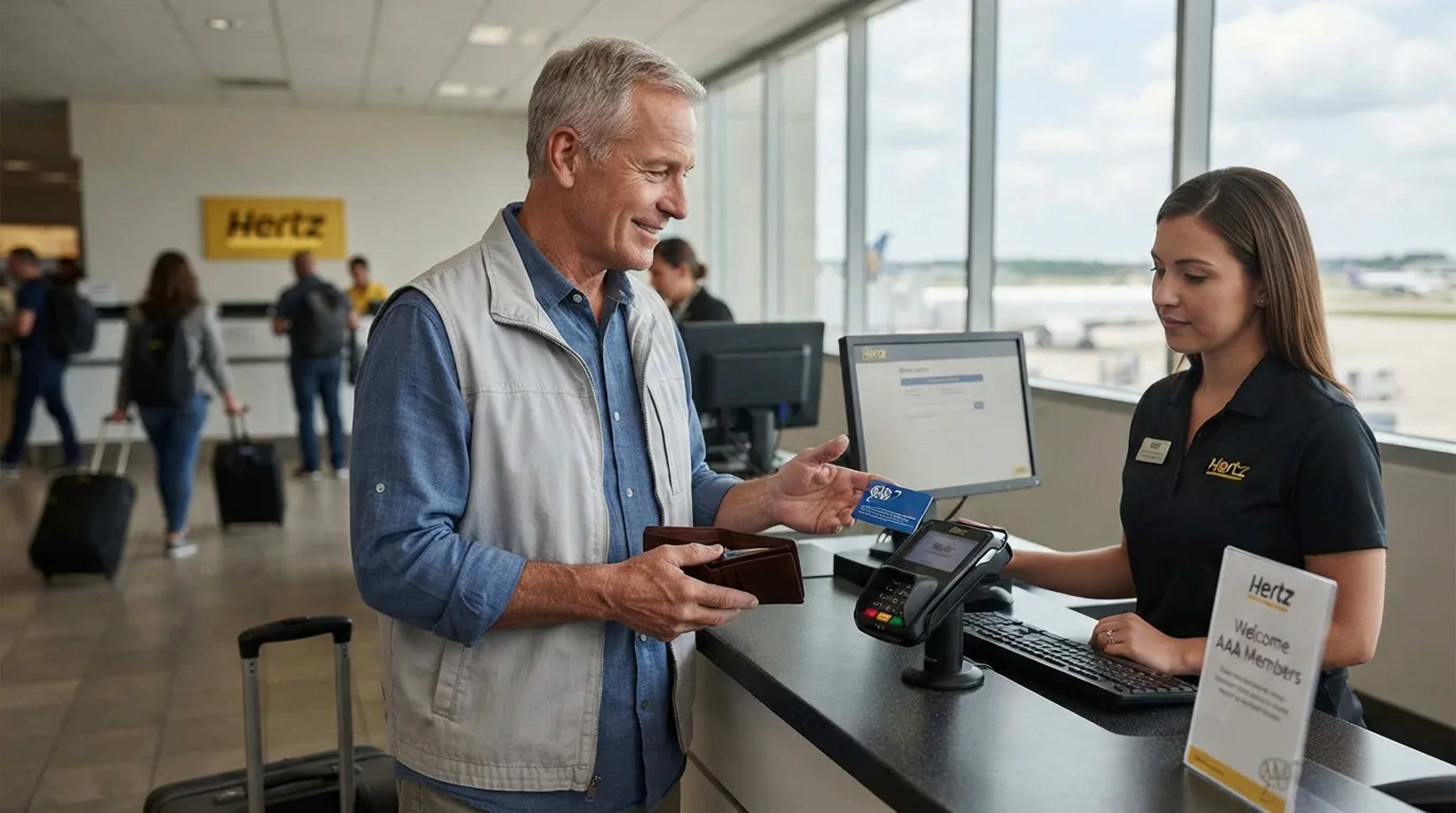
AARP members can save up to 10% off the best available rate at Hilton, and Wyndham offers 10% off its best available rate at participating hotels.6 7 Marriott is where sources disagree.
One list says Marriott does not give AARP discounts, while another says Marriott, Hilton, Wyndham, and Choice all offer AARP-specific rates. Check before you assume.
Now for a twist that contradicts everything we’ve said about quiet rooms. It’s #3…
Related Stories From Travelbinger



#3 – The Opposite Request: Close to the Elevator
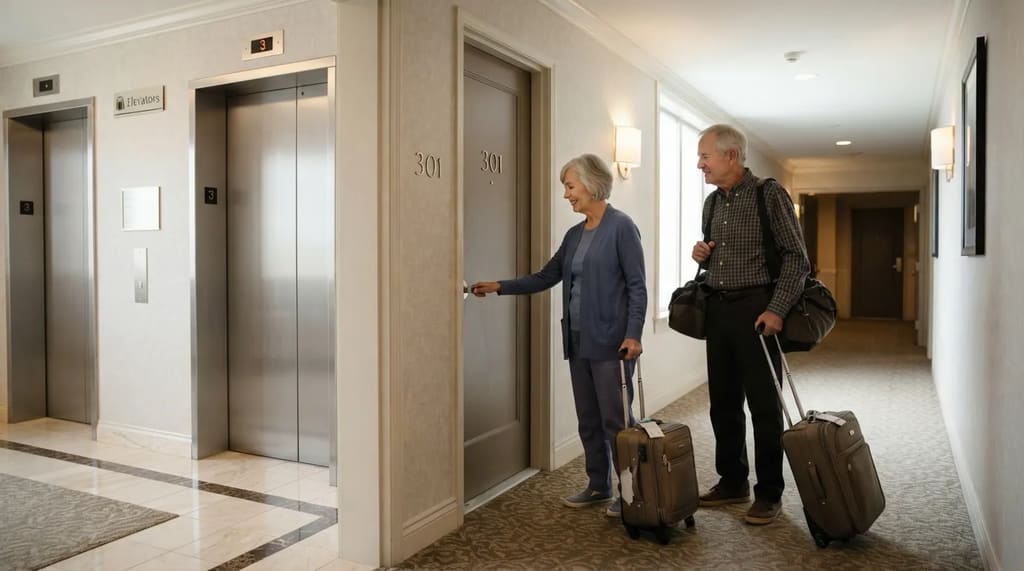
Not everyone wants the far end of the hall. For some guests, distance is the real problem.
Room location is one of the easier things a front desk can adjust. You can simply ask for a room near the elevator at check-in, and in many cases the request can be granted.
Here’s the controversial part. Many travel writers say a far-corner room is always best, but for anyone who tires on long corridors, a shorter walk may beat silence.
Picture a long hallway after a full day of travel, with luggage and sore knees. Suddenly the noisy spot by the elevator looks like a gift.
Worth Knowing
- Far from the elevator: usually quieter, but a longer walk with bags.
- Near the elevator: a shorter trip to the room, with more hallway traffic.
- Timing: ask at check-in, when the desk can see what’s open.
- Your move: name which matters more, quiet or distance.
The honest answer is to decide your priority. Tell the desk which matters more, and let them find the best match.
But there’s one set of room features that most guests don’t even know they can ask about, and it’s #2…
#2 – Bathroom and Room Features Most Guests Never Ask About
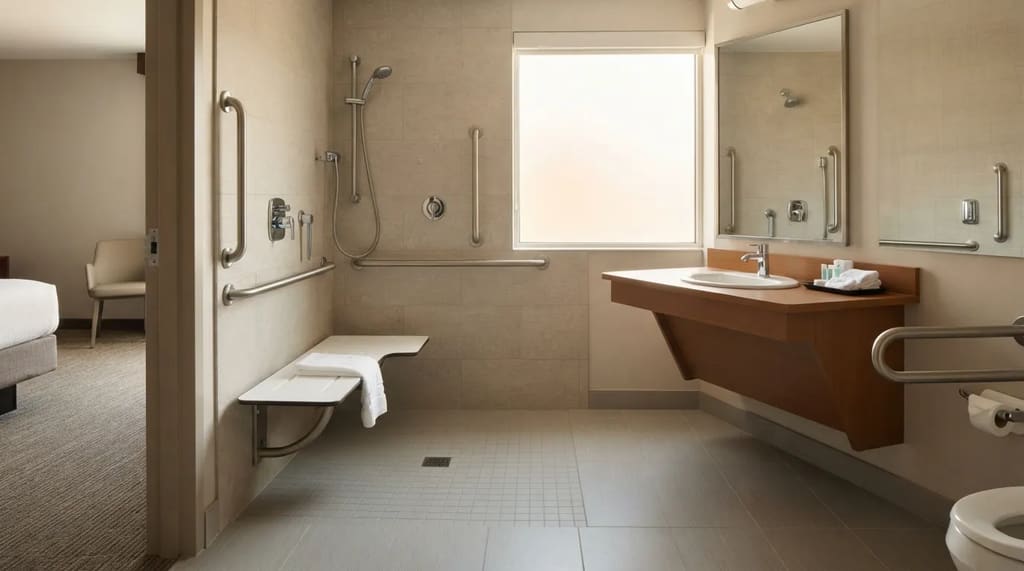
Some of the most useful features in a hotel aren’t on the booking page. They’re built into accessible rooms.
Common features include grab bars, a roll-in shower, a shower chair, a handheld shower head, and a lowered countertop. Guests who use ambulatory aids may not need a roll-in shower, but may need to know the height of the tub.
These rooms are limited, and they exist for guests who need them. A hotel with 76 to 100 rooms must provide 4 mobility accessible rooms, including 1 with a roll-in shower.8
That’s why calling ahead matters. A room that looks fine online may hide a tall tub wall or a missing grab bar.
You’ll want to call ahead for this one. But our final entry is the one front desk managers say makes everything else work, and it’s #1…
#1 – The Note on Your Reservation
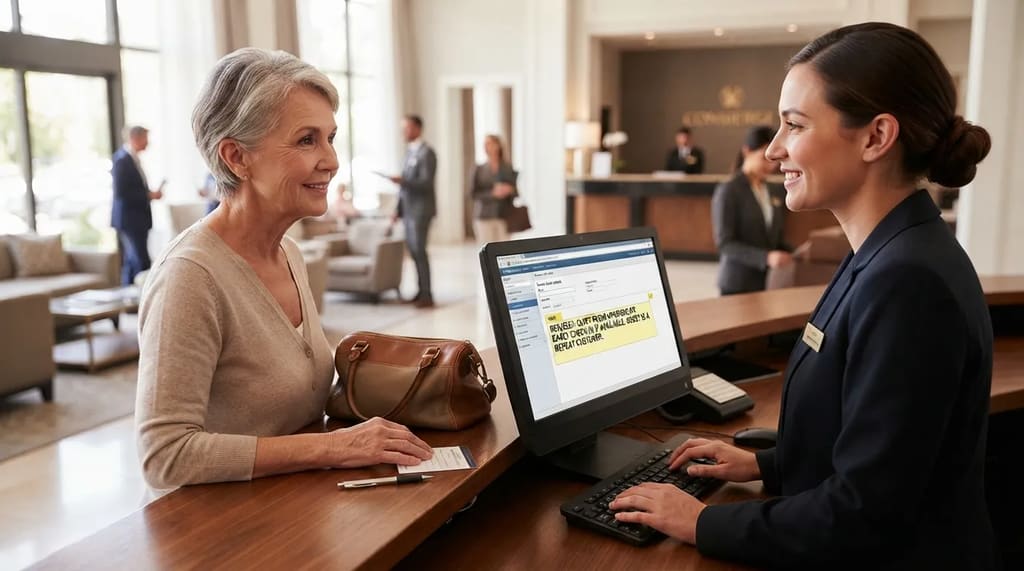
The strongest move isn’t a trick. It’s a note.
One travel guide explains what usually happens when you ask politely. Staff will most likely say they can’t guarantee anything but will often put a note in your reservation, and the agent may upgrade you on the spot, especially if the hotel isn’t near capacity.
Tone matters. Fox News once gathered front desk complaints, and one was that upgrade requests often arrive as though the guest were entitled to one.
Ask for help instead. A friendly, specific question makes the agent want to be on your side.
If the hotel can’t meet a request, ask what it can offer instead. Which brings us to what all fifteen of these have in common.
The Bottom Line
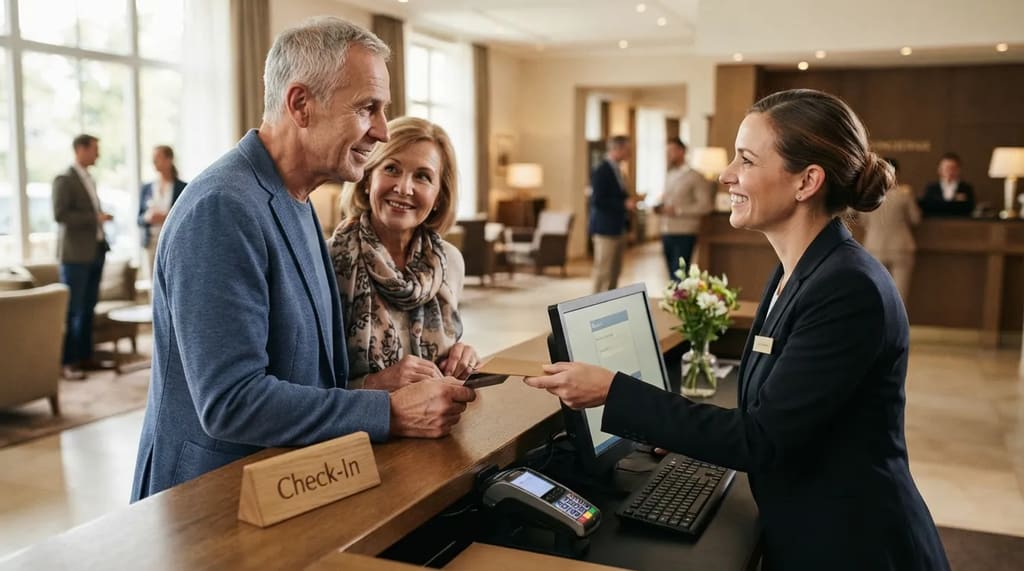
No hard data shows that guests over 65 miss these perks more than anyone else. What the front desk reporting does show is that specific, polite, well-timed requests work better than vague or demanding ones.
Quiet rooms, early access, and senior or AARP rates all depend on asking early, asking clearly, and accepting that availability rules. Hotels differ, and no request is guaranteed.
The people who get the nice room usually aren’t luckier, they just ask kindly and ask first. Which of these fifteen would you try at your next check-in?
- Yahoo Front Desk Requests: https://travel.yahoo.com/advice/travel-tips/articles/5-items-hotel-front-desk-131500254.html
- Kayak Early Check-In Guide: https://www.kayak.com/news/early-check-in-hotels/
- Marriott Early Check-In Help: https://help.marriott.com/s/article/marriott-early-check-in-late-check-out
- Ask a Concierge Upgrades: https://askaconcierge.tv/gift-worthy-upgrades-how-to-score-room-upgrades-elite-perks-holiday-bonuses-at-hotels/
- Yahoo Polite Upgrade Requests: https://travel.yahoo.com/advice/travel-tips/articles/front-desk-staff-explain-5-132243904.html
- Wyndham AARP Discount: https://www.wyndhamhotels.com/en-uk/wyndham/hotel-deals/aarp-discount
- Scripps Hotel Senior Discounts: https://www.scrippsnews.com/hotel-senior-discounts
- ADA Hotel Room Requirements: https://wheelchairtravel.org/hotels-ada-design-requirements/