A cruise ship’s galley works with far more ingredients than one night’s menu shows. If the maitre d’ can accommodate you, he or she usually will.
The catch is timing. Ask too late and you can end up at a table for ten, or sorting out your diet over the bread basket on night one.
The fifteen requests below are ones the dining room can generally handle, and most guests never think to make them. They run from handy to important, and several are especially useful if your appetite, hearing or diet has changed over the years.
Stay for #1, because one short conversation decides whether every other request on this list actually gets carried out.
#15 – A Second Starter in Place of an Entrée
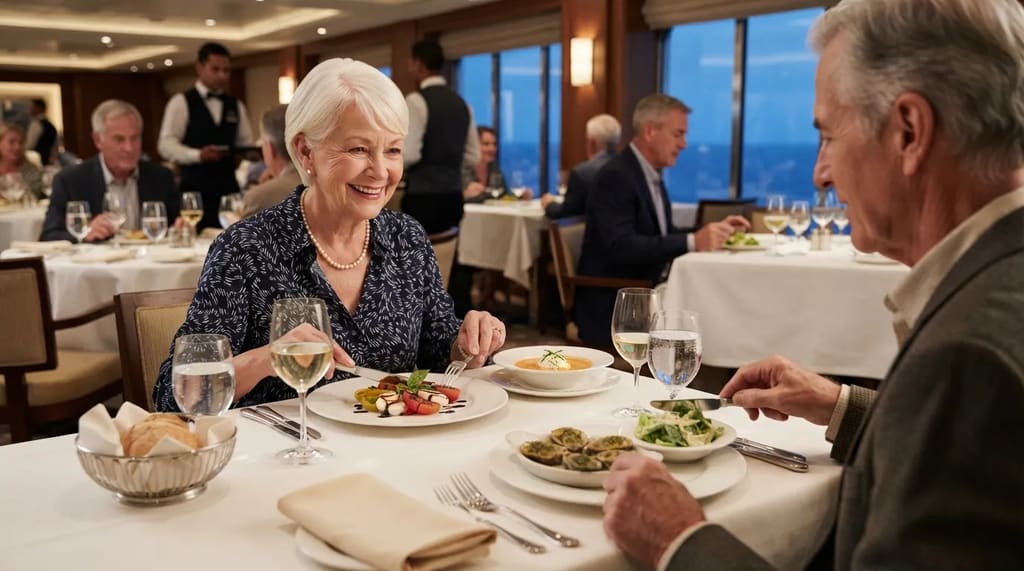
Nobody mentions that the three-course structure is optional. Unless the menu says otherwise, you can order as many dishes as you want in any menu category.
You can order as many dishes as you like in each category. That turns the printed order of starter, entrée and dessert into a suggestion.
Appetite changes with age, and a soup and a salad can make a better dinner than three heavy courses. You can order that way with no special arrangement.
A lighter eater can build dinner from two starters, while a hungry one can order two entrées and taste both. Policies vary by line, so check your line’s rule before ordering a second entrée.
You can also ask for a dish you loved on an earlier night again, which beats gambling on something new.
And if every entrée on the card sounds too fussy, a short list of plain dishes stays on the dinner menu all voyage.
#14 – The Plain Dishes That Never Leave the Menu
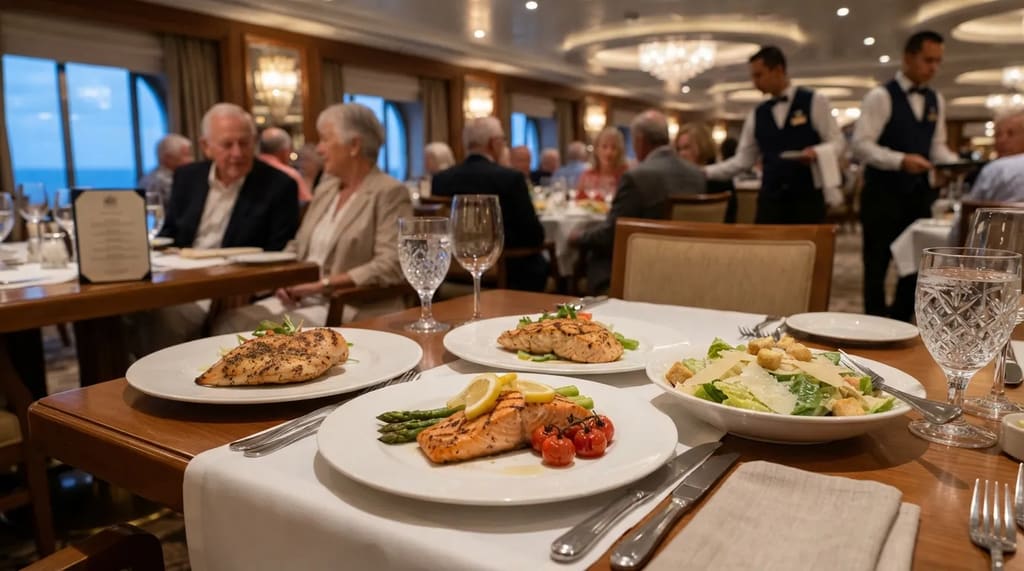
Dinner menus change daily on most ships, but a few dishes don’t. Staples like grilled chicken, salmon and Caesar salad usually remain available.
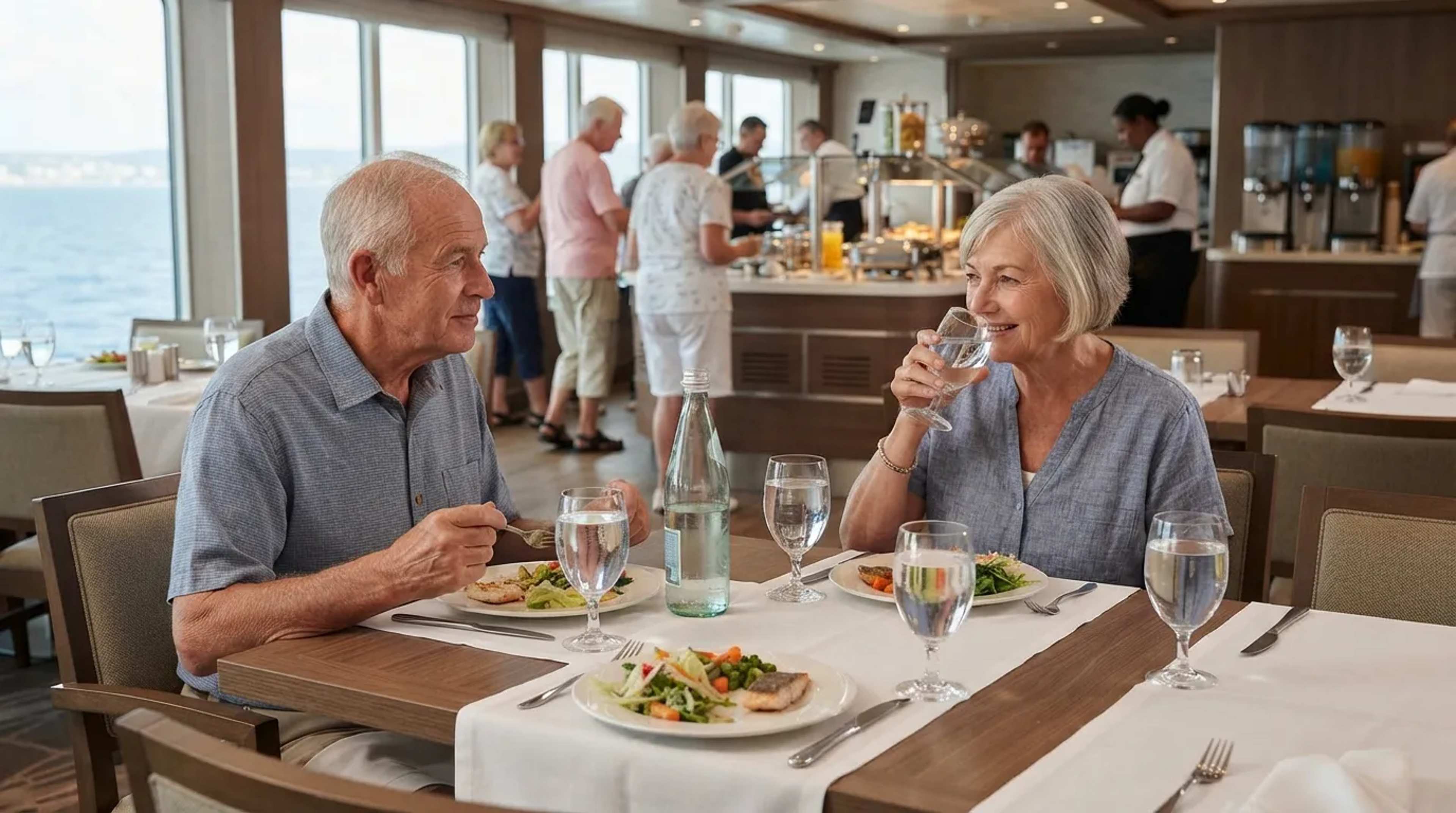
Grilled chicken, salmon and Caesar salad usually stay on the dinner menu. That fixed list is your fallback when you’re tired, when the night’s menu leans on heavy sauces, or when a medication has you wary of rich food.
Because those dishes are printed as written, ordering them takes no special request and no explanation. That’s handy on the first night, before your waiter knows you.
Fast Facts
- The usual fixed list: grilled chicken, salmon and Caesar salad.
- No special request or explanation is needed to order them.
- Sauce on the side or steamed vegetables is a reasonable next ask.
- They are most useful on night one, before your waiter knows you.
It also gives you a baseline to adjust from. Cruise-ship galleys work with plenty of ingredients, so asking for sauce on the side or vegetables steamed is a reasonable next step.
Ordering the same grilled salmon three nights running is a sound plan, whatever the adventurous eaters at the next table say.
#13 – Tomorrow’s Menu Before Tomorrow
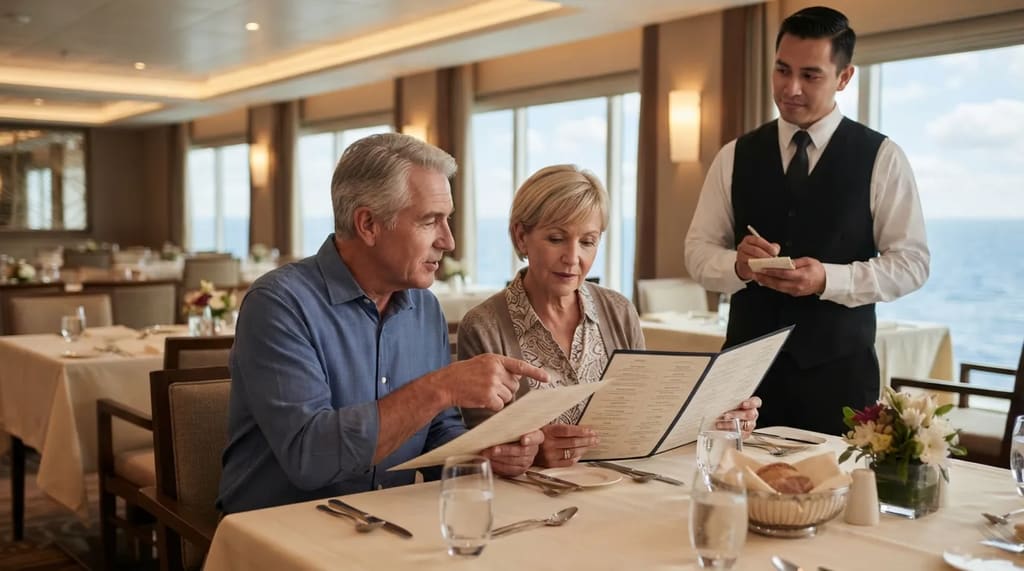
Choosing dinner with a waiter standing at your elbow is choosing under pressure. On many ships you can skip that, because the main dining room’s menus for the whole week are planned before the ship leaves port.
Ask the head waiter or the front desk for tomorrow’s menu. You can preview the menus simply by asking at the front desk.
The preview matters most if you follow a special diet. Most cruise lines can accommodate special diets, even if it means pre-ordering certain foods or making your menu selections in advance.1
A dish chosen a day early gives the kitchen time to plan around you, which beats a substitution improvised at 7 p.m.
If you’re gluten-free, dining staff often hold daily menu talks that preview the next day’s options. Ask the maitre d’ whether your ship does this.
Knowing what you’ll eat is half the evening. The other half is who sits across from you, and that can be changed with one conversation.
#12 – A Table for Two Instead of Ten
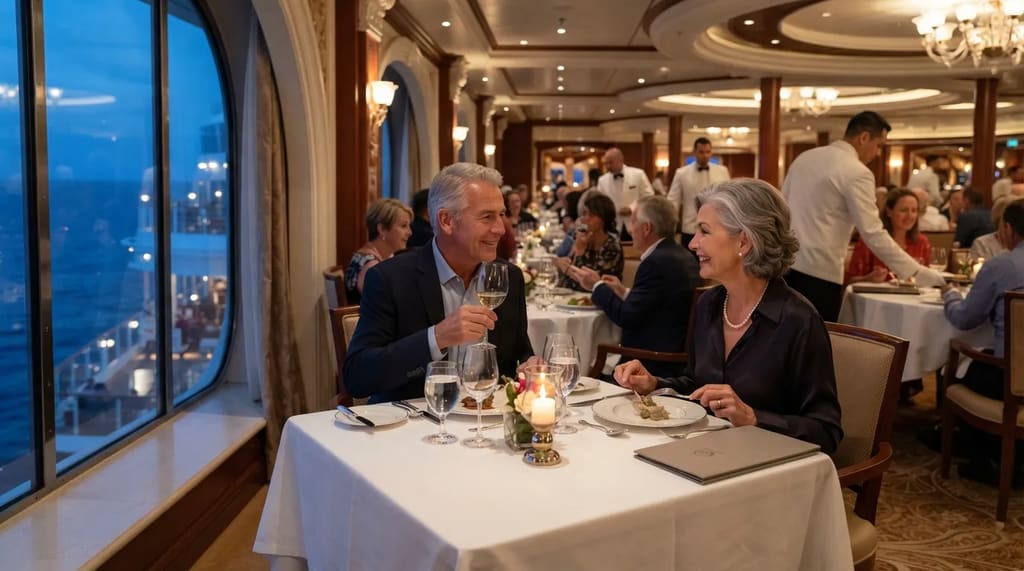
You could be assigned to a table with other guests in the main dining room. For a couple who want to talk to each other, that can mean a week of small talk with strangers.
The fix depends on how you booked. With traditional dining, you can email a request for a table for two before your cruise, or ask to speak to a head waiter in the main dining room.
With flexible dining, you can ask for a small table while you wait to be seated. A crowded room may mean a longer wait.
Ask for a table for two when you book, or on embarkation day. Cruise Critic calls embarkation day the time to request a dining time change or a romantic two-top instead of a table for 10.
For a couple, a shared table is overrated. If you’d rather meet people, say so and ask for a table of six instead, since dining room staff try to seat groups with something in common.
A table that looked fine on paper can still go wrong at the first dinner. That can be fixed too, though the window narrows fast.
#11 – Moving Tables After the First Dinner
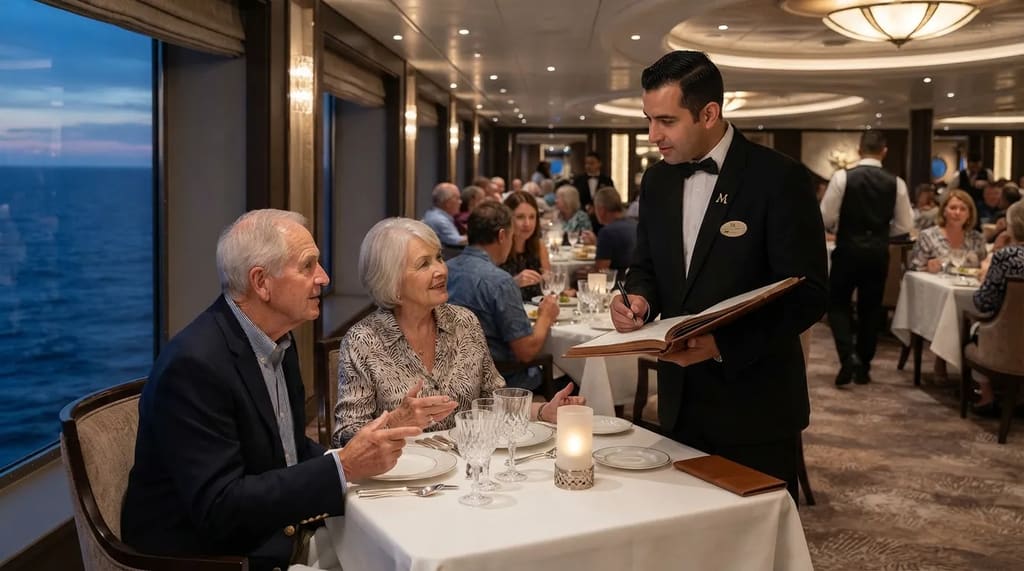
Say the first dinner shows you’ve been seated with company you wouldn’t have picked. You can still contact the maitre d’ and propose a different seating arrangement.
The catch is speed. Your dining preferences can usually be accommodated once onboard, but the earlier you inquire, the better the outcome.
Seating gets assigned early, and once guests settle into their spots, a change gets harder.
Ask for the change on day two, not on day five. Give the maitre d’ something specific to solve, such as a time that doesn’t suit you or a table that’s too loud to hear.
Cruise Critic also suggests mentioning a special occasion, or any particularly compelling reasons you need a change.
Moving tables is one fix. A smaller one is asking where in the room the table sits, since the maitre d’ controls that as well.
#10 – A Quieter Corner of the Dining Room
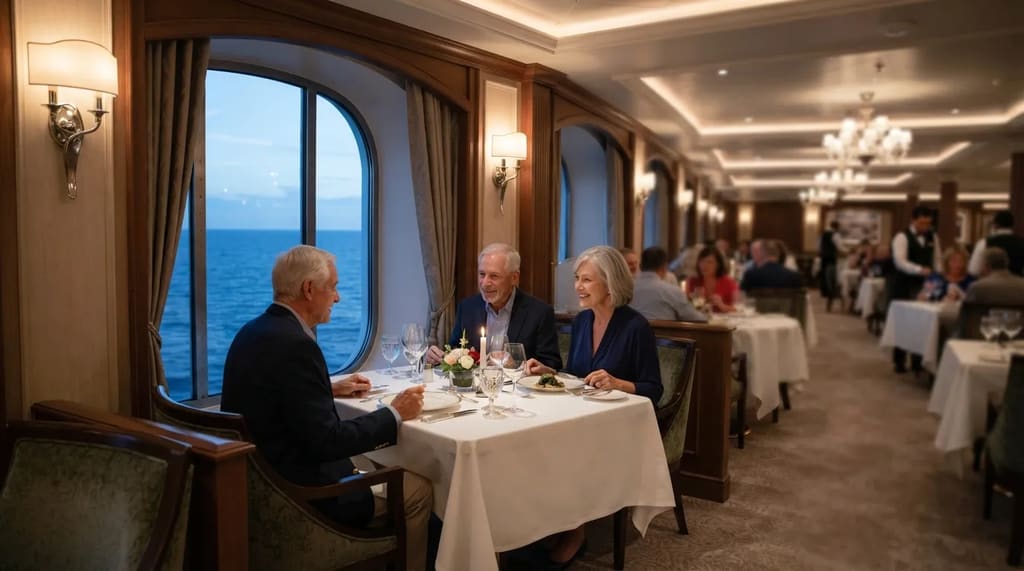
The loudest table in the room isn’t yours by fate. The maitre d’ controls table assignments in the main dining room, so a seat away from the noise is a matter of asking.
Ask for a quieter section and an earlier seating. An earlier seating often means a calmer dining room.
If hearing is a problem for you, say that plainly and let the head waiter choose the spot.
If you’re on fixed dining, make the request before the seating chart fills in. The table you get on night one is usually the table you keep.
That makes the first conversation worth more than any later complaint. It’s also the moment to bring up a table for two, since you’re already asking about the room.
Position in the room is one variable. The other is who carries the plates, and on some ticket types you can keep the same waiter all week.
#9 – The Same Waiter for the Whole Cruise
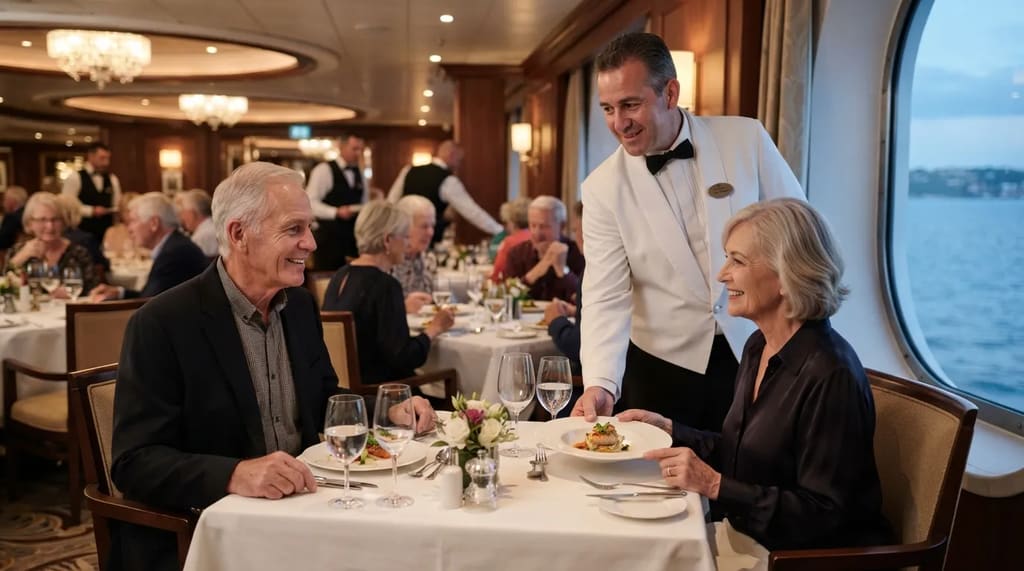
Mention an allergy or a favorite drink early, and your main dining room team will remember it for the entire sailing. That memory is worth far more when it belongs to one waiter who sees you every night.
Ask for fixed dining and the same waiter on embarkation day. Request fixed dining and a consistent waiter assignment before the dining room fills up.
Flexible dining sounds modern, but it has a cost. Cruise Critic notes that flexible diners can face waits at peak times unless they reserve ahead.
A different waiter each night also means repeating yourself every time. If being known matters more to you than eating on a whim, fixed dining is the better ticket.
Quick Compare
- Fixed dining: a consistent waiter who learns your allergy or favorite drink.
- Flexible dining: freedom to eat when you like, with possible waits at peak times unless you reserve.
- Best fit: fixed if being known matters most, flexible if you eat on a whim.
Cruise Critic’s own advice is to get to know your waiter and trust his or her judgment.
A waiter who knows you can carry a lot. But some requests are medical, and those need to be on paper before you sail.
#8 – Low-Sodium, Low-Fat and Diabetic-Friendly Plates
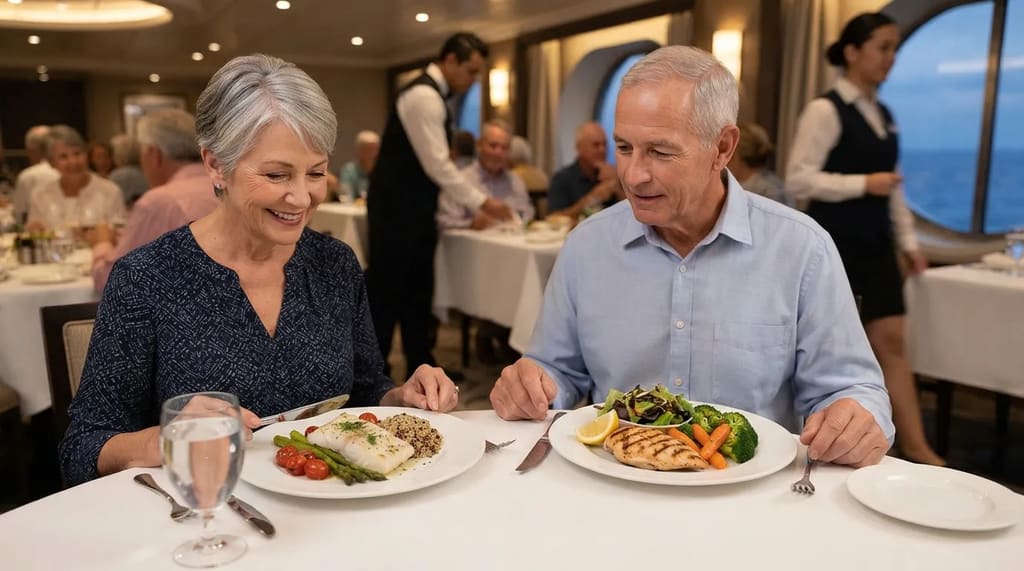
Low-sodium is one of the most common special diets ships handle. The Cruise Lines International Association lists gluten-free, dairy-free, vegetarian and low-sodium among the most common.
Low-sodium meals are available for lunch or dinner in the main dining room. You can request them through the maitre d’.
Princess, for one, lists low-sodium, low-fat, low-cholesterol and diabetic-friendly options among its accommodations. Holland America offers personalized meal plans for guests with diabetes or low-sodium needs when requested in advance.
The phrase “in advance” matters because a kitchen can’t season a dish to your doctor’s plan unless it knows the plan. Check your own limits with your doctor, then send them to the line before you sail and repeat them at the first dinner.
Diet is one reason a standard table doesn’t work. Another is that the table itself may not fit a wheelchair.
#7 – A Table Set Up for a Wheelchair
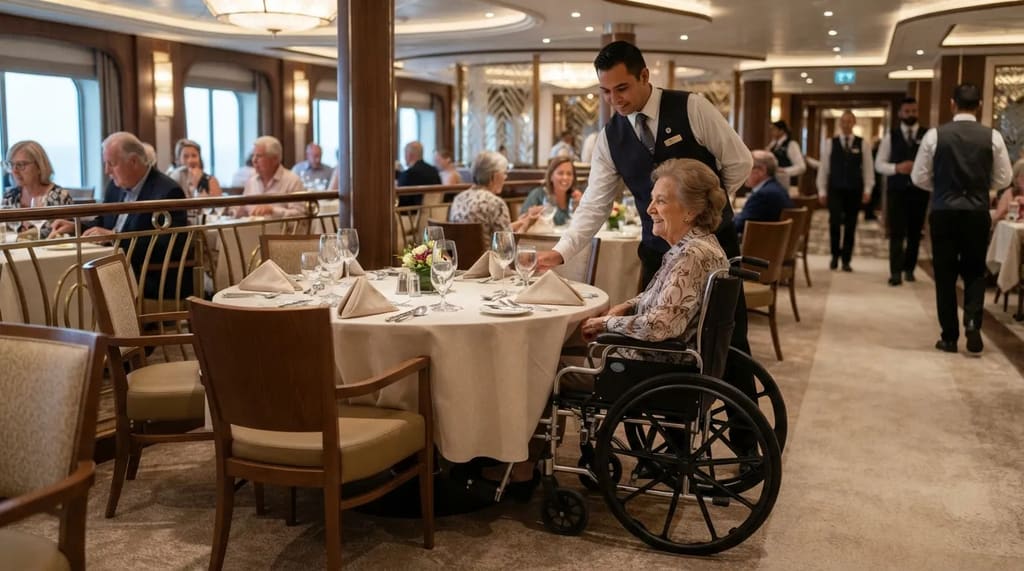
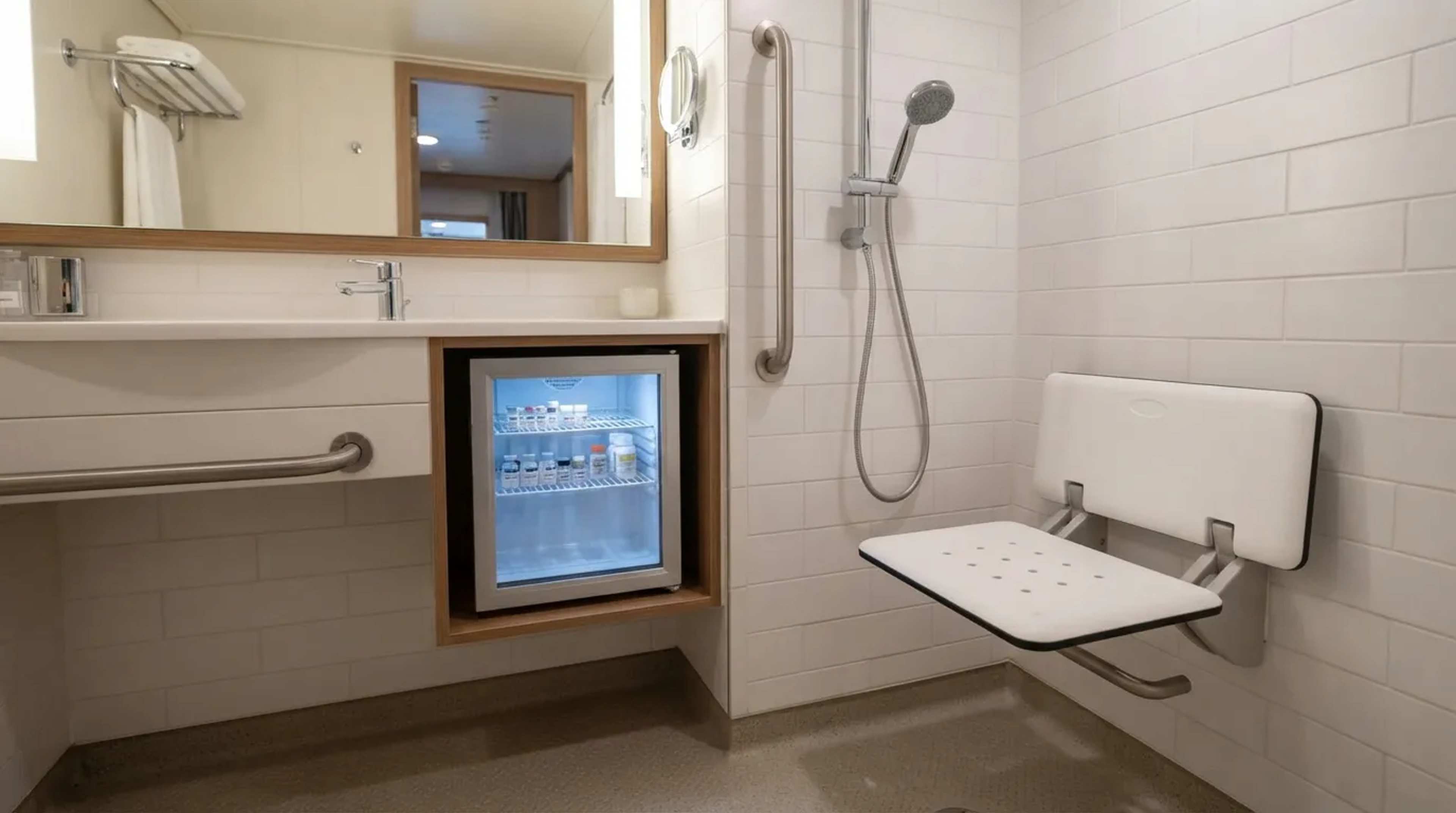
On some ships the dining room is built for it. On Royal Caribbean’s Oasis and Icon class ships, the main dining room offers step-free entry, wide aisles and wheelchair-accessible tables.
Other lines work from the server’s side. On Disney ships, servers are experienced at removing chairs and creating comfortable wheelchair-accessible table positions.2
For the adult specialty restaurants, the advice is to note your wheelchair access needs when you book.2
Ask for a table with a chair removed and no step up. Disney’s guide lists no step-up tables among the requests worth making, especially for adult dining.3
The same idea applies on any line: tell the head waiter what your seating needs are before you reach the table, not once you’re stuck at the door.
All of these requests take a conversation at the podium. In some cabin categories, you can hand that conversation to someone else.
#6 – Handing the Whole Conversation to a Concierge
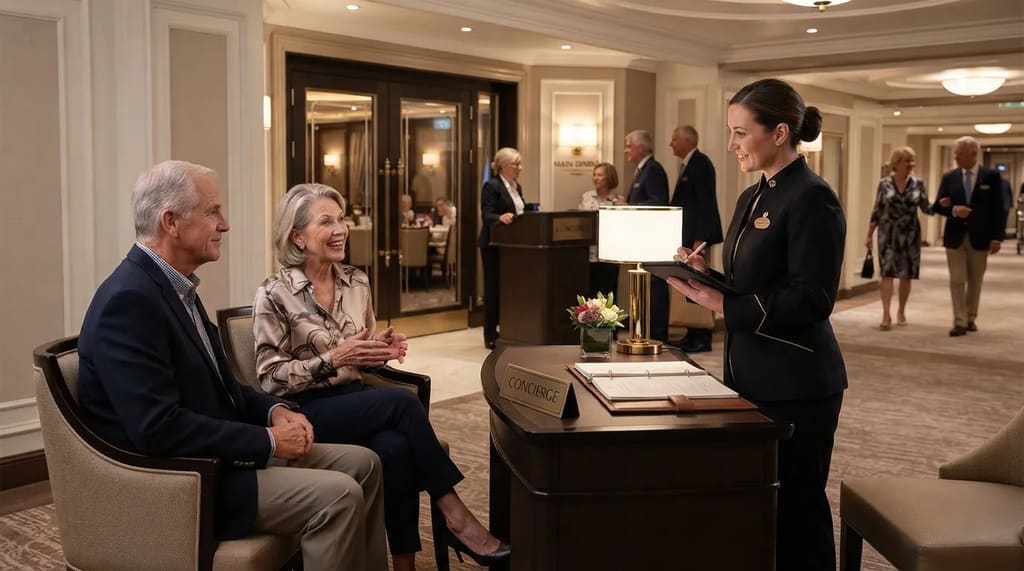
If your cabin comes with a concierge or butler, you don’t have to wait in the line at the maitre d’s podium. Ask your concierge or butler to go over meal plans or change your dinner seating for you.
A concierge or butler can relay your table, time and food requests. Cruise Critic notes these staff can also handle meal-plan changes and special food preferences.
You’re paying for that service in the price of the suite, so use it. A request to move from late seating to early seating, or to swap a shared table for a private one, is exactly the kind of errand it’s meant for.
One limit applies. Allergies and strict diets still belong with the cruise line before you sail, because dietary restrictions should be reported before sailing and reminded to the maitre d’ and waitstaff onboard.
Then there’s the request that costs nothing and often changes how the room treats you.
#5 – Telling the Dining Room About an Anniversary
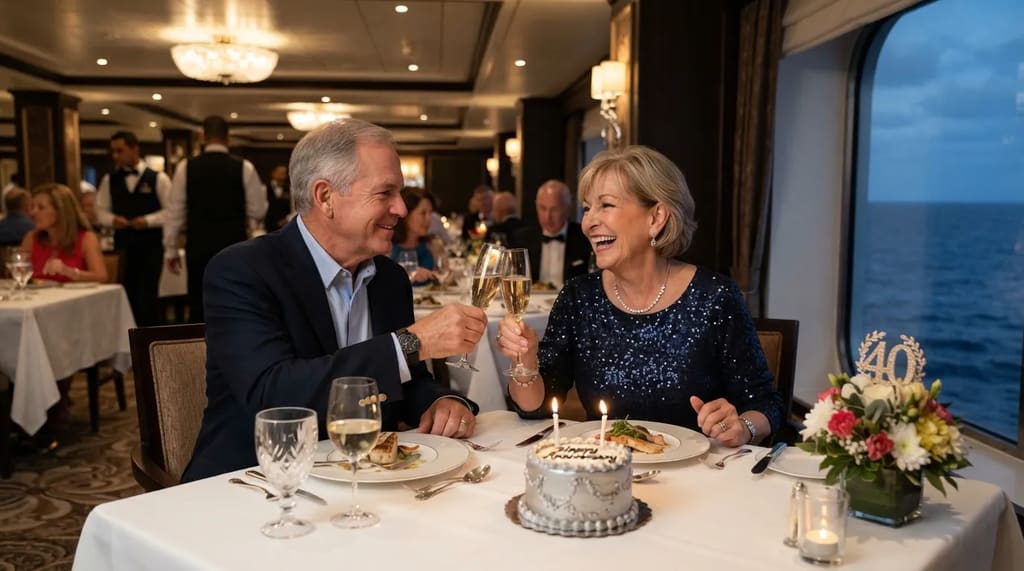
Cruise Critic’s advice on requesting a seating change is blunt: mention it if you’re celebrating a special occasion, such as an anniversary or honeymoon. A date gives the staff something to plan around.
Birthdays, anniversaries and honeymoons are treated as real events by cruise waiters. The earlier they hear about yours, the more they can do.
What that means varies by line, so ask the head waiter what’s possible instead of assuming a cake will appear.
Mention the occasion and the date on embarkation day. Do it in the same conversation as your table request from earlier on this list, because a table for two on your anniversary is an easier yes than a table for two on its own.
If someone else is arranging the trip for you, such as a child or a travel agent, ask them to note the date at booking. The dining room can only plan around what it has been told.
Whatever you arrange in the main dining room, it stops at the door of the steakhouse unless you say it again.
#4 – Repeating Your Diet at the Specialty Restaurant
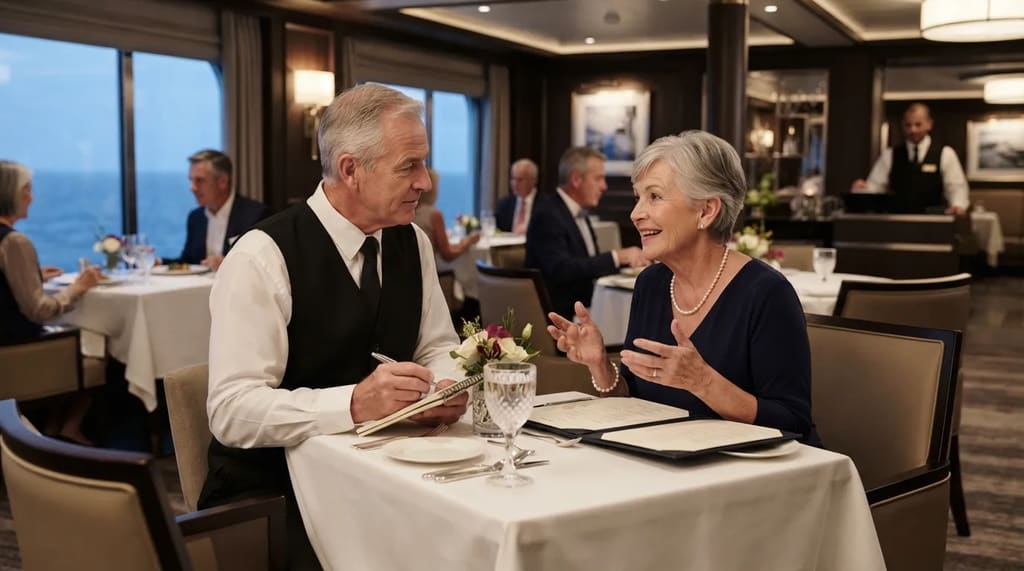
You settled your diet with the main dining room. A specialty restaurant is a separate reservation, which is where you get to say it all again.
On Celebrity Cruises, for example, the specialty restaurants all accommodate special dietary requests. Other lines work similarly, but the safe habit is to confirm each time rather than assume.
Mention your dietary needs when you book each specialty reservation. Book specialty dining early in your cruise to lock in preferred times, and mention your dietary needs in the same conversation.
The advantage is that the specialty restaurant is usually calmer than the main dining room. A dietary conversation with the host or server tends to get more attention there.
You’ve already done the hard work of explaining your needs. This step just carries it across the ship.
One dietary request needs more than a reminder, because some foods the galley won’t have aboard unless it was told weeks ahead.
Related Stories From Travelbinger


#3 – Gluten-Free Bread That Must Be Ordered Weeks Ahead
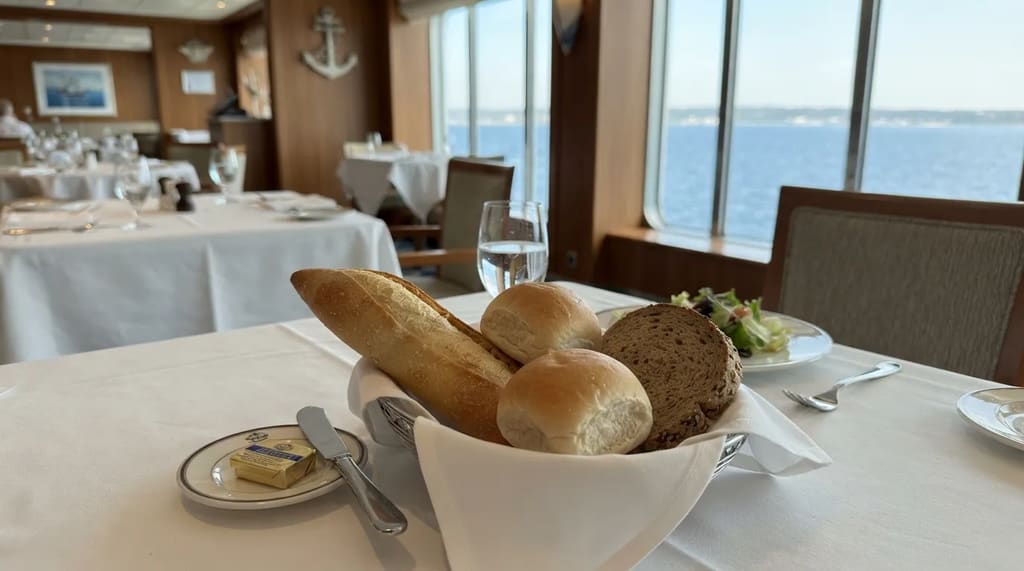
Norwegian can provide gluten-free baguettes, rolls, hamburger buns, pancake flour, three types of pasta and three cereals, but only if it has been notified ahead of the sailing.4 5 Holland America can provide gluten-free waffles, muffins, buns, pastas and premade desserts with advance notice.4
Some gluten-free items are stocked only if the line is told before sailing. That includes beer.
Carnival, Royal Caribbean, Norwegian, Princess and Viking are among the lines that serve gluten-free beers. As with food, you need to tell them in advance so they can pre-order.4
Pack your own gluten-free snacks. Cruise Critic points out that onboard availability varies and specialty items may only be stocked after pre-cruise notification.
A snack in your day bag is more dependable than hoping the buffet label is right. One exception: the more upscale the cruise line, the more likely it can cater to your needs without advance notice.
So how many weeks ahead is “ahead”? The answer is a range, and it depends on where you sail.
#2 – The Deadline for Special Diets
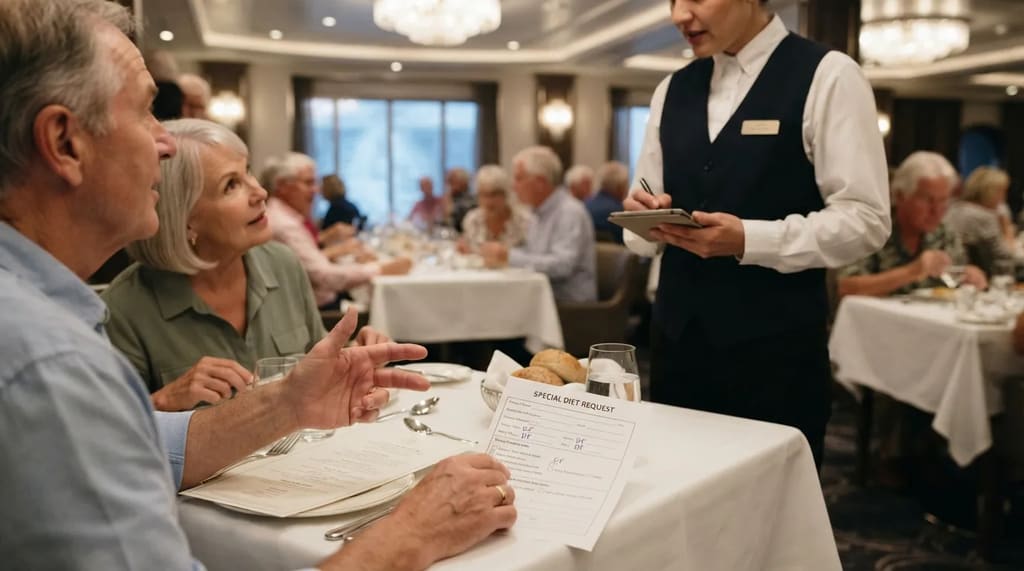
Published deadlines for special diets run from about a month to three months before sailing, depending on the line and the region. The Cruise Lines International Association says lines generally ask for at least one month’s notice, and sometimes before you make your final deposit.1
The reason is logistics. Advance notice lets the ship buy items such as gluten-free pasta or dairy-free milk before it leaves.6
For kosher or halal, meals prepared on shore and sent to the ship may require even more notice.
Tell the cruise line the day you book, not the month before. Aiming for the deadline is the wrong target.
Miss the window and you may be working it out at the dinner table on night one. If you book through an agent, ask them to enter the note then and there.
Filing early is only half the job. The other half is a short conversation on embarkation day, and it decides whether everything above gets carried out.
#1 – The Embarkation-Day Sit-Down With the Maitre d’
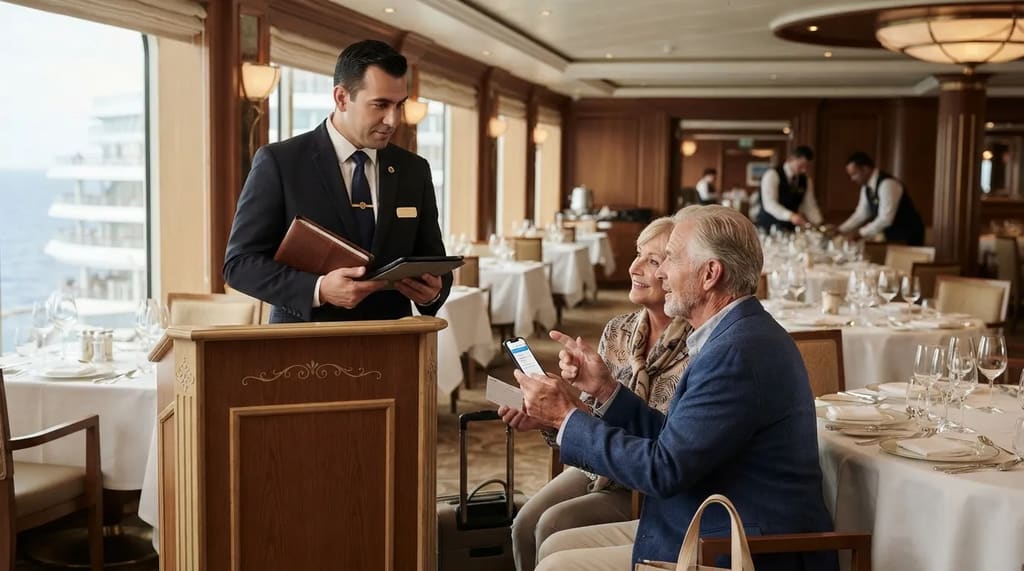
Every request above runs through one person. Meeting the maitre d’ is the move that makes the other fourteen work.
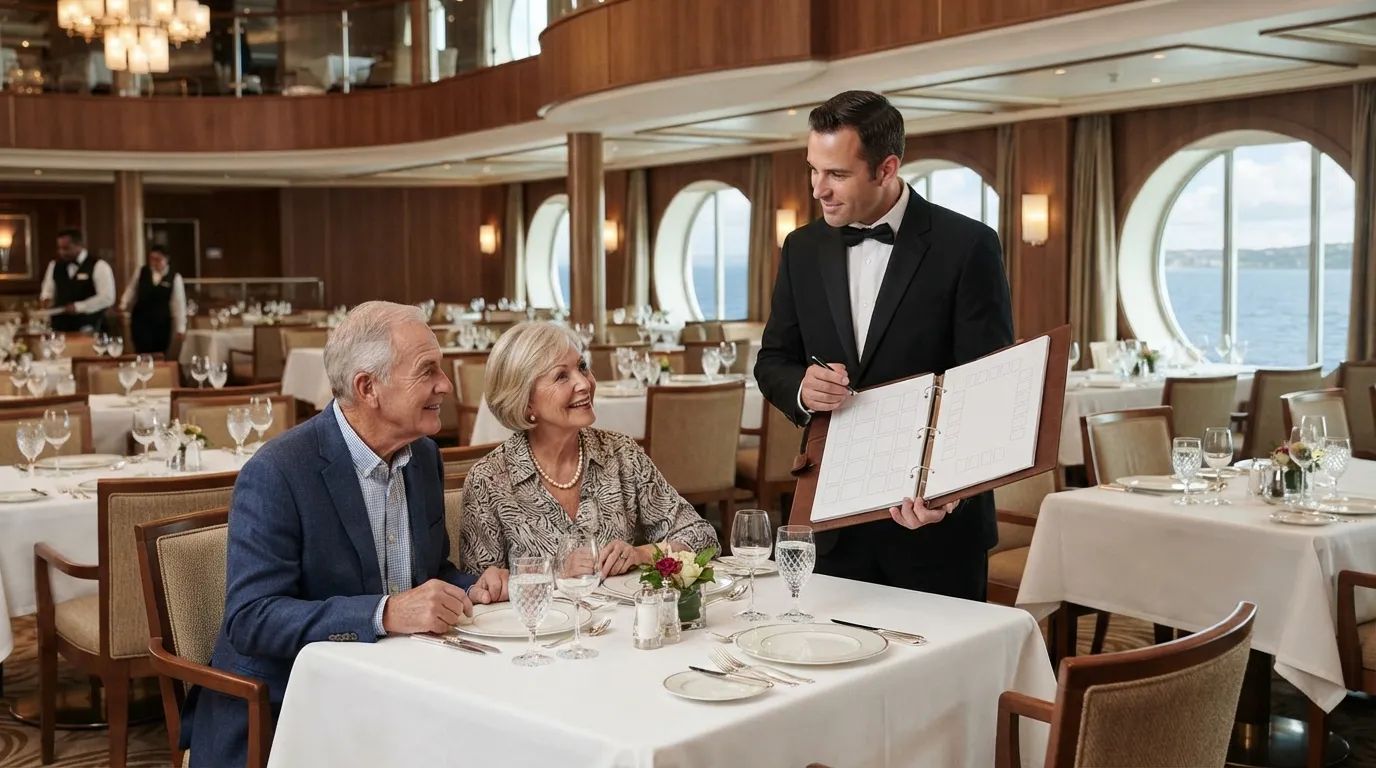
Go on embarkation day, before the first dinner service, with a written note. Walk into the main dining room before the evening rush and ask for the maitre d’ or head server.
The maitre d’ controls table assignments, dietary coordination, special-occasion planning and off-menu accommodations.
At a Glance
- Arrive on embarkation day, before the first dinner service.
- Bring a small card with your dietary needs and cabin number.
- Keep your confirmation email on your phone.
- Look for a sign outside the dining room listing the time and place for requests.
Requests made before the first dinner service are easier to work in than ones made mid-week. A note filed months ago isn’t enough by itself.
Attaching a face to a food allergy helps prevent disappointing or hive-inducing dinners. On some ships, a sign outside the dining room gives the time and place for requests, so look for it when you board.
Use the one visit for everything: the table for two, the quiet corner, the same waiter, the anniversary, the diet you filed at booking. Then repeat the small gesture around the midpoint of the cruise, and remind your server at each meal if you have allergies.
Ask While the Seating Chart Is Still Blank
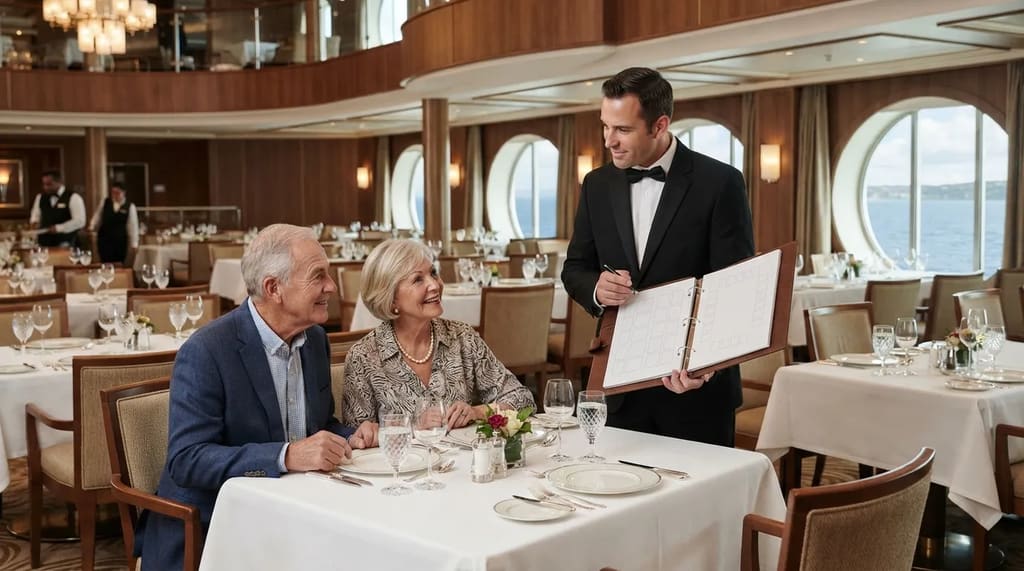
The pattern across all fifteen requests is that the dining room bends most easily before it fills in. A seating chart, a menu and a kitchen order are all flexible on day one and stiffer by day four.
That changes how you plan. Treat the first conversation with the maitre d’ as the plan for your whole week, and treat every later request as a repair.
You don’t need to ask for everything. Pick the two or three that fit how you eat, and bring them in a single visit with a card in your pocket.
On a cruise you’ve taken, what would you have changed about where you sat or what you ate, and when could you have asked for it?
- CLIA Cruise Dietary Needs: https://cruising.org/news/how-cruise-lines-handle-dietary-needs
- Disney Cruise Accessibility Guide: https://www.accessamusement.com/post/disney-cruise-line-with-a-wheelchair-the-complete-accessibility-guide
- Disney Cruise Accessibility Tips: https://www.dclcruisingdad.com/the-complete-guide-to-accessibility-on-disney-cruise-line
- Cruise Critic Gluten-Free Guide: https://www.cruisecritic.com/articles/what-to-know-if-you-want-to-cruise-gluten-free
- Norwegian Special Dietary Needs: https://www.ncl.com/faq/dietary-needs
- Cruise Critic Dietary Restriction Tips: https://www.cruisecritic.com/articles/dietary-restriction-cruise-tips