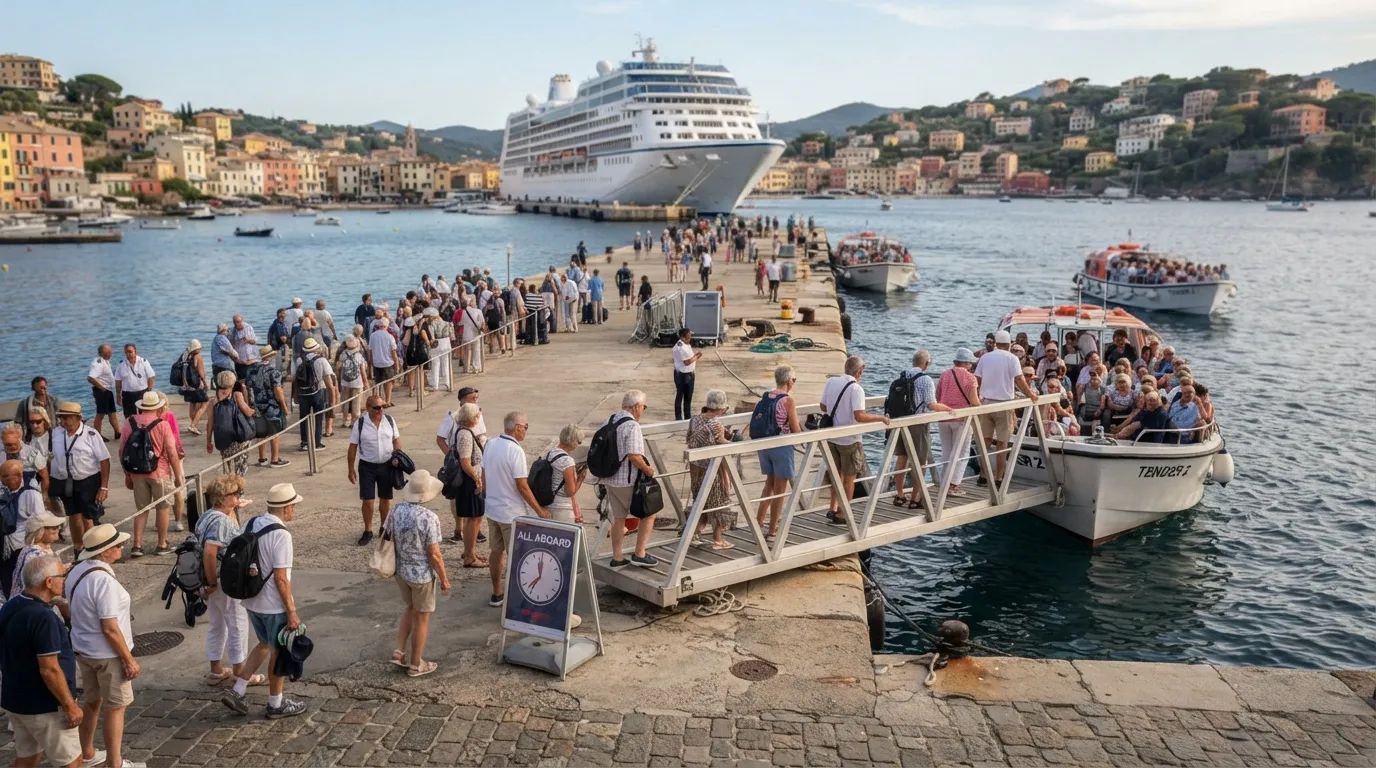
These are the 15 habits seasoned cruisers over 65 set up before the anchor even drops. A tender boat that holds up to 200 people has to serve a ship carrying thousands, and that math runs your whole morning.
Get the ticket wrong and you can lose hours in a lounge. Get the return wrong and you can lose the rest of the cruise.
The list climbs from small ticket tricks to one costly surprise, and #1 covers a bill Original Medicare generally won’t pay once the ship is far enough from home. First comes the habit that costs nothing but a glance at tomorrow’s schedule.
#15 – Tomorrow’s Ticket Time in Tonight’s Program
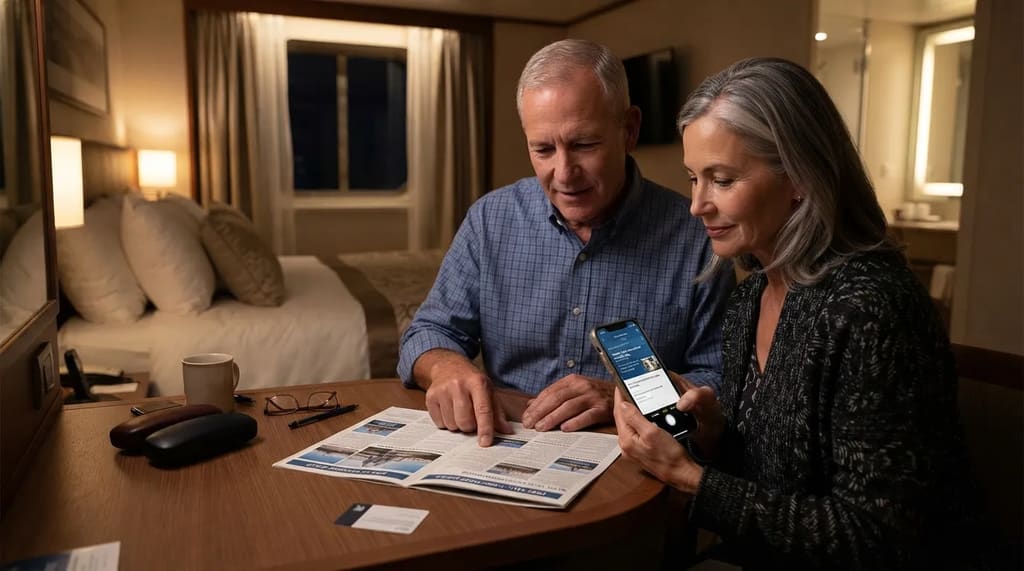
By bedtime, the handout time for tomorrow’s tender tickets is usually in print. Look in the newsletter left in your cabin or in the cruise line’s app.1
Find out when tender tickets are being distributed and set an alarm. Tender ports show up on your itinerary once you book, so you’ll know weeks ahead which days involve an anchor instead of a pier.
The details vary by ship. On many ships, though, tickets go out on the morning of the port day, usually from the atrium or a lounge.2
Photograph the page as well. The same sheet carries phone numbers you’ll be glad to have at the end of the day, and they come back near the end of this list.
Knowing the time and the place keeps you from wandering the decks while the first groups are already being called. Where you collect the ticket matters less than the number printed on it, because that number sets your place among a shipload of passengers.
At a Glance
- Where to look: the cabin newsletter or the cruise line’s app
- When it happens: often the morning of the port day
- Where to go: usually the atrium or a lounge
- Bonus step: photograph the page for its phone numbers
#14 – The Free Ticket That Sets Your Morning
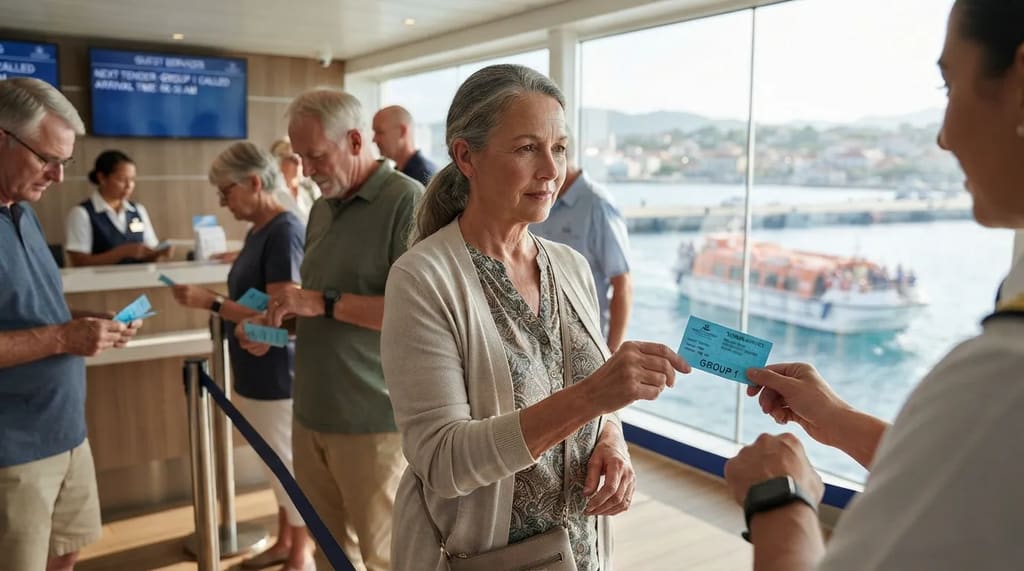
A tender ticket costs nothing, yet it decides when your feet touch the pier. Depending on the ship and your cabin category, you may need to pick up complimentary tender tickets, which assign you a boarding group.
Because a tender boat carries far fewer people than the ship, passengers go ashore in batches. Tickets are called in batches too, so the earlier you collect yours, the sooner you’ll get ashore.2
Some lines print a tender time on the ticket and others call a group number over the public address system. A ticket collected early puts you in an earlier group.
That’s why the handout time you looked up last night matters. Ask guest services which method your ship uses, since the answer changes where you should be standing when you wake.
Holding the ticket doesn’t mean standing with it, and the best place to wait is a seat.
#13 – Wait in a Lounge, Not at the Door
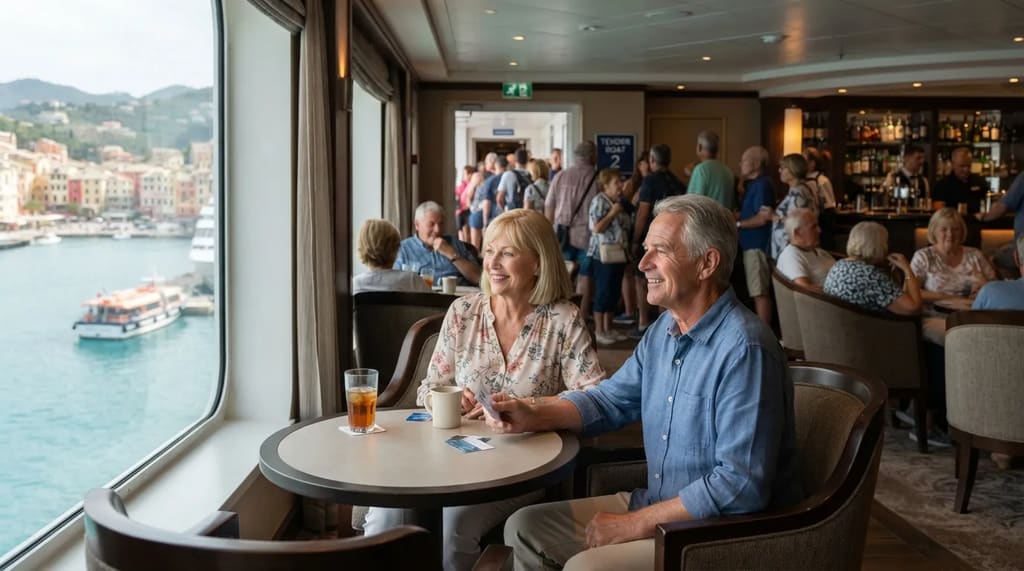
Standing at the tender door with your ticket in hand gets you ashore no sooner than sitting down. Boarding follows the group numbers, so your spot in the crowd counts for nothing once your number is called.
Once you have a ticket, you can wait in a bar until your group number is called. That’s far easier on the knees than an hour on your feet.
The return trip works on a similar principle. NerdWallet notes that tickets aren’t required to come back on the ship, but you still have to queue up for the next tender.
A full ship needs many boat trips, so that afternoon line can grow. Your group number, not your place in line, sets your boarding order.
Some passengers skip the ticket line altogether, and for most of them it comes with a price tag.
#12 – Why a Ship Tour Can Be Worth Paying For
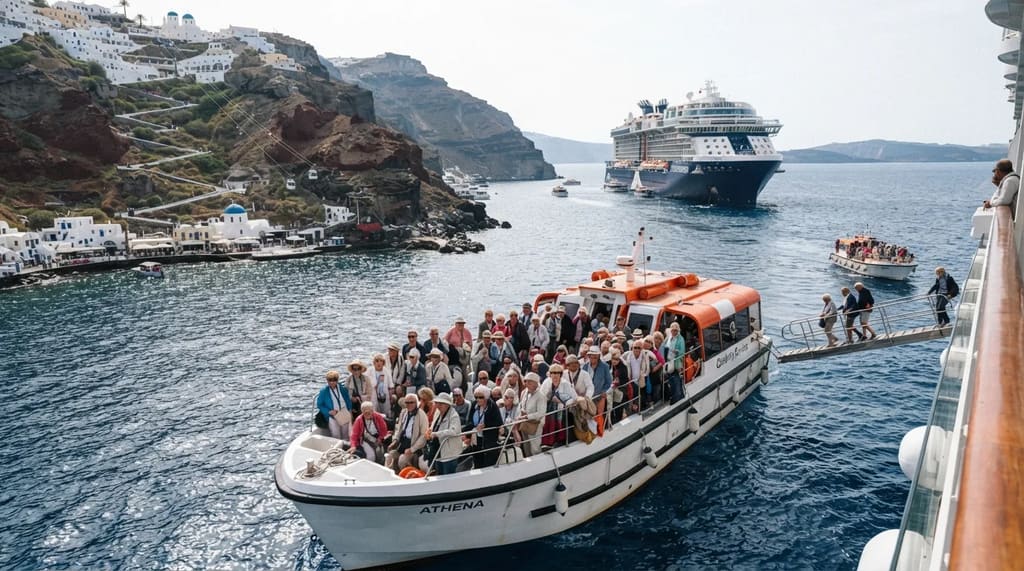
Passengers booked on ship excursions typically receive priority tender boarding and don’t need to queue for tickets.2 The reason is practical: the ship needs to get tour groups off on schedule.
That leads to a verdict some independent travelers won’t like. Booking a shore excursion at a tender port can be justified by the priority boarding alone, even if you’d rather wander on your own at docked ports.
At an anchored port, a ship tour doubles as a priority boarding pass. If you were going to spend the morning in the same town anyway, the extra cost buys back the wait.
Match the tour to your legs before you pay. Celebrity Cruises, for one, doesn’t recommend its Santorini excursion for guests with physical limitations, because of the winding paths and the lack of wheelchair-accessible tenders.
Another route to the front of the line needs no tour at all, only a tier on a loyalty card or the key to a suite.
#11 – Suite Keys and Loyalty Tiers on Tender Day
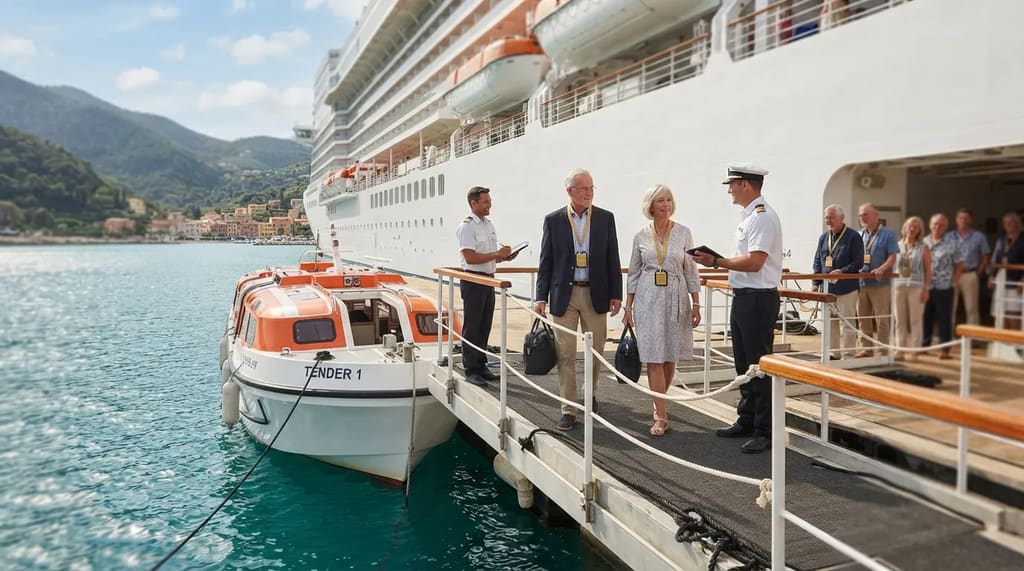
Some passengers never touch a ticket, because the ship has already decided they go first. Suite guests, top-tier loyalty members and guests on early ship-tour departures are often allowed on the first tender boats ahead of regular passengers.
The perk isn’t universal. It depends on the line, and on some cruise lines, loyalty status gives priority tendering.
Before you sail, look up what your tier includes. Then ask guest services on the first day whether tendering is part of it.
Asking costs nothing, while finding out at the tender door can cost you a morning. Suite guests and top-tier loyalty members often board the first tenders.
Quick Compare
- Ship tour: typically priority boarding, no ticket line
- Suite or top loyalty tier: often the first boats, but it depends on the line
- Everyone else: a free ticket, and the earlier you collect it, the earlier your group
If your status doesn’t include it, the ship tour from #12 is your fallback. Either way, the next hurdle isn’t the ticket at all, it’s the step down to the boat.
#10 – The Low Platform in the Hull
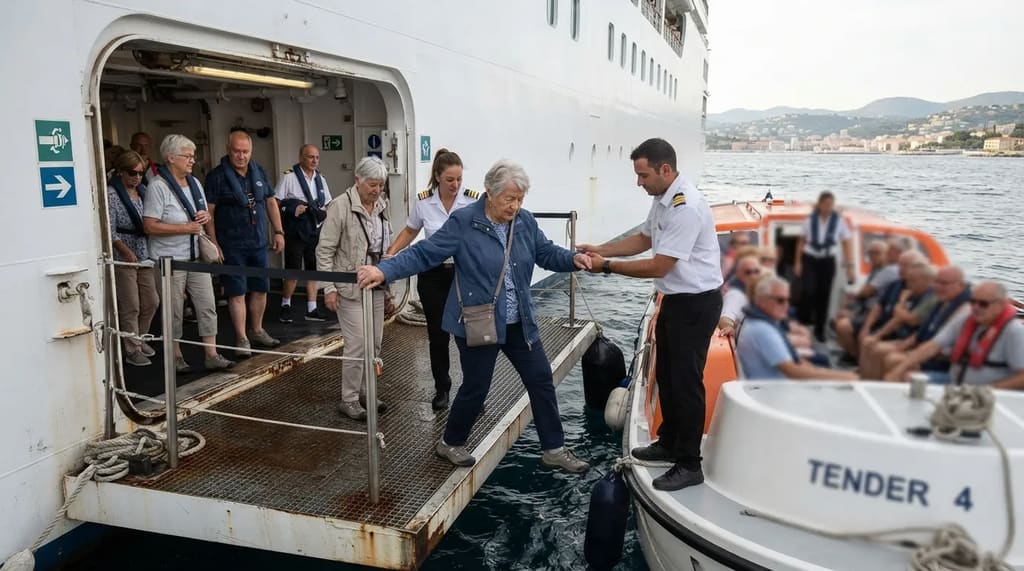
Tender boarding happens at a lower deck platform, usually through a door in the hull rather than the main gangway. You’ll often go down a few steps to reach it.
That makes it a different kind of exit from the pier ramp you used at embarkation. At the bottom, you step across a gap onto a moving boat.
Crew members will guide and steady you, but for safety reasons they cannot support, carry or lift guests onto the tender. Crew can steady you at the gap, but they won’t lift you.
So the preparation falls to you: flat, closed shoes with a good grip, a bag worn across the body, and a free hand for the rail.
If those steps are a real concern for you, the time to say so is well before you reach the platform.
#9 – A Word With the Accessibility Desk First
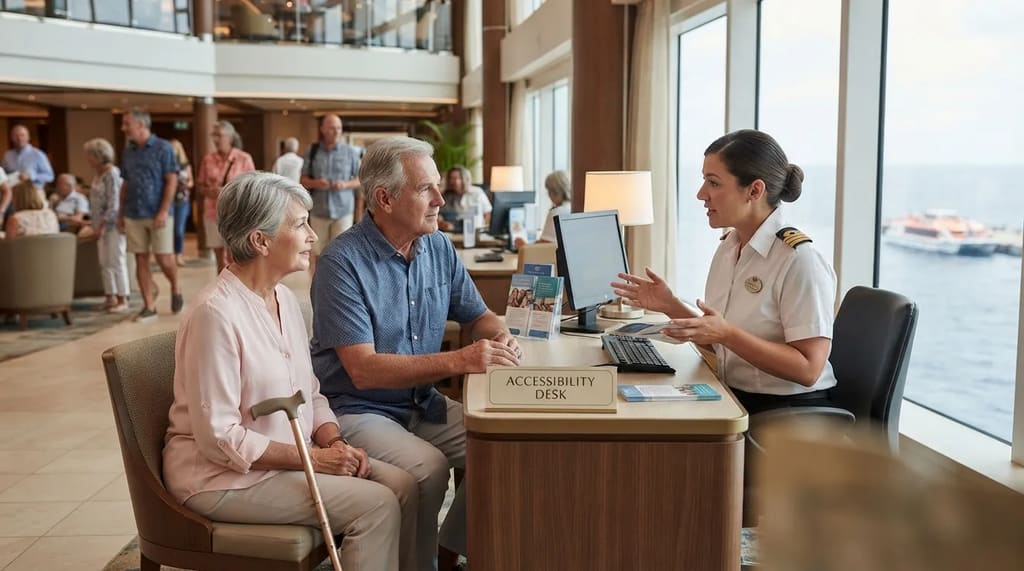
Most tender boats aren’t wheelchair accessible, so travelers with limited mobility should contact the cruise line’s accessibility desk before sailing. Waiting until the day of the tender leaves you nothing to work with.
Raise tender access with the line before you sail, not at the platform. Policies differ widely.
Some cruise lines offer accessible tenders with staff assistance, while others may advise certain passengers they cannot go ashore at tender ports. Even then, one line states that the captain or the captain’s staff make the final determination of whether a guest may board a tender.3
That’s why you want your request on file and the answer in writing. It’s also why you should repeat it to the crew when you collect your tender tickets.
What you bring along changes the answer, and the line between allowed and refused often comes down to whether it folds.
#8 – Folding Chairs and Walkers That Make the Boat
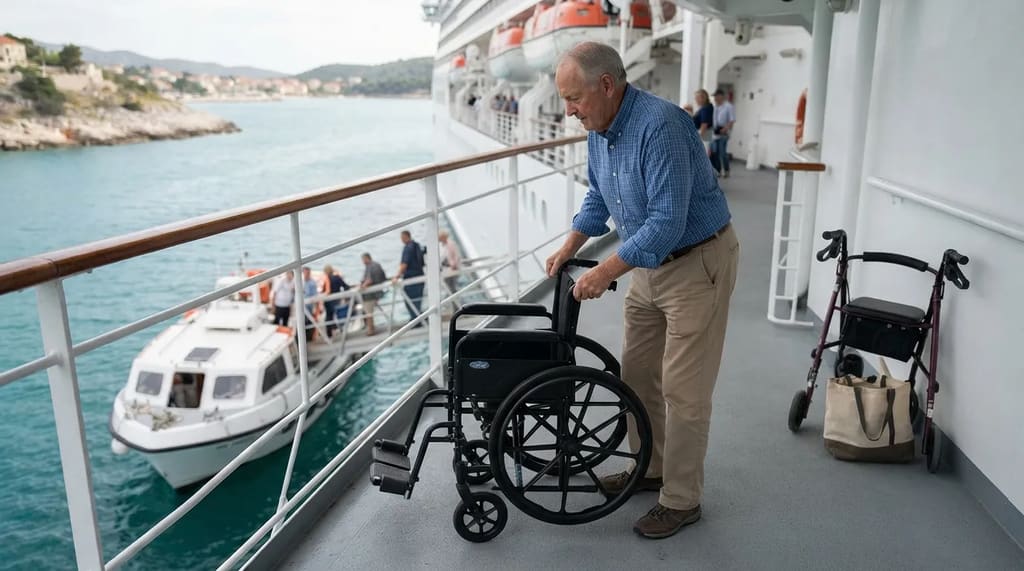
Anything that folds has a far better chance of getting onto a tender than anything that doesn’t. The rules are strict about the person as well as the equipment.
Celebrity’s accessibility page says that to board most tenders safely, guests must be able to take steps and use a collapsible manual wheelchair.4 Ambassador Cruise Line is stricter.
It won’t board anyone seated in a wheelchair onto a tender, though small, foldable aids such as a folded wheelchair or frame are accommodated. Be ready to climb steps and fold your own chair.
That job falls to you or your travelling companion, who are responsible for assembling and disassembling a wheelchair or scooter. Practice folding and unfolding it at home so the platform isn’t your first try.
Worth Knowing
- Tender boarding usually means steps, so being able to climb them matters as much as the chair.
- Celebrity’s page points to a collapsible manual wheelchair for most tenders.
- Ambassador boards folded aids but not a guest seated in a wheelchair.
- Your companion or you will do the folding, not the crew.
Folding is one thing, but some equipment doesn’t fold at all, and that changes the whole itinerary.
#7 – Scooters and Power Chairs at Anchored Ports
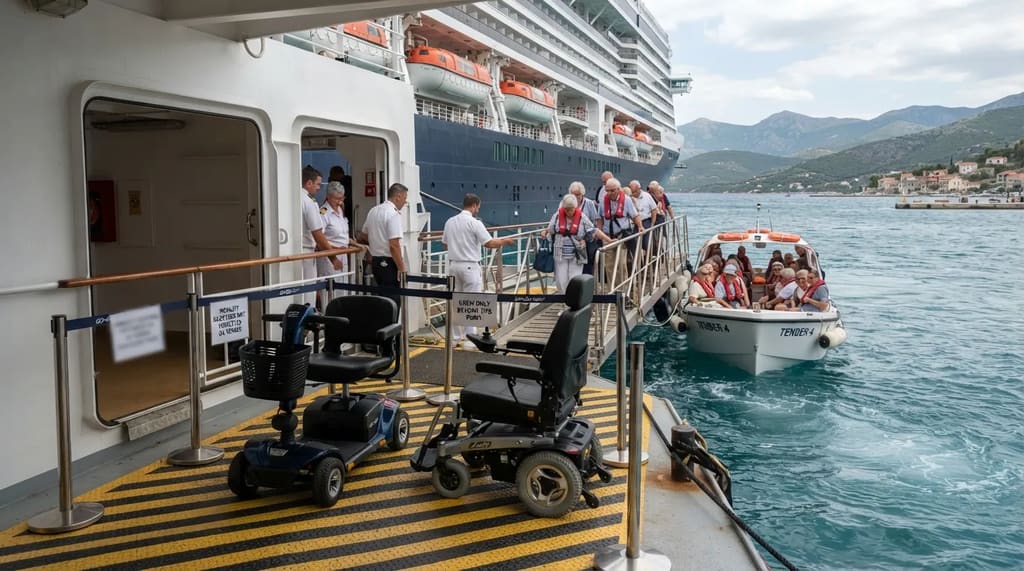
Most cruise lines have a blanket policy that power wheelchairs and mobility scooters cannot be transported on tender boats. Manual wheelchairs may be allowed at the captain’s discretion, depending on sea conditions, but that’s never guaranteed.
Virgin Voyages spells out the exception. Motorized chairs and scooters are not permitted on tenders unless roll-on capability between ship and tender is available, and that cannot be guaranteed.3
Compared with the folding chair in #8, a scooter changes the picture for the whole trip, not for one morning. An itinerary heavy with tender ports can leave a scooter user aboard on several port days.
Check which ports tender before you book, not after.
Even a guest with the right equipment and the right paperwork can be turned back by one decision made on the day.
#6 – When the Captain Cancels the Tender
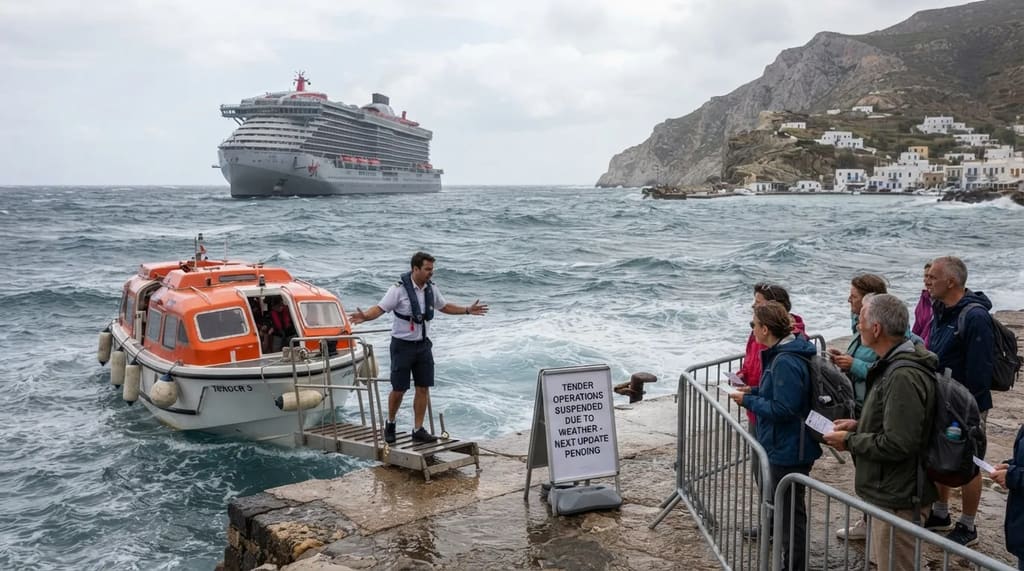
Tender ports can be canceled or interrupted due to weather conditions, and the call belongs to the captain. It can change after you’re already ashore.
That second part matters most. Virgin Voyages points out that although conditions may be acceptable to board a tender, a change in the weather may make reboarding to return to the ship dangerous.3
A morning ashore therefore doesn’t guarantee a relaxed afternoon, so a tender day deserves a Plan B and a shorter leash. A tender port can be canceled or interrupted by weather.
If you pay for a private tour at a tender port, read the refund terms first.
If the day does go ahead, the clock you follow matters more than the weather, and the one on your phone may not be the right one.
#5 – Ship Time and the Clock on Your Phone
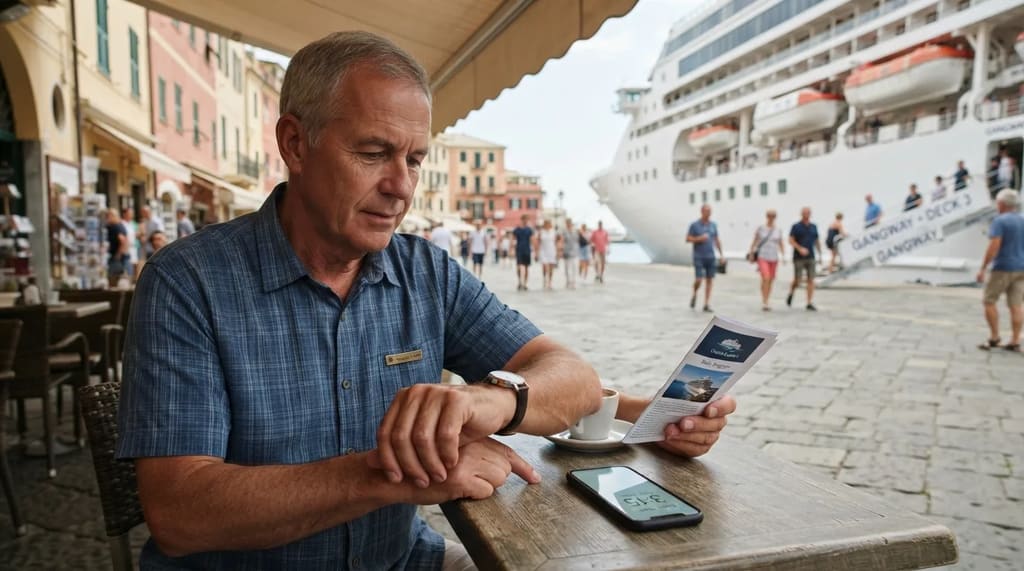
Your phone can show the correct local time and still be wrong about when the ship sails. Cruise advice is to go by ship time, which can differ from the local time your phone switches to.
The Points Guy’s cruise coverage tells readers to read the daily newsletter for any nuance between ship time and shore time. It also advises setting your watch or smartphone to ship time when you leave the ship.5 6
A phone changes itself without asking, so it can drift back to local time while you’re in a shop. On port days, a plain wristwatch set to ship time beats a smartphone.
Set a watch to ship time and leave it there.
Fast Facts
- Ship time: the clock the ship runs on, which can differ from shore time
- Phone risk: it may switch to local time on its own
- Where to confirm: the daily newsletter
- Safest tool: a plain wristwatch set to ship time
With the right clock on your wrist, you still have to read the deadline correctly, and the posted one isn’t the number to aim for.
#4 – Why All Aboard Isn’t the Time to Arrive
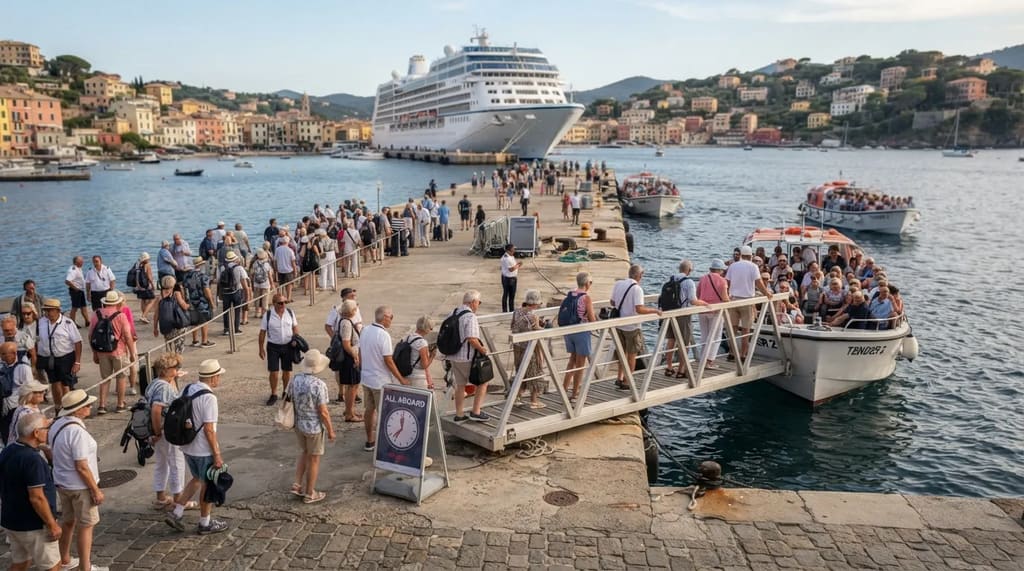
All aboard is usually set before the ship’s actual departure time, and it’s still not the time to arrive. Showing up right at the posted minute is a gamble.
Port-day advice is to work backward from the all-aboard time rather than the scheduled departure. Cruise-port guides commonly suggest treating the all-aboard time as 30 to 45 minutes earlier than posted.
Treat the posted all-aboard time as 30 to 45 minutes earlier. Tender days add one more layer.
You’ll queue for the return boat, as covered in #13, and each boat carries a limited number of people. Aim for a boat well before the last one.
How far you wander matters as well, because a ship holds its departure for some travelers and not for others.
Related Stories From Travelbinger


#3 – The Ship Waits Only for Its Own Tours
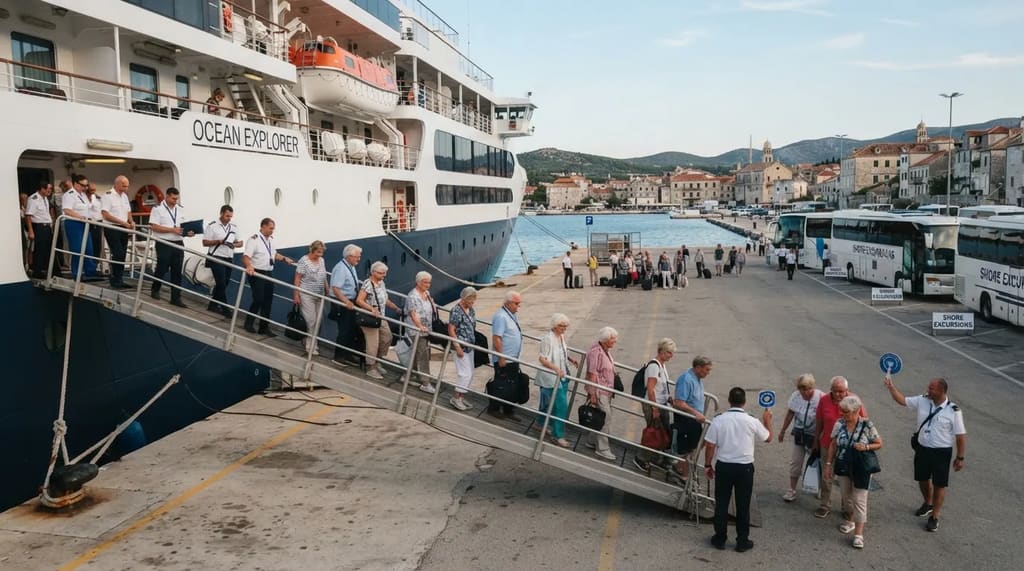
A ship will hold its departure for a tour it sold you, and for almost nothing else. Ships depart without you if you miss the all-aboard time, with almost no exceptions.
If you buy a tour through the cruise line, the ship will wait if the tour bus is not back by the all-aboard time.5 The ship tour that got you onto an early tender in #12 is therefore the same one that protects your return.
A private operator has no such arrangement. If a private tour is your plan, tell your guide you need to be back at the pier well before all-aboard time, and ask how far you’ll be from the pier.
Ship-booked tours are the only ones the ship is guaranteed to wait for.
When you’re late on your own, one local representative becomes the most useful person ashore, and you can find that person’s number before you leave the ship.
#2 – The Port Agent’s Number in Your Pocket
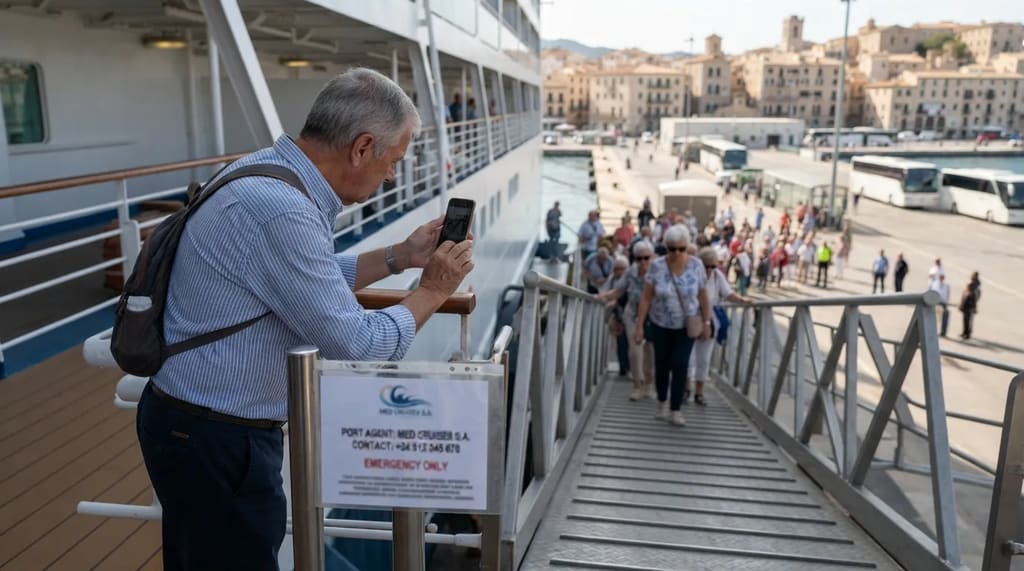
Miss the ship and you’ll pay the catch-up costs yourself unless insurance covers them. The ship won’t circle back, because it doesn’t generally perform a dramatic U-turn.
The person to find is the port agent, a local representative who works with the cruise line and the port. The agent can help you contact the ship, figure out travel arrangements, and sometimes even hand over your essential documents.
The name and number are typically in the daily program, which is the same sheet you photographed in #15. They’re often posted at the gangway too.
Photograph the port agent’s number before you leave the ship. Don’t count on a rescue, though, because procedures for retrieving a passport and medication vary between ships and ports, and you shouldn’t expect reimbursement for missed days.
A catch-up flight is expensive, but it’s a smaller bill than the one waiting for anyone who gets hurt or sick far from home. The biggest item on this list involves no clock at all.
#1 – The Medical Bill Medicare Won’t Pay at Sea
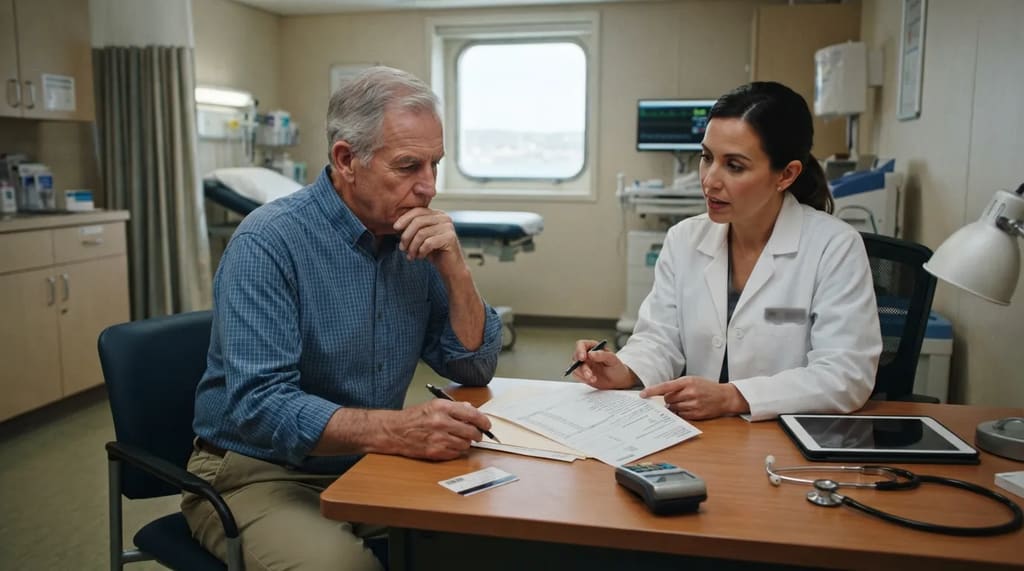
Of everything on this list, this is the one that can follow you home. Medicare’s own wording is blunt.
Medicare usually doesn’t cover health care while you’re traveling outside the U.S.
Medicare.gov
A narrow exception exists for some services on board a ship within the territorial waters adjoining the land areas of the U.S. Medicare generally pays nothing for shipboard care once the ship is more than six hours from a U.S. port.7
A tender port can easily put you past that line. Ship medical centers typically bill for care, and a hospital ashore bills separately.
Before you sail, ask about your own coverage, because Original Medicare, a Medicare Advantage plan and Medigap each handle this differently. Some Medigap plans include foreign travel emergency coverage, and a travel policy with medical and evacuation benefits is worth pricing.
Notice what the habits before this one have in common. Each turns a surprise at the gangway into a decision you made on dry land.
Pick two or three to set before your next anchored port, and photograph that port agent’s number first. The ship will be there at all aboard, and the habits you set before it docks decide whether you are too.
- Royal Caribbean Blog Tender Guide: https://www.royalcaribbeanblog.com/2022/12/28/what-does-tender-mean-cruise-ship
- Tender Ports Explained: https://portadventurer.com/travel-tips/tender-ports-explained/
- Virgin Voyages Tender Ports: https://www.virginvoyages.com/accessibility/tender-ports
- Celebrity Accessible Cruising FAQ: https://www.celebritycruises.com/gb/faqs/accessible-cruising
- Points Guy Ship Leave Without You: https://thepointsguy.com/cruise/cruise-ship-leave-without-you
- Points Guy Port Day Mistakes: https://thepointsguy.com/cruise/cruise-mistakes-port-days
- Medicare Travel Outside U.S.: https://www.medicare.gov/coverage/travel-outside-the-u.s.