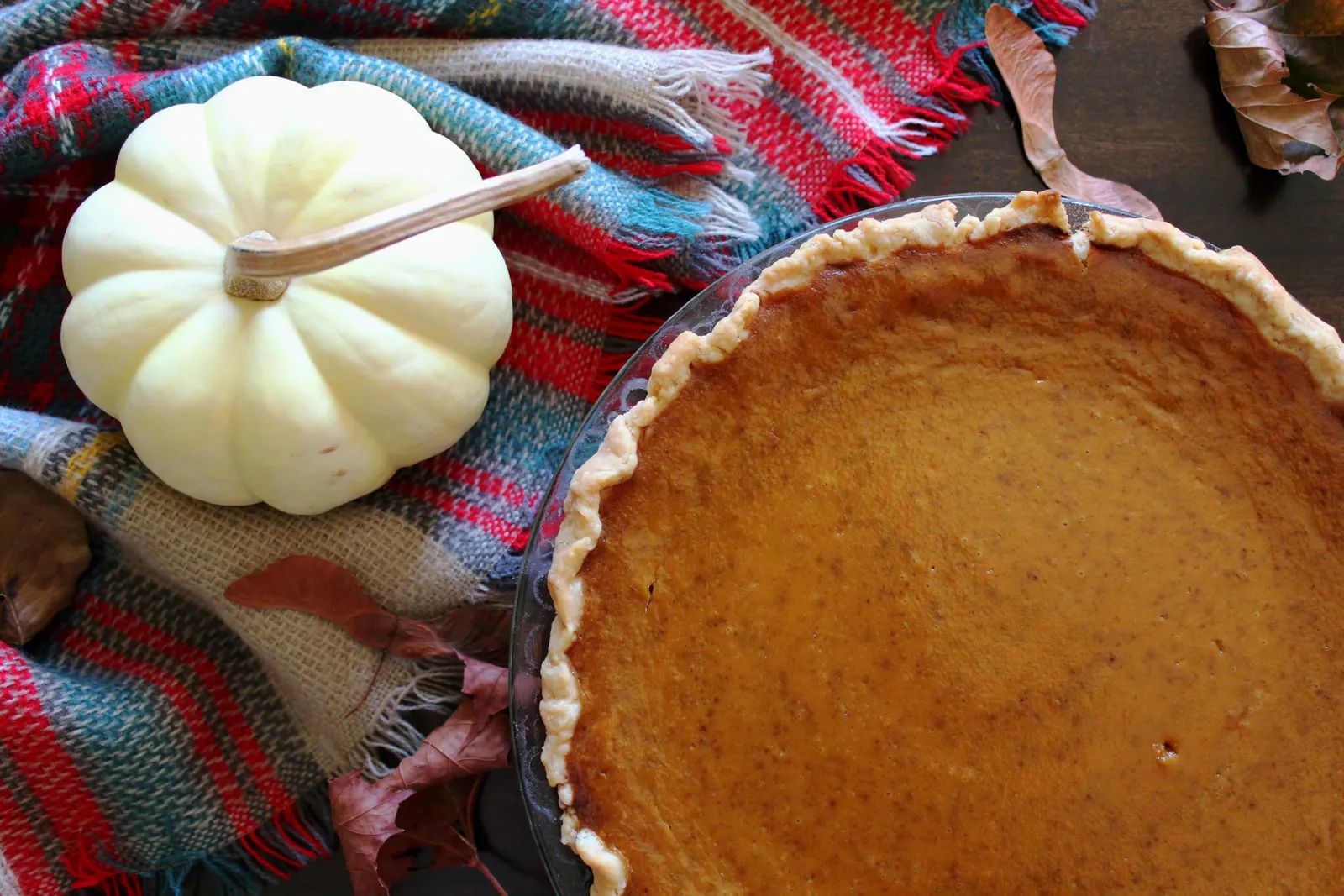
Thanksgiving dinner is winding down, the guests are heading home, and half a pumpkin pie is still in the refrigerator. Freezing it seems like the easy answer, but the advice is not unanimous. Iowa State Extension says pumpkin pie freezes well, while America’s Test Kitchen recommends skipping the freezer entirely. Here is where the guidance agrees, where it splits, and how to protect the pie if you decide to freeze it. ([1])
Yes, it freezes, though not everyone agrees
Iowa State Extension’s AnswerLine, in a post dated November 10, 2021, says pumpkin pie of any kind freezes well, whether it is homemade or store-bought. The guidance covers whole pies and slices, and it applies to pies frozen either baked or ready to bake. FoodSafety.gov also lists pumpkin and pecan pies as freezer-friendly, with a limit of one to two months.
America’s Test Kitchen reaches the opposite conclusion. Its tested pies, baked or unbaked, turned out with a grainy, wet filling and a soggy crust, so the kitchen advises against freezing pumpkin pie. Several extension offices treat custard and chiffon pies more harshly, and some list them as do-not-freeze. Most of the disagreement, however, centers on texture rather than safety.
Why the filling can turn grainy
The problem starts with moisture. America’s Test Kitchen points out that pumpkin filling carries a good deal of added water from the dairy and the pumpkin itself. When the pie freezes, ice crystals weaken the egg proteins that normally hold that liquid in place. During thawing, the water seeps out, leaving the filling wet and slightly gritty.
Iowa State draws a clear line between quality and safety. Its guidance says a pie left in the freezer longer than a month does not become a foodborne illness concern, though its taste and texture may fade. Freezer burn, which dries out the surface, does not make food unsafe either. Anyone freezing a pie should expect a softer result, not a risky one.
How to freeze a baked pie without a soggy crust
Patience matters most. Iowa State advises fully cooling a baked pie before wrapping it, since trapped steam produces a soggy crust. A cooling rack helps, and custard fillings keep cooking as they cool. Once the pie is cool, it should move into the refrigerator within two hours.
A simple routine covers most situations:
- Cool the pie completely on a rack.
- Refrigerate it within two hours, and chill it until firm.
- Wrap it tightly in plastic wrap and aluminum foil to limit freezer burn and odor absorption.
- For a whole pie, Iowa State suggests baking it in a disposable aluminum pan, which helps it freeze quickly.
- Wrap leftover slices in the same way.
Freezer times, and what they really measure
The sources do not agree on how long a frozen pie keeps. The figures range from several weeks to a couple of months, and each one is framed as a quality guideline rather than a safety deadline.
| Source | Suggested freezer time |
|---|---|
| Clemson and Missouri extension | 4 to 5 weeks |
| Iowa State Extension | About one month |
| NDSU, FoodSafety.gov and University of Maine Extension | 1 to 2 months |
FoodSafety.gov notes that food stored continuously at 0°F or below can be kept indefinitely, so a pie that has been frozen for a long time is not automatically unsafe. The practical takeaway is to aim for the shortest window. Iowa State’s one-month figure sits at the cautious end of the range and is the best bet for a pie that will be eaten at its best.
Thawing, baking from frozen, and the topping question
A frozen baked pie should thaw in the refrigerator. Iowa State recommends removing the wrapping and letting the pie thaw for at least 12 hours. Thawing on the counter causes condensation, which leaves the crust soggy. Kansas State’s general pie guidance adds that a baked pie that has been frozen can be served without reheating.
Unbaked pies follow a different routine. NDSU, Clemson and Missouri extension guidance calls for adding cold filling to a chilled, unbaked shell and baking it without thawing, starting at 400°F for 10 minutes and finishing at 325°F. Iowa State takes a different approach and recommends thawing first. Because the sources differ, rely on the doneness signs Iowa State gives, such as a center reaching 175°F or a knife coming out clean.
Toppings require their own decision. Wisconsin Extension says some custard or whipped cream-topped pies lose quality when frozen. NDSU and Missouri report that meringue toughens in the freezer and sticks to the wrapping. Freezing the pie plain and adding the topping after thawing is the safer choice.
For a pie that is still sitting in the refrigerator today, freezing is a reasonable option if it will be eaten within a month or two and a softer filling is acceptable. Freezing it sooner, while the pie is still fresh, gives the best starting point for either choice.