Thanksgiving travelers face a familiar question at the checkpoint: will the homemade dish make it through security? The answer depends less on the holiday than on the food’s texture. The Points Guy has laid out how the TSA’s liquids rules apply to holiday cooking, and the core guidance is clear ([1]). Solid dishes generally fly, while gravy, sauces and spreads face strict limits. With the holiday travel surge building, a few minutes of planning can spare a cook from a last-minute decision at the line.
The 3-1-1 framework has not changed
Rumors have circulated that the TSA was loosening its liquids policy, but the rule remains in place. Travelers still face the same basic framework at U.S. airports, with containers capped at 3.4 ounces and all of them fitting in a single quart-sized bag, one per passenger ([2]). The main shift has been in equipment. Newer CT scanners at a growing number of airports are changing how liquids are screened, not the limits themselves.
The policy applies to food as much as to toiletries. Former TSA spokesperson Mark Howell once noted that “sometimes we will see turkeys at security checkpoints,” a reminder that officers handle holiday items every year ([1]).
Solid dishes can ride in the cabin
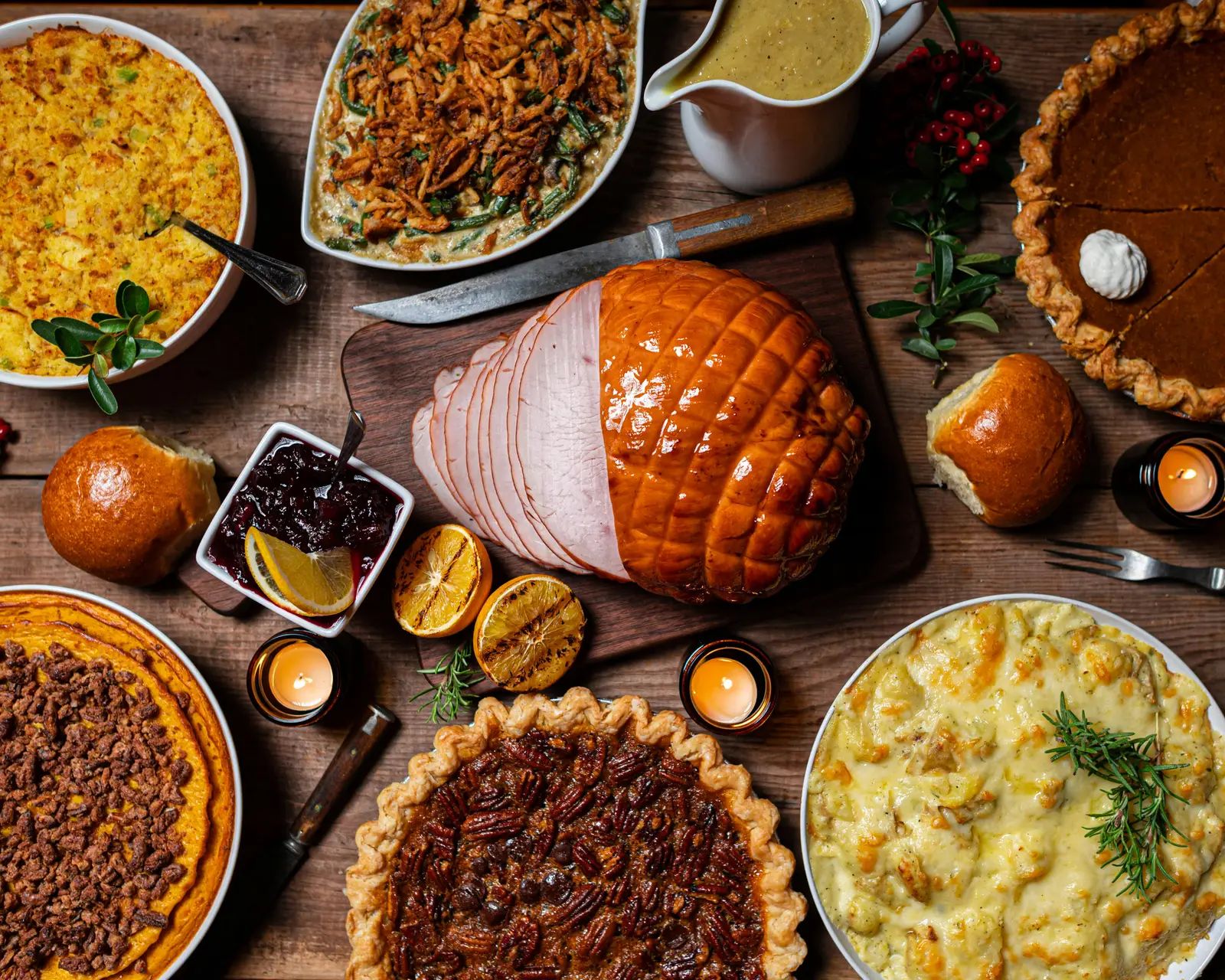
The TSA treats solid food differently from anything that pours or spreads. Its guidance for Thanksgiving travelers lists baked goods such as pies, cakes, cookies and brownies, along with cooked or frozen turkey, ham, chicken and steak. Stuffing, solid casseroles and mac and cheese also qualify ([3]).
Cold storage needs more planning. Ice packs are permitted, but they must be completely frozen at the checkpoint, and slushy or partially melted packs will be turned away ([3]). Travelers bringing a frozen turkey should keep it in the freezer until they leave for the airport, since it must remain frozen through screening.
Gravy and cranberry sauce go in the hold
The contrast catches many people off guard. A whole pie can pass through security, while a jar of gravy over 3.4 ounces cannot. Under the TSA’s guidance, liquid, spreadable or pourable foods above that size belong in checked luggage ([4]). The table below sorts the most common holiday dishes.
| Dish | Category | Where it should go |
|---|---|---|
| Pie | Solid baked good | Carry-on |
| Turkey or ham | Solid meat | Carry-on |
| Gravy | Liquid food | Checked bag if over 3.4 oz |
| Cranberry sauce | Spreadable food | Checked bag if over 3.4 oz |
Jams, jellies, preserves, maple syrup and canned fruit or vegetables packed in liquid fall into the same checked category. Wine and spirits follow the same 3.4-ounce benchmark.
Expect extra screening and plan for a busy week
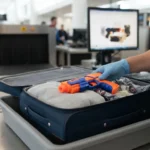
Even allowed foods can slow a line. Food in a carry-on often gets a second look, so packing dishes near the top of a bag makes it easier to lift them out for inspection ([5]). Every prohibited item that turns up in a scan adds a delay, and that adds up quickly during peak travel days. Sunday, November 29, is expected to be the busiest day of the holiday period ([5]).
Related Stories From Travelbinger
Travelers who are unsure about a specific item have several ways to check. The free myTSA app includes a “What Can I Bring?” tool where travelers can type in an item and see whether it is allowed in a carry-on ([3]).
For most travelers, the simplest test is texture. If a dish is solid, it has a good chance of flying with its owner. If it can be poured, spread or spooned, it belongs in the checked bag, and a dish that fits the rules will arrive at the table in better shape.