You’d think the hotel or the itinerary shapes a multi-day bus tour. Often it’s the fine print. At least one regional operator weighs every bag and charges $5 a day for anything over the weight limit, and that rule sits quietly in your confirmation until the sidewalk, when it’s too late to argue.
These fourteen habits follow what operator policies reward, from the way you pack to the seat you end up in. The last one is the sneakiest: a seating assumption that costs solo travelers money after they’ve already paid for a room of their own. But the first habit starts at the curb.
#14 – The One-Suitcase, One-Carry-On Rule

The standard allowance on multi-day coach tours is one checked suitcase and one carry-on bag. That’s the baseline, and the details change from company to company.
Some tours let you split the allowance into a medium and a small suitcase instead of one large one. A few allow extra luggage only on trips of 11 days or longer.
Extra bags usually need approval from the office ahead of time, and some policies charge about $5 per bag per day. A second bag is a decision you make at booking, not at the luggage bay.
Read the bag count and size limit in your confirmation before you buy or borrow luggage. A suitcase that was fine on last year’s tour can be one bag over on this year’s. If your trip starts with a flight, you’re also responsible for meeting the airline’s luggage rules, so the stricter of the two limits is the one that counts.
At a Glance
- Baseline: one checked suitcase plus one carry-on.
- Some tours allow a medium and a small suitcase instead of one large.
- Extra luggage is allowed only on trips of 11 days or longer at a few companies.
- Extra bags typically need advance approval and can cost about $5 per bag per day.
Staying inside the bag count still leaves a second limit, and this one is measured in pounds on a scale.
#13 – The 45-Pound Weigh-In at Home
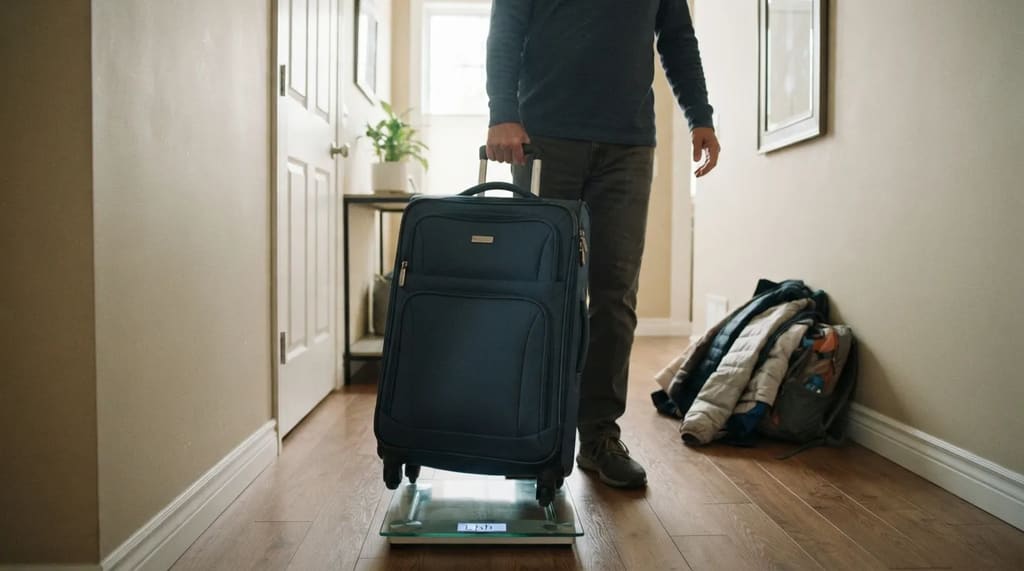
The number 45 shows up again and again in operator policies. Several set the limit for each bag at 45 pounds.
Where it’s enforced, the rule is firm. One policy says its drivers can’t handle bags over 45 pounds and asks passengers to pay for a second bag instead. Show up with an overweight bag and you pay a fee or repack on the sidewalk, with a line of strangers watching.
Do the weighing in your own hallway:
- Weigh the empty suitcase first, because the case itself counts toward the limit.
- Step on a bathroom scale holding the packed bag, then subtract your own weight.
- Stop packing a few pounds under the limit, since scales disagree with each other.
Weigh the packed suitcase at home and stay a few pounds under 45. That margin matters again later, when souvenirs join the load.
Weight is only half of what the bay can handle. The carry-on has a size test of its own, and it’s tighter than the one you’re used to.
#12 – A Carry-On Sized for the Overhead Bin
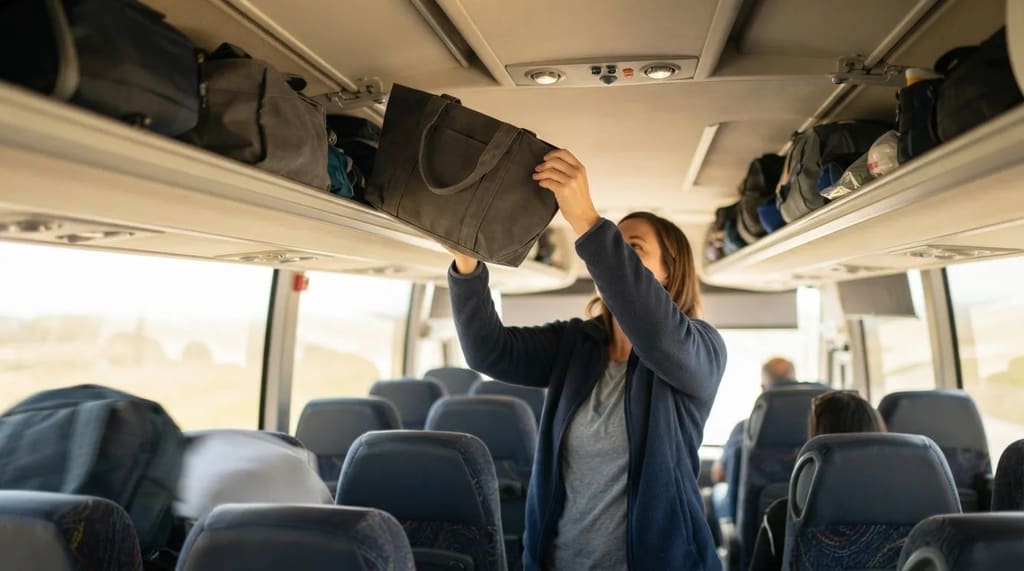
An airline carry-on and a motorcoach carry-on are different things. Overhead compartments on motorcoaches aren’t necessarily the same size as those on airplanes.
The shelf is shallow. Published figures put the bin at roughly 8 inches high, with width and depth that vary by coach. A rolling bag with a rigid frame is usually thicker than that, even when it’s labeled carry-on.
My verdict: a soft-sided tote or small backpack that can squash a little beats a rigid roller on a coach. The roller looks organized in the lobby and then won’t lie flat in the bin. The carry-on also stays your responsibility, so you’ll be lifting it yourself.
Choose a soft bag under about 8 inches thick when packed. Check whether your operator also bans certain styles, since some tours don’t accept hanging bags or duffels.
Whatever size you pick, this bag has a job that matters more once the luggage bays are shut for the day.
#11 – The Day Bag Holds What Can’t Be Replaced
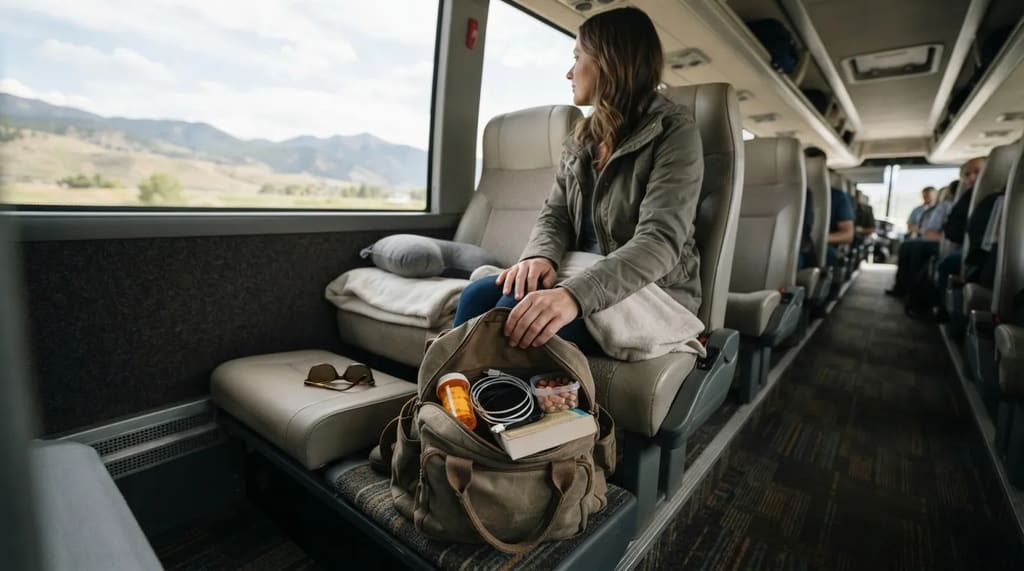
The luggage bays are generally closed during the day, so your suitcase is out of reach from the morning departure until the next hotel.1
That’s why the carry-on from the last section earns its place. Operators advise against putting valuables, jewelry, cameras, car keys or prescription medicines in a suitcase that isn’t in your care.
They also commonly disclaim responsibility for mishandled or damaged luggage. The day bag is the one place where your own care is the protection.
Put medications, glasses, keys, cameras and jewelry in the bag at your seat. Add a phone charger and a snack, and leave the rest in the bay.
The bag at your feet is settled. Now think about the bag in the bay, and what it has to carry home.
#10 – Room for What You’ll Buy Along the Way
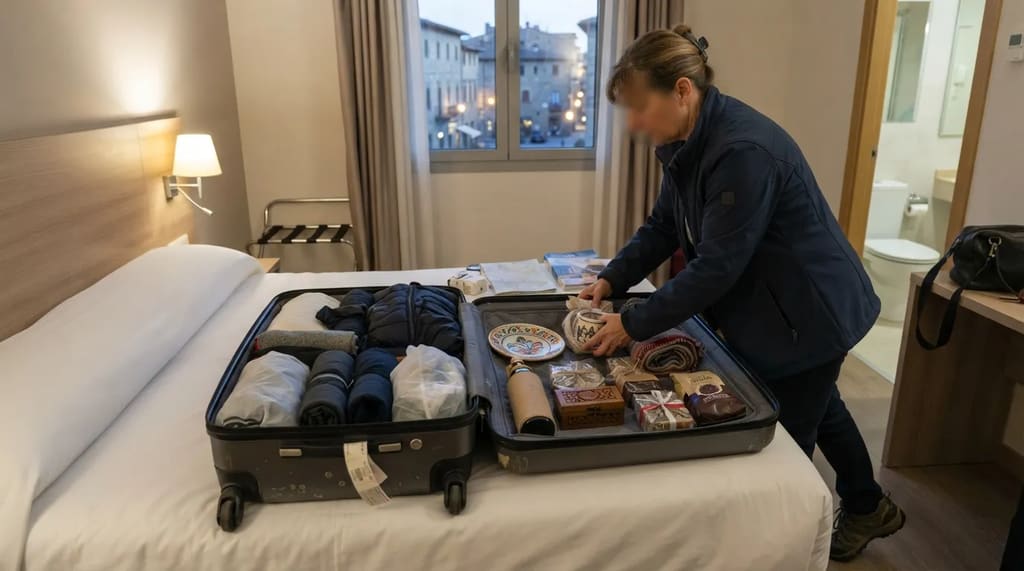
Souvenirs, gifts and local food products all ride home in your suitcase, and purchases you make on the trip are your responsibility.
That makes the weigh-in from #13 matter twice. A bag packed to 44 pounds on the way out is overweight on the way home, and the extra weight is yours to deal with at a hotel curb or an airport counter.
Fill the suitcase about three-quarters full and leave a few pounds of headroom. Wearing the bulkiest shoes and jacket on travel days is the cheapest way to get more room.
A packed bag also has a deadline, and on hotel-change mornings it comes earlier than you’d expect.
#9 – The Morning the Luggage Leaves Before You

On tours that change hotels, luggage often has to be outside the room even earlier than the bus departs. Miss that time and you’re the reason a full coach waits.
The reason is volume. Over 40 passengers might be traveling with you, and everyone’s luggage must fit. The driver loads and unloads every bag at each hotel, so the deadline gives the loading a head start.
Set your alarm for the luggage deadline, not the bus time. Read the next day’s departure sheet the night before so the number isn’t a surprise at 6 a.m.
Two small habits help. Some operators hand out a luggage tag at check-in that goes on the top handle, and a bright strap makes your bag easy to spot in the bay. Some also leave gratuity for the driver and tour manager out of the price, so check your confirmation and keep small bills ready.
Luggage rides below the floor, but you ride above it, and operators warn about the temperature up there in writing.
#8 – A Light Jacket and a Buckled Belt
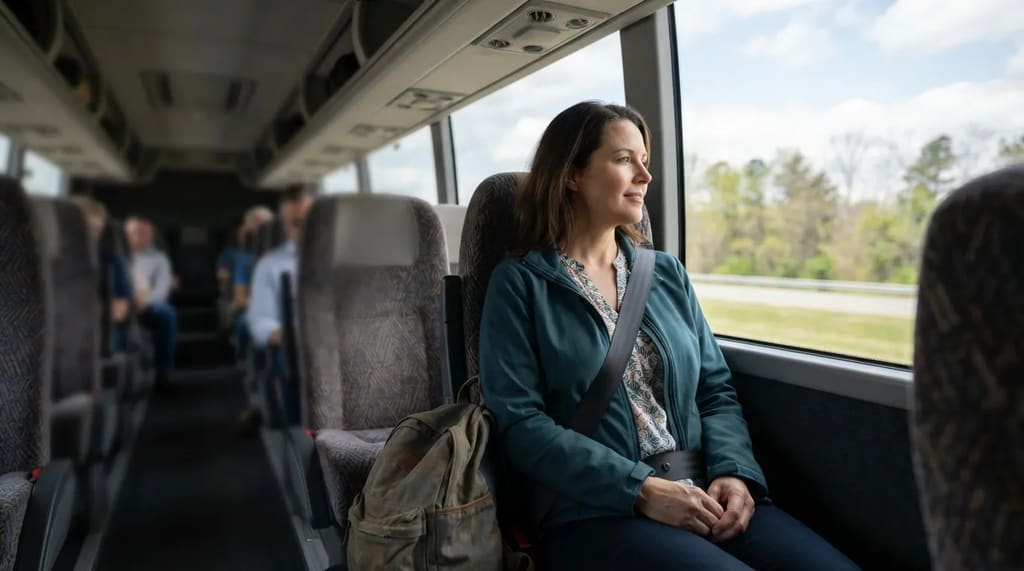
Coach USA/Van Galder’s tour policy notes that it’s difficult to keep the motorcoach at a temperature that’s comfortable for everyone, and it suggests a light jacket.
That advice applies on any long day with the air conditioning running. Keep a light layer in the day bag, never in the luggage bay. A jacket you can’t reach is no help at 10 a.m.
The same policy says seat belts weren’t required at the time of writing but strongly suggests wearing them at all times. Rules vary by coach and over time, so buckle up on any coach that has belts, whatever the policy says.
Worth Knowing
- Operators openly say one coach temperature can’t suit every passenger.
- The luggage bay is closed during the day, so a layer packed there stays out of reach.
- Seat belt rules differ by coach and change over time.
- Belts are worth wearing wherever the coach has them.
#7 – A Seat-and-Bin Sweep at Every Stop
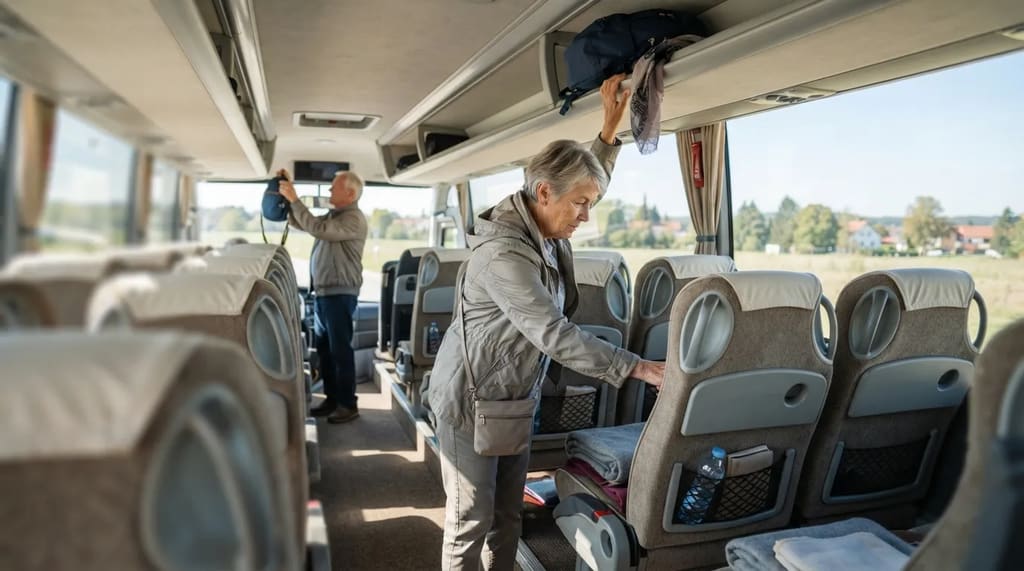
Anything left on the coach on the final day gets shipped to you, and the shipping is at your expense.
Mid-tour the stakes are higher. Some operators won’t accept responsibility for items you leave in the motorcoach overnight. A camera or sweater left at a lunch stop may be gone by the time you notice.
Every time you step off, check the seat pocket, the overhead bin and the floor. It takes ten seconds, and it’s much quicker than arranging a shipment home.
That sweep works best when you know where your seat is, and on many tours that was decided weeks ago by the date your deposit arrived.
#6 – Your Deposit Date Picks Your Starting Seat
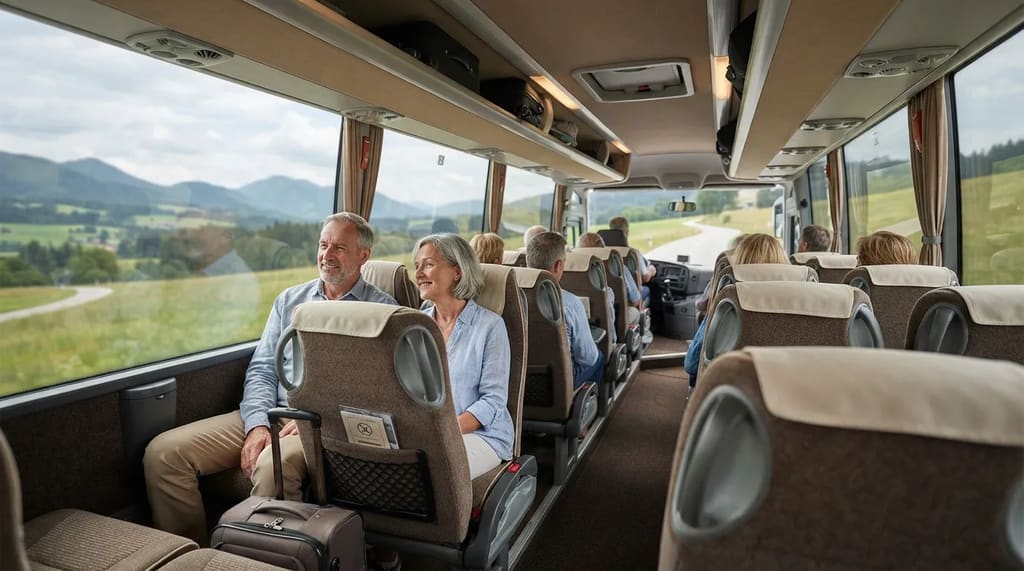
On some tours, seats are assigned in the order deposits are received. The date you pay decides where you begin, which makes it the first seating decision you make, long before you board.
Another operator assigns seats on extended tours by booking date, from the front of the coach to the back. That same policy says no special requests for seats will be honored.
My verdict: booking early is worth more than any charm at the boarding door. Once seats are assigned by paperwork, there’s little a tour director can do for you on the first morning.
Pay your deposit promptly if you want a seat in the front half. Some tours instead work on a different system, with seats first come, first served on the first morning.
A good starting seat doesn’t last on every tour, and the front rows come with a rule of their own.
#5 – The Front Seat You Can’t Have
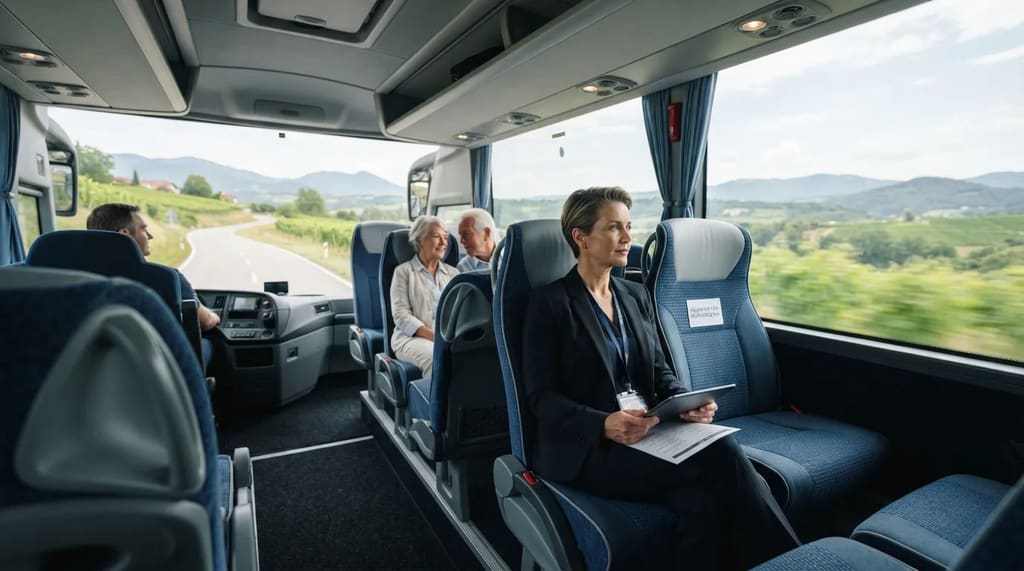
The seat right behind the driver’s window looks like the best view on the coach, and it usually isn’t for sale. The front seat opposite the driver is reserved for the tour director.
Some operators go further. One policy reserves the front seats for tour managers. So when a brochure promises that seats rotate to the front, check where the front starts.
Count “front” from the first passenger row, not from the driver. That’s the row you’re really competing for, whether the seat comes from a deposit date or a rotation.
Whichever row you begin in, the bigger question is whether you stay there, and operators answer that three different ways.
#4 – Three Ways Operators Handle Rotation

How a company rotates seats decides whether you see a tour from one window or from many. The policies fall into three groups:
- Daily rotation on multi-day trips, with no exceptions at some companies.
- Rotation only on longer tours, starting at three or at five days depending on the operator.
- No rotation at all, with passengers keeping the assigned seat for the whole tour.
Rotation has a stated purpose. It gives each traveler a chance to see the scenery from different parts of the coach and to meet someone new. If you travel alone, that second benefit is worth more than the view.
My verdict: rotation is the fairest system, even when it’s a nuisance. A rule applied to everyone beats a coach full of private deals, and travelers get attached to “their” seat within a day or two.
Ask whether rotation starts at three days, five days or never. The answer is worth having before you pay.
#3 – The Back-Row Opt-Out and Its Catch
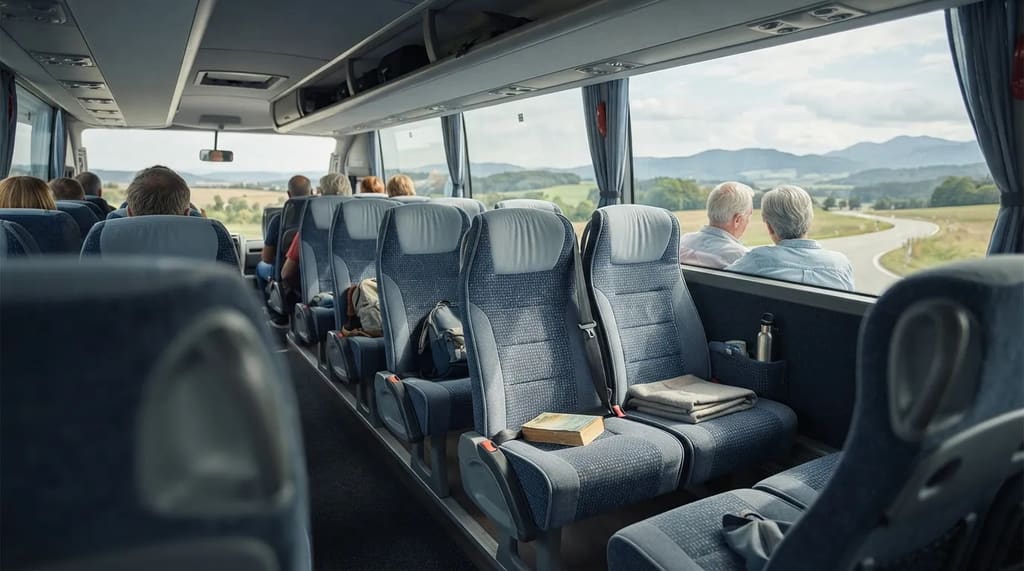
Some operators let you opt out of the rotation by choosing a seat toward the back of the coach. That sounds like freedom, but it also means you give up the front for the whole trip.
Related Stories From Travelbinger


Other operators handle it as a group vote. If the rear has plenty of empty seats, the tour director asks who wants out, but if there aren’t enough seats for everyone who asks, nobody moves and everyone rotates. The opt-out depends on how full the coach is.
My verdict: take the rotation unless the daily shuffle itself is the problem for you. Moving seats every morning is a real burden for some travelers, and for them a settled seat in the back is a fair trade. For everyone else it’s trading a week of different views for one.
Opting out generally means the back of the coach for the entire tour. Decide on day one, before the first rotation.
Choosing the back is a choice. A seat you need near the front is a different matter, and asking early works better than negotiating on day three.
#2 – A Seating Need, Raised Before You Board
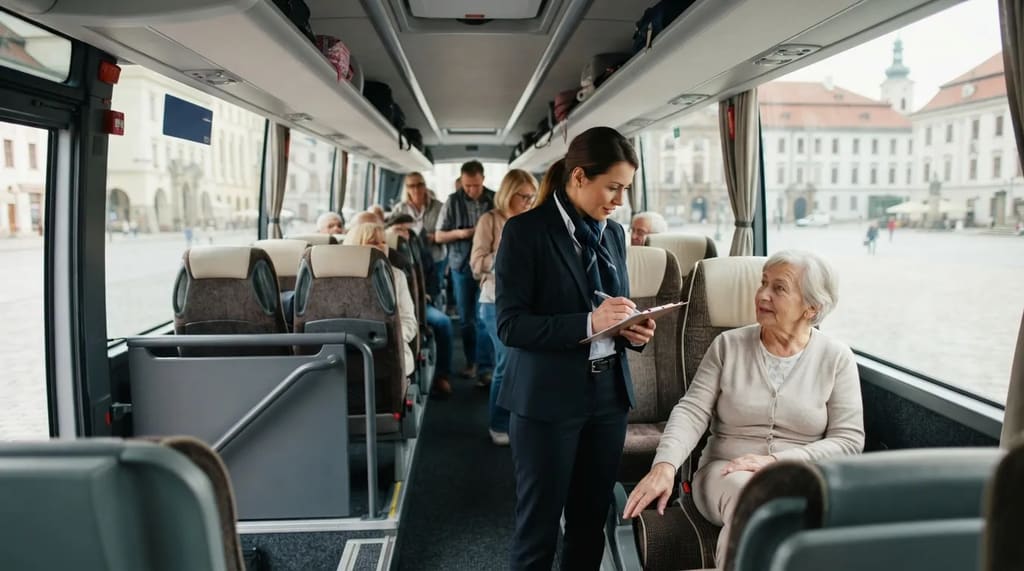
If a front seat is easier on your hips, knees or stomach, say so before departure. Raising it at the morning briefing, when the rotation has already been announced, puts the tour director in an awkward spot.
Policies vary, and a request is not a guarantee. Some operators state flatly that special seat requests won’t be honored, which is why the question belongs at booking, when you can still choose another company.
Some companies sell the answer. Beyond Horizons Travel and Tour lets passengers reserve a specific seat for $5 per person per travel day, first come, first served, with full payment at the time of request.2 On a six-day tour, that comes to $30, and it removes the rotation problem from #4.
Quick Compare
- Ask at booking: you can still switch companies if the answer is no.
- Ask at the morning briefing: rotation is already announced, and the tour director is on the spot.
- Pay for a reserved seat: $5 per person per travel day at one operator, first come, first served.
Tell the company about a seating need at booking, and ask what it can guarantee. Get the answer in writing.
All of these seat decisions get harder if you’re traveling alone, where one assumption can leave you sharing a pair of seats you thought you’d paid for.
#1 – A Single Room Doesn’t Buy a Second Seat
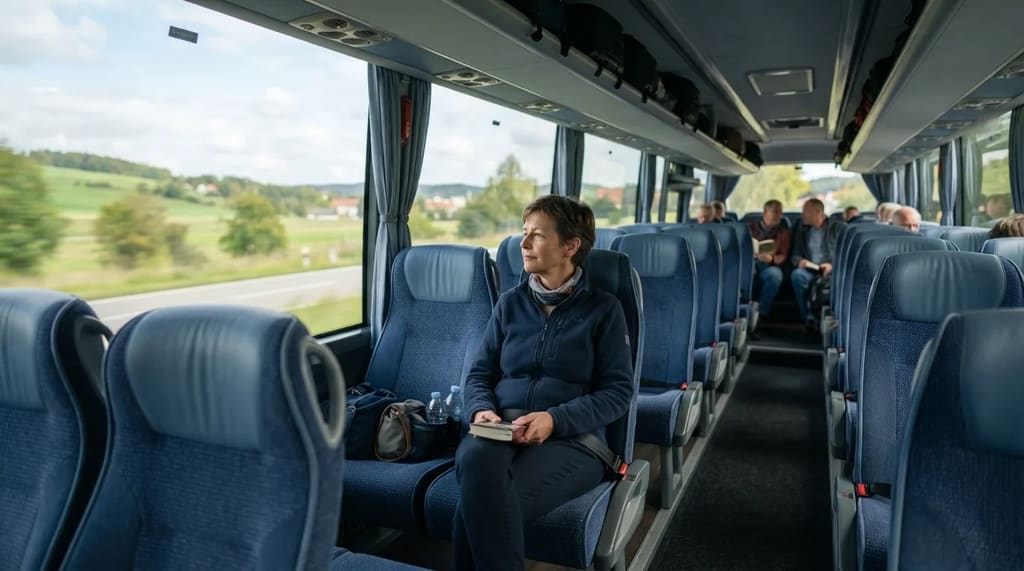
When you pay extra for a room of your own, you’re buying the room and nothing on the coach. Single-room pricing doesn’t guarantee two seats on the motorcoach, because occupancy rates apply only to the room.
The coach is laid out in pairs, and operators plan around that. Because of the double seating, a solo traveler may be asked to sit with another single traveler or an uneven group so everyone can be accommodated. You can end up beside a stranger on every travel day, after paying a premium for privacy at night.
If you want a seat to yourself, ask whether a second seat can be bought, and at what price. At least one operator says you should notify them, and they’ll tell you whether that option exists. The answer depends on the company and on how full the coach is.
This one costs the most because it combines everything above. A second seat depends on booking early (#6), it interacts with rotation (#4 and #3), and it’s a request that has to be made before you board (#2). Ask for it when you reserve your room, not when you reach the coach.
Look back over the list and a pattern shows up. Nearly everything is decided at booking or the night before packing: the bag count, the deposit date, the rotation policy, the seat request. By the time you’re standing at the coach door, the options have narrowed.
So treat the confirmation as the most important page of the itinerary, and read it with a pen. Each rule you underline now is one less thing to sort out on a sidewalk with forty other travelers waiting.
What’s the one item you’d always keep in your day bag on a multi-day tour, and what made you start carrying it?
- Knoxville Tours General Information: https://knoxvilletours.com/general-information/
- Beyond Horizons FAQ: https://beyondhorizonstours.com/frequently-asked-questions/