Here are the 16 habits that crew accounts, cruise-line guidance and dining guides say ever arrives. Most passengers assume the judging starts when the first plate lands, but it starts at the door, with a buffet plate in hand, wet hair from the pool or a phone pressed to an ear.
Some of these habits are petty, a few are surprisingly costly, and one is a genuine safety issue. Stick around to the end, because the one waiters worry about most is the one almost nobody talks about.
#16 – The Buffet Plate Carried Into the Dining Room
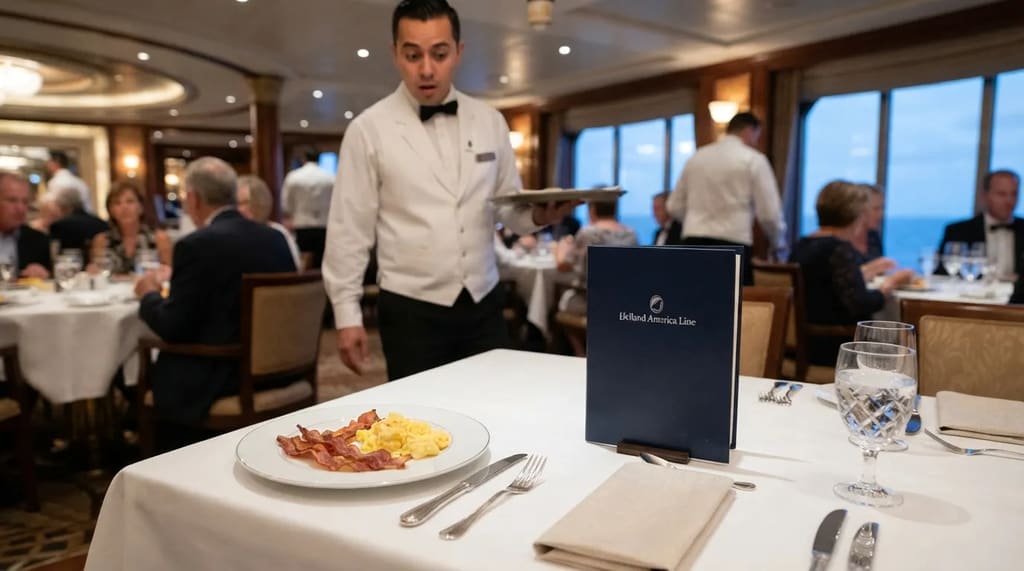
This is the oldest shortcut at sea, and a waiter can spot it from across the room.
A guest strolls into the formal dining room with a plate of buffet bacon or a smuggled soda, then parks it beside a perfectly good menu. It looks harmless, but it tells the waiter the table isn’t planning to use the service.
The shortcut saves nothing, either. Dinner in the main dining room is included in the fare on lines such as Holland America.1
Waiters have to decide in seconds whether to clear it, ignore it or work around it. None of those options makes the first course any smoother.
You’re carrying in food while a free, table-served dinner is waiting. If you want something the menu doesn’t list, ask your waiter first, because that one question usually beats the smuggled soda.
But the next habit isn’t about food at all, and it leaves a mark on the floor…
#15 – Arriving in Swimwear and Bare Feet
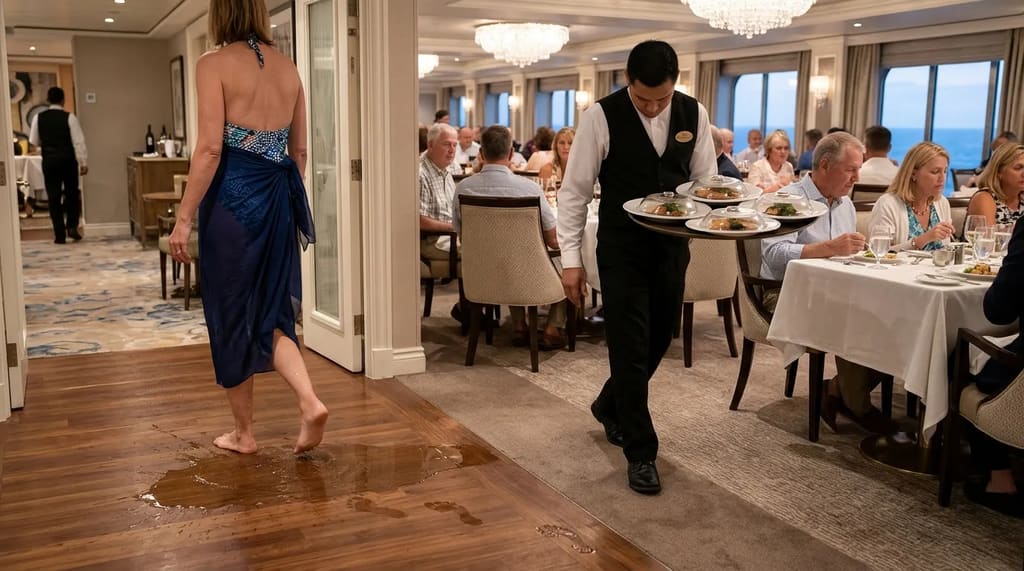
Some guests treat the dining room like an extension of the pool deck, and the crew pays for it.
Swimwear and bare feet are typically banned in the dining room, and Cruise Critic notes that a cover-up doesn’t change that.2 Plenty of people assume a wrap makes it fine, but it doesn’t.
The real issue is the floor, because wet footprints in a crowded room are a genuine safety hazard. Waiters end up quietly working around them with full trays.
Picture a server carrying four entrées toward a table while a puddle spreads near the doorway. That’s the scene a bare-footed arrival can set up.
The guest never sees the cost, because nobody points it out. Changing and drying your feet takes a couple of minutes, and it spares a server a slip risk with a tray in both hands.
Fast Facts
- Swimwear and bare feet are typically banned in the dining room.2
- A cover-up doesn’t change the rule, according to Cruise Critic.
- Wet footprints are a slip hazard for servers carrying full trays.
- The fix is quick: change, dry your feet and walk in.
The next habit doesn’t need a wet floor to disturb the whole room, and cruisers can’t agree on it…
#14 – The Phone Call the Whole Room Hears

Tables sit close together, so your half of a phone call becomes everyone’s evening.
One passenger complained directly to a cruise line about loud calls filling the dining room during dinner service. Picture a quiet anniversary dinner with a stranger talking through a work problem two tables over.
A waiter can’t easily ask a guest to lower their voice. Most servers simply keep working and hope the call ends before the entrées arrive.
Here’s where it gets heated, because cruisers split on whether the dining room should be fully phone-free. Some say a ban is overdue, while others say a quick text is nobody’s business.
The practical advice is simpler than the argument. Silence the phone before you sit down, take any call outside the dining room, and let a ringing phone go to voicemail until dinner is done.
Phones are also behind the next habit, and waiters end up in the background of it…
#13 – Turning the Dinner Into Content
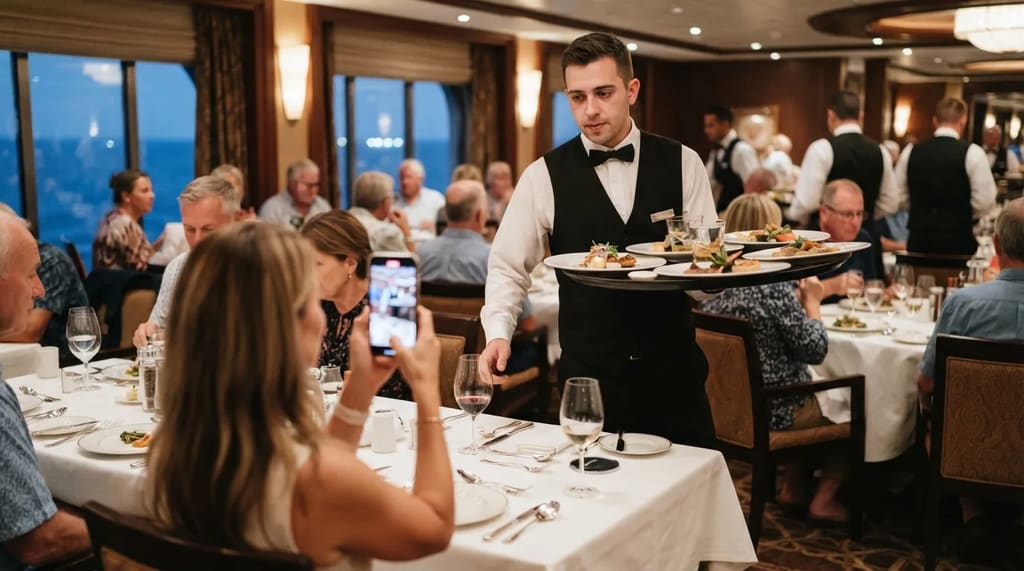
Your waiter may be in more photos than you think, and he never agreed to any of them.
Cruise dining has become a content opportunity for plenty of guests, and waiters end up in the background constantly. A plated dessert photo is one thing, while a video that follows the server across the room is another.
Most people don’t realize the dining room is a workplace. For the crew, it’s a shift with set seating windows, not a backdrop.
Even a few extra seconds in frame can mean a server holding a heavy tray longer than planned. It’s a tiny cost for you and a real one for them.
There’s no rulebook on this. The courteous move is to keep the camera on your plate and your table, and to ask before you film or photograph the staff.
Phones aside, the next habit starts with the menu itself, and it’s trickier than it sounds…
#12 – Ordering Off-Menu Like It’s Standard Practice
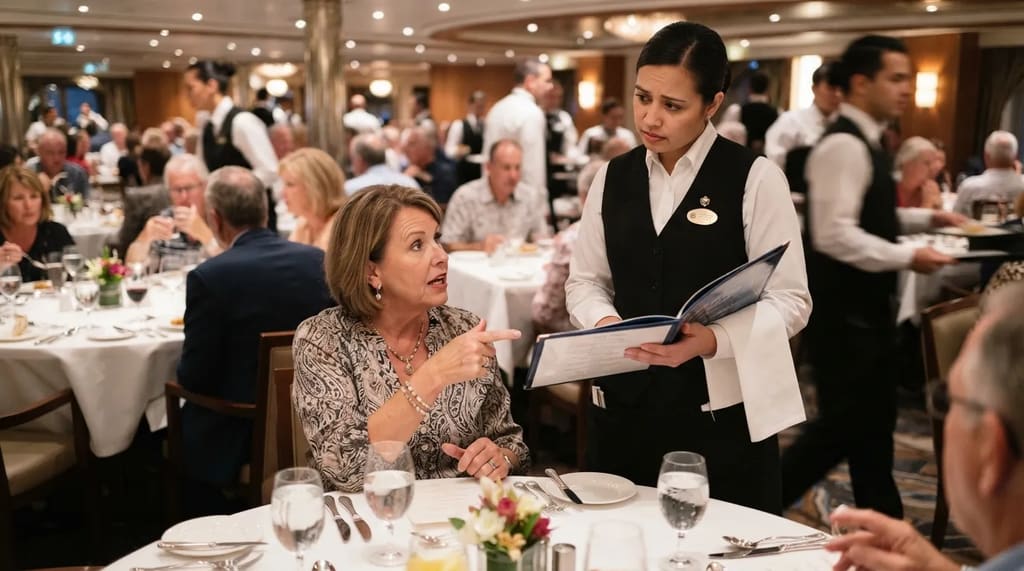
Waiters want you to explore the menu, but not rewrite it on the spot.
Staff say the kindest move is to read the menu before ordering. A request that’s already on the page is easy, while one that isn’t can slow a whole section of tables.
Many cruisers believe “the customer is always right” applies to a cruise dinner, but crew accounts suggest otherwise. A dining room runs on rhythm, and every special request sits inside that rhythm.
On a ship, hundreds of diners are served in the same window. One custom dish can pull the kitchen out of step with everyone else.
That doesn’t mean you can’t ask. Asking politely, and early, is a different thing from announcing a change as if it were routine.
Ironically, the opposite habit annoys waiters just as much, and nearly everyone does it…
#11 – Ordering the Same Three “Safe” Dishes
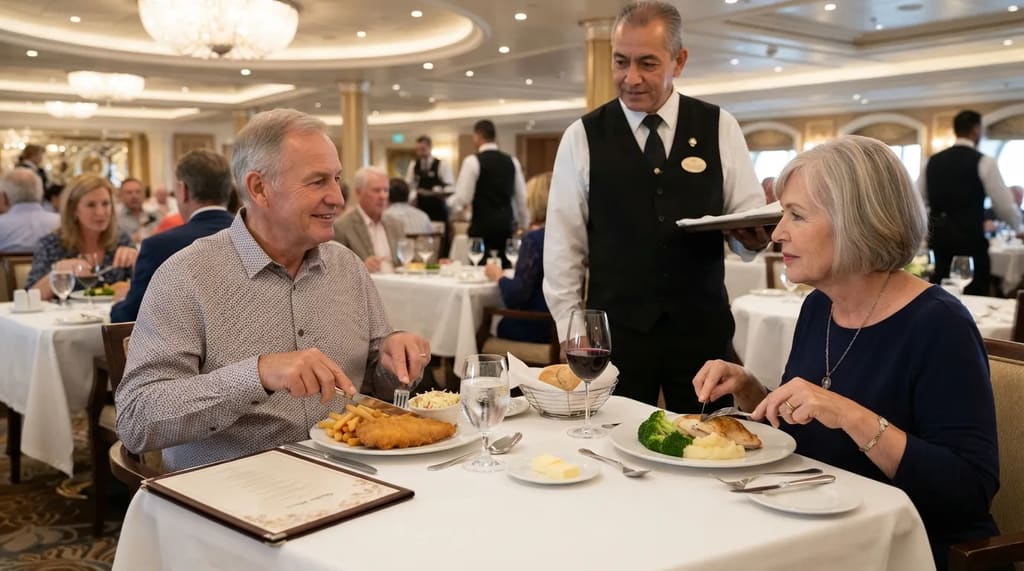
The most common habit at the table is also the one that quietly frustrates the crew.
The menu changes from night to night and waiters genuinely want guests to explore it, yet plenty of passengers order the same three “safe” dishes all cruise. That’s a week of included courses spent on the same few choices.
The beauty of included courses is trying things without real risk. If you dislike a dish, the cost is a few minutes and a replacement.
Think of it as a nightly tasting menu you keep walking past. The strange-sounding dish is often the one worth telling your tablemates about.
Waiters also remember the guests who try something new. One account says longtime cruisers over 60 often keep a safe rotation all week too, so this isn’t a generational issue, just habit.
The next habit is about the crew themselves, and waiters say it crosses a line fast…
#10 – Repeating the Waiter’s Accent Back to Him
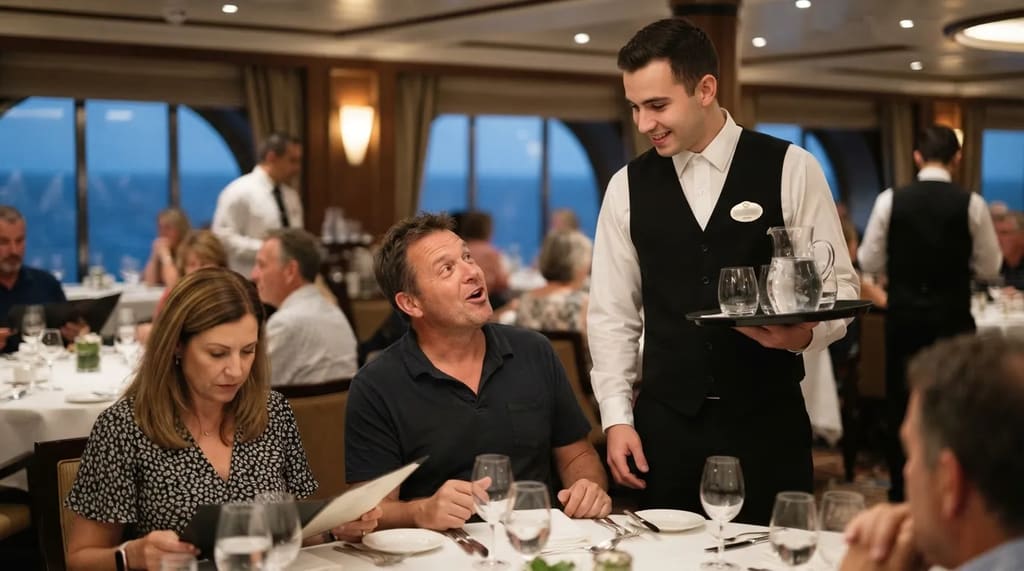
A joke that feels friendly to you lands very differently on the other side of the tray.
Cruise dining rooms are staffed by crew from dozens of countries, and waiters say passengers who imitate their accents cross a line fast. It usually starts as an attempt at friendliness.
The trouble is the imbalance, because the waiter has to smile through a joke they can’t answer. The smile you see is part of the job, not a sign of approval.
Crew members typically work long contracts far from family. A sincere question about home can mean more to them than any joke.
If you like someone’s name or accent, say so plainly. Ask where they’re from or how long their contract is, and really listen, because that earns far more goodwill than an impression.
Next is a habit that waiters say the whole table feels, even when nobody speaks…
#9 – Shaming Another Guest’s Plate
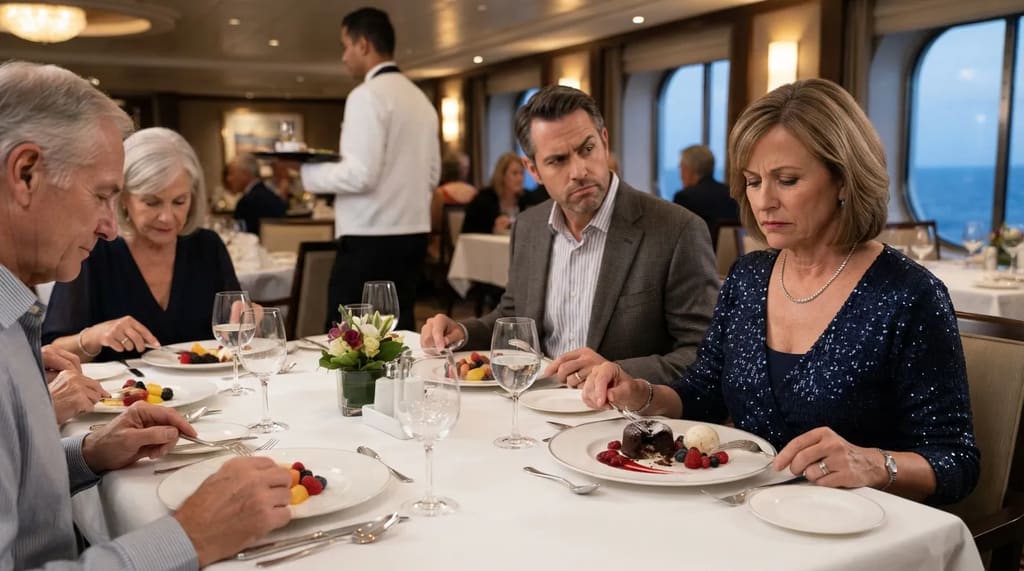
Few things silence a table faster than a comment about someone else’s dessert.
Food-shaming a fellow guest is a hard no at the cruise dining table, according to servers who have watched it happen. The remark may be meant as a joke, but it rarely sounds like one.
The effect lingers. Servers say the shamed guest often orders less for the rest of the week just to avoid comments.
A dessert is the last thing anyone wants to defend on vacation. One careless line can change how a person eats for seven nights.
Nobody pays for a cruise to be judged over a second helping, and waiters notice the awkward silence that follows. They just won’t mention it.
The next one sounds like a celebration, but waiters have a different word for it…
#8 – The Toast That Takes Over the Room

Birthdays and anniversaries belong at sea, but not every toast belongs at the table.
Celebrating is part of the cruise dining experience, but waiters say some toasts get out of hand fast. The evidence here is thinner than for other habits and comes mostly from crew accounts.
The reason is easy to see: the dining room is shared, and the tables around you are on their own timeline. A celebration that pauses the room also pauses everyone else’s dinner.
Crews often like to help mark an occasion, but they need a heads-up to do it smoothly. Surprise them, and the surprise lands on whoever is nearest.
Quick Compare
- Surprise toast: pauses the room and lands on whichever server is closest.
- Heads-up toast: gives the crew time to plan and keeps hot plates out of the way.
The middle ground is simple: tell your waiter about the occasion early. That keeps the moment from landing on a server carrying hot plates.
The next habit shows up when something goes wrong, and it’s the most pointless of them all…
#7 – Complaining to Everyone Except the Waiter
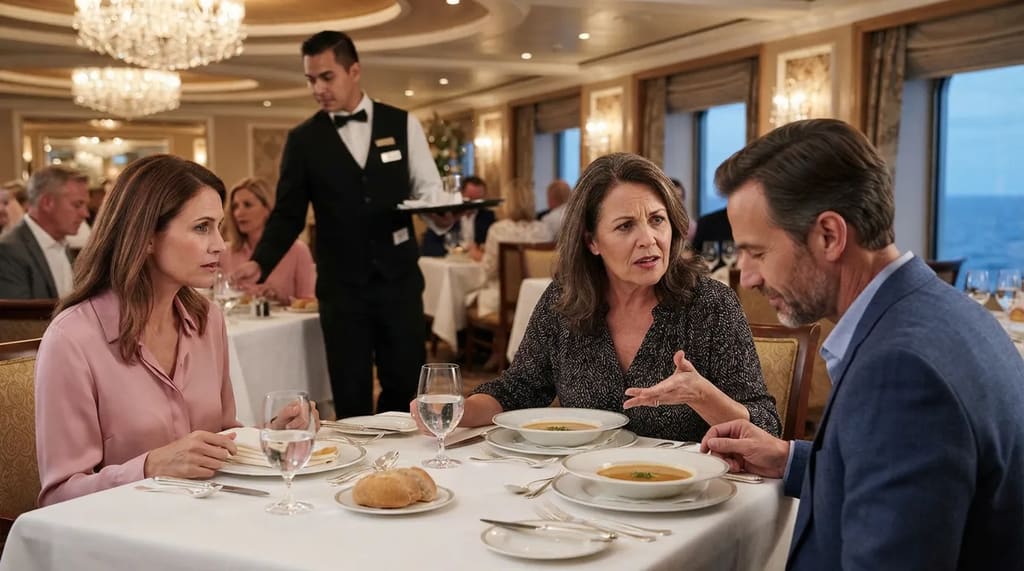
The whole table knows the soup was cold, but the one person who could fix it doesn’t.
Venting about a table problem to everyone except the waiter is one of the most common, and most pointless, dining habits. Your tablemates can’t send a dish back.
Waiters can only act on what they hear. A problem that is never spoken tends to repeat at the next course.
A cold dish caught in the first minute is a quick fix. The same dish discussed at the end of the week is just a memory.
A short, calm word works better than a long complaint on the last night. Most dining rooms also have a head server or restaurant manager if the first step doesn’t help, but starting with the waiter is nearly always the fastest route.
And one version of this habit is far quieter, and waiters say it’s the one they dread most…
#6 – Pushing the Plate Aside and Saying Nothing
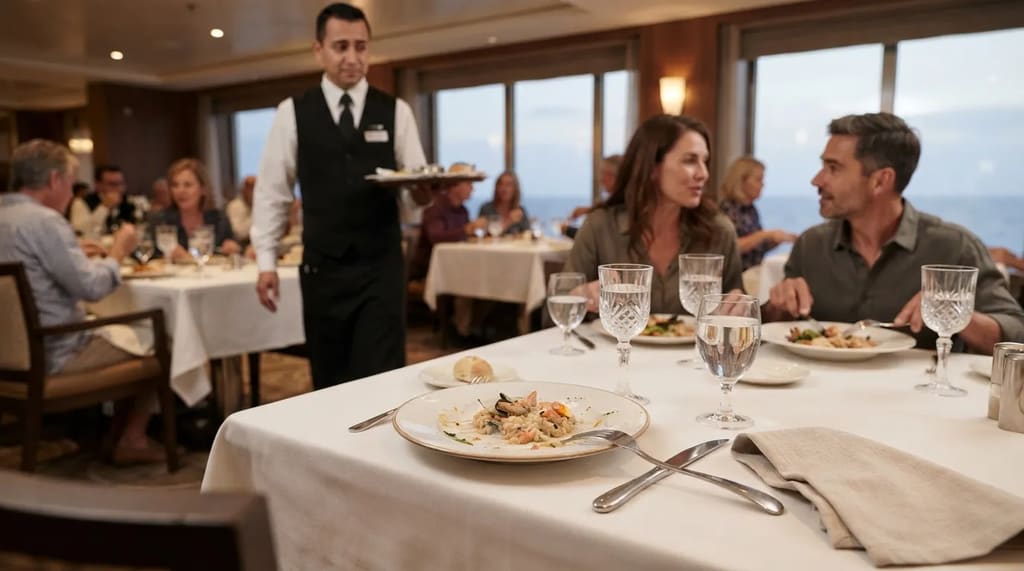
A silent plate tells the waiter something is wrong, but not what.
A guest takes two bites, pushes the plate aside and says nothing. The waiter sees it from across the room and can’t tell whether it was the seasoning, the temperature or the portion.
The fix is timing. Speak up right after the first taste, while the rest of your table is still eating.
Waiting until the plate is cold leaves the kitchen no time to catch up. A quick word also keeps the table’s pace intact, because the replacement arrives while the others are still eating.
But timing is also the issue behind the next habit, and it affects people who aren’t even at your table…
#5 – Vanishing Without a Word
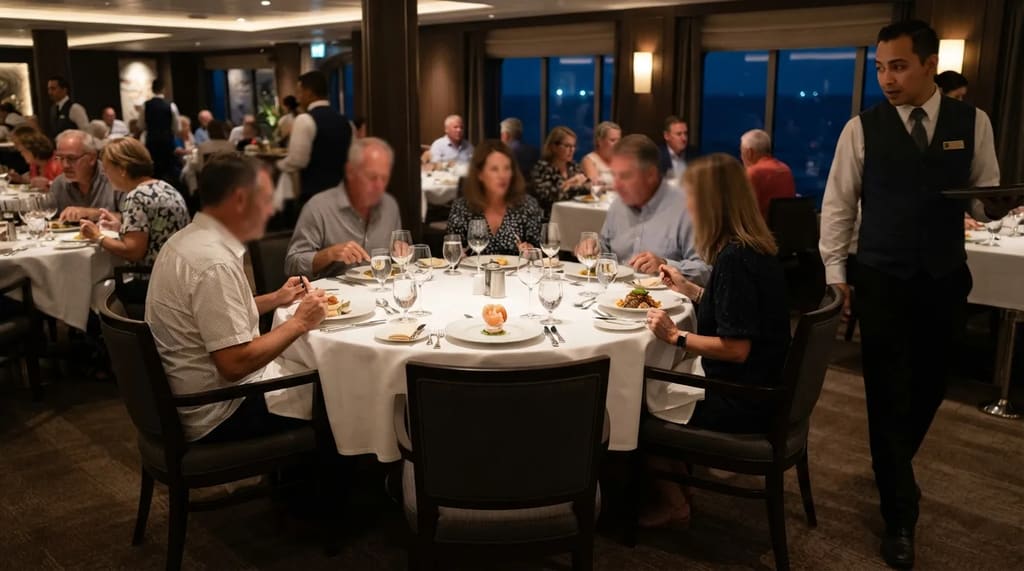
An empty seat doesn’t just leave a gap, it leaves a cold plate.
Cruise dinners run on a rhythm, and waiters time each course around every seat at the table. The kitchen fires courses in sequence, so one missing guest affects everyone.
A guest who vanishes mid-meal, or skips an assigned seating without a word, leaves a cold plate and a hole in that schedule. Waiters say disappearing without notice creates more chaos than passengers assume.
Meanwhile the remaining guests wait, and the waiter has to decide whether to hold their courses or keep going.
The fix is a single sentence. Tell the waiter if you’re running late, leaving early or skipping a night, and the section can adjust around you.
At a Glance
- Running late: the waiter can time your courses instead of guessing.
- Leaving early: the table’s pace stays smooth for everyone else.
- Skipping a night: the section chart can adjust before the seating starts.
Skipping one dinner is a problem, but some guests skip the whole room, and the math behind that is stranger than it sounds…
#4 – Skipping the Included Main Dining Room Entirely
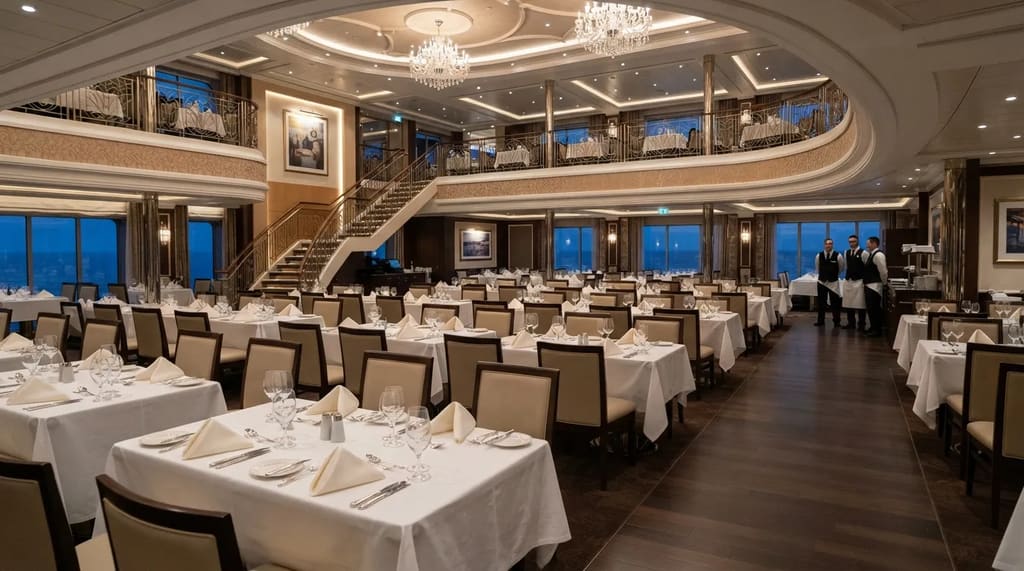
Some passengers finish a whole week at sea without once walking through the dining room doors.
Some guests complete a seven-day cruise without entering the main dining room, missing multi-course meals included in the fare. Waiters notice the empty chairs on their section chart.
Many cruisers swear the buffet is the better vacation choice, but waiters and cruise guidance point the other way. On Princess, for example, fine dining in the main dining rooms is complimentary.
Related Stories From Travelbinger


It’s a bit like paying for a front-row seat and watching the show from the lobby.
Skipping it doesn’t reduce your costs either, since Carnival explicitly says gratuities apply regardless of dining choice.3 You can pay for the dining team and never meet them.
Yet even guests who do show up can ruin it all in a single evening, and it happens on night one…
#3 – Writing Off the Dining Room After Night One
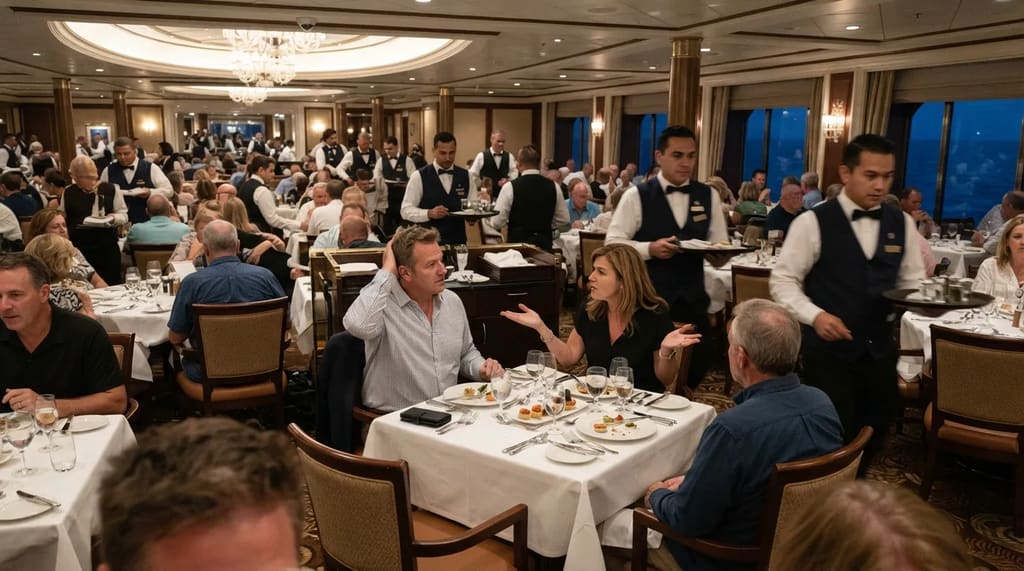
One bad first dinner decides the whole week for a surprising number of passengers.
One chaotic first dinner shouldn’t decide the rest of the cruise, yet some guests have a disorganized embarkation night and write off the dining room for good. That’s a judgment about timing, not about the food.
Embarkation night is the hardest service of the week. Everyone is new, the room is full and nobody knows where anything is.
One crew account describes a former waiter with just six hours between finishing a shift and being back in the dining room. The better move is to give the second night a chance, because by then the crew know the room, the seating, and often your name.
The next habit decides how a waiter remembers you, and it has nothing to do with the menu…
#2 – Treating Dinner Like a Transaction
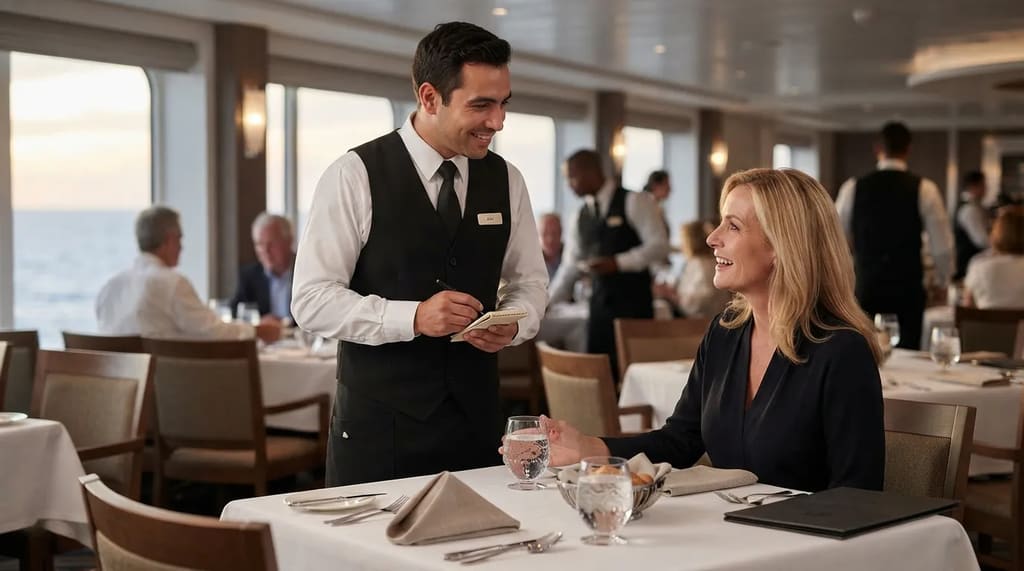
The guests a waiter remembers for years often did one simple thing: they treated him like a person.
One account says longtime cruisers treat waitstaff as people with entire lives outside the dining room. That’s often why a server remembers a guest’s name for years.
Money is part of the picture, though less than most people think. The daily gratuity is automatic on most lines, and it’s pooled and shared among dining, housekeeping and behind-the-scenes staff.3
Your waiter is one share of that pool, not the whole of it. Some guides list optional cash for exceptional service, $5–20 at the end of the cruise, though that’s a suggestion and not a rule.
A real conversation costs nothing, and it usually counts for more.
But all of that is small beside the last habit, and for some passengers it’s a matter of safety…
#1 – Not Telling the Dining Staff About Allergies on Night One
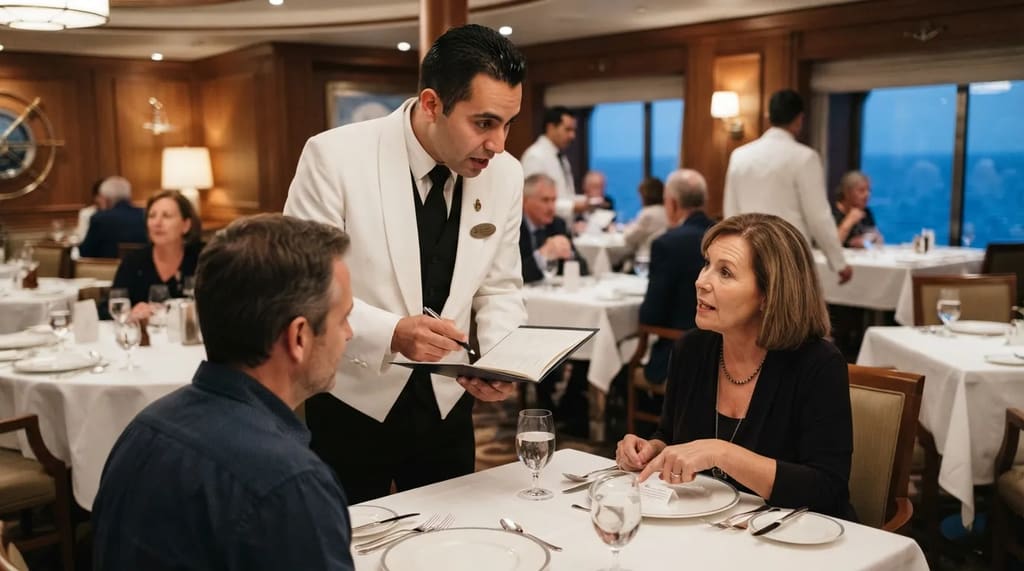
This is the one habit where waiters aren’t just irritated, they’re worried.
Cruise-line allergy guidance repeats the same instruction: confirm your dietary request with the head server at dinner on the first night, and remind your server at each meal.4 That applies even though food allergies should already be listed in the ship’s dining system.
The room matters as well. Carnival notes that special dietary requirements can only be accommodated in the main dining room.5
That makes skipping the dining room a bigger risk than it sounds. And a form isn’t a guarantee, because one cruise guide cautions against assuming everything will be fine just because you filled one out in advance and told your waiter or maitre d’.4
Worth Knowing
- Confirm your dietary request with the head server at dinner on night one.
- Remind your server at every meal, not just the first.
- A note in the ship’s dining system doesn’t replace a spoken conversation.
- Carnival says special dietary requirements can only be accommodated in the main dining room.5
Introduce yourself to the maitre d’ or head server on night one, then repeat the message at every meal. That one conversation matters more than all the other habits on this list.
The Bottom Line
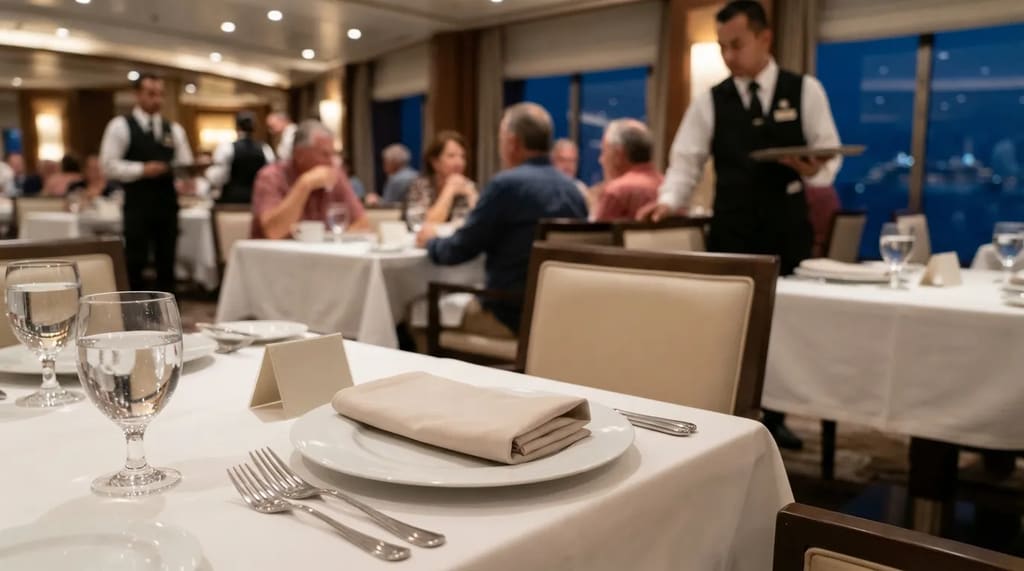
Most of what waiters notice happens before the main course arrives: the buffet plate, the wet feet, the phone, the silent plate.
Crew accounts say these small habits shape the whole room, and nearly all of them are easy to fix. The one that matters most is also the quietest, which is telling the staff about allergies on night one.
Skipping the included dining room, or the first-night conversation, can cost you more than any rude joke.
Next time you sit down at sea, remember your waiter has already been reading your table for a few minutes. Give him something good to read.
- Holland America Dining Room Guide: https://www.hollandamerica.com/blog/cruise-planning/cruise-dining-room-vs-specialty-restaurants/
- Cruise Critic Main Dining Room: https://www.cruisecritic.com/articles/what-to-expect-on-a-cruise-the-main-dining-room?stay=1&posfrom=2
- Carnival Gratuity Policy: https://www.carnival.com/help?topicid=1123
- Travel Binger Dining Room Rules: https://travelbinger.com/cruise-dining-room-captains-reveal-15-unspoken-rules-passengers-over-65-should-know-before-night-one
- Carnival Food Allergies Guidance: https://www.carnival.com/about-carnival/special-needs/pre-cruise-forms