Picture a perfectly filled-out renewal form, carried to a post office counter, and handed back with a shrug. Acceptance facilities won’t take an application filed on Form DS-82, so that trip gets you nothing.1
It’s an easy mistake, because routine processing already runs 4 to 6 weeks and every error eats into time you may not have. Many seasoned travelers are working from memory of how renewals used to go, and the rules on photos, forms and fees have shifted since their last one.
Fourteen steps follow, and the stakes rise with each one. Stay for the last, because it covers the date most travelers count from, and it decides whether your passport arrives before your flight leaves.
#14 – Taking Your Renewal Form to a Counter
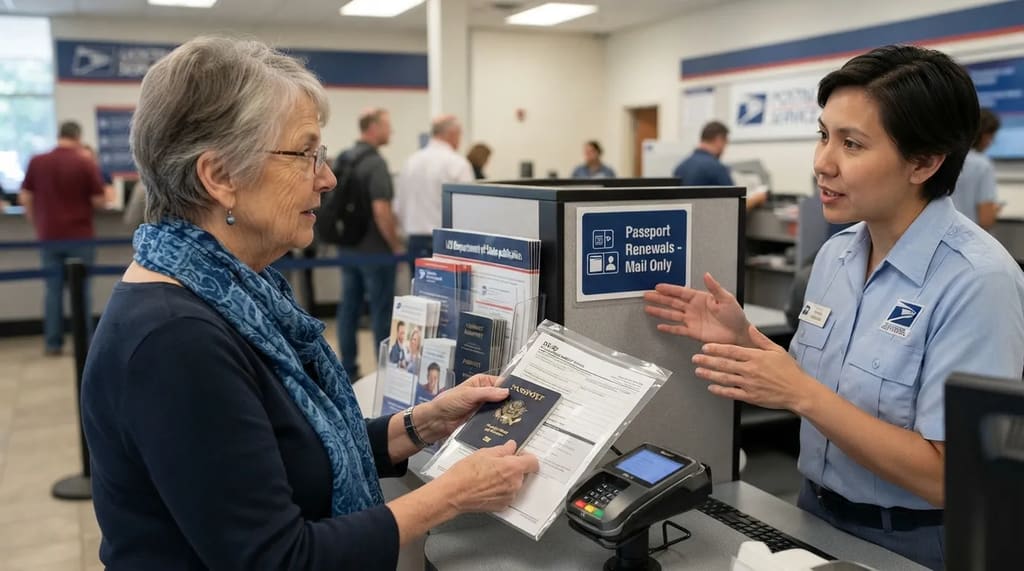
A DS-82 renewal is a mail-only job. If you’re renewing with Form DS-82, you must mail your application.
The counter is also where a $35 fee lives. Acceptance facilities should never charge you $35 for a renewal, since that fee belongs only to Form DS-11 applications.1 2
Don’t expect free proofreading either. Postal employees won’t review your form or documents before you mail them.
So a clerk who asks for $35 is telling you something: you’ve picked the wrong form, or you’re paying for a service a renewal doesn’t include. A mail-in renewal carries no $35 fee, and no counter handles it.
Before you seal anything, the envelope needs a photo, and the spare in your drawer has a shelf life.
#13 – Using a Photo Older Than Six Months
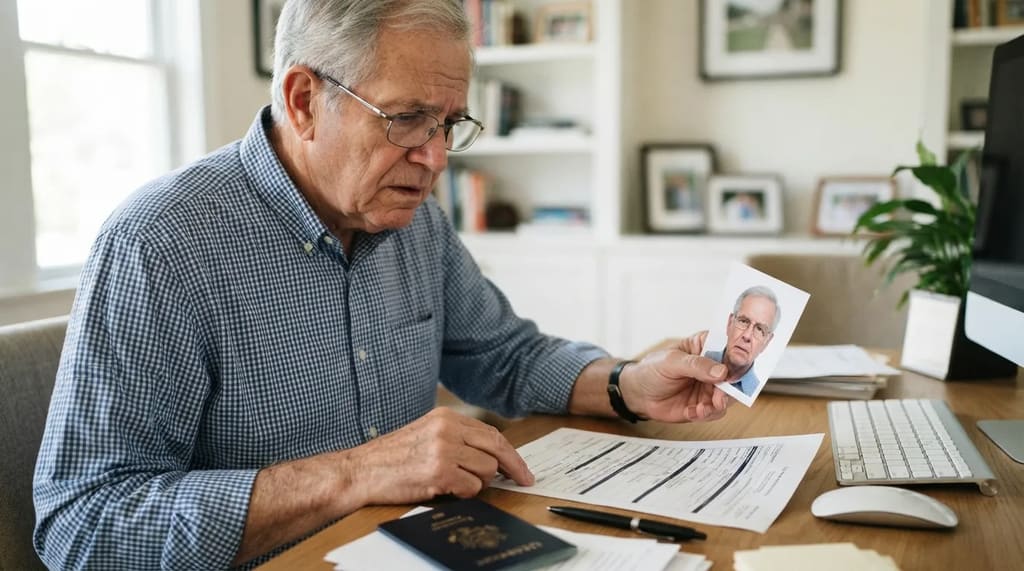
Six months is the shelf life of a passport photo. The date it was taken must fall within six months of the day you submit your application.3
The picture also has to look like you today, so a spare print from an earlier errand is a gamble. An old photo appears on the State Department’s list of rejection examples.
Remember from #14 that postal workers won’t review your documents. No clerk will catch a stale date before the envelope goes out.
The rule is the same for both routes. Mail or online, the photo must be recent, clear and unedited, with a plain white or off-white background.
Take the photo within six months of the day you apply. The surest way is to have it done the same week you fill out the form.
Sitting for that photo brings its own rule, about something many of us wear every waking hour.
#12 – Wearing Glasses in the Photo
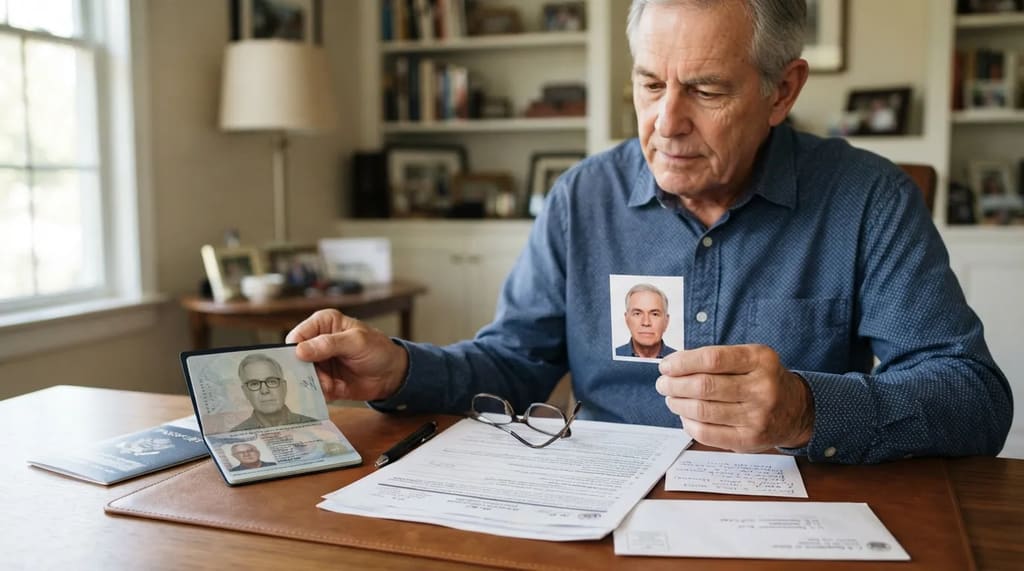
Glasses have been banned from U.S. passport photos since November 2016. That covers prescription glasses, reading glasses and clear frames alike.
If your current passport was issued before that date, your old photo may show you in glasses. It tells you nothing about today’s rule, and it’s how a decades-old habit ends up in the envelope.
There is one exception. If you can’t remove your glasses for medical reasons, include a signed note from your doctor with your application.3
Glasses off, or a signed doctor’s note in the envelope. If someone else takes the photo, say so before the first shot and check the result before you leave.
Even a photo that passes on glasses and date can fail if an app has touched it up.
#11 – Letting an App Touch Up the Photo
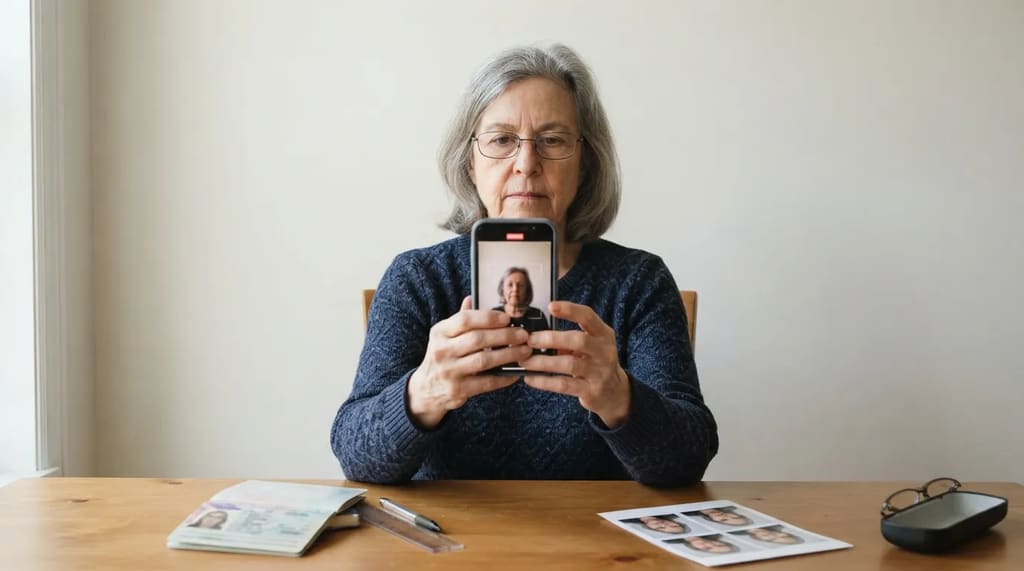
A phone and a free app make a passport photo look like a two-minute job. The trouble starts when the app starts editing.
Filters, AI tools and edits of any kind are off limits. The photo can be cropped and resized, and that’s all, so no background replacement and no beautifying.
What you submit depends on the route:
- By mail: one printed 2 x 2 inch color photo on matte or glossy photo-quality paper, with the head measuring 1 to 1⅜ inches from chin to crown.
- Online: a JPG, JPEG, PNG, HEIC or HEIF file between 54 KB and 10 MB.4
Crop and resize only: no filters, no edits, no retouching. Since you’re holding the camera, you’re also the one who has to get the background and lighting right.
With the photo done, the payment is the next piece, and the total changes with what you ask for.
#10 – Sending the Wrong Amount for Your Document
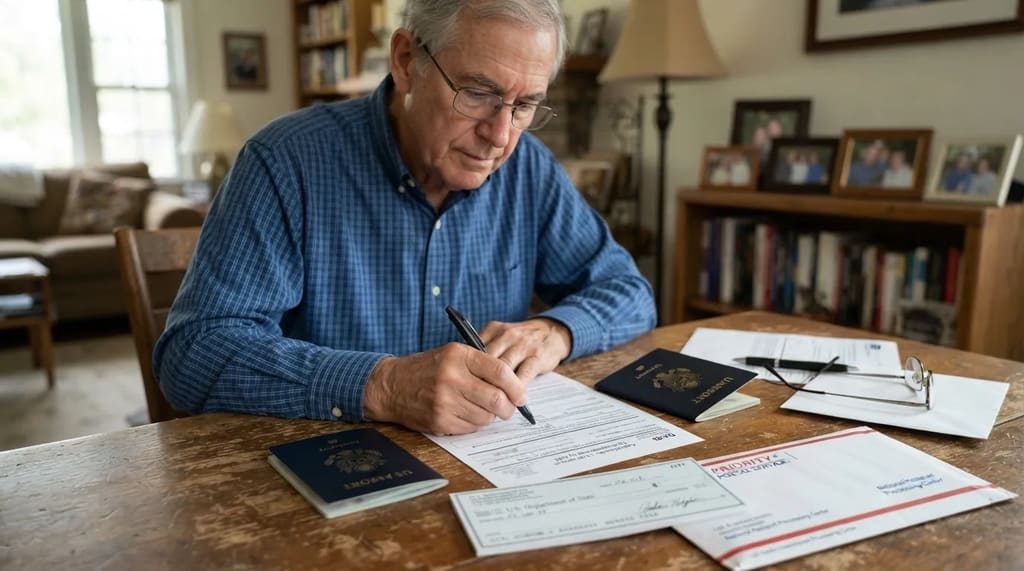
The base fee depends on which document you’re renewing. On a mail renewal you owe nothing beyond it unless you add extras, and the $35 from #14 never appears.
Two add-ons change the total. Expedited service adds $60 and brings processing down to 2 to 3 weeks, and shipping your completed passport in 1 to 3 days adds $26.87.5
Quick Compare
- Passport book: $130
- Passport card: $30
- Book and card together: $160
- Book with expedite and 1-to-3-day return shipping: $216.87
The payment method depends on the route. By mail it’s a check or money order made out to the U.S. Department of State, and online it’s a card.
Match the payment to the document: $130 book, $30 card, $160 both. Add the $60 only if a trip is close, because online renewal is routine service only and can’t be expedited.6
Fees change from time to time, so confirm the current amounts on travel.state.gov before you write the check.
#9 – Sending an Old Name on a New Application
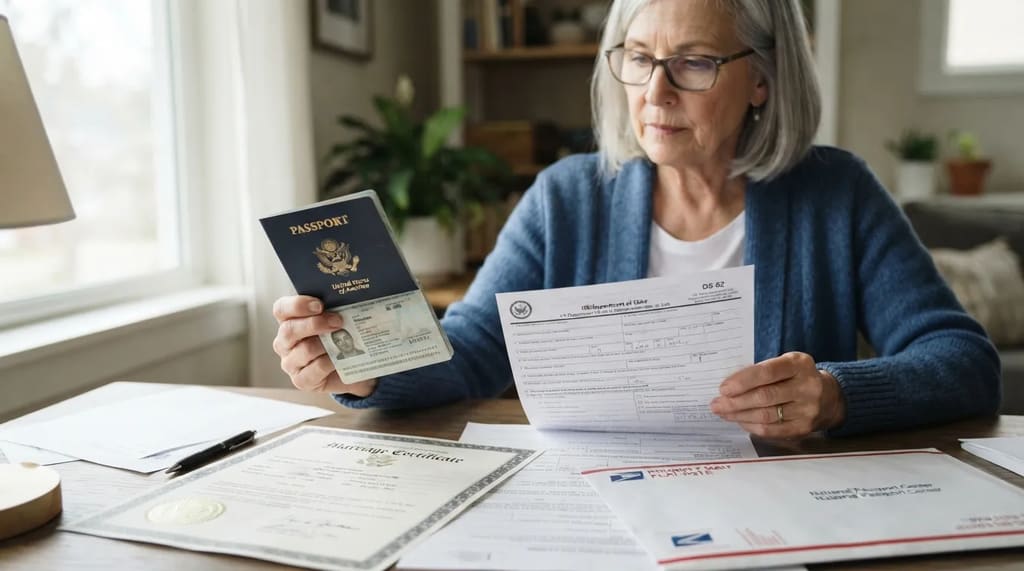
The name in your passport is the name you had the day it was issued. The DS-82 wants the name you use now, and that gap is where marriages, divorces and court orders show up.
A mail renewal works if the passport is in your current name, or if you can document the change. A marriage certificate or court order goes in with the application.
Online is closed to you here. You can’t be changing your name, sex marker or date of birth and use that system.
Changed your name? Renew by mail and include the legal document. Book any tickets in the name that will appear on the new passport, not the one on the old.
For everyone whose name hasn’t changed, there’s a route that skips the envelope entirely, with conditions that are easy to miss.
#8 – Skipping Online Renewal When You Qualify

You can renew a passport without printing a form, writing a check or visiting a mailbox, as long as you meet every condition. The conditions are these:
- You’re 25 or older and have a U.S. mailing address.
- Your 10-year passport expires within a year or expired less than five years ago.
- You aren’t changing your name, sex marker or date of birth.
- You aren’t traveling for at least six weeks.
If that’s you, renew online. It removes the check from #10, the printed photo from #11 and the trip to the mailbox.
No trip inside six weeks, 25 or older, no name change: renew online. You upload a photo, pay by card and track your status online, and processing runs 4 to 6 weeks, the same as a routine mail renewal.
The cheaper card is a different matter, and its $30 price tag hides a restriction.
#7 – Treating the Passport Card as a Cheaper Passport
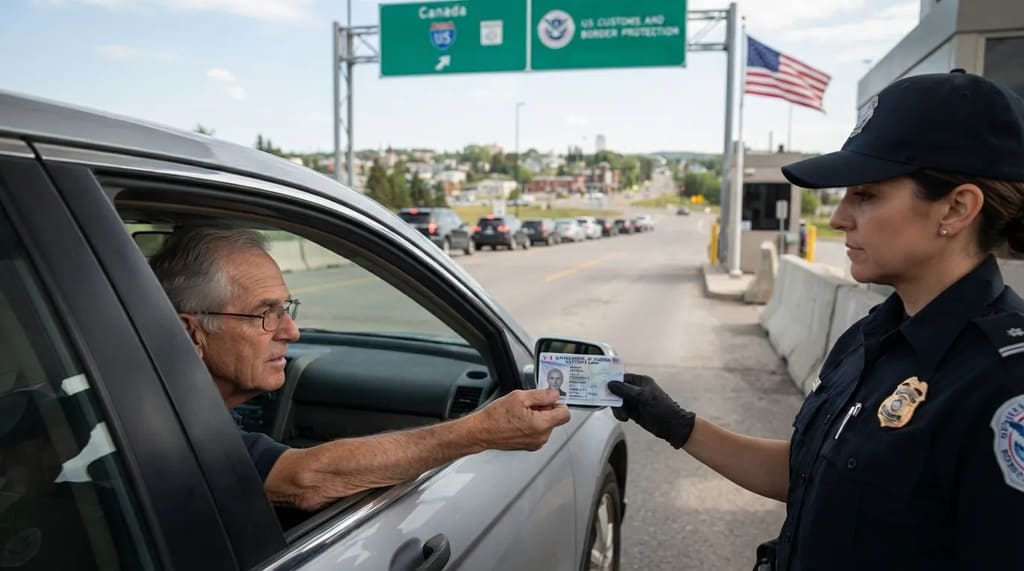
A passport card costs $30 to renew, against $130 for the book. That gap tempts a lot of renewers.
The saving has a catch. The card is good only for land and sea travel to Canada, Mexico, the Caribbean and Bermuda, so it won’t get you on an international flight.7
Switching document types also closes the online door from #8. Going from a book to a card, or the reverse, means mailing Form DS-82.6
If you hold only a card and want a book, the mail route is open as long as you meet the DS-82 rules. You’d pay the book fee, because the book is the document you’re ordering.
Worth Knowing
- The card works only at land and sea crossings to Canada, Mexico, Bermuda and the Caribbean.
- It is not valid for international air travel, even a short hop.
- The optional 1-to-3-day return shipping isn’t available for cards.
- A cruise that starts and ends at the same U.S. port is a separate question, so check the cruise line’s own document rules.
If a plane ticket is anywhere in your plans, renew the book. Save the card for road trips to Canada or Mexico.
Even the right document goes nowhere if you aren’t eligible for the mail-in form to begin with.
#6 – Assuming You Automatically Qualify for the Mail-In Form
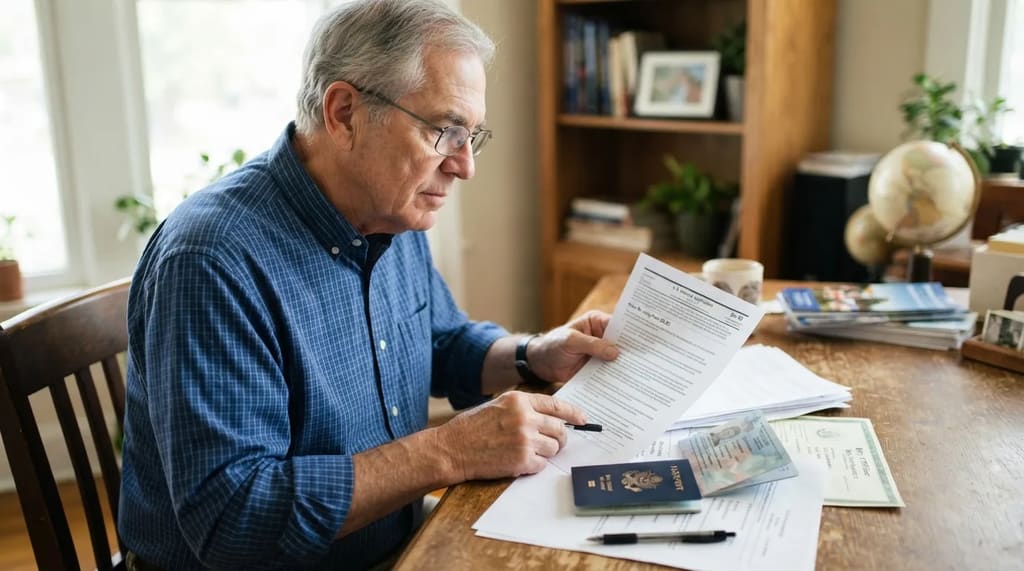
Form DS-82 comes with conditions, and many people never read them. You need your most recent passport in hand, in decent condition apart from normal wear.
It must have been issued when you were 16 or older, and issued within the last 15 years. It also has to be in your current name, or you must be able to document the change.
Miss any one of those and you’re in a different line. A lost, stolen or badly damaged passport means starting over with Form DS-11, in person.
That is where the $35 acceptance fee from #14 finally belongs. It’s the cost of applying as if for a first passport.
Passport in hand, issued at 16 or older, issued within 15 years: that’s the DS-82 test. Fail it, and plan an in-person visit instead of an envelope.
Qualify, and the envelope still has to carry something most people forget they’re surrendering.
#5 – Mailing a Photocopy Instead of the Real Passport
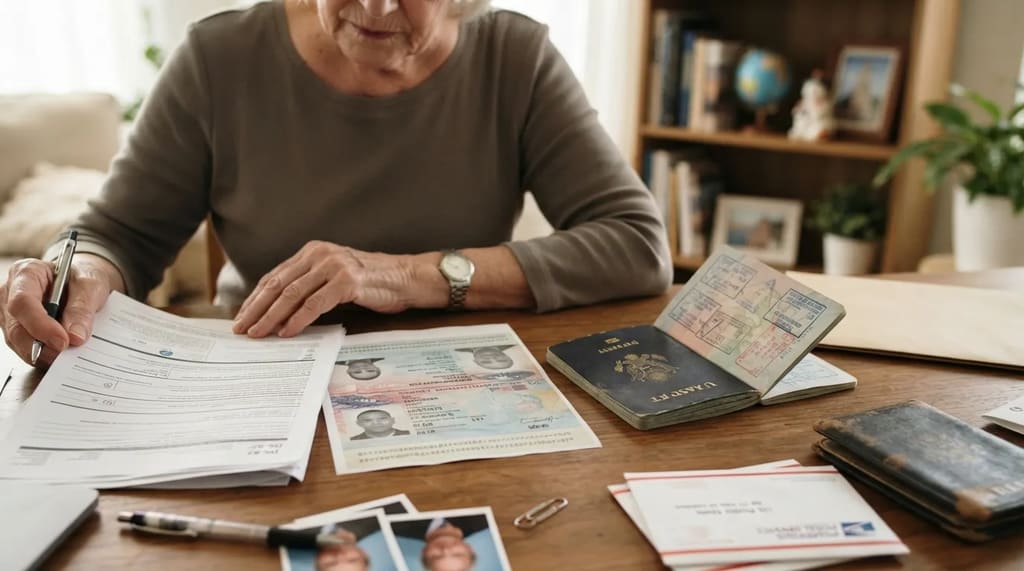
The application needs your most recent passport itself, not a photocopy. A copy proves nothing, and it can stall the whole application.
Handing over the real thing feels risky, especially when it’s full of stamps from trips you remember well. It’s required anyway, and that passport will be marked canceled and returned to you.
Don’t be alarmed if the old passport and the new one arrive on different days. They can come in separate mailings.5
And don’t plan to travel on the old one while the new one is in process. Once it’s sent in, you don’t have a working passport in your hands.
Send the actual passport, and plan to be without a passport until the new one arrives. Book nothing, and make no promises about trips, during that window.
Then comes the paper itself, where one missing signature can undo everything above.
#4 – Printing and Signing the Form Wrong
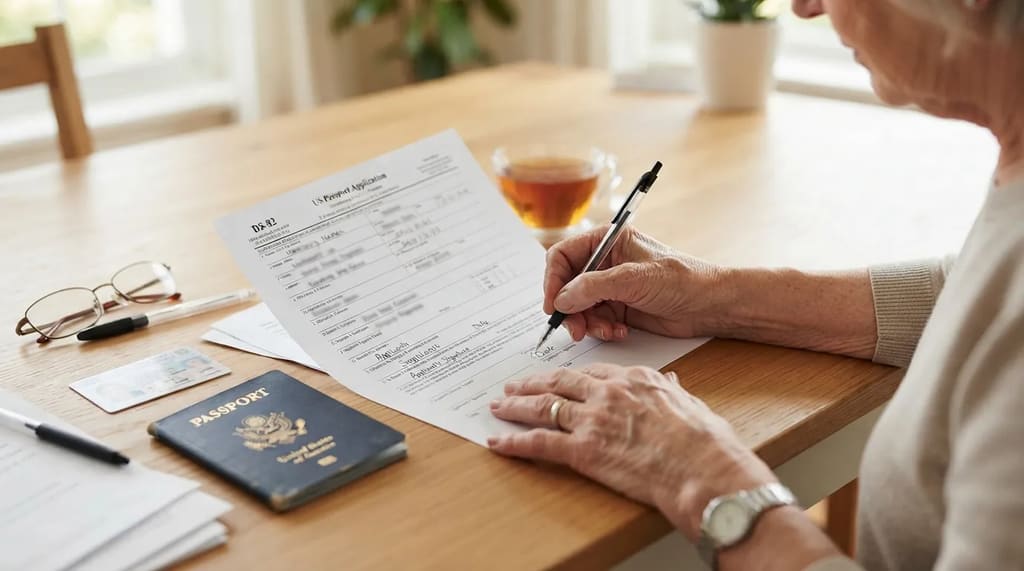
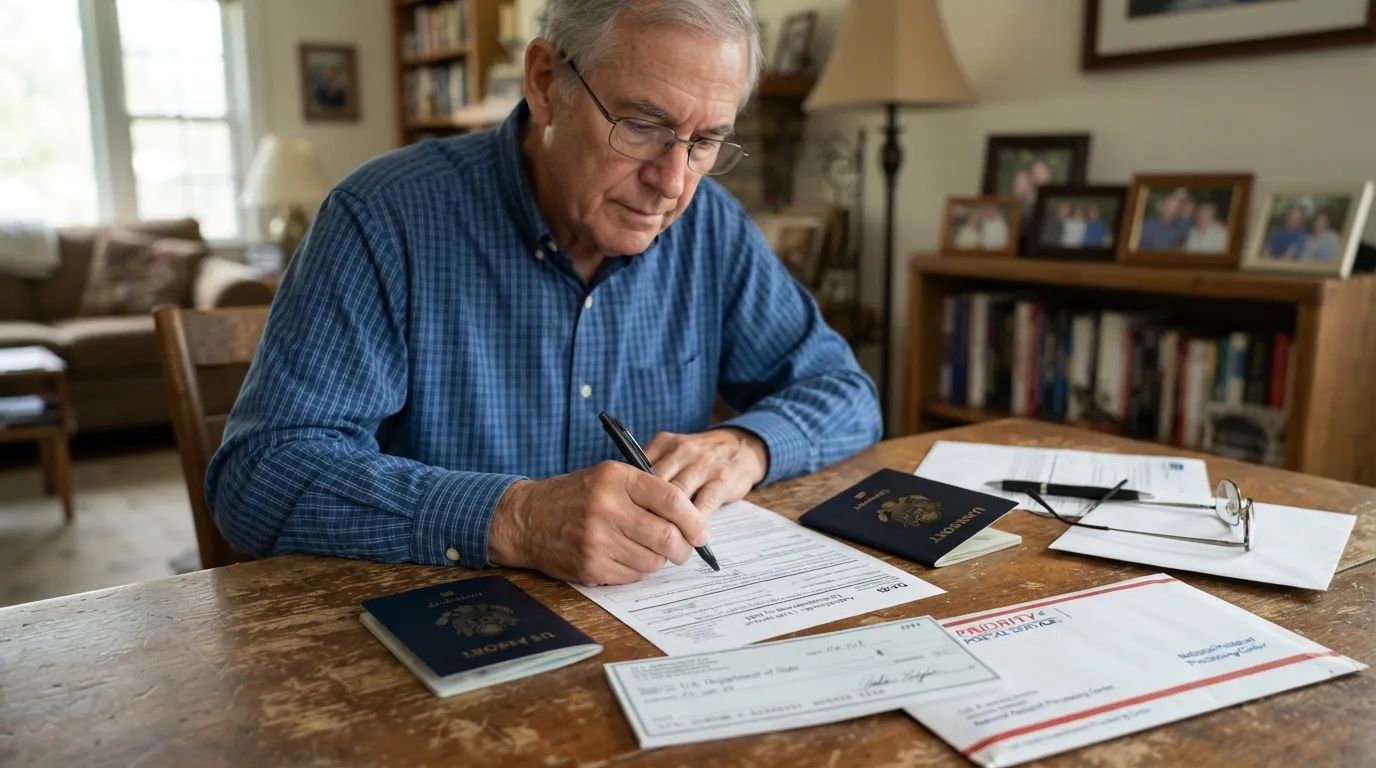
A form that looks fine to you can still bounce. Print it single-sided on plain white 8.5 x 11 paper, and don’t shrink it to fit.
Then sign and date it in black ink. An unsigned application can’t be processed, and it costs you time you can’t get back.
The old habit of using whatever pen is nearby doesn’t help here. Neither does a rushed signature that looks nothing like the one in your old passport.
Take a minute after you finish and read the whole form once more. Check each name, date and address against your documents, the way you’d check a boarding pass.
Single-sided, black ink, signed and dated. Those three details cost nothing and prevent a lot of delays.
The form is right now, so the last risk to the application is how it travels.
#3 – Mailing It the Wrong Way
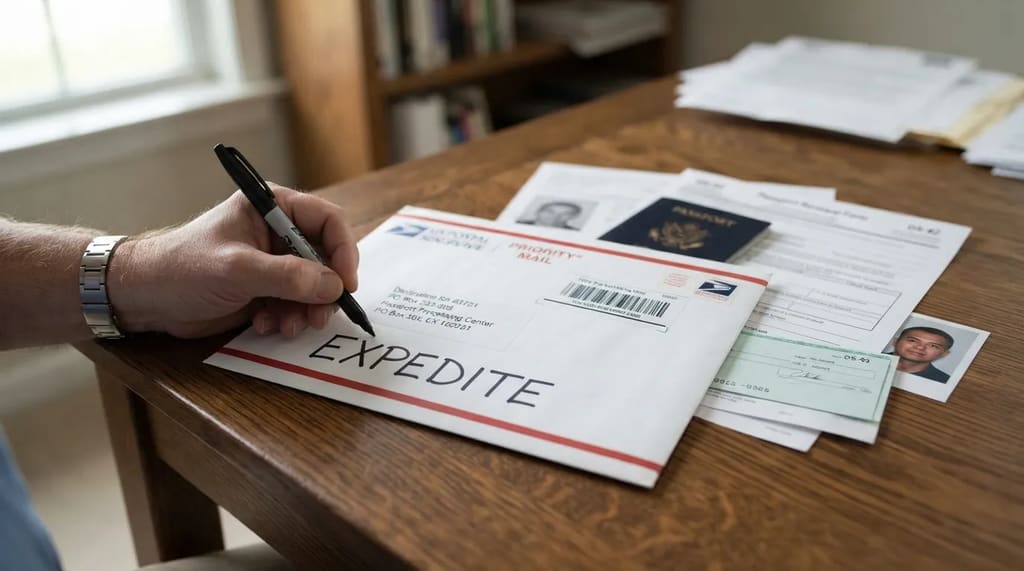
The mailing address depends on whether you chose routine or expedited service. The instructions with the form list the right one, so use that and not the address you remember.
Related Stories From Travelbinger
If you paid the extra $60 for expedited service, write EXPEDITE on the envelope.5 Without it, your faster service can get lost in the pile.
Use a method that gives you tracking, and keep a copy of everything you send. A plain stamp leaves you guessing for weeks.
Check the address type too. If the instructions list a P.O. box, a private courier can’t deliver there.
Right address, EXPEDITE on the envelope if you paid for it, tracking on the package. Mail is the one stage of renewal you can’t see into, so tracking is your only window.
Tracking tells you where the envelope is, but it can’t tell you whether you’ve started too late.
#2 – Waiting Until the Passport Is Almost Expired
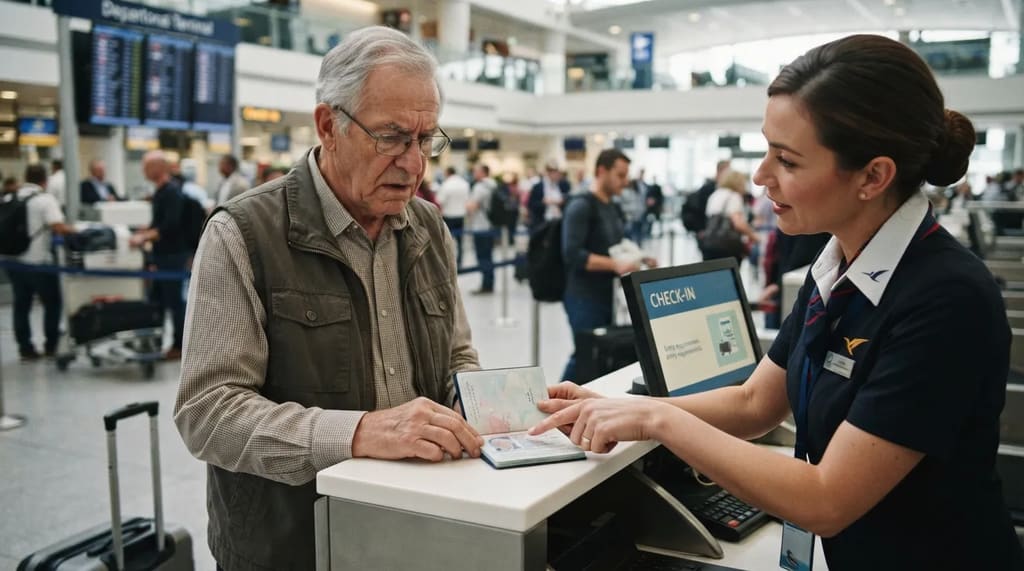
A passport can be valid in your wallet and still useless at the gate. Many countries require it to be valid for at least six months beyond your dates of travel.
Airlines enforce those rules at check-in, and they can refuse to board you. A passport with a few months left may be fine for home and worthless for the trip you’ve been planning.
For travelers planning a long-awaited cruise or a visit to family overseas, that’s a heartbreaking way to find out. Check the entry rules for every country on your route, including stops where you only change planes.
Check each country’s validity rule, then renew before your passport gets close to that line. Renewing early costs you nothing in the end, because you pay the same fee either way.
Which brings us to the date almost everyone gets wrong.
#1 – Counting From the Day You Mail It

Most travelers start the clock when the envelope leaves their hands. The State Department’s 4 to 6 weeks, or 2 to 3 weeks with expedited service, counts from when your application is received.
Processing times don’t include mailing time. Your envelope has to travel to the State Department, and your finished passport has to travel back to you.2 8
That’s why a trip that looks safe on a calendar can be risky in real life. A departure date seven weeks out leaves much less room than it appears to once both journeys are counted.
At a Glance
- Routine processing: 4 to 6 weeks after your application arrives.
- Expedited processing: 2 to 3 weeks, for an extra $60.
- Getting there: your application can take up to 2 weeks to reach the State Department.
- Getting back: your finished passport can take up to 2 weeks to reach you.
Work backward from your flight, not forward from your mailbox. Check current processing times at travel.state.gov before you decide whether routine service is enough.
If your trip is within 14 days, don’t wait on the mail at all. You can make an appointment at a passport agency for urgent international travel.
The clock starts when the State Department receives your application, not when you drop it in the mailbox. Add mailing time at both ends, and give yourself a cushion on top of that.
Every step on this list is small, and each one can cost weeks. Get the form, the photo, the payment and the timing right the first time, and the new passport arrives well before you need it.
Pick your flight date first, count backward, and mail the envelope today.
- State Dept Renewal FAQs: https://travel.state.gov/content/travel/en/passports/have-passport/renew.online.html
- Apply for Adult Passport: https://travel.state.gov/content/travel/en/passports/need-passport/apply-in-person.html
- State Dept Passport Photos: https://travel.state.gov/en/passports/apply/help/photos.html
- Uploading a Digital Photo: https://travel.state.gov/content/travel/en/passports/how-apply/online-renewal-photo.html
- State Dept Renew By Mail: https://travel.state.gov/content/travel/en/passports/have-passport/renew.html
- State Dept Renew Online: https://travel.state.gov/en/passports/renew-replace/online.html?os=ios0
- Passport Fee Chart 2026: https://travel.state.gov/content/dam/passports/forms-fees/Passport_Fee_Chart_Feb_2026_English.pdf
- Expedited Service Fee Refund: https://travel.state.gov/en/passports/after-you-apply/expedited-service-fee-refund.html