Your whole apartment for the night measures 3 feet 6 inches by 6 feet 6 inches, and it rocks you through the dark across state lines.
That’s the roomette. The travelers over 65 who book it again and again have worked out how to make it feel like a private hideaway instead of a closet on wheels.
The habits below cut stairs, hauling, bad timing and wasted money from a trip that already asks a lot of your back and your patience. Each one rests on how Amtrak’s sleeping cars are laid out and what the ticket already includes.
Some take a minute to put into practice. One goes straight after the biggest charge on the bill, and it’s waiting at the very end.
Start with the habit that begins before you ever leave home.
#12 – Pack for a Room That Holds Two Small Totes
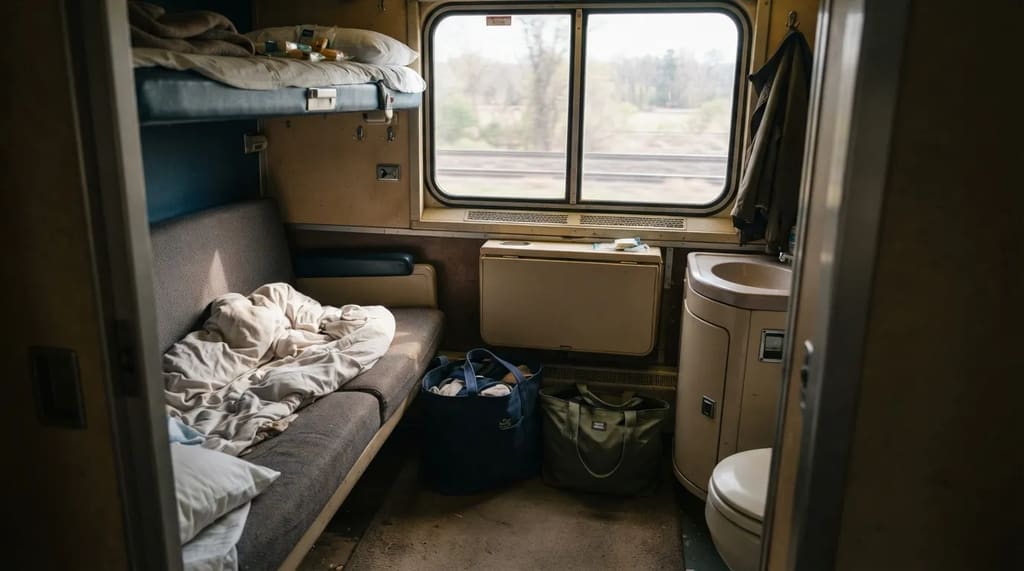
Amtrak Vacations’ room guide lists a roomette’s luggage capacity as two small tote bags. That is far less than the word “suitcase” suggests.
A bedroom holds one to two suitcases, according to Amtrak’s own room comparison. Even that is tighter than most people picture.
At a Glance
- Roomette: 3 feet 6 inches by 6 feet 6 inches, with room for two small tote bags.
- Bedroom: 6 feet 6 inches by 7 feet 6 inches, with room for one to two suitcases.1
- Best bag style: soft-sided, because it squeezes into corners a hard shell won’t.
So regulars pack in two tiers. A soft tote stays with you in the room, and the bigger bag lives somewhere else on the train, which gets its own entry further down this list.
Put in the tote whatever you’d hate to hunt for in a moving room: medications, glasses, a charger, a toothbrush and tomorrow’s clothes. Soft-sided bags also squeeze under a seat or into a corner, which a hard-shell case never will.
The room comes with bedding, but one item from home still earns its place, even in a tight space.
#11 – Bring a Pillow From Home and Ask for More
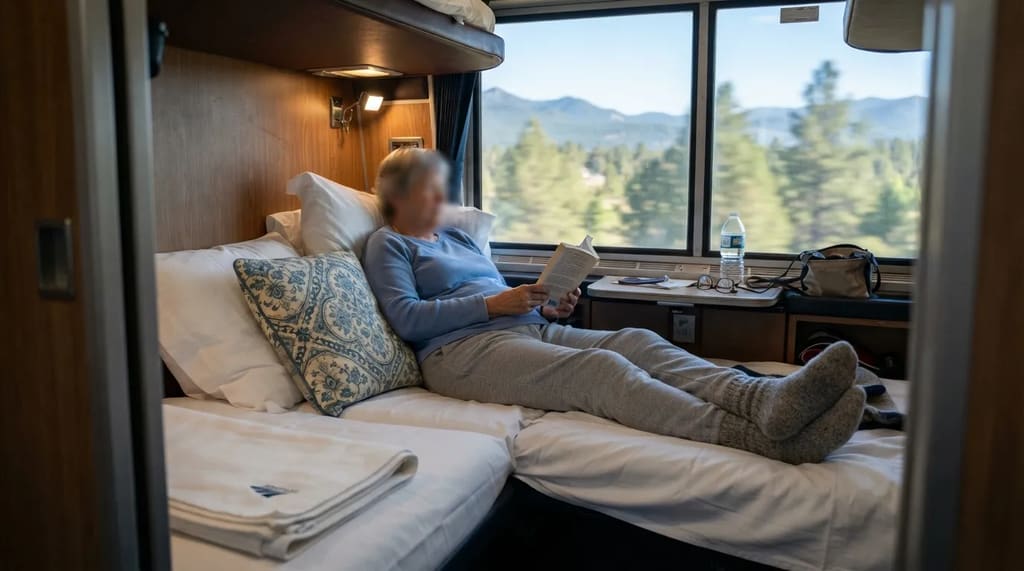
A private room comes with fresh towels, bed linens, bottles of water and climate control, so you won’t face a bare mattress. What the room can’t supply is your own sleeping preferences.
Amtrak Vacations suggests bringing your own pillow and an extra blanket for warmth, even though Amtrak provides the bedding. Anyone who has slept badly on a borrowed pillow knows why this habit sticks.
You can also ask your attendant for an additional blanket when they turn down your bed, which saves you packing a second one. It costs you nothing to ask, and it beats lying awake at two in the morning wishing you had.
Comfortable clothing and warm socks belong in that same plan. You’ll be moving between your room, the shower and the dining car, so you want layers you can add or shed without unpacking anything.
Before you board, there’s a waiting room at major stations that your sleeper ticket has already paid for.
#10 – Wait in the Station Lounge, Not the Concourse
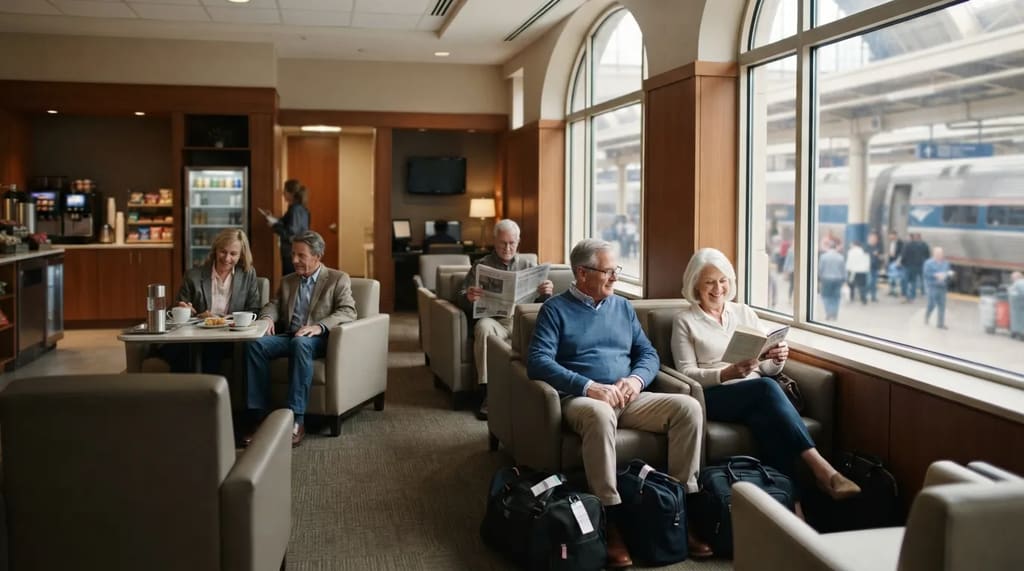
Your sleeper ticket includes a place to sit before the train even arrives. All customers in private rooms receive complimentary lounge access at major stations, plus priority boarding, according to Amtrak.
That’s a real advantage on routes where delays are common, as you’ll see further down.
Fast Facts
- Who gets in: every customer booked in a private room.
- Where: major stations, not every stop on the route.
- What’s inside: Wi-Fi, drinks and snacks at larger stations.
- Bonus perk: priority boarding, so you reach your room before the platform fills.
Priority boarding matters more at 65 than at 35. You reach your room before the platform fills, and you can stow the tote, find the light switch and settle in without anyone waiting behind you.
Check the lounge’s hours and the boarding time on your ticket when you arrive. A lounge that’s open doesn’t mean your train is boarding.
Once you’re aboard, your first conversation should be with the crew member assigned to your car.
#9 – Tell Your Car Attendant Three Things at Boarding
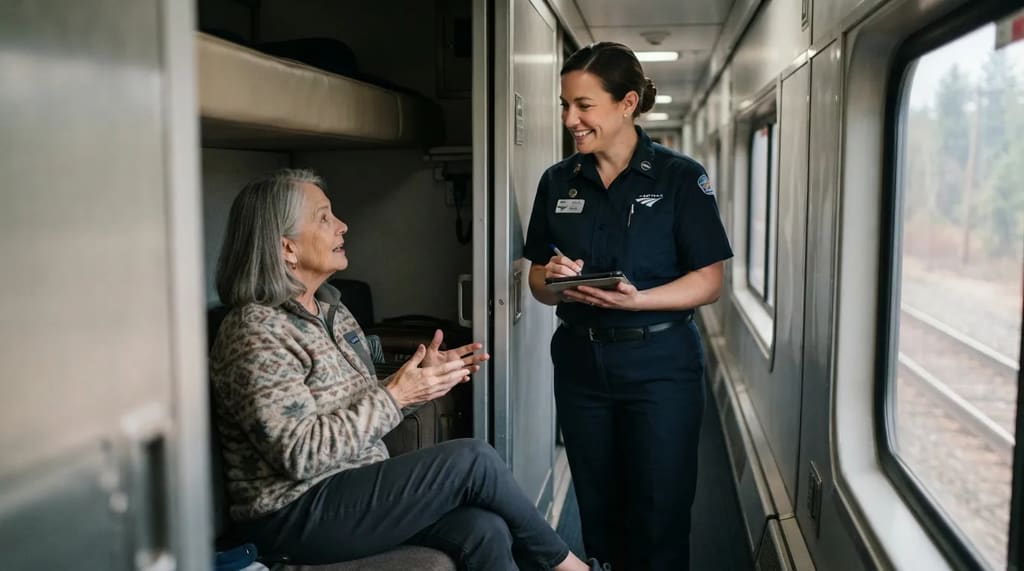
A dedicated first-class attendant provides turndown service, assists with meals and helps with luggage. That’s a lot of service riding on one short conversation.
So tell the attendant three things when you board. Give your stop so they can alert you as it nears, say when you’d like the beds made, and mention any trouble with stairs.
The stop alert is part of the job, because the attendant will tell you when your stop is coming up. Giving the information early means nobody has to guess at three in the morning.
At the end of the trip, tip. Outdoor retailer Public Lands suggests at least $5 per person per night.
That attendant books your meal times, and what lands on the table depends on which train you’re riding.
#8 – Find Out How Your Train Serves Meals
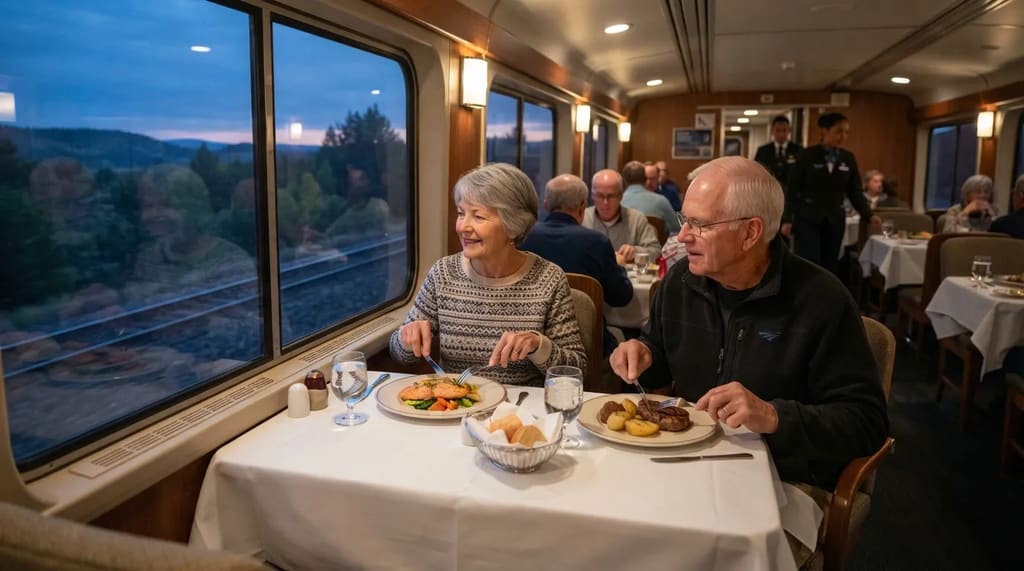
Meals are included when you travel in a private room, and that includes the passenger sharing the room. What differs from train to train is the style of service.
Amtrak runs two types of restaurant-style dining for sleeping car passengers. Traditional dining means meals cooked onboard, while flexible dining means pre-prepared meals heated in an oven or microwave.
The Silver Star is one train that has gone the flexible route. That’s one train, not the whole network, so ask which style your route uses when you book.
Skipping the dining car to eat from your own snack bag saves nothing, because the meals are already inside the room price. The snack bag is for the hours in between.
On a double-decker train, the dining car sits upstairs, so the level of your room deserves a closer look than most booking screens invite.
#7 – Choose Your Level on a Double-Decker Car
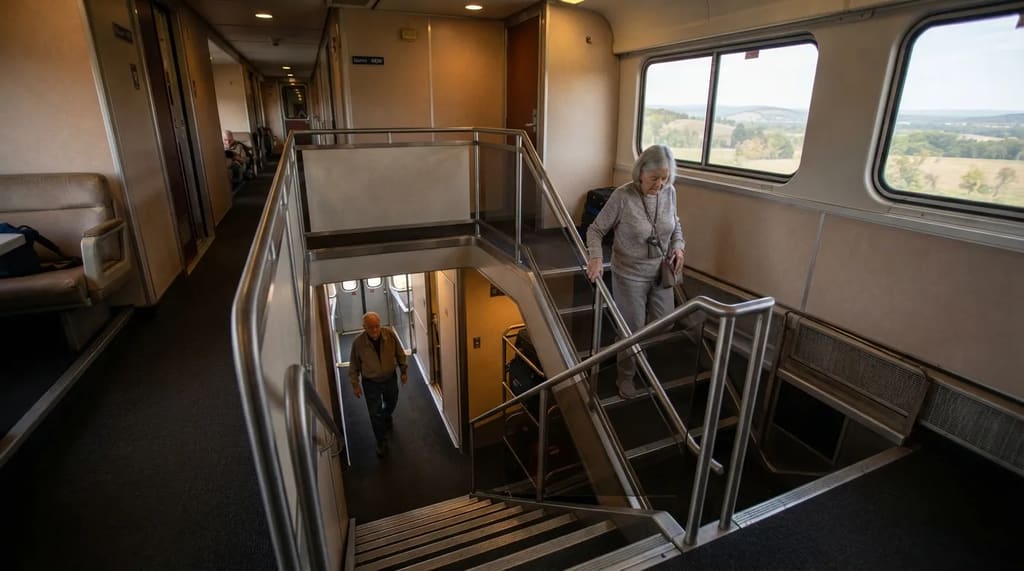
Where your room sits on a Superliner car changes the whole trip. Roomettes can be on the upper or lower level, and bedrooms are always on the upper level.
Here is how the two levels stack up.
Quick Compare
- Upper level: the better view and easier access to the dining car and observation car.
- Lower level: closer to the shower and easier to get on and off the train.
- The trade-off: downstairs you’ll feel the train’s movement and hear the wheels.
The verdict: if stairs bother your knees, a lower-level roomette beats the upstairs bedroom, unless you truly want a private bathroom. Superliner bedrooms are reached by narrow stairs, and the dining car is upstairs too.
A Superliner has only four lower-level roomettes, so book early. They share the lower level with a family bedroom and an accessible bedroom.2
If your route uses single-level Viewliner cars instead, there are no stairs inside the car at all.
If even a lower-level room is too much, one room on each car was built for that, and it books differently.
#6 – Call Amtrak to Reserve the Accessible Bedroom
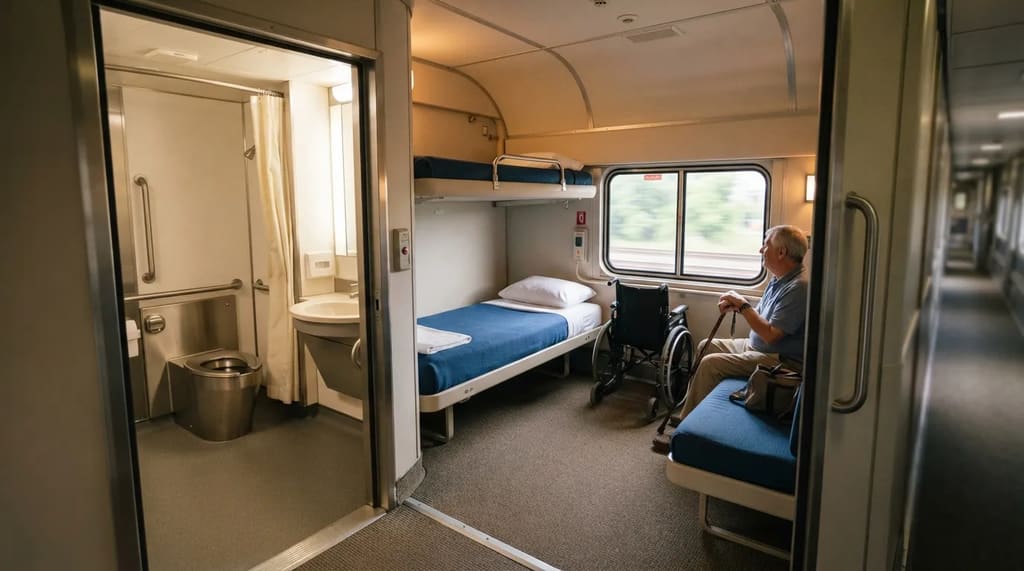
There is one accessible bedroom per car, so supply is thin. It has wider doorways and an in-room toilet and shower, and on a Superliner it sits on the lower level.
The habit is to phone, not just click. Call Amtrak to reserve an accessible room, because availability is limited.
Make the call as soon as you know your dates, since a single room per car goes quickly on busy departures. The room is meant for travelers with mobility needs, so it isn’t the only answer.
If you use a cane but don’t need wheelchair space, a lower-level roomette may do. The room-delivery option from #8 solves the upstairs dining car.
The lower level also has luggage racks, but the bag you’d rather not worry about has a better place to ride.
#5 – Check the Big Suitcase Where the Train Allows It
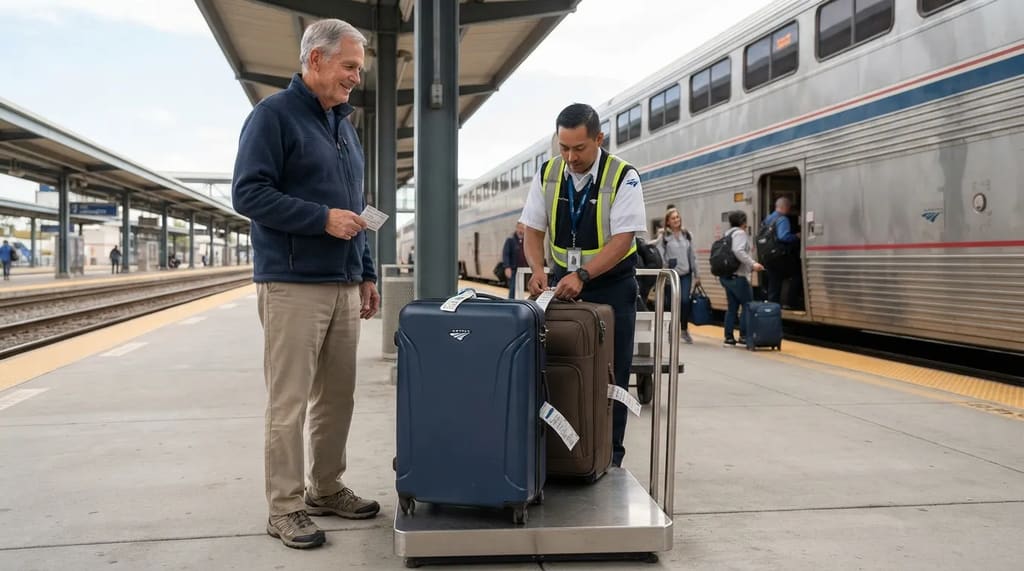
Amtrak’s carry-on rules are generous. You can bring two carry-on bags up to 25 pounds each, plus a personal item.
Those limits are far bigger than a roomette. Storage on the lower level of a Superliner isn’t secure, so a bag left there is a bag you’ll worry about.
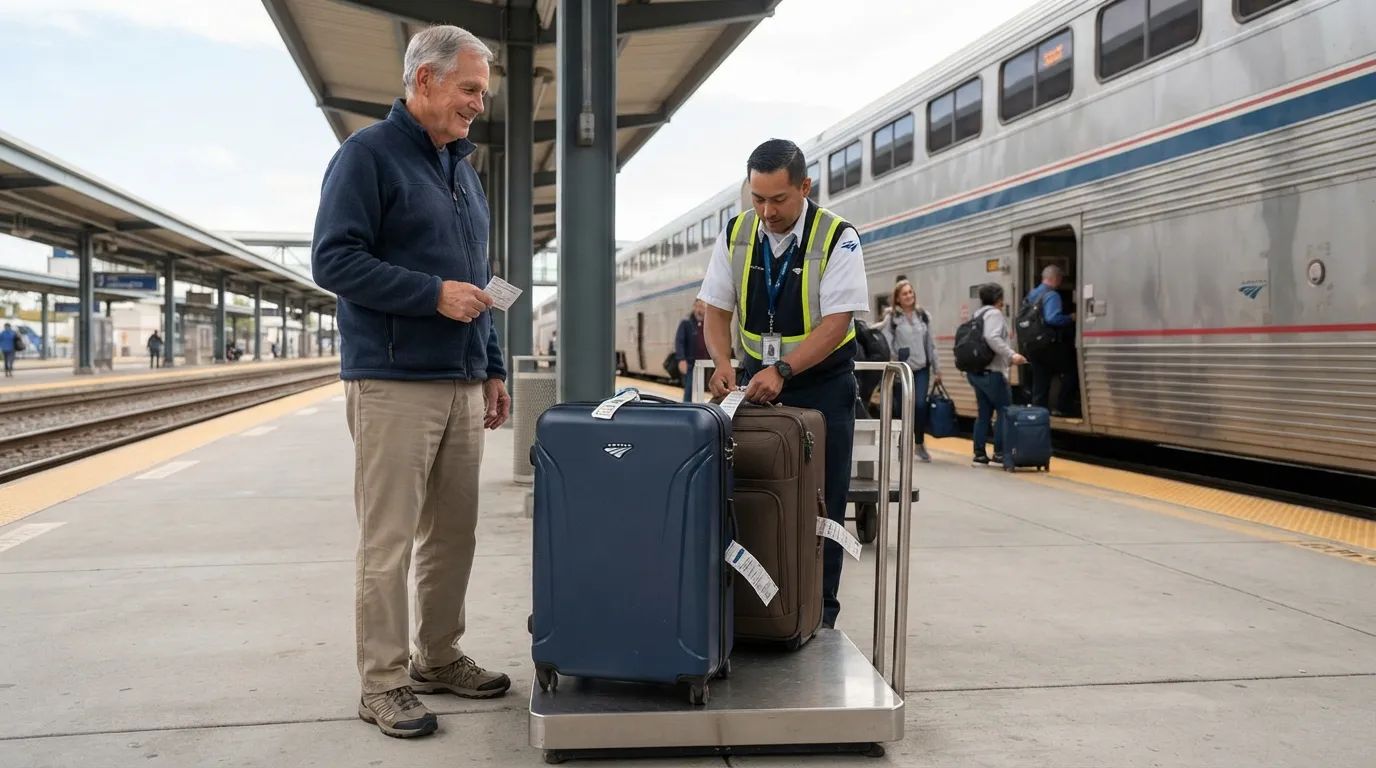
Checked baggage is permitted on most long-distance services, though not at every station. You’ll need to check bags at least 45 minutes before departure.3
The verdict: the generous carry-on allowance is overrated for sleeper travel. The right amount to carry aboard is whatever you can lift one-handed up a narrow stair.
Luggage settled, the next habit deals with the one thing no checked bag or lounge can fix: a train running behind.
#4 – Leave Slack Around Both Ends of the Trip
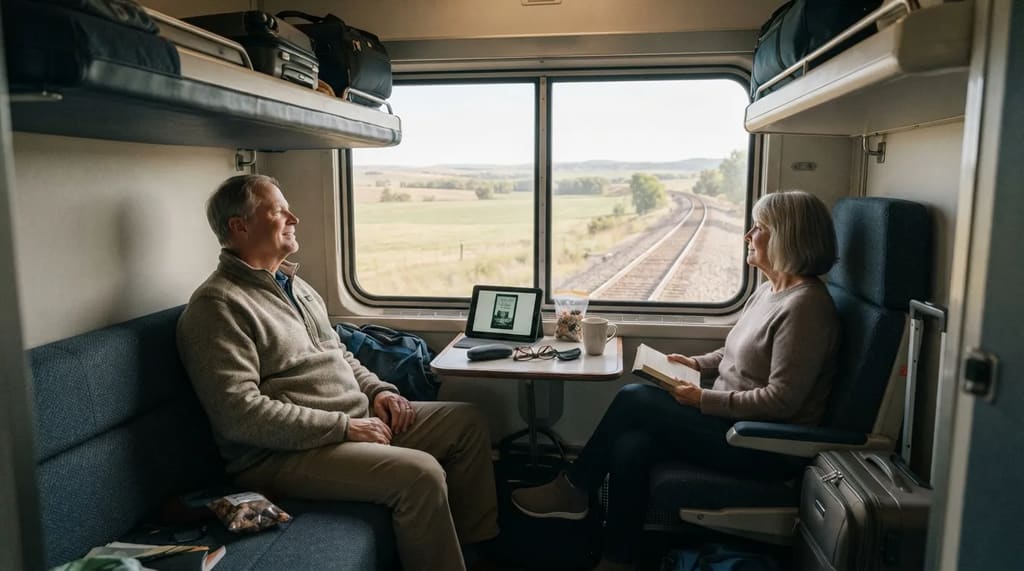
Long-distance trains average roughly 50 mph once station stops are counted. At that pace, a 2,000-mile journey takes about 40 hours, so small delays add up.
Delays are a known risk. In November 2014, Amtrak filed a complaint over extreme delays on the Capitol Limited.
So build a buffer. Don’t book a same-day flight, a cruise departure or a doctor’s appointment on arrival day, and don’t plan a tight connection on the way home.
Leave a full day between arrival and anything you can’t miss. A delay of hours on a trip that long is no catastrophe, but it ruins a schedule with no margin.
The next habit takes a few seconds on the booking screen, and it covers less of the ticket than its name suggests.
#3 – Claim the Senior Fare, Then Read What It Skips
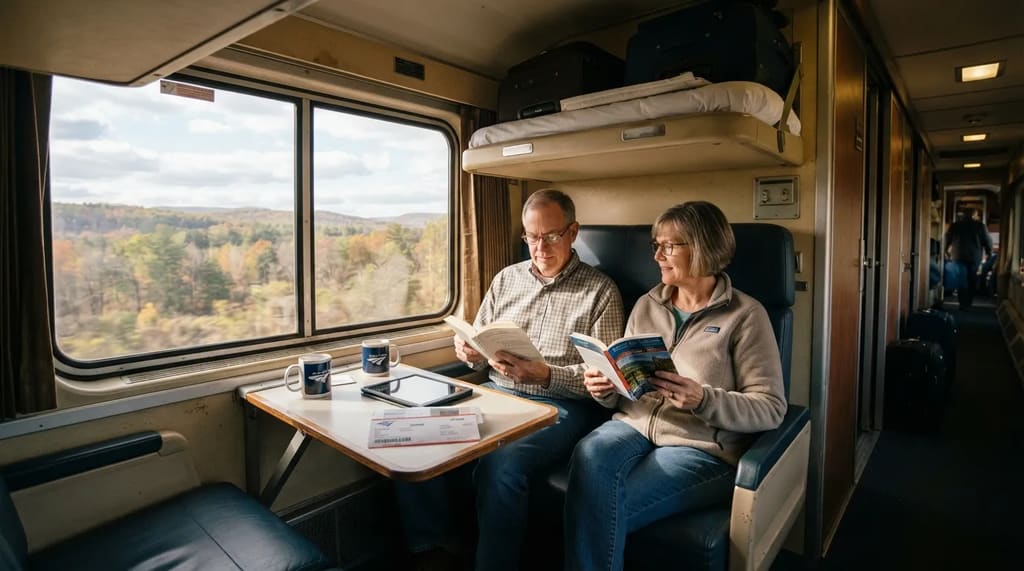
On most Amtrak routes, riders 65 and older get 10% off the lowest available rail fare. You claim it by selecting “Senior” as the traveler type when booking on Amtrak.com or the app.
The catch is what it leaves out. The 10% applies to the rail fare, but not to the sleeping-accommodation charge, which is usually the larger cost of a roomette or bedroom.
On cross-border trains run jointly with VIA Rail Canada, the senior age drops to 60. Each passenger must book under their own name and age, so your birthday can’t carry a younger spouse.
Related Stories From Travelbinger


The verdict: treat the senior fare as a small perk, not a reason to pick one date or train over another. The discount skips the sleeping-room charge, usually the bigger cost.
Since the room itself carries no age discount, the way to cut that charge is to change how many people it covers.
#2 – Share the Room and Split the Biggest Charge
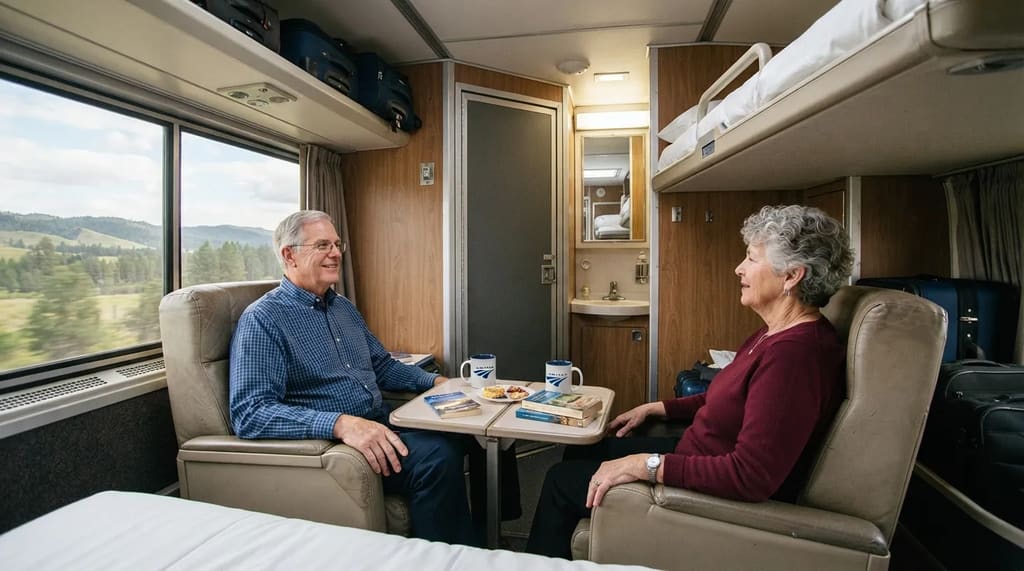
A roomette is built for two adults. The meals and amenities come with the “open” ticket bought for the passenger sharing the room.
That ticket is only used when adding another passenger to a private room that’s already booked. The room is booked once, and the second traveler’s ticket adds the rail fare and the meals.
It also changes the bedroom math. The bedroom upcharge over a single roomette is steep, but per-person economics improve when two travelers split it.
Your companion’s age matters only for their own rail fare. If they’re under 65, they don’t get the senior rate you do.
The final habit starts with the cheaper ticket, a coach seat, and ends in a bed.
#1 – Bid for a Roomette After Buying a Coach Ticket
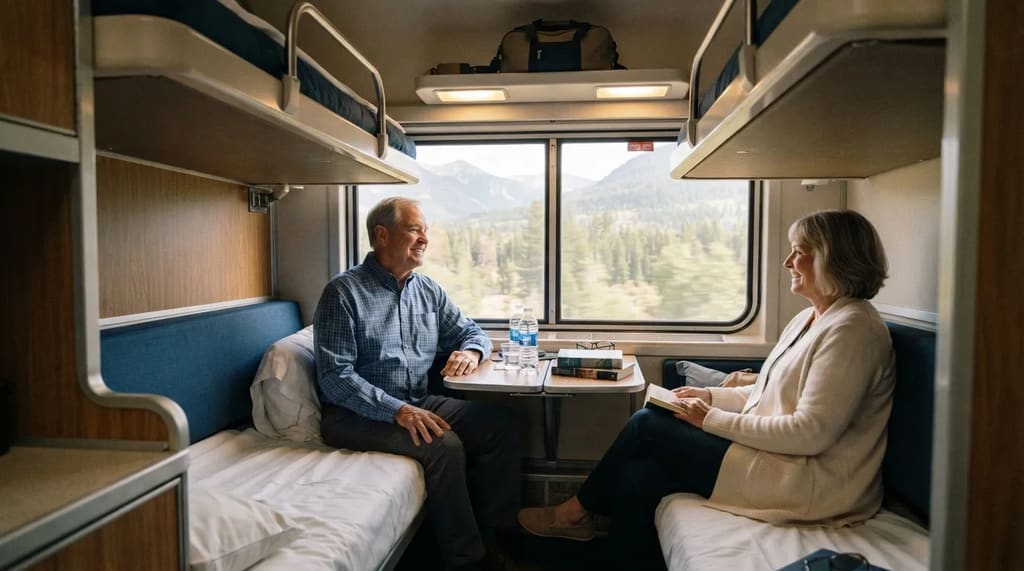
After purchasing a coach ticket, Amtrak lets passengers on eligible routes submit a blind cash bid to upgrade to an unsold roomette or bedroom. That makes it the one habit on this list that goes straight at the room charge.
A bid only competes for space nobody has bought, so it suits routes and dates where sleeper rooms aren’t selling out. It’s an offer, not a purchase, and you need a plan if it isn’t accepted.4
That plan is the coach seat you already own. Coach seats recline and include foot and leg rests, so the fallback is uncomfortable rather than miserable.
A winning bid brings the full bundle. Private room customers get lounge access, priority boarding and complimentary meals, plus the attendant from #9.4
Buy the coach ticket first, then make a blind bid for an unsold room.
Think of the Room Price as the Whole Trip
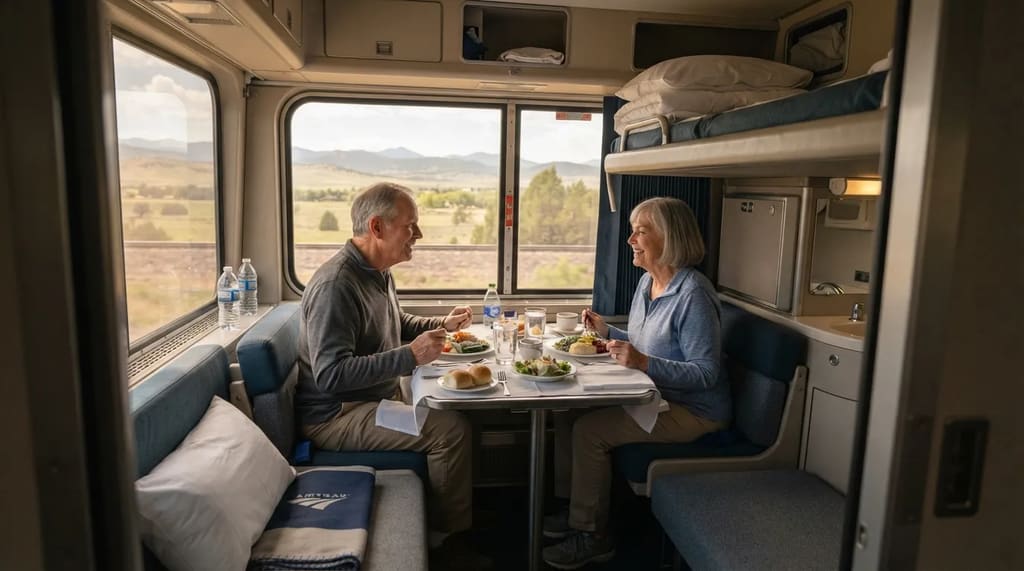
The fare you see on the booking screen is only part of what a sleeper ticket buys. Here is what the room price already holds.
Worth Knowing
- Meals: included for you and the passenger sharing the room.
- Service: a dedicated attendant for turndown, meals and luggage help.
- Before boarding: complimentary lounge access at major stations, plus priority boarding.
- In the room: fresh towels, bed linens, bottled water and climate control.
That changes the questions worth asking. You’re no longer comparing a train fare with a plane fare, but comparing one bundle with the cost of a coach seat plus food and a night somewhere else.
It also shows where your attention pays off. The senior discount leaves the room alone, so what you do about the room matters more than the percentage on the rail fare.
On a two-night trip, which would you give up first: the upstairs bedroom’s private bathroom, or the lower roomette’s easy steps?
- Amtrak Vacations Bedroom: https://www.amtrakvacations.com/trip-planning/private-sleeping-accommodations/bedroom
- Superliner Sleeper Layout Guide: https://travelupclose.com/amtrak-sleeping-accommodations-guide-to-choose/
- Amtrak Baggage Policy: https://baggagepolicies.com/amtrak-baggage-policy/
- Amtrak BidUp Guide: https://www.citizendailypost.com/faq/how-do-i-bid-on-a-roomette-on-amtrak