You picture the first hour as a cold drink on the patio and a long exhale. Snowbird regulars spend it with a flashlight under the bathroom sink. A winter rental that has sat closed since spring has had months for water to stand in the pipes, the refrigerator to go stale and the smoke alarm batteries to run down.
What you do in the first hour after carrying the bags in can decide whether the first week goes smoothly. The alternative is a string of calls to the owner and a nagging worry about the water. Most of these habits cost nothing, and the cheapest one is tied to the biggest bill of the whole season. We will count down to it, but first, the front door has to behave.
#16 – Every Lock Tested Before the Door Closes Behind You
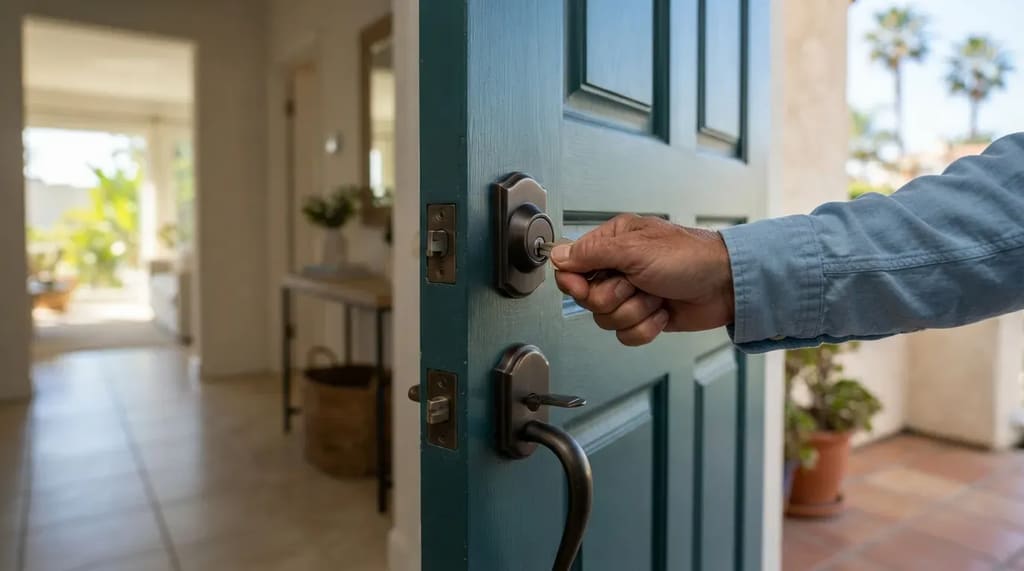
Before you unload the car, work the key or code on the front door, the back door, the garage and any gate. Try each one from the inside as well as the outside. A lockbox code that opens on the first try can still come with a deadbolt that sticks, and a sticking deadbolt is far easier to deal with at 3 p.m. than at 9 at night.
Check the latch on any sliding glass door and look at the track. A broom handle or a cut dowel laid in the track is the usual backup lock, and you can ask the owner for one. If only a single key came with the place, ask for a second one now. A lost sole key at a rental usually means a locksmith, and the owner may expect you to pay for it.
A door that locks says nothing yet about the air behind it, and that depends on the thermostat.
#15 – The Thermostat Gets Set Before the Suitcases Open
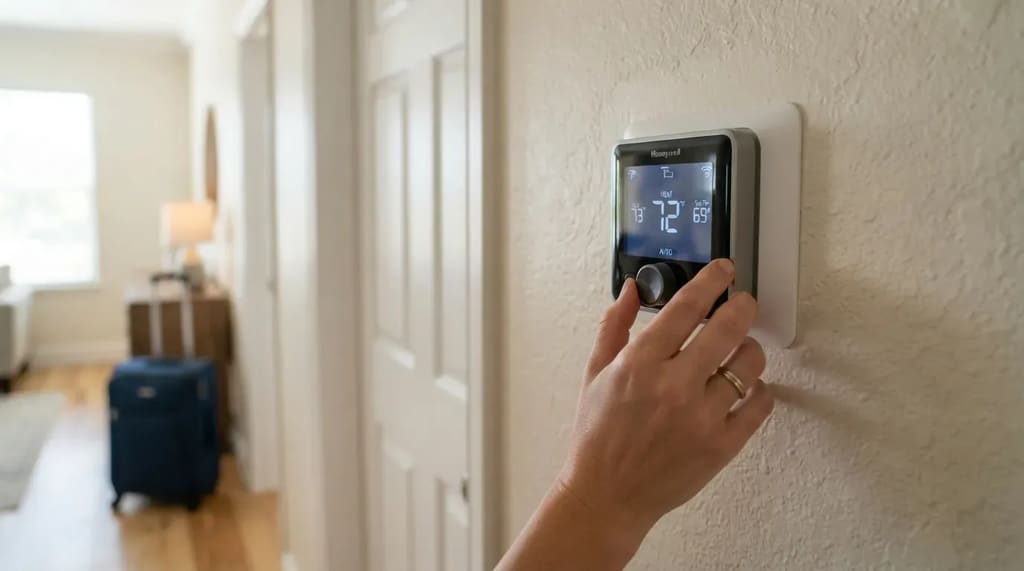
Pick a mode and a temperature first, then walk past a few vents to see whether air is moving. A house closed for months needs an hour or so to come around, so judge it after you have unpacked, not in the first five minutes. A setting left over from the last guest can make a perfectly good system seem dead. Cooling mode on a chilly evening, or a switch left on off, are the usual culprits.
If the filter slides out easily, look at it. A gray, matted filter is worth mentioning to the owner, because a clogged one makes the system work harder. If the thermostat is a smart model tied to an account, ask before you reset anything.
Some newer thermostats connect through the home Wi-Fi, so the router is worth finding right away.
#14 – Wi-Fi Name and Password Photographed on Day One
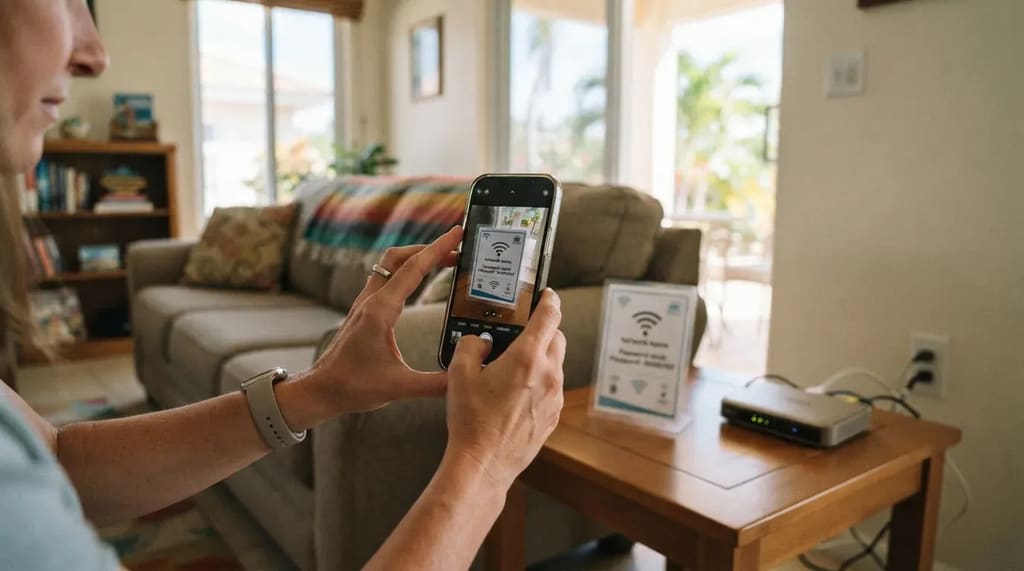
Rentals usually have a card, a binder page or a sticker on the router with the network name and password. Take a photo of it before it wanders off, because the owner’s welcome binder is the first thing to get shuffled into a drawer. Then find the router itself. Knowing which closet or shelf it lives on matters the first time the signal drops and you need to unplug it for thirty seconds.
Skip the formal speed test. A number on a screen means less than what you actually use the connection for. Start a video call with a grandchild and stream a show for five minutes in the room where you will sit most evenings. If either one stutters, tell the owner that same day. A provider visit can take a while to schedule, and you want that clock started early.
At a Glance
- Photo of the network name and password: done in seconds
- Router location: noted, in case it needs a thirty-second unplug
- Real-world test: a video call plus five minutes of streaming
- Problems: reported to the owner the same day
#13 – Trash Day Settled Before the First Full Bag
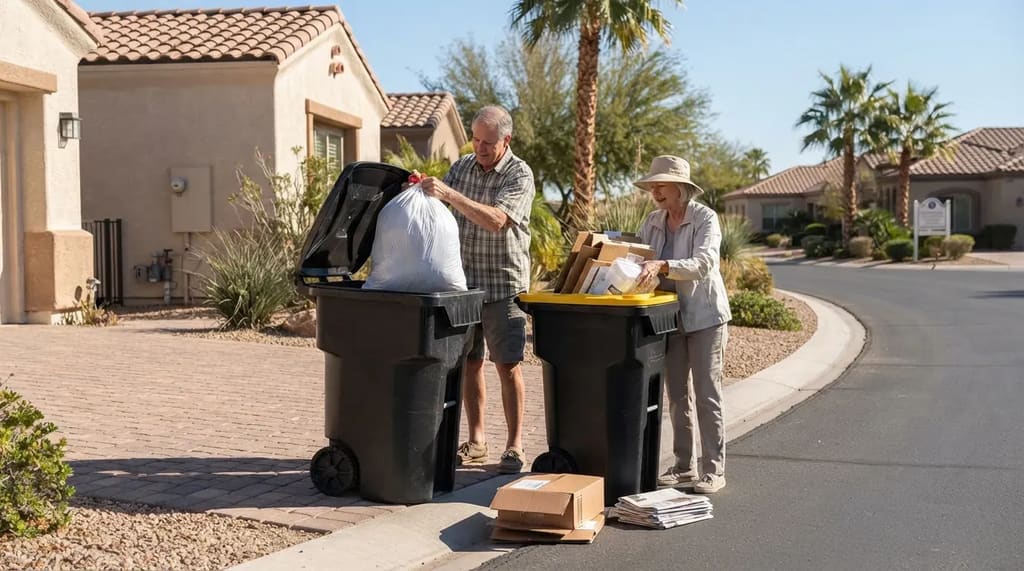
Find out which day the truck comes, where the bins go and whether recycling is separate. In a community with an association, also learn the rules on bins left at the curb. Some places limit how long containers may sit out, and the welcome binder or the rental agreement will usually list them. Ask about guest parking and any decal or registration at the same time, since those rules tend to live on the same page.
You will make trash within the hour, from packing material, shipping boxes and the first meal. Learning the system now means the bin goes out on the right night in the first week, not the second.
Anything the last guests left in the kitchen will be the first thing those bins have to take, and the refrigerator is where to look.
#12 – The Refrigerator Gets a Thermometer Before the Groceries
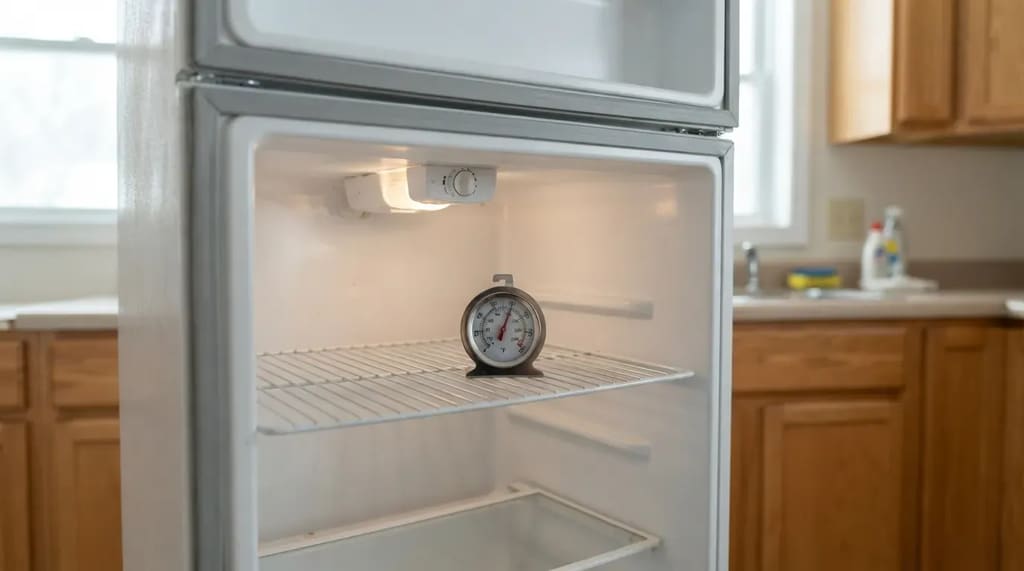
A refrigerator that has been off or running empty for months can smell stale and may not be cold enough. Food safety guidance puts a refrigerator at 40°F or below and a freezer at 0°F, and a cheap appliance thermometer is the only way to know where yours stands.1 Set it on the middle shelf, close the door and wait a few hours before you load perishables.
Meanwhile, take out anything the last guests left, wipe the shelves and look at the door gaskets for cracks. Throw out the first batches of ice, too. An ice maker that has sat idle is one of those water-using devices that need extra attention, as the water-flushing section below explains.
#11 – Mail Forwarding With an End Date Already Chosen
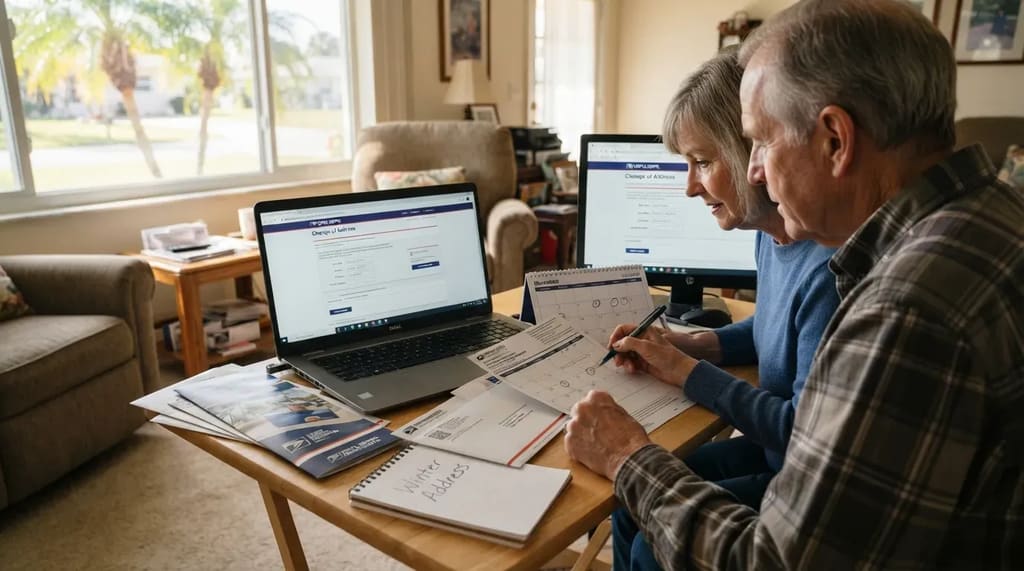
If you have not filed a temporary change of address with the Postal Service, do it now. The shortest order runs 15 days, and an initial order can last up to 185 days. A second order extends it, with the total capped at 12 months.2 USPS stops delivering to your home address on the start date, so choose a date that matches when you actually left.2
After the confirmed end date, the carrier goes back to delivering to the original address, so set that date near when you plan to head home. Think of forwarding as a safety net, not a system. Your bank, insurer, pharmacy and anyone sending time-sensitive paper should have the winter address directly. Forwarding also varies by class of mail, and magazines are handled differently from first-class letters.2
#10 – Mattress Seams Checked Before the Suitcase Leaves the Door
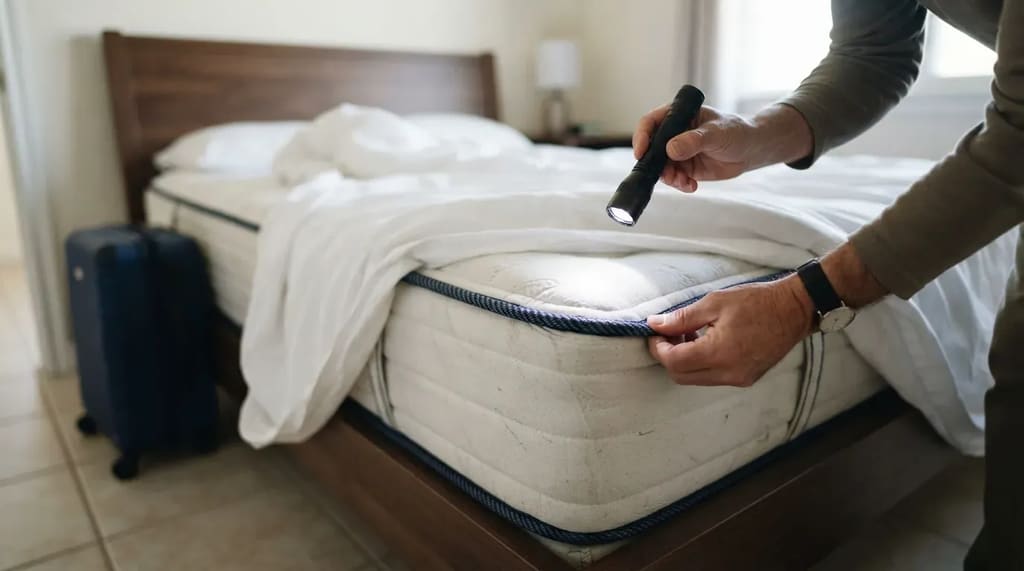
Bed bugs are the sort of problem that is cheap to catch in the first hour and miserable to catch in the third week. They tend to be found in or near the bed, so start there. Strip back the sheets and run a flashlight along the mattress seams, the corners, the tags and the box spring. Look for rust-colored or black specks, pale shed skins, or small reddish-brown bugs about the size of an apple seed.3 4 Then look behind the headboard and along the bed frame.3
Leave your suitcase by the door or on a hard floor while you check, not on the bed. Five minutes at the head of the bed is plenty, and you do not need to take furniture apart. If the unit has been rented to short-stay guests, the check matters more. If you find signs, keep the luggage closed, tell the owner and do not unpack.
#9 – The Water Shutoff and Breaker Panel, Found While Things Are Calm
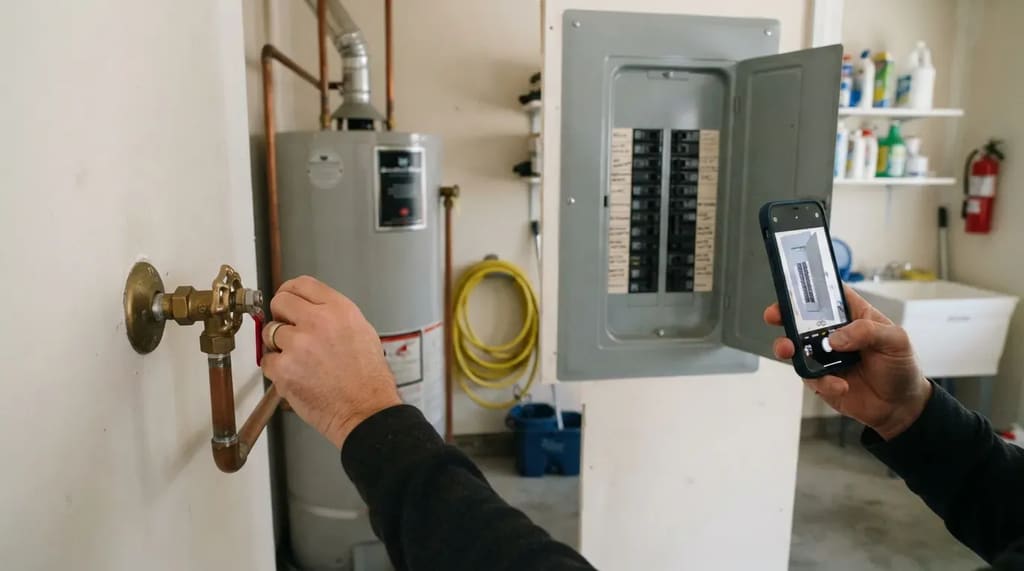
Walk the house once to find the main water shutoff, which is often near the water heater, in a utility closet or at an outside meter. Make sure you can reach it and turn it. A valve that has not moved in months can be stiff, and boxes stored in front of it make it harder.
Then find the breaker panel, which is commonly in a garage, hallway or utility room, and see whether the switches are labeled. Take a photo of each location so you are not hunting by flashlight later. In a condo, the shutoff for your unit may be shared or controlled by the building, so ask the owner or manager rather than guessing.
Fast Facts
- Main water shutoff: often near the water heater, in a utility closet or at an outside meter
- Breaker panel: commonly in a garage, hallway or utility room
- Stiff valve: far more likely after months of sitting, so test it gently
- Condo: your shutoff may belong to the building, so ask first
The valve is only useful once you know there is a leak, and the first place a drip shows up is under the sinks.
#8 – Every Sink Cabinet Opened, Every Toilet Base Touched
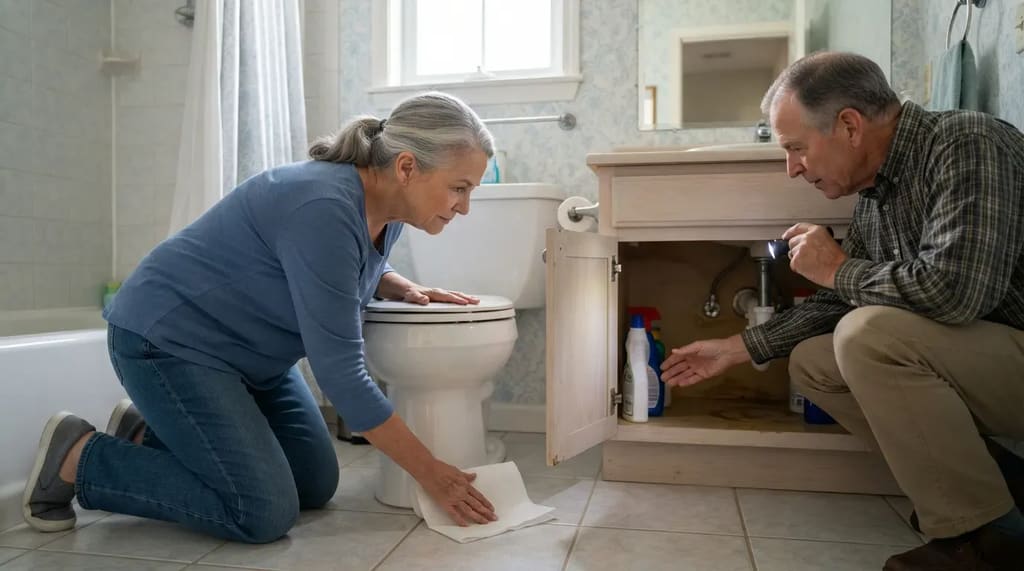
A slow leak in a closed-up home can go on for months before anyone sees it. Open each cabinet under a sink with a flashlight and look for stains, swollen or warped wood and a musty smell. Press your fingers around the supply lines and the base of each toilet. Look up at the ceilings, too, especially under bathrooms in a two-story unit.
A small stain you find on day one is a repair request. The same stain found in week six can become a question about how it got there. Run the washer and dishwasher through a short empty cycle and watch the hoses and floor. Run the garbage disposal briefly as well, if there is one.
If you do find a drip, the owner or manager is who gets the photo, and that phone number is worth saving now.
#7 – The Owner’s Number Saved and Your Address Texted Home
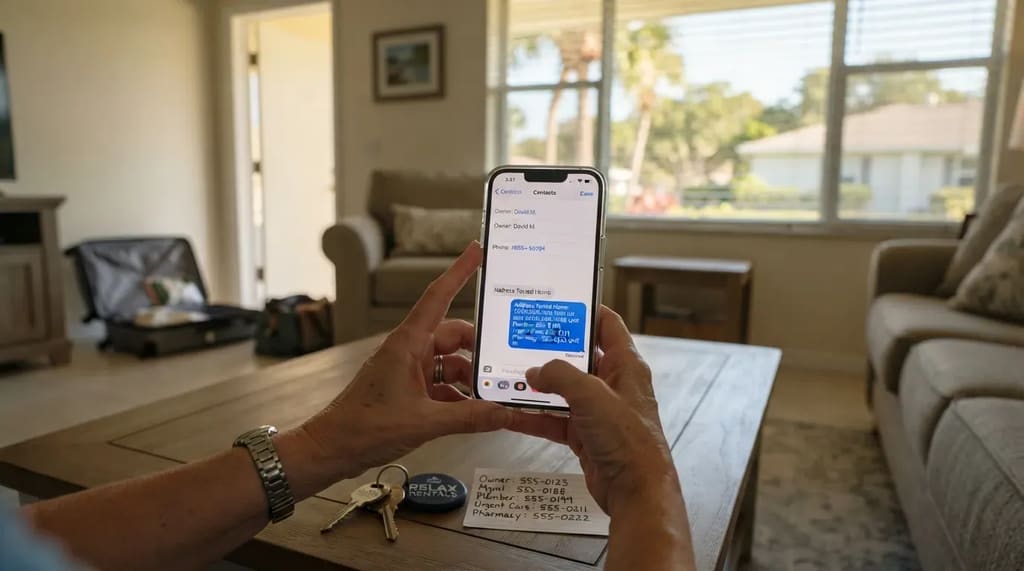
Put the owner’s number, the property manager‘s number and any after-hours line into your phone as contacts. Ask who you call when the air conditioning quits on a Sunday or a pipe bursts at night, and whether there is a preferred plumber or handyman. Having a name is far easier than searching a rental listing at 10 p.m.
Then text the full street address, unit number and any gate code to a family member or close friend. If you ever need to call 911 from a place you have only lived in for a few weeks, the address is not something you know by heart. Look up the nearest urgent care and pharmacy while there is no hurry, and save them too.
#6 – The Water Heater Dial Read Before Anyone Showers
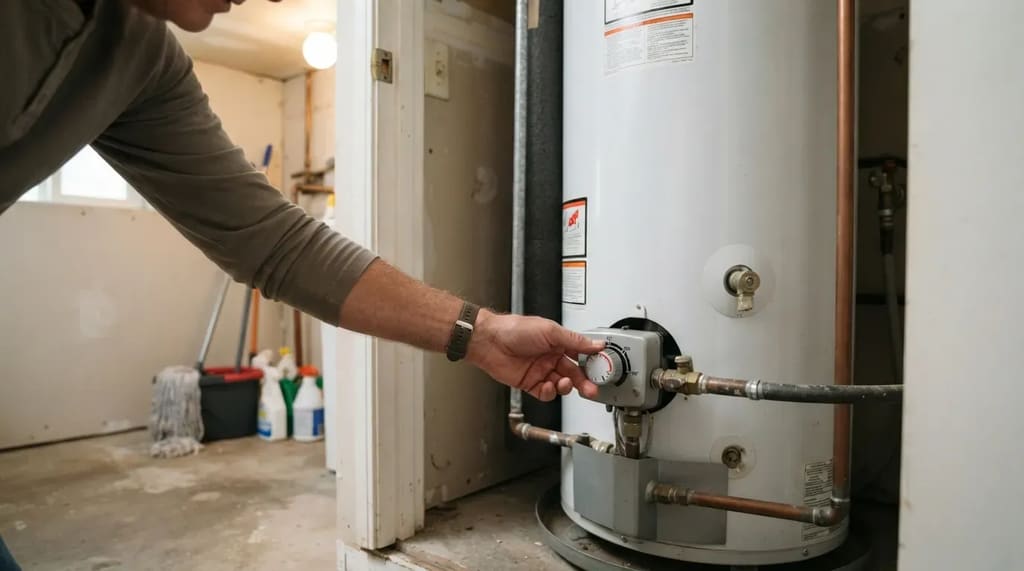
The CDC advises vacation rental owners to keep water heaters at or above 120°F to limit Legionella growth.5 If a heater is set higher than that, the CDC adds that mixing cold and hot water is a needed precaution against scalding. As a renter, you do not need to turn any dials. Read the label or setting if you can see it, and ask the owner what it is set to if the hot water never gets hot or comes out scalding.
If the heater is gas, check that it is running before you assume it is broken. Follow the printed instructions on the unit only as far as they go, then call the owner. The CDC also advises routine flushing of the heater itself according to the manufacturer’s instructions, which is the owner’s job, not yours.5
A water heater is one tank of warm water the owner is responsible for, and a hot tub in the back is another, with its own upkeep list.
#5 – The Hot Tub Stays Closed Until You Ask Two Questions
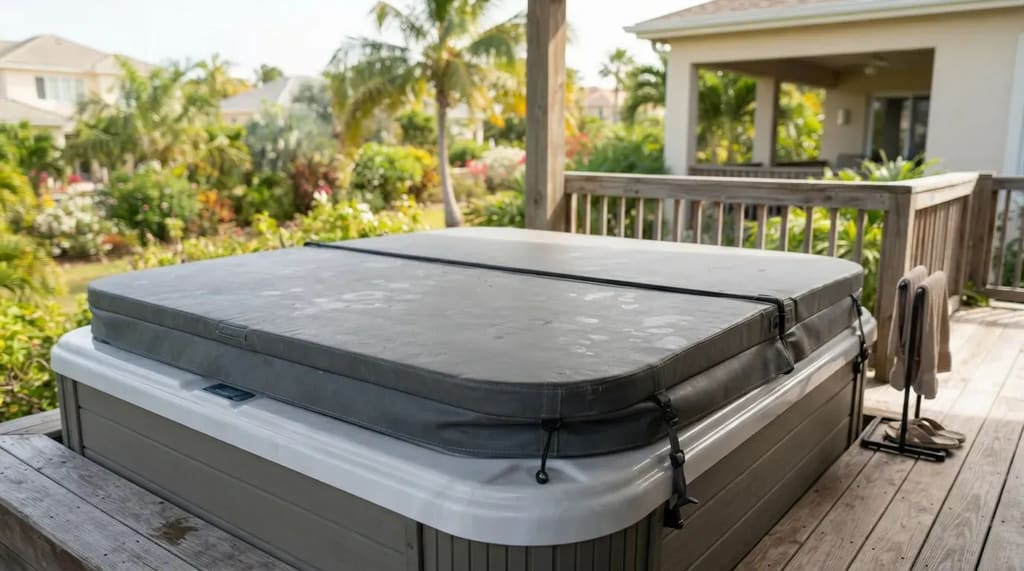
The CDC’s guidance for vacation rental owners lists what hot tub upkeep involves. It includes scrubbing the tub, replacing the filter and the water, and keeping up disinfectant levels, ideally with an automatic system instead of hand-feeding.5 Legionnaires’ disease comes from breathing in mist from contaminated water, and adults 50 and older are at higher risk.
That is why the questions are worth asking: when was the water last changed and the filter last replaced, and how is the disinfectant handled? Treat a hot tub as an amenity you earn by asking, not one you assume is ready. Skip it the first night, and skip it for good if the water is cloudy, foamy or smells strongly. Test strips for disinfectant and pH are cheap and worth keeping on hand if the owner is vague.
Quick Compare
- Looks ready: clear water, no strong smell, and clear answers about the last water change and filter
- Stays closed: cloudy or foamy water, a strong smell, or an owner who cannot say when it was serviced
- Middle ground: cheap test strips for disinfectant and pH while you wait for answers
#4 – Smoke Alarms Pressed, and the Date on Each One Read
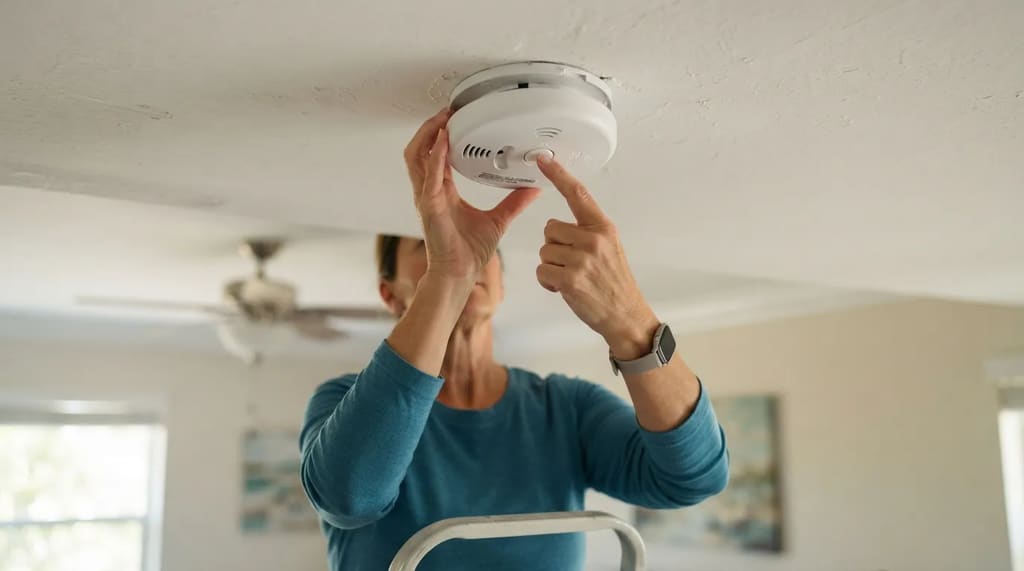
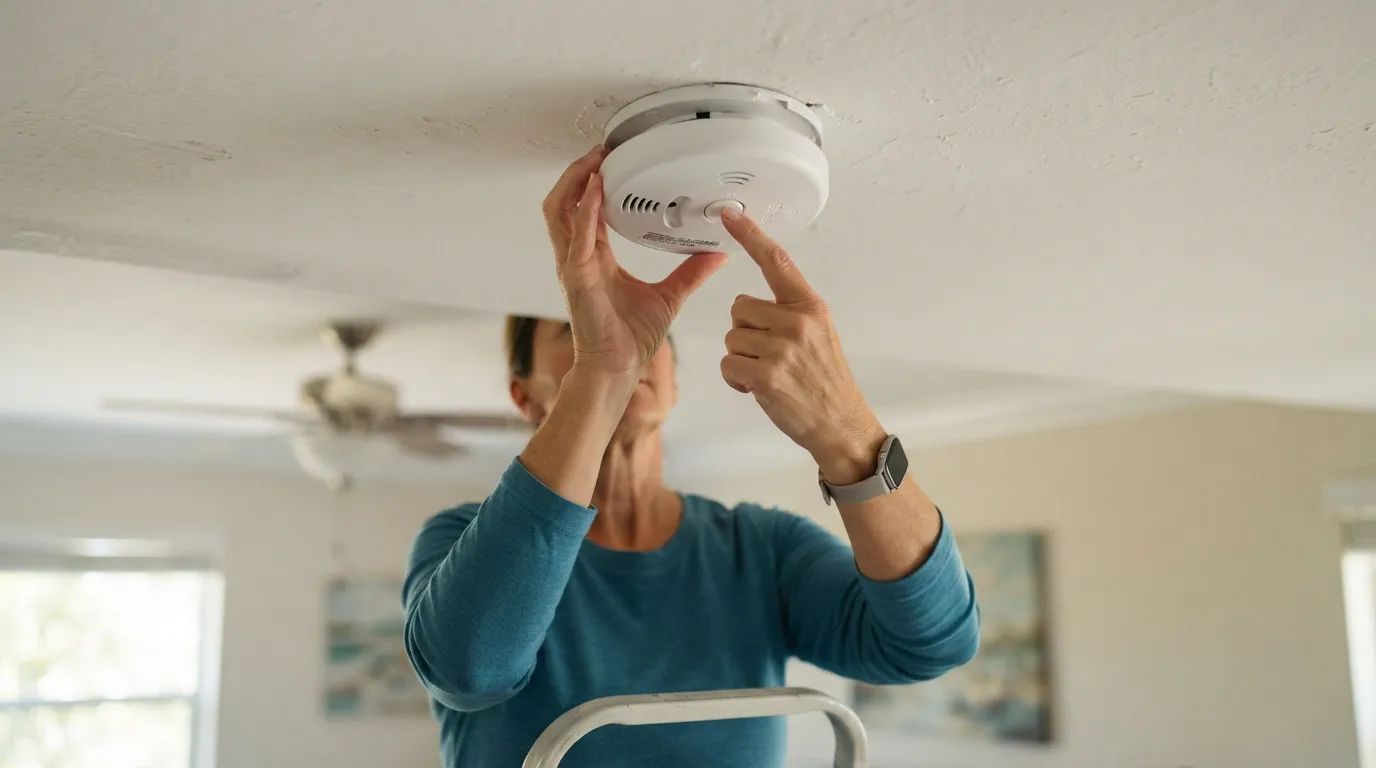
Press the test button on every alarm and wait for the full, loud tone. Florida, the snowbird capital, requires working smoke alarms in each sleeping area, outside sleeping areas and on every floor, and that is a fair checklist to follow in any rental. A chirp every minute or so usually means a low battery, and silence means the alarm does nothing at all.
Turn each alarm over or look for the manufacture date on the back. Smoke alarms wear out after about ten years, whatever the battery says. In Florida, a replacement battery-powered alarm in a one- or two-family home generally has to use a sealed 10-year battery, so a proper owner fix will not be a simple 9-volt swap.
Smoke alarms listen for fire, and they will not detect carbon monoxide unless they are the combination type.
#3 – A Carbon Monoxide Alarm Within Ten Feet of the Bedrooms
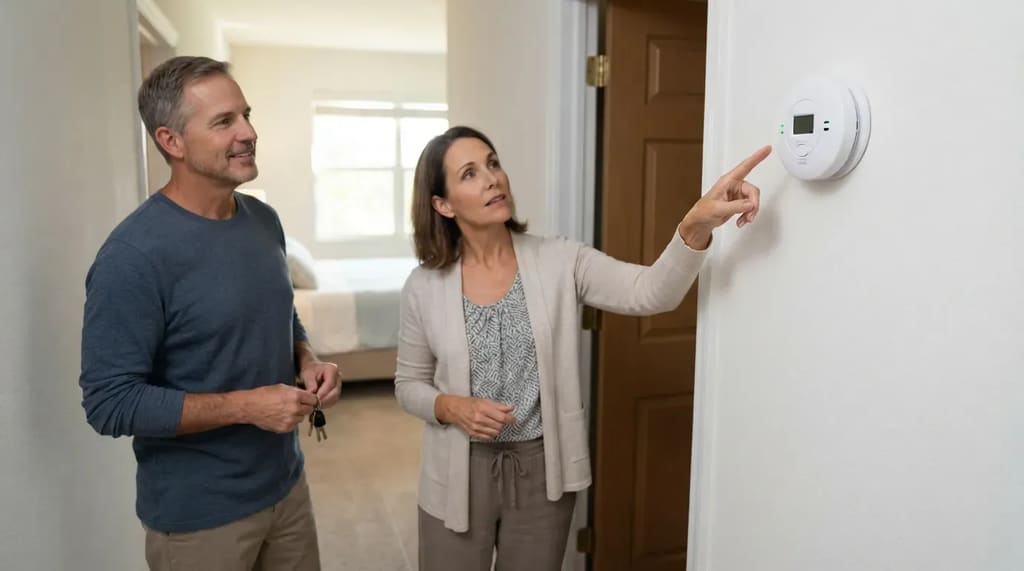
Florida’s carbon monoxide alarm law applies to buildings and additions built on or after July 1, 2008 that have fuel-burning appliances, a fireplace or an attached garage.6 In those buildings an alarm belongs within ten feet of each room used for sleeping. That means an older rental may have no alarm at all, and other states set their own rules.
Related Stories From Travelbinger


If your unit has a gas stove, gas water heater or garage, find the alarm. If you cannot, ask the owner or buy a plug-in or battery model. A combination smoke and carbon monoxide alarm satisfies the Florida requirement, so check what you have before you buy anything.6 Know the symptoms: headache, fatigue, shortness of breath, nausea and dizziness. If an alarm sounds or you feel them, leave the building and call the fire department.
Worth Knowing
- Florida’s rule covers buildings and additions built on or after July 1, 2008
- Triggers: fuel-burning appliances, a fireplace or an attached garage
- Placement: within ten feet of each room used for sleeping
- A combination smoke and carbon monoxide alarm counts
- If it sounds: get out first, then call the fire department
Alarms watch the air, but the water that stood in the pipes since spring has not been checked by anything yet.
#2 – Every Faucet and Shower Run Long Before Anyone Drinks
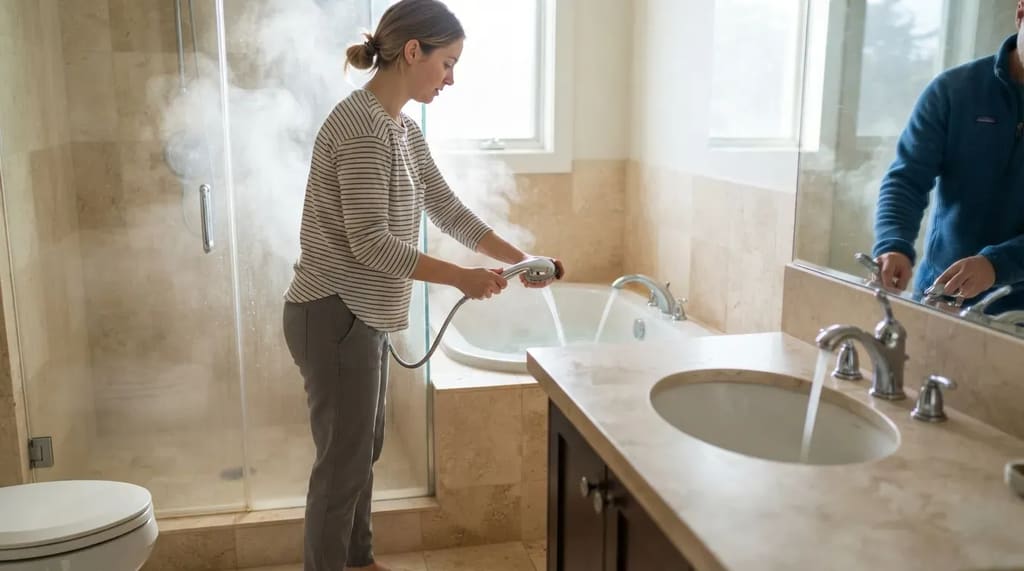
The CDC says low or irregular occupancy cuts water flow and can lower disinfectant levels, and it advises flushing any faucet or showerhead that has gone a week or more unused. Run hot and cold water at every sink, tub and shower, and flush each toilet. Let the hot water run until it reaches its maximum temperature. Five minutes per outlet is a common starting point, though there is no single magic number.
Lower the showerhead toward the drain and step back to avoid breathing in spray. Include the refrigerator’s water and ice dispenser from earlier, and run the hot side long enough to clear whatever the water heater was holding. The CDC’s reopening guidance also says people with weakened immune systems should read its advice on protection while flushing. Check with your doctor if that applies to you.
None of this leaves any record, and a record is exactly what you will want when the season ends.
#1 – Dated Photos of Every Room, Sent to the Owner Today
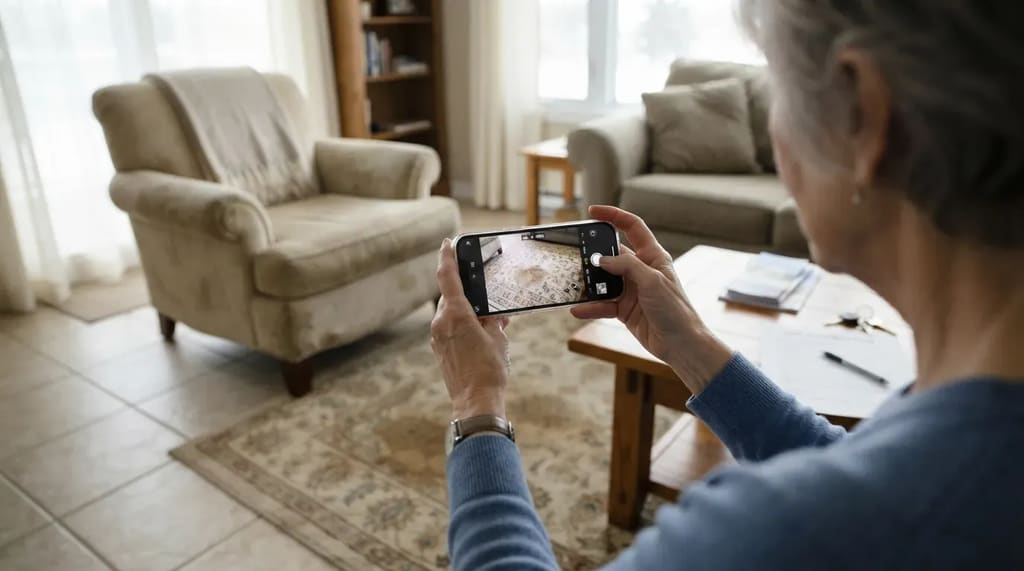
Walk through with your phone and take wide shots of each room, then close-ups of anything worn, scratched, stained or broken. That means the carpet, countertops, tile, appliances, furniture, the mattress seams from earlier, and any stain you found under a sink. Phone photos carry the date and time. Emailing them to the owner or manager the same day puts a record somewhere other than your own phone.
This is the cheapest item on the list, and it ties to the biggest bill of the season, the security deposit. Disputes over damage at the end of a stay often come down to whether it was there before you arrived. If the owner has a move-in condition form, ask for it and fill it out. Check your lease for any deadline to report existing damage, since some require it within a few days.
The first hour works best when you treat it like the handover of a house you will soon be responsible for. Almost everything above is cheap, takes a few minutes and is easier before the unpacking and the first dinner.
Problems you find now belong to the owner. The same problems found three weeks in can start to feel like yours.
What is the first thing you check when you walk into a place that has been shut up for months?
- USDA Appliance Thermometers: https://www.fsis.usda.gov/food-safety/safe-food-handling-and-preparation/food-safety-basics/appliance-thermometers
- USPS Change of Address Basics: https://faq.usps.com/s/article/Change-of-Address-The-Basics
- EPA How to Find Bed Bugs: https://www.epa.gov/bedbugs/how-find-bed-bugs
- EPA Bed Bug Appearance: https://www.epa.gov/bedbugs/bed-bugs-appearance-and-life-cycle
- CDC Vacation Rental Owners: https://cdc.gov/control-legionella/php/hospitality/considerations-for-vacation-rental-owners-and-managers.html
- Florida Statute 553.885: https://www.leg.state.fl.us/statutes/index.cfm?App_mode=Display_Statute&Search_String=&URL=0500-0599%2F0553%2FSections%2F0553.885.html