The second meal on a long-haul flight is the one most people treat as an afterthought. Frequent flyers treat it as a quiet advantage, and the habits below are exactly what they do while everyone else fumbles with a foil lid.
None of it requires a premium seat or a secret handshake with the crew. Some of it is simple, some of it is surprisingly sneaky, and one habit at the very end changes how your whole next day feels.
1. They Tell the Crew Before Takeoff Whether to Wake Them
Here is the first thing seasoned flyers sort out, and they do it before the plane even pushes back. They tell the flight attendant, politely and briefly, whether they want to be woken for the second meal.
Most crews hate disturbing sleeping passengers, so many simply let you rest and move on. That sounds kind until you wake up ravenous, with the cart long gone and an hour left in the air.
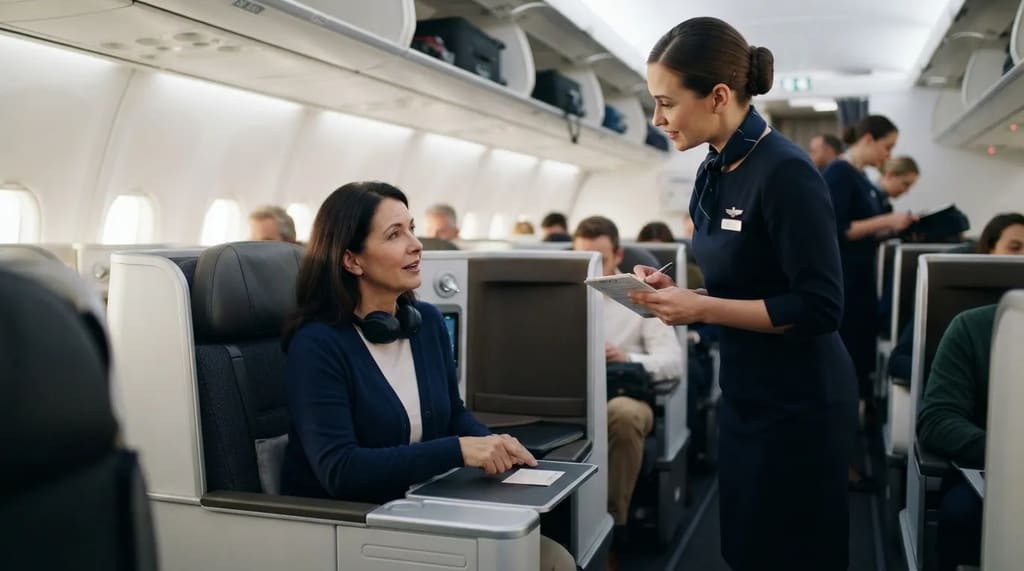
A quick sentence at boarding fixes it: wake me for breakfast, or let me sleep and bring something later. Crews on long routes are usually happy to help when they hear a clear, friendly request.
There is a trade-off, and regulars accept it. Sleep usually wins over food, but they would rather choose than have it chosen by accident.
That small bit of foresight is the opening move. The next habit happens just as early, and it involves a menu most people never bother to read.
2. They Decide What to Eat Before the Cart Reaches Their Row
When the cart is three rows away, first-timers start reading the menu for the first time. Regulars have already decided.
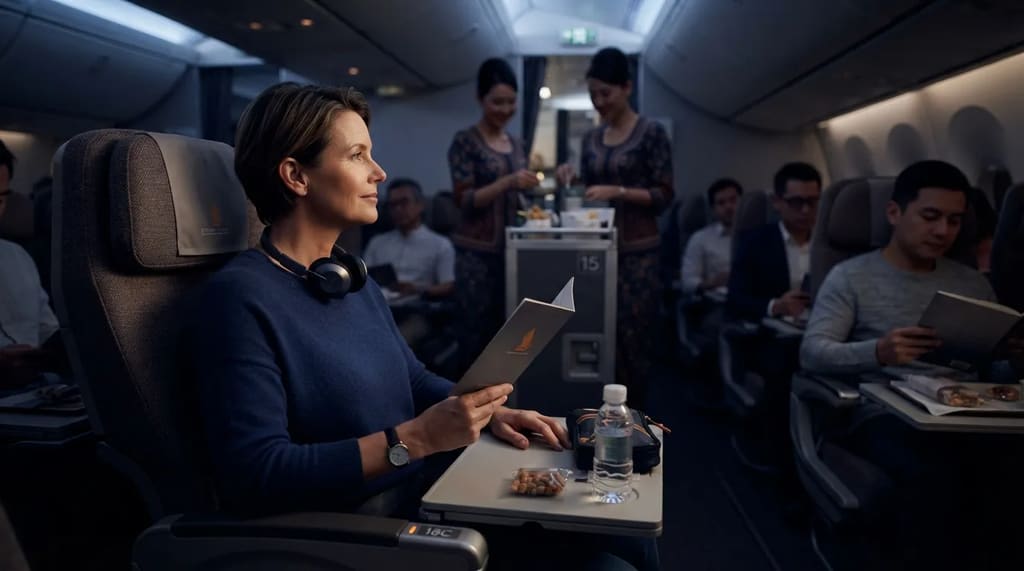
Second meals are usually smaller and simpler than the first, often a breakfast plate, a sandwich, or a light hot dish. On some airlines, premium cabins let you pre-select your meal ahead of the flight, and Singapore Airlines’ Book the Cook is a well-known example.1
Choosing early means no panicked guess when the attendant says only one option is left. Popular dishes can run out, especially deep into a long flight.
Regulars also watch the cabin for clues. If the crew starts serving from the front, they know roughly how long they have before the cart arrives.
Choosing is only half the strategy. The other half is making sure you are not stuck in your seat when the cart finally rolls in.
3. They Hit the Restroom Just Before the Cart Rolls Out
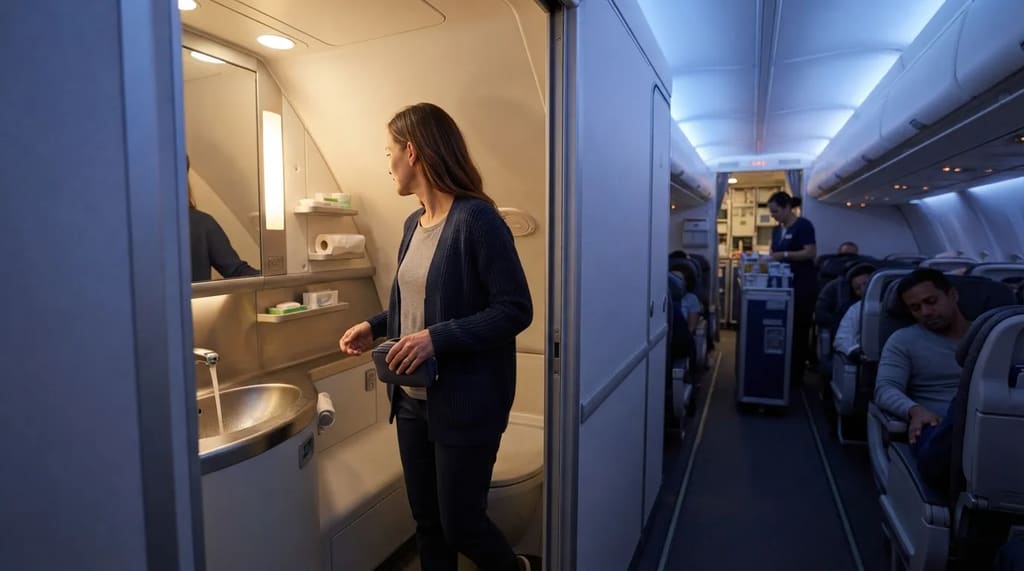
Watch a regular when the cabin lights start to brighten, and you will see them slip quietly toward the lavatory. They are racing a cart that is about to turn the aisle into a one-way street.
Once service begins, the aisle is blocked for long stretches. That is a long time to sit holding a cooling coffee and a full bladder.
Going just before is smart because the lines are usually shortest while most passengers are still dozing. Wait until the smell of breakfast spreads, and half the cabin suddenly remembers they need to go too.
A splash of water on the face and a quick teeth brush also feel like a small reset. Doing it before the rush means it never has to be squeezed in later.
Back in the seat with a clear schedule, regulars do something that looks tiny and matters more than the food. They drink water first.
4. They Drink Water Before They Touch the Tray
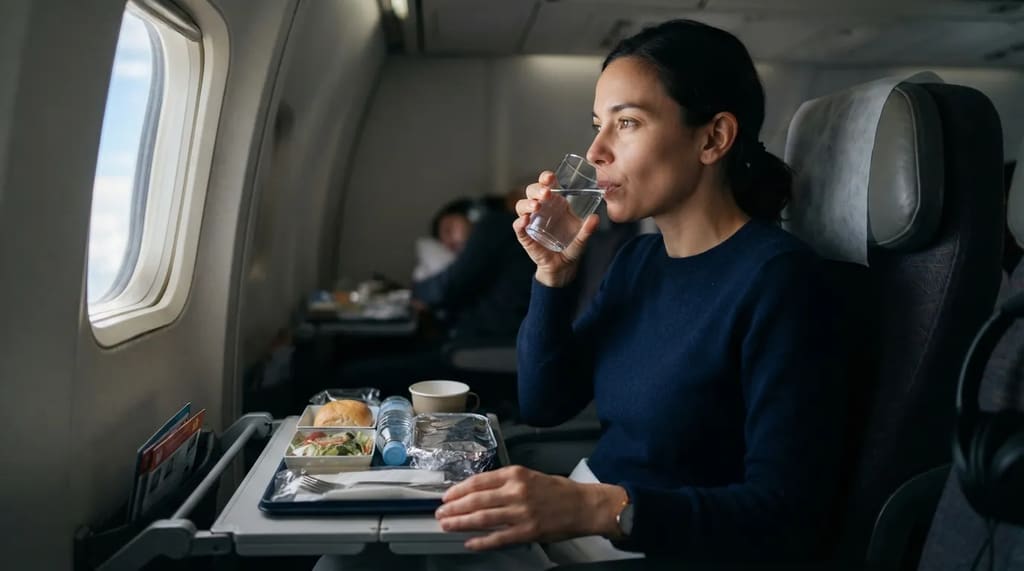
Airplane cabins are dry, and humidity is often reported to sink below 20 percent at cruise, a level commonly compared to desert conditions.2 By the second meal, you have been breathing that air for hours.
Regulars ask for water first and finish a glass before they start on the coffee and juice. Thirst can masquerade as tiredness, and they do not want to land feeling flattened.
They do not gulp it all at once. Small, steady sips keep things comfortable without turning every trip to the lavatory into a production.
It helps the meal too, because a dry mouth makes bread and eggs taste duller than they should. Water first gives every bite a fair chance.
Fast Facts
- Cabin humidity commonly sits around 10 to 20 percent, while comfortable indoor air on the ground is closer to 30 to 60 percent.
- Cabin pressure is typically set to feel like roughly 6,000 to 8,000 feet above sea level.
- Dry air cuts saliva, and your tongue needs saliva to register flavor.
- A dry nose dulls smell, which does much of the work in what we call taste.
And speaking of dull food, there is a reason it often tastes like nothing at 35,000 feet. Regulars came prepared for it.
5. They Bring Their Own Salt, Pepper, or Hot Sauce
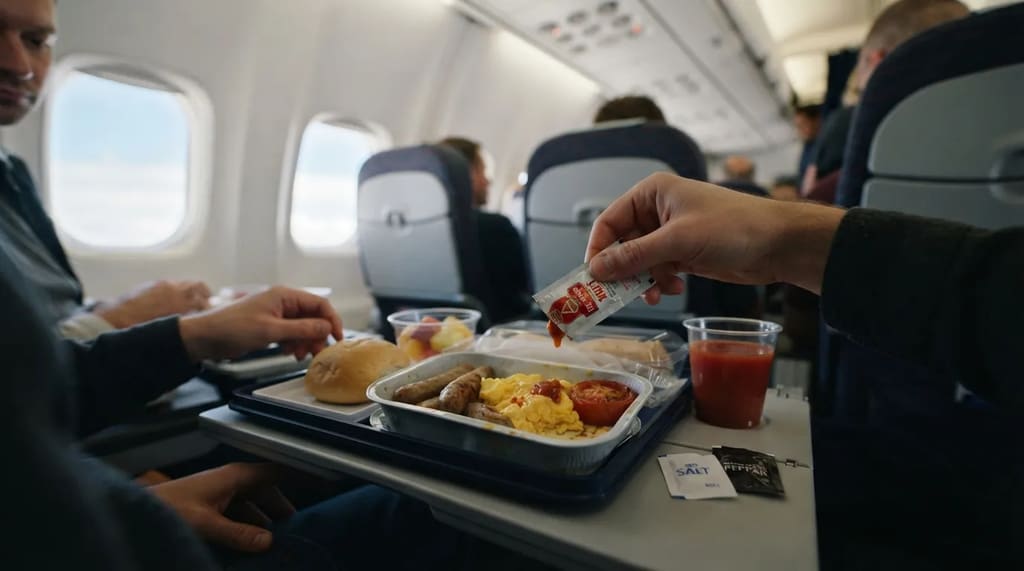
At cruising altitude, your sense of taste takes a hit. Low cabin pressure and dry air dull how you perceive sweet and salty flavors, and research linked to Lufthansa is widely cited as finding a drop of around 30 percent.2 3
That is why scrambled eggs that seemed fine on the ground can taste like warm nothing in the air. It is also why umami-rich tomato juice is so oddly popular on planes.
Regulars carry a few hot sauce packets or a pinch of seasoning in a tiny container. They weigh almost nothing, and anything liquid has to meet security limits, so many stick to dry or sealed packets.
Some also pick the boldest option on the menu, like a curry, a tomato-based dish, or anything with spice. Strong flavors tend to hold up in the air better than delicate ones.
Seasoning rescues flavor, but it cannot rescue texture. That is why regulars are picky about what they order in the first place.
6. They Pick the Dish That Survives the Reheating Oven
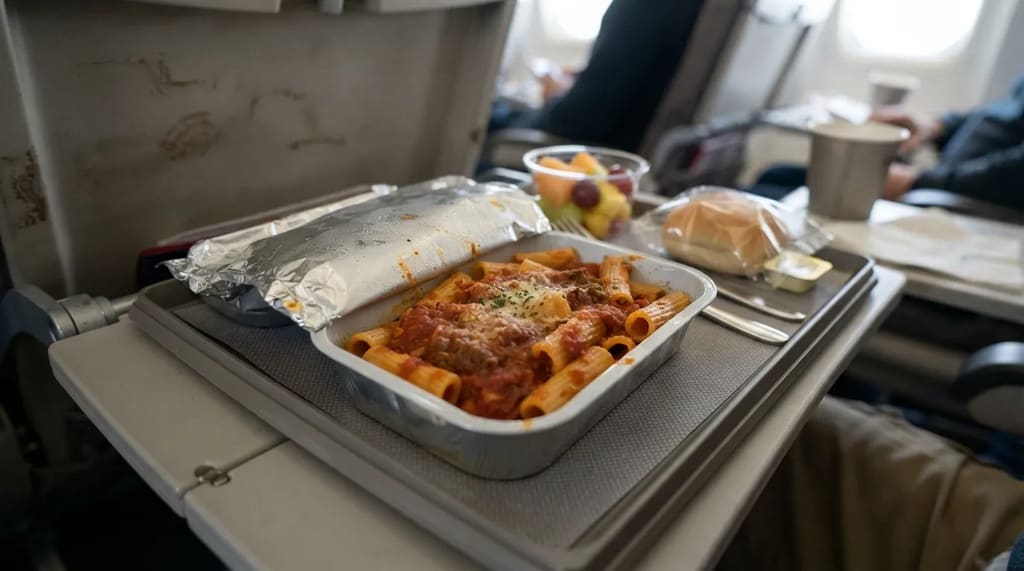
Airline meals are typically prepared on the ground, chilled, and reheated in the galley. Some foods handle that journey far better than others.
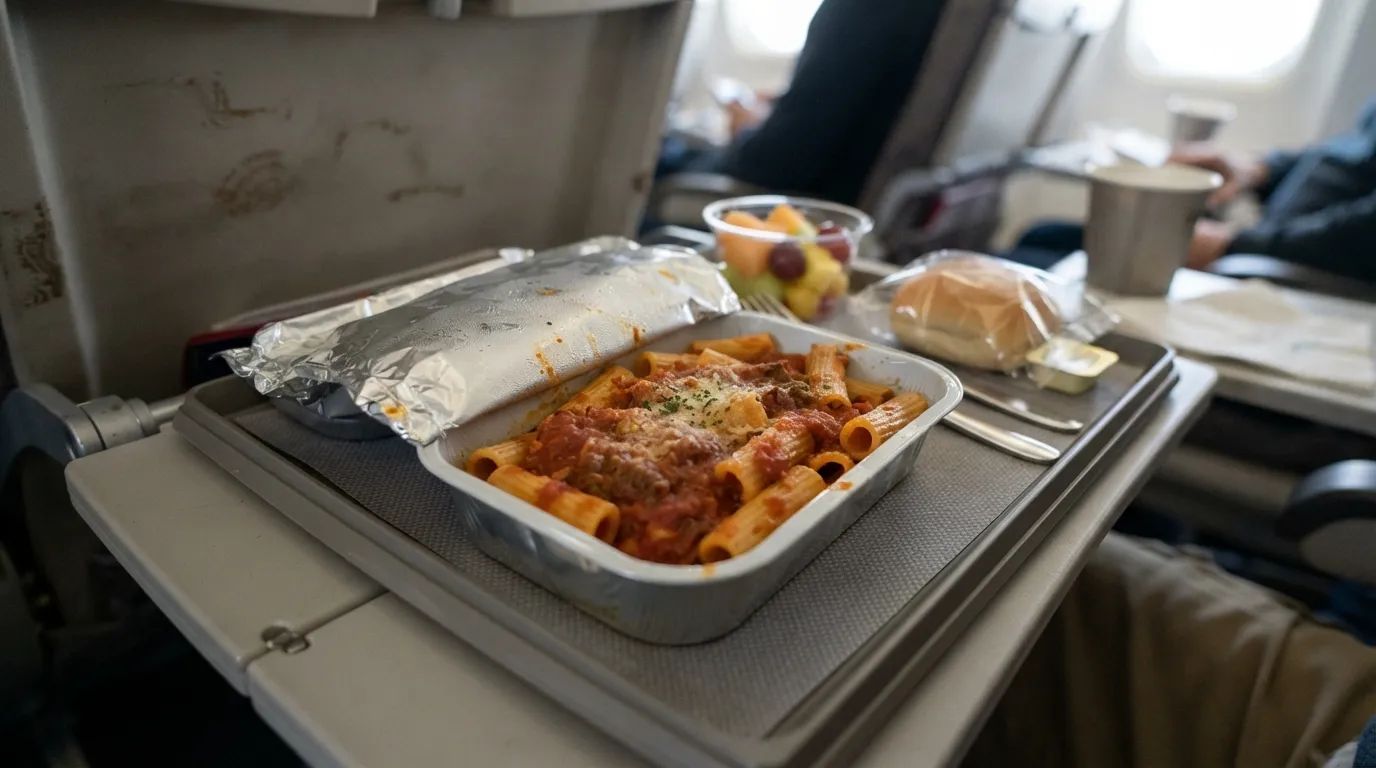
Scrambled eggs can turn rubbery, and delicate proteins can dry out. Regulars lean toward foods that tolerate reheating, like stews, pasta in sauce, oatmeal, pastries, and fruit.
Sauce is the quiet hero, because it keeps food moist when the oven is unforgiving. A dish with plenty of sauce usually beats a dry one that has been sitting in a foil tray.
Quick Compare
- Usually safe bets: saucy pasta, stews, oatmeal, pastries, fresh fruit.
- Often a gamble: scrambled eggs, plain chicken breast, delicate fish.
- Flavor bonus: spicy and tomato-based dishes tend to cut through a dulled palate.
Once the tray is sorted, the next trick is about what goes in the cup. It divides regulars from rookies faster than almost anything else.
7. They Pass on the Wine at the Second Service
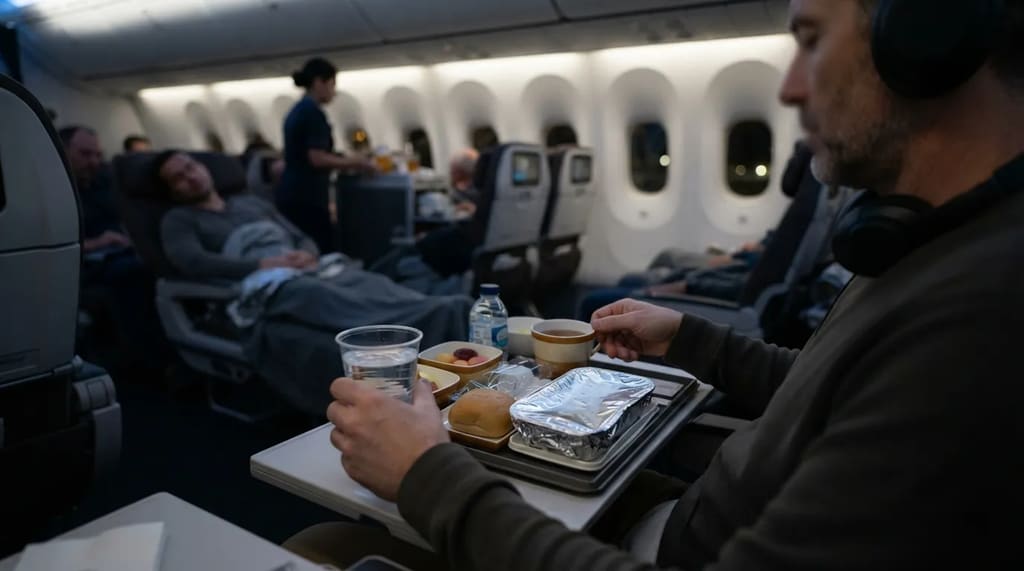
The first meal often arrives with a festive wine pour. Regulars know the second one is a different animal.
Alcohol is dehydrating, and it can fragment sleep, which matters when you are trying to land with some dignity. Many travelers also say a drink simply hits harder in the air.
Instead, they go for tea, water, or juice and save the celebration for the ground. It is a small act of discipline that pays off at passport control.
None of this is a moral stance, just practicality. Plenty of regulars happily enjoy a glass with the first meal and call it a night.
But skipping one drink does not mean skipping the other one. Regulars are just as strategic about caffeine.
8. They Time the Coffee Instead of Just Accepting It
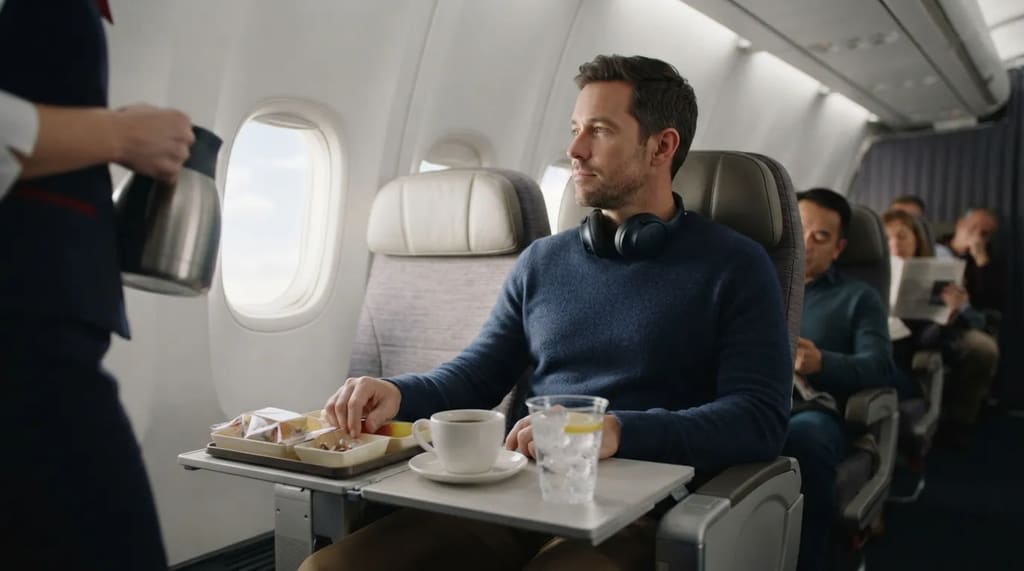
Coffee in the air is a tool, not a reflex. Regulars know that when they sip matters as much as whether they sip.
If they are landing in the morning and need to function, the second meal is a smart moment for caffeine. If they are landing at night and need to sleep that evening, they quietly wave it away.
Caffeine can linger in the body for hours, with a half-life commonly estimated at around five hours, though it varies from person to person.4 A cup at the wrong moment can follow you into bed.
They ask for water alongside it, because the cup is only half the equation. And speaking of asking, regulars have a clever way of making requests that keeps crews smiling.
9. They Ask for Everything in One Polite Sweep
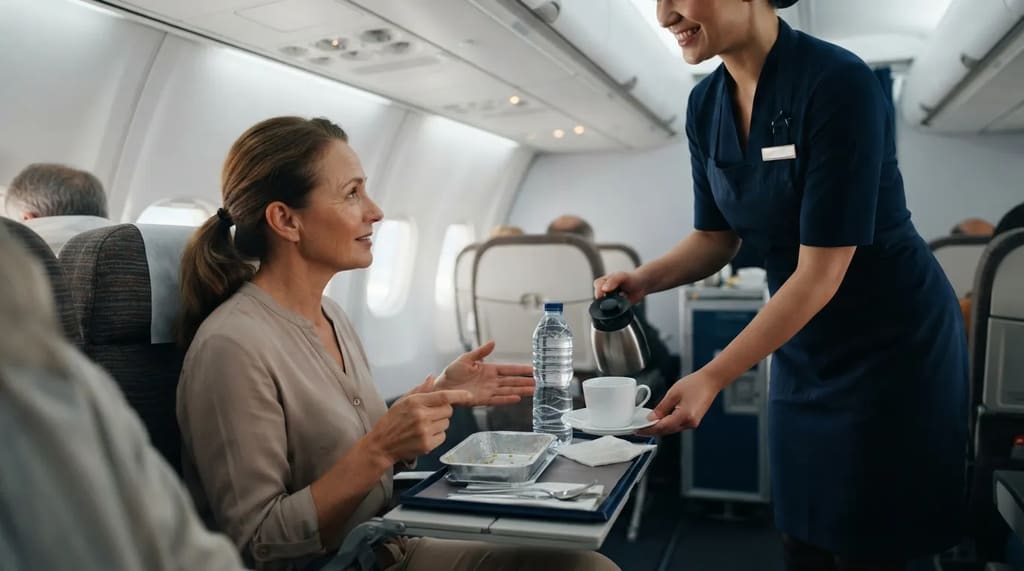
The crew has a lot to do in a short window, and the second service is often squeezed in ahead of descent. Regulars respect that by bundling their requests.
When the attendant arrives, they ask for coffee, extra water, and a napkin in one breath, instead of pressing the call button three times. It saves everyone a trip.
Small touches, like handing back trash neatly, help the crew move faster too. Everyone gets a smoother final hour.
It also tends to build goodwill, which is surprisingly valuable at 35,000 feet. A friendly, efficient passenger is the one who gets remembered when there is a spare pastry on the cart.
One request in particular pays off long after landing. It is a full water bottle.
10. They Get Their Water Bottle Refilled Before Descent
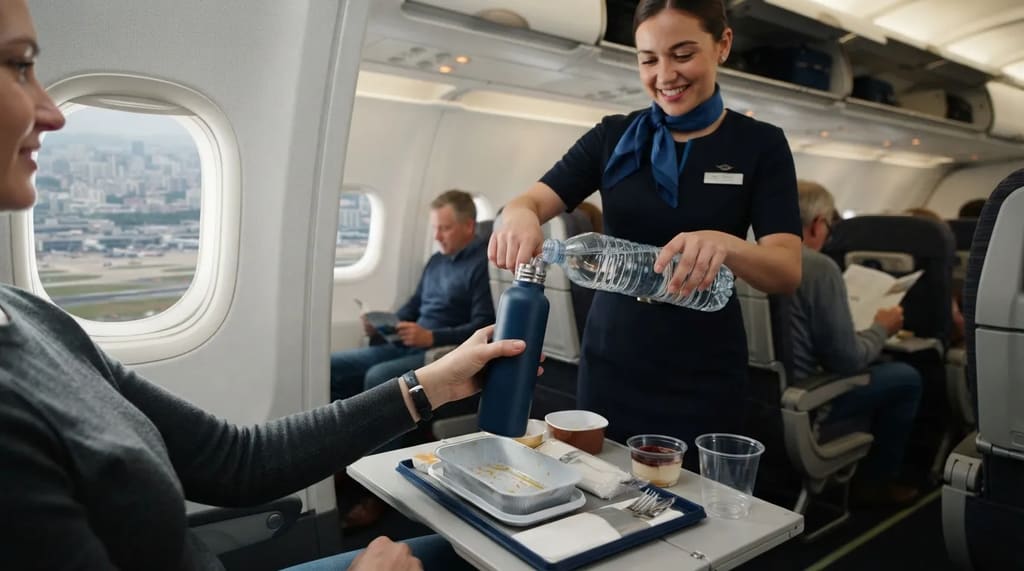
Regulars board with an empty reusable bottle, having carried it through security empty. Then they ask the crew to fill it during the second service.
Many airlines will help, though policies vary, and some crews prefer to hand over sealed bottled water for hygiene reasons. Asking nicely costs nothing, and a no is easy to accept.
That bottle carries them through the arrival hall, the immigration line, and the taxi queue. Airports after long flights can stretch on far longer than expected.
It also saves them from buying an overpriced bottle at the terminal. Hydration after landing has a way of mattering more than you would think.
What they do not carry through the arrival hall is leftover breakfast. This is where first-timers get burned.
11. They Never Pocket Fruit or Meat Across a Border
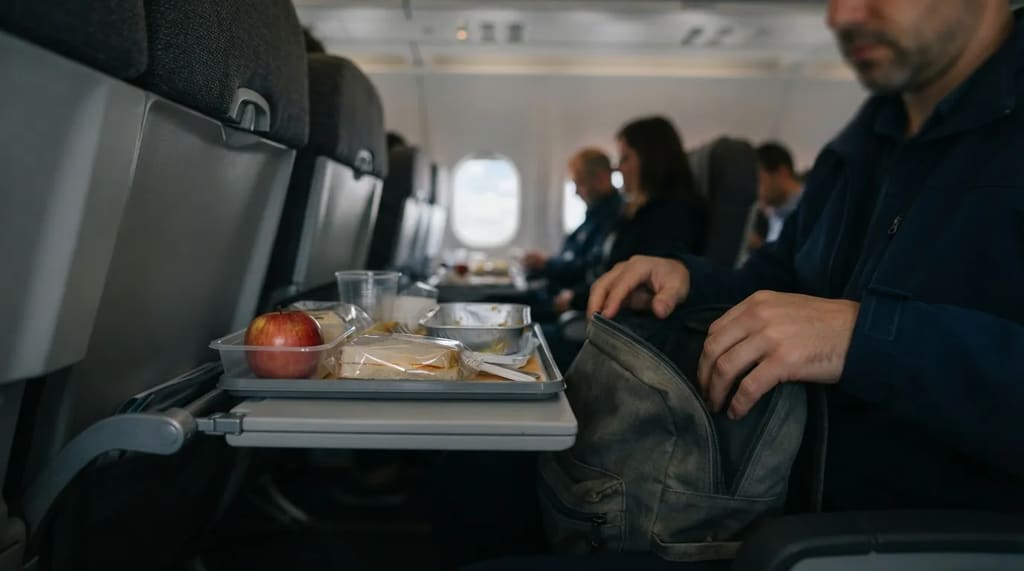
It feels thrifty to tuck the apple or the cheese sandwich into your bag. Then you land in a country with strict biosecurity rules and a form that asks whether you are carrying food.5
Places like Australia, New Zealand, and the United States regulate agricultural items, and undeclared food can lead to fines.5 Australia and New Zealand are especially known for strict inspections.
Regulars either finish the food before descent or leave it behind, and they declare anything they are unsure about. A pastry is not worth a penalty or a long conversation with an officer.
Sealed, packaged items may be allowed in some places, though rules vary widely by country. Checking the official customs website before you fly is the surest way to know.
Worth Knowing
- Fresh fruit, meat, and dairy are the items most often flagged at agricultural checkpoints.
- Declaring an item is almost always safer than hiding it, even if it ends up being thrown away.
- Airline meal leftovers are not exempt just because the airline served them.
- The destination country’s customs site is the final word, not a travel forum.
But finishing everything on the tray is not the answer either. The cabin has a sneaky way of punishing big portions.
12. They Go Easy on Fizz and Giant Portions
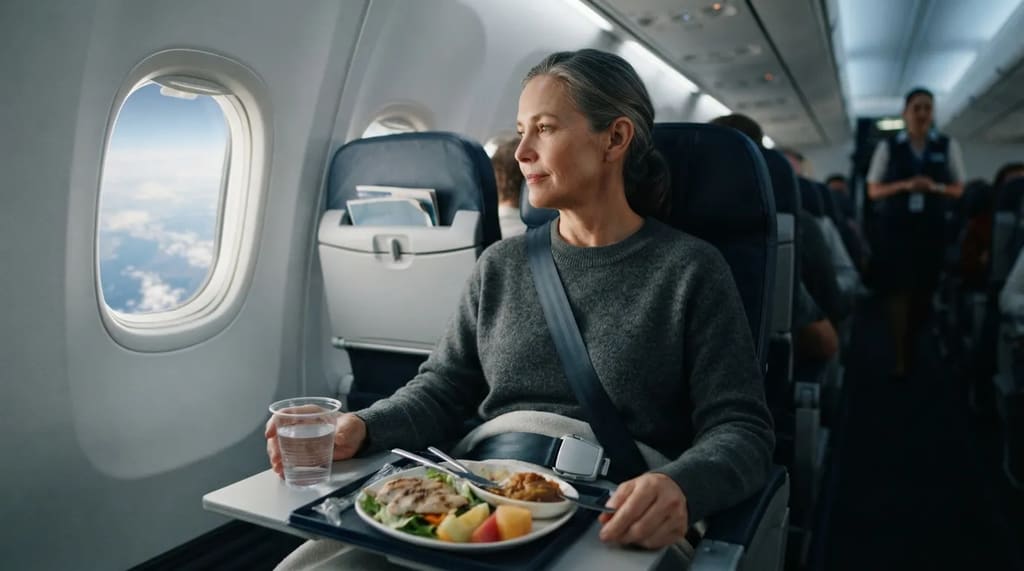
As the plane climbs, the air pressure in the cabin drops, and gases in your body expand. Anyone who has felt bloated mid-flight knows it is real.
That is why regulars skip soda and sparkling water at the second meal. They also do not clear every last bite out of politeness.
Feeling tight in a seat that barely reclines is a special sort of misery. Smaller bites, slower chewing, and plain water make the final hour far more comfortable.6
With the stomach settled, they turn their attention to the window. Something free is waiting there.
13. They Open the Window Shade and Let the Morning In
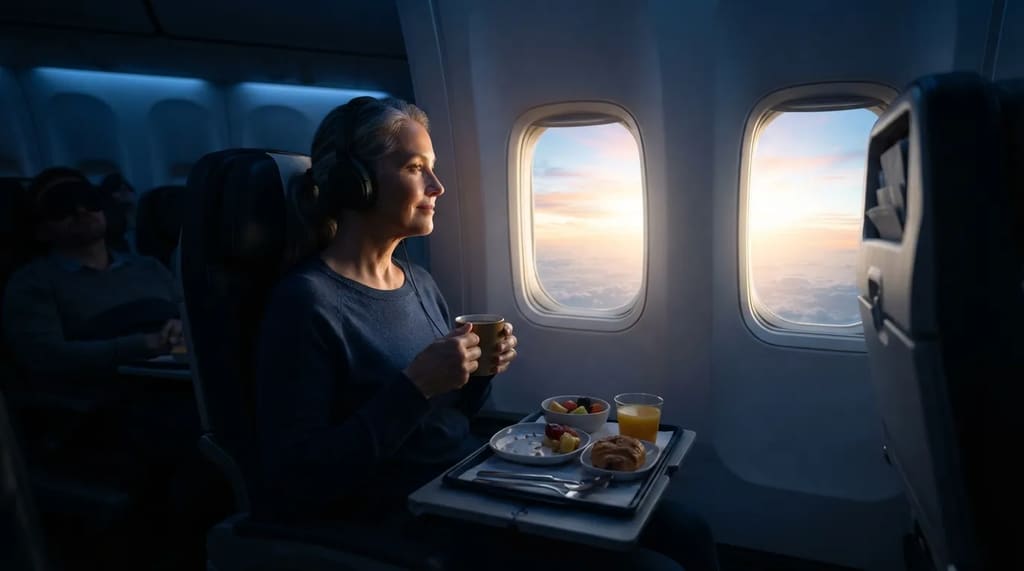
The second meal often lands right around dawn somewhere over the world. Regulars treat that light as an asset.
Light is one of the strongest signals your body clock responds to. If you are landing in the morning, looking at daylight during breakfast helps nudge you toward local time.7
Related Stories From Travelbinger

Around them, shades are pulled down and eye masks are on. Regulars crack open the shade or step toward a bright window, mindful of sleeping neighbors.
A bit of real daylight beats a cabin full of dim blue lamps. It sets the tone for the day before the wheels even touch down.
Some passengers had their breakfast before the cart was even in sight. They did not need luck to do it.
14. They Know Special Meals Often Come Out First
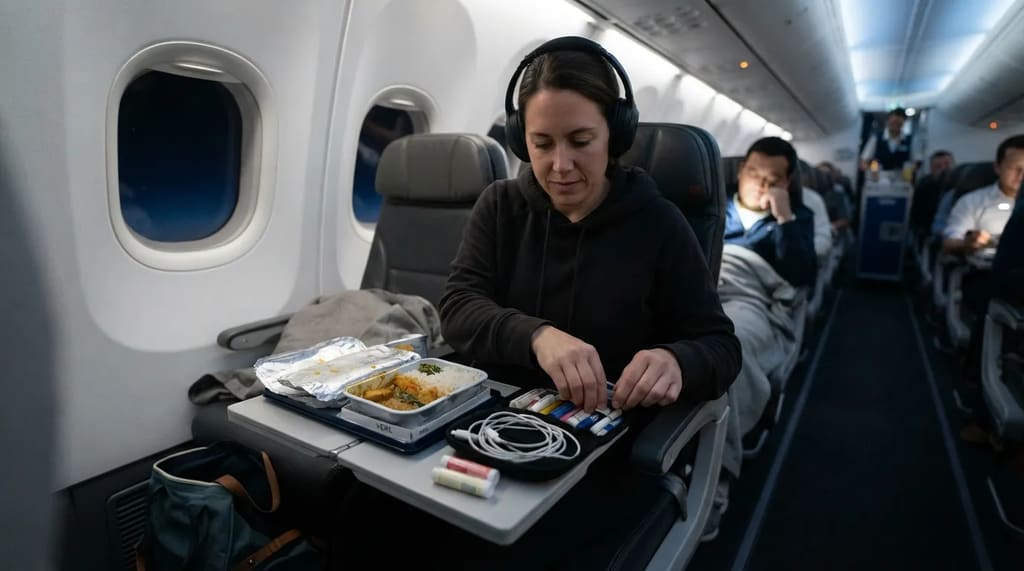
On many airlines, passengers who ordered special meals, such as vegetarian, gluten-free, or low-lactose, are served before the rest of the cabin. Regulars noticed that long ago.
Special meals typically need to be requested in advance, often 24 hours or more before departure, depending on the airline.8 That window is the part first-timers miss.
Regulars with a real dietary preference get a double benefit, food they actually like and often quicker service. Those who do not eat that way do not order something they will not touch.
Either way, once the tray lands, the clock is ticking. The smartest regulars use the downtime between bites for something nobody enjoys.
15. They Fill Out Arrival Forms With the Tray Table Down
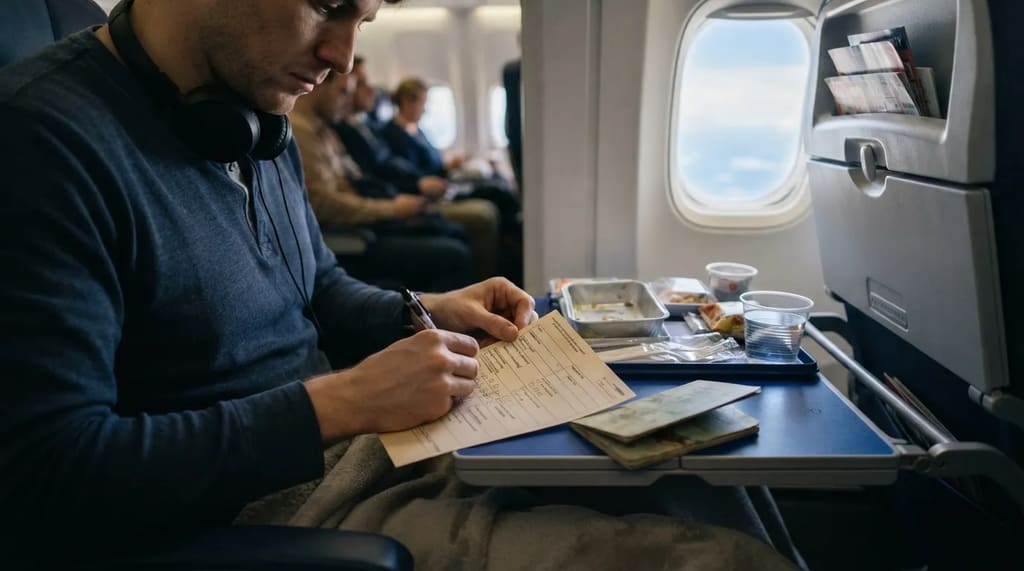
The second meal is the last calm stretch before descent. Regulars use it to get the boring tasks out of the way.
Many countries still require arrival cards or customs declarations, and some have moved to digital forms. Either way, having your passport number, address, and flight details handy beats scrambling in the final minutes.
Some airports offer online forms that can be done ahead of time. It is worth checking before you leave home, since procedures change.
At a Glance
- Keep handy: passport, flight number, and the address of your first night’s stay.
- Know the question: the food and agricultural declaration is the one people rush.
- Check ahead: some countries now prefer digital forms completed before departure.
They also keep a pen in their personal item, because everyone wants one at the same moment. With the paperwork done, they reach the habit that matters most, the one that quietly shapes how they feel for the next day.
16. They Treat the Second Meal as the First Meal of Tomorrow
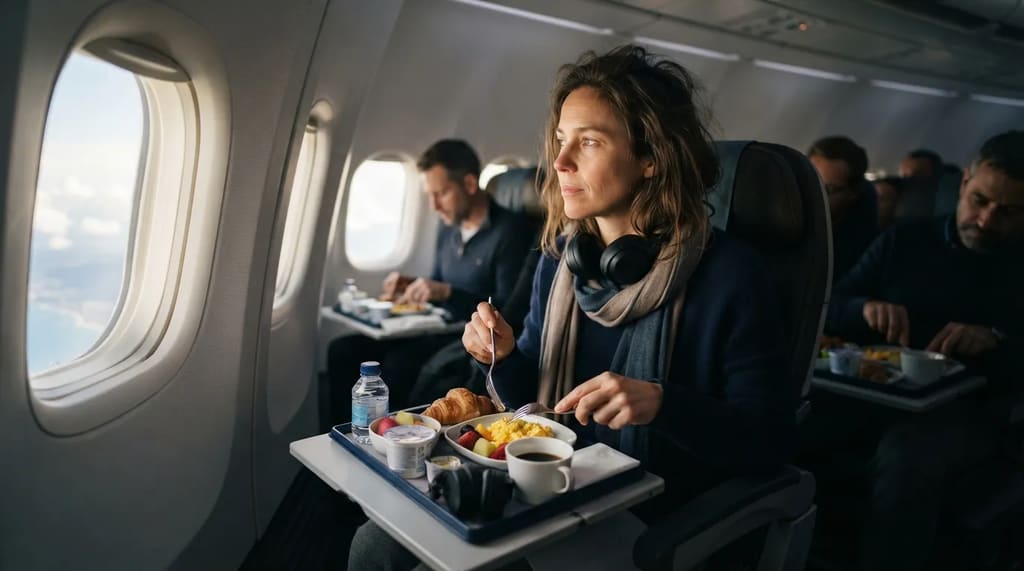
This is the big one. Regulars do not see the second meal as more airline food, but as breakfast, lunch, or dinner on destination time.
Meal timing is one of the cues that helps your body clock adjust, along with light and sleep.6 If it is morning where they are landing, they eat like it is morning, even if their body insists it is 2 a.m.
If the timing is wrong, they feel free to skip the tray and stick to water and a small snack. The point is not to finish the food, but to tell your body what day it is.
That mental switch turns a meal into a nudge. By the time the wheels touch down, they have already started living in the new time zone.
No habit cancels jet lag completely. But small nudges add up, and this one is the reason regulars step off the plane looking oddly ready for the day.
None of these habits is flashy, and almost all of them are free. Together they turn a cranky, bloated landing into something close to civilized.
Next time the lights come on and the foil lids start rattling, pick one habit and try it. By the time you reach the arrivals hall, you might be the one who looks suspiciously well-rested.
- Singapore Airlines Book the Cook: https://www.singaporeair.com/en_UK/us/flying-withus/dining/book-the-cook/
- Hong Kong Observatory Airplane Taste: https://www.hko.gov.hk/en/education/weather/weather-and-life/00503-why-does-food-taste-bland-on-airplanes.html
- NBC News Airline Food Taste: https://www.nbcnews.com/health/body-odd/one-reason-airline-food-so-bad-your-own-tastebuds-f6C10823522
- Caffeine Pharmacology Overview: https://www.news-medical.net/health/Caffeine-Pharmacology.aspx
- Australia Biosecurity Declare It: https://www.yokota.af.mil/Portals/44/Documents/Australia/Transportation/Arriving%20in%20Australia%20-%20Declare%20It.pdf?ver=2016-08-29-013723-153
- CDC Yellow Book Jet Lag: https://wwwnc.cdc.gov/travel/yellowbook/2024/air-land-sea/jet-lag
- Circadian Light Exposure Study: https://www.ncbi.nlm.nih.gov/pmc/articles/PMC3983044/
- Singapore Airlines Meal Requests: https://www.singaporeair.com/en_UK/vn/travel-info/requests/meals/