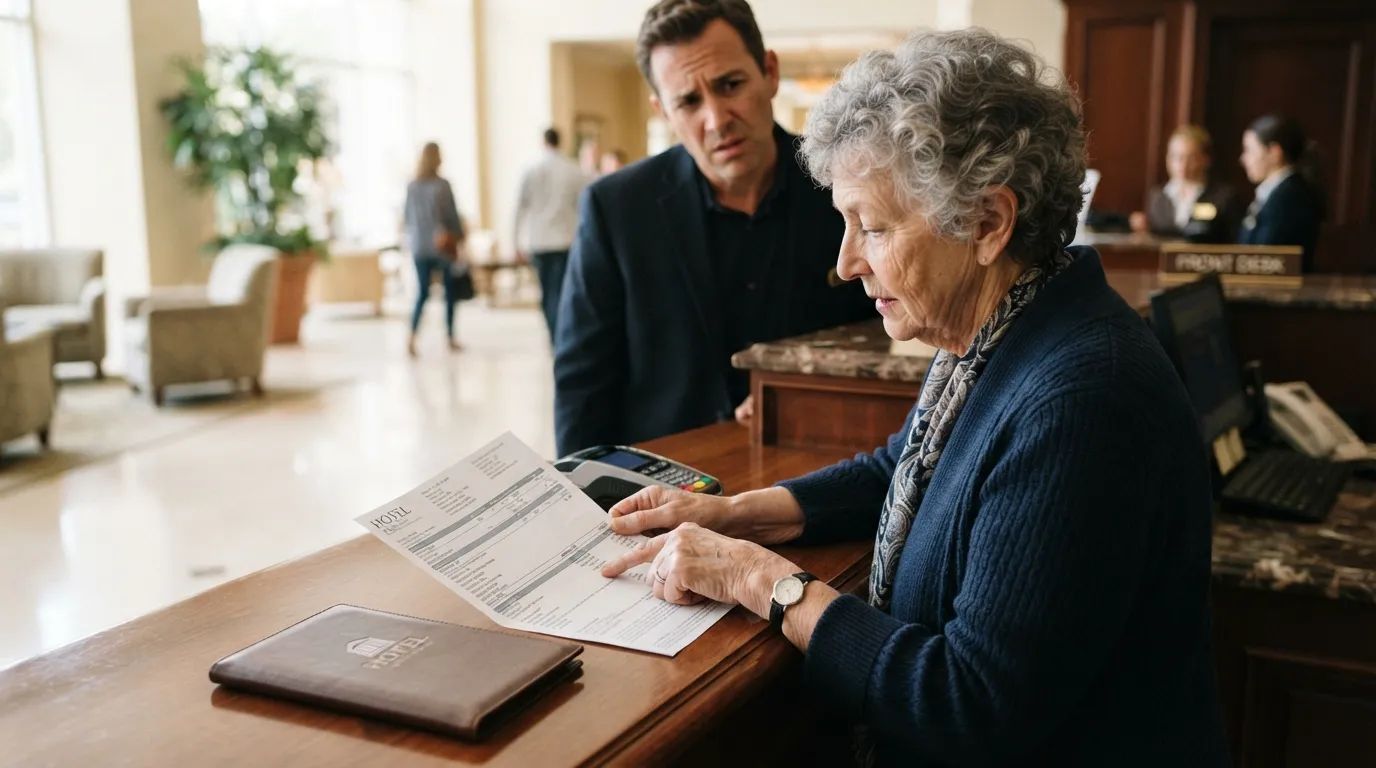
A luggage tag is a small piece of card, yet on a coach tour it decides whether your suitcase is waiting outside your door in the morning or stranded somewhere in the hotel. Travelers who ride these tours year after year know it, so they do a handful of quiet things at the front desk and on that first morning that first-timers never notice.
Sixteen of those habits follow, running from small annoyances to serious ones. The cheapest takes about half a minute and costs nothing, yet it is tied to the worst night a hotel stay can bring, and we start with something far simpler: a ribbon.
#16 – A Bright Ribbon and Your Phone Number on the Bag
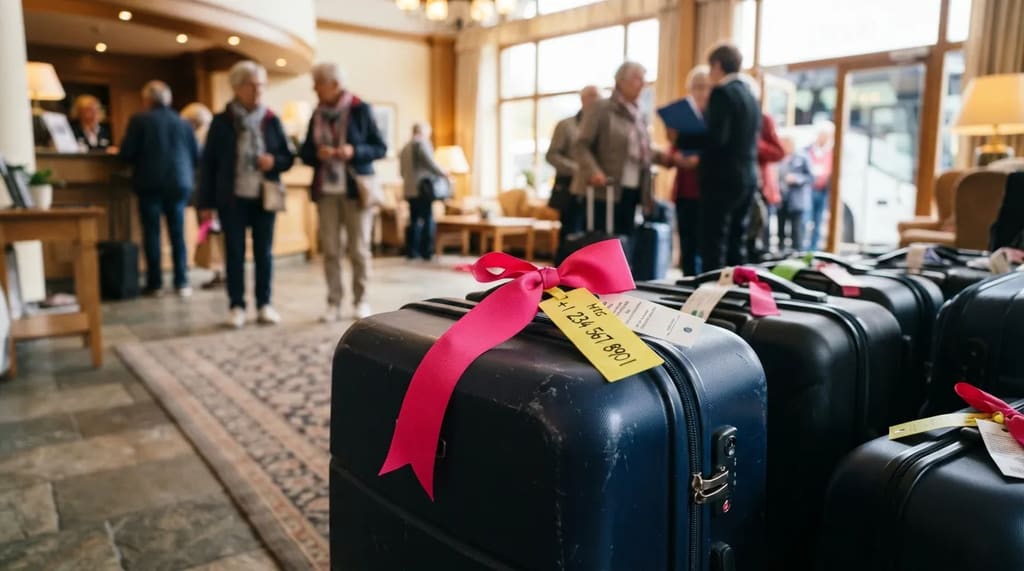
On tours that use them, the director hands out luggage tags at the start, printed with your name, and they are meant to stay on your bags all trip. Checked bags are carried to rooms automatically, so a tag that falls off or can’t be read causes real trouble.
The official tag has one weakness, though. It won’t help you pick your own suitcase out of a row of identical dark rollers in a hotel lobby at dawn.
That is why regulars tie a bold ribbon or strap to the handle and add a tag of their own with a name and phone number. Guides often encourage bright tags or ribbons on every bag.
Some people also snap a photo of the packed suitcase before leaving home. A quick picture gives the director something to match against if a bag goes astray.
The ribbon goes on every suitcase you own, but the official tag keeps away from one bag entirely.
#15 – The Day Bag That Stays Untagged
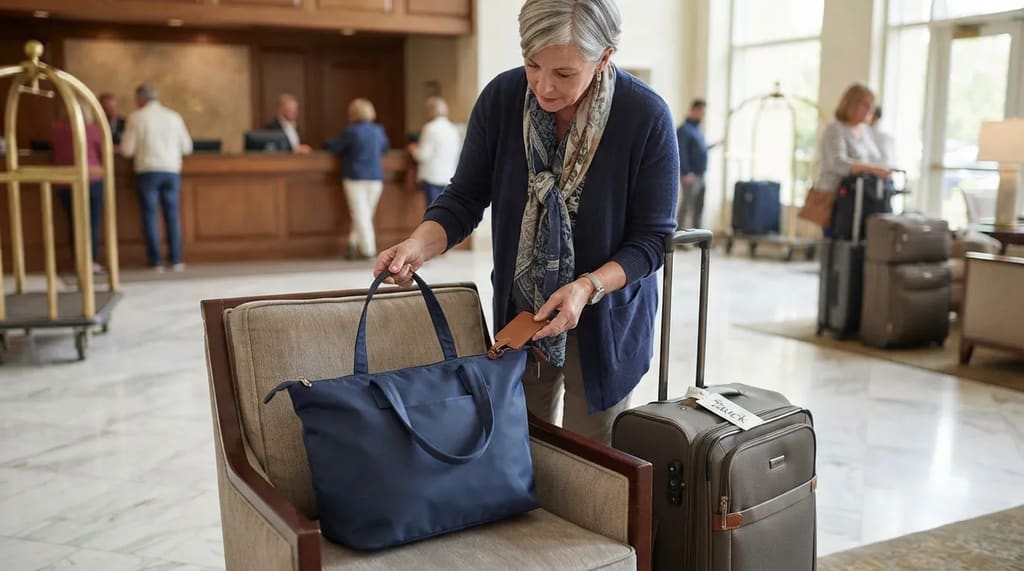
Tauck, which runs escorted tours, asks guests not to put a tag on a carry-on. The tags mark bags for ground operators and hotel staff to handle and transfer, so a tagged day bag can end up traveling without you.1
Picture your glasses, your pills and your sweater riding off to the next hotel while you wait in the lobby. Pack that bag first, while the suitcase is still open on the bed.
Size matters too, because coach racks are narrow and a roller bag that glided through the airport can become a problem. Whatever you carry on must fit an overhead bin or sit under the seat on tours that set that limit, so check yours before you pack.1
My view is that a soft tote or small backpack beats a wheeled carry-on on a coach. It slides under the seat, never needs lifting, and suits the first rest stop, when you step off with only what you need.
The test is simple: if you would hate to watch it drive away without you, it stays untagged.
#14 – The Question About Where the Hotel Really Is
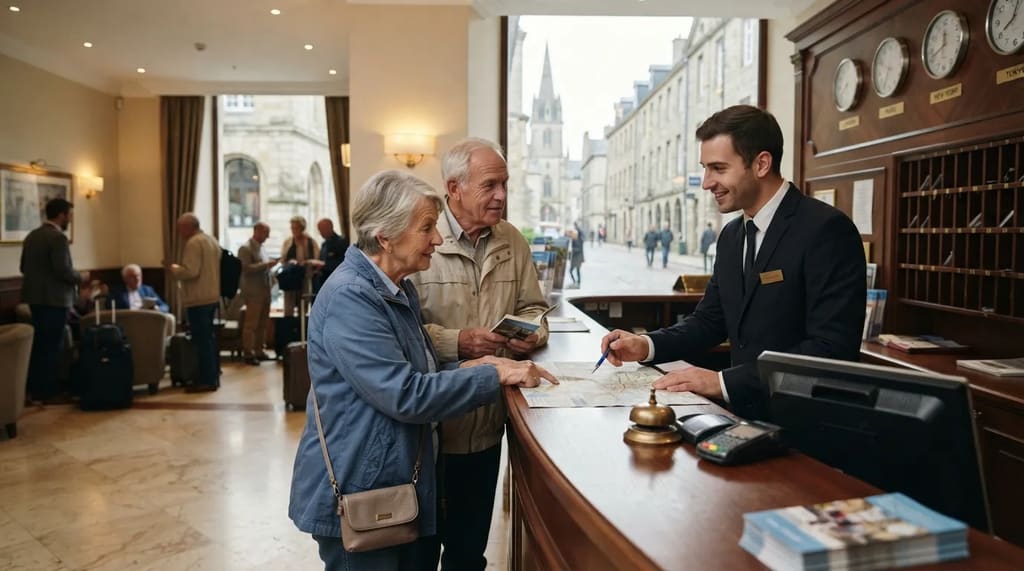
Brochures sometimes describe a hotel as near a city that is, on the ground, a coach ride away. A central hotel lets you stretch your legs on your own terms, while a distant one makes the coach your only way out.
The desk can answer the practical part. How far is the center on foot, is the route flat, and is a pharmacy or café within reach?
Quick Compare
- Central hotel: you can step out for a stroll, a coffee or a pharmacy run on your own timing.
- Distant hotel: the coach, a taxi or a shuttle is your only way into town.
- Best question for the desk: is the walk to the main street flat, and about how long does it take?
Multi-night stops make this easier to live with. You unpack once and stay put, and fewer hotel changes mean fewer early luggage calls.
I would trade a fancier lobby for a hotel you can walk out of on a free evening. A flat ten-minute walk to a main street gives you something the coach cannot, which is time on your own schedule.
Ask, too, whether a taxi stand or shuttle is nearby for the night you don’t feel like walking. It is a ten-second question that keeps an evening from going to waste.
But a central location does nothing for you if the breakfast room opens after the coach is due to leave.
#13 – Breakfast Hours Against the Departure Time
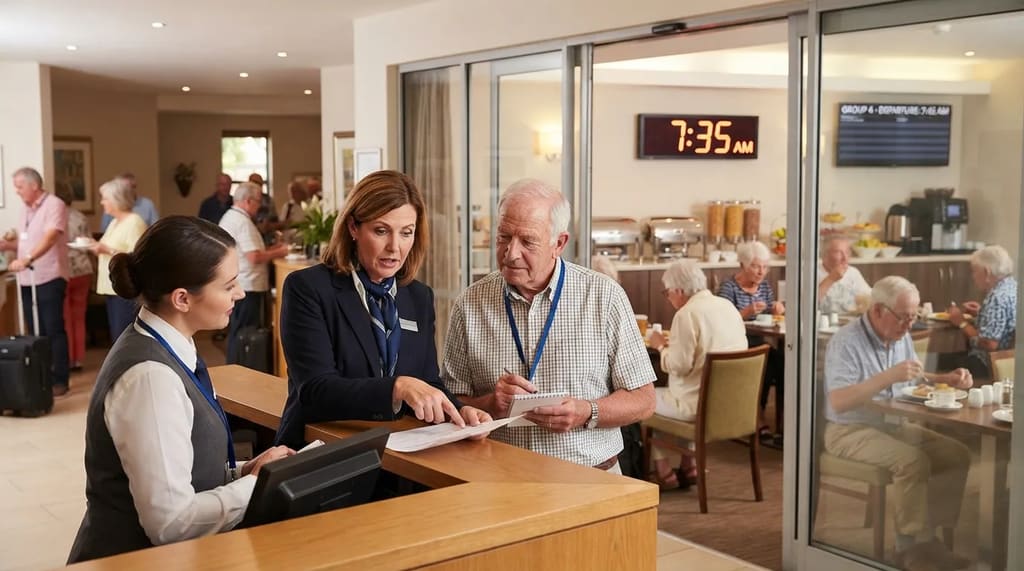
A wake-up call and a luggage deadline only help if breakfast fits between them. Tour managers often confirm wake-up calls and luggage-out times with the front desk, and they check that breakfast opens early enough for everyone to eat.
A breakfast room that opens at 7:30 for a 7:45 departure can wreck a morning. For travelers over 65, a slower start with medications and a proper breakfast needs a cushion.
So ask the desk at check-in when breakfast starts and compare it with your departure. If the gap is tight, tell the director that evening, because hotels often run more than one group on the same morning.
Skipping breakfast to save time is a poor trade. A steady breakfast keeps your energy even, so you aren’t hunting for snacks or feeling shaky before the first scheduled stop.
#12 – The Resort Fee Line on the Hotel Bill
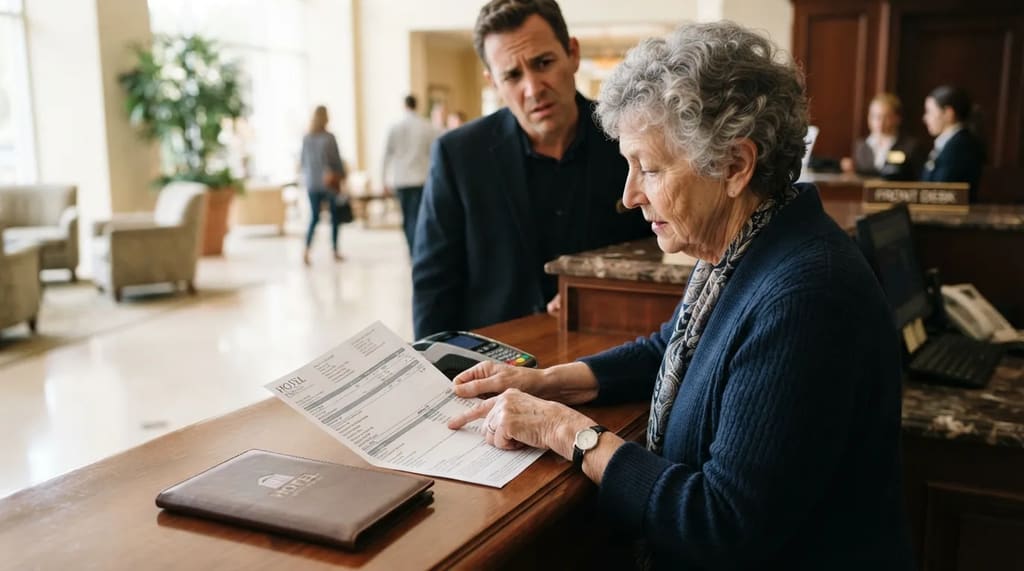
Since May 12, 2025, a Federal Trade Commission rule has required that advertised prices for short-term lodging include all mandatory fees, with few exceptions. The rule does not ban resort fees or cap them, so a hotel can still charge one.
A $199 nightly rate with a $39 mandatory fee now has to be advertised as $238. Hotels call the charge a destination, facility, amenity or urban fee, and the rule covers all mandatory fees whatever the label.
On a coach tour the room is usually part of the package price, so the booking rule matters less to you than to someone reserving online. What matters is whether your tour price covers any hotel charge, and the director’s first briefing or your tour paperwork is the place to settle that.
If a hotel charges fees it never disclosed, filing a complaint with the FTC is the recommended route. Arguing at the desk at five in the afternoon, in a lobby full of tired travelers, rarely gets you anywhere.
The fee question ends at the bill, while the room itself is something you can still shape at the desk.
#11 – Away From the Elevator and the Ice Machine
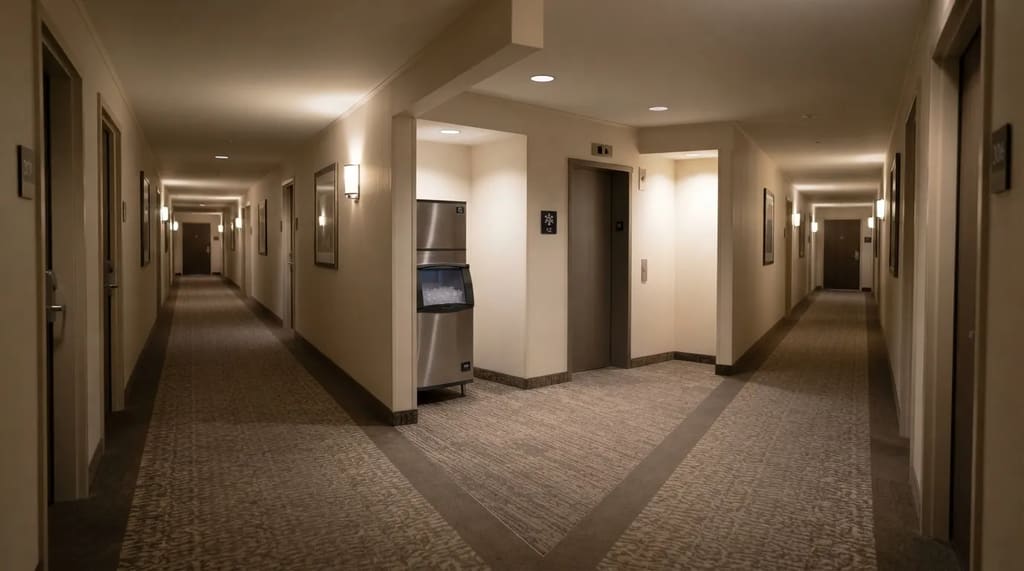
A room request works best when it names the noise. “Away from elevators and street noise” beats “Give us a good room.”
Elevators, ice machines, bars and housekeeping closets are the usual culprits.2 One practical ask is a room at least three or four doors from the elevator bank.
Keep it modest, because in most hotels a high floor or a room away from the elevator is a preference, not a promise, unless the rate or room category guarantees it. A reasonable ask has a far better chance than a demand for the biggest suite in the building.
Do not stack a long list. A request for a high floor, a quiet room, a spot close to the elevator and a spot far from it contains items that conflict, so pick the one or two that matter to you.
Regulars phrase it as a favor, not a complaint. “Is a quieter room available?” gets a friendlier answer than a demand.
Whether the request survives until the key is handed over depends on where and when it was made.
#10 – Repeating the Request Face to Face at Check-In
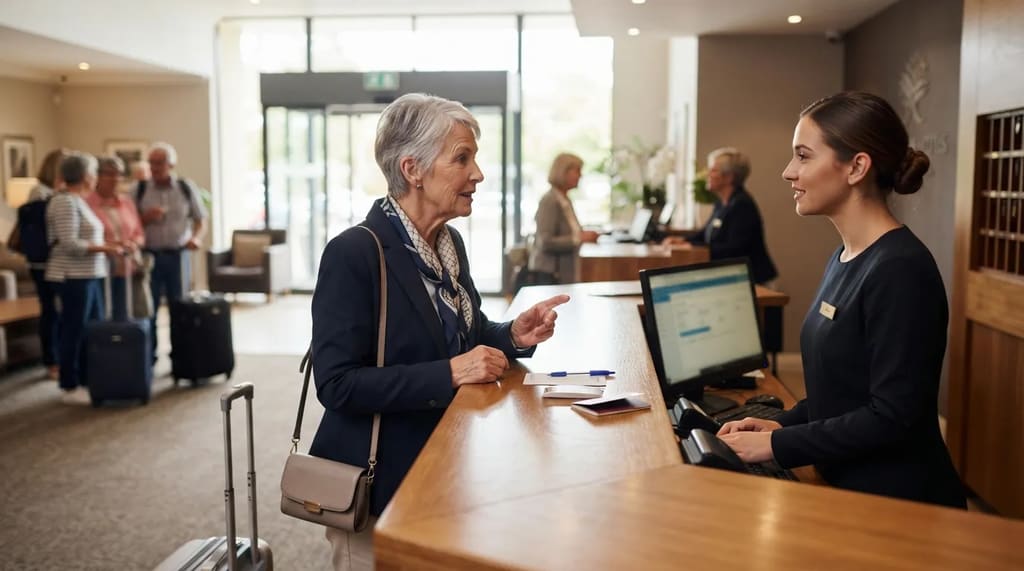
A reservation note reading “quiet room, high floor, away from elevator” can still produce a second-floor room beside the lift. The best moment to repeat a request is at check-in, when the receptionist can still see available rooms.
On a coach tour the tour company usually made the booking, so the desk is your main chance to say it yourself. A large group means a quick line, so have the request ready in one sentence.
If the room you are given turns out to sit beside the elevator, ask politely whether another room in the same booked category is available. You are within your rights to go back to the front desk and ask.
Take a moment to listen at the door before you settle in. A hum from the elevator shaft or the ice machine is far easier to catch in the first five minutes than at midnight.
A good room is only half the job, because the suitcase still has to arrive in it.
#9 – Porters, the One-Bag Allowance and the Tip
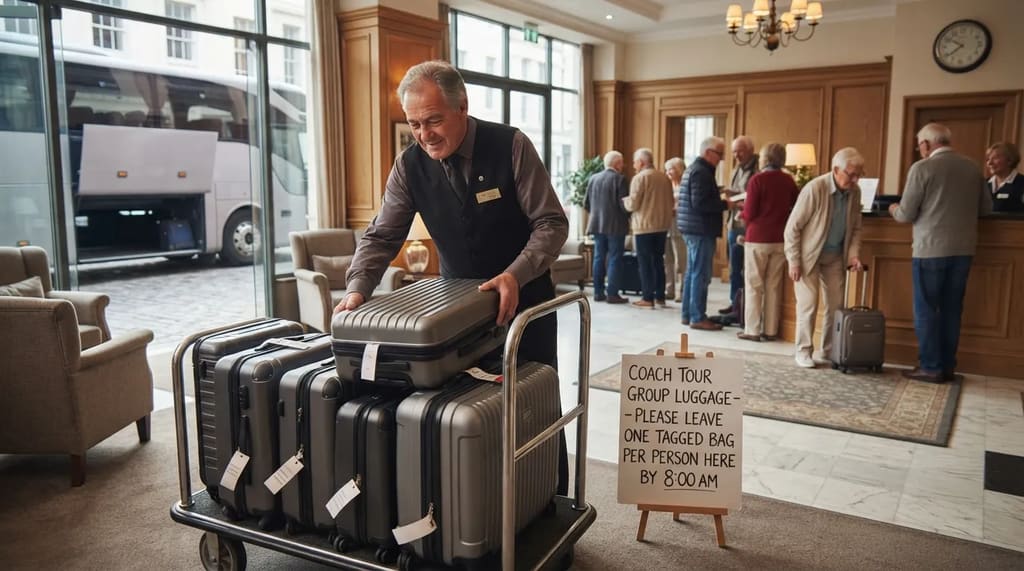
On one operator’s tours, porterage for one piece of luggage per person is included in the price, from the first morning the coach departs until you leave it for the last time. Any personal porterage fees are paid locally to the hotel porter rather than through the tour.
Rules vary, and most tours cap luggage, so check the limit for your booking. The practical result is that your suitcase travels from coach to hotel room without you hauling it.
That only works if the bag is tagged and in the right place. Porters are given passenger room numbers so they can collect your luggage and load it onto the coach.
At a Glance
- Included: porterage for one piece of luggage per person, on this operator’s tours.
- Paid locally: any personal porterage fees go to the hotel porter.
- The porter’s guide: a list of passenger room numbers.
- Your part: a tagged bag, in the right place, at the right hour.
I would pack to the one piece per person limit, since that is the bag the tour’s service is built around. A second bag is either a cost or a chore.
Because personal porterage fees are paid locally, regulars keep a few small bills in an easy pocket. Digging through a wallet at the curb holds up everyone behind you.
The porter works from a list of room numbers, so the bag has to be where the porter has been told to look, at the hour the porter comes.
#8 – Counting the Bags the Evening Before
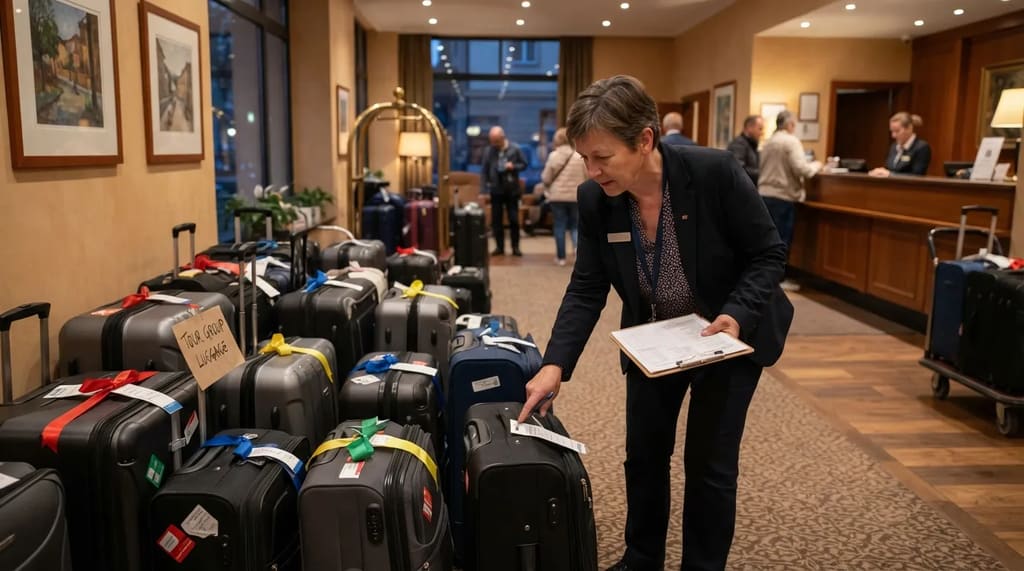
A bag missing at 9 p.m. is a small problem. The same bag missing at 9 a.m. can delay the whole group.
That is why tour managers often count the group’s bags and check the tags the night before, coordinate with porters or the hotel about when luggage will move, and match the count again in the morning. If one bag is missing, they want to know that evening, not at the next hotel.
Your part is small: learn the luggage-out time and whether bags go inside or outside your room. In one operator’s schedule, the wake-up call is at 6:00, checked luggage is ready at 7:00 and the coach leaves at 8:00, and hand luggage is not part of that pickup.
The ribbon on your suitcase earns its keep here, since a bag you can pick out at a glance is a bag you can count in seconds. If it is not at your door when it should be, the director needs to hear about it that night.
A phone photo of the tagged suitcase at your door saves a lot of describing if anything goes missing.
A bag count settles the luggage, but not the wake-up call that has to come before it.
#7 – The Wake-Up Call, and a Backup for It
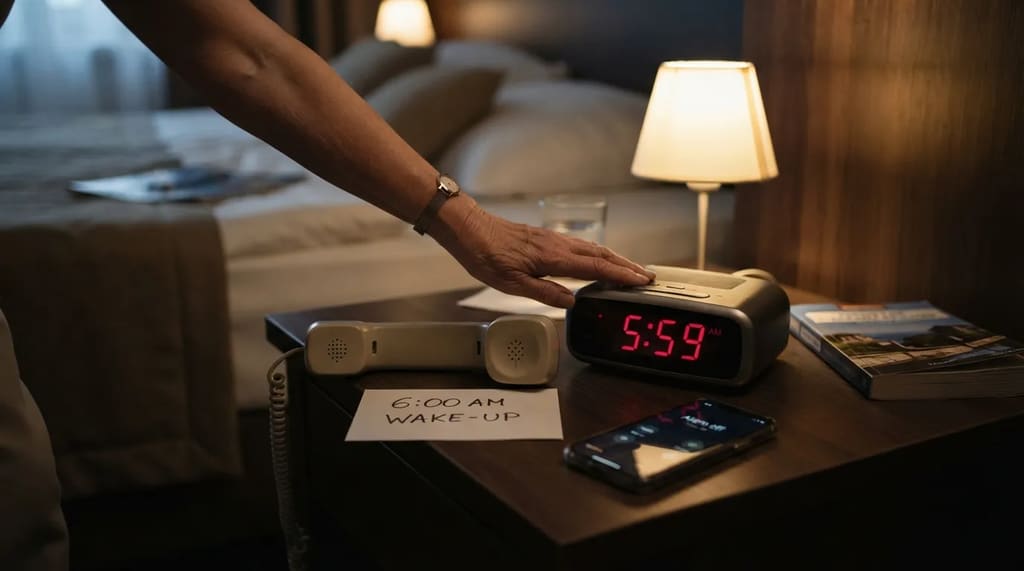
A wake-up call is a telephone call a hotel places at a time you ask for in advance. On many escorted tours the wake-up and departure times are set with the hotel the night before, and the tour director repeats the plan at the evening briefing.
Listen for it. In one operator’s schedule, the 6:00 call is arranged automatically unless you make other arrangements with the director.
A missed call affects more than your own breakfast, since one missed wake-up can shift lunch, entry tickets and the driver’s schedule all at once. If the hotel’s system looks shaky, tour managers may line up a second call or a knock on the door.
Set the alarm on your phone as well. A phone alarm and a hotel call fail for different reasons, so having both costs you nothing.2
Glance at the room’s own alarm clock too, because a setting left by a previous guest can go off at the wrong hour.
A wake-up call gets you out of bed, though it does nothing for the pills you take with breakfast.
#6 – Medications Stay in the Day Bag
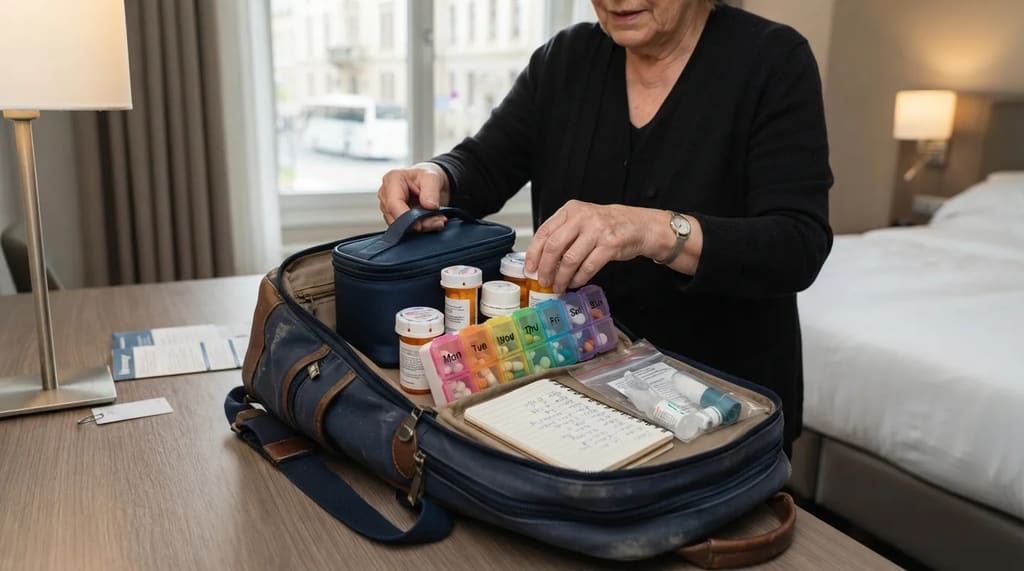
A guide may check that a bag with medication isn’t buried in the hold. That is a courtesy, not a system you can lean on.
Checked luggage is collected early and loaded onto the coach by porters, which means you cannot reach it until the next hotel. So anything you take daily, and anything you might need between hotels, rides with you in the day bag.
Keep it in the original labeled containers or a pill organizer, with a written list of what you take and the doses. Pack a little extra of anything critical, in case a delay stretches the day.
Worth Knowing
- If your trip includes a flight, the TSA allows medically necessary liquids in reasonable quantities in a carry-on.3
- Those medications are exempt from the usual 3.4-ounce liquid limit, but you should tell the officer at screening.3
- Pills in a carry-on are easy to reach, while pills in a checked bag may not be there when you need them.
This is the main reason the day bag stays untagged. Do the check yourself before the porter arrives at your door, and do not count on someone else to catch it.
Packing it right is quiet work, but the next habit takes a little nerve and one clear sentence.
#5 – Speaking Up to the Guide on the First Morning
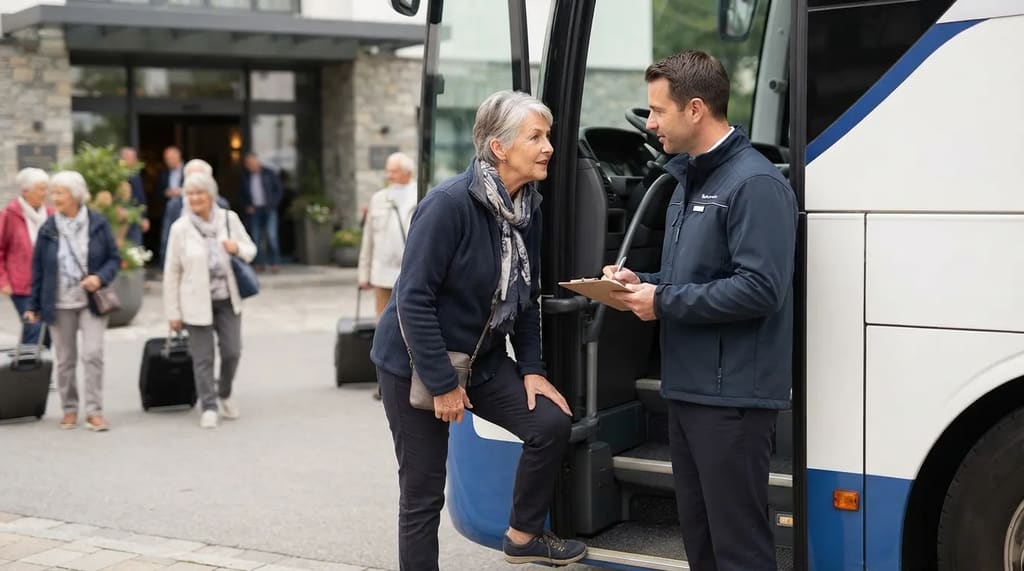
If you get motion sickness, or have a stiff knee that needs aisle space, say so to the guide on the first morning. A guide would rather hear about a need then than in the middle of an emergency.
Food allergies work the same way, since they are far easier to handle before the first group dinner is ordered. Dress for the coach as well, with thin layers you can add or remove without standing up.
Asking is not a burden on the group. A request for an aisle seat on day one costs a sentence, and on day four it can cost a conversation with whoever has settled into it.
Say it quietly at the coach door rather than from your seat. That way the guide can note it without a public announcement.
Needs that involve the coach seat go to the guide, while needs that involve the room itself, such as stairs, belong at the hotel.
Related Stories From Travelbinger



#4 – Stairs, Elevators and the Step Into the Shower
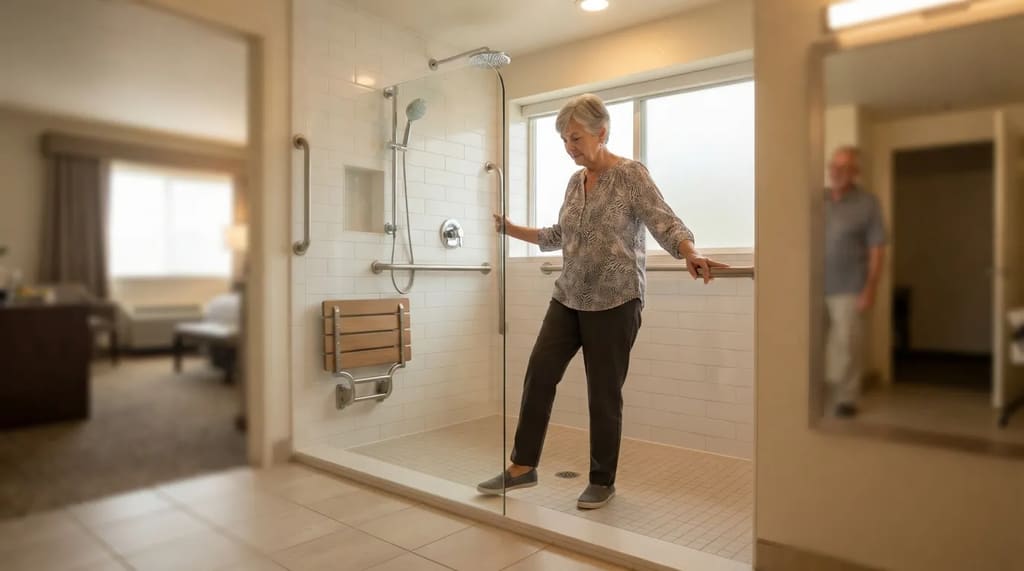
At the desk, ask about elevator access and any steps on the route to the room. The Points Guy‘s advice for accessible rooms is to call the hotel directly and ask whether the room is on the bottom floor, and if it is not, whether there is an elevator to that level.4
On a tour, put those questions to the director before you leave home. Ask also whether the shower is a roll-in with no step or whether it has a tub4, and if you need grab bars or step-free access, say so in those words.
Ask about thresholds and heavy doors too. A shallow step at a bathroom door looks small in a description and large at midnight.
Then revisit the elevator request from earlier. If stairs are difficult, a room near an elevator may be more useful than a high floor, and the away-from-the-elevator request is for travelers who can comfortably manage the walk.
Getting to the room is one matter, and who else learns where it is is another.
#3 – Not Saying the Room Number Out Loud
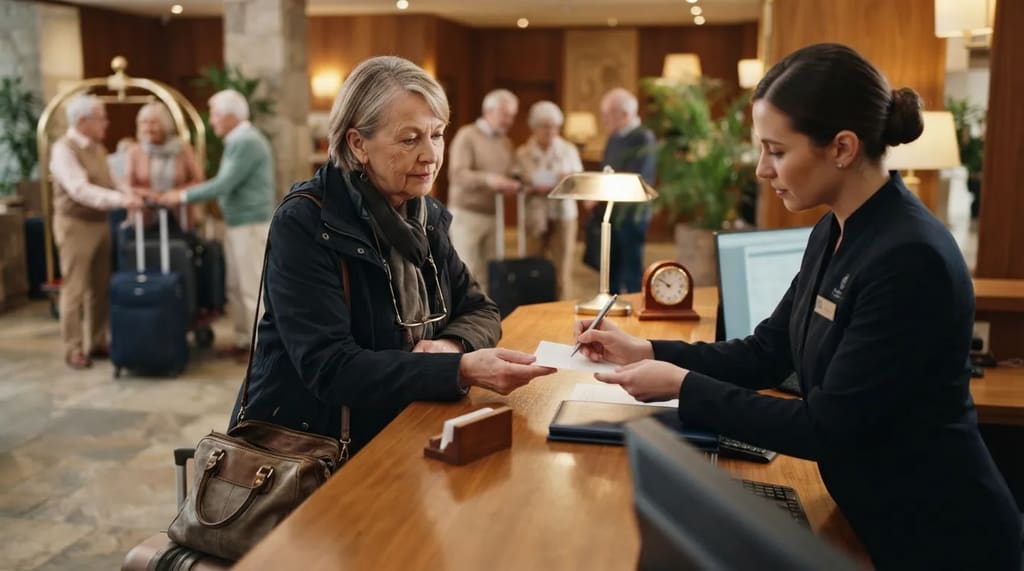
Do not confirm your room number aloud in a lobby, and do not let anyone else say it. A coach check-in fills the lobby with the whole group, so a number spoken at the desk is easy to overhear.
Ask the clerk to write it down instead. Porters already have what they need, since they are given room numbers to collect your luggage.
Once you are inside, use the deadbolt and the secondary latch every time, including while you are in the room. If someone arrives unannounced, verify them by calling the front desk, not by opening the door.
I would put the latch ahead of any gadget. A door alarm or wedge is cheap, but a door latched every night costs nothing.
Where the room sits in the building shapes these risks too, and the floor range usually cited is lower than the high floors travelers ask for.
#2 – The Middle Floors and the Second Key Card
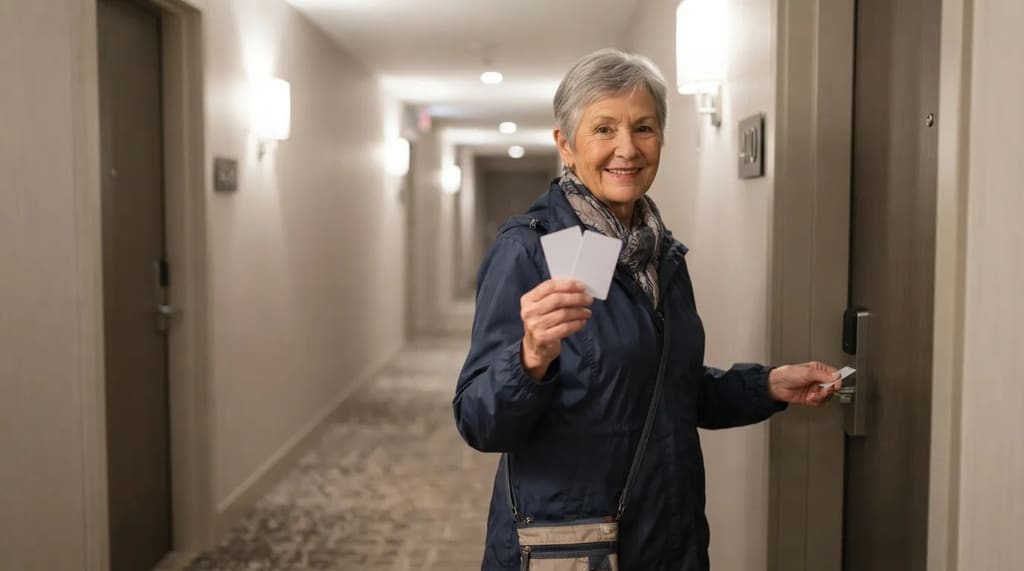
There is no universal safest floor, since every property is different. Still, a hotel security consultant quoted by Yahoo Travel said many safety and fire professionals consider rooms on the third through sixth floors a practical balance between security and emergency accessibility.5
The range makes sense for other reasons. On a middle floor you are close enough to the ground to use the stairs without it becoming an endurance event, while a very high floor can sometimes place you closer to rooftop mechanical equipment or make elevator waits longer at peak hours.
I would not change hotels over a floor number. The same consultant said a well-managed property with strong security, fire and life safety systems and trained staff is often more important than the specific location of a room.5
If you are traveling with a spouse or friend, having a second key carried by your companion saves a trip back to the desk.
Which floor you land on matters less than whether you have walked to the exit from it.
#1 – Counting the Doors to the Fire Exit
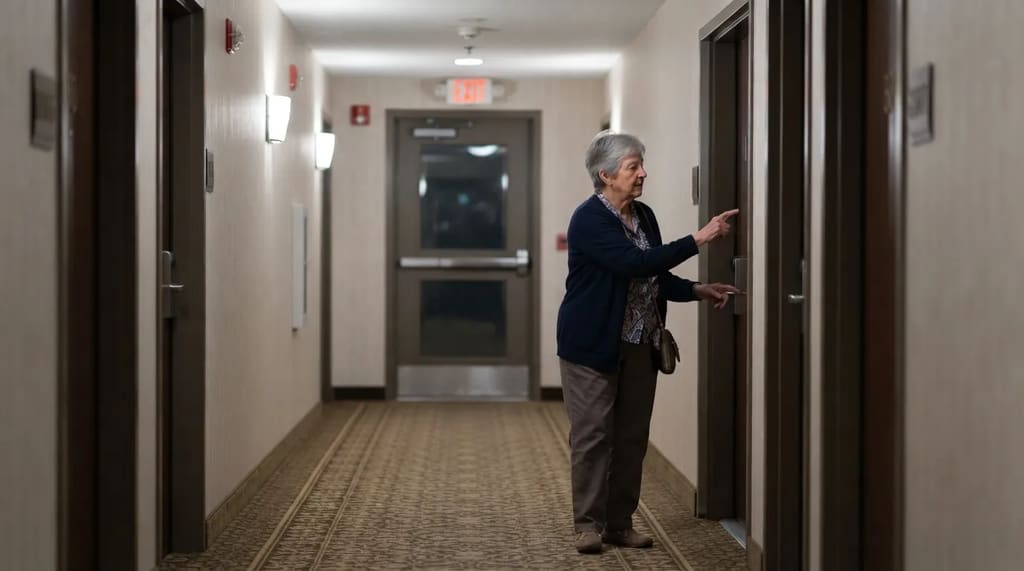
Right after the porter leaves, before you unpack, walk to the nearest fire exit and count the doors between your room and the exit. In a fire the hall may be dark and smoky, and the stairway hard to see.
That count gives your hands something to follow when your eyes cannot help. Fire safety advice commonly adds that you should take your key card with you, use the stairs rather than the elevator, and check the evacuation map on the back of the room door.
It takes about half a minute and costs nothing. Of all sixteen habits, it is the one you hope never to use.
Coach tour regulars aren’t fussy people. They have simply learned that a ribbon on the handle, a day bag packed first and one quiet question at the desk buy a calm week.
Do the small things in the first hour, and the coach window gets your full attention for the rest of the trip.
- Tauck Luggage Tag Guidance: https://www.tauck.com/tours/portugal-guided-tour
- NBC Quiet Hotel Room Tips: https://www.nbcnews.com/news/amp/wbna44247439
- TSA Medication Requirements: https://www.tsa.gov/travel/frequently-asked-questions/i-am-traveling-medication-are-there-any-requirements-i-should-be
- The Points Guy Accessible Rooms: https://thepointsguy.com/hotel/tips-booking-accessible-hotel-rooms
- Yahoo Travel Safest Hotel Rooms: https://travel.yahoo.com/advice/safety/articles/safest-rooms-hotel-according-security-153027114.html