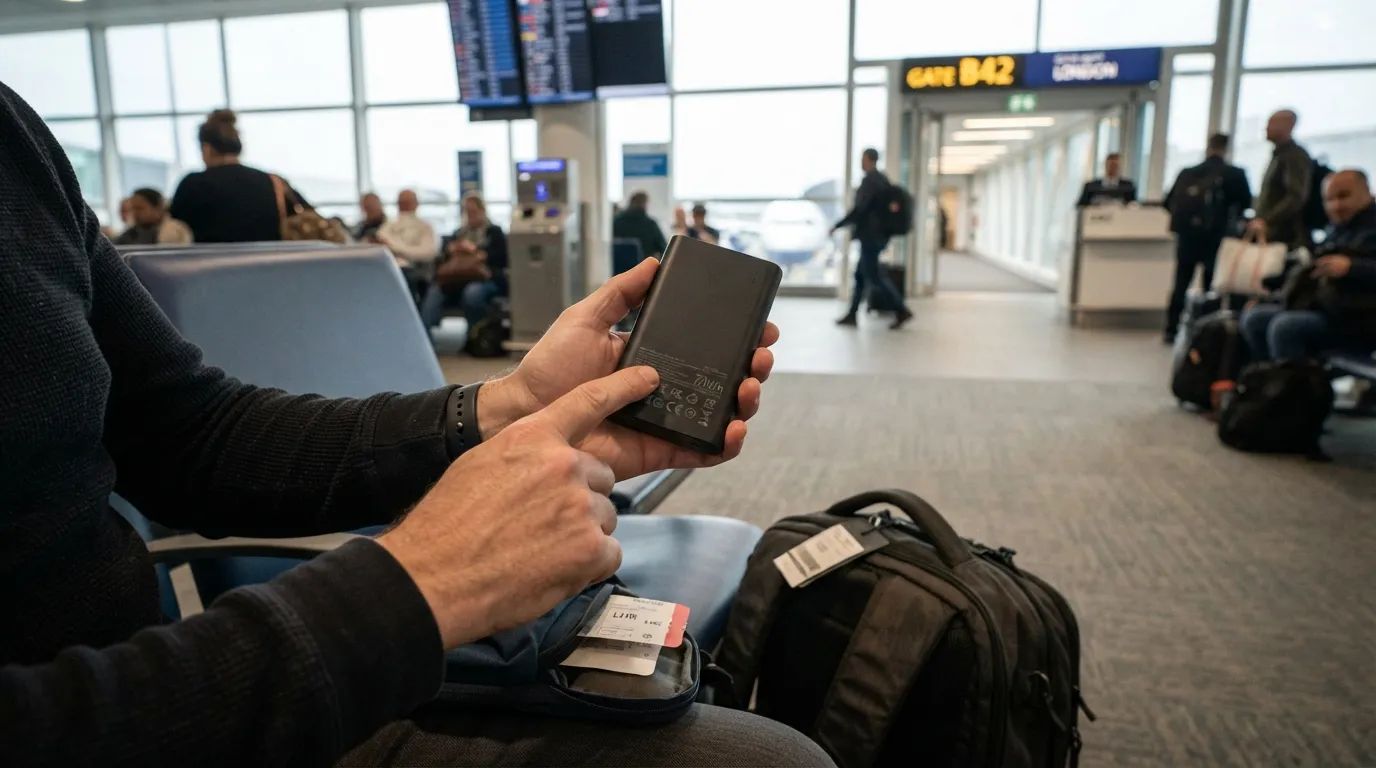
Most people think a long-haul flight begins when the cabin door closes. Regulars know it’s often won or lost at the gate, and these 16 habits show how.
The payoff isn’t just comfort. If an airline bumps you from an international flight leaving the U.S., the compensation can run into four figures, and it all gets decided at the gate podium.
That number waits at #1, along with what to ask when the agent calls for volunteers. First, the cheapest habit of all, which starts with an empty bottle.
#16 – An Empty Bottle and the Refill Station
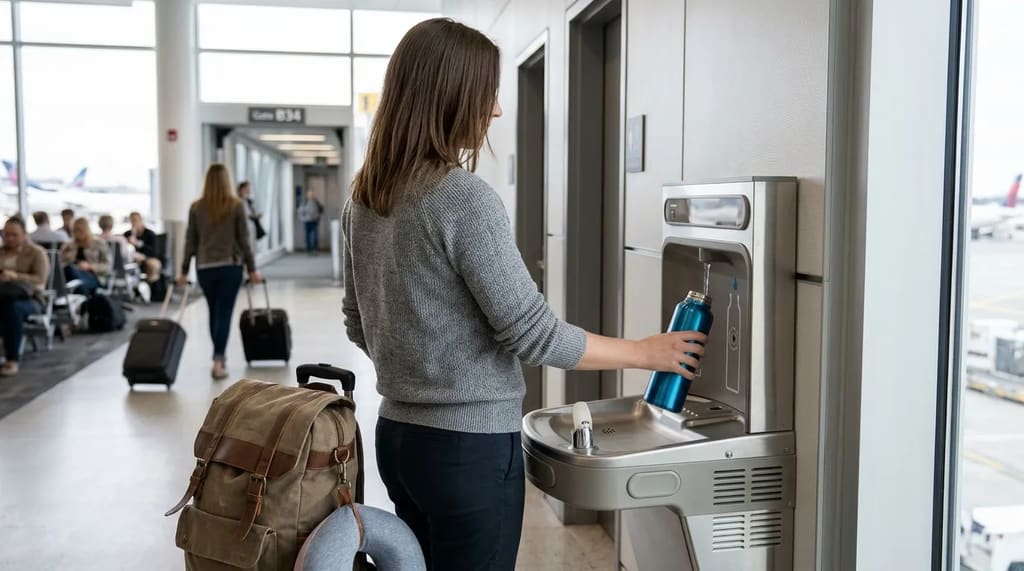
TSA’s 3-1-1 rule limits liquids in carry-on bags to containers of 3.4 ounces (100 milliliters) or less.1 Any bottle you’d want on a twelve-hour flight holds far more than that.
So seasoned flyers carry the bottle empty and fill it after the checkpoint. Many airports have refill stations near restrooms, food courts and boarding gates, so the water costs you nothing.
Fill it on the walk to your gate, before you settle in. Cabin air is dry, and the drink cart can take a while to reach your row after takeoff.
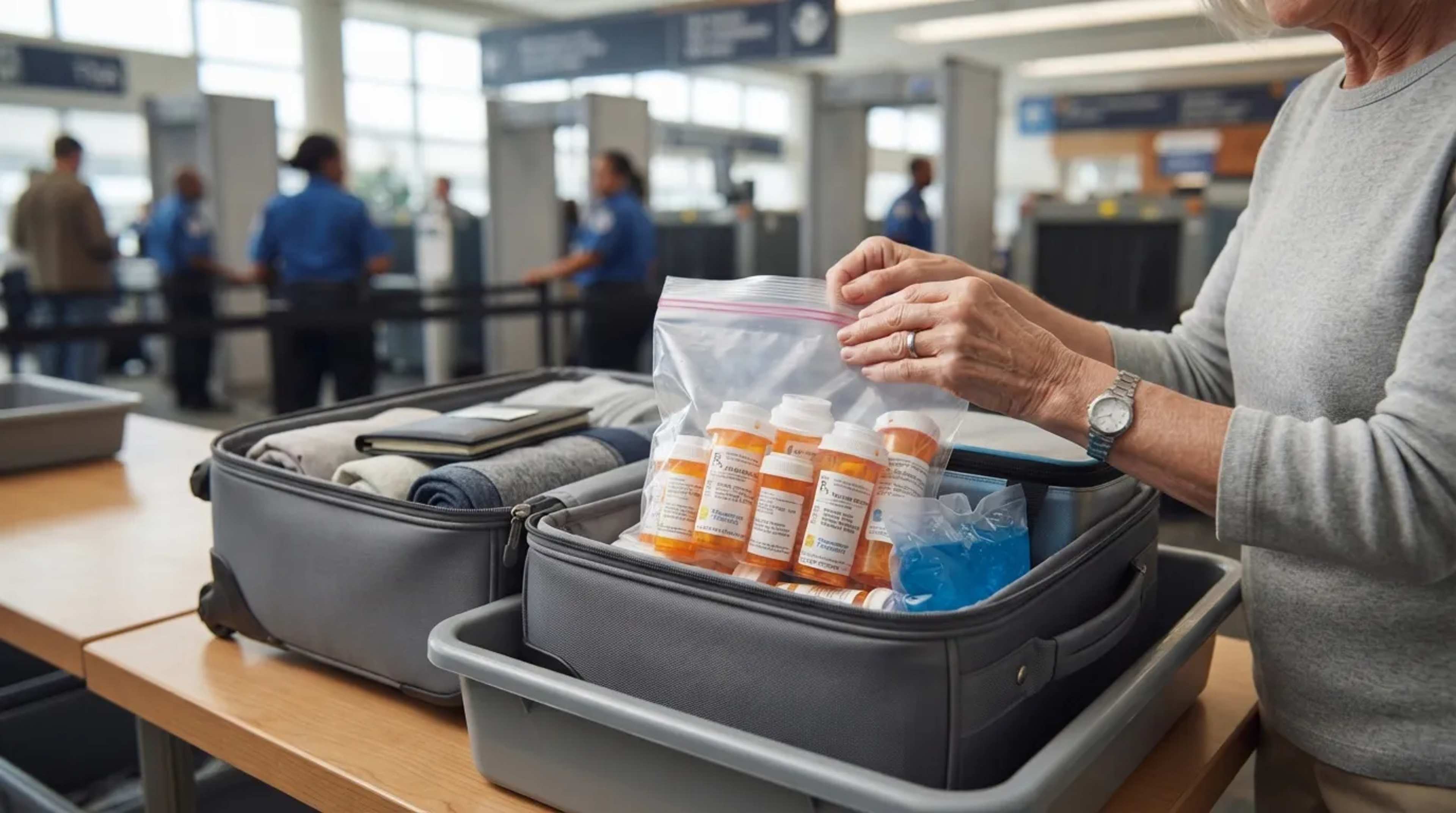
Bring the bottle empty and fill it after security. If you carry a medically necessary liquid, TSA makes exceptions, so tell the officer before screening begins.1
Everything you just drank has to go somewhere. The best time to deal with that is before a line forms at the airplane door.
#15 – The Restroom Stop Before the Boarding Line
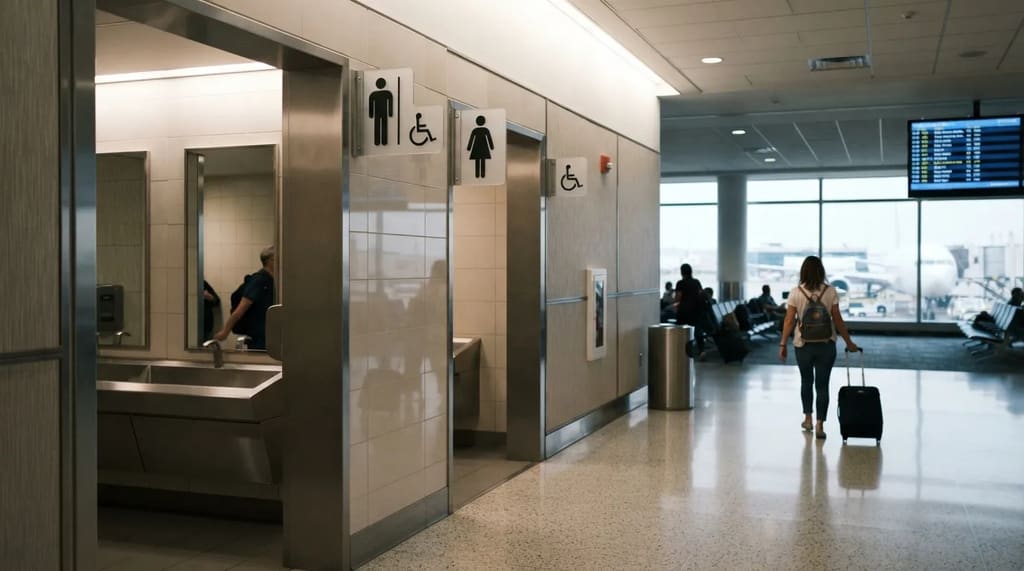
The airplane lavatory is the smallest and most contested room on a long-haul trip. Airport restrooms near the gate are bigger, and nobody is waiting on a seatbelt sign.
If you followed the last tip, this stop is a given. Go once when you reach your gate, and plan a second visit when the first boarding groups are announced.
The second visit matters most because the gate area is about to get crowded. A long taxi or a delayed takeoff can keep you belted in long after you’d like to stand.
Make one more stop when boarding begins, before your group is called. If you’re traveling with a companion, one of you can mind the bags while the other goes.
Once you’re back, the instinct is to find a chair near the podium. Resist it, because the better use of the next twenty minutes is on your feet.
#14 – Walk the Concourse While You Can
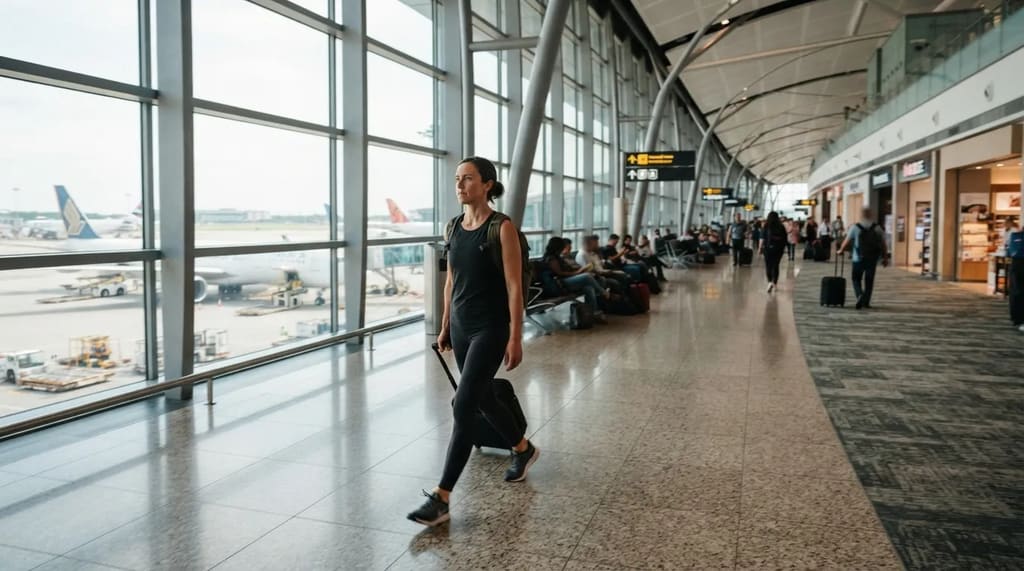
Sitting at the gate for an hour before a ten-hour flight adds an hour to the longest sit of your day. Gate chairs are overrated, and long-haul regulars skip them.
The CDC says anyone traveling more than four hours, by air, car, bus or train, can be at risk for blood clots. Its advice for long trips is to get up and move around every two to three hours.
Use the gate wait as your first break. Walk a full lap of the concourse, stretch your calves at a window, and sit down only when your group is called.
Walk before you board, then every couple of hours in flight. The risk is small for most people, but clots can be serious, so if you’ve had one before, talk with your doctor about your own plan.
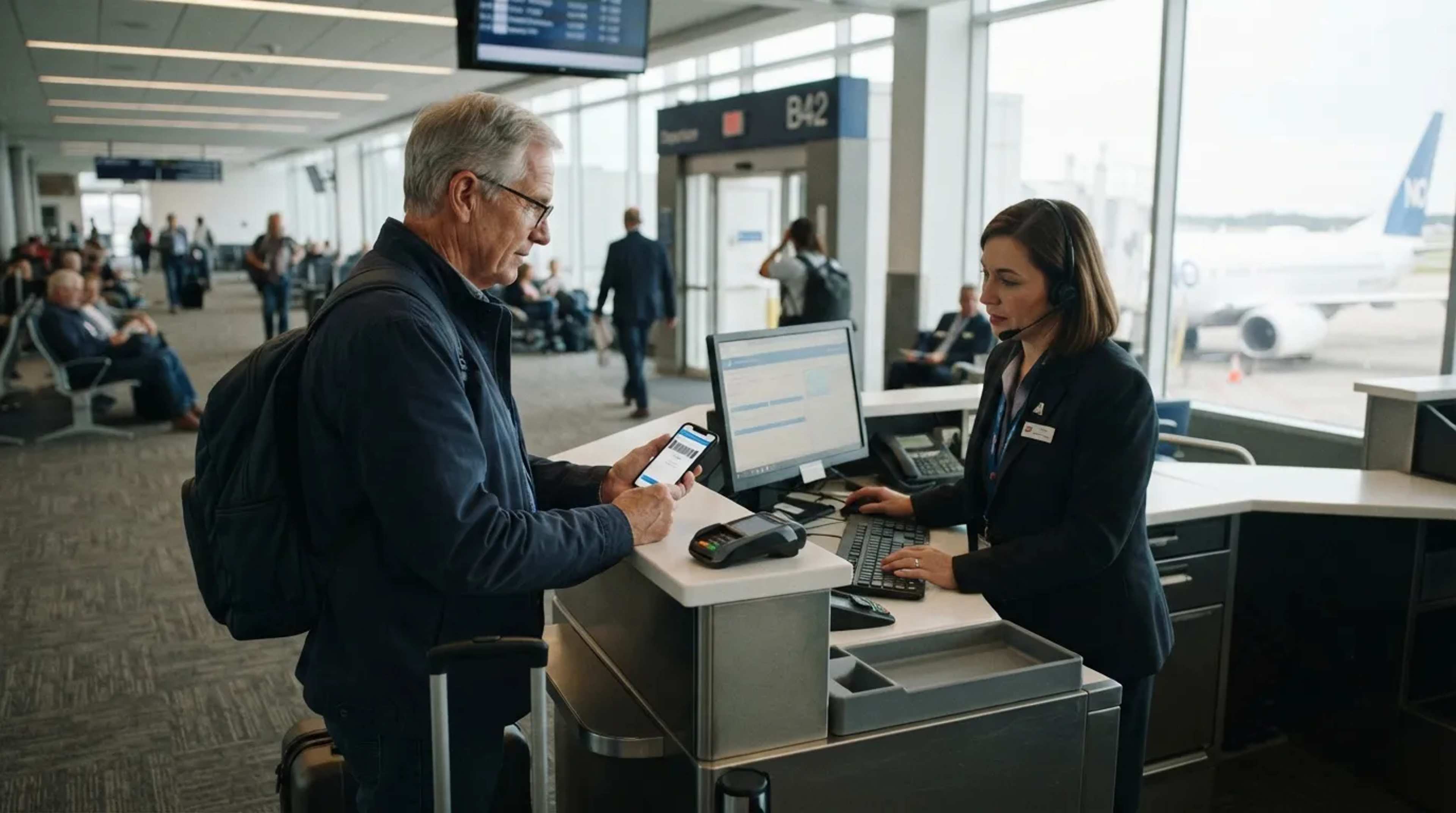
If you do get that walk in, check one thing on the way back. The gate number on your boarding pass may no longer be the right one.
#13 – Recheck the Gate Number Before You Settle
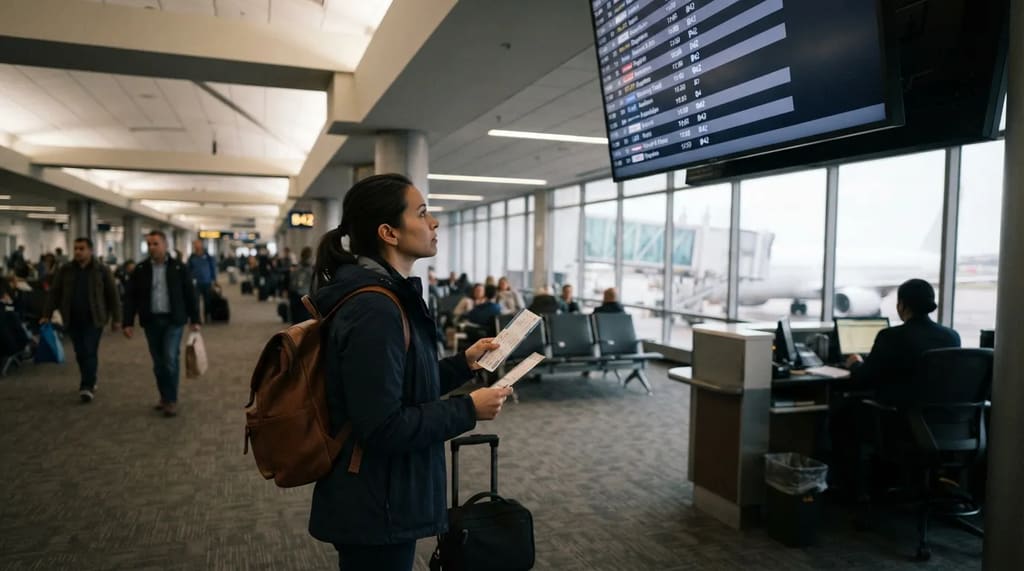
A gate number printed at check-in is a plan, not a promise. Airlines reassign gates when an earlier flight runs late or a larger aircraft needs a bigger stand.
The airport screens and the airline’s app update first, while a printed pass stays frozen. That’s why regulars treat the screen as the authority and the paper as a reminder.
Worth Knowing
- Airport screens and the airline app update before your printed pass does.
- Late incoming aircraft and plane swaps are common reasons a gate changes.
- App alerts can push a gate change to your phone before you spot it on a screen.
- The airline’s gate agent is the final word if the screen and the app disagree.
Glance at it when you reach the concourse, again after your restroom stop, and again when boarding is called. Those three looks take under a minute and cover the whole waiting window.
Check the gate on arrival, midway through the wait, and at boarding. Turn on the airline’s app alerts too, so your phone buzzes before you notice the change yourself.
The phone that delivers those alerts is also your boarding pass, which makes its battery the next thing worth looking at.
#12 – Top Up the Phone and Save the Pass Offline
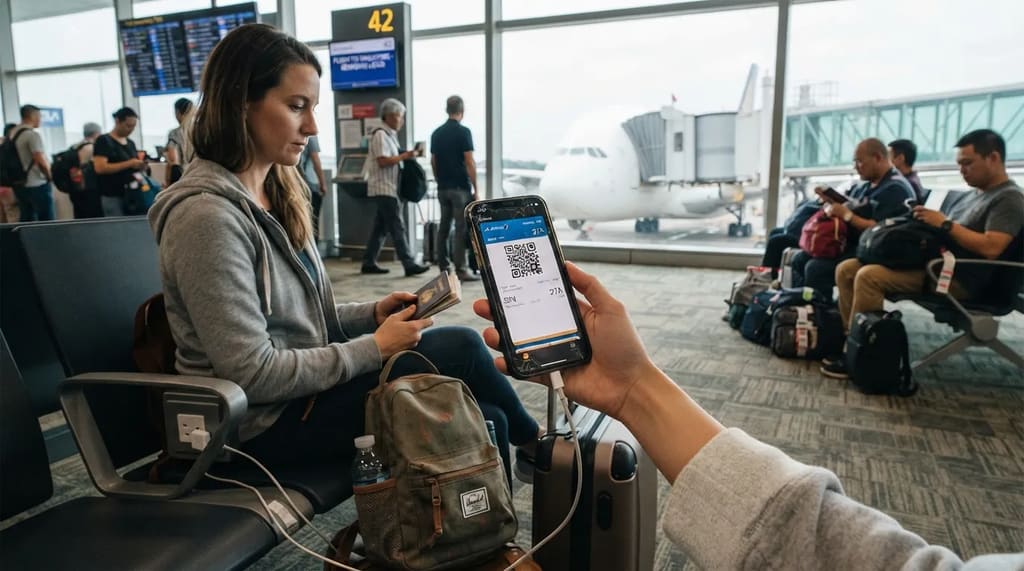
Your phone is now the boarding pass, the hotel confirmation, the map and the number for your ride. You’re about to carry it into a cabin where charging may be limited or unavailable.
If the gate has an outlet, use it, and board with a full charge so any seat power is a bonus. Seat outlets and USB ports vary by aircraft, so don’t plan around them.
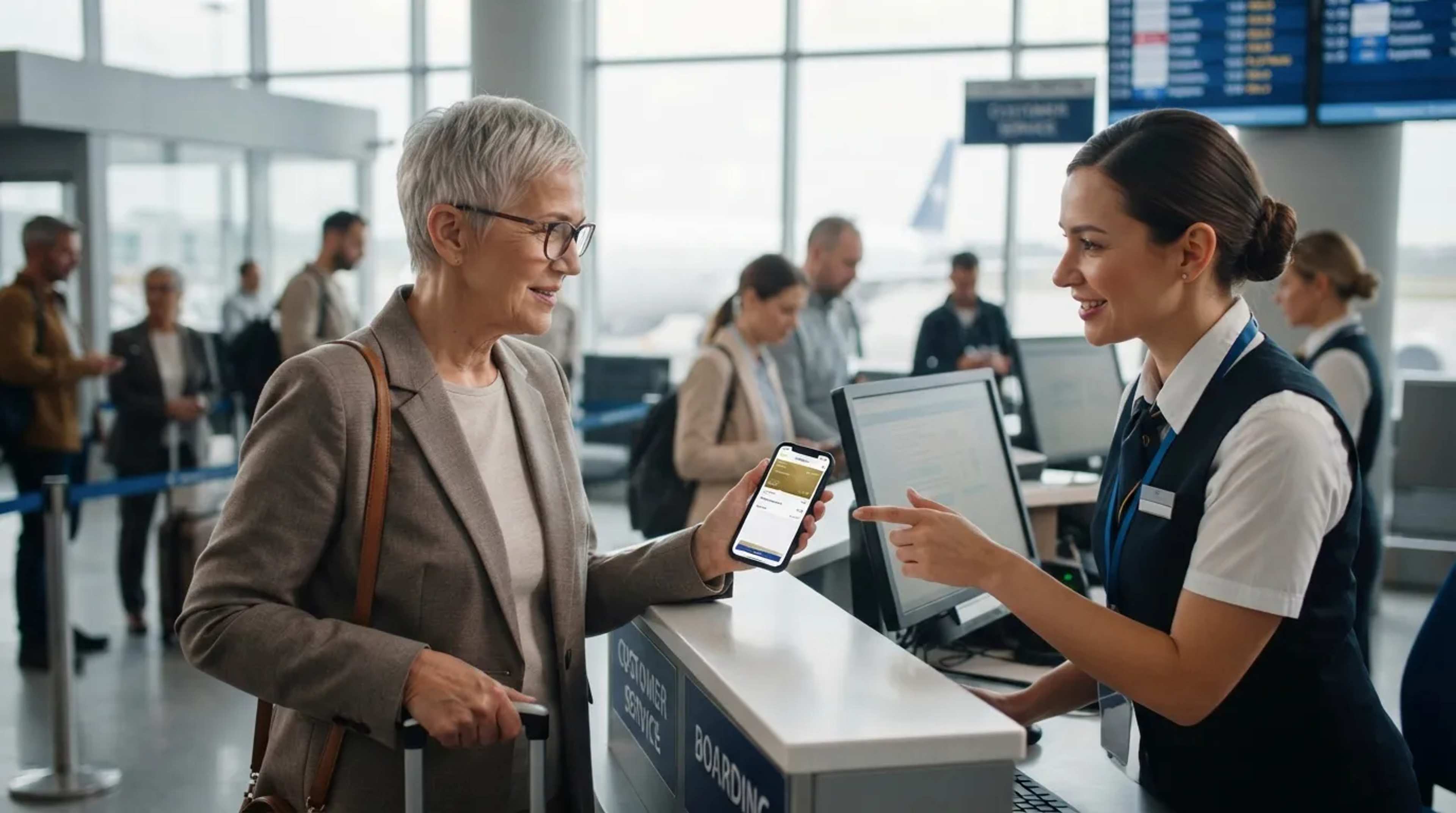
While you’re plugged in, save your boarding pass to your phone’s wallet app or take a screenshot of it. Do the same for the hotel address, the pickup instructions and any visa or entry confirmations, so they open without a signal.
Board with a full battery and every key document saved offline. Gate Wi-Fi and cell service work now, and they may not work later.
Power is sorted, but you still haven’t decided what comes out of your carry-on. On a fourteen-hour trip, that bag may be several rows away when you want it.
#11 – A Small Pouch That Stays Under the Seat
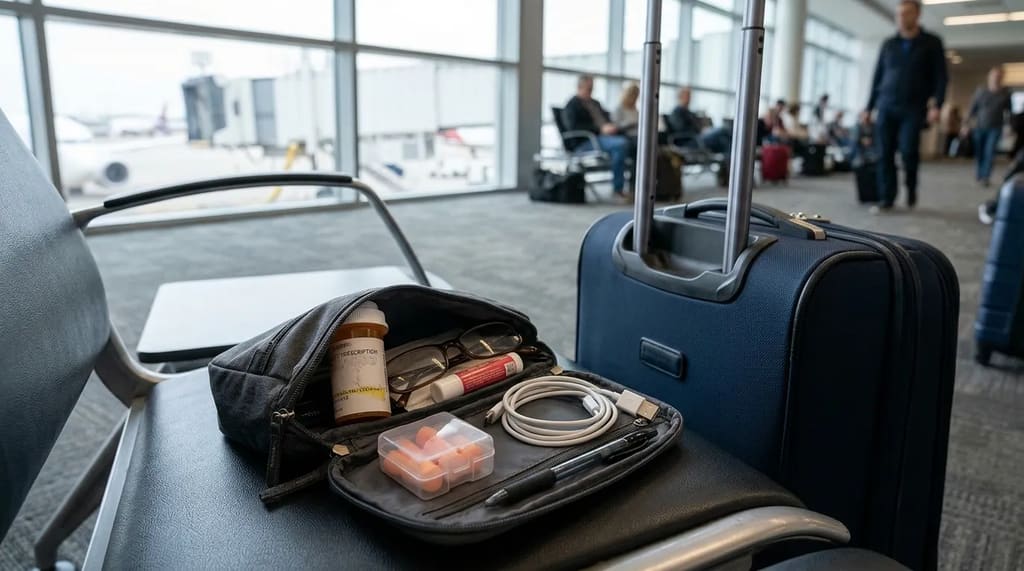
Your carry-on may end up in a bin several rows from your seat. During takeoff and turbulence you can’t go and get it.
Before you board, move what you’ll want in the first few hours into a small pouch or personal item that goes under the seat in front of you. Think prescriptions, glasses, lip balm, earplugs, a charging cable and a pen for any arrival forms.
The pouch also protects whatever you can’t replace if the bag is taken away at the door. Whatever is in it stays with you, no matter what happens to the bag.
Keep medications and valuables in the pouch, never in the bin. Prescriptions travel best in their original labeled containers, which also helps if an official asks about them on arrival.
The pouch covers your first few hours in the air. Your seat decides how those hours actually feel.
#10 – Look at Your Seat and Ask for an Aisle
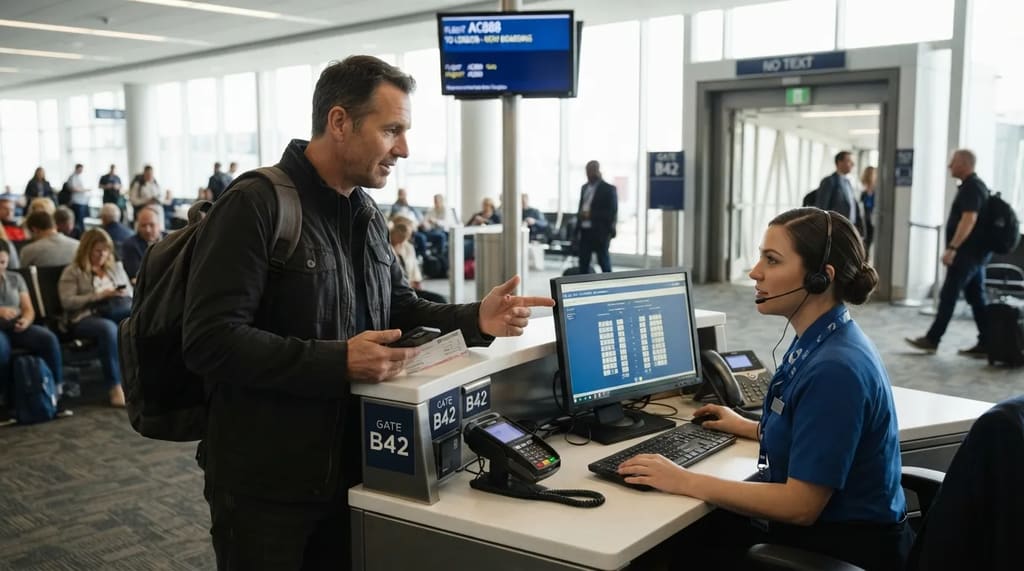
Your seat is one of the few parts of a long-haul ticket you can still adjust at the gate, within limits. Agents can see the seat map and change assignments when seats are open.
That matters for the walking advice a few items back. The CDC advises choosing an aisle seat when possible so you can walk around every two to three hours.2
Don’t expect miracles. Extra-legroom rows and premium cabins are often held for paid upgrades or frequent flyers, so an agent may say no.
Ask for an aisle seat at the desk before the boarding rush. If nothing is open, ask whether the agent can note your request in case a seat frees up before departure.
An aisle seat helps your legs, and so does what’s on your feet. That gear goes on before you reach the gate, and for some travelers a doctor should weigh in first.
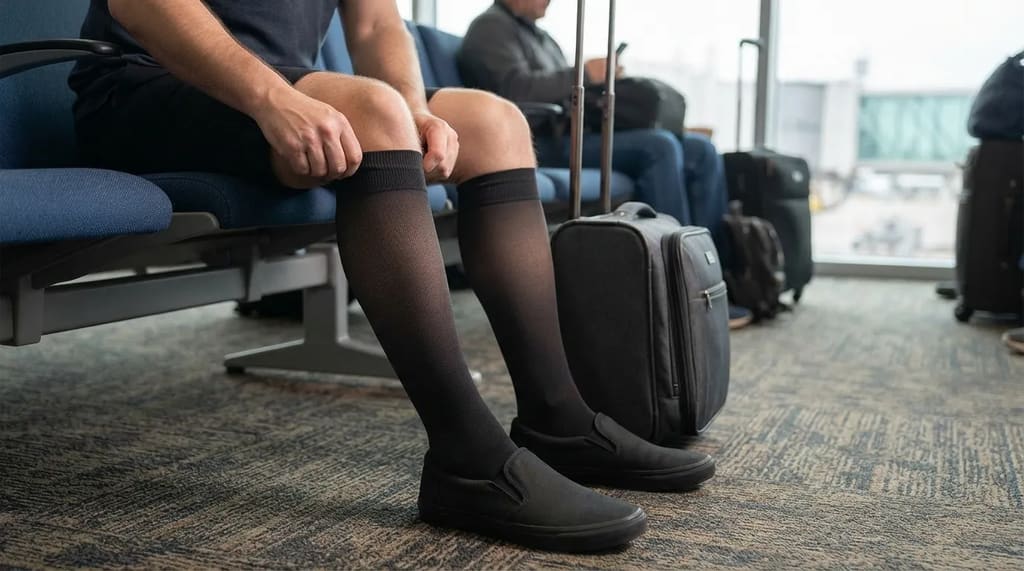
#9 – Compression Socks, and What to Skip
Aspirin before a long flight is a habit plenty of flyers swear by, and the CDC doesn’t back it. Taking aspirin to prevent blood clots when traveling is not recommended.2
The better move for travelers with added risk is a conversation with a doctor. Risk factors include a previous clot and a family history of clots, and the CDC suggests asking about compression stockings or medicine before departure.2
If stockings are recommended, fit matters. The CDC’s Yellow Book advises properly fitted, below-knee graduated stockings for increased-risk travelers on long flights.
Quick Compare
- Aspirin: The CDC does not recommend it for preventing travel-related clots.
- Compression stockings: Fitted, below-knee, graduated pairs are advised for increased-risk travelers. Ask your doctor first.
- Walking: Move around every two to three hours, and an aisle seat makes that easier.
Ask your doctor about stockings before the trip, not at the gate. Put them on before you leave for the airport, and avoid tight clothing around the waist or legs, which can restrict blood flow.
Stockings look after your legs. Your passport has to look after the border.
#8 – Passport and Entry Papers, Checked Twice
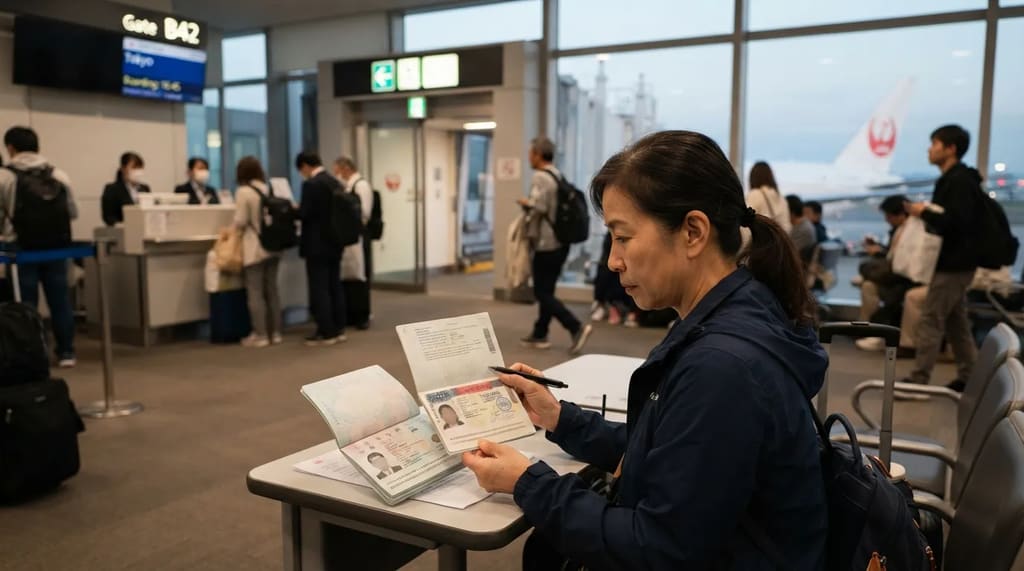
A passport that looks fine can still fail a destination country’s entry rules. Many countries set a minimum validity period or require blank pages, and airlines can refuse to board a passenger who doesn’t meet them.
Gate staff on international flights check documents because the airline is held responsible when a passenger can’t enter. That makes the gate the worst place to learn you’re missing something.
The compensation rules at the end of this list apply to oversold flights, not to documents, so a paperwork problem leaves you with no payout. Check the expiration date, the entry rules on the destination government’s official site, and any visa or travel authorization that needs approval in advance.
Match your passport’s expiration date to the destination’s entry rules. Keep a photo of the passport page on your phone, stored separately from the passport itself.
With the papers in order, turn to the item in your bag that has its own federal rule: the power bank, and the number printed on its casing.
#7 – The Watt-Hour Number on Your Power Bank
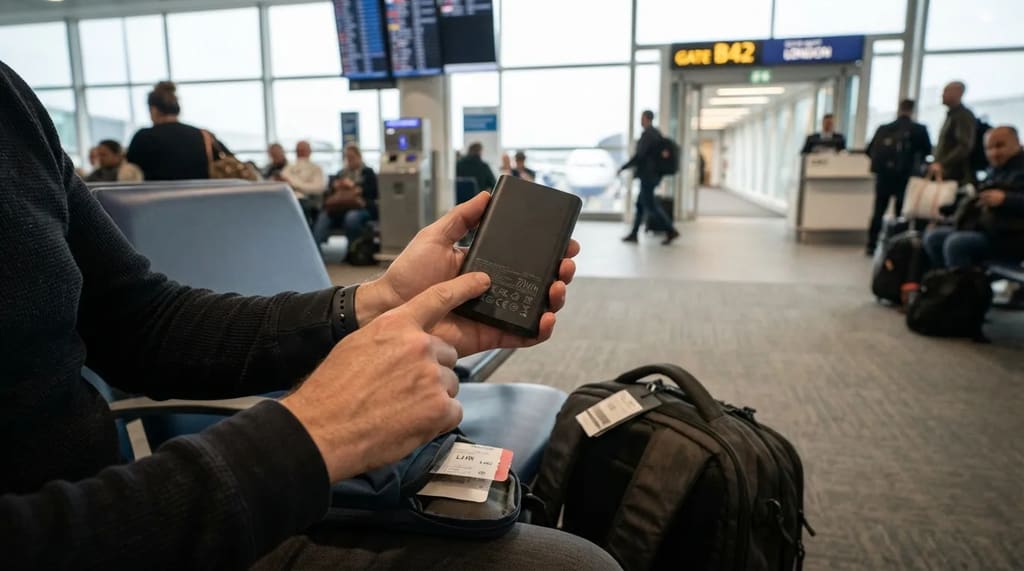
The milliamp-hour figure on the box isn’t the number the FAA cares about. Batteries up to 100 Wh are allowed on passenger aircraft, 101 to 160 Wh require airline approval, and anything over 160 Wh is forbidden.3
Spare batteries, power banks included, can be carried in carry-on only.3 They must also be protected from damage and short circuit, so keep the terminals covered or the bank in its own pouch.
Here’s the arithmetic. A 20,000 mAh bank at 3.7 volts is about 74 Wh, well within the limit, while a 30,000 mAh bank rated 111 Wh is not.
For flying, buy the smaller bank. Look for 100 Wh or less printed on the casing.
A bank that needs airline approval and a two-bank limit is a hassle with no benefit. A 20,000 mAh unit will recharge a phone several times.
The same bank creates a second problem if the agent asks you to check your carry-on at the door of the jet bridge.
#6 – The Gate-Check Drill at the Jet Bridge Door
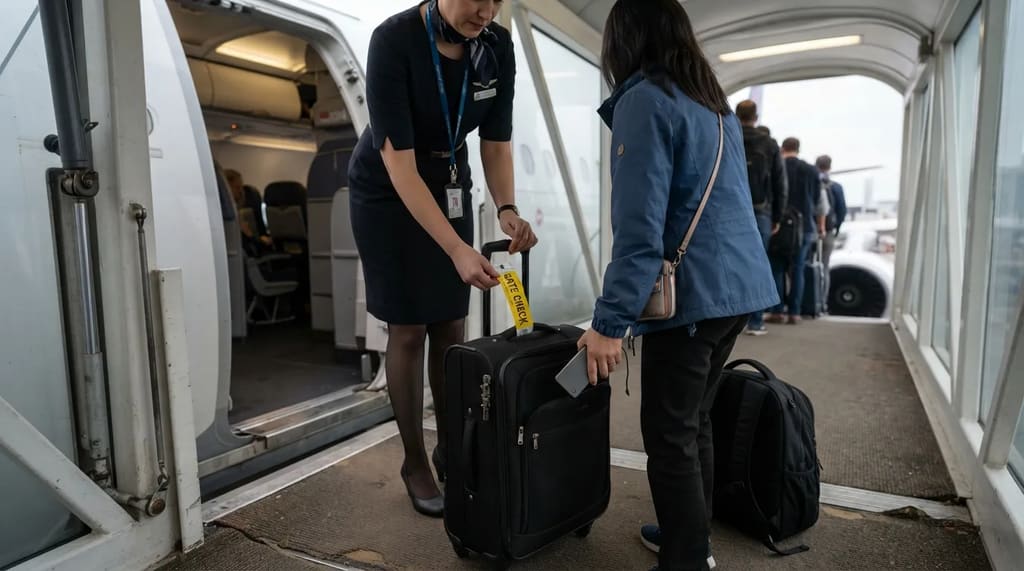
When the overhead bins fill, the bag you carried through the terminal can be tagged and left at the door of the aircraft. That’s called gate-checking, and it usually comes with little warning.
The FAA requires that when a carry-on is checked at the gate or planeside, spare lithium batteries and power banks come out and stay with you in the cabin.4 The bank you just measured is the first thing out.
The pouch from earlier does the rest of the work. Medications, glasses, wallet, passport and any laptop or camera should already be in it, so the tag goes on a bag that holds only clothes and toiletries.
Empty the bag of batteries and valuables before the tag goes on. Then ask whether the bag is tagged to your final destination or returns at the jet bridge door, since the answer matters if you’re connecting.
Even if the bag never leaves your hands, the long hours ahead depend on something you can only prepare on the ground. What will your phone hold when the signal drops?
#5 – Download Before the Door Closes
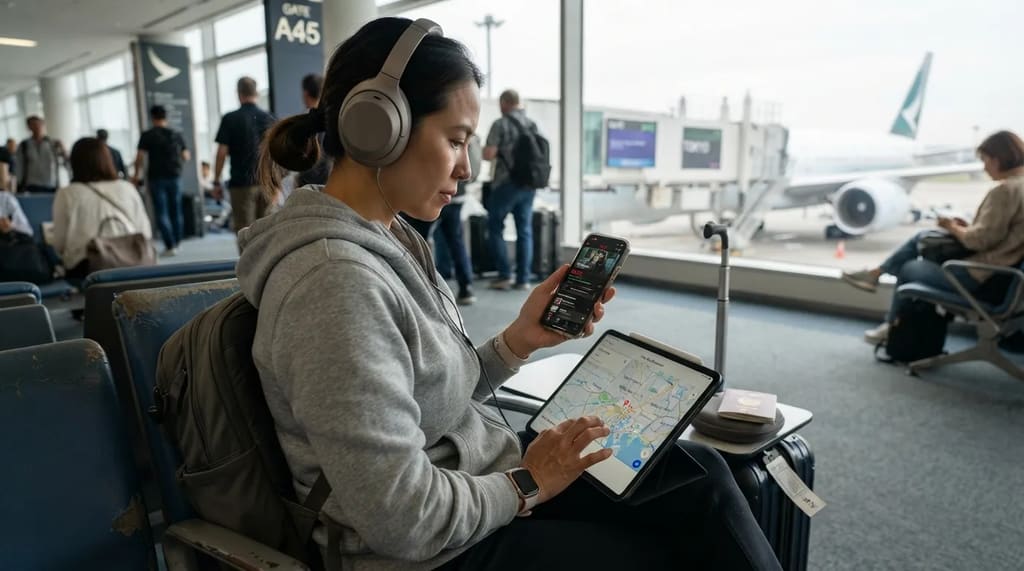
Wi-Fi availability on long-haul aircraft varies by airline and by plane. Where it exists, it can be slow or can drop out over remote stretches of ocean.
At the gate you have a strong signal and, often, free airport Wi-Fi. Download the shows, podcasts, audiobooks and e-books you want, and save an offline map of your arrival city so directions work with roaming switched off.
At a Glance
- Entertainment: shows, podcasts, audiobooks and e-books.
- Navigation: an offline map of your arrival city.
- Gear: headphones that are charged and tested.
- Final check: airplane mode on, then press play on each download.
Don’t stop at downloading. Switch to airplane mode and press play on each item, because a download that stalls at 80 percent is easier to fix with a signal than without one.
Download on gate Wi-Fi or home internet, never in the cabin. Take headphones too, since you can’t download your way out of a dead pair.
Downloads are loaded. One more battery question remains, and its answer changes once the door closes.
#4 – In-Flight Power Bank Rules on Your Airline
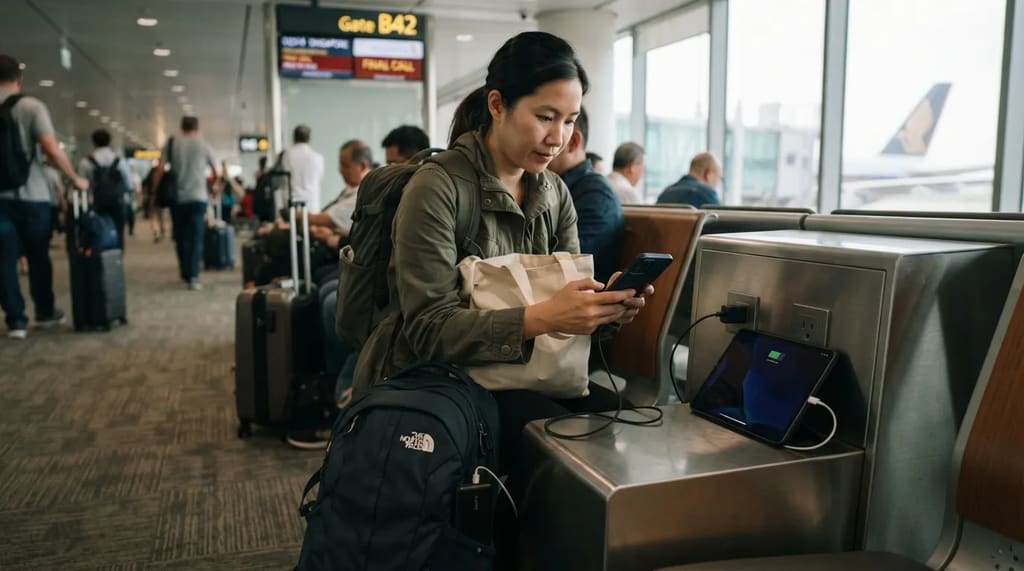
Passing security with a power bank and using it on board are two different permissions. The bank that cleared the watt-hour test can still be restricted once the door closes.
Airline rules often go beyond federal ones. Singapore Airlines, for example, bans using a power bank to charge devices in flight at all.5
Long-haul flyers should look closely, because several international carriers, including Emirates and Cathay Pacific, now restrict in-flight use. These policies keep changing, so check your airline’s own page before each trip.
Check your airline’s power bank rules before every flight. If use is banned, charge your devices fully at the gate and plan on seat power or none.
Related Stories From Travelbinger
Those rules bind every passenger, yet there’s a service for travelers who need extra time that costs nothing to ask for at the desk.
#3 – Pre-Boarding and Wheelchair Help for the Long Walk
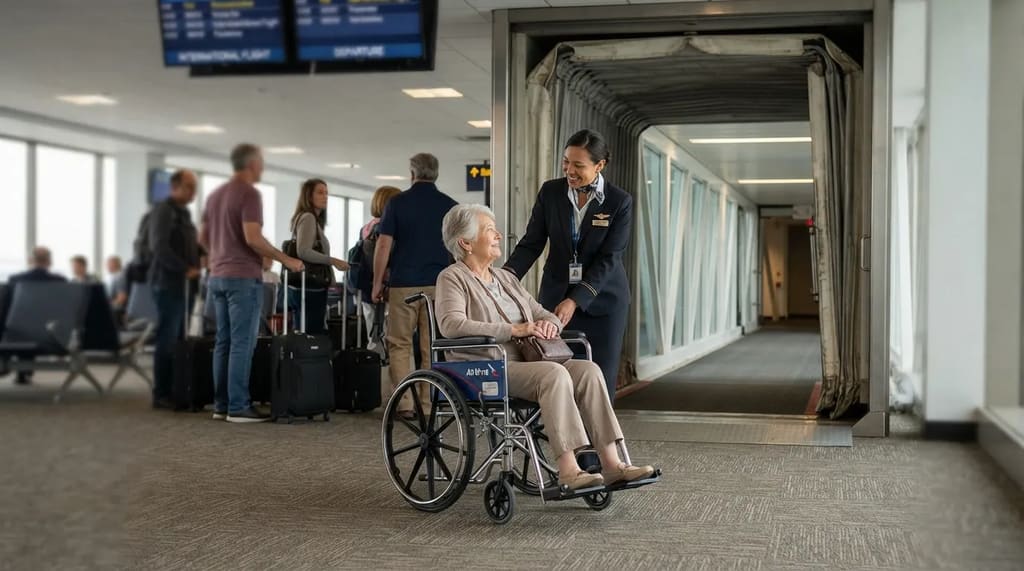
Long-haul gates tend to sit at the far end of a concourse, and that walk draws on stamina you’ll want later. A rushed trek to a distant gate is a poor way to start a fourteen-hour trip.
Airlines let travelers who need extra time board early. U.S. airlines are required to provide wheelchair assistance at no charge to passengers who request it.
Ask when you reach the gate, not when your group is called. Arranging help takes the agent a few minutes, and a crew member has to be sent to push the chair or drive the cart.
Asking is smart planning, and skipping it to avoid a fuss is the worse trade. Ask about pre-boarding at the desk as soon as you reach the gate.
Boarding early or late, the clock that matters most is the one the airline keeps. It isn’t the departure time printed on your pass.
#2 – The Gate Cutoff Before Departure Time
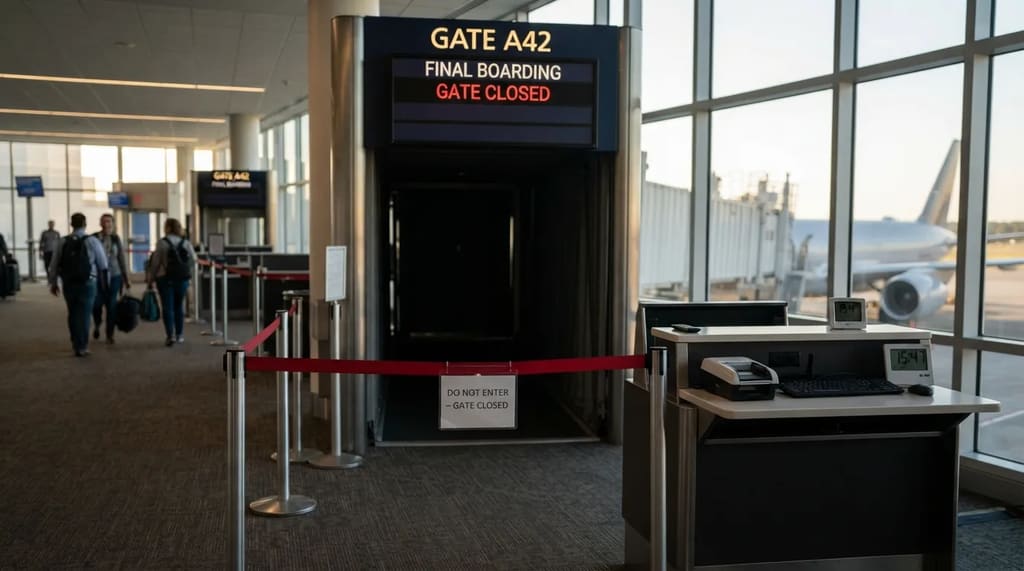
The departure time on your boarding pass isn’t your deadline, because the gate closes earlier. Each airline sets its own cutoff in minutes before departure, and international flights often use a longer one.
That’s why the gate number you rechecked earlier is worthless if you’re not standing at it. A plane can still be at the jet bridge while your seat is given away.
Missing the cutoff is also different from being bumped. The federal compensation system covers passengers denied boarding involuntarily due to oversales, and the airline’s check-in rules still apply to you.
Be at the gate when boarding starts, not when it ends. Look up your airline’s cutoff, set a phone alarm well ahead of it, and treat the printed departure time as irrelevant.
Arriving on time protects your seat, but it can’t protect you from a flight sold with more tickets than seats. That’s the biggest item on this list.
#1 – What a Bump Pays Before the Volunteer Call
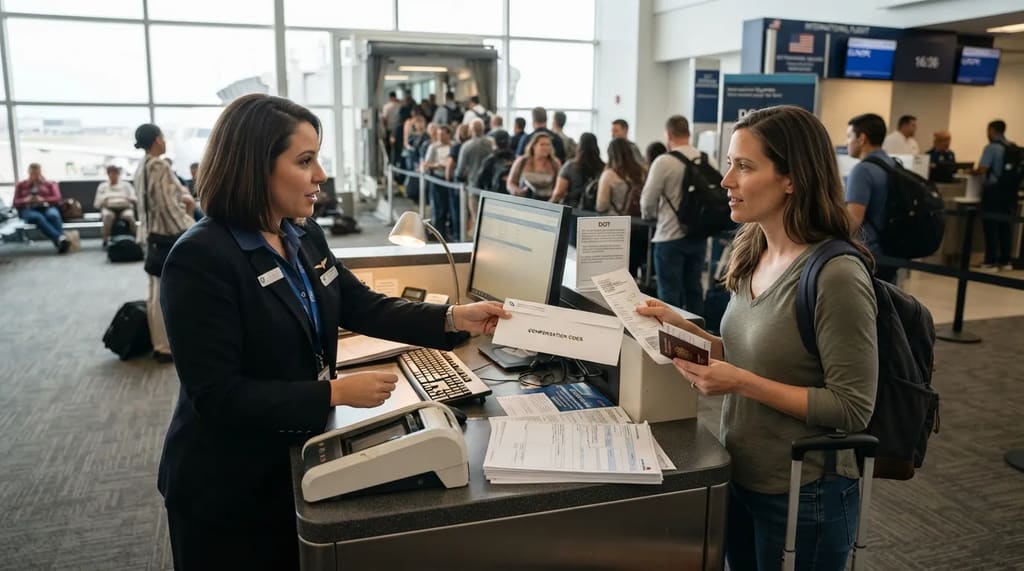
Overbooking is legal, but involuntary bumping triggers mandatory compensation under DOT rules. On an international flight leaving the U.S., a one-to-four-hour arrival delay earns 200 percent of your one-way fare, capped at $1,075.6 7
A longer delay earns 400 percent, capped at $2,150.6 7 Take a $600 one-way fare and a delay of more than four hours: four times the fare is $2,400, so the $2,150 cap applies.
Airlines must ask for volunteers first.6 A volunteer, however, gets whatever the airline offered, not the federal schedule, so ask what the offer includes and when the rebooked flight arrives.
If you’re bumped against your will, ask the agent directly whether you’re being involuntarily denied boarding, and ask for the required written statement of your rights. The carrier must also refund unused ancillary fees for things like seat selection.
Fast Facts
- Volunteers get the airline’s offer, which can differ from the federal schedule.
- Involuntary denied boarding triggers the mandatory compensation tiers.
- Ask for the written statement of your rights if you’re bumped against your will.
- Unused ancillary fees, such as seat selection, must be refunded.
Keep your boarding pass and receipts, because if the airline refuses or lowballs you, you can file a complaint with the DOT. These amounts apply to flights leaving the U.S.; flights leaving Europe fall under EU261, which pays €250 to €600.
It’s rare, too: 24,756 passengers on U.S. airlines, or 29 per million, were involuntarily denied boarding in 2023. You can’t plan to be bumped, but up to $2,150 in cash is the number to know before the volunteer call.
Fix It on the Ground
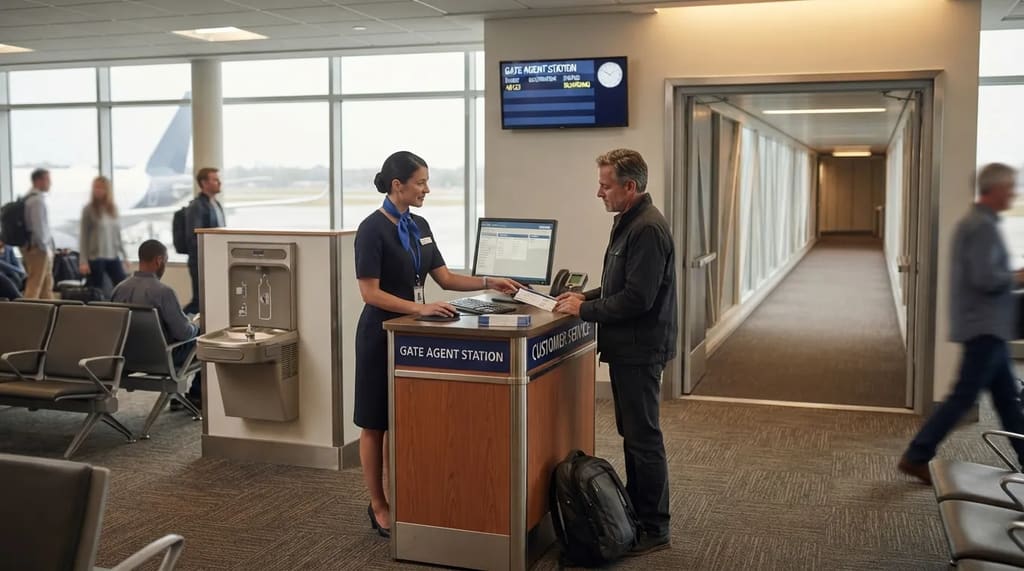
Think of the gate as the last place on a long trip where every problem has a desk, a fountain, an outlet or an agent nearby. Once the door closes, none of those are within reach.
That makes the half hour before boarding the cheapest time in your whole itinerary. A few small tasks done there can save you hours of trouble later.
Think of your last long flight: what’s one thing you had to put up with in the air that a few minutes at the gate would have fixed?
- 3-1-1 Liquid Rule Explained: https://www.travelsentry.org/tsa-lock/what-is-the-3-1-1-liquids-rule/
- CDC Prevent Blood Clots: https://wwwnc.cdc.gov/travel/page/dvt
- FAA Airline Passengers Batteries: https://www.faa.gov/hazmat/packsafe/resources/airline-passengers-batteries
- Gate-Checked Power Bank Rules: https://www.technobezz.com/can-you-take-a-power-bank-on-a-plane
- ABC Singapore Airlines Power Banks: https://www.abc.net.au/news/2025-03-14/singapore-airlines-rules-on-portable-batteries-power-banks/105052682
- DOT Bumping and Oversales: https://www.transportation.gov/individuals/aviation-consumer-protection/bumping-oversales
- eCFR Oversales Rule: https://www.ecfr.gov/current/title-14/chapter-II/subchapter-A/part-250