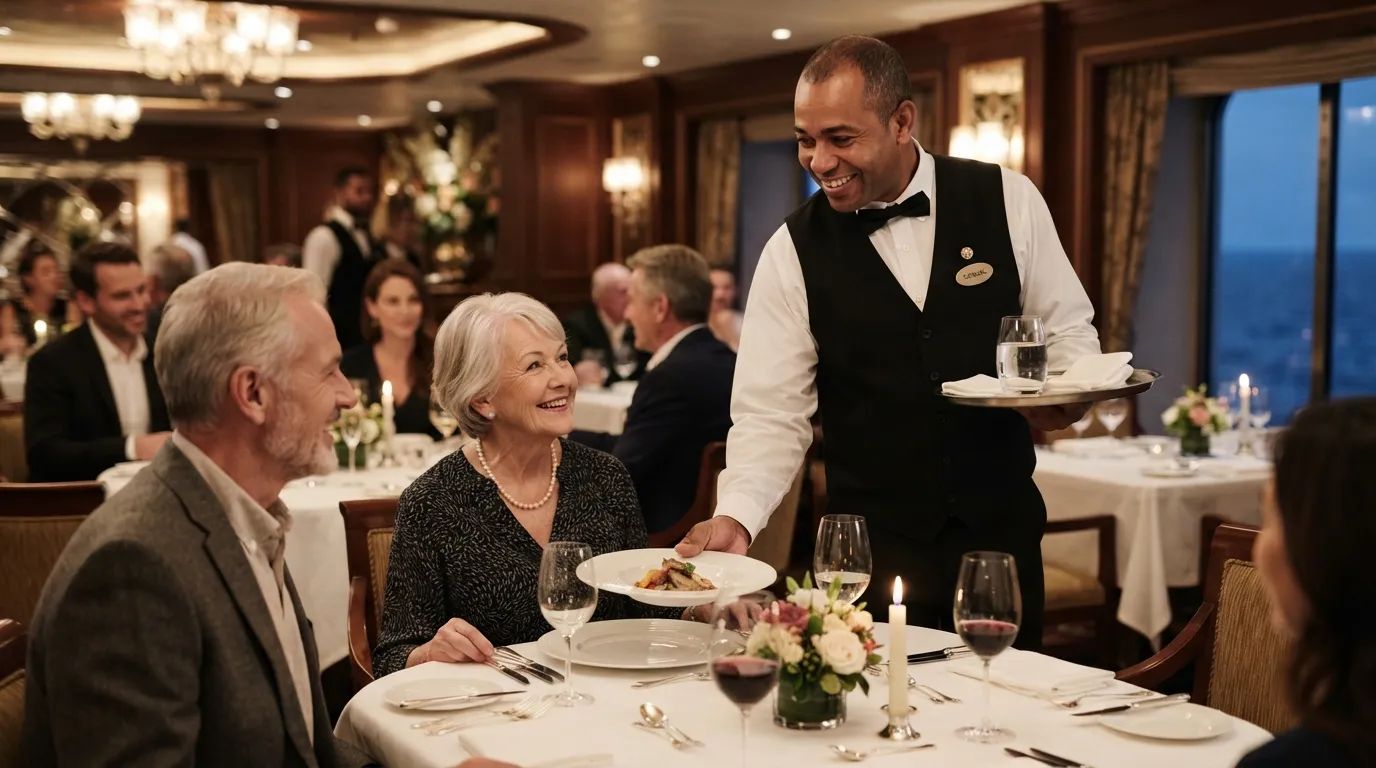
Most people assume the steward who makes the bed and the waiter who brings the soup barely notice who they’re serving. Crew accounts tell a very different story, and it starts with something as small as a name.
About 34% of cruise travelers were over 60, so this is not a niche crowd.1 The details below are stranger and more specific than the myth, and the one crew seem to treasure most is saved for last.
#15 – The Name Badge You Actually Read

Your steward’s name has been on their chest since the first hello, and most passengers never look. It’s the smallest door on the ship, and hardly anyone walks through it.
Crew typically wear name badges, so returning the courtesy takes almost no effort. One outlet claims guests over 60 are more likely to use a steward’s name than to treat them as invisible, and that stewards notice the difference instantly.
That same crew-account pattern shows up elsewhere. Another outlet reports that stewards consistently call remembering your name on day one the fastest route to better service.
Here is the honest limit of the evidence. These observations come from cruise outlets and crew accounts, not a formal survey, so treat everything below as a pattern, not a guarantee.
But the real surprise is that the crew usually learn your name first, and #14 shows how.
#14 – The Sheet With Your Photo Already on It
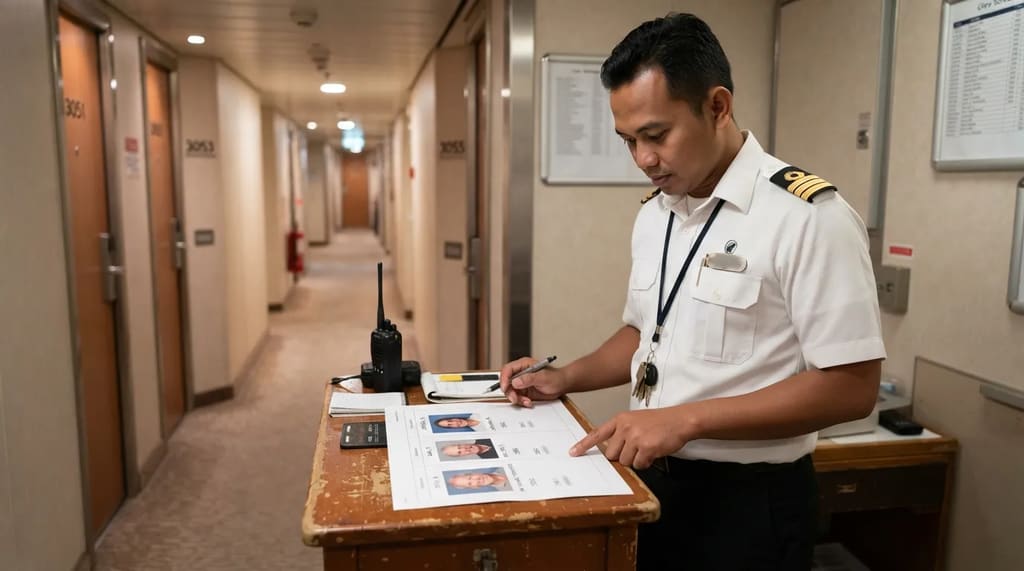
By the time you wave hello, the crew may already have your face on paper. That flips the usual picture of who is meeting whom.
One Holland America cruiser reported that each steward gets a sheet with the name and photo of every guest in their area. Another poster said that on small ships the full manifest with photos circulates among the crew.
That poster added a claim worth handling carefully: each crew member must remember at least 10 guest names on the first day and 10 more each day after. It’s a forum report, not a published policy.
The wider picture does fit. Cabin assignments are on the manifest, and a stateroom attendant customarily introduces themselves already knowing who is sleeping in their rooms.2
At a Glance
- Photo sheets: reported by a Holland America cruiser, covering every guest in a steward’s area.
- Small ships: one poster says the full photo manifest circulates among crew.
- The “10 names a day” rule: a forum claim, not a confirmed policy.
- What’s solid: cabin assignments are on the manifest, so your steward knows who is in each room.
If the sheet story is accurate, you aren’t a stranger to your steward. You’re a face they’ve studied, and #13 covers the first meeting.
#13 – The First-Evening Greeting You Didn’t Rush
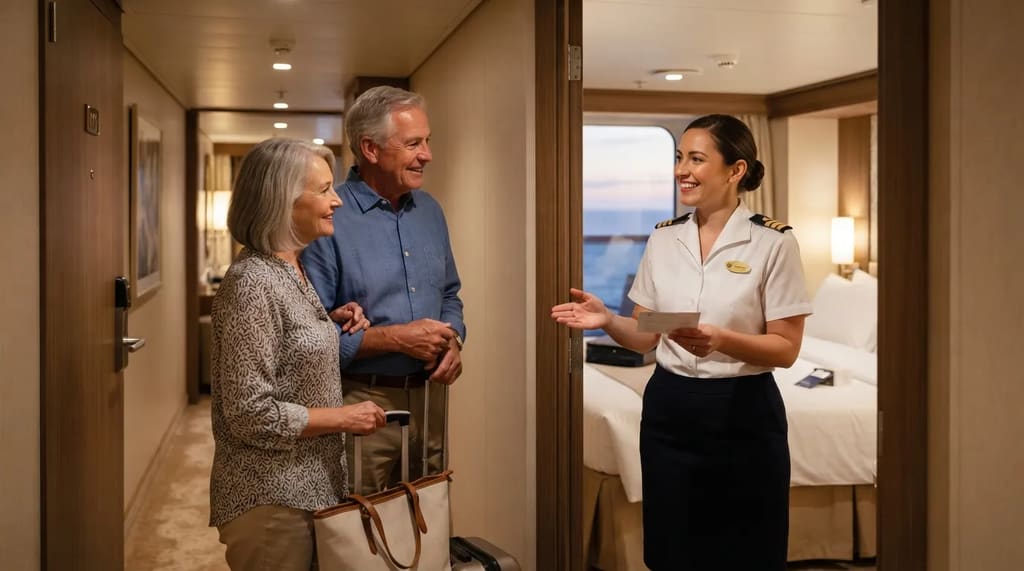
That first knock on your door is the one moment a steward gets to set the tone for the week. It’s also the one moment you get to answer in kind.
One cruise line’s job listing says the steward greets guests in their section on the first evening and explains cabin services, duty hours and other services. The same listing has stewards escorting guests to the cabin on embarkation day and carrying hand baggage.
Some crew go further. One stewardess told World of Cruising she leaves a card in each cabin so guests know her name, and she makes a point of learning theirs.
Most people don’t realize what happens next. A guest who stands out as a person, not a room number, is easier to remember and easier to help.
That duty list comes from one line’s listing, so practice varies, but a name offered back works even better, as #12 shows.
#12 – The Name You Offered Back
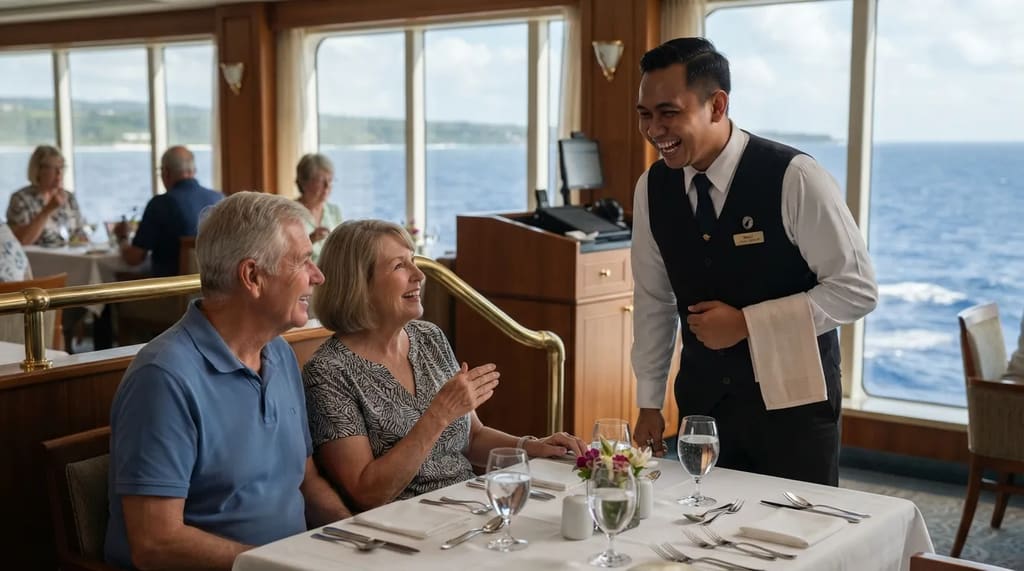
Sometimes the best thing you can give a crew member is permission to shorten your name. It sounds tiny, but it hands them a tool.
On Holland America’s Amsterdam, one cruiser’s steward asked on their second meeting if he could use their first names, since the last name was too hard to pronounce. They gave him the nicknames that weren’t on the passenger log, and he remembered them the rest of the cruise.
It’s a single anecdote. It fits the crew pattern that a steward looks after a large section of cabins, and a guest who stands out as a person is easier to remember.
Notice what those guests actually did. They asked for nothing and simply made their name easy to use.
Of course, crew don’t leave all those names to luck, and #11 reveals the tricks they use.
#11 – The Memory Tricks Crew Use on You
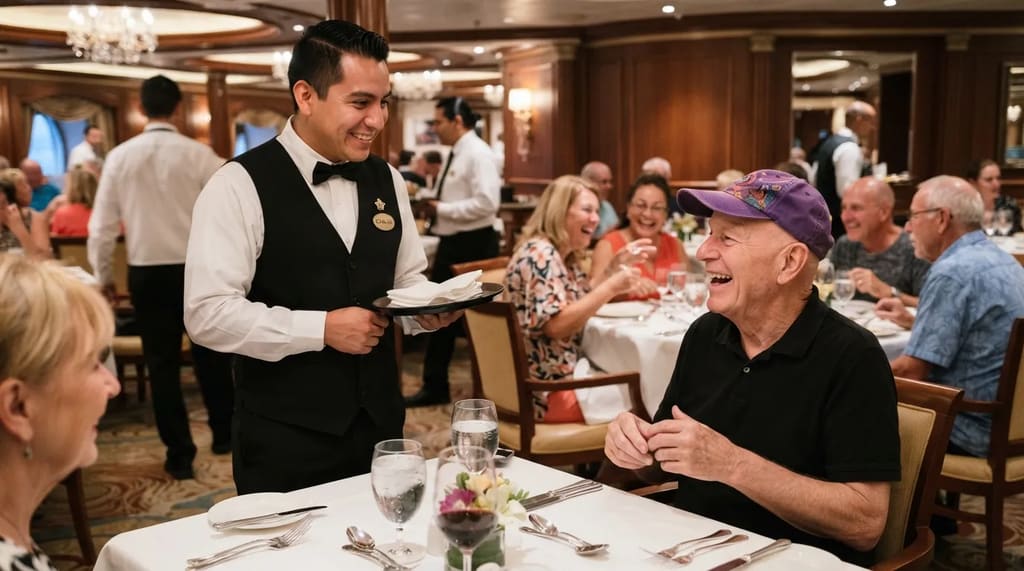
Remembering hundreds of names isn’t a gift, and crew accounts say it’s closer to a technique. Think of it as a filing system, not a superpower.
One cruiser said a crew member told them that crew are taught word association to remember names. Another poster described passengers getting labels based on a bald head or a purple hat.
Crew are reportedly taught word association, which means your hat may help more than your surname. The trick works best when you give them something to attach the name to.
Not everyone is sold on the whole idea. One poster said only a single crew member has ever remembered their names, and skeptics argue a name read off a sheet isn’t really memory. Fans reply that the effort counts either way.
Names, though, are only the label, and #10 explains what stewards file underneath.
#10 – The Preferences Filed Under Your Name
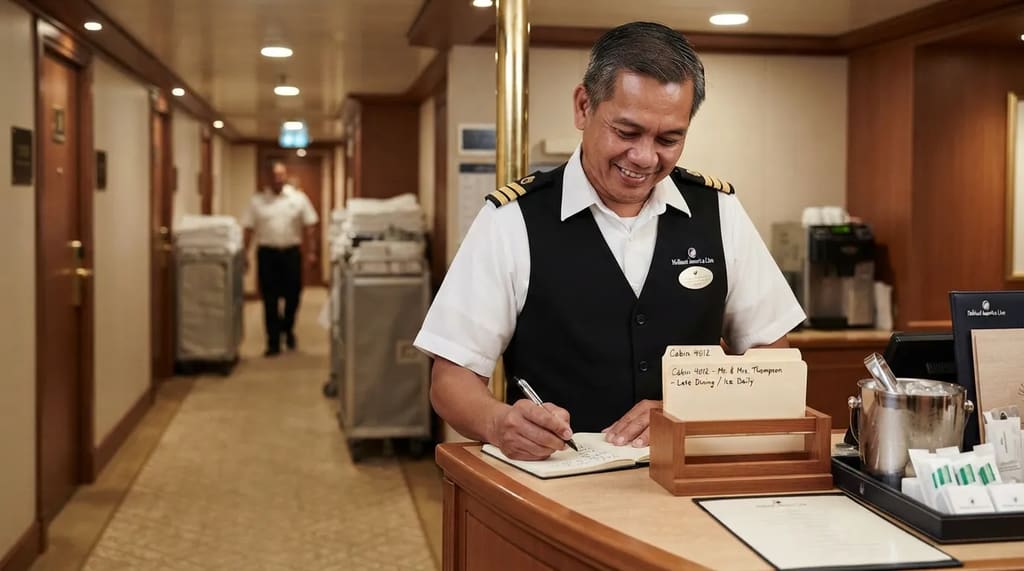
A name is the folder, and your habits are what the crew put inside it. Over a week, that folder gets surprisingly thick.
One Holland America steward recognized returning guests because they ate late and always wanted a full ice bucket. One outlet citing crew accounts says stewards also flag cabins that never pre-requested a bed setup as likely to ask for changes on day one.
Estimates of a steward’s section run from 12 to 20 cabins up to 20 to 40 staterooms, depending on the line and ship. A name plus one habit is a handy hook in a head that full.
- Say your dining time once, and say it with your name.
- Pre-request your bed setup before you sail.
Waiters work from a different kind of memory, and #9 explains the difference.
#9 – The Table That’s Yours All Week
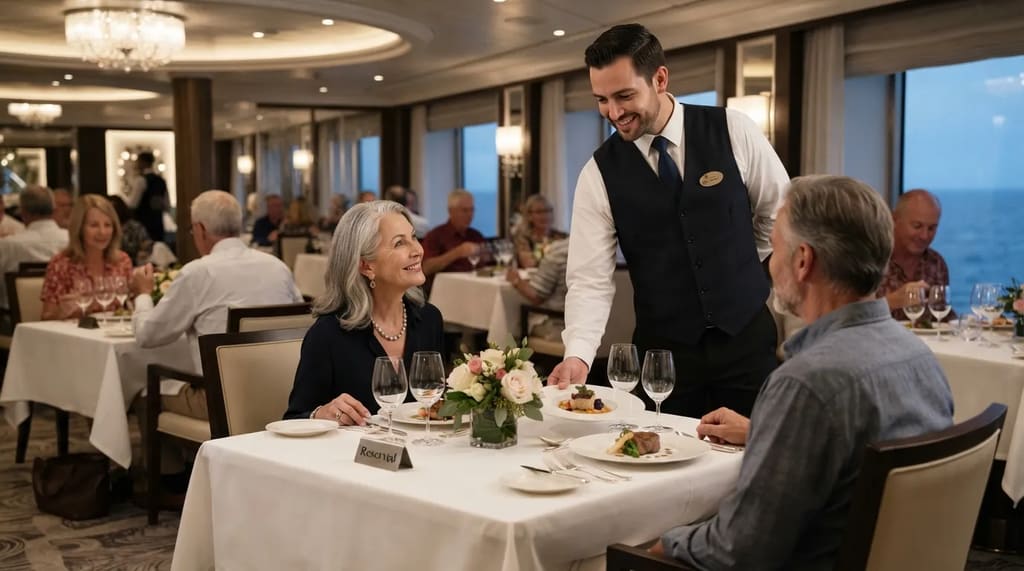
The dining waiter gets something the steward rarely does, which is the same faces at the same table. A steward mostly meets your cabin, while a waiter meets you.
Dining room servers on cruise ships often serve the same guests all week. That repeat contact gives a first-night name plenty of chances to be used.
The money side is less personal than most guests assume. Most cruise lines add $16 to $22 per person per day in gratuities, and the pool is spread across cabin stewards, dining waiters, assistant waiters, maître d’s and other service staff, including people you may never meet.3 4
Quick Compare
- Carnival: $17 per person per day in a standard stateroom, about $119 over seven nights.3
- Royal Caribbean: $18.50 per person per day, about $129.50 over seven nights.4
- Norwegian: $20 per person per day, about $140 over seven nights.4
Those are 2026 listed rates for standard rooms, and suites cost more. That pooling is the reason a personal touch stands out, because it’s one of the few things at the table that comes directly from you.
The routine is easy to see, but the personal details are what crew keep, and #8 starts with the easiest one to miss.
#8 – The Anniversary You Mentioned Early
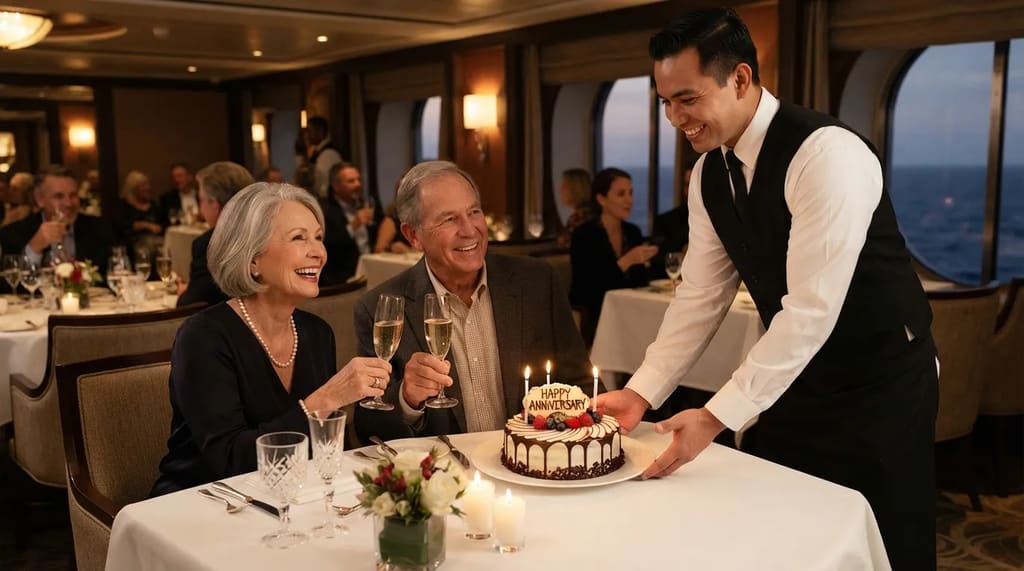
Crew can’t plan a celebration they never hear about. Even the warmest staff can’t read a guest’s mind.
Mentioning a special occasion on day one gives your steward and the dining team time to do something about it. Wait until the dessert course and there’s nothing left to prepare.
Some bookings already carry the information. Stewards can see names, bed configuration, any special-occasion note tied to the booking, and loyalty tier where the line tracks it.
A line on a reservation is only a note, but a guest who says it to the crew’s faces gives them a plan. It also gives them a name to attach it to.
Dates are easy to share, but one personal detail beats them all, and #7 starts with the photos on your dresser.
#7 – The Grandchildren You Named
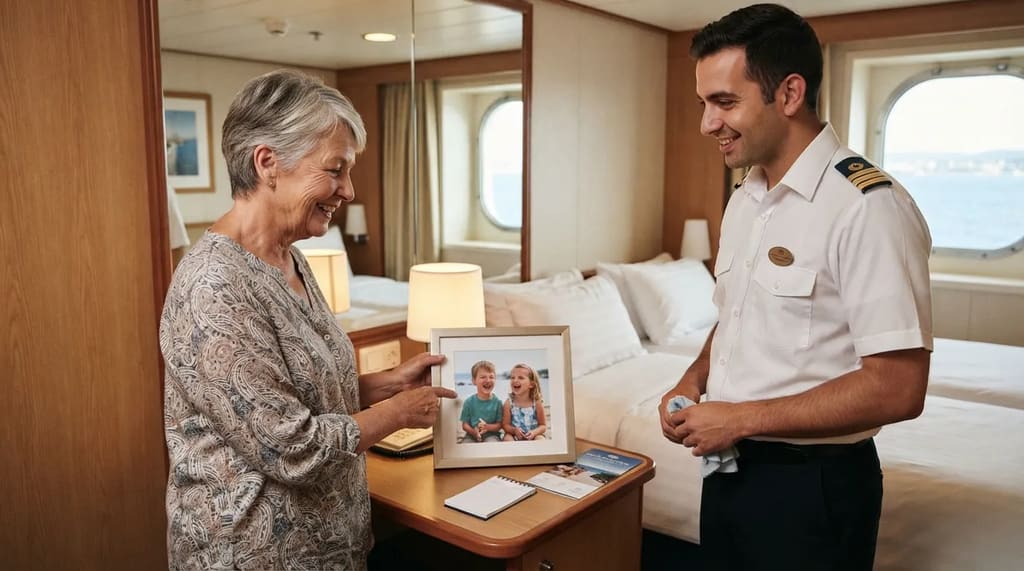
A single framed photo can do more than a week of small talk. It gives a steward something real to ask about.
Crew-account pieces repeat the same line: a steward who learns a guest’s grandchildren’s names by day three tends to remember that guest fondly for the rest of the voyage. A framed photo on display can start a conversation that a stock greeting never would.
The detail that matters is “by day three.” Stewards say these personal touches are the fastest way a passenger stops being a room number and becomes a person.
Again, this comes from outlets and crew accounts, not survey results. With 34% of travelers over 60, though, plenty of cabins have grandchildren worth talking about.
That kind of exchange takes time, but #6 is the cheapest move on the list.
#6 – The “Morning, James” That Resets the Tone

The cheapest move here is also the one cruisers say changed their week. It takes about two seconds.
Plenty of cruisers say a simple “Morning, James” on embarkation day changed the tone of their whole week. Stewards say a passenger who remembers them back is easy to remember, and a name, eye contact and a quick smile is all it takes.
One outlet suggests writing the steward’s name on your phone or the cabin notepad so you can use it during the week. This isn’t a trick so much as a low bar. By one outlet’s account, most passengers barely make eye contact on a ship.
Names are only half of it, and #5 is about a different kind of words entirely.
#5 – The Specific Thank-You
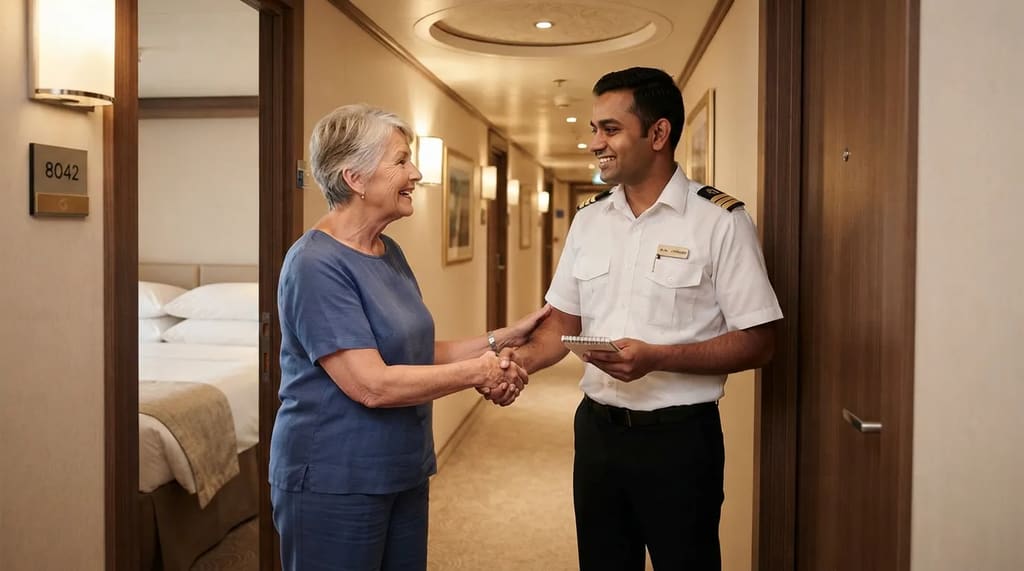
A vague “thanks” gets forgotten, and a specific one sticks. The difference is usually just one extra detail.
Specific thanks tells a crew member exactly what you noticed. Even a quick hello or a smile in passing lets a steward know you still notice their work.
Here’s the trap: saving every word of thanks for the last night. Most of a steward’s work happens while you’re out, so a specific comment may be the only proof it registered.
- Vague: “Thanks for everything.”
- Specific: “Thanks for remembering the extra pillows.”
The second version also gives them a name-and-detail pair to remember you by. That’s a small gift, and it travels well down a long corridor.
Some guests go further with cash, and #4 is where the arguments begin.
#4 – The Early Tip and Handwritten Note
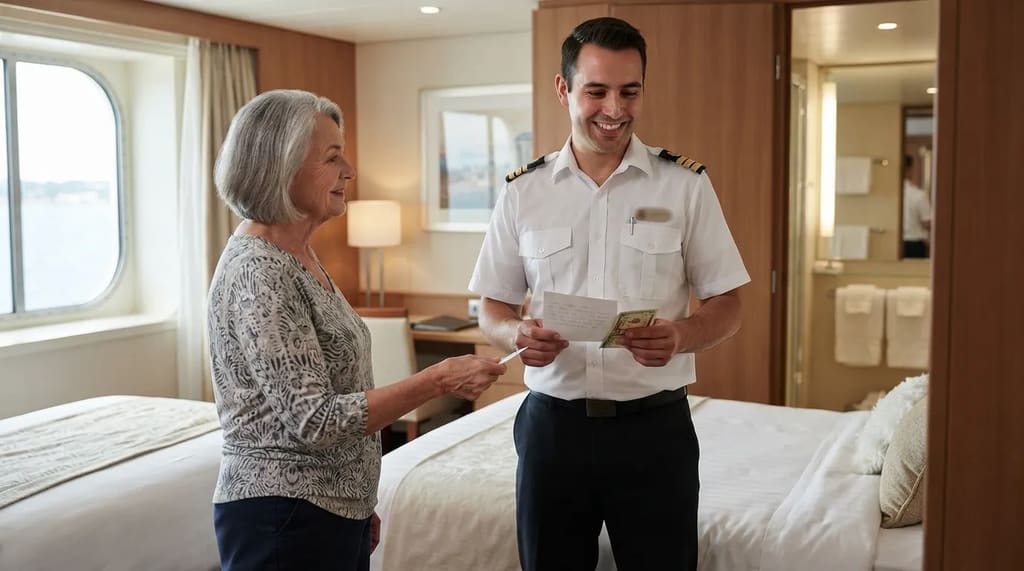
This is the entry that starts the fights in cruise forums. Everyone has a rule, and nobody’s rule matches.
One outlet says tipping early and in cash gets stewards’ attention because it’s rare now. Others push back that daily gratuities already cover the core team, and extra tips aren’t required.
Guides that do suggest extra cash put it around $3 to $5 a day for outstanding service. Crew prefer cash because many are sending money back home to their families.
Related Stories From Travelbinger



Still, that’s small next to #3, a memory that can outlast the voyage by years.
#3 – The Guests They Remember Years Later
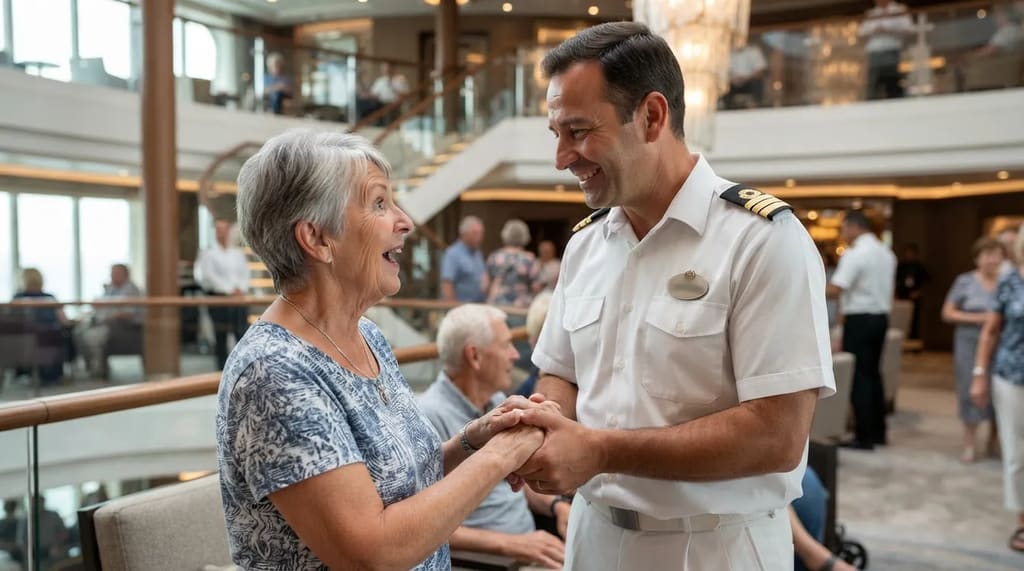
For some crew, “all week” turns out to be a short estimate. A few of them seem to keep faces for years.
One cruiser described a crew member who remembered passengers’ names even years later. Another ran into a familiar steward on a later ship, one who remembered them from a 2004 sailing on the Ryndam.
The reunion is partly luck. Contracts run six to nine months, with only short unpaid breaks of one or two months between assignments.
Why It Stands Out
- A steward recognized a guest on a different ship, two decades after a 2004 Ryndam sailing.
- Short breaks between contracts mean crew move among ships and cross paths with returning guests.
- Recall varies by person, so a few crew keep faces far longer than others.
- A guest who made an effort is simply easier to place.
One cruiser’s explanation is that it comes down to the individual crew member’s memory and how memorable you are. A guest who made an effort has simply made the second part easier.
That kind of recall can also help the person who earned it, which brings us to #2.
#2 – The Name in the Survey
The most practical thing a guest can do with a crew member’s name happens after the ship docks. It’s also the one nobody mentions at embarkation.
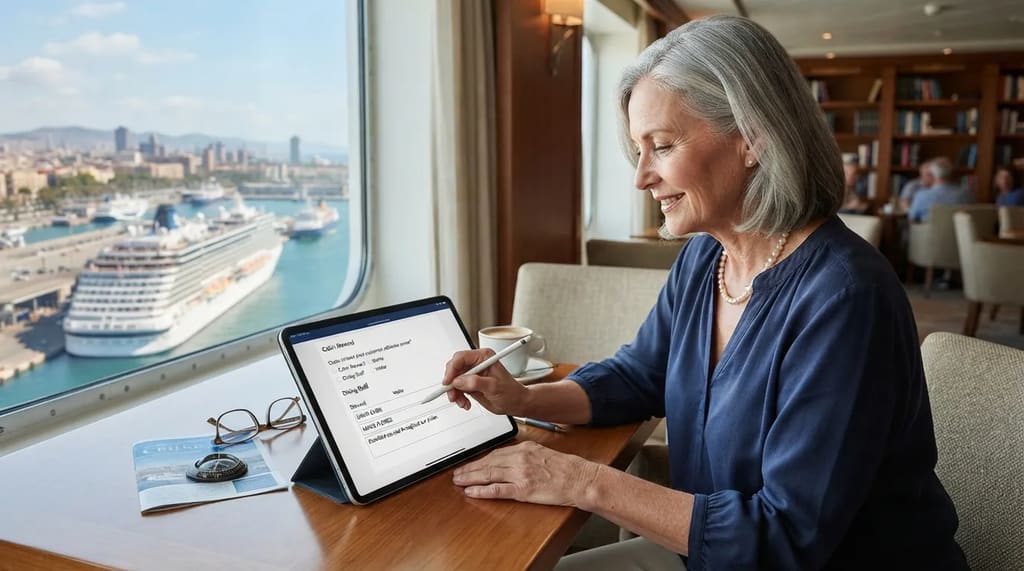
One outlet says crew can earn extra time off, special shore excursions, bonuses and promotions based on being mentioned by name in the post-cruise survey. It adds that none of this shows up in any cruise line handbook.
The Points Guy advises that if you stick with the included charge, you should complete the post-cruise survey and call out crew who left an impression.3 5 Another outlet says to name your steward by full name in the mid-cruise or end-of-cruise survey.
But the final entry is what crew call the best part of the job, and it has nothing to do with money.
#1 – The Hometown Question They Finally Got to Answer
The thing crew remember longest may not be a tip at all. It may be a question.
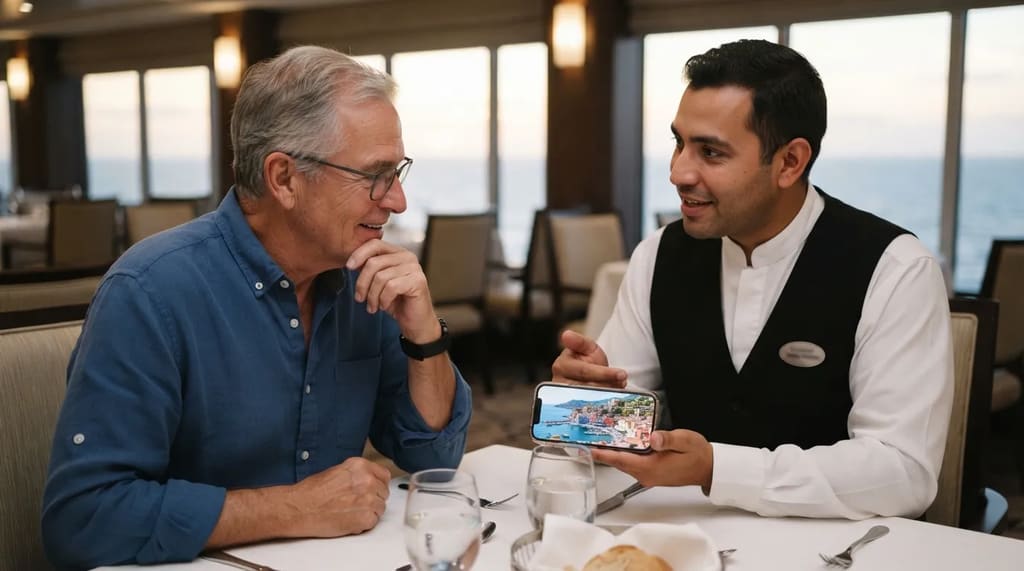
Crew often say the best moments are when a guest asks about their hometown and actually listens. That sounds small until you set it beside the schedule.
Contracts run six to nine months, with days of 10 to 12 hours, seven days a week. Under one formula of the Maritime Labour Convention, the legal ceiling is 72 hours in any seven-day period.6
Put those hours beside a ten-second question about home, and the rest of this list starts to make sense.
The Name They Carry Home
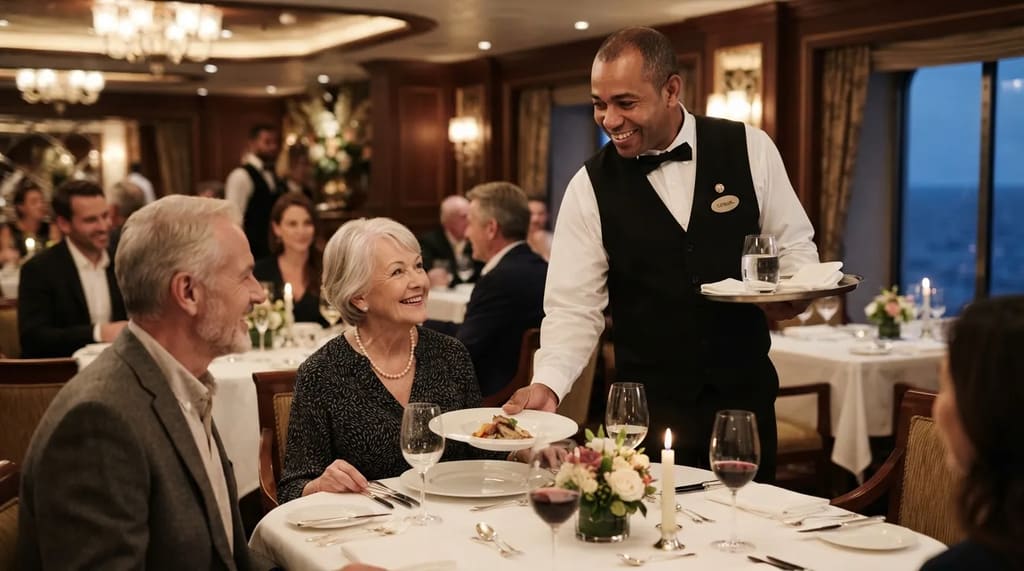
Learning a crew member’s name costs nothing, and crew accounts suggest it earns more than any single tip: better recall of your habits, a celebration planned in time, and a steward who remembers you fondly. The evidence is crew accounts and cruiser reports, not a formal study, so treat it as a pattern, not a promise.
The two findings that stand out are the reported photo sheet that gives crew your name before you arrive, and the claim that a name in a survey can affect a crew member’s recognition.
Which crew member do you still remember by name, and what did they do to earn it?
- Cruise Industry Statistics 2026: https://cruisestar.org/blog/cruise-industry-statistics/
- Points Guy Cabin Steward: https://thepointsguy.com/cruise/what-is-cruise-cabin-steward
- Points Guy Cruise Tipping: https://thepointsguy.com/cruise/cruise-ship-tipping
- Cruise Gratuities 2026 Rates: https://www.cruiseshiptracking.com/blog/cruise-tipping-guide
- Points Guy Who to Tip: https://thepointsguy.com/cruise/people-you-should-tip-on-cruise/
- ILO Maritime Labour Convention: https://www.ilo.org/media/269841/download