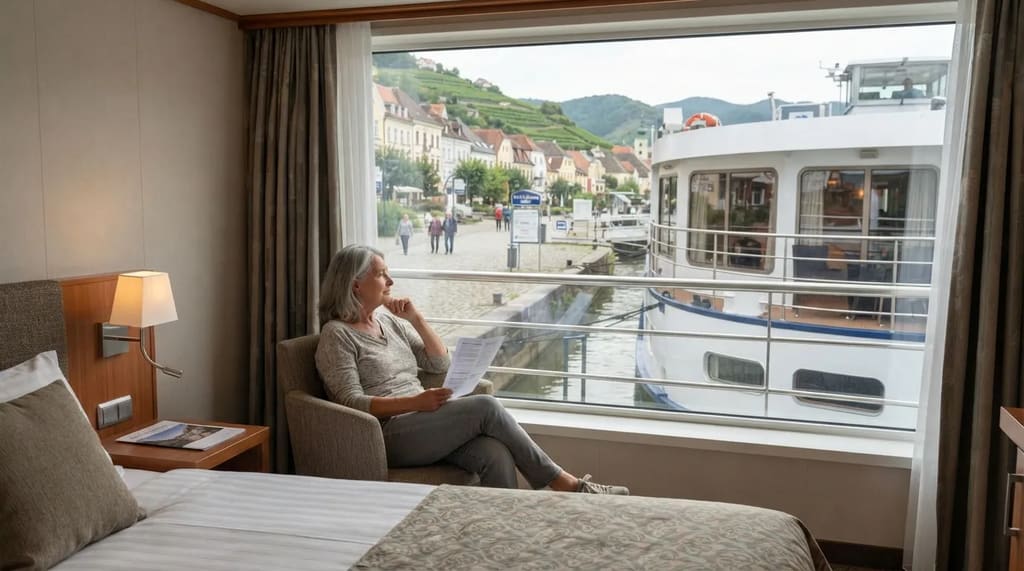
The brochure shows a wide window and a glittering river. At the dock, that same window can face another ship’s window, close enough to see the neighbor’s curtains.
That’s one of the milder surprises on this list of 15 cabin, dock, surcharge and refund rules that travelers often meet only after the deposit is paid. The last one involves the most money, because it decides whether you get cash back when low water rewrites your trip. First, the window.
#15 – The Window That Faces Another Ship
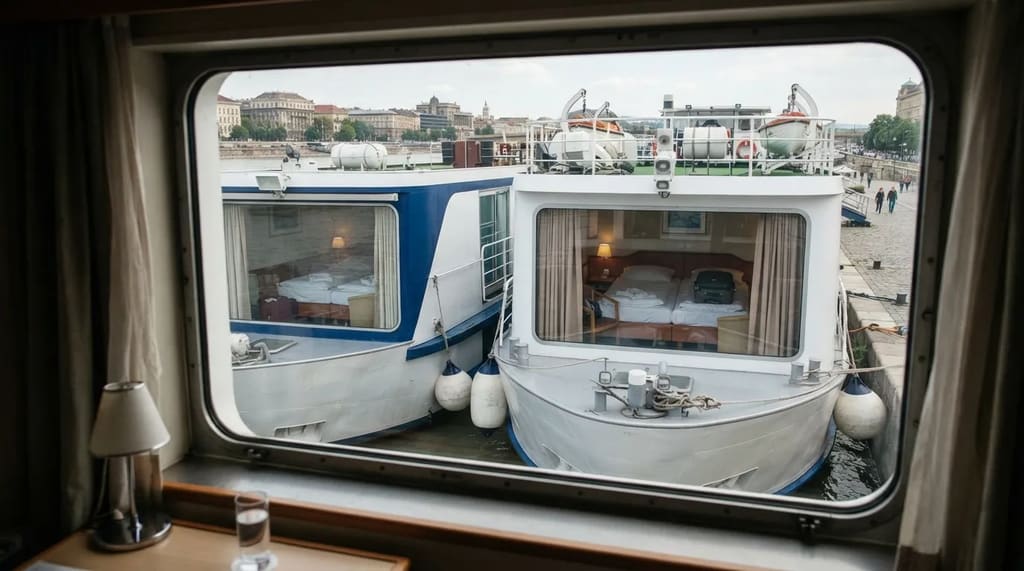
Rafting is the river-ship habit of docking vessels side by side, and it’s more common than most brochures admit.1 River cruising has grown in Europe over the years, but the number of berthing slots has not.
The ship nearest the quay ties up to the dock, and each ship after it ties up to the one before. That puts your cabin window against a neighbor’s window, and either side of the ship can end up blocked.
The view runs both ways. At night you may be able to see into a neighbor’s cabin, so close your curtains before you turn on the light.
No cabin comes with a guaranteed view while the ship is docked. Treat a docked view as a bonus and the river view while sailing as the real one.
Rafting also changes how you get ashore, and on some mornings the route runs straight through another ship’s lobby.
#14 – The Walk Through Someone Else’s Lobby
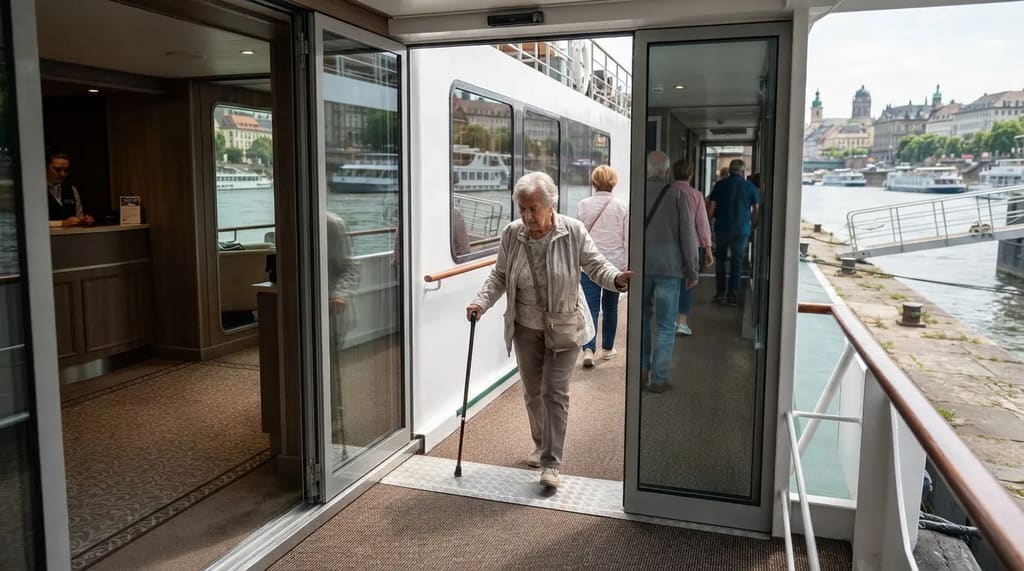
If your ship is moored outside another one, the way to the quay goes through that ship. You may climb your own stairs, then cross another ship’s deck, before you reach shore.2
Lines try to keep this tidy, routing groups only through public areas with no access to passenger cabins. Ships are built for the maneuver, with sliding doors on both sides of the lobby so the two lobbies line up.
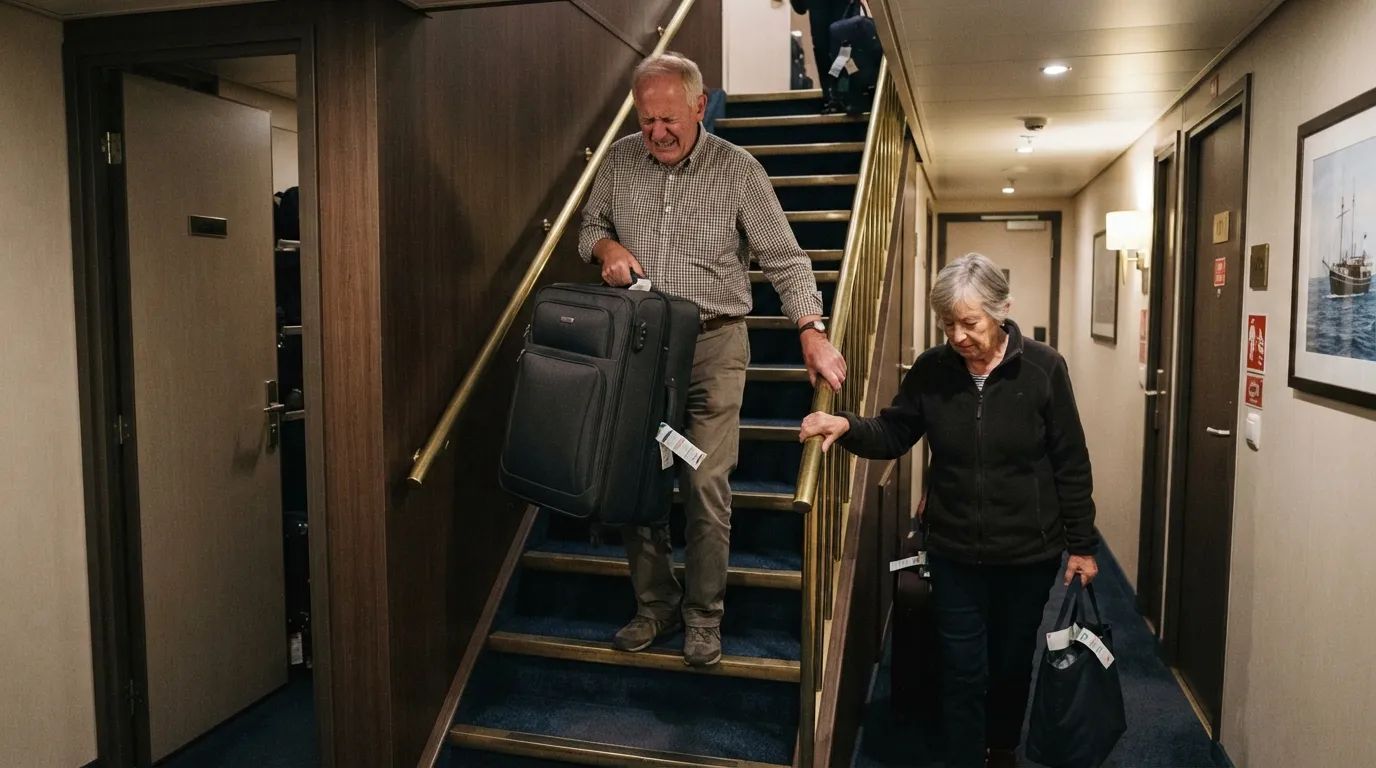
For a traveler with a bad knee or a cane, the catch is the repetition. Ships move while you’re out, so you can leave from the dock side in the morning and come back to an outer berth, which means a different route back.
Extra stairs and thresholds don’t appear in any cabin description. Tell the line about stairs or mobility limits before you book.
And when the ships swap places while you’re ashore, a look-alike lobby can fool you on the way back.
#13 – Sister Ships That Fool Your Key Card
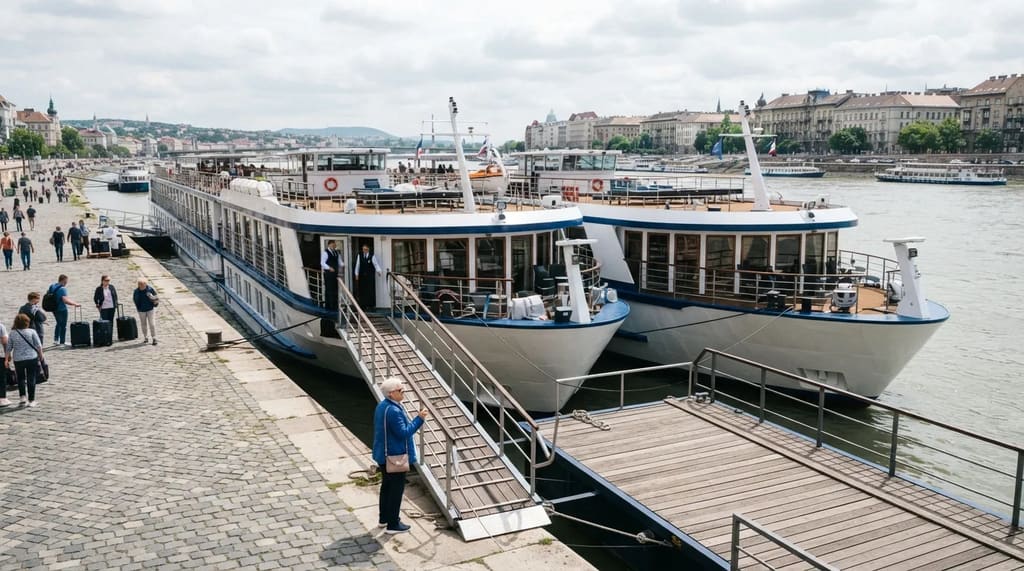
A key card that won’t open your cabin door is sometimes a sign you’ve boarded the wrong ship. Sister ships docked together can be nearly identical, and ships tend to rotate positions while you’re away.
Put those facts together and the mix-up makes sense. You return from an excursion, the ship you left on the outside berth is now somewhere else, and its twin in that spot has a lobby with the same layout.
The fix takes ten seconds. Look at the ship’s name on the hull or the gangway sign before you step aboard, and photograph the name when you leave in the morning.
Check the ship’s name every time you board. Cruise lines won’t think less of you for it.
The right ship can still be in an unexpected place, because a big city may have several river docks, and they aren’t close to one another.
#12 – The Dock That Isn’t Where You Think

In Moscow, river cruise ships usually dock about 45 minutes from Red Square. That’s a long way from the brochure line about stepping off into the heart of the city.
Docks are controlled by local authorities, so which berth is available, and which side you tie up on, can change. River ships sometimes change docking locations during the day, so the spot where you stepped off may not be where you step back on.3
Amsterdam shows how this plays out. There are several river cruise docks there, quite a long way from one another, so you need to verify which one your ship is using.1
Fast Facts
- Moscow: ships usually dock about 45 minutes from Red Square.
- Amsterdam: several river cruise docks, quite far apart.
- Docking spots can change during the same day.
- Local authorities, not the cruise line, control berth availability.
The distance also eats into free time, since the dock’s location affects how long you’ll have in town. Write down your return dock and the all-aboard time before you leave.
Many travelers try to solve all of this by picking a port or starboard cabin, and the docking rules say that effort is mostly wasted.
#11 – Why Port or Starboard Rarely Settles the View
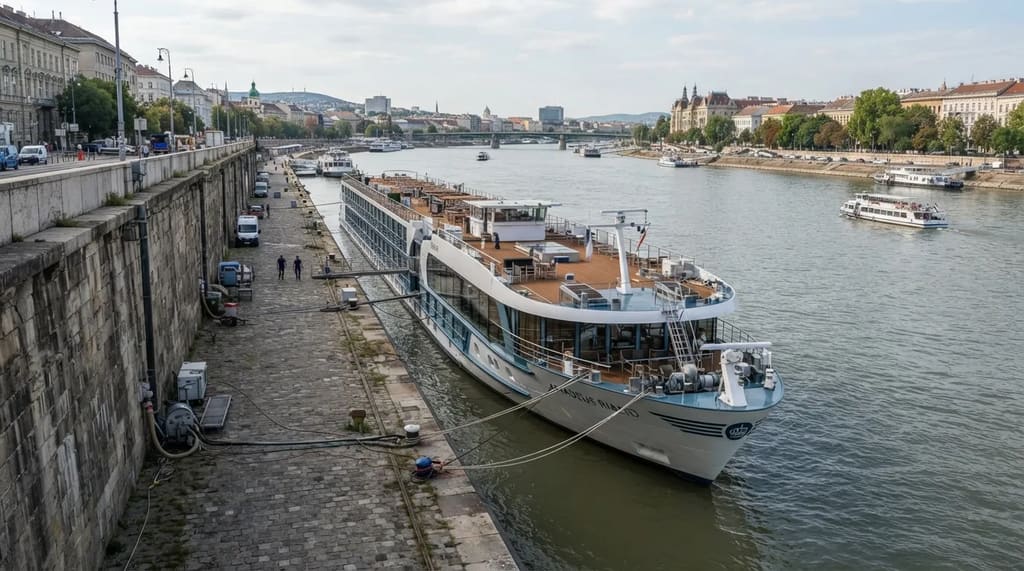
River ships dock with their bows facing upstream, whichever bank they tie up on. So a cabin on a given side doesn’t tell you what’s outside it.
Harbor authorities decide your berth, and a line cannot promise that one cabin side will always face the city. Which side meets the quay depends on which bank the berth sits on.
Don’t pay extra for a side. Port or starboard usually matters much less than cabin location, deck, window type and accessibility.
Pick the deck and location first, and treat the side as a coin toss. The deck is where you have real control.
Deck choice leads to a bigger question: what exactly are you paying for when a cabin is called a balcony?
#10 – What the Word Balcony Buys You
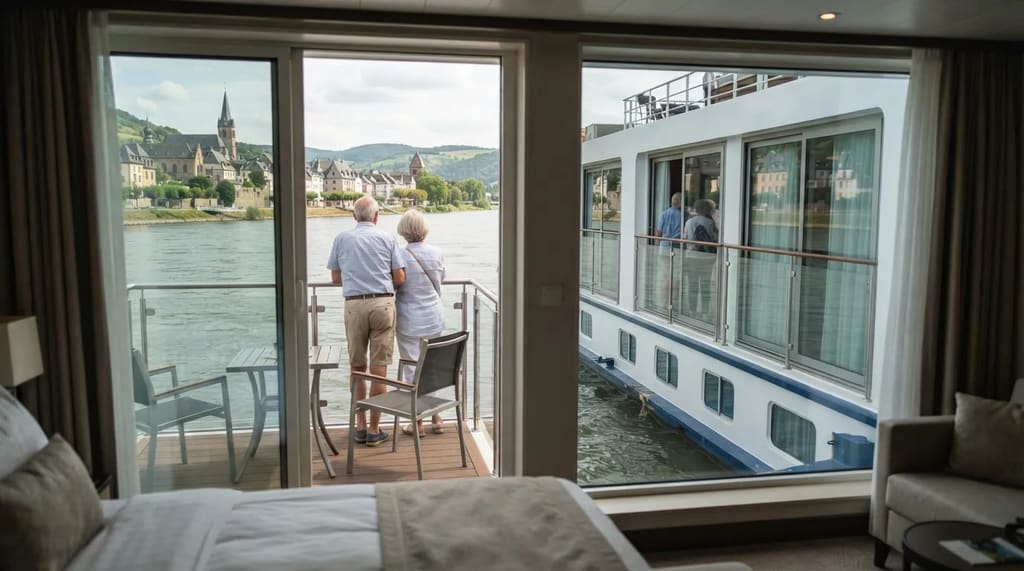
Two river cabins sold as balcony cabins can be very different rooms. Some ships have traditional step-out balconies, while others have French balconies or panoramic windows.
A French balcony means sliding doors that open to let in air, but you can’t step outside onto it.4 AmaWaterways pairs the two styles, a step-out balcony on one side and a French balcony on the other, which allows indoor seating in bad weather or for passengers with mobility issues.
Remember the rafting problem: a neighbor ship can wall off the view you paid extra to see. Add the fact that with so many activities and excursions you’ll rarely be in your cabin, and the premium for a private step-out space looks harder to justify.
Square footage and deck location deserve your money before the word balcony does. Compare square footage, deck and door type before paying for the word balcony.
The cheapest window on the deck plan tends to sit on the lowest deck, and that’s often where the elevator stops.
#9 – The Lowest Deck and the Missing Elevator
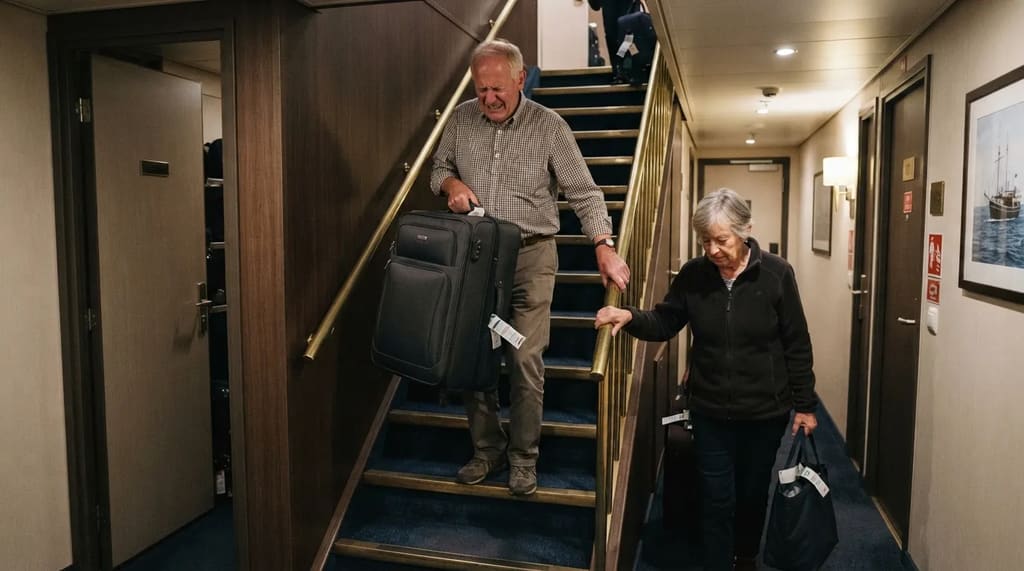
Elevators on river ships don’t always reach every deck. AmaWaterways’ European ships have elevators to most floors, while Viking’s longships may not offer elevator access on every floor.
The sun deck is the other gap, since elevators reach all but the upper decks on most ships. So the best scenery spot may be up a flight of stairs, and the lowest-priced cabin may be down one.
Put three questions to the line before you commit:
- Does the elevator reach your cabin deck, or is the lower deck stairs-only?
- Is the cabin near reception, the elevator or the lounge?
- Can you reach the sun deck without stairs?
A lower fare for a cabin you must climb to isn’t a saving. Ask whether the elevator reaches your cabin’s deck.
A cabin on the right deck still may not be built for a walker or wheelchair, and some big lines have been listed as having no accessible cabins at all.
#8 – Accessible Cabins Are Scarcer Than Brochures Suggest
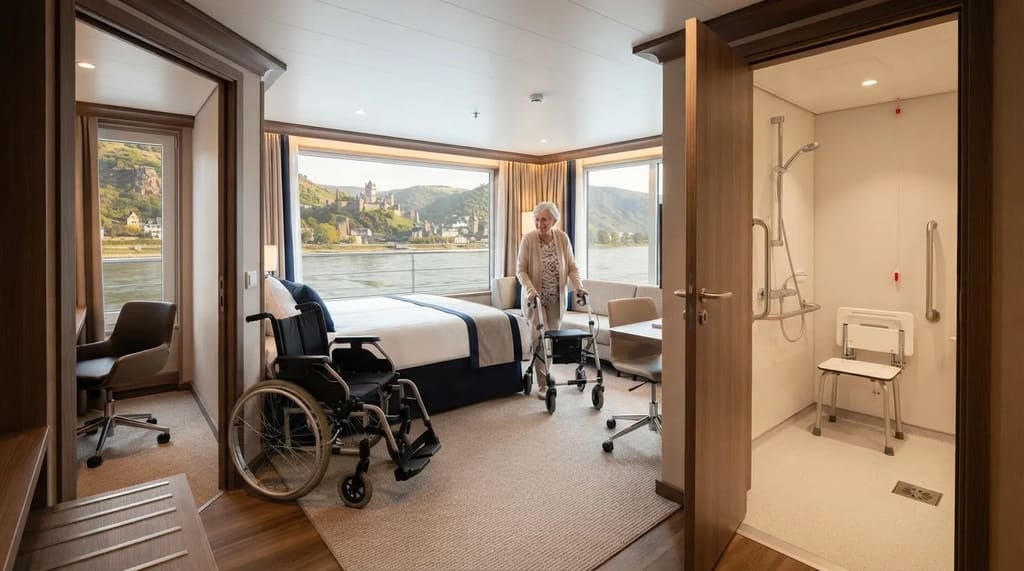
Cruise Critic’s cabin guide listed Avalon, Viking and Uniworld as lacking accessible cabins, though Uniworld had grips in its bathrooms.4 Lines add ships and change cabins, so ask each one for its current answer.
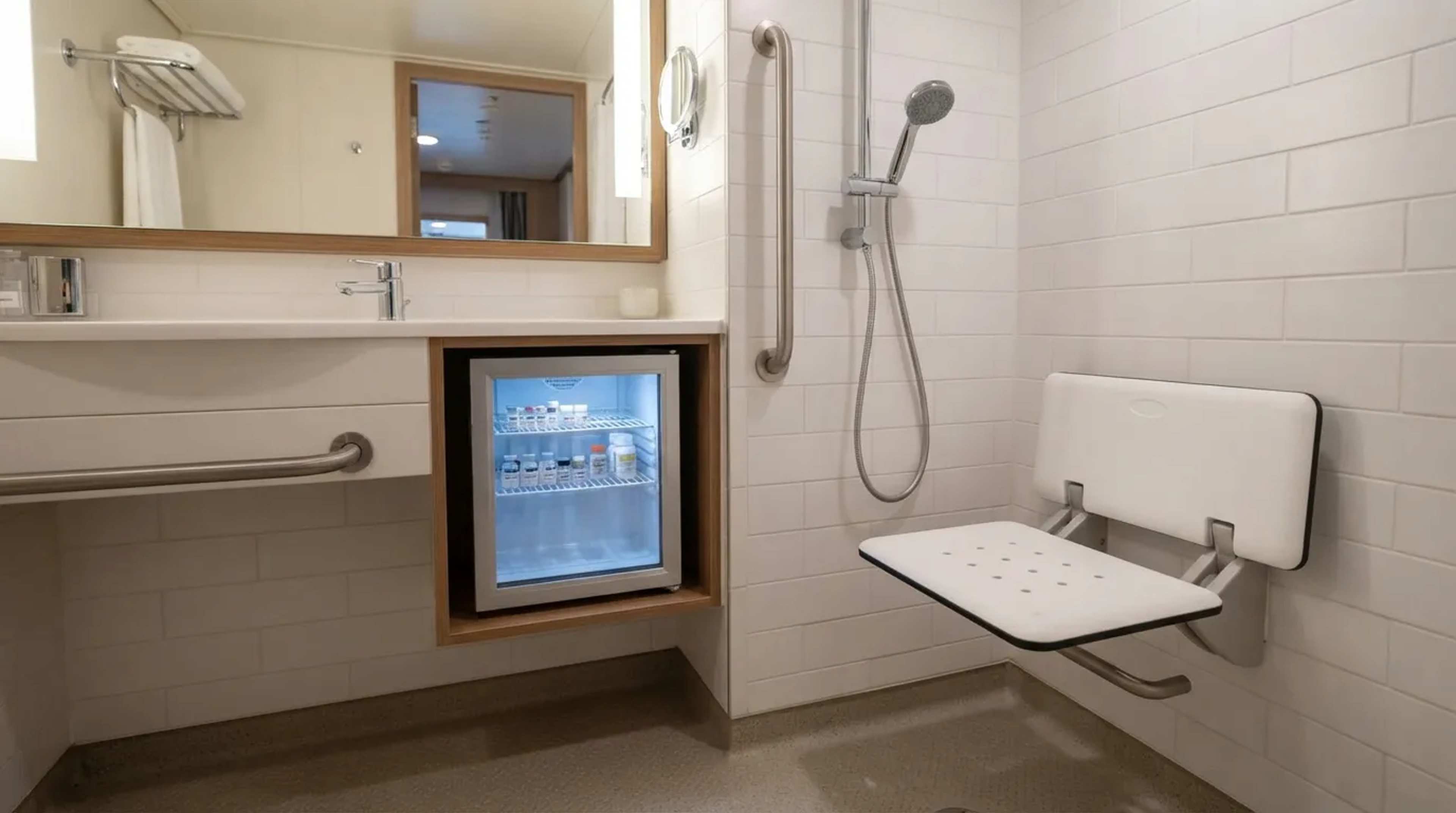
Scenic is the contrast. It offers accessible suites on all its river ships, located near the reception desk, with railed bathtubs, wheelchair-accessible showers, bathroom stools and a wider entry door.5
Even where such cabins exist, layouts and bathroom access vary widely, so ask about door width, storage space, shower entry and raised floors. Don’t count on personal help either, because a single crew member can’t be assigned to one passenger for the whole cruise.
A phone call before booking is the only way to find out. Get door width and shower-entry details in writing.
The cabin is only part of the day, because the shore excursions carry their own fine print about pace and distance.
#7 – Shore Tours Graded by How Far You Walk

River cruises are destination-focused and can involve considerable walking and sightseeing. That’s the part the cabin photos leave out.
The good news is that river ships frequently dock in the center of cities and towns, so a slower walker can still enjoy a short stroll from the gangway. Before you book, check whether tours are graded by fitness and whether independent exploring is possible near the dock.
Check what the fare covers as well. Tauck’s river fares include all shore excursions, and other lines may sell some tours as extras, so the price you’re comparing may leave out the main activity of the trip.
Ask whether tours are graded by fitness level. If a coach is part of the plan, ask whether it can take a mobility device.
The tour price is quoted per person, and so is the cabin fare, which becomes a problem when you’re the only person in the cabin.
#6 – The Single Supplement Gap Between Lines

A solo traveler can pay anything from nothing extra to double the fare for the same cabin. Viking charges 150 to 200 percent on most sailings, while Tauck waives the supplement on all Category 1 cabins.6
The supplement exists because the fare assumes two people in a cabin. Lines soften it in different ways: Riviera holds back four to six cabins on every departure with no supplement, and others run promotions on select sailings.6
Quick Compare
- Viking: 150 to 200 percent on most sailings.
- Tauck: waived on all Category 1 cabins.
- Riviera: four to six no-supplement cabins held on every departure.
Tie this to your cabin choice. If you’ve settled on a main-deck cabin near the elevator, ask what the supplement is for that exact category, because waivers often apply only to certain cabins.
Compare the total for one traveler. A cheaper-looking fare with a big supplement can cost more than a pricier fare with none.
Pay the supplement and a daily charge may still arrive at the end of the trip, billed per person with no cabin mate to share it.
#5 – The Gratuity Line That Arrives Daily
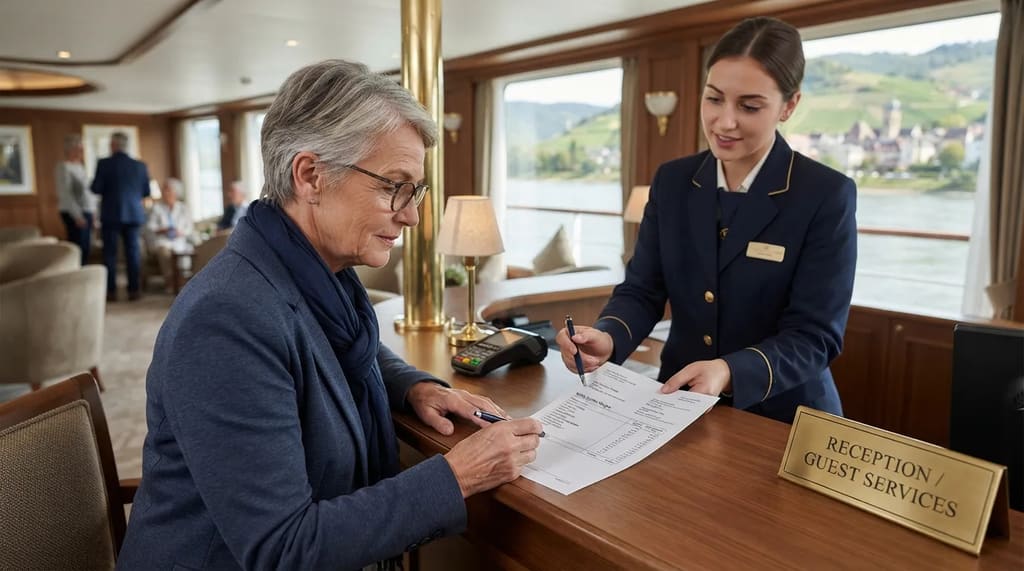
Tauck’s river fares include gratuities, shore excursions, complimentary beverages and transfers. Many other lines work the other way.
On those lines, daily service charges for crew members are added automatically. They can be prepaid or charged to your onboard account.
The charge is per person per day, so a long itinerary multiplies it. Solo travelers feel it most, because they pay the full amount without a cabin mate to split costs, on top of the supplement from the previous item.
That’s why a lower fare is a poor guide to the lower price. Ask how gratuities are charged and whether prepaying changes the final bill.
One more line item can show up on a bill after you’ve booked, and it moves with the price of fuel.
#4 – Fuel Supplements and Port Charges in the Fine Print
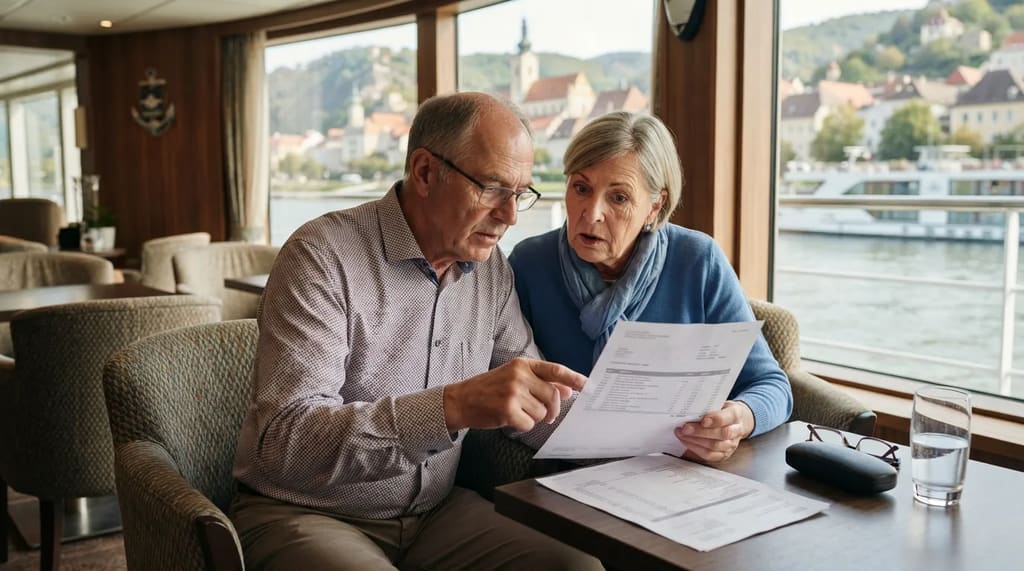
The advertised fare is one layer of three. Cruise pricing consists of the base fare, mandatory taxes and fees, and optional onboard spending.
The middle layer varies by route. Port taxes are charged per country visited, and river itineraries often cross borders, so a multi-country trip can carry more of them than a single-country one.
Fuel is the swing item. Some lines apply fuel surcharges when fuel prices are high, and an active surcharge is listed in the fare summary or as a separate line item.
At a Glance
- Base fare: the headline price in the ad.
- Taxes and fees: mandatory, with port taxes charged per country visited.
- Fuel surcharge: can appear as its own line when fuel prices are high.
- Onboard spending: optional, and entirely in your hands.
Before paying a deposit, ask whether the booking terms allow a fuel supplement after you book. Ask for the total price with taxes and port charges included.
None of these charges warns you about water. When the Rhine or Danube drops, a different set of costs begins, and the notice can arrive only days before sailing.
#3 – The Low-Water Notice That Comes Days Before Sailing

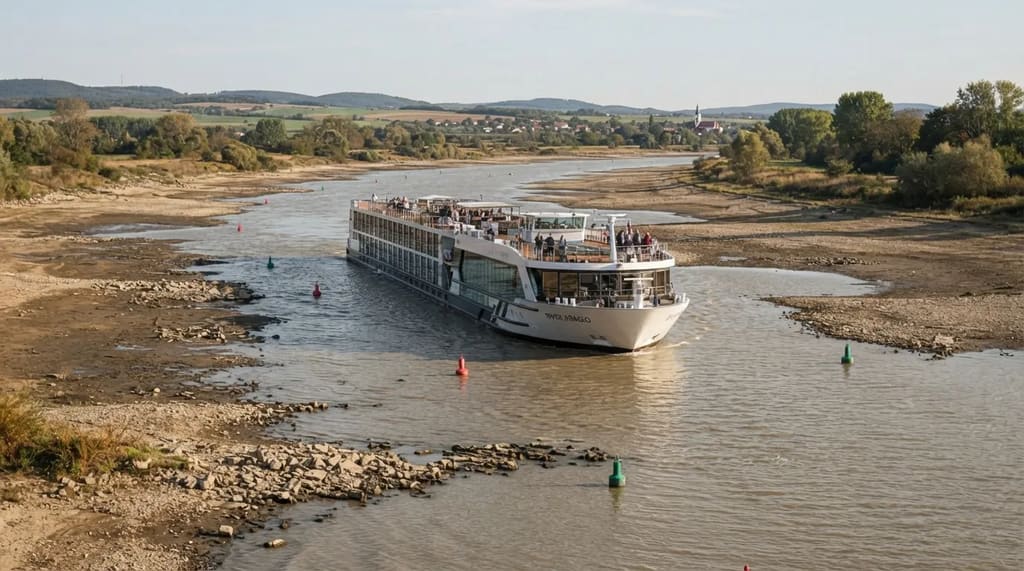
A river can drop below sailing depth and rewrite your trip within days of departure. In one reported case, passengers on a September sailing were told a few days before the trip that the itinerary now involved multiple coach trips.
Related Stories From Travelbinger


The problem is local rather than river-wide. Low water is a problem at critical junctions, not along the whole river, and because those spots are well known, lines can plan itineraries around them.
The money problem is what you booked yourself. Unless you booked an air or hotel package through the cruise line, you will probably not be reimbursed for flight cancellations, change fees and pre-booked hotels.
Flights and hotels you book yourself usually aren’t refunded when the itinerary changes. That’s a good argument for refundable fares on the travel you arrange outside the cruise.
Travel insurance is the usual safety net, and for this particular problem it often has a hole in it.
#2 – Why Standard Travel Insurance Often Misses Low Water
Low water often isn’t covered under standard travel insurance policies. Travelers who want flexibility when an itinerary changes substantially should consider cancel-for-any-reason coverage.7
The usual assumption is wrong. Travelers often assume insurance will reimburse them whenever low water damages their trip, but coverage depends on the policy, the nature of the disruption and whether the cruise was canceled or continued in modified form.8
That last distinction matters because a rewrite that keeps the ship sailing is generally excluded outright, or covered only by a specific named benefit, so compare the actual wording. Look for words such as itinerary change or missed port.
Worth Knowing
- Standard policies often leave low water out.
- A ship that keeps sailing in modified form is treated differently from a canceled cruise.
- Wording like itinerary change or missed port is what to hunt for.
- A licensed advisor can read your exact policy.
Cancel-for-any-reason coverage generally has to be bought soon after your first deposit and usually returns only part of the cost. Look for a named itinerary-change benefit, or cancel-for-any-reason.
Even the best policy can’t say what the cruise line itself owes you when the ship stays at the dock and a bus takes over, and that question costs the most.
#1 – A Rewritten Itinerary Is Not a Cancellation

A cruise that runs on coaches all week is still, in the contract, a cruise that sailed. River cruise lines are not required to refund money if the itinerary changes.
It helps to separate two things. The contract defines what the company is legally entitled to change, while the offer is what’s presented for one sailing.
Uniworld’s 2026 terms state that itinerary changes do not create eligibility for a refund. The line between modified and canceled is where the money sits.
If the line cancels outright, you can generally expect a refund or rebooking, but a cruise with changed ports, buses or a ship swap may still count as operating.7 In 2026, one couple on a £3,700 Tui cruise asked for a refund and were refused.
If you get a change notice, act the same day:
- Call or message the cruise line, and your travel advisor if you used one.
- Ask whether any full day becomes a coach transfer.
- Get the refund, future credit or rebooking path in writing if you decline the rewritten itinerary.
A disrupted cruise doesn’t automatically qualify for a cash refund. That clause costs more than any cabin choice above, and it appears on no deck plan, so read the water-level and itinerary-change section of the booking terms before you pay the deposit.
What to Read Before You Pick a Cabin
The brochure sells the cabin and the price, but the dock and the contract decide what you actually get. A window can face a neighbor’s window, a berth can move across town, and a cruise can turn into a coach tour without a cash refund.
So change the order you work in. Read the booking terms on water levels, supplements, gratuities and itinerary changes first, then compare deck plans, since the cabin is the part you can still adjust after the fine print is settled.
If you’ve sailed on a river ship, which deck did you book, and what was outside your window when the ship docked?
- Rick Steves Rafting Discussion: https://community.ricksteves.com/travel-forum/netherlands/viking-cruise-embarkation-day-questions
- River Cruise Advisor Accessibility: https://rivercruiseadvisor.com/2018/08/river-cruise-accessibility/
- Unwritten Rules of River Cruising: https://www.suitedreamstravel.net/post/the-unwritten-rules-of-river-cruising
- Cruise Critic River Cabins: https://cruisecritic.com/articles.cfm?ID=2356&posfrom=2&stay=1
- Cruise Critic Accessible River Cruises: https://www.cruisecritic.com/articles/a-guide-to-accessible-river-cruises
- River Cruise Solo Supplements: https://rivercruiseadvisor.com/2026/03/single-supplements-for-solo-travelers/
- Parade Low Water Refunds: https://parade.com/travel/river-cruises-worth-it-low-water-levels
- River Cruise Low Water Insurance: https://rivercruiseadvisor.com/2026/08/when-low-water-disrupts-a-river-cruise-which-cruise-lines-protect-passengers-best-and-can-travel-insurance-help/