Sunshine is the easy part of a Phoenix or Scottsdale winter. The hard part is the fine print: Scottsdale’s city rental license applies only to stays under 30 days, and a Medicare Advantage plan can end over a stay of more than six months.
Neither one is in the brochure, and missing a single rule can cost you a $200 fine, a surprise bill or a canceled health plan. This list counts down 14 of them, with the exact lines to watch.
The last item carries the largest dollar figure and the biggest consequence, so stay for it. The first is smaller, but it shows up on almost every bill.
#14 – The Resort Fee Added After the Rate
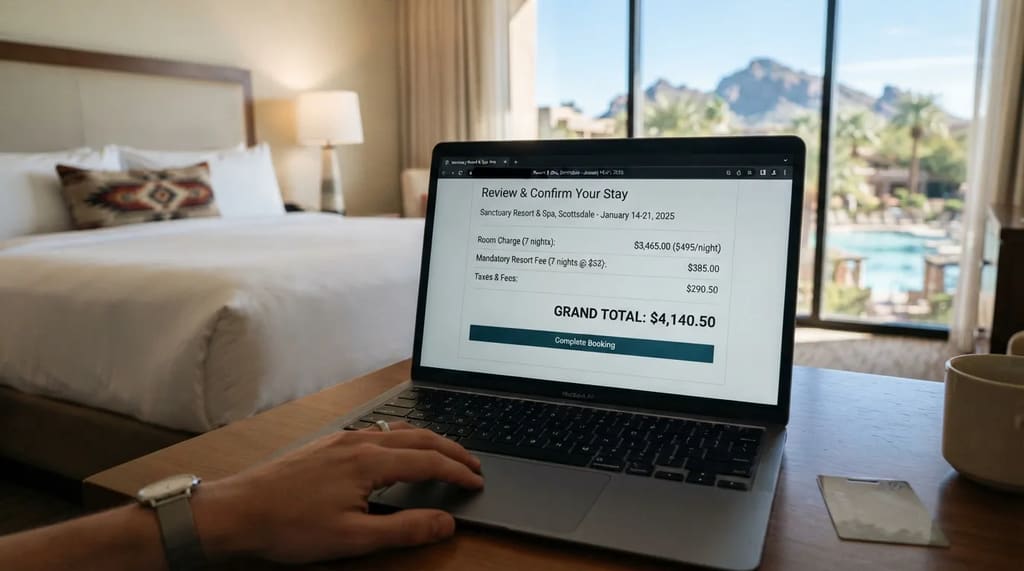
Scottsdale’s busy season runs from November through April, and that’s when the nightly rate on a resort listing tells you the least. Resort fees are charged per night on top of the rate, so a week’s stay multiplies a number the headline never showed.
Picture it: you fall for a pool-view rate in January, then watch the total climb on the very last screen. A Federal Trade Commission rule that took effect in 2025 requires hotels and short-term rentals to show the full price, mandatory fees included, up front.
So the total on the checkout screen is the figure to judge. The nightly rate on the search page is only a starting point.
Compare the all-in total for your exact dates, not the nightly rate. Ask what the fee covers, whether that’s parking, Wi-Fi, the pool or a shuttle, and decide whether you’d use any of it.
Unless you’ll use what the fee pays for, the resort with the lower rate can be the pricier stay. A plainer hotel with a higher sticker price and no fee often wins on the final bill.
Resort fees at least appear on a bill. The next rule shows up in a traffic stop, and it concerns whatever you’re holding while you drive.
#13 – The Phone in Your Hand at a Red Light
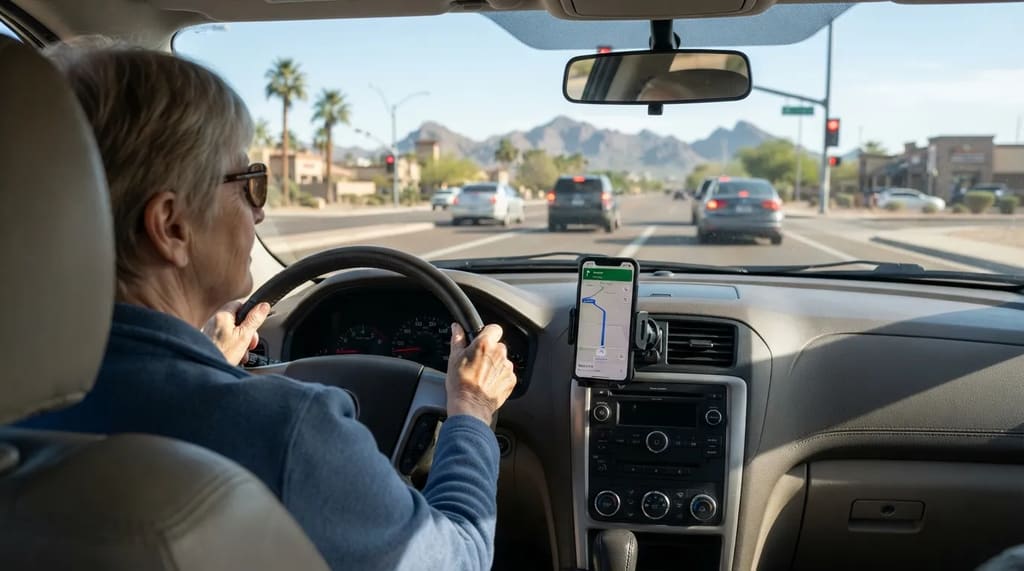
Arizona’s hands-free law bars you from holding or supporting a phone while you drive.1 It applies to out-of-state drivers the same as locals.
Your home state may be looser, so a habit that went unnoticed in your driveway up north can draw a stop on a Phoenix freeway ramp. Speakerphone calls and a mounted navigation screen are the legal ways to use the phone.
Mount the phone and set the route before the car moves. Rental cars may not come with a mount, so it’s worth packing one.
The Valley’s freeway exits come fast and often, and you’ll lean on navigation more than you do at home. Entering the address while parked costs nothing and keeps your hands on the wheel.
That rule applies every day of the year. The next one switches on only when the air gets bad, and it can reach your own back patio.
#12 – Why Your Fire Pit Goes Dark Some Nights
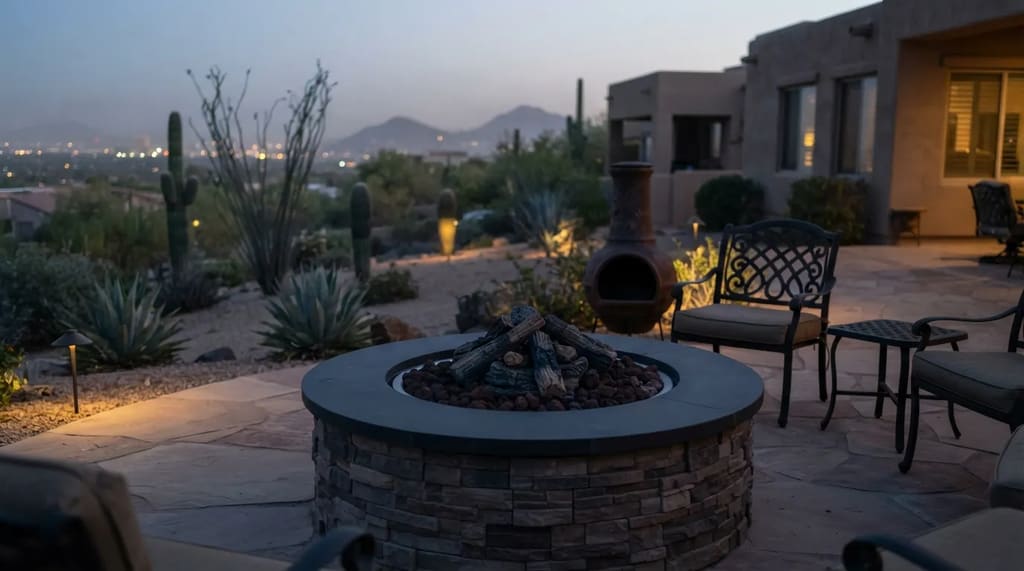
Maricopa County declares no-burn days when pollution climbs. On those days, wood burning in residential fireplaces, chimeneas, outdoor fire pits and similar outdoor fires is prohibited.2
The restrictions apply within incorporated cities and towns, so Scottsdale and Phoenix are covered. Winter is when it happens, because smoke and dust tend to get trapped in the Valley.3
The county declared no-burn days for a weekend in December 2025, then again for the Monday and Tuesday that followed. A cozy evening you planned for days can be off the table by sunrise.
The minimum fine for an illegal outdoor fire under Rule 314 is $200.2 Gas logs are still allowed in a fireplace on a no-burn day.
Each restriction lasts 24 hours, starting at midnight. The rule covers visitors as well as residents, and the county’s air quality director has urged both to make cleaner choices.
Check the county’s no-burn status before you light anything, especially on a cold, still evening. And if you own the fireplace, the county will help pay to change it, though not for everyone.
#11 – A $2,000 Gas Conversion You Can Apply For
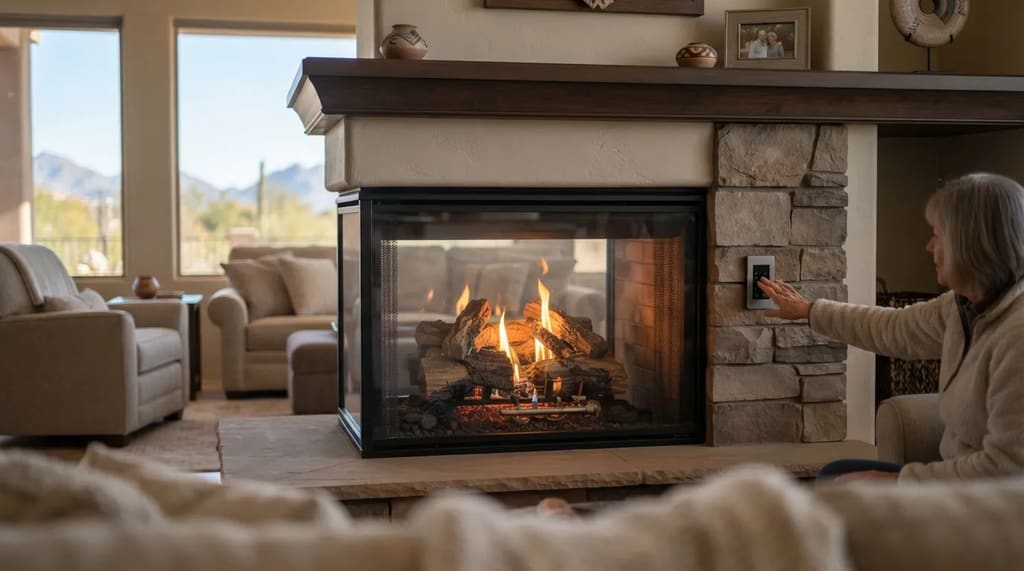
For some qualifying residents, the county’s air quality department offers up to $2,000 toward converting a wood-burning fireplace to gas.3 You can check eligibility at Maricopa.gov/AQ.
It’s rare good news on a list full of fees, and it fixes the exact problem from the fire pit rule. Gas logs can burn on a no-burn day, so a converted fireplace is one you can always legally light.
Check your eligibility before you buy anything. The county’s retrofit program provides vouchers or discounts on gas log sets, and qualification rules apply, so confirm yours first.
Fast Facts
- County help: up to $2,000 toward a wood-to-gas fireplace conversion for some qualifying residents
- Where to check eligibility: Maricopa.gov/AQ
- Gas logs are still allowed in a fireplace on a no-burn day
- Minimum fine for an illegal outdoor fire under Rule 314: $200
A wood fireplace in the Valley is off limits on the cold, still nights when you’d most want it. If you own a winter home and burn wood only a handful of evenings a year, converting beats keeping it.
A fireplace is an owner’s problem. If you rent instead, a different number decides which rules protect you, and that number is 30.
#10 – The 30-Day Line on Winter Rentals

Scottsdale’s city license applies only to rentals of less than 30 days.4 Owners who rent for 30 days or longer don’t need to get a city license through that process.
That matters to you as a renter, because a month-plus booking falls outside the licensing regime. The transient lodging tax also applies to stays under 30 days, so a 10-day booking and a 90-day booking can follow different rules.
Rentals under 30 days need a Scottsdale license; rentals of 30 days or longer don’t. At 30 days and up, you’re relying mostly on the lease itself, so read it closely.
Get the deposit, utility and cancellation terms in writing before you pay. If you’re a day or two short of 30 nights, ask whether the host holds a license, because that changes what you’re entitled to.
If your booking does fall under 30 days, there are four things the host must have, and you can ask for all of them in one email.
#9 – Four Things a Licensed Host Must Have

A short-term host in Scottsdale has more paperwork than most guests assume. Asking for these items takes a minute and tells you whether the listing is run properly.
- A city license, which costs $250 per property per year
- An Arizona transaction privilege tax license, which must appear in advertising
- At least $500,000 in liability insurance and registration with the Maricopa County Assessor
- A 24/7 emergency contact who can reach the property within one hour
Ask the host for the license number and the emergency contact’s name. A legitimate host can answer in a sentence.
If the answer is vague, treat it as a warning about how the stay will go when the water heater fails at 9 p.m. A host who can’t produce a license number is telling you how they’ll handle a problem.
Even a perfectly licensed host adds a charge that may not show until the last screen of checkout.
#8 – The Tax Stack on Short Stays

A Scottsdale short stay carries several layers of tax: state, county, a city hotel tax and a separate city lodging tax. Published breakdowns put the combined figure anywhere from about 12 percent to about 16 percent.
The city bed tax is 5 percent, and it sits on top of the state and county pieces. Each layer looks small, but together they bite.
Budget roughly 12 to 16 percent on top of a short-stay rate. On a $300 night, that’s an extra $36 to $48 before any resort or cleaning fee.
At a Glance
- Four layers: state, county, city hotel tax and city lodging tax
- City bed tax: 5 percent
- Combined total in published breakdowns: about 12 to 16 percent
- Stays under 30 days get the transient lodging tax; longer stays are treated differently
It’s the same logic as the resort fee in #14: the nightly price is not the price. It also ties back to the 30-day line in #10, since longer stays are treated differently, which is one more reason a month-long booking can cost less per night.
But a paid tax and a valid license still can’t override one more authority, and it isn’t the city.
#7 – Your HOA Can Say No Anyway

A city license does not tell you whether the homeowners association allows the rental. So a Scottsdale host with a perfect license may still be breaking the community’s own rules.
Associations set their own policies on rentals, minimum stay lengths and guests. The city’s rules and the HOA’s can point in opposite directions, and an unhappy board can make a stay miserable.
Ask the host whether the HOA allows rentals of your length. If you’re buying a winter home in a managed community, get the governing documents before you close, not after.
Of all the paperwork on this list, the HOA’s deserves reading first, because a city license answers a different question. A host who can’t say what the community allows hasn’t finished the homework.
If you own the casita and rent it out yourself, the paperwork changes names, and a state form enters the picture.
#6 – The Owner’s Paperwork for a Rented Casita
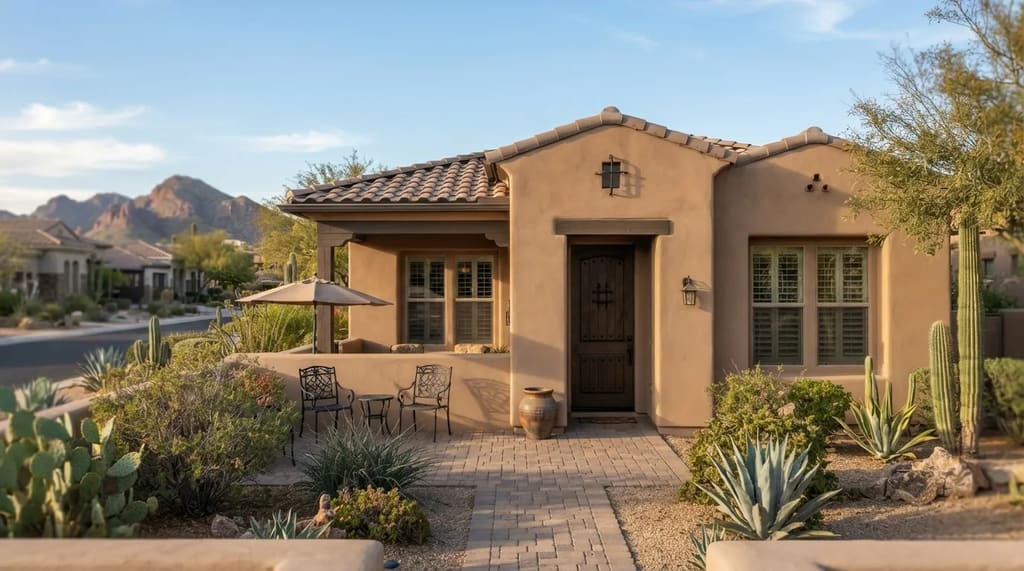
If you own a winter home and rent it for fewer than 30 days, Arizona expects a transaction privilege tax license from its Department of Revenue. A valid license is required for each Scottsdale rental, and the number is needed to apply for the city license.5
Phoenix has its own system and requires registration for short-term rentals. Rental income from Arizona property counts as Arizona-source income, and Arizona’s nonresident individual return is Form 140NR.
Get the state tax license first, because the city won’t process your application without it. You’ll also need Maricopa County Assessor registration before anyone occupies the property.
Your home state may also want to hear about the income, so a tax professional who handles two-state returns can confirm which forms apply to you.
Taxes and licenses follow the property. The next item follows your car, and it starts with a $15 permit.
#5 – The $15 Permit for a Car You Buy Here
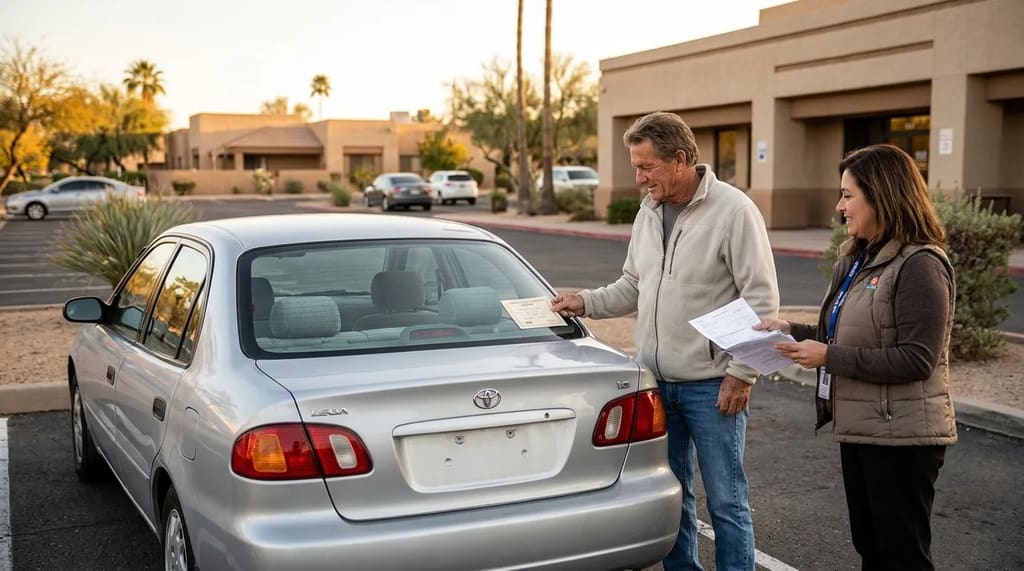
Plenty of snowbirds buy a used car or truck in Arizona to keep for winters. A nonresident can purchase a 90-day nonresident registration for $15 from the MVD or an authorized third-party office.6
You’ll need your out-of-state identification and the dealer invoice or assigned title. The law requires that the vehicle be bought to be registered out of state within 90 days and not for transfer to an Arizona resident.
A $15, 90-day permit lets you drive a car you bought here to your home state. Buying in Arizona doesn’t mean you must register in Arizona.
Emissions testing is part of the same decision, and Arizona’s program generally doesn’t apply if your car stays plated at home. Confirm the details with the Motor Vehicle Division before you sign.
Every rule so far has a fee or fine you can count. The last four are about health coverage, where the numbers get much larger.
#4 – The Specialist Visit Your HMO May Refuse

If chest pain sends you to a Phoenix emergency room, a Medicare Advantage HMO covers you there. For anything else outside the network, there are only two other exceptions: out-of-area urgent care and temporary out-of-area dialysis.
A scheduled visit to an Arizona cardiologist isn’t on that list. A scheduled specialist visit outside the network can leave you holding the full bill.
Call your plan and ask about the Arizona doctor by name and office address. Ask whether the visit counts as covered out-of-area care and what you owe if it doesn’t.
Plan type matters here. PPO plans provide out-of-network coverage with more flexibility, at higher costs, so if you see specialists regularly and split the year, a PPO is a better fit than an HMO.
Quick Compare
- Advantage HMO: covers the ER, plus only out-of-area urgent care and temporary out-of-area dialysis outside the network
- Advantage PPO: out-of-network coverage with more flexibility, at higher costs
- Original Medicare: any doctor or hospital that takes Medicare, anywhere in the U.S.
Your doctor visits are only half of the problem, because your prescriptions face their own version of it.
#3 – The Pharmacy Network Back Home Doesn’t Reach

Medicare Part D plans and Advantage plans with drug coverage typically have pharmacy networks, and preferred pharmacies may cost less than other participating locations. So a refill at a Scottsdale drugstore can cost more than the same drug at your home chain.
Advantage and Part D plans follow your legal home address, not your winter address. That’s why the plan doesn’t adjust when you land in Phoenix.
Related Stories From Travelbinger



Ask your plan which Arizona pharmacies are in network before you leave. Contact your insurer and ask exactly how your coverage works at your temporary destination.
Ask, too, whether you can fill a longer supply before you travel.
Dropping the Advantage plan raises a question about a different kind of policy, and the answer surprises people.
#2 – Why Medigap Can’t Fix an Advantage Plan

Medigap cannot be combined with Medicare Advantage, and it only pairs with Original Medicare. A Medigap policy follows Arizona snowbirds to any doctor who accepts Medicare.
So the usual fix for the Arizona problem is a replacement, not an add-on. You would leave the Advantage plan and move to Original Medicare with a supplement.
Medigap pairs with Original Medicare only, never with an Advantage plan. Before you drop anything, have your State Health Insurance Assistance Program review the notice and confirm which protections and deadlines apply.
Timing matters too, because outside certain enrollment windows a Medigap insurer may be allowed to ask health questions before it sells you a policy. That’s one more reason to ask before you cancel anything.
A low Advantage premium is a poor bargain if the plan can’t follow you for half the year. Savings that vanish the first time you need a specialist in Arizona aren’t savings.
The biggest risk comes from the calendar, and it can end the plan itself while you’re still in Arizona.
#1 – The Six-Month Clock on Your Advantage Plan

Each Medicare Advantage plan has a defined service area, usually a group of counties. Plans must drop members who stay outside that area for more than six consecutive months, even without a permanent move.7
A seven-month Arizona winter crosses that line. Without a qualifying traveler benefit, seven consecutive months in Arizona can cost you the coverage you kept up north.
More than six consecutive months outside your plan’s service area can end your Advantage coverage. Original Medicare, by contrast, lets you see any provider in the country that accepts Medicare and has no six-month limit.
Being dropped has a cost. Original Medicare applies nationwide but has no out-of-pocket cap, and 2026 hospital deductibles reach $1,736 per benefit period.
Moving outside a plan’s service area may qualify you for a Special Enrollment Period.7
Ask your plan in writing whether it has a traveler benefit and how it counts months away. Then count your own consecutive days before you book the return flight.
Count Your Nights Before You Count Your Savings

The rules on this list rarely ask where you live. They ask how long you stay, whether it’s 30 days, 90 days or six months.
Before you book anything this season, write down the three or four dates that matter and put them on the calendar next to your return flight. Most of the expensive surprises here come from not checking a threshold, not from breaking a rule on purpose.
Which date on your calendar this winter sits closest to a 30-day or six-month line, and what did you find out when you checked?
- Arizona Hands-Free Law: https://www.mayestelles.com/legal-blog/2026/november/distracted-driving-in-arizona-a-r-s-28-914-prohi/
- Maricopa County Burning Activities: https://www.maricopa.gov/1830/Burning-Activities
- KJZZ No-Burn Day Report: https://www.kjzz.org/kjzz-news/2025-12-16/maricopa-county-urges-residents-to-follow-restrictions-on-no-burn-days
- Scottsdale Short-Term Rentals: https://www.scottsdaleaz.gov/codes-and-ordinances/vacation-and-short-term-rentals
- Scottsdale STR Rules Guide: https://tackettteam.com/blog/scottsdale-short-term-rental-rules-before-you-buy-2026/
- ADOT Vehicle Permits: https://azdot.gov/mvd/services/vehicle-services/vehicle-registration/vehicle-permits
- Medicare Interactive Travel Rules: https://www.medicareinteractive.org/understanding-medicare/medicare-covered-services/medicare-coverage-overview/traveling-with-medicare