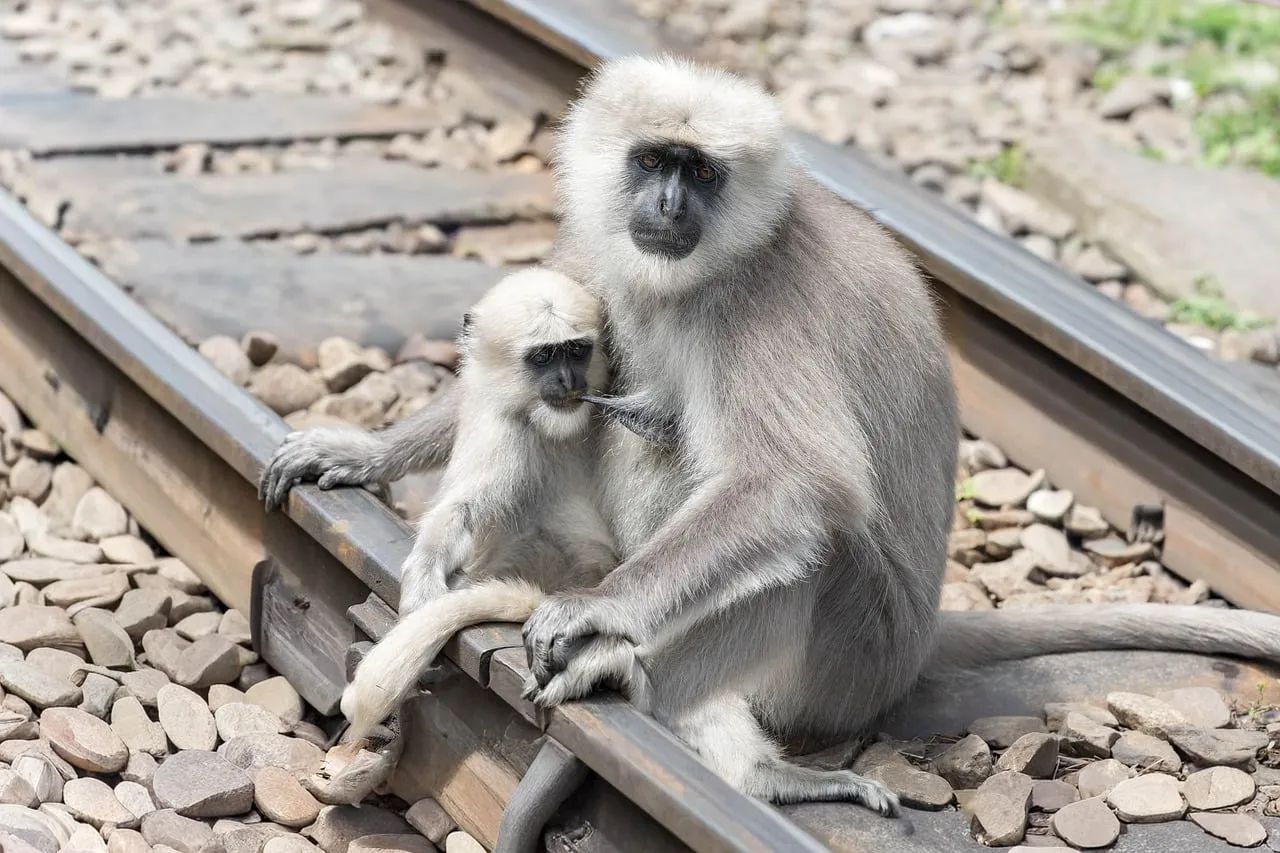
In the Annamite Mountains of Laos, a langur with an unusually short tail may be a species no one has formally described. The case rests on photographs alone. There is no body, no specimen, and no genetic evidence, yet some researchers argue that the images show a primate distinct enough to warrant a new name. The debate, as reported by Mongabay ([1]), has drawn attention to how far pictures can carry a scientific claim. ([1])
A tail that stood out in a photograph
The story began with a single image published by the Saola Foundation. Tilo Nadler, a wildlife consultant who works for the Vietnamese government and several nongovernmental organizations, noticed that the animal’s tail was markedly shorter than those of other langurs in the group of limestone-dwelling primates. That observation prompted him to look more closely.
Nadler and his colleagues travelled to a remote cluster of limestone karsts in Bolikhamxai province, in central Laos, and took their own photographs. Nadler later described the first time he saw a group of these langurs in an email interview with Mongabay. In his account, the animals were clearly different from every other limestone langur he had encountered, and he called the experience very exciting.
What the proposal rests on
The team described the animal as Trachypithecus brevicaudus, or short-tailed langur, in the Vietnamese Journal of Primatology. The paper places the species in the Annamite Mountains of Laos. Based on the reporting, the case includes several elements, though none of them amounts to a full scientific identification.
- Photographs taken by the authors during their field visit
- An earlier photograph from the Saola Foundation showing the short tail
- Direct observations of a group of the animals, not just a lone individual
Several gaps remain. No physical specimen has been collected, and no genetic analysis has been reported. Those two kinds of evidence are often central when researchers decide whether a population is a distinct species, which is why the missing pieces matter so much here.
Scientists are divided
Not every expert is persuaded. Vincent Nijman, director of EcoVerde Global Consulting, was not involved in the paper, but he said the animal could well be a new species. He added that the data presented so far do not provide sufficient support for that conclusion. His view reflects a common position in taxonomy: a plausible hypothesis is not the same as a confirmed one.
Related Stories From Travelbinger


Nadler has presented the sightings and photographs as grounds for the proposal, and his team’s fieldwork is the foundation of the paper. The disagreement, then, is less about whether the langurs look unusual and more about whether appearance alone is enough to justify a new name. Naming a species can shape how it is studied and whether conservation planners pay attention to it, so the stakes of that judgment extend beyond the scientific record.
For now, the short-tailed langur sits in a gray zone. It may turn out to be a previously unrecognized primate, or it may prove to be a variation within a known group. Until researchers collect a specimen or genetic data, the answer remains open, and the photographs will continue to carry more weight than the animals themselves.