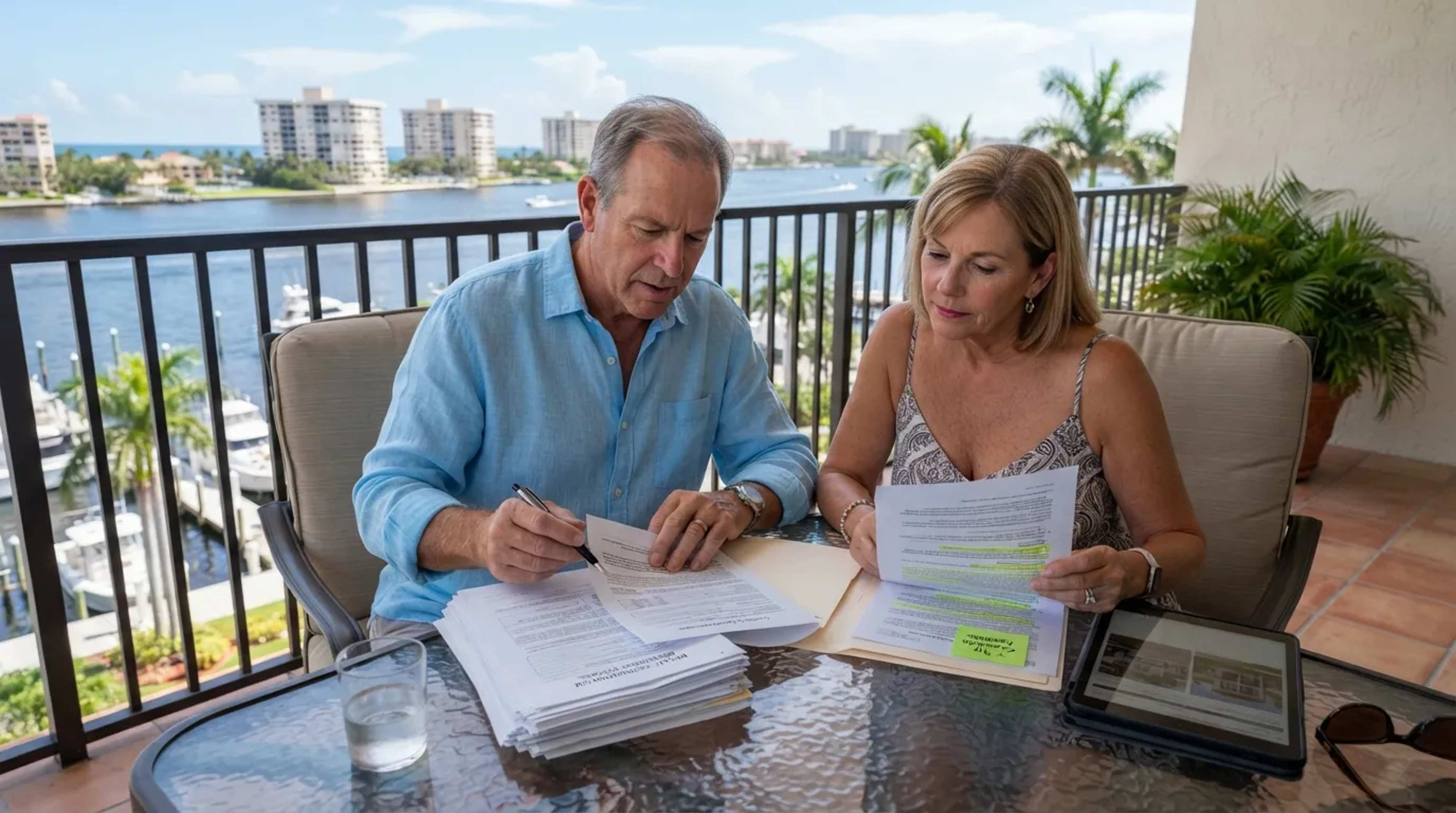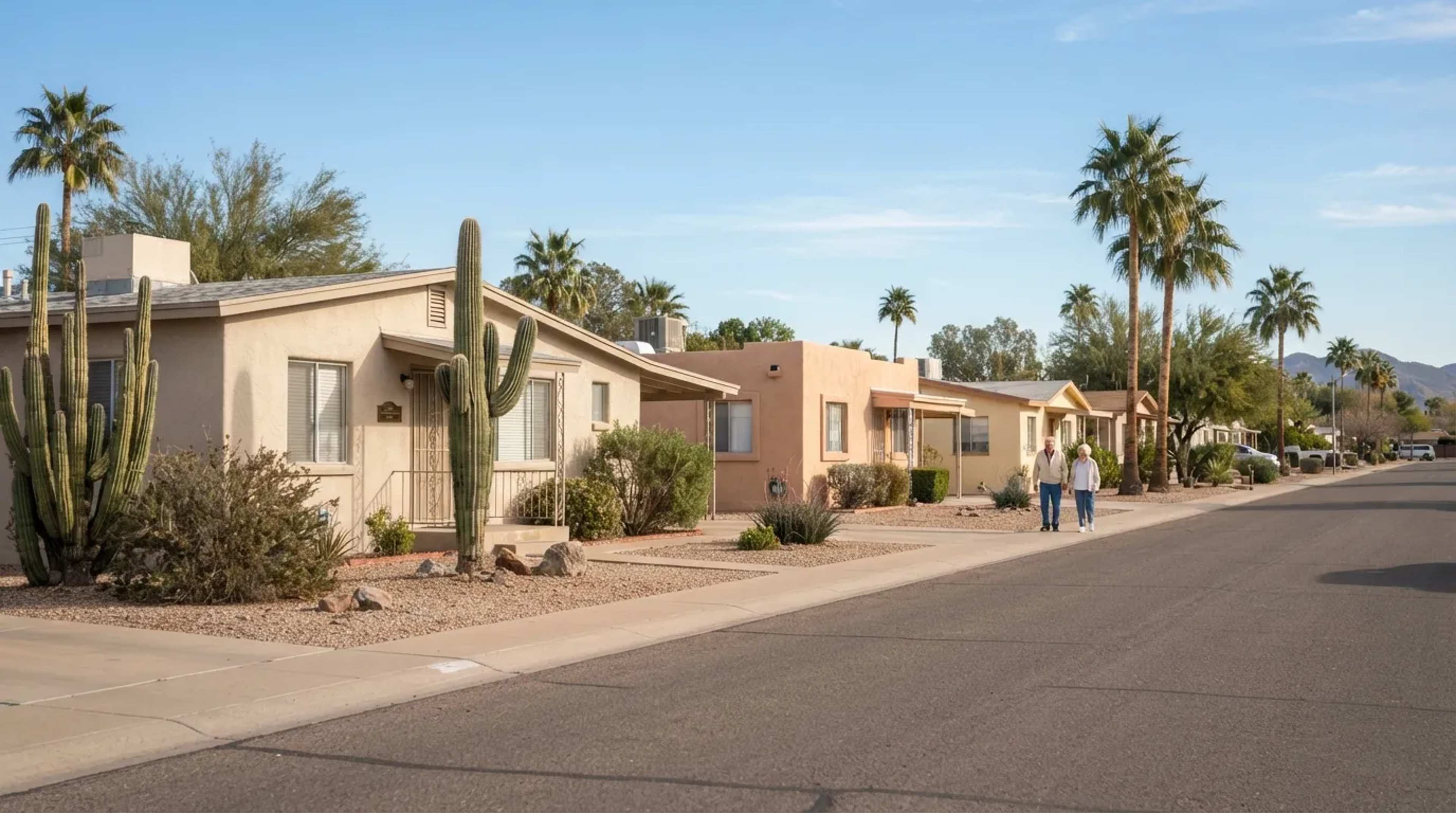

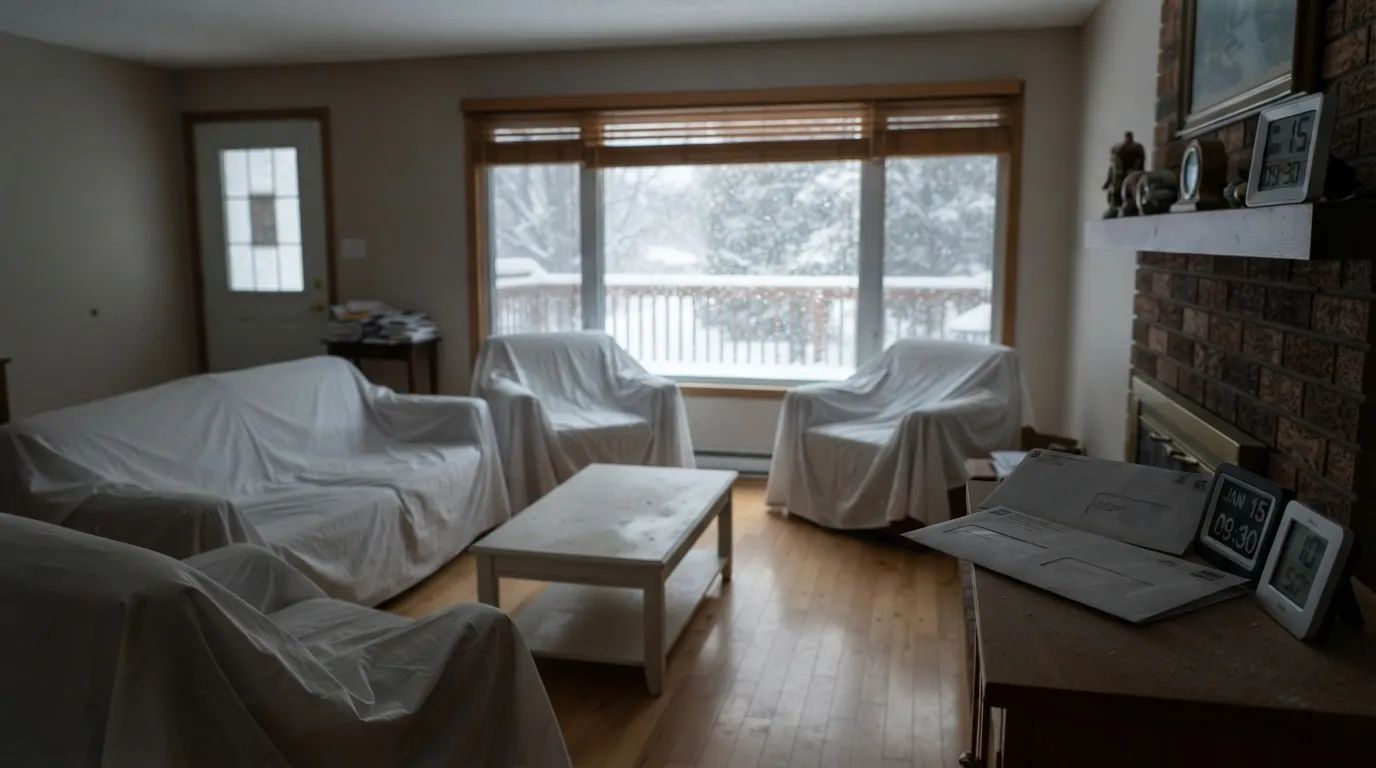
You pack the car, point it south, and figure the hard part is over. But back home, a quiet set of bills keeps running for a house with nobody in it. Some of those payments buy real protection. Others buy a newspaper for an empty porch, a cable package for a dark living room, or heat for walls that have no one to warm.
This list runs from small leaks in the budget to the big ones. The last item is a single clause in many home policies that a four-month winter can easily outlast, and most people never read it until it’s too late.
#14 – A Newspaper Delivered to an Empty Porch
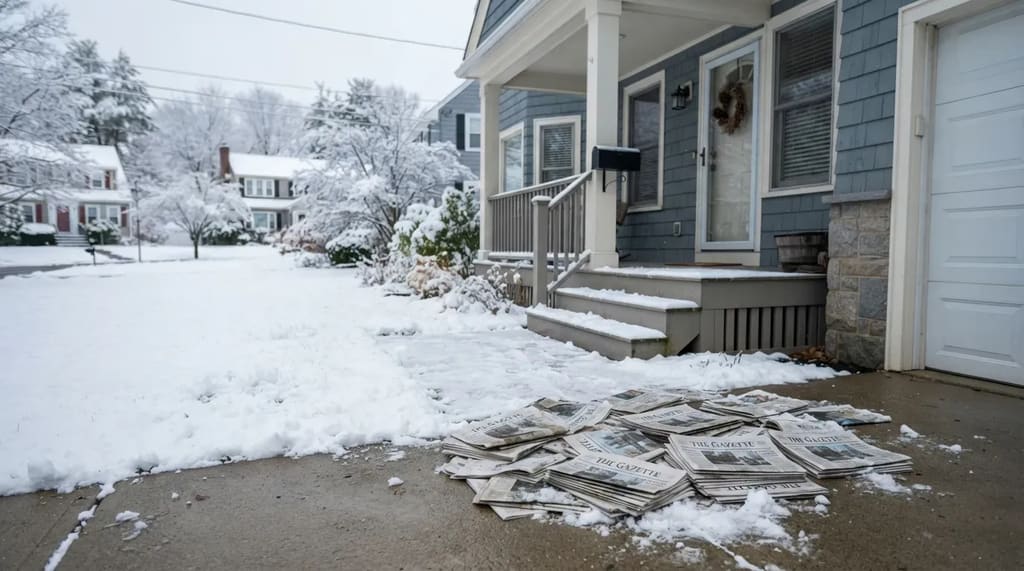
A paper that lands on the driveway every morning tells the whole street the house is empty, and the subscription keeps billing you for it. Hold Mail from the post office caps out at 30 days, and it only covers your mail, so it can’t stop a carrier from tossing a paper on the lawn.1 A winter is several times longer than that window, so the stack grows unless you stop it at the source.
The fix is one call to each publisher, asking for a vacation hold or a switch to the digital edition. Pause every paper and magazine a week before you leave. Kiplinger’s snowbird advice is to have someone visit the house regularly, and that person can pick up anything that arrived. Still, a standing delivery is far easier to stop than to collect.
Fast Facts
- Hold Mail from the post office tops out at 30 days.1
- It covers USPS mail only, so newspapers and carrier packages are not included.
- A snowbird winter can run four months or more, well past that cap.
- A vacation hold or digital edition has to be arranged with each publisher.
#13 – A Paid Mailbox Service When USPS Forwarding Would Do

The post office will forward your letters to the winter address on a temporary change of address, and USPS says the total forwarding time on a temporary move cannot exceed 12 months. A winter fits inside that with room to spare. Filing online carries a $1.25 identity verification fee, which is small next to a monthly subscription to a private mailbox.2
Here’s a verdict that mailbox vendors won’t like: unless you’re away longer than a year, the paid service is a luxury. Forwarding handles USPS mail only, so carrier packages are not covered, and UPS, FedEx and Amazon each need an address change of their own. For a normal winter, free forwarding beats a monthly mailbox fee. The real money goes missing in the weeks when mail is split between two houses, and that gap costs more than the forwarding does.
#12 – Late Fees on Bills That Went to the Wrong House
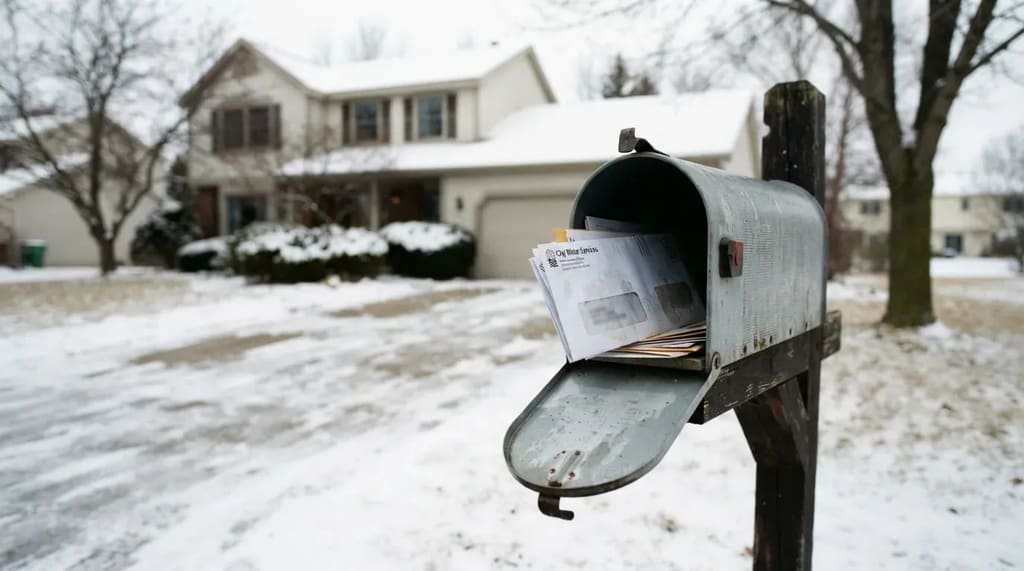
A water bill sits in the old mailbox for two weeks, and the late fee shows up on the following statement. It happens because the switchover weeks are messy, with mail split between houses while forwarding catches up. A payment that stays late long enough can also reach your credit report, which turns a $25 mistake into a longer headache.
Fixed bills such as insurance, HOA dues, utilities and the mortgage are easy to put on autopay, and paper statements can go to email. Move every recurring bill to autopay and paperless before you leave. Keep an eye on the balance in the account they draw from, since autopay pulls money whether or not you’re looking at the screen. Some bills can’t be fixed with a payment setting, but the television package can be handled with one phone call.
#11 – Full Cable Packages at a House Nobody Is Watching
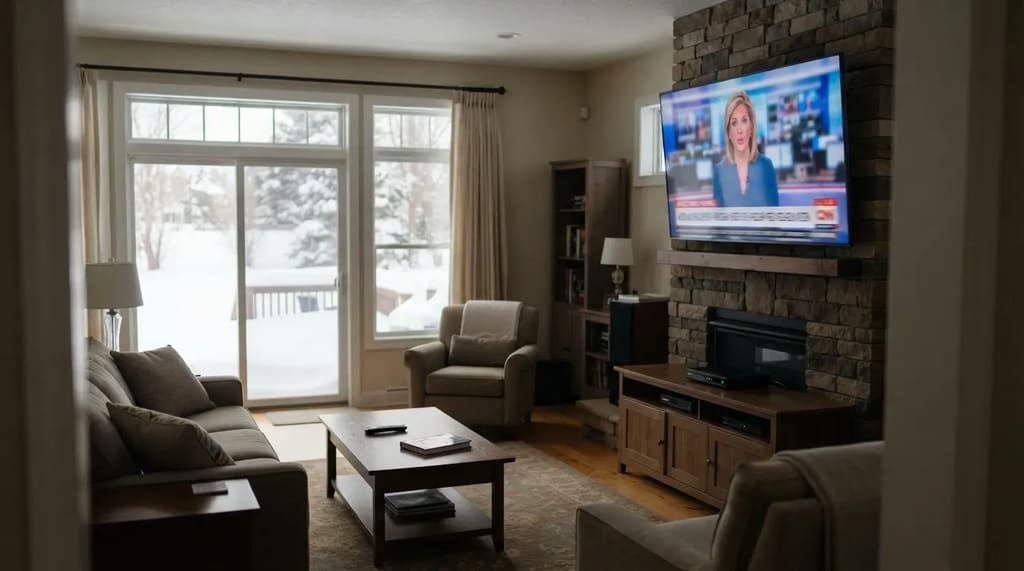
If the home TV package keeps running while you watch a different set a thousand miles away, you’re paying for a picture nobody sees. Providers differ, and some will suspend service or drop you to a cheaper plan for a season, so call before you leave and ask what a seasonal pause costs. Streaming services usually bill month to month, which makes them even easier to pause or cancel until you’re back.
Keep one service running, and that’s the internet. A smart thermostat, a leak sensor or a doorbell camera needs it to send alerts to your phone, and those devices guard the house in several items ahead. Pause the television, but keep the internet. Some recurring visits can’t be dropped so casually, though, and the one that protects a swimming pool is a case where cutting costs can backfire.
#10 – Lawn and Pool Contracts That Ignore the Calendar
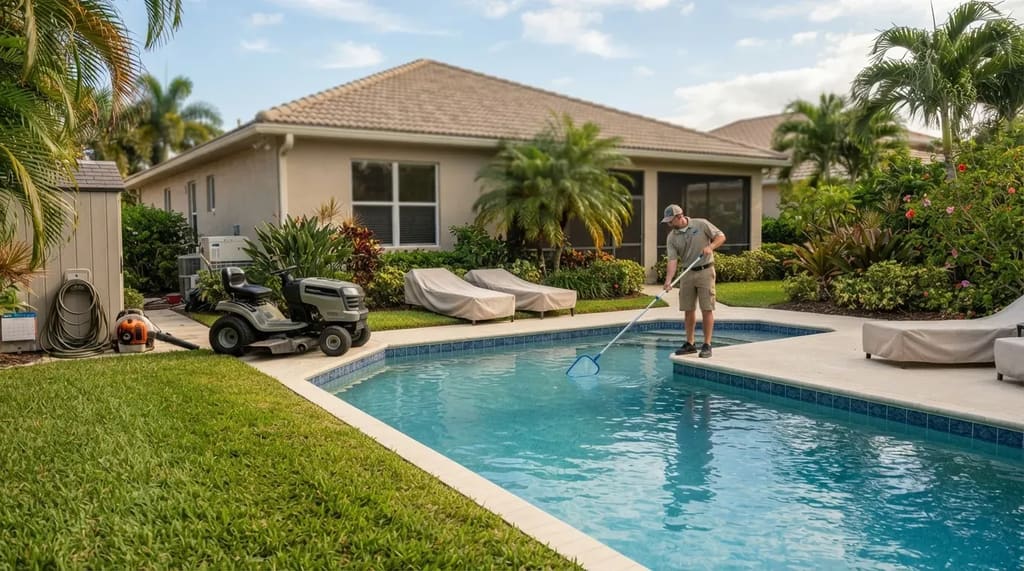
A mowing contract can’t tell that the grass is under snow. Recurring services are usually written for the calendar year, and a snowbird’s calendar is split between two houses. Dues, pest control, pool service and landscaping keep running whether you’re in the house or not, which is why each one needs its own decision instead of a blanket renewal.
Quick Compare
- Mowing under snow: ask for a seasonal pause.
- Pool at a warm-climate home: usually worth keeping.
- Pest control and landscaping: ask each company about a seasonal schedule.
- Dues: they keep running, so check what they cover.
The pool is the exception to the cut-it-all instinct. A pool left unserviced in warm weather can turn green and cost far more to clear than the visits would have, so pool service at a warm-climate home is a bill worth keeping. Cancel what the season no longer needs and keep what protects the property. Pull last year’s invoices, circle every service, and ask each company whether it offers a seasonal schedule. Utilities are a similar decision, since the power bill doesn’t drop to zero in an empty house, and the biggest draw is usually the thermostat.
#9 – Thermostats Set for a House With No One in It
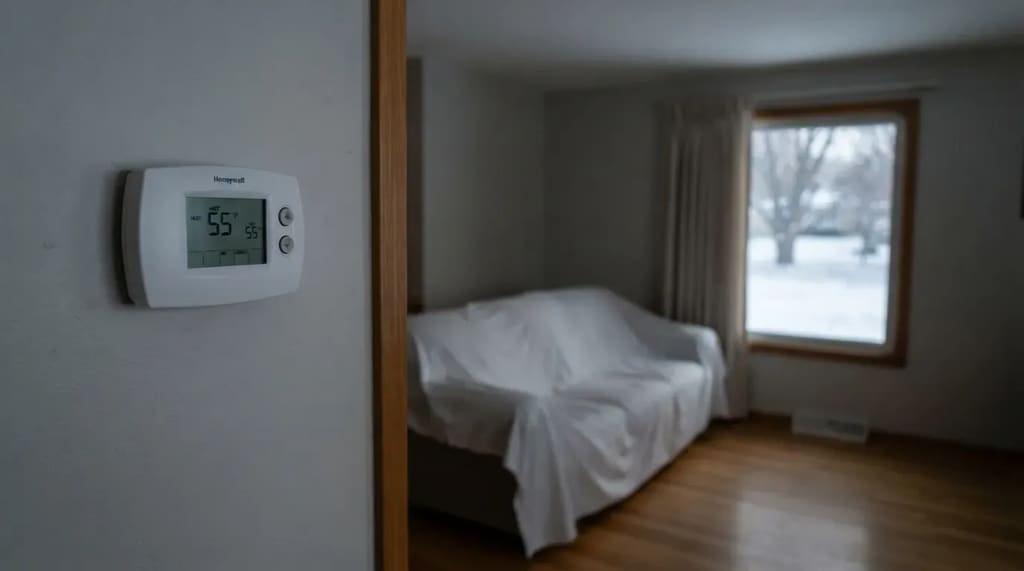
Heating an empty house to 70 degrees is wasteful, but shutting the heat off completely is worse. Kiplinger warns that if your insurer decides the pipes burst because you turned off the heat or failed to insulate them, you may be liable for all the damage.3 So the savings don’t come from zero. A lower setting keeps the pipes above freezing and costs less than a living-room temperature that nobody is there to enjoy.
A setting in the mid-50s is a common choice for empty homes, but check what your policy and your climate call for. Set the thermostat low, never off. A smart thermostat that texts you when the temperature drops turns a silent failure into a phone call, which is why the internet connection from item 11 earns its keep. Even with the heat set right, the water inside the pipes stays under pressure, and that calls for a separate fix.3
#8 – Full Coverage on a Car Parked All Winter

Auto policies are priced around driving, so a car parked for four months is worth a conversation with your agent about lower-cost storage coverage. Some insurers let you reduce coverage on a parked vehicle.
If a lender holds the title, though, you may be required to keep full coverage, so ask before you change anything. And if a vehicle will stay in your winter state for an extended stretch, tell the insurer that too.
Where the car sits matters as much as how it’s insured. Kiplinger recommends an airtight garage or car capsule, because critters of all types can find cars and use them as nests over the winter. Ask about comprehensive-only coverage on the parked car, and store it indoors. A parked car can’t flood a kitchen, though, and that’s the difference between this bill and the next.
#7 – Water Pressure Left On in an Empty House
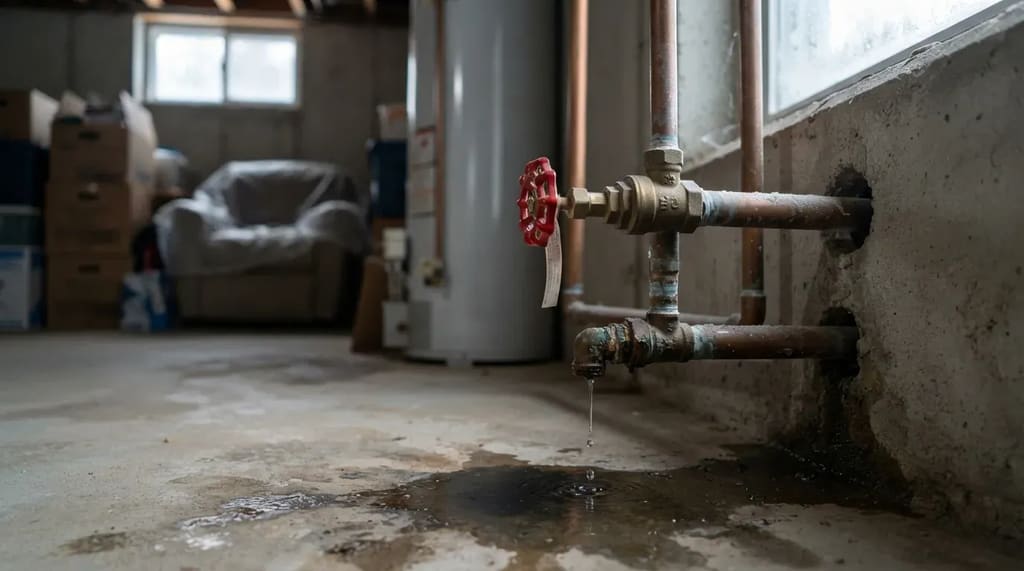
A leak in an occupied house gets noticed. A leak in an empty one gets to finish the job. In an occupied home, a leaky pipe is likely to be spotted and fixed before major damage results, but in an empty home a small drip can grow for weeks. If that damage happens in a home left empty for an extended period, it may not be covered under your existing policy.
Shutting off the main water valve before you leave costs nothing, takes a minute, and stops the supply to every fixture at once. Close the main valve before you lock the door. If you need water on for a sprinkler or pool line, a wireless leak sensor can text your phone, and a neighbor or home watcher can walk through on a schedule. The next stop on this list isn’t the hardware store but the pharmacy, where the price depends on a network you didn’t pick.
#6 – Prescription Refills Filled at the Wrong Pharmacy

Your drug plan has a pharmacy network, and it was built around your home address, not your winter one. Part D plans and Advantage plans with drug coverage typically have pharmacy networks, and preferred pharmacies may offer lower out-of-pocket costs than other participating locations. That means the same prescription can cost you different amounts depending on which counter you walk up to in Florida or Arizona.
Some Advantage plans include a national pharmacy network that lets you fill at locations across the country, but not all do. Before you leave, call your plan and ask which pharmacies near your winter address are in network and whether any are preferred. Ask about a longer supply, too. Ask which pharmacy near the winter address is preferred. Some retirees also hear that a new state calls for a second health policy, and for anyone on Original Medicare that pitch deserves a hard look.
#5 – A Second US Health Policy Beside Original Medicare

Original Medicare doesn’t care which state you’re standing in. The National Council on Aging explains that with it you can see any provider in the country that accepts Medicare, so there’s no network to leave behind and no winter service area to fall out of. If someone has told you that you need an extra US health policy for a few months in another state, that policy mostly pays for ground you already cover.
At a Glance
- Original Medicare: any provider in the US that accepts Medicare, with no network to leave.
- Medigap: supplements Original Medicare across the country.
- Medicare Advantage: built around a home service area, with routine care often limited elsewhere.
- Outside the US: Medicare’s coverage is limited, so a travel medical policy may make sense.
My verdict is that this is one extra premium to skip. The picture changes only when you leave the country, and that’s where a separate travel medical policy earns its price. Inside the US, Original Medicare already works in every state. Canadians face the opposite problem, because their government plan barely follows them south, and one day-count error can undercut the policy they bought to fill the gap.
#4 – A Canadian Travel Policy Undercut by the Day Count
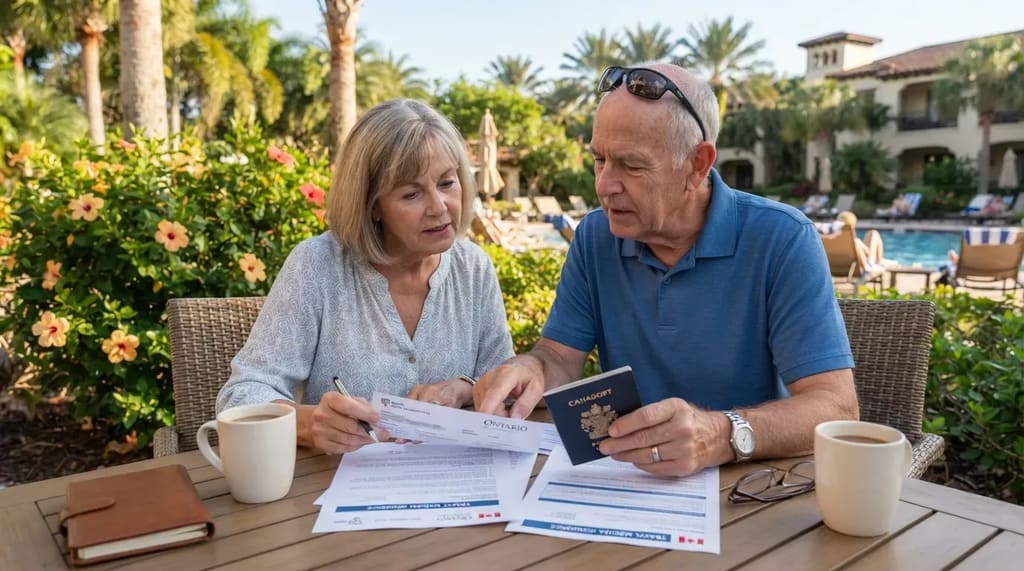
Leave Ontario on November 1 and come home May 31, and that’s 212 days away in a non-leap year when both travel days count. For Ontario, more than 212 days away can put your OHIP coverage at risk.4 5 Other provinces use different limits, and Quebec, for one, requires 183 days of presence. A summer holiday counts against the same total, because the counters measure time outside the province, not time in one destination.
The money problem is that a travel medical policy is built on top of provincial coverage, and a travel policy generally requires you to keep your government coverage for the whole trip. A day-count slip can therefore undercut the premium you paid. Count every day outside your province before you buy travel coverage. Rules differ by province and change over time, so confirm yours with the provincial plan before you leave. Back in the US, an Advantage plan’s map can be just as unforgiving, because it’s drawn around a home county.
#3 – Routine Care Bills From an Out-of-Area HMO
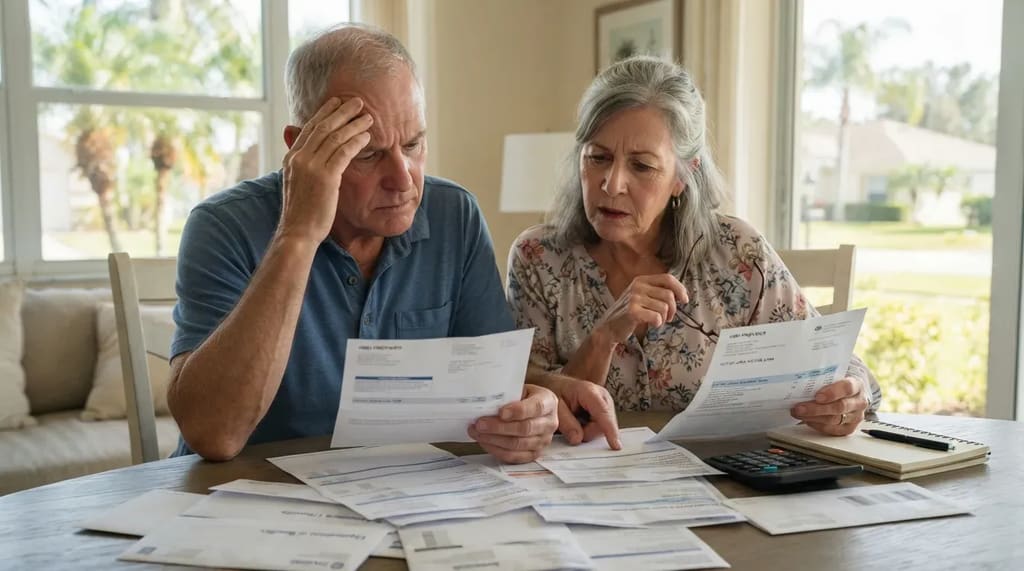
Advantage plans often have lower premiums, and that’s the appeal. The catch is that the plan’s network is drawn around where you live. Outside that area every plan covers emergency and urgently needed care, but routine care is generally not covered, and HMOs can leave you paying the full bill.6 You also can’t solve it with a second plan, since you can only be enrolled in one Medicare Advantage plan at a time.
Related Stories From Travelbinger


PPO versions are more flexible, since they typically cover out-of-network providers at a higher cost share, though the difference can be significant. For a winter away from home, a low-premium HMO isn’t always a bargain. If you winter far from an HMO’s home county, routine care may go unpaid. Even a plan that works for six months can stop working at seven, and plenty of winters run that long.
#2 – Seven Months Away That Can End a Medicare Plan
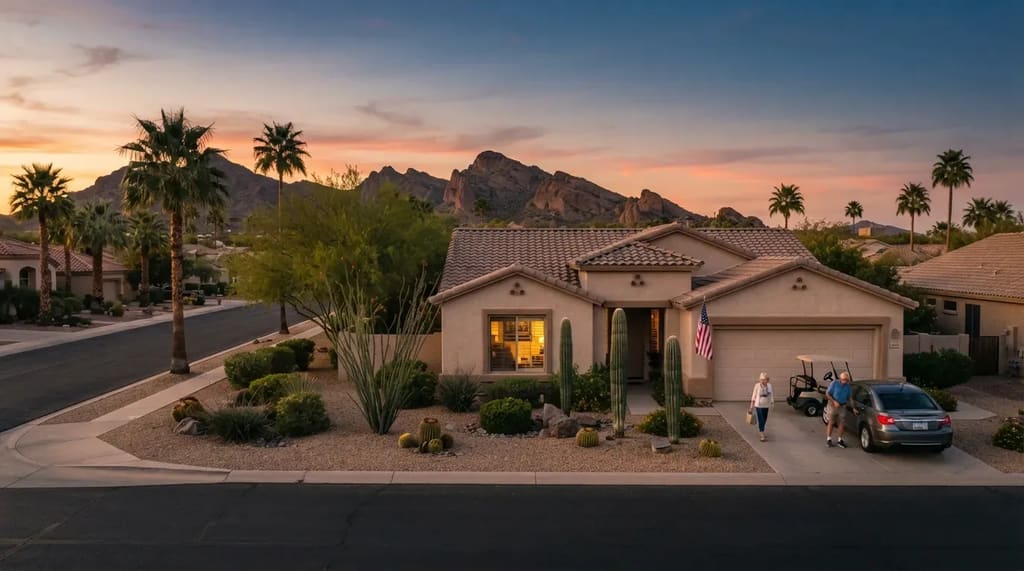
Some Advantage plans put a clock on how long you can be away. The National Council on Aging notes that with many plans you’re limited in the amount of time you can spend outside your service area and still be covered (e.g., six months). A Yahoo Finance report on a retiree planning seven months in Arizona makes the consequence plain: without a qualifying traveler benefit, seven consecutive months can cost her the coverage she kept up north.6
Losing the plan isn’t the end of the story. The same report notes that moving out of a plan’s service area can create a protected right to buy Medigap without being rejected or charged more for your health. It also suggests having your State Health Insurance Assistance Program review any disenrollment notice. Find the time-away limit in your Evidence of Coverage before you book the stay. The costliest clock of all runs inside the policy on the house you left, and it’s shorter than your winter.
#1 – A Homeowners Policy With a 30 Day Clock
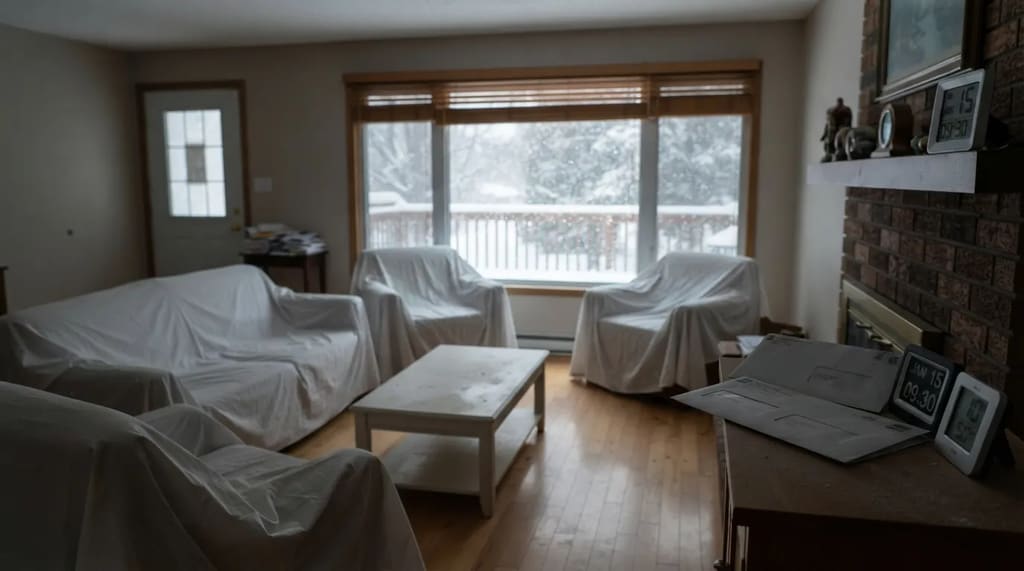
A four-month winter is about 120 days, and the vacancy clause in many home policies starts counting at 30 to 60. Most policies contain a clause that activates once a property sits unoccupied for a set stretch, commonly in the range of 30 to 60 consecutive days.7 After that, coverage for burst-pipe water damage, theft, vandalism and certain liability claims can be limited or excluded. Your winter is two to four times that window, and the exact number sits in the “Conditions” section of your policy.
The wording matters. A furnished home that’s empty of people can be treated more kindly than one that’s truly “vacant,” but you shouldn’t assume your policy draws the line there. Insurers write vacancy and seasonal endorsements for this situation, typically at a higher premium, and Kiplinger notes that some companies won’t cover damage if nobody is assigned to watch the home. Call your insurer before you leave and put your return date in writing. That call is the cheapest repair on this list, and it puts the main valve, the thermostat setting and the home-watch visits from earlier items to work in your favor if you ever file a claim.
Worth Knowing
- A four-month winter is about 120 days away from home.
- Many vacancy clauses start counting at 30 to 60 consecutive days.
- Burst-pipe damage, theft, vandalism and some liability claims can be limited once the clause applies.
- The exact number is in the “Conditions” section of your policy.
- Vacancy and seasonal endorsements exist, usually at a higher premium.
Most of the money on this list doesn’t leave through big decisions. It leaks out through defaults: a subscription that renews, a plan tied to an address, a policy with a countdown inside it. Winter feels like a trip, but your bills treat both houses as home. One sit-down with a calendar in October, with every date and phone number written down, does more than any single call.
Which bill at your other house surprised you most the first year you went south?
- USPS Hold Mail Basics: https://faq.usps.com/s/article/USPS-Hold-Mail-The-Basics
- USPS Standard Forward Mail: https://www.usps.com/manage/forward.htm
- Kiplinger Snowbird Insurance Issues: https://www.kiplinger.com/personal-finance/home-insurance/snowbirds-avoid-these-sneaky-insurance-issues
- Queen’s OHIP 212-Day Rule: https://www.queensu.ca/immigration-relocation/relocation/health-care
- OHIP Out-of-Province Rules: https://instasure.ca/guides/ohip-out-of-country-coverage/
- Snowbird Medicare Advantage Guide: https://www.savingadvice.com/articles/2026/10/19/10753918_snowbirds-will-your-medicare-plan-still-work-when-you-spend-winter-in-another-state.html
- Frozen Pipe Claims Guide: https://preloss.app/learn/frozen-pipe-claims