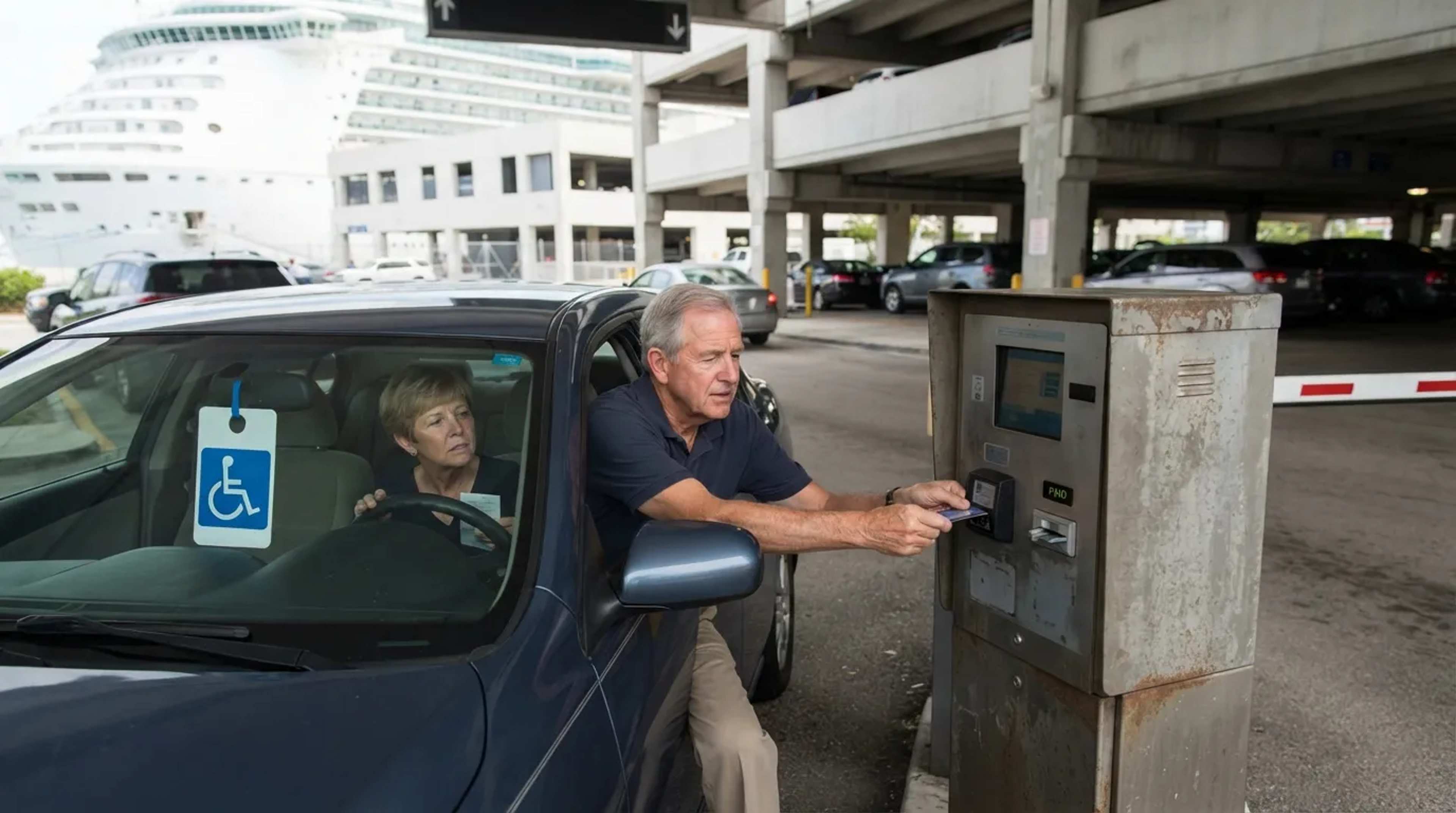
A coach tour sounds like the easy answer after 65, with no driving, no navigating and no planning. The expensive mistakes tend to happen earlier, at the booking screen, before anyone steps onto the bus.
They hide in a pace rating, a room price and an insurance window that can close 14 to 21 days after your first deposit. Count down from #15 and the mistakes get costlier, and the last one can erase protection you thought you already had.
#15 – Treating “Included” as a Promise of Everything

Most people believe the listed price is the price. It’s really only the starting line.
Tour listings bundle some costs and leave others out. Tips, optional excursions, certain meals and airport transfers are the usual gaps, and every operator draws the line in a different place.
Read the itinerary day by day, not just the headline. A line that says “free time” means exactly that, so lunch and any entry ticket come out of your pocket.
Ask for these answers in writing before you pay:
- Which meals are actually covered
- Whether tips for the guide and driver are included
- Which excursions cost extra
Worth Knowing
- “Free time” usually means meals and tickets are on you.
- Optional excursions are typically sold on top of the base price.
- Tipping policies differ from one operator to the next.
- Airport transfers are often tied to how and where you booked your flight.
That’s the small stuff. The next mistake hides behind a single word on the brochure…
#14 – Trusting the Word “Relaxed” Without Checking Who Defines It

“Easy” and “relaxed” are not standard terms, and nobody regulates them.
Each company builds its own scale. One operator labels its tours Low, Moderate, High or Very High, while another numbers them from 1 to 5 with different names for each step.1
So a “Level 2” with one company can be a “Level 3” with another. Compare the written descriptions side by side, not the labels.
But even a clear rating gets ignored by a surprising number of travelers, as #13 shows…
#13 – Skipping the Walking Details Altogether

The rating is not decoration. It describes what your legs will actually be asked to do.
One major operator spells out its harder levels in plain terms. Travelers walk 2–3 miles per day, handle cobblestones, stairs and hills, carry their own luggage, and board the coach without assistance.1
Even the gentlest levels at another company still involve some stairs, boarding the coach and walking from the parking area to the attraction.
Most people don’t realize that boarding the coach counts as an activity. Count it for every stop, every day.
Yet the biggest error here isn’t ignoring the rating. It’s what comes next…
#12 – Rating Your Own Fitness From Memory

The problem is often a flattering self-image, and it’s an easy one to fall into.
One senior-travel resource warns that the activity level we think we have may not be our reality. Think about the past week, not the best day you had last year.
Walking tours bring standing, queuing and stairs without handrails. Fatigue also builds over a ten-day trip, so a pace you handle on day one may feel very different on day six.
If that test goes badly, you have a conversation to make, and most travelers never have it…
#11 – Keeping Mobility Needs Quiet Until the Trip Starts

Telling the operator before you book is a practical step, not an admission.
At least one operator’s client care team goes over daily details with travelers. That covers activity levels, walking distances, terrain, transportation and hotel accommodations.
The conversation matters most when your abilities don’t fit a neat rating. Someone may walk short distances but be unable to stand for long, or manage level ground but struggle with stairs.
Be specific. Asking about walking and standing limits, mobility equipment and bathroom features beats a general request for an accessible trip.
Quick Compare
- Vague: “I need an accessible trip.” Better: “I can walk short distances but can’t stand in long lines.”
- Vague: “Is it okay for seniors?” Better: “How many stairs are there at each hotel and attraction?”
- Vague: “Can you help me?” Better: “Will I need to board the coach and carry my bag unassisted?”
Don’t count on the crew to fill the gap either. One operator says its tour director and driver have many responsibilities, so travelers shouldn’t expect ongoing assistance from them or from fellow passengers.
That brings us to something even more physical, and it’s sitting in your trunk…
#10 – Overpacking for a Trip You’ll Have to Handle Yourself

Many travelers assume someone else will move the suitcase every time.
Not always. Some activity levels expressly say you’ll carry your own luggage.
That can mean stairs at a hotel without a lift, or a long walk from the coach to the lobby.
The fix is dull but effective. Pack what you can lift comfortably, and treat a second heavy bag as a risk instead of a convenience.
Luggage is only part of the cost story, and the next mistake can raise your price dramatically…
#9 – Not Seeing the Solo Surcharge Coming

Traveling alone can quietly change the price you thought you’d pay.
Group tour prices are built on two people sharing. For structured group tours, single supplements typically run 15% to 60% of the per-person base fare.2
Another source says the surcharge can add 25–100% to your trip cost.2 Hotel room pricing is a big driver, which is why the same trip can carry very different surcharges on different dates.
Here’s where the real savings are, and most travelers never ask…
#8 – Paying the Supplement Without Asking About the Alternatives

Many solo travelers treat the surcharge as fixed. Some operators treat it as flexible.
Twin-sharing is the usual route around it. Choose companies that offer twin sharing for solo travelers, and watch for promotions that cut or remove the fee on selected departure dates.3
Roommate programs vary. Approach Tours runs a pairing program, and solo rooms are usually limited to four per tour, so booking early matters.
Still, a lower price is worthless if you can’t get through the day, and that depends on a detail most skip…
#7 – Never Asking What the Coach Itself Is Like

You’ll spend more hours in that seat than at any monument.
Guides and travel writers suggest looking at coach comfort and onboard amenities before choosing a tour. Yet most people only study the sightseeing list.
Ask a few plain questions: is there a restroom on board, how long are the drives between stops, and is there a seating rotation?
At a Glance
- Restroom on board, or only at rest stops?
- Longest driving stretch between stops
- Seat rotation or fixed seats
- Number of steps to climb when boarding
Long driving days are normal on multi-country routes. One operator describes a trip with some long touring days by motor coach and train, and that’s worth knowing before you pay.
But comfort on the road depends on something you can’t easily buy once you’ve left home…
#6 – Treating Prescriptions as an Afterthought

A lost or delayed medication can unravel an entire trip.
Keep prescriptions in your carry-on, in original containers, with a printed list. That list should show generic names, doses and your doctor’s contact details.
Replacing them abroad is not a Medicare matter. Part D won’t cover prescriptions you get outside the United States, so a replacement is typically your own expense.4
It sounds minor. The next mistake involves the group around you, and it shapes the whole schedule…
#5 – Ignoring Group Size and Pace

A full coach moves at the speed of its slowest step, and some days that may be you.
Group size affects everything. Larger groups mean longer boarding, longer restroom stops and longer waits at attractions.
One source says experienced guides quietly pad boarding and restroom stops for exactly this reason. Treat that as one travel writer’s observation, not a guarantee.
Fast Facts
- A full-size motor coach typically seats roughly 45 to 56 travelers.
- Every restroom stop and boarding gets multiplied by that headcount.
- Smaller-group departures usually move faster but may cost more.
- Ask for the typical group size on your specific departure date.
Ask how many travelers a typical departure carries. Ask also how many hours a day you’ll be on the move, and when the first wake-up call is.
Those questions protect your day. The next one protects your money…
#4 – Forgetting That the Deposit Starts a Clock

Your first payment is not just a payment. It’s a deadline trigger.
Insurance rules are tied to it: the pre-existing condition waiver window starts counting the moment any non-refundable trip payment is made. That means the first deposit on a flight, tour or hotel, not the date you finalize the itinerary.
Cancellation terms work the same way. Read the refund schedule before paying, and note the date each penalty step begins.
Now we reach the part that costs real money, starting with a belief many retirees share…
Related Stories From Travelbinger



#3 – Believing Medicare Follows You Abroad

This is the myth that experts correct most often.
The rule is blunt. Original Medicare usually does not cover health care outside the United States and its territories, except in very specific emergencies.4
If you travel abroad, you will likely pay your medical expenses out of pocket. Even the exceptions are narrow, because Medicare does not pay for kidney dialysis or prescription medications outside the country.5
Some retirees say, “But I have a supplement plan.” Hold that thought…
#2 – Assuming Your Supplement or Advantage Plan Is Enough

Some plans do help abroad, but the help comes with limits.
For Medigap, the letter of your plan matters. Plans C, D, F, G, M and N cover some travel-abroad emergency help, while plans A, B, K and L cover nothing abroad.5
Medicare Advantage varies by insurer. Standard plans don’t cover care outside the U.S. beyond narrow exceptions, and optional travel add-ons vary significantly.6
One source adds that you may be disenrolled from your Medicare Advantage plan if you travel outside the U.S.4 Check this with your insurer before you go.
But the single biggest mistake isn’t about which policy you buy. It’s about when…
#1 – Buying Travel Insurance After the Waiver Window Closes

This is the mistake that can quietly void the protection you thought you had.
Most plans exclude existing medical conditions unless you add a waiver. You usually have to buy it within 14–21 days of your first deposit, be medically stable, and insure your full prepaid non-refundable trip cost.7 8
Windows differ by insurer. One allows 14 days, another 20.
The deadline is firm, and missing it is a common way for seniors to lose coverage for existing conditions. You typically lose eligibility entirely, with no way to add it back.
It sounds like paperwork. In practice, it’s the line between a covered claim and a bill you carry home.
The Bottom Line

The mistakes that cost the most happen before departure. Medicare almost never pays abroad, supplement plans cap out, and the pre-existing condition waiver usually vanishes 14 to 21 days after your first deposit.
The smaller errors add up too: unchecked activity ratings, an unexamined single supplement, and luggage you can’t lift. Fix them at the booking screen, and the coach really can be the easy part of the trip.
- Go Ahead Activity Levels: https://support.goaheadtours.com/hc/en-us/articles/14673500846107-Physical-activity-levels
- Single Supplement Guide: https://womentravelabroad.com/the-single-supplement-the-hidden-tax-on-solo-female-travel-and-how-to-avoid-it/
- TourRadar Single Supplements: https://www.tourradar.com/tg/single-supplement
- NCOA Medicare Abroad: https://www.ncoa.org/article/does-medicare-cover-you-anywhere/
- AARP Medicare Outside U.S.: https://www.aarp.org/medicare/does-medicare-cover-me-outside-the-us/
- Medicare FAQ Travel Insurance: https://www.medicarefaq.com/faqs/travel-insurance-for-seniors-with-medicare/
- Forbes Pre-Existing Conditions Insurance: https://www.forbes.com/advisor/travel-insurance/pre-existing-conditions/
- Squaremouth Pre-Existing Conditions: https://www.squaremouth.com/travel-insurance-benefits/pre-existing-condition