The Queen Mary 2 typically pulls out of Southampton in the late afternoon and reaches New York seven nights later, with no land in between. That is the whole point of these crossings, and it is also the part nobody fully pictures until they are standing on deck on day three.
These sixteen secrets are the things first-timers tend to learn only after the novelty wears off. They cover what the empty days feel like, what quietly costs extra, and what makes the week better than the brochure promised.
Most of them are cheaper to handle before you board. One of them changes the length of nearly every day aboard, it is decided at booking, and it waits at the very end of the list.
#16 – A Week With No Port Stops
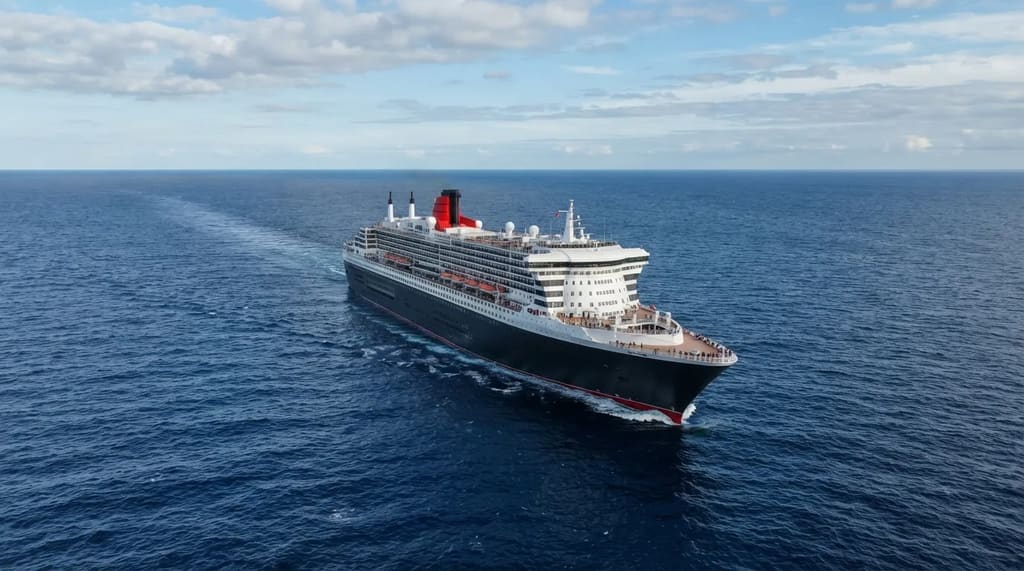
Cunard’s Queen Mary 2 runs scheduled seven-night crossings between Southampton and New York, with every day spent at sea.1 There are no ports of call between departure and arrival, so nothing on the calendar pulls you off the ship.
She is among the fastest passenger ships afloat, with a top speed of around 30 knots, yet the schedule is not built around speed. Cunard, founded in 1840, treats the crossing itself as the main event.
Fast Facts
- Length: 1,132 feet (345 meters), roughly 250 feet longer than the Titanic2
- Capacity: up to 2,695 guests, looked after by about 1,253 crew2
- Size: 149,215 gross tons
- In service: since 2004, with a maiden voyage from Southampton to Fort Lauderdale
Because there are no ports to miss, the plan holds from the first day to the last. A first-timer who has never gone more than a day or two without land should weigh that before booking, since you cannot cut the week short by stepping ashore.
Other lines stretch the same ocean even further, and they price those empty days very differently.
#15 – Repositioning Cruises Stretch the Sea Days
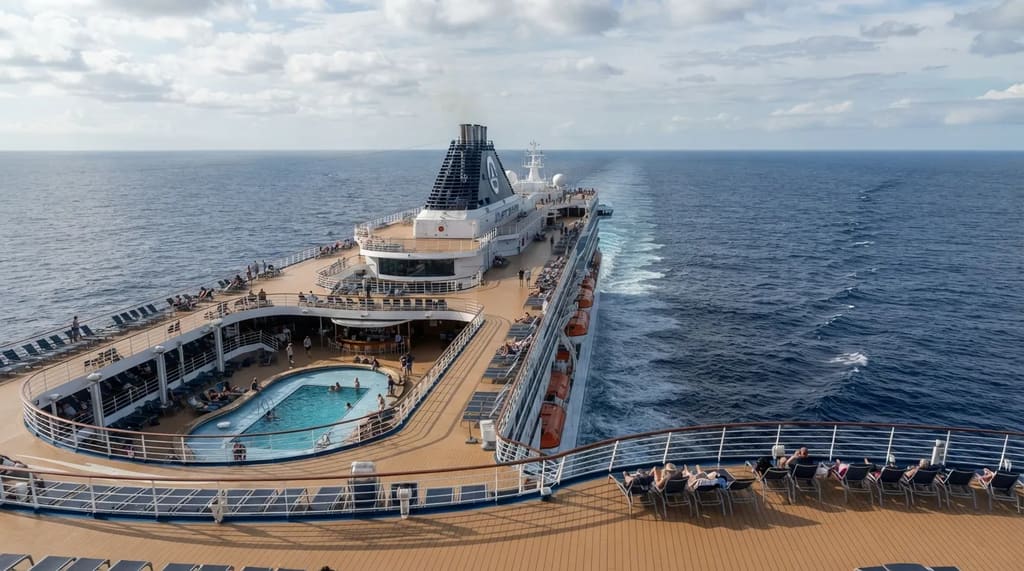
Repositioning voyages take place in spring and fall, when lines move their ships between seasons in Europe and the Caribbean. One traditional route leaves Fort Lauderdale or Miami and can spend about eight days at sea before its first stop at Tenerife in the Canary Islands.
Cruise Critic lists repositioning as usually the cheapest transatlantic option3, with fares often around $75 per person per day on mega-ships. The cheaper the fare, the more sea days you are likely to meet, so part of a bargain price is payment for empty days.
Routes can change for weather or operational reasons, and because the point is moving the ship, a skipped port may simply become another sea day. That makes a repositioning fare a better fit for someone who counts a day of reading as a day well spent.
Long runs of sea days follow a pattern of their own, and it tends to arrive a few days in.
#14 – The Routine Settles Around the Third Day
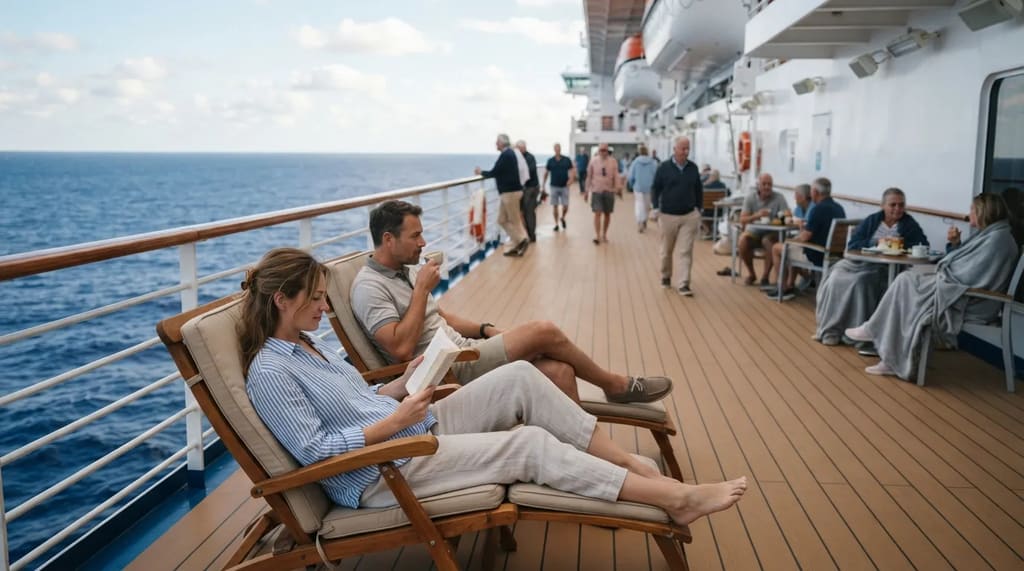
On a long crossing, the first two days often feel a little directionless while a rhythm establishes itself. By the third day, the structure of mornings, meals and evenings has usually become natural.
Travelers who feel queasy usually adjust within 24 to 48 hours as the inner ear adapts. That lines up with the point where the routine takes hold, so the rough start rarely lasts the whole week.
This is why the third day feels like a turning point. You stop checking the clock for the next event and start choosing between a deck chair, a lecture and a nap.
If your stomach has not settled by then, though, a few cheap preparations make a big difference, and the first one depends on where you sleep.
#13 – Your Cabin Location Decides How Much You Feel the Ocean
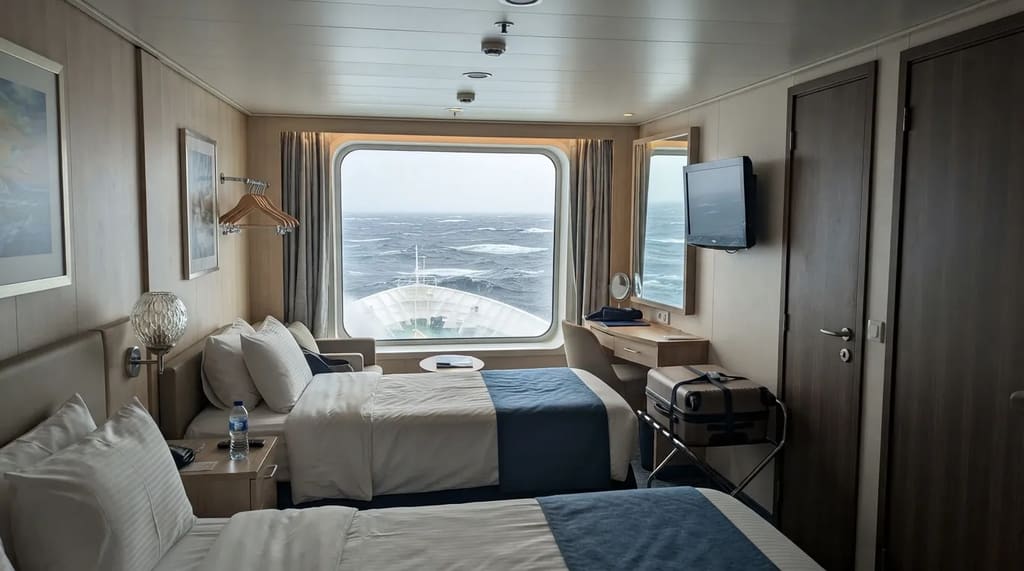
Rooms low in the ship and near the middle usually feel the least motion. High, forward cabins feel the most.
The reason is simple, because the middle of a ship pivots less than its ends. A first-timer who grabbed the cheapest room at the very front may spend a few nights wondering why the floor keeps moving.
Quick Compare
- Low and midship: the steadiest ride on the ship
- Mid-height and midship: still calm, usually with better views
- High and forward: the most motion, and the one to avoid if you worry about queasiness
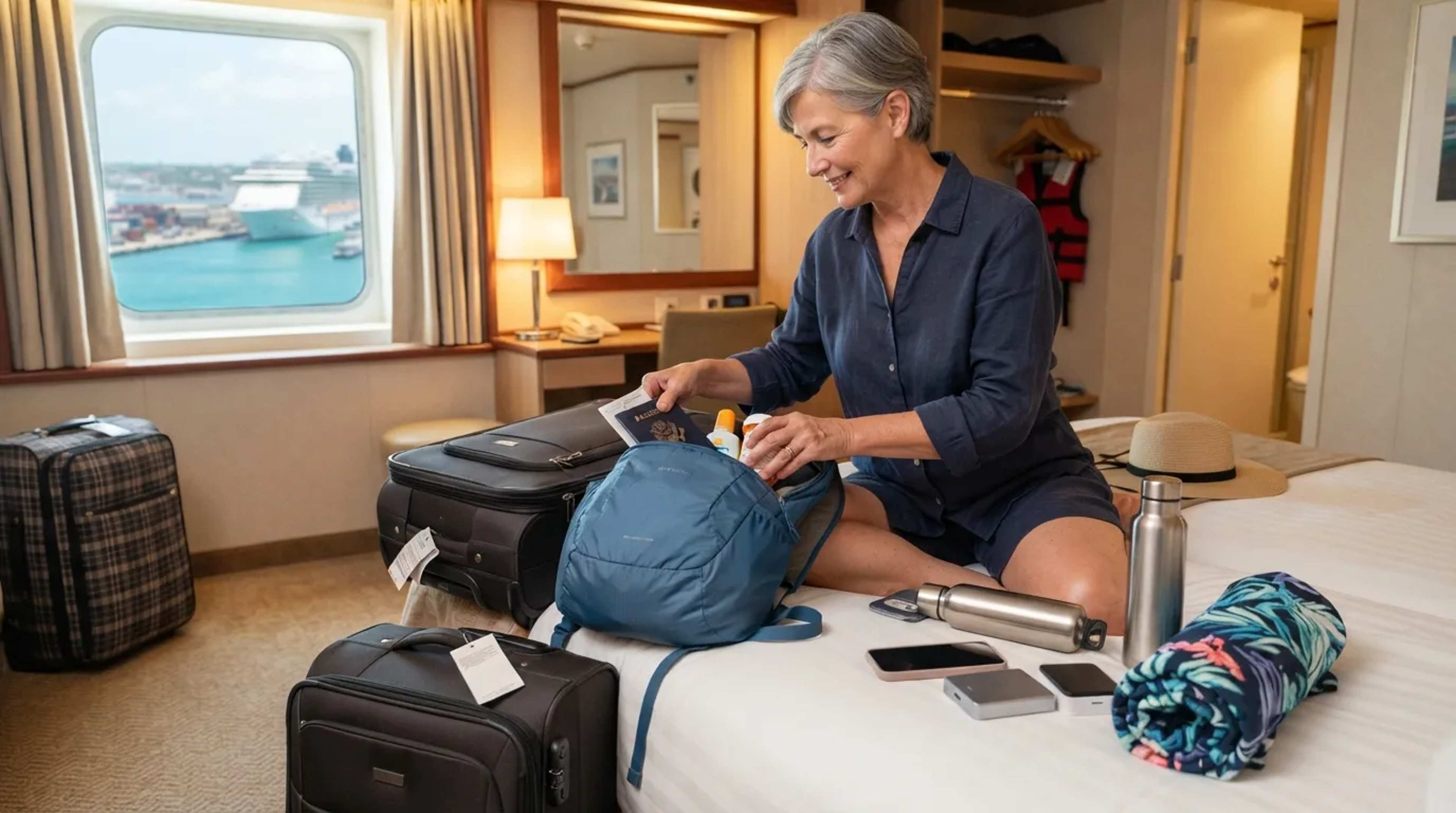
Pack your remedies before you board, because the ship’s medical center charges for visits and treatments. Ginger chews, acupressure wristbands and over-the-counter motion tablets are the usual starting kit, and a doctor can explain prescription options before you leave home.
Even a calm crossing has a day or two that tests the stomach. The ocean decides how many, and the next secret is about how much say it gets.
#12 – The North Atlantic Keeps Its Own Schedule
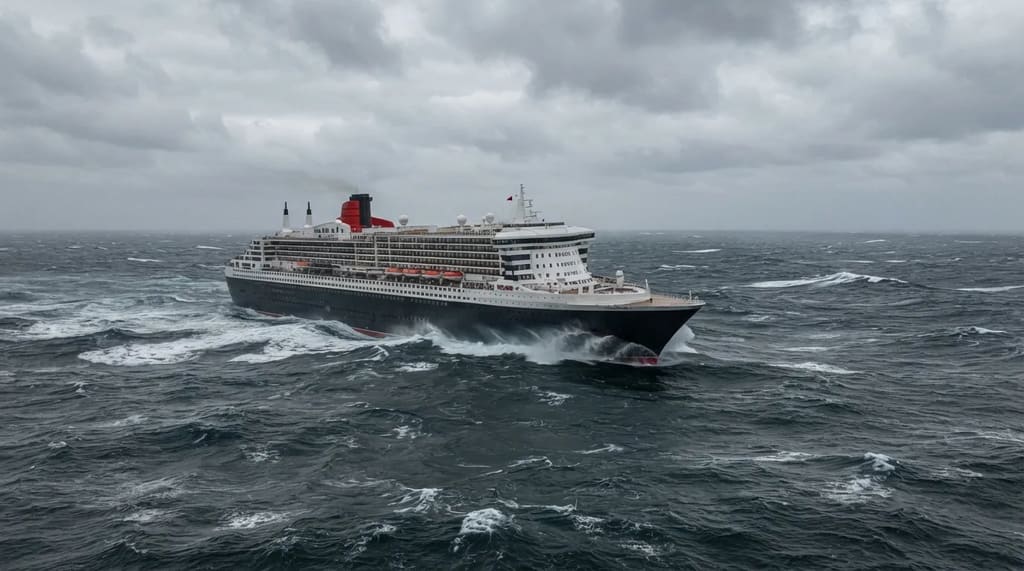
This route crosses open ocean, and open ocean does not follow an itinerary. Long swells can build far from any storm, and you feel them as a slow, rolling lift rather than a sharp jolt.
Crossings in the colder months are more likely to meet rough weather, which is one reason many first-timers lean toward late spring or early fall. Captains can also adjust course and speed to ride out a weather system more comfortably.
Cunard describes the Queen Mary 2 as a true ocean liner, built for the Atlantic rather than for a calm Caribbean loop. Stabilizers help reduce roll, though no ship cancels the sea.
On a rough afternoon, the smartest move is to go inside and find the quirkiest room aboard. It surprises almost everyone who walks in.
#11 – A Planetarium, a Library and a Lecture Circuit Float in the Middle of Nowhere
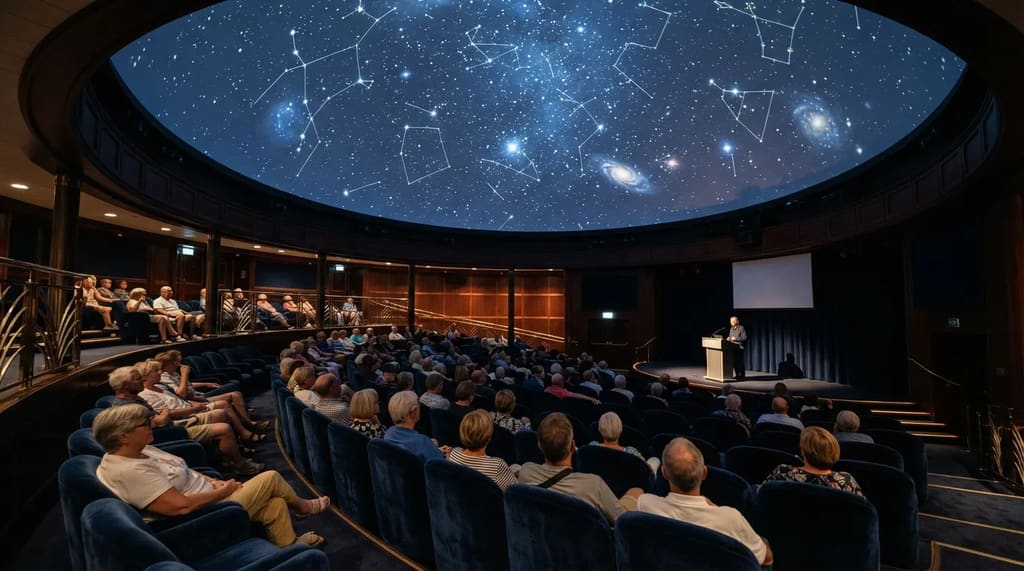
Sea days are when the Queen Mary 2 shows what a seven-night schedule is for. Her Illuminations venue houses a planetarium, which Cunard has described as the first at sea.4 5
Showings are listed in the daily program, and seats are limited. Reading it the night before is the difference between a front-row seat and a locked door.
Nearby, the ship’s library holds thousands of books, and Cunard also schedules talks by guest speakers on crossings. Guests who expected only buffets and deck chairs are often caught off guard by how much there is to do indoors.
You may spend an entire gray afternoon among stars and bookshelves without once thinking about the waves outside.
Evenings, however, come with rules, and you will want to know them before you pack.
#10 – Gala Evenings Are Real, and the Dress Code Is Part of the Show
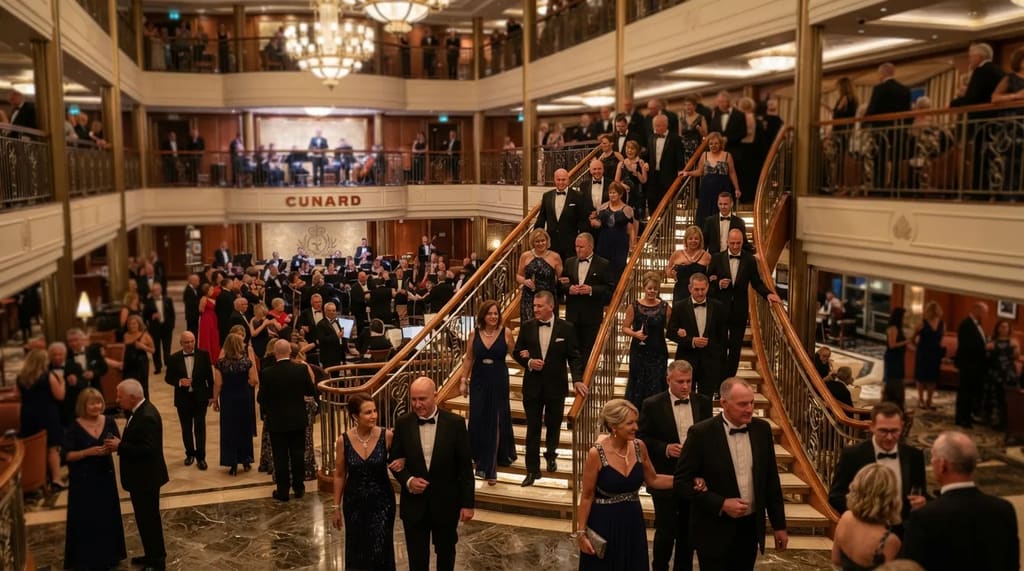
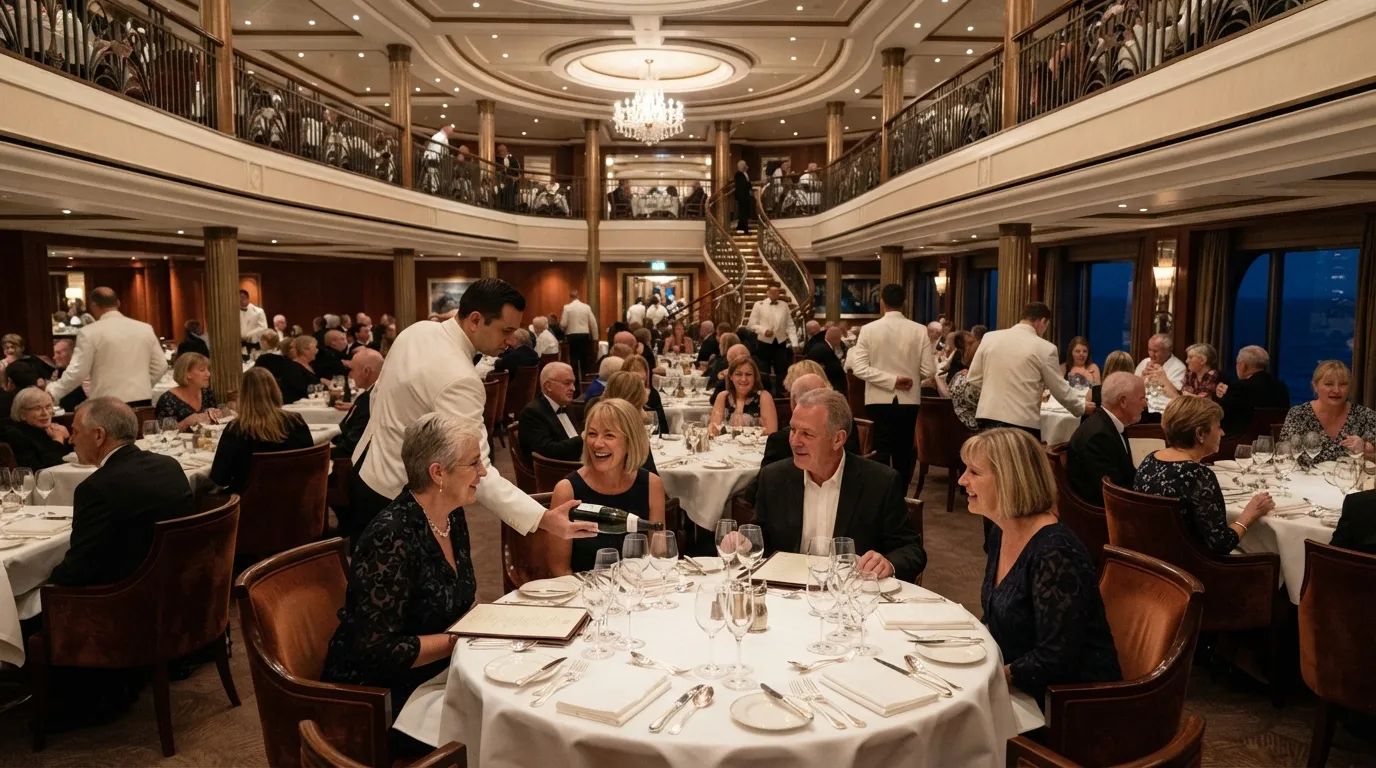
Cunard calls its formal nights Gala Evenings, and on a crossing they are not decoration. Tuxedos, dark suits and evening gowns fill the corridors once the sun goes down.
Travelers who packed only jeans and sneakers feel it fast. Most other nights lean smart casual, so the bulk of your suitcase can stay simple.
Dress codes are published by the line and change from time to time. Check the current rules for your sailing before you fill the suitcase.
Plenty of guests find that the fuss is half the fun, since it turns an ordinary dinner into an occasion. What never feels special, though, is the price of staying connected.
#9 – Your Phone Becomes a Paperweight or a Pricey Habit
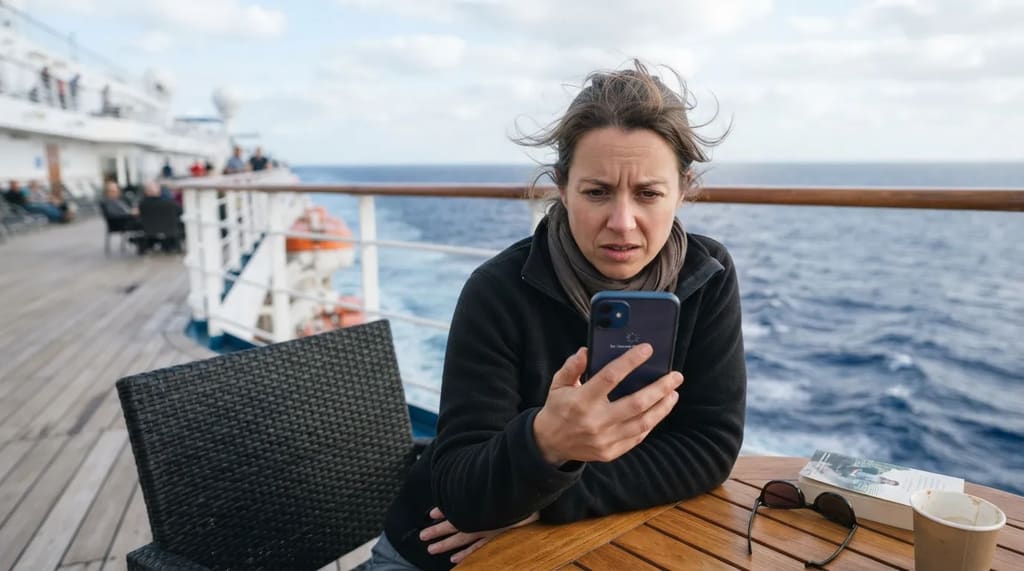
Out in the middle of the Atlantic, your phone’s usual signal disappears. Ships rely on satellite connections, and those are usually sold as paid packages.
Speeds are often slower than what you have at home, and prices vary by line and package. Video calls and large uploads are the first things to struggle.
Cellular service at sea can be even harder on your bill, because ship-based networks typically charge international roaming rates. Switching your phone to airplane mode and using only the ship’s Wi-Fi avoids surprise charges.
Worth Knowing
- Turn on airplane mode before leaving port, then switch Wi-Fi back on
- Download maps, shows, books and playlists while you still have home internet
- Compare Wi-Fi package tiers, since a basic one may cover messaging
- Save big photo and video uploads for the dock
A disconnected day can feel like a gift. The charges that catch people off guard are the quieter ones on the onboard account.
#8 – The Onboard Account Grows Quietly All Week
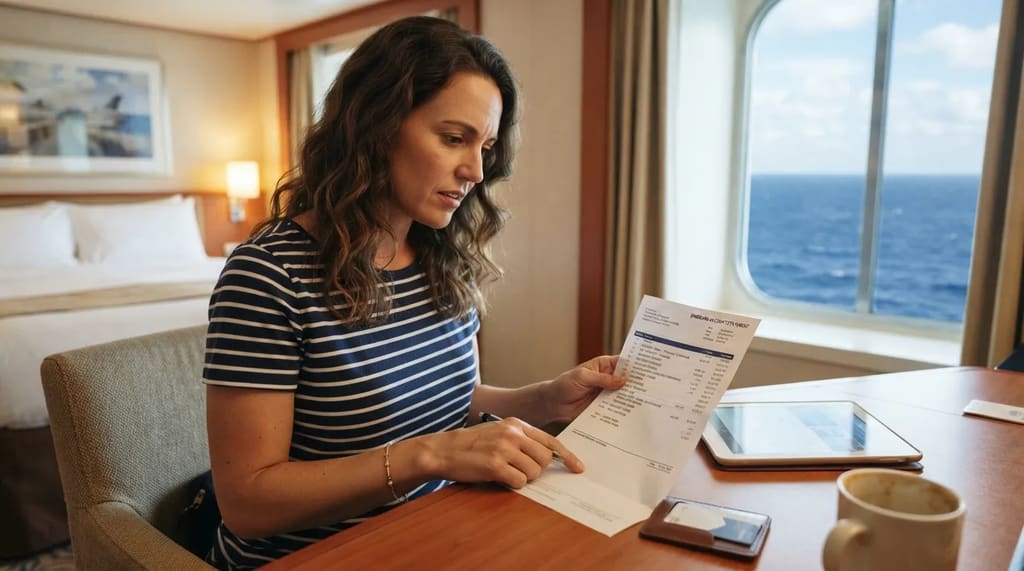
The fare covers the cabin, most meals and the entertainment, but a long week adds a long list of extras. Drinks, specialty restaurants, spa visits and excursions usually land on your onboard account.
Most lines also add gratuities or service charges, commonly billed per person per day. Over seven nights, that daily line item adds up to a noticeable sum.
Amounts and policies change over time, so check the current terms for your own booking. Knowing the number before you board turns it from a shock into a line in the budget.
A daily spending limit helps, and so does knowing what fills up first. On sea days, the things worth paying for tend to vanish early.
#7 – Sea Days Are When the Best Bookings Disappear
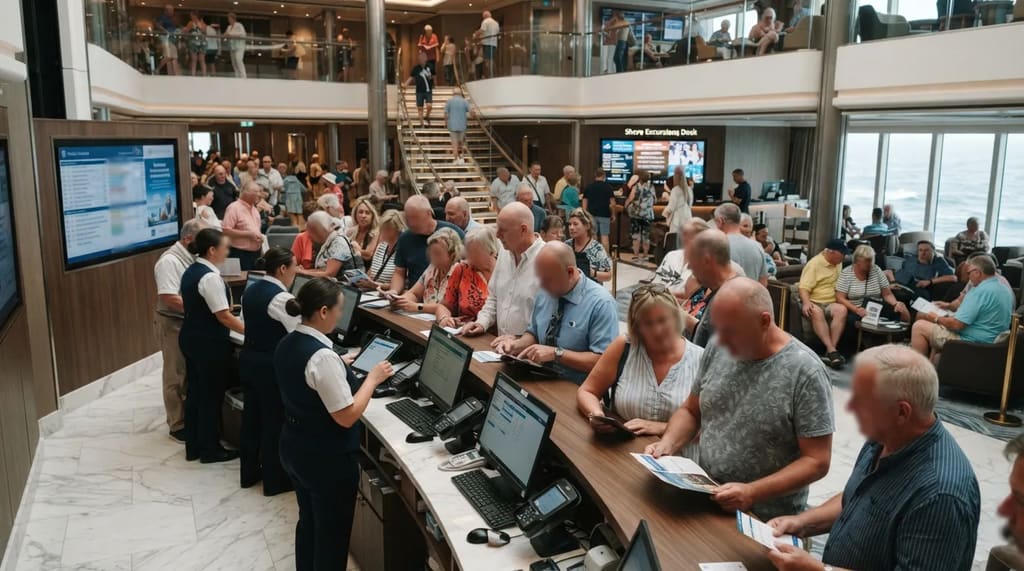
On a port day, half the ship leaves and the spa goes quiet. On a sea day, everyone stays, and the same treatment rooms, specialty tables and classes draw the same crowd.
Many lines let you reserve spa treatments, specialty dining and some activities before sailing. Waiting until you board can mean the best times are already gone.
On a crossing with no ports at all, that effect runs across the entire week. The pressure shows up in the gym, the thermal areas and the popular show seats too.
None of this is a reason to over-schedule. It is a reason to decide which two or three things you refuse to miss.
#6 – The Ship Has a Kennel, Complete With a Lamppost
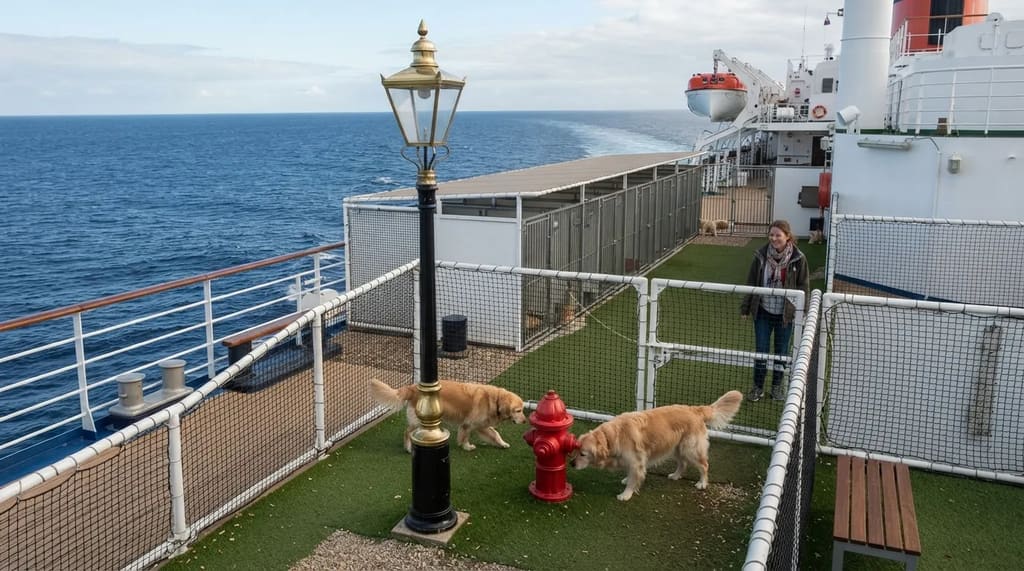
Here is one that sounds like a joke. The Queen Mary 2 has a kennel, and Cunard offers space for dogs and cats on transatlantic crossings, which is rare among passenger ships.6 7
The pet area is known for its lamppost and fire hydrant. That tells you how seriously the ship takes its four-legged passengers.
Pets stay in the kennels rather than in cabins, and owners can visit during allowed hours.6 Space is limited, so it has to be arranged well before sailing.
Even if you never travel with an animal, it shows how unusual this crossing is. The next surprise is not on any deck plan at all.
#5 – The Emptiness Becomes the Main Attraction
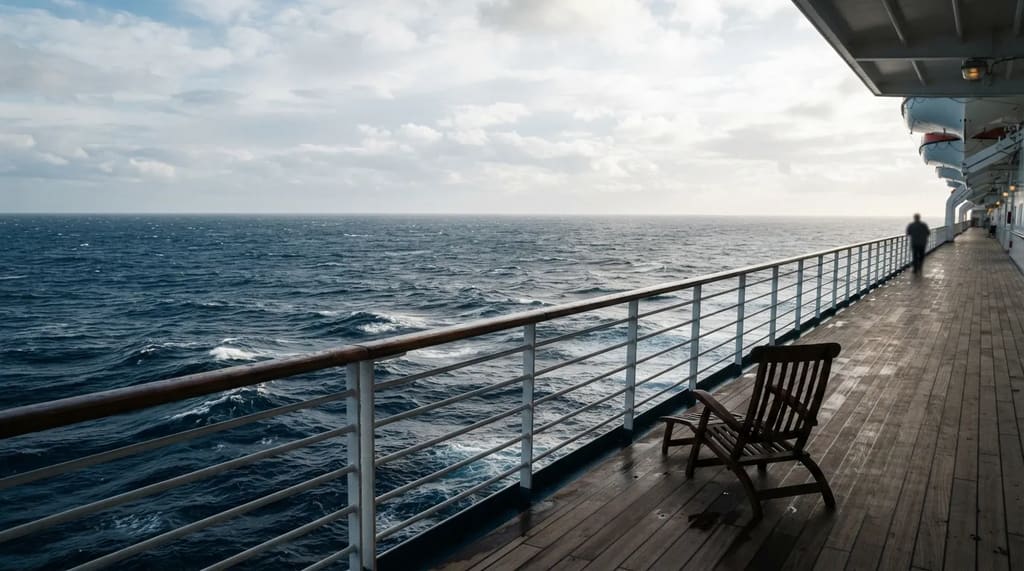
By the third day, the novelty of “no land” has turned into something stranger. You look in every direction and the horizon is an unbroken line.
The route covers roughly 3,000 nautical miles, and you may pass very few other vessels. The sea can feel enormous and almost deserted.
At night, with no city glow, the sky can look heavy with stars when the clouds allow. Mornings bring slow sunrises that nobody schedules and nobody rushes.
Wildlife sightings are possible but never promised, and the real prize is the quiet. Meanwhile, down in the dining rooms, an older kind of order is at work.
#4 – Your Cabin Decides Which Restaurant You Eat In
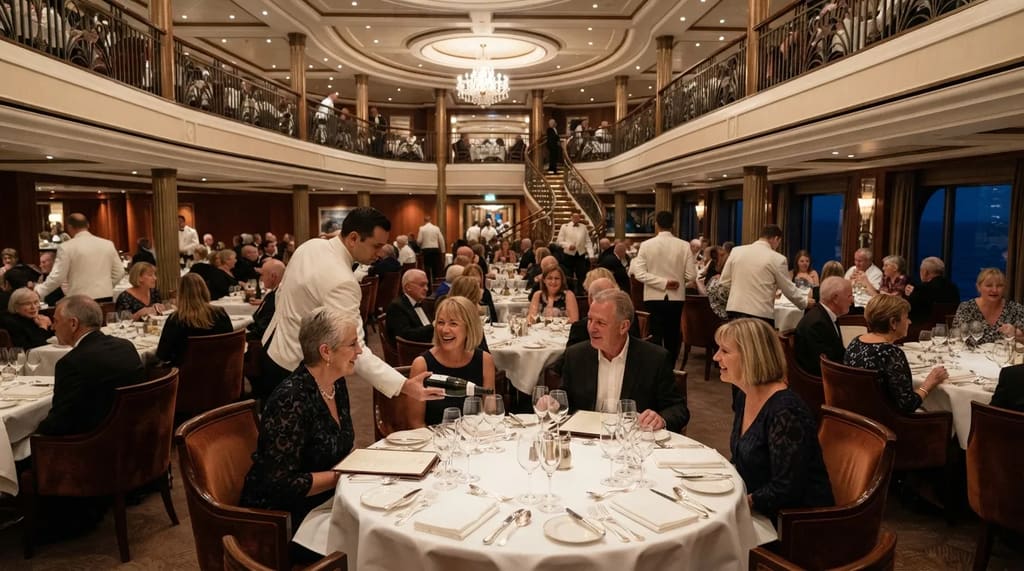
Cunard still keeps a version of the old liner class system, and it shows up at mealtime. Your cabin category decides which restaurant is yours.
Suite guests dine in the Queens Grill, the next tier up eats in the Princess Grill, and the rest dine in Britannia or Britannia Club, depending on grade. Each venue has its own room and its own feel.
Britannia, the main dining room, often works with assigned seating, so you may keep the same table and companions all week. Some guests love that routine, and others find it as unexpected as a seating chart at a wedding.
Related Stories From Travelbinger

Casual options exist for everyone, but status at sea is real. And nothing shows off the ship’s traditions more gracefully than what happens in mid-afternoon.
#3 – Afternoon Tea Is a Ceremony, Not a Snack
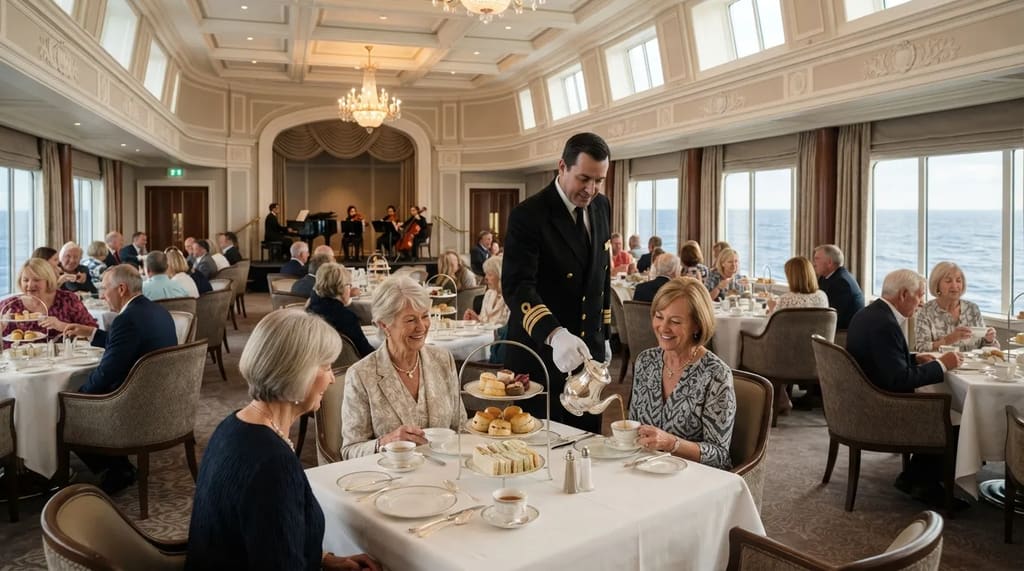
Every afternoon, white-gloved waiters serve tea in the Queens Room, one of the largest ballrooms at sea. Cunard has made it a signature ritual of the line.4
Scones, finger sandwiches and pastries arrive while live music plays. On a ship with nothing else to rush toward, the hour moves slowly on purpose.
Why It Stands Out
- The room seats about 1,100 and spans the full width of the ship
- Tea comes with white-gloved service and live music
- The same space turns into a dance floor after dark
In the evening, the same room becomes a dance floor, and ballroom dancing is a regular part of the Cunard crossing.5 Even guests who arrived sure they would never dance often end up watching from the edge.
These rituals are the heart of old liner life, and they set the mood for the ending. Because the best moment of the week comes before most guests have had breakfast.
#2 – Arriving in New York at Dawn Hits Harder Than Expected
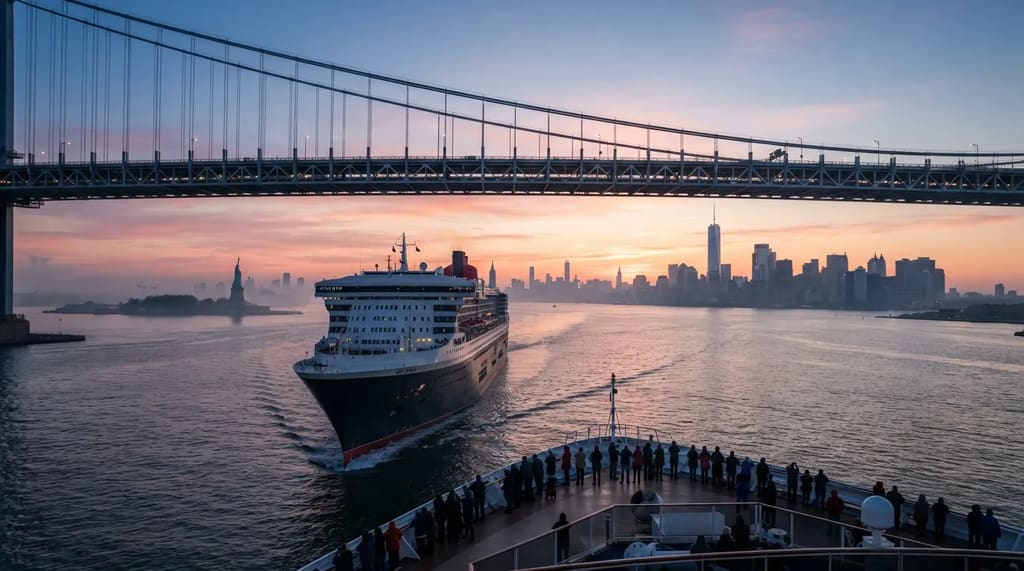
Early on the final morning, the ship reaches New York, and many guests rise before dawn to see it. The Statue of Liberty slides past, and the skyline appears slowly out of the haze.
The Queen Mary 2 was designed with the Verrazzano-Narrows Bridge in mind, and passing beneath it draws crowds to the upper decks. Her height was planned so she could fit through.
Cunard’s New York calls have typically used the Brooklyn Cruise Terminal at Red Hook, though terminals can change, so check your documents. After seven nights without land, the first sight of it feels bigger than you expect.
It is the emotional peak of the trip, but not the biggest secret. That one was decided months earlier, at booking.
#1 – The Direction You Choose Changes How Long Every Day Feels
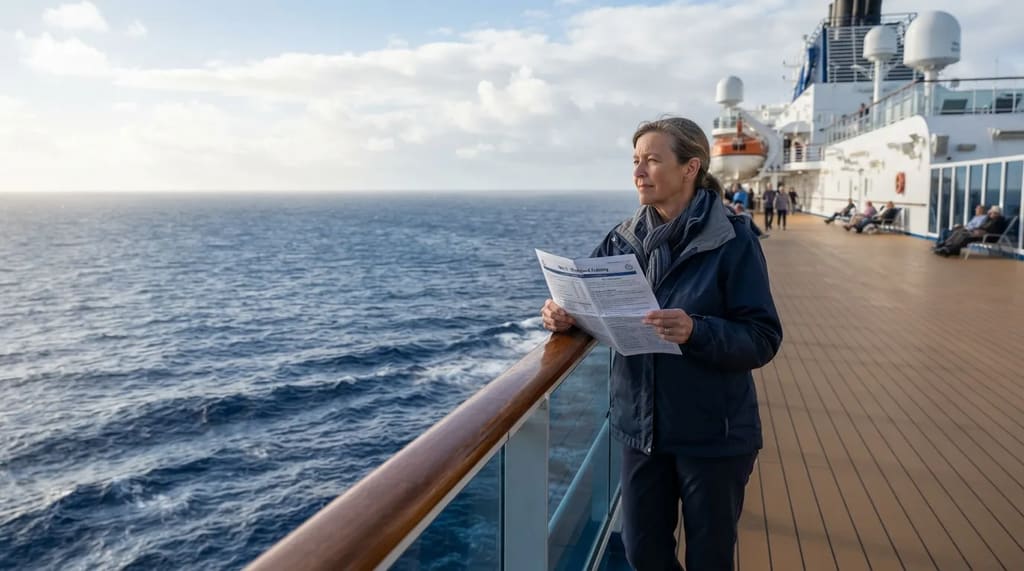
Here is the decision promised at the top: which way you cross. It is made at booking, and it changes how long your days feel.
Southampton and New York are five time zones apart. Going west, the ship sets clocks back, so on roughly five of the seven nights you gain an hour and live a 25-hour day.
Heading east does the opposite, with clocks moving forward and days shrinking to 23 hours. Sleep gets squeezed, and jet lag arrives while you are still at sea.
That makes westbound the gentler choice for a first crossing, and eastbound the one that can make the week feel shorter. The clock changes usually happen overnight, and the daily program tells you which night.
It is the one choice that touches every other secret on this list, from sleep and seasickness to the tea hour and the dawn arrival.
By the third sea day, the crossing stops being a trip and becomes a place. You know where the tea is served, which deck is quiet, and what hour the clocks have moved to.
The first-timers who enjoy it most are the ones who prepared for the empty parts and treated them as the point. The ocean does not care about your schedule, and by day seven you may not either.
- Queen Mary 2 Overview: https://en.wikipedia.org/wiki/Queen_Mary_2
- QM2 Ship Facts: https://www.chriscunard.com/qm2/qm2-facts/
- Cruise Critic Repositioning Cruises: https://www.cruisecritic.com/articles/10-things-not-to-do-on-repositioning-cruises
- QM2 Experience Guide: https://www.chriscunard.com/qm2/qm2-experience/
- Cunard QM2 Entertainment: https://www.cunardcruceros.com/cunard/cruiseship/queenmary2-entertainment.html
- Cunard QM2 Kennels: https://www.cunard.com/en-gb/cruise-ships/queen-mary-2/queen-mary-2-kennels
- Cruise Critic QM2 Kennels: https://www.cruisecritic.com/articles/cunards-queen-mary-2-kennels-and-how-to-book-them-for-your-next-cruise