


Every snowbird who splits the year between New York and Florida has heard the magic number: 183. Stay under it and you’re safe, right? Not quite. New York can tax you as a full-year resident on your worldwide income if you keep a home in the state and spend more than 183 days there, even when your domicile is somewhere else. A few extra weeks up north can change what you owe on a pension or brokerage account that never touched New York, and a lost audit can add penalties and interest to the back tax.
Here is the twist. The costliest dispute in this piece involved a couple who spent fewer than 183 days in New York in one of the years the state examined, and they still lost. We’ll get to them. First comes the count itself, starting with the exact day that tips it and the quiet ways it grows when nobody is watching.
#11 – Day 184 Is Where New York’s Count Tips

The test applies when you spend more than 183 days in New York, so the threshold is 184 days or more. A year with exactly 183 New York days stays on the right side of the line, but only if the count is perfect. A winter planned to leave a margin of one day is a gamble.
Missing by a day costs the same as missing by a month. A cushion of several weeks is cheap insurance for anyone who keeps a New York home.
What goes into that count is a separate matter, because New York does not wait for a full 24 hours to call something a day.
#10 – An 11 A.M. Flight Still Costs a Full New York Day

New York generally counts any part of a day spent in the state. The CPA Journal gives the plainest example: a taxpayer who wakes up in New York and catches a flight to Florida at 11:00 a.m. has used a full New York day for the statutory residency test.1
That makes the first and last days of every trip New York days. A log kept by nights slept in Florida will undercount your New York days at both ends of the season. One round trip can cost two New York days even though the plane tickets suggest none.
That rule is easy to remember on travel days and easy to forget on a quick trip back north.
#9 – A Wedding Weekend Back Home Quietly Burns Three Days

Suppose you fly in on a Friday afternoon and fly out on Sunday morning. That is three New York days, even though you slept in the state only two nights. Ten trips like that use thirty days, and the total is easy to miss because each trip feels so short.
If you also spend the warm months in New York, those winter visits come out of the same 183 as the summer. Save them for events that cannot be moved. A routine check-in at the old house is better handled by someone else.
Fast Facts
- Friday afternoon in, Sunday morning out: 2 nights, but 3 New York days.
- Ten weekends like that add up to 30 days, roughly 16% of the 183-day allowance.
- A morning departure still counts as a full day, as the 11 a.m. flight example shows.
- Winter trips and summer stays draw from the same yearly total.
Two kinds of days do get left out of the count, though both are narrower than they sound.
#8 – Only Two Kinds of Days Get Left Out

The Department of Taxation and Finance’s Nonresident Audit Guidelines describe exceptions for certain travel through the state and for medical circumstances. The two that matter most to travelers are these:
- Days spent simply traveling through New York to somewhere else.
- Days spent receiving in-patient medical care.
Both are narrow. Passing through means you are on your way elsewhere, not stopping to see family along the route. The medical exception refers to in-patient care, so a day of outpatient appointments should be treated as a New York day.
Neither exception helps without records. You still have to show that the day was what you say it was.
#7 – No Abode Means No Statutory Residency, at Any Day Count

The 183 days are only half of the statutory test. You also have to maintain a permanent place of abode in New York for substantially all of the taxable year, generally at least 11 months. The Department treats the day count and the abode as separate factors, so without an abode the day count alone does not create residency.
The rule mostly catches people who really did move their domicile to Florida but kept a New York place they never quite let go. A house on the market still counts as an abode until it is gone. The Department’s audit guidelines describe a person who is subject to statutory residency in any year she spends more than 183 days in New York while the property is for sale.2
What makes a dwelling an abode has less to do with a deed than with who can use it.
#6 – A Rented Apartment or a Relative’s Couch Can Still Count as Home

You do not have to own the place. A rented apartment, an employer-provided one, or a relative’s home that you can use freely can all be treated as an abode. The limit on that idea came from a case about a man who had access to his parents’ apartment on Staten Island.
The Department’s position prevailed in the lower courts. The Court of Appeals, however, held that there must be a residential connection between the taxpayer and the dwelling.3 In that case, he kept no personal items there and slept on the couch when caring for his parents’ medical needs, because he had no bed in the apartment.
That ruling helps someone who truly does not live in a leftover apartment. It is no reason to keep one as a precaution. If you hold a New York place and expect to be near 183 days, it is the most expensive convenience in this piece, and giving it up before the year starts is cleaner than defending it afterward.
Being found a resident carries a cost beyond the extra tax form, and it reaches income that never came from New York.
#5 – One Resident Bill Reaches Income Earned Nowhere Near New York

A statutory resident is taxed on worldwide income even if the domicile is elsewhere. For a retiree whose pension, dividends and interest are the main income, that means the whole return, not just the New York portion. Florida has no state income, estate or inheritance tax, so the saving a Florida move is meant to produce is exactly what a resident bill takes back.
New York City adds a layer. The city uses the same two tests as the state, and failing the city test adds the city’s resident tax on top of the state tax. A nonresident, by contrast, files the nonresident return and reports only New York source income.
At a Glance
- Resident: taxed on worldwide income, including pensions, dividends and interest.
- Nonresident: reports only New York source income.
- New York City: same two tests as the state, with the city’s resident tax stacked on top if you fail.
- Florida: no state income, estate or inheritance tax to offset the bill.
#4 – Auditors Can Ask for the Paper Trail of Every Single Day
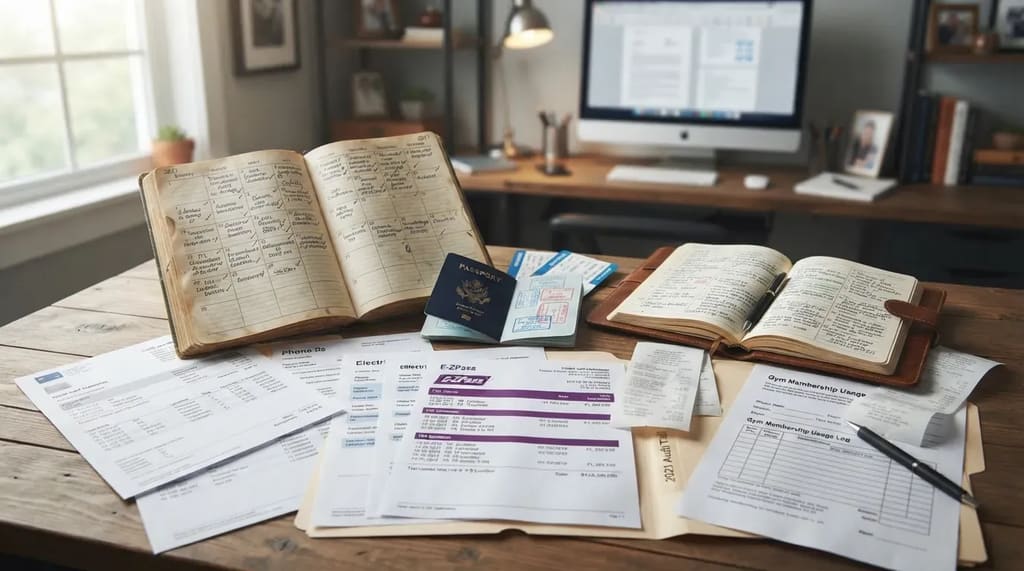
If the Department examines your return, expect to prove where you were on each day of the year. That can be difficult and costly unless you have kept complete records.4 The requests tend to include:
- Diaries, calendars and expense reports.
- Credit card statements and phone bills.
- E-ZPass and Sun Pass records.
- Frequent flyer statements, passports, and building or gym access records.
Memory will not carry you. Reconstructing three years of day-by-day records from scratch is nearly impossible once a notice arrives.
You do not need special software. A paper calendar marked every night, with boarding passes and statements kept in one folder, gives an auditor what he or she asks for, provided you keep it up all year.
Some of that evidence gets created whether or not you keep a diary.
#3 – Your Phone Keeps a Day Count You Never Asked For

When a log looks thin, auditors can subpoena cell records, credit card data and toll records. Cellphone location data and social media posts are among the things that get requested. Your own calendar then has to match what those outside records show.
A geotagged photo from your northern house, posted during a winter you say was spent in Florida, gives auditors direct evidence to challenge your day count. You posted it for friends, but it carries a date and a place all the same. The logic works in your favor too, since Florida receipts and photos support the days you claim. Every post is simply a dated record.
A clean day log answers how long you were somewhere. It does not show which place you call home, and for that many people reach for a Florida license and a voter card.
#2 – The Florida Voter Card and License Were Called Self-Serving
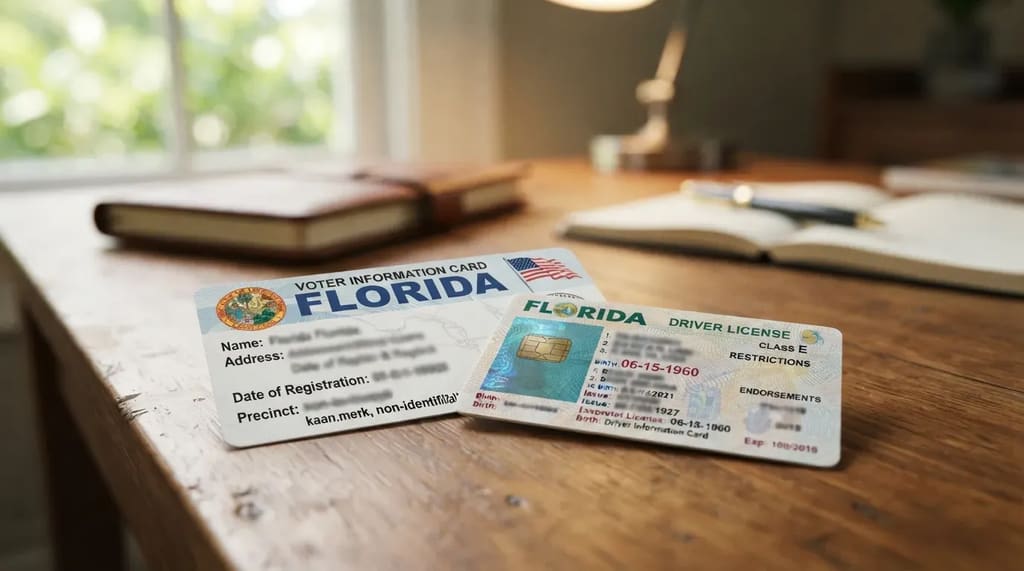
On October 9, 2025, the New York Tax Appeals Tribunal held that a couple had not proven they gave up their New York domicile and acquired a Florida one in 2018 or 2019.5 They had filed nonresident returns stating that Florida was their permanent home effective October 30, 2018. They had registered to vote, obtained Florida driver’s licenses and filed a declaration of domicile, but the tribunal considered those actions self-serving.6
Related Stories From Travelbinger



What counted against them was ordinary life. They bought a country club membership in Florida but did not give up their two in New York.7 A CPA firm’s summary of the case says day-to-day life remained largely centered in New York, which outweighed the isolated steps toward Florida.
Why It Stands Out
- The decision came from the New York Tax Appeals Tribunal on October 9, 2025.
- The couple had a voter registration, Florida licenses and a declaration of domicile.
- Their two New York club memberships stayed in place while they added one in Florida.
- The tribunal viewed the paperwork as self-serving next to a life still centered in New York.
Every one of those Florida steps is still worth taking, since they cost little. They work as supporting evidence, though, and treating a license as the finish line is the mistake this case illustrates.
None of that explains how the couple lost a year in which their New York days stayed under 183. That rests on a different test entirely.
#1 – A Year With Only 164 New York Days Still Went Against Them

The tribunal examined the couple’s phone records. In 2018 they showed 131 days in Florida, 186 in New York and 48 elsewhere.7 In 2019 the split was 154.5 days in Florida, 164 in New York and 47.5 elsewhere. The second year is under the 183-day line, yet the tribunal still found they had not proven a change of domicile in either year.
Quick Compare
| Year | Florida days | New York days | Elsewhere |
|---|---|---|---|
| 2018 | 131 | 186 | 48 |
| 2019 | 154.5 | 164 | 47.5 |
That is the second test, and it has no day threshold. A New York domiciliary can remain a resident without exceeding 183 days. New York treats an existing domicile as continuing until you prove you gave it up and replaced it. The tribunal concluded that the couple planned to make Florida their permanent home at some point but had not proven they had done so.8
Domicile is weighed across several factors: home, business involvement, time, the possessions you hold dear, and family connections. It also runs on its own terms, so a taxpayer can lose the domicile case even with a strong defense to the statutory residency case.
The 183-day count is the easier half of this rule, and a calendar can handle it. The harder half is whether your life visibly moved: the doctor, the club, the house, the friends.
If you split your year, the cheapest habit in this piece is the nightly log. The costliest mistake is trusting paperwork to carry a life that still sits in New York. Because your own facts decide this, a call to a New York tax professional before any notice arrives is worth making.
Which tie to New York would be hardest for you to explain to an auditor?
- CPA Journal Exodus COVID-19: https://www.cpajournal.com/2021/06/15/the-exodus-from-new-york-due-to-covid-19/
- NY Nonresident Audit Guidelines: https://www.nystax.gov/pdf/2021/misc/nonresident-audit-guidelines-2021.pdf
- Gaied Court of Appeals: https://law.justia.com/cases/new-york/court-of-appeals/2014/26-0.html
- CPA Journal Residency Audits: https://www.cpajournal.com/2016/11/23/slt-ny-residency-audits-electronic-data-records/
- Cummings & Lockwood Hoff Analysis: http://www.cl-law.com/news-events/new-york-emphasizes-substance-over-form-in-determining-domicile-for-income-tax-purposes
- Cole Schotz Hoff Summary: https://www.coleschotz.com/snowbirds-wings-clipped-by-new-york-tax-appeals-tribunal/
- Karp Law Hoff Case: https://karplaw.com/florida-residency-dont-fake-it/
- Proskauer Hoff Domicile: https://www.proskauertaxtalks.com/2025/11/unsuccessful-taxpayer-change-in-domicile-from-new-york-to-florida-shows-that-courts-will-follow-the-money/