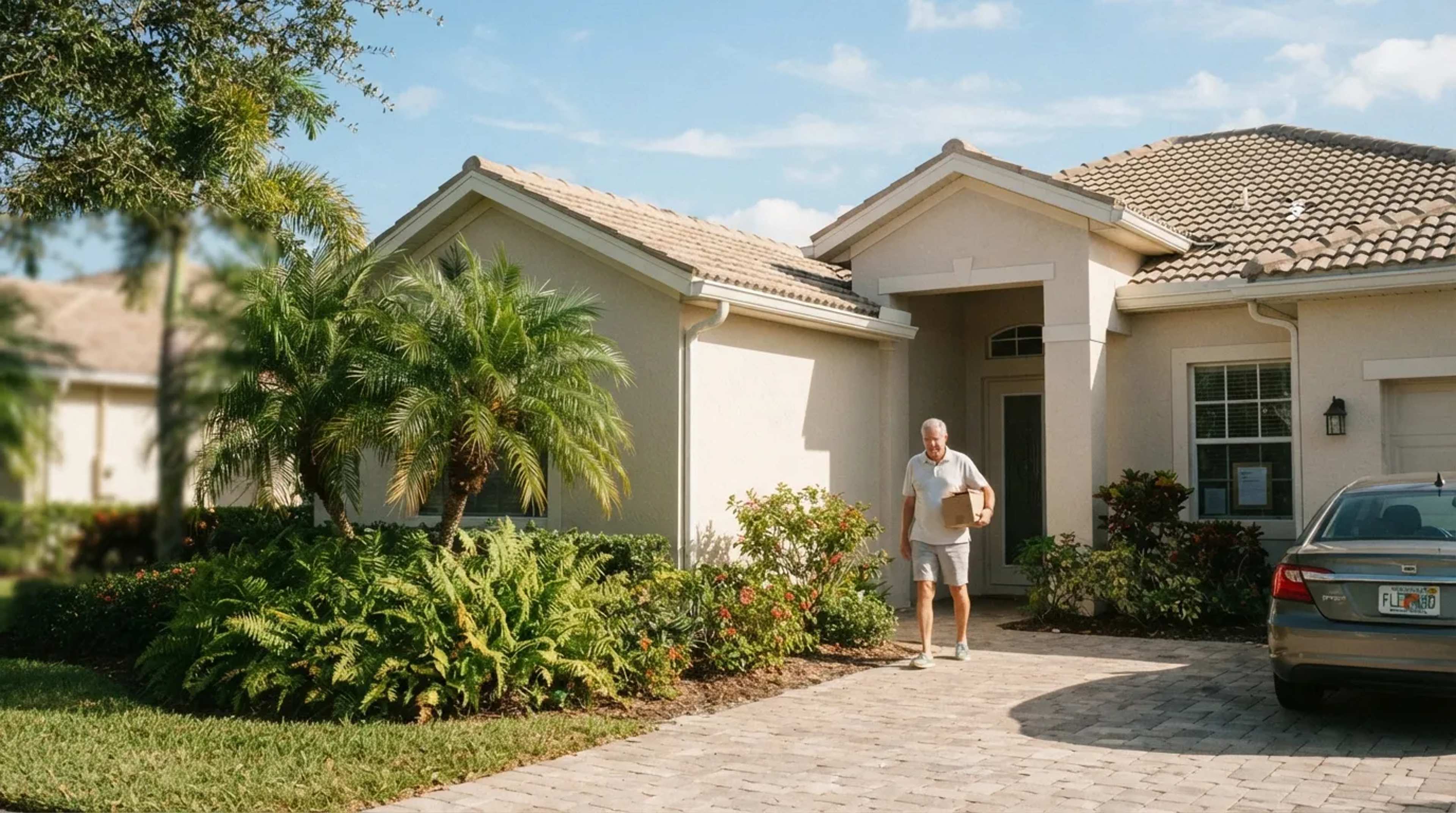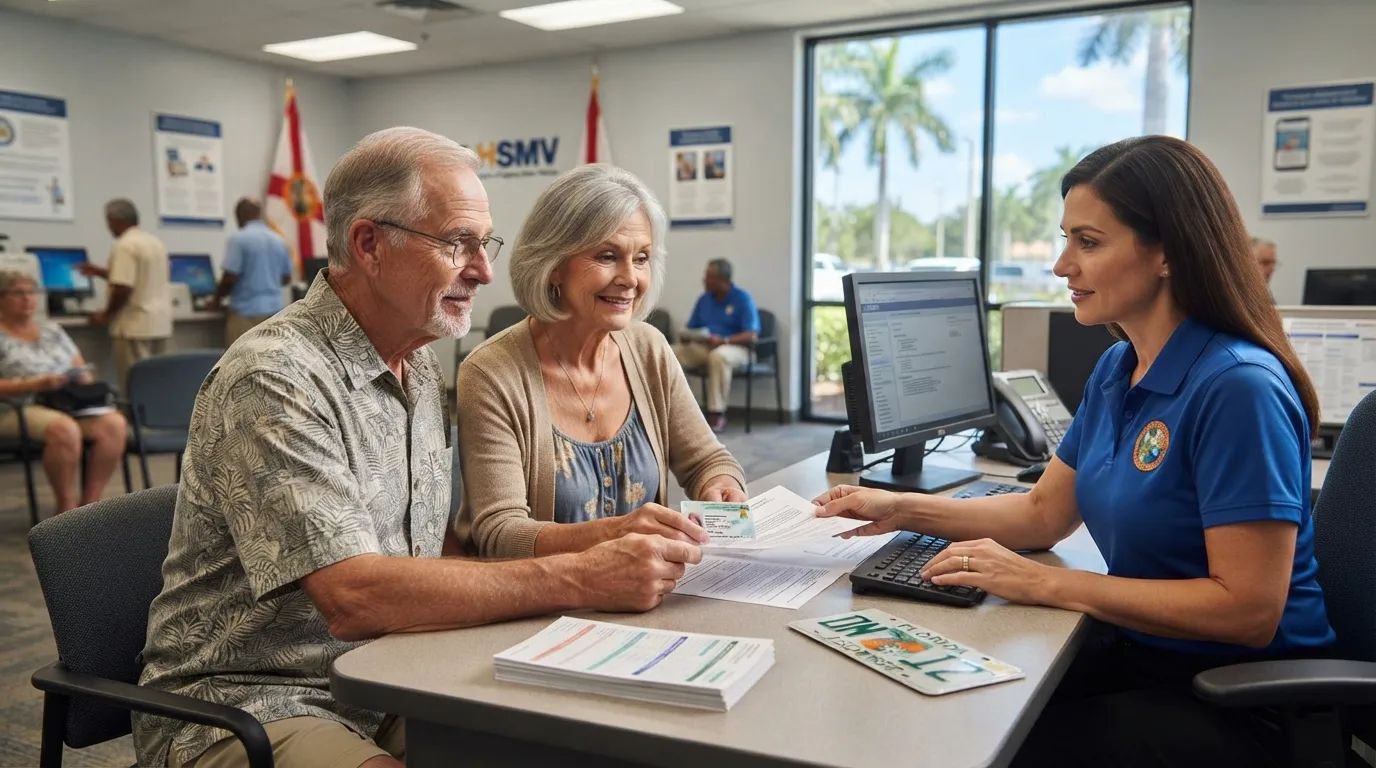
Your car can trip a Florida insurance rule on day 91, even if it never leaves the driveway. Florida Statute 627.733 reaches any nonresident’s vehicle that has been in the state more than 90 days during the preceding 365.1
For snowbirds over 65, that’s only one of several clocks, and none of them are synchronized. License deadlines, registration windows and Medicare plan limits each count days their own way.
Some of these fixes take a single phone call. The last one can cost you your Medicare Advantage plan, and it runs on a calendar that’s easy to miss.
First, the rule that works in your favor.
#13 – Your Home-State License Still Works
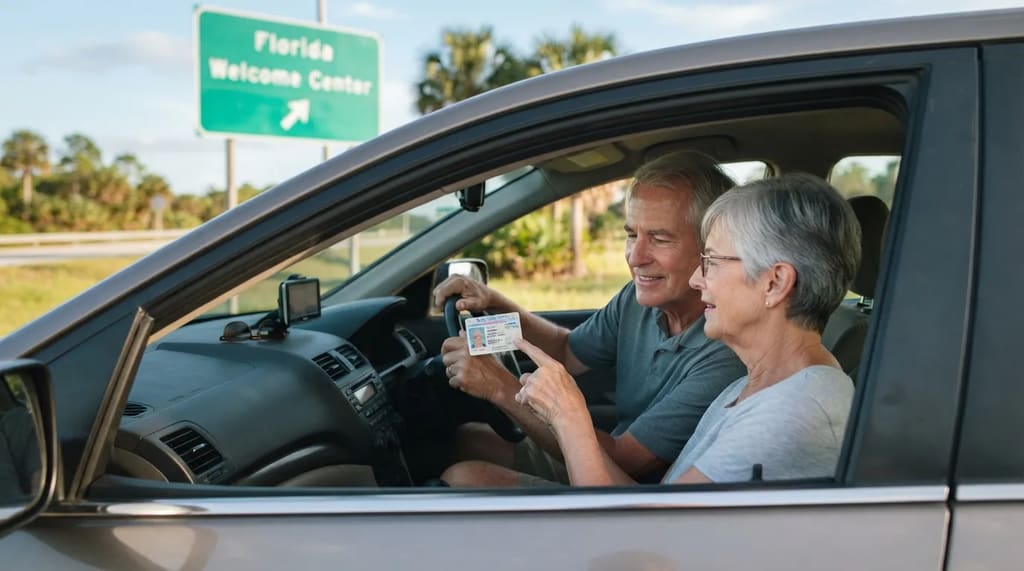
Florida doesn’t hand you a license deadline just for crossing the state line. Visitors can use a valid out-of-state license while they remain nonresidents.
The dividing line is residency, not the length of one trip. A seasonal stay with your primary residence elsewhere is different from a permanent move that makes Florida your primary home.
So your home-state license stays valid while you remain a nonresident, which means its expiration date is the one that matters. Check it before you drive south, because your home state issues the renewal, not Florida.
Some states offer online or mail renewal for residents who are away for the winter. Rules vary, so ask your home state before you pack the car.
That raises the question of what Florida counts as becoming a resident, and the answer includes a paycheck.
#12 – What Counts as Becoming a Resident
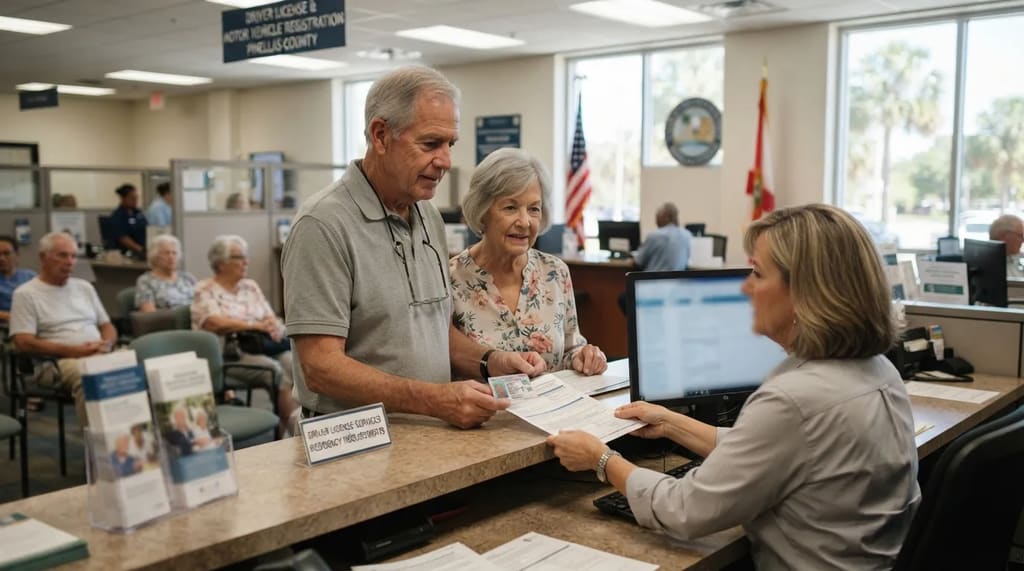
Take a part-time job in Florida and a 30-day license clock starts. A new resident who accepts employment, engages in a trade or profession, or enrolls a child in a Florida public school must get a Florida license within 30 days.2
County offices describe the triggers the same way. Pinellas County’s tax collector lists becoming employed, placing children in public school, or establishing residency as the events that start its registration clock.2
A seasonal paycheck is an easy trigger to overlook, whether it’s a winter job at a golf shop or a church office. Some guidance also lists domicile and voter registration among the ways residency begins.
That’s one more reason to decide deliberately where you vote.
The working rule is simple: taking a job, enrolling a child in school, or making Florida your home starts the clock. If none of those applies, you’re generally a visitor as far as the license deadline goes.
Your car runs on a different clock, though, and it counts days you may not think of as spent in Florida.
#11 – The 90-Day Clock on Your Car
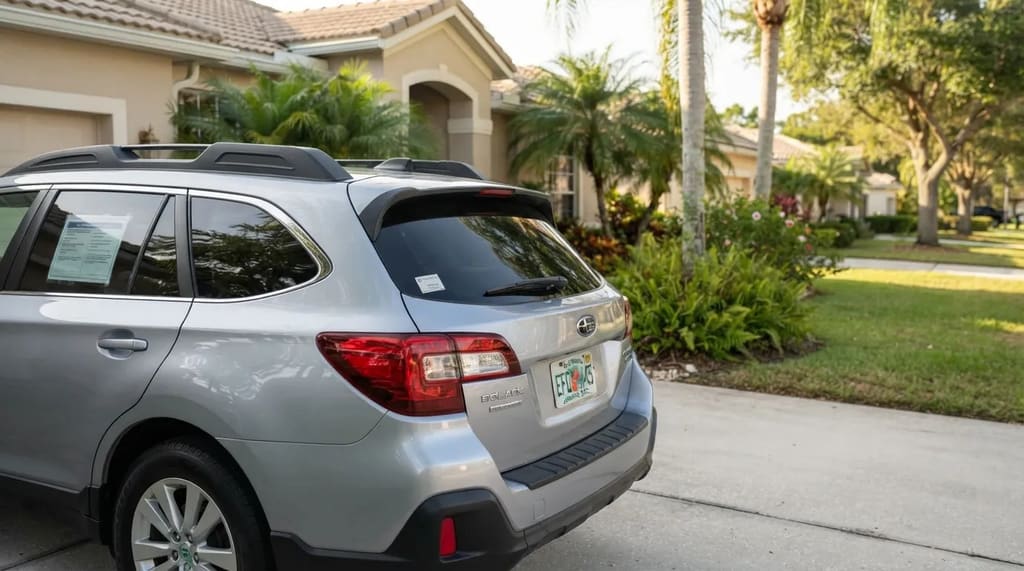
The number to memorize is 90, and the 91st day is the one that matters. A nonresident’s vehicle that has been in Florida more than 90 days during the preceding 365 must carry Florida PIP and property damage liability while it stays, whether it’s driven or not.1 3
The days don’t have to be consecutive. Every day the car is physically in Florida, across any number of trips, feeds the same count, and the 365-day window keeps rolling forward.
A short visit doesn’t trigger the requirement by itself. The line is more than 90 days in any 365-day stretch, and below it you can usually keep your home-state coverage.
A typical November-to-April stay blows past 90 days around the start of February, with about three months still to go.
Once you cross that line, Florida asks for two specific coverages, and one of them pays in a way that surprises drivers from fault-based states.
#10 – What the $10,000 PIP Requirement Pays

Florida’s minimum coverage names $10,000 twice, and each figure buys less than it sounds like. If you register in Florida, you must carry at least $10,000 in personal injury protection and $10,000 in property damage liability.
PIP is no-fault coverage, so it covers you whether or not you cause the accident. The combined medical and disability benefit is generally limited to $10,000.
Your own PIP pays first, covering 80% of medical bills up to $10,000.4 Lost income is typically covered at 60%, and that’s how a no-fault state works.
There’s a catch in the fine print. The full $10,000 is available only if a qualifying provider finds an emergency medical condition, and without that finding PIP benefits are capped at $2,500.4
Fast Facts
- Required minimums: $10,000 PIP and $10,000 property damage liability
- Medical bills: PIP generally pays 80%, up to the limit
- Lost income: typically covered at 60%
- Without an emergency medical condition finding, benefits stop at $2,500
Property damage liability pays for damage you do to other people’s property. It won’t repair your own car, which takes collision coverage, so ask whether the Florida policy carries the collision coverage you have at home.
Which raises an uncomfortable question about what that minimum leaves out.
#9 – Why the Minimum Is the Wrong Target
Florida’s minimum is the least the state will accept, and for a retiree with savings it’s a poor goal. The required pair is PIP and property damage liability, and neither covers injuries you cause to other people.
That missing piece is bodily injury liability, which protects your savings if you’re sued after a crash. PIP only covers your own injuries, so a serious injury to someone else lands on your policy, or on you.
The smarter move is to never let the Florida switch shrink the limits you already carry. If you carry higher limits at home, buying more than the Florida minimum is the usual recommendation.
A bare-minimum policy is the cheapest way to satisfy the registration counter. It’s also the one that leaves your savings most exposed.
Before you ask for that comparison, check a claim your insurer may make: that the policy adjusts to Florida on its own.
#8 – The Out-of-State Coverage Clause Assumption
Plenty of snowbirds assume the out-of-state coverage clause in their policy converts to meet Florida’s no-fault rules. Legal guidance on Florida PIP treats that assumption as a myth.
Carriers differ, and one consumer guide says an insurer will automatically adjust coverage to meet Florida’s requirements. Whether yours does is a question for your insurer, not a forum thread.
Location matters too. Your car must be insured where it’s primarily garaged, so snowbirds often need policy updates before heading south.
Ask your insurer in writing whether your policy meets Florida’s PIP and property damage minimums. Then keep the answer somewhere you can find it in March.
Even a policy that meets the test doesn’t finish the job, because Florida won’t issue a plate until a Florida-licensed insurer has issued proof.
#7 – The 10-Day Registration Window
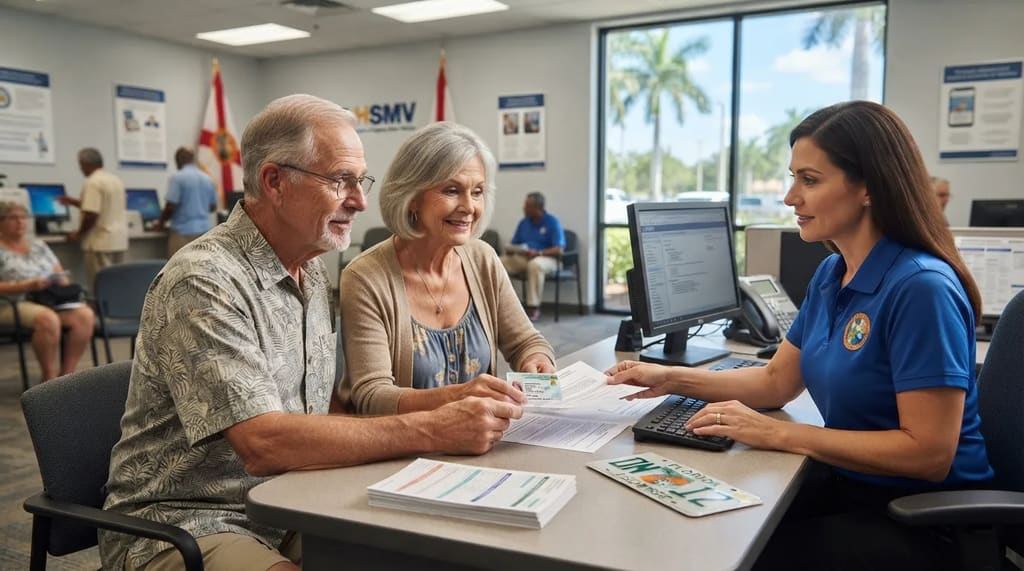
Ten days is far shorter than the 30 you get for a license. FLHSMV gives new residents 10 days to title and register their vehicles, with Florida insurance in place first.5
The insurance must come from an agent licensed to sell insurance in Florida, and out-of-state policies don’t satisfy the requirement. So the call from the previous section comes before the trip to the counter.
At a Glance
- License: 30 days after you establish residency
- Vehicle registration: 10 days for new residents, with Florida insurance first
- Car insurance: required once a nonresident’s vehicle passes 90 days in 365
- Medicare Advantage: your plan’s own out-of-area limit, often around six months
Part-time residents get mixed signals on plates. Some guidance says home-state plates can stay while the 90-day clock governs insurance, and other guidance says a car here more than 90 days must be registered in Florida.
Call your county tax collector before you buy anything, because the answer decides which plate ends up on your bumper. When you register, bring the out-of-state title, proof of identity for all owners, a VIN verification and proof of Florida insurance, which Florida requires before it issues a plate.
That counter is also where a license swap happens, and its document list is longer than the one for registration.
#6 – What to Bring to Trade In Your License
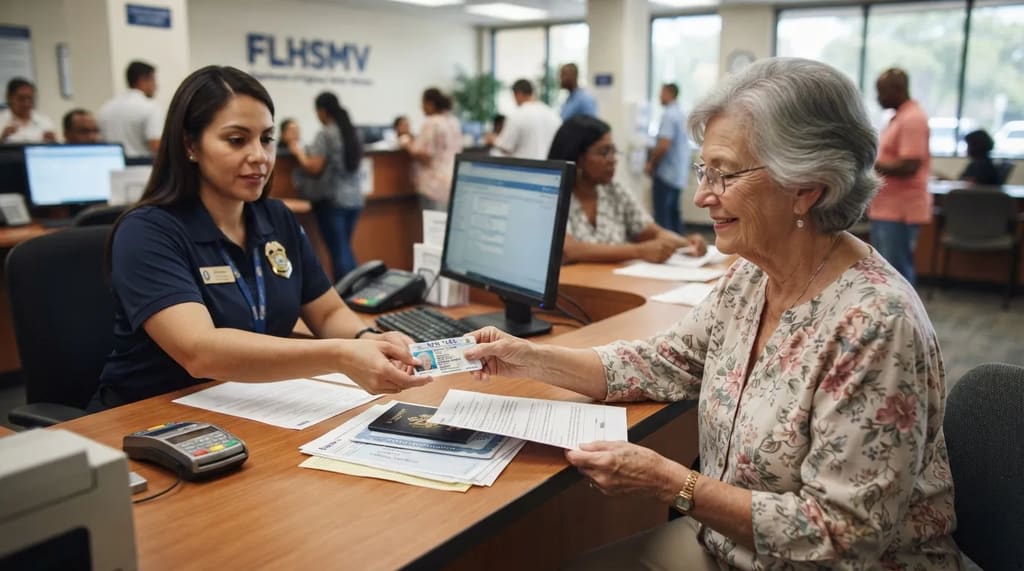
Florida won’t let you swap an out-of-state license online. You have to visit a driver license office in person with a stack of paper:
- Your out-of-state license, which you surrender
- A valid U.S. passport, or a birth certificate issued by a government agency
- Your Social Security card, or a W-2 or 1099 showing the full number
- Two proofs of Florida address, such as a lease or utility bill
Surrendering the old license means you won’t be carrying two. Pinellas County’s tax collector adds that you must provide all REAL ID documents even if your out-of-state license is already REAL ID compliant.2
If your name differs from the one on your birth certificate, bring the marriage certificate or court order that connects them. A missing link in that paper trail is the classic reason for a second trip.
The test is lighter than many people expect. A swap takes a vision test but usually no written or road exam.
The vision screening is routine at the counter, but a stricter version follows drivers who reach a particular birthday.
#5 – The Vision Test That Starts at 80
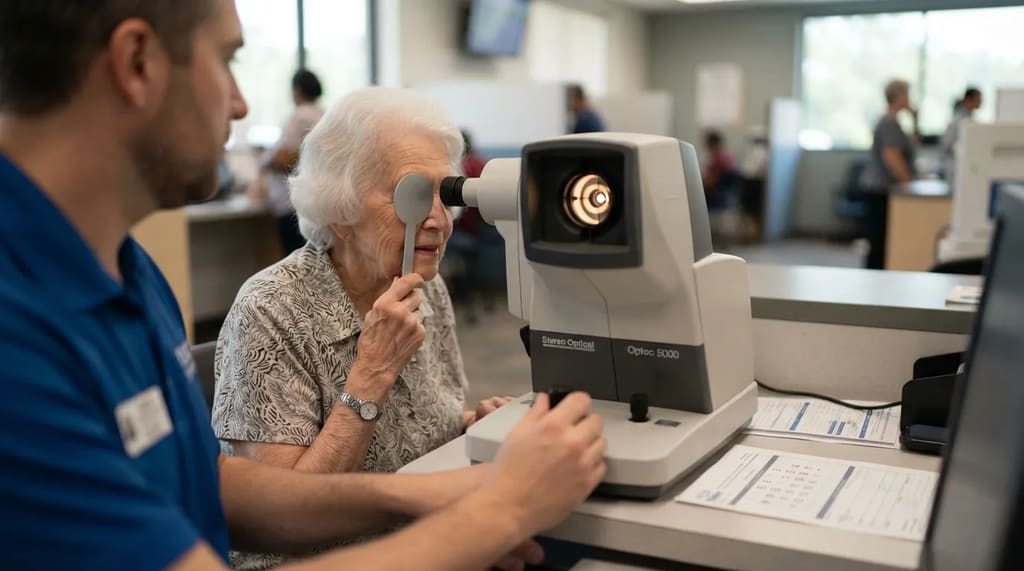
Turn 80 and Florida’s renewal cycle drops from eight years to six. You also must pass a vision test at each renewal.6
This matters to snowbirds because a transfer puts you under Florida’s schedule. A snowbird who becomes a Florida resident at 80 or older will meet the vision requirement at the first Florida renewal, while a driver who keeps a home-state license follows home-state rules instead.
You can take the test at a service center at no charge, or have a Florida-licensed physician or optometrist submit Form HSMV 72119.6 The minimum field of vision is 130 degrees.
The test itself is overrated as an obstacle, and the bigger risk is a lapsed license from putting off the eye exam. If you renew online, your doctor must submit your results electronically first.
Now back to the vehicle side, where a bigger rig follows the same 90-day math.
#4 – Motor Homes, Second Cars and the 90-Day Rule
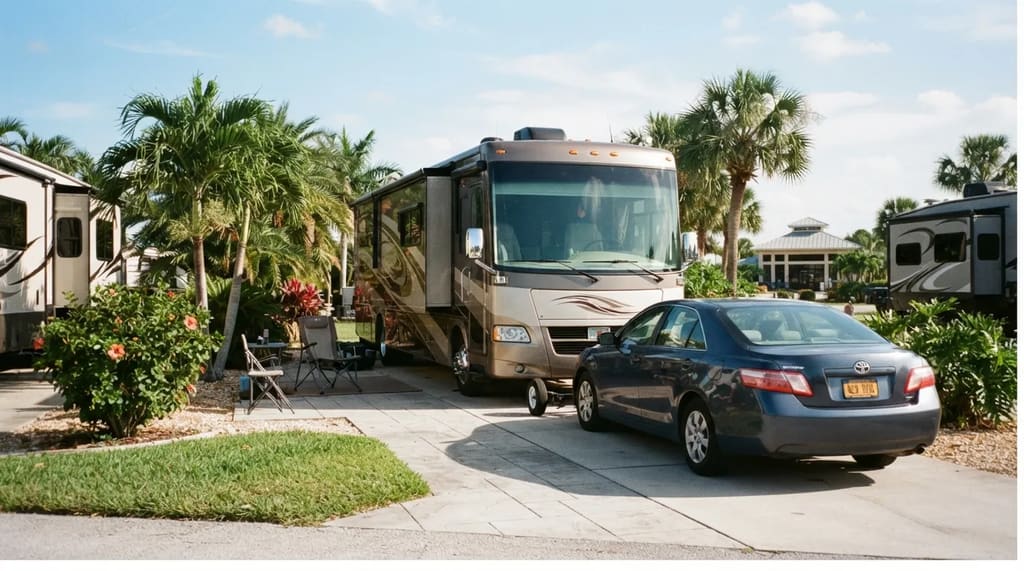
Bring a motor home to Florida and the 90-day rule applies to it as well. A motor home counts as a motor vehicle under Florida’s no-fault law.
The clock runs per vehicle. A nonresident’s vehicle that has been in Florida more than 90 days in the preceding 365 needs Florida PIP and property damage liability while it stays.
That means a second car or a tow vehicle needs the same call to your agent as the first one did. A vehicle left parked in Florida all year needs PIP as well, even if it’s leased.
Return to the day count from #11, because a car parked here all summer keeps adding days. Every vehicle you keep in Florida past 90 days needs its own Florida coverage.
Every rule so far involves a car or a card, but the next one has nothing to do with wheels and decides whether a doctor’s visit in Florida gets paid.
#3 – The Medicare Advantage HMO That Stops at the County Line
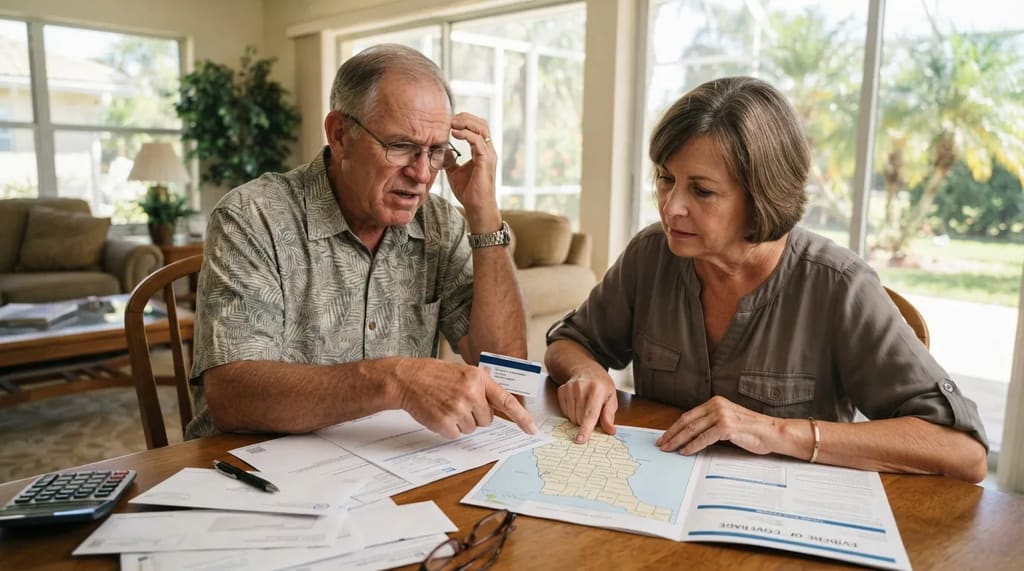
Florida’s car rules are the same in every county, but Medicare Advantage runs on maps. Plan networks are built around service areas, and your Florida address often sits outside the one tied to your home plan.
Outside that area, protections narrow: emergency and urgent care are covered anywhere, but routine visits often aren’t. With an HMO, you can end up paying the full bill.
A PPO is more flexible. Out-of-network services may be covered at a higher cost, though a provider still must be willing to treat you under the plan.
Related Stories From Travelbinger



A low-premium HMO is a poor bargain for a two-home life. The premium looks small until a February specialist visit arrives as a full-price bill.
The obvious fix, a second plan for the winter, runs into a rule that Medicare doesn’t bend.
#2 – Why You Can’t Hold Two Medicare Advantage Plans
You can’t hold a Florida Advantage plan for winter and a Michigan one for summer. You can be enrolled in only one Medicare Advantage plan at a time.
The plan follows your permanent address. Eligibility for Medicare Advantage and Part D is based on where you permanently reside, not on where you receive mail for part of the year.
A special enrollment period exists for a permanent move, but it doesn’t apply to seasonal moves. That leaves one plan to cover two homes.
Original Medicare with a Medigap policy works with any doctor in the country who takes Medicare, with the same coverage in Florida and your other state. Original Medicare plus Medigap is the arrangement built for two homes.
Quick Compare
- Medicare Advantage: one plan at a time, tied to your permanent address and its service area
- Original Medicare plus Medigap: any U.S. doctor who accepts Medicare, same coverage in both states
Part D drug coverage is a separate choice, and pharmacy networks and refill rules vary by plan. Switching has its own timing rules, and Medigap insurers can sometimes ask health questions, so a licensed agent or your State Health Insurance Assistance Program should check your situation before you drop anything.
All of this assumes you can stay enrolled at all, and that depends on a number of months your plan spells out.
#1 – The Six-Month Limit on Time Away From Your Plan

A Medicare Advantage plan can end your enrollment because you spent too long in Florida. With many plans, the time you can spend outside your service area and stay covered is limited, for example to six months.7
The consequence can be automatic. A snowbird can stay six consecutive months and keep coverage, but staying longer may mean disenrollment and a return to Original Medicare.7 8
Read your Evidence of Coverage for your plan’s exact limit and how it counts days. Some plans with visitor or traveler benefits stretch that window, so ask about it by name.
Set that beside the 90-day car rule from #11: a November-to-April stay runs about 181 days, which trips the car insurance requirement on day 91 and sits right at the edge of a six-month plan limit. An early arrival or a late departure can push you past it.
That’s why staying past your plan’s out-of-area limit can move you to Original Medicare. Florida’s license deadline is 30 days, the car insurance line is 90 and the plan limit is about six months, which makes three clocks on one calendar.
Keep One Calendar for Every Florida Deadline
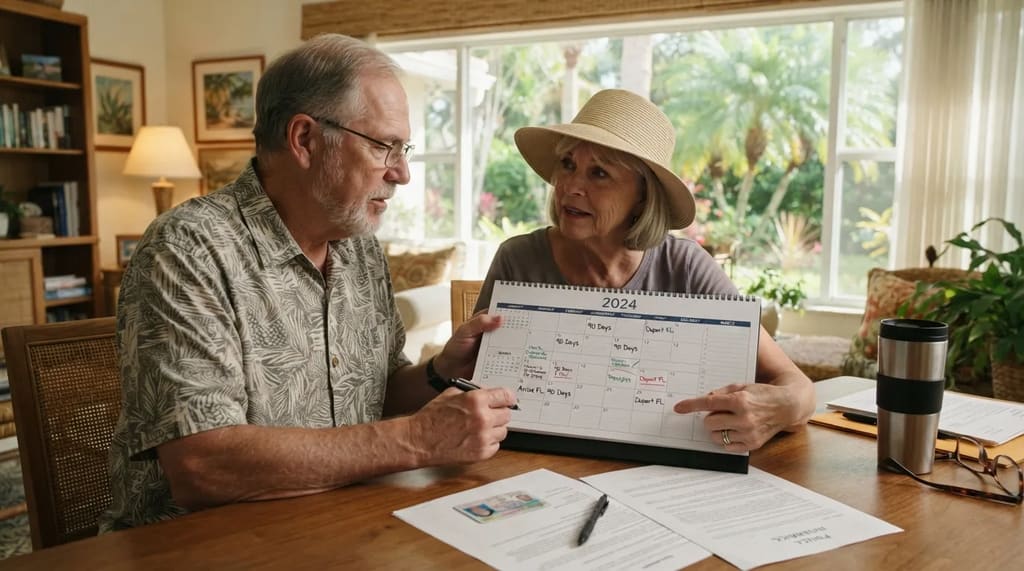
Each rule on this list responds to a count of days or a change of address, and none of them waits for your intentions. A seasonal visitor and a part-time resident can live the same winter and face different paperwork.
Don’t count on a reminder when day 91 arrives. The useful shift is to treat your arrival and departure dates as a document, not a memory.
With that document in hand, you can answer your insurer, the tax collector and your plan in minutes instead of weeks.
Which month do you usually arrive and leave, and have you ever added up how many days that really makes?
- Florida Statute 627.733: https://www.leg.state.fl.us/Statutes/index.cfm?App_mode=Display_Statute&Search_String=&URL=0600-0699%2F0627%2FSections%2F0627.733.html
- Pinellas Tax Collector New Residents: https://pinellastaxcollector.gov/new-florida-residents/
- Florida Nonresident PIP Rule: https://regulations.justia.com/states/florida/69/69o/chapter-69o-176/section-69o-176-008
- Florida PIP Explained: https://miatriallaw.com/blog/florida-pip-explained/
- Florida License Transfer Guide: https://freedmvtest.com/florida/guides/new-resident-license-transfer.html
- Bay County Mature Drivers: https://baycountyfltax.gov/licenses-permits/mature-drivers/
- Medicare Resources Travel Coverage: https://www.medicareresources.org/medicare-benefits/a-medicare-enrollees-guide-to-travel-coverage/
- Snowbird Medicare Advantage Rules: https://247wallst.com/personal-finance/2026/10/25/she-bought-a-482000-arizona-snowbird-home-and-planned-to-stay-seven-months-medicare-advantage-may-drop-her-plan-before-she-returns/