Yellowstone recorded 4,762,988 recreation visits in 2025, and most of them landed in the short summer season.1 If you’ve ever sat in a line of brake lights waiting for a bull elk to finish crossing the road, you already know the downside of fame.
The 16 places below offer bison, wild horses, condors and cranes with far thinner traffic, and many let you watch from the car. A few are refuges, and one is a state park whose gate won’t honor your national pass.
Stay for number one: a national park that drew a small fraction of Yellowstone’s 2025 crowd and has an animal Yellowstone doesn’t. First, a bison prairie that sits on top of a cave.
#16 – Wind Cave’s Bison Prairie Above the Caverns
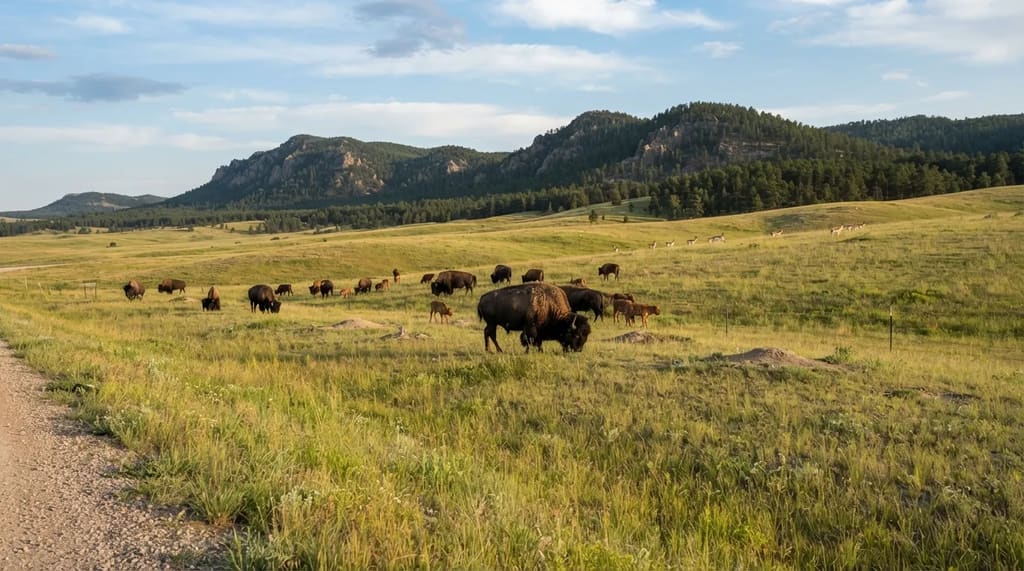
The cave gets the name on the sign, but the grassland above it is where the animals are. Wind Cave National Park in South Dakota protects mixed prairie with bison, elk, pronghorn and prairie dog towns.
That means you can watch wildlife from the car in the morning and go underground on a ranger-led tour in the afternoon. The cave stays cool all year, so a light jacket is worth packing even in August.
Book your cave tour first, then fit the wildlife drive around it. Tours run at set times and the popular ones can fill in summer, so ask which ones involve long runs of stairs.
The refuge ahead swaps prairie for mangroves, and its best hour comes from a tide chart instead of the sunrise.
#15 – Ding Darling’s Four-Mile Drive Timed by the Tide
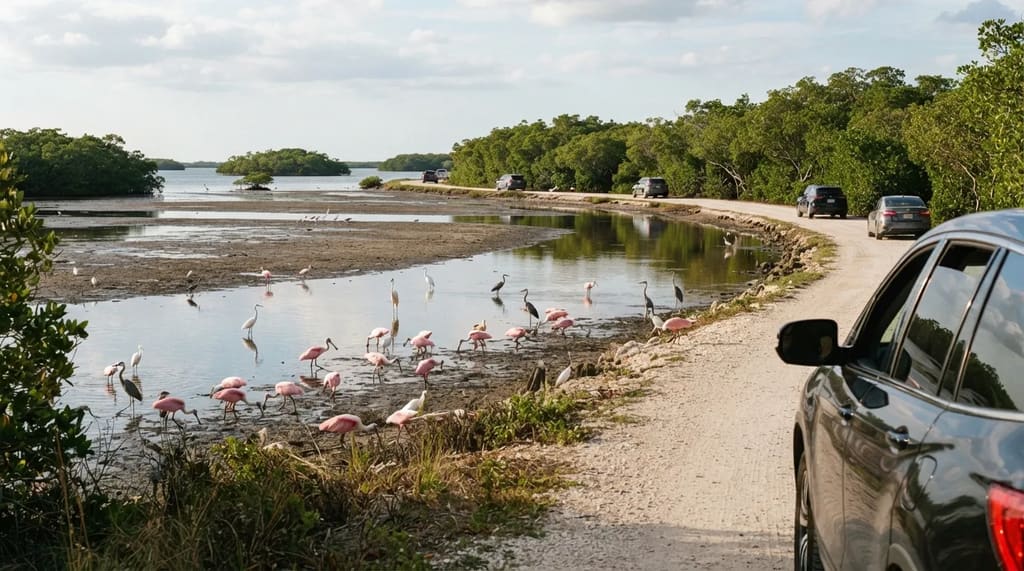
Low tide, not sunrise, sets the schedule at J.N. “Ding” Darling National Wildlife Refuge on Sanibel Island, Florida. Wading birds such as roseate spoonbills, egrets and herons feed as falling water exposes the mudflats.
The one-way Wildlife Drive runs about four miles, and you can cover it slowly from the car with the windows down. A tide chart is as useful here as a weather forecast.
Look up the low tide time before you leave the hotel, and arrive about an hour ahead. The drive closes one day each week, so confirm the calendar before you build your day around it.
Wings that span nearly ten feet are the draw at the park ahead, and choosing the wrong gate costs you an hour.
#14 – Where California Condors Ride the Updrafts
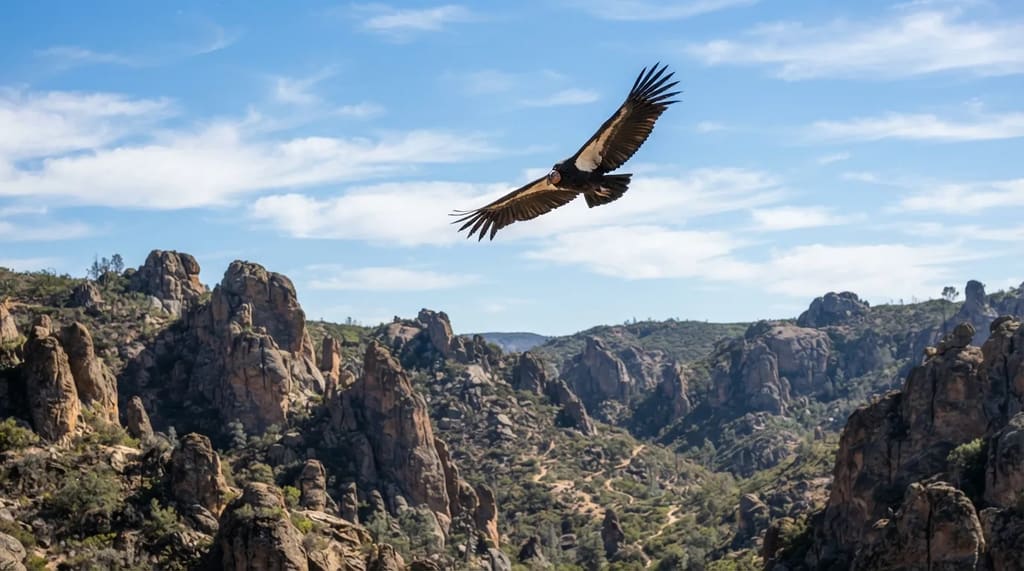
A California condor can spread its wings nearly ten feet wide, and Pinnacles National Park in central California is one of the places to look for one. Captive breeding and release pulled the species back from the edge of extinction, so a soaring bird here is a conservation story as much as a sighting.
The park’s rock spires and cliffs give the birds perches and rising air. Bring binoculars, because a condor overhead can look like a speck until it banks.
Choose your entrance before you leave: Pinnacles’ east and west sides aren’t connected by a road. Pick the side nearest your lodging, since switching sides means a long drive around the park.
Along the Virginia shore the draw is a herd of small wild horses, and one week in July is best avoided.
#13 – Chincoteague’s Ponies and the July Rule
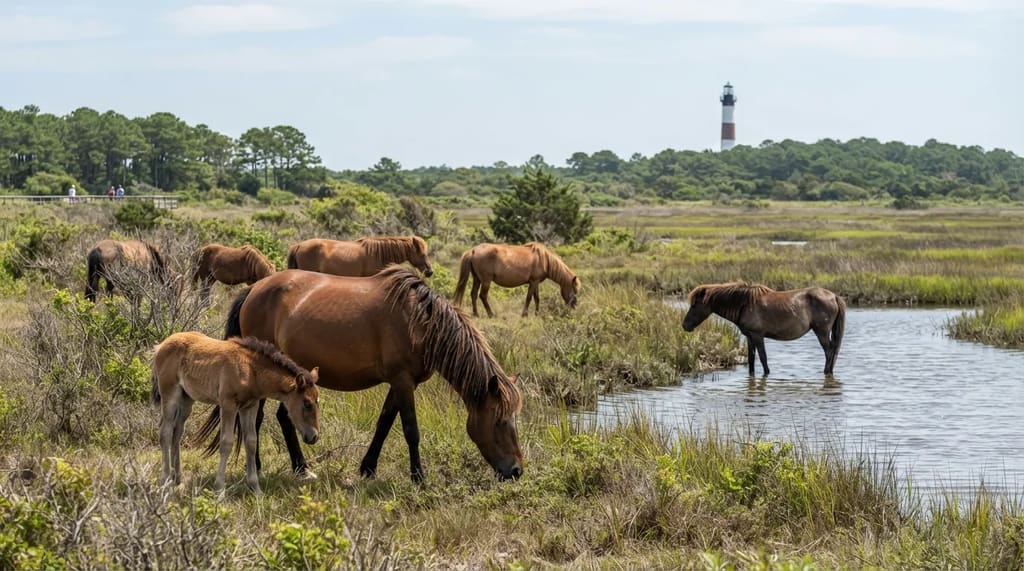
The famous ponies live on Assateague Island, not on Chincoteague Island, and that’s worth settling before you book a room. The Virginia herd grazes inside Chincoteague National Wildlife Refuge and is owned and managed by the local volunteer fire company.2
That makes them feral horses with a caretaker, kept in large fenced pastures on the Virginia side. A separate herd roams unfenced on the Maryland side, in Assateague Island National Seashore, so you have two places to look.2
Stay away during the last week of July. The annual Pony Swim brings heavy traffic to a small island with limited roads and parking, while any other week gives you the horses without the lines.
A 35 mph speed limit sounds like a nuisance on the road ahead, until you see what it buys you.
#12 – Skyline Drive at 35 Miles an Hour
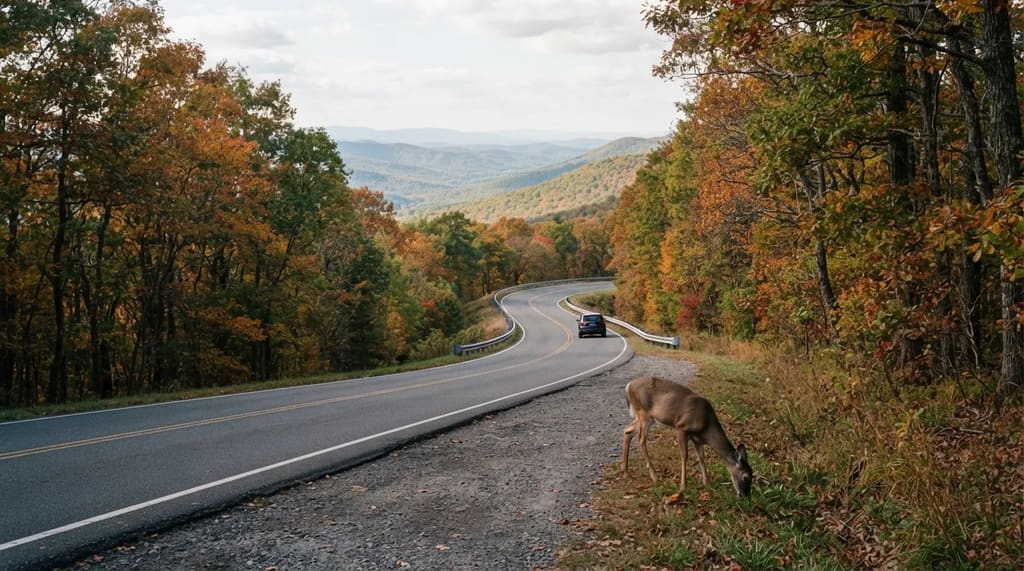
Skyline Drive runs 105 miles along the crest of Shenandoah National Park in Virginia, and the slow pace is the point. At that speed you’ve got time to notice a black bear at the edge of the trees or a deer in the ditch.
Pullovers let you stop off the pavement instead of braking in the lane. Bears and deer are most active near dawn and dusk, so a late-morning drive tends to turn up less.
Skip the peak October foliage weekends and come on a weekday instead. The leaves are lovely, but a full overlook is a poor place to look for shy animals.
The road has entrances along its length, so you can sample a 30-mile stretch near your lodging rather than driving all 105 miles in a day. That suits a relaxed pace better than a marathon of overlooks.
Fast Facts
- Length: 105 miles along the crest of the park
- Speed limit: 35 mph, which is the whole appeal
- Access: four entrance stations, so you can pick a short stretch
- Best wildlife windows: dawn and dusk
- Best crowd dodge: a weekday, not a peak October weekend
The next herd started out in a New York zoo and ended up on the Oklahoma plains.
#11 – The Bison Herd Oklahoma Got From the Bronx
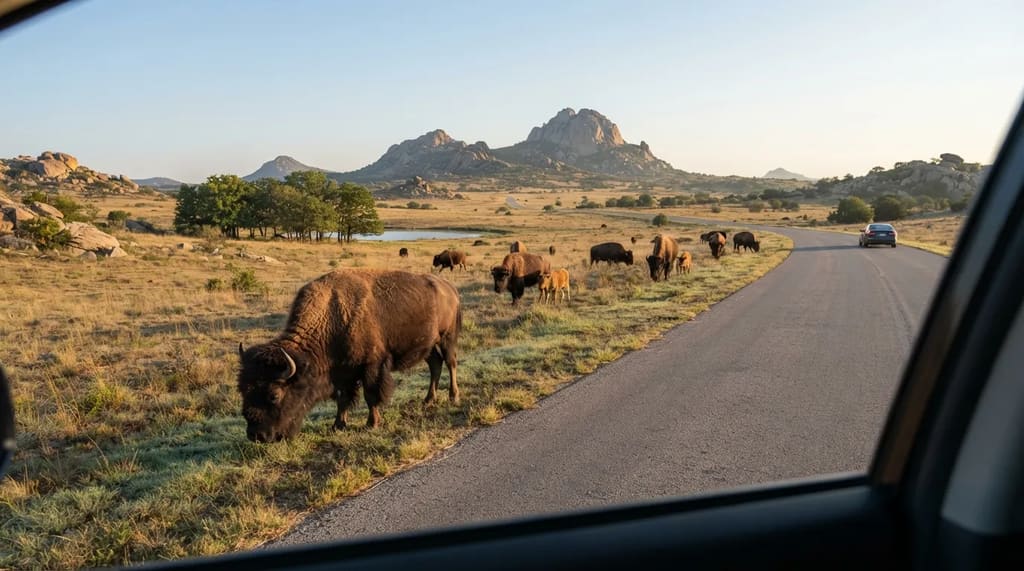
In 1907, a group of bison went by rail from the Bronx Zoo to Oklahoma, and their descendants still roam the Wichita Mountains Wildlife Refuge near Lawton. The refuge also holds elk, Texas longhorn cattle, prairie dog towns and granite peaks.
Paved roads reach much of the refuge, so you can see a great deal without leaving the driver’s seat. Animals tend to move toward water and cooler grass early and late, which is when the roads reward you most.
Drive the paved roads at the start and end of the day. For anyone with sore knees, the car is the better blind: a slow loop beats a long trail, and you lose nothing by staying seated.
That’s the easy end of the scale: the park ahead is remote enough that your supply list matters as much as your itinerary.
#10 – Big Bend’s Bears at the End of the Road
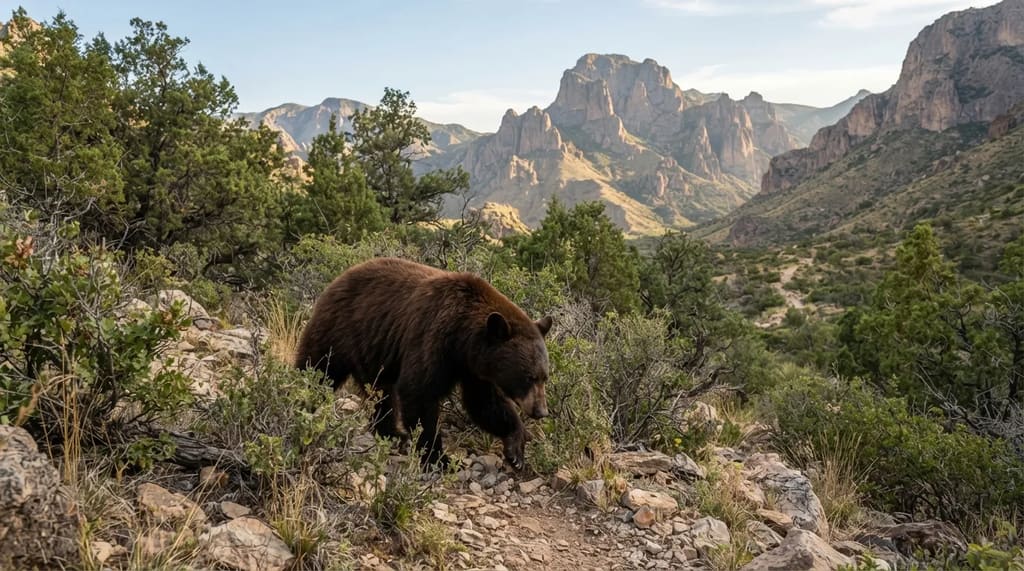
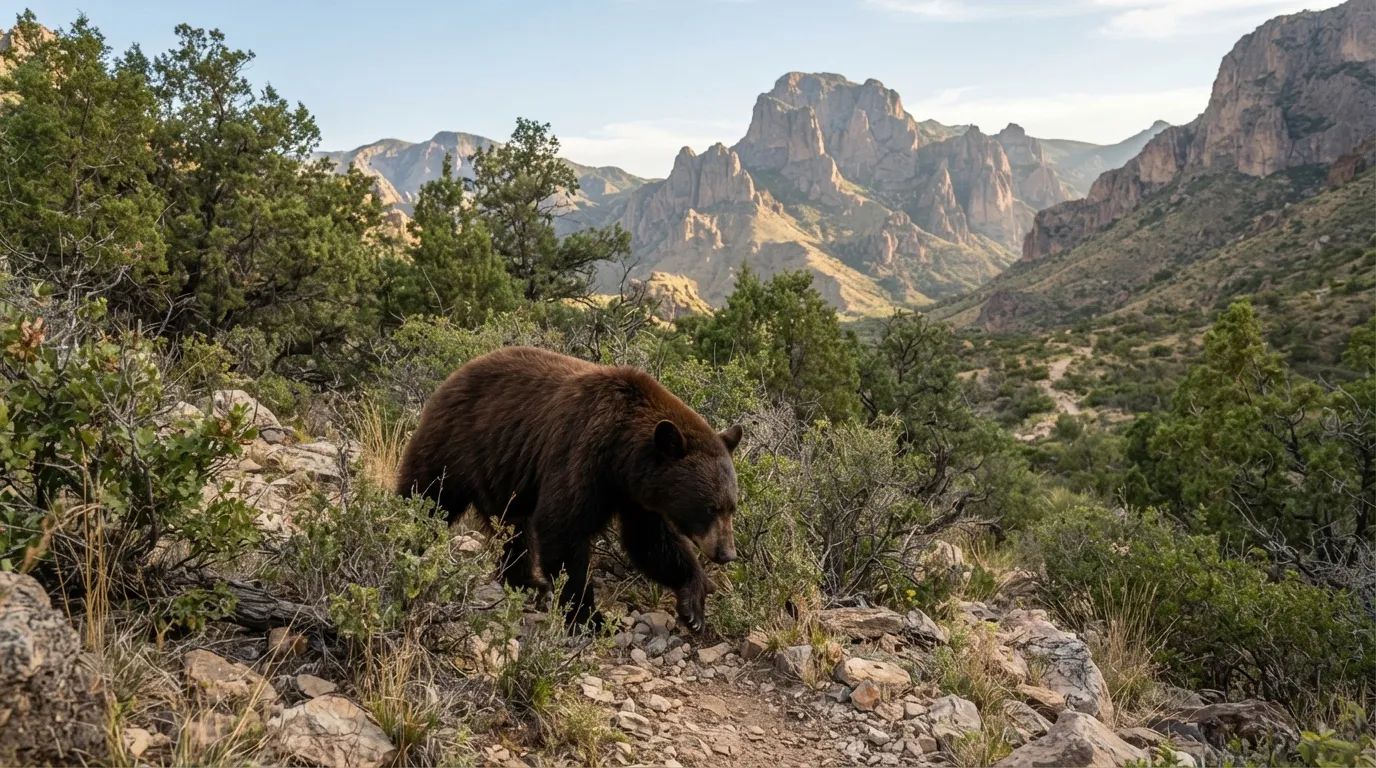
Big Bend National Park sits in a bend of the Rio Grande in far West Texas, and the long drive to reach it is the reason traffic stays thin. Black bears roam the Chisos Mountains, and javelinas, roadrunners and a long list of birds are easier to find than you’d expect in a desert.
The Chisos Basin stays cooler than the desert floor, so it makes a sensible base for a first day. Fill the tank and carry extra water, since services are far apart.
Go between late fall and early spring. Summer heat on the desert floor can be dangerous, and that’s when animals hide in whatever shade they can find.
Winter is also the season for the next stop, on the Texas coast, where one of North America’s rarest birds arrives on schedule.
#9 – Whooping Cranes on the Texas Coast
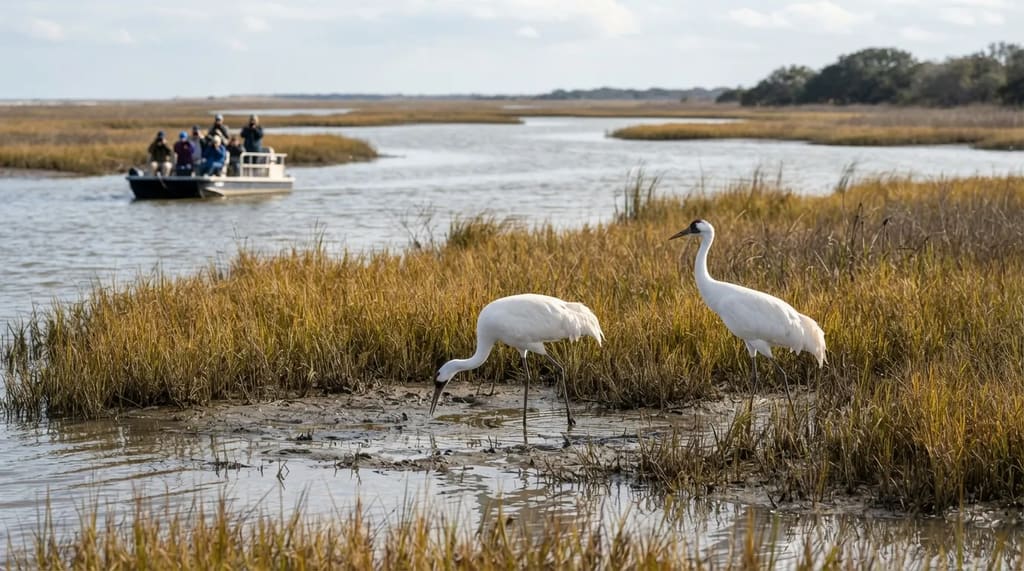
The whooping crane is endangered, and the wild flock that winters at Aransas National Wildlife Refuge in Texas still numbers only in the hundreds. The birds arrive in the fall and head north in spring, so a visit in the colder months is the one that counts.
A whooping crane’s tall white shape stands out against the marsh, but the birds are often far from any road. Binoculars matter more here than at almost any other stop on this list.
Book a winter boat tour from the nearby coast instead of relying on the observation tower. A boat gets you along the marsh edge where the cranes feed, and it takes the walking out of the day.
One road runs through the next park, and for most of its length you can’t drive it yourself.
#8 – Denali’s Single Road and Its Buses
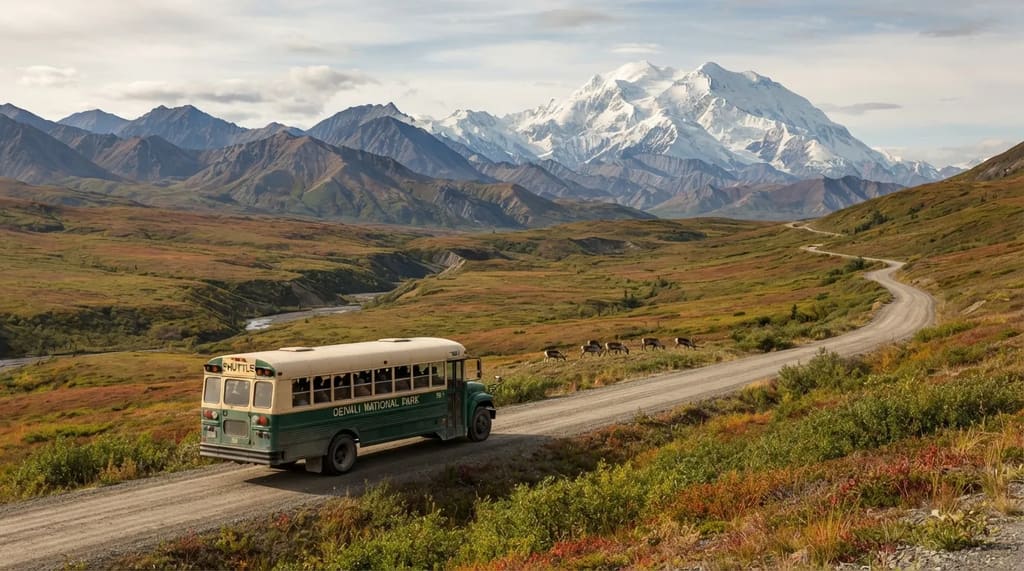
Denali National Park has one road, 92 miles long, and private cars can use only the first stretch of it.3 Buses carry visitors deeper, through tundra where grizzlies, caribou, moose and Dall sheep are regularly seen.
Drivers stop when passengers spot animals, so the bus works like a moving blind. Wildlife here ranges over open ground, which gives you long sightlines in every direction.
Reserve bus seats well ahead, because the season runs only from late spring to early fall. The longest rides can take most of a day, so choose a shorter route if a full day on a bus seat sounds like too much.
Why It Stands Out
- One road funnels everyone onto the same tundra route, so it stays orderly
- Open ground means long sightlines for grizzlies, caribou, moose and Dall sheep
- The bus is a moving blind, with a driver who stops when someone spots an animal
- You can see big wildlife without hiking a step
Compared with Skyline Drive’s easy pullovers, this is a day you plan, pack for and pace. In return you get tundra and a backdrop that no Virginia ridge can match.
Not every great wildlife road is paved, and the next one proves it.
#7 – Badlands’ Gravel Road That Beats the Loop
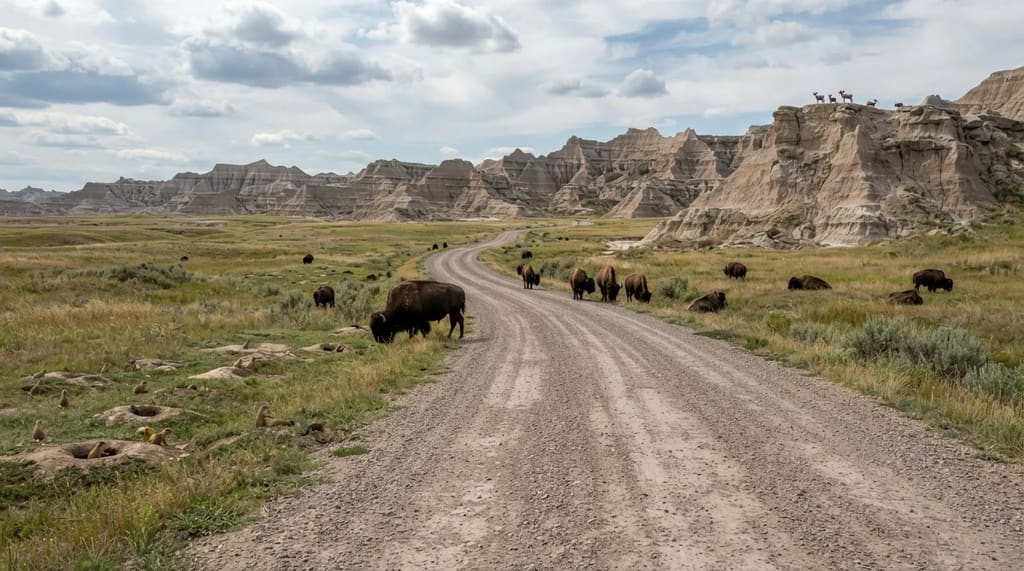
The Badlands Loop Road is paved, but the road that feels most like wildlife country in Badlands National Park is gravel. Sage Creek Rim Road leads into the park’s wilderness area, where bison graze the grassland.
A prairie dog town sits close to that road, and bighorn sheep are often spotted on the rock faces nearer the main loop. Together they make a half-day of wildlife with very little walking.
Check road conditions after rain before you commit to Sage Creek Rim Road. Wet clay and gravel turn slick, and a low-slung rental sedan is a poor match for mud.
For a wetter kind of wildlife road, head to south Florida, where the dry season pushes animals toward the water.
#6 – The Everglades Boardwalk in the Dry Season
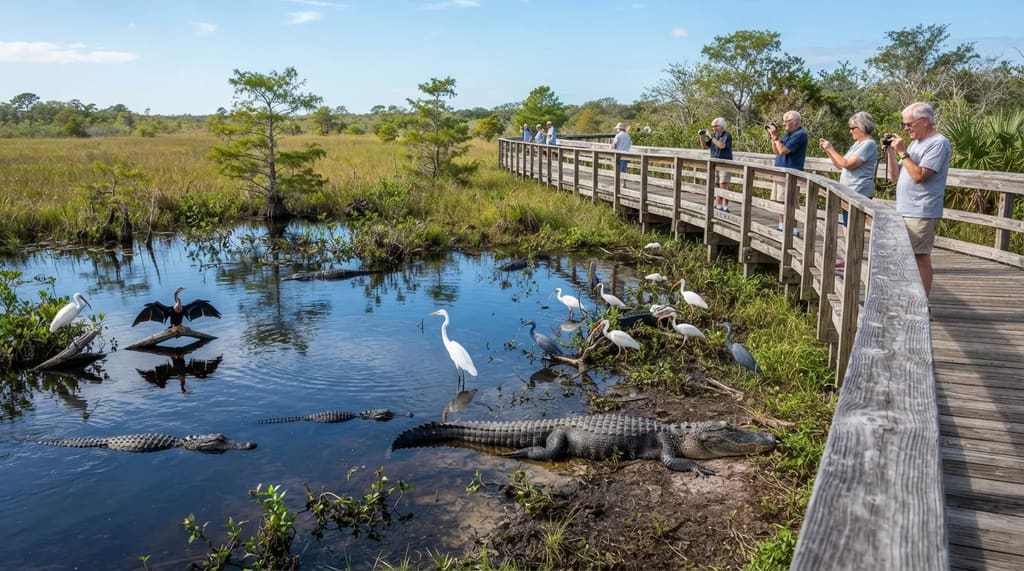
In the Everglades, winter is the dry season, and shrinking water pushes alligators and wading birds into the same few spots. That’s why December through April is the time to go.
The Anhinga Trail, a short, flat boardwalk near the Royal Palm area, puts alligators, anhingas and herons within easy view. You don’t need hiking boots, and you don’t need to hurry.
Visit between December and April, and skip the airboat sales pitch. For a first visit, the boardwalk shows you much the same animals for the cost of park entry.
Summer brings heat, mosquitoes and afternoon storms, which is why the dry season is the smart one.
Our next stop changed hands in 2022, and that can matter for your pass.
#5 – Montana’s Bison Range, Now Run by the Tribes
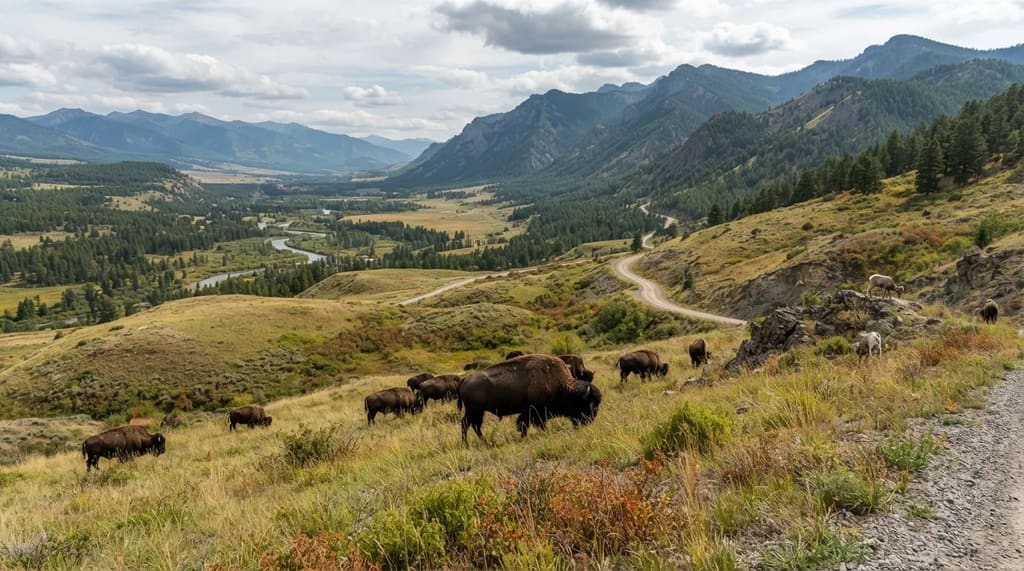
The National Bison Range in western Montana was returned to the Confederated Salish and Kootenai Tribes in 2022 after decades under the U.S. Fish and Wildlife Service. It’s now managed by the tribes as the Bison Range.4
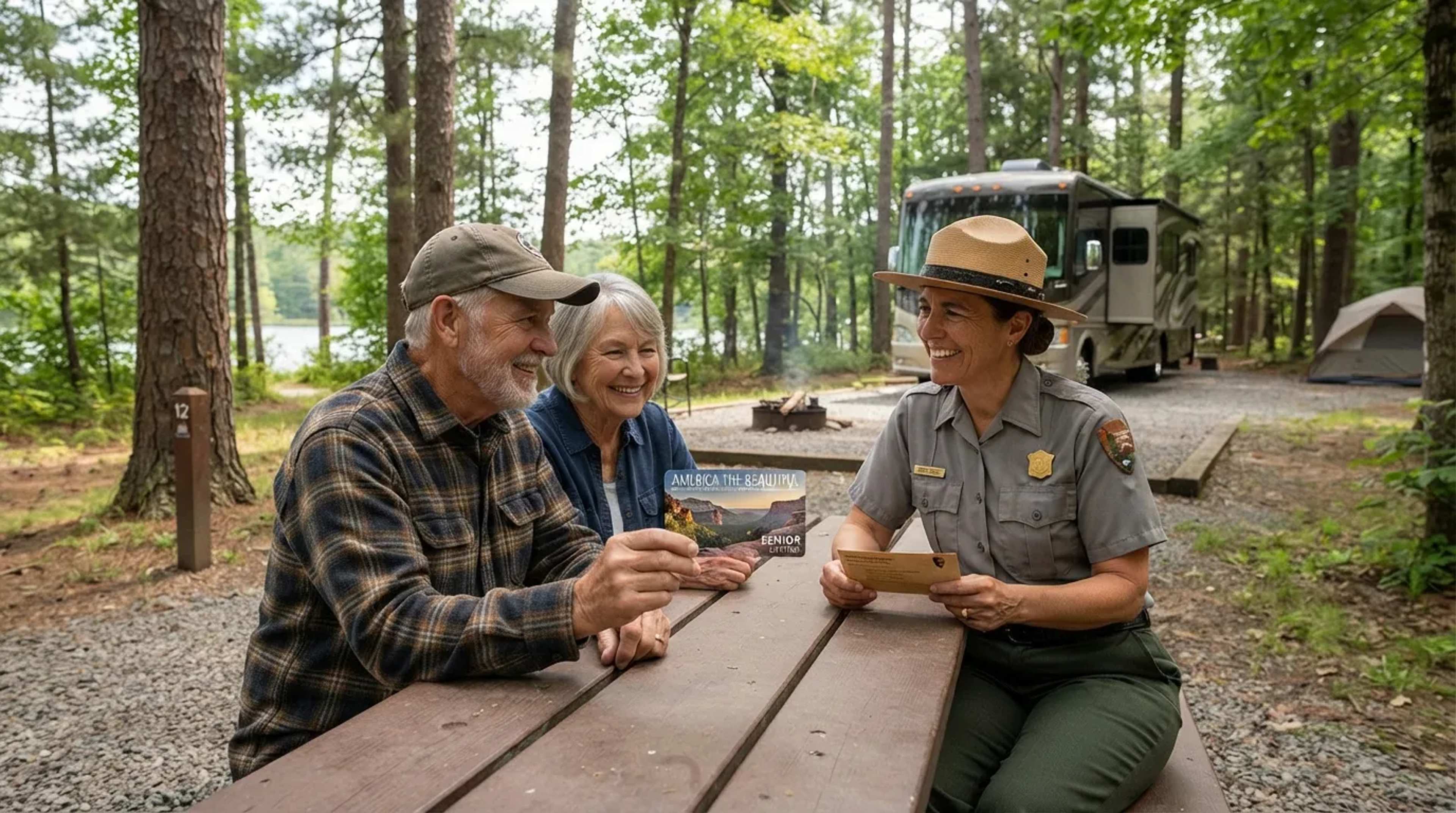
That means entry fees and accepted passes may differ from those at a federal refuge. Call or check the website before you assume the Senior Pass from earlier will work.
Red Sleep Mountain Drive is about 19 miles of gravel, so allow a slow half day. It climbs to views over the valley and is where you look for bison, pronghorn, elk and bighorn sheep.
Confirm open dates before you go, because the road is seasonal.
Whatever you see up there, stay in the car: an adult bull can weigh up to 2,000 pounds and run up to 35 miles per hour.
#4 – Wyoming’s Elk Refuge in Winter
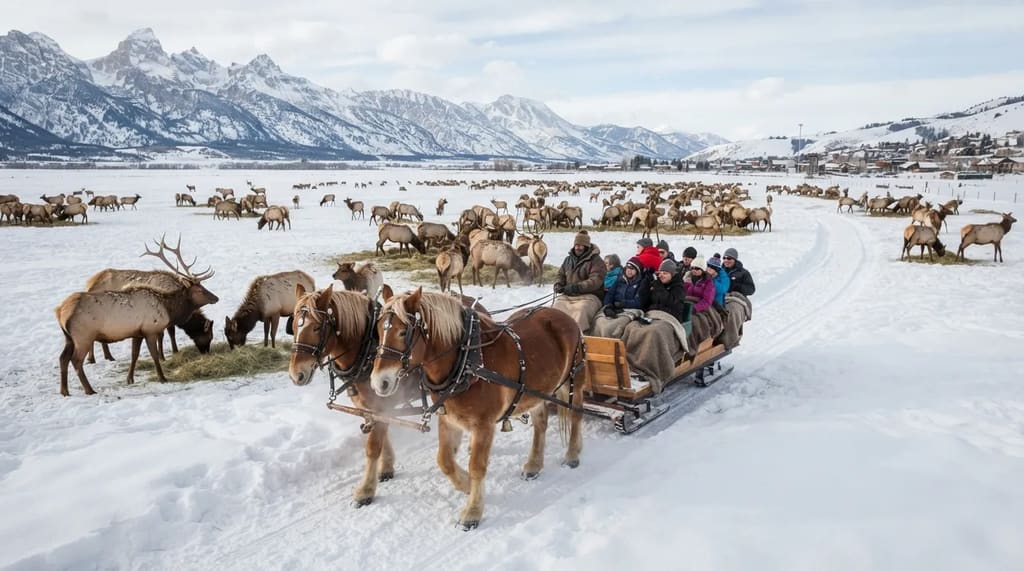
Jackson, Wyoming, is busy in summer, but in winter the National Elk Refuge beside town is a quieter place to see elk by the thousands. The refuge was set aside to give the animals winter feeding grounds.
Horse-drawn sleigh rides carry visitors out among the herd, so there’s no snow to wade through and no guesswork about where the elk are. The rides run only in the cold months, so check dates before you plan around them.
Winter, not summer, is the season for this refuge, so book the sleigh ride ahead and dress for open ground. Wind across a flat meadow feels colder than the thermometer in town says.
Worth Knowing
- The refuge sits right beside the town of Jackson, so you don’t need a long drive
- Winter is the season, when elk gather on the feeding grounds
- Sleigh rides run only in the cold months, so confirm dates first
- Pack layers, a hat and gloves for the open meadow
Elk are the winter draw in Wyoming; in New Mexico it’s birds, and they keep a strict schedule.
Related Stories From Travelbinger
#3 – A Sunrise Show at Bosque del Apache
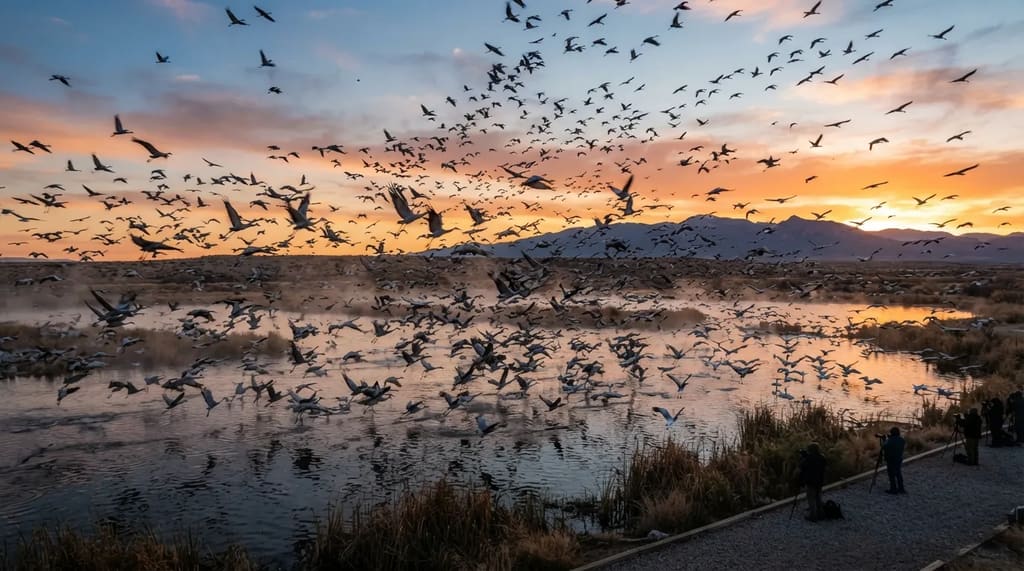
At Bosque del Apache National Wildlife Refuge in New Mexico, the best viewing is within 30 minutes of sunrise and sunset, between mid-November and late January.5 At dawn the birds lift off from their roosting ponds, and at dusk they stream back.
The refuge is known for wintering flocks of about 10,000 to 15,000 sandhill cranes and more than 20,000 snow geese.5 Like the tide at Ding Darling, the clock is the whole schedule here.
Plan to be at the viewing area at both ends of the day, but choose the evening if you must choose one. Winter mornings can drop below freezing, and the evening return gives you the same birds in a warmer hour.
State rules apply at the stop ahead, so your federal pass won’t get you through the gate, and its herd was just trimmed.
#2 – Custer’s Wildlife Loop and a Smaller Herd
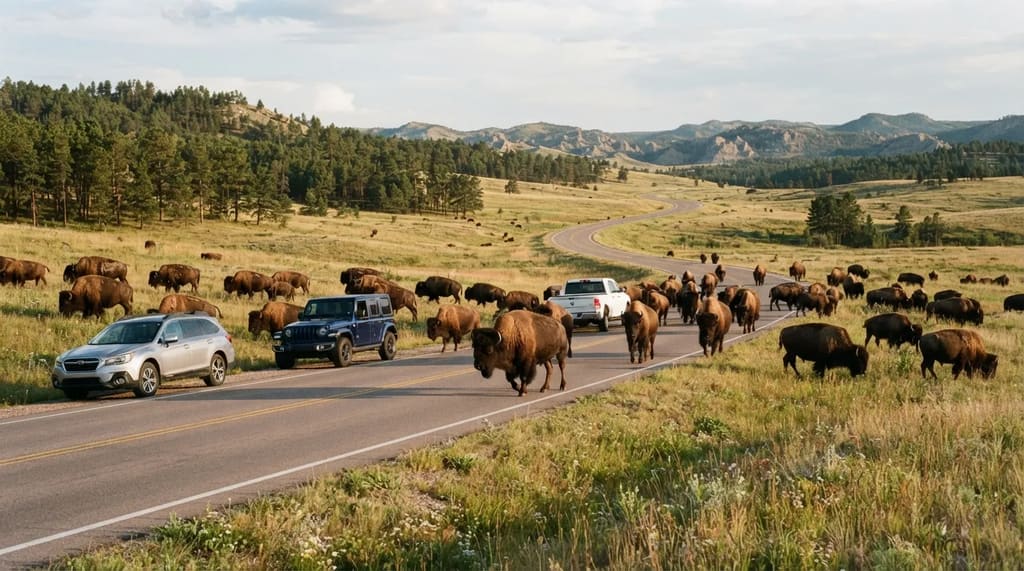
Custer State Park is run by South Dakota, not the federal government, so a national Senior Pass doesn’t cover the gate. Expect to pay a separate vehicle fee, and check the current rate before you go.
The 18-mile Wildlife Loop Road is the place to see bison, bighorn sheep, pronghorn, burros and prairie dogs. Go early or late, when the animals are on the move and the road is quieter.
Check the herd size before you plan around it. A fall report put the herd near 1,500, with an estimated 612 headed to auction because of drought, which park staff said would leave about 900.6
Expect closer to 900 bison than the 1,300 to 1,500 you’ll see quoted.6 7 Even a trimmed herd can stop traffic.
Last on the list is a national park that drew a small share of Yellowstone’s visits, and it has an animal Yellowstone doesn’t.
#1 – Roosevelt’s Badlands and Their Wild Horses
Theodore Roosevelt National Park in North Dakota drew 729,893 visits in 2025, while Yellowstone logged 4,762,988.1 8 That’s more than six times as many visits at Yellowstone, and the badlands here deliver wildlife with a much lighter load of traffic.
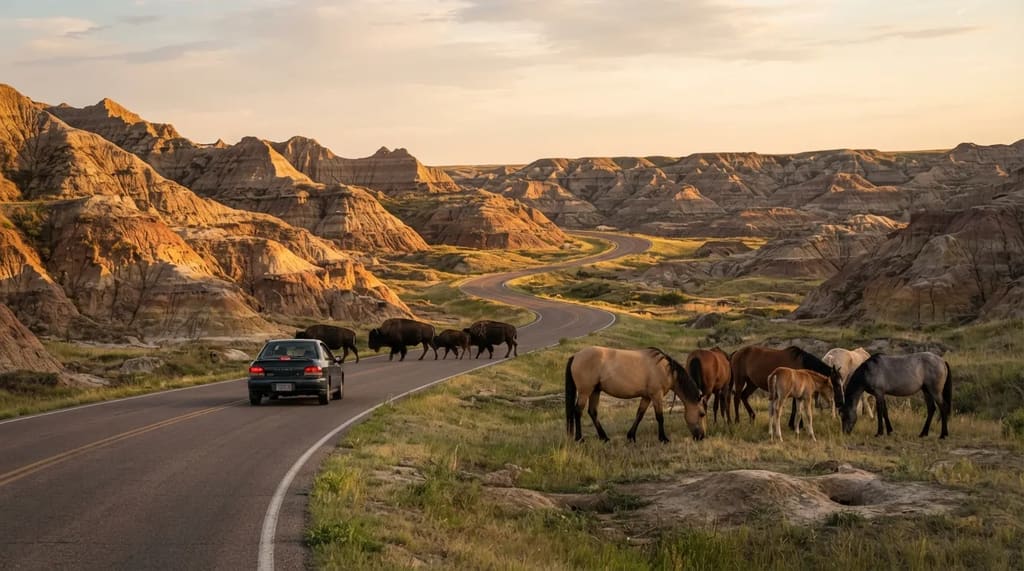
In the South Unit, a paved 36-mile scenic drive winds through painted badlands, past prairie dog towns, and to canyon overlooks. Bison herds frequently graze beside or cross the road.
Then there are the horses: wild ones roam the South Unit, and few national parks can say that. Unlike the Chincoteague herd, you don’t need to time your visit around a festival.
Drive the South Unit loop at dawn or dusk, and wait in the car when bison hold the road. Early morning and late evening are the peak times for bison, wild horses and elk.
Because this is a national park, the Senior Pass from earlier should cover your entrance fee, which isn’t true at Custer.
Why the Calendar Matters More Than the Park
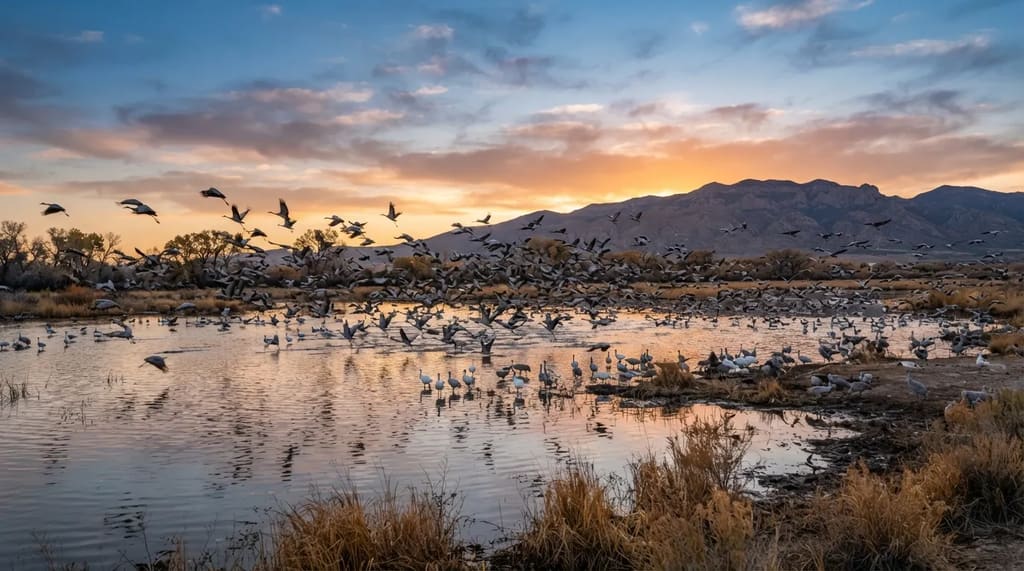
Yellowstone’s crowds are mostly a calendar problem, since most of its visits land in a few summer months. That suggests a better way to plan any wildlife trip: pick the season and the hour before you pick the park.
A dawn drive in October at a lesser-known park can beat a midday parking battle in July at a famous one. The animals keep their own schedule, and you’ll see more if you keep theirs.
At a Glance
- Everglades: December through April, when the dry season concentrates animals
- Bosque del Apache: mid-November to late January, within 30 minutes of sunrise and sunset
- Aransas and the National Elk Refuge: the colder months
- Big Bend: late fall to early spring
- Skyline Drive: a weekday, not a peak October weekend
Which season and time of day have given you your best wildlife sighting from the driver’s seat, and where were you?
- NPS Yellowstone 2025 Visits: https://www.nps.gov/yell/learn/news/26004.htm
- Chincoteague Pony Ownership: https://www.chincoteague.com/pony-swim/
- Denali Park Road Access: https://www.travelalaska.com/explore-alaska/articles/denali-national-park-road-reopening-2027-what-visitors-need-know
- Bison Range Tribal Management: https://www.fws.gov/refuge/benton-lake/news
- Bosque del Apache Visiting Guide: https://albuquerque.com/explore-nature-at-bosque-del-apache-national-wildlife-refuge/
- Custer Bison Drought Auction: https://www.kotaradio.com/2026/10/02/drought-conditions-lead-custer-state-park-to-increase-bison-auction-numbers/
- Custer Herd Size Report: https://cowboystatedaily.com/2026/10/05/custer-state-park-to-sell-at-least-38-more-bison-at-auction-due-to-drought/
- Theodore Roosevelt Visitation Rankings: https://www.tripletrad.com/most-visited-national-parks/