The itemized statement slides under your cabin door on the last night of the cruise, and it is your last practical chance to question anything on it. Once you walk down the gangway, onboard billing disputes become very hard to win.
On a seven-day sailing for two, the flat daily gratuity alone comes to roughly $224 to $280, at the $16 to $20 per guest charged on the major lines. That is before a single drink, spa treatment or arcade round shows up on the page.
None of the 13 items below depends on your birthday; they depend on timing and paperwork. One of them carries a deadline that closes the morning you leave, and on one major line the onboard door has already shut.
We will work up to that one, starting with drinks billed to an account that already includes a package.
#13 – Drink Charges on a Bill That Already Has a Package
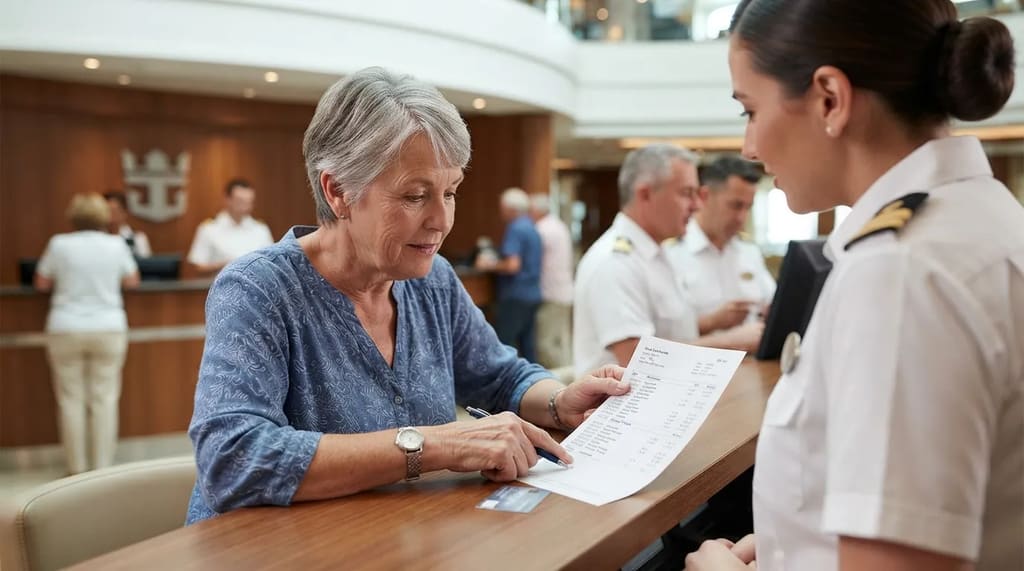
Individual drink charges showing up despite an unlimited beverage package are one of the more common billing issues. Often the package simply had not synced to the account yet.
Read your package terms before you queue, because a charge for a drink your tier excludes is correct and will not come off. If the drink is on your list, bring the package confirmation and ask Guest Services to look it over, which is calmer than arguing from memory about what you were told at booking.
Specialty coffee and bottled water show up on lists of charges worth reviewing when a package was supposed to cover them. Packages differ line by line, so check those two by name in your own terms.
A package that is correct can still land under the wrong person’s name when two travelers share one account.
#12 – Drinks Billed From Another Cabin or Guest

Drinks charged from another cabin are a known billing error, particularly on ships whose card systems can occasionally misread. Duplicate charges and gratuities applied at the wrong rate sit on the same short list, so one careful look can catch several problems at once.
On a shared account, check the guest name beside each entry before assuming a charge is wrong. A line that looks unfamiliar may simply belong to your travel companion, and it is better to learn that at your cabin table than at the desk.
If you do find a genuine error, go that evening. Passengers who wait until the final morning end up in a line that snakes through the atrium.
My own view is that the daily glance at the app is worth more than the printed statement. The paper bill arrives the night before disembarkation, which is exactly when the queues at Guest Services tend to be longest.
#11 – Dining Charges Your Suite or Package Already Covers
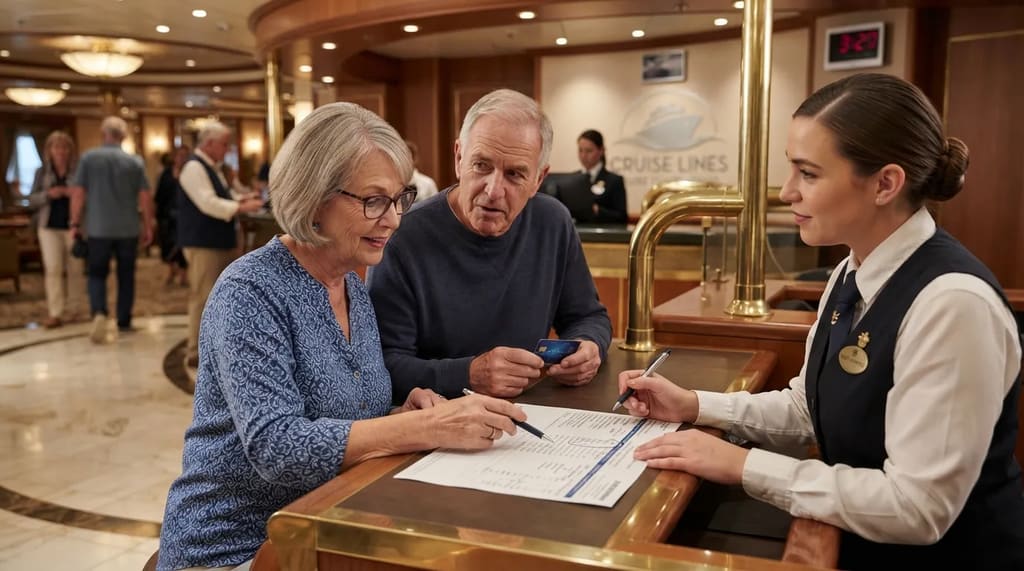
If a charge appears on something already included in your fare or package, Guest Services can usually remove it. The harder part is knowing what your fare includes, because the account will not tell you.
A writer for The Points Guy, sailing on Norwegian, found charges for dining that should have been included with her suite only on the final evening. Onboard, a fix is simple, and a wrong charge often gets sorted at Guest Services in minutes.
Before you sail, write down what your suite category or package includes and carry that list to the desk. A request tied to a specific inclusion is easier to resolve than a general complaint about the total.
Inclusion is rarely the question at the spa, where the dispute is usually about the price you were quoted.
#10 – A Spa Bill That Differs From the Quoted Price
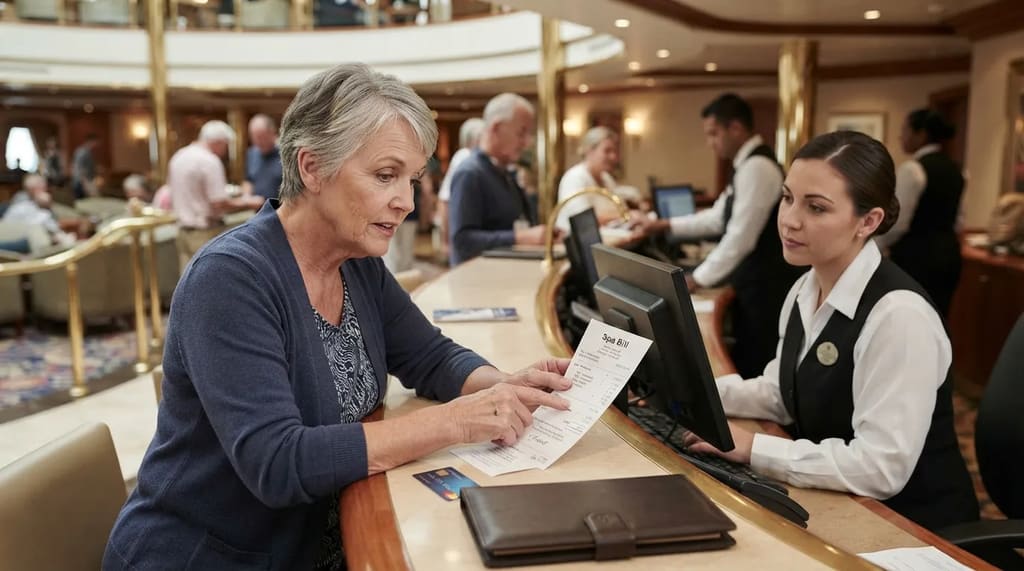
Spa charges that don’t reflect the agreed price are on the list of common onboard errors, alongside duplicate charges and drinks billed from another cabin. A related mistake is a treatment that was never booked at all.
A wrong charge like that gets sorted at Guest Services in ten minutes while you are still aboard. Keep the price you were quoted, whether on a booking slip or in a photo of the menu board, so the conversation starts with a number and not a recollection.
Worth Knowing
- Duplicate charges are one of the known onboard errors.
- Drinks can post from another cabin.
- Gratuities are sometimes applied at the wrong rate.
- Spa lines can show a price different from the one you agreed to.
Check the gratuity on the line as well, since automatic gratuities at the wrong rate are another known error. On some lines, automatic charges on spa purchases cannot be removed retroactively once the transaction is complete, which is one more reason to ask early.
#9 – A Grandchild’s Arcade and Game Charges

If a child on your account runs up video game charges without your knowledge, the cruise line isn’t going to wipe them on day seven. They are legitimate purchases.
Notice the problem on day two, though, and you can put a spending limit on the child’s card at Guest Services. The money already spent is likely to stay spent, so the whole value of this item is in the timing.
That is why a quick look at the tab on the second evening belongs alongside the last-night review, the same habit that catches a stray drink line early.
A limit like that covers the ship’s account only, and the hotel on either end of the trip bills under different rules.
#8 – A Resort Fee That Was Not in the Booked Price

Since May 12, 2025, the FTC’s Rule on Unfair or Deceptive Fees has required hotels and vacation rentals to show the total price, including all mandatory fees, upfront. The rule governs how fees are displayed, not whether a fee can be charged or how much it can be.1
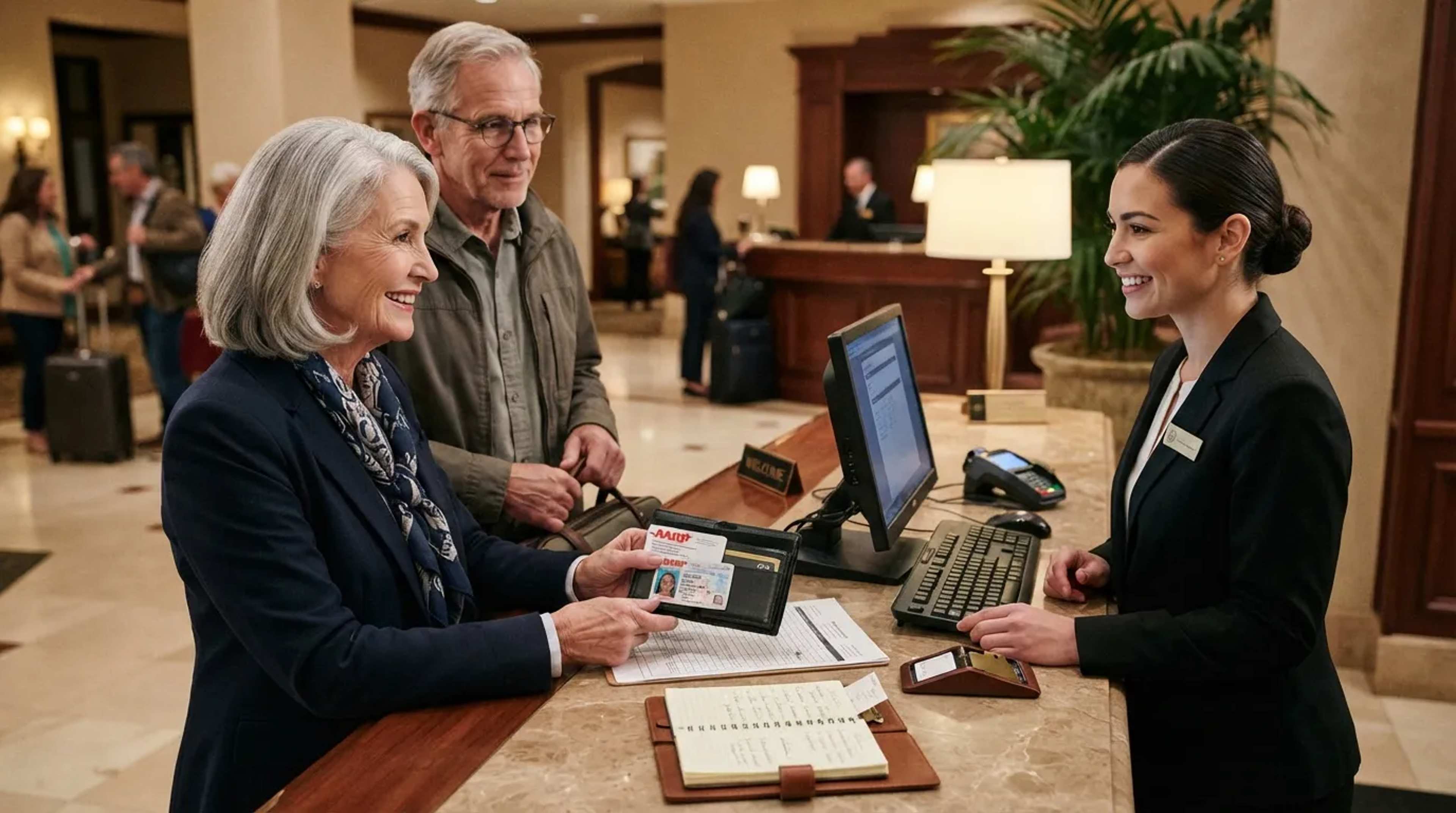
So a resort fee that was included in the total you booked is one you should expect to pay. A fee that was not in the upfront price is different: raise it at the front desk first and ask for it to be removed.
If you are staying the night before your ship sails, compare the confirmation email with the final bill at checkout, line by line. Ask whether each line is a hotel fee or a government charge, since the hotel can tell you which is which.
Getting to the port brings paid extras of its own, and an airline owes the money back when one is not delivered.
#7 – A Paid Seat or Wi-Fi the Airline Did Not Provide
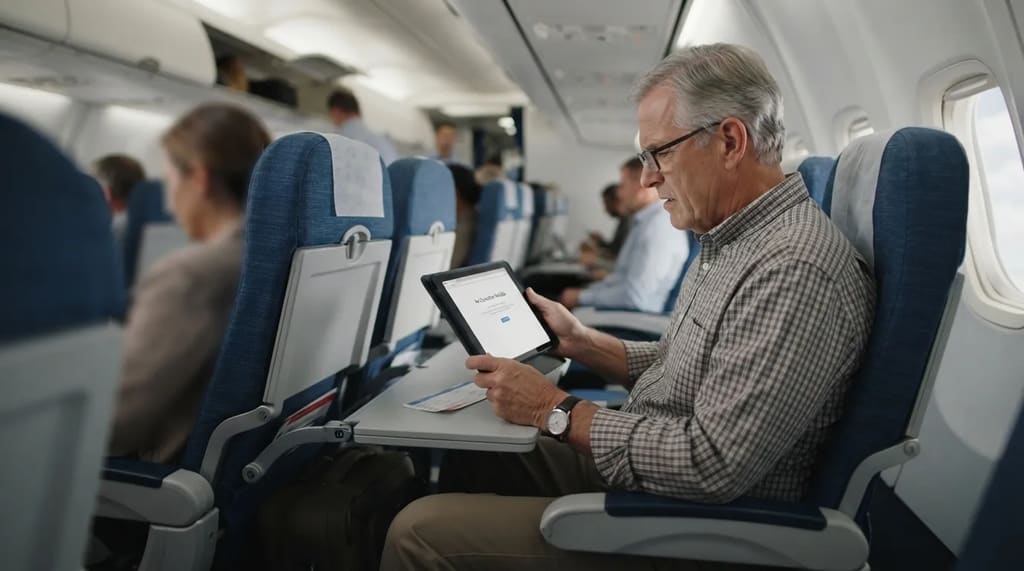
Under the Department of Transportation’s 2024 refund rule, passengers are entitled to a refund of the fee they paid for an extra service, such as Wi-Fi, seat selection or inflight entertainment, if an airline fails to provide it.2 The refund is meant to arrive on its own, since airlines must issue refunds automatically without passengers having to request them.2
The rule covers cases where the service was not provided through no fault of the passenger, such as a flight cancellation, a significant change, an oversale, an aircraft substitution or an equipment malfunction. If you paid for a seat and were moved because of an aircraft swap, that is exactly the situation it describes.
At a Glance
- Covered extras include Wi-Fi, seat selection and inflight entertainment.
- The trigger is a service not provided through no fault of yours.
- Examples: cancellation, oversale, aircraft substitution, equipment malfunction.
- Refunds are meant to be issued automatically.
Parts of the 2024 refund package have been under administrative reconsideration. The requirement to refund unprovided extras, however, is specifically required by statute, so it does not hang on the rule alone.
Check your card statement a few weeks after the trip, and ask the airline directly if the fee never came back.
#6 – A Checked Bag Fee After the Bag Arrives Late
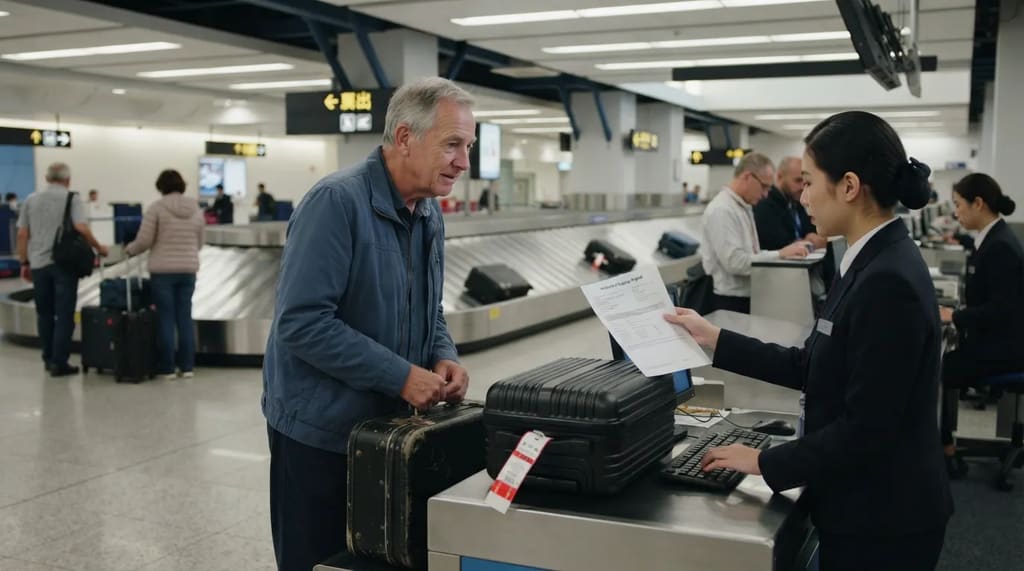
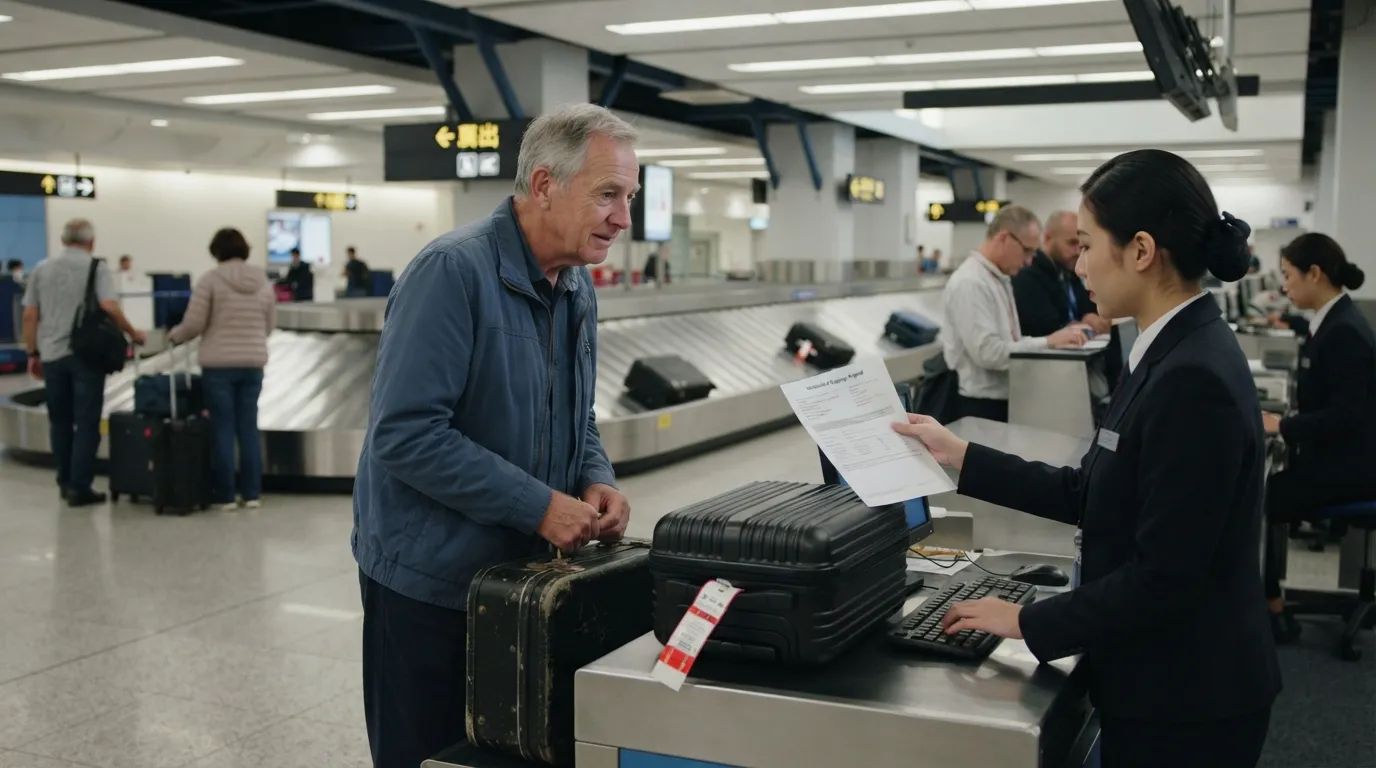
Airlines must issue automatic refunds of checked bag fees when baggage is not delivered in a timely manner, so long as the passenger files a Mishandled Baggage Report.3 That condition is the part to remember.
The refund depends on the report existing, so file it at the airport before you leave the baggage claim area. For a cruise passenger, a late bag on embarkation day is a bigger problem than the fee, but the fee is the piece you can recover.
The rule defines “significantly delayed” in hours, and the hours differ between domestic and international flights. Ask the airline for the threshold that applies to your trip.
The bag fee is one amount among several, and what an airline may keep from a refund is limited too.
#5 – Booking and Processing Fees on a Refund

When an airline owes you a refund, it is prohibited from retaining booking fees charged at ticket purchase or charging processing fees when issuing the refund. The refund must also cover the full ticket price, minus any portion already flown, including government taxes and airline-imposed fees.2
Before you accept a voucher or travel credit in place of money, know that airlines and ticket agents must inform you of your right to a refund before offering alternatives when that right applies.
My view is that cash is better than a credit unless you already know you will fly that airline again. A credit ties your money to one carrier, while a refund lets you rebook wherever the schedule suits.
When the refund arrives, compare it with the original receipt line by line, because the booking fee is the piece most easily left behind. Back aboard the ship, the rules on percentage gratuities stop agreeing with each other.
#4 – Percentage Gratuities on Drinks, Spa and Dining

Policies on percentage charges differ by line, so ask instead of assuming. Royal Caribbean’s updated policy calls gratuities on select pre-cruise and onboard purchases “optional and may be adjusted or removed at the guest’s sole discretion.”4
Other guides say the automatic gratuity, typically 18 to 20 percent, added to bar drinks, specialty restaurants and spa services cannot be removed, only the flat daily charge can. A further note adds that prepaid gratuities and percentage-based service charges may follow different rules, and with the sources disagreeing, the desk’s answer for your specific line is the only one that counts.
If you plan to tip your bartender in cash anyway, this is the charge worth asking about, because otherwise you pay twice for the same service. Royal Caribbean’s policy says passengers who prefer to tip crew members in cash can do so in place of the automatic gratuities for onboard purchases.4
Whether any gratuity should come off at all depends on what went wrong and whether anyone aboard was told.
#3 – A Charge for Service That Fell Short
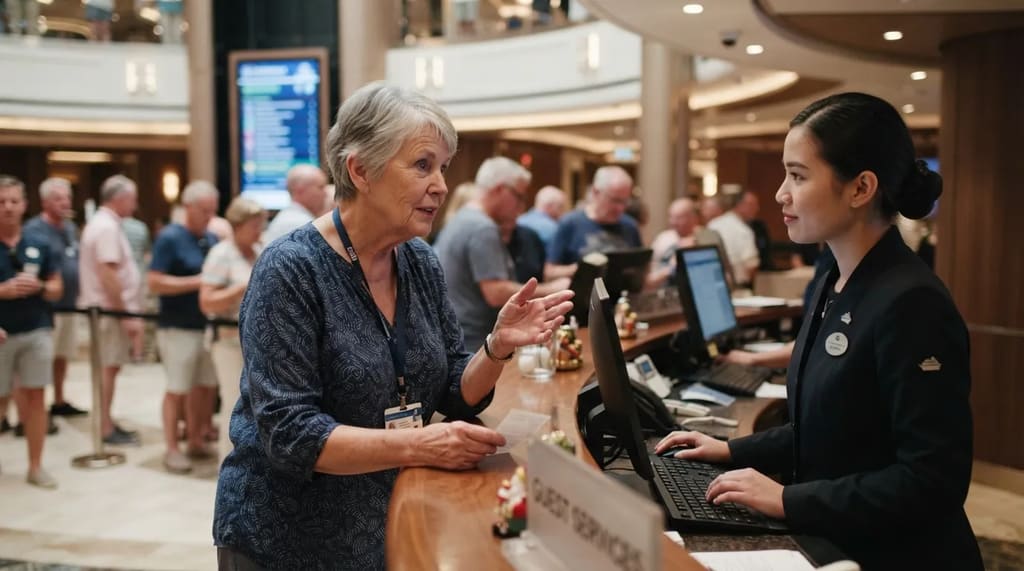
If service was poor, raise it with Guest Services while you are still sailing. That gives them a chance to put it right, and flagging it mid-cruise is usually more effective than zeroing out the charge on the last night.
Removing a gratuity takes money from the crew rather than the cruise line, since automatic gratuities are shared evenly among cabin stewards, dining room servers and behind-the-scenes employees. Forbes notes that guests who ask should expect some administrative friction, and often a detailed explanation of how gratuities are distributed.
My view is that a complaint with a specific day and a specific problem behind it deserves a visit to the desk on day two. A general sense of disappointment on the last night is not a good reason to empty a pooled fund.
Nothing on a cruise is easier to fix than a dirty cabin reported on day two, and nothing is harder to fix than the same cabin reported on the final evening.
Prepaying changes the picture, since the money has already left your account before anyone has served you.
Related Stories From Travelbinger



#2 – Prepaid Gratuities and the Risk of Paying Twice
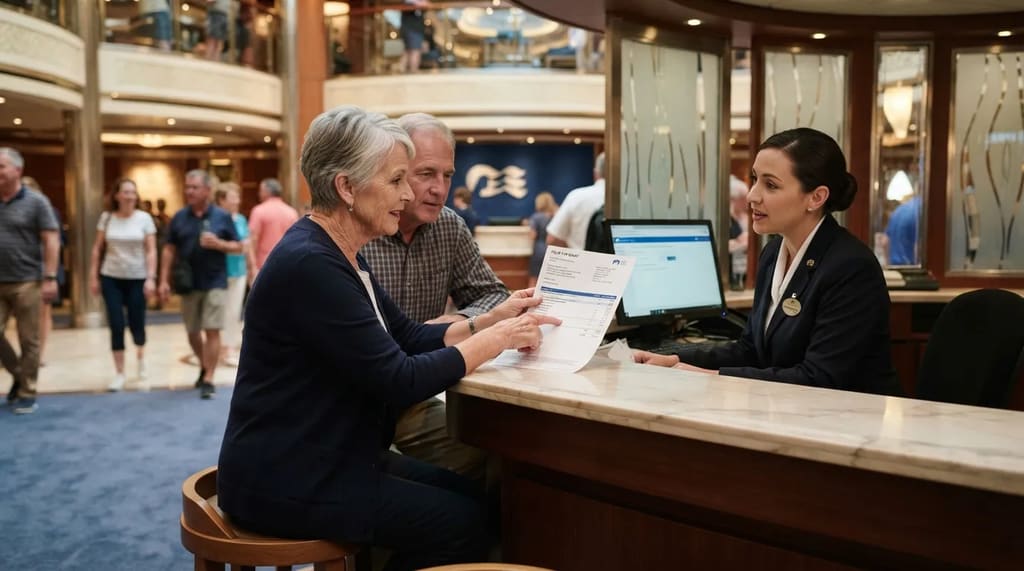
Most major cruise lines let you prepay daily gratuities before sailing. Princess, which calls its charge Crew Appreciation, lets guests pre-pay at booking or have it automatically added to their onboard account.
Guides disagree on whether prepaid amounts can be changed once you are aboard. Some say you cannot remove prepaid gratuities onboard, others that they can usually be adjusted at the desk, and some cruise lines lock gratuities for prepaid bookings and do not allow onboard removal.
The practical risk is a double charge. If you prepaid, check that the charge wasn’t also applied onboard, and if both appear, ask Guest Services to reconcile the account before disembarkation.
If you want the option to adjust, pay onboard instead of prepaying. Prepaying gives you a smaller final bill and, on some lines, a modest discount, but it costs you the flexibility.
Quick Compare
- Prepay: a smaller final bill, sometimes a modest discount, but less room to adjust.
- Pay onboard: a bigger bill at the end, but you can ask to change it at the desk.
- Either way: check the account for a second, duplicate gratuity charge.
Underneath every other gratuity on the account sits the flat daily charge, the largest single line on the bill.
#1 – The Flat Daily Gratuity Before the Last Morning

On the major lines, the flat daily gratuity runs about $16 to $20 per guest, more in a suite, and it lands on your account automatically. Carnival’s recommended rates rose in 2026, to roughly $17 to $19 per person, per day.
A few lines have gone the other way: Fred Olsen’s Freedom Fare from 2026 is inclusive, with no automatic daily gratuity added.
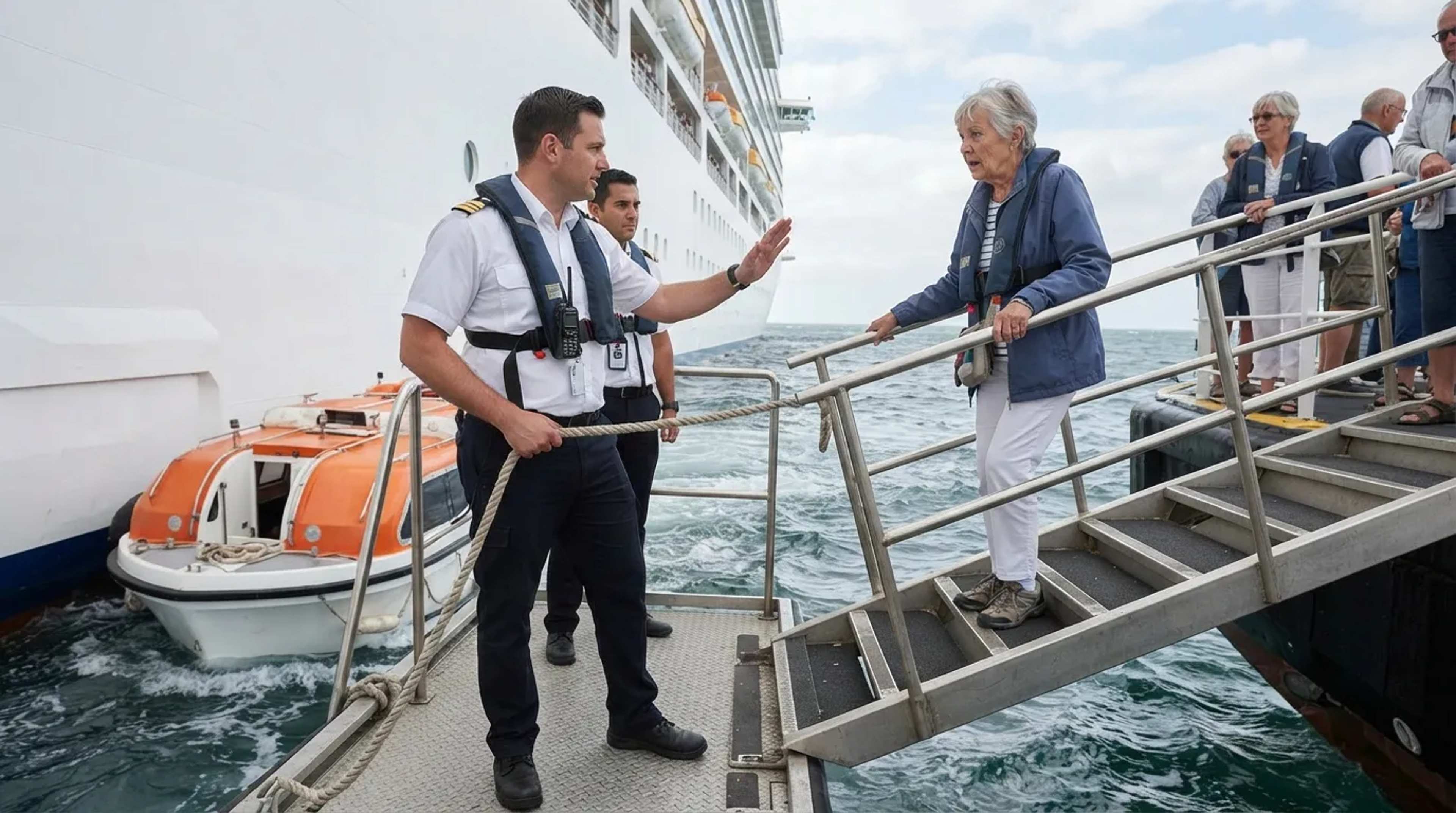
The deadline is what matters here. Royal Caribbean’s policy lets guests modify or remove any gratuity at the Guest Relations desk at any time before the morning of disembarkation, and modifications cannot be made once the sailing has ended.4
Carnival likewise says you must visit the Guest Services desk before you disembark. Norwegian is the exception among the major lines: you pay it in full and email guest services after the cruise if you want a refund, because a request at the desk will not help there.5
Fast Facts
- Royal Caribbean: change it at Guest Relations before disembarkation morning.
- Carnival: visit Guest Services before you disembark.
- Norwegian: pay in full, then email guest services after the cruise.
- Typical rate: about $16 to $20 per guest, per day.
For most sailings I would lower the charge, as described earlier, and remove it only if you are certain you will tip the crew in cash. The pooled fund pays the same stewards and servers either way.
Looking at the Bill While You Can Still Change It

Every item above comes down to timing. A charge is simple to question on the day it posts, harder on the last night and close to impossible once you are home.
Treat the onboard account as a draft you can edit until the morning you leave, not a verdict delivered at the end. A few minutes each evening, with the app or the desk, costs far less than a long line on disembarkation morning, and it leaves you time to decide how you want to handle the crew.
What time of day would you set aside to check your account on your next trip?
- PIRG Junk Fees Rule: https://pirg.org/edfund/articles/junk-fees-finally-new-protections-against-surprise-charges-for-event-tickets-hotels/
- DOT Automatic Refund Rule: https://www.transportation.gov/briefing-room/biden-harris-administration-announces-final-rule-requiring-automatic-refunds-airline
- Federal Register Refund Rule: https://www.federalregister.gov/documents/2024/04/26/2024-07177/refunds-and-other-consumer-protections
- Royal Caribbean Gratuity Policy: https://travel.yahoo.com/cruises/articles/royal-caribbean-updated-gratuity-policy-145637807.html
- Norwegian Gratuity Refund Process: https://travelbinger.com/20-costs-that-disappear-from-a-cruise-account-when-somebody-asks-at-exactly-the-right-desk