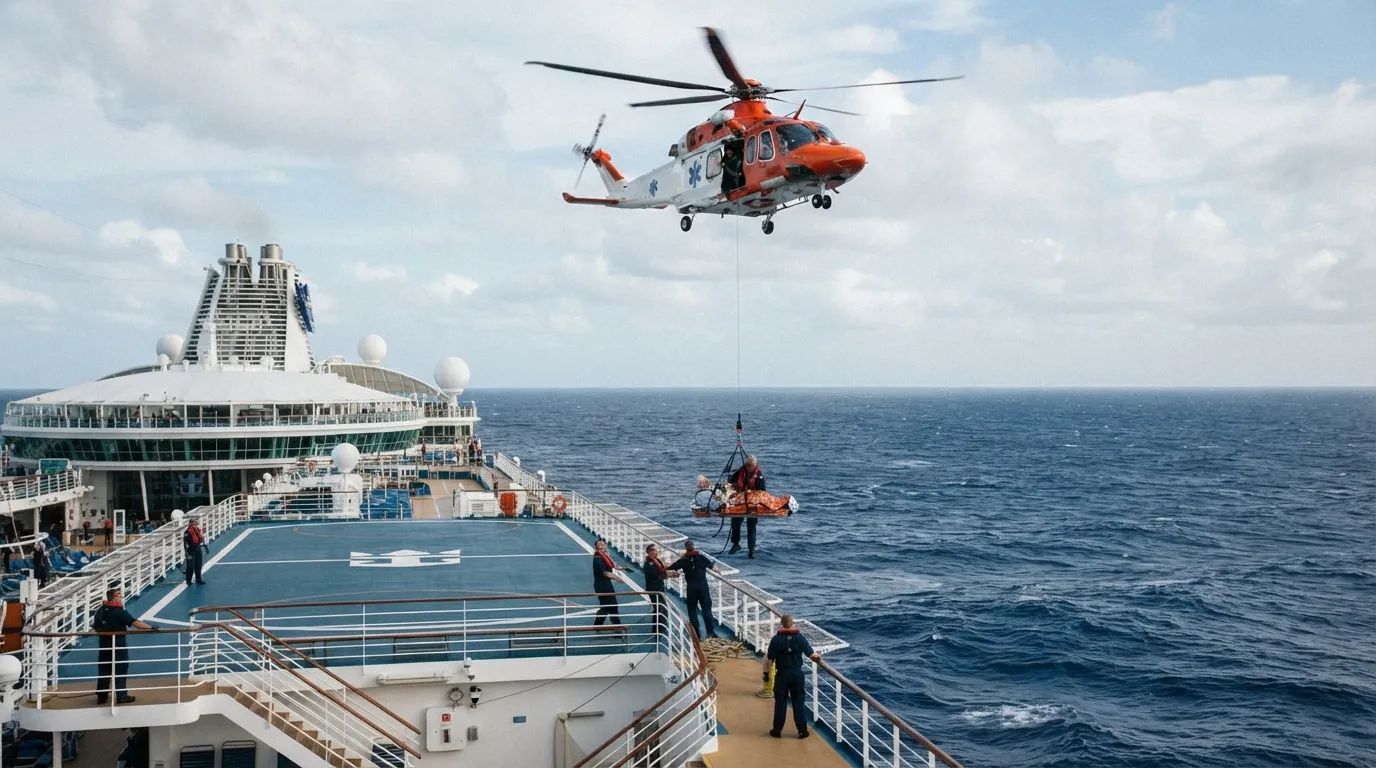
Cruise lines really do make allowances for older passengers, and most travelers past 70 never use them. They aren’t buried in fine print so much as parked behind a form, a phone call, or a policy that has to be bought at home weeks before the pier. Miss one and the price can be a long walk through a crowded terminal, a bill from the ship’s doctor, or both.
Here’s the twist: none of these 16 items switches on at age 70. The help follows need, and the discounts start years earlier. The biggest item can’t be claimed at any terminal counter, and the smallest costs nothing to ask for. The first one is the fare itself, whose age cutoff is lower than you would guess.
#16 – The Senior Fare That Starts at 55, Not 70

Carnival shows 55+ fares under its Deals filter, and Celebrity offers savings for guests 55 and over on select sailings. A passenger past 70 clears that bar by well over a decade. Carnival doesn’t advertise a set rate, and the discounts aren’t available on every cruise. During booking, Carnival asks whether you’re 55 or older, and you may be asked to show proof of age at check-in.
My view is that a senior fare is worth a look but not worth rearranging a trip around. These rates usually cannot be combined with other promotions, so a sailing with a different offer can come out cheaper. Price both and take the lower number.
MSC sets its bar higher than the others, and it applies to every person in the cabin.
#15 – The 65-and-Over Rule That Can Shut Out a Younger Spouse
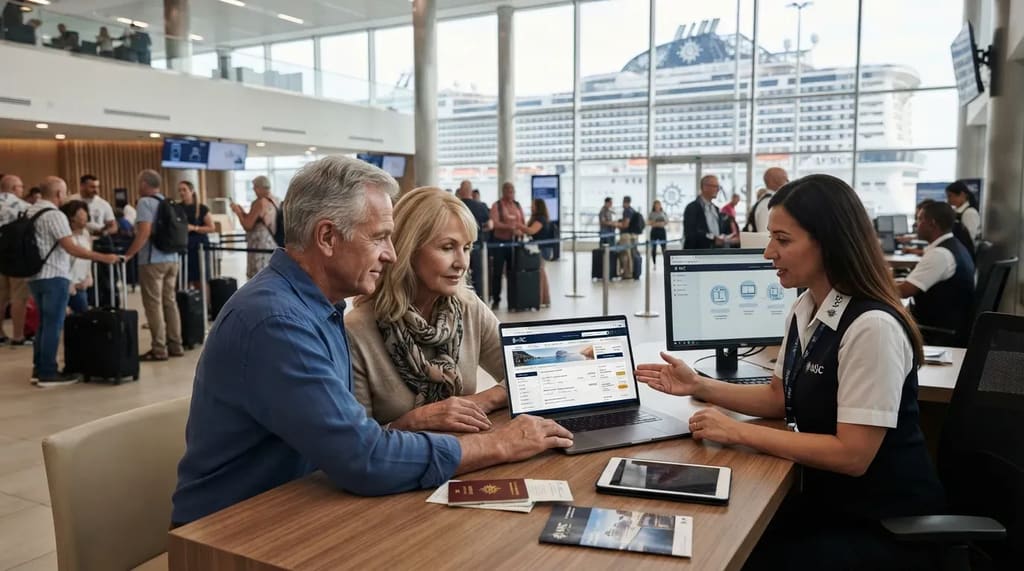
MSC Cruises offers up to 10 percent off to passengers 65 and older who book through its official website. All occupants of the cabin must be over 65 to be eligible.1 A 66-year-old traveling with a 62-year-old spouse would therefore not qualify.
If your spouse is younger, price the cabin without the senior rate first. MSC’s discounted rates generally can’t be combined with another offer, so applying the senior rate can close off a better deal. The age also changes by line. Some promotions require guests to be 60, 62, or 65, which is why the exact wording of each offer is worth five minutes.
Quick Compare: Senior Age Cutoffs
- Carnival: 55+ fares appear under the Deals filter, but not on every cruise.
- Celebrity: savings for guests 55 and over on select sailings.
- Royal Caribbean: a Seniors 55+ box under the promo code option once you pick a sailing.
- MSC: up to 10 percent off at 65+, booked on its website, and every cabin occupant must qualify.1
#14 – The Free Wheelchair Ride From Terminal to Ship
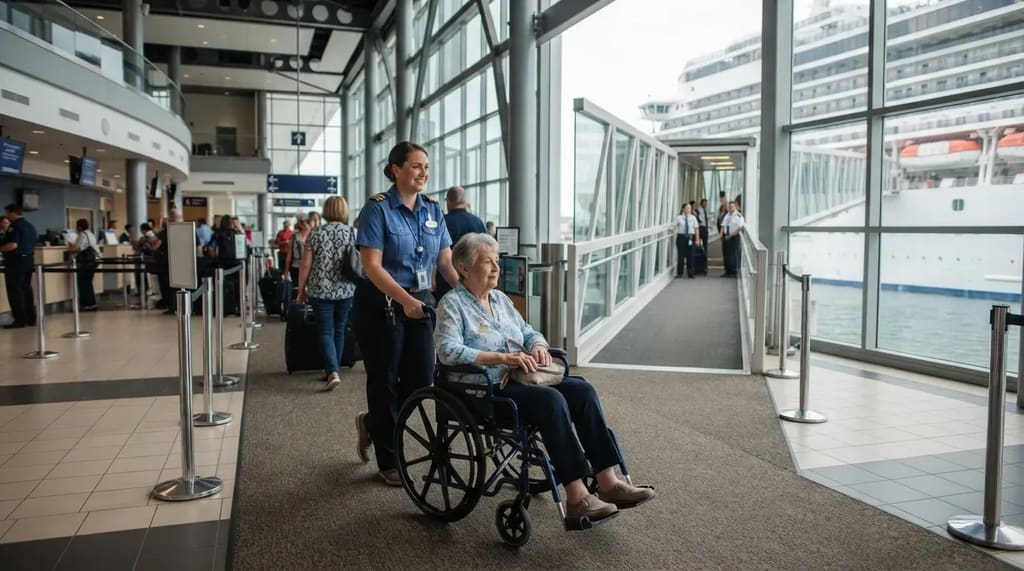
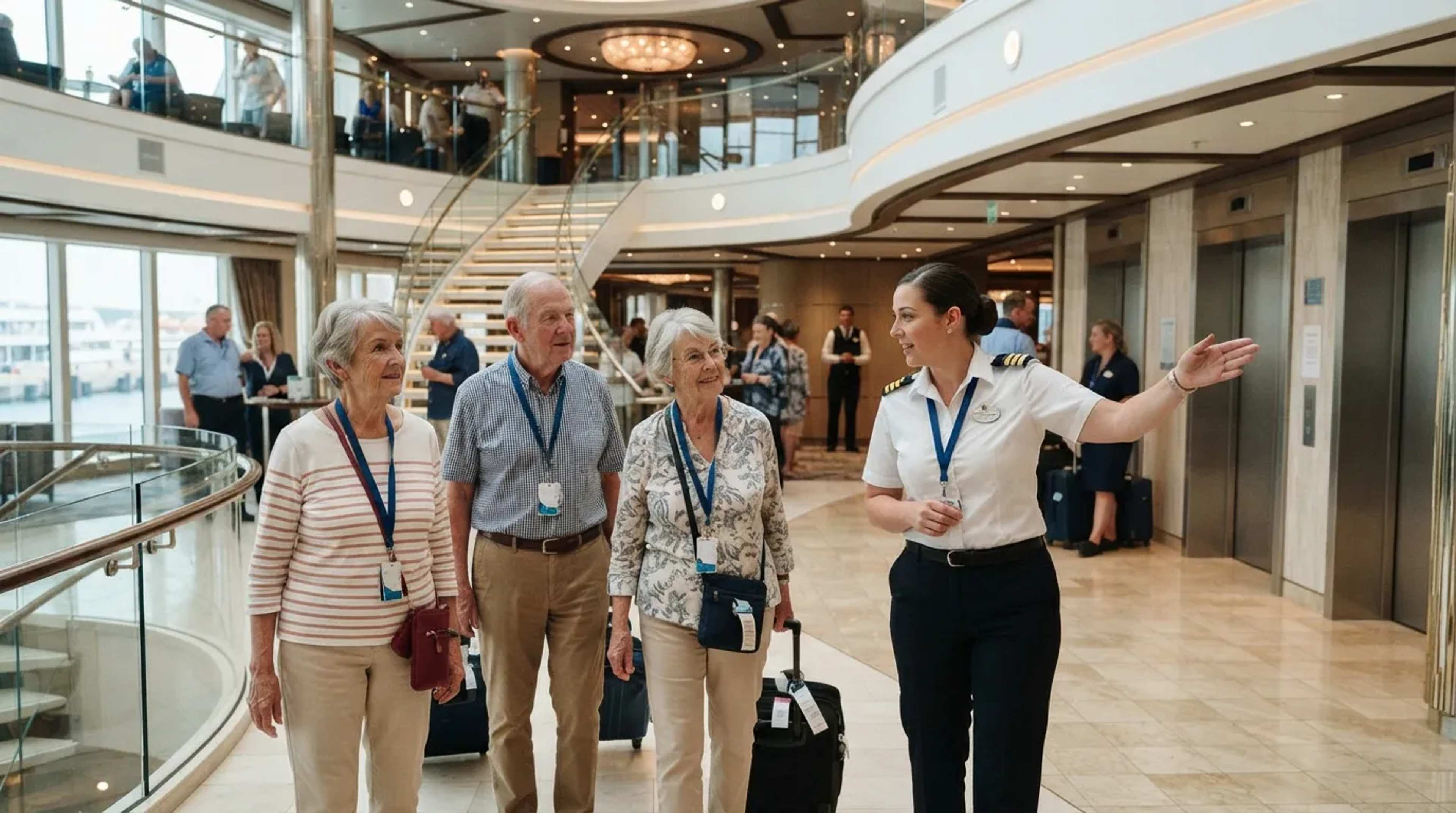
Royal Caribbean provides complimentary wheelchair assistance for embarkation and disembarkation only.2 Carnival’s version runs to the lobby of the ship.3 Curbside or cabin assistance is not available, so the escort gets you through the terminal and not to your door. At MSC, staff provide wheelchair assistance from the check-in counter inside the terminal to the ship.
You do not need to own a wheelchair to use it. The escort exists for the long walk, the line and the gangway, and it ends once you are aboard.
Carnival’s service is first come, first served, but it also has a form to request help before sailing, and that form is the next piece.
#13 – The Pre-Sailing Form That Skips the Guessing
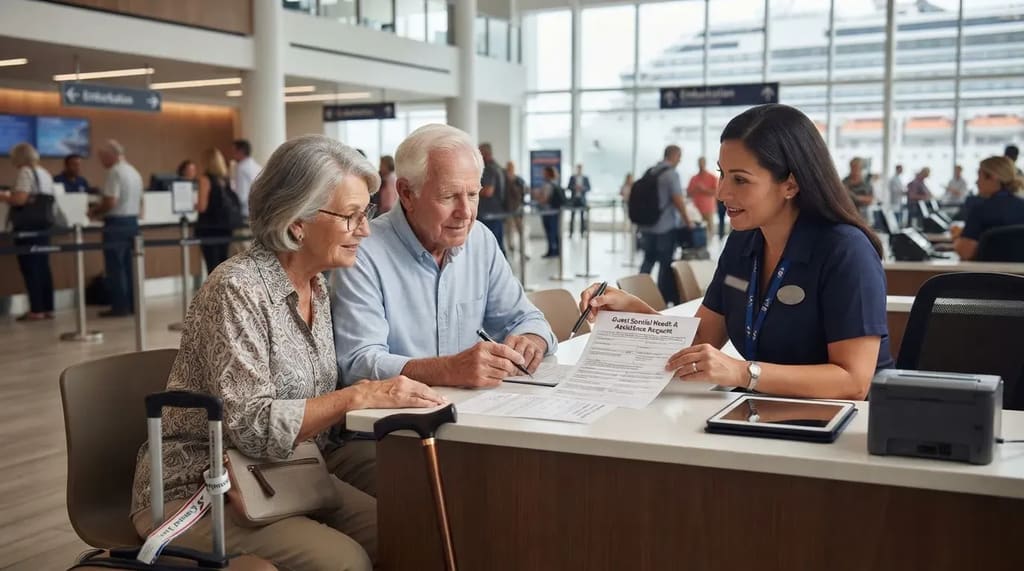
Carnival has one form for wheelchair assistance and a separate Mobility Device Form for guests sailing with their own chair or scooter.4 MSC’s form has an option for guests who don’t use a mobility device but need wheelchair help on embarkation day, plus a box for medical-condition priority at embarkation and disembarkation. So you can ask for help even if you walk with a cane and tire easily.
Advice on timing varies. One cruise adviser recommends submitting special-needs forms 30 to 90 days ahead, while another guide says to notify the line at least 48 hours ahead for a terminal escort. Those two figures disagree, so file when you book and the question goes away.
Even a filed request meets the clock at the pier, where one line’s escorts reportedly start late in the morning.
#12 – Norwegian’s Wheelchair Help Starts Late Morning
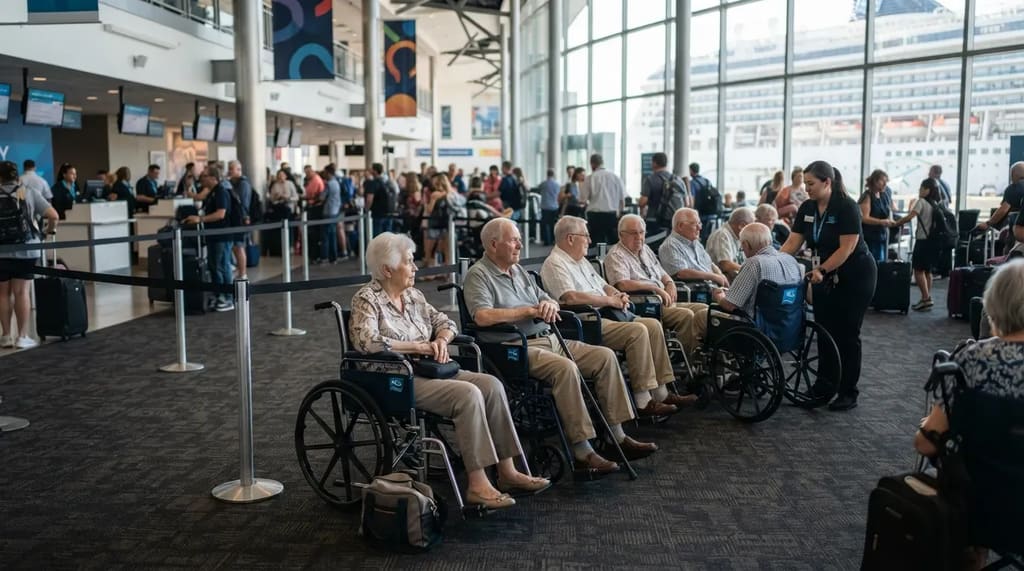
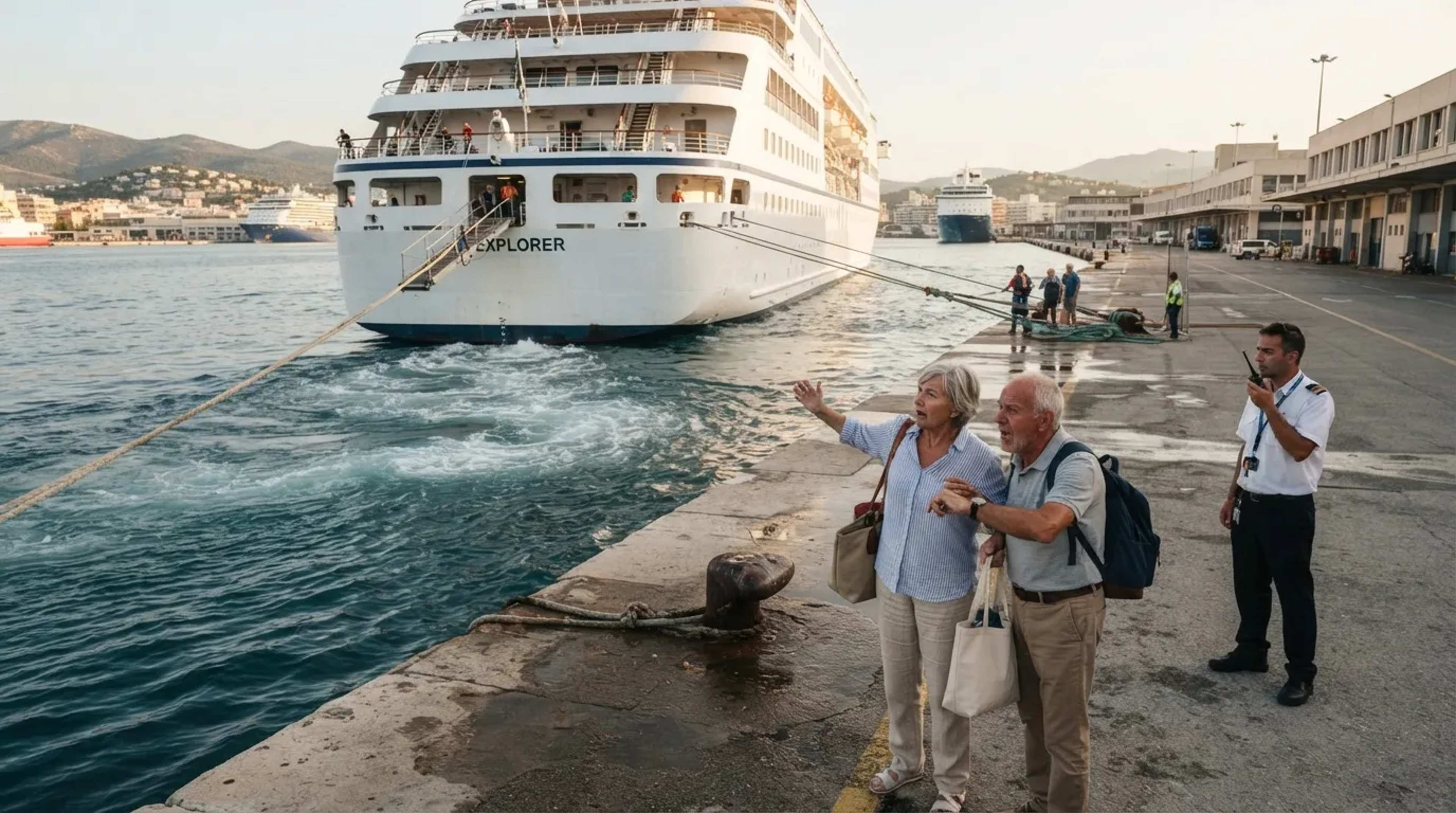
Norwegian’s guidance, as relayed in one travel guide, says wheelchair assistance typically does not start until 11 am. Its crew can’t exit the terminal, so guests can’t be picked up at the curb and must enter the terminal first.
Arriving at dawn to beat the crowd gains you nothing if you need the escort, because a very early arrival may not speed anything up. Terminals on embarkation morning are busy, and help takes time to reach you. Services vary by port, so check your own line’s timing and meeting point before you plan the morning, and plan for a wait if you travel with a companion who also needs a seat.
At a Glance: Where Terminal Help Begins and Ends
- Royal Caribbean: free help for embarkation and disembarkation only.
- Carnival: escort runs as far as the ship’s lobby.
- MSC: staff take you from the check-in counter inside the terminal to the ship.
- Norwegian: help typically does not start until 11 am, and crew can’t leave the terminal.
#11 – Early Boarding and the Lift-Equipped Transfer Van
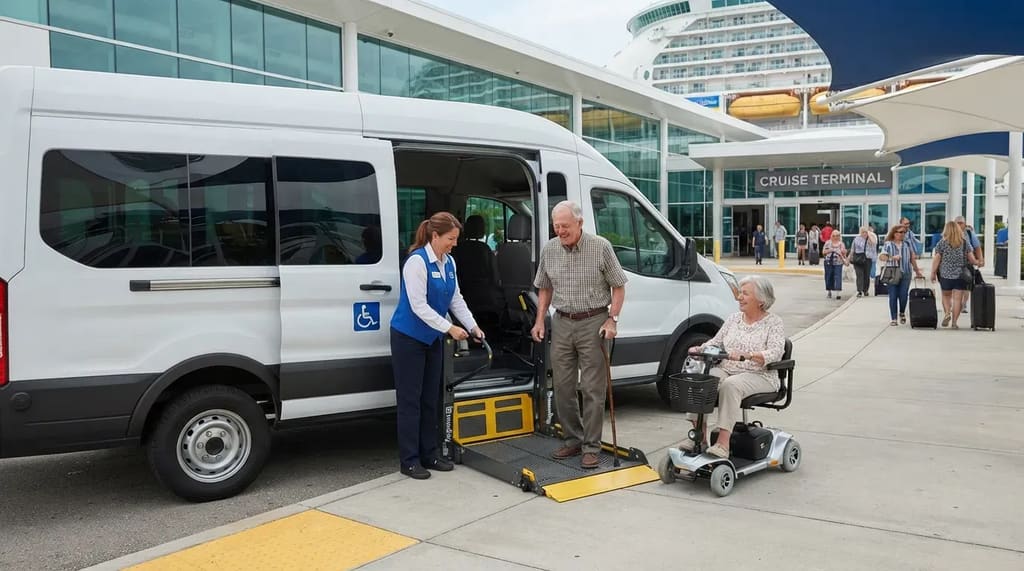
Royal Caribbean’s list of services for guests with mobility disabilities includes early boarding, transfers in a specialized bus or van with a lift or ramp, and boarding and departure assistance. That transfer matters if steps on an ordinary shuttle are a problem. Whether priority boarding or extra boarding help is available varies by line and terminal, so ask your line directly.
Priority boarding is the closest thing to a true embarkation-day perk, and it is built around need. The best versions are arranged before you sail. A birthday alone does not open that door.
Once you are aboard, the width of a scooter or walker decides what fits through the stateroom door.
#10 – A Stateroom Door That Fits Your Scooter
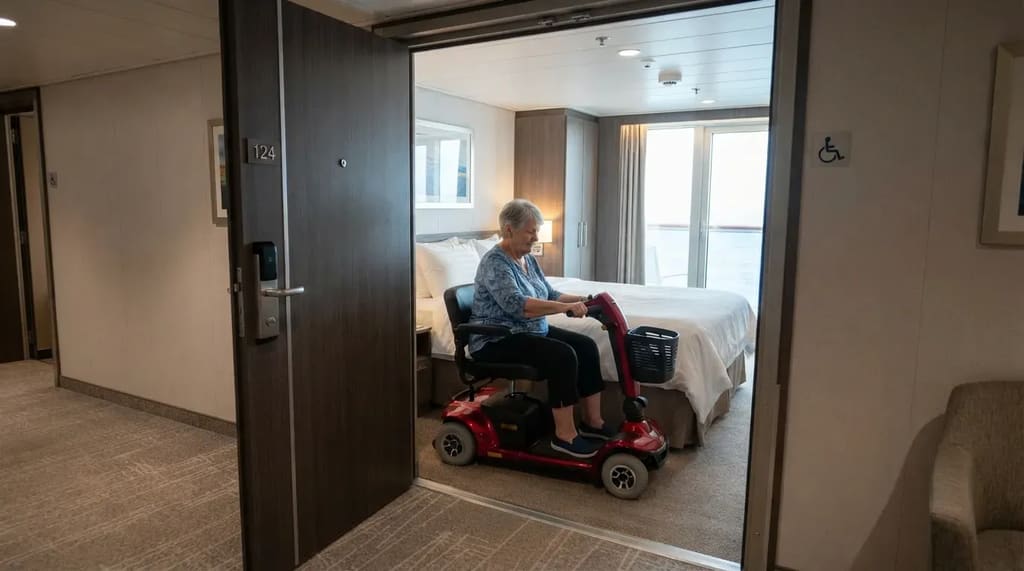
Royal Caribbean says its ships have corridors wide enough for 180-degree turns by wheelchairs.2 The corridors are only half the matter. Carnival says mobility devices cannot be stored in corridors or public areas, so whatever you bring has to live inside your stateroom.5 Older ships can be tighter, so ask about the specific vessel and not just the line.
Contact the cruise line’s accessibility department when you book, not at embarkation. Crew members are not permitted to lift assistive devices, so a device that doesn’t fit is not something staff can work around.6
A scooter that fits the cabin still has to come from somewhere, and the ship does not supply one.
#9 – Why the Mobility Gear Isn’t Free All Week
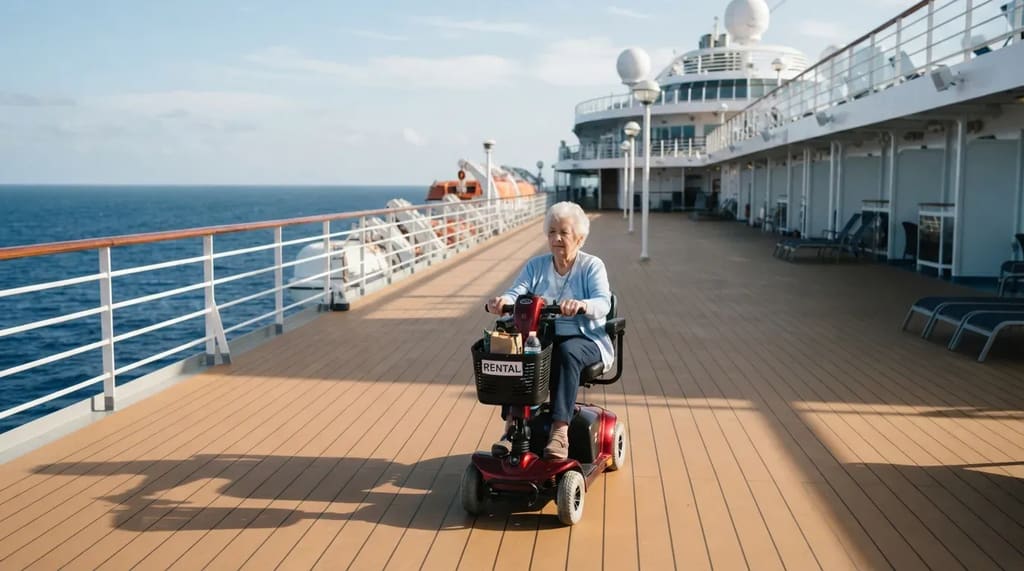
The help at the gangway is free, but the mobility gear you use all week is generally not. Royal Caribbean tells guests who want a wheelchair or scooter during the cruise to bring their own or rent from outside companies that deliver to the stateroom.2 Norwegian and Celebrity expect you to bring your own collapsible wheelchair.
If you tire on long walks but do not own a scooter, I would rent before sailing rather than wait for day two, when you find out how long a ship’s decks really are. Budget for it and book it early. Royal Caribbean also does not allow Segways onboard.2
Even a rented scooter has one place it generally cannot go, and that is the small boat to shore.
#8 – The Tender Boat That Turns Scooters Away
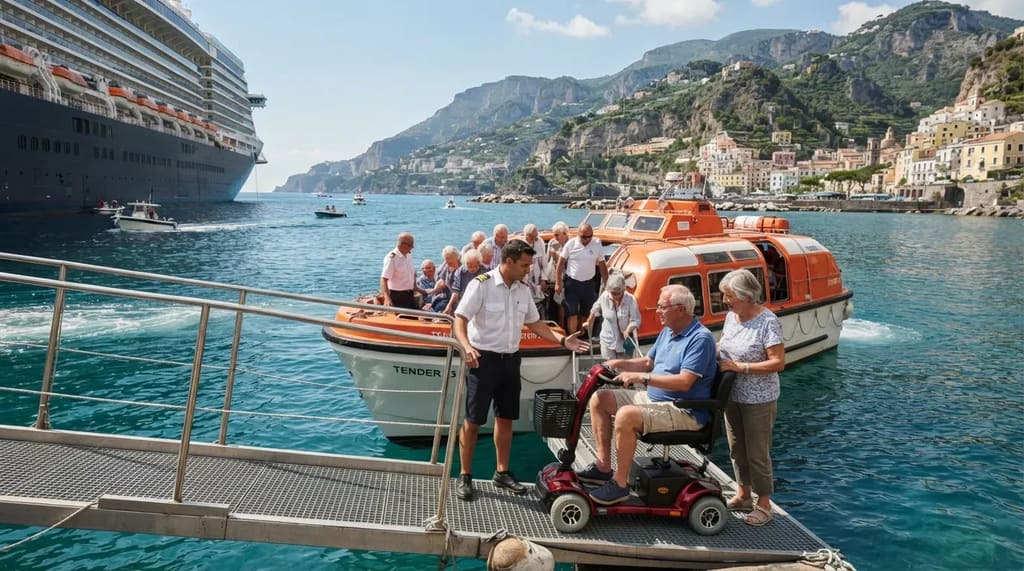
Most cruise lines do not permit power wheelchairs or mobility scooters on tender boats, citing weight, size and safety.6 Most lines also reserve the right to deny tender access to mobility-impaired passengers for safety reasons. A port that looks like the highlight of the itinerary can therefore become a quiet day aboard.
The same scooter that fit through your stateroom door may not fit on the boat. A guide to cruising with mobility aids calls tender ports the biggest risk for mobility aid users. Look up which ports on your itinerary are tender ports before you pay a deposit.
#7 – Shower Stools, Bed Boards and Raised Toilet Seats
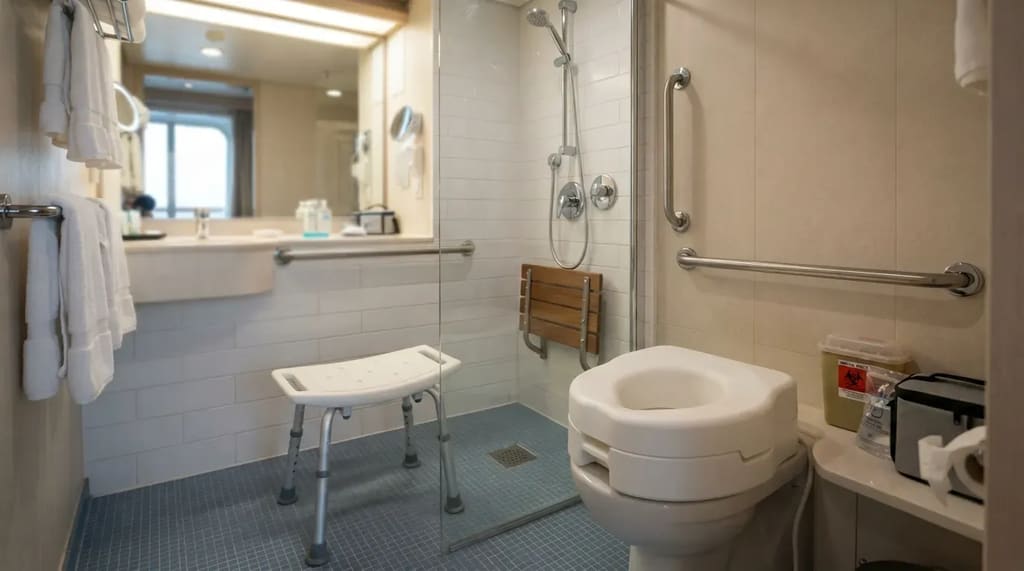
Princess lists shower stools, bed boards and toilet seat raisers among the items available on request. Other lines handle shower chairs, sharps containers, distilled water and medication refrigeration through a medical request form made at booking. Royal Caribbean also mentions large-print menus and visual tactile alert systems.
These small items decide whether a week at sea is comfortable. They sit on the same form as everything else in this piece, so one afternoon of paperwork covers several of them.
Muster drills apply to wheelchair users the same as everyone else, and crew help if reaching your station is hard. Tell your steward about any mobility problem on day one.
#6 – Distilled Water and a Wall Outlet for Your CPAP
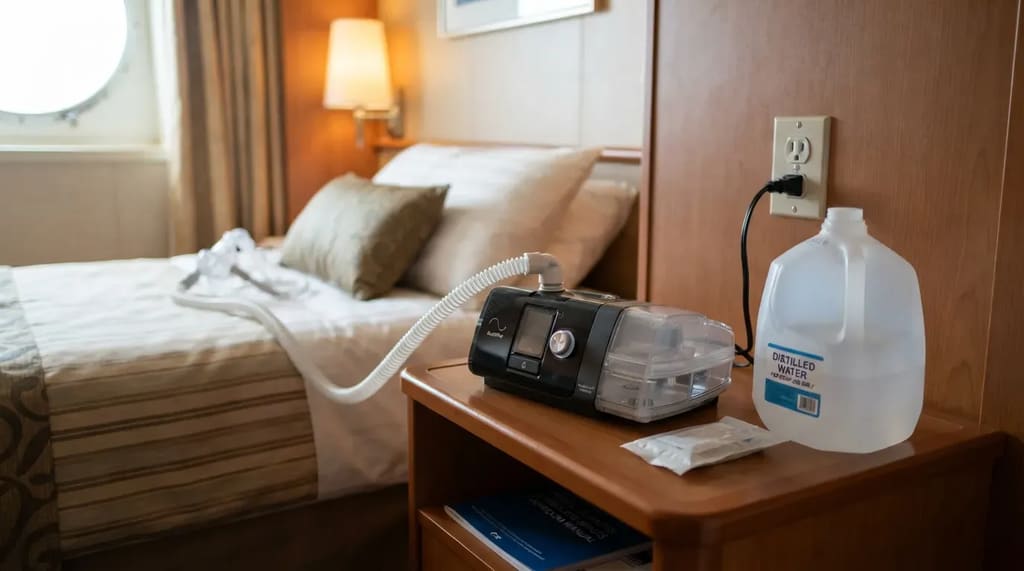
Carnival allows oxygen concentrators, CPAP, BiPAP, APAP, nebulizer and ventilator machines on board, and Princess permits the same group of devices. Carnival says you can request distilled water for a CPAP machine when you make your reservation. Princess adds that documentation for medical devices may help during security screening.
Carry the machine yourself. Checked cruise luggage can take hours to reach your cabin on embarkation day, and crew can push your chair but can’t carry your CPAP. The machine plugs into the cabin wall, so ask at booking if you need a plug adapter or an extension.
Power and water for the machine are settled by those requests, while keeping an insulin pen cold is a separate matter.
#5 – Sharps Containers and the Cabin Minibar Problem
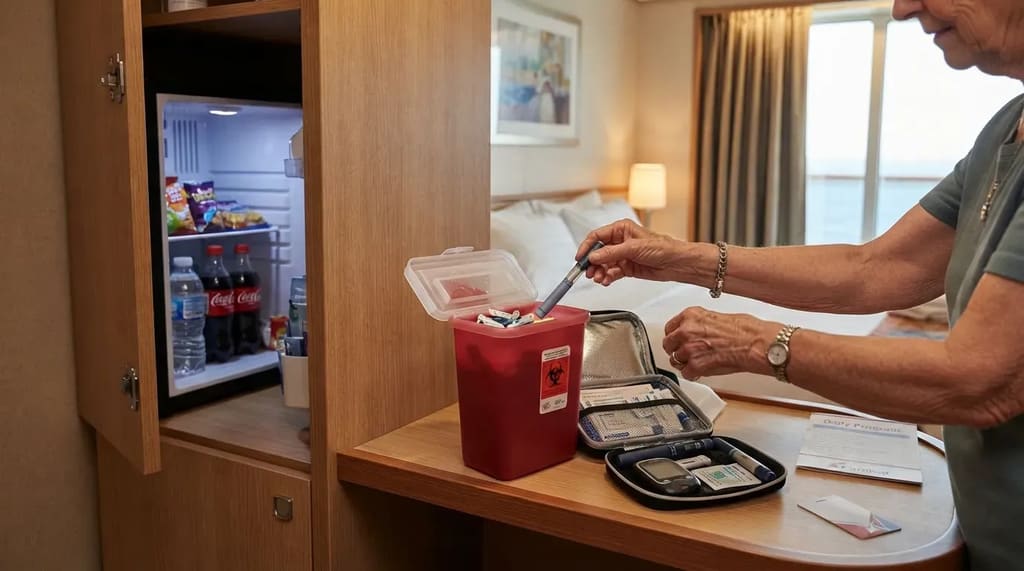
Carnival requires any medical sharp (needles, lancets or blades) to go in a sharps container, and you can request one from your housekeeping steward once aboard. The Medical Center is another route. The container is a standard request, so you do not need to explain much.
Refrigeration is trickier. Carnival says minibars are not to be used for medications with specific temperature requirements, and NCL says cabin minibars are not suitable and its Medical Centers may provide storage during clinic hours. Clinic hours do not cover midnight, so an insulated case is worth packing. Carnival’s pre-cruise forms include a refrigeration request.
Whatever goes in the cooler is only as dependable as the supply behind it, and the ship’s clinic stocks a limited shelf.
#4 – The Ship’s Clinic Shelf Is Smaller Than Your Cabinet
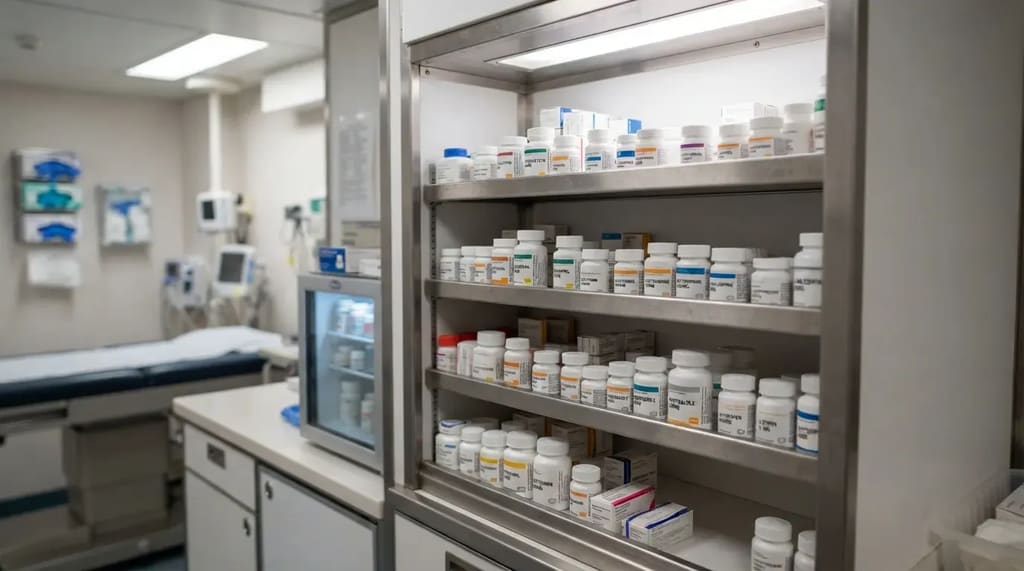
Princess says its onboard medical centers carry a range of medications, but the formulary is limited. NCL says that if a replacement is needed, the ship’s physician may prescribe an available alternative, though exact brands or dosages are not guaranteed. A ship’s doctor is a backup, not your pharmacy.
Related Stories From Travelbinger


So bring your own, and bring more than you need. A printed list of your medications also helps if your phone dies.
Worth Knowing: The Medication Packing Rules
- NCL says to pack enough for the whole voyage plus 10 extra days for delays.
- Keep medications in their original containers, in your hand luggage.
- Carry a physical or digital copy of your prescriptions.
- Narcotics must come with a valid prescription.
#3 – Oxygen the Ship Can’t Refill
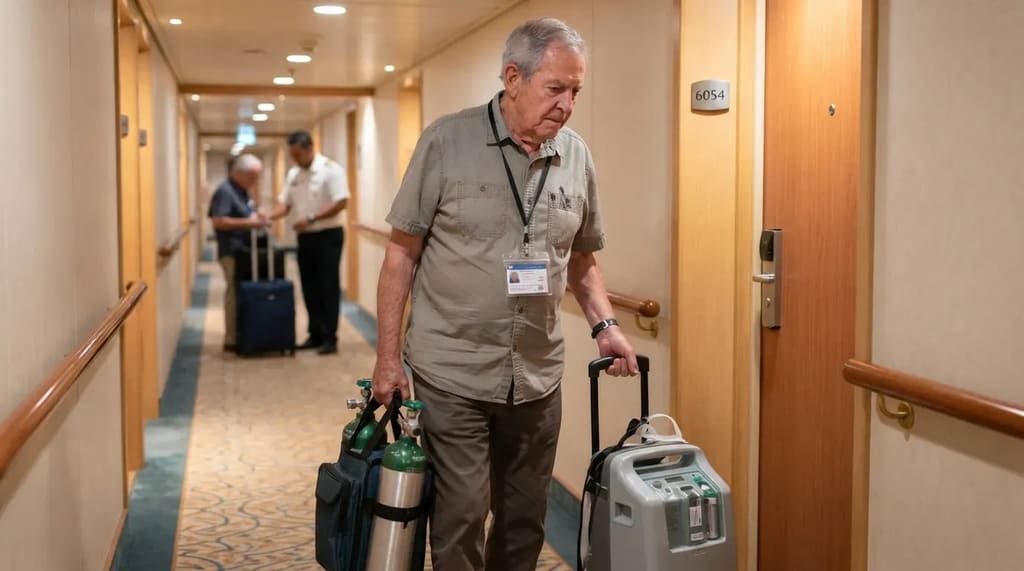
Carnival’s special requirements form says the Medical Center’s oxygen is for emergency use only, and guests who need oxygen during the cruise must arrange their own. Ships cannot replace or refill cylinders and have limited capacity to store them, so tell the Access Team the exact quantity you plan to bring. Carnival lists partner companies that rent concentrators and deliver them to the ship.
Lines handle it differently. Royal Caribbean permits all types of oxygen, asks you to tell its Access Department the type, quantity and delivery schedule, and requires storage in your stateroom. Carnival’s policy says cylinders cannot be packed in baggage and go to Guest Services for storage.
Care the ship does provide is billed to you, and whether Medicare helps depends on how far the ship is from a U.S. port.
#2 – Medicare Stops Six Hours From a U.S. Port
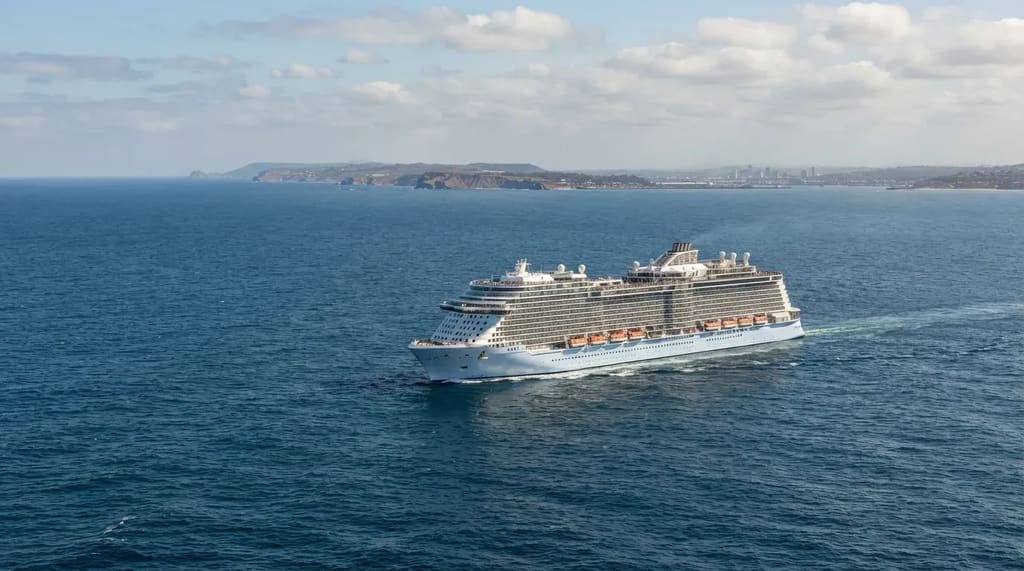
Medicare Part B pays for care on a ship only while the ship is in a U.S. port or no more than six hours from one, and only if the ship’s doctor is allowed to bill Medicare.7 Ship medical centers charge the visit to your stateroom account and do not take health insurance. On most itineraries, you spend nearly the entire trip beyond that window.
A Medicare Advantage plan does not fix this. CruiseCover, an insurance comparison site, says Medicare Advantage plans vary, but most offer only minimal emergency coverage abroad. NCL notes that medical services are not included in the cruise fare.
Where Medicare stops, a travel policy has to start, and its dollar limits matter more than its price.
#1 – The Evacuation Bill No Terminal Desk Can Waive
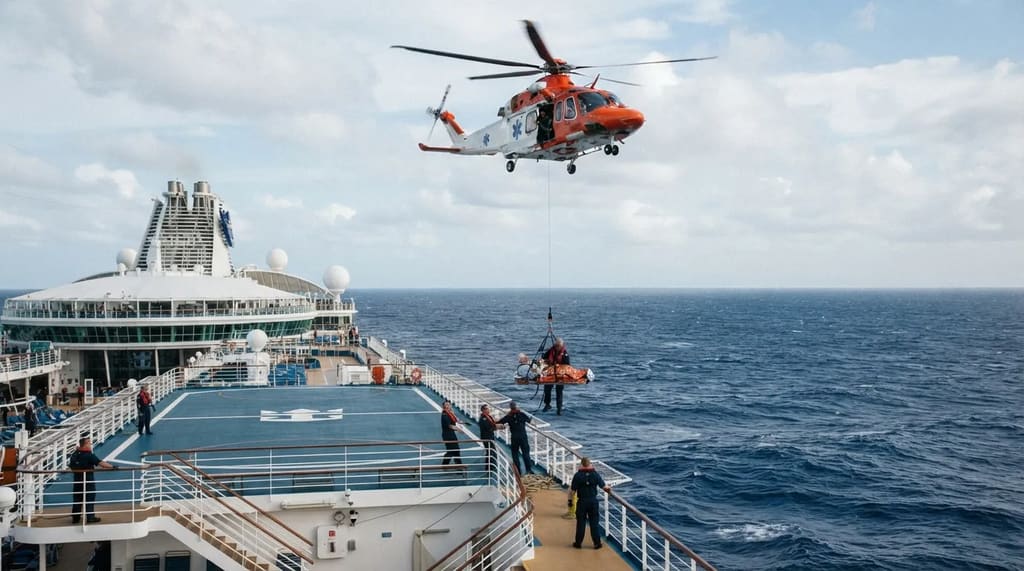
Squaremouth, a travel insurance comparison site, notes that Royal Caribbean’s standard policy includes up to $25,000 in emergency accident medical coverage and $50,000 in emergency medical evacuation. The same CruiseCover site that covered Medicare puts air ambulance and helicopter evacuations from mid-ocean at $50,000 to $300,000, with the bill landing on you without coverage. A $50,000 limit sits at the bottom of that range.
This is the largest item here and the one with no form at the terminal, so it is settled at home. Higher premiums for older travelers mean comparing several providers. Compare the evacuation limit before the price. Buying early helps seniors secure pre-existing condition coverage, so do not wait until the week before sailing. The Department of State recommends medical and emergency evacuation insurance for cruise travel.8 Read the policy terms, or ask a licensed agent, before you pay.
The pier is the worst place to discover what you should have asked for. Start with the cost that could reach six figures, then work down through the oxygen, the forms, the scooter and the fare. Each one gets easier to settle the earlier it is asked.
Nothing on this list needs a birthday. Most of it needs a form, a phone call or a policy booked at home, because the staff at the terminal can only help with what you have told them about.
- Cruise Critic Senior Deals: https://www.cruisecritic.com/articles/how-to-find-cheap-senior-citizen-cruise-deals
- Royal Caribbean Mobility Disabilities: https://www.royalcaribbean.com/experience/accessible-cruising/mobility-disabilities
- Carnival Wheelchair Users: https://www.carnival.com/about-carnival/special-needs/wheelchair-users
- Carnival Disability Services: https://www.carnival.com/about-carnival/special-needs
- Carnival Special Requirements Form: https://www.carnival.com/about-carnival/~/media/CCLUS/Images/pdf/special-requirements-information-form-pdf.ashx
- Royal Caribbean Tender Assistance: https://www.royalcaribbean.com/experience/accessible-cruising/additional-assistance
- Medicare Travel Outside U.S.: https://www.medicare.gov/coverage/travel-outside-the-u.s.
- State Department Cruise Ships: https://travel.state.gov/en/international-travel/planning/safety-tips/cruise-ships.html