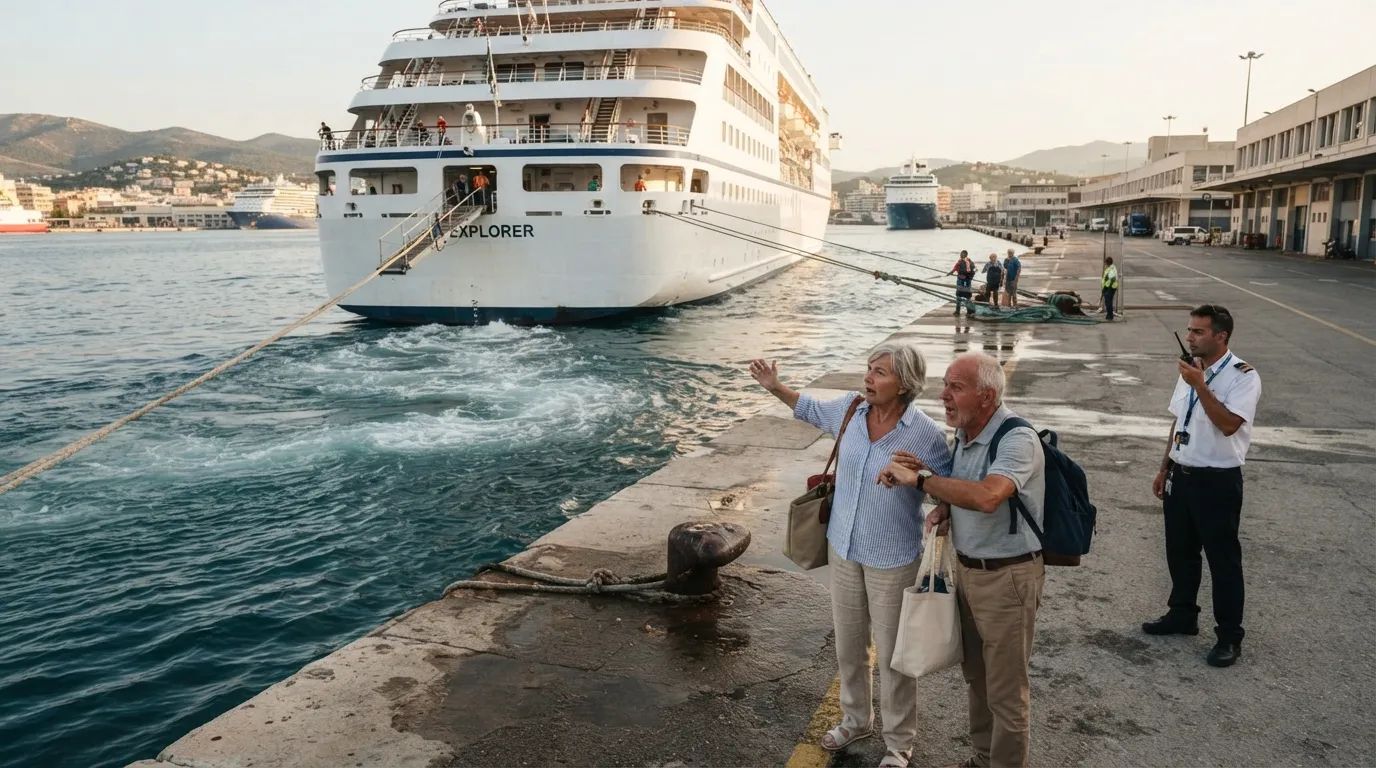
Most passengers over 65 worry about the buffet, the weather or a noisy cabin. The real trouble tends to start once the gangway is behind you.
Ports run on fixed clocks, uneven pavement and rules few people read. The ship cannot rescue a poor plan, and these mistakes are quiet, which is why they keep happening.
They run in rising order of cost, and the last one has nothing to do with your knees. Here’s what the pier-side guidance actually says.
#15 – Booking the Tour Because the Photo Looked Great
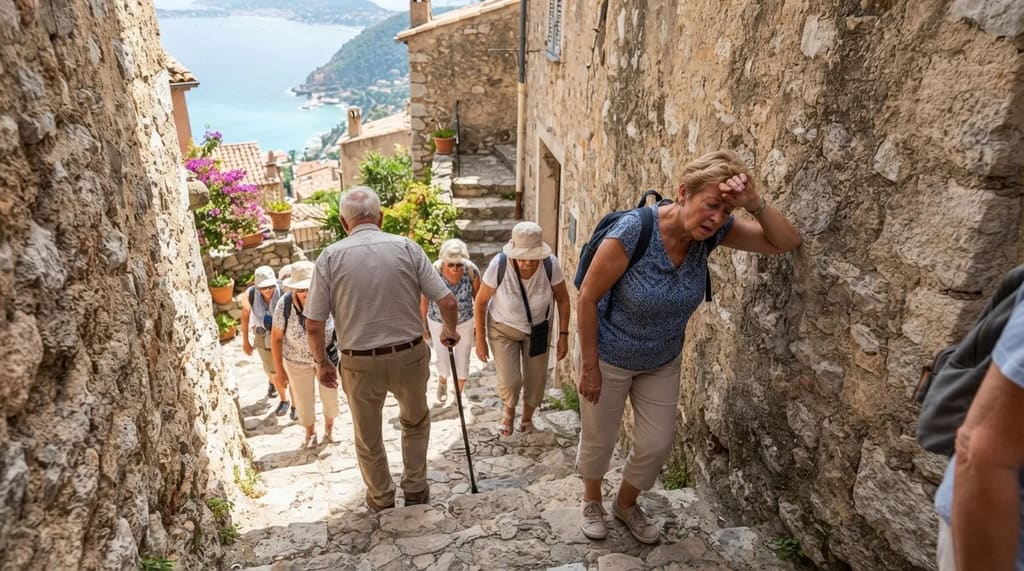
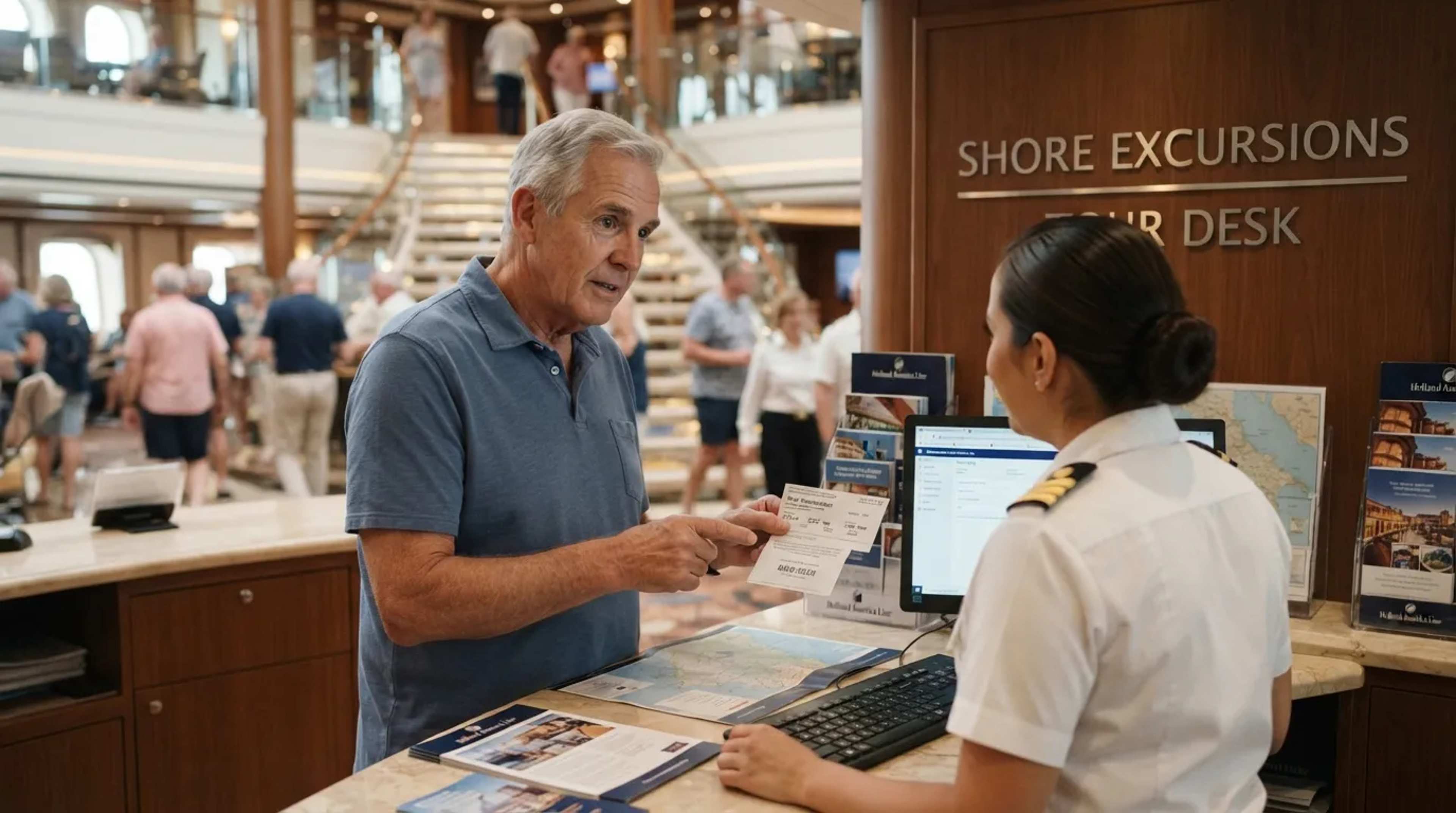
The brochure picture is the least useful thing on the excursion page. It shows you the summit and almost never the staircase.
Senior cruise guides give whole sections to what they call the shore excursion trap. A glowing terrace looks identical whether you reach it by elevator or by a long, steep climb.
Cruise lines list an activity level for every tour. The advice is to pick excursions by that listed level, not by how gorgeous the photo looks.
Here is the part most people don’t realize. One guide warns that excursion brochures are designed to sell, not to honestly describe the physical demands involved.
Worth Knowing
- Every tour carries a listed activity level, so use it as your first filter.
- Photos show the destination, not the path to reach it.
- Look for stairs, distance and surface type before you look at price.
- Check the same page for age, weight and health limits.
But the activity level is not the only line on that page, and the next one catches people who are physically fit.
#14 – Ignoring the Fine Print on Age Limits
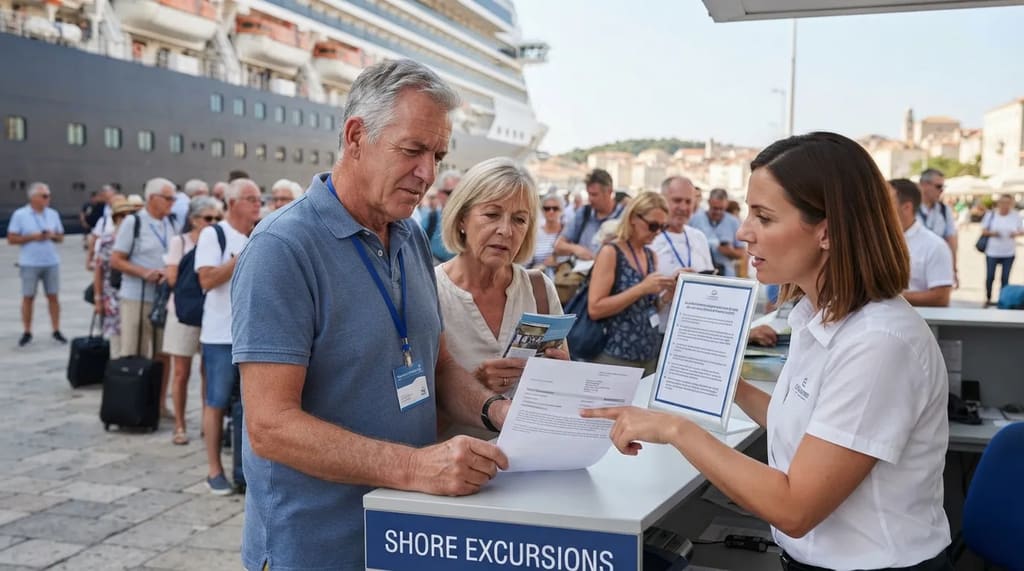
Some tours quietly rule you out before you ever reach the dock.
Age caps are not common, but they exist. One Cruise Critic member described a 69-year-old friend who tried to book a Segway excursion with an age limit of 68.
The limit is usually in the small print, not the headline. Booking first and reading later is how people end up rebooking at a crowded excursion desk, with a line growing behind them.
Fitness is not the only filter. Operators set rules for insurance and safety, and they apply them at the check-in table, not on the website.
Still, the most misleading phrase in the whole catalogue is two words long, and it comes next.
#13 – Taking “Moderate Walking” at Face Value
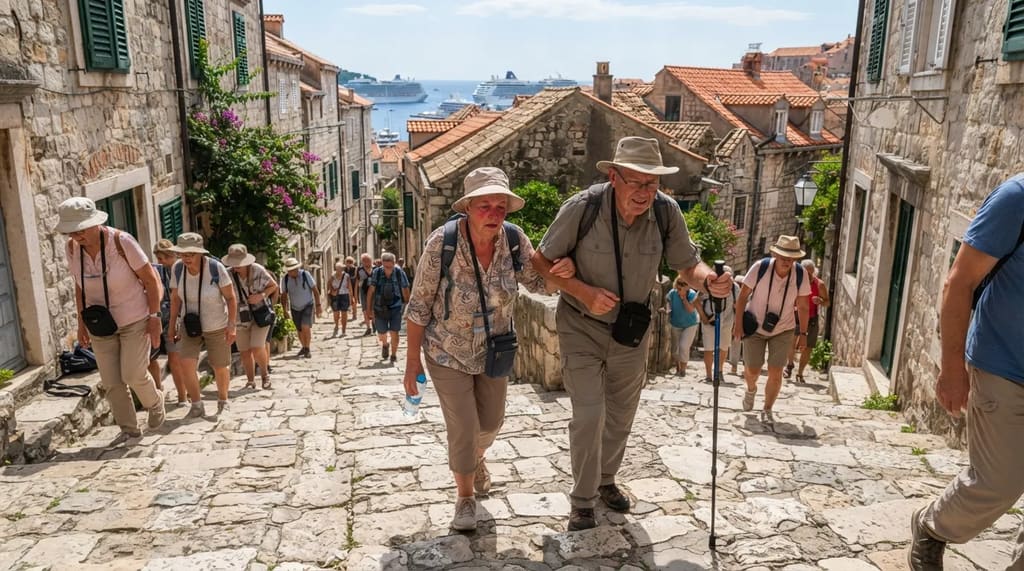
“Moderate” means something different to the person who wrote it than to the person who reads it.
A “moderate” tour for some can be physically taxing for others. The wording is rarely wrong, only vague.
Ask for numbers. How far, on what surface, with how many stairs and in what heat?
The same easy stroll is a different tour in 90-degree sun than on a mild spring morning. Read the small print on every listing for fitness levels, total distances, surface types, stair counts and climate conditions.
You could end up stranded, overheated or injured in a foreign port with limited medical resources, while the ship sails at a fixed time regardless.
That raises a more basic question about the bus itself, and almost nobody asks it.
#12 – Never Counting the Coach Steps
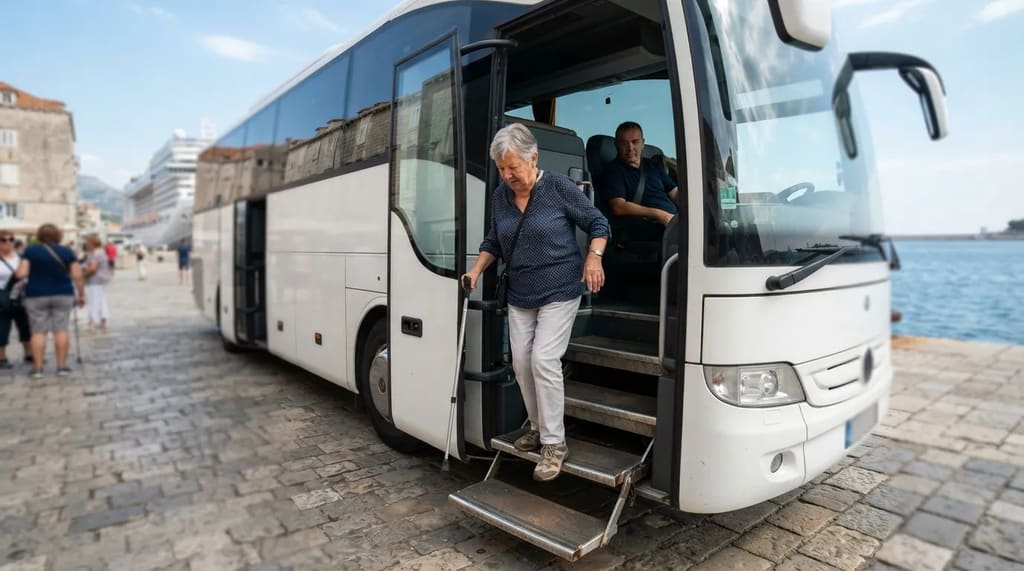
The tour can be flat and still be out of reach if the bus has a tall first step.
Excursion vehicles are not built like city buses. Princess says its standard coaches generally require three to five steps.1
That is a lot for someone with a bad knee or a cane. And the steps repeat at every stop, getting on and off.
Older travelers are advised to check tender arrangements, gangway conditions, coach steps, terrain and toilet access before booking. Toilet access is the item most people forget, and the one they miss most by midafternoon.
But the real obstacles often start at the end of the pier, as the next mistake shows.
#11 – Forgetting What Waits Outside the Port Gate
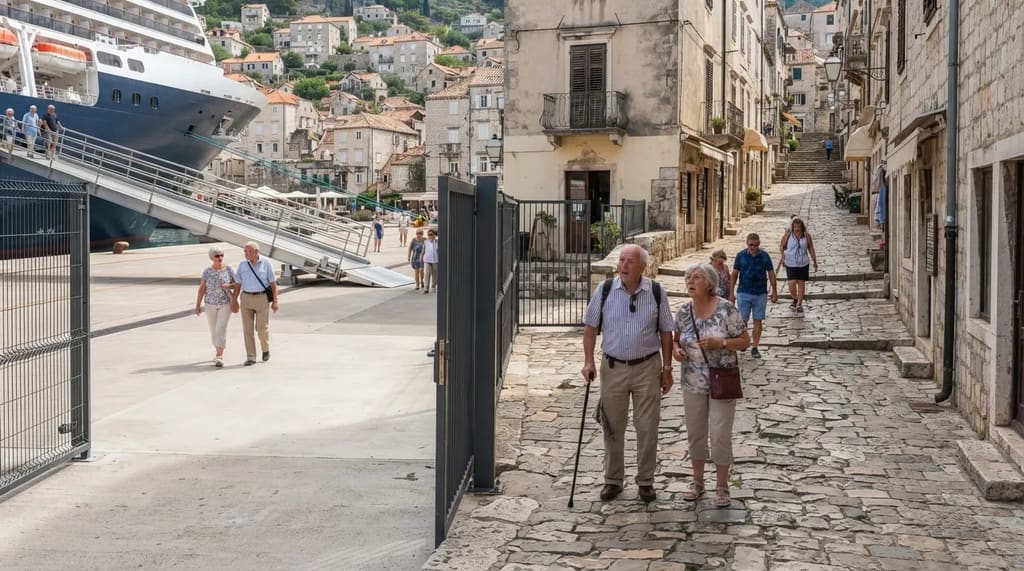
The ship may be accessible. The town usually is not.
Cobblestones, hills, historic buildings, steps, narrow sidewalks, beaches and older infrastructure can all affect accessibility once you leave the port. A pretty harbor can hide a steep climb to the old town.
One accessibility guide makes a point that is easy to miss. A mobility scooter may fit the stateroom but not the excursion vehicle.
Many travelers plan the cabin carefully and the port not at all. Accessibility on board tells you almost nothing about accessibility ashore.
Quick Compare
- On the ship: elevators, wide corridors, ramps and crew close by.
- On the pier and in town: cobblestones, hills, steps and narrow sidewalks.
- On the excursion vehicle: tall steps, tight aisles and no guarantee your device fits.
There is one trick that anchored ports force on you, and few passengers use it wisely.
#10 – Standing in the General Tender Line
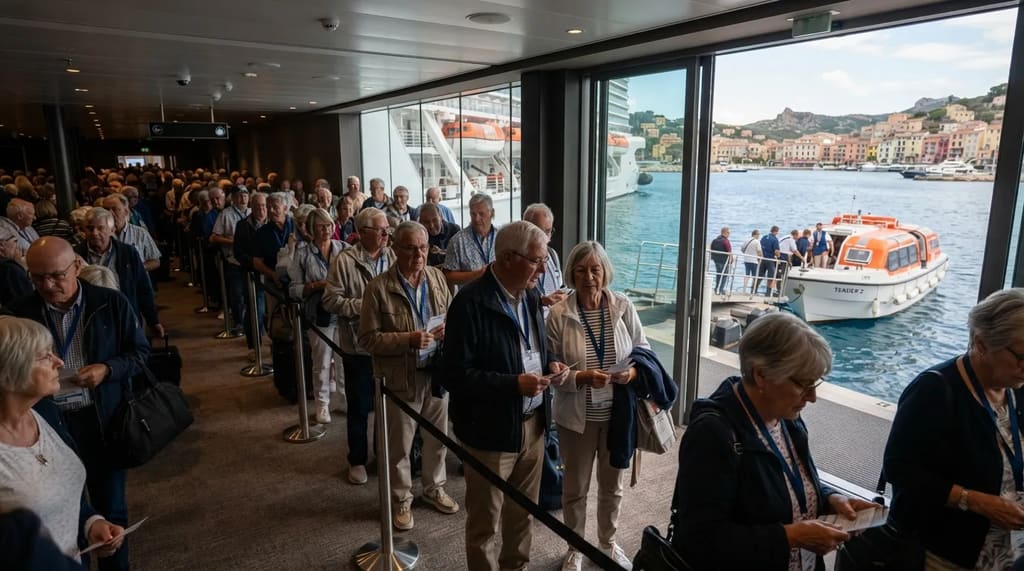
At some ports, the first hour of your day is decided in a queue.
When the ship anchors offshore, small boats carry everyone to land. Independent passengers may have to gather in a public room, collect sequenced tender passes and wait until their numbers are called.
On a large ship, that wait can be long. Very large ships are more likely to use tenders, and the wait can be frustrating while others are already ashore.
One senior-focused guide says a ship excursion at a tender port can save 30 to 90 minutes over the general queue. Treat that figure as a rough estimate, since lines differ.
Yet the queue is a small problem next to whether you can board the tender at all.
#9 – Not Checking Which Ports Are Tender Ports
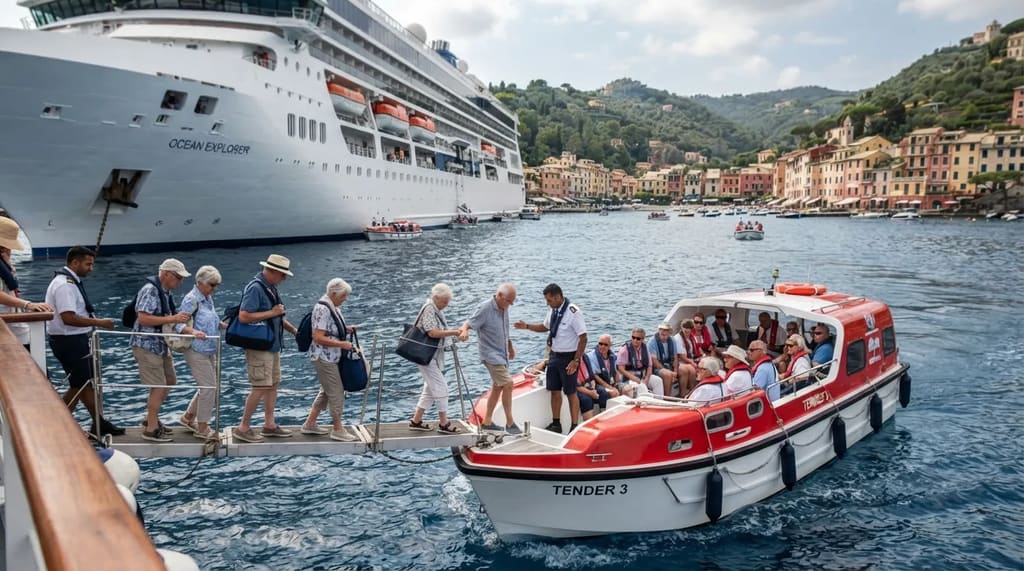
Many passengers learn their itinerary has tender ports only when the ship drops anchor.
The information is available early. After you book, many cruise lines list on their itineraries whether each port is a tender port or a pier.
Better still, check before you book. A quick call to the cruise line about tendering takes a few minutes.
If you can’t board the boat, you can’t reach a clinic or a pharmacy ashore. That makes the itinerary part of your medical planning, not just your sightseeing.
For anyone using a scooter or power chair, the rules get stricter, and the exceptions are rare.
#8 – Assuming Your Scooter or Walker Can Ride the Tender
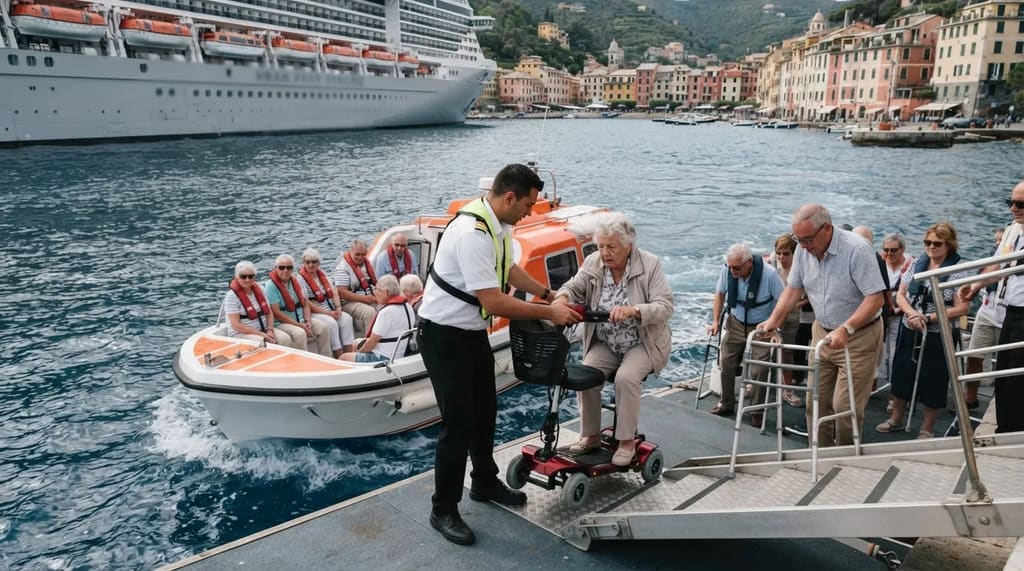
On many ships, a mobility device that works everywhere else simply cannot make this crossing.
Most cruise lines have a blanket policy that scooters and power wheelchairs cannot be transported on tender boats. Manual chairs may be allowed, but that is at the captain’s discretion and never guaranteed.2
Even lines with good access carry limits. Holland America states that wind, swells or extreme tides can stop mobility transfers outright, and the captain has the final say.3
Weight is another hidden limit. Holland America crew will not lift a device over 100 pounds without its battery onto a tender.3
And even a perfect plan can fall apart on the day, which is the next quiet mistake.
#7 – Treating the Port Call as a Sure Thing
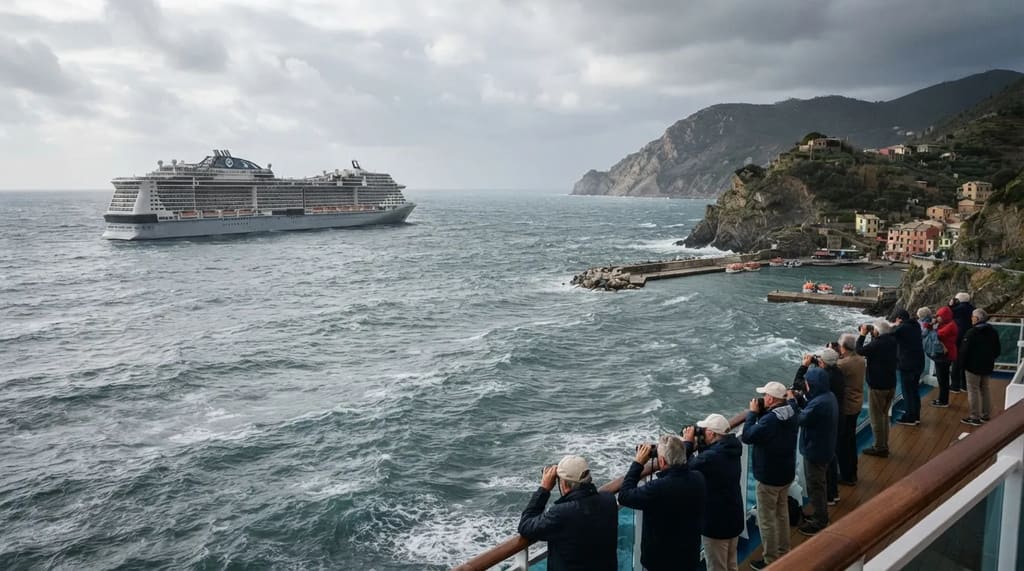
The stop on your itinerary is a plan, not a promise.
Tender ports are the most exposed. If the water is too choppy to board tenders safely, the cruise line will skip that port of call.
Access can also change mid-cruise. Weather, sea conditions, tides and operational changes can affect whether tenders can safely carry a particular traveler or device.
That matters if you prepaid a special tour or built the whole trip around one stop. The one port you most wanted is the one weather can take away.
Fast Facts
- Tender ports are the most likely to be skipped when the water turns rough.
- Sea conditions and tides can change access in the middle of a cruise.
- Prepaid special tours are the plans most at risk.
- A backup idea for the day costs nothing and saves the mood.
Some travelers handle this by keeping a second plan in mind, and others make the opposite error and try to cram in too much.
#6 – Overestimating Your Stamina on a Timed Day
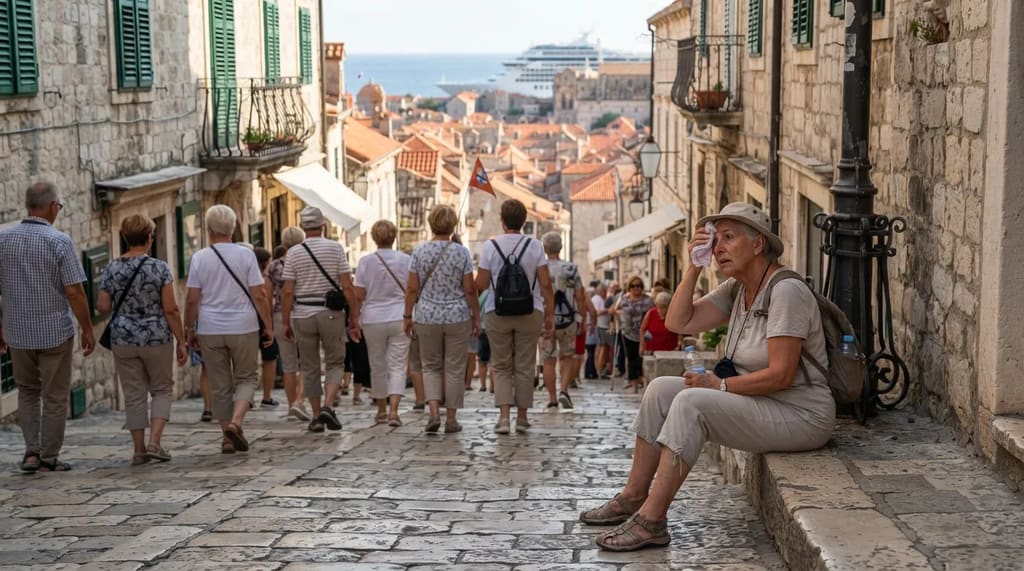
A port day has a hard end, and that changes how tiring it feels.
At home you stop when you are tired. In port, the ship’s clock decides when you have to be back, and the walk to the pier does not shrink.
Guidance for older travelers favors a gentler pace. One guide suggests an unhurried day, early starts on tender-port mornings and a few hours ashore with a buffer on either side.
Doing less is not a failure. Skipping the second attraction is a decision, and getting stuck far from the ship is not.
But there is a bigger debate about how you get ashore in the first place, and veterans disagree.
#5 – Writing Off Independent Tours Completely (Or Trusting Only the Ship)

Many veterans swear the ship’s tours are overpriced, but the real answer depends on the port.
Independent tours have real advantages. They can often be cheaper than ship-sponsored excursions, as well as smaller, more personal and more customizable.
But distance changes the math. At ports with long drives, boat transfers to smaller islands or complex logistics, booking through the cruise line can be worth the premium for the ship-waits guarantee.
One guide points to an all-day trip such as Livorno to Florence. That is where you may want the safety net of knowing the ship will not leave without you.
If you do go independent, one sentence in your booking email matters more than the price.
#4 – Accepting a Vague “We Never Miss a Ship”
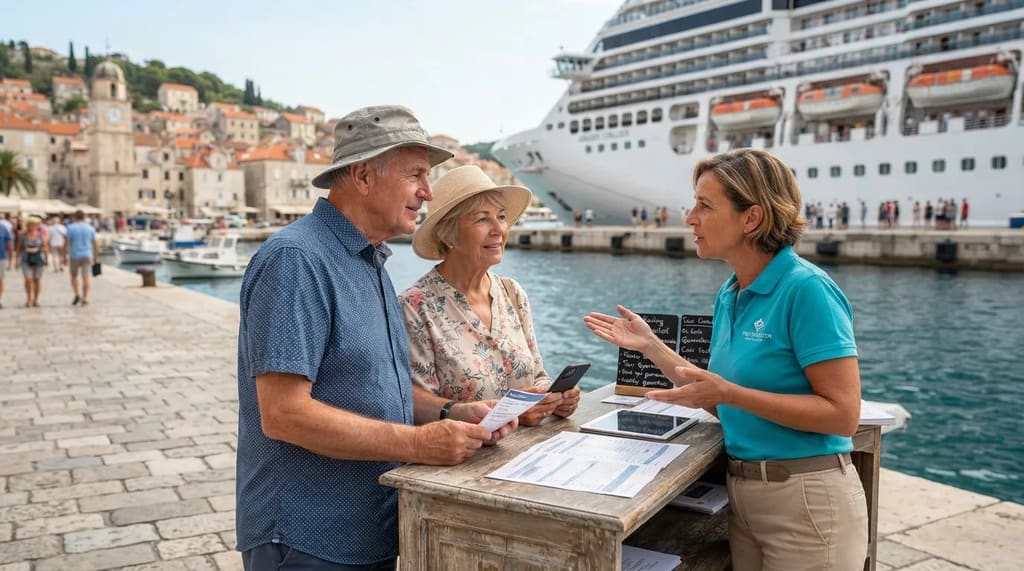
That reassurance sounds comforting, but it promises nothing.
“We have never missed a ship” is a claim about history, and it commits the operator to nothing. A true guarantee is tied to your sailing.
The wording to look for is a guarantee of return before your ship’s all-aboard time. It should name your ship and date.
Some operators guarantee you will reach the ship on time or they will pay for you to get to the next port. Ask what happens if that guarantee fails.
Yet even a solid guarantee depends on a clock, and many travelers are reading the wrong one.
#3 – Running on the Wrong Clock
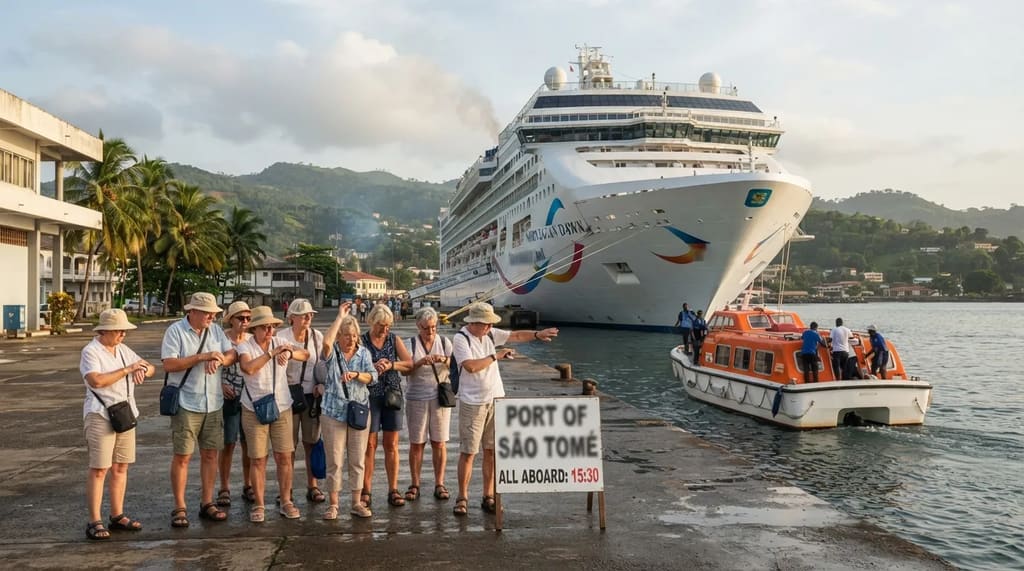
The time on your wrist may not be the time that matters.
Related Stories From Travelbinger
Ports often sit in a different time zone from the ship. When you leave, make sure your watch or phone is set to ship time.
Then there is the difference between departure and all-aboard. Norwegian’s terms, for example, put the guest’s deadline one hour before scheduled departure.4
The stakes are real. Eight passengers on the Norwegian Dawn were left stranded in São Tomé, roughly 300 miles off mainland Africa, after missing departure.4 5
The cruelest assumption is the next one, because it is the one passengers make most calmly.
#2 – Assuming the Ship Will Wait for You
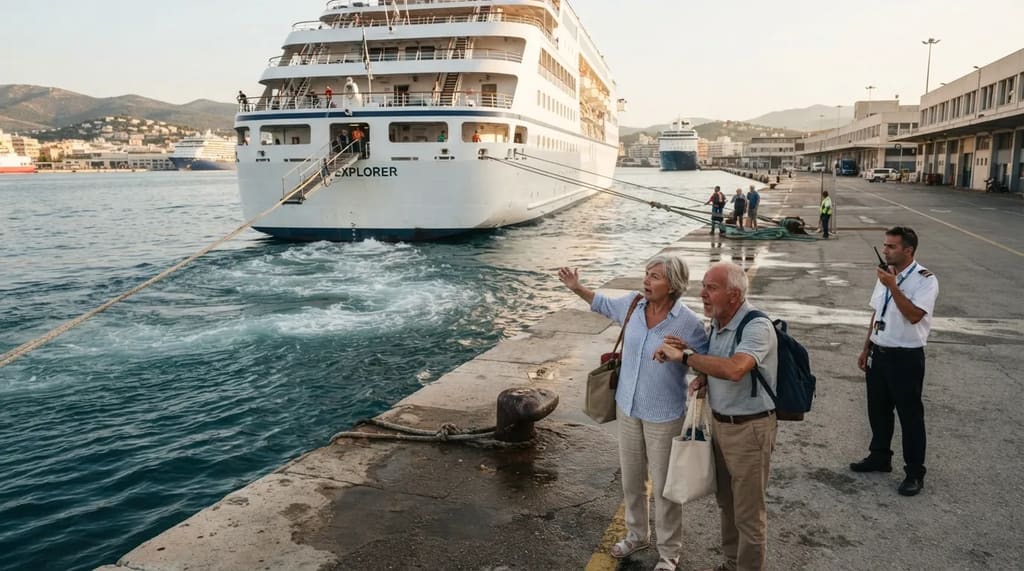
The ship waits for some passengers, and you may not be one of them.
If your excursion was delayed but sold by the cruise line, the captain will wait for your group.6 That promise stops at the edge of the ship’s own tours.
Independent excursions offer no such guarantee. If you are late, you pay for your own way to the next port, and you shouldn’t expect reimbursement for what you missed.5 6
A late departure can also cost the ship its slot at later ports, affecting thousands of other passengers. That is why captains do not bend.
Still, losing a ship is a bad day. The final mistake is the one that can turn a bad day into a bill.
#1 – Believing Medicare Will Cover You Ashore
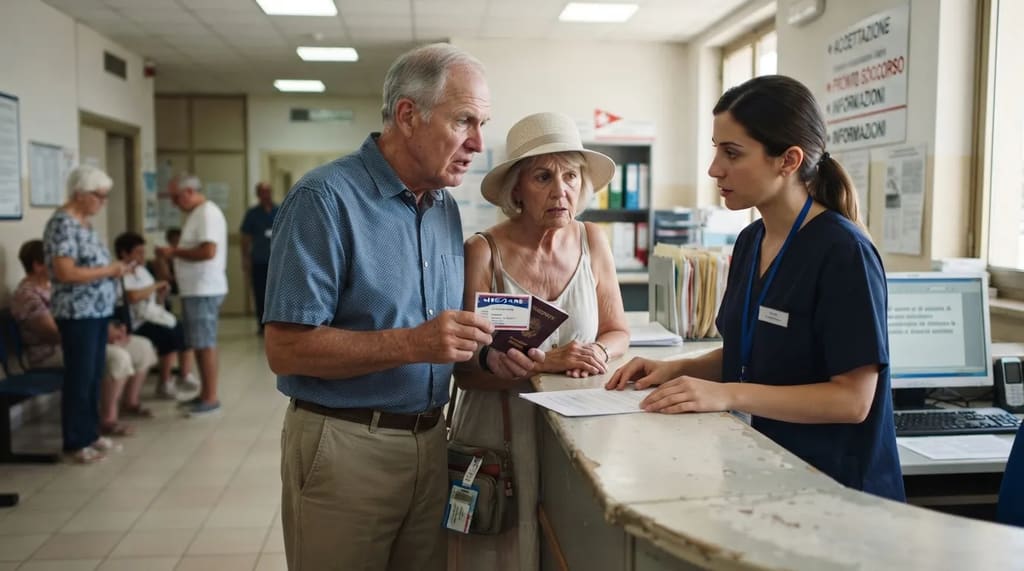
This is the quietest mistake on the list, and the most expensive.
Original Medicare usually doesn’t pay for health care outside the U.S., so you would pay the whole bill yourself. The cruise exceptions are narrow and tied to U.S. waters or a ship within six hours of a U.S. port.7
Once the ship is farther out than that, Medicare generally pays nothing, and a hospital in a foreign port bills you directly.
Prescriptions are a gap too. Medicare drug plans don’t pay for drugs bought outside the U.S., so a lost bottle of pills in Rome is yours to replace.8
Medicare Advantage plans generally do not cover care outside the U.S., though some add an emergency benefit. Check your own policy before you sail.
The simplest fix is to buy a separate travel medical policy and read what it excludes before you pay.
The Bottom Line
Most of these mistakes come from trusting a general promise: a photo, a word like “moderate,” a friendly operator or a coverage card. The details tell a different story.
Stairs, tenders and all-aboard times are fixed, and the ship’s guarantee covers only its own tours. The costliest gap is the one nobody sees on the dock, because Original Medicare usually stops paying once you leave the U.S.
At a Glance
- Before booking: check the activity level, coach steps and age limits.
- Before the port: find out if it is a tender port and what your mobility device is allowed to do.
- On the day: set your clock to ship time and know the all-aboard deadline.
- Before you sail: confirm your medical coverage outside the U.S.
The ship will sail on time with or without you. The best port-day plan is the one that gets you back aboard, and covered if you can’t get there.
Which of these have you seen play out on a pier, and which one would you have gotten wrong?
- Travel Rules Accessible Excursions: https://travelrules.co.uk/what-happens-if-you-need-an-accessible-cruise-excursion/
- Cruisebound Mobility Aids Guide: https://www.cruisebound.com/articles/cruising-with-mobility-aids
- Holland America Mobility Equipment FAQ: https://www.hollandamerica.com/en/us/faq/accessibility/how-will-I-get-on-and-off-the-ship-with-mobility-equipment
- Goodreads Norwegian Dawn Recap: https://www.goodreads.com/author_blog_posts/24642344-eight-passengers-stranded-after-breaking-the-number-one-rule-of-cruise-t
- NBC News Norwegian Dawn: https://www.nbcnews.com/news/world/eight-passengers-stranded-african-island-norwegian-cruise-ship-left-rcna145984
- Cruise Critic Shore Excursions: https://www.cruisecritic.com/articles/what-to-expect-on-a-cruise-shore-excursions
- Medicare Travel Outside U.S.: https://www.medicare.gov/coverage/travel-outside-the-u.s.
- Medicare Drug Coverage Abroad: https://www.tikr.com/blog/if-you-get-sick-on-a-cruise-more-than-6-hours-from-a-u-s-port-original-medicare-usually-pays-nothing