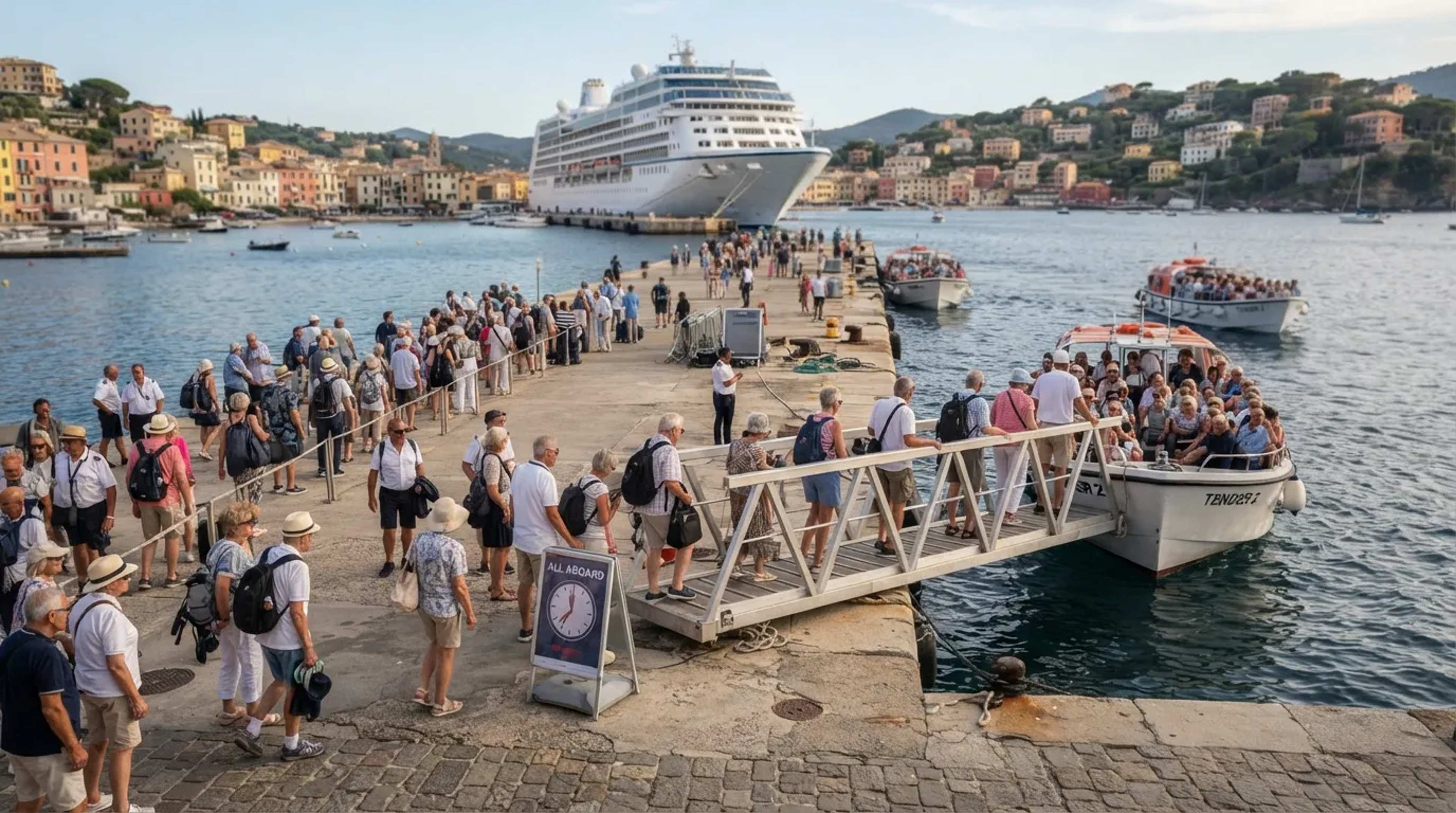
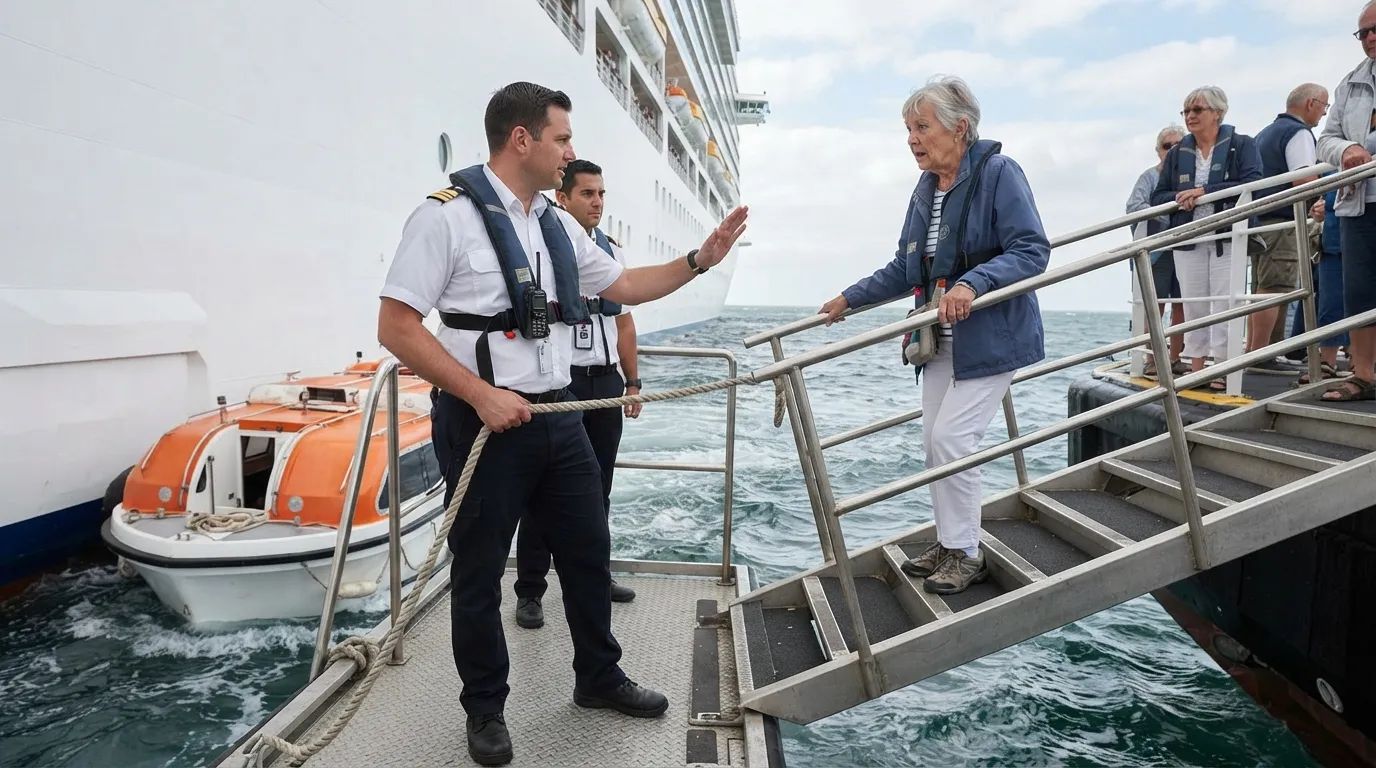
Most of us never think twice about the crew member at the edge of the tender platform. You step on, you ride to shore, you buy the souvenir magnet. But the moment you reach that bobbing step, someone who has done this hundreds of times is already reading you.
None of it is snobbery. A small boat rising and falling against a giant ship’s hull gives the crew only seconds to decide how to help, and the clues they use are smaller than you’d guess. Some start at your ankles, and one is something you can’t control at all. That one is waiting at #1.
#13 – The Shoes They Glance At Before You Say a Word
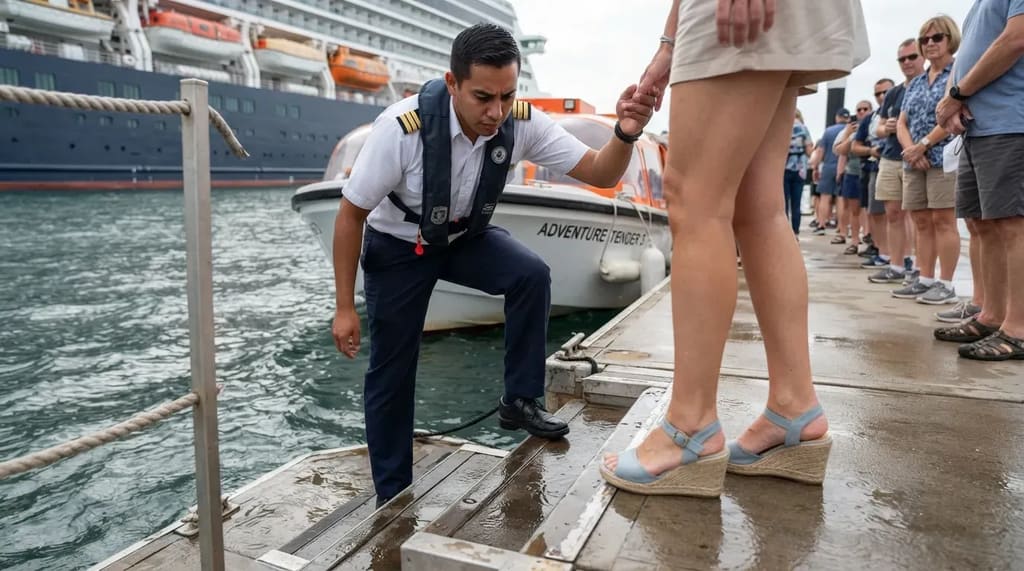
Footwear is the first thing many crews notice. The standard advice before boarding a tender is flat, water-resistant shoes with good traction. Crew at the boarding platform will often glance down at a guest’s shoes before helping them step across. That half-second look tells them how much help you may need.
Flip-flops, slick soles and wedge sandals are the usual worry. The platform is low, wet and moving, which makes it nothing like a dry pier. A shoe that slides on a damp step turns an easy hop into a two-person job. Most passengers never realize they were “read” from the ankles down.
#12 – The Free Hand Nobody Thinks About
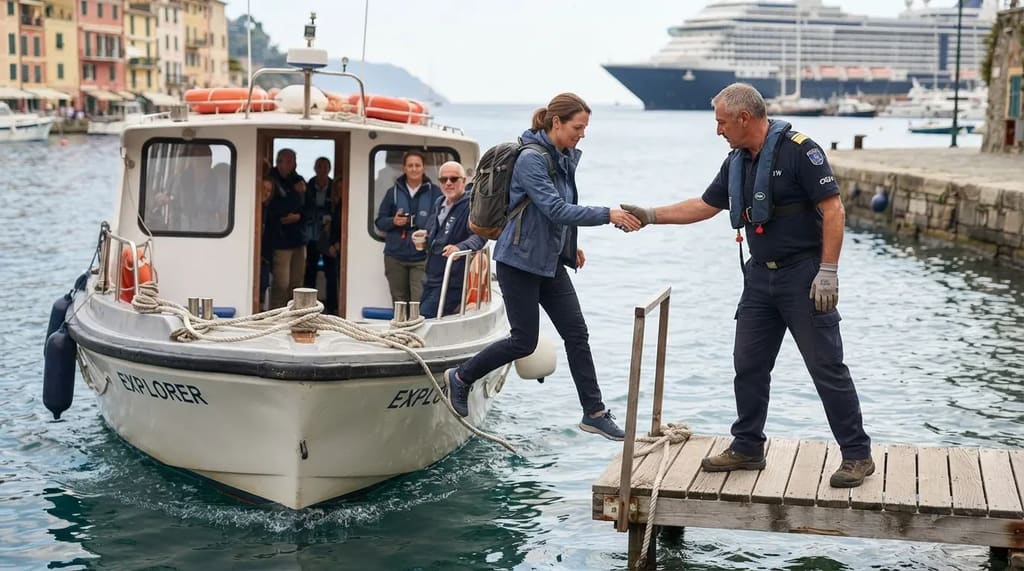
Crews want to see one hand free. Stepping across a gap is far easier when you can grab a rail or take a steadying grip from a crew member. A big tote on one shoulder and a drink in the other hand takes that option away before you’ve even started.
Here’s the thing most passengers miss. Crew members aren’t judging your bag. They’re counting how many ways you could catch yourself if the boat shifts. An overloaded guest looks like a fall waiting to happen. A backpack worn on both shoulders sends a very different signal.
Worth Knowing
- A crew member can only steady you if you have a hand available to take.
- Drinks and shopping bags are the classic hand-blockers.
- A backpack worn on both shoulders leaves both hands open.
- Stash the souvenirs and snacks before you reach the platform, not on it.
#11 – The Card That Gets You Stopped at the Door
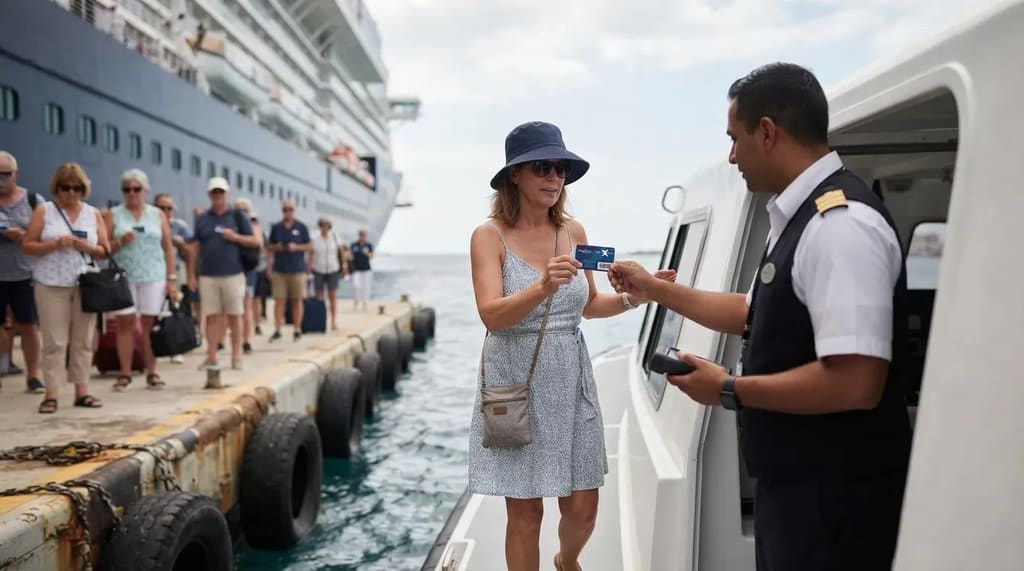
Before anyone helps you aboard on the return trip, many crews check that you belong there. Celebrity Cruises says guests should have their SeaPass card ready to show the crew and will not be allowed to board the tender without it.1 That’s a hard rule, not a courtesy.
Picture the scene: a line behind you, a ship towering overhead, and your card buried somewhere at the bottom of a bag. Digging through it at the edge of a moving platform is exactly what crews hope to avoid. Fumbling for ID while the boat shifts is a safety problem, not just a delay. The passenger with the card already in hand gets the smoothest welcome.
#10 – The Quick Test: Can You Take a Few Steps?
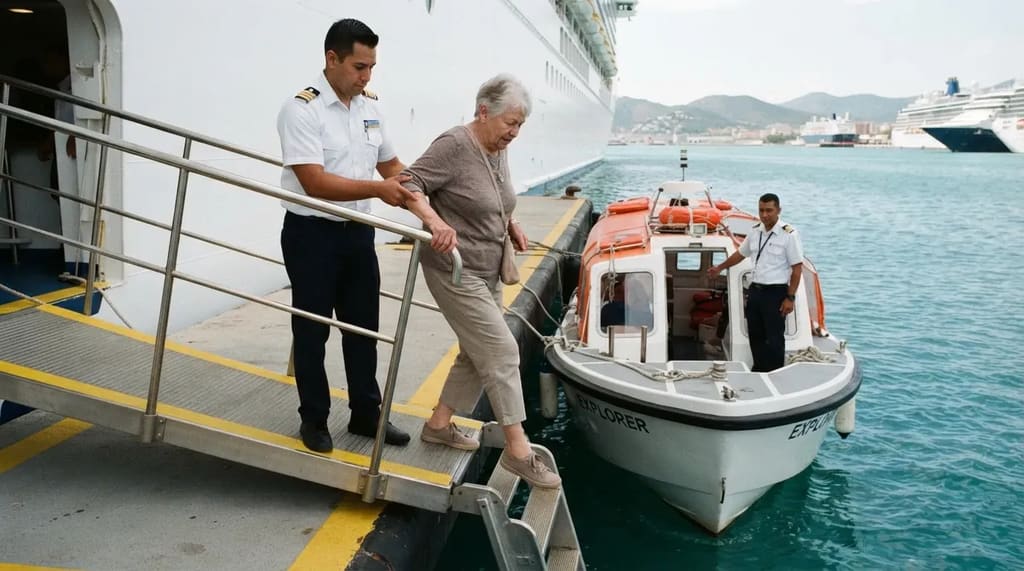
Many tender boats sit lower than the ship’s platform. Royal Caribbean states that to safely board most tenders, guests must be able to take steps and use a collapsible manual wheelchair.2 Margaritaville at Sea tells guests they may need to climb or descend steps to reach the tender and to re-board the ship.3
Crews watch how you handle the first step, which is why you may see them hovering close. Guests who can’t manage even a few steps typically can’t board unless the ship has roll-on capability. Some travelers only learn this at the pier, after the excursion is already booked.
#9 – Your Wheelchair or Scooter, Sized Up in Seconds
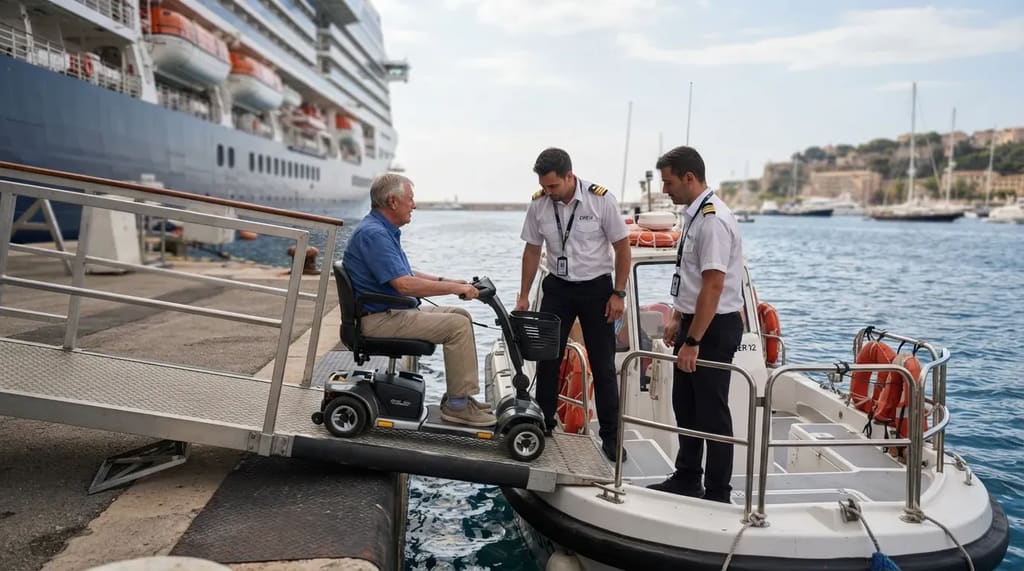
Crews look at your device as closely as they look at you. Royal Caribbean notes that motorized wheelchairs and mobility scooters cannot be taken on tenders unless roll-on capability is available.2 A cane or walker is generally a smaller issue, and a collapsible manual chair usually works.
Virgin Voyages takes a similar line. It limits manual chairs to collapsible models, and powered chairs and scooters need roll-on access.4 The tender isn’t ignoring you. It’s a small boat that physically can’t carry some equipment safely. In the end, the captain makes the final call.5
Quick Compare
- Collapsible manual wheelchair: usually workable on most tenders.
- Cane or walker: generally a smaller issue for the crew.
- Motorized chair or scooter: only when the tender has roll-on capability.
#8 – Who Folds the Chair, You or Them?
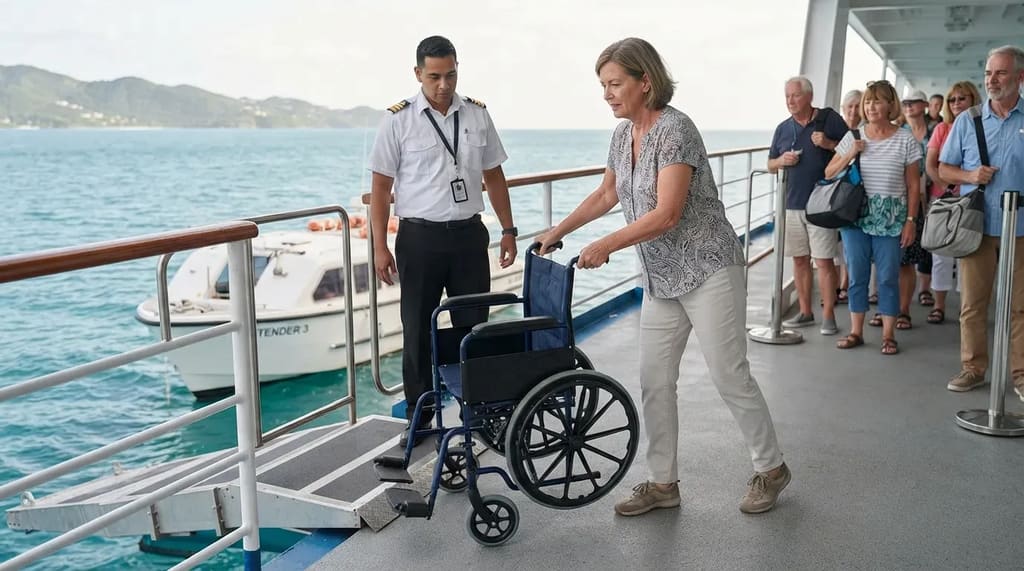
Crews notice whether a guest arrives ready to manage their own gear. One cruise-travel roundup reports that guests are responsible for assembling and taking apart their chair or scooter, and crew will only help lift parts weighing 40 pounds or less. Policies differ by line, so treat that as a common pattern, not a promise.
That detail changes the picture. A chair that folds in seconds keeps the whole line moving. Guests who have practiced look confident, and crews tend to respond in kind.
#7 – The Wobble They Spot Before You Do
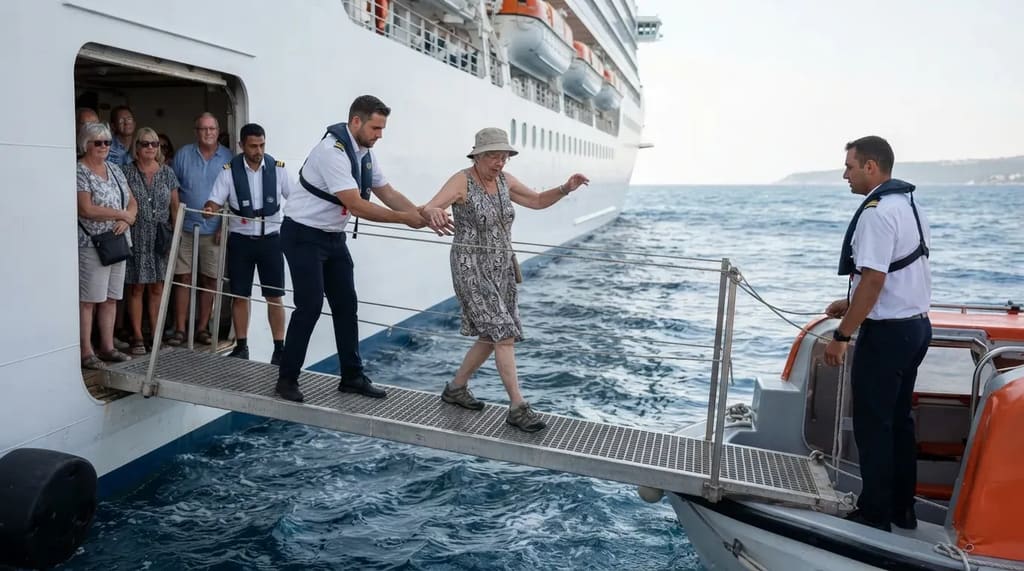
Experienced crews read balance the way a coach reads a runner. A guest who sways on a flat deck will struggle on a bobbing platform. Crew members are positioned to help because the tender can shift or bob even while tied to the ship.
One cruise-travel report even claims crews may quietly bend ticket order for guests who look unsteady. That’s reported, not official, and you won’t find it in a brochure. The takeaway is simple: if you feel wobbly, the crew would rather know early than catch you late.
#6 – Whether You Wait for the “Step Now” Moment
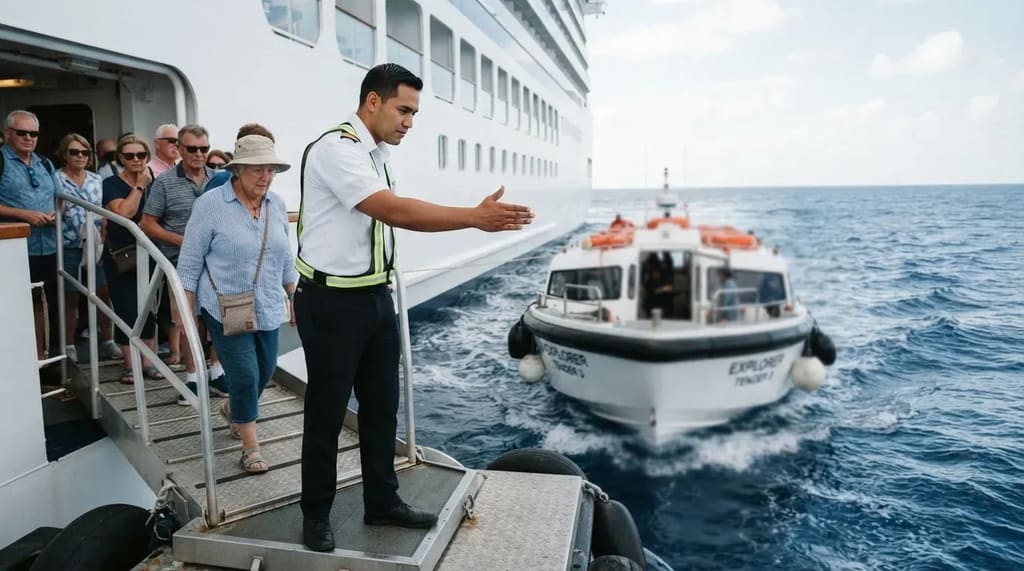
The gap between ship and tender changes with every swell. Crews watch for the right moment, and they watch whether you’ll wait for it. A guest who steps early, before the signal, throws off the whole rhythm.
Many tender crews are described as standing in the gap to shrink the distance guests must cross. The best boarding looks almost boring, because everyone moved on cue. Passengers who rush are the ones crews tense up around.
#5 – The Moment You Stand Up Too Soon
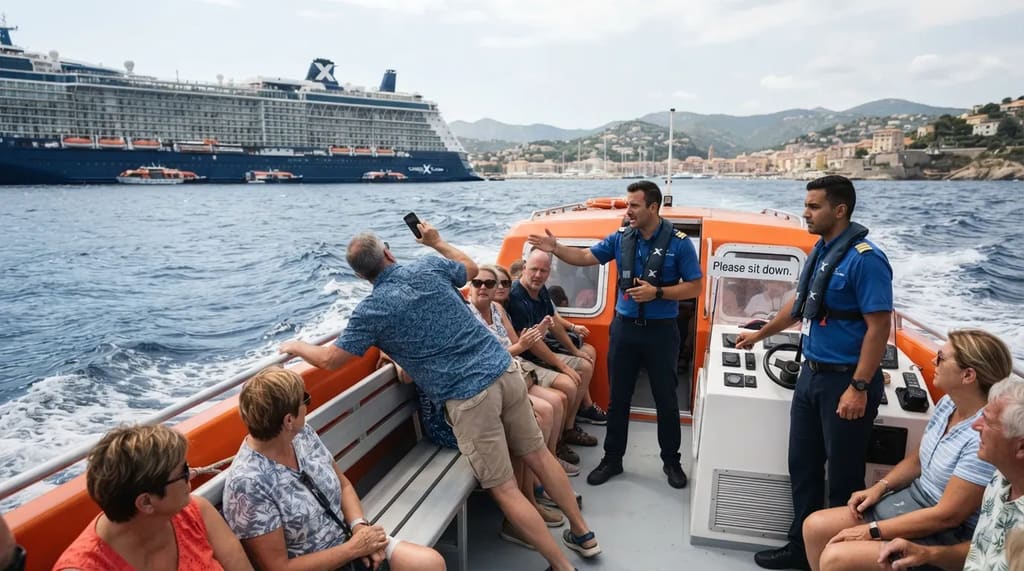
Crews keep an eye on how you behave once you’re inside the boat. Celebrity Cruises is clear that safety rules are strictly observed, and you can’t get up and walk around during a tender transfer. It’s a short ride, but one standing passenger changes the boat’s balance.
That’s why you’ll often hear a firm, polite “please stay seated.” Passengers who sit right away tell the crew the ride will be easy. The classic headache is the guest leaning over the side for a photo of the ship.
Fast Facts
- Celebrity says guests can’t get up and walk around during a tender transfer.
- The ride is short, but a standing passenger shifts the boat’s balance.
- Leaning over the side for a ship photo is the classic crew headache.
- The easy fix: sit first, snap pictures once you’re ashore.
#4 – Whether You Warned Them Ahead of Time
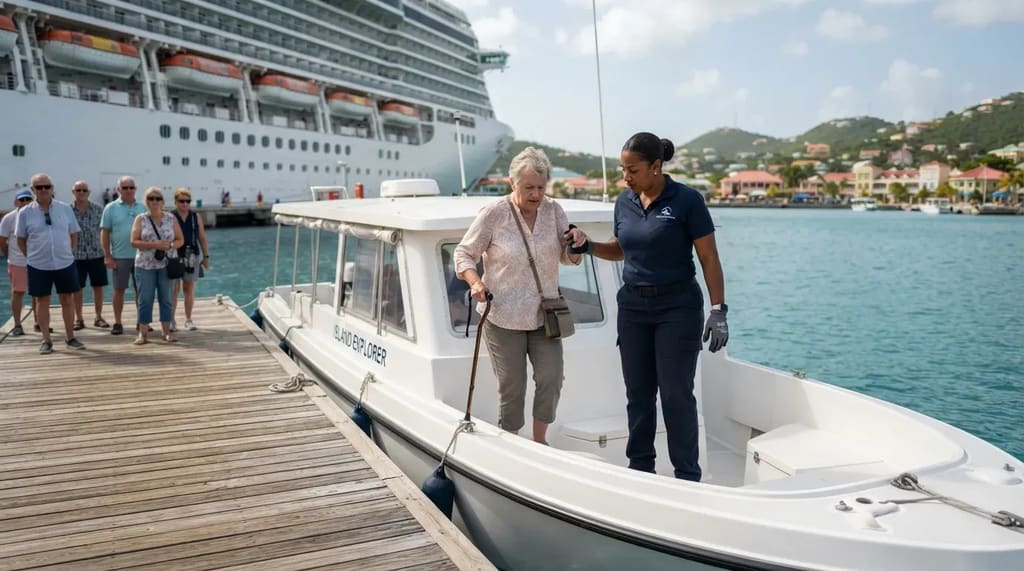
Crews can help best when they’ve been told. Margaritaville at Sea advises guests to contact them 30 days before the cruise so assistance can be prioritized.3 Celebrity likewise says to request help at the pier or beforehand, though there may be a wait during peak times.6
Passengers who spoke up early often get a smoother experience. Showing up with a flagged need beats surprising a crew at the water’s edge. Many guests assume someone will simply notice. Often nobody does until it’s too late.
#3 – How You Behave in the Tender Line
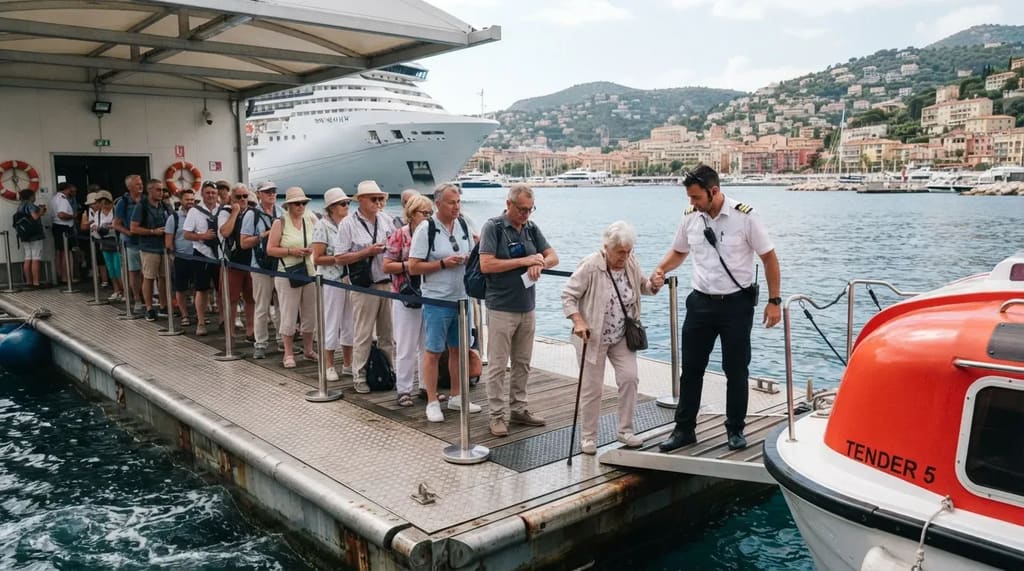
Boarding is usually orderly. One cruise-travel report says priority often goes to guests needing assistance or those with scheduled excursions. Crews quietly notice who respects that system and who tries to cut through it.
Plenty of cruisers treat tender tickets like optional paperwork, but many crew members would argue the opposite. The number system exists to keep the platform from getting crowded at the worst possible moment. A pushy line makes a hard job even harder.
Related Stories From Travelbinger

Why It Stands Out
- Priority often goes to guests needing assistance or holding scheduled excursions.
- Tender tickets keep the platform from filling up all at once.
- Crews quietly remember who waits their turn.
#2 – Whether You Expect to Be Lifted
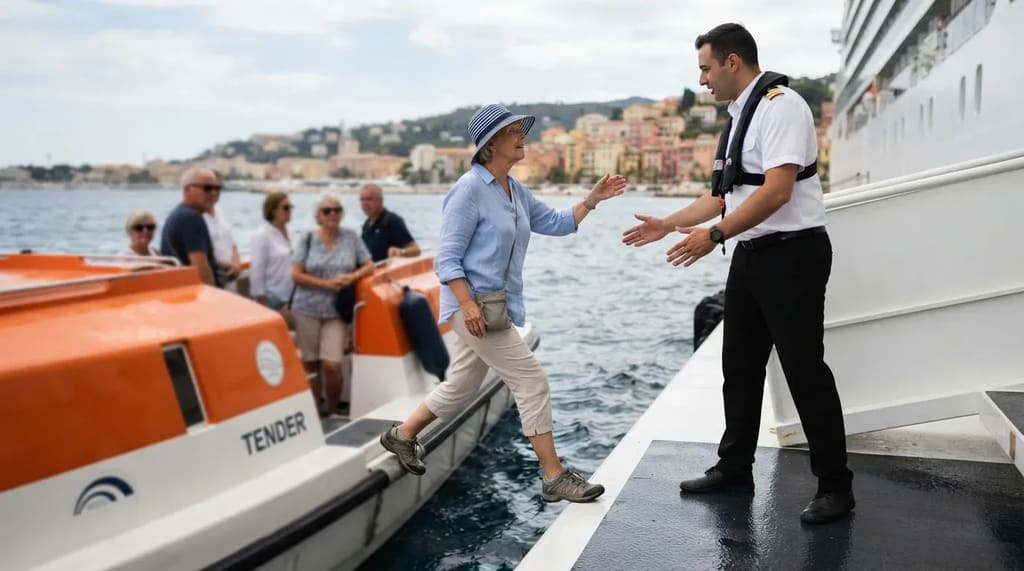
Some guests assume crew will physically carry them aboard. Published policies say otherwise. Celebrity states that for safety reasons, staff is not permitted to lift guests or equipment.1 Another roundup notes that Carnival and Virgin Voyages prohibit crew from carrying guests.7
That’s why a crew member’s hesitation can feel cold. It’s often a rule that protects both the guest and the crew. Cruise-travel reporting says guests sometimes misread that pause as unfriendliness. In reality it’s a boundary, and the crew would much rather explain it early than at the edge of the water.
#1 – How You Take It When the Captain Says No
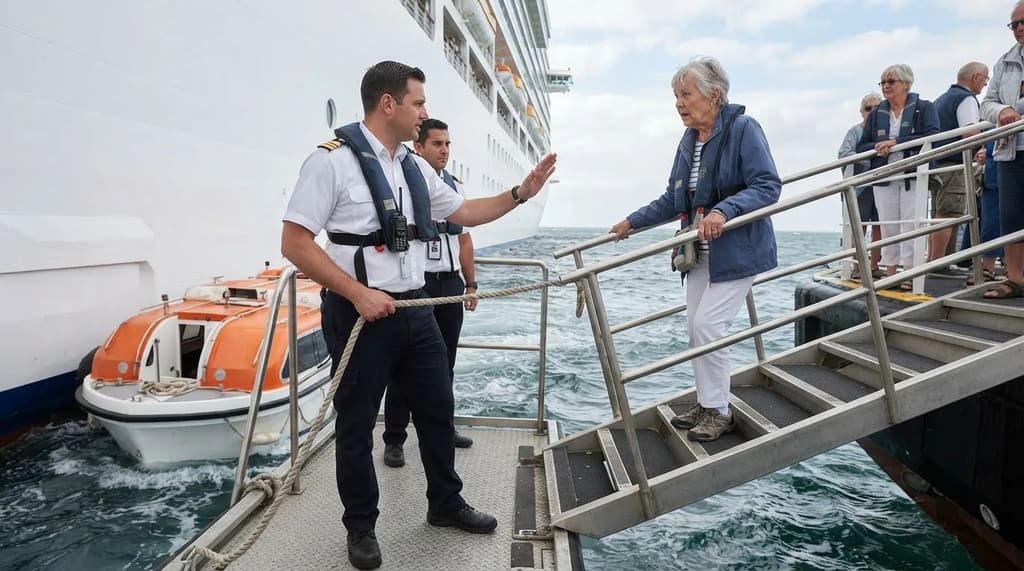
The last thing crews notice is how a guest reacts to the word “no.” Celebrity notes that the captain and crew assess conditions at any tender port and decide whether tender operations are safe for those with limited mobility.1 Royal Caribbean says the same about the captain’s final call.
The consequence is real. One cruise-travel roundup reports that if guests can’t tender or disembark due to safety conditions, there’s no refund or credit for the missed port.3 Sometimes the sea, not the passenger, decides who goes ashore. The guests crews remember are the ones who accept it with grace and ask about the next option.
Tender crews aren’t judging your vacation outfit. They’re reading shoes, hands, balance, timing and attitude, because the boat never holds still. The surprising part is how much of it you control: you can warn them early, travel light, and wait for the signal.
The part you can’t control is the water itself. Next time you reach that bobbing platform, remember that the person reaching out a hand has already been watching for a while.
- Celebrity What Is a Tender Port: https://www.celebritycruises.com/blog/tender-port
- Royal Caribbean Assistance Onboard Offshore: https://www.royalcaribbean.com/experience/accessible-cruising/additional-assistance
- Margaritaville at Sea Accessibility: https://www.margaritavilleatsea.com/policies/accessibility
- Virgin Voyages Tender Ports: https://www.virginvoyages.com/accessibility/tender-ports
- Virgin Voyages Shore Things FAQ: https://www.virginvoyages.com/faq/the-days-at-sea/shore-things-and-ports
- Celebrity Accessible Cruising FAQ: https://www.celebritycruises.com/gb/faqs/accessible-cruising
- Cruise Ports Tender Wheelchair Guide: https://cruiseports.co/tender-ports-wheelchair-scooter/